
















Fire department trucks play a critical role in emergency response, safeguarding lives and properties. For business owners, understanding the specifications and operational capabilities of these vehicles is paramount, as they reflect the efficiency and reliability of local fire services. This guide explores the diverse specifications of fire trucks, tracing their history and evolutionary advancements, revealing how they are tailored for various operational roles. Additionally, technological innovations in fire trucks highlight the ongoing commitment to improving firefighting capabilities, further illustrating their impact on business safety and community resilience.
Engineered for the Inferno: The Precise Specifications That Shape Fire Department Trucks

Fire department trucks are not merely transport rigs. They are highly integrated systems designed to endure extreme heat, shock, and variable terrain while delivering water, foam, ladders, and life-saving tools exactly where they are needed. The chapter you are about to read follows that thread from the bare metal of a chassis to the controlled violence of a reliable pump, from the quiet hum of a hydraulic system to the fierce spray that meets a fire. It is a story of engineering discipline, safety, and mission adaptability, all woven into steel, aluminum, and the stubborn insistence of purpose-built design. In the end, the essence of a fire truck lies not in its polish but in how precisely its specifications align with the demands of the first minutes on the incident scene, when every decision folds into whether a home is saved, a life is protected, or a community remains intact after a blaze or a flood.
At the core of every fire apparatus lies a careful balance between strength, weight, and function. The body of a modern fire truck is typically constructed from high-strength steel or reinforced aluminum alloys. These materials are chosen for their ability to resist extreme temperatures, absorb impact energy, and resist corrosion over years of sustained use in harsh environments. The resulting shell must carry heavy operational loads without buckling and still offer predictable handling under stress. Water is the most conspicuous load, but the truck’s mass also includes a pump, hoses, ladders, and a suite of tools that must all be stowed, accessed, and deployed in seconds. In a representative configuration, water tanks span roughly one to four thousand liters, a scale that reflects the diversity of urban and rural response scenarios. The interplay between tank capacity, pump size, and onboard foam systems defines not just power but also the strategic options available on arrival at a scene. Foam concentrates, for example, allow responders to disrupt the oxygen cycle around flammable liquids, creating a blanket that cools and suffocates the fire more effectively than water alone in specific circumstances. The choice of a foam system must be paired with compatible storage, handling, and discharge mechanisms that keep personnel safe and minimize environmental impact if deployed in sensitive environments.
The chassis of a modern fire truck is the stage on which all these capabilities perform. Length, width, and height matter as much as horsepower because space constraints translate into maneuverability and reach on a crowded street or a narrow rural lane. A typical urban pumper, designed for quick access through tight city blocks, emphasizes a shorter wheelbase and tighter turning radius, while a larger vehicle designed for remote areas prioritizes ballast and tank-to-pump integration so that shuttle operations between water sources and the fire site proceed without interruption. The drive configuration plays a crucial role in traction and stability, often adopting four-by-two or four-by-four layouts to suit the terrain and climate in which the department operates. A representative figure used in training and procurement circles describes a vehicle with a length around seven meters, a width just over two meters, and a height just over three meters. Curb weights in the mid-six-ton range with a gross vehicle weight near ten tons illustrate the reality that these machines carry significant payloads while needing to remain accessible to fire crews, who operate in a dynamic, unpredictable environment. The design philosophy behind these dimensions is not about luxury or mere capacity; it is about ensuring that every ounce of mass contributes to reliability, reach, and safety on the incident ground.
Equally critical are the vehicle’s core functional systems. Pump systems are the heartbeat of the apparatus, delivering water or foam at high pressures and substantial flow rates. Modern pumps are engineered for durability and rate of discharge, commonly reaching several thousand liters per minute and capable of sustaining pressures that enable hose lines to extend through windows, around corners, or up to upper floors. The pumping system must integrate seamlessly with the water tank, the onboard foam solution, and a complex network of controls that allows the operator to switch between modes in an instant. The electrical and hydraulic networks underpin every action, from engaging the pump and regulating pressure to extending a ladder or raising a platform. These networks are organized with redundancy so that a single malfunction does not leave the crew without essential tools. Ladders and aerial devices deserve particular attention. Telescopic or articulating ladders can extend well beyond the reach of a standard ground attack, enabling vertical or near-vertical rescues and enabling firefighters to ventilate roofs or access upper-level windows. Ladders and platforms are often equipped with integrated lighting, thermal imaging cameras, and sometimes forcible entry tools, all of which must be operable even when the vehicle’s engine is under load and vibrations are high.
Foam systems broaden the operator’s toolbox beyond the limitations of water alone. While water remains the primary agent for cooling and vaporizing fuels, foam blankets disrupt the flame’s access to oxygen and fuel, dramatically reducing the chance of reignition. Foam-equipped trucks carry concentrate, injection hardware, and delivery arms that blend foam into the water stream efficiently. The viability of foam depends on proper chemical handling, precise metering, and controlled storage. It also depends on choosing compatible foam agents that balance firefighting efficacy with environmental responsibility. In practical terms, this means the development of protocols for rotation, testing, and storage that ensure foam remains as effective as possible across many deployments without introducing avoidable hazards for the crew or the ecosystem.
The range of vehicle types within the broader fire-truck category highlights the diversity of missions. Pumper engines serve as the frontline workhorses for urban and suburban fires, combining pumps, water tanks, hoses, and often a compact set of tools sufficient for initial attack and exposure protection. Foam trucks specialize in contexts where flammable liquids dominate the landscape, such as petrochemical facilities, airfields, or industrial complexes. Aerial ladder trucks bring vertical reach into high-rise fires and complex rescues, with platforms that can be raised to lofty heights while maintaining a supply of water and essential tools. Water tenders or tankers fill a different role entirely, acting as mobile reservoirs that shuttle water from sources to the scene where hydrants are sparse or non-existent. Then there are specialized configurations, including high-velocity water cannons or other remote-dispatch systems that can project water or foam over long distances, enabling a safer stance for firefighters who might be operating far from the vehicle’s immediate reach.
Each type embodies a particular balance of strengths and constraints. Pumper engines are typically configured with robust pumping capacity and moderate tank size to support quick attacks and rapid redeployment. Foam trucks emphasize their chemical-handling capabilities, ensuring that the correct concentrates meet the right streams under the supervision of trained personnel. Aerial ladder trucks maximize reach, often with heavy equipment handling limits and a substantial comfort of crew operations on elevated work. Water tenders prioritize range and reliability for shuttle operations, acknowledging that their off-road capability and top speed will be different from city pavements. Cannon-style trucks, with their high-powered water jets, expand the range of tactical choices available to incident commanders but require careful logistics to maintain water supply for operations at scale. Across all types, the overarching aim is to deliver effective firefighting capability while preserving crew safety, reducing response times, and enabling coordination with other units and agencies on scene.
Standards and interoperability anchor these diverse designs in a global framework of safety and performance. Fire trucks must meet international standards that specify performance benchmarks, testing protocols, and safety features designed to minimize risk to crews and the public. In North America, the NFPA 1901 standard governs apparatus design and performance; in Europe, EN 1855 and related standards establish comparable criteria. These standards ensure that, regardless of manufacturer or region, a fire truck will respond to incidents as promised, with predictable behavior under stress and with the capacity to perform the tasks required by trained operators. The compatibility of equipment, such as hoses, couplings, and pump fittings, also matters because a vehicle must integrate smoothly with incident scene logistics and with equipment from other agencies. The emphasis on standardization supports rapid mutual aid, enabling teams from different jurisdictions to work together with confidence during large-scale emergencies.
Beyond the Western markets, global manufacturers have developed supply chains that deliver cost advantages while preserving safety and performance. In certain regions, large-scale production and vertically integrated components enable supply chains to offer competitive pricing without compromising the structural integrity or reliability of the equipment. In these contexts, the drive toward universal standards is complemented by local engineering adaptations that respect climate, road conditions, and operational habits. While price considerations may influence procurement decisions, the core values of durability, reliability, and crew safety remain the guiding stars. This reality invites fire departments to evaluate not only the sticker price but the long-term life-cycle costs, maintenance demands, and after-sales service that together determine how long a truck will remain mission-ready.
An important practical thread runs through all these considerations: the vehicle is a platform for action, not a sculpture meant to impress. The truck must tolerate shock and vibration, adapt to changing incidents, and sustain performance across decades of service. Engineering teams design with this lifespan in mind, prioritizing modularity and serviceability. Compartments are laid out to maximize accessibility, with critical components protected behind reinforced panels that shield sensitive systems while allowing rapid access by technicians. The electrical harnesses and hydraulic lines are organized for traceability, making routine inspections and even major repairs more straightforward. The goal is not to build a single miracle machine but to craft a dependable, maintainable system that supports firefighters as they execute multiple roles—leader, rescuer, water manager, and safety officer—within the same mission. The resulting trucks become extensions of the crew’s training and judgment, amplifying their capacity to improvise and adapt when the scene demands it most.
This holistic perspective helps explain why the internal configuration of a heavy-duty fire truck matters as much as its external appearance. The arrangement of water tanks and pumps, the placement of ladders, the organization of tool lockers, and even the location of crew seats are all chosen to minimize time on scene and maximize safety. A truck that enables a single firefighter to access essential equipment in under a second, or to swap from wildland suppression gear to urban attack gear in minutes, has already earned its keep long before the siren sounds. The ongoing dialogue between design and field experience shapes future iterations of the apparatus. Departments collect feedback from operators about pump response times, hose routing, and ladder extension rates to refine both the hardware and its accompanying procedures. The result is a continuously evolving toolkit that remains faithful to its core mission: to deliver water, foam, and tools with precision while protecting the people who operate them.
For readers seeking a tangible sense of how this translates into practice, consider the concept of a heavy-duty fire truck as a central node in a rapid-response network. It is the bridge between the firehouse and the incident site, carrying the gear, personnel, and water necessary to begin suppression within minutes of arrival. It also serves as a mobile workshop, housing spare parts and diagnostic equipment that technicians use to keep the fleet up to date. The crew’s training complements the hardware, emphasizing how to deploy the pump, handle foam concentrates, and maneuver through complex environments without compromising safety. The interplay of specification and practice is the true engine of operational effectiveness. It explains why a department will invest not only in the most capable pump and largest tank but also in reflectors, lighting rigs, and ventilation tools that allow them to work efficiently when visibility is poor and exposure time is critical.
To tie these threads back to practical procurement decisions, departments weigh the balance between capability and cost. The most expensive apparatus is not automatically the best choice; rather, the right truck is the one that matches operational realities, local hazards, and maintenance capacity. Rural districts may value water tender configurations that maximize range and shuttle efficiency, while urban centers may prize compact pumpers with nimble handling for dense street grids. Meanwhile, a department with frequent high-rise incidents may emphasize aerial reach, lift capacity, and platform safety features for long-term readiness. The common denominator remains rigorous adherence to standards, because when lives hang in the balance, consistency and predictability trump novelty. The chain from materials to assembly to field use must be coherent, testable, and repeatable, and it must honor the risk-to-reward calculus that defines emergency response.
In the end, the specifications of fire department trucks are a language. They speak to safety, readiness, and resilience. They tell firefighters where to find the water, how to reach the flame, and how to bring tools to bear with minimal delay. They testify to the collaboration between engineers, manufacturers, and public agencies who share a simple faith: that precise engineering can save lives under the worst conditions. For readers who wish to explore more about the kinds of vehicles that embody these principles, a broader look at the heavy-duty fire truck category offers a window into how modular design, standardized interfaces, and thoughtful ergonomics come together in a single mission-critical asset. For those curious about how these vehicles perform in practice and how they are tested against rigorous criteria, standards bodies and manufacturers alike provide both the framework and the field data that validate the craft. This is not merely about parts on a shelf, but about a system designed to stand between chaos and safety, time and resilience, fear and calm under pressure. The specification sheet becomes a pact with the community, a promise that when the siren calls, the apparatus will respond with the reliability that citizens expect and firefighters rely on.
For readers seeking deeper technical details or model-level data, consult the broader reference materials and manufacturer databases, which provide structured data on flow rates, panel thickness, and valve configurations. If you want to explore related equipment categories in the same family of vehicles, you can visit the dedicated category page focused on heavy-duty fire trucks, which showcases a range of configurations designed for demanding environments and high-load operations. This internal resource complements the technical narrative by offering concrete examples of how the theoretical principles described here translate into real-world hardware and serviceable solutions.
External reference on standards and testing protocols remains essential for anyone evaluating fire apparatus performance. The NFPA Fire Apparatus Standards (and related EN standards) offer the formal criteria that underpin safety, reliability, and interoperability across jurisdictions. Their guidelines inform the design, testing, and maintenance practices that ensure a fire truck remains mission-ready across a lifetime of service. Readers seeking the authoritative testing protocols and compliance criteria can consult these standards for a rigorous, independently verifiable framework that underpins every spec discussed in this chapter.
Internal link: heavy-duty fire trucks
External resource: https://www.nfpa.org/codes-and-standards/fire-apparatus-standards
From Horsepower to High-Pressure: The Evolution of Fire Department Trucks

The history of fire department trucks unfolds as a patient chronicle of adaptation, ingenuity, and the relentless push to move water, people, and equipment toward a fire where time is measured in lives and property. It begins long before the siren and chrome, in an era when communities depended on human muscle, animal power, and hand-pumped engines that could not deliver water at the speed or pressure modern responders now take for granted. Early apparatus were simple by today’s standards: hand-cranked pumps, wooden wheels, and a chassis that could be moved only with the help of horses. Yet even in those modest beginnings, the imagination of firefighters and the practical constraints of urban life drove a persistent question: what configuration of vehicle, pump, and hose could shorten the distance between a fire’s discovery and its control? It is a question answered over generations by transforming mobility into steady, reliable force on the ground.
The choice of color in the earliest motorized and pre-motorized apparatus was more than aesthetics; it was a signal in a crowded landscape of urban traffic, back alleys, and crowded streets. Red became the color most associated with firefighting, a visual cue that could cut through smoke, dust, and distraction. The logic was pragmatic as much as symbolic: a stark, bright hue would catch a passerby’s eye while the town’s other vehicles were shifting from black to a growing palette of industrial tones. This tradition, born of visibility, endured as a cultural constant within fire departments everywhere. It is easy to read color as a stylistic choice, but in truth it reflects a deeper commitment to rapid recognition and response—the very core of emergency service.
The transition from horse-drawn pumpers to steam and then motorized engines marks a decisive pivot in the history of firefighting. Steam-powered apparatus, introduced in the late nineteenth century, began to standardize the delivery of water through elevated levels of pressure and more robust pumping mechanisms. Communities that grew denser and taller faced new challenges: fires in multistory buildings, blocks of tightly packed houses, and sprawling industrial complexes. Steam engines could carry larger pumps and longer hoses, and they required a dependable support system of horses, teams, and stables that, by the mid-century, yielded to maintenance crews, early oil-powered motors, and the promise of greater consistency in response times. The era’s new machinery did not instantly erase the old rhythms of volunteer work and barnyard logistics, but it did begin to unify the mission under a single, repeatable mechanical logic: bring as much water as possible, as quickly as possible, to the site of the blaze.
As the twentieth century dawned, the internal combustion engine began to dominate the streets, and with it came the first unmistakable signs of a new class of firefighting vehicles: motorized pumpers that could travel at city speeds, climb monuments of urban growth, and deliver water with a level of precision previously unimaginable. The chassis design, once a simple platform, evolved into a multi-axle, purpose-built framework capable of supporting heavier pumps, larger water tanks, and an array of specialized equipment. The six-wheel configuration, in particular, emerged as a practical solution to improved traction and stability on varying terrains, which became critical as fire departments extended their reach beyond city limits into rural and semi-rural landscapes. By enabling more confident steering and better weight distribution, these configurations helped crews manage heavier loads, navigate rough roads, and respond to fires that demanded greater water reserves than urban hydrants could provide.
With every advancement in propulsion came parallel improvements in the way the vehicle itself was built. Body construction shifted toward materials that could withstand extreme heat, absorb and dissipate shock, and carry heavy loads without compromising safety. Reinforced aluminum and high-strength steel became commonplace in the mid-to-late twentieth century, driven by the need to balance durability with weight; a lighter, stronger structure allowed for more efficient fuel use and faster deployment without sacrificing protective integrity. The body was no longer a simple shell or a space to fit a pump; it became a highly integrated system in which chassis, pump, tank, ladder, and tools had to work in concert. These changes laid the groundwork for the modern fire truck’s capability to serve as a mobile command center, a water-delivery system, and a platform for access and rescue operations.
The interior logic of the fire truck also matured in tandem with external hardware. Pumps no longer stood alone as black boxes bolted to a chassis; they became central to a tightly choreographed ensemble. The pump, the tank, the piping, and the hoses all had to synchronize with the driver’s route planning, the crew’s take-off sequence, and the city’s water supply network. Tanks grew to accommodate longer runs between hydrants, a necessity for rural responders who faced long stretches of open terrain where water supply was uncertain. At the same time, the urban firefighter could rely on a compact pumper that married agility with power, allowing operations to commence the moment the vehicle stopped. The dual demand—capacity and nimbleness—drove an ongoing balancing act that defined the mid-century and late-century design language of fire apparatus.
An important dimension of this evolution was the increasing sophistication of onboard firefighting systems. For a long time, pumping water from a tank to a nozzle defined the core capability. Later, foam-based systems were introduced to handle challenging chemical fires and to expand the range of extinguishing options. Foam offers a way to blanket fuels and suppress vapors, reducing the risk of reignition and enabling responders to work from safer positions. The addition of foam tenders and related equipment represented a significant shift from a single-purpose engine to a multi-solution platform. It was a recognition that firefighting is rarely a single-crisis event; it often involves a spectrum of hazards—flammable liquids, industrial chemicals, and the risk of environmental contamination—that require a versatile tool kit.
The historical arc also intertwined with the rise of specialized roles within the fire service. As fire districts grew and the complexity of emergencies increased, departments began to tailor their fleets to the hazards they most frequently encountered. A rural area with long access roads required water tenders that could shuttle large volumes of water from distant sources. Industrial areas demanded foam-capable apparatus and equipment to handle flammable liquids. Urban complexes, meanwhile, pushed for higher ladders, more advanced aerial devices, and quicker access to upper floors. Each specialization did not replace the others; it complemented them. The result was a heterogeneous but cohesive family of vehicles whose diversity reflected the varied landscapes they served. In this sense, the modern fleet reads like a map of a country’s firefighting priorities, a living record of the environments that shaped its evolution.
In looking back, one can hear the steady hum of evolution in the way designers approached reliability and safety. The best trucks of any era were those that could be depended upon under stress: engines that fired up without delay, pumps that delivered steady pressure against a volatile flame, and structural frames that endured the kind of jolts and heat that only a worst-case scenario can deliver. Safety features, too, grew in sophistication. Cab protections, rollover considerations, and ergonomic layouts for crews who must move quickly and safely through a chaotic scene—all of these concerns found their way into the design language of the vehicle. It is easy to view the history of fire trucks as a parade of mechanical innovations, yet at its heart lies a human story: crews learning to read fires more accurately, to position equipment with greater precision, and to work together with a rhythm that respects the urgency of the moment and the fragility of the people involved.
Today’s fleets still honor that lineage. A modern fire department truck remains a patient, highly specialized instrument, but the emphasis has broadened. The vehicle now functions as a mobile hub for water delivery, rescue, hazardous-material response, and digital coordination. The shift toward modular designs means a single chassis can be adapted for a range of functions, from water pumping to aerial platforms to industrial response units. The pace of change is guided by two constants: the geography of where a department operates and the evolving nature of the threats it faces. In urban cores, compact chassis with high maneuverability ensure access through narrow streets and crowded blocks. In rural exurbs and wildfire-prone regions, larger pumpers and water tenders ensure that a crew can reach a distant fire line without compromising safety or effectiveness. The history of fire department trucks is therefore not a sequence of distant memories but a continuous process of aligning tools to terrain, risk, and need.
For readers who want to trace the arc of these developments in more detail, the broader story is also one of how communities identify responders and respond to danger. The color choices, the signals of presence, and the haunting image of a red engine rattling through a sleeping neighborhood all encode a social contract: that when danger arises, the city’s trusted machines will arrive with the power to push back fear and protect lives. The fleet is more than metal and water; it is a converging point for engineering, public policy, and shared memory. As such, the modern fire department truck embodies the synthesis of centuries of experimentation, standard-setting, and practical learning. Its design is a narrative of adaptation—an answer to fires that are never exactly the same from one place to the next, yet share the common requirement of speed, reliability, and the decisive delivery of resources when they are most needed.
This historical thread is also a reminder of the interconnectedness of firefighting with wider infrastructure. The emergence of better roads, more robust electrical grids, and improved water systems all fed into the capabilities of the fire service. The vehicle’s capacity to exploit hydrants, to extend lines into non-potable supply zones, or to operate on terrain that was once inaccessible has always depended on the ecosystem around it. And just as the first engines required horses and hand tools, today’s trucks rely on a network of support—maintenance shops, training academies, and logistics pipelines—that keep the entire operation ready. In this light, the history of fire department trucks becomes a lens on how communities organize resilience itself. The story moves from a set of awkward, albeit heroic, beginnings to a sophisticated, adaptable apparatus that can be deployed anywhere with confidence and precision.
For readers curious about the breadth of today’s specialized configurations, consider the spectrum of options that have grown from this long history. The idea that a single vehicle could be tuned to fit a particular hazard or terrain—urban clutter, rural expanse, chemical fires, or wildland interface—already signals a shift toward a more nuanced classification of fire apparatus. The line between a utility vehicle and a rescue tool has blurred as new capabilities are integrated into the same platform. The modular approach allows departments to adjust their fleets as hazards shift, policies change, and funding cycles turn on new priorities. This adaptability, born of necessity and refined through decades of experience, remains the backbone of contemporary fire response diagrams. It is also a testament to the enduring partnership between firefighters, engineers, and the communities they serve.
Within this historical continuum, one finds a practical appreciation for what a fire department truck represents: not simply a machine but a ready partner in crisis. It carries water, not just as a liquid, but as a resource that enables a rescue to unfold with urgency and control. It embodies mobility as a core tactic, ensuring that when a scene is found, the crew can take immediate action rather than waiting for a distant supply line or a secondary support vehicle. It reflects a philosophy of preparedness that begins long before the alarm, in training rooms, maintenance bays, and the quiet confidence that a well-designed tool will perform when it is needed most. In sum, the history of fire department trucks is a narrative of continual refinement driven by the real-world demands of firefighters and the communities they protect. It celebrates not only what these vehicles can do, but why they matter—a history written in accident-free test runs, in firehouse camaraderie, and in the steady march toward safer, more effective emergency response.
External resource: The History of Fire Trucks and How They Have Evolved. https://www.firerescue1.com/fire-department-equipment/article/19536873/the-history-of-fire-trucks-and-how-they-have-evolved
Within the ongoing conversation about how these machines take shape, one finds a natural way to connect past lessons with present capabilities. The modern fleet, while vastly more capable than its wooden predecessors, remains anchored in the same essential ideas: reliable water delivery, rapid access, and a broad toolkit for diverse hazards. The integration of specialized configurations, such as those highlighted in the broader fleet catalog, demonstrates how a department can align its vehicles with its top priorities—whether that means urban reconnaissance and rapid response or rural water shuttling and logistics. For readers who want to explore how a modern department curates its own mix of apparatus, a broader look at the available categories can illuminate the choices involved in building a resilient response architecture. For instance, a dedicated category that emphasizes specialized configurations offers a window into how teams plan for the unknown while keeping the familiar and essential tools within reach. This approach, grounded in decades of evolving practice, continues to shape decisions about which trucks to buy, how to deploy them, and how to train crews to exploit every ounce of capacity these vehicles can provide.
In closing, the arc from horse-drawn carts to contemporary, multifunctional fire engines is a story of evolving partnership between people and machines. It is about how a community translates a sense of urgency into a durable, adaptable platform that can rise to any challenge. The history is not merely about past innovations; it is about lessons that inform today’s practice and tomorrow’s horizons. Each generation of trucks carries forward a line of inquiry—how to balance weight with strength, how to pack more water without sacrificing speed, how to keep firefighters safe while pushing into the flames. The lineage is visible in every curbside deployment, every ladder rise, and every incident where outcomes improved because the vehicle arrived on site with a plan, with equipment, and with the confidence that comes from a long tradition of learning and improvement.
Frontline Roles on Wheels: How Fire Department Trucks Orchestrate Emergency Response

In the core of every active fire response, the department’s trucks operate as more than conveyances. They are highly specialized instruments that translate training into immediate action, weathering heat, smoke, and pressure to deliver water, reach, rescue, and relief where it is most needed. The fire department’s fleet is not a single tool but a carefully choreographed ensemble. Each vehicle embodies a design philosophy aimed at a particular class of emergency, and together they form a flexible system capable of adapting to urban canyons, rural byways, and everything in between. The choice of which trucks come to a scene reveals a department’s assessment of local risks, the terrain they must traverse, and the kinds of incidents most likely to demand a coordinated, layered response. Water and height are recurring themes because they define both the immediacy of suppression and the safety margins for firefighters, victims, and bystanders. The modern fleet balances capacity, reach, and resilience, ensuring that the first arriving unit can begin suppression on contact while others maneuver into supportive roles, establishing a rhythm that carries through the duration of the incident.
Engine, pump, and water management form the heartbeat of everyday structural firefighting. The engine, or pumper, carries the essential resources needed to begin extinguishing fires directly at their source. A compact crew can deploy hoses, lay a durable water supply, and operate a high-capacity pump that translates stored water into a continuous stream capable of overpowering flame fronts. This is not merely about throwing water; it is about establishing a controlled, pressurized path that can be sustained as long as necessary to protect occupants, prevent collapse, and create safe pathways for firefighters to advance. In dense urban cores, where hydrants are plentiful yet the built environment imposes chokepoints, the engine’s ability to deliver water efficiently and rapidly remains the most critical judgment call a first-arriving unit must make. The pump’s capacity, the integrity of the hose lines, and the crew’s coordination determine whether an initial heat surge is tempered within minutes or whether the scene escalates into a longer, more complex operation.
Yet water itself is only one part of the equation. Fire suppression often hinges on the ability to reach the source of danger from angles not readily accessible at ground level. Here the ladder, or aerial, enters with a different set of capabilities and constraints. The extendable or articulating ladder provides vertical reach that translates into access to upper floors, attic spaces, or roof vents. It enables safe rescue operations for occupants trapped above street level and facilitates ventilation strategies that can dramatically affect flame growth and smoke movement. The reach of an aerial platform allows firefighters to position water streams from above, coordinating with interior teams to attack fire from multiple vectors. In large-scale or high-rise environments, this capability becomes indispensable. The associated platform or bucket can also serve as a protected vantage point for firefighters who must coordinate complex operations above the heat and toxic atmosphere of the lower levels. The logistics of operating such equipment demand inches of precision, from wheelbase and turning radius to stabilizers and the sequence of moves that maintain balance while loads are shifted aloft. For a window into how the aerial category embodies the interplay of reach, maneuverability, and safety, consider the aerial-ladder-fire-truck category شاحنة إطفاء-سلالم-هوائية.
Beyond suppression and access, the fire department’s repertoire includes specialized rescue capabilities. Rescue trucks are equipped to address vehicle extrication, confined-space entries, trench rescues, downed power lines, and other scenarios where standard suppression tactics may be insufficient or unsafe. The tools housed on these units—hydraulic cutters and spreaders, stabilizing equipment, and extensive hand tools—enable teams to create egress routes, stabilize damaged structures, and extricate victims with minimized risk. In the wake of disasters, these vehicles often transition into disaster-response roles, carrying portable shelters, medical gear, and support equipment that helps stabilize a scene while longer-term recovery operations unfold. The rescue function, while not the primary vehicle for large-scale fire suppression, is in many ways the bridge between immediate response and technical rescue, ensuring the department can respond to secondary hazards that arise as flames are contained or as structural integrity is tested.
Rural and remote environments call for another archetype: the wildland fire engine. These compact, robust vehicles are designed to traverse uneven ground and carry substantial water supplies to meet fires that may be distant from hydrants. Their four-wheel-drive capability, rugged chassis, and durable components enable firefighting teams to shuttle water between sources and hot zones, creating critical links in a continuous suppression effort. In brush and timber settings, where fuel loads can fuel rapid fire growth, these engines act as mobile water reservoirs plus ground-based maneuverability. They also serve a valuable role in coordinated campaigns that pair ground control lines with aerial resources, ensuring that water can be delivered precisely where it is most needed, even in the absence of a reliable municipal water network. The wildland engine typifies how the fleet adapts to terrain and incident patterns, transforming geography from a limitation into a strategic factor in firefighting.
Aviation and industry add another layer of complexity through ARFF—Airport Rescue and Fire Fighting—trucks. These are engineered to withstand extreme heat and to address aircraft-specific hazards, including high-energy fuel fires and the unique challenges posed by rapid-scale emergencies in airport environments. Foam systems, specialized chassis construction, and rapid-response capabilities characterize ARFF operations. While many departments are not co-located with airfields, nearby facilities and industrial sites can require specialized response assets for chemical fires, high-hazard materials, and complex crash scenarios. The presence of these vehicles within a department’s fleet underscores the importance of versatility: a single truck may be tuned to a broad spectrum of tasks, while other units provide the depth needed for highly specialized incidents.
To comprehend how a department chooses and organizes this fleet, it helps to think in terms of incident type and geography. Urban departments, facing dense construction, tall structures, and frequent high-risk occupancies, lean toward ladder platforms and engine-pumper combinations that optimize rapid suppression and vertical access. Rural and mixed environments demand off-road capabilities and expansive water storage, which elevate the importance of wildland engines and water tenders that can operate where hydrants are scarce. The arithmetic of a fleet, therefore, becomes a reflection of the community’s risk profile, population density, climate, and the terrain that separates neighborhoods from the hazard zones they keep at bay. Yet the most effective responses emerge not from a single truck’s prowess but from a coordinated sequence of arrivals, each vehicle handing off the mission to the next in a carefully choreographed response. Engines establish the first water supply, ladders gain access and ventilation, rescues prepare for occupant removal, and wildland or ARFF assets provide backfill for terrain or hazard-specific demands. The synergy is the point of the fleet, not the superiority of any solitary vehicle.
The modern operational landscape also emphasizes the importance of equipment diversity within each class. Foam systems for percentage-based fuel fires, specialized cut-and-penetrate tools for vehicle rescues, and portable lighting to illuminate complex scenes all illustrate how trucks are designed to be multi-tool platforms—capable of adapting to evolving conditions on the ground. These features extend the usefulness of each unit beyond its original brief, enabling teams to pivot as the incident unfolds. The inclusion of foam, for instance, reflects a recognition that different fuels burn differently and may require distinct suppression strategies. In this sense, a well-rounded fleet does not simply carry more gear; it carries the right gear for the environment, the incident, and the potential compound hazards that responders must navigate.
The connective tissue binding all these operational roles is training and interoperability. Firefighters train to operate their own vehicle’s systems with precision, but they also train to integrate with other units, command staff, and external agencies. The scene becomes a moving tapestry of roles: water delivery from the engine, access and rescue from the ladder, stabilization and patient care from support squads, and controlled suppression from backline resources. This requires not only technical aptitude but also clear communication, standardized safety protocols, and flexible incident command structures. When a department’s fleet is well-matched to its geographic and demographic realities, crews can move through the sequence of action with confidence, reducing confusion, saving time, and increasing the likelihood of positive outcomes for both occupants and responders.
A fleet’s effectiveness also depends on maintenance and readiness. The most advanced chassis and the most capable pumps cannot perform if they sit idle, awaiting repairs or calibration. Regular inspections, preventive maintenance, and timely upgrades keep the vehicles aligned with modern fireground expectations. The design philosophy that underpins this readiness is forward-thinking, balancing the desire for state-of-the-art capability with the practicalities of cost, downtime, and durability. The resulting fleet is not merely a collection of machines but a dynamic system that continuously evolves through training cycles, post-incident reviews, and evolving standards. In this way, the operational roles of fire department trucks are not static definitions but living functions that adapt as risks change, technologies advance, and communities grow.
The narrative of these vehicles is also a story of space and access. Urban streets demand compact models that can squeeze through congested corridors and arrive with minimal delay. Rural routes reward endurance, long-range water supply, and the ability to operate independently of municipal infrastructure. In either case, the truck’s design must anticipate the unpredictable: a collapsed floor, a stairwell blocked by debris, a roadway closed by hazards, or a water source located miles away. The operators’ job, then, becomes an art of situational awareness—judging when to commit one asset, when to call for backfill, and how to sequence moves so that every contribution maximizes safety and efficacy. It is a continuous negotiation among time, distance, and force, a reminder that the most effective firefighting strategy is rarely a single decisive act but a sustained, coordinated effort across a team of vehicles and personnel.
Finally, the chapter of fire department trucks is a record of anticipation. The most capable fleets grow out of careful risk assessment, community engagement, and a willingness to adapt procedures as lessons emerge from every call. This is why many departments pair their core engine and ladder assets with specialized units that can address unusual hazards, including industrial environments, large-scale rescue needs, and complex shrouds of smoke. The goal is not to overbuild every scenario but to allocate assets so that when a call arrives, the right tools and the right people are already lined up in the correct order, ready to be dispatched with precision. When communities measure readiness by the speed of response, the clarity of coordination, and the ability to sustain long operations without compromising safety, the operational roles of fire department trucks reveal themselves as a continuous, disciplined practice rather than a static inventory. The chain of action—from water to reach, from rescue to relief—depends on the thoughtful alignment of each vehicle’s capabilities with the scene’s evolving demands, a choreography that saves lives and protects property even amid the most challenging conditions.
External resource: For a standards-based framework that guides the design and performance of fire apparatus, consult NFPA guidance at https://www.nfpa.org/,
Internal link reference: In examining the ladder class, the aerial-ladder-fire-truck category provides a clear illustration of how reach and platform safety influence tactics and scene management. You can explore that category here: شاحنة إطفاء-سلالم-هوائية.
Raising the Bar on Response: How Technology Transforms Fire Department Trucks
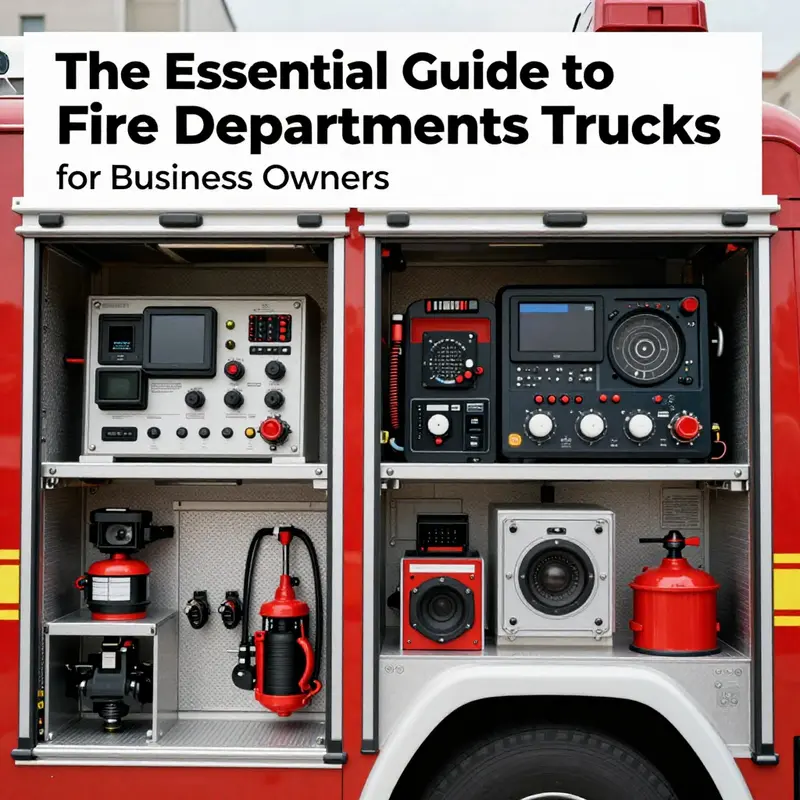
The fire department truck has long been the steadfast workhorse of emergency response, carrying hoses, pumps, and ladders into danger with a steadfast discipline that firefighters themselves embody. Yet in recent years, technology has redefined what this essential vehicle can do, turning it into a mobile hub of data, sensing, and controlled action. The result is a platform that not only delivers water and foam but also sustains situational awareness, enhances safety, and expands the reach of a team’s capabilities. This chapter traces the current arc of technological advancement in fire department trucks, drawing connections between the hardware that carries water and the software that interprets the world around a burning structure, a rural wildfire, or a hazardous-material threat. It is a story of integration—of systems that talk to each other, of sensors that translate heat into actionable intelligence, and of powertrains and chassis that keep the crew safe and mobile in the most demanding environments.
At the heart of these advances lies a shift from a purely mechanical problem-solving approach to a holistic, data-driven operational philosophy. The traditional truck was a moving toolbox. Today, it is a platform that blends propulsion, structure, sensing, and control into a coordinated system. Communication systems, for instance, no longer exist merely to relay messages from dispatch; they knit the team together in real time. Global positioning systems provide not only precise location data for the vehicle but also intelligent routing and incident mapping that help incident commanders anticipate bottlenecks and allocate resources with a confidence that early engines rarely possessed. Digital radios ensure voice clarity across noisy environments and difficult terrain, while onboard video feeds extend the crew’s situational awareness beyond the windshield to the inside of smoke-filled rooms or the far edge of a hazardous zone. This isn’t merely about convenience; it is about preserving life when every second counts.
Heat and visibility are the twin adversaries of firefighting. To counter them, thermal imaging has become a fixture of modern apparatus. A thermal camera integrated into the truck can reveal hot spots through thick smoke, enabling firefighters to distinguish a blazing source from a smoldering ember and to see the path that fire is likely to take as it propagates. In a more complex operation, the same imaging system guides tactical decisions by providing a heat signature map that helps crews decide where to deploy resources, where to search for trapped occupants, and how to stage a safe retreat in the face of rising temperatures. The visual data from thermal imaging is often combined with the day-to-day scene consolidation performed by the incident commander on the scene—an orchestration that requires both fast data processing and reliable communication channels.
For crews operating amid structural collapse or dense urban canyons, automated systems on the truck can shoulder some of the workload that would otherwise fall to a firefighter at risk. Automated extinguishing systems, including pre-programmed foam or water-based sequences, can be engaged to address certain fire curves or material classes without requiring a firefighter to stand in the line of flame. Remote-controlled nozzles extend this capability further, letting operators manipulate water streams from a safer distance while a coordinated relay of valves and pumps maintains pressure and stream reach. These features are not about replacing human judgment but about protecting personnel from exposure and enabling them to concentrate their attention on critical decision-making during the most dangerous moments.
Powertrains have also entered a new phase of capability and responsibility. Hybrid and electric propulsion systems bring emissions reductions and quieter operation, which is particularly beneficial for nighttime responses in residential neighborhoods or sensitive industrial settings. The quieter operation can reduce the stress on nearby residents during critical alarms, a subtle but meaningful improvement in the social footprint of emergency response. At the same time, these powertrains push the envelope on fueling infrastructure, battery management, and thermal control, requiring new approaches to maintenance and charging that fit into the larger logistics of a department’s fleet. The environmental and cost benefits are compelling, but they coexist with practical considerations such as range, torque availability, and the endurance needed to carry water, foam concentrates, and heavy tools across long incidents.
Chassis engineering and suspension systems have advanced in parallel with powertrains. A modern fire truck must negotiate rough terrain, tight urban streets, and long drives between water sources with equal poise. Improvements in chassis construction emphasize torsional stiffness and impact resilience, while suspension systems are tuned to keep stability when pumps are active, streams are deployed, and ladders are extended. This translates to better steering control, reduced driver fatigue, and a safer operating envelope when responding through changing road conditions or uneven ground. In rural or semi-rural settings where hydrants may be sparse, these traits become a clear advantage, enabling a heavier apparatus to traverse unpaved roads and muddy access routes without compromising the stability needed for precise water delivery.
Beyond propulsion and structure, the interior of the modern fire truck has transformed into a compact command center. Telematics and on-board diagnostics run continuously, turning once reactive maintenance into proactive care. Sensors monitor fluid levels, pump performance, and system temperatures while alerting crews to any deviation before a failure occurs. This data not only reduces the likelihood of breakdowns at the worst possible moment but also informs budget planning and lifecycle management across the fleet. When a department undertakes a multi-incident week, these systems can help pinpoint which configurations and tool loads perform best in distinct theatres—urban blocks, suburban strip centers, or remote forested landscapes—and guide future procurements in a way that unifies performance with stewardship of public funds.
Load design and modularity complete the picture of a technologically advanced truck. The compartmentalization of equipment, the ability to switch out foam systems, or to reconfigure pump and water-carrying capacity for a specific mission profile are not trivial features. They reflect a philosophy that the truck should be as adaptable as the crews who operate it. In practice, this means buses of storage tailored to different hazards, such as foam-based containment for flammable liquids, or specialized tools that can be mounted and secured in minutes rather than hours. The result is a platform that can be repurposed according to the incident type, the environment, and the risk assessment of the moment, without sacrificing the reliability that allows firefighters to focus on the core tasks of rescue and firefighting.
The narrative of technological progress does not unfold in isolation. It rises within a framework of standards, interoperability, and shared best practices that ensure innovations contribute to safer, more effective responses. A central pillar of that framework is the way information is exchanged across agencies and jurisdictions. Real-time data sharing among firefighters, dispatch centers, and neighboring teams creates a kind of digital mutual aid that expands the reach of a local unit beyond its physical footprint. The capacity to view an incident from multiple angles, to coordinate traffic and water supply with a city’s other emergency services, and to maintain a continuous thread of accountability from dispatch to on-site actions is a hallmark of modern practice. This level of integration is not merely a convenience; it is a strategic advance that can determine whether a fire is controlled swiftly or spreads across a neighborhood.
In acknowledging the pace of change, it is important to ground these developments within the standards and guidance that keep safety at the core. The National Fire Protection Association (NFPA) provides extensive, field-tested standards for vehicle design, equipment compatibility, and operational procedures. While innovations push forward, they do so within a discipline that prioritizes reliability, interoperability, and risk management. For those who want to explore the formal parameters governing these systems, NFPA’s resources offer a foundation that helps jurisdictions balance ambition with proven safety practices. This balance—between cutting-edge capability and disciplined application—remains the compass guiding every advance in fire department trucks.
The chapter of progress continues with the subtle, sometimes invisible, but powerful role of new tools that extend a crew’s reach without requiring more personnel. The idea of unmanned, remotely assisted operations—whether a nozzle directed from a safe vantage point or an aerial or ground-based sensor array that feeds the incident command—speaks to a broader shift toward safer, more controlled interventions. The field has not yet settled on one perfect solution, but it has embraced a pattern: augmenting human capabilities with smart, responsive systems that reduce risk while expanding the doorways through which the fire service can help the public. In this context, even small enhancements—improved camera feeds, better battery management, or a more informative heat map—become meaningful steps toward the larger goal of saving lives and protecting property without compromising the safety of the responders.
The benefits of these technological strides are not limited to the moment of a fire. They ripple into planning, training, and daily operations. Fire departments can simulate incidents more realistically, rehearse a wider range of scenarios, and study how new equipment performs under controlled conditions before it encounters the unpredictability of a live incident. Training programs can leverage data from actual incidents to refine tactics, while maintenance teams can schedule interventions before wear or heat cycles lead to equipment failure. In this sense, the truck becomes a continuously learning platform, an investment in improved outcomes that compounds as more data is gathered, experiences are shared, and lessons are codified into updated protocols and configurations.
A practical manifestation of these principles can be seen in the growing interest in integrated tools that extend a truck’s senses beyond what human eyes can perceive. The concept of a fire-fighting drone, operating in tandem with a traditional apparatus, embodies the synergy of unmanned and manned responses. Such tools can map a burning building, assess structural integrity, or locate victims without subjecting crew members to heat or collapse risk. The adoption of these technologies is not about replacing firefighters; it is about multiplying their effectiveness while preserving safety. For organizations exploring such capabilities, a targeted example of this category can be found at the internal resource dedicated to fire-fighting drone technology. By examining the practical deployments and integration challenges described there, departments can evaluate how unmanned tools might complement their existing tactics and decision-making processes.
Looking forward, the trajectory of fire department trucks points toward increasingly sophisticated central control of operations. The vehicle will continue to serve as a mobile node in a broader emergency-response network, capable of linking with other apparatus, ambulances, command posts, and even municipal traffic-management systems. This networked reality implies not only advancements in sensors and propulsion but also in software architecture—how data is streamed, stored, and interpreted under the pressure of an unfolding incident. It may also prompt logistical changes, as departments reimagine how they deploy and scale their fleets in response to evolving risk landscapes, climate influences, and population growth. The fundamental purpose remains unchanged: to deliver rapid, reliable service when a life, a home, or a business is on the line. But the means of doing so are evolving, and with them, the expectations of the communities that depend on these essential machines.
In writing the next chapters of this story, readers will encounter the same thread that runs through all credible innovation in firefighting technology: progress must be purposeful, practical, and provable. It must enhance safety without compromising reliability, and it must be adaptable to a broad spectrum of environments—from dense urban cores to expansive rural terrains. The chapter on technological advancements in fire department trucks is not a manifesto of novelty for novelty’s sake. It is an argument for a disciplined, evidence-based approach to upgrading the tools that defend life and property. As departments weigh new features against cost, maintenance, and training demands, they rely on a framework that supports tested performance and interoperable systems. In this light, each improvement—whether a more precise thermal image, a smarter powertrain, or a modular loadout—represents not simply a gadget but a carefully considered lever that can tip the balance toward faster, safer, and more effective responses when every second matters.
For further reading on standards and safety guidelines that frame these developments, consult the NFPA’s resources: https://www.nfpa.org
community safety
The significance of fire department trucks extends far beyond their impressive designs and capabilities; they are crucial in ensuring safety and efficiency during emergencies. For business owners, understanding the specifications and operational roles can aid in making informed decisions regarding safety protocols and preparedness in the face of potential threats. Acknowledging the evolution and technological advancements of fire trucks underscores the ongoing commitment to public safety and community resilience. As our society continues to innovate, so too does the equipment that protects us.

