
















Understanding the parking regulations for fire trucks in fire lanes is essential for business owners. Fire lanes are critical for ensuring that emergency responders have unimpeded access to buildings and situations that require immediate attention. As these designated spaces are pivotal to public safety, this article will delve into how fire trucks are legally permitted to park in fire lanes, the legal framework governing these regulations, the role of fire trucks in maintaining safety, their impact on urban planning, and how these regulations are enforced. Each chapter will provide valuable insights that emphasize the importance of these regulations and why they matter to business owners.
Clear Paths, Fast Access: The Vital Role of Fire Lanes for Emergency Parking
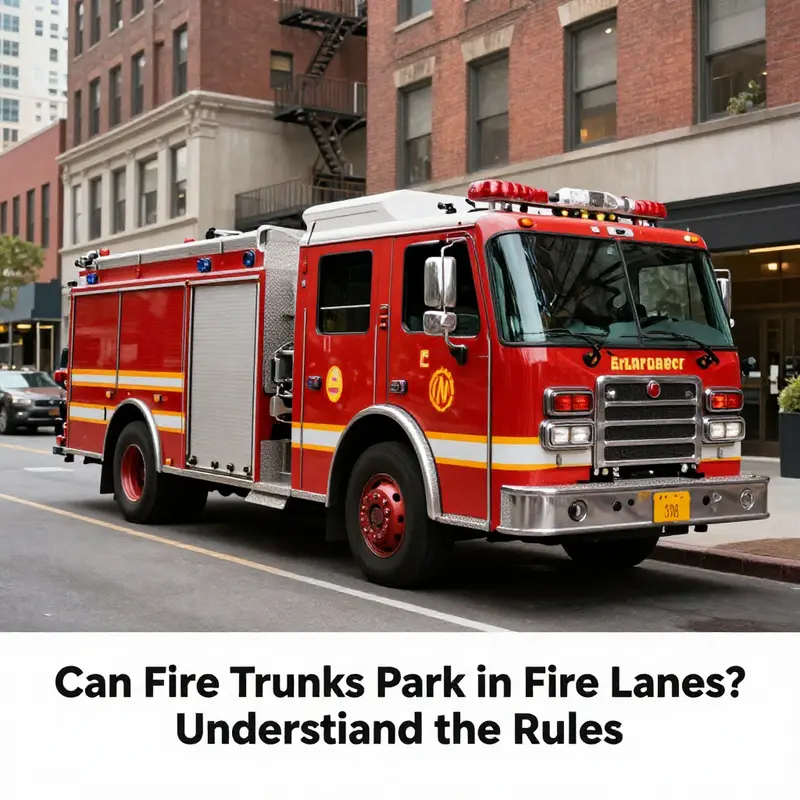
During emergencies, every second matters. Fire lanes are designated corridors that keep the route to a building unobstructed, enabling fire hoses, ladders, and emergency vehicles to reach the scene quickly.
When a vehicle blocks a fire lane, responders face delays, reduced angles for water streams, and the risk of stalled operations. The disruption can also hinder access to hydrants, stairwells, and entry doors, increasing danger to occupants and responders alike.
Enforcement, signage, and public education reinforce the rule: fire lanes must be kept clear. Penalties deter violations, and property owners bear responsibility for maintaining access. The public can support readiness by refraining from parking in these zones and by reporting obstructions promptly.
Effective fire lane management combines planning, design, and daily practice. Lanes are positioned to align with entry points and apparatus reach, and ongoing maintenance keeps markings legible and barriers functional. In busy urban settings, this coordination helps ensure a faster, safer response and reduce the risk of injuries and property damage during crises.
For readers seeking more, resources from NFPA and local codes provide guidance on how lanes are defined, enforced, and integrated into emergency response planning.
Clearing the Path: How Law, Codes, and Practice Shape Fire Lane Access for Fire Trucks
A fire lane is more than a painted stripe or a sign. It is a critical corridor designed to carry the fastest possible response to danger, whether the threat is a blazing exterior, a smoky interior, or a collapsed entrance. In theory, a lane reserved for emergency use should stay open for every passing minute of a perilous event. In practice, it becomes the battlefield where law, engineering, and courage meet. The chapter that follows explores how the legal framework around fire lanes governs not just the everyday traffic of city streets, but the moment-to-moment decisions made when a fire apparatus arrives at a building under threat. The justification for these rules rests on a simple, nontrivial premise: the public’s safety depends on unimpeded access. When seconds count, a lane must accommodate a towering engine, its crew, and the equipment it carries. The result is a carefully balanced set of standards that recognizes the unique requirements of emergency response while preserving order in ordinary times.
Central to this balance is a codified expectation that fire lanes will be designed and managed to allow rapid ingress and egress. The most influential national framework in the United States is the International Fire Code, which, in its 2009 edition, codifies a baseline that many jurisdictions adapt into local law. Section 503, in particular, specifies the physical characteristics that a fire lane must meet to maintain reliability under pressure. A minimum width of twenty-four feet is prescribed to ensure that a fire apparatus can align with a building entrance, with enough side clearance to protect adjacent pedestrians and parked vehicles during an active incident. Vertical clearance of fourteen feet prevents tall apparatus from scraping overhead obstacles, a constraint not only about meeting a code but about preventing costly delays caused by equipment snagging on tree limbs, awnings, or suspended utilities. The turning radius, set at a minimum of thirty feet, is another recognition of the craft of firefighting. Large engines and aerial devices require space to maneuver in tight urban environments, to pivot without backing up into traffic or past other emergency responders. Taken together, these dimensions are not arbitrary; they are the product of decades of fire service experience, urban design, and safety research. They translate the abstract idea of access into concrete geometry that planners, designers, and code officials can use when evaluating new sites or retrofits.
But the law does not operate in a vacuum. It lives inside a complex ecosystem that includes state and local amendments, building codes, and the guidelines of professional bodies that oversee fire safety and emergency preparedness. In many places, local fire departments collaborate with building owners and the private sector to ensure that the lane is both visible and enforceable. Signage, striping, and other markings are not mere decorations; they are functional signals that guide day-to-day traffic as well as an on-scene response. The NFPA’s broader body of guidelines complements the IFC by offering best practices for managing and enforcing fire lanes in a wide range of settings, from shopping plazas to hospitals to high-rise campuses. These guidelines help ensure that the lane remains usable even as surrounding activities change—new loading zones, deliveries, or street widening projects can otherwise threaten access if not properly integrated into the safety plan.
A key idea running through the code and its interpretation is flexibility tempered by clarity. Fire lanes must remain unobstructed, yet fire vehicles must be able to lean into the space as needed to perform a critical operation. This tension is resolved through explicit permissions and expectations: the lane is not a parking spot for anyone except during an emergency, and even then, the use is governed by established procedures that emphasize safety first. The legal allowance for a fire truck to occupy and even temporarily block a fire lane is not a license for casual use. It is a recognized necessity that reflects the urgency of the situation. When a fire unit arrives, the crew must execute a well-practiced sequence—position, assess, connect, and deploy. The geometry of the lane, the terrain of the site, and the location of the incident all shape how that sequence plays out. If the lane is too narrow, if the vertical clearance is inadequate, or if there is insufficient turning space, response times inevitably stretch. The code, by providing a baseline, helps ensure that such complications do not arise because of avoidable design flaws.
Jurisdictional variation is an important reality. While the IFC sets a baseline, many cities adapt it to reflect the realities of their streetscapes and building stock. A downtown environment with narrow streets, a densely built cluster of mid-rise structures, or a campus with varied architecture might require supplementary measurements or alternative configurations approved by the local authority having jurisdiction. The flexibility built into the system recognizes that no one code can perfectly anticipate every site. Yet the core principle endures: fire lanes exist to facilitate rapid, unhindered access. When a fire truck arrives, the priority is to reach the point of danger as quickly and safely as possible, not to enforce a prohibition at the moment of need. The ramifications of ignoring this principle are clear and severe—delays can translate into greater damage, higher risk to occupants, and a steeper line on the emergency services ledger.
To understand how this plays out on the ground, one must consider the interaction of design, enforcement, and training. Design decisions about lane width and turning radii influence the kinds of apparatus that can approach a building. An aerial ladder, a heavy pumper, or a combination vehicle must be able to align with the entry, extend its reach, and operate without impediment. Training ensures that crews know how to position the apparatus without compromising egress for civilians or blocking neighboring lanes. Enforcement, meanwhile, reinforces the boundary between permissible emergency use and everyday street occupancy. Signage and markings create a shared understanding that this space is reserved for a specific purpose and time, while a robust policy framework clarifies the consequences of misuse.
Within this framework, a nuanced point often emerges in public discourse: to what extent can fire trucks “park” in fire lanes? The answer hinges on context. During active suppression, a truck may occupy a portion of the lane and temporarily halt regular traffic to enable rescue operations, hose lines, or the safe placement of extinguishing equipment. The law and the codes examine not only whether such action is permissible, but also how long it may last, under what conditions, and what steps must follow to mitigate risk for bystanders and other responders. The emphasis is not on permissiveness, but on predictable, transparent procedures that support mission-critical activity. The public understands that a lane is not a staging area for everyday errands, but a corridor that becomes available to those who must act swiftly to save lives and protect property.
For readers seeking deeper authority, the official code publications and the organizations that maintain them are primary references. The International Code Council’s codes page hosts the最新版, where officials and designers can review the precise language and any jurisdictional amendments that apply to their locale. This resource sits at the crossroads of policy, law, and practice, guiding the way field personnel and building owners work together to maintain readiness while respecting community norms. In practice, this means a competent coordination between city planners, fire prevention bureaus, building owners, and the public that uses the space. It means a shared responsibility to keep the lane clear outside of emergencies, and a clear, rehearsed protocol when the call comes in and the lane must carry the fire truck to the scene. For those who want to explore the range of equipment that a modern fire department employs in these operations, a useful overview of related apparatus can be found in a dedicated category that aggregates fire-fighting trucks and their variants. This resource serves as a practical reference for understanding how different vehicle configurations interact with the constraints and opportunities created by fire lanes. Copyright © 2026 Cimc Firetruck | Powered by Cimc Firetruck.
Ultimately, the legal framework around fire lanes is about reliability under pressure. It is about ensuring that design, regulation, and professional practice converge to keep spaces accessible when danger erupts. It is a living system, capable of adapting to new challenges—be they larger or more complex buildings, evolving vehicle technology, or changing urban layouts—while preserving a shared commitment to public safety. Fire lanes are not decorative; they are strategic, operational arteries of city life. When viewed through the lens of the IFC’s Section 503 guidance, the width, clearance, and turning radius become not abstract numbers but practical enablers of life-saving action. They tell the story of how a city coordinates human skill, legal authority, and built form to ensure that every fire truck can reach its destination without unnecessary delay. The result is not a single rule but a disciplined approach to access that aligns with the broader mission of emergency services: to protect lives and property with speed, precision, and care. For readers seeking the most authoritative articulation of these standards, the official code reference and ongoing updates are housed on the code council’s platform, which continues to inform how jurisdictions implement and adapt the rules for their local needs: https://www.iccsafe.org/codes/.
Lifelines in Motion: Fire Trunks, Fire Lanes, and the Urgency of Access
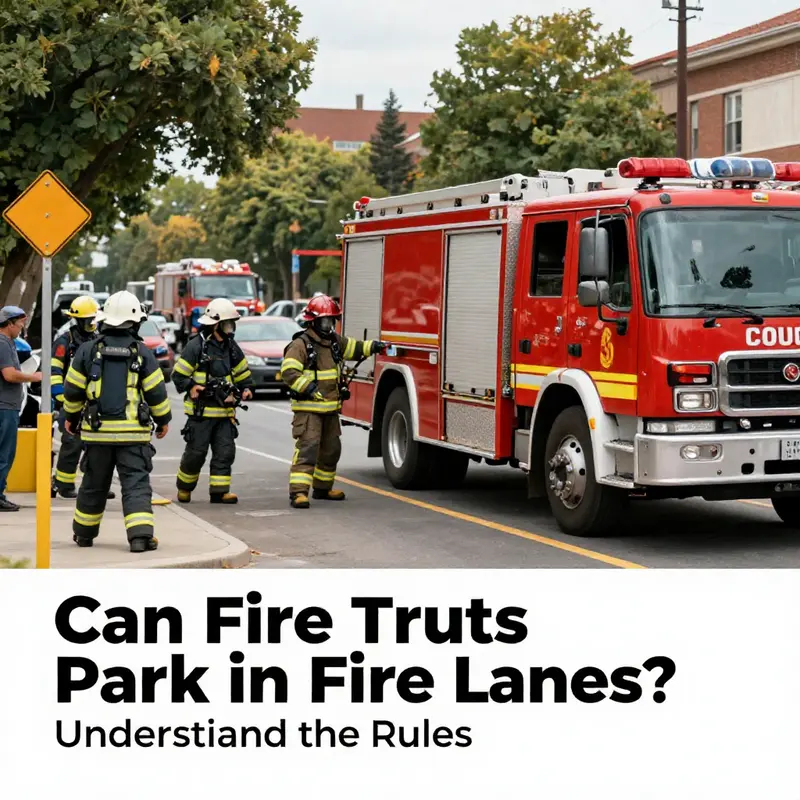
Fire lanes are not merely painted or signed alleys in urban fabric; they are carefully engineered lifelines that keep the critical arc of emergency response uninterrupted. In the heat of an incident, every second matters. A fire lane marks a route reserved for fire departments, a corridor that must be kept clear so engines, hoses, ladders, and crews can reach the building or site with minimum hesitation. The principle is straightforward, yet its application is nuanced. While ordinary vehicles face strict prohibitions against parking in these spaces, fire trucks carry a different mandate. Their mission is to locate, access, and neutralize threats as expeditiously as possible, and the very existence of a fire lane operates as a public safety guarantee: a guarantee that responders can arrive, assess, and act without the friction of traffic or congestion delaying crucial interventions. This distinction—between general parking restrictions and the emergency exception for fire service vehicles—underpins both the ethics and practicalities of urban safety management. When a siren wails and a dispatcher confirms an incident, a fire truck’s ability to deploy in a straight, unobstructed path can be the difference between containment and escalation. The framework that governs this behavior rests on a blend of local ordinances, fire codes, and standards developed by national organizations. Fire lanes are defined as routes specifically reserved for emergency vehicles, enabling access to buildings in need of immediate assistance. In this sense, they function as a shared public resource, where the right to passage is balanced against the everyday use of sidewalks, curb spaces, and driveways. The National Fire Protection Association (NFPA) provides guidelines that many jurisdictions adopt or adapt, offering a common reference point for how these lanes should be designed, marked, and enforced. Yet the reality on the ground varies from city to city, district to district, and even block to block, reflecting the unique rhythms of urban life, zoning history, and risk assessments. The calculus of access is not a simple equation; it is a practice shaped by street design, building configuration, surrounding traffic patterns, and the ability of the fire service to stage, connect, and advance lines of attack. The logic is intuitive to responders: you must be able to reach the façade, locate the hydrant connections, and deploy the apparatus with the least resistance possible. Obstructions—whether improperly parked cars, temporary storage, or inattentive activity—translate into longer lines of travel, cramped maneuvering space, and, ultimately, longer attack times. The consequence is greater potential for property damage, injury, and, in the worst cases, loss of life. This is why enforcement is robust in many jurisdictions, and why fines or towing are common responses to violations. The enforcement is not a punitive afterthought; it is a vital element of the safety system that protects people in crisis. Even as guidelines emphasize the need for consistent clearance, the conversation grows more complex when the built environment includes heritage and historic structures that open their doors to the public. Historic sites, museums, or older civic buildings often face the dual challenge of preserving architectural integrity while ensuring that modern fire safety standards are met. In such contexts, retrofitting to modern codes requires thoughtful integration of accessibility and egress, while preserving the aesthetic and historical value of the property. W. Chow’s 2026 insights draw attention to this tension, underscoring that retrofitting historic structures to meet contemporary fire safety codes presents unique constraints. The retrofit must examine existing access points, evaluate potential new routes that do not compromise heritage value, and install signage that clearly communicates required behaviors for visitors and drivers alike. It is not simply a matter of adding more lanes or more signage; it is about orchestrating a safe choreography where public access and emergency access coexist. The practical upshot is a package of measures that include better spatial planning, clearer wayfinding, and proactive collaboration with local fire departments to verify that access remains unobstructed in various scenarios. The result is a more resilient cityscape, one that can accommodate the flows of daily life while preserving the speed and predictability essential to emergency response. In this sense, fire lanes become a shared responsibility among property owners, city planners, law enforcement, and the fire service. Education plays a crucial role here. Building owners must understand their obligation to keep lanes clear and to implement policies that discourage temporary or incidental blockages. Occupants and visitors benefit from simple, visible reminders about why these spaces exist and what happens when they are compromised. At the same time, firefighters depend on predictable access to deliver life-saving services; their operations depend on a dependable frontage, a stable approach, and a direct line from street to entrance. The interplay of these interests reveals how public safety operates not as a single act of emergency response but as a continuous, cooperative process that blends policy, design, enforcement, and community behavior. Within this framework, a broader understanding of fire lane access emerges. It is not only about accommodating large apparatus during a crisis but about designing urban zones that reduce response times from the outset. It means allocating curb space not as a convenience for private parking but as a resource for protection of life and property. It means ensuring that signage is both perceptible and durable, that road geometries support swift turning and positioning of long, heavy vehicles, and that traffic management plans consider the realities of peak hours, school drop-offs, and commercial deliveries. It also means recognizing that some contexts require adaptive solutions. For example, in densely populated districts with narrow streets, fire departments may employ staging areas that minimize the need for long chassis maneuvers in front of entrances, while still maintaining rapid access to the building’s core. Where historic districts restrict ground-floor alterations, clever use of elevated pedestrian spaces, compliant back-entrances, or alternative access points can help retain the visual integrity of a site while preserving clearance for emergency vehicles. Such adaptive thinking aligns with the NFPA’s emphasis on practical, context-conscious design. It also resonates with the broader mission of public safety: to prevent the worst outcomes through preparedness, disciplined maintenance of access corridors, and collaborative planning. The literature supports this approach by stressing that fire lanes are more than lines on a map; they are active components of a city’s life-safety system. They require ongoing attention—from routine enforcement to regular reviews of how changes in building occupancy, mixed-use development, or pedestrian traffic may affect access. The relationship between fire lanes and the public good is thus intimate and ongoing. It calls for vigilance from multiple stakeholders and a readiness to adjust as urban spaces breathe and evolve. The practical takeaway for readers who plan, design, or manage properties is straightforward: treat fire lanes as critical infrastructure, not as optional features. Ensure that the routes are clearly marked, that the surrounding area remains free of nonessential obstructions, and that your policies align with local codes and national guidance. When new developments arise, engage early with fire officials to map access routes and to verify that emergency ingress and egress remain unquestioned during both routine operations and peak demand. Where heritage elements are involved, prioritize collaboration with preservation professionals, architects, and the fire marshal to arrive at solutions that honor the past while safeguarding the present. For those curious about the kinds of vehicles that routinely operate in these spaces, it can be instructive to explore how different categories of fire response equipment fit into the design logic of a fire lane. In particular, the industrial fire truck category offers a window into the scale and versatility required for broad access, rapid deployment, and sustained operations across varied environments. This category demonstrates how a well-planned lane system accommodates specialized tools alongside standard response vehicles, underscoring the need for thoughtful lane width, turning radii, and surface durability. It’s a reminder that the architecture of emergency response extends beyond a single vehicle or a single incident and that cohesion among equipment, space, and policy ultimately protects lives. As cities continue to grow and as cultural and historic sites attract visitors from around the world, the central lesson remains constant: fire lanes are indispensable, but their efficacy hinges on disciplined respect, informed design, and cooperative action. They are not a burden to be endured but a shared asset that keeps the public safer by ensuring that those who arrive first—those who bear responsibility for saving lives—can get there fast, with the right tools, and with the least possible friction. In this light, the conversation about fire lane access becomes a conversation about urban resilience, about how we build cities that can respond swiftly to danger while preserving the very spaces that define community life. External resource: https://www.nfpa.org/Code-Updates/Fire-Lanes-and-Access-Requirements
Roads, Regs, and Rapid Response: Fire Lane Design and Urban Form
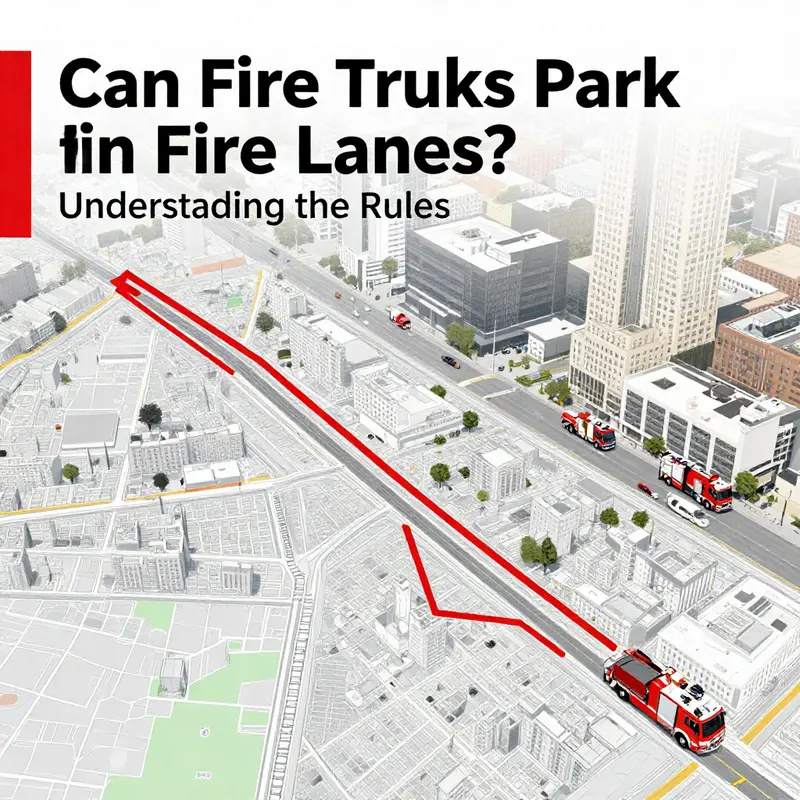
Fire lanes are not mere annotations on a map; they are the living arteries of a city, designed to preserve access for engines, hoses, and crews, to guarantee entry within minutes of an alarm, and to clear paths for water to converge on danger with minimal delay.
The chapter places fire lane regulations at the center of urban form, showing how rules about clearance, signage, and curb usage shape where buildings rise, how streets are aligned, and where hydrants sit in the public realm. Fire lane design is a core element of resilience, balancing daily life with the urgency of emergencies that can occur without warning.
Regulations often require sufficient street width and turning radii to accommodate large emergency vehicles, and they influence land use decisions, such as curb space allocation around hydrants and buffer zones along building facades to keep entrances and egress paths unobstructed. The aim is to preserve safety without unduly constraining mobility in everyday life.
As cities grow, fire lane planning becomes more adaptive. Real-time data, coordinated signals, and targeted restrictions help keep lanes open during peak times. Jurisdictions weave fire lane considerations into broader traffic management to ensure resilience and reliable response times. The result is a regulatory framework that supports both public safety and urban vitality.
From a design perspective, fire lanes interact with walkable street concepts, pedestrian safety, and transit activity. When embedded early in city-building processes, fire lanes can enable compact blocks, clearer hydrant spacing, and safer staging areas, reinforcing a city’s ability to respond quickly while maintaining livable streets. The NFPA and local codes provide the baseline standards that guide layouts toward predictable, engine-friendly configurations.
External resources: Emergency Rescue Vehicle category: https://cimcfiretruck.com/product-category/emergency-rescue-vehicle/; Walkable streets and safety: https://www.walkboston.org/2019/04/24/how-walkable-streets-are-changing-fire-code-and-safety/
Unobstructed Access in Action: Can Fire Trucks Park in Fire Lanes During Emergencies?
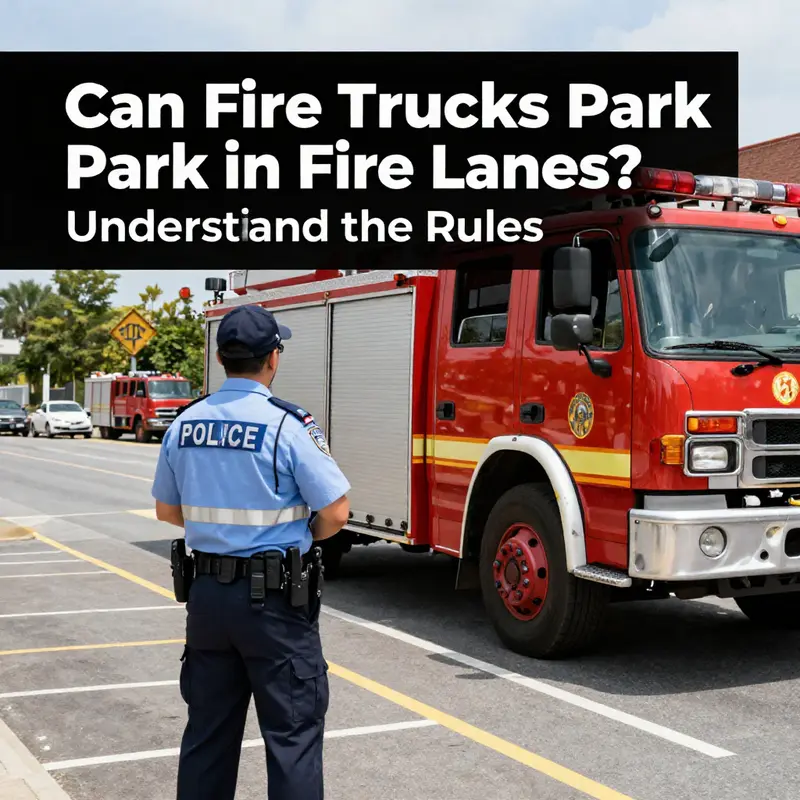
Fire lanes are not ordinary curbside zones. They are the arteries that keep a city’s emergency response system alive, ensuring that when a call comes in, help can arrive without delay. The core principle behind these lanes is clear enough: access must be immediate and unobstructed for emergency vehicles. Yet the way these lanes are used in the heat of a real incident reveals a delicate balance between the speed of response and the safety of bystanders, residents, and other motorists. The situation is not simply a matter of whether a vehicle can park somewhere; it is about whether an operation is authorized, whether space is required for life-saving work, and how regulations translate into practice on crowded streets, in narrow lanes, or at the edge of complex structures. In that light, the question becomes less a general rule about parking and more a nuanced judgment made by trained responders under the pressure of ongoing danger.
During an active emergency, fire lanes serve a specific, mission-critical purpose. They are designed to accommodate large apparatus quickly and to provide direct routes to entrances, hydrants, rooftops, stairwells, and other access points. The overriding aim is to minimize the time between arrival and initial action: heavy hoses need to be laid out, ladders raised, and crews deployed without delay. In those moments, a fire truck may legally occupy a portion of the lane, and in many cases it must. This is not about breaking rules; it is about following a protocol that prioritizes public safety above routine traffic patterns. NFPA 1, the standard for fire code, emphasizes that fire lanes must remain clear at all times except during authorized emergency vehicle operations. In other words, the lane’s purpose is active management by those who are licensed and trained to perform high-stakes tasks under pressure. The practical upshot is that when firefighters are responding to a call, they are given leeway to position themselves, sometimes quite securely, to protect the scene and to maintain the corridor needed for additional units and support actions.
The formal allowance, however, sits atop a broader legal and regulatory framework that varies by jurisdiction. Some places codify a strict prohibition against regular vehicles occupying fire lanes, with penalties designed to deter misuse. Others adopt a more flexible stance, recognizing the realities of urban density and the need to stage additional resources or to create space for rapid entry through a building facade or crowded street. In practice, this means that enforcement officers must interpret the situation as it unfolds, distinguishing between authorized emergency vehicle operations and unauthorized occupancy. Training for drivers, incident commanders, and frontline responders emphasizes this distinction. They learn to assess the scene quickly: is the lane needed for ongoing life-safety work, or can part of the space be left unobstructed while a secondary route is used for access or egress? The ability to make that decision—on the go, with limited time and high stakes—hinges on experience, clear command structures, and robust pre-incident planning.
This planning is not merely theoretical. Fire services often predefine staging areas little more than a block away from a building, then move to the door with a carefully choreographed set of moves that keeps traffic flowing elsewhere while still preserving critical paths. The equipment itself matters in this calculation. Different trucks have different profiles, turning radii, and payload requirements, all of which affect where they can safely park and what adjacent space must remain open. For readers curious about the kinds of apparatus that demand careful lane management, a dedicated look at the broader fleet can offer insight into the constraints and capabilities that drive these decisions. See the fire-fighting truck category for a sense of the types of vehicles involved in urban responses. πυροσβεστικό όχημα
In many operations, the lane becomes a working zone rather than a spectator stand. Crews may need to position a truck adjacent to a doorway to deploy a hose line directly into a building, or they may require space to access a hydrant, connect it to a pump, and then shuttle water through hoses and appliances. The sequence of actions is meticulous: situational awareness passed from the incident commander to the driver and crew, then to the nozzle team and the pump operator. The lane’s clearance is therefore not a one-and-done condition but a dynamic parameter that evolves as the scene develops. If another unit arrives with heavier equipment, or if the fire advances and more lines are required, additional adjustments to positioning may be made, always within the framework of authorized operations and ongoing safety assessments. In this sense, a fire lane is not a static corridor; it is a temporary, purpose-built workspace that expands and contracts with the tactical needs of the incident.
The public conduct around these scenes adds another layer of complexity. Civilian drivers and pedestrians instinctively want to move through the space or to pull into it for a momentary stop. Yet the risk calculus is weighted toward keeping the lane open for life-saving operations. This is where education, signage, and enforcement intersect with daily traffic patterns. Communities invest in clear markings and visible indicators that communicate the lane’s purpose and the priority of emergency access. The message travels beyond legal text: at the curb, the lane is a zone of responsibility, a reminder that every second counts when a building is endangered or a life is at stake. While the rules may appear rigid on paper, the reality in the street hinges on disciplined coordination between responders and the public, and on a shared understanding that access is a public good—measured not by the convenience of the many, but by the safety of the vulnerable and the resilience of the whole urban system.
From a design perspective, fire lanes reflect a broader ethos of safety-by-design in the built environment. Urban planners, fire marshals, and architects collaborate to ensure that lanes are not only legally defined but physically capable of accommodating the largest and most demanding vehicles, including aerial apparatus and heavy-duty trucks. This involves considerations such as lane width, turning radii, curb treatments, and the alignment of entrances and exits with stairwells, loading docks, and parking facilities. When these factors are optimized, the need to improvise in the moment diminishes; responses become faster, and the risk of secondary incidents—such as backdrafts, line tangling, or blocked entry—decreases. Yet even the best-designed spaces must anticipate the reality that during emergencies, space will be used intensively and temporarily. That is why standards like NFPA 1 emphasize not merely the existence of lanes but their active management during incidents. The guidance is practical: keep the lane clear, ensure that authorized vehicles can operate without delay, and, when possible, structure staging so that additional units can integrate smoothly with minimal disruption to surrounding traffic.
In the end, the question of whether fire trucks can park in fire lanes during emergencies is answered by a combination of regulation, training, and situational judgment. The rules provide a framework, but the daily work of firefighting relies on the ability of responders to adapt within that framework. The lanes exist to protect life and property; the trucks exist to fulfill that promise with precision and speed. The balance is not a contradiction but a carefully calibrated system in which access, safety, and efficiency converge. For readers who want to connect practical fleet considerations with the broader discussion, exploring the range of equipment used in urban responses can illuminate how design choices influence real-world operations. As equipment evolves to meet higher demands—whether through larger pumps, more flexible chassis, or drones and robots that extend a unit’s reach—the fundamental principle remains unchanged: fire lanes must be a reliable conduit for rescue, not a bottleneck. The success of that principle rests on clear regulation, rigorous training, and a shared public understanding of why swift, unimpeded access matters when every second can alter an outcome.
External resource: NFPA 1 Fire Code – National Fire Protection Association: https://www.nfpa.org/Code-Development/Standards/NFPA-1-Fire-Code
community safety
In conclusion, understanding the regulations that allow fire trucks to park in fire lanes is crucial for business owners. These laws are not just about compliance; they are fundamentally about public safety and rapid emergency response. By maintaining clear fire lanes, businesses contribute to a community’s safety, ensuring that emergency services can perform their roles effectively. The interplay between legal regulations, public safety needs, urban planning, and enforcement plays a pivotal role in facilitating these services. Thus, embracing these guidelines not only helps in adhering to the law but also enhances overall community safety.

