
















Fire trucks are indispensable in firefighting, specifically designed to transport water and essential firefighting resources. The effectiveness of a fire crew largely relies on the water capacity of the fire trucks they use. This article will delve into the various types of fire trucks, starting with small fire trucks that handle initial urban responses, moving to large fire trucks optimized for significant incidents, and then exploring specialized vehicles like large pumpers, foam trucks, and water tankers designed for high-capacity water transport. Understanding these aspects illuminates how crucial the right fire truck is for effective firefighting operations, particularly in the context of business owners who must prioritize safety measures in their facilities.
Compact Carriers, Critical Water: How Small Fire Trucks Kickstart Firefighting
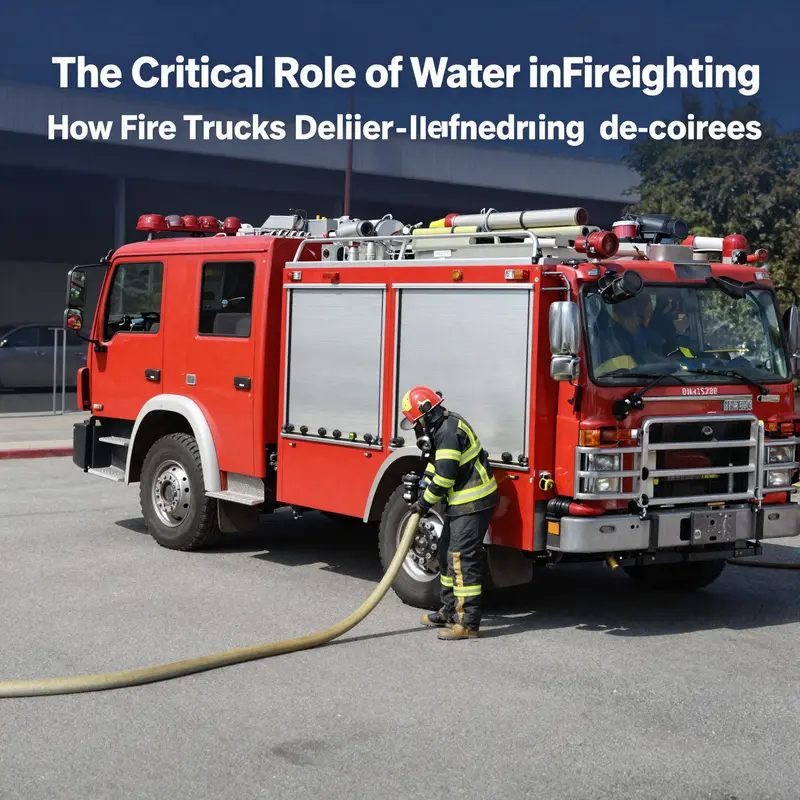
Small fire trucks do more than quietly anchor urban response maps. They are purpose-built to reach a fire scene quickly, to thread through tight streets, and to place water on the fire while larger units are still en route or waiting to establish a steady supply. In many communities, these compact responders are the hinge point between a moment of growing danger and a controlled, responsive firefighting effort. They bring not only water but a disciplined approach to attack—one that prioritizes speed, accuracy, and the protection of lives and property in places where every second counts. The core of their appeal lies in water capacity, a measure that, at first glance, may seem modest compared with the volumes carried by the biggest pumpers. Yet that seemingly restrained capacity is what enables a small vehicle to arrive first, to begin suppression promptly, and to set the stage for the larger and longer operations that will follow once the water supply is secured. In practical terms, small fire trucks typically carry water tanks in a range that can be described as a bridge between footwork agility and practical suppression power. The usual spectrum runs from 500 gallons (approximately 1,893 liters) up to 1,000 gallons (approximately 3,785 liters). Those figures translate into roughly 1,000 to 3,000 liters of usable water on board. This is not a mere trivia stat; it is the arithmetic behind the first firefighting actions that can either constrain or accelerate the trajectory of a blaze. A 500-gallon (1,000-liter) configuration, for instance, is widely recognized as capable of addressing the initial stages of a residential structure fire, a vehicle blaze, or a small commercial incident. It is enough water to initiate a meaningful knockdown, to slow flame spread, and to begin cooling exposed surfaces while crews diagnose the fire’s behavior and plan the next steps. The small truck’s geometry—compact, low-profile, and highly maneuverable—enables delivery in spaces where larger apparatus simply cannot operate with the same immediacy. In the narrow corridors of a city block or the winding lanes of a rural hamlet, the vehicle’s ability to arrive fast and deploy a steady stream can prevent escalation, buying time for a coordinated response that may include additional engines, aerials, or hazmat units as the incident evolves. What happens after the initial water hits the fire is a function of tactics as much as capacity. Even with a smaller tank, a well-trained crew can deliver a reliable water curtain that protects lives and slows flame growth. The pump, while not as large as those on full-size pumpers, must be capable of delivering a steady, controllable flow at the pressures required to reach into a structure or to push through the density of a crowded exterior scene. This balance between pressure, flow, and reach is not accidental; it is the product of careful design choices that optimize for the conditions most likely to be encountered in the vehicle’s service area. In many jurisdictions, this means the small truck arrives with a ready-to-use toolkit beyond the water itself. Hoses and nozzles are selected for portability and efficiency; the aim is to maximize the water’s effectiveness without sacrificing the rapid deployment that defines the vehicle’s value. Foam concentrates are sometimes included to extend the reach of limited water, particularly on hydrocarbon fires where a water-only approach may struggle to cool and blanket the fuel source. When foam is available, the operator uses it judiciously to flatten the fire’s growth potential and protect exposures while the larger resources come on scene. This foam capability is not universal, but where present it demonstrates how compact platforms adapt to a wider range of incident types. The gear carried on board is also part of the strategic equation. In addition to hoses and a basic pump, small trucks often carry essential rescue tools, portable extinguishers, and a compact set of tools designed for rapid scene assessment, life safety, and initial extinguisher support. The emphasis is on being ready to act, not simply to monitor. The decision to deploy a small, water-bearing unit is driven by a clear assessment of priorities: if life safety is at stake and every second counts, the fastest water on the fire is the most valuable water. The economic dimension of these vehicles enhances their appeal, especially for volunteer departments and rural districts where budget constraints are a reality. Their smaller size tends to translate into lower upfront costs and reduced ongoing maintenance compared to full-size pumpers, thereby enabling more frequent replacements or the addition of a second unit to a response fleet. This affordability does not come at the expense of capability; it reflects a deliberate choice to match vehicle size with the demands of typical local incidents. In practice, community needs diverge. Urban cores with dense housing, mixed-use streets, and limited parking often favor smaller tank volumes paired with bold, fast response. Rural and semi-rural areas may opt for slightly higher capacities to bridge longer distances and to minimize refill stops. Across regions, the deployment decision rests on a blend of terrain, population density, and incident patterns. The 4×2 configuration commonly cited in literature for small, water-bearing trucks illustrates the type of balance engineers aim for: sufficient payload to begin the suppression process without compromising the vehicle’s ability to maneuver through tight spaces or climb modest gradients. The price tag on these compact units is not trivial, but it is more accessible than a full-size apparatus and often aligns with funding cycles that prioritize rapid fleet expansion. A representative small truck with a 500-gallon tank has appeared in product pools at roughly $25,000 to $30,000, a range that makes it feasible for many departments to acquire at least one additional asset for early suppression. Such a purchase can dramatically alter response times: rather than waiting for a larger engine to arrive, responders can begin cooling and containment immediately, creating a safer scene for occupants and firefighters alike while larger water supplies are sought or connected. When discussing the role of small fire trucks, it is important to recognize that their value extends beyond the water they carry. They are integrated into a layered response strategy, designed to complement larger pumpers that arrive later with greater intake capacity, longer hose lays, and the ability to draft from hydrants or from shuttle water supplies. In this light, an efficient fleet includes not only big, high-capacity apparatus, but also nimble, water-bearing vehicles that can begin suppression and scene stabilization the moment a call is received. This layered approach hinges on coordination and clear command structure. It requires training that emphasizes the sequence of actions: locate, assess, secure water supply, begin knockdown, protect exposures, and set the conditions for a sustained attack. The driver-pump operator—who is trained to read the fire’s behavior, to manage pressure and nozzle technique, and to maintain momentum while conditions change—plays a pivotal role in extracting maximum effectiveness from the small platform. The interplay of speed, water, and technique defines the daily reality of small, water-bearing trucks. Crews learn to prioritize lines that maximize reach and control, to position themselves to protect life safety, and to engage in efficient handoffs with arriving engines that bring additional water and storage capacity. The concept of a quick, initial water application also translates into a practical narrative about infrastructure and community preparedness. In many places, this means the small truck serves as a reliable early responder in both urban and rural landscapes, capable of bridging the gap between the moment a fire is detected and the moment a sustained water supply is established. It is not simply about sending a vehicle with a hose; it is about delivering a tactical edge that improves outcomes at the fire scene. For readers who want to explore more about this category and see how it fits into a broader equipment ecosystem, there is value in examining the small-fire-truck category as a living catalog of configuration options, fuel strategies, and firefighting doctrines tailored to local risk profiles. The best way to understand the practical implications is to imagine a typical call that unfolds in a mixed landscape: a residential-fire scenario in a tight urban block with a nearby rural spur. A small truck can be first on scene, quickly delivering the first water and enabling firefighters to start cooling exposed surfaces on multiple exposures. As the incident escalates or transitions to a heavy fire, larger engines arrive and begin establishing a robust water supply, often through hydrants, dedicated water sources, or portable tanks that extend the initial response’s reach. The small unit’s contribution remains vital: it keeps the scene under control, protects occupants who might still be inside, and slows the spread in a way that allows the overall operation to scale up without losing momentum. This integrated approach—fast water, strategic positioning, and a clear handoff plan—embodies the practical value of small fire trucks within modern firefighting. For those who want a concise entry point into what these vehicles bring to a fleet, consider exploring the small-fire-truck category to see the typical configurations, capacities, and gear that define this class of responder. The broader lesson is straightforward: yes, fire trucks carry water, but in the right size, they carry it with purpose. They arrive with intention, begin suppression when every moment matters, and set the stage for a coordinated, comprehensive response that mobilizes larger resources efficiently and safely. As incidents evolve, the small truck remains a steady, capable ally—an emblem of how thoughtful design, practical capacity, and disciplined operation can change the trajectory of danger into control. For further reading on equipment categories and to see a representative example of a compact water-bearing unit in the field, consult the small-fire-truck category. offers examples of configurations designed to meet the challenges of dense streets, vehicle access, and rapid deployment. The emphasis here is not merely on pushing water harder, but on ensuring that the overall system—pump, hose, nozzle, water source, and crew skills—works in harmony under pressure. This is why, even as a department values high flow, it should not overlook the complementary capabilities that support safe and effective water delivery: pump efficiency, onboard water storage, draft readiness, and the ability to integrate with mutual-aid resources when the call scales beyond a single engine’s reach.. External resource: For a representative listing and broader context on how compact fire trucks are marketed and deployed in contemporary firefighting, see https://www.example-firetruck.com/product/ycy24140-60
Liquid Capacity in Motion: How Large Fire Trucks Carry Water to Fight Fires
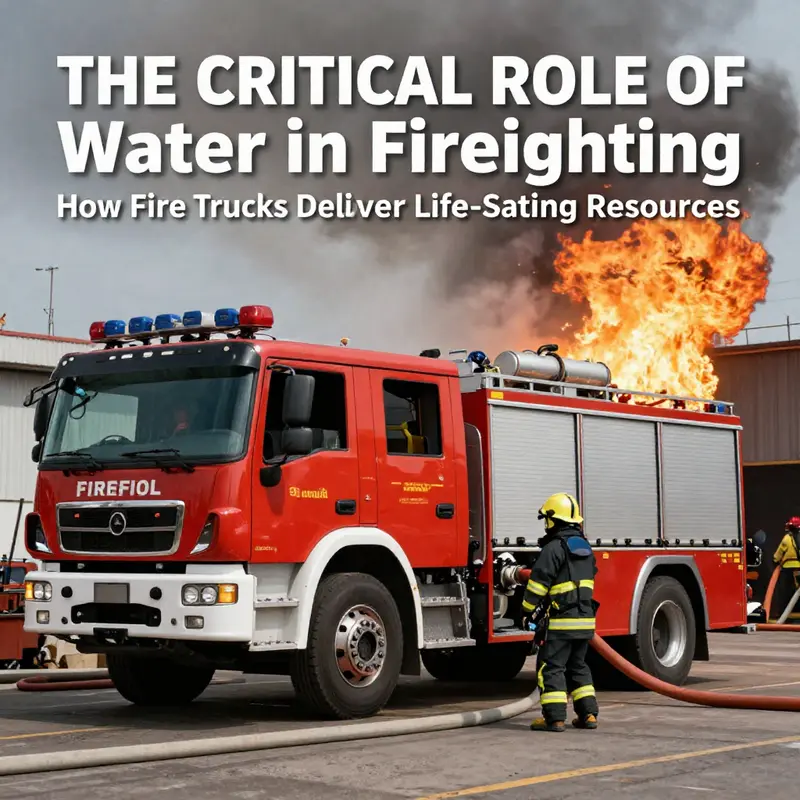
Water is the lifeblood of firefighting, and the way a truck carries that water shapes almost every other decision a team makes once the alarm sounds. The image of a fire engine rolling to a blaze is not just about speed or the flash of lights; it is about delivering a reliable, sufficient, and controllable stream of water to suppress flames, cool hot surfaces, and protect both people and property. In modern firefighting, large fire trucks are designed around a central question: how much water can we bring to the scene, and how quickly can we move it where it is needed? The answer hinges on the vehicle’s role, its intended terrain, and the operational strategy chosen by the incident commander. The range is broad, because fires demand different paces and scales. What holds constant is the recognition that on-board water capacity interacts with pumps, hoses, and onboard equipment to determine how rapidly a crew can establish an initial knockdown, sustain a stream for an extended attack, or bridge a gap when hydrants are sparse or unavailable.
To begin with, the basic calculus is straightforward, though the details are nuanced. Small fire trucks, often deployed for initial response in dense urban areas or on smaller incidents, typically carry water in the range of 1,000 to 5,000 liters. Those figures translate to roughly 264 to 1,320 gallons. When the fire threatens larger structures, a standard large urban pumper comes into play, boasting a tank capacity typically between 4,000 and 8,000 liters (about 1,056 to 2,113 gallons). This middle ground is a critical pivot point: enough water to initiate suppression quickly, but not so much that the truck’s weight and handling become prohibitive in a crowded city street or during a rapid retreat from a dangerous perimeter.
The evolution toward higher capacities becomes essential when incidents expand beyond a single room or when structural fires threaten to transect multiple floors or adjacent structures. Large pumpers and foam trucks push the envelope further, with capacities generally ranging from 10,000 liters up to 20,000 liters or more. In some specialized configurations, a vehicle can hold water well beyond that, reaching or exceeding 20,000 liters. These models are not arbitrary extras; they are purpose-built for sustained operations in environments where hydrants are sparse, or where a prolonged attack is anticipated due to the scale of fuel, timber, or industrial hazards.
One striking example in the field highlights how a single vehicle can redefine tactical decisions: a heavy foam truck, designed to deliver water and foam concentrate in tandem, often carries around 21,600 liters of water. This considerable on-board volume enables continuous water and foam streams without frequent refills, a crucial advantage when confronting high-intensity fires involving flammable liquids or complex industrial facilities. The practical effect is a smoother, more continuous assault on the flames, with fewer pauses while operators locate additional water sources.
These numerical thresholds are not just numbers on a spec sheet; they map onto real-world choices. City fire departments must balance the desire for a large on-board water reserve with the realities of maneuverability, fuel efficiency, and the weight limits that come with the chassis. A heavier vehicle can strain a route with tight turns, steep grades, or narrow bridges. It can also complicate aerial operations when an engine and its manpower are simultaneously required to stabilize a building or organize a search and rescue inside a smoke-filled space. Therefore, the concept of water capacity is never abstract; it is a deliberate compromise between what is necessary to fight a fire effectively and what is practical to operate under challenging conditions.
The role of water capacity is further amplified by the power of pumps that are built into these large vehicles. Modern fire trucks come equipped with on-board pumps capable of delivering water at impressively high rates, commonly exceeding 1,000 to 2,000 gallons per minute (GPM). In metric terms, that translates to roughly 3,785 to 7,570 liters per minute. The pump is not a separate feature slapped onto the chassis; it is integral to how the water carries through to the nozzle and how quickly it can be applied to the fire. This pairing of on-board storage with high-pressure delivery means that even a truck with a smaller tank can perform crucial short-term suppression effectively, while larger tanks extend those capabilities over a longer duration and across larger fire zones.
Of course, capacity and pumping are not the only factors in play. Fire trucks today are engineered with a suite of integrated systems designed to improve efficiency, safety, and coordination at the scene. The water tank is just the starting point. A robust set of pre-connected attack lines, high-pressure hoses, and advanced nozzles allows firefighters to initiate a rapid and controlled application of water the moment they arrive. The presence of thermal imaging cameras, sophisticated radios, and other communications gear enhances situational awareness, enabling crews to select the most effective points to begin suppression and to modify tactics as conditions change. In many scenarios, the combination of adequate water, strong pump performance, and well-coordinated equipment is what separates a quick containment from a protracted battle against a spreading blaze.
Across the spectrum of large fire vehicles, distinct classes reflect the differing demands of urban, rural, and industrial environments. Standard urban pumpers are optimized for rapid initial attack and close-knit urban layouts. They carry enough water to commence suppression while remaining nimble enough to navigate dense streets and tight corners. In contrast, specialized trucks—such as water tenders or tanker trucks—are designed to transport vast quantities of water to remote locations or hydrant-poor zones. These tend to be the vehicles chosen for sustained operations during wildland fires or long-duration industrial incidents. Their tanks frequently exceed 10,000 liters, with some models surpassing 20,000 liters, an on-board reservoir that can sustain a team as long as the water source remains contested or distant.
The discussion of capacity also needs to acknowledge the role of foam and other suppressants. In many operations, the goal is not merely to drown flames but to displace the fuel’s surface with a moderating layer that slows vapor release and reduces the chance of reignition. Heavy-duty foam trucks provide a practical advantage here. Their design accommodates large volumes of foam concentrate mixed with water on the fly, producing a more effective blanket for burning liquids or large-scale hazards. The ability to deliver foam at high flow rates requires not just a large water tank, but a compatible system that can mix concentrate quickly and deliver it through the same or parallel hoses. The net effect is a more versatile tool in the responder’s kit, allowing crews to tailor the mix to the fire’s characteristics rather than being limited to plain water.
The practical storytelling of capacity becomes more vivid when one considers the routing problem many fire teams face. A scene might begin with hydrants nearby and a good water supply, but as the incident grows, the hydrant network can prove insufficient. In such moments, the ability to switch to a remote water supply system or to pool water from nearby sources becomes critical. A large-capacity vehicle can serve as a mobile reservoir, delivering steady streams while other units establish additional supply lines or fetch water from distant sources. This orchestration is what elevates the water capacity from a physical measure to a strategic tool—one that can shorten the time to knockdown, reduce overall damage, and temper the risk to firefighters operating inside and around the fire.
Another layer of consideration is the vehicle’s design for the environment. In rugged terrain or high-rise settings, the chassis and drivetrain must support reliable performance under heavy loads. The best examples synthesize durability with off-road capability, ensuring that the water remains on-board as the vehicle negotiates challenging terrain or climbs to elevated work areas. This is where the reputation of certain manufacturers and their engineering philosophies becomes relevant, because a robust chassis can enable a larger water payload without compromising safety or handling. When a truck blends high capacity with a resilient platform and precise load management, it becomes a reliable partner in the long and dangerous ordeal of a major fire.
To bring these ideas back to the core question of the chapter, does a fire truck carry water? Yes, and the magnitude of that water load matters. The capacity spectrum—from 1,000 liters on small, rapid-response units to 20,000 liters or more on specialized water tenders and foam-equipped vehicles—frames how teams plan, how quickly they can begin suppression, and how long they can sustain operations at the scene. The water on board is not merely ballast; it is a critical resource that, when paired with a capable pump, tailored hoses, and smart tactics, translates into tangible progress against the blaze. The most effective response is rarely about the biggest tank alone. It is about the synergies of storage, pressurized delivery, and the strategic choices that accompany every deployment, from the first on-scene actions to the subsequent steps that protect lives and property.
For readers curious about the practical range of equipment that supports these capabilities, the Water Tanker Fire Truck category on the broader fleet of firefighting vehicles provides a clear example of how teams plan for large-scale water supply and sustained operations. This category highlights how different vehicle configurations can be optimized to meet specific mission profiles, from urban defense to vast rural landscapes, while maintaining a cohesive approach to safety, efficiency, and effectiveness. To explore a representative lineup aligned with these principles, see the Water Tanker Fire Truck category.
In sum, the story of water capacity in large fire trucks is a story of balance and backstop. It is about ensuring that when a call comes in, the response is not just swift, but sufficient in volume and reliable in delivery. Each liter carried is a resource pre-allocated to the moment when a team must press forward with determination, containment, and care. The modern engine is less about a single, overwhelming surge of water and more about the disciplined, tactical flow of water from tank to nozzle, sustained through the right combination of tank size, pump power, and an array of supporting equipment. When these elements align, large fire trucks prove not only their worth but their essential role in protecting lives, property, and even natural resources in the face of emergencies.
External reference for broader tanker design and capabilities: MAN Tanker Trucks.
Internal resource for equipment categories: Water Tanker Fire Truck.
From Reservoir to Rescue: How Large Pumpers and Foam Trucks Turn Water into Firefighting Power
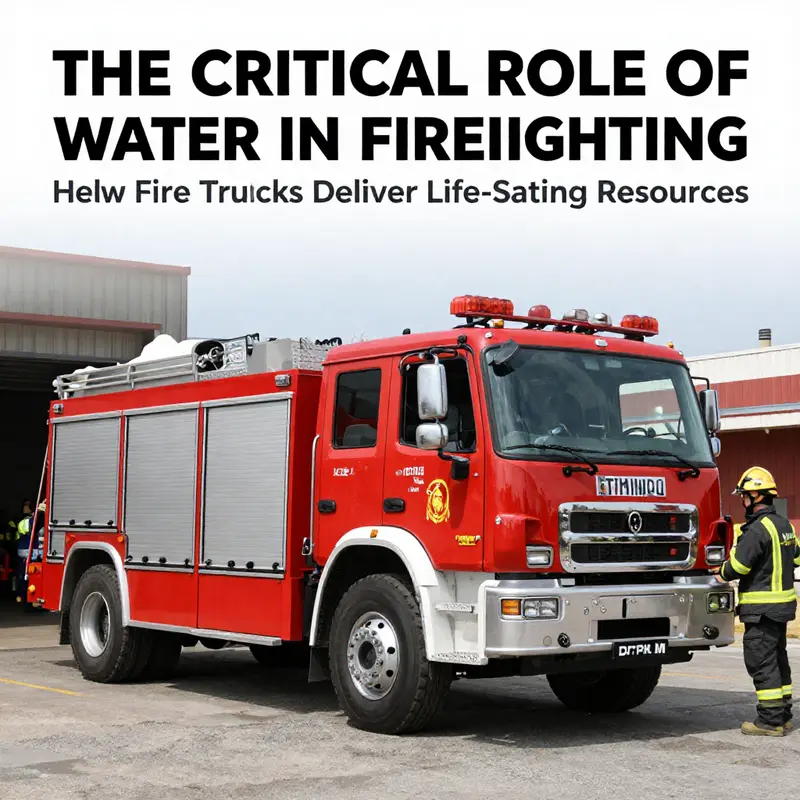
Water is the lifeblood of firefighting, and on the scene of a blaze, every drop counts. Fire departments rely on a spectrum of apparatus to move water from its source to the flames, and among the most impactful are the large pumpers and foam trucks. These are not merely big trucks with a hose; they are purpose-built water delivery systems on wheels. Their primary function is to deliver sustained, high-volume water and suppressant to the fireground, often under demanding conditions where hydrants are scarce, distant, or overwhelmed by the size of the blaze. In the calculus of suppression, capacity and reach are as critical as the skill of the firefighters who operate them. Large pumpers and foam trucks embody a philosophy of water as a portable resource—stored, pumped, and relayed to the fire with precision and resilience. They are designed to keep the water flowing where it is needed most, a feature that becomes especially important when the fire is not a quick burn but a sustained threat that demands continuous application of water, foam, and other agents over minutes or hours rather than moments.
A defining feature of these specialized vehicles is their substantial water tanks. While the smallest engines may carry a few thousand liters, large foam water tankers routinely push well beyond that, with capacities in the neighborhood of 21,000 liters in typical configurations. This kind of volume matters. It reduces the number of trips to refill, lowers the time firefighters spend waiting for a hydrant to supply a stream of water, and increases the chances of containing a fire before it grows beyond control. In many operational scenarios, the ability to sustain a long, uninterrupted spray is more valuable than the speed at which the first stream reaches the flame. The capacity to hold and deliver large quantities of water enables a more methodical, steady attack, which can be crucial when a blaze involves complex structures, heavy contents, or remote locations.
Within this category, tanker-style configurations are common, and their range of capacities reflects the diverse demands faced by fire departments. Some large foam water tankers are designed to carry around 15,000 liters, while others accommodate 12,000 to 15,000 liters depending on mission intent and terrain. Yet the most capable, in many fleets, approach or exceed 20,000 liters. The upper end of the spectrum is not merely about larger tanks; it is about the endurance to fight a fire when supply chains are long or hydrants are sparse. In rural landscapes, wildland-urban interfaces, or industrial compounds with limited water mains, the ability to shuttle water from distant sources—lakes, ponds, portable tanks—is a defining advantage. This relay capability, often described as a water shuttle or relay, allows a dispatcher to stage multiple vehicles along a line of supply, creating a continuous flow from a distant source to the point of attack. The resulting water column becomes a lifeline for suppression crews operating far from urban water systems.
The foam component adds another layer of effectiveness, particularly for Class B fires involving flammable liquids. Foam acts as a stabilizing blanket on the surface of the burning liquid, reducing heat transfer, separating the fuel from the air, and extending the period during which water alone would be less effective. The foam system is engineered to blend with the water stream, maintaining a stable foam blanket that suppresses vapors and prevents re-ignition. For a large-scale spill or a warehouse fire where diesel, solvents, or other hydrocarbons contribute to the hazard, foam can dramatically improve fire control and recovery times. This is not a one-size-fits-all feature; it is a targeted enhancement that broadens the spectrum of fires these heavy vehicles can tackle. The operator’s task is to balance water volume with foam quality, adjusting proportioners and delivery rates to achieve the right mixture for the specific fire class and fuel involved.
In practical terms, the deployment of a large pumper or foam truck often reads as a choreography of pressure, volume, and timing. The pump is the heart that converts stored water into a pressurized, high-velocity stream. A robust pump pushes water through large-diameter hoses, delivering water with enough force to penetrate structural barriers, reach upper floors, or knock down flames that threaten to spread. The hoses themselves are more than flexible conduits; they are lifelines that determine how quickly water can be moved from the truck to the fire. The configuration typically allows for multiple parallel streams, enabling simultaneous attack on different sections of a blaze or creating a defense line to protect exposed exposures. In the hands of an experienced crew, this arrangement translates into a dynamic, adaptive assault that can shift with the fire’s behavior, weather conditions, and available water sources.
The operational versatility of these machines is perhaps best illustrated by their ability to function as a self-contained supply chain. They can arrive at a scene, secure a water source, and begin pumping immediately, all while other units are en route or engaged in primary suppression. When hydrants are available, they act as a rapid delivery system that can augment a city’s water network. When hydrants are scarce or distant, they transition into water shuttles, drawing from natural sources and portable tanks to maintain a continuous feed. This relay capability is not a bonus feature; it is a core capability that ensures water reaches the most distant or earliest reached parts of the fire scene. The design of these trucks—sturdy chassis, high-capacity tanks, and powerful pumps—reflects a strategic emphasis on reliability and sustained performance rather than sheer speed alone. In high-rise districts, for example, the capacity to deliver long lines of hose and maintain pressure as crews advance is as crucial as the initial knockdown of flames.
Another facet of the large pumper’s and foam truck’s utility is their role in domains that blend urban and rural firefighting demands. They must perform across a spectrum of terrains, from smooth city streets to uneven rural backroads, sometimes negotiating tight turns or steep grades while carrying heavy payloads. This necessitates a robust chassis, good traction, and training that emphasizes safe handling under load. Even as they are heavy and voluminous, their design prioritizes accessibility—accessible water intake points, easy-to-use valves, clear gauges, and straightforward hose layouts that allow a crew to read pressure and capacity at a glance. The ultimate measure of effectiveness, however, is not the size of the tank or the length of the hose alone; it is the ability to deliver water where it is needed with predictability and control. In the hands of a coordinated team, these vehicles become a central node in a broader suppression strategy, connecting water supply, suppression tactics, and incident command into a single, functioning system.
From a narrative perspective, the evolution of large pumpers and foam trucks mirrors the broader shift in firefighting toward integrated water management. Fire teams recognize that water is not merely a single resource carried on wheels but a dynamic asset that must be managed with foresight, coordination, and tactical flexibility. The relay operations demand communication, timing, and a shared mental model of the scene. Water is pumped to the nozzle not just to douse flames but to suppress heat, protect exposures, and create the conditions for firefighters to advance safely. Foam enhances this capability by extending the period of effective suppression when the situation involves hydrocarbon fuels. The combination of high-volume water delivery and foam protection thus becomes a powerful equalizer on scenes that would otherwise overwhelm less capable equipment.
For readers who are curious about the practical placement of these assets within a full firefighting fleet, consider how a department would integrate a foam-capable, high-volume carrier into its response plan. The idea is to create redundancy and resilience in supply—one vehicle can begin work with a local source, while another takes on the relay mission to pull water from a remote lake or pond. In the hands of trained crews, such configurations reduce the time to initial knockdown and extend the operational window for scene stabilization. This arrangement is not merely about raw power; it is about sustaining a disciplined, repeatable approach to water management under pressure. The result is a firefighting operation that can remain effective even as the fire evolves, winds shift, or water mains fail under heavy demand. As with all critical equipment, training, maintenance, and coordination with other units are the invisible gears that keep these machines performing reliably when the stakes are highest. The chapter above is not just a celebration of capacity; it is a recognition of how water, delivered with purpose and precision, can determine whether a blaze becomes a tragedy or a controllable incident.
If you wish to explore more about the foam-focused end of the spectrum, you can look at the Foam Fire Truck category for additional context and examples of how foam systems are integrated with large-capacity water carriers. Foam Fire Truck category.
For those who want to inspect market offerings and technical details directly, see this external listing that discusses a high-capacity water and foam fire truck with substantial onboard storage and deployment potential. https://www.alibaba.com/product-detail/China-Fire-Fighting-Truck-10ton-15000L-Water_1601749586767.html
Water on the Move: Specialized Tankers as the Lifeblood of Large-Scale Fire Suppression
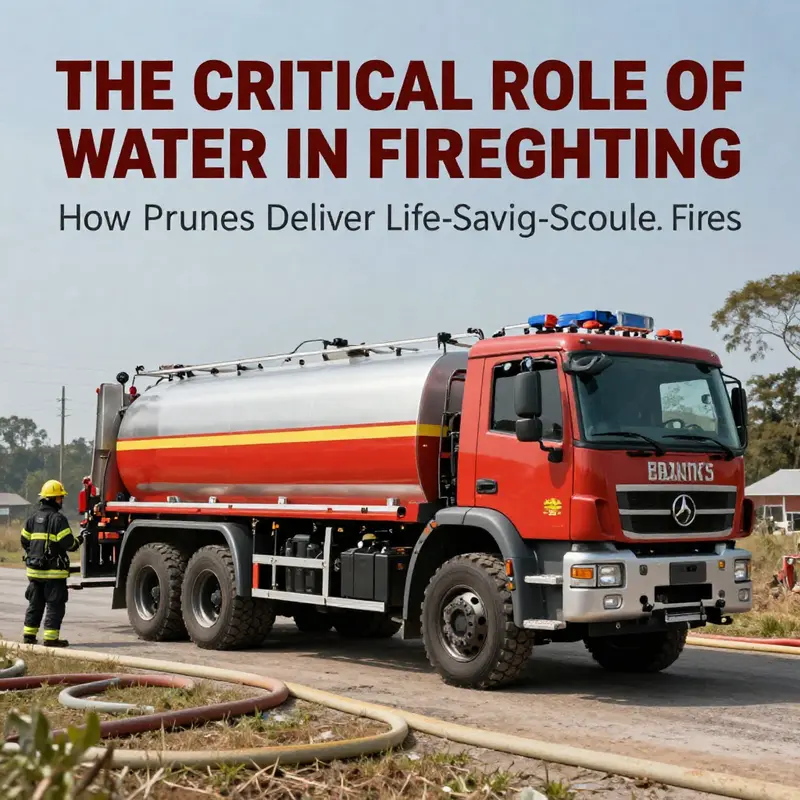
Water is the very essence of firefighting, and for most incidents a standard fire engine can deliver it from a hydrant or portable supply. Yet when flames erupt in remote terrain, sprawling industrial complexes, or wildfire belts where lines peter out far from the scene, a different kind of vehicle becomes essential: the specialized water tanker. These rolling reservoirs transform water supply from a limited local resource into a mobile, scalable arc of containment. They are not just gray trucks with drums; they are purpose-built systems that extend reach, sustain attack, and buy firefighters the precious time needed to protect lives, property, and ecosystems. In the most demanding large-scale fires, their role is not auxiliary but foundational, enabling sustained suppression when every hydrant is distant and every drop counts.
The sheer scale of the capacities involved underscores why these tankers exist. In many urban wildland interfaces or industrial settings, tanks commonly range from five thousand to ten thousand gallons, roughly eighteen thousand to thirty-eight thousand liters. That volume is more than enough to establish and maintain a broad attack line, particularly when access to fresh water is intermittent or the fuel for the operation runs through rough terrain or damaged infrastructure. In some scenarios, the need for even more water pushes the vehicles into the range of twenty thousand liters or more, and a handful of specialized models are built to shuttle tens of thousands of liters to the heart of the fire. What emerges from these numbers is simple: when the aim is rapid, continuous water delivery, a tanker’s capacity can be the defining factor between early containment and a fire that stretches into hours or days.
Beyond raw volume, the signature of specialized water tankers lies in how they marry storage with delivery. The best of these vehicles integrate pumping systems and hose deployment mechanisms directly into the chassis, allowing crews to draw water straight from the tank without lengthy back-and-forth trips to a distant water source. The result is a dramatic improvement in operational tempo: water can be moved from the tanker to the attack line with the pump setting the pace, while hoses unfurl along the ground to where it is most needed. This setup supports a steady, uninterrupted flow that is difficult to achieve with shuttle operations alone, especially in divided or obstructed sites. It also reduces the number of times a company has to refuel its water supply, letting firefighters concentrate on extinguishment rather than logistics.
The practical implications of this design philosophy become clear when a blaze stretches across rugged terrain or out of sight of the nearest hydrant. A 4×4 all-wheel-drive configuration becomes more than a feature; it is a necessity. These trucks are built to traverse slopes, rutted trails, sandy washes, and chopped-out rural roads where ordinary vehicles struggle to inch forward. The reinforced chassis and heavy-duty suspension are engineered not only for maneuverability but also for durability. In a long night of pumping and advancing lines, the tank and its supporting system must resist fatigue, vibration, and the jolts of uneven ground. The goal is simple: provide reliable water delivery under conditions that would test the limits of standard road-going equipment.
Equally important is the tanker’s build quality and hygiene. When a vehicle sometimes serves emergency water supply in disaster scenarios or drought-stricken areas, the tank must be designed to preserve water quality. Tanks intended for firefighting use are rugged and corrosion-resistant, with careful attention to seal integrity and pump cleanability. In some instances, dual-purpose designs exist to deliver potable water to communities in need, which places even greater emphasis on materials that are food-grade and BPA-free. This emphasis on hygiene is not merely bureaucratic; it is a direct safeguard against contamination that could compromise public health or themselves create new problems for responders.
Operationally, specialized water tankers often function as mobile water stations, forming the backbone of a relay strategy when a single hydrant cannot sustain a longer attack. The concept is straightforward but highly effective. A tanker fills from a distant source—whether a municipal supply, a reservoir, a pond, or river—then maintains a continuous feed to the pump, which in turn pressurizes water into hoses or into another pump for relay pumping. The team can execute a cascade of water delivery that blankets the fire line with steady pressures, even as other units stretch multiple attack lines, bring foam blends to bear on fuel-rich zones, or deploy quick-strike lines to isolate hot spots. The tanker’s capacity makes it possible to initiate this chain quickly and maintain it over an extended period, bridging the gap until larger municipal resources can be reestablished or until the fire slows enough to be managed with smaller flows.
The educational value of understanding these dynamics becomes clear when considering the broader ecosystem of firefighting assets. A specialized tanker does not replace a fire engine with a hydrant-returning capability; rather, it complements it by filling the critical gap when water sources are unreliable or distant. In many large-scale fires, the most effective approach is a coordinated rhythm of supply and suppression: a tanker provides an on-scene, flexible water reserve; pumpers and ladder trucks apply it to the fire, while additional tankers shuttle water from source to scene as needed. In this sense, the tanker is not a single-purpose machine but a modular instrument in the orchestra of an organized firefighting operation. The result is a more resilient response, capable of maintaining attack lines for longer and with fewer interruptions, which in turn reduces overall damage and increases the likelihood of saving lives.
The versatility of these vehicles is not limited to firefighting alone. In drought-stricken regions, after disasters, or in rural communities lacking robust municipal water networks, some specialized tankers double as emergency water supply points. They bring not just firefighting capability but essential hydration and sanitation support to communities under stress, highlighting how mobility, capacity, and hygiene converge in a crisis response vehicle. The dual-use potential reflects a broader philosophy in emergency response: tools that are robust enough to fight fire can also be repurposed to sustain life and health when infrastructure falters. This adaptability underscores why investments in water-tanker capabilities are often prioritized in regional planning and mutual-aid agreements that span jurisdictions.
The maintenance and safety considerations tied to these vehicles can’t be overstated. Tanks must be cleaned regularly to prevent sediment buildup that could clog pumps or hoses, especially after long deployments where water remains in the system for extended periods. Operators require specialized training to handle high-volume pumping, maintain proper pressures, and manage the dynamic risks that come with high-weight and high-flow operations. When tankers are used to deliver potable water, compliance with hygiene standards becomes a non-negotiable requirement, and routines for sanitation, filtration, and storage become integral to daily practice. These arenances are not mere paperwork; they are about preserving the integrity of the very water firefighters rely on to combat flames and save lives.
In practice, the presence of a specialized water tanker reshapes the tempo and geography of a fire response. Firefronts that threaten institutional facilities, critical infrastructure, or dense urban-rural interfaces challenge responders to adapt quickly. A tanker’s ability to supply large water volumes with a direct feed to the attack line reduces the number of trips back to a distant hydrant, minimizes the need to string continuous supply lines over long distances, and preserves precious fuel and time. The response becomes less a series of ad hoc pickups and more a deliberate, scalable operation, capable of maintaining pressure and water flow even as the fire expands or shifts direction. When conditions demand it, a tanker can also serve as a staging point, from which crews deploy auxiliary lines, assist with foam firefighting tactics on hydrocarbon fuels, or sustain a long-tail suppression strategy that buys responders the chance to establish a longer-term containment plan.
For readers who want to explore practical examples and product options in this domain, the concept of a water-tanker is complemented by a sense of its place within a broader catalog of fire-resilience equipment. If you’re curious about how these mobile water stations are categorized and deployed across different fleets, you can browse the Water-Tanker-Fire-Truck category to see how various configurations respond to particular needs on the ground. Water-tanker-fire-truck provides a window into the range of choices that departments weigh when planning mutual aid and statewide response, emphasizing how a single class of vehicle can support a wide spectrum of incident types, from small rural fires to major wildland battles.
This integrated perspective—capacities that matter, mobility that enables access, and hygiene and maintenance that safeguard the operation—frames why specialized water tankers are indispensable for large-scale fires. They are the frontier where water logistics meet frontline fire control. They embody a pragmatic recognition that water is not limitless on the fire ground; rather, it must be managed as a dynamic resource that moves where it is needed most, with as few delays as possible. In the long arc of extinguishment, these vehicles act as mobile reservoirs, as continuous pressurizers, and as catalysts for coordinated suppression strategies that few other assets can match.
External resource: Fire Engineering’s technical specifications for water-tanker operations offer detailed insights into this equipment’s performance characteristics, safety considerations, and design choices that optimize on-scene deployment. See https://www.fireengineering.com/fire-trucks/water-tanker-truck-technical-specifications/ for the official technical resource that informs industry practice and standards in this critical area.
community safety
Understanding the diverse capacities and functions of fire trucks is imperative for businesses prioritizing safety. From small fire trucks designed for swift urban responses to massive specialized tankers for large-scale fires, each type plays a critical role in effective firefighting. As business owners, recognizing the importance of these resources not only enhances safety protocols but also ensures preparedness for emergencies. Investing in knowledge about firefighting capabilities can better equip businesses to handle unexpected fire outbreaks swiftly and effectively.

