
















The effective operation of fire services hinges on clear communication and organization, and a crucial aspect of this is the numbering of fire trucks. A structured numbering system allows firefighters to quickly identify units, enhancing coordination during emergencies. This guide unpacks the various methods of numbering, emphasizing their significance for both fire departments and the broader community. Sequential numbering establishes order, type-based numbering clarifies function, and district-based numbering categorizes units geographically. Every aspect contributes to the seamless functioning of emergency response strategies, making this knowledge essential for business owners involved in safety, logistics, or community services.
Counting On the Line: How Sequential Numbering Shapes Fire Trucks, Dispatch, and Emergency Response
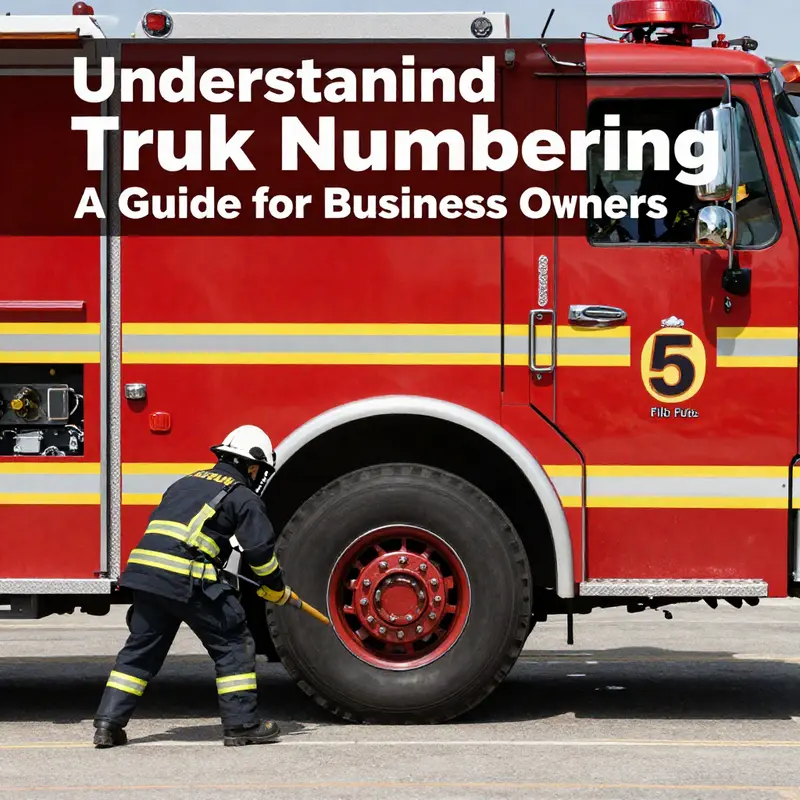
The number painted on a fire truck is more than a label. It is a compact, immediately legible symbol that carries years of practice, protocol, and shared understanding across crews, dispatch centers, and the public. In many departments, the numbers on engines, ladders, and support vehicles are assigned in a straightforward sequence, a deliberate choice that supports speed under pressure and clarity when seconds count. Yet even as the line of numbers looks simple at a glance, it embodies a complex set of decisions about what a fleet is for, how it is managed, and how responders move as a coordinated team through the chaos of a call. When you approach a city’s fire fleet with this in mind, you begin to see the number not as a decorative decal but as a navigational tool in the operating system of emergency response.
In practice, sequential numbering serves several overlapping purposes that touch every branch of fire service work. Dispatch relies on an unambiguous shorthand to allocate assets quickly and accurately. A single unit number, spoken over the radio or transmitted through the incident command software, tells the dispatcher which vehicle is en route, which one has arrived, and which units are still in reserve or assigned to a particular sector of the incident. This reduces the risk of miscommunication during a high stress moment when a crew might be moving through smoke, or when multiple responses converge at a single location. The number also anchors recordkeeping. After action reports, maintenance logs, fuel usage, and incident debriefs all circle back to a specific vehicle by its number, enabling supervisors to audit movements, justify resource allocations, and trace the history of a given asset through its lifetime in the fleet.
The logic behind sequential numbering is not uniform everywhere. Some departments blend sequential order with type based designators. A truck might be labeled Engine 12 or Pumper 12, signaling the vehicle type along with its unique identifier. Others keep the station of origin as part of the identity, such as Truck 7 from Station 1 or Engine 4 from Station 3. This district or station based approach eases the burden of cross-jurisdictional coordination, especially when mutual aid is frequent, and it helps responders immediately infer geographic origin and anticipated vehicle capabilities. Still others layer in special designations that go beyond a simple number, including Squad 1, Hazardous Materials Unit 2, or Command Vehicle. The presence of such labels on a unit announces its function to crews at a glance, which can be critical when establishing who is leading, who is supporting, and who is charged with specialized tasks.
Even within the container of a straightforward sequential system, the numbers carry a practical rhythm that echoes through the daily life of a department. A new apparatus enters service with its own number, a moment that marks its official place in the fleet and its readiness for the kinds of assignments it is built to handle. The numbers on the side doors or the front fenders become a readable map of the department’s expanding capabilities, a tangible record of experience and growth. For crews, the number is a familiar cue. It directs the flow of radio communications, serves as the focal point of command decisions, and becomes a mnemonic anchor for the intricate choreography of an incident, where multiple units must operate in concert and yet maintain strict individual accountability.
The display placement of numbers is not incidental. Most departments position the numbers prominently where they catch the eye of onlookers, other responding units, and, importantly, the command staff inside the incident command post. Front doors, sides, and sometimes the rear cab area bear the large, high-contrast numerals that can be read from a distance. On scene, the number helps bystanders identify which unit is on scene and who to contact for information. For dispatchers, the visuals translate into rapid recognition; a quick glance tells them not only which asset is selected but also whether that asset is the correct type for the job at hand. In practice, a dispatcher’s screen and the vehicle’s number work in tandem to keep a sprawling, dynamic operation knit together and moving forward rather than stalling amid confusion.
Within this system, the maintenance and lifecycle management of a fleet also become more coherent. Each vehicle’s number acts as a unique key that ties together service histories, parts inventories, and training records. When a component needs replacement, the maintenance log, the procurement order, and the technician notes all refer to the same vehicle number, creating a consistent thread through what is often a sprawling supply chain. This is where the numbering system connects to what might seem like a separate world: the cataloging and stocking of parts. A maintenance team can pull up a vehicle’s file and quickly determine which parts are specific to that exact engine or ladder, reducing downtime and ensuring that the right parts are on hand when an onsite repair is needed. It is not just about keeping wheels turning; it is about maintaining reliability in the precise, high-stakes environment of fire response. In this sense, the sequential number becomes a quiet backbone for operational resilience. When departments update their fleets or expand into new capabilities, the number system acts as the connective tissue that aligns procurement, training, and on-road performance.
In the on-ramp to modernization, the sequential system often stretches to accommodate evolving technologies without losing the simplicity that makes it effective. Electric and hybrid propulsion, advanced battery management, and smarter on-board systems introduce new safety considerations and maintenance demands. The numbering system remains the familiar frame that keeps these changes legible to crew members and administrators alike. It is a way to preserve continuity while the fleet grows more diverse. A single number now may attach to a vehicle with an electric propulsion system, yet the crew still recognizes it as a particular asset in a long-established sequence. The discipline of numbering thus acts as a shield against complexity, allowing rapid identification even as agencies incorporate vehicles that are more sophisticated and more capable than ever before.
This balance between simplicity and adaptability becomes most visible when considering the daily rhythms of dispatch and operations. In the midst of a large-scale incident with multiple units deployed to different locations or assigned to separate tasks, a clean sequential system makes it possible to coordinate at a glance. The incident commander can direct a line of units by number, request a specific engine to stage at a critical intersection, or redeploy a ladder to a roof entry without the need to reconstruct a mental map of every vehicle’s capabilities on the fly. The speed and clarity afforded by a well-understood numbering convention translate into fewer miscommunications, quicker resource allocations, and ultimately a faster, more controlled response. That is not merely administrative efficiency; it is life-saving precision achieved through a simple, disciplined convention.
The straightforwardness of sequential numbering also shapes training and classroom practice. New recruits learn the fleet by number as a first step in understanding how their department functions. They are taught to identify a vehicle by its number on the radio, in the incident log, and in the equipment bay, and to recognize in a glance what that vehicle is capable of delivering to a scene. The numbers become a mental map of the department’s capacities, a shorthand that accelerates learning and confidence. In the field, that training matters as much as physical skill. When a rookie hears Engine 4 requested for a particular operational task, they should be able to picture the vehicle, recall its typical kit and ladder reach, and know who to coordinate with for the task at hand. The number anchors that shared knowledge, reducing the cognitive load in fast-moving, high-risk situations.
The practical advantages of sequential numbering extend beyond the firehouse and the street. They touch governance and accountability, too. In many departments, the fleet is not only a tool but a public asset that must be managed transparently. A clear numbering scheme supports audits, budget planning, and performance metrics. It makes it possible to quantify how many engines, ladders, or reserve units are in service, track the age distribution of the fleet, and evaluate the maintenance cycle by unit. The public, too, benefits from this transparency in a quiet but powerful way. The numbers provide a straightforward way to report deployments after incidents, to explain decisions about resource allocation, and to illustrate how a community’s fire protection capabilities evolve over time. The number thus becomes part of the department’s narrative about preparedness, reliability, and continuous improvement.
Of course, any system carries challenges. In practice, a purely sequential numbering regime can encounter friction in complex, multi-jurisdictional environments. When mutual aid is common, and neighboring departments share resources, the benefit of a shared type or district cue can clash with the need for a purely local sequential tally. In such cases, departments often adopt hybrid approaches. They retain the core sequential logic for internal tracking while appending type or station identifiers to assist responders from outside agencies. The result is a hybrid code that remains instantly legible to internal crews while offering sufficient context to collaborating teams. The key is to preserve the speed and clarity that sequential numbering affords while allowing the system to scale across a broader network of responders who may not share the same day-to-day operational rhythms.
A modern fleet also demands attention to safety considerations tied to new vehicle technologies. The rise of large fleets containing electric and hybrid vehicles introduces fresh risk profiles at the scene, particularly around battery storage, charging infrastructure, and the potential for thermal events. While the number itself cannot prevent these risks, a well understood numbering system helps ensure precise communication about which unit is handling charging or special hazards, and which unit is operating with particular safety constraints. When a battery high-energy incident occurs, command teams need to direct the right engine to implement cooling measures, monitor battery temperatures, or deploy a rapid intervention crew. A unified, sequential reference keeps the incident focused on tasks rather than deciphering acronyms or ambiguous labels. In this way, the most basic feature of fleet management becomes a pillar of safety in the modern era.
Training and equipment needs naturally follow from these dynamics. Fire departments must invest in ongoing education that keeps responders fluent in the current fleet composition and in the common language of unit numbers. This means regular drills that simulate multi-unit responses, exercises that test the speed and accuracy of unit identification, and refreshers on the procedural steps that accompany a new type vehicle in the lineup. It also means maintaining robust documentation workflows so that every unit number remains tied to up-to-date maintenance records, training histories, and operational status. With modern fleets, the focus extends beyond the mechanics of driving and fighting fires to the governance of a living system in which numbers serve as the scaffolding for safe, efficient, and coordinated action. The discipline of numbering thus supports both frontline performance and the strategic oversight that keeps a department resilient as its fleet grows more capable.
Within this broader context, it helps to consider a practical thread that ties everything together: the daily reality of maintenance and parts management. A unit number is the passport that allows the shop to pull the exact parts and service records for a vehicle. It is the same number that appears in the work order, the preventive maintenance schedule, and the inventory checkout. In a well-run fleet, the number reduces ambiguity between what a vehicle needs and what a technician has in stock. It also aligns with the documentation required by health and safety regulators and with the data the department uses to plan replacements and upgrades. For personnel responsible for keeping the fleet ready, the numbering system is not a minor feature but a central organizing principle that makes maintenance predictable and timely. When maintenance teams coordinate with procurement and supply chain units, the number on the side of the vehicle becomes a key that unlocks a chain of reliable, repeatable processes. For those who manage the fleet’s continuity, this is where the abstract logic of a sequential system becomes visible as tangible reliability in the field. If you want a glimpse into how parts catalogs support this reliability, a practical example can be found in the broader fire equipment ecosystem: the catalog of fire truck parts is designed to align with fleet identifiers, making it easier for technicians to locate exactly what each vehicle requires as it ages and as needs change. fire-truck-parts catalog.
The topic of numbering also nudges us toward a cultural dimension that sometimes goes unspoken. Numbers carry stories about departments, stations, and generations of responders who arrived before. They carry the identity of communities and the pride of teams that have taken up the common task of protecting lives and property. In this sense, sequential numbering is not only a procedural choice but a public-facing sign of reliability. It speaks to the steady, almost ceremonial rhythm by which a fire department operates: engines arrive, ladders ascend, and units move as a coherent sequence toward the moment when people are rescued from danger or when fire is controlled. The number on the vehicle thus becomes a symbol of trust, indicating to the public that a department knows its assets and can deploy them effectively when the alarm sounds.
As fleets evolve and departments consider future capabilities, the number remains a faithful constant. It is a thread that allows new technology to be integrated without erasing experience. The sequential framework gives responders a shared vocabulary to describe what they are seeing, where they are going, and what they expect from each asset. It smooths interdepartmental cooperation and supports the kind of disciplined, scalable growth that modern emergency services require. The result is a fleet identity that travels with the vehicle through inspections, deployments, and the long arc of a department’s modernization, while the people who rely on it stay grounded by a familiar system that works when a community needs them most.
For readers curious about how departments navigate safety challenges linked to electric and other advanced vehicle types, a broader perspective on evolving safety needs can be found in independent reporting on electric vehicle integration and the related safety protocols. This context helps illuminate why even a seemingly simple convention like sequential numbering matters so much at the frontline, where precision, speed, and safety converge in every call. For more on the safety challenges that come with evolving vehicle fleets, see the external resource linked at the end of this chapter.
In sum, sequential numbering in fire trucks is more than a numbering practice; it is a critical component of operational clarity, accountability, and resilience. It supports fast, accurate dispatch; it anchors recordkeeping and maintenance; it helps manage increasingly complex fleets; and it preserves a shared culture of reliability that communities rely on every day. The numbers form a quiet backbone beneath the loud, urgent work of firefighting, an everyday system that, in the moments when alarms sound, makes the difference between confusion and coordinated action. As departments explore new technologies and expanded mission profiles, the strength of this backbone lies in its simplicity and its adaptability. The sequential line remains the common language that keeps the entire fleet speaking in unison, even as the vocabulary grows and the stakes rise.
External reference: For further context on safety challenges with evolving vehicle fleets, see https://news.un.org/en/story/2025/12/1234567
Type-Based Numbering: The Functional Language Behind Fire Trucks
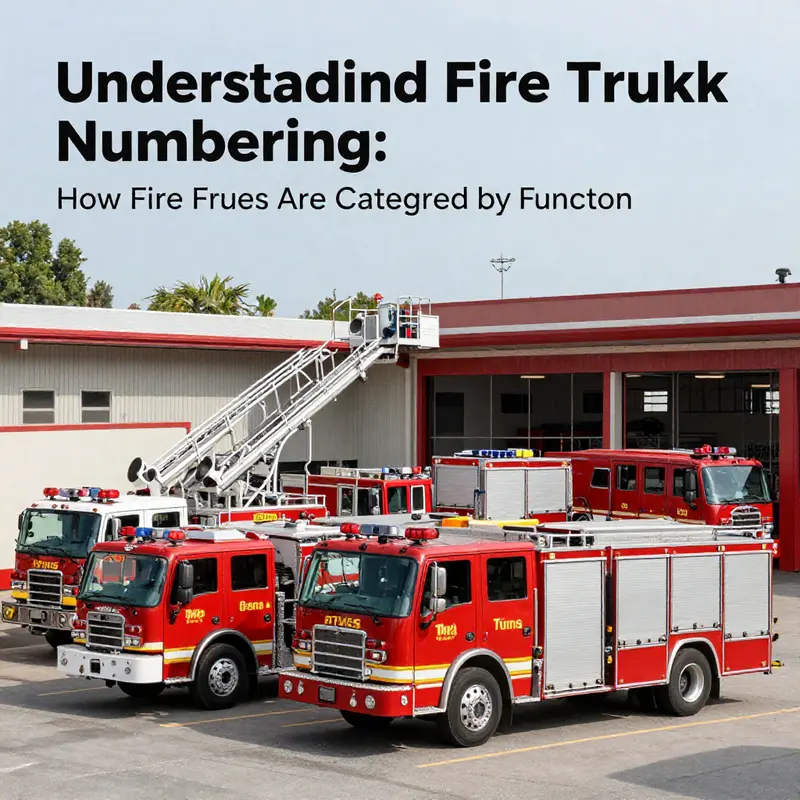
In the heat of a fire call, seconds count. The numbers painted on a fire apparatus are a compact, shared language that communicates capability, provenance, and intended tactics. Type-based numbering assigns a Type 1 through Type 9 to vehicles by their primary function, enabling responders to anticipate water delivery, aerial access, or rapid assessment. Type 1 engines emphasize water delivery and initial attack; Type 2 engines adapt to rural mobility; Type 3 handles rough terrain and wildland work; Type 4 balances urban and wildland needs; Type 5 focuses on maneuverability in dense urban cores; Type 6 is a brush truck for wildland conditions; Type 7 quint combines pumping and aerial capabilities; Type 8 is the heavy aerial ladder; Type 9 is a tanker for water logistics. The framework anchors training, dispatch, and mutual-aid coordination, while allowing local adaptation. Standardized labels improve safety and interoperability across jurisdictions. While no system is perfect, the Type-based approach remains a practical tool for organizing fleets, planning responses, and guiding decisions at the incident scene.
Geography on the Front Lines: Districts, Stations, and the Invisible Language of Fire Truck Numbers
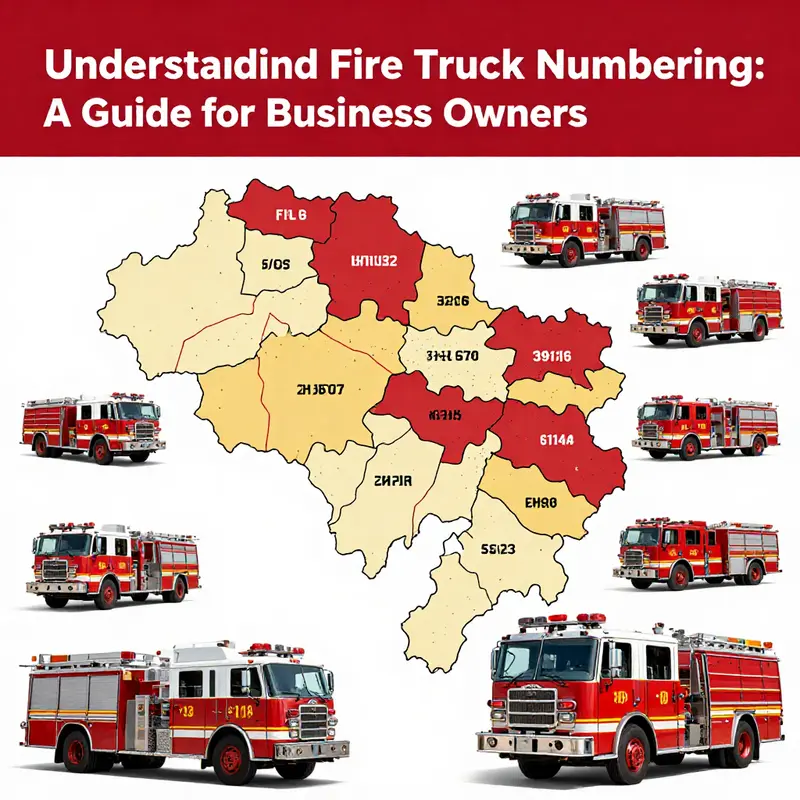
Geography on the Front Lines: Districts, Stations, and the Invisible Language of Fire Truck Numbers
The core idea behind district- and station-based numbering is simple in principle, yet powerful in practice. Each vehicle is assigned a number that ties directly to its geographic home base. That linkage supplies instant context during a call. A responder who sees Engine 14 responding from the city’s central district instantly knows that it is a unit with an origin close to the heart of town, where traffic patterns, building types, and accessibility differ markedly from the suburbs. The immediate perception of origin matters because it informs the arrival plan, the allocation of secondary units, and even the expectations of the scene commander who must orchestrate a quickly evolving operation. The number thus becomes a cognitive shorthand that reduces the mental load on everyone involved—dispatchers drafting a response, crews navigating unfamiliar intersections, and incident commanders sketching a strategy under pressure.
Geographic considerations lie at the heart of how these systems are designed. Departments frequently align district boundaries with recognizable, enduring features—rivers that constrain bridge access, major highways that fragment neighborhoods, or city wards that reflect historical service areas. This geographic logic creates a natural rhythm for numbering: central, older parts of a city tend to carry lower numbers, while newer, outlying districts bear higher ones. The system rarely rests on a single rule; it blends district prefixes with station identifiers to preserve location clarity across mutual-aid responses and interagency drills. In some configurations, you may see a district prefix followed by a number, such as E-101 for Engine 101 in District E, a convention that communicates both function and geography in one compact code. The exact mix—the presence or absence of prefixes, the use of letters to distinguish districts, or the preference for simple numeric sequences—depends on the department’s history, its geographic footprint, and the frequency of cross-station mutual aid.
This geographic logic has practical consequences beyond the mental math of responders. It streamlines communication in an environment where every second counts. A dispatcher who requests “Station 3 Engine,” or an on-scene supervisor who notes that “Truck 7 from District B is on scene,” relies on the shared understanding embedded in those numbers. The same principle applies when coordinating with other agencies or neighboring jurisdictions that might share a boundary or a corridor. Clear, geographically anchored identifiers minimize miscommunication and reduce the risk of sending units to the wrong location. The labels become a kind of operating currency—readily exchanged, quickly understood, and deeply grounded in space rather than abstract designation.
The geographic basis of numbering dovetails with the broader strategic planning of emergency services. When agencies map their districts and stations, they also map risk. Population density, traffic flow, and the physical layout of streets and stairwells influence where stations are placed, what types of apparatus they house, and how those machines are numbered. In dense downtown cores, the design may prioritize rapid access to high-rise occupancy, with stations arranged to cover critical arteries and transit hubs. In sprawling suburbs, the emphasis shifts toward reliable reach, with numbering that reflects remote districts and the corresponding need for additional pumpers, ladders, or rescues stationed closer to fringe areas. GIS (Geographic Information Systems) tools increasingly underpin these decisions, modeling how long it takes a unit to reach a given block and how coverage overlaps across neighboring districts. The objective is not merely to minimize travel time to a single point but to maximize the probability that any point in the city is reached within a critical window, often framed as the six-minute response goal in many urban plans. The numbers, in this sense, encode a plan of response that respects the city’s geography as a living, changing network of places and routes.
In practice, districts and stations rarely exist in isolation. A district may contain several stations, each with its own numbered apparatus that reflects a local specialty, along with a handful of cross-station units that can be redirected in a large incident. The numbering within a district may be sequential, or it may incorporate a type-based cue that signals the role of the unit. A ladder truck might carry a prefix such as L-8 in a given district, while a pumper might be designated P-12. The logic serves two masters: it helps minimize confusion on the road and it supports incident command once the response is underway. In the high-stress atmosphere of a working fire, knowing that the arriving unit is a ladder truck from a specific district immediately communicates a set of capabilities, expected equipment, and potential tactical options. A district-based system thus acts like a map embedded in the numbers themselves, guiding decisions before, during, and after the first alarm.
An additional layer of nuance often appears in the form of prefixes or district letters that annotate the numbers. This practice helps distinguish multiple communities that share a corridor or a metropolitan area with several neighboring towns. For example, a district prefix like E or D can quickly identify the geographic origin, even when urban sprawl bleeds across municipal boundaries. The potential complexity is balanced by disciplined standardization. Departments codify where each prefix or suffix appears, how it interacts with station numbers, and how mutual-aid operations translate across districts with similar schemes. The result is a robust framework in which numbers carry location, function, and operational readiness in one glance. When crews study a map or a dispatch screen, they don’t need a legend to parse a well-designed district-number system; the spatial logic is legible in the field and legible in the cab.
The practical benefits extend into dispatch practices and incident management. Quick identification of a unit’s origin accelerates the triage of resource requests, the dispatch of backup equipment, and the coordination of water supply and manpower. In a city where thousands of calls may come in each year, the district-and-station approach provides a scalable method for routing, prioritizing, and balancing needs across a complex urban fabric. It also supports accountability and record-keeping. A truck’s serial number, tied to its district and station, offers a durable provenance trail for maintenance histories, training records, and after-action reviews. The numbers become data points that feed dashboards, performance analyses, and readiness audits, ensuring that the system can evolve as the city grows or as new hazards emerge.
The design choices behind district- and station-based numbering are not mechanical; they are shaped by culture and practical constraints. Some departments maintain tight, almost rigid, geographic aliases to preserve consistency across shifts and years of service. Others allow a degree of fluidity to accommodate rapid growth, redeployment, or the addition of new districts. In any case, the guiding principle remains constant: the number should illuminate location and capability at a glance. The exterior labeling, which is usually conspicuous on front doors or vehicle sides, is matched by the internal systems that track service histories, inventory, and deployment patterns. When a unit rolls to a scene with a familiar number, that number triggers a cascade of expectations about what equipment is aboard, how many personnel are available, and what the next steps should be. It is a language that firefighters learn as part of their daily working vocabulary, a language that ties geography, gear, and teamwork into one coherent practice.
The intersection of geographic thinking and numbering also invites ongoing adaptation. As cities evolve—new neighborhoods, shifting traffic demands, aging infrastructure—the district boundaries themselves may shift, or the capacity of a station may expand. When such changes occur, the numbering scheme must be revisited to maintain clarity and prevent misidentification in the heat of operations. GIS-driven analyses offer a forward-looking lens for rebalancing coverage, testing hypothetical station placements, and forecasting how different numbering strategies affect response times. In this sense, district- and station-based numbering is not a static relic of old maps but a living framework that aligns with contemporary planning tools and modern emergencies. A GIS approach to fire-station location selection, for instance, emphasizes maximizing the area served within a critical response window, a principle that has direct implications for how districts are drawn and how numbers are allocated. This geographic sensitivity is the silent backbone of a department’s readiness, quietly guiding every page of the incident action plan as a fire front unfolds.
The result is a cohesive system where geography and numbers reinforce each other. The district and station background gives responders a shared orientation—an immediate sense of where a unit comes from and what it can do. It also anchors the public-facing identity of fire protection. To residents, a number that signals a familiar station can offer reassurance: that a nearby engine or ladder crew is on the way, even before the first unit arrives. For visitors and commuters, the same numbering tells a story of organization and preparedness, a signal that the city has intentionally designed its response network around the physical realities of its streets and districts. In the end, the district- and station-based numbering scheme forms a quiet but essential infrastructure of emergency response—one that translates geography into action, maps into mastery of the moment, and numbers into a shared sense of readiness.
For those curious to explore how these identifiers interface with the broader ecosystem of incident command and specialized units, the connection is straightforward. Some departments use district- and station-based identifiers that gracefully mesh with the labeling of specialized units—hazardous materials teams, water rescue apparatus, or command vehicles. In such cases, a consistent naming convention helps distinguish both the type of unit and its geographic home, enabling faster decision-making under pressure. When a district needs a specific capability, personnel can recognize, recall, and reference the exact unit they expect to deploy without pausing to interpret a new code. The result is fewer ambiguities, less radio chatter, and more reliable coordination during complex incidents.
The practical implications of this approach extend into everyday operations as well. Regular drills, mutual-aid exercises, and interagency planning sessions benefit from a shared linguistic framework. Teams rehearsing a scenario know that the arriving vehicle labeled as, say, E-101 or Engine 14 from District E has particular strengths and constraints, which supports a smoother handoff between agencies and a clearer transfer of command as the scene evolves. In this way, the geographic logic embedded in numbers becomes not only a wayfinding tool but a framework for building trust and predictability among diverse responders who may work together infrequently but must perform together when every moment counts.
For readers who want to see how one might connect this chapter to tangible products and equipment categories while maintaining a clear narrative, consider the path from district-based identifiers to the broader ecosystem of apparatus available to a station. The labeling system works in concert with the equipment deployed at a given site, whether that means a specialized rescue unit, a high-capacity pump, or a ladder platform. When a unit is labeled with a district-based identifier, its configuration—its pumps, hoses, ladders, and tools—often mirrors the kinds of risks a district faces. In other words, the numbers and the hardware together tell a district’s readiness story. And as departments continue to refine their plans, the numbers will adapt in step with upgrades to equipment, changes in urban topology, and the evolving nature of fire protection.
Within this narrative of geography, numbers, and response, one finds a practical invitation to think about how a city’s map translates into its emergency services. The district and station-based model is less about aesthetic or tradition and more about operational clarity. It keeps crews oriented as they travel through unfamiliar neighborhoods, and it helps the incident commander allocate resources efficiently once the first units are on the ground. It also anchors the public’s understanding of how quickly help can arrive and which teams will arrive first. This is the invisible language of fire truck numbers: a language that speaks in space, time, and capability, shaping both the flow of an emergency and the confidence with which a city faces risk.
For readers seeking a concrete example of how the district-based approach informs real-world practice, the concept becomes especially tangible when viewed from a dispatch console or a station floor. A map on the wall may display district boundaries annotated with color-coded stations. The numbers on the doors reflect the station’s identity, its position within the district, and its role in a larger coverage plan. When a call comes in, the dispatcher can quickly translate a handful of digits into a mental image of which streets will be navigated, which intersections might be blocked, and which back-up units are already in proximity. The value of this clarity compounds as the incident grows and the need for backfill, mutual aid, or specialized response becomes more pressing. In short, district- and station-based numbering is an essential feature of a city’s resilience, quietly supporting speed, coordination, and the safety of responders and civilians alike.
To illustrate how the modern practice translates into practice, consider the integration of district numbering with command and control concepts. A district-based code helps the incident commander manage a sprawling scene with multiple units arriving from different neighborhoods. As units arrive, their numbers immediately identify their origin, allowing leaders to assemble a clear, district-aware canvas of resources. This reduces confusion about who is where and who can best contribute to a given tactic. Even when units cross into unfamiliar zones, the district-based code preserves continuity. It gives responders a reliable frame of reference across shifts, agencies, and even cities that share a corridor or a mutual-aid territory.
Beyond the walls of the station and the screens of the dispatcher, district- and station-based numbering also shapes the public face of emergency response. A community that understands the logic behind its fire department’s numbers may better grasp how coverage is planned and how quickly help can arrive. It becomes easier to explain why some neighborhoods seem to have more coverage or why certain blocks may require targeted investments in equipment and training. The system thus becomes part of the social contract between a city and its residents, a visible reminder that planning, geography, and readiness are embedded in the way a city’s engines are labeled and deployed.
In closing, district- and station-based numbering is a foundational element of the ordinary and extraordinary work that firefighters perform. It is a deliberate, geography-grounded approach that translates maps into actions, and numbers into a shared language of readiness. It supports faster, more accurate dispatch, it informs strategic asset allocation, and it helps ensure that every fireline is met with a coordinated, district-aware response. As cities continue to grow and their geographic footprints shift, these numbers will evolve in tandem with new districts, updated stations, and advanced modeling techniques. But the core principle will endure: a fire truck’s number is more than a label. It is a compass, a record, and a promise—a signal that geography has been translated into capability, so that when doors swing open and lights flare, help arrives where it is needed most, with as much certainty as possible.
For readers who want to explore how these ideas connect to specific vehicle types and station configurations, a helpful internal reference can be found in the discussion of command vehicles, which rely on consistent identifiers to coordinate with field teams. See fire-command-vehicles for further detail.
External resources expand this view to the GIS-based planning that underpins modern district planning. For a broader look at how geographic information systems shape public safety decisions, including fire-station location strategies that influence district boundaries and numbering, see Esri’s public-safety resources: https://www.esri.com/en-us/industries/public-safety.
The numbering of fire trucks is not just a matter of organization; it plays a vital role in ensuring that emergency services operate smoothly and efficiently. Sequential, type-based, and district-based numbering systems all contribute uniquely to enhancing the overall effectiveness of fire responses. Business owners, particularly those involved in sectors related to safety and emergency preparedness, can benefit greatly from understanding these systems. Improved clarity and coordination in emergency scenarios can ultimately save lives and resources, making this knowledge not only informative but critical for fostering safer communities.
The transition to yellow fire trucks illuminates the critical relationship between visibility and safety in emergency response. As this trend continues to gain traction, it offers valuable insights for business owners and community leaders about the importance of implementing evidence-based practices in safety measures. By understanding the reasons behind this shift—factoring in visibility, operational efficiency, and psychological perception—businesses can better appreciate the implications for public safety. As we move forward into a future that prioritizes visibility and efficiency, the adoption of yellow as a standard for fire trucks reflects a profound commitment to enhancing safety for all.
The numbering of fire trucks is not just a matter of organization; it plays a vital role in ensuring that emergency services operate smoothly and efficiently. Sequential, type-based, and district-based numbering systems all contribute uniquely to enhancing the overall effectiveness of fire responses. Business owners, particularly those involved in sectors related to safety and emergency preparedness, can benefit greatly from understanding these systems. Improved clarity and coordination in emergency scenarios can ultimately save lives and resources, making this knowledge not only informative but critical for fostering safer communities.

