
















Fire trucks are emblematic of emergency response, famously adorned with red and blue lights. The rich history of these color choices serves a dual purpose, enhancing visibility while connecting to a long-standing tradition. Understanding how these lights contribute to safety and public awareness is crucial for business owners, especially in industries related to urban planning, safety equipment, and community services. This exploration delves into the significance of red and blue lights, variations across jurisdictions, and recent technological advancements—ultimately emphasizing their importance in an effective emergency response system.
Red and Blue on the Front Lines: History, Psychology, and the Modern Reality of Fire Truck Lighting
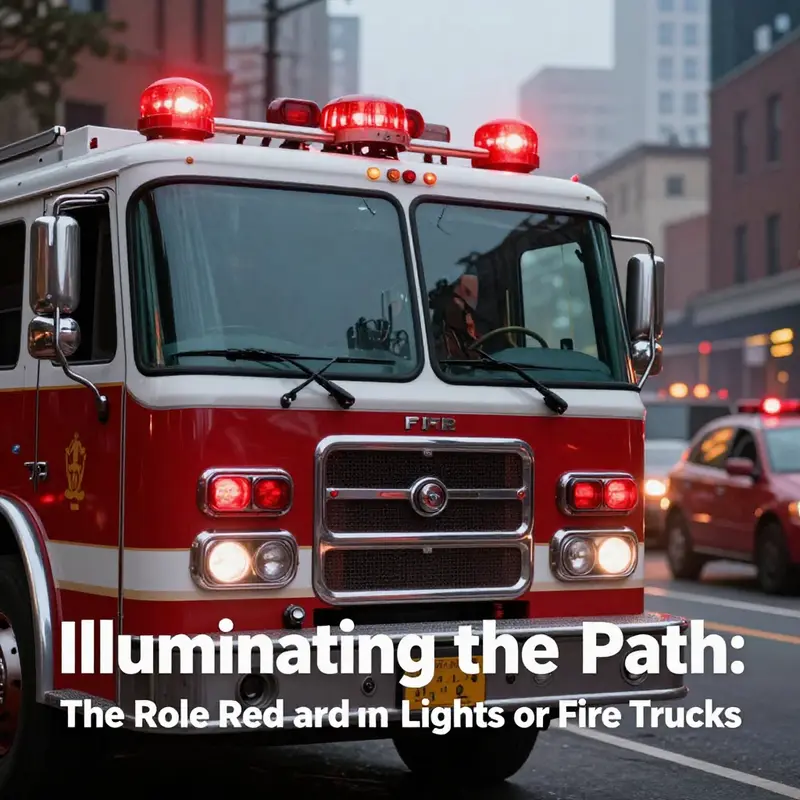
Do fire trucks truly ride under a banner of red and blue, or is that an oversimplified shorthand for a far more layered signaling system? The question nudges at a hinge point where history, science, and public perception meet on crowded streets. It invites a careful listening to how emergency signaling evolved, why certain colors endured, and how today’s departments tailor their beacons to the weather, the traffic, and the local rules that shape everyday safety. The simplest answer is yes and no in the same breath. Red remains deeply embedded in the identity of fire apparatus, while blue has entered the signaling lexicon in many places as a supplementary cue or a differentiator. The resulting sight—red plus blue—is a deliberate design choice, not a universal law carved in stone. It is a product of historical habit, evolving technology, and the practical demands of visibility in an urban landscape that changes with the hour, the weather, and the pace of a city.
The roots of red on fire apparatus go back to a mix of psychology, tradition, and early municipal branding. In the late nineteenth and early twentieth centuries, when modern fire services were consolidating their identities, cities painted engines in bold colors to stand out among the dense, often monochrome streets. Red was chosen for its striking contrast against the grayness of soot-filled air and the dull tones of aging urban infrastructure. It signaled urgency long before sophisticated signaling systems existed; it created an instantly recognizable silhouette that pedestrians and fellow motorists could key into at a glance. This was more than a cosmetic choice. It established a shared visual language that allowed citizens to interpret danger and priority quickly without needing to decipher words or devices amid the din of an emergency.
As engines multiplied and urban life grew more complex, signaling systems evolved in tandem with the color palette. Early beacons were rotary lanterns that spit out bursts of light in red, white, or amber, depending on the jurisdiction. The red hue became inseparable from the very idea of firefighting; it was a color that commanded attention and conveyed a sense of immediacy. In many regions, the rotation pattern—an alternating flash or a sweeping beacon—became almost as symbolic as the color itself. This fusion of hue and motion turned red into a multi-sensory cue: a color you could see from a distance, a motion you could perceive even in cluttered urban environments. Yet the science of color visibility was not standing still. Engineers and researchers began to study how colors appear under diverse lighting conditions, from the glare of a midday sun to the low light of night or rain-slick streets.
The addition of blue to the signaling mix did not arise from a single, uniform decision. Rather, it reflected a layered reality of emergency response where different agencies share road space with police, medical responders, and utility crews. In many places, blue lights were introduced as a way to reduce confusion on the road: the same blue that often marks police vehicles could help drivers distinguish between types of emergency responders at a glance. Over time, the blue did not simply replace red; it complemented it, creating a dual-color language that benefits drivers who must decide how to yield, how to slow down, and how to move aside for a large, speeding apparatus that demands clear passage. This dual-color approach recognizes the kaleidoscope of urban traffic and the limited time drivers have to register what they see. It is part of a broader strategy that acknowledges pedestrians who might be distracted or impaired by night, weather, or the stress of witnessing an unfolding crisis.
The push toward dual-color signaling also aligns with technological advances in lighting. The modern fire truck is no longer a single beacon perched atop a rotating mechanism. It is a system—LED arrays, strobe banks, and interior warning lights—that can be tuned for brightness, color, pattern, and directionality. LEDs offer rapid illumination, long life, and resilience in rain, snow, or heat. They can be synchronized so that a driver in a rearview mirror sees a consistent pattern from multiple angles, even as the vehicle bends through a narrow street or enters a tunnel. In this sense, color is not a standalone signal. It is a component of a dynamic lighting language that uses color, intensity, and rhythm to convey urgency, legitimacy, and safe distancing. The practical effect is a vehicle that remains conspicuous from far away, while its precise movement is legible to drivers up close.
Public perception and jurisdictional variation remain powerful forces shaping the color narrative. In some regions, green or lime-yellow tones have been explored or adopted in addition to red and blue, particularly for daytime visibility. These colors—often described as lime or fluorescent orange—can offer higher conspicuity under certain lighting conditions than red. Yet the emblematic red remains culturally resilient. Why does a color endure even when scientific testing suggests alternatives could provide superior visibility at specific times? The answer lies in habit and recognition. People who have grown up seeing red fire engines carry with them an impression of authority and priority. That recognition matters in moments of stress when milliseconds count and a motorist is scanning quickly for cues that indicate an imminent emergency.
The signaling system is more than color; it is about pattern. The historical shift from a single rotating red beacon to more complex, multi-color arrays reflects a broader move toward clarity under pressure. In many departments, the beacons will blend red and blue in rotating or alternating patterns, sometimes punctuated by white or amber accents. The exact sequence varies by region and department policy, but the goal is consistent: to deliver a recognizable signal that can be detected amid city noise and weather. In practice, this means a fire truck can flash in red along one arc, then switch to blue as it approaches an intersection where pedestrians have to decide whether to step back or hurry across. It also means that the same vehicle can use white flashes to illuminate a scene or to highlight hazardous areas while keeping the red and blue hues available as the primary drive signal.
This layered approach is not merely about aesthetics or tradition. It translates into real-world safety outcomes. Drivers who can identify an emergency vehicle sooner are more likely to respond appropriately—slowing down, pulling over, or stopping—before the apparatus even reaches a critical approach corridor. Pedestrians, especially children and the elderly, can benefit from predictable signaling that reduces hesitation or confusion in stressful moments. The dual-color strategy, with its varied light patterns, helps to dissuade drivers from lingering near an incident or from attempting to squeeze past when the emergency vehicle needs the road. The result is a safer corridor for responders and bystanders alike, a corridor shaped by color choices that are deeply embedded in urban signaling culture.
Of course, the landscape changes with evolving research about color perception. Some contemporary studies suggest that lime-yellow or fluorescent orange may outperform red in low-light conditions, particularly when light sources create glare or when drivers are inattentive. Yet changing a century-old standard is not a straightforward leap. Institutions must weigh public recognition, legal allowances, and the cost of retraining drivers and updating equipment. The persistence of red as a cultural anchor is not simply about nostalgia. It is about a shared mental model that helps citizens interpret a chaotic scene quickly. Blue adds a layer that clarifies roles and reduces cross-signal confusion in mixed-use traffic environments. The synergy between red and blue is, in many places, a pragmatic compromise that honors history while embracing modern signaling science.
If you walk the line between history and modern practice, you will notice that the color story travels beyond the firehouse and into the roadways themselves. Street lighting, reflective markings, and the reflective strips that line a fire apparatus all work in concert with colored beacons to create a conspicuous profile. The design philosophy is to maximize visibility from all angles and under varying weather conditions. Bright red can warn a driver that a scene demands respect, while blue can cue a different kind of attention—perhaps to yield or to slow down in a manner that ensures the safety of both responders and civilians. The pattern of light—how quickly it flashes, how long it remains steady, and how it moves across a vehicle’s surface—also plays a crucial role. A steady, bright field of color may be easier to notice at a distance, while a rapid strobe can attract attention more effectively in a cluttered urban scene. The choreography of color and pattern is, in essence, a choreography of safety.
In thinking about the broader catalog of emergency equipment and signaling, it is useful to reference how the signaling language is organized within a fire department’s fleet. The signage and lighting work together with sirens, radio codes, and incident command protocols to guide road users. The visual language, including color, is deliberately designed to reduce ambiguity. When a driver sees red and blue lights, it triggers an expectation of emergency, an implicit “make room, yield now” directive. The exact choreography—how the lights flash, which color leads, and how the brightness is modulated in different weather—varies, but the underlying aim is universal: to convey priority swiftly, clearly, and safely. This is a practical inheritance of a long tradition and a testament to how far signaling technology has come, from naked lanterns to sophisticated LED matrices that can modulate color and pattern with surgical precision.
For readers curious about how this signaling language fits into the wider ecosystem of firefighting equipment and fleet management, there is a broader catalog of solutions that departments consider when updating their fleets. Among the many considerations are the visibility requirements for aerial ladder platforms, engine houses, rescue units, and specialty vehicles. The color logic travels through these choices, influencing how crews allocate the lighting, where they place beacons on the chassis, and how they coordinate signaling with other responders at a chaotic scene. This is not just about aesthetic coherence; it is about ensuring that every vehicle in a mixed-response environment can communicate its role to the public instantly and without confusion. In many ways, the story of red and blue on fire trucks mirrors the larger arc of public safety design: tradition acting in concert with technology to create safer streets and more predictable rescue operations.
For those who want a deeper historical thread, this chapter links to broader discussions about why fire apparatus themselves appeared in such a vivid, instantly recognizable color to begin with. The enduring question—why red?—is answered in part by psychology and in part by the practical needs of urban visibility. The enduring answer, however, lies in the deep-seated culture of firefighting and the shared memory of communities that have relied on these vehicles to appear as beacons of urgent care in moments of crisis. The current practice of integrating blue with red, and the ongoing exploration of alternative hues for specific contexts, demonstrates that signaling is never static. It is a living, evolving dialogue among engineers, policymakers, and the public—a dialogue that seeks to preserve safety while accommodating a world that grows louder, faster, and more complex with each passing year.
In sum, fire trucks do carry red and blue lights in many places, but the exact implementation is deeply contingent on local rules, department policies, and the ongoing assessment of visibility science. Red’s historical prominence is not merely a sentimental attachment; it is a durable cue that has helped citizens identify danger and respond quickly for generations. Blue, when present, serves as a complementary signal that helps differentiate responders and guide driver behavior in the choreography of movement around an active emergency. The modern fleet’s signaling is thus a blend of reverence for tradition, openness to new evidence about visibility, and a practical commitment to safety on busy roads. If you imagine a city street at night, lined with the silhouettes of rescue apparatus and the glow of conspicuous beacons, you glimpse how color, motion, and form converge to create a public safety system that is as much about communication as it is about response. This understanding sets the stage for the next chapter, where we will explore how lighting regulations intersect with design choices in the broader context of emergency response infrastructure.
Tip for readers seeking a longer historical arc: the question of color and signaling in fire service history is rich and nuanced, spanning municipal procurement policies, state regulations, and evolving road-safety science. A contemporary understanding of these signals requires looking at how communities balance tradition with evidence, and how technologies like high-brightness LEDs and adaptive signaling continue to reshape what a recognizable beacon looks like on the modern streetscape. For scholars, practitioners, and enthusiasts, this is not merely about a color palette. It is about a language that saves lives, taught and reinforced every day at the scene of fires, floods, and other emergencies. To explore related equipment and signaling options further, you can preview the broader range of specialized gear in the light-fire-truck category and examine how different configurations might suit particular operational needs. light-fire-truck
External resource for further reading: https://www.popularmechanics.com/health-and-wellness/a35748286/why-are-fire-trucks-red/
Blue Signals, Red Response: The Visibility Science Behind Fire Truck Lighting
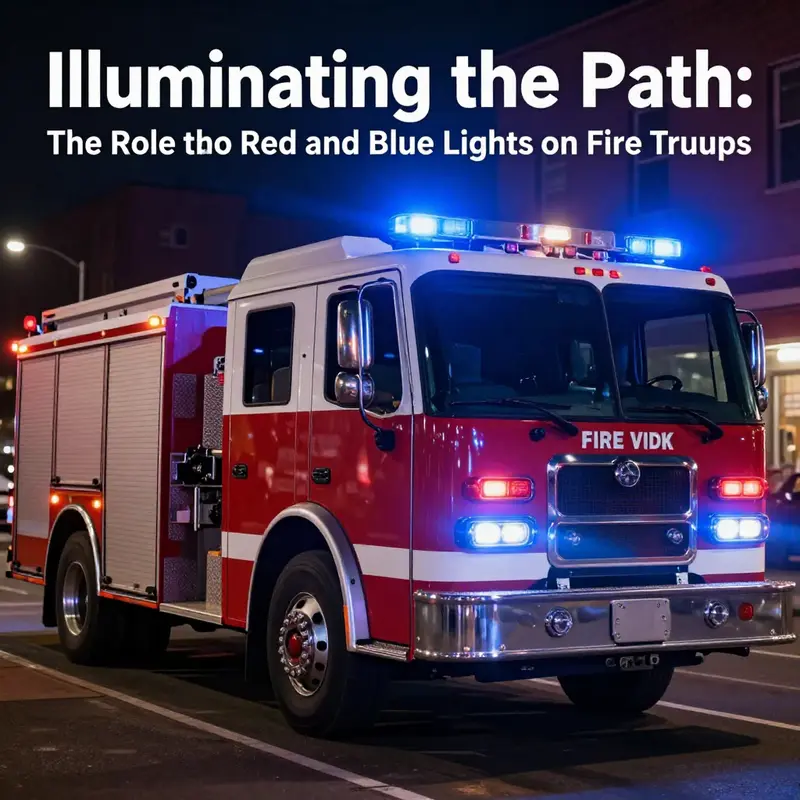
The question of whether fire trucks use red and blue lights is more than a matter of color preference. It sits at the intersection of history, human perception, and street safety design. For many decades, red has carried the firefighting signal with a cultural certainty that makes it instantly recognizable. Yet in the crowded spaces of modern roadways, blue lights have emerged as a crucial complement. The result is not a simple color choice but a deliberate lighting strategy that enhances visibility, reduces response times, and helps protect both responders and the public. The practice varies by jurisdiction, but the underlying logic remains consistent: red communicates urgency and authority, while blue adds a high-contrast beacon that stands out in a wider range of environments, especially when light levels fall and traffic density rises. When these colors work in tandem, they create a more robust alert that can be perceived from greater distances and through challenging weather, glare, and clutter on busy streets. In this sense, blue is not a substitute for red but a dynamic partner that expands the emergency vehicle’s visual footprint at a critical moment when every second counts. The historical arc—from red-only signaling to mixed-color schemes—parallels advances in lighting technology, sensor performance, and the evolving demands of urban mobility, where the goal is to command attention without creating new hazards for other drivers or pedestrians. This chapter traces how blue lighting functions within that broader framework, why it matters for safety, and how it is governed by standards designed to harmonize emergency response with public road use. It is a narrative about perception, policy, and practice that helps readers understand the practical value of blue lights on fire apparatus, even as they continue to be paired with the familiar red glow that has long signified a fire response in progress.
From a practical standpoint, blue lights are typically mounted at elevated points on the vehicle—on the roof or other high mounting locations—to maximize reach and line-of-sight. The elevated position matters because it increases the angular visibility to drivers in adjacent lanes and those approaching from intersections or from behind the apparatus as it moves through traffic. When blue lights are used in combination with red, they create a contrast-rich signal that can cut through the visual “noise” of city streets. The human eye processes color in a way that is influenced by lighting conditions, ambient background colors, and motion. Red, a long-wavelength color, remains conspicuous in many daytime scenarios due to its familiar association with danger. Blue, with its shorter wavelength, often stands out against both dark and light backgrounds, particularly when the vehicle is moving or when other lights—headlights, street lamps, storefronts—are competing for attention. The two colors together improve detection not only for drivers but also for pedestrians and cyclists whose attention may be divided by complex urban scenes. In addition to color, modern blue lighting is frequently implemented as high-intensity LED strobes or flash patterns that are designed to be bright enough to be seen at significant distances. These systems are optimized for rapid cycling, ensuring that the signal remains strong even after repeated use, which is essential when multiple emergency scenarios unfold in a single shift—from medical evacuations to large-scale incidents. The choice of mounting positions, the intensity of the blue elements, and the synchronization with red signals all contribute to a cohesive beacon that can be recognized quickly from a variety of angles and under diverse weather conditions. It is this systematic deployment—rooted in engineering choices and human factors—that makes blue lights a meaningful enhancement rather than a decorative addition.
In terms of visibility science, the combination of blue and red taps into several perceptual mechanisms. Blue light can attract attention due to its chromatic salience, especially when set against the more ubiquitous red glow of emergency lighting. While some discussions of color perception emphasize the Purkinje shift—where the perceived brightness of colors changes with luminance—the practical takeaway for emergency lighting is simpler and more direct: drivers who encounter a dual-color signal are more likely to notice the vehicle sooner and to interpret its status more rapidly. This is particularly relevant at night, during dawn or dusk, and under adverse weather, when ambient cues are dim or inconsistent. Blue strobes are designed to deliver a crisp, high-contrast signal that remains legible at long distances, even as urban lights create complex backdrops. In combination with red, they form a visual language that communicates urgency with both immediacy and clarity. The effectiveness of this approach is reinforced by the strategic placement of lighting on the vehicle itself. Roof-mounted blue strobes cast light outward and upward, creating a halo effect that can be seen above other vehicles in adjacent lanes, while lower-positioned red lighting serves as a reinforcing layer that remains visible from close range and directly in the line of sight of drivers following behind. The synergy of long-range signaling and local illumination reduces the likelihood that other road users will misinterpret or miss an approaching emergency vehicle, which is essential for protecting responders who must operate in the lane of movement.
Beyond mere perception, the practical impact of blue lighting extends to the ways in which drivers react. When a police car, ambulance, or fire apparatus displays dual-color signals, drivers are more likely to respond with predictable, standardized behaviors—pulling over, yielding, or decelerating smoothly as the emergency vehicle passes. The predictability of these responses makes it easier for responders to conduct operations safely and efficiently. It also reduces the risk of secondary incidents caused by sudden braking or erratic lane changes. The public-facing dimension cannot be overlooked: blue lights have become a cue for awareness that complements the audible cues of sirens. In situations where traffic noise or visual clutter might otherwise obscure an emergency vehicle’s approach, the blue component can be the decisive factor that triggers a line of sight and prompts proactive driver behavior rather than hesitation or confusion. This functional aspect—the alignment of perception, anticipation, and action—is what makes the employment of blue lighting more than a stylistic preference. It represents a deliberate, evidence-informed approach to safeguarding both responders and the traveling public during high-stakes incidents.
The regulatory landscape adds another layer to how blue lighting is used on fire trucks. Current industry standards and national guidelines, such as those set by the National Highway Traffic Safety Administration, specify performance, placement, and, in many cases, color usage for emergency lighting. While blue lights can be highly effective for visibility, their installation is often restricted to authorized emergency vehicles in many jurisdictions. The rules are designed to prevent misuse and to ensure a consistent and recognizable signaling system across agencies and regions. Those rules also reflect practical realities: blue lighting, especially when implemented with high-power LEDs, consumes more electrical energy and can place additional demands on a vehicle’s electrical system. Departments that adopt blue lighting must, therefore, balance the signaling benefits against resource management, ensuring that power supply and battery systems remain reliable during times of heightened demand. The regulatory framework also encompasses considerations of glare, color balance, and the risk of confusing other road users when multiple emergency vehicles are present. To navigate these complexities, agencies often rely on training and standard operating procedures that align with the specific color schemes permitted in their jurisdiction. In this sense, blue lighting is not a universal standard but a carefully calibrated choice within a broader safety strategy that aims to harmonize visibility with legal compliance.
From a public safety perspective, the presence of blue lights on fire trucks serves a purpose that extends beyond the moment of arrival at a scene. It signals ongoing activity, indicates imminent danger in some contexts, and helps to delineate the moving apparatus from other vehicles. In dense traffic, where the sightline to a fire truck can be blocked by large vehicles or by waves of conflicting lights, blue signals can pierce through the visual clutter and communicate urgency even when other cues are partially obscured. This is particularly important during night operations in residential areas where pedestrians may be present and where the risk of a closing vehicle intrusion is nontrivial. The reliability of blue lighting in adverse weather—rain, fog, snow—also matters. LED-based blue strobes operate with a level of durability that meets the demands of all-weather operation, which is a nontrivial engineering achievement. Weather-resilient performance ensures that the signal remains legible when visibility is compromised by precipitation or mist, maintaining a consistent cue that responders will rely on as they move through a scene, set up equipment, or shuttle injured individuals away from danger. The combination of weather resilience, elevated mounting, and high-intensity output makes blue lights an integral component of the modern fire truck’s visibility toolkit.
The conversation about blue lighting also intersects with the practical realities of fleet management and procurement. In addition to signaling performance, departments weigh the power requirements of dual-color systems, the maintenance implications of more complex lighting packages, and the compatibility of lighting with other safety systems such as traffic control devices and on-board communication gear. As cities grow denser and traffic patterns become more complex, the need for a clear, unambiguous visual signal becomes more acute. This drives a shift toward lighting configurations that not only meet regulatory criteria but also align with the daily rhythms of urban emergency response. For agencies evaluating their options, resources like specialized catalog pages describe various lighting configurations and mounting solutions that can be customized to fit different vehicle types and mission profiles. In this context, a practical takeaway is that blue lighting is not a standalone feature but part of an integrated system designed to optimize visibility, reduce risk, and support rapid, safe responses.
From a policy and practice standpoint, the existence of blue signaling on fire trucks reinforces a broader truth about modern emergency response: technology is most effective when it supports clear human understanding and predictable behavior on the road. When a driver sees a red beacon, a general expectation of urgency is triggered; when a blue signal accompanies that urgency, the perception of a specialized, organized response deepens. The two colors together create a signal that is more resistant to misinterpretation, particularly in chaotic or lit-heavy environments where rapid assessment of a vehicle’s status is essential. The public education component cannot be understated here. Communities that understand the combined red-and-blue signaling system are more likely to respond correctly when an emergency vehicle approaches. This, in turn, improves pass-by safety for the responders who must work in live traffic lanes and for the civilians who share the road space with them. While the exact color configuration may vary by locale, the underlying goal remains universal: to convey urgency, authority, and safety with a signal that is both distinctive and legible under a range of real-world conditions.
For readers who want to explore the latest lighting configurations and consider how a given fleet’s lighting aligns with local requirements, the light-fire-truck category provides a catalog of options focusing on lighting systems, their mounting, and their integration with other safety equipment. This resource can help bridge the gap between high-level principles and hands-on decision making, especially for departments planning new installations or upgrades. At the same time, it is important to anchor any such decisions in established standards and guidelines. The National Highway Traffic Safety Administration’s vehicle lighting and signals guidelines offer concrete specifications about performance criteria, placement, and permissible color usage, which serves as a critical reference point for both compliance and safety. The dual-color approach—red with blue accents—reflects a balance between tradition and innovation, between the recognizable call of red and the heightened perception offered by blue, together creating a signaling system that is greater than the sum of its parts. For communities, drivers, and responders alike, that balance translates into a safer road environment where emergency vehicles can maneuver with fewer missteps and quicker, more reliable responses. The blue component, far from being a mere aesthetic flourish, embodies a purposeful design choice aimed at improving real-world outcomes in the complex ecosystem of modern traffic. In this sense, blue lighting is a technical instrument for safety, a carefully engineered feature that respects regulatory boundaries while expanding the communicative power of fire suppression and rescue operations.
External resource: For detailed regulatory standards and technical specifications, see the official guidelines provided by the National Highway Traffic Safety Administration: https://www.nhtsa.gov/vehicle-lighting-and-signals
Seeing Red and Blue in Motion: How Fire Truck Light Practices Vary Across Jurisdictions and Why It Matters
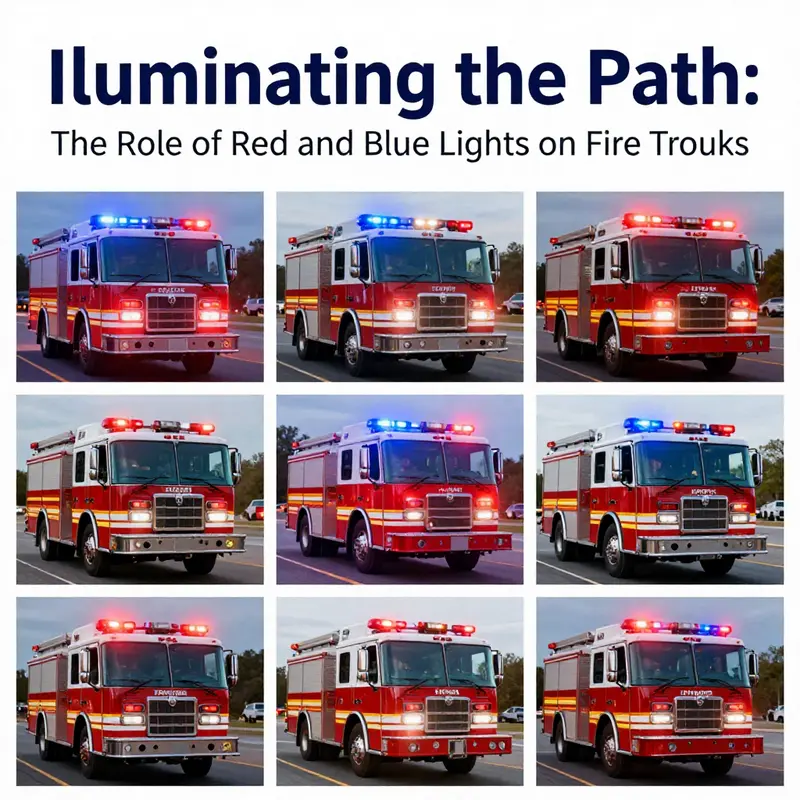
Fire trucks carry more than hoses, ladders, and crews. They carry a signaling vocabulary built from color, pattern, and timing. Among the most visible elements of this vocabulary are the red and blue lights that define emergency presence on the road. The long-standing association of red with firefighting has deep roots in history and culture. It is a color that has proved highly legible against the urban palette of early and mid‑twentieth–century streets, and that visual echo has lingered long after more modern signaling options emerged. Yet blue, once a quieter companion, has grown into a central partner in the signal scheme. Blue’s particular potency in low light, smoke, rain, and other adverse conditions makes it an indispensable ally for firefighters who must see and be seen when visibility is compromised. The result is not a simple, uniform rule but a nuanced, jurisdictional tapestry in which red and blue lights are deployed in ways that reflect local needs, regulations, and the evolving technology that supports safer, faster responses to emergencies.
Across the United States, where thousands of fire departments work within a landscape of shared history and divergent policy, the blend of red and blue lights varies as a function of local regulation, risk exposure, and the agendas of individual departments. In many regions, the default is a dual color system designed to catch attention from a distance and to retain legibility when vehicles are approaching from different angles. The blue hue, with its high contrast against a broad spectrum of backgrounds, tends to be favored for closer-in signaling—clarifying warning status for drivers and pedestrians when the apparatus is within the problem zone of an incident. Red, still a powerful beacon, often anchors the broader signaling framework, ensuring that the vehicle reads as an emergency asset even when ambient light is abundant or when environmental clutter—such as sun glare or urban lighting—complicates color discrimination. This functional partnership between red and blue is the result of decades of experimentation, field feedback, and regulatory evolution, all aimed at maximizing the speed and safety of a critical response.
A detailed look at California illustrates how regional imperatives shape lighting choices in significant ways. The state, long challenged by wildfires that test both personnel and equipment in extreme conditions, has gravitated toward high-intensity blue and red lighting configurations that can cut through heavy smoke and inclement weather. In wildfire scenarios, blue’s ability to penetrate smoke and its distinctive hue under dim skies can make a fire engine more discernible to other road users when visibility is reduced. This is not merely a matter of preference; it is a calculated design choice that aligns signaling with the operational realities of wildfire suppression, evacuation routes, and the need for conspicuity in rugged terrain at varying times of day. Within California and similar jurisdictions, the lighting systems are engineered to deliver high brightness, rapid response, and durability in the face of heat, dust, and vibration. The result is a fleet of apparatus that communicates urgency through color while integrating with other safety and operational systems on the vehicle.
There is also notable variation within the United States that reveals a broader principle: the strongest signaling systems are those that adapt to local risk landscapes while preserving a recognizable emergency presence. Some departments rely on single-color configurations—red-only, for example—due to legacy practices, cost considerations, or specific regulatory interpretations. Others adopt more complex multi-color arrays with synchronized flashing, directional signaling, or integrated indicators that respond to different operational modes. The arrival of newer vehicle models has encouraged experimentation with even more sophisticated patterns, including instances of small blue signals intended for auxiliary functions or enhanced driver assistance concepts. While such uses may be debated or scrutinized by regulators in some jurisdictions, they reflect a broader trend toward blending traditional signaling with modern automation to improve situational awareness for both responders and the driving public. The tension between simplicity and enhanced capability is a recurring feature as departments weigh cost, reliability, and the practical realities of road safety.
On a global scale, the variations become even more pronounced, yet the underlying goals remain consistent: to maximize visibility, reduce reaction times, and safeguard all road users during emergencies. In Japan and Germany, for example, red and blue schemes have been adopted with local refinements—timing patterns, beam angles, and mounting configurations that reflect urban density, road geometry, and traffic norms. In some regions that lack standardized signaling regulations, there is broader latitude in light intensity, color sequences, and placement. These differences matter not only for drivers who must interpret signals quickly but also for the design of training programs that teach responders and civil stakeholders how to react to different stimulus patterns. Across this spectrum, the shared objective is clear: a signaling ecosystem that communicates urgency in a way that is instantly recognizable, unambiguous, and safe for all parties on or near the roadway.
The conversation about color and signaling is not merely about optics. It engages perceptual science, regulatory design, and the practicalities of vehicle construction. Red and blue lights operate in a world of competing influences—sunlight, street lighting, weather, and the diverse visual abilities of drivers. Blue, for instance, tends to be more legible at the margins of darkness and under foggy or smoky conditions, while red provides strong readability against a wide array of backgrounds and can evoke a universal emergency signal that drivers have learned to associate with urgency. When these colors are combined in calibrated patterns, the result is a signaling system that benefits from complementary strengths. The idea is not to overwhelm, but to create a layered alert that can be recognized from afar and interpreted quickly as the vehicle approaches with its siren engaged, lanes of traffic adjusted, and safety protocols activated.
In this context, the concept of dual-color strobes—arrays that can emit red, blue, or both in coordinated sequences—emerges as a practical design principle. These systems, designed for high brightness and reliability, support a fast, predictable response even in adverse conditions. They also enable nuanced signaling, such as directional flashing that helps guide traffic away from the incident scene or synchronized patterns that prevent conflicting signals from surrounding vehicles. The operational logic behind such configurations often aligns with broader traffic management strategies: clear signaling to yield, safe clearance for responders, and minimized exposure for the public in the vicinity of an emergency. This logic is widely taught in training programs and reflected in the evolving standards that govern emergency vehicle lighting across jurisdictions.
Moreover, the integration of lighting with other vehicle systems is an important dimension of modern design. The signaling package does not exist in isolation; it is part of a broader network that includes controls, warning beacons, and, in some cases, driver-assistance integrations. This interconnected perspective helps explain why certain jurisdictions emphasize patterns, timing, and directionality. In practical terms, a well-designed lighting system can reduce the cognitive load on drivers around the apparatus, helping them interpret signals quickly and act safely—whether they are navigating a steep rural road at dawn or a congested urban intersection under a siren. The result is a cohesive safety envelope in which color, sequence, and placement work together to protect responders and bystanders alike.
For readers exploring the manufacturing and procurement side of emergency signaling, the ecosystem extends beyond lighting itself. The signaling package sits within a larger architecture of vehicle components, and its performance depends on the durability and compatibility of those parts. In this context, understanding the broader category of fire truck parts offers insight into how signaling integrates with the engine, chassis, and safety systems. A practical way to explore this is through a catalog that highlights essential elements while illustrating how lighting complements other critical equipment. In the broader ecosystem of emergency vehicle manufacturing, the lighting system integrates with countless components like 消防車の部品. This integration underscores that signaling is not an isolated feature but a coordinated strand in the fabric of rapid, safe emergency response.
As cities continue to evolve and respond to new kinds of threats, the approaches to emergency lighting will no doubt continue to adapt. Urban growth, climate-driven hazards, and the expansion of automated traffic management tools all push jurisdictions to revisit color choices, timing patterns, and the role of blue in signaling. The conversations around these topics—regulatory standards, perceptual effectiveness, and operational practicality—are not mere technical debates. They shape the real-time behavior of thousands of drivers and pedestrians who share roads with emergency vehicles. The trajectory suggests a future where signaling systems become more context-aware, switching modes to reflect different incidents, weather, or road configurations while preserving a recognizable red-and-blue identity that communicates urgency and safety with equal clarity.
For those seeking a regulatory reference point, the broader landscape is not monolithic. In the United States, federal and state standards interact with local practices, creating a mosaic of requirements and allowances. The National Highway Traffic Safety Administration and SAE International provide guidelines, but enforcement and interpretation vary by jurisdiction. In some areas, lawmakers consider smart lighting integrations that allow vehicles to switch between emergency and non-emergency roles, a concept that echoes the adaptability seen in other high-stakes vehicle applications. This flexibility mirrors the real-world need for emergency services to perform a rapid, safe, and coordinated approach in a wide array of environments—from quiet suburban streets to wind‑raked hillsides and rain-drenched freeways.
The narrative remains consistent across borders: red and blue lights symbolize authority, urgency, and safety. The way those signals are deployed—their brightness, timing, and directional cues—reflects the specific risk matrix a jurisdiction faces. When done well, lighting fosters smoother traffic flow, reduces the time to reach a scene, and protects everyone in the vicinity of an incident. When misapplied or misunderstood, color signaling can create confusion or complacency. The balance is delicate and continually tested as technology advances and as communities reframe their expectations of how emergency vehicles should present themselves on the road. The overarching message, then, is not simply about color, but about the purposeful design of signaling that supports fast, safe, and predictable responses in a changing urban and rural landscape.
External perspectives and regulatory guidance help ground this discussion in real-world practice. For readers who want to explore how standards translate into day-to-day operation, a useful resource is the Emergency Vehicle Lighting Standards offered by California’s emergency services administration. This material captures how lighting choices align with safety goals, user experience, and practical constraints in active mission settings. It is a reminder that color policy, while technical, ultimately serves the people who respond to fires, refine evacuations, and protect communities when every second counts. As the signs on the road continue to evolve, the core idea remains: red and blue lights are not a novelty but a carefully engineered system designed to save lives by enabling quick recognition and safe maneuvering around emergency scenes. The interplay of history, science, and policy in these signals reveals a richer story than color alone could convey, one that connects tradition with innovation in service of public safety.
External resource: https://www.fire.ca.gov/emergency-vehicles/lighting/
Seeing Red and Blue on the Front Lines: Lighting Technology and the Modern Fire Truck
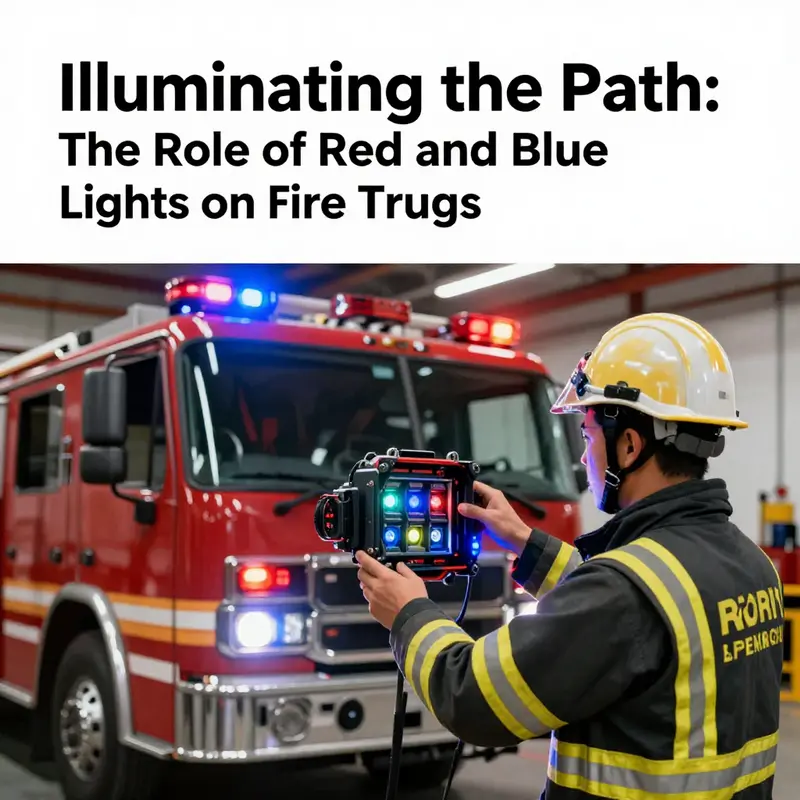
Scarcity and speed shape the theater of fire response, but the drama often plays out in the glare of lights that most people barely notice. Fire trucks do not merely carry hoses and ladders; they carry an array of lighting systems designed to cut through darkness, fog, rain, and the bewildering glare of oncoming traffic. In this chapter, the story of fire truck lighting unfolds as a narrative of technology meeting urgency. The question of color—why red, why blue, and why now, in combination—dissolves into a broader inquiry about visibility, safety, and the evolving choreography of emergency response. Objects on the road are more than static silhouettes; they are moving signals, and the lights on a fire apparatus translate that signal into a language drivers and pedestrians can read with split-second accuracy. The result is a blend of science, tradition, and adaptive engineering that keeps pace with the demands of modern urban life while honoring a long-standing link between color and crisis response.
Historically, the color red established a symbolic and practical prominence in firefighting. Red stood out against the palette of early vehicles, streets, and alleyways, and it carried a cultural weight that connected flames to bravado as much as to danger. Yet the dynamic environment of today’s roadways has shifted the calculus. It is not enough to be seen; a response vehicle must be unmistakable under a wide range of lighting conditions, from the bright glare of day to the deepest of night. The contemporary approach, therefore, leans into dual-color schemes—predominantly red paired with blue—as a deliberate design choice to heighten attention. Red can evoke urgency and signal hazard, while blue, with its cool and penetrating tone, can carve out a separate perceptual channel that helps motorists distinguish emergency apparatus from other kinds of roadside activity. This combination serves a practical purpose: it widens the perceptual envelope of the vehicle, enabling drivers to locate the source of danger and respond with fewer wrong turns or hesitations. In research terms, the red-and-blue signature becomes a robust cue, reinforcing the authority of the vehicle without drowning out the surrounding context.
The shift to dual-color lighting is inseparable from the broader rise of LED technology. LEDs deliver brightness with remarkable efficiency, a crucial factor for vehicles that must operate at high speed and with limited power budgets on a constantly moving platform. Unlike the era of incandescent bulbs, LEDs convert a larger share of electrical energy into light rather than heat, which translates into lower energy demands and less heat strain on electrical systems. The practical upshot is twofold: longer lamp life and faster response times, both of which matter when seconds can separate a successful rescue from a dangerous delay. The reliability that LEDs bring to critical operations enhances crew safety in two ways. First, it reduces the risk of a dim or failing light during a high-stakes maneuver, such as navigating narrow urban canyons or performing a night ladder deployment under heavy wind. Second, it minimizes the time crews spend adjusting or replacing faulty lights, allowing more attention to be devoted to the task at hand. The overall effect is a smoother, more predictable lighting suite that supports rapid decision-making and reduces the cognitive load on operators who must interpret a chaotic scene and extract a plan from it in real time.
Beyond brightness, modern lighting systems emphasize durability and resilience. Fire scenes are unforgiving environments: uneven ground, collision debris, rain, snow, and the persistent jostle of a moving vehicle all challenge lighting hardware. LEDs are better suited to withstand vibration and impact, preserving their spectral integrity when the equipment endures rough handling. A related advance is the deployment of retractable or telescoping light towers that rise from the chassis to blanket large areas with high-intensity illumination. These towers extend the reach of ground-based work lights, allowing crew members to illuminate incident perimeters, search zones, and staging areas without crawling under the harsh glare of rooftop or surface-mounted fixtures. The towers retract and stow quickly, minimizing drag and preserving vehicle aerodynamics when the apparatus returns to road travel. Yet the mechanical complexity of these systems demands regular maintenance. The risk of jamming in harsh weather—ice, sleet, or mud—is not merely a nuisance but a potential impediment to critical operations. The lesson is clear: sophistication in lighting must be matched by rigorous inspection regimes and resilient design practices that keep the equipment ready for action.
An equally important dimension of lighting evolution lies in the integration of new energy and control strategies. The merging of LEDs with solar energy, for example, points toward a more resilient and sustainable model for emergency lighting. Solar-powered lights can be charged during non-emergency periods, which is particularly advantageous for extended deployments in environments where electrical infrastructure may be compromised, such as after a wildfire, a flood, or in remote rural settings. When a storm interrupts power or a city’s grid falters, solar-assisted lighting contributes to mission continuity, ensuring that response teams have reliable visibility throughout the duration of a complex operation. This green approach dovetails with a broader environmental and logistical strategy—using energy-smart systems to reduce on-scene downtime caused by battery or generator constraints. The horizon here is not a single technology but a modular ecosystem in which lighting units, power sources, and control software work together to deliver dependable performance when it matters most.
A notable concept in the field is the idea of Macroblock Technology, described in industry forums and demonstrations as a modular, high-performance framework for next-generation emergency lighting. Macroblock units enable responders to configure lighting arrays for specific scenes, tune color output, and coordinate patterns with other devices such as scene floods, portable lamps, or command vehicles. The appeal of modularity is not merely cosmetic; it translates to real operational advantages. Crews can tailor illuminate patterns to reflect traffic flow, reduce glare for drivers, or spotlight a particular risk area. An intelligent control layer can orchestrate these configurations, adapting in real time to changing conditions. The capacity to reconfigure quickly is critical when a fire evolves, when weather shifts, or when a rescue operation transitions from reconnaissance to containment. For example, at the perimeter of a collapsed structure, a Macroblock-inspired system could switch to high-contrast, blue-tinged illumination that highlights obstacles while maintaining a warm red primary tone for responders. Such adaptability reduces cognitive load and helps teams execute a plan with greater speed and precision.
All these technical strides feed into a clear outcome: safer response and more efficient decision-making. Visibility is not merely about being seen; it is about shaping choices on the ground. When drivers in the adjacent lanes witness the dual-color signature, they can quickly identify the presence of an emergency vehicle and gauge its likely movements. Pedestrians, likewise, interpret a predictable lighting language that signals danger, directs attention to the incident scene, and guides them away from hazards. The visual grammar of red and blue, in combination with white task lighting, creates a multi-layered spectrum that supports both the human eye and the computerized perception systems increasingly used in modern traffic management. This is not a superficial ornament but a foundational element of how modern emergency services coordinate with the broader public and with the networked infrastructure around them.
In considering the broader infrastructure of today’s roads, it is essential to acknowledge how city and regional planning frames the deployment of lighting technologies. As jurisdictions standardize certain color schemes and lighting intensities, they influence driver behavior and safety norms. The dual-color approach, while highly practical, also intersects with legal requirements, which may vary by state or country. The ongoing dialogue among policymakers, manufacturers, and public-safety agencies aims to harmonize visibility standards with aesthetic considerations and environmental constraints. The outcome is not a static set of rules but a living framework that evolves with advances in LED efficiency, control software, and energy resilience. In practice, the modernization of lighting systems is inseparable from upgrades to the vehicle’s other safety features, including clear emergency signaling, improved acoustics, and better driver-assistance interfaces that help vehicle operators monitor the traffic environment while maintaining focus on the incident.
The practical conversation around maintenance is integral to understanding these technologies’ life cycle. High-tech lighting demands regular checks, not only for brightness and color accuracy but for the mechanical integrity of retractable towers, the calibration of color balance, and the reliability of solar charging systems. Preventive maintenance programs minimize the chance of a lights-out scenario in the middle of a critical operation. Technicians must also understand the interplay between lighting and other vehicle systems, such as power management, cooling, and vibration damping. A failure in one area can cascade into reduced visibility, slower response, and increased risk for crews and civilians alike. The best maintenance regimens treat lighting as an essential, mission-critical component with a dedicated schedule, trained personnel, and documented performance benchmarks. When these systems are well cared for, the result is a fleet whose lights are as dependable as its engines and hoses.
The broader significance of this lighting evolution extends beyond the fire department’s own immediate environment. Public perception of emergency response is shaped by the visible language of the apparatus. The constant presence of high-visibility lighting reinforces the sense of order amid chaos. In urban theaters where traffic congestion, dense architecture, and noise pollute sensory channels, the lights on a fire truck provide a predictable beacon that helps motorists and pedestrians react calmly and predictably. This contributes to safer road behavior around emergency scenes and reduces the likelihood of secondary accidents—a factor that often determines whether a response can be mounted expeditiously and with minimal additional risk. The illumination, therefore, becomes a quiet partner to the aggressive tactics of firefighting, coordinating human behavior with swift, disciplined action. It is a reminder that the most advanced hardware operates in service of human safety and the speed of rescue, and that the best engineering honors the timeless balance between visibility, reliability, and resilience.
For readers seeking a practical lens on how these lighting systems are implemented in real-world fleets, one can explore the broader category of light-focused fire apparatus and related equipment. A convenient starting point is the Light Fire Truck category, which gathers components and configurations designed for enhanced visibility and versatility in a single place. This resource, while technical, helps connect the dots between the high-level concepts discussed here and the day-to-day realities crews face on the street. It underscores that modernization is a shared pursuit across manufacturers, fire departments, and public safety agencies, all working to ensure every mile traveled by an emergency vehicle is accompanied by clear signals, strong illumination, and dependable performance.
The conversation about fire truck lighting is not merely about what color is used or how bright the beams shine. It is about the orchestration of technology, design, and policy to create a coherent system that supports rapid responses, protects responders, and informs the public. When red and blue lights come together with white task lighting, smart controls, and resilient power sources, they form a dependable lexicon of safety. This lexicon helps translate the urgency of an emergency into a predictable, navigable scene for everyone nearby. The result is a more efficient, safer, and more public-facing emergency response framework—one that evolves with the technology it relies on and with the trust it must earn from the communities it serves.
Externally, scholars and industry observers continually assess the impact of lighting innovations on emergency response outcomes. A broader understanding emerges when considering the practical benefits of dual-color systems, LED efficiency, and modular lighting architectures. As lighting technologies mature, their integration with scene lighting, incident command workflows, and cross-agency coordination becomes more sophisticated. The end goal remains simple and essential: to illuminate the path to safety, to minimize the risks of secondary incidents, and to speed the return to normalcy after a crisis. In that sense, the colors red and blue are more than signals; they are instruments of strategic clarity in the most unpredictable moments. The ongoing refinement of lighting systems promises not only brighter scenes but also safer streets, calmer drivers, and more confident crews who can operate with precision under pressure.
The chapter closes with a reminder that the evolution described here is part of a larger movement toward smarter, more resilient emergency services. LED technology, retractable towers, solar integration, and modular architectures all reflect a shared commitment to immediate, reliable visibility at the scene. While the colors themselves carry cultural and regulatory weight, the deeper message is about adaptability and safety. As cities continue to grow and the incidents they face become more complex, lighting systems must stay one step ahead, providing the signal, the coverage, and the durability that modern responders need. In that ongoing dialogue between technology and urgency, red and blue lights stand as a visible testament to a profession that must protect life, property, and the roadways that connect them. And as the field advances, the lighting on every fire truck will continue to be an ever-evolving blend of signal, design, and function—an enduring commitment to safety through sight.
Internal link reference: For an accessible overview of lighting components frequently used in fire apparatus, see the Light Fire Truck category page: ライト消防車カテゴリー.
External resource for further reading: A comprehensive overview of LED lighting applications in fire equipment can be found in EEWorld, which discusses the practical deployment, standards, and performance considerations of LED systems in harsh environments: EEWorld LED lighting in fire equipment overview.
firefighting
The integration of red and blue lights on fire trucks plays a pivotal role in emergency response, combining historical significance with modern technological advancements. With visibility being a critical factor in ensuring public safety, it is essential for business owners to recognize the value these features add not only to firefighting but also within their communities. As cities evolve, so do the strategies employed to enhance safety on the roadways. Ultimately, the clearer the signals from emergency vehicles, the smarter and safer our urban environments become.

