
















Fire trucks play a critical role in emergency response, and their weight significantly impacts various operational aspects. Understanding the weight of fire trucks, which varies from light-duty models weighing around 6 tons to heavy-duty vehicles exceeding 16 tons, is essential for business owners involved in emergency services or those with a vested interest in public safety. This article delves into the weight variations of fire trucks, the significance of these weights in emergency operations, the economic implications for design and operation, and the societal and safety considerations that influence decision-making for businesses in the fire service industry.
Bridging Mass and Mission: The Real Weight of Fire Trucks Across the Fleet
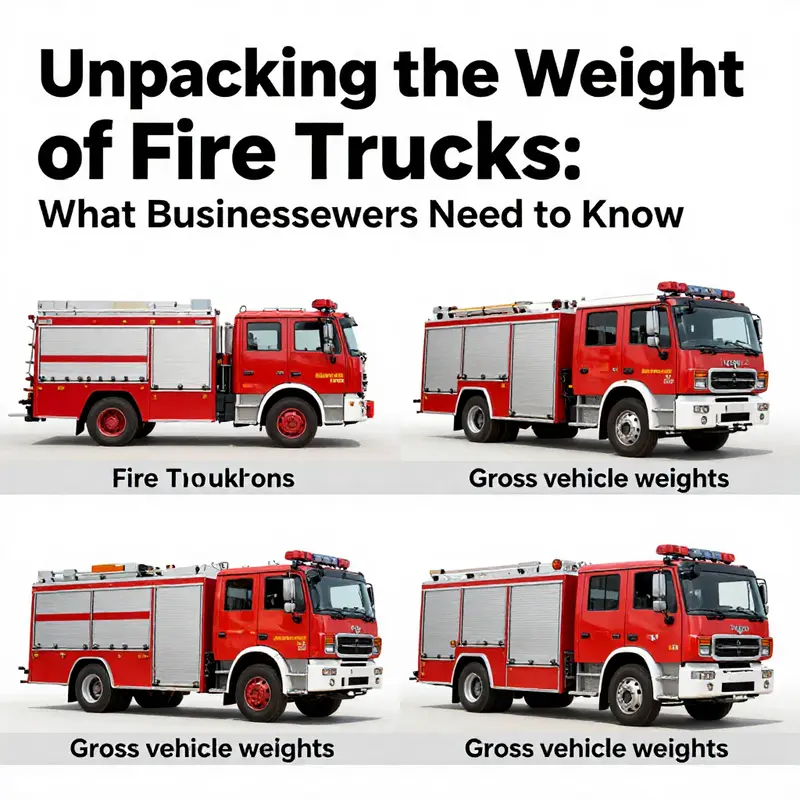
Weight is not a single figure for a fire department vehicle; it is a living constraint that shapes every response, every route, and every decision about what gear gets carried to a call. When you ask how heavy a fire truck is, you are really asking how heavy it needs to be to perform its job while still moving safely on public roads. The answer is not a simple number but a spectrum that stretches from compact, light-duty units to the towering, fully equipped heavy-duty machines. The spectrum exists because the mission itself is varied. A light-duty fire truck designed to shuttle a small crew and a modest water supply down narrow streets weighs roughly 6 tons in typical configurations. It is built for speed, agility, and quick deployment, and its lighter mass means less stress on road handling, shorter stopping distances, and better fuel efficiency during routine patrols or rapid response with minimal apparatus. As the fleet expands into more demanding roles, the numbers shift upward in deliberate steps. A medium-duty apparatus, which might carry more foam or dry chemical extinguishing agents, or be configured as a larger pump or a water tank unit, commonly sits in the 10 to 15 ton range. These are the versatile workhorses of many fire services, capable of delivering a larger punch without becoming so heavy that their movement becomes burdensome on crowded streets or rural roadways where weight limits and clearance issues matter. Yet the evolution of a fire department’s needs—larger water capacities, more sophisticated pumping systems, and higher-tech equipment—pushes many vehicles into the realm of heavy duty. In those configurations, a fire truck often weighs 16 tons or more. The leap from 15 to 16 tons marks a threshold where additional water, bigger pumps, longer ladders, and more extensive rescue tools begin to dominate the payload. The weight does not stop there. In fact, the notional load framework reporters use to model the maximum permissible totals for different vehicle classes shows a broader and sometimes surprising range. Some classification schemes designate heavy and specialized units with capabilities that reach well into the mid- to high-thirties of tons. For example, certain standard references identify a 25-ton category for a Type 3 vehicle in specific load configurations. Others describe substantial heavy units at 36 tons, and for the most robust arrangements, 40 tons is not uncommon when a unit carries the full complement of water, foam, equipment, and crew envisioned by the design. These figures reflect maximum payload allowances rather than the everyday weight you would see on a quiet street. They are the legal ceiling that ensures the vehicle can still operate within road rules while offering the capacity needed to fight fires and perform rescues. It is important to recognize that the total permissible weight of a fire truck is the sum of its own dedicated chassis weight, its installed equipment, its water and foam payload, and the crew that rides within. A modern fire truck is not a bare platform; it is a carefully engineered system, and every kilogram of its weight has a purpose. The baseline, often cited as a practical upper bound for many configurations, can be about 28,000 kilograms—roughly 28 tons—in some contemporary builds. That figure exists precisely because manufacturers optimize Everything from engine power to brake capacity to suspension to accommodate both performance on the street and payload on the scene. A typical modern vehicle may approach that figure when fully equipped with water tanks, pumping gear, ladders, rescue tools, and sufficient crew to operate the vehicle and its systems. To understand this, consider how the weight splits across the truck’s structure and its capabilities. The engine and chassis provide the primary load-bearing and propulsion, but the heart of the vehicle’s battlefield readiness lies in the pump and water system, the aerial ladder or platform if included, and the array of hoses and fittings, extinguishing agents, and tool sets that define a modern response. Each system demands its own share of mass. The water tank, in particular, stands as a major determinant of total weight. As a general rule, heavier water capacity translates into more payload, which then demands stronger structural components, higher-rated axles, and more robust braking. The ladder and aerial apparatus, if present, add substantial mass on the rear or midsection of the vehicle, altering weight distribution and dynamic behavior during acceleration, cornering, and braking. The argument is not about more weight being inherently better; it is about how the weight is deployed. Mobility remains essential, especially for urban incidents where streets are narrow, traffic dense, and the need for rapid repositioning is constant. Weight distribution becomes a central design and operational concern because it directly affects how quickly a truck can respond to a call and how safely it can operate once it arrives at the scene. The practical implication of these weight differences shows up in every phase of a response. On the road, heavier units require more careful handling, longer stopping distances, and, in some jurisdictions, special routing or permits to navigate bridges or elevated structures. The mass also interacts with the vehicle’s braking system and suspension; higher payloads demand better heat dissipation in brakes and more robust suspension to maintain tire contact with the road over irregular surfaces. In the fire ground, weight becomes an ally when you need momentum and endurance. A vehicle carrying a greater volume of water can knock down a growing blaze more effectively, grant the incident commander more options for extinguishment, and reduce the need for constant replenishment runs. But this advantage comes at the cost of maneuverability and stowage flexibility. A 25-ton Type 3 or a 31-ton SU5 class unit has different payload envelopes and operating envelopes compared to a lighter 6-ton or 10-ton design. In practical terms, this means that departments often tailor their fleets by mission profile. Some communities rely on compact, nimble units for urban neighborhoods and quick knockdown tactics, supplemented by larger pumper or quint units stationed closer to longer response corridors or industrial zones. Others favor a heavier approach, equipping aerial ladders and high-capacity pumps in a way that prioritizes the ability to reach elevated positions and to sustain a long, high-volume attack until a bulk water supply can be secured. It is the balance of these elements—the chassis and engine strength, the pump capacity, the water payload, the ladder assembly, and the crew—that dictates the overall mass and what that mass can accomplish on the street and at the scene. When you gather all these factors into a single picture, the spectrum of fire truck weights becomes a narrative about capability rather than a single static figure. The most common frame of reference among fleets is a range that stretches from roughly six to forty tons, but most day-to-day configurations will populate a narrower middle ground. The practical takeaway for a reader who wants a concrete sense of weight is simple: a fire truck’s mass is primarily driven by purpose. A unit built to carry large amounts of water, robust pumping machinery, and a comprehensive set of rescue tools will inevitably be heavier. A unit designed for swift response with limited equipment will be lighter, optimized for quick maneuverability and efficient travel. The notional load classes and the structural constraints that accompany them exist to ensure roads can accommodate these vehicles and that the loads can be managed safely under varied conditions. This is why the weight question never resolves to a single point. It resolves to a family: a family of vehicles designed to meet different tactical needs while sharing a foundational goal—delivering water, tools, and team strength to the scene as efficiently and safely as possible. As you reflect on the weight range, it becomes clear that the question is really about the mission. If the mission calls for rapid, pre-positioned force with moderate equipment, you might see a mid-range vehicle in the ten- to fifteen-ton neighborhood. If the mission demands sustained high-volume water delivery and complex apparatus, you move toward the heavy end of the spectrum, and with it, the inherent complexities of road weight limits and dynamic stability. In the end, the numbers tell a story of capability. A fire truck weighs what it must to carry the necessary water, pump, ladder, and rescue tools, and to do so while maintaining the safety and reliability that emergency response demands. The art and science of firefighting are inseparable from the art and science of these machines’ mass. The weight range—roughly 6 tons for light-duty responses, through 10 to 15 tons for versatile mid-range units, up to and beyond 16 tons for heavier configurations, with notional classifications ranging into the 25-40 ton zone for specialized load configurations—reflects a deliberate calibration between payload, performance, and road safety. What remains constant is the purpose behind every kilogram. Each ton represents not simply mass, but the capacity to reach and protect, to push through barriers, to split the moment of danger from the moment of rescue, and to return crews and communities to safety with the most efficient, most dependable means available.
null
null
Tonnage by Type: How Fire Truck Weight Mirrors Purpose, Performance, and Preparedness
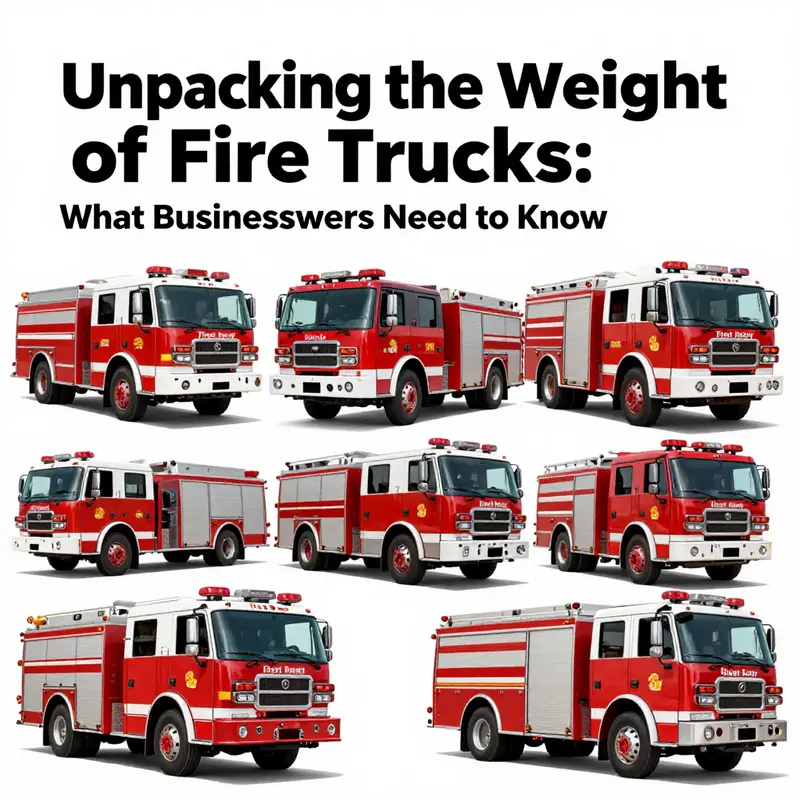
Weight, for a fire service vehicle, is more than a number on a scale. It is a fundamental expression of a truck’s mission, a physical statement about how much water, foam, tools, and personnel it is designed to carry, and how it will perform once the alarm sounds. When you ask how heavy a fire truck is in tons, you are also asking what role the vehicle plays on the fireground, how it will maneuver through streets or rough terrain, and what kind of response time its builders and departments expect. The weight a department selects is not arbitrary; it is the result of balancing demand and deliverability. In practice, the tonnage assigned to a given apparatus reflects three intertwined realities: the payload required for the job, the strength and configuration of the chassis, and the drivetrain that must reliably deliver power to the wheels under load. Across the spectrum of fire service needs, a few broad classes emerge, each with its own typical weight band and operational emphasis.
Light-duty, or wildland-focused, apparatus illustrate the first principle: mobility often matters more than maximum water capacity. These units are typically lighter and more agile, built to reach remote or off-road locations where access is challenging and the density of water supply is limited. Their GVW usually lands in the lower end of the spectrum, roughly from 6 to 10 tons. A compact, off-road capable design prioritizes four-wheel-drive or high-traction configurations, simple pump setups, and enough water on board to sustain initial attack until larger support arrives. In practice, these vehicles emphasize maneuverability, fuel efficiency, and rapid deployment in forested, rural, or rugged environments. They demonstrate that a lower tonnage can still deliver essential firefighting capability when the incident profile calls for it.
Moving toward the heart of urban response, the next tier of tonnage reflects a different balance. Medium-duty trucks, commonly ranging from about 10 to 15 tons, are designed to support structural fires, commercial high-occupancy buildings, and the day-to-day demands of city streets. A typical medium-duty platform carries a substantial water payload, a reliable pump system, and a robust array of tools and rescue equipment. The weight here is a deliberate compromise: enough mass to support extended operations and a heavy enough chassis to carry the necessary equipment while keeping the vehicle sufficiently maneuverable within tight urban corridors. This category also broadens the spectrum of mission-ready capabilities, including advanced lighting, scene safety features, and communications that keep crews coordinated during evolving incidents. The result is a family of trucks that can respond quickly to a building fire, lay down significant water streams, and carry a crew with the gear essential to search, rescue, and initial suppression efforts.
At the upper end of payload and purpose, heavy-duty units assume a different set of responsibilities. Large pumpers and aerial ladder trucks can weigh 16 tons or more, and sometimes considerably more, depending on their pump capacity, ladder length, water storage, foams, and onboard rescue tools. The heavy-duty class is the backbone for high-rise operations, large commercial fires, and complex technical rescues where reach, lift, and sustained attack are non-negotiable. The extra weight supports longer water streams, heavier ladders, more powerful pumps, and the stability required to operate high above the ground. Yet even within this category, engineering choices—such as ladder reach, pump configuration, ballast distribution, and chassis strength—determine how much weight is truly carried on any given mission. The emphasis shifts from raw speed to sustained performance, with an eye toward reliability, safety, and the ability to function under the demands of a long, dangerous operation.
A distinct, increasingly relevant subcategory is the airport rescue and firefighting (ARFF) vehicle. These machines are optimized for rapid deployment on runways and the unique demands of airfield incidents. They often exceed ten tons, reflecting the need for substantial water and foam capacity, along with high-speed acceleration and robust braking to cope with runway environments and heavy loads. ARFF units illustrate how a specialized mission profile can push tonnage into a category where speed and volume compete with debris resistance and thermal management. The weight dynamic here is not simply about what’s on board; it is about how quickly that on-board capability can be brought to bear under demanding operating conditions and how that capability remains dependable as the mission unfolds.
Electric fire trucks introduce another axis to the tonnage conversation. As departments explore alternatives to diesel propulsion, designers experiment with architectures that maximize payload while controlling weight through advanced materials, battery placement, and energy management. An example of this evolving approach shows a vehicle with a notable payload capacity even as it adopts electric power. The practical implications are nuanced: traction and range must remain consistent under load, charging and thermal performance are critical, and the balance between carrying capacity and weight distribution becomes central to safe operation. These developments signal a gradual shift in the tonnage conversation, one that acknowledges environmental goals while preserving the essential operational envelope that firefighters rely on.
Across these categories, the choice of tonnage is inseparable from the incident profile a department expects to face. Urban cores with sprawling high-rises, narrow streets, and heavy traffic often justify heavier apparatus that can deliver powerful streams and reach. In rural or forested areas, lighter, more maneuverable units that can traverse uneven terrain may be preferable, with mutual-aid arrangements filling water supply gaps. Airports demand a blend of speed, capacity, and endurance that requires careful weighing of weight against acceleration and braking performance. The common thread is that weight is a means to an end: it supports the right level of water, foam, equipment, and crew for the anticipated threats and terrain, while preserving the ability to respond swiftly and safely.
From a procurement perspective, this means looking beyond the scale to understand how a given tonnage translates into on-ground outcomes. The payload set—water, foam concentrate, and other extinguishing agents—must align with typical fire loads and the size of the incidents most likely in a jurisdiction. The equipment complement, including pumps, hoses, nozzles, and rescue tools, should be sized to sustain operations without overly burdening the chassis. Then there is the crew and their gear; the payload space must accommodate a standard crew, with room left for personal protective equipment, scene safety devices, and medical supplies. A well-chosen tonnage creates a balanced platform: enough mass to deliver sustained, effective firefighting while preserving the agility to navigate urban canyons, rural tracks, or runway environments.
The interplay between weight and performance also touches the vehicle’s dynamics on the road. Heavier trucks require more robust braking systems, suspension tuning, and tire configurations to maintain control under load. They demand more careful weight distribution to maximize stability when pumping water, raising ladders, or deploying foam systems. At the same time, the heaviest platforms must still meet local road restrictions and be able to maneuver through the everyday realities of a city or region. In practice, departments often evaluate not only the gross weight but also the loaded weight under typical operating conditions. This helps ensure that a given chassis can cope with the range of stresses it will encounter, from the lurch of a full water tank to the forces generated when a long ladder is extended over a crowded street.
In the end, the question of how heavy is a fire truck is best answered through the lens of function. A 6-ton light-duty unit may be the right choice for remote forested fires where access is limited and rapid deployment matters more than sheer water capacity. A 10-to-15-ton urban pumper can balance water needs with urban maneuverability, while a 16-ton-plus heavy pumper or aerial apparatus provides the reach and resilience needed for high-rise or large-fire scenarios. ARFF configurations and emerging electric designs add further nuance, illustrating how tonnage remains a flexible tool that adapts to evolving patrols of risk and capability. Understanding these variations helps fire services select vehicles that not only meet current demands but also anticipate future challenges, ensuring faster, safer, and more effective responses when every second counts. For anyone seeking a deeper, standards-informed view of how these weights relate to the broader framework of fire service vehicles, the NFPA standards provide a rigorous reference point that connects weight, performance, and safety into a cohesive system of procurement and operation. https://www.nfpa.org/codes-and-standards/fire-service-vehicles-standards?utmsource=google&utmmedium=cpc&utmcampaign=NFPAStandard%2B5000%2B-%2BFire%2BService%2BVehicles%2BStandards&utm_term=NFPA%2B5000%2Bfire%2Btruck%2Bstandard
The Weight of Readiness: How Mass Shapes Cost, Performance, and Response in Firefighting
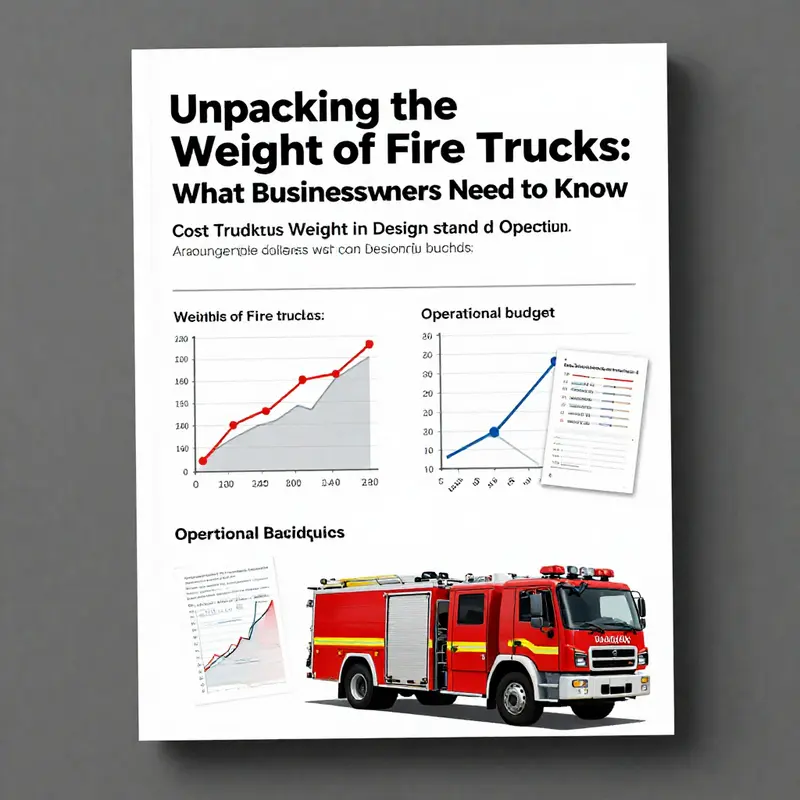
Weight sits at the center of almost every trade-off in fire apparatus design. It is not a single datum to be memorized, but a spectrum that stretches from compact light-duty tankers to hulking heavy-duty pumpers and aerial platforms. In the broadest terms, a fire truck’s mass is governed by its intended role: light-duty vehicles aimed at rapid response and water delivery, mid-range platforms configured for versatility, and heavy-duty machines built to sustain high-capacity operations under demanding conditions. The spectrum itself is rooted in real numbers. Light-duty configurations can crest around six tons of gross vehicle weight, a threshold that keeps acceleration lively and fuel use modest while still delivering essential equipment. Medium-duty models routinely fall in the ten- to fifteen-ton band, balancing payload with the daily realities of urban response. Heavy-duty fire trucks, which include large pumpers and aerial apparatus, frequently exceed sixteen tons, a mark that elevates both capabilities and the complexity of operation. And while most commonly encountered models cluster in the ten-to-fifteen-ton range, the underlying truth remains: weight is a fundamental constraint and a fundamental enabler, depending on how it is managed and where it is allocated in the vehicle’s architecture. The economic implications of that weight run through every phase of a fire department’s lifecycle, from the moment a truck is chosen to the long-term costs of keeping it mission-ready. At the moment of purchase, the chassis, suspension, engine, and safety systems must together sustain load, respond with authority on every call, and endure the stresses of daily duty. Heavier machines demand sturdier foundations. They require stronger, more expensive chassis members, reinforced suspensions, and powertrains tuned to preserve performance as weight climbs. The calculus is straightforward: heavier trucks typically command higher upfront costs. The reasons are practical and layered. A greater mass calls for more robust structural members to preserve crashworthiness and ride stability. Heavier duty cycles reward high-torque, larger-displacement engines, and more sophisticated transmission and braking systems to maintain controllable performance margins. All of these elements accumulate into higher purchase prices. Even when a driver is balancing budget against capability, the economic signal is clear: more heft costs more at the point of sale. Yet the economic story does not end with the original invoice. Long-term operational expenses tend to rise with mass as well. Fuel economy, a perennial line item in a department’s annual budget, bears a direct relationship to weight. Heavier platforms require more energy to accelerate, climb grades, and hold speeds against drag. Over the life of a fleet, the incremental fuel burn for heavier trucks can translate into meaningful sums, especially for departments maintaining large, diverse fleets that drive substantial annual mileage. Beyond fuel, there are maintenance and wear considerations. The mechanical systems associated with heavier weights experience greater loads, which can translate to higher maintenance costs, more frequent component replacements, and accelerated wear patterns. The financial impact is not just a function of miles traveled; it is a function of duty cycles—the number of starts, accelerations, and heavy loads that a vehicle endures on a typical shift. The regulatory environment compounds the financial considerations. Weight limits influence where a vehicle can operate, which roads and bridges are accessible, and which routes are viable in an emergency. Exceeding weight thresholds can provoke fines or restrictions that complicate planning and potentially slow down response times when every second counts. These regulatory realities create a compelling case for careful weight management at the design stage, not as an afterthought. The interplay between weight and access is not merely legalistic—it is operational. A heavier vehicle, while capable, may encounter bridges or streets with lower clearance or weight constraints. The cost of detours, delays, or allied equipment relocation on a critical call can accumulate in unpredictable ways. In practice, this means fire departments and manufacturers are compelled to consider not only the payload or water carry but the vehicle’s entire platform alignment with the local infrastructure. As weight grows, the temptation to compensate with brute horsepower or oversized drivetrains increases. But that path carries its own penalties. Larger engines and transmissions demand more fuel, more maintenance, and more cooling capacity. The added mass also influences tire selection, brake sizing, and chassis stiffness, all of which must be engineered with safety margins that protect crews and the public. This is why the search for smarter design strategies has become central to modern apparatus development. Lightweight materials and optimized geometry offer a path to reducing mass without sacrificing safety or performance. The CAD–FEA benchmarking studies referenced in contemporary research point toward a provocative direction: how far can mass be reduced through intelligent material choices and structural optimization while maintaining, or even enhancing, structural integrity and crashworthiness? In practice, this translates into exploring materials that deliver strength and stiffness with less overall weight, or that distribute loads more efficiently across the chassis. One notable line of inquiry involves integrating lightweight materials with conventional steel and aluminum where appropriate, then validating performance through computer-aided design and finite element analysis. The goal is not to create frail, disposable fire trucks but to reimagine the architecture so that every kilogram is justified by an improvement in safety, reliability, and mission readiness. In this context, SS304 stainless steel has emerged as a promising candidate within CAD–FEA benchmarking discussions. The material’s corrosion resistance, durability, and formability make it attractive for certain subsystems and structural components. The challenge, of course, is weight. Stainless steel typically weighs more per unit volume than aluminum, so the trade-off must be carefully evaluated. The point is not to eliminate weight for its own sake but to reallocate it toward regions of the vehicle where it matters most—areas that contribute to stability, load distribution, crash energy management, or extended service life in harsh environments. In other words, weight optimization becomes a strategic exercise in value engineering. It requires a disciplined assessment of how each kilogram supports the truck’s core mission: to deliver water or foam to a scene, to operate with consistent reliability through long shifts, and to reach hazard zones with predictable handling and controllability. The design conversation, therefore, evolves from what the truck can carry to how its mass can support safety margins, performance benchmarks, and lifecycle resilience. The economics of weight then crystallize into a balanced equation. The acquisition cost is influenced by the choice of chassis, engine, suspension, and safety systems harnessed to bear the intended load. The operational cost—fuel, maintenance, and parts—depends on how those choices affect energy expenditure and wear. Regulatory compliance adds another layer of complexity, sometimes limiting access to certain routes or requiring adjustments to avoid fines or delays. And finally, material science and design innovation offer a path to squeezing more value from each ton, or from each kilogram, by maximizing performance while trimming unnecessary mass. The practical upshot for fire services is a richer, more nuanced calculus than simply choosing the heaviest or lightest option. Departments that optimize weight with mission-specific geometry can achieve meaningful gains in fuel efficiency, handling, and response times, without sacrificing payload capacity or safety performance. They can also extend the useful life of their fleets by mitigating stress on key components and reducing maintenance demands over time. The broader implication for the field is that weight is not a problem to be solved with brute strength but a design parameter to be refined through systems thinking. It requires collaboration among engineers, procurement officers, and end users who understand the realities of daily duty. In the end, the question “how heavy is a fire truck in tons?” cannot be answered in isolation. It demands a holistic view of what the vehicle is asked to do, how it interacts with the road network, and what the department is willing to invest to keep crews safe and lives protected. The answer lies not in a single number but in a spectrum of options tuned to the demands of each service area. With that perspective, weight becomes a lever—capable of reducing lifecycle costs and improving response performance when guided by careful material choice, rigorous design validation, and a commitment to aligning vehicle mass with mission needs. For practitioners and researchers alike, the challenge is to translate these insights into concrete, scalable solutions that keep pace with evolving fireground realities while preserving the public’s confidence in the safety and effectiveness of emergency response. For further details on how material selection and weight optimization impact fire truck performance and costs, you can refer to the Fire Truck Apparatus Guide: Structure, Material Properties, and Performance Metrics. https://www.fireengineering.com/fire-truck-apparatus-guide/
Mass on the Move: How Fire Truck Weight Shapes Safety, Access, and Equity on Shared Streets
The weight of a fire truck is not merely a catalog figure. It is a measure that travels with the vehicle into every mile of its mission. Light-duty apparatus can tip the scales around six tons, while medium-duty chassis often land between ten and fifteen tons, and the largest pumpers and aerial platforms push well beyond sixteen tons. This spectrum matters because every ton carries consequences for how a vehicle handles, how quickly it can be deployed, and what kind of routes it can safely traverse. In practice, the mix of weight and capability means that departments must tailor their fleets to the communities they serve, balancing the need for life-saving equipment with the realities of roads, bridges, and neighborhoods designed for lighter traffic. A 6-ton water tank truck may navigate narrow streets with ease and respond swiftly in tight spaces, but its water capacity and hydraulic reach will be limited compared with a heavier, more feature-laden unit. Conversely, a 15-ton or heavier unit may offer greater pumping power and reach, larger on-board water supplies, and more robust stabilization for ladder work, yet may face fewer routes where it can operate unimpeded. The interplay of mass and mission knits itself into the fabric of emergency response and public safety.
From a societal perspective, weight is a fairness issue as much as a technical constraint. Heavier fire trucks, if not planned for, can become mobile barriers on the street. Bridges and culverts in rural areas or aging urban networks may carry weight limits that inadvertently exclude certain apparatus from critical arcs of travel. When responders cannot reach a scene because a bridge is rated for lighter loads, the consequences extend beyond a single incident and can compound risk for neighboring homes and businesses. That reality pushes fire departments to invest in infrastructure-aware routing, pre-incident surveys, and mutual-aid agreements that compensate for local gaps. It also places a premium on community resilience planning, so the public sees transparent decisions about which routes are prioritized during heavy responses and how alternative paths are established to avoid delaying life-safety operations. In this sense, weight becomes a lens through which equity and reliability intersect: every neighborhood deserves access to capable response, but that access must be supported by roads maintained to handle the mass and momentum of modern fire apparatus.
Safety is the other axis of concern. Heavier vehicles demand more from their braking systems, tires, and suspension. The physics of stopping distance and stability change as mass increases, and responders must contend with higher forces in high-speed travel, wet pavement, or icy conditions. The NFPA framework recognizes these realities by stressing load management, stability testing, and careful weight distribution so that a truck rides, brakes, and steers predictably under a wide set of conditions. The standard for automotive fire apparatus is explicit about how weight, mass, and distribution contribute to safe operation, and it ties these considerations into highway regulations so that departments do not sacrifice public safety in the name of power. Beyond the design room, training and maintenance become continuous safety measures: crews inspect weight distribution during routine service, verify that ballast placements do not create new blind spots, and rehearse braking and evasive maneuvers on routes that resemble real-world roads rather than idealized test tracks. In practical terms, this means equipment designers must seek the highest possible performance while engineers, fleets, and drivers stay grounded in the constraints of the streets they share with the public.
Weight also influences the logistics of response. A heavier truck may carry more apparatus, but it also consumes more fuel and adds to overall weight when loaded with water or foam. Fuel economy matters not as a luxury but as a factor that changes how quickly a unit can be replenished and redeployed, especially on extended incidents or in remote communities where resources are spread thin. This is not a simple trade-off between speed and stamina; it is a balancing act that requires thoughtful deployment planning, route optimization, and the use of mutual aid to bring the most appropriate tool to bear at the right moment. Fire departments increasingly rely on data-informed decisions that map road restrictions, bridge load ratings, and traffic patterns to prioritize apparatus assignments and dispatch logic. The result is a more agile system that can adapt to the unique mass characteristics of each incident while protecting the infrastructure that makes rescue possible in the first place. In sum, weight becomes a shared responsibility among designers, engineers, policymakers, and frontline crews, guiding choices that affect everyone who relies on fire protection and emergency medical services.
Finally, the standards landscape provides a compass through the tension between capability and restraint. NFPA 1917, the Standard for Automotive Fire Apparatus, does not merely set performance targets; it anchors weight considerations in a broader safety ethic. The 2025 edition, in particular, foregrounds weight distribution, stability testing, and load management as core elements of safe operation. By codifying how mass interacts with handling and braking, the standard helps prevent mechanically induced failures that could jeopardize crews or the public. It also aligns with highway rules that govern weight limits and vehicle operation on shared roads, ensuring that the pursuit of powerful firefighting tools does not undermine the very streets we depend on. For any department, this means ongoing attention to where weight sits, how it affects braking distances, and how the vehicle behaves in adverse weather or on challenging topography. It means calibrating equipment so that every pound earned in capacity does not come at the cost of predictability or control. Practically, this ethos translates into routine stability checks, disciplined loading procedures, and a willingness to adjust fleet composition as urban layouts evolve, bridges age, and our understanding of risk improves. The evolution of standards, and their clear guidance on mass, is what keeps heavy apparatus a capable ally rather than a liability on crowded thoroughfares.
Ultimately, the weight of a fire truck should be understood not as a fixed attribute but as a dynamic constraint that shapes how communities plan for fire protection. It invites a broader conversation about how we design streets, how we invest in infrastructure, and how we train people to operate complex machines under pressure. It invites conversations about equity, because weight affects not only the exceptional moment of a fire or medical call but the everyday safety of people who share roads with heavy apparatus. It invites collaboration among engineers, policymakers, and responders to ensure that heavy-duty capabilities do not overwhelm lighter, more vulnerable access points. Through careful attention to weight at every stage—from chassis selection and load distribution to maintenance routines and dispatch strategies—communities can preserve both rapid response and long-term infrastructure health. The takeaway is not simple bravado about horsepower; it is an insistence that power and protection coexist with prudence and planning. In this balancing act, the standard becomes not a bureaucratic hurdle but a practical map for a shared responsibility: heavier means stronger when used where and how it matters, and safer when designed and operated with a full understanding of the roads we all share.
For more detail on the standards governing automotive fire apparatus and weight considerations, see the NFPA page for the 2025 edition: https://www.nfpa.org/Code-Updates/2025-NFPA-1917
firefighting
Understanding the weight of fire trucks is vital for business owners involved in emergency services, as it connects to operational efficiency, safety standards, and financial implications. With models ranging from 6 tons to over 16 tons, the appropriate selection and implementation of fire trucks can enhance emergency response capabilities and community safety. It is essential for business owners to recognize these factors to make informed decisions that balance operational needs with public safety.

