
















Fire trucks are not just essential for emergency response; their weight and specifications significantly affect operational efficiency and safety. Business owners need to understand how fire trucks’ weights vary across different types and regions, influenced by numerous factors. In the following chapters, we will explore the weight specifications of various fire truck models, discuss the critical factors influencing their weights, compare regional differences, examine how technological advancements shape their mass, and finally, delve into the economic implications of these weights. Together, this information will provide a clearer picture of the importance of weight in the functionality and suitability of fire trucks for diverse applications.
Weight on the Line: Understanding Fire Truck Mass and Its Impact on Firefighting
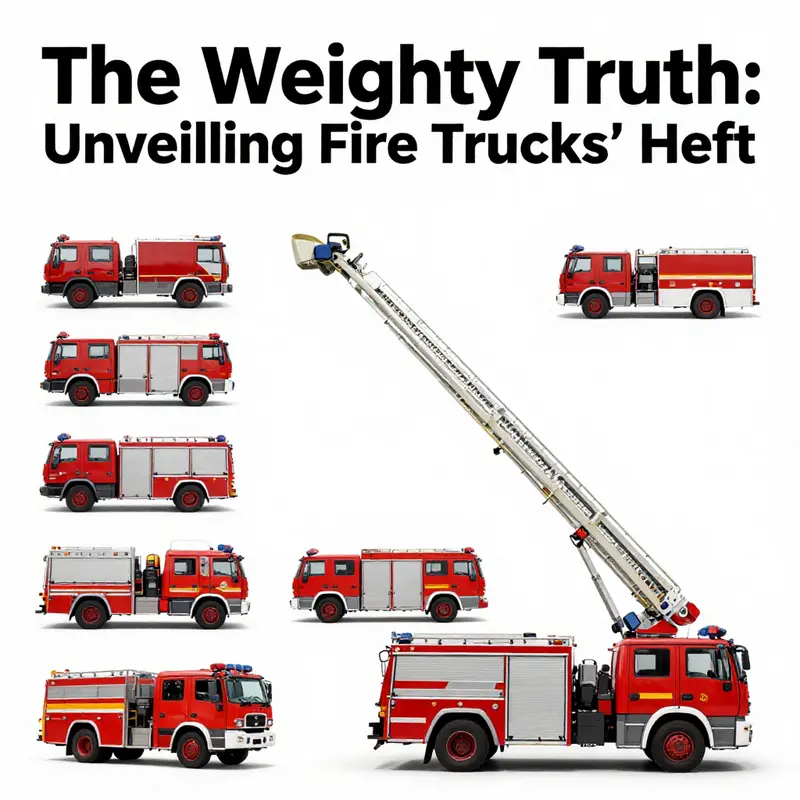
Weight in firefighting equipment is a controlling parameter that governs what a vehicle can carry, where it can operate, and how quickly it can perform on a call. Different missions demand different payloads, and weight becomes the hinge on which performance, maneuverability, and reach pivot. The lighter end is often the five-ton class, which typically carries about two to four thousand liters of water and sits near a ten thousand pound gross vehicle weight rating; the actual mass depends on the water, foam, hoses, ladders, and crew. Heavier roles bring larger ladders, stronger hydraulics, stabilizers, and more rescue gear, pushing many units into the fifteen to thirty thousand kilogram range before full loading. Fully fueled and water-filled versions can exceed these figures, which affects braking, braking distance, acceleration, and road wear. The chassis layout matters too: a 4×2 setup favors urban maneuverability and lower mass, while a 6×4 or multi-axle configuration improves load distribution and off-road capability at the expense of weight and handling complexity. Engine power helps offset some inertia, but cannot erase the physics of mass; mission profiles dictate the balance between reach, water delivery, payload, and speed. Standards such as ladder trucks with high lifting capacity and industrial foam-capable units illustrate how mass grows with capability, while urban models emphasize nimbleness. In practice, weight also guides maintenance planning, bridge and road restrictions, and deployment strategy, because heavier trucks demand more robust brakes, tires, and suspensions and may require staging to preserve execution time and safety. For readers seeking deeper numerical detail, reference materials such as fire apparatus specifications offer mechanical, dimensional, and performance data to translate these qualitative patterns into concrete planning decisions.
The Heavy Truth Behind Fire Truck Mass: How Design, Duty, and Safety Shape Their Weight
Fire trucks are not simply fast, bright vehicles rushing toward danger. They are carefully engineered systems where every pound matters. The question of how heavy fire trucks are opens into a broader discussion about the balance between protection, capability, and maneuverability. In this light, weight is less a statistic and more a design language written by the duties a vehicle must perform, the environments it must operate in, and the steadfast safety standards that govern every component from chassis to ladder. Across the spectrum, from compact water tenders to highly specialized rescue units, mass emerges as a consequence of carefully chosen priorities. To understand why this is the case, it helps to follow the through line that connects the most fundamental needs of firefighters with the real-world constraints of roads, bridges, and incident command, where every decision about weight can influence response time, stability, and effectiveness on scene.
Among the primary engines driving weight is protection. Firefighting is a dangerous business, and the vehicle itself must offer a fortress-like resilience to protect the crew inside. Turnout gear, protective coatings, reinforced cab structures, and integrated safety systems all contribute to a higher mass. The weight is not merely about adding armor for armor’s sake; it reflects a deliberate commitment to survivability. Modern fire apparatuses place a premium on structural integrity, fire-resistant materials, and crash-worthy designs that can withstand the rigors of high-demand scenarios. This protective layer, often the heaviest single contributor in a truck’s mass, is the direct result of research into risk factors and safety outcomes. When safety systems are woven into the chassis—from energy-absorbing zones to advanced restraint and detection architectures—the cost in pounds is a deliberate investment in the lives of those who step into the truck before any alarm is raised.
Yet protection does not stand alone. The mission profile of a fire truck is another decisive determinant of its weight. A pumper, whose primary job is to deliver water quickly and in large volumes, carries onboard water and pumps sized for rapid deployment. The onboard water supply itself can add hundreds of pounds, even before hoses, fittings, and the plethora of gear required for sustained firefighting. Aerial ladder trucks, by contrast, elevate the weight equation in a different arc. The ladders themselves are long, robust structures that demand substantial structural support and hydraulic systems. The counterweight and stabilizers needed to support a multi-story reach add further mass. Specialized units, whether they are rescue or hazmat response vehicles, must carry extrication tools, breathing apparatus, containment kits, and sometimes breathing air reserves. Each category multiplies the base mass in a way that reflects the unique operational demands they are built to meet. In practice, this means a spectrum in which the six-ton class of water-focused units often sits alongside much heavier, more capable configurations, especially when fully loaded with water and specialized equipment. These differences are not arbitrary; they correspond to the realities of responding in dense urban cores, suburban neighborhoods, or remote wildland edges, where the type of call dictates not just speed but the payload that the chassis must bear.
Regulatory compliance and the infrastructure by which these vehicles travel further shape their weight profile. Fire apparatus must satisfy a labyrinth of federal and state rules regarding axle loads, gross vehicle weight rating, and emissions. The need to operate safely on diverse road networks—bridges with load limits, tight corners in urban streets, and varied pavement conditions—means manufacturers design with strict adherence to limits that ensure stability and controllability. In the broader trucking literature, studies have highlighted that a sizable portion of heavy vehicles approach or even exceed recommended weight limits, underscoring the risk and consequence of overloading. While fire trucks are not ordinary commercial haulers, the principle is instructive: weight management isn’t a mere technical concern; it directly affects braking performance, acceleration, turning radius, and tire life. A truck that is too heavy for a given chassis or axle configuration can compromise maneuverability exactly when precision and agility are needed most. Conversely, underpowered or underbuilt rigs that try to shed weight too aggressively may sacrifice essential safety margins, water capacity, or structural integrity. This balancing act—between necessary mass for protection and mission capability and the limits imposed by roads and ramps—defines a large portion of the engineering discourse around modern firefighting apparatus.
What emerges from this confluence of factors is a practical picture of why fire trucks are heavy, and why their mass is not simply a matter of adding more metal. It is a product of deliberate trade-offs: the trade-off between a sealed, protected crew compartment and the need to keep the vehicle responsive enough to reach the scene without delay. It is a trade-off between carrying enough water to sustain a firefighting operation and the risk that a heavier vehicle will be slower to accelerate, harder to stop, and more expensive to maintain. It is a trade-off between the certainty that the equipment inside will function reliably and the reality that every additional tool or tank adds mass and, with it, the potential for mechanical stress. In practice, heavier trucks often feature more robust frames, reinforced axles, and more capable braking systems to preserve safety and control under load. They also rely on advanced hydraulics and stabilization systems to support heavy ladders and elevated platforms, especially when deployed on uneven ground or during windy conditions. The result is a vehicle that is not simply a faster fire-spreading machine but a carefully engineered platform designed to remain stable, safe, and effective under a wide array of pressures.
The weight story of fire apparatus therefore reads as a narrative of preparedness. A city facing a dense downtown core may opt for a heavier, more capable pumper with substantial water reserves and rapid deployment features. A district prioritizing aerial operations will naturally invest in heavier structures, reinforced booms, and longer ladders that demand extra mass. In rural or wildland environments, a different combination of equipment and fuel considerations can tilt the scales in another direction. The overarching principle remains consistent: the mass of a fire truck is a functional value, not a vanity metric. It communicates the compromises reached to ensure the crew can reach, enter, and operate effectively in the crucible of an emergency. When the siren cuts through the night, the vehicle’s weight is a reflection of years of testing, safety standards, and engineering choices that prioritize life over speed in the moments that follow a call.
For readers who want to translate this understanding into a practical sense of scale, consider the range established by common configurations. A typical six-ton water-focused unit, for example, includes a chassis, a substantial water tank, a pump, hoses, ladders, and a suite of firefighting apparatus. Fully equipped and loaded—particularly with water or foam systems for certain scenarios—this class can exceed the initial weight baseline. Larger or more specialized platforms—whether designed for extended rescue operations, foam capabilities, or heavy-duty urban firefighting—can climb much higher, entering into weights that reach well into the tens of thousands of pounds or the multiple tons range. The exact numbers depend on whether the vehicle is configured for command, rescue, or aerial operations, as well as on the number of wheels and the engine power that supports dynamic performance under load. While the precise weights are not universal, the logic stays: protection, mission, and compliance together push the scale toward heavier vehicles when the job requires more capability, more protection, and more reliability on scene.
In total, the weight of fire trucks is a careful, well-considered outcome of design philosophy, operational requirement, and regulatory discipline. It is a story about safeguarding lives and ensuring that every tool is ready when danger arrives, even if that readiness comes with a heavier frame. The result is a fleet that can adapt to a broad spectrum of emergencies while maintaining the core capability that defines firefighting: to respond with speed, to protect the crew, and to deploy the equipment needed to control and suppress a fire or manage a dangerous incident. For those who study or work with these machines, weight is not a simple measure of mass but a narrative about how best to equip a team to survive and prevail on the front lines.
External resource: For deeper data on heavy truck weights, see the National Institute of Standards and Technology’s analysis, which provides a rigorous data-driven context for how weight interacts with safety, performance, and infrastructure. NIST Analysis of Heavy Truck Weights
Weight on the Line: How Regional Demands Shape Fire Truck Mass and Mission
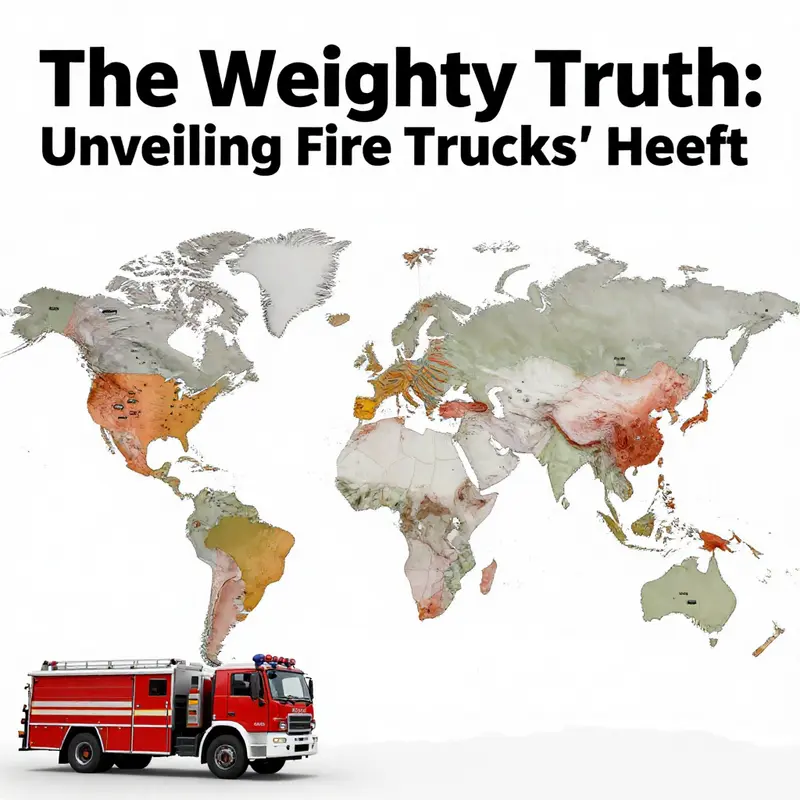
Fire trucks arrive on the scene carrying more than a hose and a helmet; they bring a calculated mass, a measure of the mission they are built to perform. Across the world, heavy fire apparatus span a broad spectrum of weights, from compact, city-ready units to colossal, equipment-laden machines. The weight of these vehicles is not an arbitrary figure; it is a carefully balanced outcome of capacity, reach, speed, terrain, and the unpredictable demands of real-world firefighting. A useful starting point is the idea of a typical 6-ton class water truck. In many regions, this kind of vehicle carries roughly 6,000 kilograms of gross vehicle weight, a total that includes the chassis, a sizable water tank, a pump, hoses, ladders, and the everyday firefighting tools that crews rely on. That “six tons” mark is not a ceiling, though, but a point on a spectrum. Heavier, more specialized models push well beyond that baseline. Aerial ladder trucks or foam-capable rescue vehicles frequently land in the range of 15,000 to 30,000 kilograms, or more, when they are fully loaded with water, foam, and the array of rescue gear they promise to deploy. The point is not merely the mass itself, but what that mass enables and constrains in practice: how quickly a team can move, how much water can be carried before refilling, and how well the machine can negotiate the roads and routes that lie between the incident and the closest water source or hydrant. Within this framework, the weight of a fire truck becomes a telling proxy for its intended role and the environment it serves.
Regional differences sharpen this picture. In Russia, where fleets must contend with extreme cold, remote locations, and long, snowbound stretches of road, heavy-duty apparatus are engineered with resilience as a core priority. The mass here is part of a broader system designed to persevere through winter winds, power outages, and the risk of water lines freezing. These vehicles often feature explosion-proof electrical systems and reinforced cabs, ensuring that critical systems stay online when conditions are harsh and hazards may be intensified by industrial activity. Pumps in such trucks are typically high-capacity, engineered to maintain robust water flow in challenging industrial fire scenarios, where fires may involve flammable liquids or complex chemical environments. The inevitable consequence is a heavier platform, one that remains reliable in the face of cold, isolation, and demanding fuels. The weight, in this sense, becomes a form of reliability hard-wired into the chassis.
In contrast, Western Europe and North American urban centers prioritize rapid response and maneuverability within dense, built environments. Here, the weight budget often balances capacity with the need to slice through narrow streets, fit into compact parking spots, and reach high-rise ignite points with speed. The equipment complement reflects this, with advanced foam systems to tackle structural fires and urban emergencies, and pre-connected attack lines that reduce time-to-entry. The design frequently emphasizes modularity and precision: smaller, tightly engineered bodies, sophisticated onboard diagnostics, and integrated communications systems that support real-time coordination during multi-unit responses. Even with sophisticated systems, the overall mass tends to be lower on average than the largest aerial or rescue platforms, a trade-off that supports quick deployment and high city-block throughput when every minute matters.
Rural and wildland scenarios—such as those encountered in the United States and Australia—illustrate another dimension of the weight story. In these environments, heavy fire trucks are often water tenders or pumper trucks that carry substantial onboard water but are also built with long-range endurance in mind. They must reach remote areas where hydrants are scarce or nonexistent, and where the ability to draw water from natural sources or refilling points becomes essential. The implication for weight is practical: large onboard tanks increase mass, but the trade-off is a longer operational window between refills and the capacity to sustain pump power without frequent stops. Durability and reliability trumps sheer nimbleness in these contexts, and the chassis and suspension are tuned to bear heavy loads over rough terrain while preserving the ability to pump at meaningful pressures.
Across all regions, the relationship between weight, axle configuration, and engine power shapes performance in concrete ways. A four-wheel-drive or four-by-two arrangement may emphasize efficiency and road manners, especially in urban or high-density settings, where weight concentrates on a smaller footprint and steering response must remain brisk. A six-by-four or even more complex axle setup is common on larger, heavier platforms designed to haul substantial water loads, lift heavy equipment, and keep pumps delivering under demanding conditions. Engine power scales with the mission: engines of modest output suffice for light-to-midsized units, while larger pumps and longer water columns require more robust power to maintain pressure and velocity at the nozzle. The practical effect is clear: heavier fleets bring more capability in exchange for greater structural stress on road networks, higher fuel consumption, and the need for more robust maintenance regimes.
With capability comes constraint. Weight directly affects maneuverability in tight urban spaces, the speed at which crews can reposition between incidents, and the energy required to accelerate and brake with a fully fueled, laden vehicle. The regulations governing vehicle weight and axle load further shape how and where these machines operate. In some regions, agencies opt for lighter configurations to optimize response times and reduce road wear, while in others, the priority is sustained water delivery and longer reach, even if that means a heavier chassis. In all cases, the equipment mix—pumps, foam systems, ladders, rescue tools, and communications gear—must be selected to align with anticipated fire loads, structure types, and terrain. This alignment explains why a single “weight” figure cannot tell the whole story; the mass must be interpreted in the context of regional hazards, response principles, and the geography it is built to fight.
The thematic throughline is that heavy fire trucks are not just about carrying water or horsepower. They are about carrying capability through space and time: the ability to pour water to suppress a blaze, deploy ladders to reach a higher floor, or bring rescue tools to those trapped in a challenging structural environment. The heaviest platforms excel in situations where water and foam volumes matter most and where there is time to plan, acclimate, and execute intricate maneuvers. The lighter, more agile machines shine where rapid entry, swift repositioning, and high-volume response must coexist within crowded streets and evolving timelines. In both cases, weight is a design decision that mirrors the region’s firefighting philosophy—whether the emphasis lies in cold-weather reliability, urban efficiency, or rural resilience.
To appreciate this, imagine the broader context in which these vehicles operate. Weight influences not only how many gallons of water a truck can haul but also how quickly it can deploy, how easily it can turn in a narrow alley, and how its pumps perform as the incident unfolds. The choice between a lean, quick-response platform and a heavier, water-rich workhorse reflects a fleet’s overall strategy: where water is stored, how it is drawn, and how fast the first lines can be established to begin the suppression process. In essence, the weight of heavy fire trucks is a tangible map of regional firefighting priorities—each region crafting its own balance between mass, reach, durability, and the speed at which a crew can gain control of a dangerous scene.
For readers seeking a broader statistical frame, broader context can be found in comprehensive firefighting statistics and analyses, which help illuminate how these regional philosophies translate into actual fleet compositions and incident outcomes. See NFPA Fire Statistics for additional context and data on how equipment choices align with observed fire loads, response times, and urban versus rural needs: https://www.nfpa.org/About-the-NFPA/News-and-Resources/Fire-Statistics.
Weight, Wisdom, and Wheels: How Technological Advances Are Redefining the Mass of Modern Fire Engines
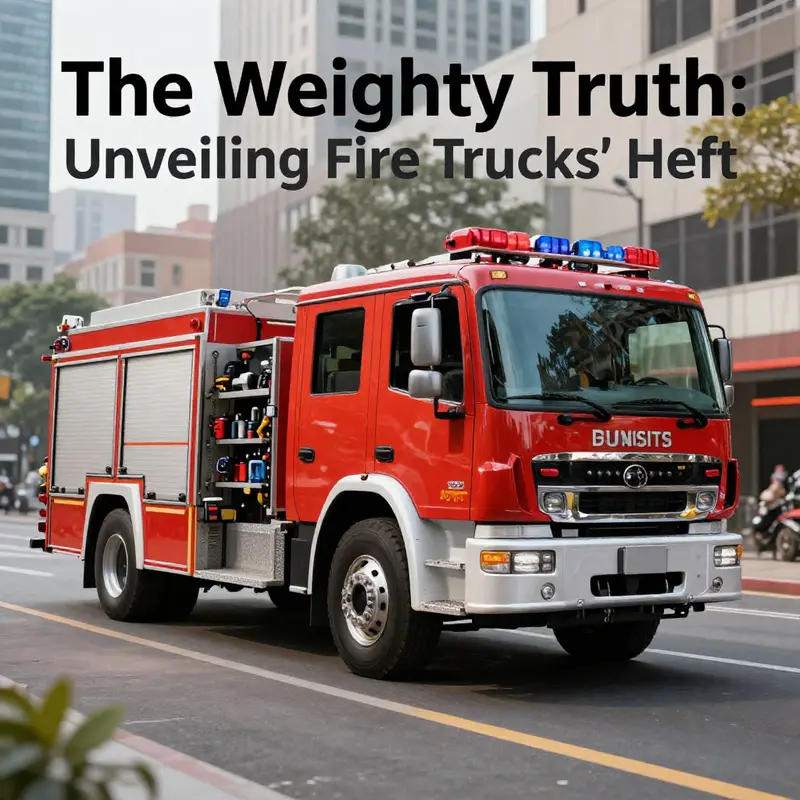
Weight is not a mere number on a spec sheet for fire trucks. It is a living constraint that shapes performance, safety, and the speed with which a crew can begin to fight a blaze. In practice, the mass of a fire engine reflects a careful balance: it must carry enough water, foam and rescue gear to do the job, yet remain agile enough to position itself quickly, climb streets with tight curves, and avoid excessive wear on roads and bridges. Across the spectrum of fire apparatus, from compact pumpers to heavy-duty aerials and foam-equipped rescue units, weight varies widely. A typical water-centric truck designed for urban response can hover around several tons in curb weight, and when fully loaded with hoses, apparatus, and a full water tank, the scale tips upward considerably. At the other end of the spectrum, specialized platforms and foam-capable rescue vehicles push well beyond tens of thousands of pounds, reflecting their larger tanks, longer booms, and expanded payloads. The underlying message is simple: the hardware that keeps a community safe has to be robust, reliable, and ready, yet it cannot be so heavy that it undermines its own mission by being slow, unwieldy, or overly taxing on infrastructure.
This tension is precisely where technology begins to redraw the map of what counts as “heavy.” The most consequential shifts come from three intertwined streams. First, materials science is letting engineers shave weight without sacrificing strength. Second, powertrain and propulsion innovations are enabling lighter, more efficient engines or alternative drive concepts that reduce the need for heavy fuel reserves or bulky propulsion hardware. Third, on-board systems—from advanced hydraulics to real-time monitoring and automated controls—are becoming more capable while designed to be lighter and more energy-efficient. The result is not a single lever that makes trucks lighter, but a choreography of improvements that collectively ease the mass burden on modern fire apparatus while expanding their capacity to respond, adapt, and endure in demanding environments.
On the materials front, the shift toward high-strength steel and aluminum alloys has already begun to change the calculus of weight. These alloys retain the reliability and safety margins that are non-negotiable for firefighting vehicles, yet they allow chassis and body components to be built with fewer kilograms without sacrificing structural integrity. The trend toward composites adds another layer of potential gain. Lightweight, high-strength composites can replace heavier panels or components in certain areas, decreasing overall mass while maintaining impact resistance and durability under field conditions. For crews, this translates into a truck that can carry the same essential tools and water capacity with a leaner shell and more favorable weight distribution. The challenge lies in ensuring that these materials perform consistently across harsh temperatures, exposure to flames, and the vibrations that accompany high-speed operations and rough terrain. When engineered thoughtfully, the benefits multiply: better fuel efficiency, improved handling, and reduced stress on tires and suspension, all of which contribute to a more responsive vehicle in a critical moment.
Powertrain innovations reinforce this narrative of smarter mass. Hybrid-electric concepts and optimized diesel architectures open pathways to lighter drivetrains and smaller, more capable fuel systems. In practice, a hybrid or hybrid-assisted setup can offset the mass of a heavy engine by enabling a lighter internal combustion package or by placing some power needs onto electric drive elements. This shift not only trims weight but enhances efficiency during idling, acceleration, and routine patrols, where the engine can be downsized without compromising on-pump performance. Meanwhile, improvements in diesel engine design—through better turbocharging, advanced fuel injection, and refined after-treatment—permit smaller fuel tanks without sacrificing range. The result is a cascade effect: less mass on the chassis, more payload room for water and rescue gear, and fewer excursions to refuel that can interrupt critical response missions. Of course, as systems become more electrified, the vehicle’s electrical architecture grows more sophisticated. The design challenge is to integrate these systems in a way that avoids tipping the scales back toward excess weight. The trend toward energy-efficient electronics—compact sensors, lighter wiring harnesses, and smart power management—helps keep the total mass in check even as capabilities expand.
Equally important are the advanced onboard systems that render the weight of a modern fire truck more intelligent, not merely heavier. Real-time monitoring, GPS navigation, and automated pump controls enable crews to operate with greater precision while minimizing unnecessary load. The push toward automation can, paradoxically, reduce the physical burden of some tasks, allowing smaller crews to achieve the same or higher levels of effectiveness. Yet advanced systems can introduce additional electronic and hydraulic hardware that may add weight. The balancing act here is to select components and architectures that deliver maximum situational awareness, reliable control, and robust redundancy while using lightweight materials and energy-efficient electronics. The net effect is a vehicle that can do more with the same or less static mass, because performance is increasingly tied to data, responsiveness, and control rather than brute force alone.
Weigh-in-Motion (WIM) technology represents a more strategic, system-wide approach to weight management. By providing continuous, dynamic feedback on how much payload aligns with the vehicle’s current state and road conditions, WIM supports a more informed design and operation. Departments can optimize loading configurations, ensuring that the vehicle remains within legal weight limits while carrying essential water, foam, ladders, hoses, and rescue gear. WIM also aids in long-term planning, revealing where structural reinforcements or material substitutions can yield gains in efficiency without compromising safety. In practice, WIM helps fire services strike a balance between maximizing payload capacity and preserving the maneuverability and wear characteristics of the fleet. The result is a smarter posture toward weight: not simply lighter for its own sake, but lighter where it matters most, and heavier only when the mission requires it, with confidence that legal and infrastructure constraints are being respected.
Across these factors, the ongoing evolution of fire truck weight is not a unilateral push toward lighter design. It is a nuanced negotiation among capacity, resilience, and duty cycles. A fully loaded urban pumper still needs a robust water supply and pumping capacity. An aerial platform must retain significant reach and stability, which inevitably adds mass. What changes is the shape of the equation: better materials reduce baseline mass; smarter powertrains offset the need for heavy engine configurations; streamlined onboard systems deliver more capability per kilogram; and precise weight monitoring ensures that every kilogram is accounted for in deployment and maintenance. In this sense, the modern fire truck becomes a more efficient tool—the same stubborn demand for reliability and payload, met by a more deliberate, technology-assisted economy of mass.
The implications for the wider discussion about how heavy fire trucks are are therefore twofold. First, weight cannot be considered in isolation from the mission profile. A compact, water-centric unit designed for rapid urban response will weigh differently than a long-range foam-equipped rescue vehicle with a high-volume pump and a large ladder. Second, and perhaps more important, technology is enabling a more dynamic approach to weight management. Materials that lighten the chassis, densify strength, and permit slimmer componentry; propulsion that yields the same output with less mass; and intelligent systems that do more with less physical heft—all these factors combine to redefine what it means to be “heavy” in service. The real trend is not simply lighter trucks, but smarter trucks that carry the right load, in the right places, at the right times, with the confidence that safety, performance, and infrastructure compatibility are not sacrificed in the process.
External resources offer a broader lens on these shifts, capturing how market forces, regulation, and technology converge to shape the future fleet. For a comprehensive industry perspective, see the following report: https://www.researchandmarkets.com/reports/709428/special-fire-truck-market-emerging-trends-technology-shifts
Weighing the Fireline: The Economic Ripple Effects of Fire Truck Mass
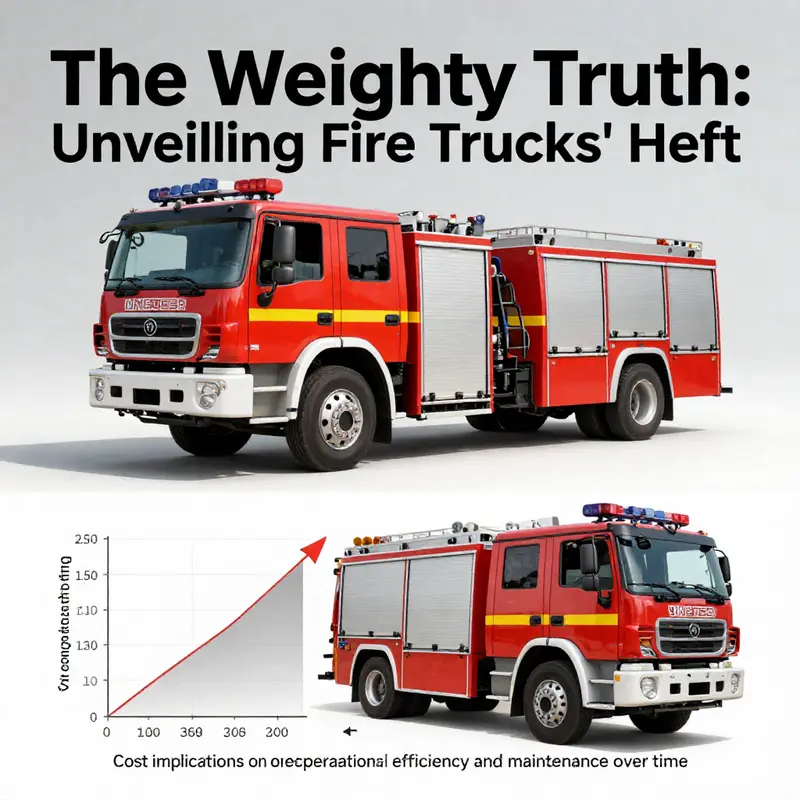
The weight of a fire truck is more than a simple specification on a spec sheet. It is a lens through which we can see how cities balance safety, mobility, and budget discipline. When a department weighs its options, it is not just choosing a chassis and a pump. It is deciding how much service a city can afford to deliver under every hour of the day. Heavier fire apparatus do not operate in a vacuum. They ride on roads funded by taxpayers and regulated by policies designed to keep traffic moving during both routine moments and emergencies. In that context, the mass of today’s fire trucks becomes a powerful economic variable with ripple effects that extend from the design room to the public budget. To understand this, we need to trace how weight translates into costs, performance, and policy implications on an urban scale.
Concrete numbers anchor the discussion. A typical six-ton class water fire truck, with a standard water tank and basic firefighting equipment, weighs around 6,000 kilograms when ready to roll. That figure includes the chassis, the water tank, the pump, hoses, ladders, and other essential apparatus. Yet weight is never static. Larger or more specialized vehicles—such as aerial platforms or foam-capable rescue units—can reach far higher totals, often in the range of 15,000 to 30,000 kilograms, or more, once fully equipped and loaded with water. The exact mass depends on wheel configuration, engine power, and the mission profile—whether a vehicle is designed for rapid urban response, heavy-duty pumping, or complex rescue operations. These figures matter because they set the ceiling for where a city can deploy its fleet without triggering regulatory complications or costly road reinforcements.
Weight interacts with infrastructure in ways that may not be obvious at first glance. Heavier trucks place greater stresses on pavement surfaces and bridges, and those stresses compound over years of use. The result is accelerated wear and tear that societies must pay to repair. Taxpayers ultimately shoulder a portion of these costs, whether through higher maintenance levies, bond issues, or reallocated municipal funds. The economics of this burden are not purely reactive; they shape procurement choices and long-range capital planning. If a city anticipates a fleet that routinely operates near the upper end of the mass spectrum, it must invest in stronger pavements or more selective routing to protect crucial arteries from premature deterioration. In turn, this raises construction and maintenance bills that can rival or exceed the upfront cost of the vehicles themselves.
The consequence of heavy fleets extends into daily operations as well. Transport research has shown that the presence of heavy vehicles can influence road capacity and congestion, particularly in dense urban cores where fire trucks are frequently deployed. When a city’s street network is stressed by oversized machinery, the likelihood of bottlenecks increases. These bottlenecks are not mere inconveniences; they can delay response times when every second matters. Delays have a cascading effect on public safety budgets, insurance costs, and even the perceived reliability of emergency services. In short, weight shifts not only how quickly a truck can depart a station but also how efficiently the broader urban system can absorb routine traffic and incident-driven surges.
From a manufacturing and lifecycle perspective, weight drives cost in several direct and indirect ways. Heavier vehicles demand more robust drivetrains, braking systems, and suspension components. This translates into higher purchase prices, greater fuel consumption, and more frequent or more expensive maintenance events. Tires, brakes, and engines wear differently under the load of a heavy fire apparatus, increasing the total cost of ownership (TCO) for fire departments over the vehicle’s service life. Even with modern engineering, a heavier fleet can require more powerful engines and sturdier chassis, which naturally elevates fuel use and maintenance intervals. In a market that already contends with tightening budgets, those ongoing costs become a critical consideration alongside the sticker price of new and replacement units.
The weight question also informs the delicate art of route planning. Heavier trucks may trigger weight restrictions for certain roads or bridges, necessitating detours or specialized permits. These restrictions can lengthen response times and complicate deployment strategies during large-scale incidents or in cities with aging infrastructure. While permit processes exist to protect roadway integrity, they can inadvertently introduce latency in the very moments when speed matters most. Fire departments that rely on heavier platforms might adopt more sophisticated dispatching and routing strategies, often supported by data-driven systems, to carve out the fastest possible path that respects legal and physical limits. In practice, this means investment not only in hardware but also in software and personnel who can interpret live weight data, traffic conditions, and road restrictions in real time.
Anticipating these economic realities has pushed some agencies to explore lighter, equally capable designs. The logic is simple: a lighter truck can deliver comparable firefighting effectiveness while reducing wear on roads, lowering fuel burn, and easing maintenance demands. Yet achieving that balance is a technical challenge. It requires advances in materials science, chassis engineering, and fluid dynamics that can sustain a high level of performance with less mass. In many deployments, the aim is not necessarily to minimize weight at all costs but to optimize weight distribution, payload modularity, and equipment placement so that a vehicle remains agile, safe, and effective across diverse scenarios. Intelligent design choices—such as strategic use of lightweight yet strong alloys, improved energy recovery systems, and modular ballast options—offer pathways to shrink whole-life costs without compromising readiness.
Policy and planning communities have taken note of these dynamics. The economic argument for lighter but capable fleets aligns with broader urban resilience strategies. If cities can deploy lighter platforms that still meet mission demands, they reduce the strain on roads, lessen fuel and maintenance bills, and preserve capacity in critical infrastructure for other uses. At the same time, investments in intelligent transportation systems (ITS) help mitigate weight-related inefficiencies. Real-time routing, dynamic weight estimation, and predictive maintenance can smooth the ebbs and flows of heavy-vehicle traffic through busy corridors. ITS tools do not erase the physics of mass, but they can reduce the economic penalty by guiding fleets along more efficient routes, timing departures to avoid peak load periods, and enabling targeted road reinforcement only where it is most needed.
A 2026 study in the field of transportation research emphasizes a broader macroeconomic frame: infrastructure investment often lags behind population growth and travel demand. In such a setting, heavy fire trucks amplify the costs of underinvestment. When roads deteriorate or capacity becomes strained, cities must choose between more frequent repairs or slower, more circuitous emergency routes. Both choices carry economic consequences, including higher maintenance budgets and longer response times. The practical upshot is a strong incentive to pursue lightweight yet robust vehicle designs and to pair them with policies that encourage prudent, data-driven infrastructure investment. The goal is a fleet that protects public safety while preserving the integrity of the road network and the efficiency of urban mobility.
Looking ahead, the economic calculus around fire-truck weight will likely hinge on three intertwined strands. One is engineering: pushing the frontier of lighter materials and smarter structural design to preserve performance. The second is economics: aligning initial procurement costs with long-run maintenance, fuel, and depreciation to achieve a sustainable total cost of ownership. The third is policy: leveraging ITS, route optimization, and weight-management regulations to minimize road wear without compromising emergency responsiveness. When these strands converge, cities can fund fleets that are both effective in the firehouse and economical on the road.
In sum, the mass of fire trucks is not merely a legislative footnote or a mechanical specification. It is a dynamic economic variable that shapes infrastructure investment, operational efficiency, and long-term fiscal planning. By acknowledging weight as a central factor in procurement, routing, and maintenance, communities can design emergency-service systems that are resilient, affordable, and responsive to the needs of rapidly changing urban environments. For a broader look at how vehicle weight shapes transportation economics, see: https://www.sciencedirect.com/science/article/pii/S187661022600045X
brush fire trucks, wildland firefighting, fire safety equipment, off-road fire trucks, firefighting technology, business safety, emergency response vehicles
Understanding how heavy fire trucks are unlocks vital insights that can influence purchasing decisions, operational efficiency, and safety standards. By considering the specifications and weights of various models, along with the factors that contribute to their weight and the related economic implications, business owners can make well-informed choices tailored to their specific needs. The evolution of fire trucks, driven by technological advancements, continues to shape their functionality and weight, further enhancing operational effectiveness. In a world where every kilogram counts, recognizing the balance between weight and performance is fundamental for any organization reliant on firefighting capabilities.

