
















Airport fire trucks, or Aircraft Rescue and Firefighting (ARFF) vehicles, are vastly different from standard fire trucks due to their specialized design, which is pivotal for ensuring safety during aviation emergencies. Business owners in the aviation and logistics sectors need to appreciate the significant engineering, technology, and strict regulations that shape these vehicles. This article delves into the nuances of airport fire trucks, covering their engineering requirements, specialized equipment, operational speeds, and the safety standards that define their design. By understanding these aspects, businesses can better appreciate their value in safeguarding both lives and assets during emergencies.
Wing-to-Runway Sentinels: How ARFF Engineering Shapes the Look and Purpose of Airport Fire Vehicles
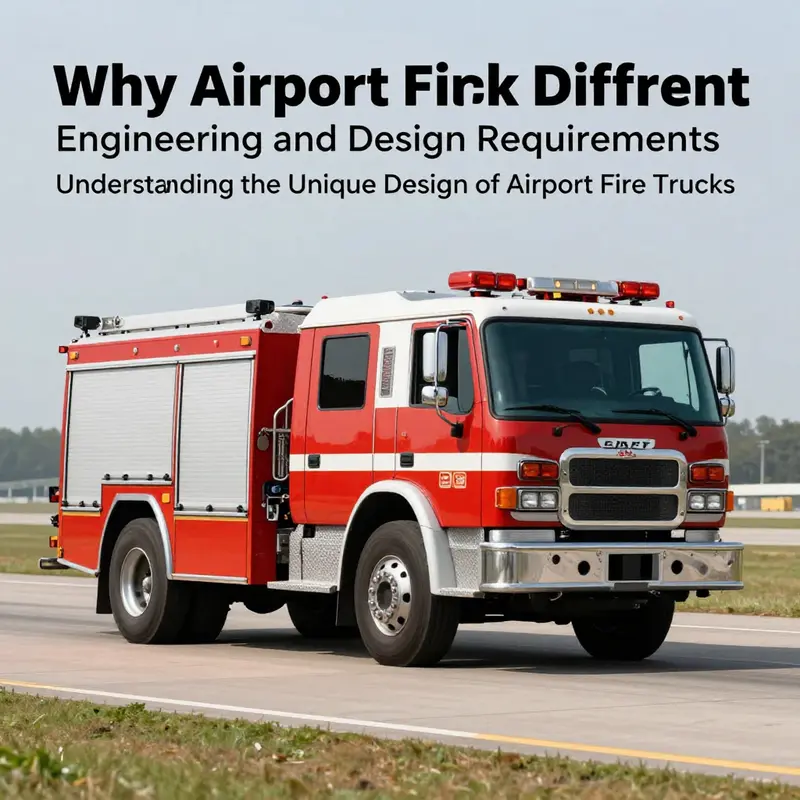
Aircraft emergencies demand a different kind of firefighting tool, and the vehicles that answer those alarms wear their purpose in their silhouette. The distinctive form of airport crash tenders—ARFF vehicles—does more than signal urgency; it encodes speed, reach, resilience, and precision for the unique hazards that unfold on runways, taxiways, and aprons. When you watch these machines roll, you are watching a compact integration of engineering decisions designed to survive harsh environments, rapid deployment, and the intimidating dynamics of an aircraft fire. Their outward appearance—bulkier, higher, and more rugged than a typical city firetruck—mirrors a deeper engineering logic that begins with the runway itself and ends with the life-saving work undertaken in seconds, not minutes. The story of why they look so different is a story about constraints and opportunities converging in a single mission: to keep people alive when every second counts and to do so in a world where fire does not obey the ordinary rules of fire ground operations.
The starting point for this distinctive look is the environment in which ARFF crews operate. Runways are slick, long, and exposed to the elements. They must be navigated quickly in all weather, often while the vehicle is fully loaded with passengers, equipment, and suppression agents. The physics of moving heavy machinery on a polished surface, sometimes in low visibility, pushes designers toward a chassis with generous ground clearance, reinforced suspension, and oversized tires that can absorb shock from uneven pavement or debris and still carry momentum toward the incident. A higher ride height also grants better visibility of approaching aircraft, taxi lanes, and potential hazards around the incident zone. This combination of clearance and stability helps ensure that firefighters can swing into action faster, without being slowed by the terrain of the airport environment. The result is a silhouette that is instantly recognizable to anyone who understands aviation safety, even before the lights begin to spin and the engine noise fills the air.
But there is more to the form than raw ruggedness. ARFF vehicles carry large firefighting capabilities that require space and maneuvering room to deploy effectively. On the roof or in a central turret, you will typically find elevated monitors and long-range nozzles designed to project a stream of water or foam onto an aircraft engine or fuselage from a safe, respectful distance. These monitors demand not only power but also reach; they must function while the truck is maneuvering along a runway shoulder, around an engine nacelle, or across a wet apron. The presses of jet fuel fires—hotter and often more persistent than standard fuel fires—call for system architectures that can deliver high flow rates without sacrificing control or precision. In practice, this translates into large capacity water tanks, robust foam concentrates, and dedicated foam proportioning systems that mix concentrate with water efficiently under varying pressure conditions. Designers then place these resources where they are most accessible: near the cab for quick operator access, and in positions that offer stable weight distribution so the vehicle does not become unwieldy as gallons of suppressant move through hoses and monitors.
The actual firefighting systems on these machines are a study in specialized engineering. The foam systems, for instance, are crucial because jet fuel fires behave differently from ordinary structure fires. Jet fuel can spread rapidly and pool, creating a continuous heat source that requires sustained cooling and separation of fuel from air. Foam helps by forming a barrier between fuel and flame, lowering the temperature and starving the fire of fuel vapor. This capability is paired with dry chemical extinguishing agents for rapid knockdown in certain engine nacelles and high-temperature zones where liquid suppression alone may not suffice. The large, high-capacity water tanks ensure several minutes of continuous operation without constant reloading, a trade-off that is acceptable because airport emergency scenes can unfold over an extended time horizon and often require multipoint suppression strategies as crews coordinate with additional responders. The nozzles and monitors are designed to deliver precise, long-range streams even as the vehicle moves, which matters when an aircraft is still on the tarmac and responders must create a safe perimeter while maintaining access to the fuselage or engine compartments.
To reach the most challenging parts of an incident, ARFF vehicles incorporate elevated platforms and extendable booms. These articulating features give firefighters vertical reach to access elevated aircraft sections, wings, or cargo holds. The extendable booms are particularly valuable when the aircraft is immobilized, blocking ground crews from close proximity, or when passengers need to be directed away from hot zones. The ability to position a monitor high above the fuselage while the truck is in motion or idling creates a dynamic advantage: suppression can be delivered from a stable, elevated axis, reducing exposure to heat, smoke, and debris for the operator and teammate. When combined with the high-performance drivetrain, this combination creates a vehicle that can move rapidly to a scene and then tightly focus its suppression efforts at a distance—an essential feature for modern aviation safety.
Aesthetics aside, the ARFF silhouette is a product of careful structural and material choices. The chassis is reinforced to withstand high-impact collisions and the corrosive environments of fuel and firefighting agents. The bodywork is treated with fire-resistant materials designed to endure extreme heat for prolonged periods during suppression operations. The high-duty construction is not only about survivability but also about reliability: these trucks must perform in climates that range from desert heat to arctic cold, under heavy air traffic loads, and across airport surfaces that can be subject to vibration, salt from de-icing practices, and heavy aircraft debris. It is not unusual for these vehicles to be tested for endurance under conditions that reveal how a design holds up under repeated starts, stops, accelerations, and steady-state firefighting at the edge of a runway. The result is a vehicle that looks heavier and more imposing than a city fire engine because its own survival and that of its crew depend on that robustness.
In parallel with physical sturdiness, ARFF vehicles carry a suite of safety and situational awareness technologies that distinguish them from other emergency response rigs. Advanced onboard communications systems, thermal imaging cameras, and global positioning capabilities help crews locate the center of attention in a smoke-filled environment and coordinate movements within a complex airport space. Thermal imagers enable firefighters to see through thick smoke, identify hot spots, and track the progression of a fire on a jet’s skin or within its engine bays. GPS and integrated radios keep the incident within a coherent operational picture, ensuring that ground personnel can be directed with precision. The emphasis on information is not an afterthought but a core design principle, because the most dangerous aviation incidents demand rapid, coordinated action across multiple responders who may be stationed at different points around the aircraft. These technologies reduce ambiguity, speed decision-making, and improve the chances of a successful rescue and extinguishment.
Regulatory and standards considerations further shape how these vehicles look and behave. Airport fire trucks must align with international and national guidelines that govern construction, maintenance, and performance. Standards set expectations for engineering margins—how much payload a chassis should safely carry, how quickly a vehicle must respond to a call, and how much water or foam must be available for a given scenario. Among the most influential norms are those established by international aviation authorities and fire safety organizations. The careful balancing act between weight, speed, and stability is not arbitrary; it is a calibrated response to the demands of aviation incidents where the physics of jet fuel fires and aircraft geometry push responders to the edge of what is possible. This means the vehicles are not just tools but embodiments of a shared safety philosophy: prepare for the worst, move quickly, and maintain control even when conditions are at their most punitive.
Alongside performance and safety, the look of ARFF vehicles serves a practical signaling function. The conspicuous size, the elevated cab, and the array of suppression equipment visibly communicated to pilots, ground crew, and neighboring responders that a dedicated, highly capable team is en route. This visibility has a pragmatic value: it helps to establish the aircraft crew’s trust in the responders’ ability to reach the most dangerous zones without delay. It also communicates to other airport staff that an active emergency response is underway, encouraging people to clear pathways and create the space necessary for a safe, efficient intervention. The color schemes, lighting configurations, and laddered silhouettes all contribute to a universal language of aviation safety: these are responders who know the runway, who move with authority, and who are equipped to bring high-intensity incidents under control as quickly as possible.
Finally, the interconnected nature of modern airport safety means these vehicles must fit into a broader ecosystem of equipment, training, and procedures. They are not solitary machines but part of a fleet that may include specialized rescue units, aerial platforms, and rapid response teams ready to operate in concert. The integration with airport control centers, pressurized communication networks, and incident command protocols is an invisible but essential dimension of their design. It shapes how crews train, how maintenance schedules are organized, and how the vehicles are tested to ensure readiness for the kind of unpredictable, multi-domain events that airports are designed to prevent but must be prepared to confront. In this sense, their distinctive appearance is a tangible expression of a layered safety strategy, one that starts with engineering and ends with the facilitation of life-saving decisions under extreme pressure.
For readers who want to explore a catalog of these specialized machines and see how the design intent translates into real-world configurations, the Airport Fire Trucks category provides a concise overview of the kinds of equipment used in these critical roles. This resource helps bridge the gap between the general principles outlined here and the concrete implementations you can observe on active airfields. It also invites a broader conversation about how the aviation sector continues to innovate in response to evolving threats and the ongoing imperative to protect lives amid the high-speed tempo of modern air travel. To deepen understanding of how regulatory standards guide these designs, interested readers can consult comprehensive references such as the FAA’s guidance on crash tender standards, which contextualize the performance expectations, testing regimes, and safety criteria that shape every ARFF vehicle on the line. For regulatory context, see the FAA’s Airport Crash Tender Standards: https://www.faa.gov/airports/airportsafety/crashtender_standards.
Beyond the Burly Frame: How Specialized Airport Fire Trucks Are Built to Save Lives
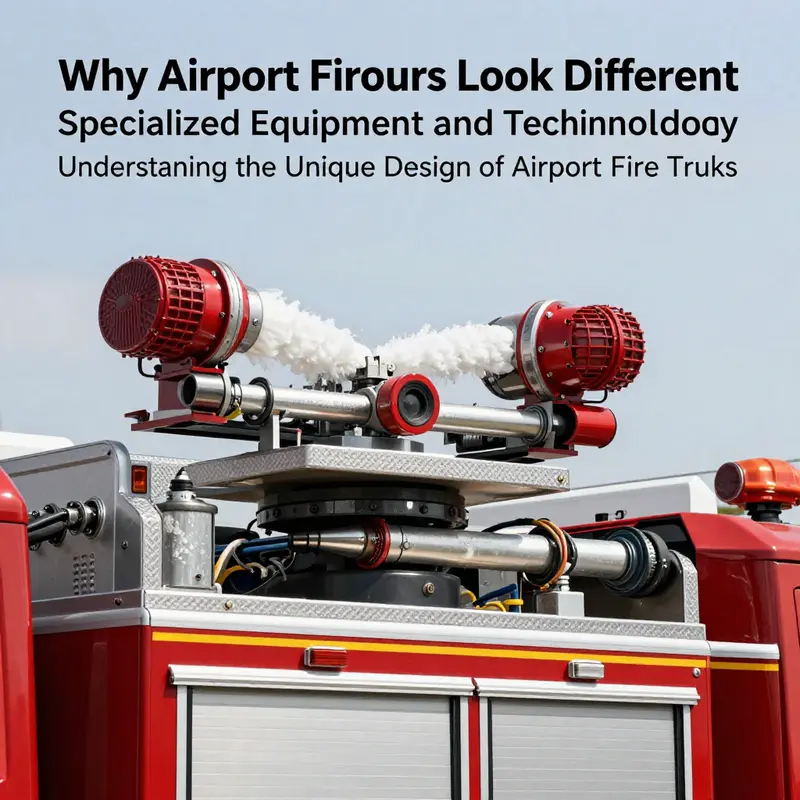
The first thing most people notice about airport crash rescue vehicles is not their markings but their presence on the apron. They look different because they are built for a very different kind of crisis than a city street fire. These machines embody a precise set of priorities: speed, reach, cooling power, and survivability in the face of aircraft hazards. They are not just bigger fire trucks; they are purpose-built tools designed to wrest control away from extreme danger in a space where seconds can decide lives. Their appearance, from chassis to roof, is the visual shorthand for a highly engineered response system tailored to the unique theater of aviation emergencies.
Airports force a dramatic shift in how emergencies unfold. An aircraft on fire involves high volumes of jet fuel, rapid flame extension, and potential explosions, all set in an environment where aircraft structures, sensitive components, and passenger cabins demand both aggressive action and meticulous safety. The consequences of a misstep are severe, not just for the trapped occupants but for the responders and for the broader aviation ecosystem. In that light, ARFF vehicles emerge as hybrids of rugged road apparatus and aerospace-grade response platforms. Their bulk signals power, yet their shape and systems are guided by a patient understanding of how fuel fires burn, how aircraft wreckage can shift, and how responders must maneuver around moving wings, tires, and exposed fuel lines.
A distinct feature of these vehicles is their size and power. They are typically larger and more robust than standard fire apparatus, designed to carry large quantities of water and firefighting foam. The water and foam capacities are not incidental numbers; they are the practical insurance policy against jet fuel fires that can flare at temperatures well above ordinary hydrocarbons. The engines themselves are tuned for rapid acceleration and sustained performance, allowing responders to close the distance to a distressed aircraft in minutes rather than moments. In some models, top speeds reach well over eighty miles per hour, a speed that becomes meaningful only when every second counts and the race to reach a burning airframe is measured against heat, fuel spread, and potential secondary hazards. In this sense, the appearance of a CRV or ARFF vehicle communicates readiness rather than merely height or mass.
The firefighting systems on board are a telling indicator of the specialized mission. These vehicles often carry more than a thousand gallons of water and hundreds of gallons of foam concentrate. The foam, often formulated to mix rapidly with air and jet fuel, creates a slick blanket that cools and blankets the burning surface, starving the flame of fuel and heat. A dual-purpose pumping system is common, enabling simultaneous delivery of water and foam. In practice, this capability accelerates suppression when every moment adds heat to the fire and when jet fuel fires threaten to flash over. The nozzles are not standard garden-hose components; they are high-flow, high-velocity devices designed to reach the aircraft from distances that keep crew members out of the most dangerous heat plumes. Some machines feature rear-mounted or even rotating nozzles that project foam to distances of several hundred feet. They extend the firefighters’ reach while preserving the crew’s safety behind reinforced barriers and within protected cab spaces.
A key attribute of these machines is their mobility on airside surfaces. Runways, taxiways, and ramps are not the same as city streets. They can be uneven, slick from weather, and occupied by aircraft that are maneuvering under their own power. The chassis and suspension systems on ARFF vehicles are therefore reinforced and tuned for stability at speed, with high ground clearance to traverse rough patches and to avoid tangling with curbs and equipment. The tradeoffs are deliberate: a higher center of gravity can be less forgiving in a sharp corner, but the vehicle’s strategic weight distribution and traction management are engineered to keep it upright and controllable while it accelerates toward a distressed airframe. In practice, the appearance—broad stance, robust bumpers, and a confident silhouette—reads as a guarantee of reliability under the most unforgiving conditions.
Beyond the raw physics of speed and strength, these trucks carry an arsenal of sensors and communication tools that translate the chaos of an airport incident into actionable information. Thermal imaging cameras help locate hot spots through smoke and debris, while night-vision capabilities extend visibility during low-light operations. Onboard communications networks knit responders together with air traffic control, the incident commander, and other rescue units, ensuring that crews remain coordinated as the situation evolves. The integration of such technology is not an afterthought; it is part of the vehicle’s core design. The dashboard and control architecture are laid out to support rapid situational assessment, not only in the heat of battle but during the tense minutes leading up to it, when a crew must decide how to stage a response, how to approach the wreckage, and how to deploy foam and water in a sequence that maximizes safety and effectiveness.
The specialized hazards of aircraft emergencies also shape the ARFF vehicle’s exterior and protective systems. Front bumpers and protective frames are reinforced to withstand incidental impacts during helicopter operations, rollovers, or collisions with aircraft structures on the ramp during response. The emphasis on safety extends to the crew cab, which is designed to shield personnel from heat, flying debris, and the blast zones that can accompany high-energy jet fuel fires. The exterior finishes and reflective markings are chosen to optimize visibility to pilots and ground crews at extreme distances, reducing the chances of confounding a responding truck with other vehicles on the airside. In short, the outward appearance announces a capability to endure, to endure quickly, and to protect those inside while delivering a decisive knockdown of a dangerous fuel fire.
The governance of these designs rests on international and national standards that harmonize practice across airports around the world. The needs of aviation safety intersect with fire protection norms in ways that require consistency and reliability. ICAO guidelines and NFPA standards shape how ARFF vehicles are built, tested, and operated. These rules ensure that, regardless of where they are deployed, responders can rely on a predictable set of performance benchmarks, from the capacity of foam concentrate to the maximum throughput of water and the reliability of onboard imaging systems. The aim is not uniform appearance for its own sake but uniform capability under stress, so that a trained crew can transfer knowledge and technique from one airport to another with minimal risk of misinterpretation or delays. The result is a family resemblance among ARFF vehicles that is as much about shared safety philosophy as it is about common hardware.
That philosophy explains why these trucks look different from their city counterparts. The silhouette, the heft, and the arrangement of equipment speak a language of decisive action tailored to aircraft incidents. Their form is a map of function: a high front-end for pushing through debris or resisting heat, a broad, stable chassis for rapid acceleration and precise handling on slick runways, and a modular system that can be tuned for events of varying scale, from a small domestic incident to a wide-scale airliner fire. The visual impression is not about novelty; it is about signaling readiness to absorb heat and knock down flames from a distance, to protect vulnerable occupants, and to do so while maintaining the ability to communicate clearly with others who share responsibility for the safety of people on and around the runway.
For readers who want a closer look at the kind of machines that embody this purpose, there is a dedicated category that gathers ARFF and other airport-focused fire response equipment. This collection highlights vehicles designed to meet the exacting requirements of the airside environment and the unique hazards of aircraft fires. Airport Fire Trucks provides a sense of the scale and diversity of these specialized builds, illustrating how the same core principles—speed, reach, power, and protection—are realized in different configurations to meet specific airport needs.
The chapter would be incomplete without acknowledging the external guardrails that keep these machines trustworthy across borders. The aviation emergency landscape is one in which standards are not merely advisory; they are the backbone of safety. NFPA standards, together with ICAO guidelines, define the targets for performance, reliability, and interoperability. This framework ensures that a crew arriving at a foreign airport can apply familiar tactics with confidence, because the vehicle and its systems meet the same core expectations. In practice, that means reliable dual pumping, robust foam delivery, and dependable imaging and communications under demanding conditions. It also means that the public can have confidence in the visible sign of a well-prepared response team when a crisis unfolds on an airside facility.
The distinctive look of an airport fire truck, then, is not a design flourish. It is the outward manifestation of a highly specialized toolset crafted to meet a rare set of risks. Each tube, each nozzle, and each reinforced panel is deliberate, a detail that keeps responders protected while enabling them to reach, contain, and ultimately suppress fires that involve aircraft and large quantities of fuel. The vehicle’s body language—gritty, broad, and purpose-driven—conveys the balance of speed and control that defines this profession. It speaks to a history of aviation safety that has learned from hard lessons and continuous improvements, a history that stitches together advanced materials, propulsion, fluid dynamics, and human factors into a single, reliable platform.
As airports continue to evolve with new aircraft designs, heavier airframes, and more complex ground operations, the ARFF fleet will keep adapting. Yet the underlying rationale remains unchanged: move quickly, attack safely from a distance when possible, provide continuous suppression, and protect lives in the most demanding environment imaginable. The look of these vehicles, then, is not merely a product of engineering bravado; it is a carefully calibrated response to a recurring, high-stakes problem. Their exterior wards off heat, their heart pumps through manifolds that feed foam and water where needed, and their on-board intelligence translates the drama of an emergency into a controlled, life-saving sequence. This is why airport fire trucks look the way they do: not as a matter of style, but as a language of capability, carved in steel and foam for the moments when the wrong decision would carry a price far beyond the cost of the vehicle itself.
External standards and ongoing innovation will continue to shape this field. The evolving demands of air travel, landing patterns, and fuel logistics require responders to stay ahead in both technique and technology. The vehicles that respond to aviation emergencies will keep pushing toward greater efficiency, more agile handling, and smarter systems that help crews decide whether to deploy foam, when to call for backup, and how to coordinate with every link in the chain of airport safety. In this sense, the look is a headline for a longer story about vigilance, collaboration, and technical mastery on the front lines of aviation safety.
External reference on standards for these specialized vehicles provides further context for the rigorous expectations placed on their design and operation: https://www.nfpa.org/Standards-and-Guidelines/All-NFPA-standards/NFPA-400-Aircraft-Crash-Rescue-Vehicles
Airport Fire Trucks: Design, Speed, and Safety on the Tarmac
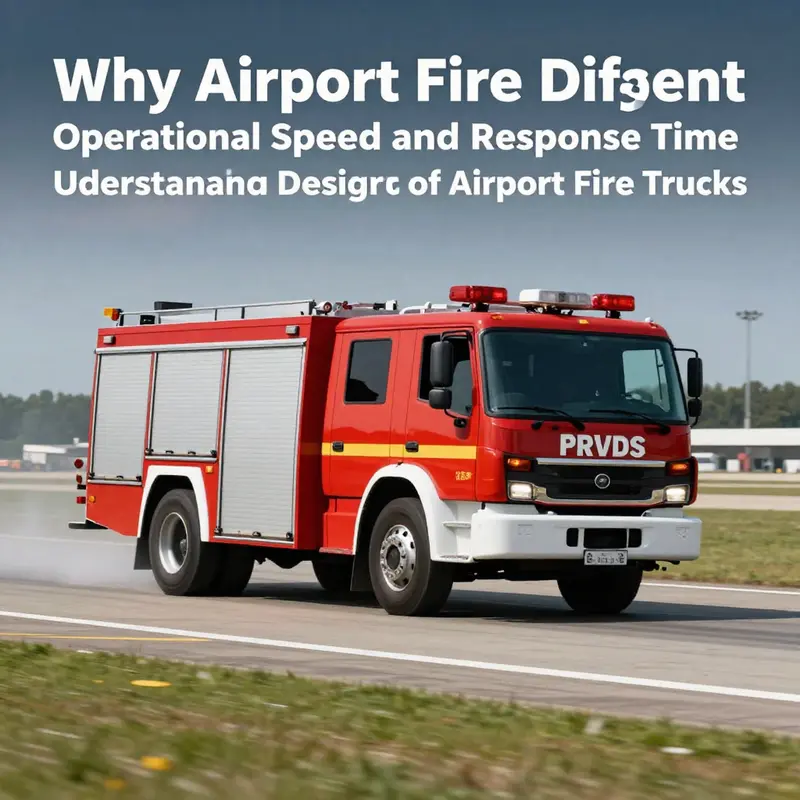
On the airfield, every second matters. ARFF vehicles are built to cover large distances quickly, while staying stable on wide aprons and rough surfaces. They combine high horsepower, robust chassis, and advanced foam systems to fight jet fuel fires. Their appearance—high ride height, visible markings, and bright colors—helps crews and pilots spot them rapidly in all weather. Speed is paired with control: rapid acceleration is balanced by braking durability and maneuverability for long, open taxiways. Foam and water delivery are arranged through multiple nozzles to reach fuel pools from different angles, with foam concentrates designed to suppress vapor and cool engines. The design also prioritizes crew safety: sturdy interiors, protected access points, and clear visibility from the elevated cab. In short, ARFF vehicles are purpose-built tools where form follows function, tailored to the unique demands of aviation rescue on the runway and beyond. These vehicles illustrate how safety, technology, and teamwork come together when every second counts.
Looking Different for a Dangerous Mission: Safety Standards, Regulations, and the Form of Airport Fire Trucks
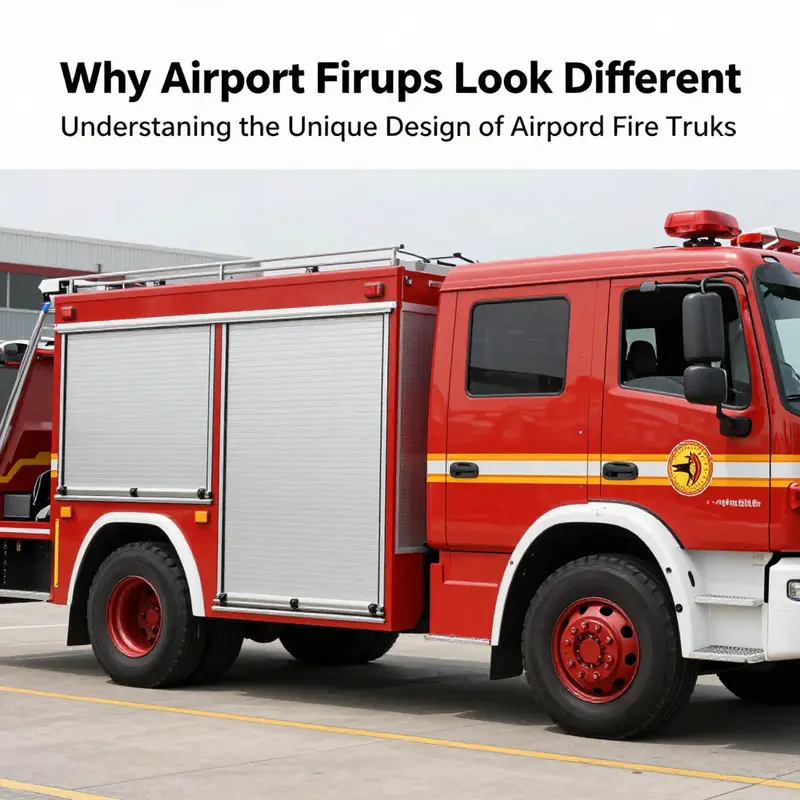
On the tarmac, the gap between an airport crash rescue vehicle and a city fire engine is not a matter of style but of mission. Aircraft emergencies unfold with unique pressures: jet fuel fires burn at extreme temperatures, runways stretch far beyond a city block, and responders must reach a scene across open pavement, often in glare or in low visibility. The distinctive appearance of ARFF vehicles—also called CRVs in some regulatory contexts—reflects a carefully balanced blend of visibility, capability, and durability. This is not about looking different for its own sake; it is about ensuring every second counts when lives hang in the balance. The eye-catching silhouette—tall, broad, and built to endure the rigors of a runway—signals a specialized purpose. Their bulky, rugged construction, raised apparatus, and broad control surfaces are designed to withstand the rough realities of airport environments, where surfaces range from smooth taxiways to uneven aprons and construction zones. The design choices translate into real performance advantages: rapid acceleration to reach a far-flung incident, the ability to navigate under heat stress and shock loads, and the capacity to deploy a high-volume, strategic firefighting effort from a safe distance. In this sense, the appearance of airport fire trucks is the punctuation mark of a safety culture that takes aircraft incidents as a distinct and highly coordinated type of emergency.
Color and visibility form the most immediately visible sign of this approach. While city engines tend to wear red as a universal map of firefighting authority, ARFF vehicles often favor high-visibility colors such as yellow or lime-green. This choice is not whimsy; it follows years of aviation safety research and the practical realities of operating on busy airfields. The same daylight and low-light conditions that complicate runway operations can obscure even large, red vehicles among reflectors, jet blast, and moving equipment. Research from safety authorities has shown that lime-yellow and fluorescent green vehicles are detected more rapidly by human observers, and crucially, they experience fewer response-time accidents on average. The logic is straightforward: strong contrast against asphalt, concrete, and aircraft liveries helps responders locate the vehicle quickly, even when an airfield is swirling with activity, weather, or smoke. Aviation regulators—organizations such as ICAO and the FAA—codify this principle into standards that specify not just color, but the entire visual language of the ARFF fleet—the way lights flash, how reflective decals are applied, and how markings are kept consistent across airports. The aim is speed and clarity in crisis, and the color choice is a deliberate and standardized tool to that end. When a controller or a crew member on the perimeter glances toward the incident, the lime body, the bold, high-contrast markings, and the distinctive lighting all create immediate recognition, reducing hesitation and confusion at the most dangerous moments. To reinforce this practical imperative, the standards also address how the vehicle should appear in conjunction with other airfield traffic, so ARFF units do not blend into the bustle of ground operations but stand out with unmistakable authority. The regulatory emphasis on visibility extends beyond color; it encompasses the entire vehicle profile and its ability to communicate urgency at a glance. The result is a visually coherent fleet that makes it possible to locate, identify, and mobilize the right equipment without delay. For readers who want to see how an airport fire truck fits into the broader ecosystem of airside safety, the category of ARFF vehicles provides a clear, tangible example of how color, form, and function fuse under regulatory guidance. In this regard, the aircraft rescue fleet serves as a compact but telling case study in safety engineering, where law, science, and on-the-ground practice meet on the runway.
Beyond the color story, the regulations governing ARFF vehicles spell out a composite of specialized features designed to handle the toughest fuel fires and the most demanding incidents. The vehicles’ chassis are heavy and high-rstanding, with ground clearance that lets them negotiate uneven runway surfaces, drainage basins, or debris that might appear after an incident. The frame and suspension are engineered to endure heat, impact, and the jolt of sudden acceleration, with components chosen for durability under operating conditions that would test standard fire trucks to their limits. The operational requirement for rapid reach means these trucks are tuned for high-speed performance on large airfields, capable of topping the 50 mph mark in bursts as crews close the distance to danger and establish a protected attack line. This emphasis on speed does not compromise resilience; the canopy, engine compartment, and body panels are built to stand up against jet blast, high ambient heat, and occasional runway debris. The design philosophy here is not merely about looking powerful, but about ensuring the machine can act powerfully when it matters most. In practice, this means a combination of structural robustness, drivetrain durability, and a tuned balance between agility and size. The importance of the foam and dry chemical systems becomes evident in a way that underscores why ARFF trucks look different. Jet fuel fires demand a different toolkit than typical structural fires: a fast-acting foam blanket to suppress vapors, layered with dry chemical or other extinguishing media to interrupt chemical reactions and blanket flames, all while a high-volume water stream is on standby. The foam system is especially critical because it produces a specialized mixture that digests the fuel source and creates a barrier between fuel and air, an approach that buys critical time for occupants and responders alike. The systems are integrated with the vehicle’s pump, hoses, and turret or roof-mounted cannons, which are purposely large to project streams across the wing, engine nacelle, or fuselage. That configuration is not decorative; it represents a strategic, field-proven method for approaching an aircraft in distress with both range and precision. The capability to place a large, controlled stream from a safe distance, while maintaining mobility on the ramp, underscores how the ARFF form supports a unique fire-ground doctrine tailored to aviation incidents. In this, the equipment’s silhouette—its wide stance, broad water cannons, and elevated platforms—reads as a map of capability rather than mere aesthetics.
Another thread running through the regulatory fabric concerns identification and airfield operations. Lighting, signage, and conspicuous labeling are specified to ensure the ARFF vehicle can be recognized quickly amid the complex tapestry of ground movement. The “picture” of the vehicle in motion—its rotating beacons, LED light bars, and high-contrast markings—serves as a universal language on the airfield. The guidance emphasizes not just how a vehicle looks at rest, but how it should present itself in motion: a moving beacon of capability that can coordinate with air traffic control, ground vehicles, and port authority teams. The result is a fleet that looks almost legible to anyone who understands the choreography of an airport emergency. The practical upshot is more than a visual cue; it is a reliability cue. When a crew member spots a lime-green body roaring into the emergency area, there is an almost instinctive recognition that this is a tool built to perform in the harsh conditions of aircraft firefighting. The combination of color strategy, lighting, and signage thus reinforces a culture of rapid, disciplined response. This is a theme that threads across the standards: visual clarity, mechanical reliability, and compatibility with airfield operations are inseparable from the ability to save lives when time is scarce.
The regulatory conversation does not end with color, power, and foam. It extends to a broader requirement for compatibility with the aircraft ecosystem and with the diverse fleets and international protocols that airports host. ICAO and the FAA do not merely suggest guidelines; they establish parameters that influence procurement, maintenance, and training. A vehicle might be perfectly capable in a lab or on a test route, yet fall short if it cannot operate in the field alongside other ground vehicles, or if its water pressure, foam mix ratio, or turret reach fails under duress. That is why the ARFF form integrates multiple disciplines: mechanical engineering, firefighting science, human factors, and aviation operations. The resulting appearance is a disciplined standard rather than a chance choice—the look of a vehicle that embodies a strategic approach to dangerous, high-stakes work. For researchers and practitioners, the message is clear: when safety standards govern color, structure, and systems, the vehicle’s face becomes a reliable instrument of response. This is how a visually distinct fleet can simultaneously meet the demands of speed, durability, and precision on the world’s busiest runways.
For readers who want a deeper dive into the regulatory framework and practical guidelines that shape these machines, a convenient entry point is the broader category of airport firefighting equipment and vehicles outlined in industry resources. You can explore the category here: airport fire trucks product category.
As a closing thread to the chapter, it is worth noting that the visual identity of ARFF vehicles and the technical standards that undergird them are part of a broader safety architecture that keeps air travel reliable. The way a truck looks on the ramp is the outward sign of a carefully engineered system that prioritizes speed, reach, and control in the most demanding environments. The color, the height, the turret, and the foam network all tell a story about a fleet designed to meet aviation’s extraordinary demands while protecting lives. The conversation about why airport fire trucks look different is really a conversation about how regulation, design, and on-the-ground practice converge to create responders who can be counted on to arrive swiftly, stabilize an incident, and begin to reverse catastrophe wherever aircraft take to the sky. For a comprehensive set of official guidelines and the latest regulatory expectations, researchers and practitioners alike turn to the FAA Crash Rescue Guidelines as a foundational reference. External readers can consult these guidelines for a regulatory perspective that complements the field-tested insights described here: https://www.faa.gov/airports/airportsafety/crashrescue.
brush fire trucks, wildland firefighting, fire safety equipment, off-road fire trucks, firefighting technology, business safety, emergency response vehicles
The unique design of airport fire trucks is not merely aesthetic; it is shaped by the rigorous requirements of safety, speed, and specialized technology essential for aviation emergencies. For business owners in the aviation space, understanding these vehicles’ complexities can enhance the appreciation of their role in emergency preparedness and operational safety. As you consider your own safety protocols and equipment, recognizing the value of specialized firefighting vehicles can be a vital strategic advantage.

