
















As urban landscapes continue to evolve, the presence of fire trucks on bridges has become a significant aspect of emergency response dynamics. These elevated structures frequently serve as critical access routes for firefighters, especially in areas where ground-level roads may be obstructed or congested. This article will delve into the reasons behind the increased visibility of fire trucks on bridges, focusing on the urgent need for rapid response in emergencies. We will discuss the profound impact of improper parking on these vital routes and the legal consequences of obstructing fire lanes. Our exploration will equip business owners with the necessary insights to ensure both compliance and community safety.
Bridgefronts of Resolve: Unpacking the Real-Time Role of Fire Trucks on Elevations
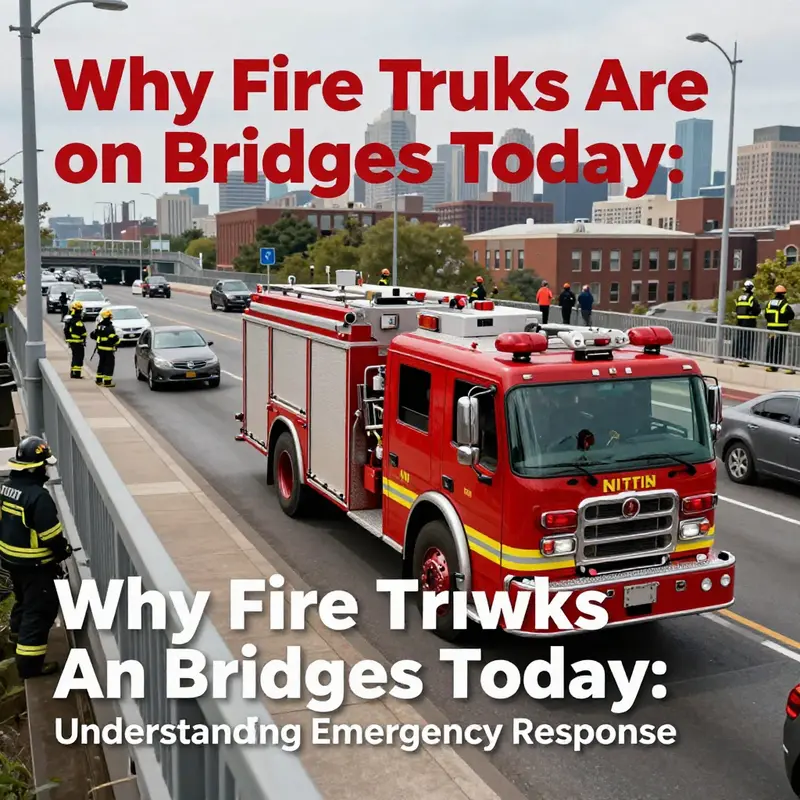
On a city skyline, a bridge is more than a line of steel and concrete; it is a moving nerve center for urgent action. When fire trucks appear on these elevated spans, the sight is often framed by a mix of necessity, speed, and strategy. The immediate impression is a scene of disruption, but the deeper dynamics reveal how elevated roadways become essential components of a coordinated emergency response. Today’s deployments on bridges reflect a layered approach to rescue, evacuation, hazard control, and traffic management. They underscore a truth that might seem counterintuitive to the casual observer: elevation is not merely a dramatic backdrop. It is an operational asset that translates into faster access, clearer sightlines, and better coordination across agencies, even in the most densely populated urban environments. The purpose of such deployments stretches across several fronts, and each front is informed by the geometry of the bridge itself, the flow of traffic, and the human imperative to protect life and property in moments of acute risk.
When a fire truck is parked on a bridge, it signals a state of emergency readiness that goes beyond the ordinary. Bridges act as critical transportation arteries that connect neighborhoods, business districts, and residential areas while also serving as chokepoints that can complicate response if not managed with precision. From a strategic standpoint, the elevated position offers two complementary advantages. First, it provides an elevated vantage point, allowing firefighters to observe the scene from a distance, assess smoke plumes, detect potential hotspots beyond the immediate vicinity, and anticipate wind-driven spread patterns. This vantage point is not about sightseeing; it is a tactical advantage that informs decisions about where to position nozzles, where to stage additional apparatus, and how to prioritize access points for incoming responders. Second, bridges function as critical corridors for rapid ingress and egress. In dense urban settings or areas where ground-level routes are clogged by a long line of vehicles, a bridge can serve as a quasi-highway for emergency traffic, enabling units to reach the heart of the incident with fewer delays and to bring in specialized equipment that might otherwise struggle to thread through congested streets.
The presence of fire units on bridges therefore communicates a deliberate deployment, not mere happenstance. It is a reflection of the broader discipline of emergency response planning, where responders map routes, anticipate contingencies, and preposition resources in proximity to likely flashpoints. This planning is not generic guesswork. It rests on a structured understanding of traffic patterns, spatial constraints, and the types of incidents most likely to unfold on or near major spans. In urban corridors worldwide, bridges connect neighborhoods separated by water or deep canyons of freeway lanes, and they often becomes focal points for multi-vehicle collisions, hazardous material incidents, or mass-evacuation scenarios. In such contexts, the bridge is a stage where a sequence of coordinated actions unfolds: stabilizing the incident, preserving life, preventing further harm, and ensuring that once the fire is under control, traffic can be redirected with minimum disruption to the community.
To appreciate why firefighters might station on a bridge, it helps to visualize the incident continuum. The earliest minutes of an emergency are defined by rapid assessment, risk triage, and immediate containment. On a bridge, a unit can simultaneously observe an upstream or downstream area, monitor for secondary incidents, and provide a ready hub for communications with command centers on the ground. The juxtaposition of height and horizon allows crews to detect risers or leaks that might not be visible from the surface below. It also enables responders to coordinate with traffic control officers who act as the eyes of the operation for drivers approaching the scene from either direction. The interplay between fire crews and law enforcement at a bridge is a poignant reminder that emergencies require a harmonized approach. In such moments, the bridge becomes a living workshop where the choreography of movement—where vehicles stop, where lanes are closed, where pedestrians are guided—unfolds in real time, under the stress of urgency but guided by a shared mission: to protect life and minimize harm while maintaining the flow of the surrounding community as much as safety allows.
Yet the reasons for a bridge deployment extend beyond direct fire suppression. Bridges are often the site of hazardous material incidents that demand rapid containment and specialized handling. A plume of volatile vapors or a spill into the roadway can necessitate a swift perimeter, a staged approach to decontamination, and careful management of downstream risk corridors. In these cases, the elevated vantage not only helps isolate the danger zone but also supports the coordination of multiple agencies, including hazmat teams, medical responders, and environmental protection units. The strategic value of a bridge in such circumstances lies in the ability to create a controlled theatre where containment, mitigation, and evacuation can take shape with clarity. The same structural features that make bridges convenient conduits for traffic also demand that responders respect their unique vulnerabilities: wind patterns at height, the possibility of structural sway under heavy loads, and the risk of secondary incidents as heavy equipment moves or as curious crowds gather to watch.
The phenomenon of fire trucks on bridges is not limited to moments of crisis. It can also be a visible component of public safety awareness and preparedness efforts. In many regions, including urban centers, authorities use bridge deployments as part of planned exercises that test incident command systems, interagency coordination, and the public’s understanding of safety procedures. These exercises may simulate a range of scenarios—from high-rise evacuations that require staged lateral movements to cross-town hazard containment that hinges on bridging the gap between firefighters and the public. On ceremonial or awareness days, visible presence on a high-profile structure reinforces an essential message: safety is a collective responsibility, and even ordinary citizens can support the efficiency of emergency responses by keeping lanes clear and obeying traffic instructions when responders are on the move.
The real-world texture of these deployments becomes more tangible when we consider specific incidents that have captured attention in recent years. In June 2025, a notable event in Zhongshan, Guangdong, drew attention to how quickly a routine response can be altered by obstructive behavior on bridge lanes. Reports from the period described fire trucks arriving at the scene only to find their path blocked by improperly parked vehicles. In such cases, the obstruction does not merely slow the arrival of help; it transforms a routine call into a high-stakes delay with potentially grave consequences. The reactions of bystanders, including residents who stepped forward to move cars out of the way, underscore a broader truth about urban safety: communities cannot rely on luck to guarantee access for emergency responders. Legal remedies, including fines and, in extreme circumstances, criminal liability if loss of life or property results, are part of the society’s mechanism for determent, but prevention remains the most effective shield. This underscores a difficult but essential point: the bridge, for all its utility as a conduit, becomes a shared space where the responsibility to keep the route clear rests not only with the responders but with every user of the roadway.
This tension between necessity and restraint sits at the heart of public safety on bridges. It prompts a broader reflection on how emergency response systems are designed and how communities can support them. The engineering of bridges can incorporate features that facilitate rapid, safe access for emergency vehicles without compromising regular traffic. For instance, dedicated pull-off lanes, clearly marked emergency lanes, and proactive signage can help ensure that fire trucks and other responders can reach the incident scene quickly, even during peak traffic. Yet no amount of design sophistication can fully countercounteract the human elements that sometimes complicate a response—obstruction, confusion, or unawareness of the urgency conveyed by emergency signals. Education and culture thus emerge as essential companions to engineering. When drivers understand the typical patterns of emergency operations, when pedestrians recognize the need to yield and move aside when summoned by roadway authorities, and when local residents appreciate that a bridge is a shared stage where the stakes are high, the entire system functions with far greater efficiency.
In the broader arc of emergency response, the bridge is a crucible where several strands of practice converge: rapid deployment, interagency coordination, public safety education, and legal accountability. Fire departments, often working hand in hand with police, traffic management agencies, and medical services, rely on a fluid, real-time understanding of the incident. The bridge becomes a site of both action and learning, where crews refine their approaches to staging, access control, and the sequencing of tasks. A critical element of this process is communication. Clear, authoritative, and timely communication helps synchronize the movement of multiple units and minimizes the risk of missteps that can compound danger. In practice, this means radio discipline, standardized hand signals for lane changes, and preplanned contingencies that anticipate the possibility of blocked routes, stalled traffic, or evolving hazard zones. The aims are practical and humane: speed is essential, but so is the preservation of life and the safety of those who may need to be evacuated or treated on the scene.
In addition to the direct operational rationale, the presence of fire trucks on bridges carries a social dimension. It reinforces public expectations that authorities are prepared to respond decisively, which can help to reduce panic and guide public behavior during emergencies. At the same time, it raises questions about urban design, traffic culture, and the responsibilities of all road users. The episodes where vehicles parked illegally on bridges blocked apparatus remind communities that safety cannot rely on luck or spontaneity. They demand a proactive stance: communities must enforce roadside rules, communities must prioritize safe parking practices, and schools and workplaces must integrate safe-commute messages into daily life. The goal is not to dramatize risk but to cultivate a shared habit of respect for the constraints and necessities of emergency response. In this light, the bridge is not merely a route to a scene of danger; it is a corridor of civic responsibility where everyday choices either support or hinder the rapid mobilization of life-saving capabilities.
The narrative of fire trucks on bridges today thus encompasses a spectrum—from urgent, high-stakes responses to calm, educative demonstrations of readiness. It highlights how the elements of geography, infrastructure, and human behavior intersect under pressure. It also invites a more nuanced appreciation of how emergency services adapt to evolving urban landscapes. As cities grow, so do the complexities of transit networks, the frequency of multi-location incidents, and the range of hazards that must be anticipated and contained. Bridges, with their distinctive geometry and strategic location, will remain integral to this adaptive posture. They are simultaneously gateways and stages, enabling rapid access to critical zones and serving as platforms for coordination, prevention, and public engagement.
For readers seeking a familiar and accessible starting point on the broader landscape of emergency response capabilities that underpin these bridge deployments, a useful reference is the body of guidance provided by national-level emergency services. An authoritative overview of how high-speed decisions are made, how multiagency coordination is achieved on highways and bridges, and how responders balance speed with safety can be explored through official resources. These materials not only illuminate the practicalities of vehicle placement on elevated spans but also reveal the foundational principles that guide every action—from the first notification of a incident to the moment when responders guide traffic away from a danger zone and onto safer routes. They remind us that while the image of a fire truck on a bridge may evoke drama, the real story is one of disciplined, collaborative problem-solving under time pressure, a story that continues to evolve as cities grow and incidents become more complex.
As communities look toward the future, several themes emerge as central to sustaining effective bridge-based responses. First, there is a clear need for ongoing training that emphasizes coordination across agencies and the unique constraints of elevated roadways. Exercises that simulate bridge incidents—whether they are traffic crashes, hazmat events, or large-scale evacuations—help responders refine their decisions regarding staging points, water supply strategy, and patient flow. Second, there is the importance of public education that communicates the necessity of keeping lanes clear for emergency vehicles and the consequences of blocking a response. This education should be proactive, clear, and culturally attuned, reaching audiences through schools, community groups, and local media. Third, the relationship between engineering and policy must remain robust. Design features that reduce the risk of obstruction, such as dedicated shoulder lanes for emergencies and more intuitive signage, should be paired with enforceable regulations that deter illegal parking or other actions that delay responders. Finally, there is an ethical dimension to these scenes: responders act not only to conquer a fire or a hazard but also to protect people who may be in the most vulnerable positions—drivers trapped in moving congestion, pedestrians near a collapse risk, or workers along the bridge who rely on a timely intervention to prevent a catastrophe.
In reflecting on the current reality of fire trucks on bridges, it is clear that these deployments are not arbitrary. They arise from a well-honed blend of strategic foresight, procedural rigor, and community accountability. They symbolize a system in which every component, from the equipment carried on the trucks to the laws governing road use, is calibrated toward reducing harm and saving lives. They reveal, too, that bridges will continue to challenge responders as urban environments expand and transit networks become more intricate. Yet they also reveal the resilience of emergency services and the communities they serve, who together adapt to shifting risks and new forms of danger. The bridge, once a simple bar of transit, has become a dynamic arena where speed, visibility, access, and coordination converge in real time. In this convergence lies the reassurance that when seconds count, the synchronized movement of fire trucks on bridges can be a decisive factor in preserving life and restoring safety for neighborhoods and waterways alike.
For readers who wish to situate these observations within a broader equipment and operations context, consider exploring more about the kinds of vehicles and support capabilities that enable rapid bridge deployments. The landscape of emergency apparatus is diverse and continually evolving, encompassing tools designed for rapid water supply, elevated reach, hazardous material containment, and casualty transport. Understanding the spectrum of capabilities helps illuminate why a bridge deployment is not merely a point on a map but a carefully selected configuration of resources, positioned to respond to a particular incident with precision. From a public safety perspective, the ultimate measure is not the spectacle of a vehicle on a grand elevation but the outcome: lives saved, injuries minimized, and communities kept safer through timely, coordinated action. This is the essence of why fire trucks appear on bridges today—because the bridge is a critical link in a chain of response that spans time, space, and human need.
Internal link reference: For insight into equipment typologies and the kinds of vehicles used in broad emergency-response operations, see the Emergency Rescue Vehicle category. Emergency Rescue Vehicle.
External resource: U.S. Fire Administration – Emergency Response on Highways and Bridges. https://www.usfa.fema.gov/
Bridging the Call: The Hidden Danger of Improper Parking on Bridges and Its Grip on Firetruck Access
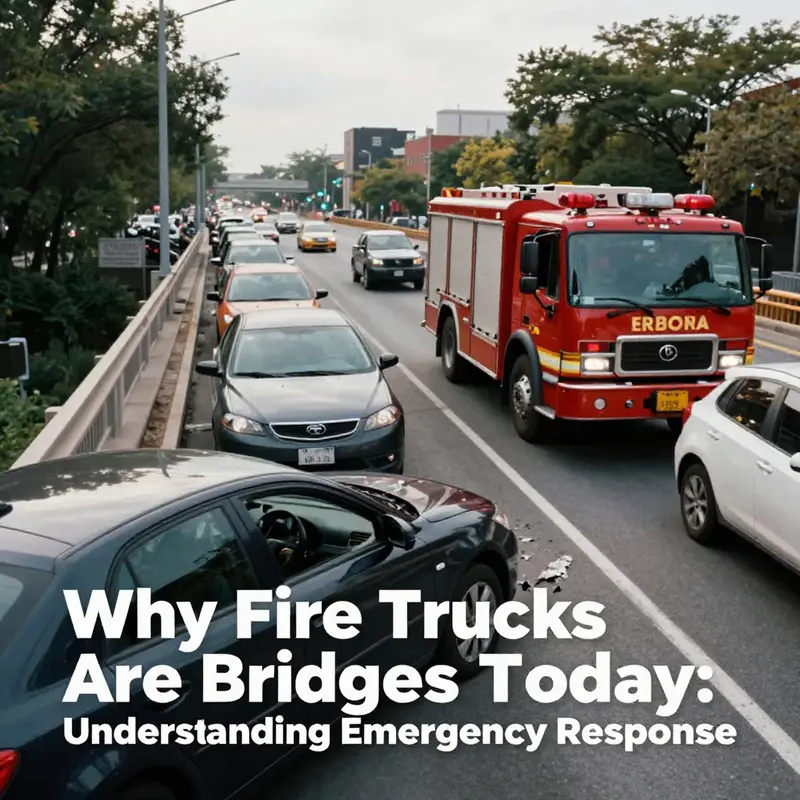
On bridges, where traffic compresses into narrow spans that rise above water, the daily flow of vehicles becomes a fragile choreography. When the city asks for speed, precision, and unimpeded passage, a bridge can transform from a transit artery into a potential bottleneck. The question of why fire trucks appear on bridges today is rarely about spectacle. It is about a system under pressure to reach a scene faster than the clock will allow. Bridges, by their design, can serve as vital conduits for emergency response when ground routes are blocked or overwhelmed. They offer elevated vantage, fewer intersections, and direct routes to districts that would otherwise require convoluted detours. Yet this critical role comes with a paradox. The same space that connects neighborhoods can become a stage for obstruction, delaying the very people who race toward danger to protect life and property. In moments of crisis, the distinction between a swift arrival and a disheartening wait is a matter of seconds—seconds that can decide outcomes in fires, collisions, and medical emergencies. The broader context is not simply about heroic entry but about systemic access. Fire departments plan routes, preposition equipment, and coordinate cross-agency responses to ensure that when an alarm rings, the message travels faster than the traffic around the bridge. But the reality on the ground is that access can be compromised. The pattern is not unique to one city or country; it appears wherever urban transport networks converge with crowded bridges, where every lane beyond a narrow belt of concrete is a scarce resource. In recent discussions about the accessibility of emergency services, reports from around the world, including incidents in China, have emphasized a recurring issue: vehicles parked illegally in or near emergency lanes and within proximity to essential ingress points can stall, confuse, or misdirect a responding unit. These episodes illuminate a deeper truth. The incident is not merely about a misaligned vehicle or an impatient driver. It is about a fragile infrastructure of response that relies on rules, respect for safety zones, and a public understanding of how quickly a bridge can become a choke point during a crisis. When a fire truck arrives at a bridge, the crew faces the unique geometry of the structure. A longer approach or a steeper ramp can alter the way the apparatus must maneuver. The vehicles that block such access, even if only momentarily, force a recalibration of strategy. A ladder may need to be retracted sooner, a pump panel reoriented, or a second unit called to cover the widened arc of risk. In some cases, responders must improvise with limited space, negotiating the tension between speed and stability. These operational realities underscore a simple, albeit consequential, fact: the bridge is not just a platform; it is a critical emergency zone whose configuration shapes every decision about how quickly help can arrive. The stories behind these moments carry a moral undertone. When a car sits in a place where a fire lane should be, or when a vehicle parks too close to a hydrant or a designated access route, the consequences extend beyond discomfort for the responding crew. The delay can translate into greater exposure for residents, longer time for occupants to evacuate, and increased risk to responders who must recalibrate tactics in a constrained space. In some urban environments, where residents and visitors share narrow bridges with heavy traffic and frequent heavy loads, these decisions become life-shaped lessons. The human dimension cannot be separated from the physics of the road. People are watching. The public often witnesses the moment a fire truck rounds the bend and slides into its lane, only to be confronted by a line of parked vehicles that seems to materialize out of nowhere. The image is jarring because it juxtaposes the ideal of an orderly street with the reality of crowded infrastructure. In such moments, public perception can pivot from admiration for the operator’s skill to frustration with what looks like negligence or disregard for safety. Yet the root cause may be less about malice and more about ambiguous signage, perceived urgency, or simply a routine misjudgment during a busy day. For many at the scene, the immediate impulse to move a blocking car is real, even if risky. In some communities, residents have taken it upon themselves to assist, lifting the layer of social hesitation that can slow a response in the absence of clear, enforceable rules. These actions, while well-intentioned, highlight a further risk: the potential for harm to bystanders and the chance that a fraction of a moment could become a pathway to greater danger. The tension between civic responsibility and the rule of law becomes conspicuous when a bridge becomes a stage for synergy and conflict at the same time. A well-regulated system would harmonize public awareness with a robust enforcement regime, clear lane demarcations, and design elements that minimize ambiguity about where a fire truck can operate. Consider the language embedded in many traffic regulations, which commonly reserve certain lanes as emergency or fire lanes. The clarity of these rules matters as much as the rules themselves. When signage is inconsistent, or when the line between a permitted stop and a prohibited one blurs due to the bridge’s curvature or lighting, drivers may misinterpret the space. This misinterpretation can lead to inadvertent violations that impede life-saving work. Even where law enforcement has the tools to enforce penalties, the social calculus of compliance often hinges on perceptions of risk and consequence. If fines are perceived as minor or rarely enforced, a pattern of violation can emerge, undermining the bridge’s integrity as an emergency corridor. In the long view, such issues point to the need for design-thinking that integrates safety with throughput. Engineers and city planners increasingly recognize that emergency response is not a sideline function but a core criterion in bridge design and maintenance. The traffic capacity of a bridge must account not only for daily commuters and commercial vehicles but also for the possibility that a fire or other incident will demand rapid vehicle movement along its length. This awareness shapes decisions about the width of the bridge, the allocation of dedicated lanes, the placement of hydrants, and even the materials used in guard rails and barriers. The goal is to create a resilient space that remains navigable under stress, without compromising structural safety or the ability of responders to deploy equipment efficiently. To an observer, the link between parked cars and delayed response may appear indirect, yet it is direct in consequence. A single obstructed access point can cascade into a sequence of tactical adjustments that consume precious seconds. The physics of emergency response on a bridge depend on a chain of small, disciplined actions: a driver’s timely removal of a vehicle, the precise alignment of a heavy apparatus, the rapid deployment of a ground ladder, and the coordination of a second unit to cover a vulnerable flank. Each element must function within the constrained geometry of the bridge, where space is a currency and time is the most valuable asset. The result is a narrative in which the most ordinary act—parking a car—becomes a potential lever that shifts the balance between prompt rescue and a protracted wait. This is not to cast blame on ordinary drivers, but to illuminate the broader system that must support rapid response. Public safety is a shared responsibility, and that responsibility grows more complex in the urban environment where bridges concentrate both opportunity and risk. A practical response blends education with enforcement and design. It begins with clear, unambiguous signage that delineates emergency lanes and hydrant zones, supplemented by visible barriers that deter parking in those spaces. It continues with regular public service messaging that explains why these spaces exist and what the consequences of obstruction are. It also involves investment in monitoring technologies that can detect and report obstructions in real time, enabling dispatch centers to adjust routes or request on-site assistance before the fire truck arrives. The narrative around bridges and fire access is not a static one. It evolves with each incident, each learning moment, and each rebuild that improves resilience. In some places, communities have experimented with low-cost, high-impact changes: repainting lanes with clearer color codes, adding tactile ground markings for better nighttime visibility, or installing temporary barriers that can be deployed quickly in high-risk periods. These measures do not replace the human imperative to move a vehicle in the path of a life-saving mission; rather, they augment the likelihood that a needed clearance exists when it matters most. For those who design and operate these systems, the aim is to ensure that a bridge remains an honest conduit for rescue. It is about connecting people to help with near precision, even when the clock is ticking and the street is crowded. It is about building a culture where compliance with emergency lane regulations is seen as part of communal care rather than a mere legal obligation. The broader takeaway is that fire truck presence on bridges today is not an anomaly; it is a reminder of the ongoing negotiation between speed, space, and safety in city life. When a bridge becomes a frontline corridor, every decision about parking and access carries weight beyond the moment. As cities continue to grow and the pressure on transportation networks intensifies, the lessons from these incidents will guide both policy and practice. The aim is to foster a public atmosphere where the rules are understood, respected, and reinforced through thoughtful design, consistent enforcement, and clear communication. In that sense, the scene of a fire truck on a bridge is less a spectacle and more a testament to a shared commitment: to keep the channel to safety open, even when it must bend around the complexities of urban life. The chapter’s thread threads through a simple, actionable insight: proper parking near bridges is not merely a matter of order, but a critical factor in safeguarding lives. It is a call for attentiveness that begins with drivers and extends to planners, responders, and communities alike. If there is a takeaway, it is this: when the next alarm echoes across a bridge, it is not only the fire crew that must move quickly; the public must also move with intention, leaving spaces clear for those who will carry the burden of response in the half-light of an emergency. For a broader look at the ecosystem of emergency vehicles, see the categoria de veículos de resgate de emergência. In the end, the bridge stands as a symbol of connection and a test of collective responsibility. By aligning parking behavior with the unforgiving tempo of emergency operations, cities can preserve the bridge as a reliable conduit for aid. The public discourse, the enforcement framework, and the engineering design must converge so that when danger arrives, the path is clear, the pace is swift, and the response is as precise as the moment demands. External resource for further reading: https://www.fhwa.dot.gov/bridge/parking.cfm
Bridging Urgency and Law: Fire Trucks on Bridges, the Responsibility We Share in Keeping Critical Lanes Clear
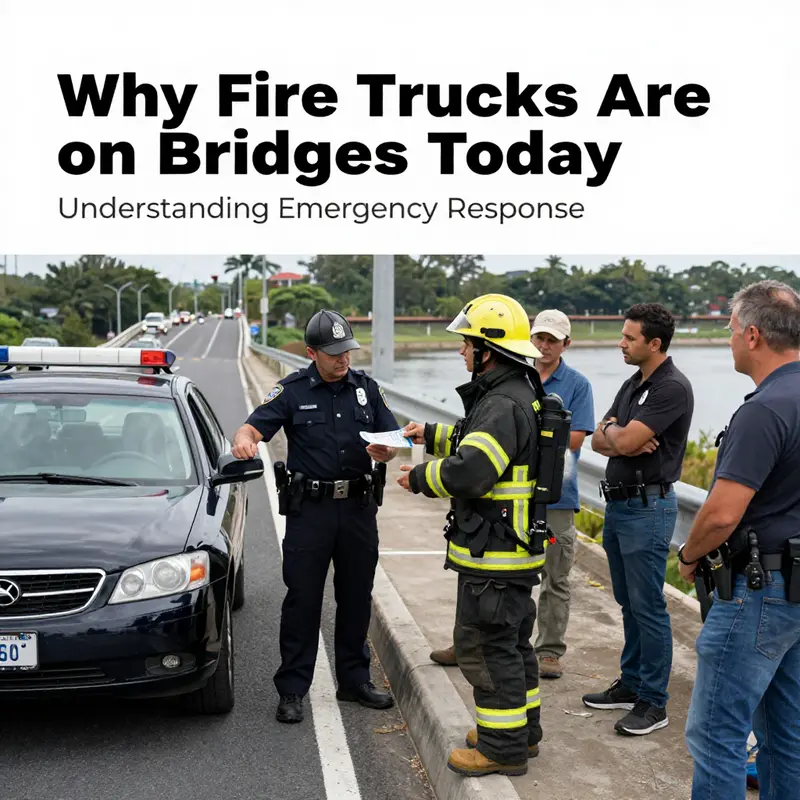
When the sirens rise and the city’s arteries shift into high gear, fire trucks often appear where options are limited and speed matters most. It is not merely a matter of spectacle or logistics; it is a straight-line equation between access and outcomes. Bridges, with their elevated vantage points, constricted lanes, and high proximity to multiple districts, become both a vital conduit for rapid response and a fragile choke point if access is compromised. The question of why fire trucks are on bridges today—sometimes for ordinary, routine patrols that use elevated routes for coverage, sometimes for urgent, life-saving missions during fires or accidents—begins to unfold as a tale of necessity tempered by law. On bridges, the margin for delay is measured not in minutes but in lives saved, or lost, and in the stress that ripples from a single misstep in lane management. This is why the topic sits at the intersection of emergency medicine, transportation engineering, and public safety accountability. The chapter that follows moves through the legal architecture that governs the behavior of motorists and pedestrians around these life-saving lanes, the public expectations that demand vigilance from every citizen, and the ways in which communities translate policy into practice on the ground when a fire truck needs to glide along a bridge with the minimum possible resistance.
To begin with, bridges are uniquely sensitive infrastructure. They are not merely stretches of road elevated above river currents or harbor basins; they are constrained environments where every meter of width has to accommodate two directions of travel and, crucially, the passage of emergency vehicles under all kinds of weather and traffic conditions. A vehicle parked illegally in a fire lane can become an instrument of harm, turning a swiftly moving rescue operation into a test of patience and maneuverability. The legal framework in China frames fire lanes as a life-saving conduit that cannot be consumed by ordinary parking or other obstructions. Article 28 of the Fire Control Law makes explicit that no unit or individual may occupy, block, or seal off fire lanes. It is a directive born from the need to ensure that a brigade arriving at the base of a blaze or a medical evacuation can align their operations with the nearest, unobstructed point of entry. When a fire truck reaches a bridge, the operator is not just guiding a machine; they are opening the way for a cascade of actions—water pressure, pump operations, ladder deployment, and, in medical evacuations, the careful orchestration of paramedics traversing to an incident site.
Yet the issues go beyond a single legal line in a statute book. The Road Traffic Safety Law adds another layer to the responsibility on the roadway. Article 56 clarifies that motor vehicles should be parked in designated places and must not obstruct other vehicles or pedestrians during temporary parking. In practice, a lane that is designated for emergency use is not merely a courtesy lane; it is a critical channel that has to remain free of stationary vehicles. When a vehicle is placed in a fire lane on a bridge, the incident tugs at the edges of statutory penalties, often escalating from administrative penalties to more serious consequences if the obstruction directly endangers the public or delays response. This is where the Public Security Administration Punishment Law comes into play, with penalties that can be as modest as a fine or as immediate as tow-away actions, depending on the severity and the location of the obstruction. The state’s approach to enforcement is designed not only to punish a single infraction but to deter a spectrum of behaviors that undermine emergency access.
The narrative of consequence grows even more serious when delays in emergency services can cause harm or fatalities. Article 117 of the Criminal Code addresses the crime of destroying transportation facilities or otherwise creating conditions that can cause vehicles, trains, ships, or aircraft to overturn or be damaged. The real question for a court becomes whether the obstruction created a real danger to public safety. In many cases, this is assessed by weighing the foreseeability of risk, the degree of intentionality or recklessness, and the measurable harm that could or did occur. It is not enough to claim that a person simply wanted to shelter from a storm or seek temporary shelter from hail; the law requires that such actions be balanced against the risk inflicted on others who rely on an unobstructed path for timely assistance. The principle of proportionality thus anchors the legal response. Emergency avoidance must not exceed necessary limits, as one scholar observed, because the attempt to minimize personal risk cannot be allowed to become a larger risk to the community.
In public discourse, this tension is often framed through vivid, sometimes nerve-wracking, anecdotes. A case in Beijing in 2025—one that has already become a reference point in discussions about public safety and road behavior—centered on a driver who parked a car under a bridge during a hailstorm. The consequences extended beyond the discomfort of gridlocked traffic and the annoyance of commuters; they included delays in emergency response that could have resulted in more severe outcomes. The court’s response—fine and a public reprimand—underscored a clear message: even when weather is hostile and visibility is poor, people must not create avoidable hazards that jeopardize those who are trying to save lives. The judgment did not simply punish a single act but affirmed a social contract. It sent a signal to communities that the duty to keep lanes clear is a shared responsibility that extends beyond the immediate crisis and into everyday decisions about where and when to park, how to manage crowds during storms, and how to maintain the discipline of a road system that serves both rescue operations and ordinary mobility.
What does this mean for the broader question of why fire trucks appear on bridges on any given day? It means that bridges are not chosen arbitrarily. They are selected because they offer timely access to urban cores, mass transit hubs, and districts that may be cut off by ground-level traffic due to congestion, accidents, or roadworks. They are also sometimes essential routes for specialized equipment. A thoughtful inventory of emergency paths includes not only the most direct route but also the options for rerouting when incidents demand it. The design and maintenance of these routes are integral to effective emergency management. When a bridge is the quickest way to reach a scene, the fire service will use it, but only if the path remains clear. The legal rules, therefore, are not just punitive measures, but an explicit framework for preserving the capacity of the system to deliver life-saving interventions.
The public dimension of these rules is equally important. Every citizen has a stake in this process because the safety of a community rests on the predictability and reliability of its emergency response network. There is a social contract involved: you trust that emergency vehicles will reach those in need without delay, and in return, you take care not to obstruct the lanes that make that mission possible. Local authorities often emphasize the moral aspect alongside the legal one. A clear corridor is not merely a contraption of traffic engineering; it is a lifeline. This perspective echoes the sentiment voiced by transportation experts who remind us that emergency avoidance should be calibrated against actual risk. When weather events or crowds create pressure for shelter, people can be tempted to improvise. Yet improvisation in this context can produce a chain reaction of danger that travels across neighborhoods and households. The integrity of fire lanes on bridges thus becomes a microcosm of urban safety culture, where public responsibility is exercised not only by drivers who obey the law but by pedestrians, by shop owners who relocate obstructive items away from the travel path, and by families that respect the space that emergency services require.
The policy framework is most effective when it is understood by the people who use the roads every day. A bridge is a place where the public meets the state’s obligation to protect lives. It is not a neutral space; it is a zone of heightened responsibility. Lawmakers recognize this by spelling out penalties for obstruction and by clarifying that the consequences can be escalated depending on the outcome. This is not merely about punitive deterrence. It is about risk management and about aligning incentives to prevent harm. People are reminded that the right action in a moment of danger is to move a car away from a fire lane, to yield the path to an approaching engine, and to cooperate with authorities who may need to maneuver around a congested bridge under pressure. The community thus learns not only to comply with the letter of the law but to adopt a precautionary approach to everyday decisions when conditions become uncertain.
From an operational standpoint, what does enforcement look like in practice on bridges? It includes the quick recognition of obstruction and the rapid deployment of sanctions or corrective actions. If a vehicle is found blocking a fire lane, authorities may tow the car immediately and issue a fine within a defined range, typically 200 to 1,000 yuan for more serious cases. In severe situations, the incident can trigger a police report followed by civil liabilities if harm occurred due to the obstruction. The emphasis on rapid enforcement serves two purposes: it disciplines behavior in the moment and communicates to the public that time is of the essence when lives are at stake. Authorities also recognize that the public’s trust relies on consistency: driveways and lanes must be kept open in emergencies, not selectively enforced when the weather is favorable or when traffic flows smoothly. The Beijing case illustrates a proportional response in the court system, where even under adverse weather, the standard of care remains intact and accountability is established for actions that put others at risk.
The practical implications for drivers, pedestrians, and operators of vehicles near bridges are clear. Do not assume that a momentary pause to shelter from a storm or to take shelter from hail will be risk-free. Do not rely on the fact that a bridge offers a higher ground or a safer vantage point to justify occupying a space reserved for emergency passage. The law makes it clear that fire lanes are designed to remain clear for the sole purpose of quick, reliable response. The public must obey the rules that govern these lanes, and institutions have a duty to enforce them fairly, consistently, and transparently. In this sense, the chapter’s opening question—why are fire trucks on bridges today?—is answered not only by the necessity of access but also by the social contract that binds citizens to their safety networks. When people understand that a bridge can become a critical corridor in a city’s life-support system during a crisis, the decision to leave a lane unobstructed becomes less of a moral compromise and more of an ordinary precaution that protects the vulnerable among us: the elderly in cardiac distress, the child whose airway obstruction requires urgent care, the commuter who depends on a timely evacuation, the firefighter whose team relies on that narrow path to ascend toward a fire.
To connect these reflections to practical reality, it is helpful to consider the broader ecosystem around emergency response and bridge logistics. The vehicles used in these operations are not ordinary road cars; they are purpose-built machines designed to reach scenes quickly, withstand challenging weather, and operate in confined spaces. For readers who want a sense of how these vehicles fit into the wider spectrum of firefighting and rescue equipment, there is value in exploring the category of industrial fire trucks and the related tools that support rapid bridge access. For readers who are curious about the types of equipment involved in this work, see the industrial fire truck category. industrial-fire-truck product category. This reference provides a tangible sense of the scale and specialization involved in modern emergency response while grounded in a context that emphasizes safety, reliability, and interoperability with other components of the rescue system.
The overarching insight is that fire lanes on bridges operate at the intersection of urgency and accountability. They are critical because they enable fast, direct action when seconds matter, yet they become problematic when any actor—driver, pedestrian, or bystander—fails to respect their purpose. The legal penalties exist not to punish but to deter actions that can ruin the chain of decisions that saves lives. They reflect a rigorous approach to risk, one that recognizes that a single error on a bridge can have cascading consequences far beyond the moment of impact. The public’s role in upholding these standards is not passive; it requires habitual respect for space, clear signage and instruction, and a willingness to comply promptly with authorities. It requires community education about why these lanes exist and how they function within a city’s larger safety architecture. It also requires transparent, consistent enforcement that demonstrates to residents and visitors alike that the city values every life enough to act decisively when a fire truck needs to pass.
In closing, the question of why fire trucks appear on bridges today is answered by a combination of necessity, policy, and responsibility. Bridges are indispensable arteries for urban resilience, and emergency lanes carved into these arteries are essential surfaces that enable life-saving actions. The law recognizes this with explicit prohibitions on obstruction and with a gravity of penalties that rises with the potential for harm. Public responsibility translates that law into daily behavior: parking where it could block an approaching engine, moving a car away from a fire lane at the first sign of danger, and supporting authorities who manage traffic flow during incidents. When these elements align, the bridge becomes less a barrier and more a conduit—an arena where speed, skill, and civic duty converge to protect life. In a world where emergencies can unfold with little warning, and where the bridge shadow of urban risk can tilt quickly toward disaster, keeping fire lanes clear is a shared obligation. The result is not a preference for order over speed but a harmonized system that respects human life and preserves the capacity of responders to act decisively when every second counts.
External reference: https://www.gov.cn/zhengce/zhengceku/2023-04/27/content_5754919.htm
community safety
The necessity of keeping fire truck access clear on bridges cannot be overstated, as every second can make a difference in emergency response. Business owners play a pivotal role in promoting community safety by ensuring that their parking practices do not obstruct emergency lanes. Educating employees and customers about the implications of improper parking not only fosters a safer environment but also enhances overall public responsibility. Remaining vigilant about compliance with fire safety regulations reinforces the importance of community cooperation in protecting lives and property.

