
















As business owners, ensuring the safety of employees, clients, and the general public is paramount. When dealing with emergency vehicles like fire trucks on the interstate, understanding the legal requirements and safety implications becomes critical. Fire trucks, often called to respond to urgent situations, must have the right of way to operate effectively. This article explores the necessary legal protocols, safety considerations, emergency response guidelines, and the consequences of failing to yield to a fire truck on the interstate, ensuring you make informed decisions that support your business’s operations and promote public safety.
Yield, Move Over, and Do Not Pass: The Legal Imperative Behind Not Passing a Fire Truck on the Interstate
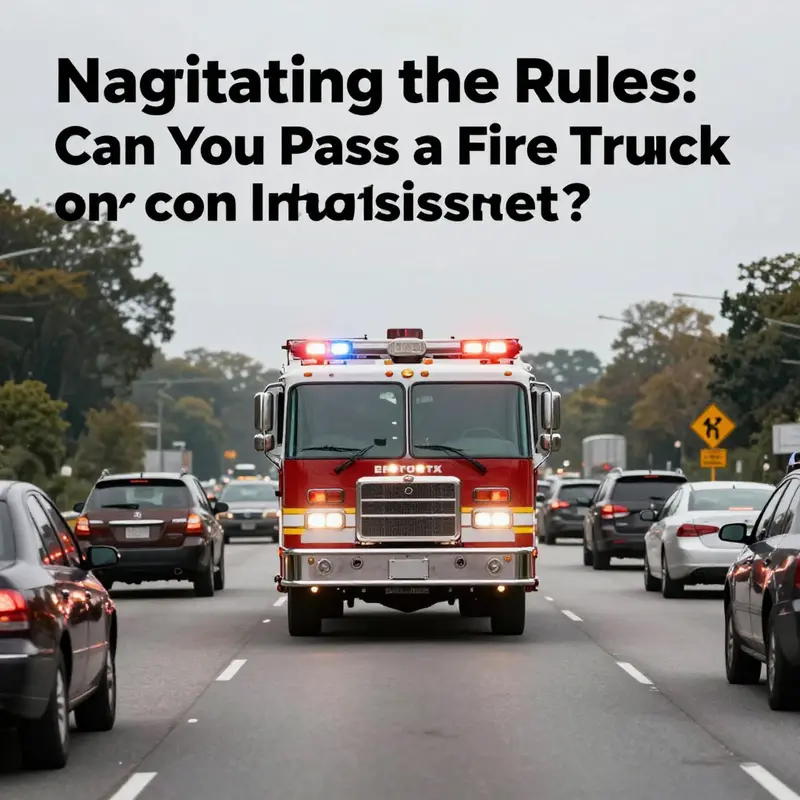
When the highway stretches ahead and a fire truck appears in your peripheral vision, lights flashing and siren whining, the decision you make in the next moments becomes a matter of life and death. This isn’t a test of nerves or a chance to shave a few seconds off your drive. On the interstate, where speeds are high and attention is pulled in a hundred different directions, the rules are simple yet decisive: do not pass an emergency vehicle that is actively responding. You must yield, slow down, and move over if it is safe to do so. The law behind this guidance is not merely a suggestion; it is a comprehensive framework designed to protect the people who run toward danger and the drivers who share the road with them. Across all fifty states, emergency-vehicle laws converge on a core principle: when a fire truck is using its lights and sirens, the flow of traffic cannot continue along the same path without interruption from other vehicles. To pass such a vehicle in the midst of an emergency is not only dangerous; it is often illegal, with penalties ranging from fines to license points and, in some jurisdictions, potential jail time. The consistent message is straightforward and, once understood, surprisingly liberating: do not press ahead in a way that would place you between the responders and the hazard they are attempting to neutralize. The calm, deliberate acts of yielding and moving over are the most important parts of safe driving in those moments. The Interstate demands a particular discipline, the kind that emerges only when drivers internalize the purpose behind the rules rather than treat them as abstract restrictions.
The most widely accepted guidance comes from the National Highway Traffic Safety Administration and state traffic codes. These sources underscore three interrelated actions: yield to emergency vehicles, move to the right lane if safe, and slow down to a safe speed that allows the responders to complete their work with minimal disruption. Yielding is not a passive gesture but an active repositioning of your vehicle within the flow of traffic. As the fire truck approaches with its signaling devices activated, you should begin to reduce speed gradually and check your mirrors and blind spots. If there is space and it is legal, you should move to the right-hand lane to give the emergency vehicle a clear path. The purpose is twofold: you create a corridor for the responders and you reduce the chance that a high-speed lane change will force another vehicle into a dangerous interaction with the apparatus or with personnel on the scene. This is not about a single momentary courtesy; it is about maintaining a margin of safety for people who are working in a volatile environment where every error can be measured in seconds or inches.
The law’s specifics are clear in many jurisdictions: do not pass. The act of passing a fire truck that has its lights and sirens on is prohibited in all states, regardless of whether the speed limit would seem to allow it or whether traffic is light enough to make the pass seem feasible. This blanket prohibition is not arbitrary. It reflects a foundational reality of emergency response: responders operate in close proximity to other vehicles, often on roads that were not designed for the tempo of a live incident. A vehicle attempting to cut in front of a fire engine could force a sudden stop or a lane change that endangers both the responders and the travelers nearby. The risk is not hypothetical; it is demonstrated in the daily reality of emergency scenes, where even the best-trained drivers must contend with unpredictable traffic patterns, sudden lane shifts by other drivers, and the unpredictable behaviors of others who may react defensively to the sight of flashing lights. The consequences of misjudgment are severe: delayed medical care for an injured person, failed containment of a blaze, or a collision that compounds the original emergency. These stakes are why the rules are strict and the penalties tangible.
The concept of distance adds another layer of seriousness to the rules. Many state laws specify a minimum distance that must be maintained when an emergency vehicle is stopped on the roadside or actively engaged in operations. The commonly cited figure is roughly 500 feet, though the exact measurement can vary from state to state. This rule serves a practical purpose: it prevents the tailing tailing, the close-follow scenario that can lead to a rear-end collision or a chain-reaction crash. On an interstate, where vehicles are moving at high speed, maintaining a generous buffer around an emergency scene helps reduce the chance that a passing driver misjudges the space required for a safe deceleration or a lane change. The 500-foot buffer is not a technical nicety; it is a concrete safeguard that translates into seconds of reaction time for drivers who suddenly encounter a stopped fire truck, firefighters working near the roadway, or a crew preparing equipment off the shoulder.
Beyond the legal text, there is a human dimension to this issue that can be easy to overlook in the heat of a moment. The drivers who pilot fire trucks and other emergency vehicles are trained to perform under extreme pressure. They rely on a clear line of sight and an unimpeded approach to the scene ahead. The people in those trucks are members of a team with specialized equipment—the kinds of apparatus configured to lift, pump, and transport—whose effectiveness depends on rapid, predictable movement through traffic. The more erratic the traffic flow becomes, the longer a fire crew must risk exposure to danger. A vehicle attempting to pass can force the truck to brake suddenly, veer, or stop in a location that is unsafe for both the crew and onlookers. The loud, attention-grabbing sirens and lights are signals to other road users that a focused, coordinated response is underway. When those signals are ignored or undermined by an unsafe passage, the risk to everyone on the road multiplies. The legal framework mirrors this practical reality by insisting that drivers slow, yield, and allow the response to unfold with as little obstruction as possible.
The consequences of ignoring these rules extend beyond the immediate danger of a collision. In some jurisdictions, failing to yield to an emergency vehicle can result in substantial fines and points on a driver’s license. In certain cases, harsher penalties can be applied, including criminal charges, particularly if the failure to yield results in an injury or fatality. The enforcement landscape varies, but the principle remains constant: the onus is on the driver to reduce speed, change lanes where possible, and create a clear path for responders. It is a matter of civil responsibility and personal accountability, not merely a legal obligation. The legal language is there to provide a standardized standard for all drivers, a common set of expectations that transcend local quirks and traffic patterns. The real-world effect is a smoother, safer highway environment where emergency crews can reach the crisis location and begin their work with reduced risk of secondary incidents.
Navigating this landscape with calm and deliberate action is a skill that every driver can cultivate. The recommended approach is straightforward and repeatable. When you encounter flashing lights in your rearview mirror or alongside you in the next lane, you should first check your mirrors and signal intention to slow. Then assess the space available to move to the right. If there is a safe lane change into the right-hand lane, you should execute it smoothly and maintain a modest, steady pace that allows the fire truck to pass at a safe distance. If the traffic lane to the right is blocked or crowded, you should slow down further and create distance behind the emergency vehicle rather than attempting to weave between vehicles. In no scenario should you accelerate or attempt to outrun an emergency vehicle that is actively responding. The goal is not to compete in speed but to prioritize safety and mission success. Even a moment of hesitation or miscalculation can create a dangerous sequence of events far more consequential than the minor delay you might experience. This disciplined behavior benefits everyone on the road: the responders, the drivers whose vehicles must navigate around the scene, and the people who rely on the responders to arrive quickly, stabilize the situation, and begin the process of relief.
To help frame these actions for a broad audience, consider the diversity of emergency configurations that responders may encounter on the highway. Fire trucks come in many shapes and sizes, each with a specific role in the broader operations of fire suppression, rescue, and medical transport. Some units are designed for rapid deployment in urban areas, while others are specialized for water supply, aerial operations, or hazardous materials response. The reality is that the presence of these diverse configurations—whether a compact rescue vehicle or a heavy, multi-functional apparatus—highlights why a predictable, uniform driving behavior is essential. The public’s safety on the interstate depends on drivers understanding that emergency vehicles do not exist to expedite your schedule but to execute a mission that often hinges on seconds and inches. This is precisely why a driver should not attempt to pass or tailgate a responding fire truck; doing so disrupts the mission and risks life and property. For readers who want to understand the breadth of these vehicles and the philosophy behind their design, the broader category of fire-fighting equipment illustrates how much time and space matters when lives are on the line. You can explore the fire-fighting-truck product category to gain a sense of the kinds of apparatus fire crews bring to a scene and the ways in which each design demands a clear channel on busy roadways. categoria de produtos de caminhões de combate a incêndios
The practical takeaway is that the interstate is not a place to play catch-up with an emergency. The law, the science of safety, and the real-world stakes converge on a single command for drivers: yield, move over, slow down, and do not pass. Even when traffic appears light, or when you are in a hurry, the responsible choice is to provide a safe corridor for the responders and to adjust your driving behavior accordingly. In the dense, high-speed environment of interstates, the margin for error is slim. The moment you recognize the presence of an emergency vehicle, you become part of a larger system designed to preserve life and property under conditions of stress and uncertainty. Your role is to support that system, not hinder it, by staying out of the fire truck’s way and by keeping your vehicle aligned with the flow of safe, predictable behavior.
To reinforce the authority of these guidelines, consider the broader spectrum of public safety information that is available through official sources and educational materials. The emphasis is always on reducing risk and protecting those who place themselves in harm’s way to protect others. When you study the rules—yielding to emergency vehicles, moving over when safe, and never passing the vehicle with active emergency lights—you begin to internalize a mental model for safe highway behavior. This model applies not only to fire trucks but to all emergency responders who may accompany or precede a scene, including police vehicles, ambulances, and incident command units. The shared objective across these vehicles is not to impede but to enable rapid, safe access to critical situations. The rules are designed to be straightforward enough for new drivers to learn quickly, yet robust enough to apply in complex traffic environments and rapidly evolving scenarios. The onus is on every driver to know the basics and to apply them consistently when the siren starts its wail and the lights begin to flash.
For readers seeking authoritative guidance beyond the narrative, consult the National Highway Traffic Safety Administration’s materials on emergency vehicle safety. These resources present the same essential principles in a formal, accessible format and provide a dependable reference that complements the experiential understanding described here. The body of guidance emphasizes the same core actions: slow down, move over if possible, and avoid passing. In practice, these steps can transform a potentially dangerous encounter into a controlled, orderly response that minimizes risk for all involved. While the exact language of the laws may vary by state, the overarching standard remains consistent: drive with caution when an emergency vehicle is near, and never attempt to pass when its lights are illuminated and sirens are active. By embracing this principle, you contribute to a safer road environment and support the crucial work that responders perform under pressure. The next time you encounter a fire truck on the interstate, let the moment reaffirm the value of prudent driving, deliberate action, and respect for the highly skilled professionals who serve the public in moments of crisis.
External reference for further reading and official guidelines: NHTSA Emergency Vehicle Safety.
When Fire Trucks Roar on the Interstate: Safety, Yielding, and the Rule Against Passing
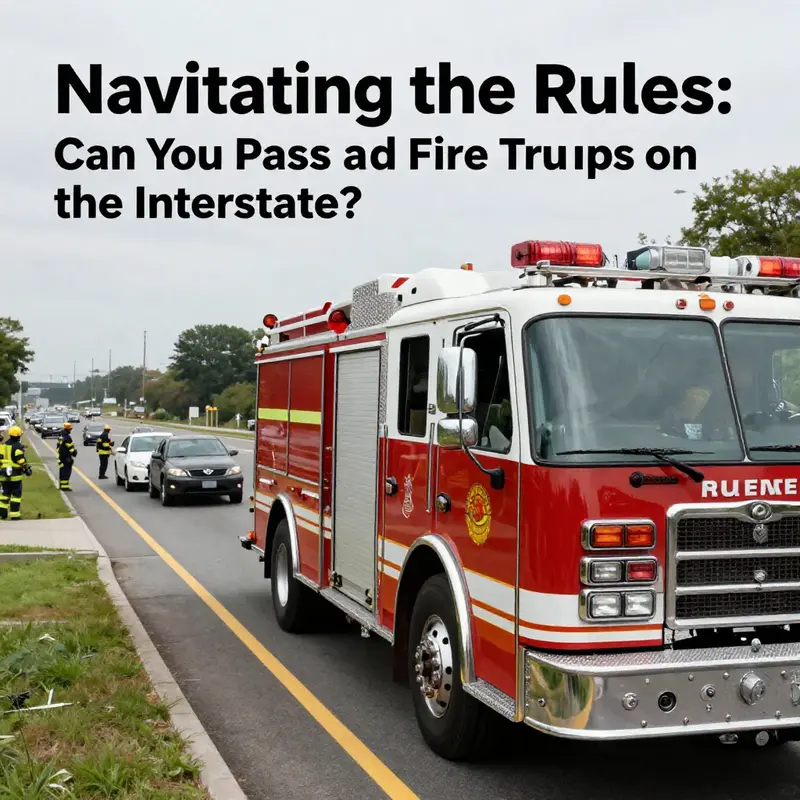
The sight and sound of a fire truck barrelling down the interstate can turn a routine drive into a high-stakes moment in seconds. Sirens rise like a pulse under the steel of highway lanes, lights flare, and every driver within view is suddenly pulled into a shared, unwritten test of restraint, judgment, and public responsibility. The instinct to maneuver around danger is strong. We want to get out of the way as quickly as possible, to feel that we are contributing to the people who need help. Yet the choice that saves lives most often requires restraint rather than speed. Passively, the mind may race toward the idea that the safest option is to stay ahead or to slice between vehicles in an effort to outpace the hazard. In practice, though, the opposite is true: attempting to pass a fire truck during an active emergency response can create a far greater danger than remaining steady and yielding to the procession. The larger ethical and legal picture is clear. When a fire truck or any emergency vehicle is using sirens and flashing lights, drivers are required to yield, and failing to do so can carry consequences that extend beyond the moment of a siren. The road becomes a shared space where the goal is to create a clear corridor for responders and keep every traveler in a position of safety.
The first cardinal rule is straightforward in theory and deliberate in execution: yield promptly and completely. If you hear a siren and see flashing lights, you should move toward the right shoulder or, if possible and safe, merge into the rightmost lane and continue to slow in a controlled manner. The aim is not to outrun the emergency vehicle but to create a clean, unobstructed path for it to pass. This means avoiding abrupt lane changes or decelerations that could confuse or surprise other drivers. In many jurisdictions, the law requires vehicles to step aside and allow the emergency vehicle to pass through. Even when the fire truck is not directly in your lane, an unexpected maneuver or a sudden turn can threaten the safety of those around you. The broader message here is consistent across state lines: the safest action is calm, anticipatory, and measured, rather than hurried and reckless. The simplest way to demonstrate respect for the responders is to treat the siren as a summons to prioritize safety for everyone who shares the road.
All of this rests on an instinct for situational awareness. When a fire truck approaches, the regular rhythm of highway traffic changes in an instant. You may be in the middle lane with faster vehicles behind you, or you might be in a slower-moving line at a transition point where the lane can become crowded. In any case, the key is to avoid blocking the lane and to keep your own speed smooth rather than aggressive. Breaking suddenly, weaving between vehicles, or trying to outrun a fire truck can create a chain reaction of braking and swerving that multiplies risk for yourself and for others. The intent of the responders is to reach the scene as fast as possible with the fewest potential obstacles, not to navigate through a tangle of uncertain movements created by unprepared drivers. This is why the yielding principle is reinforced by both safety logic and legal duty: it is the responsible choice for preserving the integrity of the emergency corridor and minimizing harm to bystanders.
Crucially, the act of signaling that you have acknowledged an approaching emergency vehicle is not merely a cosmetic gesture. It is a deliberate communication with other drivers who may not hear the siren or who may be distracted. If you have safely moved to the right and there is distance between you and the fire truck, you can use your hazard lights to alert drivers ahead of you that a vehicle is coming through. In some situations, a brief, well-timed horn can be used to catch the attention of a driver who may be momentarily unaware of the approaching emergency unit, but this should be limited and only employed when it is necessary to prevent a collision. The fundamental idea is to keep the roadway predictable. When lanes are clear and the path is unobstructed, responders can move with the confidence that every driver around them is actively thinking about safety. If drivers rely on reflex rather than deliberate action, the corridor closes, and the emergency personnel must navigate through a less forgiving space.
This is where the mind must resist the urge to accelerate and overtake. The impulse to keep up with the flow or to gain a few car lengths ahead of the vehicle should be checked. On the interstate, where speed and momentum are often significant, a single moment of misjudgment translates into a risk of rear-end collisions, side-swipe incidents, or a sudden lane-change that leaves a responding unit without the room it needs to maneuver. In the heat of the moment, drivers may also forget that fire trucks have to pass through other lanes, sometimes with unexpected turns or merging patterns that can put you to the test as well. The proper response—yield, then resume normal driving only after the emergency vehicle has passed—is a rule with both practical and moral weight. It acknowledges the critical function responders perform and also respects the shared responsibility of all motorists to keep the roads safe for those who are trying to save lives and secure property.
Another important strand of safety concerns the interior physics of highway driving. When a fire truck is nearby, the momentum of your own vehicle creates a domino effect that extends far beyond the immediate moment you see the flashing red lights. If you brake suddenly or change lanes abruptly, you risk destabilizing the vehicles around you, potentially triggering a chain reaction that can be catastrophic. The lesson is not simply to slow down but to modulate your speed gently and to communicate your intentions clearly through your signals. The goal is to create space and to maintain a stable line. You should keep your hands steady on the wheel, eyes on the road ahead, and a plan for how you will rejoin normal traffic once the emergency unit has passed. This mental discipline is a form of safety engineering—applied not in a lab, but on a live highway—where the smallest consistent actions have outsized consequences for life and limb.
The role of the responder is often overlooked in casual discussions about passing. Firefighters and other emergency personnel depend on a predictable flow of traffic to reach a scene where minutes count. The visibility they have while driving mitigates some risk, but the road remains a dynamic, sometimes chaotic, environment. In these moments, a driver’s decisions can either widen the margins of safety or shrink them in real time. After the fire truck moves past, the onus shifts to the driver to reflect and adjust. The instinct to return to the previous speed and lane can be tempting, especially if the road appears clear. Yet it is wise to assess the traffic around you, to ensure that merging back into traffic will not surprise the drivers who have also adjusted to the emergency. Taking just a few seconds to reestablish a safe following distance and to re-scan mirrors before resuming speed can prevent a secondary incident from erupting in the wake of the initial emergency.
There is also a procedural dimension to this topic that is often neglected in casual driving guides. The shoulder, sometimes seen as a universal escape hatch, is not a playground for civilians during emergencies. The rules are explicit: use the shoulder only for emergencies or for responders who are operating in the shoulder area themselves. Driving on the shoulder to bypass a line of cars is not only dangerous, but it is typically illegal and can carry serious penalties. The roadway is designed to maintain two or more lanes of moving traffic for a reason. The emergency corridor has real width constraints, and attempting to squeeze through or around a fire truck in a way that infringes on space is a direct threat to everyone on the road. The safest ethos, therefore, is patience and deference to the rhythm of the responders. In the end, the time saved by a risky maneuver is a poor exchange for the potential harm inflicted upon others and the legal consequences that may follow.
As you reflect on these considerations, a broader view emerges. The act of yielding is not merely about complying with law or avoiding punishment. It is a proactive practice of civic responsibility. When we yield to an emergency vehicle, we participate in a chain of decisions that prioritizes life and safety above personal convenience. The ethical dimension is not intangible; it translates into tangible outcomes—the difference between a successful rescue and a preventable delay, between a saved life and a tragedy. This frame of mind helps explain why the question, can you pass a fire truck on the interstate, is not a simple yes-or-no issue but a complex calculus of risk, law, and communal obligation. It invites drivers to practice anticipatory driving, to cultivate calm, and to know when to stand back and let the professionals do their work. The best way to be prepared is to internalize the habit of yielding as a reflex, a default stance that never leaves room for guesswork under pressure.
For readers who want a practical touchstone beyond personal discipline, there is a pathway to connect with broader safety networks. If you are curious about how emergency equipment is categorized and how vehicles are designed to fulfill distinct roles in rescue operations, you can explore the Emergency Rescue Vehicle category, which provides context on the kinds of responders you may encounter and the protective expectations that come with their functions. This broader perspective reinforces the idea that the roadway is a shared space with defined boundaries, where the most reliable strategy in a moment of urgency is to slow down, move over, and let the emergency be the primary event on the highway rather than your own maneuver to outrun it. The act of yielding thus becomes not a concession but a responsible contribution to public safety.
As ongoing driving culture evolves, it is helpful to remember that the behaviors we model in emergency moments ripple outward. New drivers learn from the actions of seasoned motorists, and even a single episode of unsafe driving can serve as a cautionary tale for others who observe from behind or from the safety of a quiet car in the next lane. This is why authorities and safety advocates emphasize constant, deliberate practice of yielding. It is a skill that improves with repetition and remains essential for the many miles of travel that most people must cover over the course of a lifetime. The interstate is a shared environment where every driver bears a responsibility to protect those who respond to fires, medical crises, and other life-threatening events. The clearer the path and the calmer the driver, the faster help can arrive, and the greater the chance that the outcome will be favorable. In that sense, the decision not to pass a fire truck when it is responding is not a restriction of freedom but a safeguard—one that makes that freedom sustainable for the days ahead on the road.
For a broader, officially grounded reference on highway safety practices related to emergency vehicles, see the National Highway Traffic Safety Administration’s guidance on highway safety tips. This external resource provides a framework that complements the personal judgment described above and reinforces the standard approach of yielding, moving over, and maintaining a steady course when a fire truck or other emergency vehicle is on the move. It is a reminder that the actions that keep responders safe also safeguard every motorist who shares the road. In the end, the question is not whether you can pass a fire truck, but how you can act in a moment of pressure in a way that honors both the law and the people who rely on those sirens to arrive in time.
If you want a concise point of reference during the drive, consider the practical steps that can be practiced ahead of time: prepare your route, adjust your mirrors for optimal visibility, and rehearse the simple sequence of signals you will use when you yield. A calm driver who can merge with the flow of traffic and maintain a steady pace is a driver who reduces risk for all. The psychology of driving under emergency conditions often hinges on the ability to transform fear into deliberate, disciplined action. The more you practice that discipline, the less likely you are to react impulsively when an emergency vehicle approaches. This is not merely about law or etiquette; it is about preserving life, and it is a responsibility that falls to each person who sits behind the wheel. In this light, the path forward is clear: do not pass a fire truck on the interstate when it is responding to an emergency. Yield, move over, and let the professionals do their work, secure in the knowledge that your restraint is a fundamental act of civic care.
External resource: For official guidance, see the National Highway Traffic Safety Administration’s highway safety tips at https://www.nhtsa.gov/vehicle-safety/highway-safety-tips.
Steering Toward Safety: Interstate Etiquette and the Duty to Yield
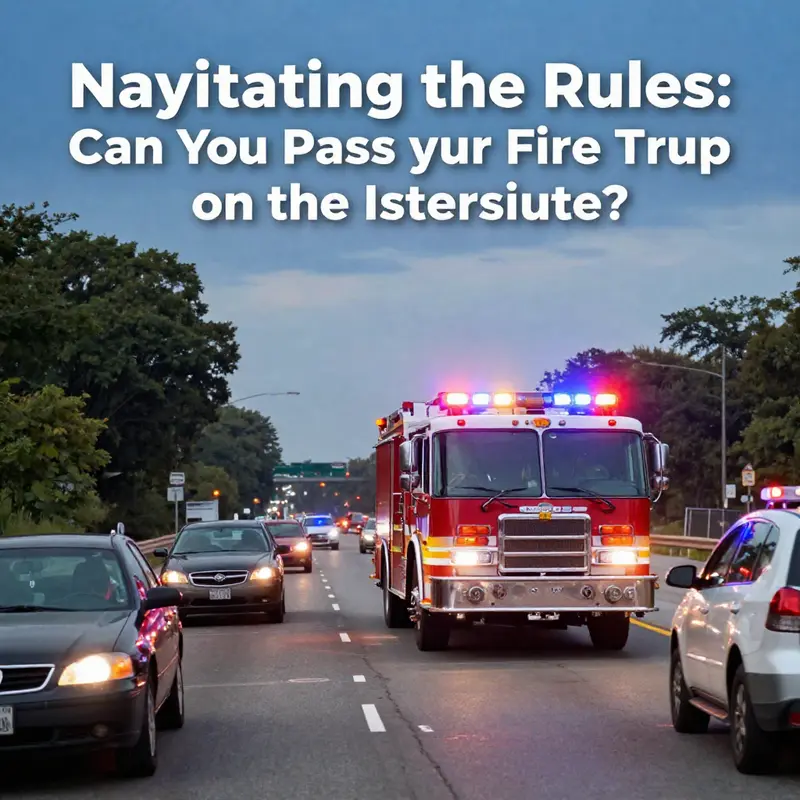
On the interstate, the moment you hear a siren or see flashing lights is a call to action. Drivers share responsibility to slow down, move over, and create a clear corridor for responders. The rules are both legal requirements and moral duties aimed at getting help to those in need faster. Yielding means moving to the right lane when safe, or pulling over to a safe area off the roadway if possible. Do not attempt to pass the emergency vehicle, and avoid weaving or accelerating to catch it. The design is to protect both the public and responders, since a clogged path can delay critical care. Fire trucks are large and require space to maneuver; rushing can cause accidents. The public should check mirrors and be aware of other drivers who may also be adjusting their position. After the vehicle passes, it is important to reenter traffic only when safe and to stay alert for further instructions. This practice reduces risk and supports effective emergency response across jurisdictions. External guidance from traffic safety authorities emphasizes consistent behavior: slow, yield, and move over when safe. The road is a shared workspace where every driver’s actions matter to the outcome of a crisis on the highway.
Yielding as a Lifeline: The Real Impact of Not Slowing for a Fire Truck on the Interstate
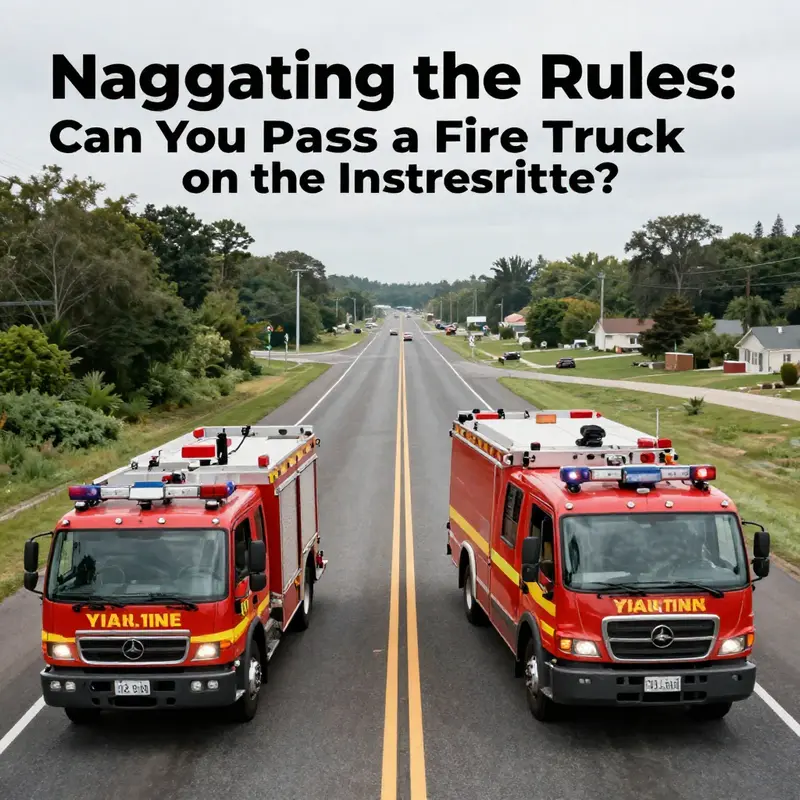
When the siren splits the air and the lights slice through the windshield, the interstate becomes a moving test of nerves, timing, and judgment. The immediate impulse for many drivers is to stay where they are, to hold a line of traffic, or to squeeze past the flashing apparatus that disrupts the usual rhythm of a long, gray stretch of road. Yet the reality behind the spectacle is stark and simple: passing a fire truck that is actively responding to an emergency is not just risky, it is a violation of law in most places and a potentially fatal misjudgment in the moment when seconds decide whether a person lives or dies. The mechanics of yielding are not merely about courtesy or caution; they are about creating a corridor of safety that allows firefighters and paramedics to reach the scene with minimal delay and with the least additional danger to the public. This chapter explores the impact of not yielding to a fire truck on the interstate, not as a dry catalog of penalties, but as a narrative about lifelines, legal frameworks, and the subtle complexities of high speed traffic where every choice matters.
To understand why not yielding is so consequential, one must begin with the law and the principle that governs all emergency operations on public roadways. Across the United States, federal guidance from the Department of Transportation and a mosaic of state statutes codify a basic expectation: when an emergency vehicle with lights flashing and sirens wailing approaches, drivers must yield. The standard action is to pull over to the right side and come to a stop when it is safe to do so. If the traffic situation permits, drivers should create a clear path by moving over to an adjacent lane away from the emergency vehicle. The imperative is not to pass the vehicle in front or to re-enter a lane that funnels the emergency responders into a compromised space. In practice, this means slowing down, assessing the safest route to clear the way, and avoiding sudden movements that could surprise other drivers or the responders themselves. The rules also emphasize the need to remain calm and to proceed only when it is safe to do so. The goal is to minimize interference with the responders while maximizing the safety of everyone on the road, including the fire crew and any patients or bystanders involved in the incident.
These legal boundaries carry consequences that extend beyond the moment of an emergency. Fines for failing to yield can be substantial and escalate with the severity of the incident or the presence of aggravating factors such as reckless driving or endangering lives. Points on a driving record can accumulate and influence insurance premiums, driver’s license status, and even long term mobility. In certain jurisdictions, repeated violations can trigger license suspension or revocation, a serious outcome that can alter a person’s ability to work, to transport family members, or to fulfill daily obligations. The machinery of enforcement has evolved with time, using traffic cameras, on board recording systems, and police observation to document violations precisely. This means that the decision to bypass a fire truck, even momentarily, can be captured and used as evidence in a civil or criminal proceeding. The legal consequences, while they vary by state, share a common logic: the law treats failing to yield to an active emergency vehicle as a preventable risk that endangers public safety and strains the emergency response system.
From a safety standpoint, the most immediate and tangible impact of not yielding is the potential for a catastrophic delay. A fire truck racing toward a blaze or a critical medical call depends on a delicate balance of speed and control. The drivers behind the wheel must navigate through traffic with precision to maintain speed while also avoiding collisions when changing lanes or steering through congested lanes. When a driver refuses to yield or attempts to pass the moving emergency vehicle, the responders may lose precious seconds. In life threatening situations, those seconds can convert into life lost, property damage, or the escalation of danger in the structure under fire or the medical condition at hand. Fire trucks often operate with heavy loads of water, specialized equipment, and sometimes additional apparatus that can widen their turning radius and affect their momentum. Any obstruction, even if short, requires the driver to brake or slow more abruptly, which in turn increases the risk of rear end collisions or side swipes by vehicles that are not prepared for the sudden deceleration. The more complex the traffic environment, the greater the likelihood of an unintended interaction that ends in a crash or a spill that can complicate rescue efforts and complicate traffic management for minutes or hours after the incident.
The safety calculus expands beyond the vehicle itself to encompass the broader ecosystem on the interstate. A fire truck needs room to maneuver, especially on crowded highways where lanes are tight and vehicles are moving at high speeds. A decision to pass can compel the emergency vehicle to shift abruptly, potentially pulling into a lane that is already under stress from other drivers. In addition to the physical risk, there is the cognitive burden placed on the responders. They must anticipate the actions of surrounding drivers while maintaining focus on the task at hand, which includes locating the source of the emergency, deploying equipment, and coordinating with responding agencies. The increased workload can affect reaction times and decision making, particularly in environments with inconsistent traffic flow, lingering construction, or limited visibility caused by weather or glare. The risk is not hypothetical; it is the everyday reality of emergency response where any delay compounds the danger.
Civil liability threads through these safety dynamics as well. When a driver refuses to yield and an accident occurs as a consequence, liability can attach in multiple directions. A driver who blocks or obstructs an emergency vehicle can be found negligent for creating the risk that led to the crash or injury. Even if the initial collision seems minor, the downstream effects can be severe, including injuries to first responders or bystanders and further blockage that traps the responders, preventing them from delivering critical care. In many cases, civil actions are supported by the presence of surveillance evidence, dashcam footage, or official reports that document how the incident unfolded and why the yield did not occur. The broader point remains clear: not yielding has not only immediate legal penalties but potential long term repercussions that ripple through lives, families, and communities. It is a reminder that ordinary driving choices on the interstate can carry extraordinary consequences when public safety hinges on rapid, unobstructed access for emergency personnel.
The human element in this equation cannot be ignored. Even in the best of conditions, drivers experience confusion, distraction, or conflicting goals when they encounter an emergency vehicle. A driver may rationalize a brief pass because the truck appears to be changing lanes or because traffic is heavy and movement seems possible. The reality, however, is that emergency vehicles often operate under unpredictable constraints. They may need to reposition, switch lanes abruptly, or proceed through an exit ramp that becomes a critical path for access to a location on fire or for rapid medical transport. The cognitive load on the fire team, who are trained to operate with discipline and clear communications, is significant. They must stay aware of surrounding traffic while they coordinate with dispatch and incident command, making it crucial that other drivers also meet them halfway by yielding. Failure to do so creates a collision risk that multiplies when a crowd of vehicles behaves unpredictably around a scene. A calm, predictable response from the general driving public can significantly reduce the probability of a dangerous interaction and help preserve the integrity of the response corridor.
The practical guidance for drivers is straightforward, even if the moment feels hectic and stressful. When a fire truck or any emergency vehicle is approaching with lights and sirens active, the safest action is to slow down and attempt to create distance. If you are in a situation where you can do so safely, move to the right and stop, allowing the emergency vehicle to pass. If the situation makes stopping unsafe, reduce speed and maintain a steady path, signaling your intentions clearly and avoiding sudden lane changes that could endanger those around you. If you are in a left lane and cannot safely switch lanes, your best option is to continue moving with caution until you can exit or reach a point where you can create room for the vehicle to pass without forcing other drivers to brake abruptly. Above all, do not attempt to overtake the emergency vehicle. The goal is not to race ahead or to maintain momentum at the expense of safety; it is to preserve a safe, predictable environment in which responders can do their essential work effectively and quickly.
This discussion would be incomplete without acknowledging the relevance of an internal resource that helps readers connect with broader professional contexts around emergency vehicles. For readers curious about the range of vehicles and equipment that support emergency response, the veículo de resgate de emergência category provides a window into the tools and platforms used by responders. Seeing the variety of vehicles that operate in different roles can deepen understanding of why the yield rule exists across multiple settings and why the corridor for a fire truck is a shared space with a responsibility that extends beyond the moment of an emergency into the long arc of public safety.
The stakes in not yielding are not merely about breaking a rule or paying a fine. They are about protecting lives, preserving property, and allowing trained professionals to access the crisis scene with minimum hindrance. When a driver chooses to slow down and move over, they participate in a collective obligation that supports rapid deployment of rescue services, reduces the risk of secondary crashes, and reinforces community trust in the emergency response system. The simple act of yielding becomes a thread in the broader fabric of public safety, weaving together law, safety science, and everyday driving practice into a coherent standard that helps society respond to crises with efficiency and care. It is a reminder that the interstate is not a free zone where individual speed and maneuver trump collective safety; it is a shared space where the right action at the right time can mean the difference between a successful intervention and a missed opportunity that costs lives.
In summary, the impact of not yielding to a fire truck on the interstate is multifaceted. Legally, it opens the door to fines, points, and possibly license consequences. Safety-wise, it raises the likelihood of collisions and delays that directly affect the outcome of emergencies. Civil liability can follow where negligence leads to harm, shaping the kinds of lawsuits and insurance implications that communities face after an incident. Yet beyond all of this is a simple human truth: emergency responders rely on the cooperation of all road users to reach those in need as quickly and safely as possible. The act of yielding is more than a legal obligation; it is a practical, life preserving choice that helps ensure the firefighters and medical teams arrive ready to do their work without unnecessary hindrances. It is a stance that honors the seriousness of the moment and the shared responsibility we all bear when we share the highway with those who stand between danger and safety. For anyone who has ever seen a fire truck rush by, the choice to yield is not a passive gesture. It is an active commitment to the preservation of life and the protection of property, made in real time under conditions that are rarely forgiving.
External resource: For authoritative guidance on yielding to emergency vehicles, see the National Highway Traffic Safety Administration at https://www.nhtsa.gov
community safety
Ensuring the safety of both your business operations and the community is an essential responsibility for every business owner. Understanding the rules surrounding fire trucks on the interstate is not only crucial for legal compliance but also for public safety. By grasping the legal requirements, appreciating necessary safety considerations, recognizing emergency response protocols, and understanding the serious impact of failing to yield, you can maintain a safe environment for all. Your role in these moments can make a significant difference.

