
















Fire truck simulation games have emerged as a fascinating blend of education and entertainment, relevant not just for avid gamers but also for business owners recognizing their potential for training and engagement. These games offer a dynamic environment where players can experience the urgency of firefighting, learn strategic planning, and understand vehicle operation under pressure. This article will delve into three crucial aspects: the mechanics of fire truck simulation games, driving and parking functionalities, and the engaging puzzle mechanics, all illustrating how these elements can foster skills transfer to real-world scenarios and enhance team performance in businesses, particularly those reliant on emergency services.
Behind the Sirens: How Fire Truck Simulation Brings Rescue to Life
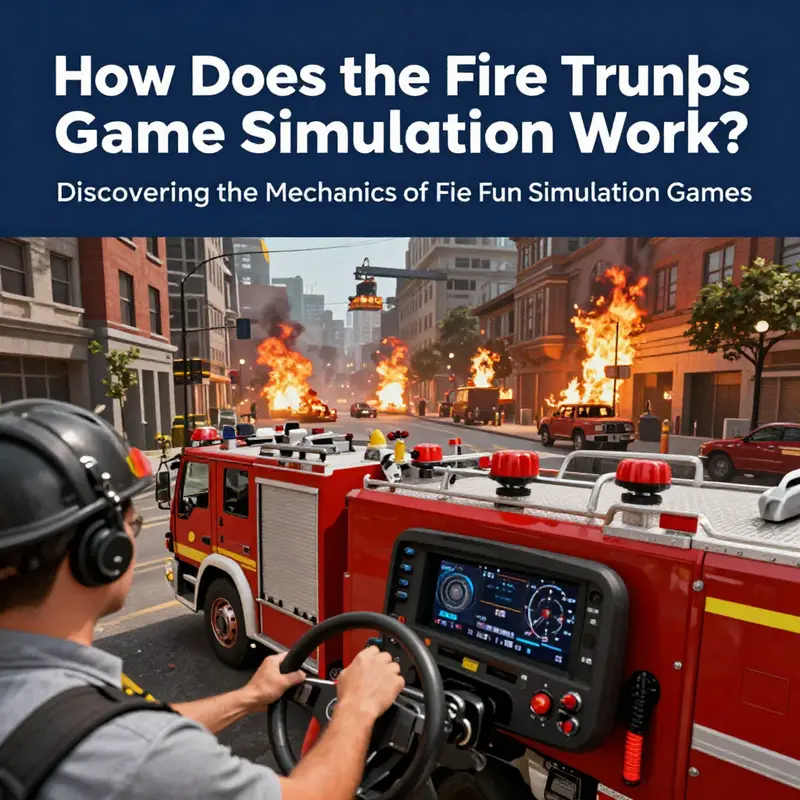
When players approach a fire truck simulation, they expect more than a simple drive and blast of water. They expect an immersive drift through decisions, precision, and pressure that mirrors the rhythm of a real emergency response. The best simulations are less about flashy explosions and more about disciplined systems: the way a vehicle handles on crowded streets, how weather gnaws at visibility, and how every choice you make can alter outcomes on a timer. In this light, the core question of how such a game works becomes a study in orchestration. It is not merely about moving a large red vehicle from point A to point B. It is about translating the complexities of live rescue into interactive, learnable mechanics that feel both challenging and rewarding. The contemporary fire truck simulation accomplishes this by building a layered experience. Players start in a bustling digital city, where traffic, pedestrians, and environmental conditions interact in real time. They accept an emergency dispatch and respond by maneuvering a realistically modeled fire apparatus through tight urban corridors. The vehicle physics emphasize weight, momentum, and control. Brakes, suspension, and steering respond to the truck’s mass, yet the controls remain intuitive enough for newcomers to pick up quickly, while still offering depth for seasoned players seeking authentic handling. The city itself is not a backdrop but a dynamic stage. Buildings glow under dawn and dusk, streetlights flicker as night falls, and rain or mist can reduce visibility. These elements are not cosmetic; they directly affect how a driver perceives targets, where to position the ladder, and when to deploy water with maximum reach. In practice, the simulation uses a physics engine to simulate tire grip, water momentum, and device drift. When the siren kicks in, the scene changes in measurable ways. Vehicles that would normally crowd the road scatter to clear a path, pedestrians pause, and the player must make split second judgments about how to weave through the flow without clipping parked cars or endangered bystanders. The effect is a feeling of real-time consequence. It is not enough to reach the fire location; the player must also manage the approach, positioning, and suppression sequence with a sense of strategic timing. The firefighting process itself becomes a sequence of carefully choreographed tasks that test spatial awareness as much as reaction time. The ignition of a flame is not merely a visual cue; it is a management problem. How much water is needed, and at what pressure, to control the blaze without wasting fuel or overtaxing the pump? Where should the nozzle point to penetrate the flame front while avoiding backflow, and how does the wind shift demands as smoke thickens and gusts roll through alleyways? These questions thread through every mission. The game typically presents a progression ladder that rewards careful planning and execution with in-game currency or experience points. As players complete missions, they unlock heavier, faster, or more versatile fire trucks, along with upgraded hoses, nozzles, and ladders. The upgrade system does more than decorate the garage; it alters how missions unfold. A longer ladder expands the reach for upper floor fires, a higher pump pressure lets a single truck reach more distant windows, and drones or cameras can evolve from novelty tools to essential reconnaissance gear. This is where the simulation nudges the line between entertainment and practical understanding of rescue operations. A sophisticated simulation may also offer cooperative modes, where teams of players coordinate tasks across different units. In such modes, one player might pilot the truck while another operates the water cannon and a third handles scene assessment with a drone. The social dimension adds a layer of realism, reflecting the teamwork that defines real-world firefighting. Even when cooperative play is not a feature, the game still emphasizes decision making under pressure. Quick calls must be made: should the team risk a water rescue in a flooded entrance, or should they deploy to a secondary blaze while the primary is being contained? Which hose configuration is best for a basement fire with limited visibility? These choices are not abstract puzzle solutions; they translate into micro-advantages on the field, such as securing a more stable water supply, lowering the risk of flashover, or preserving precious time for a successful escape. A standout element in many modern simulations is the inclusion of advanced tools that broaden the scope of what players can accomplish. Drones, for instance, give players an overhead view, permitting safer assessment in hazardous scenes. They allow players to see interior layouts, identify trapped occupants, and determine which approach will minimize risk. Ladders unlock vertical access for reaching upper floors, while water cannons and foam systems provide tactical options for different fire types. The tools are not decorative props; they shape strategy and influence the pace of the mission. The design philosophy behind these tools is partly about teaching efficient resource allocation. Players learn to gauge how many hoses to deploy, how to position a ladder, and when to switch to a more aggressive or containment-focused tactic. The sense of mastery grows as players refine their ability to anticipate challenges before they arise—like a chess player who studies the board and predicts several moves ahead. Even with a strong emphasis on realism, the game entertains with the occasional extraordinary scenario that stretches the imagination. A unique mode might drop players into a futuristic rescue environment where autonomous marshal robots participate in the response. In this mode, the rescue team blends human decision making with robotic aids that execute precise tasks, from securing perimeters to countering rogue mechanical threats. The juxtaposition of human judgment and robotic precision challenges players to adapt their tactics to a hybrid system, offering a fresh rhythm while preserving the core aim of protecting lives and property. The presence of such a mode speaks to a broader trend in emergency response simulations. Developers are exploring how rescue professionals might collaborate with autonomous systems in the future, while still providing a grounded experience that users can relate to in the present. Of course, not every session aims at high drama. Some players enjoy the puzzle-like aspects of the experience, where the objective is to navigate a sprawling parking lot to reach a stranded vehicle or to unfold a sequence of moves that clears a blocked exit in the shortest possible time. These puzzle-like moments are a nod to classic driving and parking challenges but reframed within a rescue context. They emphasize precision, patience, and spatial reasoning. The leveling curve in such simulations tends to reward repeated play. Early missions teach the fundamentals: how to accelerate smoothly, how to brake without locking the wheels on a slick surface, and how to synchronize the ladder deployment with reaching the ideal window. As players gain familiarity, the emphasis shifts toward tactical nuance. They learn to read the environment and to anticipate the ripple effects of each action. They learn to balance speed with caution when approaching a burning structure or when navigating a congested urban corridor. The sense of immersion is reinforced by sensory design choices. Engine sounds, bell chimes, and the physical feedback of the controller or keyboard all contribute to an authentic feel. The weather system adds a further dimension. Rain can obscure vision, wind can tilt the flame and the spray, and humidity can affect the behavior of water. Night cycles reduce visibility, forcing players to rely more heavily on instruments and team communication. Day light, in contrast, reveals reflections on glass and the shimmer of heat on asphalt, influencing where to park and how to angle the apparatus. The game systems are interconnected in a way that rewards observation and disciplined practice. As players progress, they can unlock more vehicles that differ in size, weight, and capabilities. A heavy rescue unit might carry a higher water pump and longer hose, while a lighter prime mover excels at rapid response and high maneuverability. Each new chassis invites players to re-learn the choreography of a response, testing their adaptability and deepening their understanding of how emergency teams coordinate under pressure. The broader educational value of such simulations lies in their ability to convey the tempo of a real operation without exposing players to danger. They offer a sandbox where beginners can experiment with different tactics and more experienced players can fine tune their approach to complex scenes. They also provide a sandbox for designers and researchers to explore how different tool configurations impact response times, resource usage, and casualty outcomes, all within a safe, repeatable environment. For those who wish to connect the dots between game mechanics and real world practices, there is value in examining cataloged equipment and tool categories that appear in the game. The drone category, for example, embodies the kind of aerial reconnaissance that modern rescue teams leverage to scout buildings before entering. The ladder and hose systems mirror the vertical and horizontal challenges faced in dense urban settings. With these elements, the simulation becomes an educational canvas as well as an entertaining pastime. It is easy to overlook a simple truth behind the game design. The most compelling firefighting simulations do not rely on a single gimmick to sustain interest. They earn their long life through a cohesive system that ties control, environment, tools, and objectives into a single compelling loop. Players learn to read the scene, react with appropriate force, and then reassess as conditions evolve. The loop repeats, but with each iteration the player grows more confident, more strategic, and more attuned to the complex tempo of emergency response. In sum, the fire truck simulation works by delivering a layered experience where realistic vehicle physics, dynamic environments, and authentic firefighting tools fuse into a coherent narrative of rescue under pressure. It is a game, but one that invites players to engage with the logic of real world operations and to practice decision making in a safe, scalable, and endlessly replayable environment. For those curious to explore related gear and resources in this field, a deeper look into drone enabled rescue equipment can be found at the relevant product category page that hosts fire fighting drones, which offers a sense of how these tools are conceptualized and described in practice. fire fighting drone category. For readers seeking broader reference on how such simulations map to professional planning and response workflows, see the platform listing on the official storefront: https://apps.apple.com/us/app/fire-truck-simulator-3d-games/id1468025977.
Steering Through the Blaze: The Real-Time Mechanics Behind Driving and Parking in Fire Truck Games
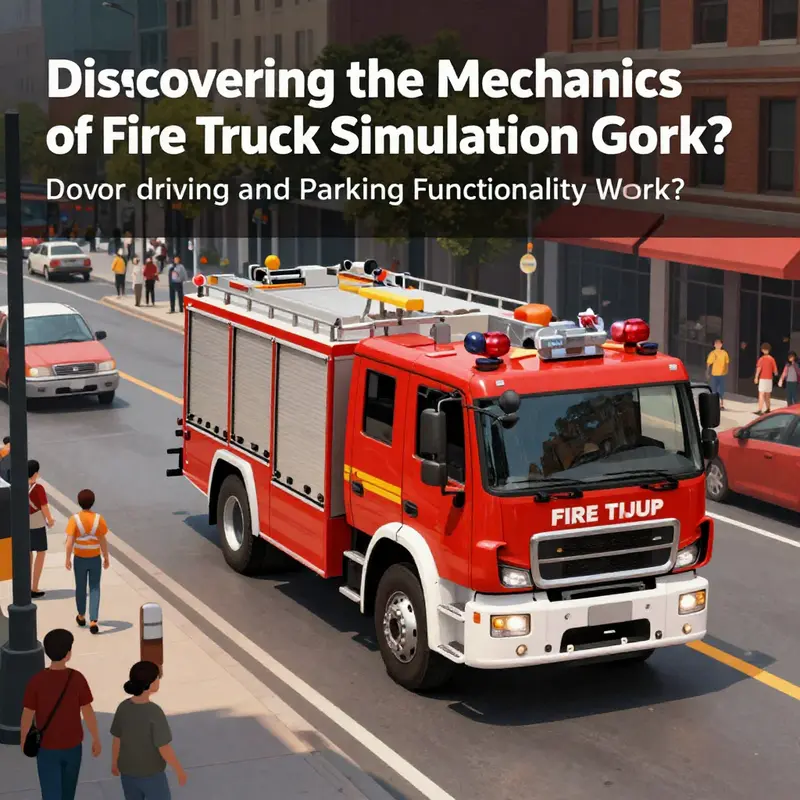
When players first step into a fire truck game, the immediate perception is one of scale and responsibility. A vehicle that dwarfs most street cars, with a long wheelbase, tall stance, and an array of complex tools at the ready, enters the screen and demands a new kind of driving discipline. The driving and parking mechanics are not merely a test of reflexes; they are a carefully designed interface between player intention and in-game consequence. In the best examples, these mechanics blend intuitive controls with believable physics, creating a sense of weight, momentum, and precision that echoes real-world firefighting operations while staying accessible enough for casual play. The core driving loop—accelerate, steer, brake, and navigate—frames the player’s journey through a cityscape that can range from sunlit avenues to rain-slick alleys, each environment presenting its own set of challenges and timings. The parking phase then becomes a culminating moment in a mission, where the driver must translate a phalanx of sensations—wind resistance, steering feel, tire grip, and parallax cues from the environment—into a perfect stop within a marked area. The result is a flow that feels continuous and earned, not segmented into isolated tasks. The seamless integration of control, feedback, and environment keeps the player’s attention fixed on the path ahead and the precise moment of alignment that determines success or failure.
The driving experience rests on two parallel pillars: input methods and physics. On devices with touch screens, developers often implement on-screen controls that mimic the hand-to-wheel connection you would expect in a real vehicle. A virtual steering wheel may respond to subtle finger twists or more aggressive swipes, while throttle and brake are mapped to distinct buttons or sliders. Some titles also embrace tilt-based controls, leveraging device orientation to influence steering input or balance in a way that rewards practiced finger or device handling. Keyboard and controller support adds another layer of accessibility, enabling precise line control and quick, measured adjustments during complex maneuvers. Regardless of the input path, the underlying aim is to reduce the cognitive load by translating intent into predictable, legible motion. Players should feel that small adjustments produce meaningful shifts in direction or speed, while larger inputs result in deliberate, controlled changes rather than abrupt, jarring moves. This requirement is especially critical when negotiating tight urban corridors where a few inches of clearance can determine whether a run ends in success or a retry.
Physics sits a step beyond raw input. In many parking-centric levels, the physics model emphasizes the truck’s mass, inertia, and the way it interacts with road texture and slope. Realistic simulations account for the truck’s turning radius, the drag of wind on the cab, the frictional grip of tires on different surfaces, and even the subtle impact of weather or time of day on visibility. More arcade-friendly iterations might simplify some of these aspects to keep the action moving and maintain a satisfying pace. Still, even the most forgiving titles tend to preserve a sense of weight, so players feel the consequences of their choices. For instance, aggressive steering without counter-steering in a narrow gap can cause overshoot, the vehicle’s bulk pushing toward the obstacle and forcing a cautious cutback instead of a straight-line approach. This feedback loop between input and physics helps players calibrate their instincts, slowly turning trial and error into confident handling.
The city is more than scenery in these experiences; it is an essential partner in the driving and parking journey. Road texture, lane width, traffic density, and visual cues govern how players plot a safe path. In open-ended driving, players can chart routes that minimize turns and maximize sightlines, while in mission-based tracks, clever routing becomes part of the strategy—especially when time pressure is a factor. Dynamic elements, such as other vehicles moving in predictable patterns or pedestrians sharing the space, increase the stakes and require split-second decision-making. The game thus teaches a form of situational awareness that mirrors real life: you read the road ahead, anticipate the actions of others, and adapt your plan without breaking focus. When the objective shifts to parking, the environment’s role becomes even more pronounced. Obstacles—parked cars, traffic cones, or trench-like curb edges—require precise alignment and careful speed control. The player must learn where to brake, how to feed the truck into the space with gradual steering inputs, and how to stop squarely within the designated zone. It is a choreography of micro-commands that rewards patience, practice, and a keen eye for alignment.
Not all games aim for the same balance of realism and accessibility, but the best driving and parking sequences share a common design language. A well-crafted level communicates what to do through feedback rather than explicit instruction. Visual indicators—a bright marker at the target parking spot, a subtle glow on the curb, or a shifting color cue on the vehicle’s profile—guide the player toward the correct stopping point. Audio cues reinforce the sensation of motion and contact: engine hums that rise with throttle, a wheeze of braking when deceleration is needed, and a soft clink if tires graze an obstacle. Haptic feedback on touch devices can simulate the jolt of misalignment or the reassuring nudge of a near-perfect stop. These sensory signals form an almost telepathic loop with the player, telling them how close they are to success without interrupting the flow of the run. In this ecosystem, players develop a muscle memory: the feel of the steering wheel, the timing of a brake, the precise moment to ease into a space. The better you become, the more you can anticipate the points of contact before they happen, turning what could be a chaotic test into a confident, smooth operation.
A particularly telling design choice in driving and parking challenges is the spacing between attempts. Some games embrace a forgiving retry model, offering generous checkpoints and a slow ramp of difficulty. Others adopt a stricter regime, where a single mistake can erase a run and demand a restart from the beginning of the level. This dichotomy has a real impact on player psychology. In forgiving modes, players learn through exploration; they experiment with different lines, adjust speeds, and gradually refine their approach without fear of punishment. In harsher modes, each mistake is treated as a learning moment that pushes the player toward efficiency, precision, and a more deliberate approach to steering and braking. Both strategies have their merits. The former invites experimentation and longer engagement per session, while the latter cultivates discipline, attention to detail, and a heightened sense of accomplishment when a difficult space is finally mastered. The best experiences often strike a balance, providing rough-but-fair challenges that escalate gradually and reward steady improvement rather than a single dramatic performance.
Progression systems play a crucial role in shaping how players relate to driving and parking tasks over time. Experience points or in-game currency unlock new vehicles, skins, or specialized equipment that alter handling and visibility, nudging players toward new strategies. Some titles also introduce mission-based progression, where later levels impose tighter time constraints, more aggressive traffic patterns, or tighter parking envelopes. This layering of objectives preserves interest by continually raising the stakes while preserving a sense of control. The player is not merely chasing a time beat or a high score; they are mastering a toolkit that grows with them, from basic maneuvering to complex, multi-step parking sequences. In parallel, cooperative modes or challenge playlists allow players to tackle the same spatial puzzles with friends or rivals, adding social feedback to the technical skill curve. The communal and competitive angles hinge on the same core mechanics—the same inputs, the same physics, the same risk-reward calculus—yet reinterpret them through the lens of teamwork or competition. This social dimension reinforces skills while broadening the appeal of the driving and parking experience.
Another dimension worth noting is how developers manage visibility and sensory feedback to support precise parking. Because aligning a long vehicle in a cramped space often strains peripheral awareness, many games emphasize camera work and parallax effects that keep the target space visible even when the truck is partially behind objects. Dynamic lighting during dusk or night scenes can reveal curb lines and shadowed edges, guiding the player without overt handholding. Sound design plays a parallel role; the muffled thud of tire contact, the faint whine of the engine, and the crisp snap of a well-timed brake create a near-tangible sense of space. When players do misjudge, a controlled mishap rather than a total failure helps preserve motivation. A bounced wheel, a minor scrape, or a small stutter in the vehicle’s motion can signal the need to adjust strategy, rather than driving the player away with a punitive reset. This approach respects the player’s effort and invites them to refine technique in a way that feels fair and instructive.
For enthusiasts who want to connect the game-world experience with real-world mechanics, it is worth considering the bridge between simulation and practical knowledge. The driving and parking sequences can be viewed as a sandbox for developing essential motor skills and spatial reasoning. Players learn to distribute their attention across multiple tasks: locating the ideal parking corridor, judging clearance from adjacent objects, modulating throttle and brake for smooth entry, and maintaining a stable approach path at low speeds. While the context is fictional and simplified for play, the cognitive demands resemble those faced by actual operators who must balance speed with safety. This resonance explains why many players report that the most satisfying runs are the ones where a tricky space is conquered with a patient, measured approach rather than a frantic dash to the finish. It is a reminder that the game, at its best, teaches a set of transferable skills that extend beyond the screen, into the realm of precision, timing, and disciplined control.
In sum, the driving and parking functionality of fire truck games weaves together input responsiveness, physics realism, environmental design, feedback systems, and progression logic to deliver a cohesive, immersive experience. The controls translate intent into motion with a fidelity that respects the vehicle’s size and weight while preserving the accessibility that makes the game approachable. The parking challenges fuse spatial judgment with timing, requiring players to synchronize micro-decisions with macro goals—arrive in one piece, finish within the allotted time, and do so with a level of polish that earns a sense of mastery. The balance between realism and playability is delicate and highly dependent on the target audience and the design goals of the title. Some players crave the tactile, true-to-life feel that reflects professional standards; others seek high-energy, arcade-style immediacy that rewards bold moves and rapid iteration. The strongest experiences manage to thread these preferences, offering scalable difficulty, adaptive feedback, and a sense of progression that keeps drivers returning to the cab, eager to test new routes, refine their lines, and park with a precision that would make any real-world operator nod in quiet approval. For readers curious about the broader ecosystem of equipment and parts that underpin the world of fire response—beyond the game—explore the fire truck parts category for context and depth in related topics like vehicle maintenance and upgrade paths: ชิ้นส่วนรถดับเพลิง.
External resource: For readers seeking a broader technical lens on how driving simulators model physics and control systems, see https://en.wikipedia.org/wiki/Driving_simulator
Decoding the Fire Truck Puzzle Mechanic: How Image Assembly Turns Firefighting Imagery into Playful Challenge
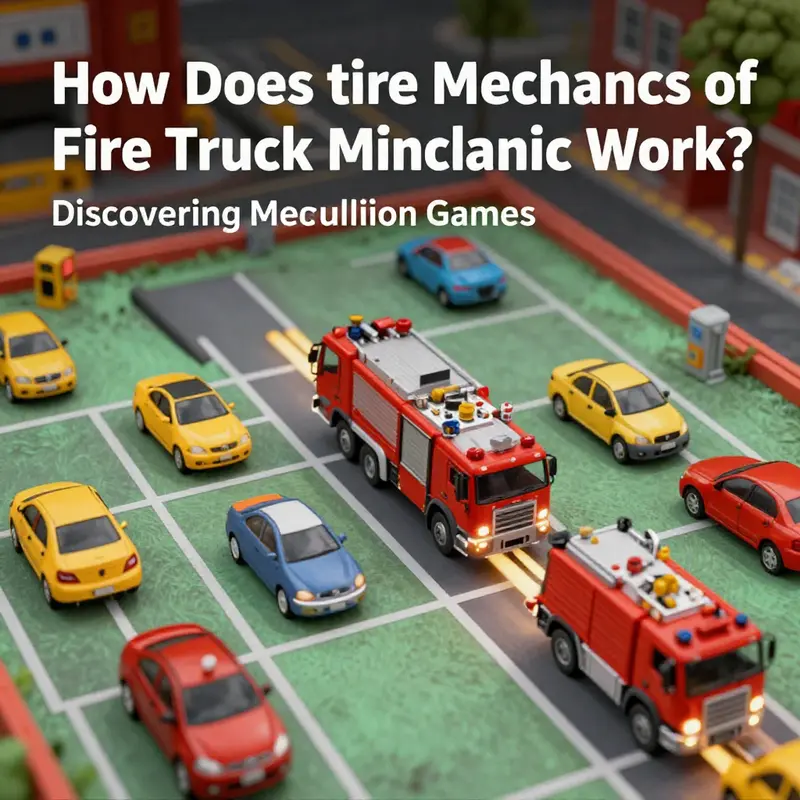
Ask a player to reconstruct a fire truck from scattered pieces, and you are watching more than a simple pastime. You are watching a small exercise in visual memory, spatial reasoning, and patient planning unfold inside a bright, approachable interface. The Fire Truck puzzle variant described here is not a single game title, but a family of image-assembly experiences that revolve around the familiar emblem of hoses and ladders, sirens and windows. The core appeal lies in transforming a static photograph of a fire truck into a dynamic puzzle: you move pieces, rotate them to fit, and feel the moment when a corner snaps into place and the whole vehicle emerges. This is not only about finishing a picture; it is about translating a flat, scrambled image into a coherent object that can be recognized, admired, and understood with just a few well-placed shifts of attention and touch.
For players who love the aesthetic of firefighting gear and the bold, high-contrast shapes of emergency equipment, the puzzle format offers a welcoming entry point. It reduces the world of firefighting to its most iconic visuals and then invites the mind to reassemble those visuals. In a way, it is a quiet rehearsal for seeing structure and form under pressure, but without the danger and urgency of a real scene. The mechanic is accessible, immediate, and surprisingly satisfying: you feel a sense of mastery when a seemingly random cluster of fragments forms into a recognizable ladder truck or a compact pumper with its red-and-yellow color accents finally aligning into a complete silhouette. The delight is not only in completion but in the journey of discovery as pieces drift, rotate, and finally click into their rightful place.
The technical heart of the experience is image assembly. Players are shown a scrambled image, and their job is to reassemble it. The interaction is tactile and direct: pieces are dragged with a finger or cursor, and each piece can be rotated to match the visual cues on the rest of the image. The satisfaction comes from the alignment of edges, the matching of color gradients, and the recognition of a familiar shape as more and more of the truck reveals itself. The puzzle uses the language of puzzle design that players already know—edges, corners, and patterns—so the moment of realization is immediate even when the image is complex. And because fire trucks are highly distinctive, the silhouettes become strong cues. Players learn to identify the long, angular ladder sections, the rounded contours of the cab, and the sometimes dramatic profile of a foam unit or an aerial apparatus. With practice, those clues become mental hooks that speed up future solves, making each new challenge feel a notch easier while still preserving the thrill of discovery.
A crucial factor in this family of games is scalability. Most versions allow players to choose from several puzzle sizes: 12, 24, 48, or 96 pieces. These options are not arbitrary; they are a deliberate invitation to calibrate the cognitive load to match mood, skill, and available time. A 12-piece puzzle emphasizes broad shapes and big color blocks, which can feel almost instant, akin to a quick warm-up that stretches the fingers and warms the mind. A 24-piece configuration starts to probe your ability to manage a handful of adjacent regions that must fit together in a single plane. As the piece count climbs to 48 or 96, the exercise becomes more granular, demanding careful attention to edges, color transitions, and subtle shading details that differentiate neighboring segments. The larger formats reward methodical planning: you might pre-skim the image to identify a few anchor pieces—the cab outline, the base of the ladder, a distinctive badge on the door—and then work outward from those anchors. This is where the game nudges players toward strategic thinking: the choice of where to begin, how to prioritize certain sections, and when to pause and reassess the entire layout can determine whether a piece will slot into place at a glance or require trial and error.
To support players through this process, a set of optional features often accompanies the core mechanic. Hints can point to likely edge pieces or corners, a helpful nudge when you feel the seams slipping apart but do not want to abandon the project entirely. Undo functionality is another essential tool, allowing players to retreat from a misstep and try a new sequence of moves without penalty. Time challenges add a different flavor of pressure, introducing a gentle competitive cadence that invites players to balance speed with accuracy. The blend of hints, undo, and tempo constraints does more than speed up play; it teaches strategic flexibility. You learn to assess risk, decide whether a quick guess is worth the potential rework, and adjust your approach when a path seems blocked. The design philosophy behind these features is not to trap players in frustration but to create a safe space for experimentation. With every misplacement, there is a tiny opportunity to rethink and reframe the path to completion, reinforcing the idea that problem solving is iterative and forgiving when the toolset supports it.
Thematic richness is another quiet strength of these puzzles. Although the mode is fundamentally a picture-reassembly task, the content often carries a curated range of firefighting imagery that introduces players to the variety within the profession. You might encounter images featuring different types of fire trucks, from ladder trucks that stretch skyward to foam units designed for difficult suppression tasks. The scenes may depict emergency responses in diverse settings—a bustling street, a warehouse district, a residential cul-de-sac—and the truck images are rarely static; they embody dynamic angles and distinctive equipment, inviting careful observation. This thematic depth does more than entertain; it offers a gentle primer on the visual language of firefighting equipment. Players come away with a keener eye for the shapes and configurations that characterize the profession, which can deepen their appreciation for the real-world devices behind the images while staying well within the safe, exploratory realm of a puzzle.
From a design perspective, the experience emphasizes clarity, accessibility, and a tactile sense of reward. The pieces are sized for easy tapping or dragging, with borders that provide a clear boundary against a simple backdrop. Color contrast is tuned to help separate adjacent pieces and to guide the eye toward boundaries where edges meet. The rotation control is designed to feel natural, allowing smooth adjustments without requiring precise nudges that would frustrate beginners. The interface often isolates the puzzle area from the control zone, reducing visual clutter and enabling players to focus on the task at hand. This minimalistic yet thoughtful presentation is part of what makes the puzzle approachable across ages and abilities. It invites casual play while also supporting more studied exploration for those who savor a longer challenge. Importantly, the experience remains faithful to the image while ensuring that interaction remains intuitive: drag, rotate, drop, and observe as the image locks in place or reveals a small flourish of animation when a piece finally falls into its rightful home.
This puzzle mechanism also functions as a quiet school of cognitive skill development. The process of aligning pieces relies on spatial reasoning: you must translate two-dimensional scraps into a coherent three-dimensional mental model of the full truck. You also develop planning: you anticipate which pieces will fit together several moves ahead, rather than solving each fragment in isolation. Pattern recognition is sharpened as you learn to read shading, highlights, and edge lines that hint at how things should connect. Working memory is exercised as you hold multiple potential placements in mind while weighing which one makes the most sense in the next step. If a timer is present, it adds a dynamic rhythm that trains speedy decision-making without sacrificing accuracy. Even without a timer, the act of comparing small visual cues across several pieces fosters a disciplined attention to detail. The result is a pleasant cognitive workout that many players find relaxing rather than taxing, a rare combination of challenge and comfort that aligns well with casual gaming expectations.
This chapter places the puzzle mechanic within the broader landscape of fire-themed interactive experiences. While puzzles lean into deliberate thought, other fire-related games emphasize speed, precision, and real-time responsiveness. Simulations and driving titles push players to manage a vehicle through traffic, use firefighting tools, and make split-second tactical decisions under pressure. The shared spark across these genres is the same: firefighting imagery anchors the experience and makes the activity feel meaningful. In puzzles, the meaning emerges from recognition and reconstruction—the moment when a mislaid piece clicks and the image forms a recognizable vehicle in full color. In simulations or driving games, meaning comes from mastering control, timing your maneuvers, and executing a plan in a dynamic environment. Both paths honor the same subject, yet they ask the brain to engage in different ways: one through contemplative problem solving and the other through kinetic, goal-directed action. The overlap is not just thematic; it is a reminder of how powerful a well-chosen set of visuals can be in guiding a user into a flow state where challenge and reassurance coexist.
For readers curious about exploring fire-truck visuals beyond the puzzle, a related catalog offers a broader glimpse into how different fire service apparatus is represented in digital contexts. special-fire-truck
External resource: For a consumer example of how this puzzle experience is packaged in apps, see the following listing: https://apps.apple.com/us/app/fire-truck-jigsaw-puzzles/id1507372955
community safety
Fire truck simulation games not only capture the thrill of firefighting but also serve as valuable tools for businesses in training and skill development. By understanding the intricate mechanics behind these games, such as simulation dynamics, driving challenges, and problem-solving puzzles, business owners can tap into innovative ways to enhance team readiness and effectiveness. As industries continue to evolve, integrating game-based learning strategies may provide a competitive edge in training, ensuring employees are skilled in emergency response and operational excellence.

