
















Fire trucks play a critical role in emergency response, primarily designed to carry water, foam, and essential firefighting equipment rather than serving as long-distance vehicles. Understanding the size of their gas tanks is crucial for business owners involved in fire safety and emergency management. This article delves into the fuel tank capacities of fire trucks, offering insight into how these vehicles are engineered for operational efficiency. Through three comprehensive chapters, we will explore the typical capacities of fire truck gas tanks, compare different models, and analyze how these capacities impact emergency response effectiveness.
Fuel on the Front Line: Understanding How Big a Fire Truck Fuel Tank Really Is
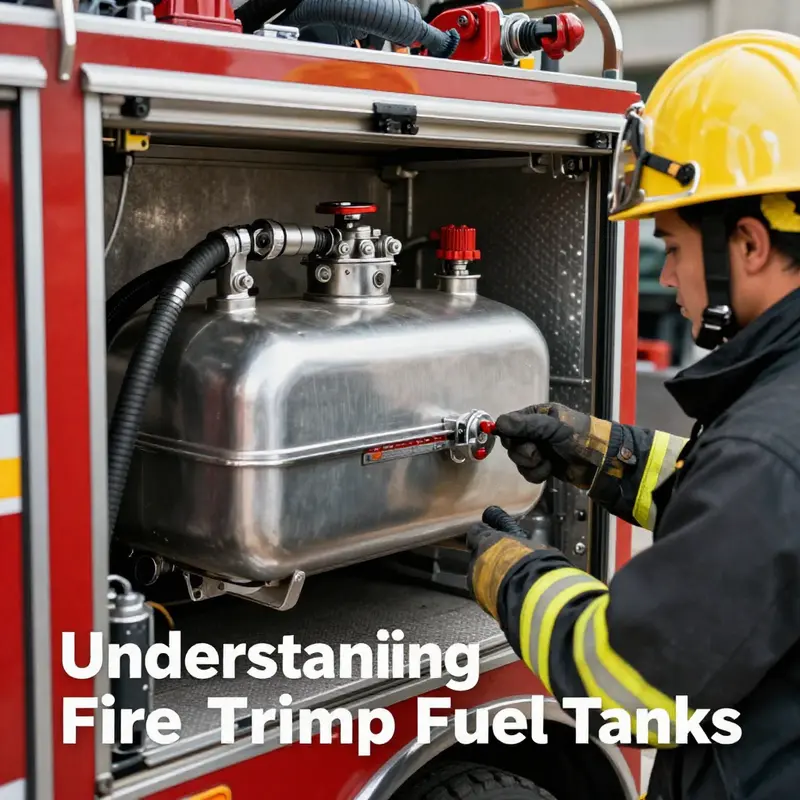
On a fire truck the question of how big a gas tank is should be understood in the context of its mission. Fire apparatus are built to carry water, pumps, hoses, and crews, with fuel playing a supporting role rather than a primary constraint. The size of the fuel tank varies by vehicle type and duty cycle, but for many standard pumpers the tank holds roughly 100 to 200 gallons of fuel, which translates to about 380 to 760 liters. This range is chosen to keep the engine running long enough to reach the incident, power pumps and lights, and relocate between points of operation without forcing frequent refueling. Heavier pumpers and tankers may carry more fuel, but still allocate the majority of space to water storage and the pumping system. Water capacity is the defining performance driver, and fuel capacity is sized to maintain reliability and mobility while the vehicle performs its core task of delivering water. In practice, many responses involve staging near water sources, using hydrants or tanker shuttles, so the fuel reserve need not support long highway journeys. The upshot is that a fire truck is not a long distance traveler in the way a highway tractor trailer is; its design prioritizes water on scene, pump capability, and crew safety, with fuel sized to sustain operation during the incident and the move between critical points of action.
Fuel in the Tank: Unraveling Fire Truck Gas Tank Sizes Across Models and Missions
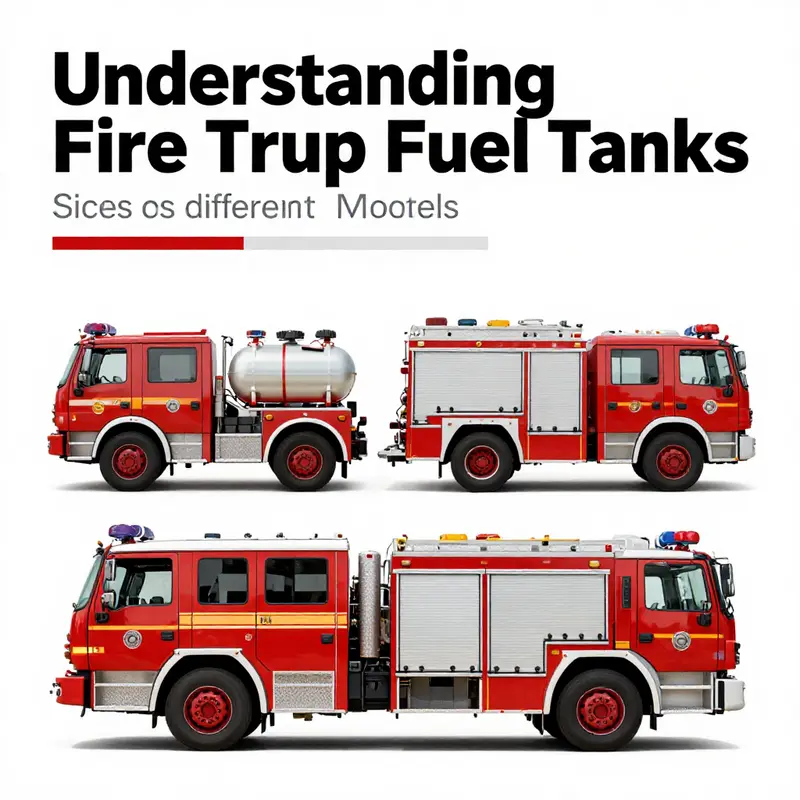
When people ask how big a fire truck’s gas tank is, they often imagine a single number that would fit every vehicle on every street. In truth, the question is more nuanced, because fire apparatus are designed not to cover long highway miles but to be ready at a moment’s notice, at the edge of smoke and flame, where every gallon counts toward getting a crew to the scene and keeping them there until the fire is controlled. In the common parlance of fire service practice, the term gas tank is a shorthand for the vehicle’s primary fuel reservoir. Yet the reality is that these tanks are sized to support a spectrum of missions, from the nimble urban response to the arduous rural standbys that stretch a department’s endurance across an entire shift or longer. The size of the tank, the weight it imposes, and the mechanical efficiency required to move a heavy chassis all shape not just how far a fire engine can travel before refueling, but how effectively it can operate once it arrives on scene. A complete picture emerges only when the fuel tank is seen alongside the vehicle’s purpose, its operating environment, and the practical realities of firefighting logistics on a local, regional, or even national scale.
To begin with, the most fundamental point is that fire apparatus are primarily designed to carry water, foam, and firefighting equipment. While a gasoline or diesel tank is indispensable, it is not the centerpiece of design in the same way a city bus or a long-haul truck might be. The engine itself is usually diesel-powered, and the fuel tank is sized to ensure the vehicle can respond promptly, move through urban streets, and reposition between incidents without becoming stranded at the wrong moment. The fuel tank becomes a question of range and readiness rather than a feat of endurance travel. In practical terms, the tank’s capacity is reconciled with the apparatus’s water capacity, pump capacity, and the need to stay mobile in sometimes congested or rough terrain. The result is a compromise that prioritizes rapid response, on-scene versatility, and reliability over the sort of fuel economy calculus that governs long-distance commercial fleets.
When we talk about the numbers, a general trend begins to emerge across the spectrum of models. In the smaller end of the scale—compact, light-duty fire trucks designed to navigate tight urban streets and respond quickly to a wide variety of emergencies—the fuel tanks tend to sit in the hundreds of gallons rather than the thousands. In typical terms, these smaller vehicles carry fuel in a range that roughly translates to a hundred-odd gallons up into a few hundred gallons. The aim here is simple: minimize weight while preserving enough range to reach several calls in a shift without frequent refueling, thus preserving precious time that firefighters cannot spare at a hydrant while the incident evolves. It is a practical choice consistent with the mission: quick repositioning, frequent access to water sources, and the capacity to move from one call to the next with minimal downtime.
On the other end of the spectrum lie larger, heavier-duty apparatus designed for sustained operations. In these configurations, the fuel tank grows substantially, not as a luxury but as a necessity. The objective is to ensure that a fire crew can maintain on-scene operations for longer periods, whether at a single large incident or during a string of incidents in a rural or regional area where refueling opportunities are scarce and the terrain or weather complicates logistics. The resulting design often features fuel capacities that exceed the more familiar ranges of 1,000 or 2,000 gallons, venturing into the thousands in the most extreme, mission-specific incarnations. Though these numbers may feel surprising in the context of a fire truck, they reflect a deliberate engineering choice: the vehicle must stay in service where it’s needed, with fuel as a key driver of operational continuity rather than merely a metric of vehicle mass.
To understand the trade-offs, consider the core dynamic of any fire apparatus: weight. A larger fuel tank adds significant mass, which in turn affects acceleration, braking, steering feel, and tire wear. Every extra gallon of fuel adds weight to a vehicle that is already laden with water tanks, foam concentrates, rescue tools, protective gear, and personnel. In urban settings, where streets are narrow and maneuverability is critical, the weight penalty of a bigger tank can reduce the sense of agility that a fire crew relies on to maneuver around traffic, through alleys, and at the fire scene itself. In rural or remote contexts, the same weight is justified by endurance. A larger tank reduces the frequency of refueling stops, which can translate into fewer interruptions to operate and more consistent on-scene time. From a systems perspective, the fuel capacity is balanced against the chassis, the pump, and the water-carrying demands of the vehicle’s core mission. In short, a tank’s size is as much about the expected pattern of duty as it is about the capacity to go farther.
The regional differences only compound this balancing act. Urban fleets, facing dense traffic, limited refueling infrastructure, and frequent call volume, generally lean toward fuel tanks that favor rapid response and shorter-range readiness. A compact urban pumper will typically be configured with a fuel capacity that supports multiple short trips within a city’s limits and surrounding suburbs, with refueling opportunities readily available at firehouses or nearby service stations. Rural and agricultural contexts, by contrast, often demand longer legs. In those environments, a fleet might justify a larger tank to cover broader distances between hydrants or refueling points and to sustain extended operations during wildfire season or flood response. These deployments rely on the ability to remain in the field longer, even when access to fuel is limited or distant. The design choice thus reflects not only the vehicle’s immediate function but the extended patterns of duty that a department anticipates over a shift, a day, or a season.
From the perspective of a comparative analysis, you can think of the spectrum as two poles connected by a practical middle ground. On one side are smaller models whose fuel systems are built to keep pace with urban response patterns and the finite distances of city blocks. On the other side sit the specialized machines whose fuel systems are engineered for endurance, often paired with auxiliary resources such as portable tanks or shuttle refueling plans that enable longer deployments. It’s important to note that even within this broad range, some vehicles carry thousands of gallons of fuel—an arrangement that sounds extravagant when detached from context but makes sense when viewed through the lens of sustained operations. These extreme configurations are not the daily consumer ideal; they are purpose-built for scenarios in which every minute on the ground matters and refueling opportunities are uncertain or sparse.
In laying out these trends, it is helpful to anchor the discussion with practical exemplars that illustrate the core relationship between mission, tank size, and performance. A light-duty, urban-oriented fire truck embodies the principle of mobility. It optimizes weight and compact dimensions to ease movement through crowded streets, while its fuel system is deliberately sized to permit several trips without interruption, straddling the line between agility and reliability. A heavier, regional, or rural apparatus embodies endurance. Its fuel capacity becomes a strategic asset, enabling multiple shuttles between a fire scene and distant staging areas or multiple incident sites, so crews can focus on suppression, rescue, and hazard control rather than chasing fuel. In this frame, the tanks are not merely reservoirs; they are part of a broader tactical system that coordinates mobility, water, foam, equipment, and crew safety into a coherent response capability.
Understanding this spectrum also requires acknowledging the practical limits of capacity. Even the most robust fuel configurations must respect weight distribution, braking performance, and the structural integrity of the chassis. A tank that’s too large can compromise stability on uneven terrain, reduce tire life, and complicate maintenance. Engineers therefore implement design strategies that maximize usable capacity while preserving drivability and safety. These strategies include optimizing the location of the fuel tank to minimize impact on weight distribution, selecting materials that provide strength without excess mass, and integrating fueling interfaces that support rapid refueling during downtime between incidents.
In the course of a department’s life cycle, the choice of tank size becomes a strategic decision. It is not simply about the maximum number of gallons a vehicle can carry; it is about the schedule of duties, the geography of the service area, and the availability of fueling infrastructure. For some fleets, a balanced approach sits at the middle ground: a moderate tank size that sustains the typical incident sequence of their jurisdiction while leaving room for contingency and future expansion. For others, the calculus deserves closer inspection because the risk profile of the service area—frequency of wildland fires, remote rescue operations, or drought-driven firefighting demands—might tilt the balance toward larger tanks and more extensive fuel management strategies. In any case, the core principle remains: fuel capacity is a negative space that reveals the intended pattern of operation. It is what allows the fire service to move quickly, to stay on the scene, and to adapt to changing conditions without sacrificing safety or efficiency.
For readers who want a tangible sense of how these choices play out in practice, a close look at the broader category of heavy-duty fire trucks helps. The category is where the most pronounced differences in fuel strategy appear, reflecting not only size but the broader mission set that often accompanies these machines. These vehicles demonstrate how a department’s operational doctrine—whether it emphasizes rapid arrival, sustained suppression, or large-volume water handling—translates into a fuel strategy that is as important as the pump capacity or water tank size. When evaluating potential fleet upgrades or new purchases, decision-makers weigh the anticipated operational range against the available refueling opportunities, the terrain, and the schedule of incidents. In this context, fuel capacity becomes a practical proxy for endurance, resilience, and the ability to answer the call with minimal delay.
This is not merely an academic exercise. The numbers have real consequences for daily operations, maintenance planning, and emergency readiness. A larger tank demands more frequent calibration and maintenance of fuel systems, as well as careful attention to weight distribution and fuel management procedures. A smaller tank reduces payload and may require more frequent refueling during a shift, but it also makes it easier to maneuver and to maintain precise control in tight spaces. The balance is what allows a fire department to deliver a rapid initial attack and an effective escalation if the incident evolves. It is the accumulated effect of many small decisions, including tank size, that determines how quickly a crew can start to apply water or foam, how long they can sustain that attack, and how effectively they can reposition for a second wave if the situation demands it.
In practical terms, the sizing conversation often comes down to a few guiding questions: What is the expected operational range between refueling opportunities? How much water does the crew need to carry for sustained operations, and how does that water capacity interact with the pump and hoses? How important is maneuverability in the department’s typical environment, and how does weight affect braking and stability on the local road network? And crucially, what kind of fueling infrastructure can the department realistically access during a typical shift or incident sequence? The answers to these questions shape the tank size not as a single static figure but as a dynamic design parameter that reflects district boundaries, road networks, weather patterns, and the city’s or region’s scale of emergency response.
Returning to the core size ranges, it is useful to anchor the discussion with the familiar, if broad, scales described in the detailed research results. On the smaller end, most service fleets will find that firing lines, hydrant access, and urban response demands are well served by tanks that sit in the low hundreds of gallons. This sizing aligns with the need for quick movement and frequent repositioning, while still providing enough fuel to reach a few incidents within a single shift before refueling. For more sustained operations, a different calculus applies. Tanks that reach the thousands of gallons are designed to reduce the need for mid-mission refueling, enabling crews to remain on scene longer or to operate across larger geographic expanses without breaking the flow. In some analyses, the most extreme configurations—in the context of specialized response apparatus—are described as exceeding 9,000 gallons. These figures should be understood as part of a broader taxonomy of mission-specific equipment, where endurance and logistical autonomy are central, rather than as a common requirement for the everyday urban fire engine.
Designers and procurement teams recognize that the choice of tank size cannot be made in isolation. It must be coordinated with the vehicle’s overall architecture, including the water tank, foam capability, pump size, and the payload of conduit, hoses, and rescue tools. The interdependence means a bigger fuel tank can push the envelope on the vehicle’s gross weight, which may necessitate a stronger frame, enhanced braking systems, and even changes to tire selection. Conversely, a leaner fuel system can free weight for additional water or equipment, thereby increasing on-scene versatility. In practice, the procurement and customization process involves a careful simulation of mission profiles, traffic patterns, response times, and incident dynamics. Departments weigh the likelihood of back-to-back calls, the probability of long deployments in wildfire-prone counties, and the value of a spare tank in the event of a fueling disruption. The result is not a one-size-fits-all specification but a tailored synthesis that reflects the places where these machines will operate and the tempo at which they must perform.
As readers contemplate the broader implications, it is worth noting how the concept of a fuel tank translates into field readiness and maintenance planning. A larger tank not only extends the operational horizon but also introduces considerations for fueling logistics, such as how fueling events are scheduled on duty, how refueling is integrated into the incident command structure, and how fatigue and crew workload are managed when refueling is delayed. These factors intersect with the firefighter’s safety, because a well-executed refueling strategy keeps the unit in action without creating unnecessary risk at the scene or on the approach route. In this sense, fuel capacity becomes a component of the department’s resilience. The vehicle’s ability to re-enter service quickly after refueling is a direct contributor to incident throughput, which in turn influences overall fire suppression effectiveness and, finally, community protection.
For readers who are exploring this topic with a view toward practical decision-making, there is a straightforward takeaway. Tank sizing should reflect the anticipated pattern of use, with attention to how often refueling is realistically available and how long crews are expected to remain operational at a site. In environments where refueling is a frequent, predictable process within a station or along a common route, a moderate tank size often suffices. In settings where fuel stations are sparse, or where incidents require extended presence in a single location, larger tanks, supported by efficient fueling logistics, can be justified. The balance is a delicate one: you want enough fuel to sustain critical activities without imposing an excess that hinders maneuverability or increases maintenance complexity. The best practice is to tie tank capacity to a documented operational profile, then validate that profile with field rehearsals and steady feedback from frontline personnel.
To close this exploration, it’s helpful to recognize how the medium-term evolution of fire apparatus capabilities continues to influence tank design. Advances in lightweight materials, improved fuel management systems, and smarter integration with other on-board systems all contribute to expanding what is possible without compromising the essential duties of firefighting. In practice, this means that future generations of fire trucks may offer greater endurance with lighter total mass, enabling larger fuel tanks without the same compensatory penalties in handling or safety. The underlying logic remains clear: the tank is a tool of mission assurance, not just a reservoir. It is a measure of how a department plans to respond, how quickly it can mobilize, and how long it can sustain a critical effort before service coverage resumes at the scene again.
For readers seeking a practical, fleet-level perspective that connects these considerations with concrete examples, consider this broader category as a reference point: the heavy-duty fire truck class. It embodies the central tension between endurance and maneuverability, between field time and on-road travel, and between the fuel that powers the engine and the water that powers the initial suppression. When evaluating the right configuration for a department’s needs, the decision is not simply a matter of adding gallons. It is a nuanced alignment of readiness, safety, and operational doctrine, one that shapes how quickly a crew can reach the fire, how long they can sustain the attack, and how many threats they can neutralize in a single deployment. In the end, the fuel tank size is a concrete manifestation of a mission-driven approach to firefighting—one that understands that every gallon carries implications for risk, response, and resilience on the streets where communities live and work.
For further context on how tank capacities scale in practice within different fleets, see the heavy-duty end of the spectrum in the broader product categories at the fire apparatus resource hub: heavy-duty-fire-truck category. This reference helps illustrate how designers translate mission profiles into tangible fuel strategies that support rapid response and sustained operations alike. heavy-duty-fire-truck category
External resources for deeper technical context can broaden this discussion beyond the scope of individual vehicle configurations. A comprehensive guide to fuel tank dimensions and performance characteristics across various transport and firefighting applications provides a broader framework for understanding why these numbers matter in real-world deployments. See the Fuel Truck Dimensions Guide: Performance, Technical Features, and Applications Explained for a detailed technical overview. https://www.fueltruckguide.com/technical-specifications/fuel-tank-capacity-analysis
Submit
Submit
brush fire trucks, wildland firefighting, fire safety equipment, off-road fire trucks, firefighting technology, business safety, emergency response vehicles
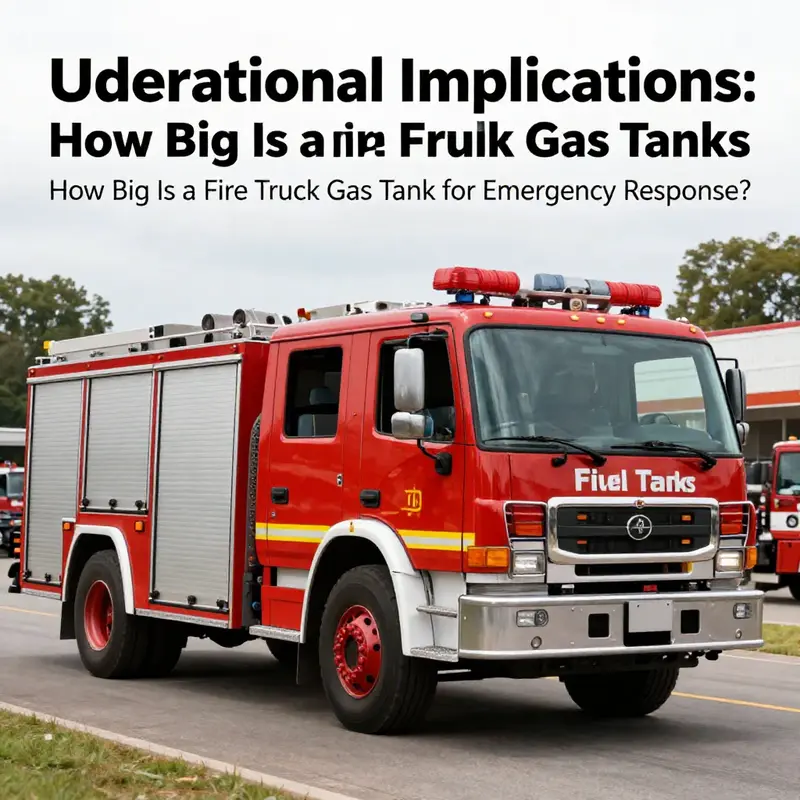
The size of a fire truck’s gas tank significantly influences its operational capability during urgent situations. With capacities ranging from 100 to 200 gallons, fire trucks are equipped to meet the demands of local and regional responses effectively. Understanding these specifications helps business owners appreciate the engineering behind these life-saving vehicles and how they fulfill their crucial role in public safety. As the firefighting landscape continues to evolve, staying informed about the capabilities of fire trucks can empower organizations to make better operational decisions.

