
















Fire trucks are integral to emergency response, but the specifics of their design can greatly influence their effectiveness. The drivetrain configuration, particularly whether they feature all-wheel drive (AWD), plays a pivotal role in ensuring fire trucks are adequately equipped for various terrains and emergency scenarios. This article delves into the significance of AWD in specialized fire trucks, contrasting its necessity in urban environments against its essential function in rural and harsher terrains. Moreover, we will explore how technological advancements are shaping the future of fire truck drivetrains, ensuring that both urban and rural firefighters can respond effectively to crises. Each chapter elucidates a crucial aspect of the AWD debate in firefighting, offering business owners valuable insights for optimizing their emergency response fleets.
Rugged Resolve: How All-Wheel Drive Shapes Specialized Fire Trucks Across Rough Terrain
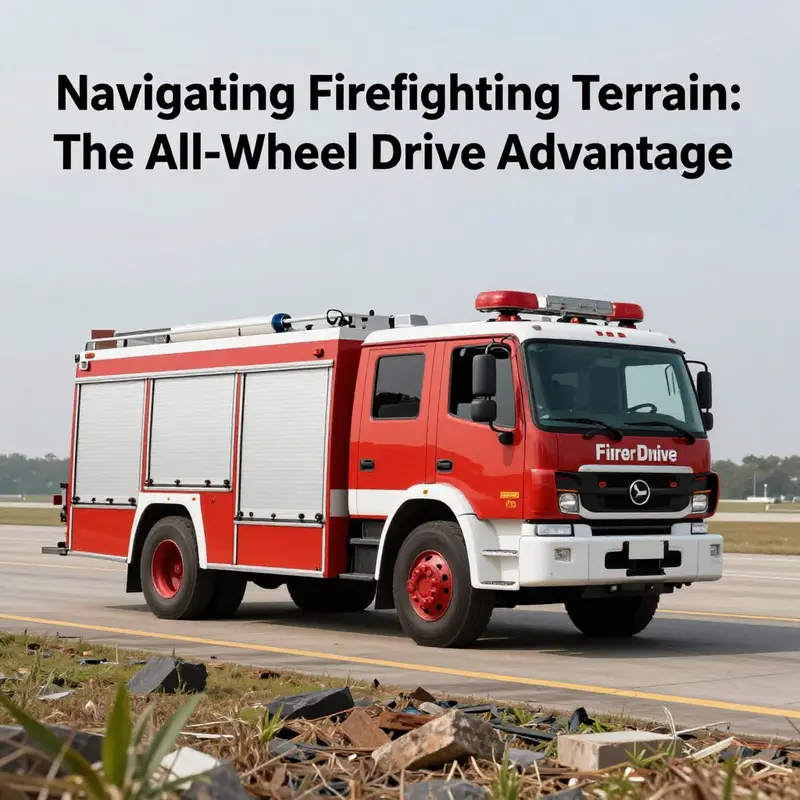
All-Wheel Drive is not merely a feature on fire apparatus; it is a real-time response strategy that expands the reach of firefighters when the ground under them refuses to cooperate. In many urban environments, a four- or two-wheel drive layout suffices for roadway travel and routine drills. Yet when the mission shifts toward challenging terrain, AW B becomes a fundamental capability, a hardware choice that redefines how quickly a truck can reach a scene and how confidently it can operate once it arrives. The chapter that follows does not pretend to exhaust every possible configuration or scenario. Instead, it offers a cohesive exploration of why AWD matters in specialized fire trucks, how it interacts with vehicle design and safety systems, and why some missions demand it even when it adds cost and complexity. The aim is to illuminate the logic behind the drivetrain decisions that keep teams mobile in mud, snow, sand, and steep grades, while still serving the bold requirement of rapid, reliable deployment in emergencies.
Traction is the most immediate benefit of AWD, but the implications run deeper. In a firefighting context, traction is not merely about moving from point A to point B; it is about maintaining momentum when the surface suddenly shifts beneath the tires. A road that looks firm can give way under the weight of a heavy water tank, the pump, and the crew, especially when the incident involves soft ground, such as grass around an improvised heli-pad, gravel on a runway shoulder, or the muddy approach to a remote hillside encampment. AWD distributes torque to all four wheels, reducing the chance that one slipping wheel or a spinning tire will halt the progress of the unit. In practical terms, this means a faster response in terrain where a conventional 4×2 might stall or become stuck long enough to threaten critical outcomes. It also means operators can maintain a steadier course through ruts, wet fields, and coastal marshes where a more traditional drive layout would risk losing control or getting bogged down.
The synergy between AWD and electronic safety systems cannot be overstated. Modern AWD platforms are rarely deployed in isolation. They are paired with traction control, anti-lock braking systems, and, increasingly, electronic stability programs that continuously monitor vehicle behavior. When wheels begin to slip, the system can modulate torque distribution and braking to restore grip, often without the driver having to intervene. For the firefighter behind the wheel, this translates into a more intuitive experience: the truck behaves predictably on uneven surfaces, and the chance of a sudden yaw or swing on a slope is diminished. In theory, AWD improves the probability of reaching the fire line, but in practice, it improves the certainty with which the vehicle can operate once there. The combination of AWD with stability technology creates a platform that not only starts moving more reliably on rough ground but also remains controllable in adverse conditions that could escalate a routine containment operation into a dangerous, time-sensitive challenge.
To imagine how these systems work in the field, consider a heavy-duty platform designed for off-road emergency response. The drivetrain drives power to all four corners, with front-wheel and rear-wheel sets capable of receiving torque independently or in a synchronized fashion depending on surface feedback. The weight of large water tanks and pumps compounds the challenge of traction, because the tires must bite into soft earth without excessive slip that robs acceleration or slows the truck on ascent. The tires selected for these roles are not simply big; they are engineered for mixed service: high durability, robust sidewalls, and tread patterns that can negotiate mud and gravel while still performing acceptably on paved streets. Ground clearance, approach and departure angles, and suspension travel all contribute to how well the AWD system serves the mission. A vehicle might be configured to prioritize a higher within-ground clearance to pass over irregular terrain or to lower its stance for better stability when stationary in deployment sites where stability matters as much as reach. The layout is a careful compromise, balancing mobility, payload, and handling across the range of anticipated environments.
The examples of specialized AWD fire trucks that populate the real world are designed around mission profiles rather than marketing slogans. A heavy rescue or forest fire unit, for instance, benefits from a robust four-by-four arrangement that can sustain long, slow climbs and process rough ground without sacrificing pump capacity or water storage. Such apparatus often carry vast water and foam reserves, with pumps able to deliver sustained flows under demanding conditions. The balance between tank capacity, pumping capacity, and the extra weight that AWD adds must be managed through chassis tuning, reinforced axles, and careful weight distribution. In turn, the operator gains a predictable partner: a machine that can be driven with confidence over uneven ground while maintaining the ability to deploy water and equipment quickly and efficiently. The human and mechanical elements harmonize when the vehicle’s drive system responds to the terrain and keeps the crew focused on the task at hand rather than wrestling with the machine.
A practical way to understand the value of AWD is to look at the operational environments where these trucks routinely perform. Airports present a unique mix of demands. Aircraft incidents do not always occur on the paved runway; grass, gravel, and soft shoulder areas around terminals or transport ramps can become the stage for emergencies. The need for rapid access to an ambush of trees, a ditch, or an uneven surface near a hangar can be life-or-death. AWD here is not a luxury; it is a necessity that ensures the path to the incident remains viable no matter what the ground offers. The demand is for speed plus reliability—both of which AWD supports by enabling traction across diverse substrates and by helping to avoid stuck conditions during a critical chase to the scene. In such contexts, the drivetrain must be paired with well-calibrated emergency response equipment, including lighting, communication systems, and portable power units, all of which are often deployed in tandem with the vehicle’s core capabilities.
In forest and wildland settings, the terrain is routinely unpredictable. Steep grades, loose soil, rocks, and tree routes require a platform that can maneuver through narrow corridors and across uneven, sometimes waterlogged, ground. Forest firefighting trucks with AWD are designed not for speed but for the ability to maintain forward progress across rough terrain, enabling firefighters to reach remote pockets of fire that would be inaccessible to a standard urban pumper. The emphasis is on mobility, with reinforced frames and suspension that can absorb shocks while preserving payload and pump performance. These platforms frequently incorporate additional off-road features, such as low-range gearing, reversible hitches for towing trailers or light support equipment, and integrated lighting that can be deployed in remote locations. The operational reality is clear: when the objective is to access an area that lacks paved roads or stable ground, AWD becomes a non-negotiable component of the vehicle’s capability envelope.
In urban settings, by contrast, the economics and efficiency equations tilt toward 4×2 configurations. Paved streets, predictable traffic patterns, and the need to maximize crew safety and minimize fuel consumption all favor simpler drivetrains. Urban pumpers and aerial units operate frequently on asphalt and concrete with well-maintained surfaces, and the marginal gains from AWD do not justify the added weight, maintenance, and energy use in a city context. Yet even within urban environments, AWD remains a strategic option for departments facing variable conditions—seasonal weather, steep commercial driveways, or incidents where a quick transition to non-paved access might become necessary. In those cases, a deliberate choice is made to equip a vehicle with AWD so it can serve a broader range of missions without requiring a second, specialized vehicle to be deployed alongside it. The trade-offs are clear: capacity and efficiency for urban duty versus extended reach and traction for off-road exploration. The fire department’s mission statement in practice becomes a guide for selecting the drive system that aligns with the most likely set of incident landscapes faced by a community.
Design choices around AWD extend beyond the drive system itself. The vehicles are built to accommodate large water tanks, foam systems, and heavy pumps while maintaining stable handling. The additional weight of water and foam means that the chassis, suspension, and tires must be engineered to handle the extra load without compromising drivability. Engineers often optimize weight distribution so that the front axle and rear axle share the load more evenly, reducing the tendency for one axle to meet the ground with greater force than the other. In addition, the mounting of pumps and manifolds must be carefully planned to avoid creating leverage points that could degrade handling on rough surfaces. This is where the AWD configuration intersects with broader vehicle engineering—an alignment that must be correct if the truck is to perform reliably under demanding emergency conditions.
Another layer of complexity comes from the integration of AWD with onboard safety and operational technologies. The electronics that govern traction, stability, and braking interact with vehicle control logic to deliver a cohesive, predictable response. During a wildland call, where the ground can change from packed earth to soft mud with little notice, the system must adapt quickly. An AWD system can reduce the risk of a stall on a slope, but it can also introduce handling quirks if not properly tuned for a heavy chassis. Training becomes essential, not as a ritual but as a practical discipline. Operators must understand how torque distribution changes as weight shifts during pumping operations, as hoses are laid, and as the vehicle negotiates ruts and potholes. The crew must be prepared to manage throttle inputs, steering, and braking in sync with the system’s feedback. In short, AWD is as much about human factors as it is about mechanical capability. A well-trained operator can unlock the full potential of an AWD platform by using it as a stabilizing force rather than a source of surprise on a tricky surface.
In terms of technical specifications, AWD fire trucks typically feature robust four-wheel drive configurations with high-torque engines and reinforced axles. They are often paired with suspensions and tires designed for mixed terrain. The objective is not to race across terrain but to maintain steady progress through challenging conditions while preserving the ability to deliver water, foam, and other critical resources. Tank sizes can be substantial—often several thousand liters of water and foam capacity—that must be moved, pumped, and dispersed with reliable, high-flow performance. The interplay of torque, traction, and hydraulics becomes a choreography: the driver manages wheelspin and braking while the pump operator focuses on water delivery rates and nozzle control. The result is a coordinated system where drivetrain, pump, and hose layout support each other to succeed on rough ground.
The discussion above would be incomplete without acknowledging that AWD is not an absolute guarantee of performance. Terrain, weather, and operational tempo all influence outcomes. Mud can be deep enough to demand significant torque and wheel traction, yet a slope or rock outcrop can demand precise handling that only well-tuned suspension and stability control can provide. A truck that lacks AWD might still perform adequately on a dry road with a skilled driver, but in the contexts described—remote forests, flooded fields, or the edge of an airport ramp—AWD enlarges the envelope of capability. The question is not simply one of all-wheel propulsion; it is about the reliable, repeatable execution of a mission when the ground fights back. In emergency response, every second matters, and the drivetrain is part of the toolset that ensures those seconds count rather than slipping away on slippery ground.
The internal dynamics of AWD systems also advocate for thoughtful procurement strategies. Departments weigh upfront costs against lifecycle expenses, balancing purchase price, maintenance, and fuel efficiency with the anticipated frequency of off-road calls. AWD adds mechanical complexity that may translate into higher maintenance demands, but it also reduces the risk of non-penetrable barriers between a crew and a scene. In this calculus, maintenance programs become essential partners to the design itself. Preventive checks, tire condition monitoring, and calibration of electronic stability and traction control must be integrated into daily and weekly routines. Only through disciplined maintenance can a department guarantee that the AWD platform will be ready when needed, not merely capable in theory. The chapter’s core argument remains: AWD is a strategic investment, a force multiplier that aligns vehicle capability with the unpredictable demands of specialized emergency operations.
A broader examination of the global landscape reveals that many responders around the world consider AWD a standard for specialized equipment destined for rough terrain. The emphasis shifts with geography and risk: coastal regions with tidal mud flats, mountain communities with steep slopes, or large airports surrounded by varied terrain. Each setting redefines what constitutes acceptable risk and acceptable response time. In all cases, the objective is consistent—maximize mobility and safety while maintaining high pump performance and reliable water delivery. This alignment of drivetrain capability with mission requirements underpins a practical philosophy: AWD should be selected not as a generic feature but as a deliberate, mission-driven choice that expands the operational envelope of the firefighting fleet.
As a practical takeaway, consider that the decision to deploy AWD is inherently tied to the community’s risk profile and the department’s incident history. If a city or region experiences a high incidence of off-road incidents, remote rescues, or ground-penetrating emergencies in challenging environments, AWD becomes more than an option; it becomes a core capability. In other cases, where incidents predominantly occur on paved, predictable streets, a lighter, fuel-efficient 4×2 configuration may deliver better lifecycle economics without sacrificing essential performance. The question then becomes how to design an apparatus portfolio that offers the right mix of AWD-enabled platforms and urban-focused units without forcing a one-size-fits-all approach. The answer lies in thoughtful fleet planning that recognizes the broad range of terrains that responders must confront and treats AWD as a tool that can be deployed when the mission dictates it.
For readers seeking a closer look at how AWD platforms are specified and documented, a technical reference point exists in the broader catalog of four-by-four all-wheel-drive firefighting trucks. These documents underscore that the drivetrain is part of a larger system—one that includes water storage, pumping capacity, foam delivery, lighting, and communication gear—each element designed to support rapid, safe, and effective responses across difficult landscapes. In practice, the most successful deployments arise from a holistic approach: selecting the right AWD platform, equipping it with appropriate safety and stabilization features, stocking it with the correct mix of rescue and firefighting tools, and ensuring the crew is trained to operate in concert with the vehicle’s capabilities. The end result is a response asset that can adapt to terrain, weather, and time constraints, delivering water and protection where it is needed most while keeping firefighters secure and mobile as conditions evolve.
In this light, AWD should be presented not as a solitary feature but as one component of an integrated approach to specialized emergency response. It interacts with training, vehicle design, and operational doctrine to create a responsive, resilient, and adaptable fleet. The narrative of AWD in specialized fire trucks is thus a story of terrain, technology, and teamwork—the terrain demanding more, the technology enabling more, and the team translating capability into action. When these three elements align, a fire department’s response becomes not just faster, but steadier, safer, and more capable of shaping outcomes in situations where ground conditions threaten to thwart even the best-laid plans.
To connect these concepts to a concrete, policy-oriented perspective, it is helpful to reflect on the broad range of mission profiles that AWD supports. In airport rescue scenarios, the emphasis is on rapid reach across diverse surfaces, where a full-time or highly capable AWD system ensures the truck remains mobile even when the ground is soft, uneven, or partially compromised. In forest and wildland operations, the AWD configuration is a critical driver of accessibility, allowing crews to access remote zones where water supply lines may be extended or where suppression involves long drives to reach the fire’s edge. In urban and suburban contexts, AWD offers an extra layer of assurance for emergency responders who occasionally encounter non-traditional surfaces during natural disasters or during incidents that spill out of the standard road network. Across these contexts, the AWD platform contributes to safety, speed, and strategic flexibility—elements that are central to any discussion of advanced firefighting capabilities.
As technology advances and the need for versatile, ready-to-deploy fleets grows, departments will continue to assess AWD within a broader spectrum of capabilities. The goal will always be to maximize the probability of success on every mission while minimizing risk to crews. The evolving interface between drive systems and safety technologies will shape what efficiencies look like in the next generation of specialized fire trucks. In the end, AWD is not an end in itself; it is a means to extend reach, preserve mobility, and ensure that, no matter where a call takes a team, the vehicle can do its share of the heavy lifting when it matters most. The narrative remains clear: in the domain of specialized firefighting, all-weather, all-surface capability is a tangible, measurable advantage—one that translates into faster access, steadier handling, and a safer, more effective response in the most demanding landscapes.
For readers seeking a concise illustration of how these principles manifest in practice, one can consult a catalog of related equipment categories that capture the breadth of specialized fire vehicles, including those designed for aircraft rescue, industrial firefighting, or emergency response in extreme environments. These references offer a snapshot of the types of configurations and features that can accompany AWD platforms, and they provide a useful entry point for policymakers and fleet managers who want to balance capability, cost, and maintenance across a municipal or regional fleet. The overarching message remains constant: AWD amplifies mobility where it matters most, enabling responders to reach and protect communities more reliably when roads end and terrain begins. It is this convergence of terrain resilience, safety integration, and mission-driven design that defines the essential role of all-wheel drive in specialized fire trucks.
External reference for further technical specifications: https://www.howotruck.com/en/products/fire-truck/4×4-all-wheel-drive-fire-truck.html
Internal reference for related turnkey aviation-rescue equipment: 机场消防车.
Wheels of Readiness: How Drivetrain Choices Shape Firefighting in Cities and Wilderness
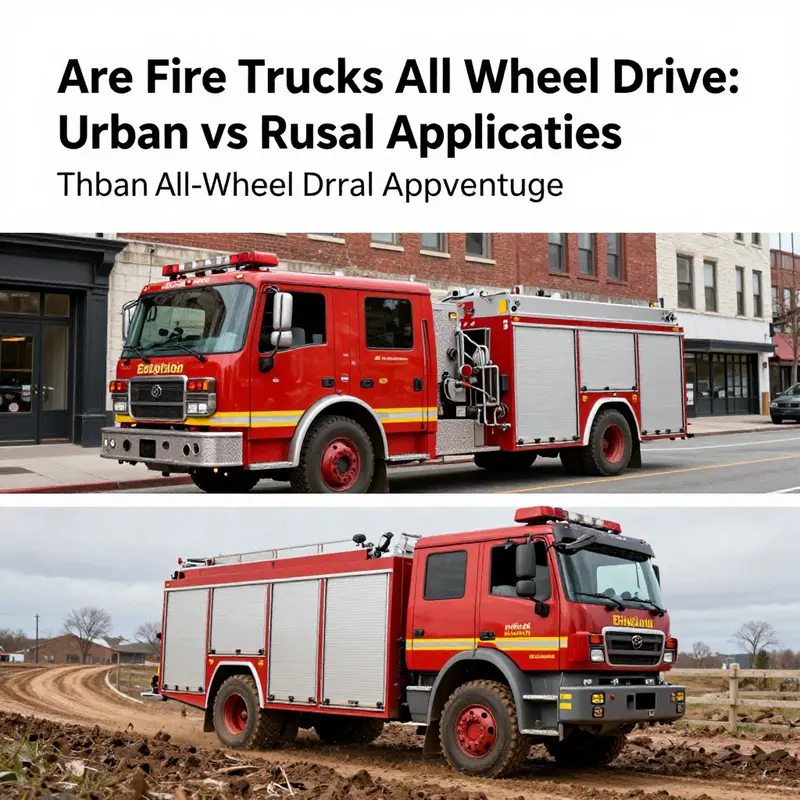
Drivetrain philosophy sits at the quiet center of a fire department’s rapid response capability. People see the hoses, the ladders, the lights, and the sirens, but the choice of how a fire apparatus meets the road—whether by two-wheel drive or four-wheel drive, whether by a light, nimble chassis or a heavy, heavily loaded platform—determines not only how quickly a crew reaches a scene but how reliably it can operate once there. The question, are fire trucks all wheel drive, is not a simple yes-or-no inquiry. It is a layered assessment of terrain, mission mix, and resource philosophy. In practice, urban departments typically favor configurations that optimize cost, maneuverability, and fuel efficiency on paved streets, while rural and wildland agencies prioritize mobility across unpaved trails, mud, and uneven surfaces. The answer, then, unfolds as a spectrum, with AWD or 4×4 drivetrains playing a crucial role where terrain demands it, and 4×2 configurations sufficing where the road itself is the limiting factor.
In the most built environments—dense city centers encircled by grid-like streets, traffic, and predictable pavement—the case for a 4×2 layout grows stronger. Fire engines designed for urban use must accelerate quickly, turn sharply, and carry substantial tool and water payloads through narrow lanes and tight corners. Four-wheel drive adds weight, mechanical complexity, and rolling resistance; even a modest increase in weight can alter fuel economy, tire wear, and maintenance costs. For many urban engines, a robust 4×2 system, combined with advanced traction management, electronic stability control, and well-chosen tires, delivers the balance of grip and efficiency that city calls demand. The emphasis is on speed to access and speed to maneuver within dense, predictable road networks, where traction challenges are less about off-road obstacles and more about congestion, lane geometry, and the ability to negotiate a crowded landscape with precision.
Yet even within urban footprints, conditions can demand more than a paved-road mindset. Some neighborhoods face seasonal flooding, snow events, or rapid shifts in road grip that turn a routine response into a controlled test of vehicle capability. In such cases, a department might’d lean toward a 4×4 variant for particular roles—specialized rescue units, flood deployments, or areas prone to slick surfaces where extra traction is not just helpful but essential. The practical calculus is straightforward: a department weighs the likelihood of encountering soft ground, mud, or steep ramps against the costs of a more capable drivetrain. If the answer leans toward higher terrain risk, the department may choose AWD or selectively 4×4-equipped vehicles for specific functions. In this way, the urban environment sets a baseline expectation, yet preserves the flexibility to broaden capability where geography or climate dictates.
In rural zones and the wildland frontiers where fire seasons stretch across hills, forests, and scrub, the logic shifts decisively toward all-wheel-drive capability. The terrain itself becomes the antagonist that must be tamed. Roads degrade from asphalt to dirt, gravel, or clay, often winding through steep slopes, rutted tracks, and waterlogged stretches. Under those conditions, a two-wheel-drive vehicle can become a liability, losing traction when the ground gives way beneath a tire and leaving crew and equipment stranded at the edge of the fireline. Four-wheel drive, in contrast, distributes torque to all wheels, unlocking traction that allows a crew to traverse rutted skid paths, muddy tracks, and rocky ascents with greater assurance. The element of mobility—being able to reach a scene quickly regardless of the surface—is not a luxury but a mission-critical capability.
Consider the deeply practical implications of AWD in wildland or forest contexts. When firefighters respond to a wildfire, time is measured not only in minutes but in the moment a vehicle can move from a road network into rugged terrain and then maintain a stable platform for suppression activities. The vehicle must carry water not just on pavement but off-road, where weight distribution and suspension travel matter for maintaining a stable stance on uneven ground. A four-wheel-drive drivetrain helps keep momentum and prevents stalling in deep ruts, while still allowing the operator to maintain a controlled speed across a range of surfaces. In these environments, mobility often means the difference between a successful initial strike and a longer, energy-intensive campaign that strains resources. The Isuzu forest-fire style platforms—though common in household awareness only through reports and demonstrations—embody a broader principle: the job favors capability over speed when the terrain demands it. A heavy, purpose-built 4×4 chassis may carry less water than an urban engine, but it can access the forest edge, mirror the environmental demands of the incident, and deliver firefighters to the line where they are needed most.
The operational narrative does not hinge solely on the road’s surface. The equipment carried on these platforms—to a degree dictated by drivetrain choices—must harmonize with ground truth: traction, weight, and stability interact with pump capacity, hose lay, and the ability to deploy ladders or rescue gear. A four-wheel-drive layout speaks to the first of these: traction in unpredictable terrain. But it also interacts with the second and third orders of magnitude: the load the vehicle can carry, the stability of the chassis during pump operations, and the sense of confidence the crew has when negotiating a slope or a trench crossing. The more challenging the terrain, the more the crew will value a platform that remains controllable and predictable under load. This is not merely about raw power or top speed; it is about how a vehicle behaves when the ground itself seems uncertain, and the crew relies on it as a stable base for operations—from securing water sources to deploying rescue equipment.
A related dimension concerns the broader mission spectrum that many departments face. AWD or 4×4 may be selected for specialized roles that demand unexpected reach: airport rescue and firefighting, industrial facilities near rough access routes, or remote rural communities where backroads become the frontline. An airport setting, in particular, illuminates the logic of AWD as a universal precaution rather than a luxury. The situation there is multi-layered: aircraft incidents can occur anywhere on or near the airport grounds, including grass fields, taxiways cut into rough terrain, or rural outposts within the airport’s catchment. When a crash happens, responders must traverse surface variations that paved runways never prepared a vehicle for. In such contexts, the all-wheel-drive capability ensures the equipment can reach the incident quickly and then perform the necessary tasks with stability and reliability. The principle has broad resonance for rural fire departments as well; whenever the call comes from a point where the road ends and the terrain begins, AWD becomes a practical multiplier of human effort and firefighter safety. For readers who want to explore the airport side of this design philosophy, a practical look at the category of airport fire trucks can be found here: 机场消防车.
The conversation about drivetrain choices is thus not a binary debate about “Are all fire trucks AWD?” but a nuanced negotiation of risk, geography, and resource stewardship. Departments analyze call types by geography, weather patterns, and population density to estimate how often responders will encounter soft ground, snow, mud, or steep terrain. If the balance tips toward frequent off-road or off-paved-road responses, a 4×4 or full AWD system becomes a prudent investment that pays back in faster response times and fewer immobilized incidents. If the balance skews toward urban calls with predictable pavement and controlled road networks, a lighter, more economical 4×2 chassis can deliver the desired performance with lower operating costs, longer service life, and easier maintenance. In reality, many departments maintain a mixed fleet: some engines with 4×2 drivetrains for everyday urban work, and a dedicated small subset of AWD units reserved for off-road tasks, flood response, or remote rescue. This strategic mix is not a sign of inconsistency; it is a reflection of the precise geometry of risk and need on the ground.
The role of standards institutions and regulatory guidance also helps shape these decisions. The design and configuration of fire apparatus are not left to whim or marketing. They are anchored in standards that delineate how a vehicle should be configured to meet the operational expectations for its intended environment. The National Fire Protection Association (NFPA) is a centralized reference point in this regard, outlining vehicle design requirements based on intended use and specifying drivetrain considerations that align with different operational environments. When a department evaluates whether to invest in AWD, it can use these standards to anchor its decision in an authoritative framework that links terrain, mission type, vehicle weight, and functional capability. The result is not a rigid template but a thoughtful alignment of equipment to the actual terrains crews are expected to navigate. Local considerations—such as road salt exposure, winter weather cycles, or typical flood events—also feed into the customization process, ensuring that the chosen drivetrain remains robust across years of changing conditions. The interplay between standards, geography, and mission ensures that AWD is not pursued for its own sake but embraced as a meaningful contributor to mission readiness.
From a training perspective, the drivetrain choice shapes the way crews prepare for incidents. A 4×4 platform requires a different approach to wheel selection, tire pressure management, and off-road driving technique, along with load distribution strategies for pump operations and equipment stowage. Training emphasizes how to read terrain, when to engage torque transfer mechanisms, and how to maintain control on variable surfaces while carrying significant loads. In urban settings, emphasis tends to be on tight maneuvering, high-precision steering, and rapid water deployment in congested intersections. The common thread across both environments is the fundamental need to translate the vehicle’s mechanical advantages into reliable, predictable performance under stress. The better the crew understands the relationship between ground, vehicle, and task, the more effectively they can exploit the drivetrain’s capabilities to achieve a successful outcome for those they serve.
The broader narrative about AWD in fire apparatus ultimately circles back to one practical truth: terrain defines capability. Urban roads invite an approach that prioritizes efficiency and maneuverability; rural and wildland environments demand resilience, traction, and sustained mobility across unforgiving surfaces. These are not contradictory demands but complementary ones. A modern fleet, thoughtfully composed of both 4×2 and 4×4 units, reflects a discipline of matching the vehicle’s physical attributes to the terrain it is expected to conquer and the tasks it is expected to perform. When communities ask whether fire trucks are all wheel drive, the best answer is both yes and no, depending on where the trucks must operate and what incidents they must confront. What remains constant is the shared objective: to ensure every engine, ladder, or rescue platform that leaves the station is prepared to reach the scene rapidly and to operate safely, regardless of the road beneath its wheels.
For readers who want to see how this balance translates into real-world choices, the broader landscape includes a spectrum of fire apparatus categories and configurations designed for different operational realities. Urban departments rely on reliable, efficient platforms optimized for city response, while rural and wildland units emphasize ruggedness and off-road capability. The design conversations are not abstract; they shape the very conditions under which firefighters move toward danger, bring resources to bear, and create the conditions for safety and success at the incident site. In every case, the drivetrain is a silent partner in a longer chain of decisions that begins with geography and ends with saving lives. The central takeaway remains clear: AWD is not a universal feature on every fire engine, but it is a strategic asset where terrain and mission demand it, and the decision to adopt it rests on a disciplined assessment of the environment, the expected call mix, and the long-term sustainability of the department’s fleet. The road, in other words, continues to determine the role of the wheels—and the men and women who rely on them.
External reference: For formal standards that ground these discussions in widely recognized practice, see NFPA standards on fire apparatus design and related drivetrain considerations. https://www.nfpa.org/Code-Development/All-NFPA-Codes-and-Standards/NFPA-1917
Beyond the Pavement: How All-Wheel-Drive Drivetrains Expand the Reach of Modern Fire Trucks
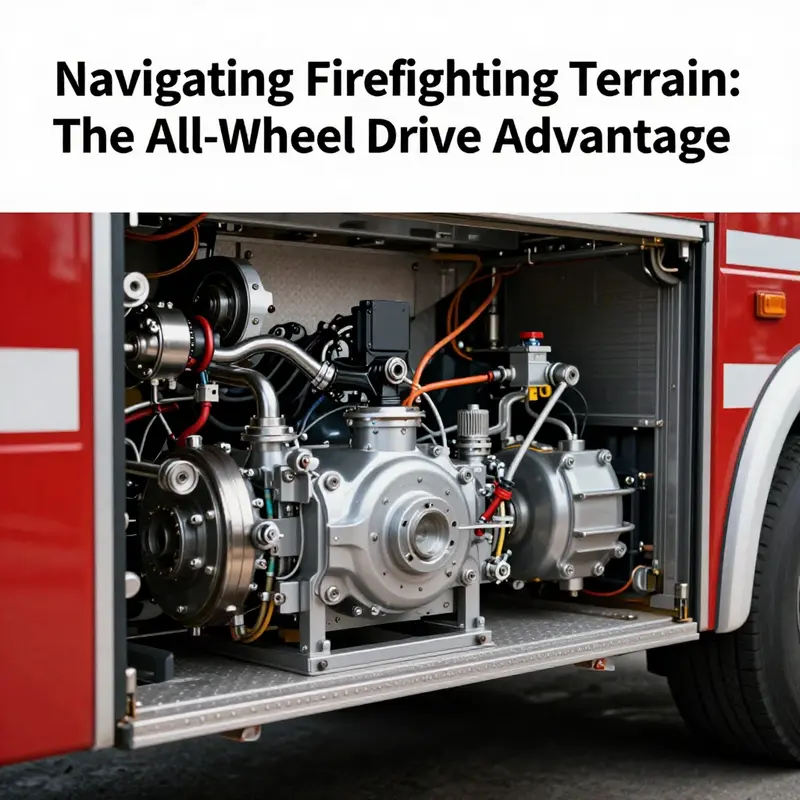
Traction is a critical capability in firefighting, often overlooked in rhetoric but central to getting crews to the scene quickly and safely. All-wheel drive (AWD) on fire apparatus is not a simple yes-or-no choice; it is a spectrum aligned with mission, terrain, and load. Some fleets deploy AWD on rural or off-road units, while urban engines may remain 4×2, reserving AWD for specialized scenarios. The modern fire fleet uses drivetrain architecture to match environments where crews must operate. AWD helps across slick streets, grassy shoulders, or uneven ground, translating into improved acceleration, braking, and handling, and in some cases enabling safer operation when fully loaded with water and equipment. The technology pairing with electrification and smart torque management enables distributing power to the axle that can grip best, with torque vectoring and advanced control software maintaining stability.
The operational logic starts with terrain and mission needs. Airport rescue and firefighting (ARFF) units commonly require AWD to cope with runways, grass, gravel, and uneven berms. In forest or wildland operations, rugged terrain with mud, ruts, and steep grades benefits from AWD to reach remote incidents. Urban responders weigh weight, fuel, and maintenance; AWD adds mass and energy demands, so for some agencies 4×2 remains preferred for on-street missions, while AWD is used where traction or rapid off-road access is critical. Electrified platforms strengthen AWD with per-axle motors and improved control, enabling precise torque distribution and better traction management in variable conditions. Hybrid systems can offer a transitional path, letting departments train on AWD behavior while expanding charging and energy management.
Technological considerations include weight, cooling, braking, and control systems. AWD adds complexity and cooling needs as multiple motors, inverters, and thermal loads share the drivetrain. Modern AWD systems rely on sensors, traction control, and torque vectoring to anticipate grip loss and adjust throttle and braking to preserve momentum and stability. The end goal is to reach and stabilize scenes with reliability rather than simply maximize speed. The trend toward AWD is part of broader fleet modernization, particularly as electrification and automation open new performance envelopes. Still, AWD should be pursued with a clear understanding of mission profiles, geography, and incident types to avoid unnecessary penalties in weight and fuel.
Looking ahead, ongoing research and testing help quantify how drivetrain configurations affect effectiveness under load, slope, and surface variability. Data-driven decisions support better vehicle choices, driver training, and capital planning. For readers seeking more technical grounding, the airport-fire trucks category and related studies offer concrete insights into how AWD translates into real-world performance, including ground clearance, handling, and rapid response across mixed terrain. See the airport fire trucks category for examples. External references can provide rigorous perspectives on drivetrain parameters and firefighting vehicle performance.
最后的想法
The necessity of all-wheel drive in fire trucks is a topic that hinges greatly on operational environments. While urban fire trucks may not require the advanced capabilities of AWD due to well-maintained road conditions, specialized fire trucks in rural or emergency environments, such as airport rescue and forest firefighting units, demonstrate the indispensable role of this technology. As advancements in drive systems continue, a deeper understanding of AWD’s function can equip business owners with the knowledge to select fire trucks that optimize emergency responses across diverse terrains. Investing in an appropriate drivetrain configuration not only enhances operational efficiency but ultimately saves lives during emergencies.

