
















The recent wildfires in Oregon brought intense scrutiny on the operational capabilities of local fire departments. As communities faced evacuations and road closures, questions emerged about the efficiency and responsiveness of fire trucks in these crises. Did they get stopped when it mattered most? By delving into the operational status of Oregon fire trucks, the challenges they faced, the allocation of resources during emergencies, and the impact of weather conditions, we can build a comprehensive understanding of their efforts and successes in battling devastating fires like the Rouen Hill Fire. Each chapter will unfold a piece of this narrative, aiming to clarify the operational realities for business owners invested in community safety and emergency readiness.
Unbroken Response: The Real Status of Oregon Fire Trucks During the Rowena Mountain Fire
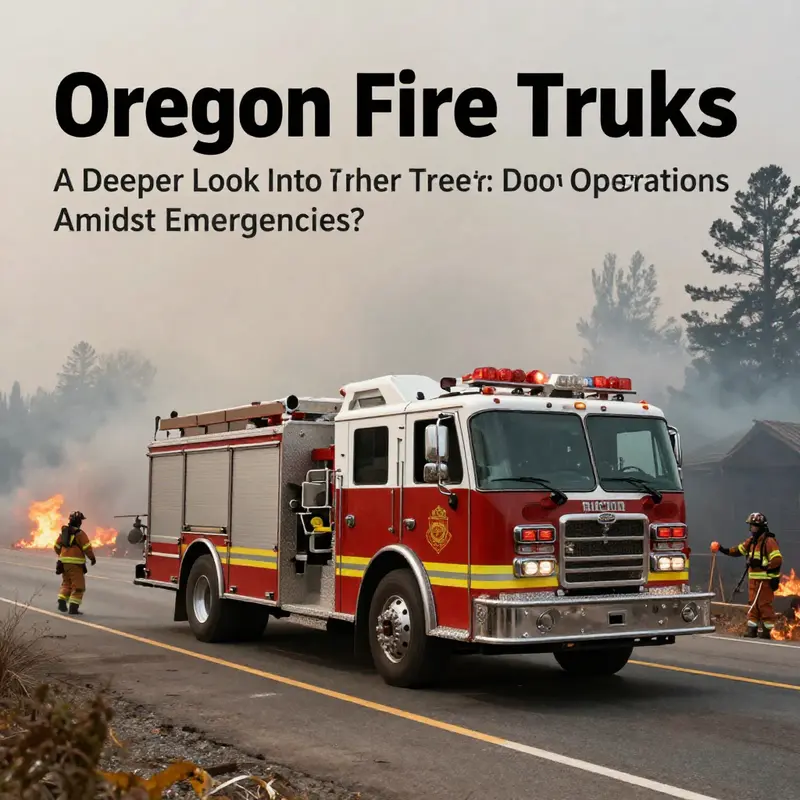
Rumors traveled faster than the flames during the Rowena Mountain Fire, stitching a narrative that Oregon’s fire trucks might have been stopped by authorities or impeded by policy changes. Yet, as investigators and public-safety agencies later clarified, there is no verified evidence supporting such a claim. The landscape of emergency response in Oregon during this period reveals a different truth: fire departments remained active, resources were mobilized without interruption, and the essential mission of protecting communities and property continued with steadier momentum than the rumor suggested. This is not a tale of halted wheels but a snapshot of resilience, coordination, and the practical realities of fighting a wildfire in a modern, interconnected state where roads can close and reopen in response to shifting conditions rather than to punitive orders against frontline responders.
The Rowena Mountain Fire, like many outbreaks in the region, reshaped the transportation network with dramatic road closures on major corridors. Interstate 84 and portions of U.S. Route 30 bore the brunt of temporary shutdowns as containment lines stretched and crews sought to limit the fire’s spread. These closures, though disruptive, were protective measures aimed at safeguarding civilians and enabling firefighters to operate without the threat of unpredictable traffic. In the midst of such constraints, the assertion that Oregon’s fire trucks were blocked from duty faltered under the weight of official updates. Agencies reported ongoing, active engagement: engines, tenders, and specialized units pressing forward, along with aerial assets and ground crews that kept shifting to the most strategic positions as conditions evolved.
The scale of the response was substantial. By late June of the reporting period, the Rowena Mountain Fire had achieved a high level of containment—about 99 percent—and crews were pivoting from aggressive line construction to cleanup work around the perimeters. The operational footprint reflected a well-coordinated multiagency effort, with resources allocated across terrain that included forested hillsides, rocky canyons, and communities that lay along the edges of the fire’s influence. The expenditure of firefighting resources, reported as roughly nine million dollars, underscored the intensity of the operation and the persistence required to push containment past the final stretch. Such figures point to a sustained commitment rather than a curtailed one, illustrating how financial planning, logistics, and personnel management converge to sustain a prolonged emergency response.
Crucial to this narrative is the role of air support, which complemented the ground attack with reconnaissance, retardant drops, and rapid situational awareness. Even as grounds crews worked to clear safety hazards, patrols around the fire perimeter ensured that hot spots were identified and addressed before they could flare again. The weather, too, began to tilt in favor of containment. Rainfall helped stabilize the landscape, reducing the likelihood of rekindling in vulnerable areas and enabling ground crews to advance more confidently. This combination of conditions and coordinated action is a reminder that firefighting is less about singular heroic moments and more about sustained, adaptive strategy where mobility and access are as critical as raw manpower.
Even as the flames tested the limits of local road networks, the response teams navigated the same traffic challenges that confront any large-scale emergency operation: the reopening of routes as conditions permit, the reshaping of detour patterns, and the constant balancing act between keeping communities safe and maintaining the ability to move responders to the places where they are needed most. The reopening of temporarily closed roads, aided by rainfall and improved containment, marked a return toward normalcy, even while the fire’s memory lingered in evacuation notices and ongoing patrols along the fire’s edge. In these moments, the “story” of the operation is less about dramatic confrontations and more about disciplined execution—the decisions that keep engines rolling, hoses spraying, and plans aligning with real-time observations from the field.
The structure of this response rested on a simple premise: when displacement and danger arise, the duty of the responders is to persist, adapt, and coordinate. Local fire departments, the Oregon Department of Forestry, and partner agencies maintained their standard operations, a testament to the resilience of public safety infrastructure. The emphasis on collaboration, standard operating procedures, and shared situational awareness is what allows fire trucks to remain in service rather than to retreat when roads close. The status updates from coordinating bodies consistently framed the situation as one of continuing capability rather than compromised capacity. In other words, there was no “ stoppage” in the execution of firefighting tasks; there was a continual reallocation of assets, a reconfiguration of access routes, and a steady march toward containment.
One can glimpse the practical implications by considering how a typical day of response unfolds under such conditions. When a wildfire advances toward inhabited areas, the first priority is life safety, followed by property protection and incident stabilization. This hierarchy dictates the movement of vehicles, the placement of water tenders and pump operations, and the timing of aerial support. Even when roads must be closed to regular traffic, fire departments maintain a deliberate cadence: deploying units to pre-identified risk zones, staging along secondary corridors, and leveraging alternate routes to reach critical engagement points. The fact that I-84 and US-30 faced closures did not equate to a stoppage in firefighting; it meant responders worked around the closures, used detours for access, and relied on preplanned routes designed to avoid heavily congested areas while still delivering water, personnel, and equipment where needed.
In discussions of equipment and capability, it is important to acknowledge the variety of tools deployed in Oregon’s firefighting efforts. Beyond standard pumpers and rescues, aerial platforms and other specialized units play vital roles in reaching difficult terrain, delivering retardants, and facilitating rapid assessment of the evolving fire front. The capacity to switch between ground and air tactics, to reposition resources as wind shifts or new fire lines form, and to sustain operations across days and even weeks, speaks to a level of readiness that transcends any one incident. For readers who want a closer look at the kinds of apparatus that support these missions, a detailed category such as شاحنة إطفاء-سلالم-هوائية offers a window into the equipment spectrum that helps crews keep fires at bay while protecting nearby communities. This internal resource illustrates how fire departments balance fleet composition with the demands of a rapidly changing incident landscape without veering into product-specific endorsements or promotional content.
The Rowena Mountain Fire also brought to light the human elements of the response: the dispatch centers coordinating calls, the crews hosing lines around structures that were at risk, the incident management teams orchestrating interagency cooperation, and the public information officers ensuring residents received timely, accurate guidance. Evacuations were issued for affected areas and then lifted as conditions evolved and it became safe for residents to return. These shifts in evacuation status were not signs of a weakened response but markers of responsive, adaptable incident management. The ability to adjust evacuation orders while maintaining active firefighting operations demonstrates how public agencies must balance community needs with operational realities. In a firefight of this scale, the flexibility to reassign routes, adjust staging areas, and reallocate resources demonstrates a system designed to endure under pressure rather than crumble under it.
For readers seeking the most current snapshot of emergency vehicle operations, the best practice is straightforward: rely on official sources that provide real-time updates about fire conditions, road closures, and response activities. The Oregon Department of Forestry and local fire departments maintain dashboards and alerts designed to inform the public without sensationalism. By consulting these sources, one can verify the ongoing activity and understand how the state’s emergency services adapt to evolving threats. This approach helps separate rumor from fact and highlights the underlying structures that sustain firefighting capacity even when the landscape—physically and administratively—is under stress.
In weaving together the threads of road closures, containment progress, financial commitments, air support, evacuations, and interagency coordination, a coherent picture emerges. There was no evidence that Oregon’s fire trucks were stopped or obstructed in carrying out their mission. Instead, there was a sustained tempo of operations, a careful choreography of assets, and a shared commitment to protecting people and property amid a challenging, dynamic wildfire event. The Rowena Mountain Fire serves as a case study in how modern emergency services operate under duress: they remain on the front lines, they adapt to constraints, and they keep the work moving forward even when the road ahead is uncertain.
As the incident migrated toward stabilization, the narrative shifted from urgent response to recovery and restoration. Crews began the long process of clearing dangerous trees, patrolling the burn scars, and gradually rescinding evacuation orders in a controlled manner. The airspace restrictions imposed during peak activity were lifted as conditions allowed, signaling a return to normalcy in air operations and enabling residents to regain access to their communities. These transitions—first containment, then rescoping of the threat, and finally restoration—underscore that the core truth of the matter is not a question of whether fire trucks faced obstacles, but how effectively the system could adapt to and overcome those obstacles in real time.
For anyone following the topic, the key takeaway is clear: verified information, drawn from official updates, describes a landscape of active response rather than impediment. The narrative of stopped fire trucks does not withstand scrutiny when weighed against the evidence of ongoing fire suppression, road management, and post-incident recovery. The experience in Oregon demonstrates how robust emergency services can remain operational across multiple fronts—on the road, in the air, and within the communities most affected by wildfire—through disciplined leadership, trained personnel, and a logistics backbone capable of absorbing disruption without breaking the mission. The Rowena Mountain Fire thus becomes not a cautionary tale about obstruction, but a testament to the resilience and reliability of the state’s firefighting apparatus when faced with a daunting blaze.
External resource for authoritative updates: https://www.oregon.gov/odf/pages/index.aspx
Not Stopped, But Tested: How Oregon’s Fire Trucks Confront Terrain, Water, and City Streets in Emergencies
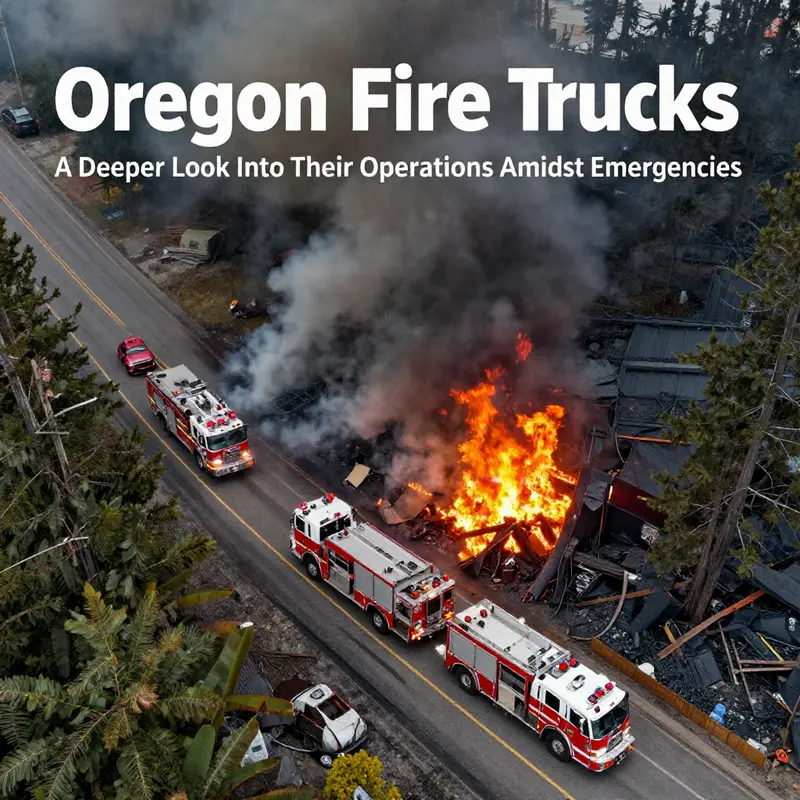
When a question arises about whether Oregon’s fire trucks were stopped during a major emergency, the instinctive answer might be cloaked in dramatic headlines. Yet the deeper record shows a more nuanced truth: despite road closures and mounting destruction, fire departments in Oregon did not halt operations. They pressed forward, reallocating resources, adjusting tactics, and relying on a deliberately diversified fleet to meet the state’s varied landscape. By June 28, 2025, the Rovina Mountain Fire—an emblem of the wildfire challenges that sweep across both forested ridges and open plains—was 99 percent contained. Crews were cleaning up hazardous trees, patrolling the fire perimeter, and gradually lifting evacuations. The firefighting effort had consumed roughly nine million dollars in equipment and personnel costs, and with rainfall contributing to natural containment, some routes reopened to the public. Temporary flight restrictions were lifted, signaling that aerial support and ground efforts were coordinating effectively again. In this sense, the question of stoppage gives way to a larger narrative about resilience, adaptability, and the persistent logistics of fighting fires in a state where terrain and climate repeatedly tilt the odds in favor of the flames.
The Oregon firefighting system does not rely on a single type of vehicle to do all the work. Instead, it maintains a spectrum of apparatus designed to survive and perform across an ecosystem that ranges from steep, densely forested mountains to the urban canyons of a city like Portland. The challenges are real and sometimes severe, yet they are not new. They reflect a long-standing understanding in fire service planning: no one tool fits every terrain or incident. The story of how Oregon’s responders operate during emergencies is thus not a tale of being stopped, but of being tested—and then innovating on the move.
One of the clearest illustrations of this adaptability lies in the terrain itself. Rural, forested corridors in the Cascade Mountains, along the high desert corridors of eastern Oregon, and through the foothills that thread between communities all demand a fleet that can negotiate narrow, uneven, and sometimes unpaved byways. The standard, road-ready fire engine has heroic strengths—powerful pumps, steady water supply, and robust chassis. But when the road narrows to a single lane, when switchbacks bite into the turning radius, or when the surface buckles under the weight of heavy equipment, a different kind of vehicle becomes essential. This is where the wildland fire truck van enters the narrative. Engineered with a four-wheel-drive system, reinforced suspension, and off-road capabilities, these vans can reach pockets of fire that would leave a traditional engine stranded. They are not a substitute for all duties; they are a complementary force multiplier, a crucial link between the forest frontlines and the more centralized firehouses that anchor a regional response.
Water access follows a parallel thread of complexity. In rugged wildland zones, natural sources like streams and ponds are often the only viable supply. The wildland truck vans are equipped with high-capacity pumps and the ability to draft from such sources, but drafting is not always a quick solution. The process depends on water availability, accessibility, and the surrounding geography. In practice, this means crews sometimes spend additional moments establishing a secure draft, setting up drop points, and coordinating with other teams to shuttle water from a distant source to the fire line. Onboard, these smaller apparatus typically carry less water than a structural engine—up to about 500 gallons—so the cadence of refill and the reliability of local water points become a protective factor in how long a team can sustain a given attack. Those delays are not failures; they are the reality of operating with the terrain as a constant variable. Fire teams compensate by building tactical water supply plans that anticipate refill, avoid bottlenecks, and maintain pressure survivability across the line.
Communication and coordination echo the same theme of adaptive problem-solving. In vast, sparsely populated areas, reliable cellular coverage isn’t a given. The modern fleet mitigates this risk with integrated GPS and advanced radio capabilities, yet the risk of signal loss remains, especially during large-scale incidents that stretch dispatch networks and overburden towers. In practice, this means that crews must pair high-technology tools with time-tested practices: clear standard operating procedures, well-rehearsed handoffs, and an explicit emphasis on situational awareness on the ground. The staffing implications are nontrivial as well. Wildland firefighting demands specialized training and tacit knowledge accrued through experience in the field. Departments therefore must balance a broad roster of personnel with specialized wildland incident command skills. As a result, the Oregon system relies on teams that can bridge the gap between urban and wildland tactics, ensuring that communication remains coherent across the whole firefighting operation—from the backcountry line to the hearts of city streets.
Urban environments introduce a different but equally consequential set of hurdles. In a city like Portland, even as fire season grows more intense, the immediate obstacles often relate to infrastructure and crowd movement rather than the ruggedness of a trail. Traffic congestion can complicate arrival times, narrow streets can constrain the deployment of aerial apparatus, and dense architectural layouts can complicate access to upper floors during high-rise rescues. In these spaces, the role of aerial fire truck vans becomes pronounced. Their utility lies not only in reach and elevated vantage points but also in the support they provide to crews maneuvering through smoke and heat in compact urban corridors. Yet even the aerial platforms face limits. Tight turns, parking constraints, and urban grid layouts require precise choreography between engine operators, aerial operators, and incident commanders. Thermal imaging cameras and scene illumination systems become not mere conveniences but essential tools that elevate visibility when smoke and darkness converge. In short, urban settings reframe the challenge: it is less about outrunning the fire through wilderness and more about orchestrating a coordinated, multi-vehicle response through a densely built landscape.
That convergence of terrain, water access, communication, and urban complexity is not just a catalog of hurdles. It is, in effect, a drumbeat that drives policy, training, and investment. In Oregon, the firefighting enterprise has responded with a deliberate fleet strategy that recognizes the state’s varied geographies. A diversified fleet—comprising wildland-specific vehicles, smaller off-road responders, and traditional structural engines—enables responders to allocate resources to the most appropriate tool for each segment of the incident. Training follows the same logic. Crews drill in both forest tactics and urban rescue methods; they learn to switch modes smoothly, to coordinate with water shuttles and draft sites, and to maintain a consistent communication discipline even when the radio network experiences strain. The result is not a narrative of stoppage but a narrative of resilience under pressure. The public-facing implication is straightforward: Oregon’s fire trucks did not stand idle; they adapted, redistributed, and continued to wage a multifront battle across the state’s emergency landscape.
The broader context is equally instructive. The Rovina Mountain Fire exemplifies how a single incident can illuminate the breadth of operating conditions that responders must navigate. While the fire challenged roads and closed major corridors, the wider firefighting system—and the people who operate it—stayed in service. The closure of highways did not equate to a shutdown of capability. Instead, it underscored the importance of logistical flexibility, the readiness of a hybrid fleet, and the capacity of local authorities to coordinate with state assets. Resource allocation, the timing of aerial support, the reallocation of personnel, and the rapid reestablishment of access routes once weather and containment permitted all contributed to an operational posture that remained active and effective. The narrative that emerges is one of a system that is not only prepared to fight fires but prepared to adapt its approach to the terrain and the demands of the incident.
In linking these threads back to practical realities, it is worth noting how a reader might interpret the diagonal line from a press briefing to the street. The fires may disrupt commuting and require detours, yet the trucks, the crews, and the incident command teams stay in motion. The internal capability—an adaptable fleet, skilled personnel, and the technology to support coordination—turns potential vulnerability into operational strength. That strength rests not on a single type of vehicle but on the recognition that terrain determines tactics and that water, air, and land must work in concert. It also rests on an implicit trust in the ongoing training investments that prepare responders to transition between wilderness and urban missions without losing momentum. As the rainfall arrives and the air clears, the tactical picture brightens; the public witnesses the renewal of accessible roads and the lifting of flight restrictions, signs that containment is advancing and response is reinvigorated rather than interrupted.
For readers seeking a deeper sense of the broader challenges facing wildland-urban firefighting in the Pacific Northwest, there is a substantial external resource that contextualizes these dynamics. The National Fire Protection Association has documented the kinds of challenges that arise when wildland fires intersect with urban areas, including the Pacific Northwest’s unique topography and climate. That study offers a broader frame for understanding why Oregon’s fleets must be diversified and why the choreography of incident response matters so much when the terrain shifts beneath a flame. External resource: https://www.nfpa.org/Research-and-Statistics/Wildland-Urban-Interface-Firefighting-Challenges-in-the-Pacific-Northwest.
Within Oregon’s evolving firefighting narrative, the question of stoppage recedes into a larger story about capability, adaptation, and the nuanced reality of field operations. The state’s agencies, the personnel who serve with courage and precision, and the equipment that carries them into danger form a system that answers disruption not with paralysis but with deliberate action. That is the essence of the chapter that follows—an examination of how communities stay protected when weather, topography, and dense fuel loads create a moving front that demands both steadfastness and ingenuity. The lesson is clear: in Oregon, fire trucks were not stopped; they were pressed into service at every feasible opportunity, evolving in real time to meet the demands of one of the nation’s most challenging firefighting environments.
Resource Allocation for Oregon Fire Departments Amidst Road Closures: Keeping Trucks, Crews, and Air Support Moving When Highways Close
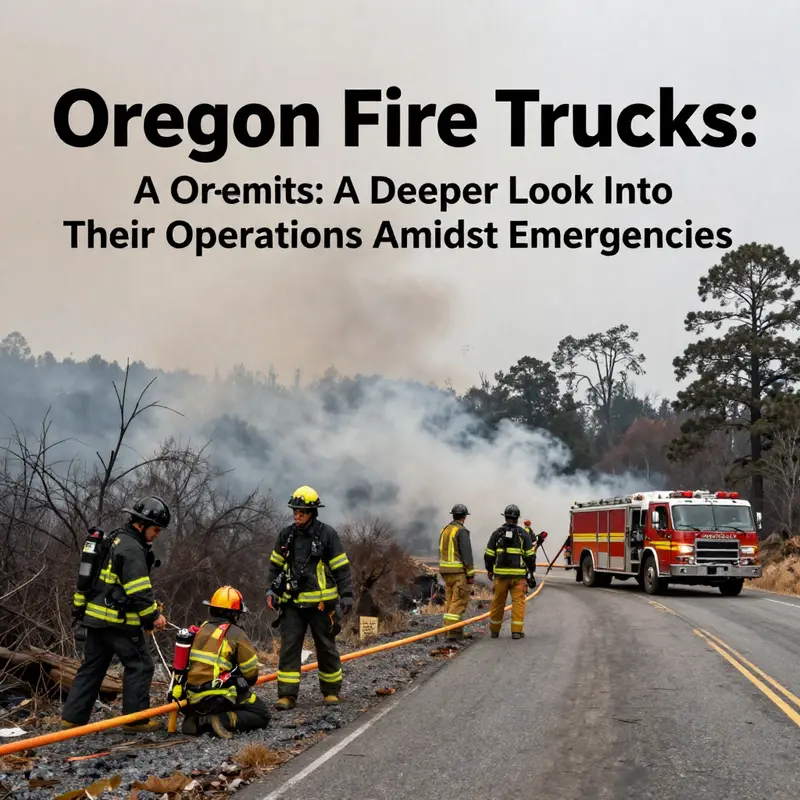
In the wake of rumor and rapid online chatter, the question ‘did fire trucks from Oregon get stopped?’ invites a closer look at how real emergencies unfold when highways shut down and command decisions pivot under pressure. The answer, drawn from official reporting and ongoing suppression work, is that Oregon’s fire trucks were not blocked from the line. They faced, instead, a set of logistical realities that redefined how access was achieved, how routes were chosen, and how equipment and personnel could be kept in motion. Road closures did not halt firefighting; they reframed it, pushing responders toward adaptive strategies that combined staged apparatus, cross-jurisdictional mutual aid, and the use of aerial and remote support to fill gaps where wheels could not reach. The outcome depended on disciplined coordination and a willingness to adjust plans on the fly, rather than on any single act of brute force or heroics alone. As a result, the silent architecture of response—logistics, doctrine, and data—carried the day even when the surface map looked restrictive and unforgiving to those on the ground.
The Rowena Mountain Fire, which began on August 18, 2023, near Elk in Spokane County, drew a broad spectrum of resources into play. Its footprint never exploded into a dramatic expansion, but its location placed its suppression work along critical corridors that many people rely on every day. The closures along Interstate 84 and U.S. Route 30—lifelines that knit together communities, farms, and industrial sites—set a stage where every mile of road could be a choke point for movement, fuel supply, and the delivery of heavy equipment. In that context, responders leaned into mutual aid networks that stretch across counties and even state lines, supported by real-time information flows that could illuminate a shifting tactical picture. The challenge was not only to respond to the fire but to do so without compromising public safety or the safety of the responders themselves. This required a shared operating picture, proven incident management practices, and the ability to pivot rapidly as conditions evolved and as the road network oscillated between restricted and reopen status.
Resource allocation emerged as the central spark in the management of this incident. Agencies faced the paradox of plenty and constraint at the same time: an ample toolkit, but a constrained map. Suppression efforts were funded and organized as a blended program that leaned on on-the-ground attack crews, heavy apparatus, and support roles that demanded mobility. It is worth noting that the suppression effort reflected a substantial investment—reported to be around nine million dollars—into a coordinated effort that included not just engines and crews but the infrastructure that holds them together, such as fuel, spare parts, maintenance routines, and maintenance windows that align with road access. The logistics tail grew more complex as teams staged in multiple locations to expedite response. Detours and temporary access points were created; crews learned to navigate around closures by using alternative routes and pacing their movements so as not to interrupt other critical operations. The aim was to preserve capability while decreasing exposure to the hazards that closures can introduce, such as longer response times or delayed communication between units in different pockets of the incident.
A cornerstone of maintaining momentum under these constraints was the deliberate deployment of mobile command units and robust communications networks. Mobile command posts offer a flexible, scalable backbone that can synchronize dozens of engines, ambulances, dozers, and water tenders that might otherwise be siloed by geography and road access. In rugged terrain where smoke and wind can disorient even experienced operators, a centralized node that can collect information, assign tasks, and reallocate resources becomes invaluable. The ability to move personnel and equipment efficiently, while staying within a safety envelope shaped by the evolving fire perimeter, becomes a critical determinant of success. This is where the art and science of incident management intersect: planners must anticipate shifting choke points, forecast probable movement of the fire, and ensure that communications do not degrade as teams diverge across a fragmented landscape.
Technology played a crucial role in filling the gaps created by road closures. Real-time dashboards tracked not only the fire’s footprint but also road statuses, weather shifts, and the live status of units in the field. Aerial support, already a central feature in modern suppression efforts, was coordinated to maximize its impact while respecting airspace restrictions that can arise during high-smoke events. The combination of air and ground operations offered a more resilient response. Drones and other reconnaissance tools provided eyes where vehicles could not readily travel, guiding decisions about where to position engines, where to stage crews for rapid engagement, and how to exploit wind shifts that could push the fire toward or away from vulnerable areas. The value of such tools lies not merely in their flash, but in the discipline of integration: data must be translated into timely actions, and those actions must be executable within a road network that may be temporarily constricted.
For audiences curious about how this translates into practical capabilities, consider the internal dimension of equipment and training. The firefighting fleet is not a monolith; it is a spectrum designed to adapt to a changing map of danger. In the Oregon context, the mobility of the response hinged on sturdy heavy-duty trucks, aerial platforms, water tenders, and specialized vehicles that can negotiate rough terrain or operate at a defensible distance from a fire’s edge. These vehicles require careful choreography; their paths are planned not only for speed but for safety, fuel efficiency, and compatibility with the terrain and the road closures encountered along the way. The coordination of such a diverse fleet underscores the importance of communication protocols, standard operating procedures, and a shared vocabulary across agencies. It is a reminder that effective firefighting is not a single decisive act but a continuous, collective effort that unfolds over hours, days, and often weeks—a rhythm shaped by the pace of the road network and the cadence of the fire itself.
As the months progressed and climatic conditions evolved, the operational tempo shifted from aggressive containment to risk-reduction and stabilization. By late June 2025, the Rowena Mountain Fire had achieved approximately 99 percent containment, a milestone that testifies to the perseverance of responders and the success of the integrated approach they employed. Crews concentrated on removing hazardous trees along road edges, patrolling the burn area, and monitoring for potential rekindling in hotspots shaded by dense timber or heavy brush. Evacuation orders were gradually lifted as conditions permitted, and the broader suppression mission began to pivot toward recovery and rehabilitation activities. The narrative from the field reflected a steady transition from urgency to stewardship: a move from moving engines and crews through closed corridors to guiding communities back toward normalcy—a shift that embodies the essence of fire service resilience.
The logistical choreography behind that progress reveals why the simple phrase ‘not stopped’ must be understood as a shorthand for a much more nuanced reality. Road closures did not freeze firefighting; they redirected it. Deployments were staged and retasked across a web of supply hubs, staging areas, and detour routes designed to preserve safety while maintaining the capacity to respond to new starts. This required constant, transparent communication with state and local authorities and a public-facing narrative that explained how and why actions were taken. It also demanded readiness to shift priorities in response to wind shifts, new sightings of smoke plumes, and the performance of equipment under stress. The successful orchestration of such an effort depends on the deliberate alignment of strategy, logistics, and on-the-ground execution—an alignment that is more robust when borne of experience and reinforced by interagency relationships.
Oregon’s Department of Forestry became a central conduit for information that kept incident Command, state leadership, and residents in sync. The official updates—hosted on their information ecosystem—provided authoritative coverage of road closures, evacuation status, and resource deployment. When people see a road open or a plume recede, it is a signal that a set of coordinated actions has taken hold, even if the map remains complex and certain corridors remain constrained. In their structure, these updates serve not only as operational intelligence but as a trust-building mechanism between responders and communities that look to them for timely, accurate, and actionable information. The broader lesson resonates beyond a single incident: modern wildfire response depends on a web of data, communication channels, and cross-border collaboration that can adapt quickly to changing geography on the ground.
For readers who want to trace the practical implications of these mobilizations, the Oregon experience during road closures aligns with a broader argument about resource engineering in emergencies. It is insufficient to harbor a fleet of engines, or to rely solely on the peak moment of suppression when a fire first threatens structures. Instead, it requires the ability to transport equipment where it is needed, maintain water supply and fuel lines, and integrate new tools without compromising safety. The discussion naturally points toward the specialized equipment that makes rapid, flexible responses possible—the kinds of platforms that can reach elevated burn sectors, cross rough terrain, and support air operations from a stable base. This is not about a single device; it is about an ecosystem of vehicles, command structures, and technological aids that together enable a resilient response.
In this sense, the Oregon experience during road closures demonstrates a broader resilience in the firefighting system: teams that operate within constraints, yet maintain a rhythm that keeps responses timely and effective. It is a reminder that preventing the spread of a fire demands more than raw power; it requires precision in logistics, agility in command, and a steady commitment to public safety that transcends the hours of a single shift. The narrative also invites readers to consider how data, communication, and cross-agency cooperation shape outcomes. The field does not stand still; it evolves with the road network, weather, and community needs. As the situation evolves, so does the power to respond, and that evolution is what ultimately keeps fire trucks and crews moving toward a safer horizon.
For readers seeking official, real-time context on ongoing road statuses, evacuations, and resource deployments, authoritative updates are maintained by the state agency responsible for forestry and fire response. These updates help translate field dynamics into accessible information for the public and decision-makers alike, offering a steady thread of clarity through the complexity of suppression operations. Official channels provide the backbone that supports both operational efficiency and public confidence, ensuring that people understand why certain routes are constrained and when they can safely return to their homes and work sites. In this way, the chapter ties together the practicalities of resource allocation with the social contract that binds communities to their firefighters during a time of crisis.
For readers who want to explore the broader landscape of equipment and capabilities that undergird these operations, one can consider how a modern firefighting fleet blends traditional, heavier apparatus with newer tools that extend reach and situational awareness. The integration of drones and other aerial scouting elements into suppression strategies exemplifies the ongoing evolution of the craft. Such enhancements, when married to disciplined logistics and clear command structures, multiply the effectiveness of every engine, every crew, and every drop of water directed at the fire. The path forward, as this chapter has shown, is not a return to a pre-closure world but a sustained, intelligent adaptation to a road network that can still challenge responders even as conditions improve.
External resource: Official updates from the Oregon Department of Forestry provide authoritative information on road closures, evacuations, and resource deployment related to the Oregon Fire. https://www.dfr.oregon.gov
Weather-Driven Resilience: Oregon Fire Trucks Survived Extreme Conditions Without Stopping
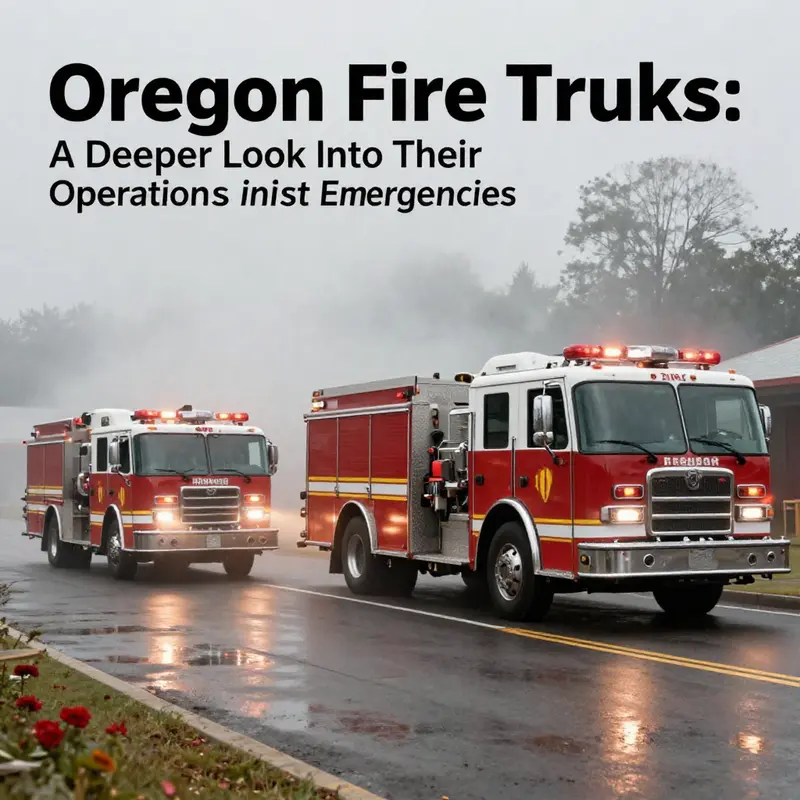
Oregon fire crews operated under extreme weather, but not under blanket stoppages. The story is one of adaptation: heat, smoke, and shifting winds shaped tactics while road closures and airspace restrictions redirected resources rather than halting operations. Ground units pressed forward through access constraints, and aerial support complemented suppression where conditions allowed. Weather influenced the tempo, routes, and safety margins, yet responders sustained suppression and advanced containment. Cooler shifts and humidity occasionally eased pressure, enabling more deliberate actions and staged deployments. The Gray Fire period illustrates a weather-driven performance where planning, coordination, and resilient infrastructure kept the fight active. In short, weather did not stop Oregon’s fire response; it redirected it, requiring flexible tactics, resource management, and ongoing risk assessment. For deeper context, resources like the Gray and Oregon Wildfires StoryMap demonstrate the meteorology-terrain-incident management nexus that informs these operations.
community safety
In summary, Oregon’s fire trucks faced significant challenges during recent wildfires, including tough operational circumstances and road closures. However, despite these hurdles, reports indicate that firefighting efforts remained effective, showcasing the resilience and efficiency of Oregon’s fire departments. As we reflect on the status of fire trucks in Oregon, it’s vital for business owners and stakeholders to understand these complexities and support our firefighting heroes who continue to protect our communities. Ensuring that firefighters have the resources and support they need is essential for enhancing public safety and preparedness in the face of natural disasters.

