
















Renting a fire truck can transform your business events into memorable experiences. Whether you’re planning a community outreach program, a promotional activity, or a children’s party, a fire truck can act as a powerful attraction that enhances your brand visibility. This article delves into the specifics of renting fire trucks for special events, promotional activities, and film shoots, while also highlighting important safety regulations, insurance requirements, and where to find rental options. Each chapter serves to provide valuable insights that will assist business owners in making informed decisions about this unique rental opportunity.
Renting a Fire Truck for Special Events: How to Bring a Real, Safe, and Show-Stopping Apparatus to Your Celebration
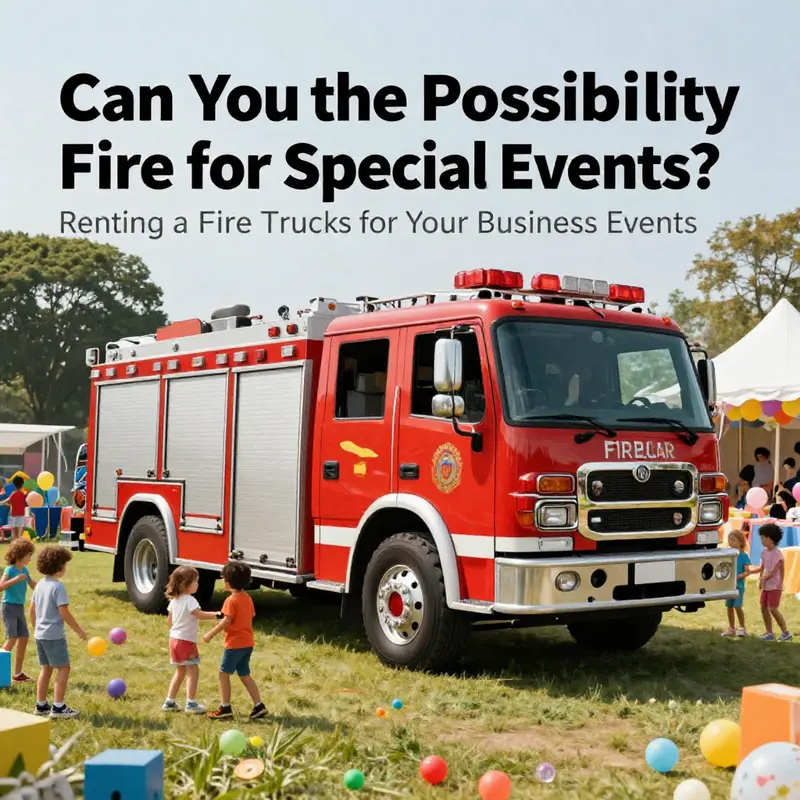
Curiosity about renting a fire truck for a celebration often centers on spectacle, safety, and a certain civic pride. A gleaming red chassis, lights that flash in time to music, and a crew who can share stories about drills and rescue gear can transform a gathering from ordinary to unforgettable. Yet behind the eye-catching optics lies a practical framework. Yes, you can rent a fire truck for special events, but with important caveats about safety, access, insurance, and the realities of who actually operates the vehicle. The appeal is clear: a fire truck is not merely a prop. It is a symbol of protection, courage, and local service, and when managed correctly it becomes a memorable centerpiece that also advances a safety message to audiences of all ages. As with many public-safety assets, renting one involves coordination, compliance, and a clear understanding of what the vehicle is capable of doing in a transient setting rather than on a routine road—an important distinction for organizers who want drama without risk.\n\nThere are two main pathways to bring a fire truck to an event. The first runs through public fire departments themselves. In some cities, departments offer apparatus rentals for approved public events, charities, or community outreach activities. In this arrangement, the department typically handles the basics: insurance coverage, staffing, and transportation. The second pathway is through private event rental companies that maintain a fleet of authentic-looking fire apparatus or specialty vehicles designed for display, demonstrations, or mobile experiences. These providers can offer a spectrum of options, from display-only trucks to units with fully functional lighting and siren features intended for entertainment or educational demonstrations. Either route can deliver the “wow” factor, but the terms, responsibilities, and price structures can be very different, so knowing what you want to achieve helps steer the choice.\n\nIf your aim is to surprise attendees with an eye-catching centerpiece while also underscoring a safety message, a rental offers both the visual impact and the opportunity to engage audiences in meaningful conversation about fire prevention. For a department-led rental, the appeal often lies in the authenticity and the chance to connect with local firefighters who can share practical insights about fire safety, emergency response, and community partnerships. For private rentals, the appeal tends to be the ability to tailor the experience—whether it’s a celebration that includes a historical vehicle, a modern fire apparatus, or a vintage model that carries a nostalgic charm. In either case, the presence of a real or realistic fire truck signals seriousness about safety and emergency preparedness, which can elevate the event beyond mere celebration into an educational moment.\n\nThe practical realities accompany the appeal. Availability for real apparatus depends on local regulations, the department’s policies, and the specific event’s constraints. If a department allows rentals, the booking process usually requires an application, confirmation of insurance that lists the department as an insured entity, and a briefing on safety protocols. Fees, routing, and staffing come with the package, and organizers should anticipate lead times that reflect the vehicle’s complexity and the need to coordinate with assigned personnel. Some departments may require public agency involvement for certain events, and not all departments offer rental services in all seasons or all days. The San Diego example cited in public-facing materials illustrates this model well: a city fire department that operates event rentals with official booking processes, while maintaining the safety and regulatory safeguards that public agencies prioritize. This arrangement underscores how such rentals are part of a broader community outreach mission rather than a commercial side show.\n\nPrivate rental companies, by comparison, can offer a broader range of options. You can encounter authentic-looking fire trucks in various configurations, including vintage or specialty designs, and some rental packages can come with a crew that provides demonstrations, guided safety talks, or interactive activities for guests. For events focused on education and engagement, the ability to pair a visually striking vehicle with a trained facilitator can be a powerful combination. In practice, many of these private providers present the truck as a mobile exhibit rather than a driveable service, especially for larger crowds or indoor venues. Nevertheless, in some cases, a fully operational display can be part of the package, subject to local licensing, insurance, and traffic-control requirements. In form and function, the experience can be designed to feel authentic while staying within the safety envelope that events demand.\n\nA related consideration is the scope of what the vehicle can do during your event. A display-focused truck can anchor a station, serve as a photo backdrop, or host a kid-friendly demonstration area with educational material about fire safety. If staff are included, they may offer guided tours of the cab, explain basic fire safety concepts, or demonstrate how equipment is used in controlled, non-emergency settings. Where applicable, operators may also coordinate with on-site security or logistics teams to ensure crowd flow, access for emergency exits, and a clear pathway for attendees to engage without becoming congested or unsafe. Sirens and loud sirens are a notable question for many planners. Some events require that audible effects be limited or turned off entirely, while others may permit a controlled siren or horn for brief moments to enhance the atmosphere. The best approach is to clarify these details during planning and obtain written permissions that outline what is permissible at the venue, what is not, and how staff will handle any noise concerns from neighbors or indoor spaces.\n\nEven with the allure, there are important safety considerations that should shape any decision to rent. A fire truck, even as a display vehicle, is a large, heavy machine with complex systems. It requires professional operation and supervision by trained personnel. In most rental scenarios, the operator is a professional firefighter or a certified driver with specific training in the vehicle’s controls, braking dynamics, and the safety protocols for on-site demonstrations. Organizers should not assume the vehicle can be driven by a guest or someone without similar qualifications. In some cases, the rental agreement explicitly states that attendees may not operate controls, even in a supervised setting, to prevent mishaps or injury. Insurance is a non-negotiable element; it is not simply a courtesy add-on but a fundamental protection for both the host and the vehicle operator. It typically covers bodily injury, property damage, and any incidents that might occur during loading, unloading, or on-site demonstrations. The exact coverage limits are often negotiable based on guest counts, venue type, and the presence of children, but they are rarely optional.\n\nFor organizers, a practical path to a successful rental rests on upfront planning and precise communication. Start by defining the event’s core objectives: Is the truck a centerpiece for visual impact, a vehicle for a safety message, a backdrop for photos, or a live demonstration site? Map out the venue’s layout with attention to vehicle access, parking, and the space required for guests to gather safely around the truck. Confirm the expected duration of the rental window and whether there will be accompanying demonstrations or staffed interactions. Next, articulate the staffing plan: Will the vendor provide trained personnel, or will you rely on volunteers? If there will be a presentation, confirm the content and any limits on material that can be presented, especially content that may require adult supervision or safety notices. Insurance details should be secured early, with clear naming of the renting entity and the vehicle as insured property, and the contract should specify what happens in case of weather-related cancellations, delays, or equipment issues.\n\nBudgeting is another practical dimension. Rental costs vary by geography, the vehicle type, the inclusion of staff, and the length of the event. If you are working with a department, the fee structure may reflect public-safety mission alignment and staffing needs rather than a private party’s cost model. Private rental arrangements can range from modest display-only packages to comprehensive experiences that include safety demonstrations, photo opportunities, and interactive stations. In all cases, plan for ancillary costs such as transport to the venue, on-site power or lighting needs, and potential security or crowd-control requirements. A well-framed budget accounts for the value of a unique, memorable experience while ensuring that safety, insurance, and logistics are not compromised.\n\nAs you navigate options, you may come across a familiar impulse: to seek a turnkey, all-in-one solution that minimizes hassle. To some extent, this is possible, but it rarely comes without trade-offs. The most effective approach is to treat the rental as a collaborative venture. Engage with the provider early, ask for a written plan that outlines vehicle operation, safety measures, staffing, and the plan for on-site movement and parking. Request references or case studies from events similar in size and purpose, and be prepared to visit the site to verify how the vehicle will be staged and how guests will interact with the truck. A well-documented plan reduces risk and enhances the likelihood that the truck becomes a reliable highlight rather than a logistical headache.\n\nFor readers who want a sense of the broader ecosystem without getting lost in the details, consider this nuance: a fire truck is both a symbol and a tool. As a symbol, it communicates protection, service, and readiness. As a tool, it carries the responsibility of proper operation, safety discipline, and clear lines of authority on the event floor. When these dimensions are balanced, a rental can deliver not only visual drama but a constructive takeaway about fire safety that resonates long after guests have gone home. In this way, the presence of a fire truck at a celebration can become a catalyst for a community-wide reminder about prevention, preparedness, and the shared responsibility we all bear for one another.\n\nIf you are curious about what a specialized option might look like, exploring a dedicated product category that focuses on public-safety display vehicles can be a productive next step. These vehicles are designed with event use in mind and often come with customizable components and educational materials that align with safety messaging. For planners seeking a targeted, engaging experience, a specialized display truck can be a particularly fitting choice, and it can be paired with activities that reinforce fire-safety lessons in a hands-on, memorable way. To see other related options, you might explore resources in the fire-truck category, which offers a range of display and interaction possibilities that can adapt to diverse event formats. For a deeper look at how such vehicles are categorized, you can visit the Special Fire Truck category page. فئة شاحنات الإطفاء الخاصة.\n\nUltimately, renting a fire truck for an event is not about the truck alone. It is about the conversation it starts—the dialogue with young guests about fire safety, the admiration of local service, and the opportunity to connect the thrill of a parade-grade vehicle with practical takeaways about prevention and preparedness. With careful planning, transparent communication, and a clear safety framework, a fire truck rental can transform a celebration into an uplifting, educational experience that honors the very people who keep communities safe. And while the spectacle is compelling, the lasting impact rests on how the engagement is designed to inform and empower attendees, especially children, to think about fire safety as an everyday consideration, not just a on-site spectacle.\n\nExternal reference and further reading: For regulatory and availability details, see the San Diego Fire Department’s Event Rentals page. San Diego Fire Department Event Rentals
In the Spotlight: Renting Fire Trucks for Promotions, Events, and Film Shoots
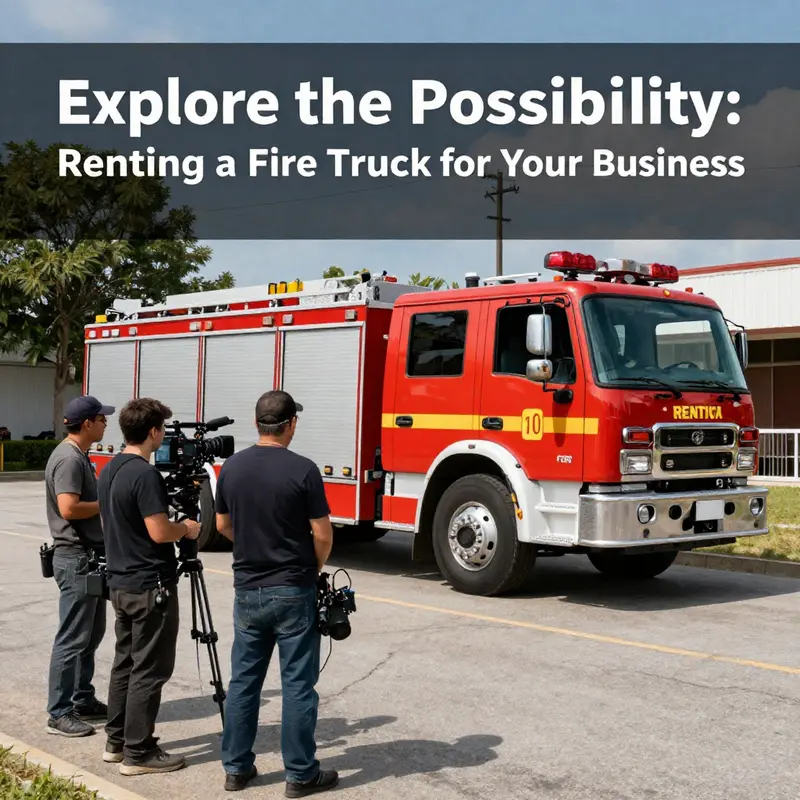
A fire truck has a built-in aura that no ordinary vehicle can replicate. Its bold silhouette, flashing lights, and the unmistakable wail of a siren instantly claim attention in a crowded street or a quiet campus quad. For marketers, event designers, and filmmakers, renting a fire truck isn’t about swapping a car for something flashier; it’s about borrowing a dramatic asset that can heighten credibility, spark emotion, and anchor a narrative in a way that other props simply cannot. The decision to rent a fire truck, therefore, sits at the intersection of showmanship and logistics, where creative ambition must meet safety, legality, and operational practicality. In this landscape, the fire truck becomes a moving stage, a photo-friendly prop, and a source of authentic energy that audiences remember long after the sirens fade. It is a tool that can elevate a product launch, a charity event, or a cinematic scene—provided planners approach it with clear objectives, accountable processes, and a deep respect for the responsibilities that come with maneuvering a vehicle of this scale and significance.
Promotional use stands out as one of the most common and compelling applications for rented fire trucks. When a brand wants to create a moment that is both visual and experiential, a real, road-worthy fire apparatus can serve as a focal point for demonstrations, signings, or interactive displays. The visual impact is immediate: chrome, bold color schemes, and chrome accents that catch light from multiple angles; the sounds and the motion of a siren—even when silenced in a controlled environment—convey a sense of urgency and importance. This is why promotional events frequently pair a truck with actors dressed as firefighters, safety demonstrations, or live stations where attendees can learn about fire prevention while feeling the gravity of trained professionals standing nearby. The effect is multi-sensory and inherently shareable; attendees naturally capture photos and videos, which then circulate on social media, generating organic reach that can extend far beyond the event footprint. A well-coordinated stage presence, aligned with a brand narrative, can transform a storefront opening into a memorable experience, a car show into a conversation starter, or a charity drive into a high-visibility moment that aligns with the organization’s mission and values.
The realm of film and television adds another layer of importance to the decision to rent a fire truck. In screen production, authenticity is currency. Filmmakers seek vehicles whose look, texture, and even the way the equipment behaves under lighting contribute to the believability of a scene. A modern, fully functional fire apparatus can be used in action sequences, dramatic rescues, or emergency response montages where the realism of switchgear, gauges, and turning wheels matters to the audience. Conversely, period pieces may call for vintage apparatus or specially painted trucks that match a storyline’s historical context. Production teams often require trucks that can be properly licensed for on-location use, with certified operators and insurance coverage that aligns with their risk management plan. The rental process for film work thus becomes a carefully choreographed collaboration among procurement, production management, transportation, and safety, where every movement of the vehicle is pre-planned, rehearsed, and documented on set. In both promotional and cinematic contexts, however, the underlying appeal remains the same: a fire truck offers a tangible, credible, and cinematic presence that can’t be easily replicated by smaller props or digital effects alone.
As with any large asset, the decision to rent a fire truck must be guided by a comprehensive set of considerations that can support a smooth, safe, and legally compliant operation. Licensing and insurance are paramount. Depending on local regulations, public events may require road-use permits, route approvals, or temporary traffic management plans if the truck is to move through streets or occupy public space. Even when the vehicle is displayed in a static setup, many jurisdictions require proof of insurance and a formal contract that delineates responsibilities, liability, and incident response. Reputable rental sources recognize these needs and typically provide trained operators or qualified drivers as part of the package. Operators bring essential expertise in maneuvering such a vehicle through constrained environments, coordinating with event staff, and enforcing safety protocols with attendees. This is not a matter of letting a large vehicle mingle with crowds; it is a coordinated effort to ensure that the presence of a fire truck adds drama without compromising public safety. Safety briefings, protective barriers, cordoned zones, and clear signage help guide attendees and prevent accidental contact with equipment or controls. These measures, while sometimes viewed as overhead, are the practical price of entry for any event that seeks authentic display without risking harm or disruption.
Another layer of consideration centers on the vehicle itself. Reputable rental providers maintain their fleets with rigorous service standards and documentation. Before confirming a rental, organizers typically review the truck’s maintenance history, current mechanical status, and any customization options that may impact performance or safety. On a film set, for example, a production may request specific lighting rigs or branding overlays that align with the project brief. The ability to adapt a truck’s exterior—whether through temporary decals, color schemes, or display signage—can significantly amplify storytelling without compromising safety. In promotional settings, the vehicle’s appearance often correlates with the event theme or brand color palette, creating a cohesive visual identity. The logistics of transportation and on-site management also deserve careful attention. The truck’s size can pose challenges for parking, loading, and access to indoor or restricted spaces. Planners must verify clearance for doorways, ramps, or safety rails and coordinate with venue staff to secure an appropriate staging area that accommodates the vehicle’s footprint and turning radius. If the event involves crowds, a traffic plan and crowd-control measures should be integrated into the overall program to minimize disruption and maximize the impact of the truck’s presence.
Within this framework, the choice of rental provider becomes a strategic decision. The best partners offer more than a vehicle; they deliver a turnkey experience that includes logistics planning, on-site support, and compliance guidance. For promotional appearances, providers often bring additional assets to enhance engagement—such as branded firefighter apparel for staff, educational demonstrations, or safe, interactive displays that invite hands-on learning without compromising safety. For film and television, on-set coordination is key. Production schedules are tightly tuned to lighting, camera angles, and crew movement, so a reliable rental partner must align with the shoot plan, provide appropriate licensing documentation, and support the continuity of the scene across takes. The goal is to reduce friction so the creative team can focus on performance, lighting, and sound design, while the truck remains a dependable element of the world being built on screen or in the event space.
As planners move from concept to execution, one practical path is to explore a catalog of options that suits the intended atmosphere and budget. A well-curated selection can include trucks that convey everyday reliability for local events and trucks that evoke a sense of awe for major openings or cinematic moments. Some organizers may opt for a vintage-style or specialty painted truck to conjure a particular era or mood, while others may favor a modern, high-visibility configuration designed to cut through clutter and command attention in a busy venue. Regardless of the model, the role of the operator remains central. An experienced driver who can manage a large vehicle in a dynamic setting adds a layer of assurance to all stakeholders. The operator should be capable of coordinating with on-site staff, maintaining crowd control, and adjusting to evolving circumstances, whether that means redirecting a parade route, pausing a performance for a safety briefing, or adapting to a last-minute camera blocking change on set.
Crucially, the rental agreement should spell out expectations for timelines, staffing, and post-event return. Time is money on promotional days and production schedules alike, so clear terms around loading, unloading, and access to electrical power or additional equipment are essential. Insurance limits, waivers for stunt elements, and a precise statement of work help prevent ambiguity and disputes. Contracts may also specify who is responsible for obtaining permits and coordinating with city or venue authorities. While this may feel burdensome, it is a core practice that protects everyone involved and ensures that the promotional or cinematic moment remains a source of positive memory rather than a cause for delay or legal concern.
For teams weighing whether to invest in a rented fire truck for a specific event or project, a practical approach is to consider the alignment between the truck’s presence and the overarching goals. If the objective is to create a photo-ready spectacle that yields meaningful social engagement, a fire truck can be a catalyst for brand storytelling and audience interaction. If the aim is to capture a set-piece that feels authentic and grounded within a narrative, a fire truck can serve as a credible prop that anchors the scene in realism, while still obeying all safety and regulatory requirements. In either scenario, the collaboration with a knowledgeable rental partner matters as much as the vehicle itself. A capable partner will help translate creative intent into feasible, compliant logistics, ensuring that permits are secured, safety protocols are in place, and the on-site workflow runs smoothly from setup to wrap.
Those who are curious about the range of configurations available for promotional or film-oriented uses will find that some providers specialize in adaptable setups that can be tailored to a scene or event. The catalog can include a spectrum of possibilities—from compact, mobile units designed for intimate venues to larger, multi-vehicle configurations that create more dramatic, cinematic entrances. The ability to customize the exterior with branding, the allocation of interior space for crew and gear, and the integration of on-board electrical systems for lighting and sound all contribute to a seamless execution. When properly managed, the shared space between performance, safety, and storytelling becomes a convincing, immersive experience that resonates with audiences and clients alike. In this sense, renting a fire truck moves beyond simple logistics; it becomes a narrative instrument that can shape perception and memory.
For readers exploring practical steps to pursue these opportunities, one ready route is to engage with a provider that understands both the creativity and the constraints of events and productions. A first move is to articulate the event or scene’s objectives and identify the moments where the truck will add the most value—whether it is a dramatic reveal, an interactive demonstration, or a scene that requires an authentic backdrop. From there, coordinators can discuss preferred truck models, branding options, required support staff, and allowable operating parameters. It is also wise to outline contingency plans for weather, crowd behavior, or scheduling shifts, and to confirm that the rental agreement includes comprehensive safety documentation, insurance coverage, and on-site supervision. In this space, clear communication and meticulous planning are not mere formalities; they are the keystone that upholds the entire endeavor, enabling creativity to thrive without compromising safety or compliance.
Those seeking direct pathways to options that fit promotional and cinematic needs can explore a range of specialized offerings that cater to size, configuration, and branding flexibility. One practical step is to review catalogs for categories that emphasize versatility and presentation, such as those that highlight special fire trucks designed for variable setups and staged appearances. A direct route to consider is the Special Fire Trucks category, which is tailored to showpieces and distinctive appearances that stand out in any environment. في الممارسة العملية، تُظهر هذه الشاحنات أن سرعة الطرق الوعرة تُفهم بشكل أفضل كنتيجة ثانوية للوصول والمناورة..
In balancing dream with due diligence, planners should also consult external resources to widen their understanding of rental practices and industry standards. A widely cited reference offers comprehensive guidance on the availability of fire-truck rentals for events and film work, including considerations around licensing, insurance, and safety protocols. This external resource provides practical perspectives that complement the hands-on planning a production or event team undertakes on the ground. For those who want to explore beyond the immediate ecosystem of internal catalogs and venue contacts, this external overview can be a valuable supplement to the decision-making process: https://www.rentatruck.com/fire-truck-rental
Together, these threads weave a coherent approach to renting fire trucks for promotional activities and film shoots. The vehicle’s magnetism—its color, its sound, its authority—serves as a powerful storytelling device, and when paired with professional oversight and clear governance, it becomes a force multiplier for communication goals. The opportunity to leverage a real fire truck is not just a novelty; it is a strategic choice that, when executed with care, can deliver lasting impact. The resulting experiences tend to be memorable not simply for their spectacle, but for the sense that something authentic is happening before the audience’s eyes, under controlled conditions that prioritize safety, legality, and smooth collaboration among stakeholders. In the end, renting a fire truck for a promotional event or a film shoot is less about the vehicle itself and more about the story it helps tell—the story of a brand, a moment, or a scene that audiences will recall long after the final frame fades to black.
Rented Rigs, Real Rules: Navigating Safety, Licensing, and Liability When Accessing Fire Trucks
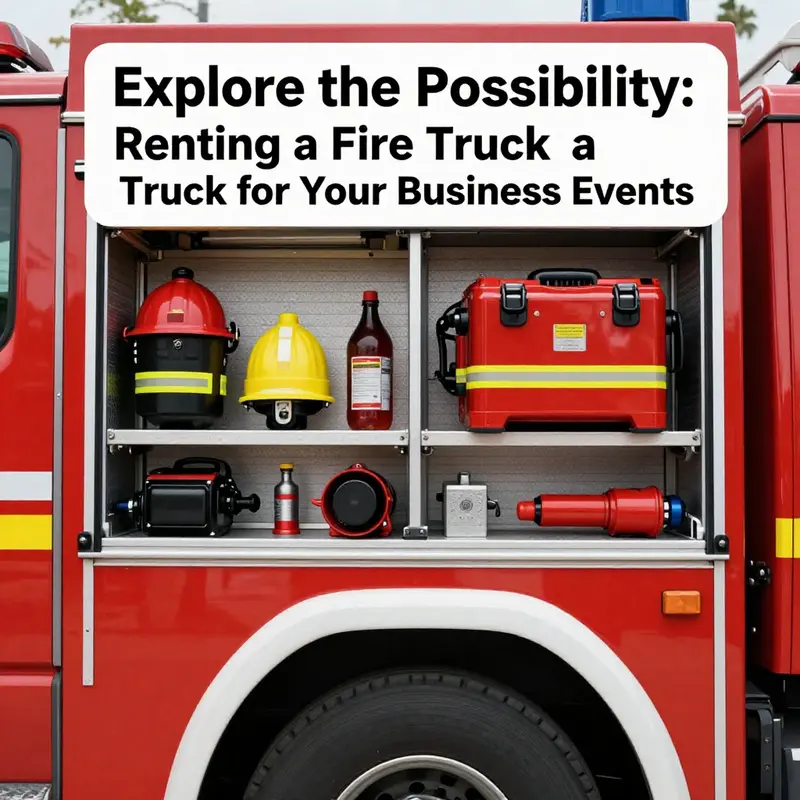
When a planner or curious parent asks, can you rent a fire truck, the question often comes with a mix of anticipation and uncertainty. The image of a gleaming red vehicle at a birthday party or a school open house sparks imagination—children cheering, a shout of “look, a real fire engine!”—but the reality behind that thrill rests on careful distinctions. The landscape of fire-truck access is not a simple consumer rental market. It is a domain governed by professional standards, licensing requirements, and strict safety protocols designed for emergency response rather than leisure use. The nuance matters because the very idea of “rental” covers two very different experiences: the playful, child-friendly take that never involves the actual emergency capabilities of a real truck, and the professional, high-stakes scenario in which a real fire apparatus becomes the centerpiece of a promotional event, a film shoot, or a ceremonial demonstration. Understanding where those lines lie is essential for anyone who wants to stage an event that features, or seeks to resemble, a fire-truck experience without inviting unintended risk or regulatory trouble. In this light, the question of safety regulations when renting a fire truck quickly expands beyond the obvious concerns of party planning to the core mechanics of who is allowed to operate a vehicle that is certified for emergencies and who bears the responsibility when it is displayed or used in public settings. The research that informs this chapter makes two distinct threads clear: first, the existence of popular, safe alternatives designed to evoke the look and feel of a fire truck for non-operational purposes; second, the reality that real fire trucks are not ordinary rental items. They are specialized, highly regulated assets managed by professional fire departments or by niche event-service providers with explicit licensing, insurance, and training commitments that most individuals do not possess. That separation is not merely bureaucratic. It reflects legitimate concerns about safety, roadworthiness, and public protection, especially when a vehicle intended to respond to fires or other emergencies might be driven through streets or positioned in crowd-dense environments. To begin with, most people who want a fire-truck experience turn to non-operational, family-friendly alternatives. Inflatable fire-truck bounce houses, for example, offer a playful, interactive version of the vehicle that kids associate with heroism and safeguarding their communities. These units are designed for safety: they are soft, cushioned, and built to withstand bounce activity with appropriate supervision and age-appropriate use guidelines. They mimic the aesthetic of a fire truck without the complexities of engine compartments, fluid systems, or siren deployments. Such options, while not a substitute for a real vehicle’s capabilities, provide a vivid and memorable experience that aligns with a child-centered event, a museum day, or a community festival. The distinction between these playful experiences and a genuine, road-ready fire truck is not merely about appearance. It is about what is technically permitted, what insurance covers, and who assumes risk when a public gathering becomes the stage for a vehicle that is designed to deploy into life-threatening situations. For real-fire-truck rentals intended for promotional events, parades, or film shoots, the practical path is more constrained. Availability hinges on relationships with professional event rental companies or direct coordination with local fire departments’ public relations offices. Some departments may entertain requests for charity or public-awareness initiatives, but such arrangements are the exception rather than the rule. Even when a department agrees to participate in a public event, the arrangement will come with a thick layer of requirements: written contracts, proof of liability insurance, adherence to dedicated safety protocols, and a tightly supervised operational plan. These conditions are not negotiable. They exist to ensure the vehicle remains a tool for public safety rather than a spectacle that risks misalignment between mission-critical equipment and entertainment objectives. The apparent simplicity of “you can rent a fire truck” dissolves under scrutiny when you confront the practicalities of licensing, training, and supervision that govern vehicle operation. The operation of a fire truck is governed by strict protocols and training requirements for certified personnel only. The documents that guide these practices make a clear distinction: unauthorized use is strictly prohibited, and any movement or display of a real fire-fighting vehicle outside its intended role must be conducted under official authorization. This is not a trivial point. A truck that carries hoses, ladders, water pumps, or specialized equipment represents more than sheer spectacle; it embodies a system designed to save lives under hazardous conditions. Any attempt to reframe or repurpose that system without appropriate credentials creates risk not only for the operator but for bystanders, participants, and the vehicle itself. For anyone considering operating or renting an emergency vehicle, the first, most prudent step is direct contact with local authorities or official emergency-service providers. This is not about gatekeeping, but about ensuring that the vehicle’s purpose and the setting in which it appears do not conflict with safety obligations or regulatory expectations. In many places, there is a pathway to visibility and community engagement that preserves all safety standards. It typically involves working through a recognized organization, such as a public-relations office within the fire department or a vetted event-rental partner that has built its repertoire around safely presenting emergency vehicles in non-emergency contexts. Those pathways emphasize two pillars: licensing and training, and risk transfer through insurance and precise terms in a contract. Licensing in this context is not optional. Operators who handle a real fire truck, even for promotional use, must have valid credentials that attest to their ability to operate heavy emergency equipment and to drive such vehicles under the conditions of a public event. The credentials commonly referenced are professional licenses appropriate to heavy vehicles, coupled with completion of training programs that cover fleet safety, incident-command awareness, hazard recognition, and everyday operating procedures. The training is more extensive than a weekend workshop; it is a comprehensive program that teaches how to manage the vehicle’s weight, how to coordinate with other responders, and how to respond to unexpected obstacles in real time. PPE, too, remains non-negotiable. Even for staged appearances, operators typically wear full personal protective equipment appropriate to the vehicle’s role, including reflective clothing and helmets, to convey the seriousness of the equipment and to maintain safety standards that align with the vehicle’s mission. The line between a safe, entertaining display and a hazardous misstep becomes clearer when one acknowledges who bears the liability. Liability management is a core component of any contract or agreement to display, demo, or operate a fire truck in a public setting. Event planners should expect robust insurance requirements, including coverage that protects against property damage, bodily injury, and potential legal claims arising from the vehicle’s presence and its operation. Contracts will often specify supervision ratios, crowd-control measures, approved routes, and restricted zones, with clear delineations of when the vehicle can be displayed, how it can be parked, and who is responsible if something goes wrong. The financial and reputational stakes in such arrangements are non-trivial. Even with the best intentions, a misread crowd dynamic or a misinterpreted precaution can lead to injuries, vehicle damage, or disruptions that overshadow the event’s goals. This is why many organizers pivot toward safer, officially sanctioned avenues for engaging with fire-truck experiences. In addition to the agency routes, event organizers may rely on dedicated exhibit fleets or educational demonstrations that use non-operational vehicles or truck simulators that replicate the look and functionality of a fire truck without any risk associated with transporting a real, mission-ready apparatus. If you are curious about the broader ecosystem of fire vehicles that you can legally access for exhibitions, demonstrations, or education, you can explore related categories and offerings at dedicated fleets that maintain professional alignment with public-safety outreach. For instance, when a project requires a broader fleet feel, one might consult a catalog of different vehicle classes and configurations to ensure the chosen option matches the event’s scale while staying within safety and regulatory boundaries. An informed approach also considers the context of the audience. For families and children, a non-operational experience that emphasizes safety, learning, and community resilience can be both engaging and instructive. A familiar, kid-friendly environment reduces risk while preserving the educational value: kids learn how fire trucks help communities, understand the importance of fire safety, and see the devices up close in a nonhazardous setting. This approach strengthens the event’s mission—raising awareness and promoting safety—without compromising on the duties and duties owed to public safety and the vehicles themselves. When the plan involves real or semi-operational equipment, the decision-making process should be anchored in collaboration with professionals who understand the relevant regulations, licensing regimes, and insurance requirements. The careful orchestration of permissions, safety checks, and staff training ultimately protects participants and preserves the integrity of the purpose behind the display. For those who want to dive deeper, there is a practical path forward: consult professional event rental companies or contact your local fire department’s public-relations office to understand what options exist and what prerequisites apply. If you are drawn to a realistic, fleet-like presence, consider engaging with a provider that specializes in public-safety demonstrations. They can deliver a controlled, compelling experience that honors safety regulations while delivering impact. And if your goal is simply to capture the spirit of a fire truck for educational or family-friendly reasons, remember that the safest and most reliable choice remains a non-operational, safety-first alternative that preserves the educational value without inviting avoidable risk. To aid planning, you can also explore information on related professional offerings reflected in the broader ecosystem of emergency-vehicle demonstrations and educational events, including categories that cover a wide range of fire-service-related equipment. For readers who wish to anchor their research in a concrete reference, a practical step is to review the broader standards and guidelines that govern public-safety outreach and vehicle operations. This ensures that every choice aligns with recognized safety practices and professional expectations. In doing so, you protect participants, respect the vehicles and their operators, and preserve the integrity of the event’s purpose. For organizations that want to pursue more than a visual impression, the path remains clear: work through official channels, partner with vetted professionals, and ensure full compliance with licensing, training, and insurance requirements before any real emergency vehicle appears in a planned setting. This approach, while sometimes restrictive, keeps public safety at the forefront and preserves the opportunity to create memorable, meaningful experiences that celebrate community resilience without compromising safety. For those who want a practical avenue to explore legitimate, non-operational fire-vehicle experiences as part of their event, the concept of safe, themed attractions can also be complemented by educational activities, demonstrations by certified personnel, and interactive safety stations that reinforce fire-prevention messages in engaging ways. The end result is an event that honors the importance of fire services while delivering the wonder and inspiration that such vehicles naturally evoke. If you want to learn more about related offerings that fit within a safety-first framework, you can explore a range of options at this resource: شاحنات الإطفاء التجارية. For broader safety standards and guidelines that inform these kinds of decisions, see the National Fire Protection Association’s guidance at https://www.nfpa.org.
Insurance as the Gatekeeper: Understanding the Realities of Renting a Fire Truck for Events and Production
Asking whether you can rent a fire truck opens a wide lane of possibilities and a handful of sharp realities. On the surface, the idea seems straightforward: a big, impressive vehicle that attracts attention can be a powerful centerpiece for a kid’s party, a corporate event, or a promotional shoot. In practice, though, renting a real fire truck is not a standard consumer service. Fire trucks are specialized emergency vehicles owned and operated by local fire departments or dedicated public safety agencies. They are funded, maintained, and staffed to meet strict safety and response standards. That means the everyday private rental market does not typically list real fire trucks as a rental option. What you can rent, in abundance, are experiences and props inspired by fire service— inflatable fire truck bounce houses, themed party setups, and other attractions that mimic the look and feel of the real thing while prioritizing child safety and fun. These offerings are designed for play, not for actual emergency response, and they sit in a very different regulatory and liability space than an authentic fire apparatus would.
If you are drawn to the spectacle of a fire engine for a public event, the most practical path often lies in the realm of promotional partnerships, department collaborations, or carefully managed productions. Some departments may entertain nonemergency demonstrations or charity appearances under regulated conditions. When a department does approve such activities, it is typical to see a suite of safeguards: trained personnel on site, a controlled route and staging area, a clear separation between spectators and any vehicle operations, and a detailed liability framework that protects both the public and the agency. In many cases, those arrangements are more about public engagement and education than about any financial transaction resembling a typical rental. The result is that even for charitable or awareness events, the access to a real fire truck is not a casual accommodation but the product of negotiated permissions, compliance checks, and explicit safety commitments.
For most individuals and organizations seeking to add a dramatic element to an event, inflatable or replica options become the default. These alternatives are built to resemble emergency vehicles without carrying the operational risk of a working fire engine. They are designed with safety in mind, featuring rounded edges, softer componenets, and controlled environments that minimize risk to participants. In a sense, the market here mirrors a broader principle: you can evoke the authority and drama of fire services, but you must do so within the limits of what is legally permissible and safely executable. If you want to explore this space further, many vendors place emergency rescue vehicle style offerings under a dedicated category that signals both the appearance and the safety posture of the equipment. For a sense of how such offerings are catalogued and accessed, you can browse the relevant category that groups emergency rescue vehicle themed items and related gear. Emergency Rescue Vehicle category.
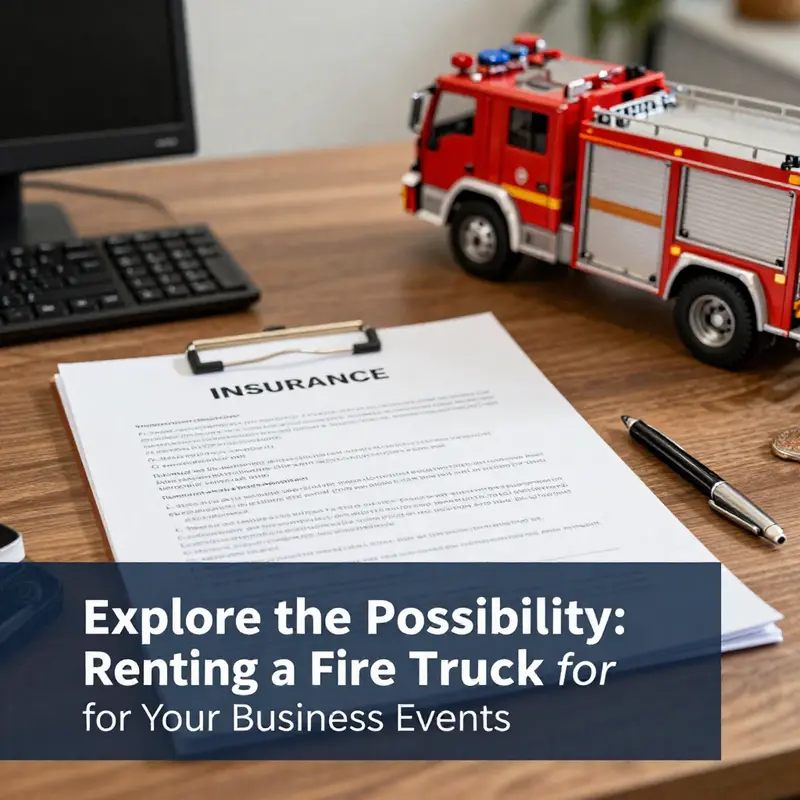
The question of insurance enters the conversation as soon as real equipment or any analogue with operational aspirations is involved. In the context of private or commercial rentals, there simply are not standard insurance terms that apply to a real fire truck because the service does not exist in the conventional sense. When a project does call for a genuine vehicle used in a film, a training exercise, or a controlled demonstration, the arrangement must be treated as a production or specialized vehicle rental. In those cases, the insurance requirements shift from “renting a vehicle” to “covering exposure.” The rental provider, and often the production or event company, will require a comprehensive liability policy with high coverage limits. A typical benchmark in these contexts is a liability limit that starts at or above one million dollars, though higher limits are common depending on the jurisdiction, the scope of use, and the anticipated risks. This is not because ordinary consumer renters demand such limits, but because the vehicle will operate in proximity to the public, or will be used in a production environment with crews, stunts, or prop setups that could introduce higher risk. In addition to the liability coverage, the renter may be required to present a valid driver’s license, a clean driving record, and, in some cases, additional permits or authorizations depending on local laws and the specific activity planned.
When the discussion turns to production or training uses, the insurance conversation becomes a framework rather than a single document. The rental provider, in coordination with the applicant, will often require a certificate of insurance naming the rental company as an additional insured and loss payee. They may also require an occurrence form of liability coverage, as opposed to claims-made coverage, to ensure continuous protection regardless of when a claim arises during the term. Depending on the jurisdiction and the activity, they could request non owned or hired auto liability coverage to extend protection if the vehicle is operated by someone other than a company employee. These provisions reflect a broader risk-management mindset: the goal is to create a clear, enforceable roadmap for handling accidents, property damage, or injuries that could arise during display, filming, or training.
Beyond insurance, there are operational considerations that shape whether a real fire truck can be part of an event or shoot. The vehicle’s movement and readiness to respond in case of an actual emergency cannot be compromised. This reality often translates into strict on-site rules: defined heat zones, limited operating areas, and a staged presence rather than a fully functional vehicle roaming through crowds. In many instances, the appearance of a fire truck is achieved through a combination of prop vehicles, specially modified rigs, and careful choreography rather than a straight rental of a live engine. For those who want to explore more about the kinds of emergency vehicle options that exist for commercial or cinematic use, production teams frequently work with suppliers who specialize in replicas or production-ready vehicles. These outfits can provide equipment that captures the look and scale of a fire engine while including robust safety controls and insurance arrangements tailored to filming or training environments.
The practical steps toward arranging such an asset begin with clarity of purpose. If your aim is education and community engagement, you’ll likely partner with a department or certified event vendor to design a program that showcases fire safety lessons, evacuation drills, or prevention messaging within a controlled setting. If the project is for a film or television production, you’ll operate under a different set of constraints, including the use of production vehicles, controlled stunts, and a risk assessment that aligns with the film crews’ broader safety plan. In all cases, timing matters. The process can take weeks or even months to align department permissions, insurance certificates, and the logistics of vehicle access, staffing, and safety compliance. Budget considerations follow suit. Real access, if granted, often comes with a premium that accounts for the added layers of supervision, insurance, and the potential exposure to the public. Inflatable and prop-based options, by contrast, typically carry far lower insurance thresholds and more predictable scheduling, making them a practical substitute when the goal is spectacle rather than live emergency response capability.
For those who are curious about the broader landscape of specialty vehicle rentals, a research-informed starting point is to connect with providers who focus on emergency vehicle replicas or production vehicles. These entities understand the unique blend of safety, regulatory compliance, and narrative impact that such assets demand. While not everyone will qualify to rent or deploy a real engine for an event, the ecosystem around replicas, demonstrations, and controlled appearances offers a viable, often more approachable path for achieving a comparable visual impact. It is important to approach this path with a well-defined safety plan, a robust insurance package, and an alignment with local regulations. The more you can demonstrate that risk has been identified and mitigated, the more likely it is that organizers, sponsors, or departments will see value in the collaboration rather than risk.
In the end, the practical takeaway is simple: you can evoke the presence of a fire truck for a wide array of events, but renting a real engine is not a typical consumer transaction. If your project hinges on the authenticity of a working fire apparatus, you will need to navigate a framework that involves production or department partnerships, comprehensive insurance, and explicit permission that can only come from the relevant authorities. If, instead, your goal is to create a dramatic impression without the operational risk, explore the assortment of safety-conscious replicas and themed experiences that many providers offer. These options make it possible to tell a compelling story or create an immersive event while staying firmly within the boundaries of safety and legality.
For further context on the kind of emergency vehicle offerings that can be pursued within regulated and specialized settings, you can explore the related category that curates emergency rescue vehicle options and accessories. Emergency Rescue Vehicle category. And for broader guidance on insurance and the nuances that accompany specialty vehicle rentals, consider consulting general resources that cover how insurers approach such assets during production, events, or training. A widely used reference in this space is available at https://www.rentalcars.com, which discusses insurance considerations and rental requirements for specialty vehicles in practical terms. This external resource can help set expectations about what kinds of coverage are typically required and how to prepare documentation that satisfies providers across different scenarios.
Mapping the Market: Finding Fire Truck Rentals and Playful Alternatives for Events
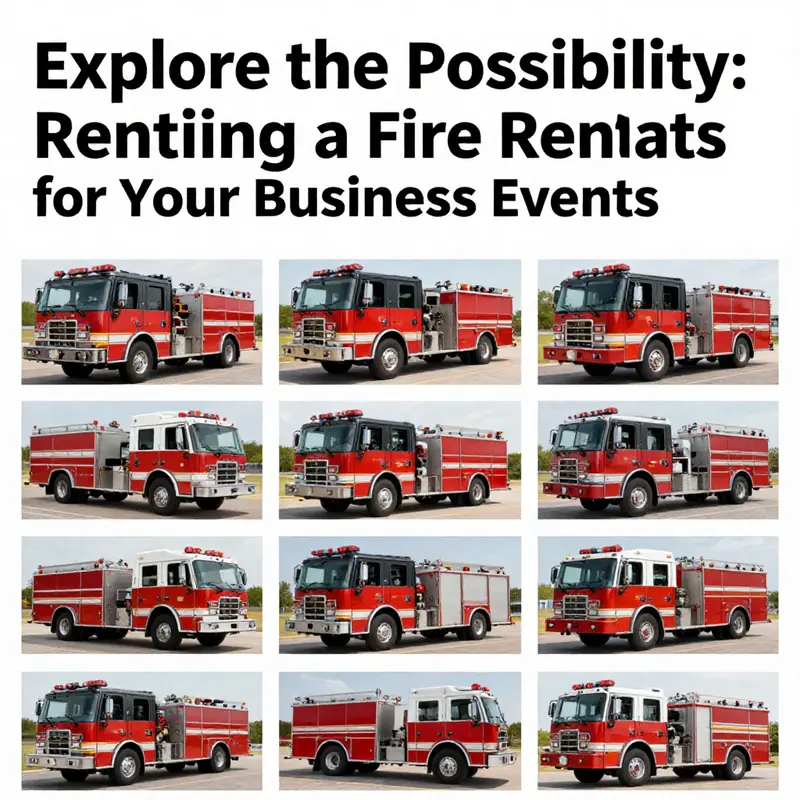
Renting a fire truck sits at a crossroads of practicality, spectacle, and safety. It is not a routine purchase, but it can be a powerful centerpiece for events that want to impress, teach, or simply delight a crowd. There are real fire trucks for promotional events or shoots, and there are themed inflatables that imitate a fire engine while remaining safe and supervised. Between these poles lies a spectrum of rental options for birthdays, school functions, festivals, and corporate gatherings. The question becomes not only whether you can rent a fire truck but also what you should rent and where you should look to secure it with confidence. The inflatable option is popular for safety and accessibility; it is a structured, supervised play space that echoes the firefighter theme. Real fire trucks require coordination with departments or specialized vendors, insurance, and permissions, and they are usually reserved for activities that align with safety education or sanctioned productions. For most events, inflatables offer a visually striking, engaging experience that is easier to book and operate. If authenticity is desired, a real vehicle presence can be arranged where permitted, provided the venue can accommodate travel, staffing, and regulatory requirements. In practice, the best approach starts with a clear brief: what should attendees experience, the space available, the audience, and the budget. Local rental stores and online marketplaces often host a range of themed inflatables, while larger platforms may list vetted providers with safety certifications, delivery, setup, and supervision options. When evaluating options, prioritize safety: look for certified installers, sanitation practices, age-appropriate usage guidelines, and clear supervision plans. Check reviews, determine the necessary space, power, and weather contingency plans, and understand the cleanup and teardown process. If you pursue a real fire truck option, confirm insurance coverage, regulatory approvals, and the logistics of travel and on-site operation. Whether you choose an inflatable attraction or a real vehicle display, success hinges on planning and selecting a trusted provider who can deliver a safe, memorable experience. A reliable venue, a clear schedule, and a well-communicated plan are essential to a smooth, impressive event.
community safety
Renting a fire truck presents unique opportunities for business owners to engage their audiences in memorable and impactful ways. Whether it’s for a community event, advertising strategy, or a film shoot, understanding the process of renting, along with the necessary regulations and insurance requirements, can ensure a successful experience. By choosing the right rental options and adhering to safety protocols, you can leverage the excitement of a fire truck to elevate your brand and make a lasting impression.

