
















Fire truck sirens are more than just loud noises; they are critical tools for ensuring public safety during emergencies. This article delves into the intricate design and functionality of these sirens, examining how they alert the public and facilitate quick responses. The chapters explore the technological advancements that have transformed sirens from traditional mechanical systems to modern electronic devices, enhancing their effectiveness. Additionally, we will consider the societal impact of fire truck sounds, how they shape public awareness and safety perceptions, and their cultural significance in community emergencies. By understanding these aspects, business owners can better grasp the importance of these sounds in safeguarding both their operations and their communities.
Echoes on the Street: The Audible Signature of a Fire Truck
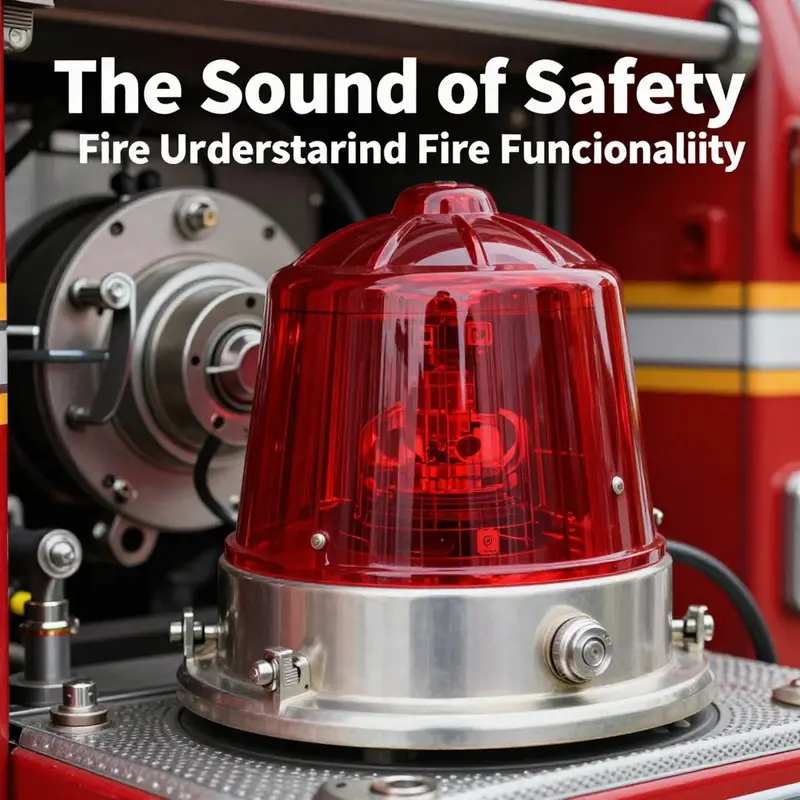
On city streets, the audible signature of a fire truck is a carefully crafted signal designed to cut through walls of noise. Sirens, low-frequency rumbles, and the piercing cadence of horns work together to identify urgency and guide behavior. The sound is not random; it’s engineered to be intelligible across traffic, crowds, and weather. Its purpose extends beyond alerting; it is a directional cue, a safety protocol, and a psychological prompt that primes people to react quickly. The design blends physics, perceptual psychology, and real-world constraints. When the siren begins, frequencies travel through street canyons formed by glass and concrete, reflections multiply, and the Doppler effect nudges pitch as the vehicle closes the distance. The signal becomes a navigational tool as much as a wake-up call, helping pedestrians and drivers to move toward safety while the crew reaches the scene.
The sound spectrum is chosen deliberately. Traditional firefighting sirens tend to center around bands from roughly five hundred to one thousand two hundred hertz, a range where human hearing is most sensitive in the ambient bustle of a city. Loudness matters as well as pitch; from about ten meters, a typical emergency siren may exceed one hundred twenty decibels to punch through traffic, engine hum, and rain. Together, these elements create a sonic signature that is both physically potent and perceptually distinct: unmistakably linked to an approaching emergency and a directive to yield.
Pattern language adds another layer of meaning. The classic wail sweeps across a broad envelope, rising and falling to grab attention over distance. The faster yelp accelerates urgency in dense traffic where reactions must be immediate. Short, punctuated pulses can signal imminent arrival or the need for instant clearance when speed and maneuverability are critical. In many fleets, a controlled horn or brief air-horn accent can punctuate the sequence, reinforcing urgency without overwhelming nearby listeners. A well-choreographed pattern allows bystanders to time their movements and maintain situational awareness.
Technology has broadened what is possible. Modern fire trucks increasingly use electronic sirens and speaker arrays that reproduce a wider palette of tones while preserving legibility in crowded environments. Digital sound generation enables dynamic adaptation to ambient noise: in a quiet street, the system can emphasize different frequencies to maximize detectability without resorting to excessive loudness; in a loud industrial zone or stadium, spectral emphasis shifts to preserve intelligibility. The digital backbone also supports coordination with dispatch data, GPS, and on-board intercoms, creating a more coherent flow of information for crews and the public alike.
A further refinement is multi-zone audio distribution. Instead of broadcasting a single sound in all directions, modern systems can direct specific tones toward particular zones or compartments. This precision extends reach while reducing over-saturation for nearby residents and pedestrians. It can also help the crew: rear loudspeakers might deliver updates to responders without compromising the siren’s clarity for bystanders. In practice, this means the vehicle can signal publicly while maintaining private communications inside the cab.
Across the regulatory landscape, safety standards shape how sirens are designed and used. Standards bodies such as NFPA outline not only the audible characteristics but also how the whole vehicle system—lighting, sirens, and communications—works together safely. The aim is a cohesive, reliable signal chain that remains legible under wind, rain, and reflections, and across the varied rhythms of urban life. For professionals, following these guidelines isn’t just compliance; it is life safety and operational reliability.
The intended audience for sirens further informs design. Civilians include pedestrians, cyclists, and drivers in multiple lanes, some with meta-constraints such as hearing impairments who rely more on visual indicators. The siren becomes part of a public interface in motion, one that must be both audible and integrated with headlights, radio chatter, and dispatch cues. Its social function is to reduce hesitation, confusion, and delay by creating a shared expectation: when the sound rises, move aside and let responders pass. The ultimate measure is not loudness alone but the confidence that the signal will be interpreted quickly and correctly across diverse urban settings.
Perception science helps explain why this works. The cadence of tones triggers rapid orienting responses that move people toward safety even before deliberate reasoning occurs. Engineers continually balance novelty, alerting strength, and listener fatigue to ensure signals remain effective across months and years of exposure. In dense city environments, reflections and reverberations can distort a signal; the challenge is to preserve clarity while avoiding annoyance that could erode compliance over time. The fusion of acoustics, policy, and real-world operation creates an instrument that is both scientifically grounded and socially indispensable.
For practitioners curious about implementation, the siren is part of a larger chassis of technology. Audio is integrated with navigation, dispatch interfaces, and crew communications, allowing synchronized outputs that respect the vehicle’s route and the crew’s instructions. Digital signal processing enables on-the-fly tuning to preserve audibility in variable environments, while maintaining a unified, interpretable message across the soundscape. The goal remains constant: a sound that travels far, cuts through noise, and remains clear and actionable for every listener it reaches.
In the end, the fire truck signal is not merely a loud alarm; it is the audible face of an emergency response system. It blends physics with perception, technology with policy, and urgency with safety. It works in concert with lights, radio chatter, and dispatch guidance to form a dependable channel of information. Without that distinctive sound, the choreography of rapid, safe passage would struggle. The siren is the spark that triggers movement, a cue that turns hesitation into action, and a reminder that sound is a vital ally in the daily drama of urban life.
Siren as Signal: How the Sound of Fire Trucks Shapes Public Safety, Attention, and Urban Movement
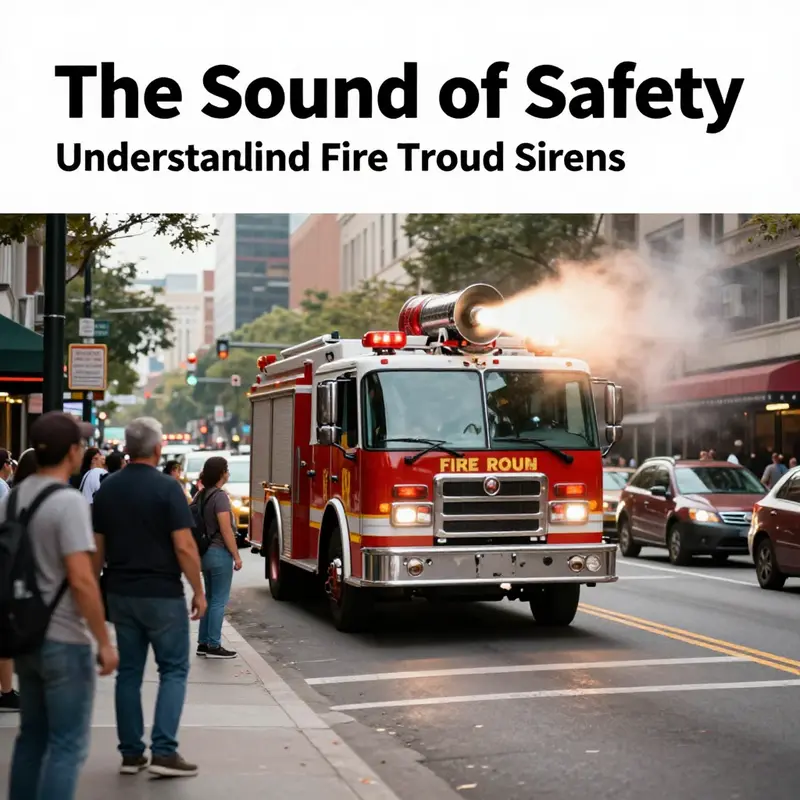
Sound is often the first signal of danger, a boundary between everyday life and an unfolding emergency. In the choreography of an urban response, the fire truck’s siren plays a pivotal role that goes beyond sheer volume. It is a carefully crafted signal designed to cut through the chorus of city noise, to cue lives and lanes into motion, and to help professionals reach scenes of danger with as much speed and safety as possible. This soundscape—comprised of pitch, rhythm, and volume—becomes a universal language that people recognize, interpret, and act upon, even when train schedules or traffic patterns would otherwise tempt hesitation. The fire truck siren is not merely a noise; it is a calibrated tool for public safety that has evolved as technology, urban design, and human perception have shifted over time. Understanding how this sound works, and what it requires of the people who respond to it, reveals a complex balance between alertness, compliance, attention, and health—an equation that sits at the heart of modern emergency response.\n\nAt the core of any siren’s effectiveness is its frequency range and the way that range is exploited across different alert patterns. Research indicates that fire truck sirens typically operate within a band of roughly 500 to 1500 Hz, a sweet spot where the human ear is most sensitive to rapid changes in pitch and where directional cues are most discernible. Across models and designs, decibel levels can exceed 120 dB when measured at relatively close distances, such as ten meters. This intensity is not a mere coincidence; it is a deliberate choice to ensure that the siren rises above the cacophony of urban life—honking cars, loud music, construction noise, and the countless other sounds that fill city streets. The pulse of the siren—whether a wail, a Yelp, or a more abrupt tone—conveys urgency and direction, guiding pedestrians and drivers alike to discern the vehicle’s path and speed. In crowded environments, the changes in frequency and rhythm help people infer whether the approaching vehicle is coming from ahead, from behind, or from the side, and whether it is accelerating or maintaining a consistent approach. These sonic cues translate into split-second decisions that can prevent collisions, clear intersections, and grant a firefighter crew the space they need to operate.\n\nThe patterns of siren sound—often described in terms of wail or yelp configurations—play a crucial role in how people localize and interpret the threat. A rising or falling pitch can signal approach from a particular side, while a steady or modulated tone may indicate a longer maneuver through a busy corridor. The auditory perception of these cues is not purely technical; it is also social. People learn to associate certain siren rhythms with specific kinds of emergencies, and that learning happens in real life as much as it happens in training environments. This is especially important in urban settings where dense traffic, pedestrian activity, and diverse hearing abilities intersect. The siren thus becomes part of a broader system of awareness that includes signage, traffic laws, and public education campaigns. In this way, the sound functions as a bridge between the immediacy of danger and the practical steps that people can take to reduce risk.\n\nYet, the siren’s power comes with a responsibility to balance visibility with wellbeing. Prolonged exposure to very loud sounds carries risks, particularly for those who are repeatedly present on the front lines of emergencies. Studies have highlighted concerns about cognitive impact from sustained high-decibel exposure. When firefighters are subjected to loud sirens and horns for extended periods, there is potential for diminished cognitive performance, slower reaction times, and impaired decision-making under stress. These findings do not undermine the necessity of audible alerts; they instead point to a need for thoughtful engineering and operational practices. The health and safety of responders depend on protective measures and adaptive technologies that preserve the clarity and effectiveness of sirens while mitigating long-term auditory and cognitive fatigue. Training programs increasingly emphasize hearing conservation, and some fire services are exploring more nuanced sound designs that maintain alerting efficiency without imposing excessive auditory loads on crews.\n\nTechnological evolution has also reshaped how sirens fulfill their public-safety mandate. Traditional mechanical sirens, known for their brute force and simple rhythms, are gradually giving way to electronic systems that can replicate a broader palette of tones and patterns. Electronic sirens allow for tailored signals that can be tuned to different situations—high-urgency scenarios might employ sharper, higher-pitched cues to cut through noise, while routine transit through residential areas could utilize patterns designed to minimize annoyance without sacrificing clarity. The capacity to shift tones, modulate volumes, and create directional output enables fire services to craft a sonic message that suits the context while reducing unnecessary stress on both civilians and responders. Beyond the siren itself, the broader soundscape includes horn alerts, engine whines, and the occasional vocal instruction from crew members. Each element contributes to situational awareness in the wrong way if misused, but when coordinated effectively, they become a layered protocol for safe and swift movement through traffic and pedestrians.\n\nIn practical terms, the siren’s effectiveness translates into measurable improvements in public safety and response times. When people hear a fire truck approaching, most are trained to respond with predictable, protective actions: pulling over, stopping, and yielding the right of way. These behaviors reduce the chance of secondary incidents and help fire teams reach scenes faster, which is especially critical in life-threatening situations. The siren communicates urgency and direction in seconds, a speed that is aligned with the tempo of urban life where every second can matter. However, the effectiveness of this signal rests on the public’s ability to interpret and act appropriately, which in turn depends on continuous public education and consistent experiences with emergency vehicles. Community awareness campaigns, driver education, and school programs all contribute to a more reliable, instinctive response when the siren sounds.\n\nFrom a design perspective, the siren is part of a broader system of emergency vehicle operation that includes physical vehicle performance, navigation strategies, and crew protocols. The siren is the audible handshake that invites other road users to acknowledge the approaching vehicle. Its design must account for the realities of urban driving—narrow lanes, crosswalks, and the unpredictability of pedestrians. A key consideration is balancing the siren’s attention-grabbing power with the potential for desensitization. If the same siren pattern is heard repeatedly in similar contexts, the public may gradually become less responsive. For this reason, some emergency responders advocate for variety within the permissible spectrum of tones and rhythms that still preserve recognizability. The idea is to preserve the siren’s distinctness while preventing fatigue, a balancing act that demands both engineering innovation and policy support.\n\nThe human element remains central in assessing how sound translates into safe action. Pedestrians and drivers are not passive receivers of the siren’s message. They interpret it through the lens of their experiences, attention, and current task. A driver caught in a moment of distraction may react differently from a cyclist who is weaving through city streets. A pedestrian who is visually impaired relies more heavily on auditory cues to locate the source of danger and to determine the safest path. In this sense, the siren is not an isolated tool but part of a multi-sensory safety approach that includes lights, signage, and, in some cases, spoken guidance from emergency personnel on the scene. As cities continue to grow and traffic patterns evolve, designers and policymakers must consider how the siren interacts with other signals to optimize public safety for all users.\n\nTo illustrate the practical side of these considerations, imagine a typical urban intersection during an emergency response. The siren activates, its tone rising and falling in a wail that travels across avenues and sidewalks. Nearby vehicles instinctively begin to slow and pull toward the curb; a bus driver slides to a stop, allowing the flank of the fire truck to pass. A cyclist, scanning for a safe path, leverages the siren’s directional cues to move to the left of the vehicle’s path but remains mindful of pedestrians who may be stepping into the crosswalk. A pedestrian standing at a corner, previously engrossed in a phone conversation, looks up in surprise and then steps back from the curb with a practiced, almost choreographed ease. In moments like these, the siren’s signal, the traffic rules, and the social norms of the city converge to shape a collective behavior that enables rapid, safe movement toward the scene of danger. The sound becomes a language of urgency that millions of people know and respond to, even if they do not consciously analyze why it compels action so effectively.\n\nThe relationship between sound, safety, and health extends beyond the immediate act of yielding to an approaching vehicle. It also involves the broader design of emergency services and the environments in which they operate. Modern fire services increasingly recognize the need to protect responders from the acoustic load they endure daily. This recognition has led to investments in hearing protection, noise-reduction strategies in vehicle cab design, and targeted research into how different siren configurations affect cognitive performance over long shifts. The goal is not to reduce alertness but to sustain it. By combining safer acoustic practices with smarter vehicle and crew protocols, emergency services can maintain the siren’s effectiveness while mitigating some of the risks associated with chronic exposure to loud noise. When done well, this integrated approach benefits both the public and the people who serve them, creating a safer, more predictable environment in moments of crisis.\n\nFor readers who want a tangible sense of how sirens are discussed in contemporary discourse, there is a broader conversation about sounds and emergency signaling that traverses social media and informal educational spaces. This chapter recalls discussions found in online media and community-facing platforms where patterns, tones, and the emotions they provoke are explored in accessible ways. These informal explorations complement formal research by capturing the lived realities of people who experience the siren in daily life. The combined view—from rigorous frequency analyses to everyday observations—offers a richer understanding of why a sound can be so powerful and so consequential for urban safety.\n\nTo connect this discussion to broader resources that contextualize how emergency signals are designed and used, consider the category of emergency response vehicles in the equipment and vehicle ecosystem. The range of vehicle types under that banner illustrates how sound is only one element of a broader strategy to ensure rapid, safe, and reliable responses. By understanding both the sonic and the mechanical components of emergency response systems, readers gain a more complete picture of how public safety is maintained in the city. Emergency rescue vehicles, as a category, embody the intersection of engineering, policy, and human behavior that this chapter has explored. Emergency Rescue Vehicle\n\nAs cities grow louder and more complex, the challenge remains to preserve the siren’s essential function while also guarding the long-term health of those who respond to emergencies. The solution lies in thoughtful design, continual learning, and a public that understands how to react to these signals with both urgency and prudence. The siren’s sound is not merely a call to move; it is a catalyst for a coordinated, humane, and efficient course of action that saves lives while safeguarding the people who save them. The sonic footprint of the fire truck thus stands at the intersection of physics, psychology, and public policy—a dynamic reminder that, in moments of crisis, sound can be one of the most powerful allies we have in keeping our cities safe and responsive.\n\nExternal resource: for a multimedia perspective on siren patterns and their perception in real-world settings, see this overview: https://www.tiktok.com/@firefighterrunclub/video/736981523456789012
Turning Wail into Signal: The Modern Sound of Fire Trucks and Its Impact on Urban Safety
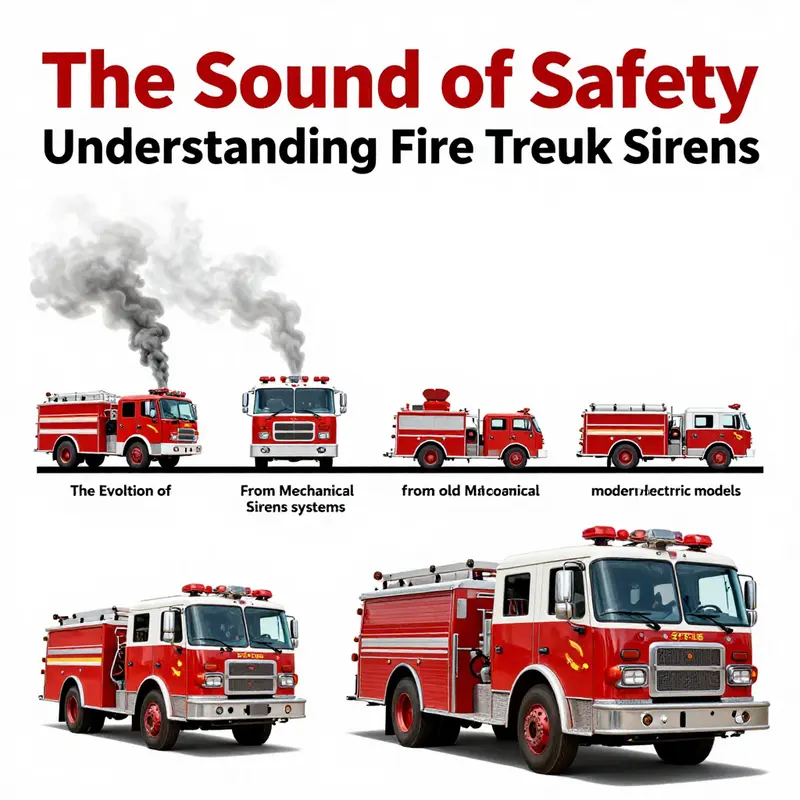
When a city hears the first notes of a siren, traffic slows, doors close, and attention sharpens. The sound of a fire truck is more than a cue; it is a carefully designed signal forged by years of engineering, testing, and a growing understanding of how people hear, react, and move in busy streets. This chapter traces the arc of that sound—from the stubborn, mechanical whine of a bygone era to the flexible, digitally crafted signals of today. In doing so, it reveals how sound design serves public safety, how it adapts to crowded landscapes, and how it shapes the tempo of emergency response. The focus remains on the sonic element at the core of every urgent encounter: the fire truck’s call for right of way, and the people and vehicles that respond to it in real time. The evolution of this sound is not just a story of technology; it is a story about how urban life negotiates risk, attention, and movement in environments where seconds matter and noise is both weapon and shield.
In the earliest days of motorized firefighting, audible signals were crude by modern standards but relentlessly practical. Mechanical sirens—think of rotating horns driven by air pressure or vacuum—produced a stark, penetrating presence. Their tones carried far, riding on a spectrum that could seem almost like a voice from another world. The wail and the whoop patterns, recognizable across generations, defined not only a vehicle’s identity but a city’s lived memory of emergencies. Yet these devices carried hidden costs. They wore out with use; their mechanical parts endured constant strain, requiring regular maintenance that could delay response times if a siren faltered. And because the syntax of the sound was limited, different emergencies tended to share similar tonal footprints. A city might hear a wail and know something urgent was happening, but it did not always convey the specific conditions or urgency of the event. In a dense urban grid, where streets twist and ambient noise climbs, those limitations could blur the signal just when clarity is needed most.
The shift from mechanical to electronic sirens marks more than a change in components; it signals a shift in design philosophy. Electronic systems embrace digital signal processing, allowing sirens to deliver a broader palette of tones and patterns. The old constraint—one or two recurring tonal shapes—gave way to a curated library that can be tailored to street type, traffic density, time of day, and even weather conditions. Instead of a single sonic signature, modern systems can orchestrate a sequence that blends traditional wails with sharper alerts, or two-tone accents that punctuate the most critical moments of a response. This flexibility translates into tangible benefits. Engineers can choreograph the siren to cut through the chorus of urban noise—the rumble of buses, the drone of HVAC systems, the chatter of pedestrians—without becoming a nuisance to neighborhoods when the path is clear. The result is a more precise, more adaptable signal that still satisfies the core goal: to command attention and to guide movement with minimal ambiguity.
A central advantage of electronic sirens is the ability to vary tones and rhythms in ways mechanical devices cannot. The modern siren bank can produce patterns such as a traditional wail, a compelling yelp, a steadfast airhorn, or hybrid sequences that combine several timbres. The impact of these choices is not purely aesthetic; it shapes human perception. Auditory research shows that certain frequencies and tempo changes can trigger faster recognition and more decisive action in drivers and pedestrians alike. The range often cited—roughly 500 to 1500 hertz—occupies a sweet spot where the human ear is particularly responsive, especially in noisy urban environments. At distances around ten meters, the decibel level of a siren frequently exceeds 120 dB, making the signal unmistakable to someone who must decide quickly whether to yield or prepare to pull aside. Yet this loudness is not the whole story. It is the combination of frequency, amplitude, and pattern that yields a robust, legible signal across a spectrum of listening conditions. In some systems, directional audio technologies are employed to steer the sound toward key lanes or neighborhoods, optimizing visibility while mitigating spillover into areas where the noise would be less welcome.
The design of the urban siren in its electronic age is a study in balance. On one hand, the signal must be unmistakable to drivers who are momentarily distracted by street-level tasks or by the complexity of a modern commute. On the other hand, there is a moral and regulatory impulse to avoid unnecessary noise pollution that erodes the public’s tolerance for alarms. The evolution thus involves increasing precision in how and where the sound travels. A directional approach can prioritize the lane closest to the incident, guiding the fire truck through congested corridors with fewer interruptions to homes and schools that line the route. This progression also reflects advances in vehicle acoustics and publishing standards for emergency equipment, ensuring reliability under variable conditions—from heat distortions on a summer evening to the reverberant canyons of a downtown street canyon.
The practical implications of this sonic evolution are inseparable from the realities of emergency response. Response time is not a unitary measure but a function of perception, decision, and action by many moving parts in a live city. When a siren reaches a listener, it triggers a cascade: a driver checks mirrors, a cyclist signals a pass, a bus yields to the right, a pedestrian steps back from the curb. Each micro-decision adds to the overall throughput of the corridor toward the incident. In case studies reflecting how communities respond to fire trucks, the clarity of the siren correlates with improvements in compliance and, ultimately, outcome times. The more precise the signal, the more confidently road users can interpret the urgency and adjust their behavior accordingly. This is the essence of sound design in public safety: creating cues that are not only loud enough to be heard but also cognitively legible enough to produce the desired action without delay.
Engineering teams approach this challenge with a holistic mindset. They assess the acoustic footprint of sirens in real-world settings, from echoing urban canyons to quiet residential streets. They run simulations that model how different tones travel through environments with varying building densities, traffic patterns, and wind directions. They weigh the benefits of more complex sequences against the risk of alarm fatigue—the phenomenon where repeated exposure desensitizes listeners, diminishing responsiveness over time. The aim is to craft a sonic language that is adaptive yet consistent—a steady beat that people recognize instantly, no matter the road on which the fire truck travels. In practice, this means not only selecting the right timbres but also calibrating their duration and repetition. It means programming the siren bank to deliver a signal that remains effective across shifts of the day and changes in city noise levels. The outcome is a dynamic system that respects both safety and quality of life, acknowledging that sound, like traffic, is inseparable from place.
Maintenance is the thread that holds electronic siren systems together. Regular checks, firmware updates, and battery reliability assessments ensure that the audible signal remains intact when demanded. The operational integrity of these systems rests on a foundation of components that include sensors, amplifiers, and control logic. In conversations with technicians, the recurring theme is the need for redundancy and fault tolerance; a city cannot afford a siren that fails mid-response. This is where the practical side of sound design intersects with the tactile realities of the workshop. Maintenance teams rely on a catalog of parts when replacements are necessary, and they consult available inventories to minimize downtime. For professionals watching this evolution, the availability of modular, serviceable components is as critical as the sophistication of the tone bank itself. In this regard, the connection to tangible hardware remains strong even as digital capabilities expand. And for readers curious about how such components fit into broader vehicle systems, a useful entry point exists in the fire-truck parts category, which provides a window into the practical world of repair and upkeep. fire-truck parts.
Beyond the technical and operational improvements, the sonic modernization of fire trucks has sparked a broader cultural shift about what a siren should be. People living in otherwise quiet neighborhoods are not immune to the constant reminders of urban life, yet a city must balance the right to safety with the right to peace. The design challenge is to maintain urgency while reducing unnecessary intrusion. Innovations in sound design acknowledge that sound is a resource in the city, with a finite budget of attention that residents will allocate to alarms, alerts, and cues. The modern siren, therefore, is not a louder version of the old one but a smarter, more responsible tool. It is engineered to be heard where it matters most and to recede where it can. The net effect is a more humane deployment of emergency signals, one that respects the urban sonic environment while preserving the audibility essential to quick, decisive action.
As cities grow more complex, the potential for future enhancements expands. Researchers and practitioners explore how to tailor siren signatures to specific contexts—school zones, hospital districts, or dense commercial corridors—without compromising universal recognizability. The decision to pursue such context-aware signaling is guided by a growing body of data on human auditory perception and behavior in emergency settings. These studies inform how patterns might be refined to optimize response without fostering fatigue or confusion. The overarching aim remains steadfast: to preserve not only life and property but also the social contract that allows a city to function smoothly under stress. The evolution from mechanical to electronic sirens stands as a testament to how technology can be leveraged to reclaim tempo and order in chaotic moments, without losing sight of the communities that depend on it.
Looking outward from the city street into the broader landscape of sound design reveals an important point: the fire truck siren exists within an ecosystem of auditory cues. It interacts with the radiated noise of traffic, the hum of nearby infrastructure, and even the ambient soundscape of a neighborhood park or a bustling plaza. In that sense, the siren is a microcosm of how technology and culture converge around sound. It is designed not in isolation but in conversation with the places it serves, with the people who listen, and with the rhythms of city life. The architectural decisions that govern urban acoustics—how streets funnel sound, where pedestrian crossings are located, how windows reflect or absorb noise—shape how a siren travels and is perceived. The result is a holistic approach to safety where engineering, urban planning, and behavioral science intersect in real time. The siren becomes not merely a device but a signal in a living system, calibrated to prompt action while preserving the everyday experience of the city.
In closing, the story of the fire truck’s sound is a story of adaptation and accountability. It chronicles a move from sturdy but limited mechanical devices to agile electronic systems that can be tuned to ever-changing urban terrains. It shows how a sound, carefully designed, can shorten the distance between danger and response by guiding human behavior with precision. It also reminds us that sound is not a neutral backdrop; it is an active participant in public safety, a tool whose design influences outcomes as surely as the speed of a vehicle or the reach of a ladder. The siren of today is a product of rigorous testing, thoughtful acoustics, and a commitment to delivering a signal that commands attention without eroding the quiet of community spaces. As cities continue to grow and traffic patterns shift, the evolution of the fire truck sound will likely continue along lines that favor clarity, adaptability, and responsibility—an ongoing dialogue between machine and mind, between signal and action, between danger and care. And while the specifics of tone, pattern, and direction will keep changing, the core purpose will endure: to clear the way for those who come to help, and to do so with a sound that is both unmistakable and humane, a true turning of wail into signal for the safety of all.
External resource for a broader perspective on auditory perception and animal response to sirens: Why Do Dogs Howl At Sirens? Evolutionary Sound Response. https://www.sciencedirect.com/science/article/pii/S0018506X2300497X
Echoes of Urgency: The Fire Truck Sound as Cultural Signal and Public Safety Catalyst
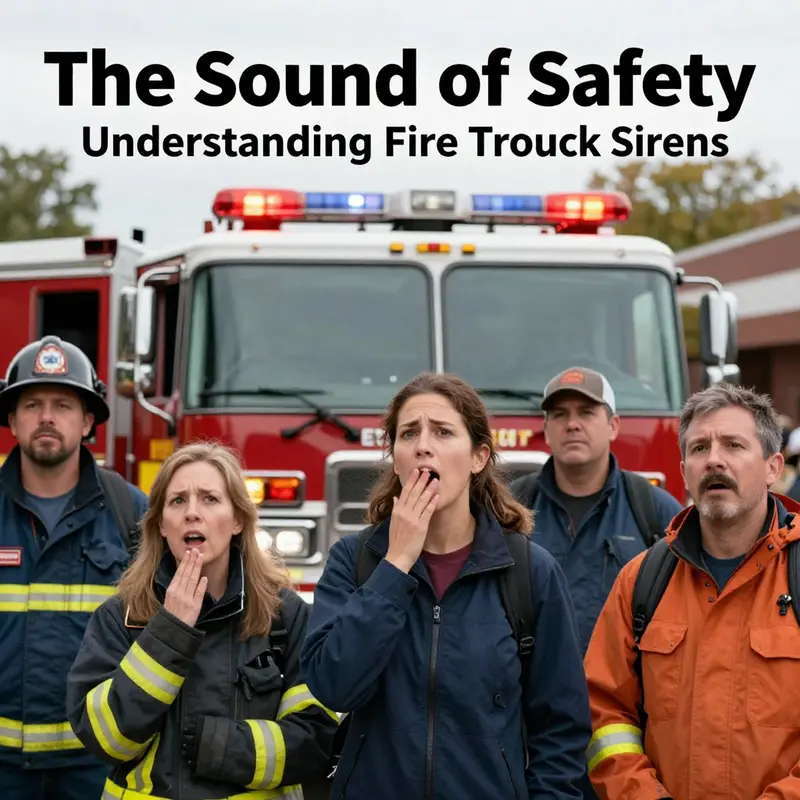
On city streets, the hum of engines and the wagging lights often fade into the background. Yet when a fire truck cuts through other traffic, the sound that follows becomes a shared linguagem of danger and response. The fire truck sound is more than a mere alarm; it is a cultural instrument that organizes attention, frames perception, and shapes how communities experience crisis. This chapter tracks how the siren—dynamic, high-pitched, and relentlessly audible—embeds itself in the social fabric of urban life. Its design, its propagation through the built environment, and its representation in media all contribute to a layered soundscape that people learn to read, react to, and even anticipate in ways that ripple across daily routines and collective safety judgments.
First, consider the sonic architecture of the siren itself. Fire truck signals rely on a carefully engineered combination of frequency, amplitude, and modulation to pierce the cacophony of a city. Research into the acoustics of emergency signaling notes a broad frequency range, typically spanning roughly 500 to 1500 Hz, with tones that can modulate to emphasize urgency under different traffic conditions. The decibel levels are formidable; when measured from a modest distance—say, around ten meters—the siren often exceeds 120 dB. This level is not incidental. It is a designed feature intended to cut through ambient noise, from roaring motorcycles to clanging construction, to ensure that the signal travels far enough and fast enough to prompt immediate behavioral change. Across generations of siren design, traditional mechanical devices have given way to electronic systems capable of producing a palette of tones. This technological evolution does more than alter texture; it expands the communicative reach of the signal. A single vehicle can switch among tonal families to reflect different situations—one tone for a pedestrian-heavy downtown corridor, another for a riverfront road with gusty winds, another for a highway scene where speed and distance challenge visibility.
If the technical dimension explains why the sound works, the cultural dimension explains why it endures. The siren is a universal sign of crisis, instantly transporting listeners from routine thought to vigilance. It signals that a vehicle with urgent business is approaching, and it invites a quick reallocation of space: drivers flatten their speed, pedestrians step aside, and the general rhythm of the street reorganizes around the incoming emergency. This rapid social recalibration is not just obedience; it is a negotiation about safety, responsibility, and shared space. The siren becomes a public pedagogy, teaching residents to recognize the sign of danger and to respond quickly and predictably. In many ways, the sound becomes a social contract: when you hear the wail, you acknowledge the need to yield, not to react with panic, but with practiced composure that keeps everyone safer.
The cultural reach of the fire truck’s sound extends beyond the actual scenes of emergency response. Media representations—news broadcasts, films, and even video games—embed the siren as a recognizable cue for danger, rescue, and urgency. The wail enters the cultural lexicon of crisis memory, a sonic symbol that travels across generations and locales. As a result, the siren’s soundscape becomes a form of shared literacy. People know what to do not just because of guidelines or instructions but because the sound itself triggers an embodied response. The effect is a form of social conditioning, where repeated exposure to the sound—along with its visual cues—tunes public behavior toward quick, orderly collaboration with emergency operations.
This resonance is profoundly emotional as well as cognitive. The siren carries a dual emotional charge: it can provoke anxiety and unease when it interrupts a quiet moment or when one is unprepared for danger; it can also evoke reassurance, a sense that help is en route and that someone is actively addressing a crisis. The context matters. A siren that interrupts a late-night street scene can heighten tension, while the same signal flickering past a school or hospital might carry a different mix of urgency and civic trust. The Cambridge Dictionary’s broader reflections on the fire truck sound speak to this duality: the same noise that punctures comfort can also symbolize protection and communal safety. In this sense, the siren is not a neutral noise; it is a cultural instrument whose meaning shifts with context, memory, and power dynamics surrounding authority and public safety.
The social life of the siren also intersects with how communities perceive noise itself. In dense urban environments, a siren’s capacity to command attention becomes a common ground between strangers: a shared understanding that someone is facing a potentially life-threatening situation and that the best course of action is a coordinated, orderly response. Yet noise is never merely physical; it is a social signal fraught with implications for equity and tolerance. Some neighborhoods experience heightened exposure due to proximity to stations, major arterials, or industrial zones, raising questions about environmental justice and the distribution of auditory burden. In these conversations, the siren becomes not only a tool of public safety but also a lens for examining how cities balance emergency responsiveness with noise sensitivity and community well-being. The ethical dimension asks: how can siren design and placement optimize for rapid alert without imposing undue disruption on those who live near loud routes or in hours when quiet is valued? These questions do not undermine the effectiveness of the signal; they simply acknowledge that sound, like any other public good, interacts with the social texture of a city.
From a design perspective, the siren’s high-pitched, modulating character is deliberate. The tonal complexity helps the signal traverse typical urban acoustic environments, including traffic, wind, and other ambient sounds. The engineering choice to vary pitch and tempo across a family of tones enables responders to tailor the signal to the urgency and context of specific emergencies. A single, unchanging tone would be easy to ignore in a noisy city; a repertoire of tones, strategically deployed, creates a more robust perceptual ladder that guides reaction. This is part of why electronic siren systems have gained prominence: they provide flexibility, enabling emergency services to articulate nuanced messages through sound. As societies increasingly rely on advanced communication tools, the siren’s role evolves into a multi-sensory cue that couples auditory signaling with accompanying visual indicators like lights and patterns of vehicle movement. The net effect is a more reliable, predictable, and legible signal, strengthening the public’s ability to respond appropriately even in crowded, chaotic traffic.
This intricate relationship between sound design and social behavior invites reflection on how such signals are experienced differently by various groups within a city. A sound that signals safety to one person can trigger fear or startle in another, especially in environments where previous experiences with emergencies shape perception. People with hearing impairments or those who rely on alternative navigational cues may interpret the siren through different sensory channels, relying more heavily on visual alerts or on the behavior of nearby drivers. The broader literature on noise exposure and emergency response helps connect these individual experiences to population-level dynamics. For instance, studies simulating the noise exposure of firefighters during emergencies illuminate both the physiological demands on responders and the societal expectation that the public should respond swiftly and calmly to the signal. The same siren that compels a truck to surge through traffic also imposes a load of noise on the responders—and on bystanders who endure the accompanying vibration, glare, and stress. This dual burden underscores the need for thoughtful sound design that preserves effectiveness while encouraging safer, more respectful urban acoustics.
The public’s response to the siren is therefore part practicality, part mythology. It is practical in the sense that it yields immediate, measurable behavioral outcomes: vehicles move aside, pedestrians clear space, and emergency personnel can reach the scene with minimized delay. It is part mythology in the sense that the siren becomes an emblem of civic readiness—a sound that signals that a collective effort is underway, that a community is mobilizing to protect life and property. The siren’s cultural authority rests on this dual capacity: to direct action in moments of acute need while sustaining a sense of communal confidence that institutions can mobilize rapid aid. In this sense, the fire truck sound is a form of public language, a vocabulary that cross-patches urban life with emergency response, media narratives, and everyday experiences of safety.
As cities grow and the demands on emergency services intensify, researchers and practitioners continue to examine how sound can be optimized for both efficacy and social harmony. A central thread in this work is the balance between immediate perceptual salience and long-term tolerance. If a siren is too quiet or too harsh, its effectiveness diminishes; if it is too pervasive, it risks contributing to chronic noise exposure and fatigue. The sweet spot lies in thoughtful engineering, mindful deployment, and ongoing community dialogue about acceptable levels of disruption in exchange for safety. The public dimension of sound, then, is not a fixed property but a dynamic negotiation that reflects evolving technologies, urban design, and cultural expectations about authority, safety, and civic responsibility.
Within the broader ecosystem of emergency response fleets, it is useful to consider how the sonic identity of fire trucks interlocks with the other elements of response strategy. For instance, the broader category of emergency-rescue vehicles embodies a set of shared cues—visuals, vehicle comportment, routing behaviors—that coordinate with siren signals to steer public action. This interconnectedness helps communities experience emergency response as a coherent, legible process rather than a disjointed jumble of hazard cues. For readers who want to explore the practical side of these fleets, the Emergency Rescue Vehicle category offers a window into how equipment, design, and signaling converge in real-world operations. Κατηγορία οχημάτων διάσωσης έκτακτης ανάγκης
The chapter’s culminating insight is that the fire truck sound is not merely a technical artifact; it is a living social phenomenon. It travels through time and space, absorbing local histories and personal memories, shaping expectations for how emergencies unfold, and guiding collective action in moments when the stakes are existential. Its power resides not only in its acoustic intensity but in its capacity to carry meaning across diverse audiences and contexts. When the siren rises, it calls a city to attention; when it fades, it leaves behind a trace of order, relief, or contemplation, depending on what the emergency has required. Understanding this influence means recognizing sound as a fundamental component of public safety—one that warrants ongoing attention from engineers, policymakers, educators, and communities alike. It invites us to listen not only for the signal itself but for the stories, emotions, and social arrangements that the signal helps to produce. And it calls us to consider how we might shape those signals to maximize safety while minimizing unnecessary disruption, a balance as delicate as the tone that heralds help.
For readers seeking a deeper, peer-reviewed examination of the behavioral and physiological impacts of these emergency sounds, a detailed study contributes important context to the discussion. The study titled Simulation of noise exposure level of fire-fighters in emergency provides insight into how firefighters experience the sonic environment during urgent operations, which in turn informs how communities perceive and react to the same signals on the street. This work can enrich conversations about how sound design, urban planning, and public education intersect to enhance safety and resilience in times of crisis. https://www.ncbi.nlm.nih.gov/pmc/articles/PMC10534987/
community safety
Understanding the complexities surrounding fire truck sirens can deepen our appreciation for their role in emergency management. From their sophisticated designs and the advancements in their technology to their significant impact on public safety and the cultural perceptions that shape our responses to them, fire truck sounds are vital. As business owners, recognizing the importance of these auditory signals not only enhances compliance and safety in urban settings but also aligns with your community’s values and readiness. The relationship between technology, community awareness, and public safety underscores the critical need for effective emergency response systems, exemplified by the unmistakable sound of a fire truck siren.

