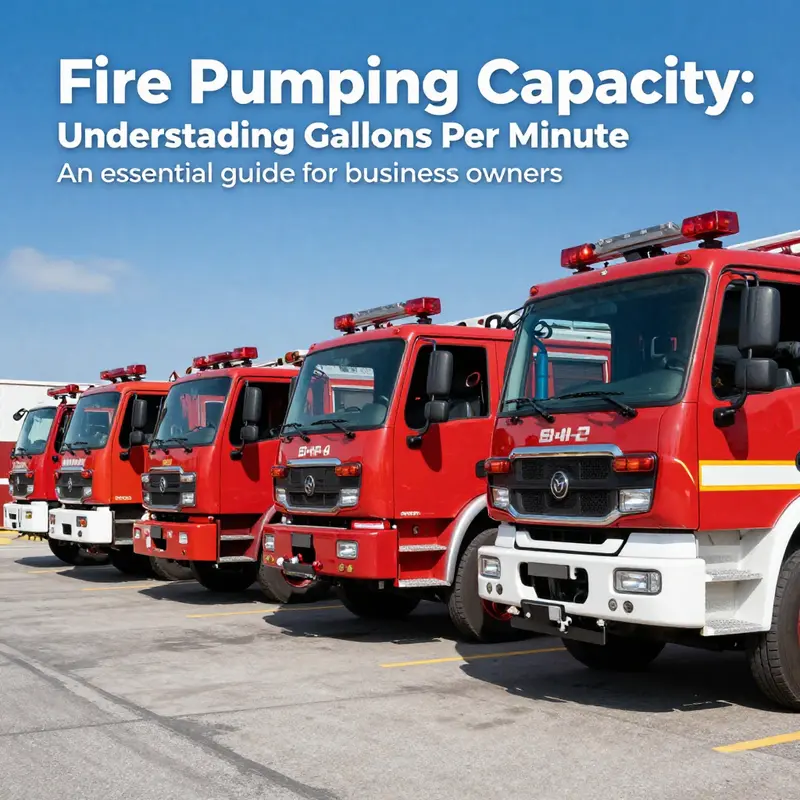















Fire truck height is not a single number but a spectrum that depends on the type of apparatus and the job it is built for. Standard engines stay compact enough to navigate streets, bridges, and tunnels; aerial ladders and platforms reach far higher; and a few record-setting machines push into the hundreds of meters. The standard that governs these dimensions is NFPA 1901, which helps ensure vehicles fit road infrastructure and operate safely. Official guidance is available at the NFPA website.
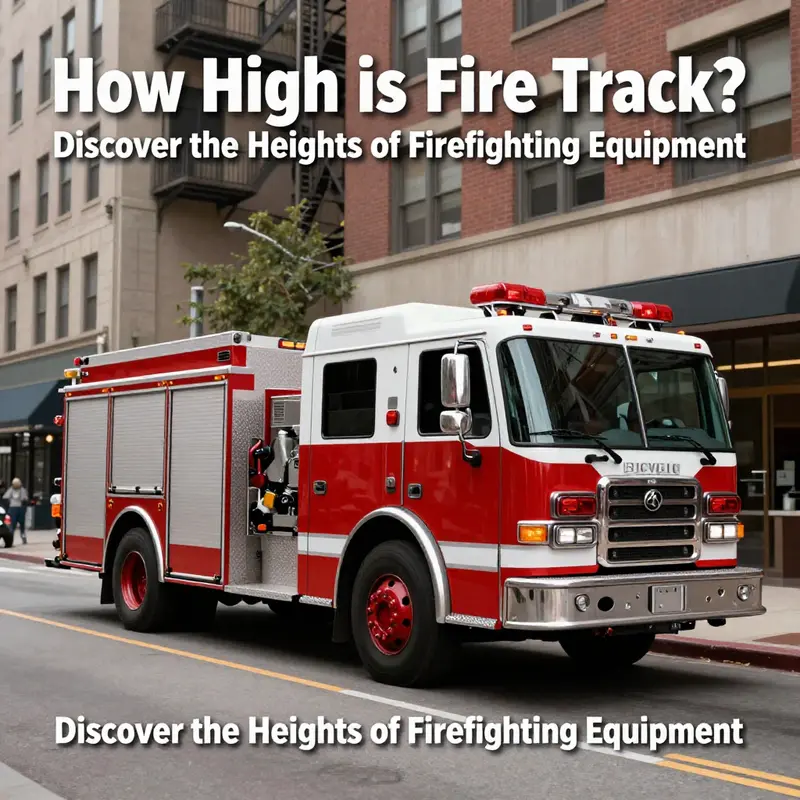
Standard Engines: Around 3.5 Meters
Standard fire engines, the workhorses of urban firefighting, are designed to fit between parked cars, across narrow streets, and under low bridges. Their height rarely exceeds about 3.5 meters (11.5 feet). Foam and water tenders come in around 3.4 meters (11.2 feet). These figures are practical boundaries set by the geometry of urban roads — underpasses, tunnels, overhead wires — and the need to reach every neighborhood efficiently.
Aerial Ladders: 32 to 45 Meters
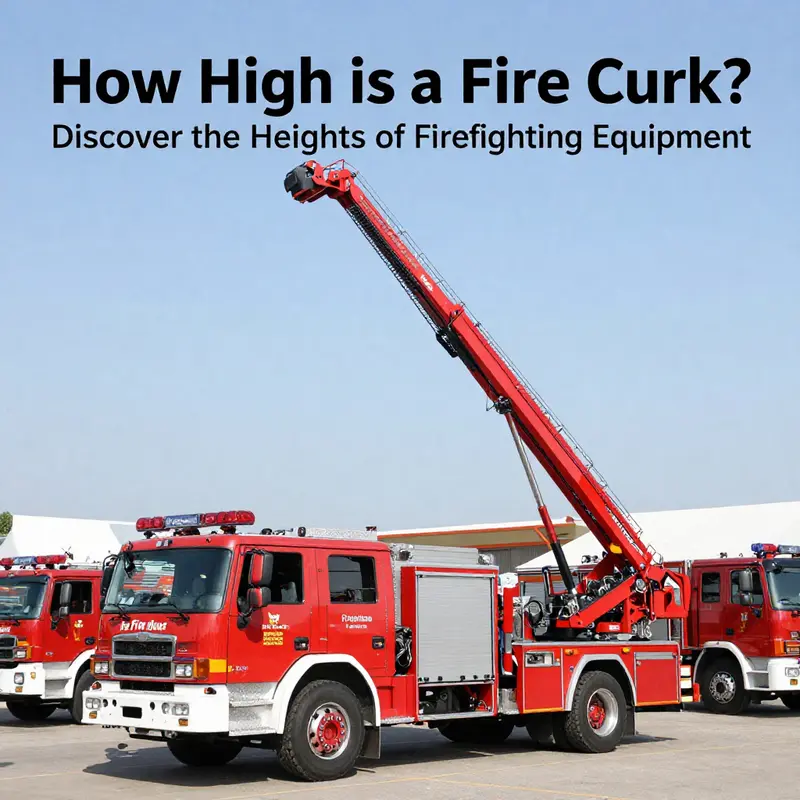
Aerial ladder trucks are specialized tools built for elevation. Their defining feature is a telescoping or articulating boom that functions as a vertical and horizontal conduit for firefighters. The height that matters is the maximum working height when the ladder is fully extended and correctly deployed. A common aerial platform for many urban fleets reaches about 32 meters (105 feet), enough to access the upper floors of a large portion of residential and commercial buildings. In urban practice, the most widely deployed aerials hover in the 32 to 45 meter range, aligning with the typical scale of commercial and multi-story residential buildings.

The ladder is not a single long piece of metal; it is an assembly of sections that extend and lock in place, powered by hydraulic systems. Each section adds length, but also weight and complexity, so the design emphasizes smooth, controlled movement and robust safety controls. The ladder’s horizontal reach matters as much as its height — crews can access a window or balcony on the far side of a façade without deploying from the building’s interior.
High-Reach Platforms: 45 to 65 Meters
For taller buildings, departments turn to high-reach platforms. A common high-rise working height is around 45 meters, and the workhorse class for many urban fires sits near the 50-meter mark. Some specialized units extend further — platforms capable of reaching around 65 meters (213 feet) exist for extraordinary needs. Such units are less common in ordinary urban fleets because they come with longer stabilizing baselines, heavier chassis, and the need for more space to maneuver safely in tight streets.
The Upper Edge: 90 Meters and Beyond
The record-setting end of the spectrum is reserved for specialist assets. Multi-axle configurations have been tested beyond 90 meters, and some platforms reach roughly 91 meters (300 feet). One extreme example is a 101-meter aerial platform — the Bronto Skylift — which stands about 4 meters tall when stowed and, fully extended, can place a platform at the topmost floors of the tallest façades, with a horizontal outreach of about 27 meters and a platform load capacity of 400 kilograms. The highest reaches reported in specialized contexts approach 138 meters (450 feet) under certain operating conditions. These machines demand ample space, meticulous planning, and ground support to guarantee stability.
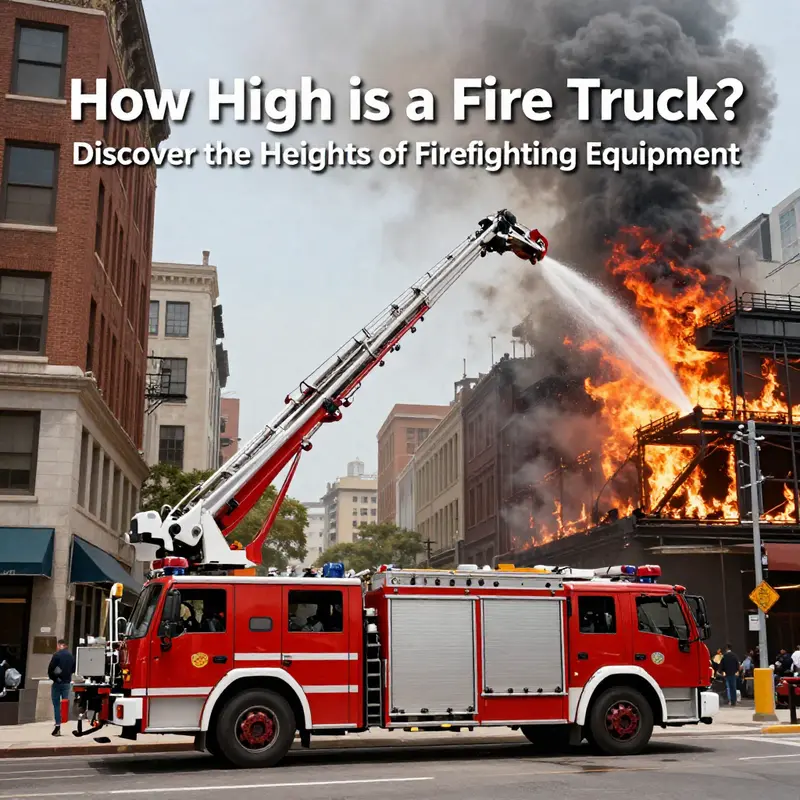
Reach is not only vertical. A record-setting system has demonstrated a water jet that travels roughly 159.66 meters (523 feet) from the nozzle in a controlled test — a reminder that a vehicle can project extinguishing agents across a wide expanse even when the ladder stays at a practical height.
Stability at Height
Height is inseparable from how the structure behaves at height. Aerial ladders rely on a turntable foundation and outriggers that extend outward to suspend the vehicle securely. The hydraulics must raise the ladder in a controlled arc while the base stays firmly planted. Operators account for wheelbase, ground conditions, wind, and the weight of water and crew at the ladder tip. The more extended the ladder, the more critical these factors become — a slight miscalibration at height can translate into disproportionate risk on the ground. Rigorous maintenance, inspections, and a disciplined safety culture keep the maximum reach within predictable, safe limits.
The Future of Reach
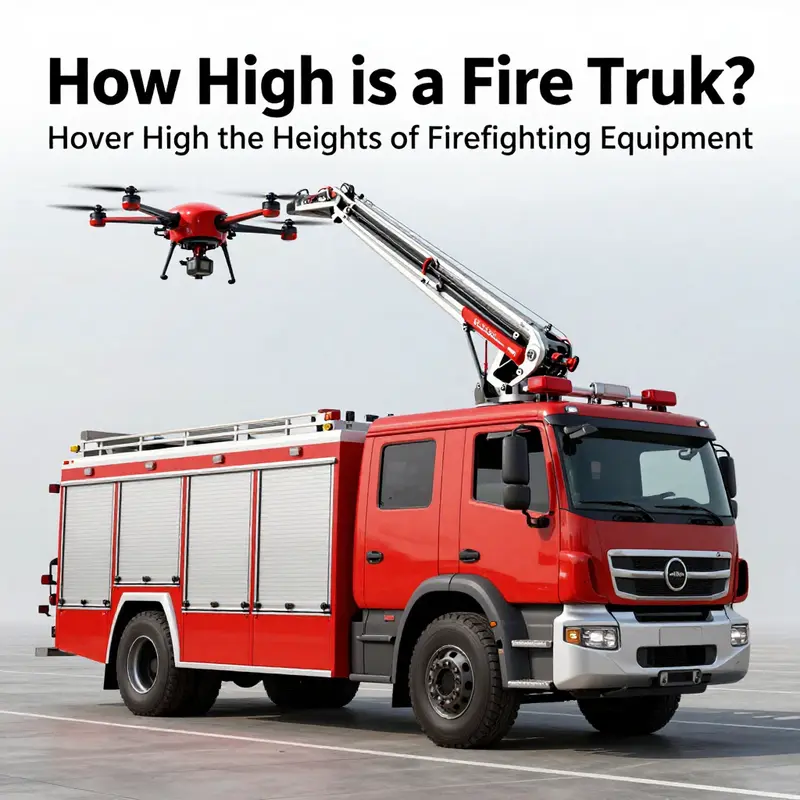
Height is a design constraint and a horizon that drives innovation. Wheel-to-leg concepts let vehicles walk over uneven terrain; AI-assisted navigation uses cameras, lidar, and thermal sensors to plan routes and assess hazards; smart aerial ladders can scan temperatures and adjust water focus automatically; drones extend reach and provide complementary capabilities. Lightweight composites and adaptive damping keep tall vehicles stable on uneven ground. The future fire unit is a family of integrated systems rather than a single instrument — height fused with speed, reliability, and safety.
Emergency Response Vehicles
The heights of fire trucks map to the realities of city life. Standard engines stay around 3.5 meters to navigate urban streets; aerial ladders reach 32 to 45 meters to cover most buildings; high-reach platforms extend to 65 meters and beyond for tall structures; and record-setting machines approach 138 meters for extraordinary rescues. Height matters, but only in the service of a clear plan, well-practiced procedures, and crews trained to operate complex machinery under pressure.
For more on high-reach aerial platforms, see the Bronto Skylift 101M, specializes in high-performance inflatable rescue boats, indispensable for extreme conditions, complemented by a global service network. Other notable players include Magirus manufacturer site, Popular Mechanics on future fire trucks, and a 32-meter aerial work truck as a reference point.