How High is a Fire Truck? Discover the Heights of Firefighting Equipment

Understanding the heights of fire trucks is essential for business owners in various sectors, especially those involved in urban planning, construction, and safety management. Fire trucks are not just vital assets for emergency services; their design plays a crucial role in navigating urban landscapes. From standard units to sophisticated aerial platforms and record-setting high-reach vehicles, each type of fire truck has a specific height that dictates its functionality and mobility. This article explores the heights of various fire truck models, highlighting how their design meets safety regulations and operational demands, ensuring that businesses are well-informed about the types of fire trucks available and potentially required for compliance and safety standards.

Raising the Roof: Understanding How High Fire Trucks Reach—and Why It Matters

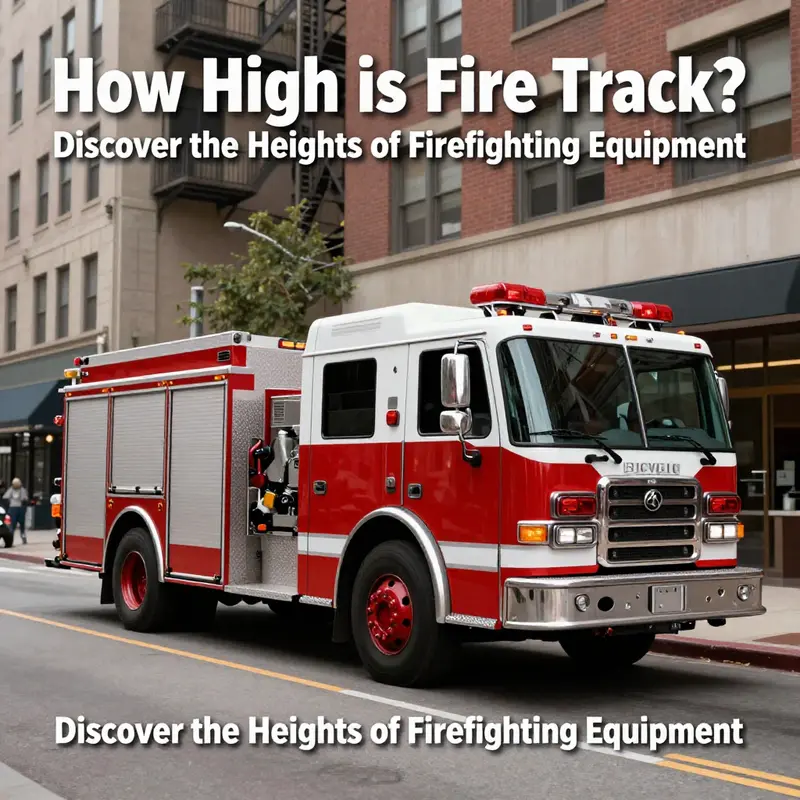
A standard fire truck demonstrating its typical height against city infrastructure.
The question of how high a fire truck sits in the street is deceptively simple, yet it opens a window into a world where safety, city planning, and firefighting strategy intersect. Height is not a single figure but a spectrum that depends on the type of apparatus, its configuration, and the mission it is built to perform. In urban settings, standard engines are designed to navigate streets, bridges, and traffic while leaving enough clearance for overhead obstructions. Ladder trucks extend higher because of their telescoping or articulating booms, pushing the vehicle’s overall height into a taller range. High-reach platforms exist for extreme conditions, but they are less common. Height is regulated by standards such as NFPA 1901, which helps ensure vehicles fit road infrastructure and support safe operation. In practice, departments balance reach against mobility, maintenance, and local geometry. For precise targets, NFPA 1901 remains the authoritative reference, with official guidance available from NFPA’s website. For an authoritative resource, see the NFPA guidance at https://www.nfpa.org/codes-and-standards/all-codes-and-standards/list-of-nfpa-codes-and-standards/detail?code=1901.

Climbing the Skyline: How High Can an Aerial Ladder Extend a Fire Truck?

A standard fire truck demonstrating its typical height against city infrastructure.
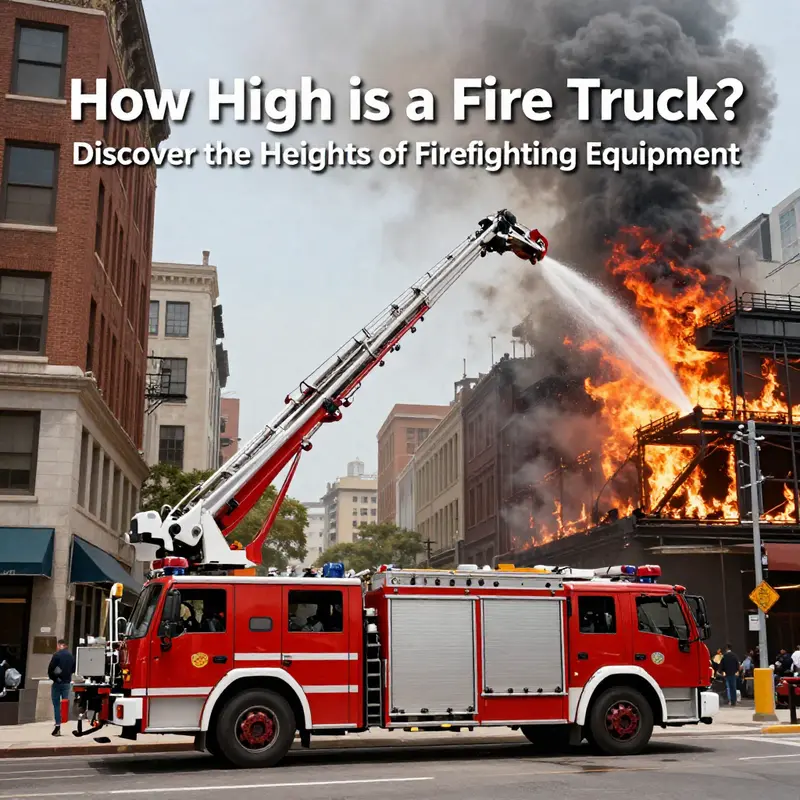
When firefighters answer a call, they face a challenge that blends speed, precision, and the humble geometry of height. A stairwell that climbs into the upper floors of a city block is a hard limit, but an aerial ladder truck—often seen as the red monster with a long, gleaming arm—reframes what is possible in a rescue or firefighting operation. The height a fire truck can reach depends on the vehicle’s design, the purpose it is intended to serve, and the careful engineering that keeps every extension safe under load. In the simplest terms, a standard, general-purpose fire engine carries equipment for a broad spectrum of duties and remains comparatively compact. These trucks, designed to weave through crowded streets, typically have a height that does not exceed about 3.5 meters, roughly 11.5 feet. They are built to negotiate city avenues, under bridges, and through tunnels where space is constrained. The height figure is not arbitrary; it is a practical boundary driven by the geometry of urban roads and the practical need to reach every neighborhood efficiently. Yet the story shifts when the apparatus is tasked with reaching tall structures, where the city’s skyline becomes the new horizon to conquer.

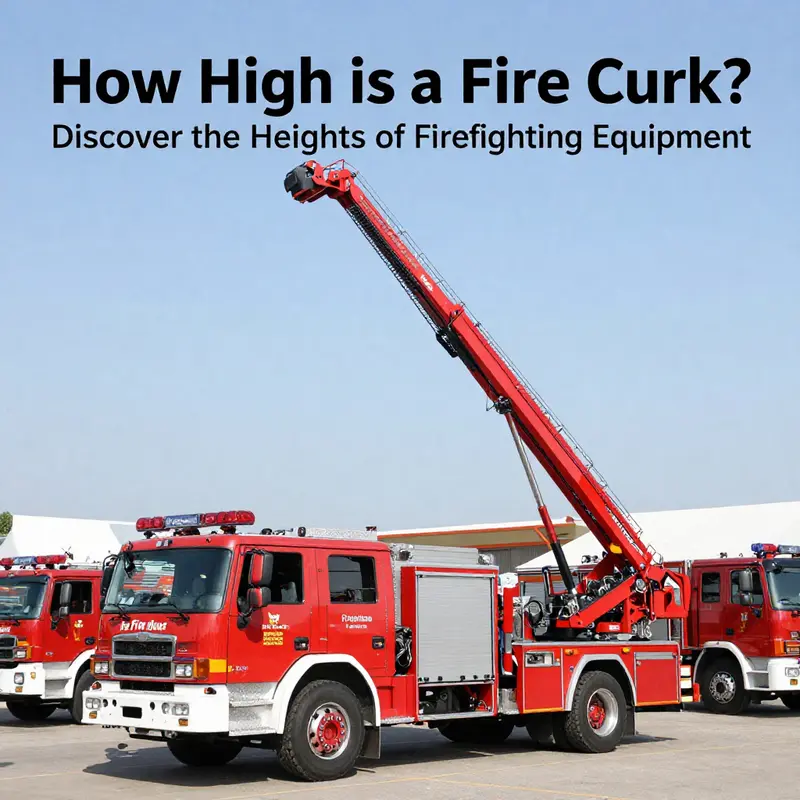
Aerial ladder trucks, also known as fire trucks with aerial ladders, are specialized tools built for elevation and precision. Their defining feature is a telescoping or articulating boom that functions as a vertical and horizontal conduit for firefighters. The height that such a vehicle can reach is not a single number but the maximum working height that the ladder can achieve when fully extended and correctly deployed. A common aerial platform for many urban fleets reaches about 32 meters, which translates to roughly 105 feet. This height is sufficient to access upper floors of a large portion of residential and commercial buildings, allowing crews to perform rescues, ventilate, or apply water from above where interior access is blocked or dangerous. The ladder is not merely a long straight piece of metal; it is a carefully engineered assembly with multiple sections that extend and lock in place, all powered by hydraulic systems. Each section adds length, but it also adds weight and complexity, so the design emphasizes smooth, controlled movement and robust safety controls.

If a city faces a different architectural profile—taller stairwells, higher floor counts, or more demanding rescue scenarios—the fleet may include taller aerials. Units with substantially higher reach exist, and in some cases the ladder can extend dramatically to meet extraordinary needs. For instance, there are platforms capable of reaching around 65 meters, or about 213 feet, for specialized operations. Such high-reach units are less common in ordinary urban service fleets because they come with heightened logistical and operational challenges: longer stabilizing baselines, heavier chassis, and the need for more space to maneuver and position the truck safely in tight streets. They are purpose-built for very tall buildings or complex rescue tasks where standard heights would prove insufficient.

Beyond vertical height, the practical value of an aerial ladder comes from its reach. The ladder’s horizontal capability—how far it can extend outward from its base—often complements the height. Firefighters can access a window or balcony on the far side of a façade or reach a point above a parapet without having to deploy from the building’s interior. The ability to project a line or a person toward a specific point on a façade hinges on both vertical height and horizontal outreach. This combination can yield a reach well beyond the simple vertical measure, enabling rescue operations that would be impractical or dangerous with a non-aerial truck.

The upper limits of height in practice are tested not only by the mechanical extension but by the stability demands of the platform. Aerial ladders rely on a turntable foundation and outriggers that extend outward to suspend the vehicle securely. The hydraulics must raise the ladder in a controlled arc while the base remains firmly planted on the ground. Operators must account for the wheelbase, ground conditions, wind, and the weight of water and crew at the ladder tip. The more extended the ladder, the more critical these factors become. In higher reaches, operators also manage dynamic effects: the ladder may act like a lever, and any sway must be minimized to protect the crew and the occupants of the target structure.

In urban practice, the most widely deployed aerials hover in a height range that covers the vast majority of city structures—roughly 32 to 45 meters. These heights align with the typical scale of many commercial and multi-story residential buildings, enabling firefighters to reach inner floors and rooftop areas with relative ease. Yet the urban fabric is uneven, and tall towers, crane-lit constructions, and long façades demand the possibility of higher reach. When a city anticipates such needs, it may incorporate higher-capability aerials into its fleet, balancing the benefits against the logistics of operation, maintenance, and road compatibility. The decision is never made in isolation; it reflects a city’s architectural profile, the prevalence of high-rise occupancy, and the readiness of crews to operate complex machinery with precision under potentially perilous conditions.

A key point often overlooked by casual observers is that height is only part of the equation. A unit that can reach 32 meters is not inherently superior to one that can reach 65 meters if the mission profile dictates frequent high-elevation rescues in buoyant urban canyons. The ladder’s mechanical design, its number of extensor sections, and the safety provisions embedded in its control systems determine how effectively it translates reach into capability. Some high-reach platforms incorporate advanced stabilization technology, enhanced hydraulic circuits, and safety interlocks that protect crew members during delicate operations. Others are built with modularity in mind, allowing fleet managers to tailor configurations to the city’s needs, whether that means more compact, rapidly deployable units or fewer, but longer, extended platforms for specialized incidents.

The question of how high a fire truck can reach inevitably touches on the realities of procurement and maintenance. For municipalities, the choice hinges on anticipated incident patterns, building stock, and the budgetary realities of maintaining complex machinery. A ladder around 32 meters offers a robust balance for many urban centers, delivering reliable elevation without imposing excessive weight, footprint, or maintenance demands. But when the city’s skyline features notably taller structures, planners may pursue higher-capacity aerials. In those cases, the purchase decision must include extensive training for operators, additional considerations for transportability through narrow streets and under urban obstacles, and the logistics of stabilizing and commissioning such equipment in the field.

Even as the height of these machines captivates attention, the human factor remains central. Preparing crews to operate aerial ladders safely requires rigorous practice with the controls, situational awareness for wind and terrain, and coordination with ground units. A typical operation demands clear communication between the driver who positions the truck, the ladder operator who handles the extension and angle, and the team at the tip who perform rescue or firefighting tasks. The safety culture surrounding aerial operations is built on redundancy, checks, and an unyielding respect for the limits of the equipment. Operators must understand not only how to extend the ladder toward a target but how to manage the consequences of an unsupported moment if stabilization fails.

For those studying or considering the breadth of capabilities in modern firefighting apparatus, it becomes evident that height is a spectrum rather than a fixed attribute. A typical urban fleet can efficiently reach mid-range heights that cover most emergencies, while specialized units exist to handle extraordinary scenarios demanding remarkable elevation. The highest records, even when framed by dramatic numbers, serve as reminders of both human ingenuity and the practical constraints that shape real-world use. In that sense, the true measure of capability lies in how height, reach, stability, and the crew’s training converge to protect lives and property under pressure. The ladder’s height must be paired with dependable mechanics, predictable control, and a team prepared to operate with discipline as the platform climbs toward the skyline.

As the conversation about height continues to evolve, it remains important to connect the concept to the everyday realities faced by fire departments. A city’s exposure to fire risk, the age and composition of its housing stock, and the tempo of emergency calls all influence the balance between standard and extended-reach aerials. Height alone cannot guarantee success; it is the orchestration of height with line, water supply, ventilation, and the rapid deployment of ground crews that determines whether a high-rise fire is tamed swiftly or escalates into a longer, more treacherous incident. The dynamic interplay between machine capability and human judgment anchors the chapter on aerial ladders in the broader narrative of fire-suppression engineering.

For readers who want a tangible point of reference about high-reach equipment, consider the broader landscape of available platforms and the numbers that populate vendor catalogs. While a standard, widely deployed aerial ladder might reach about 32 meters, specialized units extend to higher ranges for extraordinary rescue scenarios. The pursuit of ever greater reach sits alongside the equally important goals of reliability, serviceability, and the readiness of crews to deploy these tools under demanding conditions. It is in this balance—height, control, stability, training, and teamwork—that the true story of a fire truck’s reach emerges.

External resource: for additional context on high-reach aerial platforms and related equipment, see the following external resource: https://www.alibaba.com/product-detail/32-Meters-Aerial-Work-Truck-Lifting-Aerial_1600798791747.html

Rising to the Call: The Substantial Heights of High-Reach Firefighting Equipment

A standard fire truck demonstrating its typical height against city infrastructure.
Height matters in firefighting not as a vanity metric but as a practical threshold that defines what a vehicle can reach when seconds matter and stairwells vanish behind smoke. In many cities, the street level holds the key to a full rescue, and the geometry of roads, bridges, and tunnels sets a ceiling for standard fire engines. Those conventional machines are designed to slip through urban arteries with a height limit that keeps them clear of the everyday obstacles that crowd our cities. In the typical line of work, a standard firefighting vehicle has a height that rarely exceeds 3.5 meters, roughly 11.5 feet. This constraint isn’t a mere preference; it is a design choice rooted in the need to navigate low underpasses, narrow lanes, and a patchwork of municipal infrastructure. A common sight on the streets at ground level is a foam or water tender whose cabin and equipment stack just high enough to fit without scraping the tops of doors or overhangs. Yet when a blaze climbs the sides of a high-rise, those same constraints that keep routine rigs from getting hung up become a barrier to life safety. Here is where the next generation of firefighting machinery—high-reach platforms—enters the narrative. These machines redefine the problem by separating the vehicle’s own height from the working height at which crews can operate. The height that matters for rescue and suppression is the maximum working height, a specification that speaks to reach, not merely the size of the chassis. In practical terms, many high-reach platforms are engineered to extend far beyond the average cityscape, achieving working heights well into tens of meters. A broader category of these giants commonly spans the mid-to-high teens in meters when fully extended, with models around the fifty-meter mark representing a workhorse class for most urban fires and rescues. The scale matters because the taller the platform, the greater the potential to access upper floors, roofs, and voids that would otherwise be inaccessible from the ground. This shift—from vehicle height to working height—has transformed urban firefighting design, training, and strategy. It also reframes the risk calculus that fire departments perform when assessing deployment. The decision to bring in a high-reach unit is not just about what can be reached but about how safely it can be maneuvered, stabilized, and operated on the precarious edge of a building and a battalion of smoke. The interplay of reach and stability is not a trivial one. A high-reach platform must contend with dynamic forces: wind, rotating booms, and the weight of occupants and equipment suspended at the end of an extended arm. The engineering response to these forces centers on a robust hydraulic system, a carefully choreographed set of counterweights, and a spreading framework of outriggers. In most configurations, the outriggers form a wide base, often spanning several meters to distribute weight and resist tipping as elevation angles increase. The workman at the platform is not merely a spectator to the height; they are part of a carefully regulated system where position, angle, and extension are constantly monitored to keep the craft within safe boundaries. The sight of a high-reach platform lifting toward the upper stories of a glass-clad tower signals a different kind of urban response—one that blends structural engineering with on-scene improvisation. These machines can integrate comprehensive onboard firefighting systems, including built-in water delivery that allows crews to spray water or foam directly to upper floors during a blaze, even as the vehicle remains anchored on stable ground. The design philosophy prioritizes a balance between reach, load capacity, and control. In practical terms, a platform that reaches far into the sky must also be able to carry a crew, rescue equipment, and water effectively, all without compromising the operator’s ability to monitor the arm’s position. That balance is achieved through sophisticated hydraulic control, real-time monitoring of elevations and angles, and safety boundaries that guide every movement. It is no accident that the safety designs referenced in national and international standards emphasize not only how tall a platform can reach but how reliably and safely it can reach it. The modern high-reach system embodies this philosophy through components such as wide-spread outriggers, precision hydraulic drives, and feedback systems that keep operators informed of load limits, structural angles, and wind effects. The mathematics behind such a system are not abstract. They translate into real-world constraints: a towering reach is useless if the base cannot remain stable on uneven ground; a generous working height is meaningless if the apparatus cannot be deployed quickly in a congested street scene. These realities shape how fire services plan responses to tall buildings, where access points, stairwells, and elevator shafts intersect with the architecture of the city itself. As a result, facilities with tall occupancies demand a broader palette of tools. The standard high-rise scenario for many departments centers on platforms in the neighborhood of forty-five meters in working height, a figure that covers a vast majority of residential and mid-rise structures. An order of magnitude higher demands events that push beyond ordinary architecture, requiring platforms that can climb toward the uppermost floors and even rooftops. In the realm of record-breaking capability, one extreme example stands out for its scale: a 101-meter aerial platform that represents the upper edge of current feasibility for vertical reach. Upright, it stands at about four meters tall, adding a compact footprint to the gallery of giants. When fully extended, the main boom and its secondary stage unfurl into a towering apparatus capable of placing a platform at the topmost floors of the tallest façades. The outreach—how far horizontally water or occupants can be moved from the base—reaches about 27 meters, a parameter that translates into real rescue potential across wide street profiles. Yet height is only one piece of the equation. Wind resistance, a critical factor when dealing with aerial operations, can be formidable; in this case, the system is designed to withstand gusts up to a modest wind speed, ensuring that operations remain controllable rather than compromised by meteorological forces. The platform’s work area is designed to accommodate a crew and essential gear, with a safety margin that allows as much as 400 kilograms to be supported at the end of the arm. The total mass of such a machine is in the neighborhood of several dozen tons, reflecting the combination of structural heft, hydraulic power, and ballast that maintain stability as the arm climbs. The practical takeaway from these specifications is clear: the height is not simply a numerical marker but a reflection of the capabilities and limitations that determine where, when, and how high a fire service can operate. These high-reach configurations are engineered to meet the demands of modern cityscapes, where taller residential towers and sprawling commercial complexes create fire safety challenges that were unimaginable a generation ago. The design choices—outreach, wind resistance, platform weight, and load capacity—cohere to form a system that can extend the reach of rescue and suppression to upper floors, while still being maneuverable enough to respond rapidly in urban traffic and confined spaces. In this sense, the substantial heights of high-reach firefighting equipment mark a tangible evolution in urban safety. They illustrate how engineering, safety standards, and practical firefighting needs converge to extend human reach beyond what a ground-based approach could ever achieve. The numbers—3.5 meters for standard vehicles, 45 meters as a common high-rise working height, and 101 meters as the upper echelon—present a spectrum that maps to the realities of city life and its architectural scale. They remind us that technology in service of safety is not a singular leap but a ladder of progress, each rung enabling access to a higher floor, a safer roof, and a more assured rescue. For readers seeking a deeper dive into the specifications and operating guidelines that underpin these machines, reference materials from the industry’s safety and engineering bodies provide a robust framework. As cities continue to rise and the demands of urban life push fire safety higher, the evolution of high-reach firefighting equipment will remain a critical pillar of resilience, enabling responders to confront fires and emergencies at heights once thought unreachable. External resources offer technical detail and safety considerations that complement the on-the-ground experience of crews, reinforcing the essential idea that higher reach translates into higher odds of saving lives. External resource: https://www.bronto.sk/en/products/bronto-skylift-101m-aerial-platform-fire-fighter

The Skyline of Rescue: How High, How Smart, How Fast Fire Trucks Will Reach

A standard fire truck demonstrating its typical height against city infrastructure.
Height matters for fire trucks. It defines what can be reached and where they can travel. On standard fleets, most stay under about 3.5 meters tall, a practical limit that helps navigation on crowded streets and under bridges.

Aerial platforms push the boundary far above street level, enabling access to upper floors and roof lines. Today, a common high-reach platform tops out around 55 meters, with multi-axle configurations tested beyond 90 meters in demonstrations. Height is both a design constraint and a horizon that drives ongoing innovation.

Transformable mobility is reshaping the fleet. Wheel-to-leg concepts let the vehicle walk over uneven terrain or obstacles. Such systems promise faster responses and greater resilience in urban cores while demanding new powertrains, control software, and crew training.

Inside the vehicle, AI-assisted navigation serves as a partner. Real-time sensor data from cameras, lidar, and thermal sensors helps plan routes, assess hazards, and maintain safe margins. The goal is to keep the unit moving toward the scene without unnecessary delay while protecting bystanders and infrastructure.

At the site, the smart toolkit enhances precision and safety. The smart aerial ladder can scan temperatures and adjust water focus automatically. Drones can extend reach and provide complementary capabilities for rapid containment and safer approaches for ground crews.

Beyond suppression, the platform enables rescue with guarded corridors and guided lines that help occupants and responders reach safety. The ambition is to minimize risk by extending reach and reducing exposure.

Technologies at the chassis and armature level emphasize resilience. Lightweight composites, smart alloys, and adaptive damping keep a tall vehicle stable on uneven terrain while multi-modal capability allows ground mobility, air assistance, and rapid reconfiguration of tools and payloads.

The future fire unit is a family of integrated systems rather than a single instrument. Height remains a visible signal of capability, but it is increasingly fused with speed, reliability, and safety. The result is a dynamic platform that can descend into a subway tunnel, cross a damaged bridge, and deliver targeted water or cooling where it matters most.
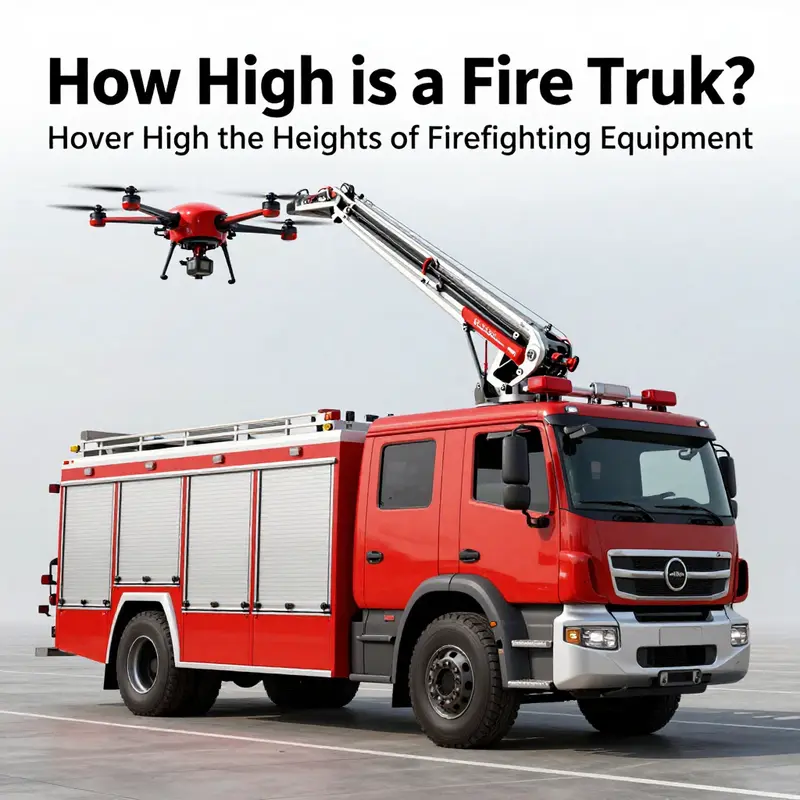
To explore how height translates to real-world outcomes, consider training, maintenance, and urban planning. The emphasis is on enabling life-saving actions, not simply pursuing a taller machine.

For readers seeking practical examples, public coverage of future fire trucks and smart technologies offers accessible context: https://www.popularmechanics.com/technology/infrastructure/a45729977/future-fire-trucks-smart-tech/

Toward the Sky: The Record-Breaking Reach of Fire Apparatus and Its Implications for Rescue

A standard fire truck demonstrating its typical height against city infrastructure.
At the scene of a city fire, the ladder truck looms like a mechanical skyscraper, its ribs of steel catching light as it reaches toward the building’s upper floors. The question that often travels faster than the sirens is simple: how high can a fire truck go? The answer begins with a practical baseline. Standard fire engines, the workhorses of urban firefighting, are designed to fit between parked cars, across narrow streets, and under low bridges. Their height rarely exceeds about 3.5 meters, roughly 11.5 feet. In real terms this means they can squeeze through ordinary city corridors, slide under overhead wires, and turn onto residential streets without scraping the skyline of a neighborhood. Even among these workhorses, a few specialized variants exist that push the envelope only a little higher—foam and water tenders, for instance, tend to come in around 3.4 meters, about 11.2 feet. These are the first numbers that ordinary sets of firefighters memorize, because they signal the practical limit of what a vehicle can do in daily duty without needing exotic infrastructure.

Beyond the ordinary, the art and science of high-reach apparatus emerge. Aerial ladders and platforms are engineered to extend upward, sometimes by telescoping sections that slide out like the chambers of a long organ pipe. When a ladder or platform is described as 55 meters tall, that describes its maximum height when fully extended. In straight terms, that is about 180 feet—the height at which a crew can reach balconies, windows, and rooflines of mid- to tall-rise buildings. Larger configurations exist that can rise even higher, reaching roughly 91 meters, about 300 feet, in some configurations. These numbers are not mere curiosities; they translate directly into rescue capacity and water delivery in environments where stairs vanish behind collapsing walls and ladders become a lifeline suspended in the air.

Yet the true edge of height in firefighting lies at the intersection of engineering ambition and real-world application. The pinnacle of height that a single apparatus can maintain safely is a topic of ongoing innovation. The highest reaches reported in specialized contexts approach the upper hundred meters, with some towers and platforms able to achieve or maintain heights near 138 meters, or about 450 feet, under certain operating conditions. These exist not as everyday tools but as specialist assets deployed in situations where conventional ladders would be impractical or impossible to deploy. In practice, such extreme-height configurations demand ample space, meticulous planning, and support from the ground to guarantee stability, apparatus loading, and a coordinated crew. In many industrial or very tall rescue scenarios, a vehicle of this magnitude becomes a temporary, purpose-built scaffolding in motion, a mobile ladder that can grant access to otherwise inaccessible façades.

Even more striking are the distances that modern fire systems can project water or foam. In the age of extremes, a record-setting system has demonstrated a water jet that travels well beyond the reach of any building. The jet can extend to roughly 159.66 meters, about 523 feet, from the nozzle in a controlled test. This statistic underscores a different kind of reach: even if the ladder must remain at a practical height, the ability to propel extinguishing agents across a wide expanse can radically alter the tempo and geography of a firefighting operation. It also reveals how contemporary systems blend mechanical reach with fluid dynamics, turning a single vehicle into multiple tools: access, spray, and rescue-laden capability are fused together in the same platform. In other words, reach is not only vertical; it is extended through the arc of a powerful stream that can cross streets, reach above balconies, and hit targets that stand beyond the line of sight from the ground.

To engineers, the question of height is inseparable from how the structure behaves at height. The telescoping presence must stay rigid, predictable, and safe as it climbs and as it leans toward a target. This requires sophisticated hydraulics that synchronize multiple sections, balanced by reinforced materials that resist bending, torsion, and fatigue under dynamic loads. The control systems must render each extension or retraction as a calm, deliberate motion rather than a reckless lurch. Pilots and operators spend hours in training to master wind gusts, uneven ground, and the sway of the vehicle when the platform is extended to its limits. The mathematics behind the operation is as exacting as any calculation in aviation or rock climbing: a slight miscalibration at height can translate into disproportionate risk on the ground. The result is an apparatus that is not merely tall but carefully tuned to align reach with stability, speed with safety, and ambition with restraint.

Behind each number lies a spectrum of decision making. Agencies that require extreme height do not rely on a single tool; they assemble a family of assets designed for different tasks. A taller unit excels at reaching upper stories and performing rescues at a distance, while a slightly shorter configuration may offer greater maneuverability and steadiness on constrained sites. Both forms must share the same discipline: rigorous maintenance, thorough inspections, and a disciplined safety culture. Infrastructure is equally critical. Grounds must be measured, drainage kept clear, and surrounding space carved out to accommodate the truck when it raises its arm. This is not a spectacle of metal rising above a skyline but a coordinated operation whose success depends on ground conditions, traffic management, and the timing of every movement.

Historically, where cities define their horizons with glass towers, the demand for height in emergency response follows. When a structure grows taller than the average ladder can reliably reach, planners and responders must pivot toward alternatives—the aerial platform, the high-reach water system, and the possibility of complex rescue procedures that involve ropes and belay systems. The most capable high-reach arrangements function as a dynamic bridge between the street and the upper floors, a temporary scaffold that exists only while needed and then withdraws. In those moments, height becomes a strategic asset, enabling firefighters to deliver water, cut off flames at the source, and create egress paths for occupants who would otherwise be trapped. Yet height is never pursued in isolation; it is part of a broader calculus that includes response time, water supply, crew safety, and the predictability of the vehicle’s behavior under pressure.

For readers curious about where such assets fit in the real world, consider the broader picture. The highest-reaching equipment exists primarily for specialized applications, such as rescuing people from very tall or precarious structures, or delivering extinguishing agents into spaces inaccessible by conventional means. The everyday urban firefighting fleet continues to rely on shorter, more versatile platforms designed for rapid deployment, close-quarters work, and frequent movement through traffic. The contrast is not a contradiction but a continuum: a city benefits from having both a robust, nimble core fleet and a handful of extreme-height platforms ready for rare but consequential operations. The safety implications are as important as the capabilities; each asset is bound by strict testing, certification, and maintenance routines that keep its maximum reach within predictable, safe limits.

Looking ahead, the trajectory of height in fire apparatus is inseparable from how cities grow and how risks evolve. As high-rise construction accelerates, the ceiling for reach will rise accordingly, but so will the demands for ground support, risk management, and mutual aid. The engineering story is not simply about stretching a ladder higher; it is about reimagining the entire geography of an incident scene. A taller truck reshapes the logistics of water supply, the choreography of crew assignments, and the sequence of decisions that must unfold within minutes. It also reshapes the public conversation around safety. When communities see vehicles that glide skyward in a controlled arc, they gain a sense of the scale of emergency response and the seriousness with which responders approach the mission to save lives and protect property. The takeaway is simple: height matters, but only in the service of a clear plan, well-practiced procedures, and a culture of continuous improvement that keeps pace with urban growth and fire dynamics.

To bring the discussion full circle, the extremes of reach remind us that firefighting is as much about geometry as courage. The ladder becomes a lever by which a crew can tilt risk away from vulnerable occupants and toward a controlled, deliberate action. The conversation about height is not an abstract debate but a practical inventory of tools, terrain, and tactics. In a field where seconds count and every degree of lean matters, the most effective response merges engineering rigor with disciplined teamwork. High reach is not a standalone spectacle; it is part of a deep, ever-evolving system designed to expand the boundaries of what is possible while preserving the safety of those who wield the equipment and those who depend on it.

For those who want to explore further details, the ongoing development of high-reach apparatus continues to be documented by manufacturers and research bodies. The numbers tell a story, but the story itself is about how communities prepare to face emergencies that demand height, reach, and precision when every moment counts. Read more at the manufacturer’s official site: https://www.e-one.com/.

Final thoughts

The heights of fire trucks reveal significant insights into their design and operational capabilities. From standard models that are essential for city navigation to aerial ladder trucks that enable effective responses to emergencies in high-rise buildings, understanding these measurements is crucial for business owners involved in planning and safety. Innovations in technology are enhancing the capabilities of firefighting equipment, pushing the limits of how high fire trucks can reach. By keeping abreast of these advancements and understanding different fire truck types, business owners can ensure compliance with safety regulations while effectively planning for emergency responses. The world of firefighting technology continues to evolve, and our awareness of it will aid in creating safer urban environments.