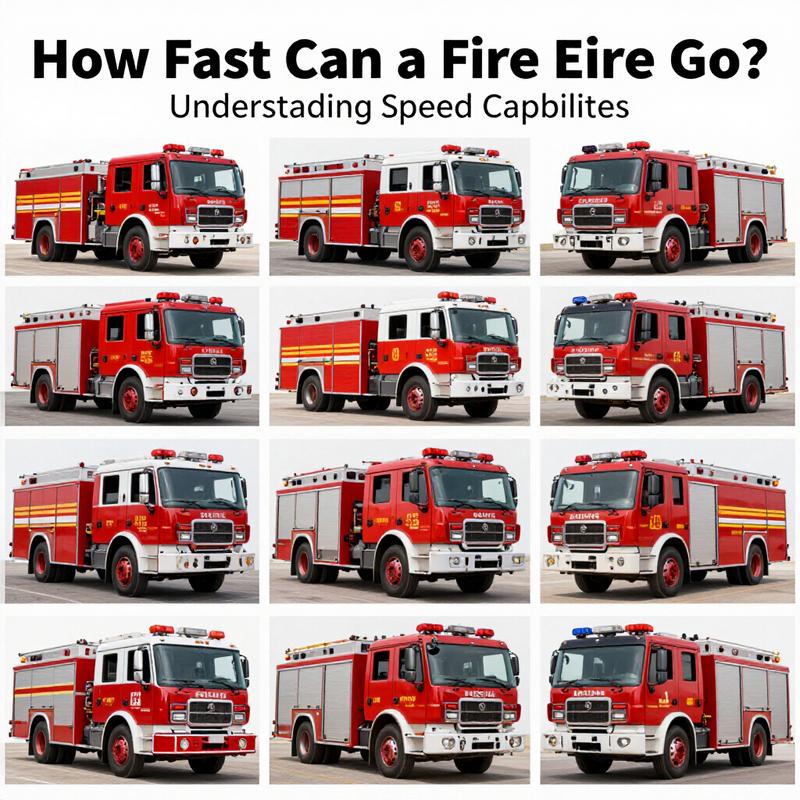
Fire truck pumping capacity is expressed in gallons per minute (GPM), and it is not a single number but a spectrum tied to the truck’s mission, the terrain where it operates, and the engineering of the pump and its plumbing. The answer to “how many gallons per minute does a fire truck pump” depends on the type of apparatus.
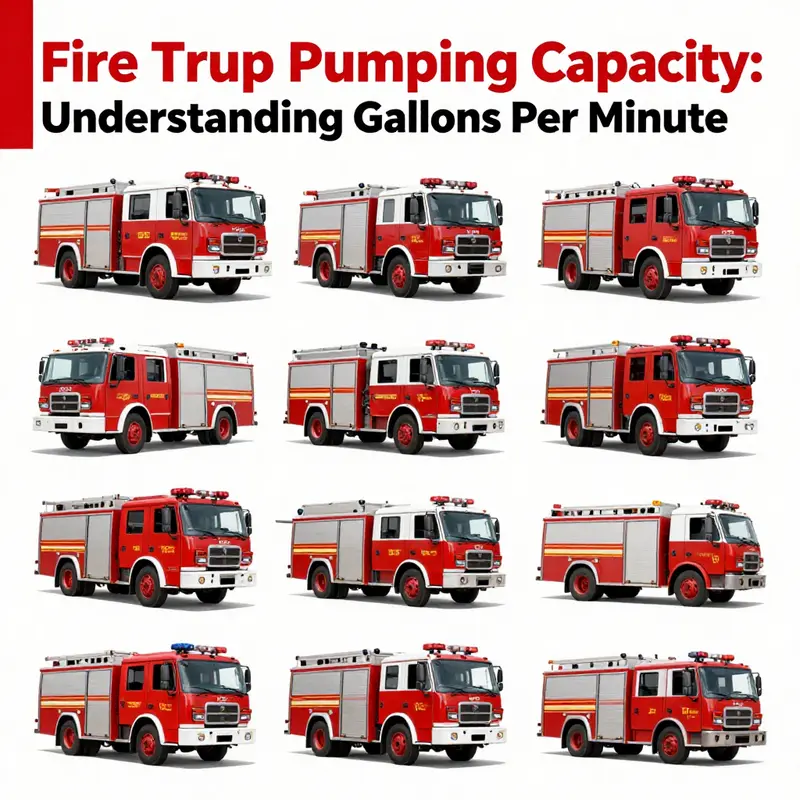
GPM by Vehicle Class
| Vehicle class | Typical pump capacity |
|---|---|
| Small fire trucks | 250–2,000+ GPM |
| Type 1 urban engine | ~400 GPM minimum baseline |
| Type 2 pumper | 250–500 GPM |
| Type 3 rural / off-road | 500–2,000+ GPM |
| Full-size urban engines | 1,000–2,000 GPM |
| Pumper trucks (general) | 500–1,500 GPM, often near 1,000 GPM |
| Quints and aerial platforms | Exceed 1,500 GPM |
| Tankers / water tenders | 300–800 GPM, carrying 1,000–3,000 gallons |
The urban workhorse engine uses a ~400 GPM baseline to ensure rapid suppression in the first minutes, and many urban engines sustain higher flows when the water supply is reliable. Type 2 pumpers serve municipal and suburban communities with flexible, modest flows. Type 3 engines, built for rugged terrain and rural access, can span 500 to 2,000+ GPM because they must offset long distances from water sources. Full-size city engines commonly deliver 1,000 to 2,000 GPM, and some configurations push beyond that.
Quints and aerial ladder platforms combine elevated water delivery with pumping, and their configurations often permit higher capacities than a pure pumper — frequently exceeding 1,500 GPM. Tankers tell a different story: they carry large water volumes (often 1,000 to 3,000 gallons, and 5-ton models 1,500 to 3,000 gallons) and rely on transfer pumps and drafting, with pumping capacity in the 300 to 800 GPM range. Their value is sustaining water flow through a network of hoses and transfer points, especially where hydrants are absent.
The Regulatory Baseline
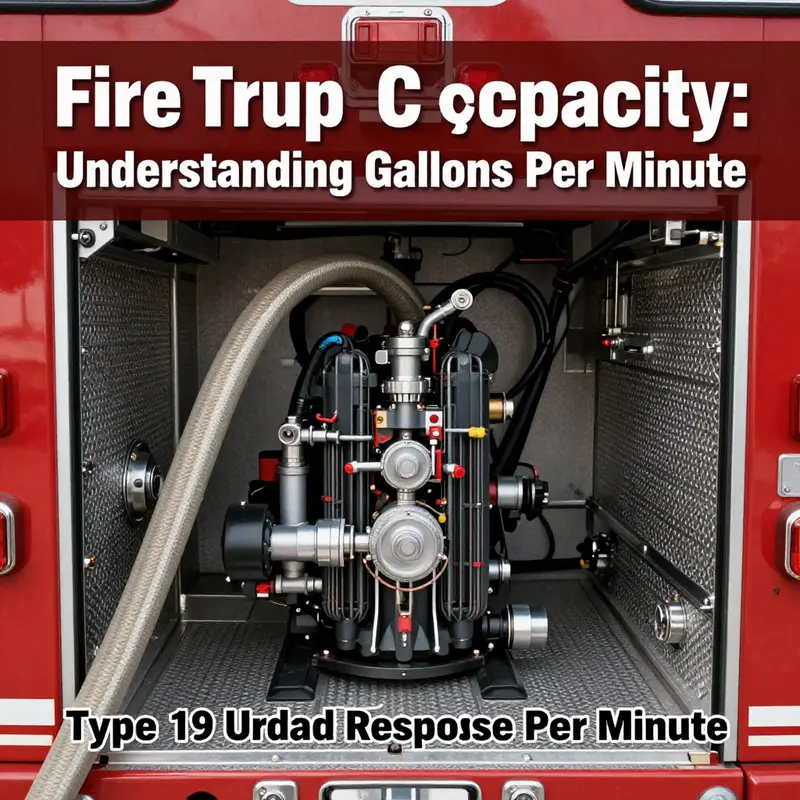
NFPA 1901, the Standard for Automotive Fire Apparatus, anchors these expectations. It requires pumps to deliver at least 1,000 GPM at 200 psi — a baseline reflecting urban realities where multiple streams must be coordinated. Many modern departments operate pumps rated at 1,500 GPM or higher, and in demanding contexts — industrial facilities, airports, wildland-urban interfaces — capacities can exceed 3,000 GPM. NFPA 1917 covers vehicle design and operation specifics. International standards EN 1846 and ISO 6006 offer parallel pump performance criteria across regions.
The standards also define testing: pumps are measured under conditions that mirror real response scenarios, with calibrated flow meters and pressure gauges verifying that the stated capacity is achieved. The pump curve — how flow changes with pressure — becomes a practical tool for predicting behavior when hose lines are extended and friction losses accumulate.

What Actually Determines GPM on Scene
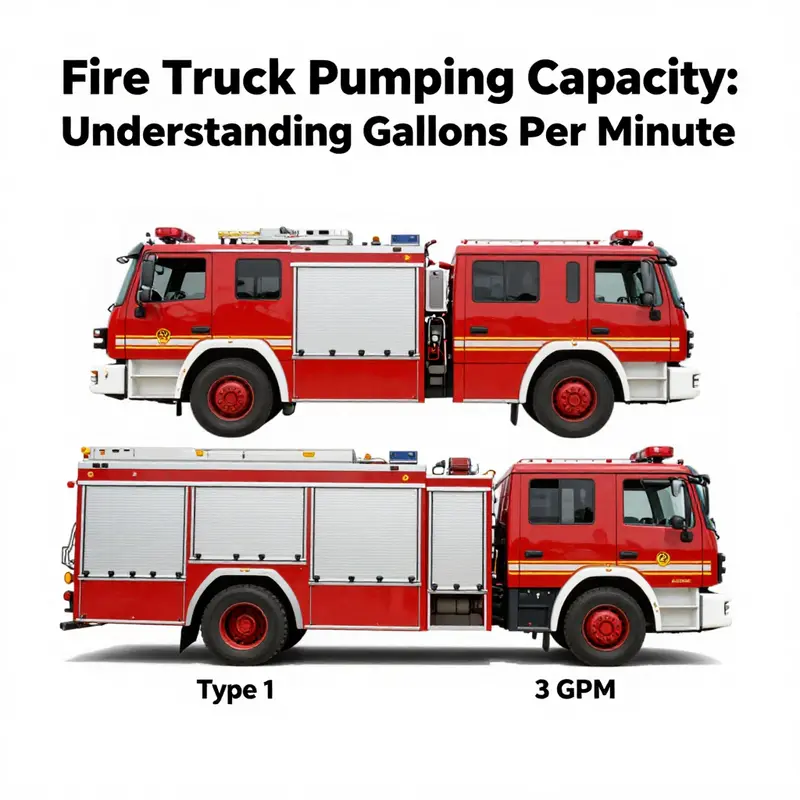
The rated GPM is only a starting point. What reaches the nozzle depends on the interplay of pump design, intake capability, discharge arrangement, and water source:
- Intake and drafting: When a truck taps hydrants with large-diameter suction lines, flow can rise dramatically if the intake sustains the required suction without cavitation. Drafting from ponds, rivers, or portable tanks adds gravity and ambient losses that can cap achievable GPM without extra equipment.
- Discharge arrangement: A single large-diameter outlet pushes water quickly, but multiple outlets feeding several attack lines add friction losses that reduce effective GPM at the farthest nozzle.
- Nozzle pressure: Higher pressures produce more force but can decrease flow if hose size, length, or obstructions introduce resistance.
- Priming: Many pumps require a priming sequence to fill the suction line and remove air; a clean, air-free suction path is essential for achieving rated GPM.
Friction loss — the cumulative pressure drop along a hose — is the invisible limit on practical GPM. Elevation changes, cornering, and vehicle dynamics further modulate where the flow ends up.
Design and Tactics
The pump is embedded in a chassis whose strength and geometry influence how consistently it reaches target GPM over time and under heat stress. Compact, enclosed pump bays shield seals and fittings from dust and debris. ARFF trucks add turret nozzles and underbelly discharges to steer and distribute water in ways a conventional handline cannot.
Higher capacity carries responsibilities. Sustained high flow demands meticulous maintenance, vigilant inspection, and disciplined operator training. Operators must understand pump curves, friction losses, elevation effects, and hose diameter — and monitor fuel burn and engine temperature across hours of operation, because sustained high flow can erode efficiency and risk overheating.
The Bottom Line
GPM is a means to an end: rapid, effective water application. The right capacity depends on risk, geography, and the anticipated incident mix. A city with a dense built environment and a comprehensive hydrant system may lean toward higher baseline capacities; a rural watershed may match capacity with robust drafting and water shuttle planning. In every case, the pump, chassis, hose layout, and crew training must work as one system.
For examples of compact platforms that balance maneuverability with pumping capability, see the small fire truck category. For the authoritative framework, consult NFPA 1901, NFPA 1917 updates, and the NFPA main site. For a look at water and foam firefighting trucks, see North Benz.