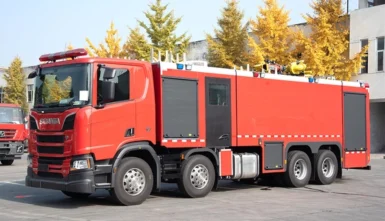
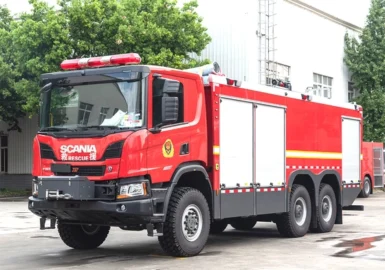
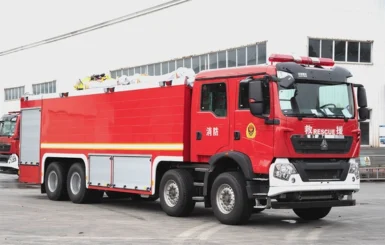
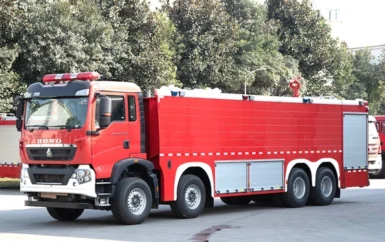
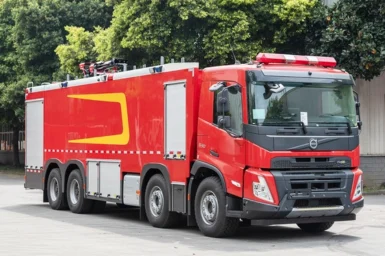
Heavy Duty Fire Truck

Heavy Duty Fire Trucks

Heavy Duty Fire Trucks for Long-Duration Attack

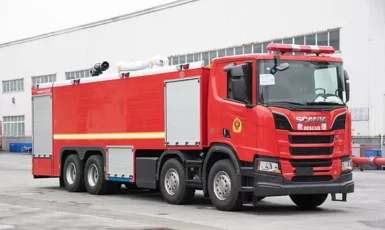
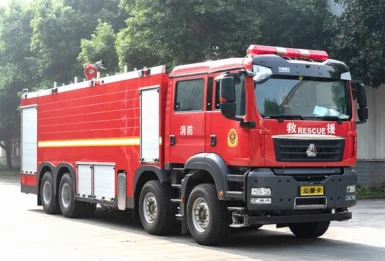
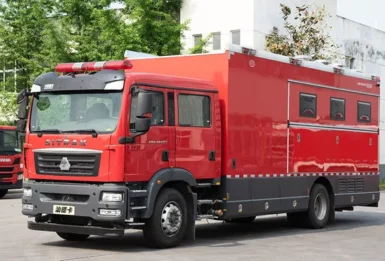
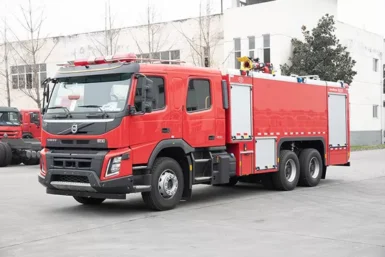
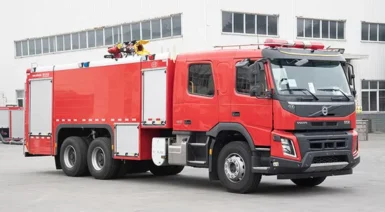
A heavy duty fire truck is a water and foam reservoir with a pump attached. The range covers 16–25 t appliances on 6×4 and 8×4 chassis, with 100–170 L/s pumps and monitors sized for tank farms, warehouses and large-scale mutual aid. For brigades and industrial fleets that need to sustain an attack for longer than a first-response pumper can, or supply a shuttle with a large mobile reservoir.

The range is delivered through CIMC Firetruck, with core manufacturing at Sichuan Chuanxiao in Chengdu. Every enquiry is tied to a written specification, a chassis or component availability date and a documentation pack for tender, registration or customs review.

25 tMaximum liquid load
170 L/sPump flow
8×4Heavy chassis
2,000 L/minMonitor class
Why the specification matters

Why Heavy Trucks Are Bought for Duration, Not Peak Flow

A 25 t tanker that empties in eight minutes is a water source, not a fire appliance. The useful specification is the balance between tank volume, pump flow and refill time.

Large fires consume water faster than a municipal main can replace it. A heavy appliance buys time: it sustains the monitor while a shuttle or relay is established, and it can dump its load quickly into a portable tank without committing the crew to a fixed hydrant.

The commercial case is decided by four things: tank volume, dump rate, pump flow and axle load; the usable capacity, 16–25 t of water and foam; crew and equipment fit; and the documentation needed for registration or tender. A lower purchase price that ignores one of those numbers is usually paid back in downtime.

Specification control

The tank volume, dump rate, pump flow and axle load are fixed in one drawing package before production. The customer approves the interface, the performance figures and the equipment list as a set, not as separate purchase orders.
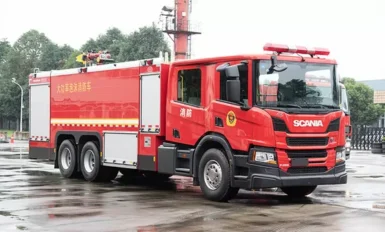
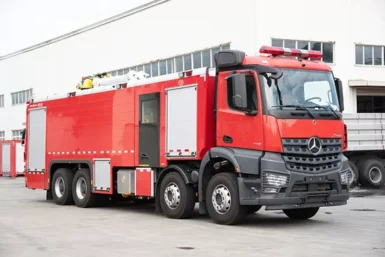
One system, one supplier

The body, tank, pump, control logic and equipment mounting are engineered together. The interface risk sits with one build team, not between an importer, a body builder and a component supplier.

Capacity with margin

The specification is built around 16–25 t of water and foam, then checked against the chassis axle rating, the stability envelope and the duty cycle. The advertised maximum is not used as the design point.

A layout for the crew and the task

The body is laid out around a 2–6 person crew, a rear dump valve and a pump room that can be serviced at ground level, with the controls, hose bed, lockers and equipment reachable from the ground. The crew should not have to climb on the roof to start the attack.

Service and parts

Each heavy duty fire truck is delivered with a model-specific parts list, a first-year consumable recommendation and a documented service schedule. Wear parts are identified before delivery, not after the first failure.

Documentation before dispatch

Dimensional drawings, test records, operation manuals and the inspection file are prepared before shipment. The tender or registration package is reviewed against the destination requirements.

Practical use cases

Where Heavy Duty Fire Trucks Are Used

Start with the incident, the access and the water or power source. The configuration follows.

01

Tanker shuttle operations

Large tanks, fast dump valves and a pump that can refill from a draft or hydrant without rearranging the hose layout.

02

Refinery and terminal support

Foam tanks, high-flow monitors and a body that can support a sustained foam attack alongside a dedicated industrial appliance.

03

Warehouse and logistics fires

High-volume water and CAFS options for deep-seated fires, with monitor reach over the roof line.

04

Airport and port mutual aid

6×4 and 8×4 chassis with foam proportioning for fuel spills and large-area incidents.

05

Forest fire base support

A mobile reservoir for filling small trucks and backpack pumps, with a pump for relay or filling.

06

Municipal surge capacity

A heavy pumper that can support a first-alarm structure fire or a water shortage without a separate tanker.

Certification and documentation

Certified, Tested and Documented for Tender Review

The certificate and the test record are part of the product, not paperwork added after the order.

ISO 9001 · 14001 · 45001

Management systems audited

Quality, environmental and occupational health and safety management systems certified to GB/T 19001, GB/T 24001 and GB/T 45001. Certificates are available for pre-qualification.

GB 7956.3

Foam truck standard

Foam and water tankers are engineered around GB 7956.2 and GB 7956.3, covering tank strength, baffles, pump performance and monitor operation.

Axle and stability

Load case documentation

Each build includes an axle-load calculation, a stability check and a tank baffle design for the specified liquid load. The final figures are confirmed in the signed drawing package.

Export file

Market-specific documentation

For markets outside China, the technical file is built around the standard named in the tender. Applicability and third-party certification are confirmed in writing before contract.

Product line

Compare Representative Models

Representative configurations from the current range. Final tank, body, equipment and chassis are fixed in the signed technical specification.

Model or platformKey specificationBest for
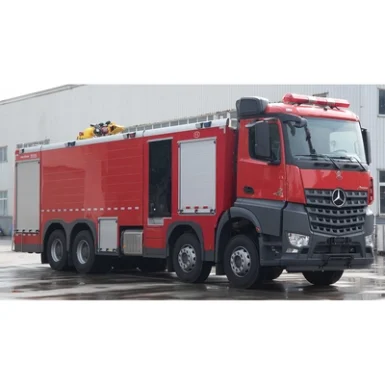
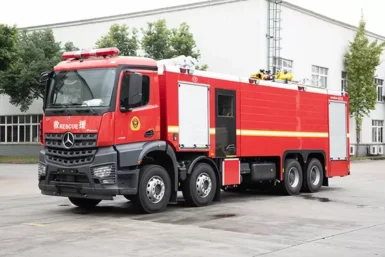
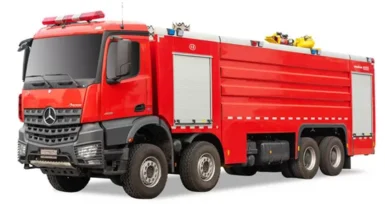
SXF5401GXFSG200Mercedes Benz Heavy Duty Fire Truck with 20 Tons Water Tank 20 t Tanker shuttle operations View model →
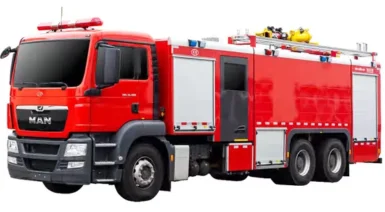
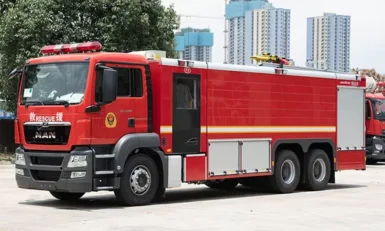
SXF5291GXFPM120Germany MAN Heavy Duty Fire Truck with 12000L Water and Foam Tank 12,000 L Flammable liquid response View model →
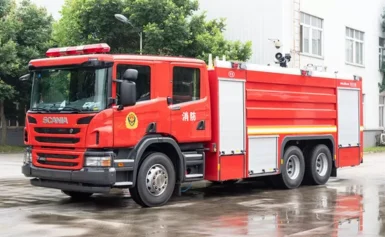
SXF5331GXFPM160/S16T SCANIA Heavy Duty Fire Engine with Double Cabin and Water Pump 16 t Warehouse and logistics fires View model →
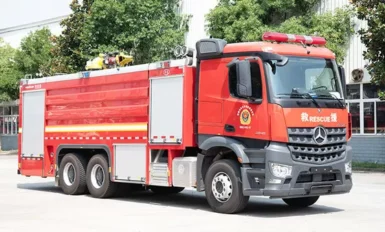
SXF5381GXFPM18018000L Mercedes Benz Heavy Duty Fire Truck with 580 Horse Power 18,000 L Airport and port mutual aid View model →
SXF5432GXFPM250/VVolvo 25-Ton Foam Fire Fighting Truck Heavy tanker; foam monitor Flammable liquid response View model →

Specifications are representative and vary by model, chassis and destination. Confirm the final configuration, axle load and performance figures in the signed technical agreement.

Manufacturer

Built by a Factory That Also Builds the Rest of the Fleet

The heavy range is built around tank strength, dump rate and axle margin, with the body and subframe designed for the specified liquid load. The core manufacturing base is in Chengdu, with tank fabrication, subframe and body welding, pump assembly, electrical harnesses, painting and full-load testing under one management system.

Sichuan Chuanxiao Fire Trucks Manufacturing Co., Ltd. is a member of CIMC Tianda Holdings and traces its line to the Sichuan Fire Machinery Factory, founded in 1963. The company operates a 200,000 m² plant with more than 500 employees and a range of more than 300 fire truck variants.

Products are distributed in more than 60 countries, with service to more than 2,000 fire departments and rescue organizations. Factory-direct supply covers the appliance, the fire pump and monitor, the body and the parts list, rather than a broker assembling unrelated components.

1963Origin of the fire factory
200,000 m²Chengdu manufacturing base
300+Fire truck variants
60+Export markets

Diario Libre reported the January 2019 delivery of 40 fire trucks to the Dominican Republic as the first Chinese aid project since the two countries established diplomatic relations. The trucks were built by Sichuan Chuanxiao and handed over to the national 9-1-1 system.

Source: Diario Libre

What factory-direct support includes

The handover is the start of the service record, not the end of the order.

  • Pre-delivery inspection — dimensional, performance, electrical and task-specific checks against the approved specification.
  • Commissioning support — on-site or remote, covering start-up, calibration and the first operational drill.
  • Crew training — operation, daily checks, task-specific procedures and shutdown.
  • Spare parts — model-specific parts list, first-year consumables and wear-part recommendations.
  • Documentation — operation and maintenance manuals, inspection forms, material certificates and test records.
Records on file

Heavy Duty Fire Trucks: Orders and Fleet Records

Published orders, handovers and platform records with buyer, date, quantity and source. Figures are as reported, not estimates.

Xinjiang, China2025

Five heavy foam trucks for emergency rescue

Buyer
Karamay Emergency Management Bureau
Order
5 × SXF5192GXFPM80 heavy foam fire trucks
Date
Contract award 2 December 2025
Value
¥4.35 million

A five-unit batch at ¥870,000 per truck for the local emergency rescue fleet.

Source: China Government ProcurementRecord
Zhejiang, China2024

Three 18 t foam trucks for three stations

Buyer
Lin’an district fire brigades, Hangzhou
Order
3 × 18 t foam fire trucks, model SXF5172GXFPM60/M
Date
Contract award 20 November 2024
Value
¥6.45 million

One truck for each of three local stations, at ¥2.15 million per unit.

Source: China Government ProcurementRecord
Sichuan, China2021

Seven trucks including a 32 m ladder

Buyer
Mianyang Fire Rescue Brigade
Order
3 × 24 t foam tankers, 2 foam tankers, 1 × 32 m ladder and 1 all-terrain rescue vehicle
Date
Handover 19 May 2021
Value
More than ¥31 million

A single station fleet renewal that put the city’s first 24 t Scania foam tankers and a 32 m ladder into service.

Source: Sichuan Mobile News via 163Record

Verification note: each record is linked to its published source. Where a source did not publish a value or quantity, the card says so.

Procurement questions

Heavy Duty Fire Trucks FAQs

The questions that decide the configuration, the chassis and the documentation package.

How much water is enough for a tanker shuttle?

It depends on the dump rate, the round-trip time and the fill rate, not only the tank size. A 20–25 t tanker with a fast dump valve and a reliable fill point can keep a monitor running with fewer vehicles than a fleet of small tankers.

What axle configuration do I need for 25 t?

A 25 t liquid load usually requires a 6×4 or 8×4 chassis with a reinforced subframe and a tandem or tridem axle set. The axle load, tyre rating and bridge formula must be checked for the destination market before the tank is built.

Can a heavy foam truck double as a water supply unit?

Yes, if it has a large water tank, a dump valve and a pump that can refill from a draft. The trade-off is foam concentrate capacity and body space. A dual-purpose appliance is possible, but the fire strategy should define which role takes priority.

What pump flow should a 25 t truck have?

A 100–170 L/s pump is common for a 25 t foam or water tanker. The pump should be able to fill the tank, feed a monitor and supply handlines at the same time, but the plumbing and valve layout must be designed for that duty.

What certification applies?

For Heavy Duty Fire Trucks, the documentation package includes the ISO 9001, ISO 14001 and ISO 45001 management system certificates, the applicable GB 7956 test basis and the material and pressure test records. Market-specific certification is quoted separately.

What is the delivery lead time?

A standard configuration on an available chassis is typically 90–180 days after drawing approval. Imported chassis, aerial appliances, custom bodies and specialized equipment can take 6–10 months. The contract should state the chassis, drawing approval and delivery dates separately.

Can the specification be customized?

Yes. The heavy duty fire truck can be configured around the tank, pump, body, equipment and destination requirements. The limit is the chassis rating, the stability calculation and the applicable standard, not the catalogue.

How is the unit shipped and handed over?

Large vehicles usually move by RoRo; smaller equipment can ship by container or air freight. A factory acceptance test can be arranged before shipment, and commissioning or training can be provided on site or remotely.

What training and spare parts are included?

Training covers operation, daily inspection and the task-specific drill. Each heavy duty fire truck is supplied with a model-specific spare parts list, and a first-year consumables kit can be quoted.

What warranty is offered?

Warranty terms are set in the contract and typically cover the chassis per the chassis manufacturer’s terms and the fire body or equipment for 12–24 months. Extended coverage and a service-level agreement can be quoted.

How do I compare two quotations?

Compare the drawing, the bill of materials, the pump or system curve, the tank material, the axle-load calculation and the test plan. A lower price with a smaller tank, a generic pump or missing test records is not the same product.

What should I send for a quotation?

Send the task, the required capacity or flow, the chassis preference, the destination market and the equipment list. For a heavy duty fire truck, a site plan, a photo of the access or the existing installation is also useful.

Request a quotation

Send the shuttle distance and the monitor flow

Tell us the round-trip distance, the fill point, the monitor flow and the road limits. We will size the tank, dump valve and pump around the shuttle, not just the chassis.

Quotations are based on a frozen technical specification. Final capacity, flow, height and equipment are confirmed in the signed agreement.

Showing all 19 results