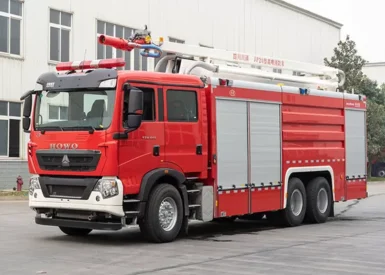
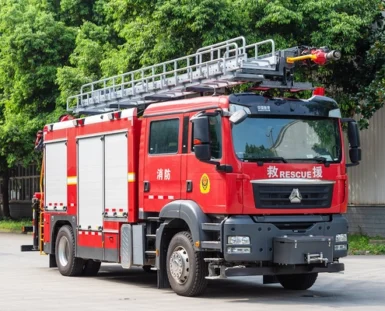
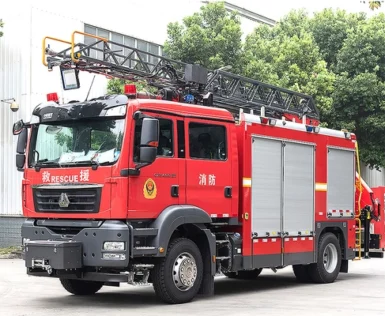
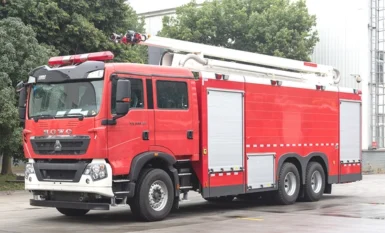
Aerial Fire Truck

Aerial Fire Trucks

Aerial Fire Trucks From 18 m to 70 m

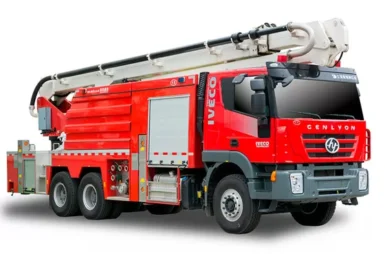
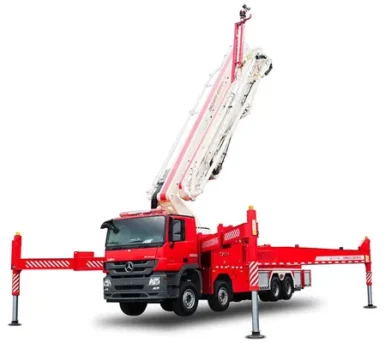
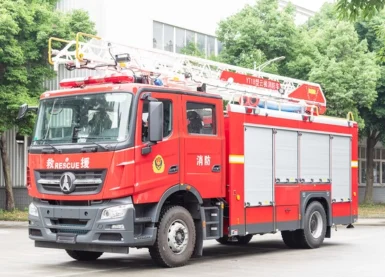
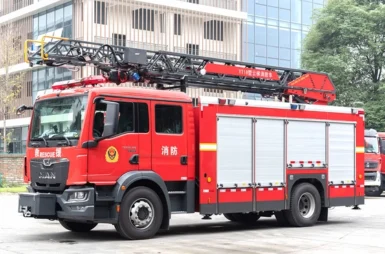
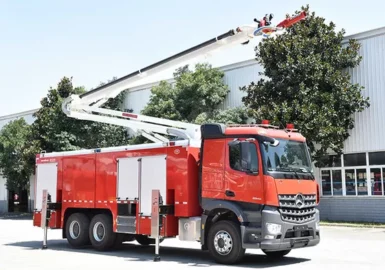
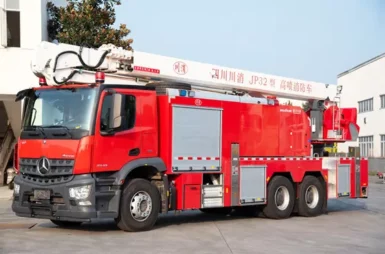
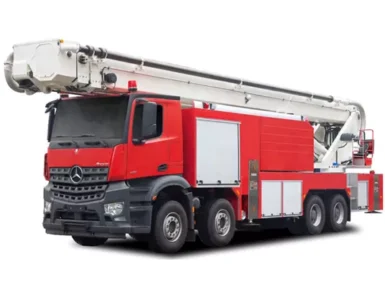
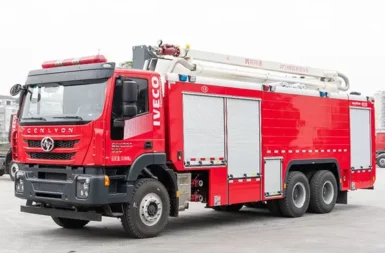
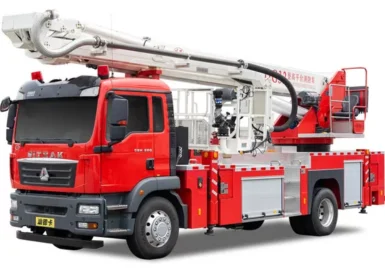
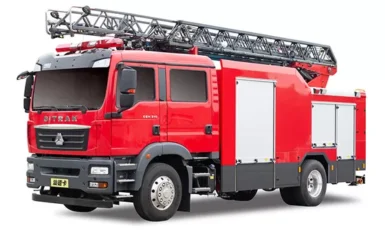
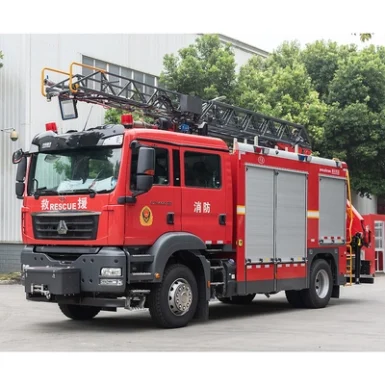
An aerial appliance turns the outside of a building into a second access route. The range covers water towers, articulated booms and rescue platforms from 18 m to 70 m, with cage loads from 300 kg to 450 kg. For high-rise districts, industrial sites and warehouses where the fire is above the reach of a ground monitor or the stairwell is the only other way in.

The range is delivered through CIMC Firetruck, with core manufacturing at Sichuan Chuanxiao in Chengdu. Every enquiry is tied to a written specification, a chassis or component availability date and a documentation pack for tender, registration or customs review.

70 mMaximum working height
450 kgMaximum cage load
24 mMaximum working radius
≤290 sBoom deployment
Why the specification matters

Why the Aerial Appliance Still Decides the High-Rise Outcome

A ground monitor reaches the first floor. Everything above it depends on how high the appliance can put a platform, how much that platform can carry and how fast it gets there.

A fire on the eighth floor is a different problem from a fire on the second. The crew cannot reach it with a handline from the street, the stairwell may be the only route and the window is the only way to ventilate or rescue. An aerial appliance turns the facade into a working access route.

The commercial case is decided by four things: working height, cage load, working radius and set-up time; the usable capacity, 300–450 kg in the rescue cage; crew and equipment fit; and the documentation needed for registration or tender. A lower purchase price that ignores one of those numbers is usually paid back in downtime.

Specification control

The working height, cage load, working radius and set-up time are fixed in one drawing package before production. The customer approves the interface, the performance figures and the equipment list as a set, not as separate purchase orders.
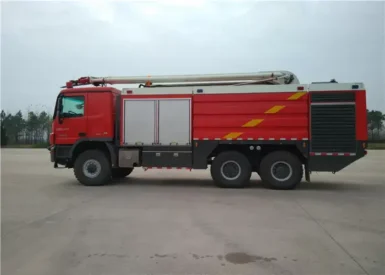
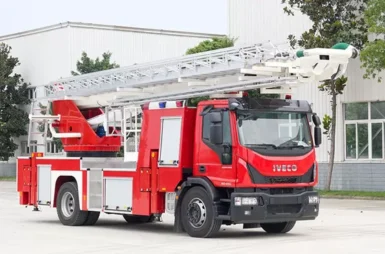
One system, one supplier

The body, tank, pump, control logic and equipment mounting are engineered together. The interface risk sits with one build team, not between an importer, a body builder and a component supplier.

Capacity with margin

The specification is built around 300–450 kg in the rescue cage, then checked against the chassis axle rating, the stability envelope and the duty cycle. The advertised maximum is not used as the design point.

A layout for the crew and the task

The body is laid out around a two-person cage, a monitor and the rescue equipment that must reach the floor of involvement, with the controls, hose bed, lockers and equipment reachable from the ground. The crew should not have to climb on the roof to start the attack.

Service and parts

Each aerial fire truck is delivered with a model-specific parts list, a first-year consumable recommendation and a documented service schedule. Wear parts are identified before delivery, not after the first failure.

Documentation before dispatch

Dimensional drawings, test records, operation manuals and the inspection file are prepared before shipment. The tender or registration package is reviewed against the destination requirements.

Practical use cases

Where Aerial Fire Trucks Are Used

Start with the incident, the access and the water or power source. The configuration follows.

01

High-rise residential and commercial

18–70 m working height for window access, roof ventilation and rescue above the reach of a ground monitor.

02

Tank farms and process structures

Water towers with large monitors for elevated attack on tanks, pipe racks and distillation columns.

03

Warehouses and logistics hubs

Articulated booms that can reach over the roof line and apply water to a deep-seated fire without committing a crew inside.

04

Stadiums, halls and stations

Platform access for roof and facade incidents where the internal route is long or compromised.

05

Ports and bridge infrastructure

Long-reach booms for ship superstructures, cranes and bridge decks.

06

Industrial maintenance and inspection

Platform access for high-level inspection, lighting and equipment movement when the appliance is not on a fire call.

Certification and documentation

Certified, Tested and Documented for Tender Review

The certificate and the test record are part of the product, not paperwork added after the order.

ISO 9001 · 14001 · 45001

Management systems audited

Quality, environmental and occupational health and safety management systems certified to GB/T 19001, GB/T 24001 and GB/T 45001. Certificates are available for pre-qualification.

GB 7956.12

Aerial fire truck standard

Aerial appliances are engineered around GB 7956.12-2015, covering structural strength, stability, cage load and safety interlocks.

Stability and outriggers

Ground bearing review

Each build includes an outrigger footprint, ground bearing pressure and stability calculation. The site plan should confirm the street width, slope and buried services before the appliance is ordered.

Export file

Market-specific documentation

For markets outside China, the technical file is built around the standard named in the tender. Applicability and third-party certification are confirmed in writing before contract.

Product line

Compare Representative Models

Representative configurations from the current range. Final tank, body, equipment and chassis are fixed in the signed technical specification.

Model or platformKey specificationBest for
SXF5341JXFJP20Sinotruk HOWO 20m Water Tower Fire Fighting Truck with Pump and Monitor20 mElevated monitor attack View model →
SXF5291JXFJP3232m SAIC-IVECO Foam Tower Aerial Fire Truck with 6000L Water and Foam32 m; 6,000 LElevated foam attack View model →
SXF5321JXFJP18SAIC-IVECO 18m Water Tower Aerial Fire Truck with 12000L Water and Foam18 m; 12,000 LElevated water attack View model →
SXF5411JXFJP60Mercedes Benz 60m Water Tower Fire Truck with 8000L Water and Foam60 m; 8,000 LLong-reach elevated attack View model →
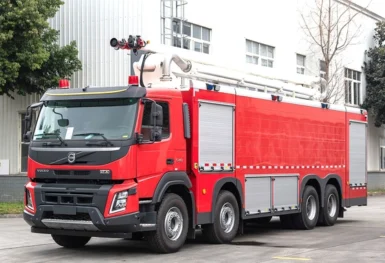
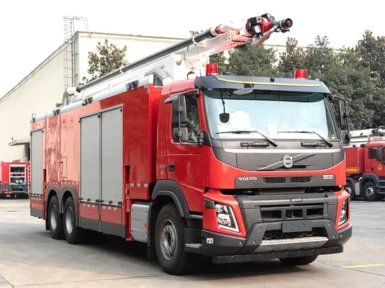
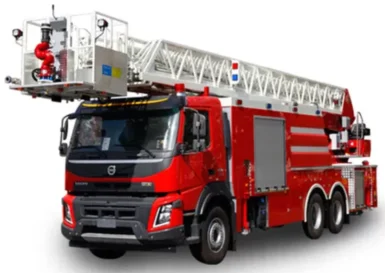
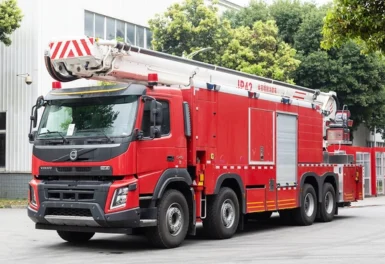
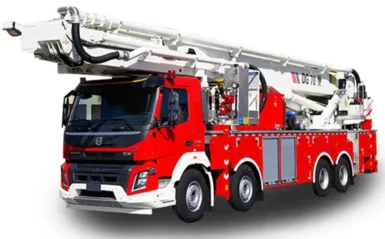
Volvo 70m Aerial Platform Fire FightingCIMC aerial fire truck70 mHigh-rise platform rescue View model →

Specifications are representative and vary by model, chassis and destination. Confirm the final configuration, axle load and performance figures in the signed technical agreement.

Manufacturer

Built by a Factory That Also Builds the Rest of the Fleet

The aerial range is built around structural strength, stability and a control system that keeps the cage inside its rated envelope. The core manufacturing base is in Chengdu, with tank fabrication, subframe and body welding, pump assembly, electrical harnesses, painting and full-load testing under one management system.

Sichuan Chuanxiao Fire Trucks Manufacturing Co., Ltd. is a member of CIMC Tianda Holdings and traces its line to the Sichuan Fire Machinery Factory, founded in 1963. The company operates a 200,000 m² plant with more than 500 employees and a range of more than 300 fire truck variants.

Products are distributed in more than 60 countries, with service to more than 2,000 fire departments and rescue organizations. Factory-direct supply covers the appliance, the fire pump and monitor, the body and the parts list, rather than a broker assembling unrelated components.

1963Origin of the fire factory
200,000 m²Chengdu manufacturing base
300+Fire truck variants
60+Export markets

Diario Libre reported the January 2019 delivery of 40 fire trucks to the Dominican Republic as the first Chinese aid project since the two countries established diplomatic relations. The trucks were built by Sichuan Chuanxiao and handed over to the national 9-1-1 system.

Source: Diario Libre

What factory-direct support includes

The handover is the start of the service record, not the end of the order.

  • Pre-delivery inspection — dimensional, performance, electrical and task-specific checks against the approved specification.
  • Commissioning support — on-site or remote, covering start-up, calibration and the first operational drill.
  • Crew training — operation, daily checks, task-specific procedures and shutdown.
  • Spare parts — model-specific parts list, first-year consumables and wear-part recommendations.
  • Documentation — operation and maintenance manuals, inspection forms, material certificates and test records.
Records on file

Aerial Fire Trucks: Orders and Fleet Records

Published orders, handovers and platform records with buyer, date, quantity and source. Figures are as reported, not estimates.

Sichuan, China2024

Four fire trucks and an equipment batch

Buyer
Panzhihua Emergency Management Bureau
Order
1 aerial platform, 1 decontamination truck, 2 water towers and rescue equipment
Date
Contract award 27 December 2024
Value
¥23.8 million package

The package combined elevated attack, chemical decontamination and a rescue equipment batch in one procurement.

Source: Sichuan Public Resource TradingRecord
Yunnan, China2026

Five vehicles for a chemical park fire station

Buyer
Yundian Chemical Park fire station, Chuxiong High-Tech Zone
Order
Heavy foam truck, 25 m water tower, rescue truck, chemical rescue truck and gas supply truck
Date
Final acceptance 13 May 2026
Value
¥5.49 million for five vehicles

A single station package configured for chemical-park rescue, with all five vehicles accepted together.

Source: Chuxiong High-Tech ZoneRecord
Sichuan, China2021

Seven trucks including a 32 m ladder

Buyer
Mianyang Fire Rescue Brigade
Order
3 × 24 t foam tankers, 2 foam tankers, 1 × 32 m ladder and 1 all-terrain rescue vehicle
Date
Handover 19 May 2021
Value
More than ¥31 million

A single station fleet renewal that put the city’s first 24 t Scania foam tankers and a 32 m ladder into service.

Source: Sichuan Mobile News via 163Record

Verification note: each record is linked to its published source. Where a source did not publish a value or quantity, the card says so.

Procurement questions

Aerial Fire Trucks FAQs

The questions that decide the configuration, the chassis and the documentation package.

Water tower or aerial platform?

A water tower is the monitor tool: it puts a large flow above a tank farm or warehouse without a crew at height. A platform is the rescue tool: it carries people and a monitor to the floor of involvement. Choose by the primary task, then check height, cage load and outrigger footprint.

How much working height do I need?

Allow about 3.2 m per storey, add the height of the floor of involvement and a margin for the cage position. A 32 m appliance covers most eight to ten storey buildings. A 60–70 m appliance is needed for towers above twenty storeys.

What outrigger footprint should I plan for?

The footprint depends on the model and the boom position. A 32 m appliance may need 4.5–5 m of lateral outrigger span; a 60–70 m appliance needs more. Check the station apron, the street width and the buried services before the order is placed.

Can the monitor be used while the cage is occupied?

Yes, on models with a cage-mounted monitor and the required stability envelope. The monitor reaction force and the cage load must be within the rated combination. Confirm the permitted combinations in the operating manual, not by experiment.

What certification applies?

For Aerial Fire Trucks, the documentation package includes the ISO 9001, ISO 14001 and ISO 45001 management system certificates, the applicable GB 7956 test basis and the material and pressure test records. Market-specific certification is quoted separately.

What is the delivery lead time?

A standard configuration on an available chassis is typically 90–180 days after drawing approval. Imported chassis, aerial appliances, custom bodies and specialized equipment can take 6–10 months. The contract should state the chassis, drawing approval and delivery dates separately.

Can the specification be customized?

Yes. The aerial fire truck can be configured around the tank, pump, body, equipment and destination requirements. The limit is the chassis rating, the stability calculation and the applicable standard, not the catalogue.

How is the unit shipped and handed over?

Large vehicles usually move by RoRo; smaller equipment can ship by container or air freight. A factory acceptance test can be arranged before shipment, and commissioning or training can be provided on site or remotely.

What training and spare parts are included?

Training covers operation, daily inspection and the task-specific drill. Each aerial fire truck is supplied with a model-specific spare parts list, and a first-year consumables kit can be quoted.

What warranty is offered?

Warranty terms are set in the contract and typically cover the chassis per the chassis manufacturer’s terms and the fire body or equipment for 12–24 months. Extended coverage and a service-level agreement can be quoted.

How do I compare two quotations?

Compare the drawing, the bill of materials, the pump or system curve, the tank material, the axle-load calculation and the test plan. A lower price with a smaller tank, a generic pump or missing test records is not the same product.

What should I send for a quotation?

Send the task, the required capacity or flow, the chassis preference, the destination market and the equipment list. For a aerial fire truck, a site plan, a photo of the access or the existing installation is also useful.

Request a quotation

Send the building height and the street plan

Tell us the tallest building, the narrowest street, the outrigger space and the rescue task. We will match the height class, cage load and boom configuration to the district.

Quotations are based on a frozen technical specification. Final capacity, flow, height and equipment are confirmed in the signed agreement.

Showing all 22 results