
















Dalmatians have long captivated our imaginations, not only as playful pets but also as symbols of bravery and loyalty within fire services. Their unique association with fire trucks can be traced back to their vital roles in early firefighting, where they served alongside horse-drawn carriages—tirelessly running to the rescue. In this journey through history, we will uncover the myriad reasons why Dalmatians became synonymous with fire trucks, examining their invaluable contributions in early fire departments, their portrayal in popular media, and the enduring legacy they have established. Together, we will delve into the fascinating intersection of breed, history, and culture, enlightening our understanding of these iconic firehouse dogs.
Guardians on the Road: The Dalmatian’s Historic Bond with Fire Wagons and the Fire Truck Icon
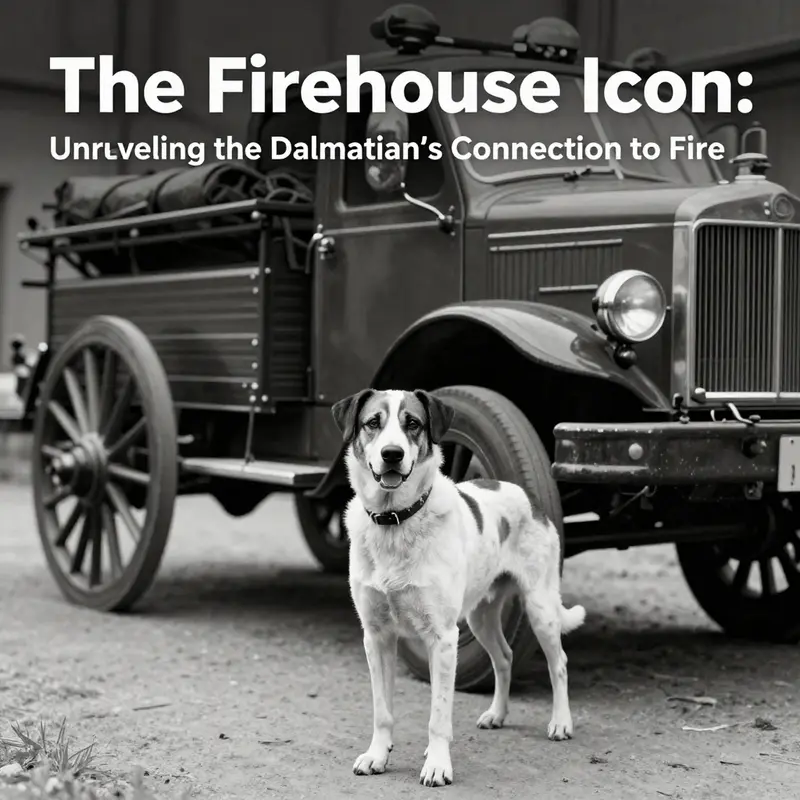
In the annals of firefighting, a seemingly unlikely partnership sits at the center of a long, colorful history: the Dalmatian, a breed born to accompany horses and guard carriages, became more than a helper or mascot. It became a symbol threaded into the fabric of firehouses, town squares, and the stories communities tell about courage, speed, and the careful choreography of fear and flame. To understand why Dalmatians are so closely tied to fire trucks, we must step back to a time before the hum of engines filled city streets and the crackle of modern sirens defined the tempo of rescue work. We travel into an era when fire brigades relied on horse-drawn carriages, and the spaces between buildings were navigated with the precision of a well-rehearsed team: horses, drivers, and, beside them, a dog whose heartbeat synchronized with the pace and perception of both man and horsepower. The Dalmatian’s story begins in that shared world, where the dog’s natural instincts—an affinity for horses, boundless energy, keen watchfulness, and a knack for calm in chaos—made it an indispensable partner in emergencies.
Dalmatians originated in Croatia, a lineage that gave them their nickname and a clear vocation as coach dogs. They were bred to run with carriage teams, to keep pace beside the horses, to clear a path through crowds, and to stand ready as guardians when the carriage was at a standstill. In the context of early firefighting, this instinct translated into a working relationship with the engine and the crew. Fire carriages of the 18th and early 19th centuries were heavy, noisy, and highly conspicuous as they barreled toward a blaze through narrow streets. Pedestrians—curious, fearful, or simply inattentive—could swerve into the path of the team. A Dalmatian could weave ahead, barking and darting between feet, to part the crowd and reduce the chance of a collision that might injure animals or delay the engine. The dogs also served as an additional layer of security around valuable equipment—the horses themselves, often more valuable than the carriage, and the harnesses, reins, and leather gear that sustained a team’s work under pressure.
What made the Dalmatian especially suited to this mission was less a single trait and more a constellation of characteristics that fit the needs of a horse-drawn brigade. First, the Dalmatian’s natural affinity for horses was practical. These dogs formed a bond with the horses they accompanied, mirroring the rhythm of the team and, in effect, becoming part of the moving unit rather than an observer from the crowd. This affinity helped to keep horses calmer in the middle of chaotic street scenes illuminated by alarm and flame. A calm horse is a safer horse, and a safer horse, in turn, sustains the effective movement of the firefighting apparatus through cramped streets and around obstacles. The dogs learned the language of horse and rider—how to pace, how to pace faster when the carriage demanded speed, and how to slow when horses needed reassurance. In this sense, the Dalmatian was not merely a pet or a mascot; it was a functional component of the team, performing a role that required a blend of endurance and tact.
Second, the Dalmatian’s loyalty and protective instinct made it a reliable guardian of the station and the materials ashore. Firehouses in the horse-drawn era were as much repositories of specialized gear as they were places of training and community trust. A dog capable of guarding horses, tack, and the carriage itself helped to deter theft and tampering in a busy, sometimes unruly urban environment. The dog stood watch while hoses dried and equipment was prepared for rapid deployment. The mutual protection extended beyond property; it translated into a heightened sense of security for the firefighters themselves. The Dalmatian’s presence could be a calming factor for animals and people alike, a subtle reassurance amid the clangor of bells and the hurried cries of a city at risk.
Third, the energetic, high-stamina profile of the Dalmatian made it well-suited to the pace of a fire call. A typical rescue involves a swift, purposeful movement—race to the scene, negotiate traffic, and then sprint ahead to scout the route or guide the wagon through an obstruction. The breed’s stamina, combined with its intelligence and willingness to work in tandem with humans, translated into a dog that could maintain pace for long stretches and perform tasks like clearing a path through pedestrians by weaving and barking as needed. These animals did not tire quickly, their bodies built for constant activity, a crucial asset in a world where time was literally a matter of life and death.
As fire brigades embraced these dogs in the early 1800s, a distinctive cultural image began to form. The Dalmatian’s stance beside the horse-drawn engine became a recognizable silhouette in American urban life. It is not an exaggeration to say that the Dalmatian helped popularize the idea of the fire truck as something more than a mechanical instrument; it captured a narrative of partnership between living beings and man-made technology. The dog’s presence on the street—its head held high, its gait synchronized with that of the horse—told a story of courage under pressure. It also supplied a quiet, steady rhythm to the chaotic tempo of a fire call. The visual memory of a Dalmatian running alongside a gleaming carriage, barking to clear a path as bells chimed in the distance, embedded itself in the urban imagination and contributed to the enduring symbolism of firefighting.
In many American cities, this image grew into a shared iconography, known to residents as a straightforward emblem of protection and service. The Dalmatian on the hydrant, the seal of the firehouse, the dog perched atop a ladder truck in period posters—these were not mere decorative motifs. They were signposts that connected citizens to the idea that the fire brigade—paired with its trusty canine guard—stood ready to meet danger with speed and nerve. The dog’s role also echoed practical realities of urban firefighting in the era before motorized engines. The horses pulled heavy carriages across busy streets, and any advantage that could be found in the choreography of that system was worth developing. If a Dalmatian could help the team move more efficiently, remain calm in the heat and noise, and deter would-be threats to the equipment and horses, then the partnership would not simply endure; it would flourish as a defining feature of the service.
The transition from horse-drawn carriages to motorized fire engines did not erase this older partnership. Vehicles became more complex and powerful, but the Dalmatian’s symbolic function remained. Fire departments continued to apply the dog’s image in branding, public education, and morale-boosting rituals across generations. The dog’s story threaded itself into the collective memory of firefighting—becoming a cultural touchstone that linked the present with a storied past. The canine companion, once a practical ally in the field, had, by the mid‑twentieth century, become a living emblem of tradition, loyalty, and the timeless alliance between living beings and technology that makes rescue possible.
A broad, sometimes mythic, layer lies over this history. The narrative of the Dalmatian as a universal firehouse dog across all time and place is an appealing simplification. In truth, not every brigade employed Dalmatians, and not every city’s fire service adopted a dog as a regular team member. Yet the broader pattern—Dalmatians as horse-team escorts, guards of the equipment, and faithful companions in the daily rituals of firefighting—found powerful testaments in documentation, anecdotes, and the enduring iconography that followed. The well-timed barking to clear a path, the dog’s ability to move gracefully in a crowded street, and the loyalty of a dog that seemed to understand the urgency of a fire call all contributed to a widely recognized association between Dalmatians and fire apparatus.
The cultural echo of that association is still heard in modern firehouses and in popular culture. When people imagine a fire truck, many visualize a Dalmatian bounding ahead or perched in the doorway of a ladder truck. It is not only nostalgia; it is a remembered practice that nods to a time when the partnership between horse, dog, and engine defined the day’s work. This memory carries through into public art, school visits, and community events where fire departments use the Dalmatian as a symbol of readiness, teamwork, and enduring tradition. The Dalmatian’s striking coat and unmistakable silhouette contribute to a quick, recognizable symbol for a service that must act with speed, precision, and heart. In the age of digital branding and sophisticated machinery, the Dalmatian remains a simple, powerful reminder of a shared human-animal history that helped bring fire safety to communities and helped fire crews navigate the streets with confidence.
For readers who want to explore the historical dimensions of this partnership in more detail, and to see how archival materials and veterinary knowledge intersect with cultural storytelling, the American Kennel Club offers a thoughtful perspective on Dalmatians as firehouse dogs. Their account helps distinguish the historical realities—the dog’s role as coach and guard—from the mythos that later grew around the breed in popular culture: American Kennel Club – Dalmatians as Firehouse Dogs. This resource frames the Dalmatian not simply as a character in cartoons and badges, but as a real participant in a historical workflow that shaped how cities organized and perceived their emergency responders.
Within this larger historical arc, one can also appreciate a quieter, more intimate practice that persists in some firehouses today. Even as urban transport and rescue technology have become highly specialized and mechanized, several departments preserve a quiet ritual: introducing Dalmatian puppies to retired fire horses to maintain the social and emotional continuity of the old partnership. Such gestures may seem symbolic, yet they are meaningful acts that preserve memory, reinforce values around teamwork and care for animals, and remind firefighters and the public alike of the breed’s original purpose. In other words, the Dalmatian’s legacy in firefighting remains active—embedded in rituals, logos, and the everyday stories shared at a station table and around a child’s school project. The image endures because it resonates with a timeless truth about emergency response: speed matters, but so does trust, companionship, and the ability to stay composed when danger is near.
The modern fire truck, then, carries within its modern form the descendants of an older alliance. Its design, engineering, and capabilities are the result of decades of innovation, yet its cultural identity remains tethered to an animal that once ran beside the horses that pulled the engines. The Dalmatian’s enduring presence on banners, badges, and the occasional tail-wagging photo in a fire station is not simply about decoration. It is a living inscription of a historical practice: a record of how human teams, animal partners, and mechanical systems learned to work together under pressure to save lives and protect property. The Dalmatian, with its distinctive coat and energetic stride, embodies that shared history and invites us to consider how a city’s memory can be carried forward by symbols that still feel relevant and inspirational today.
In contemplating this history, it becomes clear that the Dalmatian’s association with fire trucks is a layered story. It speaks to the practical needs of a horse era and to the emotional bonds that grow between professionals and nonhuman partners who share dangerous, demanding work. It speaks to a culture of guardianship and community resilience. And it speaks, finally, to the power of storytelling in shaping public perception—how a breed’s presence beside a blazing engine can crystallize a public identity and give communities a sense of reassurance that, even in the most perilous moments, a faithful companion can help guide the way to safety.
As readers move through the broader narrative of firefighting history, the Dalmatian’s role offers a bridge between past and present. It demonstrates how a single animal, through a blend of natural instinct and trained responsiveness, can become a symbol that endures beyond a particular era of technology. It reminds us that innovations in equipment and tactics do not erase the human elements—the partnerships, loyalties, and shared experiences—that make rescue work both possible and meaningful. The image of the Dalmatian beside the fire wagon invites us to see the fire service as a continuum: a lineage that travels from horse-drawn carriages to modern, sophisticated apparatus, while retaining essential values at its core—speed, courage, loyalty, and teamwork. In that sense, the Dalmatian’s story is not merely a curiosity of the past but a guiding thread in the ongoing conversation about how we represent and remember the brave work of firefighting.
External resources can broaden this understanding and situate it within a wider historical and cultural context. For those seeking a concise, authoritative account of the breed’s historical function as firehouse dogs, the American Kennel Club provides a clear synthesis that complements archival studies and site-specific histories: https://www.akc.org/expert-advice/lifestyle/dalmatians-firehouse-dogs/.
Drawn to Duty: The Dalmatian–Horse Alliance and the Fire Truck Legend
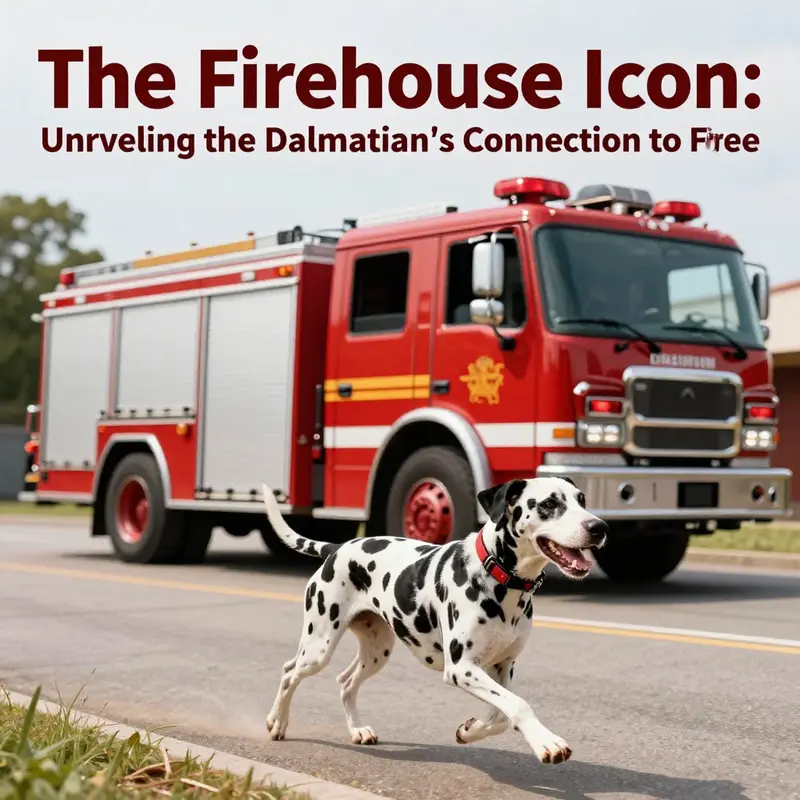
The question of why Dalmatians became so closely tied to fire trucks sits at the intersection of centuries of practical work and enduring imagery. It is not simply a cute pairing born of a cartoon era; it is a story about usefulness, trust, and the way human communities have built rituals around essential public service. In the 18th and 19th centuries, when cities learned to fight fires with horse-drawn steam carriages and hose wagons, the Dalmatian’s temperament and physical gifts made it a natural partner for the work. The breed’s history as a coach dog in its native Croatia gives us a key piece of the puzzle: Dalmatians were bred to run with horse teams, to keep pace with speed and distance, and to occupy a space that demanded both alertness and companionship. When a fire company rolled its equipment into a neighborhood, a Dalmatian would already be in the stables, watching over the horses and guarding the gear. That practical role bred a lasting bond that would echo through city streets for generations to come.
The relationship began with the need to manage and protect a working team in high-stress moments. Fire brigades of the era depended on stable rooms where horses and apparatus were kept ready for action. Dalmatians, prized for their natural affinity with horses, would mingle with the stables as a calm, confident presence. Their instinct to run alongside horses made them reliable escorts on the road, where they could pace with the carriage and keep a wary eye on the movement of the team. This was more than a ceremonial role; it was a functional partnership. The dogs helped to route traffic, kept pace with the slow, heavy mules of the equipment and, crucially, offered a calming influence to skittish equine teammates during the tense moments that fires often brought.
As the horse-drawn apparatus gave way to steamers and hose wagons in the 19th century, the Dalmatian’s job description shifted but did not disappear. In major American cities and across urban centers in Europe, fire companies relied on the dog’s energy and courage to safeguard the team at every stop. The stables adjacent to firehouses became the Dalmatian’s domain, a place where the dog could practice guarding the horses and the gear, much as a sentinel keeps watch over a fortress. The dog’s presence during the bustle of a call—where horses strained at the traces and crowds gathered—provided a sense of order. In moments of chaos, a Dalmatian’s steady gaze and ready posture could help steady the horses, the drivers, and the firefighters themselves.
And then there was speed. The Dalmatian’s high energy and stamina made it well suited to the demands of a fast-moving response. When the alarm sounded, the dog would often lead the way, sprinting ahead or running alongside the conveyance to clear the path and signal to bystanders that help was on the way. The dog’s role as an active participant in relief missions reinforced a visible, almost ritual gesture: a Dalmatian at the head of the line announced that a response was imminent, that a city’s defenders were mobilizing. This image—of a sleek, energetic dog racing ahead to ready the road for a powerful machine—became part of the visual vocabulary of firefighting itself. It is no accident that the Dalmatian’s silhouette and posture show up again and again in city crests, on the sides of old engines, and in posters and badges that a firehouse would pin above the door as a reminder of duty and partnership.
The enduring appeal of this arrangement helps explain why the association persisted even as technology evolved. When motorized fire engines replaced the horse-drawn steamers, the practical duties of the Dalmatian began to fade. Yet the symbolic value remained compelling. The Dalmatian became a living emblem of readiness, loyalty, and the shared labor between animal and human—an emblem people could point to when explaining what a fire department stood for. It is important to note that this symbolism did not emerge from a single city or era. It rose from a broader pattern: dogs trained as working partners in stables, the quiet trust that develops between a horse and its keeper, and the way communities celebrate acts of courage with a character that embodies courage itself. Thus, the Dalmatian’s image did not vanish with the advent of motorized fleets; instead, it found a new home on posters, in theater and literary scenes, in museum displays, and in the everyday language of public safety.
Culturally, the Dalmatian’s status as a firehouse dog proliferated through popular representations. The dogs appeared in a range of media and commemorative objects that kept the partnership alive in public memory. The visual language of the Dalmatian—its white coat with black spots, its alert ears, its athletic frame—fits a narrative of speed, precision, and protection. It is not surprising that municipal brands, community fundraisers, and firehouse lore adopted the Dalmatian as a symbol of service. The dog’s presence serves as a bridge between the historical era of horse-drawn apparatus and the modern world of motorized fleets, a reminder that every technical leap depends on a long lineage of practice and cooperation. In that sense, Dalmatians helped to shape a public imagination about fire service: a narrative where human ingenuity and animal alacrity stand shoulder to shoulder in the work of safeguarding neighborhoods.
Even as the specific duties of the breed shifted, the power of the image remained. The Dalmatian’s story shows how a working animal can become a cultural icon precisely because it embodies the qualities needed for dangerous work: energy, focus, resilience, and an almost instinctive sense of timing. This is why the dog’s figure persists in the badges, the murals, and the city flags that carry the memory of the early firefighting era into the present. When we see a Dalmatian in the glare of a modern fire station’s lights, the sight is not merely nostalgic; it is a tangible reminder of a practical alliance that helped cities grow safer over generations. The legend of the Dalmatian on the firehouse beat is not a simple anecdote about a breed. It is a lens on how public institutions learn to rely on living partners—partners who can anticipate, hinder, and promote decisive action when every second counts.
The narrative would be incomplete without acknowledging the way this partnership has traveled into contemporary consciousness. In many communities, the image of the Dalmatian is used in educational materials, museum exhibits, and local lore to illustrate the human–animal collaboration that underpins public safety. It is easy to overlook how a dog’s temperament—its need for movement, its loyalty, its confidence in a team—maps onto the demands of a city’s emergency response system. Yet those traits are precisely what made the Dalmatian indispensable in a time when a horse-drawn engine was the most effective means of reaching a blaze. The dog’s ability to maintain a positive, calm presence around equine teammates translates into a broader lesson about teamwork under pressure: that preparation, trust, and mutual support are the bedrocks of resilience in any demanding profession.
As a public symbol, the Dalmatian’s story has traveled beyond firehouses. It has informed the way communities talk about preparedness, teamwork, and the humane partnership between humans, animals, and technology. This is not to suggest that the dog’s role was the sole driver of firefighting’s visual language, but its presence has contributed a distinctive, memorable thread. It speaks to a shared memory of urgency, of a city that rises to meet danger with a coordinated, efficient response. The Dalmatian’s legacy is a reminder that the best equipment is supported by a human–animal alliance built on trust, training, and a willingness to move with the pace of a life-and-death mission. In that sense, the Dalmatian’s connection to fire trucks is not merely a quaint backstory; it is a window into the evolution of public service, a living legacy of how communities learned to mobilize talent, whether animal or human, to protect one another.
For readers who want to explore this historical thread further, there is a practical dimension to the story as well. The broader evolution of fire apparatus offers a parallel narrative about how cities built and adapted their fleets. If you want a contemporary sense of how modern fleets are categorized and deployed, you can look into the broader spectrum of fire-service vehicles, including commercial fire trucks. This helps connect the historical role of the Dalmatian with the modern infrastructure that continues to safeguard communities today. See the overview of commercial fire trucks for a sense of how today’s machinery is organized and deployed in service of public safety. εμπορικών πυροσβεστικών οχημάτων
The Dalmatian’s story is a reminder that public service is built on continuity as well as change. Even as technology advances and emergency response becomes more specialized, the impulse that once drew a dog to the side of horse and carriage—a blend of companionship, protection, and momentum—remains a core element of firefighting culture. The image of the agile, vigilant Dalmatian at the front of a hose wagon or a modern engine’s arrival still carries a sense of immediate, lived experience: that those who serve do so with a partner, a team, and a shared rhythm that keeps cities safe. In many ways, the dog’s legacy is a compact history of resilience, a compact that speaks to the endurance of collaboration across eras and machines.
For scholars and enthusiasts alike, the Dalmatian’s journey offers a useful case study in how working animals can become enduring emblems of a profession. It shows how practical roles—guarding stables, soothing nervous horses, leading a wayward column—can crystallize into symbols that outlast the particular methods of work. The visual identity of the Dalmatian, the way communities tell stories about its presence at a firehouse, and the way that image persists in public memory all testify to a powerful, durable partnership. The dog’s legacy, grounded in a real partnership between animal and human labor, invites us to consider how other working partnerships, past and present, shape the way we understand public service. The Dalmatian’s tie to fire trucks is, at its core, a story about how societies notice, value, and preserve the human–animal collaborations that make dangerous work safer for everyone.
External reading can illuminate this historical thread further. For a detailed exploration of the Dalmatian’s firehouse history and the context in which these partnerships formed, see the Firefighting History Organization’s overview of the Dalmatian’s role in early firefighting history: https://www.firefightinghistory.org/dalmatians-firehouse-history/.
Trail of Bravery: How Dalmatians Became the Firehouse Icon in History and Media
The image of a Dalmatian sprinting beside a gleaming fire engine is a familiar, almost cinematic cue. It conjures a sense of urgency, discipline, and a shared sense of mission that feels both historical and timeless. This chapter traces how that image took root, not as a mere gimmick, but as a living thread woven through centuries of firefighting, animal companionship, and popular storytelling. The question at the heart of this thread—why are Dalmatians associated with fire trucks?—is best answered by tracing a path from practical duty to cultural symbol, a path that winds through stables, city streets, and the animated screen alike, and ends up in the everyday imaginations of communities around the world.
To understand the Dalmatian’s role in the firehouse, we must first go back to the breed’s origins. Dalmatians were bred as coach dogs in the borderlands of Croatia, where the needs of horse-drawn carriages shaped a distinctive relationship between dog and horse. These dogs moved with the carriage as a kind of living traffic cop and guardian. Their natural affinity for horses—an instinct hardened by generations of pairing with mounted drivers—made them unusually suited to accompany and protect the team. In bustling urban environments, the dog acted as a guide for the horses, keeping pace with the wheels and alerting the crew to any approaching dangers. But their duties did not stop at companionship; Dalmatians also served a protective function, guarding the horses and the valuable equipment from thieves or intruders when the firehouse doors stood open and the carriages ready for a run.
This combination of stamina, courage, and a trained eye for horse and machinery created a remarkably efficient partnership. The Dalmatian’s high energy allowed it to stay alert and present at the head of the procession as the crew leapt into action. In the era of horse-drawn fire carriages, the dog and the horse functioned together as a synchronized unit: the Dalmatian clearing a path, the horses shouldering the weight of the carriage, and the fireman guiding the effort from the vehicle itself. The dog’s role was practical, but it was also symbolic. It embodied the firehouse’s readiness, its guardianship, and its sense of community responsibility. The street was a stage, and the Dalmatian was both performer and sentinel, embodying the values that firefighters prized: vigilance, loyalty, and teamwork.
As technology shifted—from horse-drawn carriages to motorized engines—the practical necessity of a Dalmatian at the side of the truck diminished. The modern fire department no longer depends on a dog to guard horses or to pace a carriage through crowded streets. Yet the image persisted, stubbornly resistant to change, because it had already become part of the public imagination. The Dalmatian’s silhouette, its distinctive spotted coat, and its poised, athletic posture became a universal shorthand for courage and reliability. The narrative was no longer simply about efficiency at the fire scene; it became about a storied tradition, a lineage that connected contemporary emergency response to a long, communal memory.
And then there came a moment when culture itself carried the Dalmatian further than any firehouse could have imagined. In 1961, Disney released One Hundred and One Dalmatians, a film that did more than entertain. It translated an occupational history into a family-friendly adventure, turning the firehouse dog into a character with personality, humor, and a dramatic arc. The film follows a family of Dalmatians who become central to the plot, but its broader impact rests in the way it framed the breed as inherently suited to the firehouse life. Suddenly, the Dalmatian wasn’t just a guard or a guide; it was a symbol—clear-eyed, quick-tongued, and unfailingly loyal—embodying the bravado and the warmth of the fire service in a way that audiences around the world could recognize and remember.
From that moment on, the Dalmatian’s visual vocabulary—spots against a red backdrop, the quick stride beside a truck, the eager readiness to leap into action—became instantly legible in popular media. The image proliferated in cartoons, advertisements, television shows, and a wide range of merchandise. The Dalmatian’s association with fire trucks thus moved beyond practical history into the realm of storytelling. It became a cultural trope: a dog that could be trusted to stand at the threshold of danger with a calm, disciplined gaze, a creature of strength who was also endearingly approachable. This duality—hardiness and heart—made the Dalmatian an ideal mascot for firehouses and a compelling figure for creators looking to evoke heroism without sacrificing warmth.
The cultural ripple effects extended well beyond Disney. Other animated programs and print media adopted the motif, often referencing the Dalmatian’s firehouse heritage in playful or aspirational ways. In some narratives, the Dalmatian remains a direct working partner of firefighters, a nod to a past reality that preserves the dignity of the old craft. In others, the dog becomes a surrogate for the service itself—an emblem of bravery, trust, and community service that young audiences can emulate. Even when the technical details of firefighting evolve, the image endures as a visual shorthand for the values most communities want to honor in their emergency responders.
This enduring presence in media helps explain why many fire stations continue to honor the Dalmatian legacy today. While Dalmatians no longer perform the operational role they once did, they are often kept as ceremonial mascots or as part of heritage programs. They appear in station visits, safety days, and fundraising campaigns that emphasize community engagement and education. The decision to maintain a Dalmatian presence in some stations is thus less about practical necessity and more about connection—connection to history, to the people who built and sustain the fire service, and to the public that supports it. The dog becomes not a tool but a bridge: linking current crews with a storied past and offering a familiar face through which families and towns can engage with safety messages and fire-prevention education.
This bridge between past and present is reinforced by the broader cultural ecosystem surrounding fire safety imagery. The Dalmatian’s likeness appears alongside gear, equipment displays, and parade costumes, creating a coherent and accessible narrative for children and adults alike. The bookkeeping of heritage matters here; each appearance of a Dalmatian in a firehouse setting serves as a reminder that the fire service is as much about community memory as it is about professional expertise. The breeder’s history, the kennel’s traditions, and the firehouse’s outreach programs converge in a way that makes the Dalmatian a symbol of reliability and communal care. When a child sees a Dalmatian poster at a safety event or a televised cameo of a fire engine chasing the screen, the association is reinforced—often without the viewer realizing the historical depth behind the image.
The power of this association also sits at the intersection of nostalgia and pedagogy. Nostalgia draws people to familiar, comforting stories of firefighters who ride to the rescue, while pedagogy invites audiences to understand the responsibilities involved in emergency response. The Dalmatian, with its blend of athleticism and approachable charm, is an ideal ambassador for both aims. It embodies bravery without intimidation, seriousness without harshness, and a sense that helping others is a shared human endeavor. This balance is what makes the Dalmatian an enduring cultural icon in relation to fire trucks. In a sense, the breed has become a living emblem of the firefighting ethos: readiness, loyalty, and a willingness to guide others through danger toward safety.
All of this explains why a simple question—why are Dalmatians associated with fire trucks—unfolds into a richer narrative about history, media, and communal memory. The answer does not rest solely on historical accuracy or on cinematic romance; it rests in the way stories travel across generations. The Dalmatian’s partnership with horse-drawn carriages gave birth to a practical image of preparedness. Disney amplified that image into a universal symbol of family-friendly heroism. Media, in turn, amplified it again, embedding the Dalmatian in the public consciousness as the archetype of the firehouse dog. This layered development shows how cultural symbols arise not only from what happens in the real world but also from how we tell stories about what happens in the world. The Dalmatian stands as a case study in how a breed can become a cultural shorthand for an institution, a relationship built on trust and shared purpose, and a reminder that history often persists most vividly where imagination is strongest.
As readers consider the legacy of the Dalmatian in relation to fire trucks, it is helpful to see how this symbolism continues to inform contemporary perceptions of the fire service. The dog’s image remains a powerful narrative tool for public engagement, education, and fundraising, even as emergency response technology evolves. Communities benefit when this historical rapport translates into meaningful interactions—when a Dalmatian stands at a station open house, guiding curious youngsters through safety demonstrations, or when a character on a beloved television program embodies the ideals the fire service strives to model. The enduring appeal lies in the harmony between a dog’s natural vigor and a firefighter’s steadfast duty, a harmony that keeps the Dalmatian not only a relic of a bygone era but a current, living symbol of courage and kinship.
For a deeper look at how Disney’s portrayal helped shape the Dalmatian’s cultural identity, see the external resource: https://www.disney.com/characters/dalmatians
In understanding this arc, one can also reflect on the practical continuity found in today’s fire-service heritage efforts. The historical partnership between Dalmatians and horse-drawn carriages offers a tangible link to a time when speed and order were a combined art form on the city streets. The modern firefighter, equipped with high-tech apparatus and algorithm-driven response plans, still carries the same core mission: to arrive swiftly, to protect life and property, and to reassure the communities they serve. The Dalmatian’s role, then, becomes a bridge between a tactile, horse-powered past and a rapid, technologically adept present. It is a reminder that heritage can coexist with innovation, that symbols can evolve without losing their original charge, and that a dog with spotted fur can illuminate a shared human commitment to bravery, loyalty, and service.
To see the Dalmatian’s story reflected in the broader world of fire safety equipment and ceremonial displays, many readers might explore related categories that celebrate the craft and the culture of firefighting. One relevant resource, framed through the lens of equipment and trucks used in public-facing contexts, can be found here: fire-fighting-truck.
ARFF trucks, Used firefighting equipment, Airport firefighting, Equipment auctions, Pumper trucks, Fire apparatus market, Logistics and compliance, Asset acquisition, Industrial equipment
ARFF trucks, Used firefighting equipment, Airport firefighting, Equipment auctions, Pumper trucks, Fire apparatus market, Logistics and compliance, Asset acquisition, Industrial equipment
community safety
The enduring association between Dalmatians and fire trucks transcends mere historical context; it reflects a rich legacy rooted in loyalty, trust, and partnership. From their protective nature as guardians of fire stations to their role in the dramatic rescue of lives, Dalmatians have forged a unique bond with firefighting that continues to resonate in the hearts of many. Recognizing these dogs as cultural icons not only celebrates their courageous past but also ensures that future generations appreciate their remarkable contributions to fire service. By integrating this understanding, we not only honor the legacy of Dalmatians but also embrace the spirit of teamwork, dedication, and commitment they symbolize.

