
















Fire trucks are synonymous with swift response and bravery in emergencies. However, the notion that all fire trucks carry water is a common misconception. Understanding your local fire truck fleet’s capabilities can be crucial for business owners in planning safety protocols and emergency responses. This article delves into the types of fire trucks, examining which ones carry water and which do not. In the following chapters, we will explore the various types of fire trucks and their specific roles, highlight the crucial functions of those that lack water-carrying capabilities, and ultimately provide clarity on the question: Do all fire trucks carry water?
Water on Wheels: How Fire Trucks Carry Water—and Why Not All of Them Do
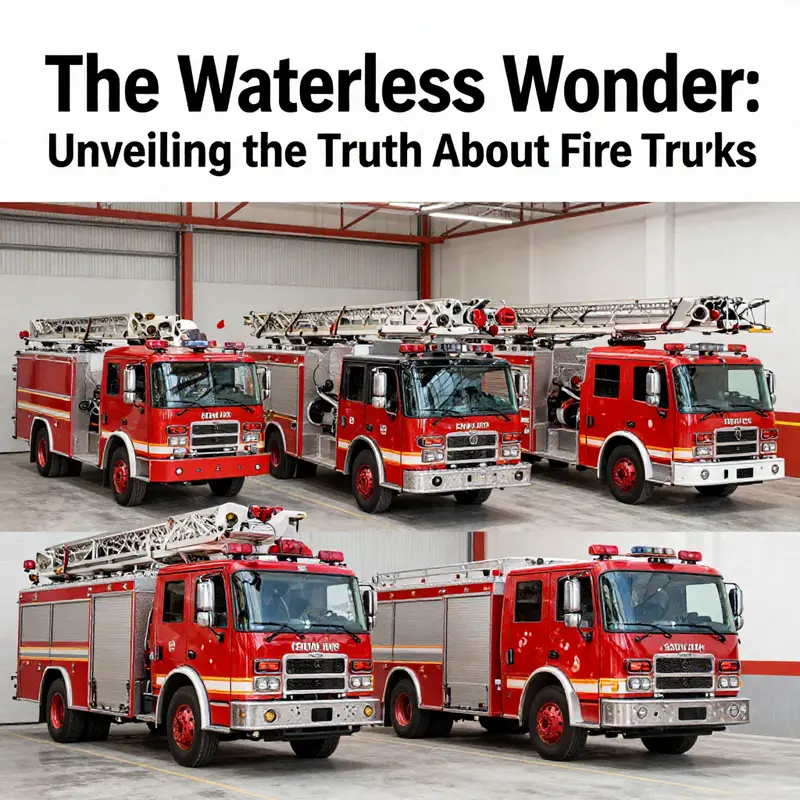
When people picture a fire truck, they often imagine a red behemoth spraying a powerful stream onto a blaze. In practice, firefighting is a networked effort where water is one resource among many, and the vehicle’s onboard capacity is matched to the mission, terrain, and water infrastructure.
Urban pumpers are the frontline engines. They typically carry five hundred to one thousand gallons in their tanks and rely on high-pressure pumps delivering roughly one thousand to two thousand gallons per minute. With preconnected hose layouts, they can begin a direct attack within moments of arrival, especially where hydrants are plentiful. Yet even pumpers may need additional water from outside the vehicle, such as when hydrants are scarce or high-rise layouts demand longer hose runs.
When hydrants are sparse or unavailable, tanker trucks come into play. They move large volumes of water, commonly one thousand to three thousand gallons or more, to the scene and shuttle water to pumpers or direct-feed lines. Their advantage is distance and endurance, not raw attack power.
Aerial units prioritize access and rescue; many carry modest onboard water, if any, and rely on nearby pumpers to supply water for the attack. The primary value of an aerial is height, reach, and ventilation, not gallons in the tank.
Wildland engines emphasize off-road mobility and often carry three hundred to eight hundred gallons, with foam systems and coordination with air support to tackle brush fires.
ARFF vehicles for airports carry one thousand to two thousand gallons and often include foam systems tailored to hydrocarbon fires, along with rapid access to runways and hazardous-material awareness.
At any incident, the maximum effectiveness comes from a coordinated flow of water across engines, hydrants, and by tanker shuttles; the networked approach ensures water arrives where needed with appropriate pressure, duration, and pinpoint application.
Ultimately, water is essential but not the sole determinant of a unit’s value. A modern fleet blends onboard water with external supply and cross-vehicle coordination to meet diverse emergencies.
Waterless Workhorses: The Critical Roles of Fire Trucks That Do Not Carry Water
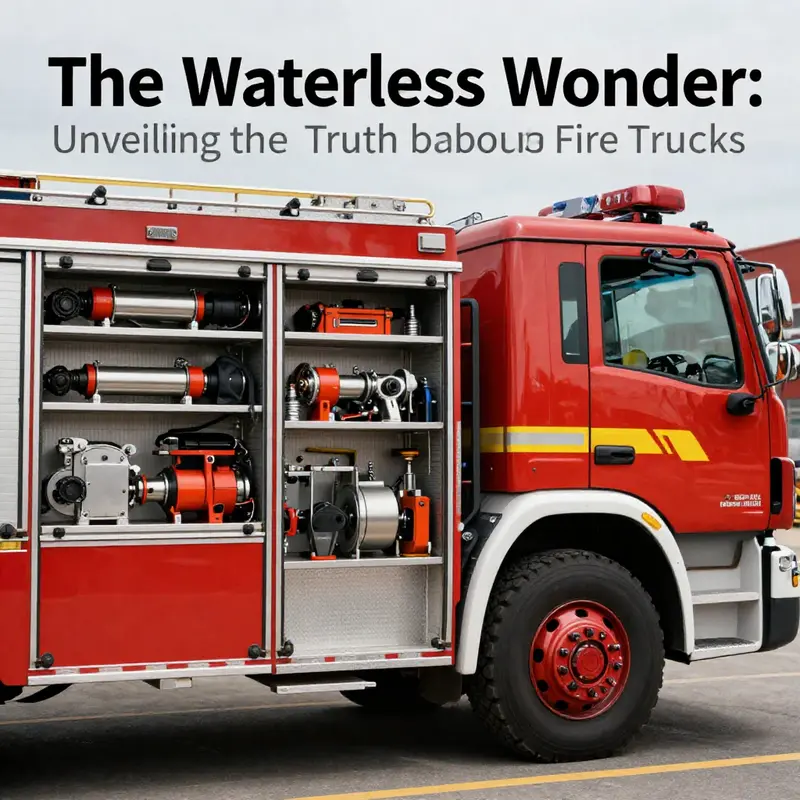
Firefighting is often imagined as a simple chain: a hydrant, a hose, a pump, and a nozzle, all arranged to deliver water at high pressure to quench a blaze. Yet the reality on the ground is far more nuanced. The fleet that responds to emergencies varies as surely as the incidents themselves. While water-carrying capability is a defining feature for many fire apparatus, it is not universal. In fact, a substantial portion of a modern fire department’s assets are designed to accomplish essential tasks without relying on bulk water carried on board. They exist to extend reach, speed up access, or deliver specialized agents, tools, and expertise to the scene. In this sense, the question “do all fire trucks carry water?” is both technically answerable and misleading. The correct frame is to recognize a spectrum of intervention capabilities, each calibrated to specific roles. Some trucks are water-focused, built to initiate fire suppression and sustain it through direct attack. Others are purpose-built for rescue, access, or rapid hazard mitigation, functioning as force multipliers that operate in tandem with water-carrying units rather than as replacements for them. The chapter that follows surveys that spectrum, with a focus on the vehicles whose primary design is not to deliver water in the first attack, but to enable safer, faster, and more effective outcomes when people’s lives and property are at stake.\n\nOne of the clearest examples of a non-water-centric fire apparatus is the rescue truck. A rescue unit is not merely a minimally equipped support vehicle; it is a highly specialized platform for technical rescue. Vehicle extrication, confined space operations, trench rescues, and complex stabilization tasks demand tools and capabilities that go far beyond what a typical pumper carries. Heavy-duty cutting torches, hydraulic spreaders and rams, advanced stabilization gear, rope systems, harnesses, breaching tools, and industrial-grade lighting populate the rescue truck’s deck and locker bays. The operational philosophy behind this design is the recognition that time and technique both influence outcomes in ways water alone cannot. When a vehicle is crushed in a collision or when someone is trapped in a collapsed structure, every second counts and every tool matters. A rescue truck brings a mobile toolbox with rapid-deployment capabilities, enabling responders to reach victims quickly, establish safe access, and begin patient care or stabilization even as other units maneuver into position for suppressive actions. As a result, the rescue unit often arrives earlier than the first water-focused engine and, in many incidents, coordinates with the following line of attack to ensure that when fire suppression begins, it has a safer, more controlled environment in which to operate. The emphasis on specialized equipment and manipulation of the environment highlights a broader principle: in emergency response, the presence of a capable instrumentality can transform a potentially overwhelming scenario into a sequence of manageable steps. The rescue truck’s value lies not in unloading gallons of water, but in enabling practitioners to extract victims with minimal further risk and to reduce the overall exposure of firefighters to danger.\n\nThe Airport Rescue and Firefighting (ARFF) vehicle category illustrates another important distinction. Airports present a distinctive risk landscape where aircraft incidents create challenges that standard fire engines are not optimally equipped to handle. ARFF units prioritize rapid deployment of large quantities of fire suppressants—often foam concentrates designed to blanket a burning aircraft and to penetrate jet fuel fires—at high pressures. While some ARFF units may carry small amounts of water, the heavy emphasis is on fast, high-volume foam or suppressant delivery and on specialized access tools that allow responders to reach aircraft while minimizing the potential for secondary hazards. The design mindset here is fluid. It recognizes the sheer scale and speed of aviation incidents and shifts the focus toward chemical agents and rapid application rather than traditional water-based handlines. In practice, ARFF units are part of an integrated system, where fast extraction, patient care, containment, and rapid initial suppression cohere with a broader strategy that prioritizes aircraft safety and aviation fire dynamics. This reflects a broader theme in firefighting: the most effective responses are rarely monolithic, and the fleet’s diversity supports a layered and coordinated effort rather than a single, uniform approach.\n\nLadder trucks, sometimes called aerial apparatus, further illustrate the functional diversification within fire engine fleets. Ladder trucks may carry onboard pumps or modest water tanks, but their core purpose is not direct water attack. Their strength lies in reach, access, ventilation, and rescue operations at height. The telescoping ladders or articulating platforms extend beyond a hundred feet, enabling firefighters to reach upper floors, pierce roofs for ventilation, or conduct vertical rescues where ground access is blocked. The presence of a ladder truck on a call often signals a tactical shift: crews can effect egress, create defensive exposures, or create a safer zone for interior teams. Because high-rise operations require precise positioning and rapid orientation to victim locations, the ladder truck’s configuration emphasizes crew safety, line-of-sight command, and the ability to supply light, power, and ventilation rather than to deliver fire suppression through large water tanks. This role complements the work of pumper units, which may then apply water from hydrants, portable tanks, or connected hoses once the built environment has been prepared for attack. The ladder truck thus becomes a critical force multiplier—its height and reach enabling firefighters to coordinate suppression and rescue across multi-story geometries while other units focus on water delivery and internal fire attack.\n\nA fourth category worth noting is the rescue-focused “special fire truck” that contains a curated assortment of tools tailored for challenging environments. These vehicles often blur lines with the rescue and ARFF domains, yet they maintain a distinct emphasis on mission-specific equipment. They carry gear for hazardous materials responses, confined space operations, technical braking, or unique structural challenges. In some fire service systems, these trucks act as mobile command or rapid intervention capabilities, ready to adapt to evolving hazards and to bridge gaps between standard firefighting units and the specialized teams that handle the most complex emergencies. In this sense, specialty trucks serve as flexible assets that anticipate a wide range of scenarios. They do not rely on large onboard water tanks as a primary mechanism for intervention; instead, they optimize for the immediate needs of the incident—access, stabilization, hazard mitigation, and rapid triage of victims or risk areas—before water-based suppression becomes the decisive action if and when it is required.\n\nThe structural logic behind trucks that do not carry water is grounded in a simple, enduring principle: the fire service must anticipate a spectrum of threat and terrain. Water is essential, but it is not the universal solvent for all emergencies. The operational reality is that a single vehicle cannot be everything to everyone. A straight line between fire suppression and rescue is insufficient; effective response requires a fleet that distributes capabilities across roles, environments, and response profiles. A rescue pumper may still have some water aboard to support limited initial suppression or to assist during patient care, but its primary raison d’être is the toolset that enables rapid, technical work, not the bulk transport of water into a structure. In practice, departments choreograph these roles in a staged sequence. The first-responding unit with the right reach and tools begins with rapid assessment, air management, and scene control. If fire conditions permit, a water-delivery engine may follow, establishing a sustained attack line once a safe access exists. The interdependence of these assets underscores a practical truth: water supply and rescue capabilities are complementary rather than competing. When they function in concert, they can convert a life-threatening event into a controlled, solvable incident.\n\nNo discussion of non-water-carrying trucks would be complete without acknowledging the broader training and logistical implications. A rescue unit does not rely on instinct alone. It requires ongoing, scenario-based training in manipulation of rescue tools, patient extraction, stabilization principles, and hazard recognition. These trucks demand meticulous maintenance of equipment bays, swift access to specialized gear, and a crew that understands how to coordinate with water-focused units and with incident command. The command structure at the scene must fluidly allocate roles as the situation evolves. For example, an initial rescue strategy might emphasize extrication and stabilization, with a plan to transition to suppression once an accessible and safe path is established for fire attack teams. The firefighters operating the rescue vessel need to know when to defer to water-based units, and those operators must understand how the presence of an extraction operation will alter the approach to water application—whether through controlled opening of doors to reduce heat and smoke or through protective ventilation to limit backdraft risk. The training burden is real and substantial, yet it pays dividends in the form of quicker, safer outcomes for civilians and responders alike.\n\nIn this context, a practical question emerges: how should departments think about resource allocation when building or expanding their fleets? One guiding principle is specialization tempered by interoperability. Highly specialized units deliver specific capabilities, but they gain value when integrated into a coordinated response. An ARFF unit, for instance, must be ready to deliver high-pressure foam in a way that does not impede subsequent life-saving activities. A ladder truck must navigate tight urban canyons and arrive at a position where its platform can be deployed without compromising interior operations. A rescue truck must have a living, breathing set of crew protocols that ensure the tools function as intended under pressure. This emphasis on interoperability helps reconcile the diverse functions with the shared objective of saving lives and reducing property loss. The critical insight is that non-water-carrying trucks are not merely \”supportive\” in a generic sense; they are essential to shaping the tactical landscape in which water-based teams operate. They create the opportunity for water-based suppression to succeed by ensuring access, stabilization, and hazard reduction precede, accompany, or even accompany suppressive efforts.\n\nThe logistics of water supply themselves reveal the reasons why some trucks do not carry water as their primary payload. Carrying a large water tank adds substantial weight, reduces payload for tools and equipment, and shifts the vehicle’s center of gravity in ways that can impair agility and maneuverability. In urban settings, narrow streets and tight corners demand high maneuverability and rapid readiness. A vehicle designed to maximize that agility may forgo large water onboard in favor of versatility, specialized equipment, and quick redeployment after a rapid set of tasks. When a unit does have water onboard, it is often a compromise: enough water to sustain initial attack or to support rapid rescue actions, but not so much that it becomes a heavy, lumbering platform that cannot respond to other demands with speed and precision. The variations across jurisdictions reflect both geography and fire history. A city with dense high-rise development and frequent vehicle extrication calls will prioritize rescue and access assets, while a desert community with long, dry seasons and remote locations may emphasize water supply capabilities in a tanker fleet. The design of non-water-carrying trucks, then, is not an aesthetic choice but a tactical decision borne of real-world experience and risk assessment.\n\nAn additional layer of complexity comes from the pursuit of efficiency and safety. Rescue and special-operations vehicles operate with a different kind of risk profile than standard engines. They routinely encounter hazardous environments, including structural collapse, downed power lines, and volatile atmospheres. Tools must be organized for rapid deployment, with minimal time spent searching for the correct equipment. This requires not only robust inventories but also an iconic layout that makes sense to trained crews who may have only moments to locate exactly the tool they need. Foam and dry chemical extinguishing agents, when used by ARFF and certain special units, present their own vigilance requirements. The handling of foam concentrates, for example, calls for careful storage, controlled mixing procedures, and protective equipment to avoid hazardous exposure. The decision to equip a rescue or ARFF vehicle with water only in limited forms is a reflection of efficiency and risk management: they are designed to reduce the time to begin critical action and minimize the complexity of the on-scene system until water-based suppression becomes a necessary corrective measure.\n\nThe broader, strategic value of non-water-carrying trucks becomes apparent when considering the dynamics of real emergencies. On the day of a major incident, responders wrestle with questions of access, shelter, illumination, ventilation, and patient care as much as with the flames themselves. A rescue truck can establish a safe approach path, secure a crash area, and support air management for personnel working in toxic smoke. A ladder truck can deliver a precise apex for roof operations, enabling firefighters to cut an efficient ventilation hole without exposing interior crews to unnecessary heat. An ARFF vehicle can kick in the most effective foam blanket to curb jet-fuel fires and to prevent flashovers in the aircraft’s vicinity. The most striking aspect is how these functions interplay with water-based suppression. When a pumper arrives, it does so not in isolation but as part of a carefully choreographed sequence that begins with securing access, stabilizing hazards, and removing endangered people from danger. In that choreography, the non-water-carrying trucks are the lead dancers, clearing the stage for a more straightforward, effective water attack to follow.\n\nTo illustrate the practical reality, consider a complex structural fire that expands into a multi-use hazard, such as a building with a parking garage beneath, an adjacent fuel dispensing area, and multiple occupants in peril. The rescue unit arrives first, with cutters and spreaders in hand, ready to pry open doors and extricate people from confined spaces. The ladder truck positions over the stairwells to provide ventilation and access to upper floors while illuminating the path with high-intensity lighting. The ARFF or specialty unit may stand by with foam suppression and ready breach tools to quickly contain any flare-ups from the fuel sources that often accompany such scenes. Meanwhile, a pumper ready to deploy full-water attack lines and to establish a steady hydrant-based supply chain stands as the anchor of suppression. The result is a well-orchestrated response rather than a chain of competing efforts. Each vehicle fulfills a distinct, necessary function, and their combined effect is greater than the sum of their parts. This is not merely a conceptual ideal. The 2026 guide to fire truck types and their manufacturing standards emphasizes the importance of aligning vehicle capabilities with the specific hazards teams face in the field. It highlights how specialized vehicles, designed for rescue or rapid hazard mitigation, complement water-centric apparatus by expanding the tactical envelope available to incident commanders and frontline crews alike.\n\nWithin this framework, the question of internal linkages becomes practical. Departments should invest in clear interoperability protocols that specify how teams will communicate, hand off tasks, and synchronize their movements on scene. A rescue team should be trained to recognize when it is appropriate to relinquish operations to a water-focused team and how to maintain a secured hazard zone while the water attack is brought to bear. A ladder crew should understand how to coordinate ventilation windows with the opening and progress of suppression lines. And water supply officers should coordinate with non-water units to ensure a continuous, safe, and efficient flow of water from hydrants or alternate sources while rescue operations proceed. The ultimate objective is an integrated response in which each vehicle’s distinctive strengths are leveraged at the right moment. When accomplished, the presence of non-water-carrying trucks does not create friction with water-based assets; it enhances the overall speed, safety, and effectiveness of the response.\n\nAs the firefighting landscape evolves, so too does the conversation about how fleets are composed and how training regimes reflect that composition. The trend toward a more diversified fleet aligns with a broader shift in public safety toward resilience and modularity. Agencies increasingly recognize that a one-size-fits-all approach is ill-suited to the range of threats encountered—from urban high-rise fires to remote industrial incidents and demanding aviation emergencies. The emphasis on specialized equipment, rapid access, and advanced hazard mitigation ensures that responders can adapt to new kinds of incidents without sacrificing the ability to deliver classic water-based suppression when the situation calls for it. The non-water-carrying trucks do not replace the need for water in firefighting; they broaden the set of tools available, enabling responders to reach, stabilize, access, and protect lives in ways that would be less feasible if the response depended solely on water delivery. The result is a more flexible and capable emergency response system that can scale its efforts to the moment’s demands, a system in which every vehicle, whether it carries water or not, serves a coherent strategic purpose.\n\nThis chapter has sketched a landscape in which non-water-carrying fire trucks occupy a vital, strategic niche. It is a reminder that real-world fire response is a team sport—one in which each vehicle plays to its strengths, and where the choreography of the entire fleet determines how quickly and safely danger can be managed. The rescue, access, and hazard-mitigation roles performed by these specialized trucks are not footnotes to suppression but integral components of a resilient, capable fire service. As cities continue to grow and emergencies become more complex, the fleet’s ability to adapt will be measured not by the number of gallons carried on every vehicle but by the intelligence of how those gallons, and the tools that don’t carry gallons, are deployed. In that sense, the question about water on every fire truck recedes, and what emerges is a clearer understanding of how specialized vehicles support a common purpose: protecting life, preserving property, and maintaining public safety through swift, coordinated action.\n\nFor readers who wish to explore a specific category in greater depth, one online resource offers a concise gateway into the types, standards, and manufacturing considerations for these specialized vehicles. The article serves as a useful primer for understanding how today’s fleets are engineered to meet a diverse set of mission requirements, including those discussed here. ARFF and rescue-focused units, in particular, benefit from a systematic framework that connects their equipment choices to the hazards they most commonly confront. 1. Technological Landscape and Variant Architecture Across ARFF Giants: From Striker and Panther to Volterra and CIMC provides a direct route to understanding how these platforms are organized within a broader fleet strategy and how their tools and configurations optimize response to aviation emergencies. This internal link is designed to help readers connect practical observation with a formal taxonomy, illustrating how the broader principles described in this chapter translate into real-world procurement and operation.\n\nThe broader academic and professional literature corroborates these observations. A 2026 overview of fire truck types and manufacturing standards emphasizes how specialized vehicles are designed to complement traditional pumpers, enabling departments to tailor their responses to local risks while preserving readiness for water-based suppression when necessary. The article argues that the most effective fleets balance specialization with interoperability, ensuring that each vehicle type can function within a coherent incident command structure. In practice, that means non-water-carrying trucks are not marginal players but essential contributors to the overall tactical canvas. Their presence on the roster signals an organizational commitment to versatility, rapid scene assessment, and proactive hazard mitigation—capabilities that significantly influence outcomes on the ground. The chapter here has sought to translate that framework into a narrative of how these vehicles operate in the field, what they carry, and why their particular design choices matter for communities that rely on professional emergency response every day.\n\nExternal resource: for a broader technical overview of fire truck van types, standards, and manufacturing considerations referenced in the context of this discussion, see the external resource at https://www.fireengineering.com/2026/02/18/a-complete-overview-of-fire-truck-van-types-standards-and-how-they-are-applied-in-manufacturing/. This resource complements the detailed discussion of specialized vehicles by providing a structured taxonomy and a manufacturing perspective that helps practitioners, students, and policymakers understand how non-water-carrying trucks fit into the larger ecosystem of firefighting technology and readiness.
Water on Duty: How Fire Truck Roles Shape the Truth About Water Carrying
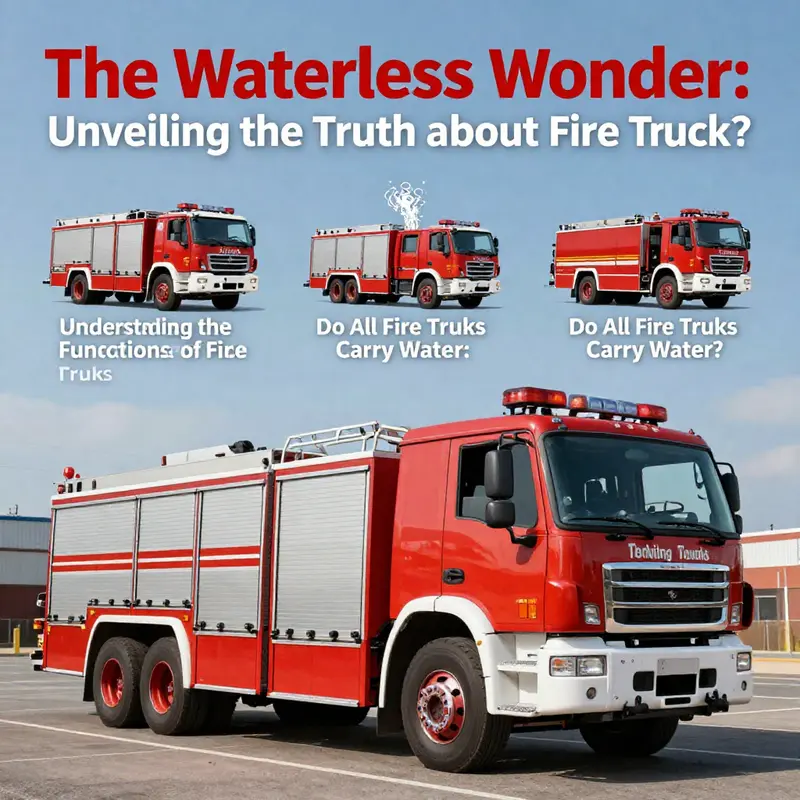
Firefighting is often imagined as a straightforward battle where a big truck comes to the blaze, opens a valve, and sprays life-saving water onto the flames. In practice, the fleet of fire apparatus is a diverse toolkit, designed to meet different tasks, terrains, and response philosophies. The simple question—do all fire trucks carry water?—has a more nuanced answer than most people expect. The truth rests on the fundamental principle that every vehicle is built around a core mission. Water alone is not the defining feature of a fire truck; it is a resource that may or may not be carried depending on what the vehicle is meant to accomplish and where it operates. To truly understand this, it helps to walk through the main types of apparatus, their typical water configurations, and how crews integrate them on scene to create a coordinated suppression effort that balances speed, reach, and safety.
Pumper trucks, the most familiar face of urban firefighting, embody the logic that water and pressure are central to the immediate attack. These engines carry onboard water tanks—often in the range of five hundred to about a thousand gallons—and house a robust pump capable of delivering high volumes of water at significant pressures. In a typical structural blaze, a pumper can establish a water supply directly from its own tank while also drafting from municipal hydrants if necessary. The combination of a sizeable tank and a powerful pump enables firefighters to begin suppression quickly, sometimes within minutes of arrival, while other units work to augment the supply. This arrangement makes pumpers the backbone of many urban responses, and their presence at a scene often signals the initial, direct tackling of the fire while other resources are organized behind the lines.
If the mission shifts toward sustaining operation in areas without reliable hydrants or where a single supply source would be insufficient, tanker trucks assume a different but complementary role. Tankers, sometimes called water tenders, are designed to carry large volumes of water—often far more than a pumper—but they do not emphasize the direct attack capability that a pump and hose team brings. Rather, their value lies in transporting water from distant sources or hydrant networks to the fire scene and delivering it to a point where pumpers can take it from there. Because tankers typically lack the high-pressure pumps and long hoses used for direct suppression, they do not stand in as the primary firefighting engine at a structure fire. Instead, they function as mobile water reservoirs, expanding the water supply and enabling longer operations in rural or remote areas where hydrants are scarce or nonexistent. In effect, tankers extend the reach of the entire water supply strategy, ensuring that engines further into the response chain are not water-starved.
Aerial fire trucks, with their towering ladders and long reach, occupy another essential niche in modern firefighting. They are engineered to gain access to upper floors, perform rescues, and enhance ventilation, all critical functions in high-rise and complex urban environments. When it comes to water, aerials may carry water or have a so-called ladder pipe—a dedicated water stream fed from a nearby pump—primarily as a supplement to ground-based suppression. In many configurations, an aerial carries a smaller water tank than a pumper or none at all, because its primary purpose is access, rescue, or exposure protection rather than sustained direct attack from its own tank. Fire crews can still deploy water from the aerial’s mounted outlets, but doing so often relies on a pumper supplying the hose line or a nearby fire engine, especially in taller structures where reach and protection of exposures matter just as much as extinguishing the flames. The value of aerial apparatus is not diminished by this distinction; rather, it is clarified by it. Aerials enable firefighters to hit upper-level windows, protect stairwells during evacuation, and direct streams from above to protect critical infrastructure and occupants, while the water supply still depends on a broader network that includes pumpers and tankers.
Rescue trucks enter the discussion with a different priority: the tools and techniques required to free people from entrapment, stabilize scenes, and perform specialized technical rescues. These vehicles carry hydraulic cutters and spreaders, rope systems, lighting, extrication equipment, and a suite of rescue gear. They are remarkable for their readiness to tackle complex, non-fire emergencies that can arise in vehicle crashes, collapsed structures, or confined spaces. While some rescue units might carry a modest amount of water for small tasks or to support certain rescue operations, their primary design emphasis is not on firefighting suppression. The equipment layout reflects a focus on access, stabilization, and patient care, rather than sustained water application. As a result, rescue trucks generally contribute to the firefighting mission in indirect but vital ways, supporting the suppression effort by freeing victims and creating safe access points, rather than by delivering large streams of water.
Wildland or brush engines highlight another facet of the water-carrying question. These compact, rugged vehicles are tailored for off-road conditions where urban hydrants are scarce and the terrain poses additional challenges. Their water tanks are typically smaller than those of urban pumpers, and the equipment emphasis leans toward mobility, ground clearance, and the ability to operate on uneven terrain. Wildland engines are designed to work in coordination with other resources, often using ground cover suppression tactics, rapid attack lines, and, crucially, the ability to reach near-urban interfaces where wildland fires threaten homes and communities. The water they carry is a critical enabling factor, but their design reflects the need to balance weight, fuel economy, and off-road capability with suppression capacity. In many incidents, these engines will fluidly blend into the larger response, providing quick water delivery in challenging environments and feeding draft or hydrant-fed supplies as the scene evolves.
Industrial and ARFF (Airport Rescue and Fire Fighting) trucks demonstrate yet another dimension of the spectrum. In industrial settings and airports, the fueling and hazard profile of fires differ from typical urban fires. Some ARFF and industrial units are equipped with foam concentrates or other extinguishing agents that are more effective on hydrocarbons or hazardous materials than plain water. Foam systems mix with water to provide superior coverage, cooling, and fire knockdown on fuel fires or in environments with flammable liquids. In these contexts, water is still a central component, but the apparatus is designed to optimize the interaction of foam concentrate with water to maximize effectiveness and minimize environmental risk. This specialization underlines a broader truth: the composition of a fire truck’s equipment—water tanks, foam systems, or other extinguishing media—directly reflects the hazards it is built to address and the operational philosophy guiding its use.
Across these categories, one common thread stands out: the presence of a water tank is not a proxy for capability, nor is its absence a sign of obsolescence. Instead, water capacity correlates with the vehicle’s core mission and the logistical realities of the communities it serves. In dense urban centers with reliable hydrant networks and steady incident demand, pumpers designed for rapid, high-pressure suppression become the workhorses, and their onboard water supply is purpose-built to support a fast initial attack. In rural or remote landscapes, tankers extend the water supply, creating a mobile reservoir that can sustain operations until a reliable water source is established. In high-rise or complex environments, aerials provide critical access and rescue functions, with water either delivered from ground-based units or via a ladder pipe when necessary, while the broader water strategy still relies on the pumpers and tankers that come alongside. Rescue, wildland, industrial, and ARFF units contribute specialized strengths that complement the water-focused capabilities of pumpers and tankers, ensuring that suppression, rescue, and hazard control occur in a coordinated, multifunctional response.
In practical terms, the distribution of water-carrying capacity across the fleet depends on planning, geography, and the incident command’s assessment of risk. A city with dense housing, near-distant water mains, and frequent structural fires will lean toward pumpers with ample onboard water, supported by rapid hose lays and hydrant-fed supply from the nearest water system. A rural district, where hydrants are few and far between, will rely more on tankers and water shuttle operations, with engines positioned to optimize water movement from a distant source to the front lines. A high-rise district may see a blend, where aerial units provide access and exposure protection, while pumpers maintain water streams and supply, keeping the building’s interior conditions tenable for occupants and firefighters alike. Each scenario illustrates a strategic principle: water is most effective when its delivery is matched to the scene’s access, size, and hazards, rather than being treated as a universal attribute of every vehicle.
For readers who want a closer look at a particular apparatus type as it relates to the broader water strategy, an accessible entry point is available in the aerial category. Aerial fire trucks, with their distinctive long ladders and harnessing capabilities, also illustrate how water can be deployed from above when ground access is limited or when protecting exposures around the structure becomes paramount. To explore this emphasis on vertical reach and roof access in more depth, you can view the dedicated category that focuses on aerial fire trucks and their specialized equipment. This reference helps ground the discussion in a practical inventory view while reinforcing the idea that water is only one tool among many a well-rounded unit can deploy in the right circumstances.
The broader takeaway is simple and robust: water-carrying capability is common among fire trucks, but it is not universal. The vehicle’s role, mission, and operating environment shape whether a particular unit will have a large onboard water supply, a different extinguishing approach, or a primary focus on access and rescue. When communities plan their response, they do so with a mosaic of apparatus that can collectively provide water, mobility, elevated reach, and technical rescue as needed. The result is a coordinated system where the most effective water strategy is shored up by a constellation of assets that can adapt to the evolving fire ground realities. This is why a first-arriving pumper might begin the attack, while a tanker shuttles water from a distant source, an aerial unit reinforces exposure protection from above, and a rescue truck focuses on freeing occupants and stabilizing the scene. The end goal remains consistent: to control the fire quickly, protect life, and minimize harm to surrounding property and the responders themselves.
For readers seeking a direct path to a broader picture of how these components fit into real-world equipment catalogues and product lines, a deeper dive into the aerial category provides a practical touchstone. The content here aligns with common industry practice that emphasizes mission-driven design over a one-size-fits-all approach. The interplay between tank capacities, pump capacities, and accessory equipment is what ultimately determines how a fire department can respond to a given incident. In every case, the question of whether a given vehicle carries water is answered not by a universal rule but by the demands of the job it was built to perform. That is the most reliable lens through which to view the truth behind the headline, and it is a lens that becomes clearer the more we learn about the diverse toolkit that modern firefighting relies upon.
Throughout the story of fire apparatus, it is the teamwork—between pumpers, tankers, aerials, rescues, wildland engines, and special platforms—that makes the answer workable in practice. A community’s protection plan is a living map of how these tools are staged, how water moves from source to attack, and how the incident commander coordinates a chain of action that balances rapid suppression with the safety of both civilians and responders. When a reader asks again, in the kitchen-table shorthand of everyday life, whether all fire trucks carry water, the reply is nuanced but clear: some do, some don’t, and the ones that don’t are not left waterless; they are positioned to bring water into play in the most efficient and strategic way possible. In the end, the water is not a badge of honor for any single vehicle. It is a resource that travels through a network—one that carries the right tool to the right place at the right moment—so that the story of each fire scene ends with safety, control, and a return to normalcy.
For readers who want to explore how these concepts translate into real-world equipment selections and fleets, the aerial category provides a concrete example of how a unit’s core mission guides its water strategy, and how that strategy fits into the larger incident command system. camiones de bomberos aéreos illustrate the principle that high reach and specialized access often take precedence over pure water capacity, reinforcing the idea that water is best viewed as one of several critical tools rather than a universal feature. In sum, the answer to the opening question remains: water is common, but not universal, and the reasons lie in the diverse missions that fire departments undertake to keep their communities safe.
External resource: For a broader framework on fire apparatus classifications, standards, and the rationale behind different water strategies, see the National Fire Protection Association (NFPA) overview at https://www.nfpa.org/.
brush fire trucks, wildland firefighting, fire safety equipment, off-road fire trucks, firefighting technology, business safety, emergency response vehicles
In conclusion, while many fire trucks are designed to carry water for direct firefighting, a significant number do not. Each type of fire truck serves distinct and essential roles in emergency management, from providing aerial access and rescue assistance to transporting water to areas without hydrants. Understanding the specific capabilities of your local fire trucks can help businesses better prepare for emergencies and align their safety protocols with local firefighting resources. Knowledge is power when it comes to safeguarding your business.

