
















Maintaining a safe distance from emergency vehicles, particularly fire trucks, is crucial for the safety of first responders and the general public. For business owners, understanding the significance of this practice cannot be overstated, especially in high-traffic commercial areas where responsiveness is key. This article delves into three pivotal chapters: the requirements during emergency response situations, established safety guidelines, and local regulations that ensure business compliance and community safety. Knowledge of how far back from a fire truck to stay not only protects first responders but also enhances overall public safety and business operations.
The Margin of Safety: How Far to Stay Back from an Emergency Vehicle
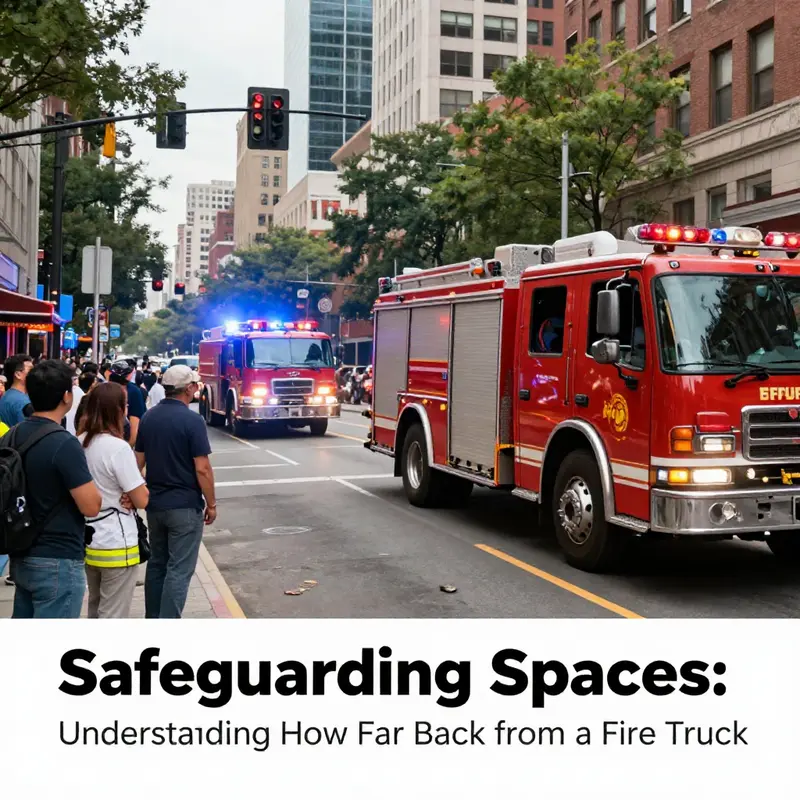
When an emergency vehicle such as a fire truck is signaling with lights and sirens, the goal for drivers is not to chase the vehicle but to create space around it. The commonly cited guideline is a buffer of about 500 feet, roughly 150 meters. This distance helps responders maneuver, reduces the chance of rear-end collisions, and lowers the risk that debris, water spray, or smoke affects bystanders. Practically, you should slow down, move to a safe lane or shoulder if possible, and avoid weaving through gaps in traffic that could tighten the scene.\n\nNote that dispatch decisions can be dynamic: the closest unit is not always the fastest to arrive, so do not assume instant relief simply because a truck looks nearby. The buffer remains necessary until responders have control of the scene and a clear line of sight to the hazard.\n\nBeyond the initial approach, when the truck is parked at the scene, the safety perimeter expands to about 100 to 200 feet (30 to 60 meters) or more, depending on conditions and directions from officials.\n\nPublic safety hinges on predictable behavior: pull to the right and stop safely, or create a clear lane for the emergency vehicle to pass. In bad weather or on high-speed rural roads, drivers may need to extend the distance even further.\n\nThis discipline is a practical, protective measure because it preserves time, space, and focus for those who must act first.
Distance as Duty: Why Maintaining Space Behind Fire Trucks Saves Lives
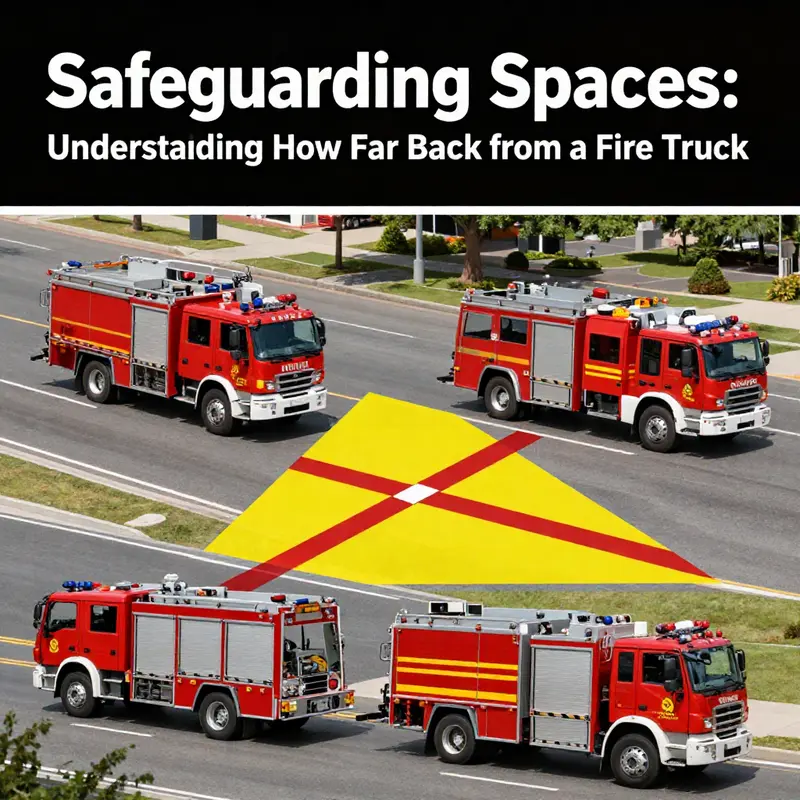
When a fire truck accelerates into traffic with lights flashing and a siren wailing, the moment demands more than calm nerves. It demands a disciplined space around the emergency vehicle that translates into safer streets and faster, more effective responses. The distance behind a fire truck is not a casual guideline but a living standard shaped by training, physics, and the unpredictable rhythms of real-world streets. The core rule is simple in its intent: give the responders room to do their jobs while protecting yourself and others from the chain reactions that might follow a sudden maneuver. In broad terms, the guidance is straightforward yet nuanced. If the truck is actively responding to an emergency with lights and sirens activated, maintain at least 500 feet (about 150 meters) behind the vehicle. This buffer zone helps ensure that the crew can navigate around parked cars, stalled traffic, or debris and still have space to work safely. It also creates a margin that protects pedestrians and cyclists who might not anticipate the truck’s immediate movements. The figure is more than a number; it represents a careful boundary that accommodates the truck’s need to avoid sudden obstacles and to deploy its ladder, hoses, or other equipment without interference. At times when the truck is not in emergency mode—perhaps it is en route to a call but not actively responding—the recommended following distance shifts. In those scenarios, a typical minimum of 200 feet (about 60 meters) provides a cushion against abrupt braking, unanticipated turns, or the sudden activation of emergency signaling by a vehicle ahead of you. The variation in distance underscores an important point: context matters. The same fire truck can behave very differently depending on whether it is racing toward a crisis or quietly moving through traffic to a staging area. The law and the lessons taught by fire service training emphasize this adaptive approach, and the best responders know that the public’s compliance with these expectations directly influences outcomes.
From the driver’s seat, translating these distances into action begins with observation, not reaction. It starts with recognizing the signs that indicate a truck is about to move in a manner that could affect nearby traffic. The flashing lights, the siren’s cadence, and the truck’s own speed create a countdown in the mind of any approaching motorist. The safest response is to slow smoothly, relinquish the lane, and create space rather than attempting to “beat” the vehicle to a red light or a green signal. In this way, distance becomes a form of courtesy that doubles as a life-saving tool. The public safety rationale is reinforced by the standards promoted by national and regional authorities. Across the United States, these guidelines are reinforced by organizations such as the National Fire Protection Association (NFPA) and the state or local departments that interpret them for day-to-day traffic. The aim is not to punishment but to preserve the uninterrupted flow of emergency services while protecting everyone who shares the road. This is not a distant abstraction. It translates into the concrete choreography of every drive, from the moment the sirens start to the moment the truck clears the intersection and the street returns to normal.
The logical underpinnings for the 500-foot rule relate to the physics of stopping distance, the geometry of the road, and the unpredictable behavior of other drivers. A fire engine can reach high speeds quickly, and its motion is not a single-vector event. It pushes aside air, displaces attention, and changes the immediate risk landscape for nearby pedestrians and vehicles. The 500-foot space offers a buffer for drivers behind the truck to observe, evaluate, and adjust to changing conditions—such as a car abruptly braking, a bicycle weaving into a lane, or a car turning across the path of the fire apparatus. It also provides the crew the margin to step off the roadway or to reposition equipment without fearing that a follow-on vehicle will intrude into their operational corridor. In practice, these distances are not hollow rules, but shared expectations that promote predictability in a dynamic environment. The public’s ability to predict a moving emergency vehicle reduces the likelihood of sudden, dangerous maneuvers that could create secondary incidents. The avoidance of passing an actively responding truck is a critical piece of that predictable pattern. The moment someone attempts to pass a vehicle with its siren active is the moment the risk of collision or interference skyrockets. It is a simple truth with high stakes: speed and urgency do not justify improvisation when lives are at risk.
Beyond the numbers, there is a moral dimension to how we think about other people on the road. The road becomes a shared space where every motorist bears responsibility for a neighbor’s safety. The firefighter’s job involves manipulating large vehicles in tight quarters, often with equipment that extends beyond the chassis. Hoses can snap into place, ladders can extend over lanes, and personnel may be working in traffic lanes or in front of a truck’s airstream on a skid of asphalt. The distance helps to keep these operations free from the frictions of close quarters and sudden lane changes. When a driver chooses to give extra space—perhaps extending the distance beyond the minimum 500 feet—the measure pays dividends. It reduces the likelihood of surprise stops, creates a safer staging area near an incident scene, and allows the engine to maneuver into the most advantageous position without contending with tailgating pressure. In moments of high stress, pedestrians and motorists alike can instinctively widen the gap if they know that the safest course is to provide a broad corridor rather than a narrow pass.
The guidelines reflect not only physics and traffic engineering but also the culture of driving responsibility. The fire service’s emphasis on space is a reminder that emergency response is a public service, not a private performance. The public must navigate with patience and foresight, and in turn, the fire service can operate efficiently without invasive, last-second disruptions caused by aggressive driving. Jurisdictional variations exist, and the exact numbers may shift slightly from state to state or country to country. Yet the central principle remains consistent: give responders the room to perform, and you protect yourself, your passengers, and the people around you. When you align your driving behavior with this principle, you become an ally in the emergency response process rather than an obstacle. The practical implications of this alignment extend beyond the moment of a siren. It informs how you approach intersections, how you negotiate lane closures, and how you respond when a truck is stopped or repositioned in the roadway. For instance, if you are waiting at a red light while a fire apparatus approaches from behind or to your side, the best course is to remain behind the line and allow the truck to pass completely before you proceed. Do not attempt to jockey for position or race the vehicle through the intersection. This habit—simple, patient, and disciplined—reduces the risk of a rear-end collision, a side-swipe, or a cross-path movement that could endanger pedestrians at the curbside or in nearby crosswalks.
This discussion also intersects with how we think about other people on the road. Consider cyclists who may be riding near the curb or in the bike lane alongside the fire truck. Or pedestrians who momentarily step into the street to cross a driveway or catch a glimpse of the flashing lights. The distance acts as a signal of caution to every vulnerable user: the fire truck has priority, and your movement should be deliberate and controlled. When the vehicle is not in emergency mode, the 200-foot guideline still demands respect, particularly in congested or high-speed segments where sudden braking can intensify the risk of collisions. In both scenarios, visibility and anticipation matter. Weather conditions, road geometry, and traffic density all influence how distance translates into safety. In rain, snow, or fog, stopping distances lengthen and reaction times slow. The responsible driver adjusts accordingly, often extending the safe gap beyond the minimums. In such conditions, the 500-foot rule remains a sturdy baseline, while good judgment and situational awareness guide the exact spacing. The public compliance that supports these practices is reinforced by official resources that outline how to behave near emergency vehicles. These resources emphasize the importance of not only following the numbers but also adopting a mindset oriented toward safety, empathy, and practical restraint on the road.
To connect this general guidance to real-world practice, many drivers benefit from a mental model that translates distance into a visual cue. A common reference is the length of a football field, approximately 100 yards, which helps some people gauge 500 feet. Others prefer to measure by the number of car lengths, a rough method that can be more intuitive when traffic is flowing and the road is crowded. Regardless of the measuring method, the underlying skill is the same: do not close the gap quickly, do not crowd the truck, and do not attempt to pass while it is moving or actively responding. The goal is a calm, predictable flow that preserves the safety of every user of the roadway while enabling firefighters to accomplish their mission with minimal delay. In the long arc of public safety, these practices matter because they shape the very culture of road behavior in communities. They become part of driver education, driving tests, and everyday decisions. When a driver reads the siren and sees the lights, the correct instinct is not speed or bravado but restraint and coordination. The distance we maintain is a direct expression of respect for the professionals who are trained to manage extreme situations and for the families whose lives may hinge on the unseen moment of a fire truck’s arrival. The rule about distance, the insistence on not passing, and the caution at red lights together form a simple mechanism for reducing risk and enabling rapid, orderly response. The public’s adherence to these norms helps keep the emergency system operating at peak effectiveness, with fewer avoidable hazards in its wake.
If you want to explore more about the range of vehicles used in emergency response beyond conventional fire engines—along with safety-focused equipment and specialty units—you can explore the Emergency Rescue Vehicle category. This resource offers insights into the kinds of capabilities that may be deployed in different situations and how those capabilities influence the space needed on the road. It’s a reminder that the distance principle applies across diverse responding platforms, even as the specific vehicle geometry and equipment profiles differ.
Ultimately, the practice of maintaining a safe distance from a fire truck is a practical act of community care. It requires attention, patience, and a willingness to let trained professionals do what they were trained to do: save lives and protect property under sometimes dangerous conditions. The numbers provide a clear anchor, but the underlying ethos is human: we look out for one another, we respect public safety operations, and we act with deliberation when the sirens signal that help is on the way. In the end, the rule is not merely about legality; it is about preserving life. It is about the quiet confidence that, when the next emergency erupts on a highway, we will respond in a way that supports those who respond first. That response is a shared responsibility—one that begins with a simple, unwavering decision to keep a safe distance from a fire truck and to yield space for the work that follows.
For more practical context on the types of vehicles that contribute to these emergency responses, you can review the Emergency Rescue Vehicle category. This resource helps illuminate how different platforms integrate into the overall safety framework on the road. And for a broader reference to official guidelines and public-safety messaging, consult the NFPA’s public guidance on how to behave when emergency vehicles approach. The guidance is designed to be accessible to drivers, pedestrians, and families alike, reinforcing a culture of safety every time a siren sounds and a vehicle moves into traffic.
External reference: NFPA emphasizes safety rules when emergency vehicles approach, reinforcing the public’s role in maintaining clear pathways for responders. https://www.nfpa.org/News-and-Research/News/2023/January/NFPA-Reminds-Public-of-Safety-Rules-When-Emergency-Vehicles-Approach
The Safe Radius Behind a Fire Truck: How Far to Stay and Why It Matters
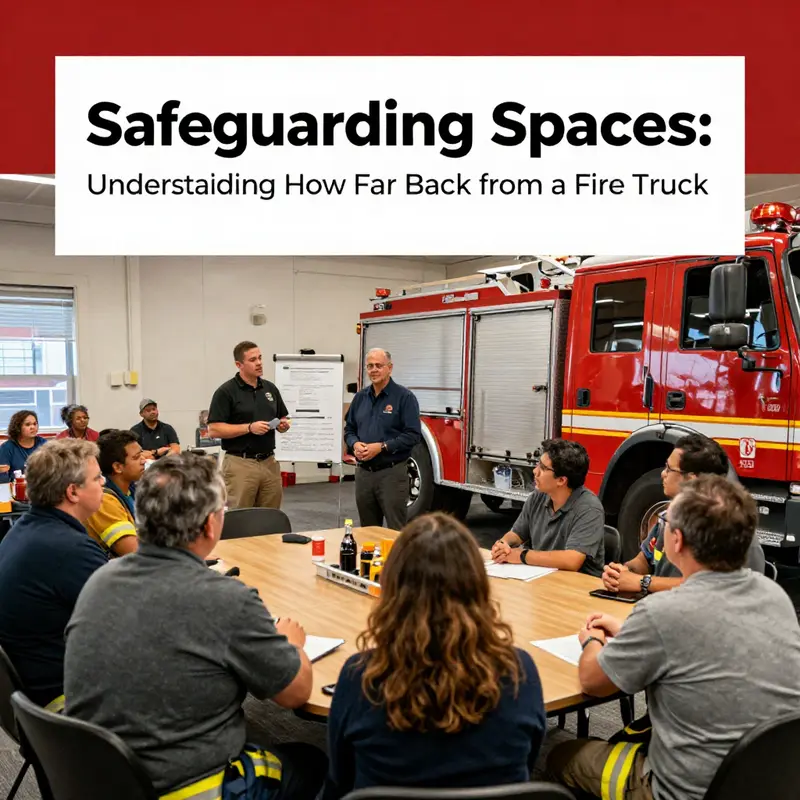
When a fire truck is on the road, crews work under pressure and in unpredictable traffic. The safest practice is to create space around the vehicle, a concrete safeguard that helps firefighters maneuver, deploy equipment, and reach people quickly. The distance you should maintain is not a single universal number but a range shaped by the truck’s mode, road conditions, and local rules.
In emergency mode, with lights and sirens active, the truck needs a broad buffer as it proceeds at speed. Lawmakers and safety guidance commonly emphasize yielding the right of way while also allowing the crew to move and stop as needed. A practical guideline many authorities cite is around 500 feet of clearance behind the vehicle to accommodate lane changes, braking movements, and the unpredictable actions of other drivers. This isn’t a casual figure; it is a corridor that reduces the risk of secondary crashes and gives responders room to work.
When the truck is not in active emergency mode but is still responding, a more conservative following distance is prudent. A typical range is roughly 200 to 300 feet behind the vehicle, adjusted for speed, lane geometry, and traffic density. The main purpose remains the same: minimize rear-end risks and keep the crew from having to operate in destabilizing proximity to other vehicles.
Local regulations vary by jurisdiction. For example, California often requires a minimum distance behind an emergency vehicle with lights and sirens activated, reflecting regional road conditions and safety priorities. Other states or municipalities may set different minimums or ranges. Drivers should verify the local code, posted regulations at intersections, and guidance from state transportation or public safety agencies rather than relying on memory alone.
Beyond the letter of the law, best practice emphasizes proactive, anticipatory driving. Maintain a visible buffer, signal intentions early with lane changes and slow, smooth braking, and stay alert for hoses, ladders, or other equipment that might extend into the roadway. The goal is a safe, predictable flow that preserves access to the scene for responders and reduces the chance of collisions or bottlenecks.
For those seeking formal guidance, resources from NFPA and state transportation agencies offer detailed, jurisdiction-specific rules and best practices. Reviewing these references periodically helps drivers stay current as laws and vehicle technologies evolve. The overarching principle remains: keep a safe distance, stay focused, and contribute to a safer journey for everyone when a fire truck is en route.
brush fire trucks, wildland firefighting, fire safety equipment, off-road fire trucks, firefighting technology, business safety, emergency response vehicles
Understanding the importance of maintaining adequate distance from fire trucks is not only a matter of compliance but also a crucial aspect of ensuring public safety. As business owners integrate these practices, they not only protect emergency responders but also demonstrate a commitment to community welfare. Keeping informed about local regulations, safety guidelines, and best practices will prepare businesses to respond effectively in any situation, ensuring a safer environment for all.

