
















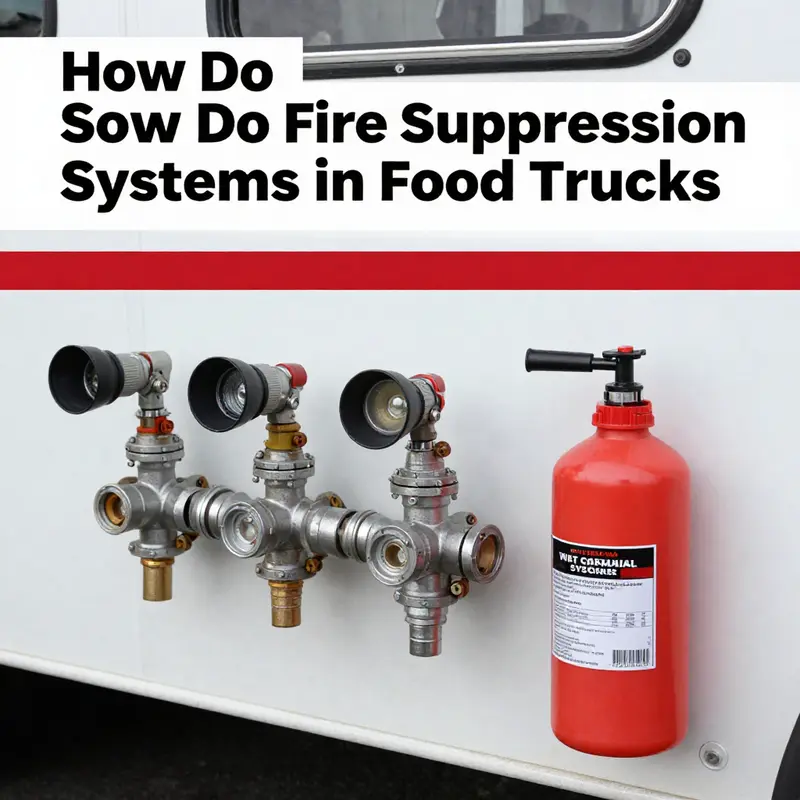
Fire safety is a critical consideration for food truck owners, given the high risk of kitchen fires caused by cooking oils and fats. Understanding how fire suppression systems work can be pivotal for business owners to safeguard their investments and ensure the safety of their staff and customers. This article breaks down the essential components and functioning of these systems, their detection and activation processes, compliance and maintenance requirements, and the importance of adhering to fire safety regulations. Readers will gain a clear picture of how these systems operate, why they are necessary, and how to manage their upkeep effectively.
null
null
On-Board Vigilance: How Fire Suppression Systems Guard Mobile Kitchens from Grease-Fired Infernos
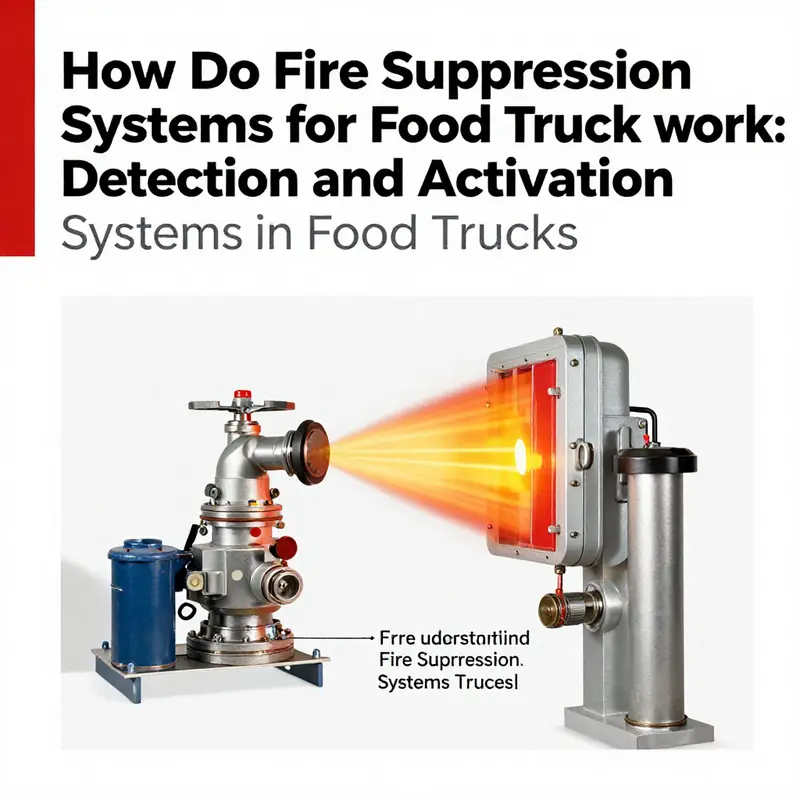
In the compact footprint of a food truck, the kitchen is a theater of heat and skill. Steam, sizzling oil, and the hum of a generator create a stage where a simple mishap can escalate in moments. Fire suppression systems are not ornaments or afterthoughts; they are engineered guardians that detect danger, respond without hesitation, and reduce the chance of a disaster turning into a catastrophe that closes a business, or worse, harms a person. This chapter follows the thread from sensing to activation, and from the kitchen to the curb, showing how a single system connects sensors, valves, and nozzles to a coherent safety net that protects cooks, patrons, and property. The emphasis is on the mechanisms that make this possible the decisions baked into the equipment design, the physics of fire and cooling, and the practical realities of a mobile kitchen where space and fuel sources test every assumption.
The detection phase begins long before a flame has any visible life. In a typical installation, heat-sensitive elements are placed in proximity to the chief sources of ignition griddles, fryers, and ranges. These elements are not passive indicators they are active participants in the safety system. A fusible link or a thermal sensor is calibrated to react when temperatures climb rapidly. In many configurations, the trigger occurs in the roughly 165 to 200 degrees Fahrenheit range, a threshold chosen because it corresponds to the temperatures that grease and oil can reach as a vented, open flame begins to take hold. When that heat surge is detected, the trigger initiates a sequence that does not rely on a human response. The system’s internal logic inserts a safety margin, ensuring that a minor flare or a momentary heat spike does not set off a system that would otherwise unnecessarily interrupt a stall or a service window. The result is a reliable, automatic response that buys precious seconds while the kitchen operator remains focused on the task at hand.
Activation follows detection with equal parts science and immediacy. The suppression mechanism discharges a carefully formulated agent through a network of pipes and nozzles positioned to spray the heart of the hazard. In grease-heavy operations, two broad categories exist wet chemical systems and dry chemical systems. Wet chemical agents are designed specifically for commercial cooking environments. They work by both cooling the fuel and chemically reacting with hot oils to form a soapy, foamy layer. This layer is not merely cosmetic; it is a functional barrier that reduces heat transfer and isolates the oil from oxygen, thereby suppressing the chemical chain reactions that fuel a fire. The foam also helps prevent the oil from splashing and spreading to adjacent surfaces, which is a critical advantage in the narrow confines of a mobile kitchen where a single spill can become a cross-contamination or cross-fire hazard. In addition, the agents reduce surface tension, helping to settle and knock down flames more quickly than water alone. The traditional dry chemical option, by contrast, disrupts the chemical reactions occurring in the flame. It blankets the fire with particles that interfere with free radicals at the flame front, achieving rapid knockdown with broad applicability across many types of fires. For cooking operations, wet agents are frequently preferred for their cooling effect and grease-specific action, though each system is designed to meet the kitchen’s risk profile.
A crucial design outcome of modern food truck fire suppression systems is the way they deliver the agent to the exact source of the danger. Nozzles are positioned above the stovetop and fryer areas, with careful attention to coverage and the geometry of the kitchen box. In a truck, those nozzles must contend with limited vertical and horizontal space, but their placement is not arbitrary. Engineers map out the hot zones, the typical oil heights, and the swing of heat sources as the cook moves between burners and fryers. The aim is to achieve a balance complete coverage without over-application that could saturate electrical components or create oversized cleanup challenges after an event. The agent’s discharge is rapid, but the system also assumes that a manual override remains accessible to the operator. This manual control is not an invitation to bypass automatic safety rather, it recognizes that an early, visible inspection may reveal a small fire that can be managed before the automatic system finishes its work. The manual pull is typically located at a reachable height, enabling a quick intervention if a cook spots the danger early.
Beyond the raw chemistry of fire suppression, the systems in food trucks are integrated into the broader safety architecture of the kitchen. Modern installations do not stand alone they connect to shut-off mechanisms that automatically cut gas supplies and isolate electrical circuits to reduce the risk area as soon as possible. A gas shut-off valve, driven by the same detection logic, halts fuel delivery to burners or ovens, preventing an ongoing flame from reappearing once the suppressant has done its work. Electrical isolation protects circuits that could be energized by water or conductive residues, mitigating electrocution risk and reducing post-event complications. This layering of protection underscores a central principle safety is not a single action but a cascade of protections that operate in concert. The mobile kitchen, with its compact layout and shared walls with the customer area, benefits particularly from this redundancy because it minimizes the chance that a fire will spread through routes like electrical panels or ductwork.
Maintenance and regulation are the quiet backbone of this system’s reliability. A fire suppression setup may look impressive, but its effectiveness rests on regular checks, correct charging, and the integrity of every component in the chain. Semi-annual inspections by licensed technicians ensure that the agent is still present, the pressure gauge reads within the required range, and hoses and nozzles retain their seals and spray patterns. The agent itself has a finite shelf life; expired components can fail to discharge or deliver insufficient coverage at the moment of need. An inspector’s tag becomes a visible reminder that the unit has undergone testing and is certified for continued operation. For a food truck operator, this is more than compliance; it is a practical assurance that the system will perform when a grease fire begins beyond the reach of routine vigilance. The tight space inside a vehicle adds unique challenges vibration from the road, temperature fluctuations as the truck moves from hot fire to cold night air, and the occasional tampering risk in a busy market. Technicians train to verify not just the mechanical fit but also the overall readiness of the unit for real-world events.
The regulatory landscape frames much of the everyday work of keeping a truck safe. Insurers and local fire codes typically require a certified fire suppression system, and many jurisdictions with dense foot traffic in food markets insist on automatic extinguishment and gas shut-off features as standard protections. The codes negotiate a balance between the need for rapid response and the practical realities of mobile kitchens: limited space, shared walls, and the need to keep back-of-house operations functioning during service. In this context, the NFPA standards provide the field’s architecture. NFPA 101 the Life Safety Code, and NFPA 96 the Standard for Ventilation Control and Fire Protection of Commercial Cooking Operations, lay out the expectations for system design, installation, and ongoing maintenance. Following these frameworks helps ensure that a food truck can pass inspections and meet the requirements set by insurers and fire authorities. The language of the standards clear, prescriptive, but adaptable to the mobile environment acknowledges the realities of street vending while insisting on reliable protection where heat and oil collide.
Even with the strongest technical design, no system operates in a vacuum. The real-world effectiveness depends on how operators engage with the equipment. Training and readiness matter as much as the device itself. Cooks learn where the manual pull is located, how to read the status indicators on the panel, and how to respond when the alarm sounds. A calm, practiced sequence evacuate the immediate vicinity of the fire, cut power, isolate gas, and deploy the suppression agent can prevent a small incident from blossoming into a major emergency. In addition, a disciplined maintenance habit reduces the likelihood of a false discharge that can create a messy cleanup or a customer concern. The best kitchens approach fire safety as an ongoing discipline rather than a one-time installation, with routine checks, drills, and quick-reference guides taped near the cooking line. As the operating day ends and the truck powers down, technicians and operators alike reflect on what the system has accomplished a silent, automatic intervention that could have escalated if not for thoughtful design, precise integration, and mindful upkeep.
The scene inside a well-protected mobile kitchen is one of quiet efficiency. The smoke hood and ventilation system combine with the suppression system to manage heat, steam, and fumes, while the suppression agent absorbs or redirects the heat load from the bird s-eye view of the cook area. The result is not only a safer kitchen but also a safer street for customers and pedestrians nearby. The auto shut-off features reduce the risk of gas leaks and electrical faults after a fire event, helping to preserve the truck’s drivetrain and electrical systems so that a business can resume operations sooner, whether after a minor incident or an inspection. In that sense, the fire suppression system becomes part of the business continuity plan, absorbing the risk so the operator can focus on preparing meals and serving customers. It is a practical reminder that the mobile kitchen, though compact, operates within a much larger ecosystem of codes, standards, and professional practices that together create a safer, more dependable hospitality experience.
For readers who want to explore the hardware side of the equipment more deeply, a practical way to visualize the system is to imagine it as a closed circuit of sensors, valves, and spray paths that converge on the hot zones. The sensor detects heat; a signal travels through the control head; a discharge valve opens; the agent flows through pipes to the nozzles; and the extinguished environment returns to a safer state. In this light, the kitchen ceases to be a space of improvisation and becomes a well-regulated zone where science and craft meet. When a fire breaks out around a fryer or on a griddle, the system acts as a precise, pre-programmed response, not an improvisation. It does not wait for a chef to react; it acts first, limiting flames and keeping the space intact for the operator to manage the aftermath.
In the broader arc of mobile food safety, it is worth noting how the principles embodied in these systems translate to other mobile environments. The same logic quick detection, rapid dispersion, automatic isolation of energy sources, and ongoing maintenance appears in varied forms across portable safety devices and temporary kitchens used at festivals or street fairs. The core lesson for operators is simple premium protection is built on an architecture that prioritizes speed, coverage, and reliability. The most effective systems do not simply meet minimum standards they anticipate the specific hazards of oil-based cooking, adapt to the space constraints of a vehicle, and remain dependable through months of vibration and exposure. The discipline of regular inspection, the discipline of keeping the system clearly labeled and accessible, and the discipline of training cooks to respond calmly when alarms sound are not separate duties but a single culture of safety.
To bring this discussion full circle, consider the moment the suppression agent is released. The kitchen experiences a momentary hush as cooling begins, followed by the quiet of a system returning to standby mode. The operator might notice residual odors of the agent and a light film on nearby surfaces that signals the need for post-incident cleaning and a quick check of the equipment’s return to service. The truck can be cleaned, the cooking line can be reassembled, and the next service can proceed with a restored sense of confidence that the system did its job. The point is not to create an image of invulnerability but to emphasize that prevention through robust design and disciplined maintenance is the most reliable path to safe, consistent service in a mobile setting. The kitchen survives, the crew stays focused on cooking, and the business continues to move forward, one service window at a time.
For further reading on related safety equipment and practical considerations in the mobile fire service ecosystem, you can explore resources such as the Peralatan Pemadam Kebakaran Portabel category that highlights gear and devices used in rapid response and safety planning. The chain of equipment and procedures that guards a food truck shares a philosophy with larger, stationary facilities, where the same physics and safety logic apply, just at a different scale. This continuity matters because it reminds operators that the same care they take in maintaining their suppression system is mirrored in the upkeep of ventilation, electrical safety, and fuel handling.
External reference: NFPA Fire Code provides the authoritative standards referenced in this chapter. See https://www.nfpa.org/Code-Updates/2023-NFPA-1-Fire-Code
Sentries Over the Mobile Kitchen: How Fire Suppression Systems Safeguard Food Trucks with Compliance, Maintenance, and Calm Protocols
The rolling kitchen is a frontier of flame and fat, where a sizzling grill, a bubbling fryer, and a wind-shaking exhaust system share a single compact space. In such a setting, a fire can flare from the grease and oils that power a popular meal. A fire suppression system acts as a sentry, not a spectacle, quietly detecting heat, smothering flames, and preventing a small incident from turning into a disaster that threatens livelihoods and public safety. Understanding how these systems work goes beyond the moment of activation. It requires seeing the whole chain—from the physics of detection to the chemistry of the suppressant, from the hardware of nozzles to the paperwork that keeps a food truck legally on the road. The topic is not merely a technical checklist; it is a choreography of safety that merges kitchen design with community protection, insurance requirements, and the daily routines of operators who must keep the flame contained without sacrificing service speed or food quality.
At the heart of every food truck fire suppression system is a network designed to respond precisely to the cooking risks that mobile kitchens face. Heat-sensitive detection devices—typically fusible links or thermal sensors—anchor the system’s awareness. These devices are calibrated to react when temperatures rise beyond a safe threshold, commonly around 300°F (149°C). When heat climbs high enough to threaten the cooking area, the detectors trigger, and the system springs into action. The activation does not merely light a warning; it releases a specialized agent through a calibrated delivery mechanism, directing suppressant material directly onto the epicenter of the fire, usually above the stovetop or fryer where grease and oil are most perilous.
The suppressant cocktail used in these systems is usually a wet chemical agent, a choice that reflects the unique demands of grease fires. Wet chemical suppression works by a combination of cooling and chemistry. The cooling effect slows the flames and reduces the heat load on the oil and surrounding surfaces. The chemical component also interacts with the hot oil, promoting a saponification reaction that forms a soapy, viscous layer. This layer serves two crucial purposes: it blankets the fuel and seals the surface, reducing the release of flammable vapors, and it creates a barrier that helps prevent re-ignition once the flames have been suppressed. The result is a multi-pronged action that can rapidly diminish the fire’s energy while stabilizing the cooking oil’s tendency to flash or rekindle. The delivery system is designed to concentrate the agent where it is needed most, preserving as much of the rest of the truck’s interior as possible and making post-incident cleanup more manageable.
Activation of the system is closely tied to both automatic and manual controls. In an automatic scenario, the heat-detection network coordinates with a control panel that monitors sensor status, agent pressure, and nozzle integrity. A manual activation option ensures a trained operator can initiate suppression if a fire is detected in a location that the automatic sensors might not directly sense, or if there is a rapid need to shut down fuel and power supplies before a fire escalates. A critical part of this orchestration is the integration with shut-off valves that cut off gas to the stove and isolate electrical circuits. This capability helps to starve any potential fire of fuel and reduces the risk of electrical arcing or gas leaks prolonging a blaze. The interplay between detection, suppression, and shut-off underlines a core principle: the system is not a stand-alone device but a safety ecosystem designed to minimize harm and downtime.
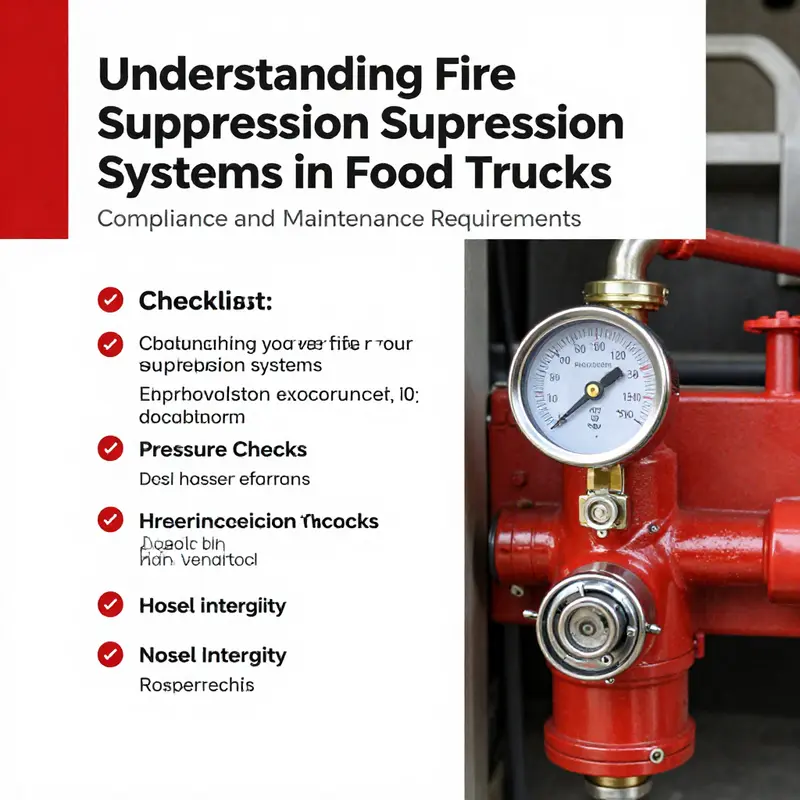
Compliance with fire safety regulations is a non-negotiable aspect of owning or operating a food truck. In the United States, requirements are shaped by a combination of national standards and local codes, and they often reflect the jurisdiction’s risk tolerance and public space considerations. The installation itself must follow recognized fire codes and standards, with components specified to handle commercial cooking operations. For many operators, semi-annual inspections by a licensed technician are a baseline expectation. During these inspections, technicians verify several elements: the physical integrity of components such as hoses, nozzles, and connections; the presence and correctness of the suppressant agent; the operational status of detection devices; and the reliability of control panels, including manual activation functions and interlocks with shut-off valves. A visible inspection tag is typically required to show that the system has undergone recent review and is in good standing. The absence of a current tag or the discovery of a failed component can result in fines, a temporary shutdown, or the loss of a business permit until the system is brought into compliance. These procedures are not merely bureaucratic hurdles; they are practical safeguards that guarantee the system will perform when it is needed most.
Maintenance is both preventive and reactive, and it plays a vital role in ensuring long-term reliability. Between professional inspections, operators should perform routine visual checks. These checks look for physical damage, corrosion, leakage, or obstructions that could impede the spray pattern or sensor responsiveness. The protocol also includes routine attention to the suppressant agent: confirming that the agent is within its service life, free from contamination, and adequately charged to the prescribed pressure. If the system has ever discharged, whether for a test, a training exercise, or an actual fire, it will require recharging and a thorough inspection of the entire delivery loop. Any changes to the kitchen layout or installation of new cooking equipment must be evaluated by a qualified fire protection professional to ensure the system continues to provide the intended coverage. A small change in equipment location can alter nozzle alignment and compromise the extinguishing pattern, so professional oversight is essential whenever the stove or fryer setup shifts.
Safety in a mobile kitchen is not a static condition but a process of design, maintenance, and practice. The placement of detection devices and nozzles reflects not only where fires were most likely to begin but also how the truck’s operation shapes exposure during service. For instance, nozzles are typically positioned to flood the cooking surface without unduly soaking cleaners or utensils that might be in heavy use. The system’s geometry must take into account the heat load from multiple burners, the proximity of vent hoods, and the moving nature of a truck that parks and drives through urban environments. Staff training reinforces this geometry by teaching bar, prep, and cooking staff to remain mindful of where equipment is located, how the system is activated, and what steps to take once the suppressant is released. It is practical training in discipline: you gain speed and control in a crisis by thinking ahead and knowing the system’s limits and reaction time.
Documentation is another quiet but essential layer. Each inspection tag is a tangible reminder that safety is ongoing, not a one-time installation. Records of maintenance, recharges, and repairs create a trail that insurers and local authorities rely on when evaluating risk. The process makes compliance measurable and demonstrable, which is crucial in a mobile business that moves between jurisdictions. From a chef’s perspective, the documentation reduces the guesswork that can accompany a busy night shift. When the kitchen team returns after a lunch rush, they can rely on the system and the records to confirm readiness, rather than wonder whether a critical safety feature failed during peak hours.
An operator’s approach to maintenance and compliance should also reflect a broader ecosystem of safety resources. Local fire departments and insurance providers often require or recommend specific standards, and while the exact rules vary, the underlying principles remain consistent: detection must be reliable, suppression must be effective, and the system must be verifiable through records and routine testing. In this light, the fire suppression system becomes a shared responsibility among the operator, the technician who services the system, the local authority having jurisdiction, and the insurer. The objective is not to prevent every possible incident but to ensure a controlled, predictable response if one occurs, preserving life, protecting property, and enabling the business to resume operations promptly after a downturn.
For operators seeking a consolidated reference on fire safety and system maintenance, it is prudent to consult authoritative resources that outline the standards for extinguishing methods and equipment that protect commercial cooking operations. A widely cited benchmark is the NFPA family of codes, including guidance on the protection of cooking operations and the integration of automatic extinguishing systems with ventilation controls. While specific sections and numbers may evolve, the core guidance emphasizes the reliability of detection devices, the adequacy of suppression agents, and the need for verifiable maintenance records. In addition to these codes, many jurisdictions rely on a combination of state and local codes to tailor requirements to their community’s risk profile, enforcement capacity, and environmental considerations. The practical upshot is that a well-planned, well-maintained fire suppression system is not merely a safety device; it is a framework that supports continuous operation, practical training, and transparent accountability for every shift that brings meals to the street.
Within the daily operations of a food truck, the suppression system also interacts with a broader set of safety tools and practices. An operator may maintain a small portfolio of safety equipment, including portable extinguishers for quick response to minor incidents or localized flare-ups that do not overwhelm the main system. When discussing these tools, many teams reference the dedicated equipment they keep on board, such as portable extinguishing devices that can be deployed rapidly in the event of a localized flare near a cooktop. For teams seeking to connect practical equipment to the broader safety picture, a good approach is to view the portable options as a complement to the primary fire suppression system, not a substitute. The intent remains to contain, control, and suppress a fire at its source, while preserving the ability to continue service with minimal disruption. For readers who want to explore equipment options that support the same safety philosophy, a useful reference is portable fire fighting equipment. This external perspective can help frame how mobile kitchens integrate a spectrum of protective tools rather than relying on a single device.
Ultimately, the story of fire suppression in a food truck is about confidence under pressure. The system’s design, its maintenance cadence, and the discipline of everyone who works around it determine how safely a kitchen can operate while on wheels. It is a compact yet comprehensive safety system that blends chemistry, physics, and practical logistics into a single, life-preserving mechanism. It is also a reminder that compliance is not a burden but a shared commitment to protect cooks, customers, and communities in places where food and mobility intersect. For operators, the path forward is continuous improvement: stay current with local codes, track every inspection, and treat maintenance as part of the daily workflow rather than an annual rite. In that way, a fire suppression system does more than respond to fire; it underpins the trust that allows street food culture to thrive, safely and sustainably.
External resource: https://www.nfpa.org/Code-Updates/2025-NFPA-10-Standard-for-Fire-Extinguishers
Guardians on Wheels: How Fire Suppression Systems Shield Food Trucks and the Rules That Shape Their Use
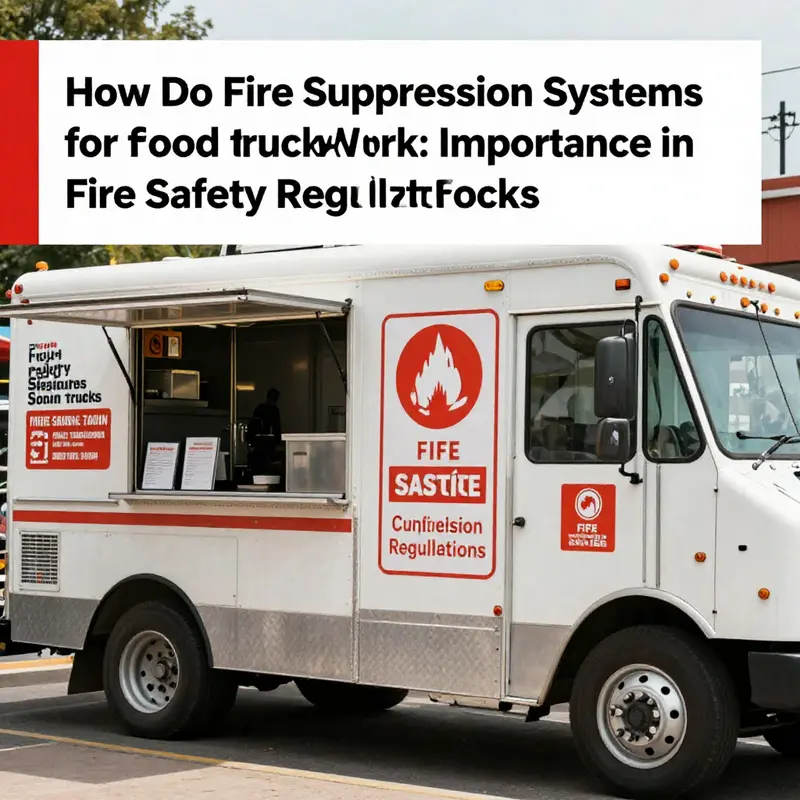
In the tight confines of a food truck, where sizzling oil and open flames share a tiny footprint, safety hinges on a carefully designed, purpose-built safety architecture. The fire suppression system is not a mere accessory; it is the central line of defense that stands between a simmering fryer and a full-blown kitchen fire that can threaten lives, equipment, and surrounding pedestrians. These systems are engineered to detect the earliest signs of trouble in the cooking zone and to intervene automatically, delivering a specialized agent exactly where it is needed most. The result is a combination of rapid response, targeted action, and a built-in mechanism that minimizes the chance of an escalating blaze. It is through this orchestration of detection, delivery, and immediate shut-offs that a food truck can operate with a degree of safety comparable to a stationary commercial kitchen, even in the most compact footprint.
At the heart of a modern truck-mounted fire suppression system is a network of heat-sensitive detectors. These sensors—often fusible links or thermal sensors placed directly above the stovetop and fryer—monitor the area where grease, oil, and flames are most likely to ignite. The moment a fireball forms or temperatures spike rapidly, these sensors reach their activation threshold and trigger a cascade that releases the extinguishing agent. The trigger temperature is a critical design parameter; in many systems, activation occurs when temperatures rise above roughly 300°F (149°C) or when rapid heat escalation is detected. This ensures that the system responds to the point where the fuel and heat meet, rather than waiting for a visible flame to appear. The choice of call-to-action timing is a balancing act: too sensitive, and the system might discharge unnecessarily; too slow, and the fire could gain a foothold. The sensors are connected to a delivery mechanism that channels the agent through dedicated piping to strategically placed nozzles above the cooking surface and within the hood and ductwork, so the suppression stream reaches the source of the fire rather than dissipating into the room or venting outward with the air flow.
The extinguishing agent itself is a wet chemical designed specifically for Class K fires—those involving cooking oils and fats. Unlike conventional foams or dry chemical powders, wet chemical agents strike at the heart of the grease fire by a combination of cooling, saponification, and a protective barrier that helps prevent re-ignition. Saponification is the chemical reaction where the wet chemical converts fats and oils into soapy layers. This slick, soapy film adheres to the surface of the hot oil and forms a damp surface that both cools and inhibits the flame’s ability to sustain combustion. In essence, the agent acts like a nonstick shield, preventing new droplets of hot oil from reigniting and ensuring that even if the fire is partially extinguished, the conditions do not return to a dangerous state. The result is a more stable environment that reduces the likelihood of a flashover or a flare-up that could reignite a pan, a hood, or nearby components.
Behind the visible spray of the system lies a compact but highly coordinated set of conduits and seals. The agent is typically stored in a sealed cylinder or cartridge that feeds through a network of discharge tubing to nozzles positioned in or above the cooking surface. In most layouts, the nozzles are placed to blanket the stove area and the vicinity of the fryer, including the hood, the canopy, and, where applicable, the piping within the vent system. The placement is deliberate: oil and fat fires can spread not just through the pan but through the ducting and ventilation, so the design must ensure coverage of the entire critical zone. Some advanced configurations also include a manual pull or handle that allows the operator to trigger the system deliberately if they notice smoke or flame before the heat sensors have yet reached their activation threshold. Even with automatic detection, a manual option provides redundancy in case of sensor misalignment, sensor damage, or a system fault that prevents automatic discharge.
A defining feature of these systems is their integration with the truck’s safety-critical shut-off mechanisms. When the suppressant is released, the system often automatically triggers a shut-off of the gas supply to the cooking equipment and cuts power to nonessential circuits, reducing the risk of continued fuel feed or electrical arcing that could prolong the fire or ignite other hazards. The automatic shut-off capability addresses the most dangerous sequence of events in a kitchen fire: raw fuel continuing to feed the flame and electrical components potentially sparking, which can magnify the disaster. By isolating the flame source and interrupting energy delivery, the system not only curtails the immediate danger but also protects nearby equipment, the vehicle’s structure, and bystanders who may be nearby at a market or curbside. This coupling of suppression and shut-off is a core reason why regulatory bodies treat integrated systems as essential safety features for mobile kitchens.
The role of fire suppression systems in the regulatory landscape cannot be overstated. Across jurisdictions, particularly in the United States, the installation of certified kitchen fire suppression equipment is often a legal requirement for food trucks operating with commercial cooking appliances. The regulatory backbone is provided by a family of standards published by a recognized safety authority, which prescribes not just the presence of a system but also its scope, maintenance, and inspection cadence. Two cornerstone standards are NFPA 101, the Life Safety Code, which governs occupant safety and life-safety strategies in buildings and related spaces, and NFPA 96, the Standard for Ventilation Control and Fire Protection of Commercial Cooking Operations. NFPA 96, for example, addresses the use and placement of hoods, the ventilation system interface with the suppression system, and the ongoing maintenance required to ensure the venting infrastructure doesn’t become a fire path or a pressure vessel that could compromise the system’s effectiveness. By aligning with NFPA guidelines, operators ensure that their suppression systems are not only compliant with municipal inspection regimes but also designed to function under real-world conditions—movement, vibration, varying fuel loads, and the unique airflow patterns that mobile kitchens create as they traverse city streets, fairgrounds, and food markets.
Compliance also carries practical benefits beyond avoiding fines. Insurers frequently require certified suppression systems as a condition of coverage for food trucks. A properly installed and maintained system signals to underwriters that the operator has mitigated a major risk, which can translate into lower premiums or easier policy terms. Conversely, a lapse in inspection, a damaged hose, or an expired agent can trigger penalties, coverage denial, or expensive downtime while the vehicle undergoes repairs and re-certification. This reality underscores a simple but essential point: a fire suppression system is not a one-time purchase; it is a serviceable component that requires ongoing attention, regular testing, and timely replacement of parts when necessary. The ability to demonstrate a current inspection record becomes part of the business’s risk management profile and can influence everything from license renewals to customer trust at every stop.
In practice, the maintenance of these systems is relatively straightforward, but it demands discipline. Technicians commonly perform visual inspections of the external shell and the manual pull station, verify the pressure gauge reading, and confirm that the agent has not expired or degraded due to time. They inspect the integrity of hoses and nozzles to ensure there are no cracks, leaks, or blockages that could impede dispensing; any obstruction or degradation can compromise the system’s response time or the evenness of agent distribution. The discharge nozzles must be free of debris, grease buildup, or signs of corrosion that can alter spray patterns. The entire system relies on a clean, dry environment to maintain seals and connectors; a small amount of oil or moisture can degrade performance over time by promoting corrosion or weakening seals. Operators should maintain logs of inspections and any service visits to provide traceability and assurance for health inspectors, insurers, and customers who value safety as a standard of operation.
The regulatory conversation around fire suppression in food trucks also intersects with the broader discussion of building codes and public safety. Even though a truck is mobile, its operation occurs within fixed spaces that often involve shared sidewalks, markets, or temporarily closed streets. The system’s role in halting the grease-laden flames before they threaten adjacent stalls or passersby is not simply prudent—it is a public safety imperative. The combination of immediate fire suppression, automatic fuel and power shut-offs, and a documented maintenance history helps ensure that a mobile kitchen remains a controlled, predictable risk rather than a high-variance hazard. For operators, this translates into a sustainability advantage: a well-maintained, code-compliant system supports uninterrupted service, protects expensive kitchen equipment, and fosters consumer trust that a business takes safety seriously.
As with any technical safety measure, the human factor remains crucial. Training for food truck personnel emphasizes recognizing early signs of trouble, knowing when and how to evacuate, and understanding the limits of the suppression system. Operators must be aware that the system is designed to intervene, not replace, careful cooking practices, proper oil management, and rigorous cleanliness routines. Best practices include keeping oil-conditioned equipment properly maintained, using correct cooking temperatures to minimize oil degradation, and ensuring grease in the hood and ducting is managed through routine cleaning so that the system can operate within its designed coverage. While the system can extinguish a fire and prevent catastrophic outcomes, its effectiveness is enhanced when paired with a well-run kitchen environment and a calm, informed crew that knows how to respond when alarms sound.
For readers seeking deeper technical detail or instructions on installation standards and compliance, consult the relevant standards published by the National Fire Protection Association and review the specific guidelines that apply to cooking operations. Internal references also exist for those who want a closer look at the equipment ecosystem that supports these protections. In particular, a trusted resource on portable, on-site safety equipment can provide a practical complement to the theoretical framework of putative fire protection. See the portable-fire-fighting-equipment resource for more on how compact safety tools integrate with a truck’s built-in suppression system and can serve as a first line of defense when movement to a safe location is required before professionals arrive. portable-fire-fighting-equipment
In sum, fire suppression systems in food trucks are a blend of precise engineering, regulatory rigor, and disciplined maintenance. They embody a proactive approach to safety: detect early, deliver precisely, and shut down the modes that would otherwise feed a growing fire. They are not passive safety features but active responses that enable mobile kitchens to operate with confidence in uncertain environments. The choreography of detectors, dampening agent, delivery nozzles, and automatic shut-offs creates a protective envelope around the heart of the kitchen—the cooking zone—while the regulatory framework and maintenance culture ensure that this envelope remains intact, reliable, and ready to perform when danger arises. For those who operate or service moving kitchens, recognizing the system’s integrated nature helps align daily practice with the larger obligations of safety, insurance, and public welfare. In this sense, the fire suppression system is not just a piece of equipment; it is a steady guardian that travels with the truck, quietly enforcing safety standards as it travels from market to market, street corner to street corner, keeping the cooking flame in check and the road ahead safer for everyone.
External reference for formal guidelines: https://www.nfpa.org/
The transition to yellow fire trucks illuminates the critical relationship between visibility and safety in emergency response. As this trend continues to gain traction, it offers valuable insights for business owners and community leaders about the importance of implementing evidence-based practices in safety measures. By understanding the reasons behind this shift—factoring in visibility, operational efficiency, and psychological perception—businesses can better appreciate the implications for public safety. As we move forward into a future that prioritizes visibility and efficiency, the adoption of yellow as a standard for fire trucks reflects a profound commitment to enhancing safety for all.
In conclusion, fire suppression systems are vital for the safety and success of food truck operations. By understanding their components, detection processes, and the necessity for compliance and maintenance, food truck owners can better protect their businesses from the devastating effects of kitchen fires. Investing in these systems not only meets regulatory requirements but also ensures the safety of employees and patrons alike. For those in the food truck industry, prioritizing fire safety through proper systems and maintenance is not just a legal obligation but also a commitment to operational integrity.

