
















Assessing how long a fire truck can spray water is crucial for business owners, especially those responsible for safety measures. A fire truck’s water supply directly correlates to its tank capacity, vehicle type, and firefighting tactics employed. Understanding these intricacies will not only assist in emergency preparedness but also highlight the efficiencies and innovations in firefighting technology. Each chapter will dive deeper into specifics: we’ll start with standard fire trucks and their capacities, explore advanced firefighting systems, examine how water supplies vary in scenarios, and discuss the tactical considerations during emergencies.
The Long Reach of the Tank: Decoding How Long a Fire Truck Can Spray Water and What It Reveals About Readiness
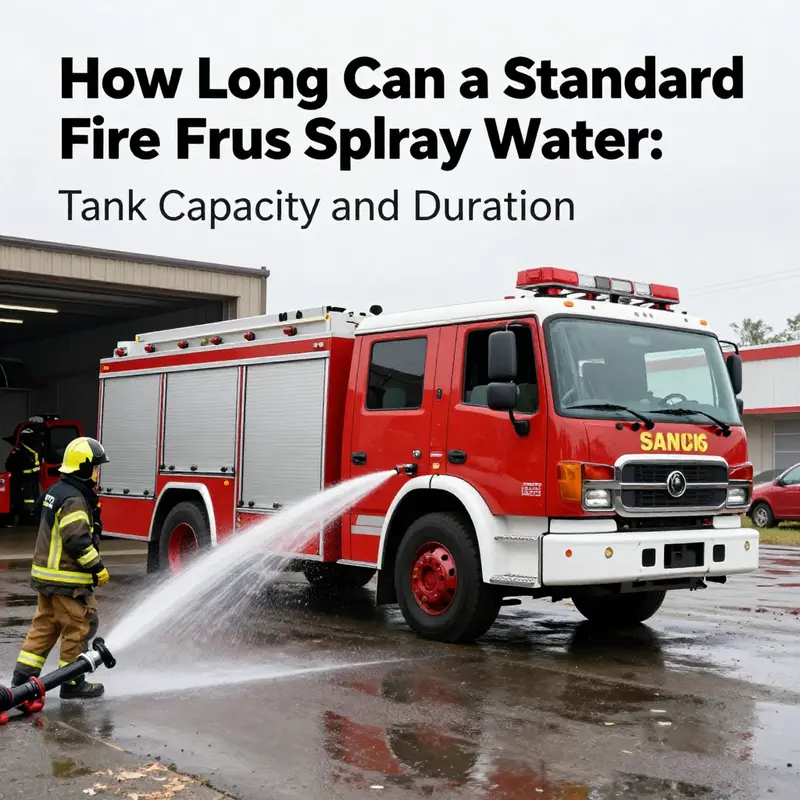
When people picture a firefighting response, they often picture the blast of water a truck can unleash. Yet the duration of that spray is less a single number and more a balance sheet of capacity, demand, and logistics. A fire truck’s onboard water reserve is the initial volley in a larger strategy to control a blaze, buy time, and transition to a reliable, external water supply. The simple question—how long can a fire truck spray water?—unfolds into a layered reality that depends on the vessel at hand, the pump it carries, and the conditions on the ground. Tanks are measured not only in liters or tons but in how those figures translate to sustained flow under pressure, through nozzles, and amid the evolving heat and visibility of a growing fire. In practical terms, the duration hinges on three core variables: tank capacity, pump discharge or flow rate, and the efficiency of obtaining a continuous water supply from hydrants or external systems. The interaction of these elements explains why two trucks of seemingly similar size can exhibit noticeably different spray times once a fire begins to demand more water than a rural hydrant can instantly replenish. The onboard tank provides a critical time window—a window firefighters must maximize by quickly securing a reliable water source. In many scenarios, that window defines not only how long a spray lasts but how effectively teams can apply water to cooler, controlling conditions and preventing escalation while additional resources arrive.
Tank capacity for standard fire apparatus spans a broad range, a spectrum that reflects the diverse roles these machines play within a fire department’s fleet. Across the board, most standard fire trucks carry water in a range from roughly 2,000 to 20,000 liters, equivalently 2 to 20 tons. Mid-sized models commonly fall between 6 and 12 tons, a design choice that balances maneuverability with available water for initial attack. When the nozzle is opened to a typical urban or suburban fire, and the crew maintains a steady discharge, the duration you can expect from that onboard reserve tends to cluster in a practical band: roughly 10 to 30 minutes. This window is not a rigid countdown; it shifts with the fire’s severity, the chosen rate of water application, and the evolving needs of the scene. In smaller fires, where less water is required to knock down flames and establish a defensive position, the spray can persist toward the upper end of that range. In large-volume fires or high-intensity encounters, the demand is higher and the same tank can drain in a tighter, more strenuous interval, sometimes as short as ten minutes of continuous operation at full flow.
The size and design of a truck’s water tank are not merely about raw volume. The capacity interacts with the pump’s capability to deliver water under pressure, and that is where the real dynamics emerge. A pump’s discharge rate, often expressed in gallons per minute or liters per minute, governs how fast water leaves the tank and travels to the attack lines. When the flow rate is modest, a tank can sustain a given time even with a modest external demand. When the flow rate is pushed higher to meet a vigorous fire, the same tank empties more quickly. Flow rate is determined not only by the pump but by the nozzle selection, the operating pressure, and the size of the lines carrying water to the fire. A higher pressure or a wider, faster discharge can rapidly drain the onboard water if there is no immediate equipment-to-supply transition. In practice, firefighters balance the need for a strong initial stream with the imperative to secure a sustainable, long-term supply from hydrants, draft sites, or remote water systems.
Beyond the standard 8-ton or so workhorses, the fleet includes larger, heavier duty configurations capable of extending the spray once a reliable external supply is established. Heavier units may carry 20 to 30 tons of water, a capacity that can translate into significantly longer sustained operations—often one to two hours under normal firefighting conditions. These larger vehicles are designed with the recognition that in certain environments, water supply from a hydrant can be delayed or insufficient for the scale of the incident. They are equipped to bridge that gap with a longer initial reserve and more robust pumps, alongside the tactical flexibility to draft or connect to remote supply lines as needed. The trade-off is not just size but weight, maneuverability, and cost. Still, for certain districts and incident types, the ability to sustain spray for an extended period is a decisive advantage, especially when the scene requires prolonged exposure to heat, multiple attack lines, or a staged approach where water supply evolves from onboard reserve to a networked external source.
Even more nuance enters with advancements in firefighting apparatus that are designed for extended operations under specific conditions. Some newer, high-capacity models introduced in recent years were built with extended usage in mind, but their spray time is most accurately understood as a function of the flow rate they sustain and the total on-board water available. For example, a 15-ton class system introduced in 2025 may offer continuous spray times that, under maximum flow, reach up to eight minutes. This figure reflects operation at high capacity and does not imply typical usage across all fires. In practice, crews will rarely maintain maximum flow for the entire duration; instead, they monitor demand, adjust mixture and application method, and transition to a sustained supply as soon as a hydrant or external source is ready. It is essential to acknowledge that even at eight minutes of continuous spray at full capacity, the real-world scenario often yields a longer operational window when the flow is moderated or when spray patterns are altered to conserve water while maintaining control of the fire.
Some systems are designed with a different logic altogether. Automatic tracking fire suppression systems, for instance, require a continuous capability period of at least one hour. This specification underlines why some mission profiles prioritize a sustained water reserve over raw burst power. In building contexts where fixed suppression systems operate—such as industrial complexes or high-risk facilities—the water supply must endure long enough to stabilize the situation until additional resources arrive. Automatic sprinkler systems in buildings are configured to operate for at least one hour, and sometimes longer in areas identified as high risk, to ensure continued control of a developing fire while external support is mobilized. In those cases, the fire truck’s role shifts from a sole attacker to a flexible enabler: it must keep pace with the building’s own safety systems while also coordinating with other units to create a comprehensive water supply and effective suppression strategy.
All these considerations underscore a practical truth on the fire ground: the onboard water reserve is a time buffer, not a definitive measure of long-range capability. A truck’s tank provides a critical initial response that buys firefighters time to establish more reliable water supply lines. The real measure of endurance, then, rests on how quickly crews can transition from relying on the tank to drawing from hydrants, draft sites, or remote water supply networks. This transition depends on geography, infrastructure, and the incident’s dynamics. In a well-watered urban district, the hydrant network can be leveraged swiftly, and the time saved translates into more controlled, measured attacks. In rural areas with limited hydrants or longer water supply lines, the same onboard reserve might hold more weight, extending the period crews can attack from a fixed point while lines are laid and pressure is stabilized.
The choice of attack technique also influences duration. A direct, single-stream approach can deliver a high volume of water quickly but may deplete the tank faster. A layered strategy—using a combination of direct streams, fog patterns, and foam applications where appropriate—can achieve effective cooling and combustion control while reducing instantaneous water demand. In some circumstances, the use of foam can alter the per-minute water requirement by improving coverage and suppressing vapors more efficiently, though it does not eliminate the need for a reliable water source over time. The nozzle selection, the operator’s skill, and the fire’s evolving intensity all matter as much as the raw size of the reservoir.
The on-scene reality also highlights how readiness hinges on preparation and coordination. A truck arrives with a finite amount of water, and the crew’s first task is to secure a steady supply as soon as possible. That often means rapid deployment to a hydrant or a pre-established remote supply system, followed by a rapid transition back to a continuous, controlled flow that can be maintained as long as the incident demands. This seamless handoff—from onboard reserve to external supply—defines not only duration but also safety, effectiveness, and the containment of the fire’s spread. The longer the external supply can be secured, the more opportunities there are to execute systematic suppression tactics, ventilate to reduce heat buildup, and create a defensible perimeter that protects adjoining structures and vulnerable occupants.
In sum, the question of how long a fire truck can spray water cannot be answered by a single metric alone. It is a composite of volume, pressure, and supply, all tempered by the fire’s scale and the environment. A typical 8-ton water tank might sustain a steady spray for about 10 to 30 minutes, with the exact duration shaped by how aggressively water is applied and how quickly a reliable external source is brought online. Larger, heavier-duty tanks can extend that window to one or two hours under normal conditions, but even then the decisive factor remains the speed and reliability of the transition to an uncontested water supply from hydrants or other remote sources. When specialized automatic suppression systems are involved, the requirement to sustain spray for an hour or more becomes a design and operational priority, illustrating that this measure is as much about system integration and planning as it is about the capacity of a single vehicle. The fire ground is a dynamic system, where time, water, and strategy intertwine, and the best crews are those that convert a finite onboard reserve into an enduring, steady stream through swift hydration of the supply chain and precise, disciplined firefighting technique.
For authoritative details on fire vehicle specifications and performance standards, refer to NFPA guidelines: https://www.nfpa.org
Endurance in Every Drop: How Specialized Fire Trucks Sustain Water Spray When Seconds Count
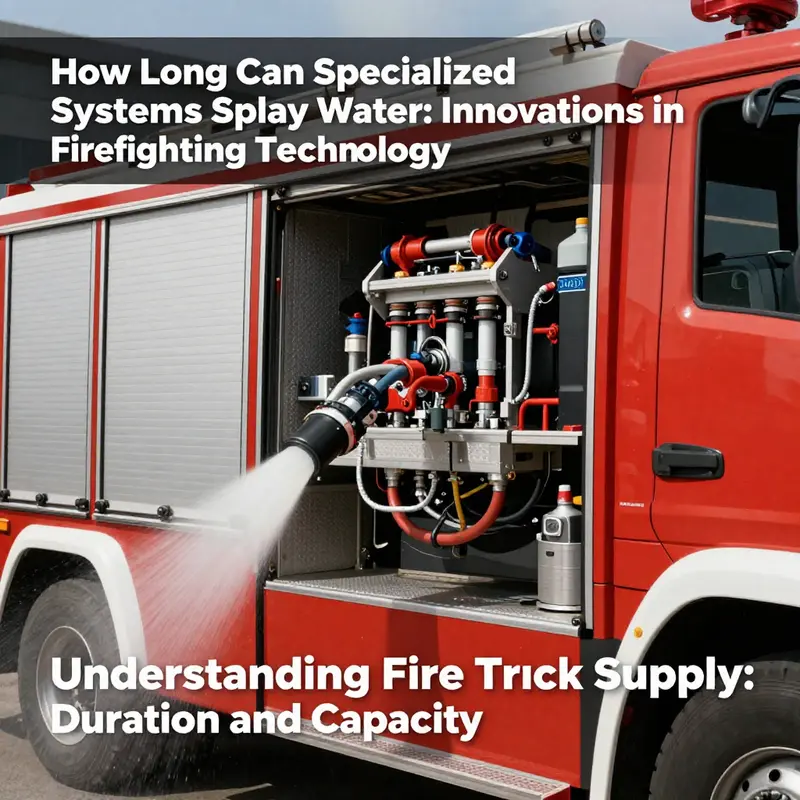
In the theater of firefighting, the clock is a weapon as potent as any hose. When flames loom and visibility collapses under smoke, the immediate question for crews is not only where to aim, but how long the water will keep coming. The duration a fire truck can spray water is not a fixed figure. It shifts with the vehicle’s design, the size of its onboard reservoir, the chosen firefighting method, and the pace at which water can be replenished. Yet beneath those variables lies a coherent logic: endurance is built from capacity, efficiency, and the ability to tap external sources of water without losing precious seconds to setup. A practical depiction of this logic can help readers understand why some incidents are resolved with a prolonged, steady stream while others hinge on rapid redeployment of a fresh water supply. The overarching truth is straightforward: the initial spray from the onboard tank buys critical time for firefighters to establish a more sustainable water supply, and modern innovations seek to stretch that window without compromising safety or effectiveness.
At its core, the endurance of a spray is anchored in the onboard tank’s capacity. Standard pumper trucks typically carry reservoirs in the 8- to 10-ton range, roughly 8,000 to 10,000 liters. Under normal operations and moderate fire loads, an 8-ton chassis can sustain a direct spray for a period that commonly spans from about 10 minutes to as long as 30 minutes. The exact duration depends on the fire’s intensity, which dictates the required flow rate. A lighter, almost casual flame may be held at bay with a lower flow, extending the usable fraction of the onboard water. A raging blaze, on the other hand, can demand sustained, high-volume discharge that drains the tank more quickly. And this simple arithmetic—tank capacity divided by flow rate—takes on real meaning when crews decide whether to throttle the output for efficiency or unleash full power to attack the seat of the fire.
Yet capacity alone does not tell the whole story. The pump system’s flow rate, the mechanism that translates engine power into water velocity, is a decisive variable. A modern pumper’s pump can deliver water at high pressures for extended periods, but higher flow rates naturally deplete the onboard volume faster. The mathematics of pumping matter because they link the practical experience of a firefighting operation with the physics of fluid dynamics under the stress of heat and movement. When a truck operates in direct attack mode—streaming water directly onto the fire’s base—the operator must balance the benefit of immediate cooling against the tank’s finite supply. In foam-enabled operations, the same principle applies, though the mix shifts the problem of resource management from water alone to the broader chemistry of suppression. The essential point remains: the more water a crew can push through the nozzle per minute, the faster the onboard reservoir will empty, and the more the mission relies on external refilling capabilities to extend the attack.
In practice, the duration can be extended through a combination of design and logistics. Some high-capacity and advanced models elevate the baseline endurance by sporting larger onboard reserves, sometimes in the vicinity of 3,000 to 6,000 liters, configured for sustained operations. Such configurations are particularly advantageous for initial attack in remote locations, wildland-urban interfaces, or settings where hydrants are sparse or not immediately accessible. With ample onboard volume, crews can maintain a continuous spray for 30 to 60 minutes or more, provided the flow rate is managed to prevent rapid depletion. It is important to recognize that longer spray times on a single tank are most realistic when there is a rapid and reliable plan to refill—either from hydrants nearby or through dedicated remote water supply systems that can connect and restart pumping operations with minimal downtime. Even with substantial tankage, the real-world arithmetic often favors the strategic tapping of external sources, because the initial burst of water from the onboard tank gives firefighters precious seconds to establish a more reliable water loop.
A more nuanced consideration concerns the firefighting mission itself. The preferred mode—whether a direct stream, a fog pattern, or a foam-assisted approach—shapes both effectiveness and endurance. A direct stream delivers the most penetrating reach, ideal for first-wloor openings and targeting the base of a fire. Foam, when deployed, can reduce surface tension and improve knockdown, sometimes allowing crews to achieve effective suppression with different water usage profiles. Foam systems typically involve an additional supply of concentrate; while they may alter the water’s behavior and coverage, they do not erase the fundamental constraint: the volume of water available at any given moment. In this sense, modern machines are designed to be versatile without creating a false sense of unlimited supply. The engineer’s task is to calibrate the blend of flow rate, nozzle selection, and foam concentrate to meet the fire’s needs while conserving water to the extent possible.
Beyond the tank and the pump are broader systems that influence sustained spray, especially in challenging environments. Innovations in design focus not only on raw capacity but on how efficiently a truck uses water. In some modern configurations, the onboard reservoir is complemented by rapid refilling capabilities that reduce downtime between bursts. A dedicated remote water supply system, for instance, can complete setup in as little as half an hour, enabling quick establishment of a continuous feed from a hydrant or a portable source. This approach can turn an eight-ton truck’s initial spray into a longer campaign by bridging the gap between depletion and refill with minimal interruption. In urban settings, quick access to hydrants permits a seamless transition from tank water to municipal supply, while in rural or remote zones, portable pumps and drafting techniques become essential for extending the attack window. The practical implication is clear: endurance is not just about how much water the truck can carry, but about how quickly water can be reintroduced into the system and kept in motion through astute operational sequencing.
The story of endurance is also tied to the geometry and capability of the vehicle itself. Aerial ladder trucks, designed for high-angle operations, bring another layer of strategy to the question of spray duration. They can be equipped to draft from nearby bodies of water—rivers, lakes, or portable reservoirs—conceptually enlarging the supply beyond the onboard tank. In practice, this capability does not guarantee indefinite spray, but it does dramatically extend the effective window. When a crew can continuously draw from an external source while using the on-tank water for initial suppression or rapid knockdown, a fire can be confronted with a coherent, multi-pronged approach. This synergy between onboard capacity and environmental sourcing represents a meaningful evolution in firefighting endurance. Rather than viewing water as a single finite resource, the modern system treats water as a renewable input under the right conditions, constrained by the environment and the equipment’s ability to transfer and prime the supply.
The practical takeaway for readers is that there is no universal time limit applicable to every scenario. A standard 8-ton platform may offer a baseline of 10 to 30 minutes under typical conditions, but those numbers shift withTank size, pump performance, firefighting strategy, and the availability of supplemental water. In more specialized configurations, 30 to 60 minutes of continuous discharge on a single onboard tank becomes realistic when the system is designed for sustained operations and the crew can leverage rapid refilling or drafting. Some scenarios may even approach hours of sustained capability, but only when the entire suppression ecosystem—tank, pump, hoses, nozzles, foam systems, and external water sources—works in concert and under favorable conditions. The central insight remains robust: the initial water from the vehicle’s tank serves as a critical foothold, buying time for the team to establish a longer-term water supply that can be sustained without sacrificing crew safety or attack effectiveness.
In sum, the endurance of a specialized fire truck’s spray is a function of size, flow, and how cleverly the team uses available resources. The best systems optimize three intertwined streams: the capacity to store and deploy water, the efficiency and reliability of the pumping mechanism, and the logistics of replenishment—whether through hydrants, portable units, or remote supply arrangements. When these elements align, the spray can endure far beyond the basic tank’s nominal time, enabling a coordinated, continuous suppression effort that integrates the initial surge with a sustainable water loop. The real triumph for modern firefighting is not simply bigger tanks or higher pumps alone; it is the intelligent orchestration of the entire water-management system, from the pump to the nozzle, from the hydrant to the drafting source, and from the first spray to the last drop kept in play by a crew trained to read the fire’s pulse and respond with disciplined, data-informed action.
External resource: https://www.howotruck.com/zh/product/124.html
From Tank to Tactics: How Long Fire Trucks Can Spray Water Across Scenarios
Firefighters measure progress less by the speed of arrival and more by the tempo of water delivery. The question of how long a fire truck can spray water unfolds into a layered answer: it is a story told in tank size, pumping power, and the path water follows from the tank to the hydrant, from the engine to the nozzle, and finally to the flames themselves. That tempo changes with the kind of fire, the tactical approach chosen by the crew, and the supply network that can be brought to bear. In practice, duration becomes a clock that starts with a rousing burst but mostly ticks as crews establish a sustained supply through hydrants, drafting sources, or relay systems. The initial splash buys time, yes, but it is the transition to a continuous feed of water that determines how long the attack can be kept going. In this sense, duration is not a single number but a sequence—an arc from immediate impact to a reliable, ongoing stream.
Onboard water capacity provides the first, most tangible limit. Standard pumper trucks typically carry roughly 500 to 1,000 gallons of water, which translates to about 2,000 to 3,800 liters. When the situation calls for a moderate, steady output, an eight-ton class vehicle with an onboard supply in that range can spray for about 10 to 30 minutes under typical conditions. The exact number sits at the mercy of the desired flow rate, the intensity of the fire, and how long the crew elects to run the pump at peak capacity. A smaller or lighter vehicle with less onboard water will exhaust its tank more quickly, while one that can sustain a lower, continuous flow may extend the period of spray within the same tank size.
Beyond the standard, advances in equipment translate into shorter or longer moments of spray, depending on how they are used. A newer, high-capacity model with a much larger onboard supply can, in theory, sustain significant water delivery for longer, yet not without trade-offs. At very high flow rates, even a large onboard tank may produce only a finite window of continuous spray before the water runs low. In practical terms, this means a crew may still see a relatively brief, intense burst, followed by a need to refuel from a hydrant or move to a remote supply to maintain pressure. More recently, specialized remote water supply systems exist that can be deployed to connect to distant sources, enabling a rapid handoff and a more sustained operation once the initial setup is complete. The implication for a given scenario is straightforward: the larger the onboard tank and the more efficient the handoff, the longer the spray can be kept active without interruption.
There is also a fundamental standard that governs continuous operation in the broader firefighting ecosystem. Some automated and connected systems must be capable of operating for extended periods to control a fire until more resources arrive. In other words, the firefighting network as a whole is designed to cover a window of sustained water delivery, often spanning an hour or more in certain contexts like automatic tracking suppression or building sprinkler systems. Those longer durations are not about the tank alone; they reflect how equipment, coordination, and infrastructure work together to create a continuous water supply from start to finish. When seen through this lens, a fire truck’s spray time becomes a phase in a larger dance of water management, one in which the initial bombardment, the refill strategy, and the relay to additional engines determine the overall staying power of the operation.
To translate these concepts into the practical spectrum of fire apparatus, it helps to segment by vehicle class while keeping the narrative cohesive. Wildland fire trucks, often built on van platforms and designed to operate in remote or rugged terrain, carry portable water tanks that can hold roughly 100 to 500 gallons. In typical wildfire suppression operations, where water is used intermittently to douse spot fires or to build firebreaks, that capacity may support operations for about 30 minutes to an hour under moderate conditions. When a fast-moving, high-intensity wildfire demands continuous high-volume water delivery, the same capacity can be exhausted in as little as 10 to 15 minutes if the demand exceeds the rate at which water can be replenished or if drafting from natural sources is constrained by terrain or water availability. The calculus here is situational: if the engine can draft efficiently from a lake, pond, or stream, and the flow rate is managed to balance reach and volume, longer effective spray can be sustained even with a modest onboard tank.
Structural fire engines tell a different story. These vehicles carry larger onboard tanks—roughly 500 to 1,000 gallons—and they are paired with high-capacity pumps that are well suited to drawing water from hydrants and other municipal sources. The presence of a ready-made external water supply means that the onboard water need not last to determine the duration of the attack. In many structural fire scenarios, crews can maintain a continuous water supply for hours, especially when lines are connected to a municipal system or a pool of nearby hydrants. The key is not merely the size of the water in the tank but the ability to sustain pressure and volume as water is replenished from external sources. When a building is involved, the ability to lay multiple lines, relay water, and coordinate extrapump operations ensures that the water supply remains a constant undercurrent in the fight, rather than a finite, dwindling pool.
Aerial or ladder platforms, often deployed to reach elevated positions for fighting fires from above or for rescue operations, typically carry smaller onboard tanks in the range of 250 to 500 gallons. Their primary role is not to deliver long, continuous streams for an extended period. Instead, they provide access, deliver a strategic initial attack, support personnel at height, and help manage the scene. In practice, water use from these platforms may last only 10 to 20 minutes before replenishment is necessary, and even then the emphasis is on coordination with ground-based engines and hydrants to ensure a steady feed of water to the point of need. The aerial apparatus thus acts as a force multiplier, extending reach and tactical options while relying on other elements of the firefighting network to supply ongoing water.
The bigger picture, however, is not the single charted duration of one vehicle but the interplay of strategy and supply. Operational decisions shape how fast water is applied, where it is applied, and how it is replenished. A well-planned attack may begin with a rapid, high-volume burst from a load of onboard water to knock down flames and protect exposures, followed by a carefully choreographed transition to a relay or drafting system that maintains pressure and volume over an extended period. This is where the concepts of environment and equipment sensitivity come to the fore. A dry, windy day with a roaring headwind can push a fire harder and require more water more quickly, shortening the effective spray time from onboard tanks. Dense smoke and heat can complicate the ability to maneuver lines and select hydrants, again affecting how long water can be effectively sprayed before refill occurs. Conversely, favorable conditions, prompt hydrant access, and efficient drafting can extend the initial advantage into a longer sustainment.
Beyond the immediate, the chapter-long perspective on duration also invites attention to the tactics of water management themselves. Drafting systems allow wildland engines to draw directly from natural sources such as lakes, rivers, or ponds, which can significantly extend operation times where hydrants are sparse. Relay systems, which involve pumping water from one engine to another over distance, enable crews to keep a distant source feeding the firefight, preserving both the momentum and the pressure required to push the fire back. The practical implication for any incident commander is that the number of engines, the arrangement of supply lines, and the speed with which water can be moved between sources collectively determine how long the spray can persist before the scene stabilizes enough to transition to overhaul or until additional resources arrive.
In this framework, standards and best practices from professional organizations provide both guidance and guardrails. They highlight the importance of designing water supply plans that are not merely about the first minutes of impact but about the entire duration of active fire suppression until a reliable, external supply is consistently in play. The emphasis is on ensuring crews have a clear access route to hydrants, understanding the capacity of each engine, and building redundancy into the supply chain so that a single bottleneck does not halt the entire operation. This systemic perspective is what allows a fire department to translate a tank’s capacity into real, sustained water delivery across a wide range of scenarios—from a backcountry wildfire to a multi-room structural fire to a high-rise rescue mission.
For firefighters and incident commanders, the take-home message is simple in concept, nuanced in execution: the duration of water spray is a function of more than just the tank. It is a function of tactical design, infrastructure, and the fluid choreography of refills. The best outcomes arise when onboard capacity is matched with swift refill strategies, when drafting and relay systems are ready to deploy, and when crews understand how environmental conditions influence water use at the scene. In such settings, the initial advantage gained by an early surge can be transformed into a durable, long-term capability that carries the operation forward until additional resources arrive and the fire is controlled. The timeline, then, becomes a narrative of flow—first the burst, then the bridge to a continuous supply, and finally the sustained suppression that defines a successful outcome.
For readers seeking further detail on standards and guidelines that shape these practices, the National Fire Protection Association (NFPA) outlines the performance requirements and recommended practices that inform how water is supplied and managed on the fireground. See the NFPA standards at https://www.nfpa.org
Sustaining the First Attack: How Long a Fire Truck Can Spray Water and the Tactical Timeline on Scene
Tracking the question of duration begins with a practical reality: a fire truck is not an endless fountain. It carries a finite amount of water and operates within a context of evolving needs on the fire ground. The number you see in charts is a starting point, not a guarantee. In the field, the time a unit can spray water depends on how much water is aboard, how aggressively it is pushed from the nozzle, and how quickly new water becomes available from a hydrant, a portable supply, or a remote line. The interplay of these factors shapes the tactical tempo of an incident and determines how firefighters allocate resources, protect lives, and manage risk. The goal on the street is to create a window for safe access, effective knockdown, and eventual control, all while the fire scene shifts with heat and wind and as rescue priorities evolve.
Onboard capacity matters most at the outset. Typical municipal engines carry between 500 and 1,000 gallons of water in their tanks, roughly 1,900 to 3,800 liters. When crews open the pump at a standard attack setting, they can push flows around 1,000 gallons per minute or more. At that rate, a full 1,000-gallon tank would be exhausted in roughly one to two minutes, leaving little buffer for escalation, rescue operations, or mop-up. The apparent paradox is that the water supply on the vehicle is not a silent clock; it is a resource that must be managed with deliberate tradeoffs between rapid knockdown and the safety of crews whose evolving demands often outpace a single tank’s volume. For many typical incidents, the crew expects to sequence water from the onboard tank into a broader system as soon as possible. The first priority is to apply cooling, open up concealed flames, and protect exposures, but that initial rush is short unless a sustainable supply is established.
The eight-ton class, common in many urban and suburban districts, often carries water in the range of eight to ten thousand liters. Those numbers translate into ten to thirty minutes of continuous spray time under normal operation, but only if the operator does not push the flow to the maximum. The practical limit is rarely the physics of the tank alone. A quick hydrant hookup, a water shuttle, or a portable reservoir can add minutes and even hours to the operation. In the field, a well-timed refill can turn a short spray window into a persistent capability that supports sustained suppression as crews locate a stable water supply, lay lay-flat hoses, and connect to a pump. The sequence is deliberate: initial impact, rapid water supply, then continuous control as conditions evolve. The end result is not a single figure but a dynamic timeline shaped by the incident’s scope and the resources available.
As operations unfold, advanced configurations begin to lift the ceiling on endurance. Modern high-capacity setups can carry more water, and when needed, systems are designed to optimize the management of water flow and pressure. In the most favorable scenarios, a larger onboard reservoir paired with efficient refill operations maintains a higher rate of discharge for longer, while still allowing crews to manage heat, visibility, and barrier lines. The transition from a fast, high-volume initial attack to a sustainable supply is tactical as much as it is logistical. The hydrant or water shuttle secured early in the incident can carry the crew through the critical hours of suppression, allowing the nozzle teams to stay focused on heat release and flame extension rather than chasing water. This transition is not merely about numbers; it shapes how teams allocate manpower, stretch hose lines, and coordinate with aerial or ground monitors. When supply lines are secure, teams can shift their emphasis to cooling exposed areas, protecting adjacent structures, and keeping occupants safe while the fire is brought under control.
Different firefighting modes also influence duration. A direct attack with a single nozzle at high pressure may consume water more quickly than a broader application using foam concentrates that spread the same volume more effectively in certain compartments. Foam, when properly mixed, can improve efficiency, allowing the same knockdown with less total volume in some cases. The trade-off is not only volume but technique: nozzle position, nozzle type, and the fire’s location all determine how water is deployed. This is why modern tactics emphasize not just raw flow but strategic placement. The goal is to minimize water waste while maximizing cooling and confinement. In practice, the crew assesses temperature, visibility, and potential flashover indicators, then adjusts flow and pattern to stay ahead of the fire’s progression. The result is a nuanced balance between rapid impact and efficient preservation of resources.
Robust water supply remains the backbone of sustained operations. In dense urban environments, established hydrants and dedicated supply lines enable the engine to transfer the burden from the onboard tank to a continuous external source. A water shuttle, where pumpers deliver water from a distant source to a temporary tank near the scene, can keep lines charged and ready for extended operations. Rural settings demand drafting from lakes, rivers, or other natural bodies, which brings its own timing considerations. Each method carries different setup times and pressure requirements, so the incident command continually weighs the urgency of life safety against the logistics of water flow. In all cases, the initial minutes resemble a sprint: crews attack the base of the fire, then a deliberate, methodical progression follows as sustainable supply is established. The longer the incident lasts, the more critical it becomes to coordinate multiple lines and ensure that every stream remains within an effective pressure range. This is not mere science; it is the art of keeping water moving where it matters most and avoiding dead zones where heat can rebound.
Advancing technologies and configurations add further nuance. In certain industrial and urban contexts, hydraulic-powered water cannons and other advanced devices provide precise control over pressure and flow. These tools allow crews to conduct long-range cooling, suppress large volumes of flame, and adjust patterns without increasing overall water use. The capability to modulate the stream helps prevent overwatering, reduces debris washout, and keeps the hazard environment more navigable for responders. The broader takeaway is that endurance is not a single metric but an ecosystem: tank size, pump efficiency, hose management, and crew discipline converge to shape what is possible on the ground. Even the largest onboard quantities cannot sustain constant high-volume operations without resupply, so the scene becomes a chessboard of attack and refill. Each move—where to place a line, which hydrant to secure, how to stage portable tanks—affects the overall timeline and the chance of a successful outcome.
Beyond the engine and pump, standards and best practices frame what responders can rely on during a volatile event. In some contexts, continuous operation of fixed suppression systems, either in facilities or as part of specialized equipment, must endure for extended periods to maintain safety until more resources arrive. While this does not translate to a fire truck spraying water, it reinforces a core principle: prolonged suppression hinges on steady water supply, clear command decisions, and coordinated teamwork. The practice on the street mirrors this principle. The first burst opens a pathway to control, but lasting suppression depends on the rapid establishment of a reliable water source, disciplined nozzle work, and the timely integration of additional units. The scene evolves in real time, and the clock ticks at a different pace for every incident, forcing responders to adapt as heat, smoke, and visibility shift.
Ultimately, the question of duration is not about a fixed stopwatch but about how resources are orchestrated under pressure. Firefighters train to push the onboard tank only as far as the situation allows and then pivot to external water sources without losing momentum. They learn to read the flames, the heat release, and the building layout to gauge how long a spray can be sustained, how to defend exposed areas, and when a shift to defensive operations is prudent. The practical takeaway is straightforward: a typical eight-ton engine can deliver roughly 10 to 30 minutes of spray under ordinary circumstances, but total operational endurance grows with timely refills and smart water management across multiple lines. The human factors—communication, teamwork, and disciplined decision-making—remain the decisive element, ensuring that every minute of spraying translates into real progress toward control and safety. For readers seeking a deeper technical overview of water cannon systems and their broader industrial uses, see the external resource linked here to broaden the context and illuminate how design choices influence endurance on demanding sites.
External resource: https://www.example.com/fire-truck-water-cannon-guide
The transition to yellow fire trucks illuminates the critical relationship between visibility and safety in emergency response. As this trend continues to gain traction, it offers valuable insights for business owners and community leaders about the importance of implementing evidence-based practices in safety measures. By understanding the reasons behind this shift—factoring in visibility, operational efficiency, and psychological perception—businesses can better appreciate the implications for public safety. As we move forward into a future that prioritizes visibility and efficiency, the adoption of yellow as a standard for fire trucks reflects a profound commitment to enhancing safety for all.
Understanding how long fire trucks can spray water is pivotal for businesses to not only ensure safety but also to optimize their emergency response strategies. Each truck type offers different spraying durations, and advances in technology are continuously enhancing these capabilities. By familiarizing yourself with these details, you can better prepare your business and collaborate more effectively with emergency services to safeguard your operations.

