
















As climate change continues to pose significant challenges, California is leading a vital transition in emergency services by adopting electric fire trucks. This shift signifies not only a commitment to sustainability but also a response to the urgent need to mitigate carbon emissions. The Los Angeles Fire Department (LAFD) exemplifies this innovative movement by integrating the Rosenbauer RTX electric fire truck, making headlines nationwide. In this exploration, we will discuss the pioneering innovations and early adoption of electric fire trucks, the challenges fire departments face in implementation, the role of state regulations in promoting this adoption, and the future prospects for electric fire trucks in California’s firefighting operations.
California’s Electric Fire Trucks: Pioneering Innovations for a Climate-Smart Emergency Response
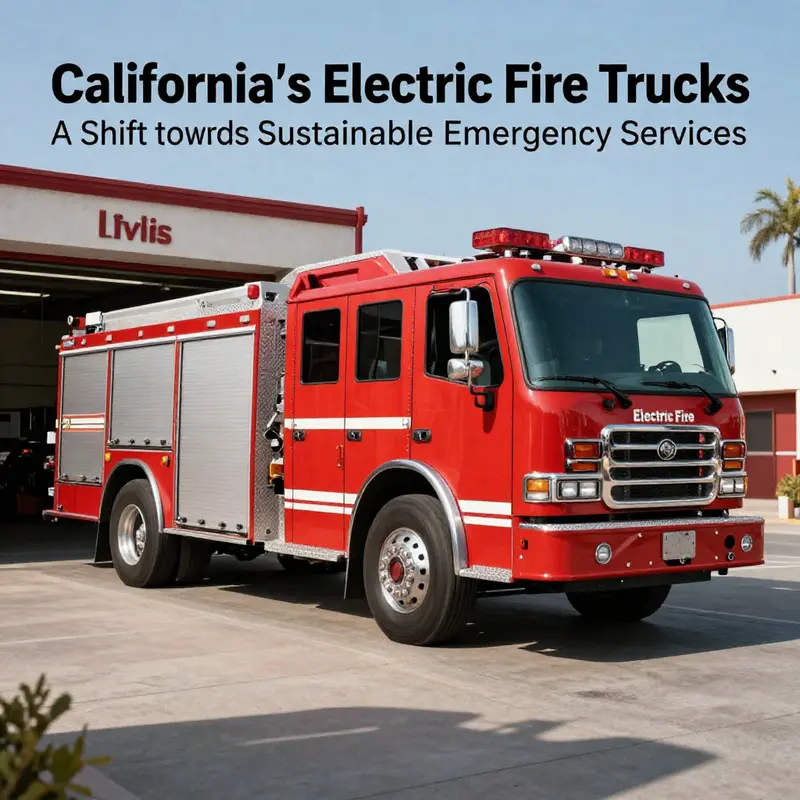
In a state defined by its ambition to cut greenhouse gases and adapt to a warming climate, California’s emergency services are exploring electric fire trucks as a core part of a climate-smart response. Electrification is not a gimmick but a framework for reliability, resilience, and healthier communities. California’s leadership in environmental policy, combined with the pressures of wildfires, drought, and dense urban development, has created pilots and early deployments that show how electric apparatus can support rapid response, ladder operations, patient transport, and high-energy water application while reducing local pollution. This is not about replacing every vehicle overnight but about a measured transition that scales with technology maturation, charging infrastructure, and lifecycle economics. The electric fire truck stands as a symbol of how departments balance mission readiness with environmental and financial objectives.
Operationally, the model emphasizes integration: charging near stations, mid-shift top-ups, and data-driven maintenance. Lower fuel costs, fewer moving parts, and quieter operation can improve safety and community relations. The environmental benefits—zero tailpipe emissions and better local air quality—align with public health goals. Early experiences show comparable performance to traditional rigs on urban calls, with the advantages of energy management systems, remote monitoring, and proactive maintenance.
Policy and funding in California increasingly reward pilots that demonstrate measurable air-quality improvements, resilience to grid stress, and cross-agency collaboration with utilities. Economics remain a consideration, but lifecycle costs—fuel, maintenance, and emissions—can shift the calculus toward electrification over the vehicle’s lifetime. The broader ecosystem includes training, charging infrastructure upgrades, and governance frameworks that align procurement with climate and safety objectives.
The challenges are real: sustaining range across multi-incident days, ensuring reliable charging during peak demand, and delivering power to critical loads in aging facilities. Departments mitigate by using hybrid approaches, keeping diesel backups, and coordinating with utilities to design robust charging strategies that fit shift patterns and station layouts.
Looking ahead, advances in battery chemistry, thermal management, and modular power architectures promise longer range, faster charging, and safer operation under demanding emergency conditions. The success of pilots rests on continued field feedback, data-informed policy, and strong partnerships among fire agencies, manufacturers, and electric utilities. In this light, California’s electric fire trucks represent a careful, scalable path toward a climate-smart, resilient public-safety system that maintains readiness while reducing environmental impact.
External resource: https://www.arb.ca.gov
Powering California’s Firefronts: Navigating the Hurdles of Electrifying the State’s Fire Trucks
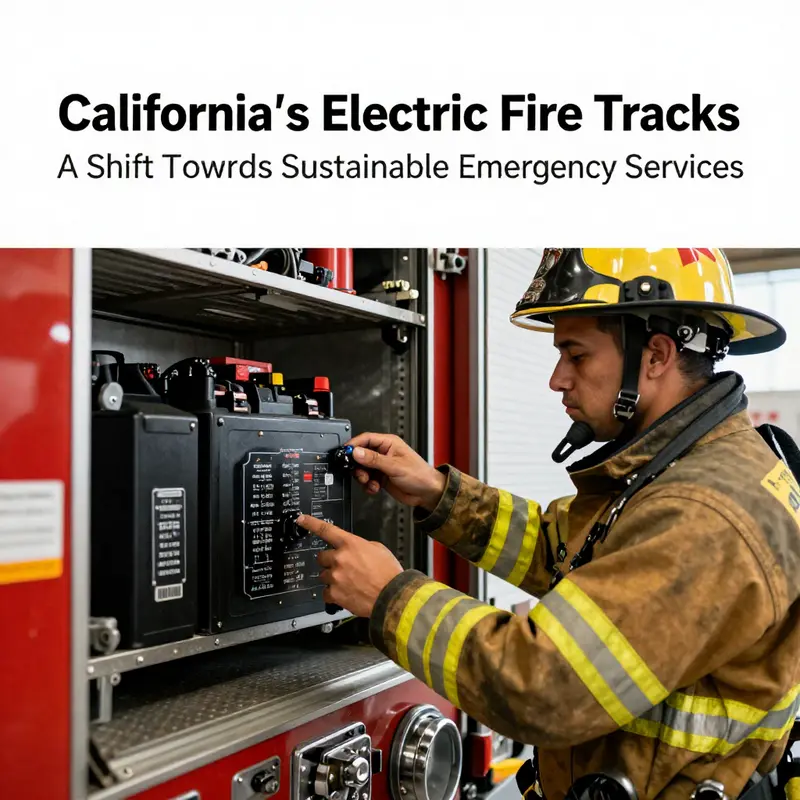
California sits at the intersection of urgent climate adaptation and ambitious public safety modernization. As wildfires grow more intense, urban encroachment on wildland interfaces intensifies, and air quality concerns sharpen the urgency to rethink public services, the case for electrifying fire apparatus becomes not just a matter of reducing emissions but of improving readiness in a governance system stretched by competing priorities. The move toward electric fire trucks in the state is less a single moment of breakthrough than a long arc of experimentation, investment, and recalibrated expectations. In practice, the transformation hinges on more than a single vehicle turning a wheel with a clean propulsion system. It requires a reimagined supply chain, a retooled maintenance ecosystem, a revised budgeting paradigm, and a new operating rhythm that can preserve rapid response while delivering the benefits of zero tailpipe emissions and quieter operation. In California, where fleets must perform across deserts, mountain passes, dense urban cores, and remote communities, the challenges are as varied as the terrain itself. The narrative of electrification here is a story of balancing ideal outcomes with the hard realities of procurement, infrastructure, and the physics of batteries under stress. It is also a story of incremental progress, where each deployment, each test, and each shared lesson nudges the state closer to a future in which the electric fire truck is not a novelty but a staple in the fleet, alongside conventional vehicles that still dominate the scene today. The broader context is clear: the state has demonstrated a willingness to pilot, pilot again, and scale where the initial conditions are right. A major department in California has already begun integrating electric fire apparatus into its operations, signaling to other agencies that electrification is feasible. Yet the picture remains uneven. The majority of departments continue to rely on traditional diesel-powered apparatus, and this mix of technologies defines the operating reality for many communities. The result is a careful, staged approach that acknowledges both the promise and the obstacles of electrification, a approach grounded in practical decisions about budgeting, charging, and performance in the heat of the moment.
The most immediate and widely recognized barrier is economic. Electric fire apparatus bear a higher upfront price tag than their diesel counterparts. This is not merely a sticker shock moment. Agency budgets in California are frequently structured around multi-year planning horizons that must accommodate ongoing personnel costs, training, equipment turnover, and emergency readiness. The premium for an electric platform translates into a trade-off: funds that could otherwise soften service gaps or expand training must be allocated to a technology whose long-term savings are compelling but not guaranteed during the initial years of operation. The calculus often hinges on lifecycle costs, including fuel, maintenance, and potential incentives, but those benefits can be diffuse and uneven across departments. While some districts may withstand the financial burden with grant support, favorable financing terms, or state programs designed to accelerate decarbonization, others face more acute constraints. In this landscape, the acquisition of electric fire trucks becomes less a purchase and more a strategic investment in the department’s capability, resilience, and public health footprint. The cost story cannot be separated from the operational realities of California’s service delivery, where response times matter and every dollar counts toward keeping communities safe.
A second, closely related challenge centers on the charging infrastructure that must undergird a modern, ready fleet. Electric fire apparatus demand reliable, rapid turnaround charging, particularly at busy urban stations, regional hubs, and rural outposts that serve remote communities with fewer options. California’s geography compounds the issue: long gradients, heat, and the possibility of extended operations in wildfire seasons push the demand for robust charging not just for a single vehicle but for a fleet that may be out of service for several hours if charging fails to meet the need. The problem is not only the number of charging points but their distribution and resilience. A station that serves a bustling city may be well provisioned, but one that serves a rural or high-desert area can become a bottleneck, throttling readiness when every minute counts. That reality invites creative solutions, from on-site solar generation and energy storage to shared charging facilities among neighboring agencies, to modular charging bays that can adapt as the fleet grows. In practice, agencies are exploring these options while seeking to keep the electrical grid from becoming a constraint rather than a partner in the mission. The charging question inevitably ties into procurement timelines and maintenance planning; upgrades to electrical infrastructure, dedicated circuits, and protective measures for high-voltage systems all require careful coordination with building codes, safety standards, and personnel training. The result is a rhythm of planning that must anticipate both the near-term needs of a developing electric fleet and the longer-term opportunities for reliability and resilience.
A third critical strand concerns the battery and powertrain performance under California’s demanding conditions. Batteries thrive in moderate climates, but the state’s extreme heat in many regions and the physical demands of firefighting operations push battery systems to their limits. The variables are complex: range under high-load conditions, peak power for pumping apparatus, thermal management during extended incidents, and the ability to maintain safety margins when a department needs to shuttle between incidents, training, and routine maintenance. High-intensity firefighting operations impose heavy power draws, and the energy density of a pack must be weighed against payload, water, and equipment carried on board. The harsh environments—dust, heat, and rugged terrain—pose additional stressors to battery life and the integrity of electrical systems. These factors influence not only how far a vehicle can go before recharging but how reliably it can perform in the moments of greatest demand. The safety considerations alone, including high-voltage systems and the potential for thermal runaway under extreme heat, require specialized training for firefighters, service technicians, and incident commanders alike. California’s departments are confronting these issues head-on by investing in robust thermal management, enhanced diagnostics, and ongoing skill development that keeps pace with rapidly evolving technology.
Together, the cost, charging, and battery-performance components create a web of interdependencies. An electric fire truck, at its core, is a complex system designed to deliver life-saving power where it is needed most. Its success depends on a well-funded plan that accommodates upfront costs, a charging framework that guarantees readiness, and a battery system engineered to perform under the state’s diverse conditions. When seen in isolation, each challenge might appear manageable; when combined, they reveal a more nuanced reality. An agency may secure best-in-class batteries and a fast charger, yet if the electrical grid cannot sustain sustained high-power draws during a major incident, the entire premise of readiness could be compromised. Conversely, even with a superb charging network, if the vehicle’s payload capacity or pump performance is restricted by the weight of large battery packs, the department risks diminished firefighting effectiveness. These interdependencies demand a holistic approach to fleet design, procurement, and operation that is attentive to the unique geography, climate, and population patterns of California.
Beyond the pure technical and financial dimensions lies a policy and governance layer that shapes how quickly electric fire trucks can move from study to standard practice. Procurement rules, grant programs, and state incentives all influence the rate of uptake. The state’s climate commitments can provide impetus for electrification, but agencies must translate those commitments into practical, time-bound milestones. This involves aligning maintenance budgets with new training requirements, updating safety certifications for high-voltage equipment, and developing cross-agency interoperability standards so that shared fleets or shared charging stations can operate smoothly across jurisdictions. Equally important is the need for evidence from real-world deployments. Departments watch for data on reliability, uptime, and incident response when evaluating whether the benefits of electrification justify the costs. This evidence base grows as more departments test new configurations, refine energy management strategies, and adapt to the realities of California’s emergency response ecosystem. The pace of learning matters because it informs not only where to invest next but how to communicate the expectations of the public that relies on these systems every day.
The narrative of electrifying California’s fire services also embraces a broader sense of opportunity. While the hurdles are substantial, the potential gains include quieter operations, improved air quality for firefighters who face hazardous conditions, and a platform for integrating smart technologies that optimize route planning, load management, and predictive maintenance. The anticipated environmental benefits—along with potential reductions in fuel costs and emissions—offer a compelling case for pursuing electrification even as the obstacles remain. Focusing on resilience, agencies can design their programs to be adaptable to future energy and technology shifts. A pragmatic approach might involve phased pilots that test different battery chemistries, powertrain configurations, and charging modalities in a diversity of California contexts. This experimentation should be coupled with transparent reporting that helps other departments learn from the results. The overall impact is more than a shift in propulsion; it is a reconfiguration of how fire services think about energy, space, and timing under the most demanding conditions.
A practical thread weaving through all these considerations is the need for accessible information and a clear sense of the options available to fire departments as they plan. For readers who want to explore the range of fire-fighting platforms and configurations relevant to these conversations, one can consult the broader product category that captures the spectrum of fire-fighting trucks and related specialized vehicles. This resource offers a sense of how different chassis, body configurations, and powertrain choices might be aligned with specific mission profiles, payload needs, and environmental constraints. It also helps illuminate how a department might approach equipment selection with an eye toward future electrification, modularity, and compatibility with existing apparatus. 消防車製品カテゴリ
As California continues to navigate these challenges, the broad lesson is neither defeatist nor triumphalist. It is a call for disciplined optimism, where policy design, engineering, and on-the-ground operations collaborate. The state’s experience suggests that electrification of fire apparatus will advance through carefully staged experiments, supported by robust charging infrastructure, financially sustainable procurement strategies, and a technology roadmap that prioritizes safety, reliability, and mission effectiveness. The inevitable period of adaptation will be marked by a blend of successes and setbacks, each informing the next decision. Departments will learn to manage the tension between the urgency to reduce emissions and the equally urgent need to maintain the highest levels of readiness. The outcome will be judged not solely by the absence of emissions but by the ability to respond swiftly with systems that are dependable, maintainable, and safe under the most demanding conditions—conditions that California knows all too well.
Looking ahead, electrification does not erase the realities of firefighting, nor does it pretend to. It reshapes them. It invites new partnerships with energy providers, technology developers, and the communities that rely on public safety agencies. It calls for a smart investment logic that weighs upfront costs against long-term savings, a charging network that behaves like an essential public utility for emergency services, and a battery ecosystem that proves resilient when operations push into heat, dust, and distance. It also invites a cultural shift—one in which firefighters, technicians, and administrators grow familiar with electric powertrains, high-voltage safety, and data-driven maintenance. In California, where the stakes are high and the landscape demands constant adaptation, this cultural shift matters as much as any engineering breakthrough. The road is long and winding, but the direction is clear: toward a public safety system that blends reduced emissions with relentless readiness. The state’s journey toward electrified fire apparatus will inform not only how California protects its people, forests, and homes but how other regions might approach similar transitions in the future.
External perspective can help illuminate this path. For readers seeking a broader industry viewpoint on the challenges and opportunities facing electric fire trucks, the literature emphasizes the need to balance innovation with practical constraints, to align incentives with public safety priorities, and to accelerate learning through shared data and collaborative pilots. External research highlights the architectural decisions involved in deploying electric fleets in high-demand roles, the importance of robust energy management, and the role of policy design in shaping investment decisions. This larger conversation complements the California-specific narrative, offering a backdrop against which the state’s efforts can be understood and measured. For a broader industry perspective, see this external resource: https://www.linkedin.com/pulse/challenges-opportunities-electric-fire-truck-market-john-doe/.
Regulatory Currents: How California’s Rules Spark the Move to Electric Fire Trucks
California stands at a unique crossroads where climate policy, public health, and emergency services intersect in a way that pushes real change onto the street. The state’s relentless pursuit of cleaner air and lower greenhouse gas emissions has long set a trajectory for heavy-duty vehicles, and fire apparatus have become a high-profile battleground in that effort. The story is not merely about technology; it is about the regulatory scaffolding that makes electrification feasible, predictable, and scalable for departments that must balance lifesaving missions with budgetary realities and safety imperatives. In this landscape, state agencies like the California Air Resources Board (CARB) play a pivotal role. They are drafting rules, not just for cars and buses, but for the heavy-duty fleet that includes fire trucks. This is significant because it signals a long-term path, not a one-off pilot, and it creates a market signal that can pull the entire ecosystem toward zero-emission solutions.
The backbone of California’s approach is a willingness to align environmental goals with practical, on-the-ground requirements of emergency response. CARB’s work sits at the intersection of climate policy and public health, with an acute awareness that urban air quality directly affects the health of city residents who live alongside active fire incidents. The state’s leadership in clean-air initiatives has never treated emission reductions as an abstract target. Instead, it translates into rulemaking that gradually phases in restrictions and expectations for heavy-duty vehicles. In the case of fire apparatus, the emphasis is on transitioning away from fossil fuels while maintaining reliability, acceleration, and the practical payload needed for complex firefighting operations. This is a delicate balancing act, because the demands on a fire truck—range, acceleration, climbing capability, equipment payload, and the capacity to operate in extreme temperatures—do not bend easily to a one-size-fits-all electrification solution.
One of the core strategic advantages of California’s regulatory framework is its ability to reduce uncertainty for manufacturers and fire departments alike. When regulators articulate a clear timetable and set measurable milestones, manufacturers can invest in research and development with confidence that demand will grow in a predictable way. Fire departments can plan capital budgets and maintenance programs with a longer horizon, aligning procurement cycles with anticipated technology maturity and charging infrastructure rollouts. This creates a virtuous loop: as more departments adopt electric models, the market expands, suppliers innovate, and costs begin to decline through economies of scale. California’s approach aims to move beyond experimental demonstrations toward durable, large-scale deployment, and that transition hinges on regulatory clarity that encourages investment rather than mere curiosity.
CARB’s ongoing rulemaking for heavy-duty electrification marks a deliberate stage in that transition. The agency is not merely signaling that greener options exist; it is shaping the conditions under which fire departments operate, including deployment timelines, performance expectations, and lifecycle considerations. The rules are designed to acknowledge the realities of emergency service work. They recognize that a fire department’s duty cycle—frequent on-scene operations with demanding readiness requirements—must be met by electric platforms capable of rapid response, sustained operation, and rugged durability. This recognition translates into performance criteria that are technically rigorous but essential. It pushes manufacturers to engineer solutions that can deliver the necessary torque, charging resilience, and reliability under high-heat and heavy-load conditions. It also pushes researchers and suppliers to rethink energy management, thermal conditioning, and the integration of power electronics with life-safety equipment on board.
What makes CARB’s framework dynamic, however, is the scale of policy instruments at its disposal. It combines vehicle electrification mandates with incentives, infrastructure planning, and periods of transition that allow departments to adapt. The state’s climate programs often harness funding streams, grants, and public-private partnerships to build charging networks tailored to public safety needs. This is not simply about buying new trucks; it is about reimagining the support ecosystem that makes electrification viable. For instance, urban centers like Los Angeles have demonstrated a proactive stance by investing in electric fire trucks and in the necessary charging and maintenance infrastructure. Such local commitments do not exist in a vacuum; they are deeply informed by state policy that encourages a phased approach to electrification, balancing urgency with capability. The result is a regulatory environment that helps departments forecast costs, understand lifecycle implications, and identify opportunities to leverage incentives that offset higher upfront prices.
The practical implications for departments are nuanced. Fire agencies must weigh the trade-offs between payload capacity and the weight of batteries, the duty cycle of runs, and the risk of performance degradation in extreme heat or during prolonged high-demand operations. Regulations, in this sense, act as both a compass and a constraint. They push the industry toward innovations that can meet or exceed current performance benchmarks while also accommodating the sometimes stark realities of fleet management. Policy-makers understand that electric fire trucks will not replace every conventional unit overnight. Instead, they shape a staged progression, where initial pilots demonstrate feasibility, followed by broader adoption anchored in clearer cost-benefit analyses and improved reliability. The aim is not merely to reduce emissions but to ensure air quality improvements translate into tangible health benefits for urban populations who breathe crowded city air during and after fires.
A key dimension of California’s regulatory impact is its role as a model—one that influences regional, national, and even federal conversations about heavy-duty electrification. California’s history as an emissions standard-setter has a ripple effect; other states, and sometimes federal policymakers, look to CARB for approaches that can be adapted, scaled, or resisted according to local conditions. When CARB maps a path for heavy-duty electrification, it creates a blueprint that municipalities can emulate. This modeling effect helps to generate a broader market demand and stimulates the emergence of more affordable, reliable electric platforms as competition intensifies and supply chains mature. It is not merely about adopting a single technology; it is about building a market structure that supports continuous improvement in durability, safety, and cost-effectiveness—attributes essential to sustaining a shift away from fossil fuel-powered emergency response.
The integration of these regulatory dynamics with city-level action is perhaps most visible in Los Angeles, where a forward-looking governance approach complements CARB’s rulemaking. The city’s leadership recognizes that emergency services play a central role in urban resilience. By committing resources to electric fire trucks and the associated infrastructure, Los Angeles signals to the rest of the state and beyond that modernization is both possible and responsible. This alignment—state policy providing a regulatory runway and city policy providing practical, on-the-ground adoption—creates a coherent national narrative about electrifying critical public services. It ensures that the push toward zero-emission fire apparatus is not a distant aspiration but a living, evolving program that responds to real-world operational constraints while remaining focused on long-term environmental and public health goals.
The regulatory path also interacts with broader societal concerns about equity and urban health. California’s emphasis on reducing air pollution in dense urban corridors directly intersects with where most major fire responses occur. This overlap means that the benefits of electrification—reduced particulate matter during and after emergency incidents, lower exposure for firefighters, and improved local air quality—are especially pronounced in communities that bear disproportionate pollution burdens. When regulators define milestones for heavy-duty electrification, they are, in effect, setting expectations for cleaner response operations in neighborhoods historically plagued by degraded air quality. In this way, policy becomes a tool for health equity as much as climate mitigation, intertwining environmental objectives with the safety and well-being of residents during and after emergencies.
The road ahead, as envisioned by California’s regulatory framework, is not without obstacles. Battery range, payload constraints, charging logistics, and the need for robust maintenance ecosystems remain central questions for departments contemplating a transition. Regulations alone cannot erase these technical challenges; they can, however, catalyze collaborative problem-solving across government agencies, manufacturers, and fire departments. The state’s rulemaking is often accompanied by pilot programs, data collection, and performance benchmarks that help identify where technology is ready and where it still needs refinement. This iterative process—policy nudging practice, practice informing policy—accelerates learning while maintaining a clear focus on public safety and environmental outcomes. It also helps clarify total cost of ownership, a critical factor for fire departments that must justify capital investments against competing priorities in municipal budgets.
In summary, California’s regulatory approach creates a disciplined trajectory for electrifying the fire service. It frames the debate not as a choice between tradition and novelty but as a proportional upgrade: maintain readiness and reliability while reducing emissions and the health impacts of firefighting in crowded urban settings. The rules provide a shared language for all participants—policy-makers, municipal leaders, manufacturers, and front-line firefighters—to discuss expectations, timelines, and performance goals. They foster an ecosystem in which electric fire trucks are seen as a mature, dependable option rather than a speculative experiment. This is the heart of the regulatory-driven transformation: a deliberate, transparent, and collaborative process that converts policy ambition into safer, cleaner, and more resilient emergency services.
For readers seeking the most current information on CARB’s ongoing rulemaking regarding heavy-duty vehicle electrification, the agency’s official site offers the latest updates, data, and public comment opportunities. The broader alignment between state policy and city action, including the examples cited from Los Angeles, illustrates how regulations and municipal leadership can co-create a viable pathway to electrified emergency services. As regulations evolve, they will continue to shape industry incentives, determine funding streams for charging infrastructure, and define performance benchmarks that ensure electric fire trucks meet the demanding needs of real-world deployments. In that sense, California’s regulatory environment does more than encourage innovation; it institutionalizes a culture of continuous improvement in the service that protects communities when every second counts.
To explore the kinds of electric fire apparatus and related equipment that could become part of this evolving landscape, compare the different categories of vehicles designed for firefighting and rescue, including heavy-duty and aerial capabilities, which can be found in the industry’s product offerings. For a representative overview, see the category focusing on heavy-duty fire trucks, which captures the breadth of options that jurisdictions might consider as they plan their fleets. This kind of product landscape, while technical, helps translate policy goals into tangible procurement pathways and supports a future where the fire service can respond with speed, efficiency, and cleanliness in the face of growing municipal demands.
External reference: For ongoing technical and regulatory context, refer to CARB’s official site: https://www.arb.ca.gov
Electric Fire Trucks in California: Charting a Greener Path for Public Safety and Everyday Emergencies
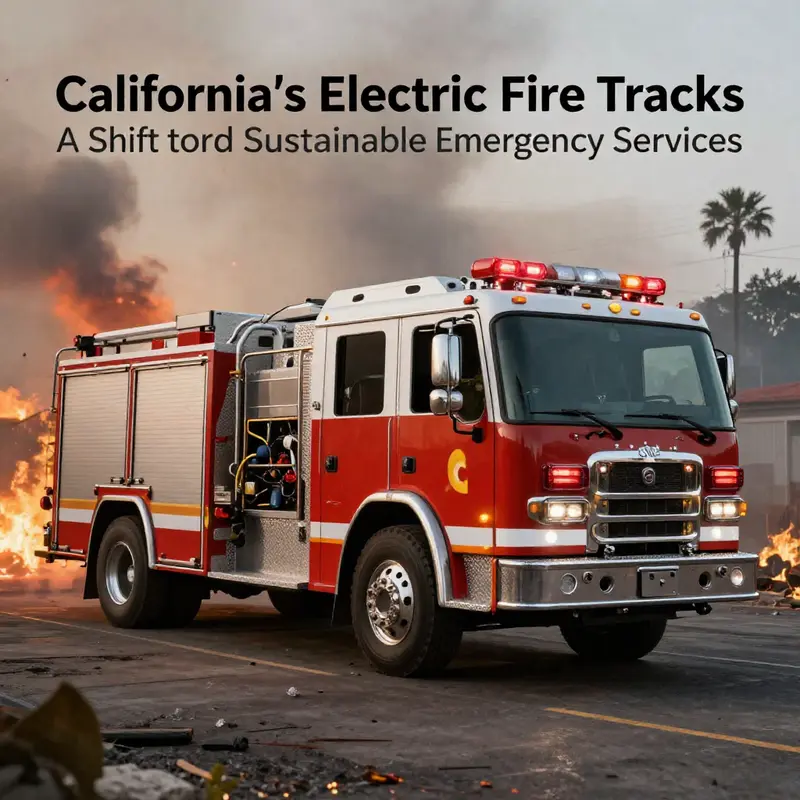
California stands at a crossroads where climate policy, urban resilience, and the speed of emergency response intersect. The state’s bold climate ambitions create both a mandate and a testing ground for all kinds of green technologies, and the emergency services sector is no exception. In California, the question isn’t simply whether electric fire trucks exist, but how they can be integrated into dense, high-demand urban environments where every second counts and every mile of range is measured against real-world operational pressures. The early undertakings in Los Angeles illuminate a broader trajectory: a city famous for its traffic, its air quality concerns, and its relentless demand for rapid, reliable public safety. The move toward electrification in its fire fleet signals more than a preference for quieter engines or cleaner skies; it embodies a shift in how emergency services think about energy, performance, and the long-term costs of operation. As California pilots and scales up electric fire apparatus, the path becomes a case study in balancing public health, fiscal responsibility, and the unpredictable realities of fires, rescues, and incident response in a changing climate.
From a municipal perspective, the electrification of firefighting equipment is part of a larger ecosystem of sustainability. California’s urban cores—characterized by high-density housing, complex traffic patterns, and sensitive air quality considerations—face the dual pressures of safeguarding residents and reducing emissions. In this context, electric fire trucks offer tangible benefits beyond the immediate aim of cutting diesel exhaust. They operate more quietly, reducing neighborhood disturbance in residential or hospital-adjacent incidents. They also align with broader air-quality standards that have become a central pillar of the state’s public health strategy. Yet the promise of cleaner air and quieter streets must be weighed against the practical realities of emergency operations, where reliability, payload capacity, and rapid recharging can influence outcomes on the ground. The story unfolding in California is less about a single technological breakthrough and more about a disciplined, phased integration that respects both the urgency of firefighting and the long arc of environmental reform.
A turning point in this narrative arrived in Los Angeles, a city that has become a focal point for electric fire vehicle testing and deployment. Although the fleet remains predominantly diesel-powered in many sectors, the adoption of an electric fire truck in the city marked a fundamental shift from traditional propulsion to a cleaner, quieter, and more energy-efficient paradigm. The Hollywood district, often highlighted as a symbol of California’s entertainment-driven identity and its dense, mixed-use environments, became a testing ground for the practicalities of urban electrification. The initial foray demonstrated that electric fire apparatus can operate within the demanding tempo of city life, with the potential to change how emergency scenes unfold. This isn’t simply about reducing emissions; it’s about reimagining the choreography of a response—from the moment the call comes in to the moment crews stabilize a scene and clear it for returning to quarters. The experience has potential ripple effects for other departments across the state, offering a model, not a mandate, for adoption in places ranging from coastal megacities to inland regional hubs.
Of course, California’s embrace of electric fire trucks comes with a necessary set of caveats. Battery technology is progressing rapidly, but it remains a central constraint in the emergency-services equation. Range under load, peak power demands during pump operations, and the ability to sustain high-intensity activity in extreme temperatures are all factors that can influence a department’s decision to adopt an electric platform. The work of balancing autonomy with the need for timely rescues requires careful engineering of the vehicle’s powertrain, weight distribution, and energy management systems. As battery chemistries improve, ranges will lengthen, and recharging times will diminish, but these gains must translate into real-world reliability for firefighters who may operate in crowded urban districts or in rural, incident-heavy counties. California’s pilots are designed to learn in public, with data flowing in from ongoing operations, inspections, and after-action reviews that identify where efficiency is gained or where limits remain.
Another crucial piece of the puzzle is charging infrastructure. Fire stations are unique energy users; they demand high, sustained power to keep fleets available for back-to-back calls, with redundancies in place for continuity of operations. The transition to electric fire trucks is as much about station design as it is about vehicle propulsion. Stations must accommodate larger battery systems, include robust charging bays, and ensure that vehicles can be charged quickly enough to meet the cycle of around-the-clock readiness. In California, with its ambitious climate goals, it is not enough to swap fuel sources; it is about engineering the entire energy ecosystem around firefighting. This means considering on-site energy storage, grid resilience, and the potential for renewable-energy integration at fire facilities. The practical implications are not trivial: planning reviews must account for peak loads, electrical capacity upgrades, and the long-term maintenance of charging assets. Yet the payoff can be substantial. Quicker turnarounds between calls, reduced maintenance associated with internal combustion engines, and the stability of predictable electricity pricing over diesel fuel costs present meaningful economic arguments for districts weighing the transition.
The financial calculus is nuanced but favorable in several respects. Electric vehicles generally incur lower operating expenses over a vehicle’s lifetime, thanks to fewer moving parts, reduced maintenance needs, and lower fuel costs. For municipal budgets already stretched thin by growing demand, these savings are not merely theoretical; they translate into real, recurring dollars that can be reinvested in training, equipment upgrades, or community safety programs. California’s climate policies further sweeten the deal by potentially qualifying departments for state incentives, grants, or public-private partnerships that offset upfront capital costs. The social return on investment is equally compelling. Lower noise levels and reduced tailpipe emissions contribute to better air quality in dense neighborhoods, with respiratory health benefits for residents who live near fire stations or who encounter frequent emergency scenes. In the long run, these ancillary gains align with California’s public health missions and its mission to lead by example on sustainable urban living.
To truly understand the breadth of what is possible, one must look at the design philosophy behind a capable electric fire apparatus. A modern electric fire truck must blend reliability with power economics and resilience. It needs a powertrain that can deliver sustained high torque for pumping operations, while also managing the energy demands of advanced electronics, lighting, communication gear, and thermal-imaging devices used on the scene. The chassis must accommodate a substantial payload for equipment and water, yet be balanced to preserve handling and braking characteristics. Temperature control becomes a critical concern, as high-temperature environments and prolonged pump operations can stress a battery system if thermal management is neglected. Engineers are addressing these challenges by integrating sophisticated energy management software that prioritizes critical loads, enabling intelligent preemption of nonessential systems during peak demand, and leveraging regenerative braking to recharge the battery during deceleration and idle periods. While the science behind battery chemistry evolves, fleets are already leveraging modular approaches that allow for easier field upgrades, so the same platform can adapt as energy density improves without requiring a complete vehicle replacement.
The patient, long-view perspective is essential in California. This is not a race to be first; it is a deliberate adoption that learns from each deployment so that subsequent rollouts are more efficient and safer. The knowledge gained from the L.A. experience, for example, informs maintenance cycles, charging schedules, and tactical considerations that can help other departments tailor their acquisition plans. That means a future in which many California communities, from the Bay Area to Southern California, could operate electric fire trucks in a way that preserves response times and crew safety while pushing the state toward its environmental targets. If the initial pilots demonstrate consistency, reliability, and cost-effectiveness, the model will present itself as a replicable blueprint rather than a one-off experiment. The state’s diverse geography—coastal, valley, desert, and mountain—also provides a rigorous testing ground for how electric fleets perform under different climate conditions, road grades, and electrical infrastructure realities. The outcome will depend not only on the vehicles themselves but on the ecosystem that supports them: charging capacity, workforce training, maintenance pipelines, and data-driven feedback loops that translate field experience into iterative improvements.
In this evolving landscape, public health benefits deserve particular emphasis. The reduction in diesel exhaust in urban canyons has immediate relevance to communities living near high-traffic corridors and to neighborhoods historically burdened by pollution. Fire scenes often involve vulnerable populations; when electric trucks operate more quietly and with less smog-producing exhaust, residents experience less exposure to harmful emissions, even as they witness the critical human work of first responders. This alignment of public safety with public health is not incidental. It reflects a broader understanding of how emergency services can contribute to a healthier city fabric, not only by responding to fires but by reducing the conditions that worsen chronic illnesses. California’s emphasis on environmental justice makes this connection especially meaningful, linking the stewardship of energy resources with the protection of communities most affected by air pollution.
A practical, human-centered approach underpins the ongoing evolution. Firefighters themselves are not passive recipients of a new technology; they are the primary beneficiaries and, at times, the most important critics. Their feedback—from the handling characteristics of a heavy, high-energy vehicle to the reliability of recharging during a long shift—shapes how electric fire trucks are developed and deployed. Training programs must adapt to new powertrains, new maintenance routines, and new operational tempos. The pace of cultural change within departments matters as much as the pace of technological advancement. When crews see tangible improvements in reliability, reduced noise at scenes, and consistent response times even during peak demand periods or in hot summer weather, buy-in grows. The human dimension also extends to the communities these trucks serve. Public-facing demonstrations and transparent reporting about emissions reductions and energy costs help residents understand and support the shift. As California continues to publish data on air quality improvements and fire response metrics, a narrative emerges in which electrification is not simply a policy instrument but a practice that reshapes daily life for the better.
The broader outlook for California is one of gradual, scalable expansion rather than abrupt replacement. Pilot programs, careful monitoring, and cross-city collaboration are the engines of progress. The model invites a learning loop: feedback from initial deployments informs design refinements, which in turn enable broader adoption with less risk. This iterative process is crucial in a state that must balance rapid decarbonization with the paramount goal of protecting lives and property. The potential to standardize certain aspects of electric fire apparatus—such as modular battery configurations, interoperable charging infrastructure, and data-sharing protocols—could help foster a uniform approach that reduces cost and accelerates adoption. California’s diverse emergency services landscape means a one-size-fits-all solution is unlikely, but a framework that supports customization within a shared set of best practices can maximize both resilience and efficiency. In places with smaller departments, the question becomes whether shared services, regional fleets, or cooperative purchasing can extend the benefits of electrification beyond large metropolitan areas to more rural counties, enabling a wider safety net across the state.
The trajectory also resonates beyond state lines. California’s public policy, climate leadership, and urban-scale experimentation create a powerful argument for other states and nations seeking to reconcile emergency readiness with environmental stewardship. The underlying lesson is not merely that electric fire trucks exist, but that a city or region can orchestrate a transition that preserves, and even enhances, emergency effectiveness while shrinking its carbon footprint. The work is not done; it is being done in incremental, transparent, and pragmatic steps: pilots, data disclosures, infrastructure investments, workforce development, and community engagement. When observers consider the next decade, it is this comprehensive approach—one that respects the urgency of the moment while planning for the long term—that will define California’s contribution to modernizing emergency services around the globe.
For readers who want a practical anchor to ongoing industry movements, consider exploring how the broader market is adapting to the electrification trend. A central thread is the way suppliers, training academies, and municipal fleets converge to create a more capable and sustainable emergency-response ecosystem. The conversation is not only about a single vehicle or a single station; it is about building a network of readiness that can adapt to growth, aging infrastructure, and the unpredictable realities of climate-driven emergencies. As California continues to invest in the technologies, policies, and partnerships needed to accelerate electrification, the state’s experience will likely become a reference point for cities and counties seeking to balance public safety with a commitment to cleaner air and healthier communities. The journey illustrates how a critical public service can evolve without compromising its core mission, and how a state with ambitious environmental goals can simultaneously elevate the standards of response, safety, and resilience.
External resource: For a contemporary synthesis of Los Angeles’ electrification efforts and the public-sector implications, see the GovTech overview documenting the city’s advance in electric fire-truck deployment. https://www.govtech.com/transportation/los-angeles-first-in-north-america-for-electric-fire-trucks.html
Internal resource note: This chapter draws on California’s broader fleet modernization themes and the practical realities of deploying electric firefighting vehicles in dense urban environments. For readers seeking deeper context on related equipment and fleet categories, an overview of heavy-duty and advanced fire-trucking options can be found in the broader product landscape: 大型消防車.
firefighting
California’s journey towards integrating electric fire trucks into its emergency services highlights an essential step in battling climate change and prioritizing public health. As shown, the early adoption by departments like the LAFD is both a beacon of innovation and a challenge due to various operational hurdles. The impact of state regulations will continue to shape this transition, fostering an environment where sustainability and technology meet. Looking ahead, electric fire trucks stand to revolutionize firefighting, making operations more efficient and environmentally friendly. The commitment to electrification paves the way for a safer and more sustainable future for firefighting in California.

