
















Understanding the CDL requirements for driving a fire truck is crucial for business owners, especially those involved in emergency services. This topic not only affects compliance with state laws but also impacts operational efficiency and personnel training. In this article, we’ll delve into four key areas: the basic CDL requirements for fire trucks, the available exemptions and regulations, how vehicle size influences CDL necessity, and the local regulations that may apply in your area. By the end of this article, you’ll have a comprehensive understanding of whether a CDL is required to drive fire trucks in your jurisdiction.
Do Fire Trucks Require a Commercial Driver’s License?
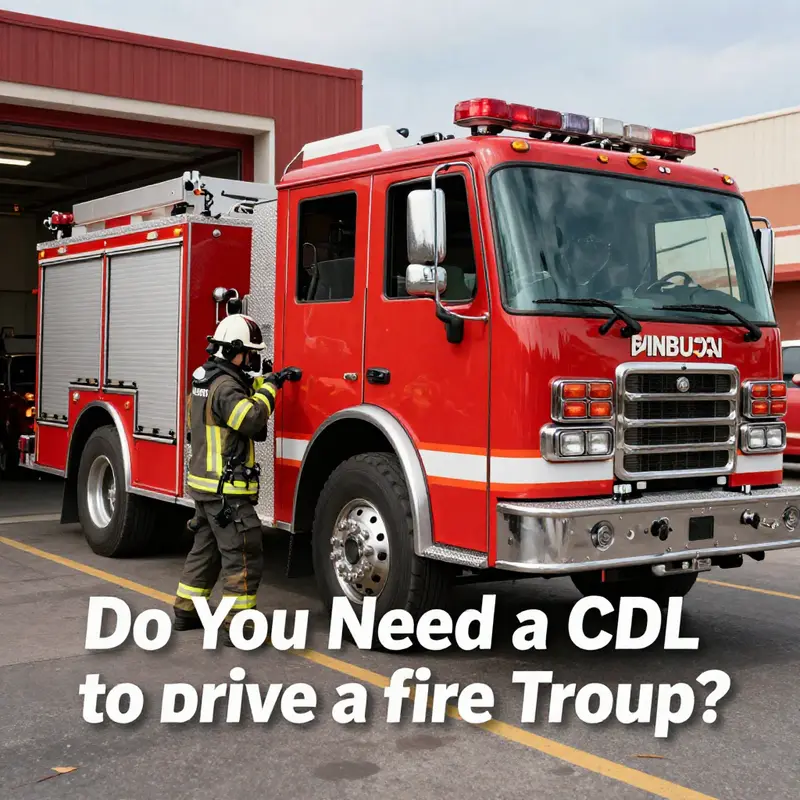
The need for a CDL to operate a fire truck depends on weight, configuration, and use. Federal law sets the 26,001‑pound GVWR threshold; vehicles above this generally require a Class B CDL, while those that carry 16+ passengers or hazardous materials may need a Class C endorsement. Many states provide emergency‑vehicle exemptions that let qualified personnel drive heavier apparatus without a CDL during emergency responses, but the exemption usually does not cover routine training, maintenance runs, or non‑emergency travel. Because state and local rules vary, fire departments often adopt a policy that requires all drivers of heavy or specialized trucks to hold a CDL regardless of exemptions, ensuring consistent safety, insurance compliance, and crew readiness. To determine whether a specific fire apparatus needs a CDL, map the vehicle’s GVWR, passenger capacity, and any hazardous‑material equipment against federal and state regulations, then consult your local DMV or fire‑department training division. For detailed federal guidance see the FMCSA CDL information page (https://www.fmcsa.dot.gov/vehicle-compliance/operational-requirements/cdl-information).
3D models, airport fire truck, game development, simulation, aviation safety
3D models, airport fire truck, game development, simulation, aviation safety
Sizing Up the Road to Response: The Weight Thresholds That Define CDL Eligibility for Fire Truck Operations
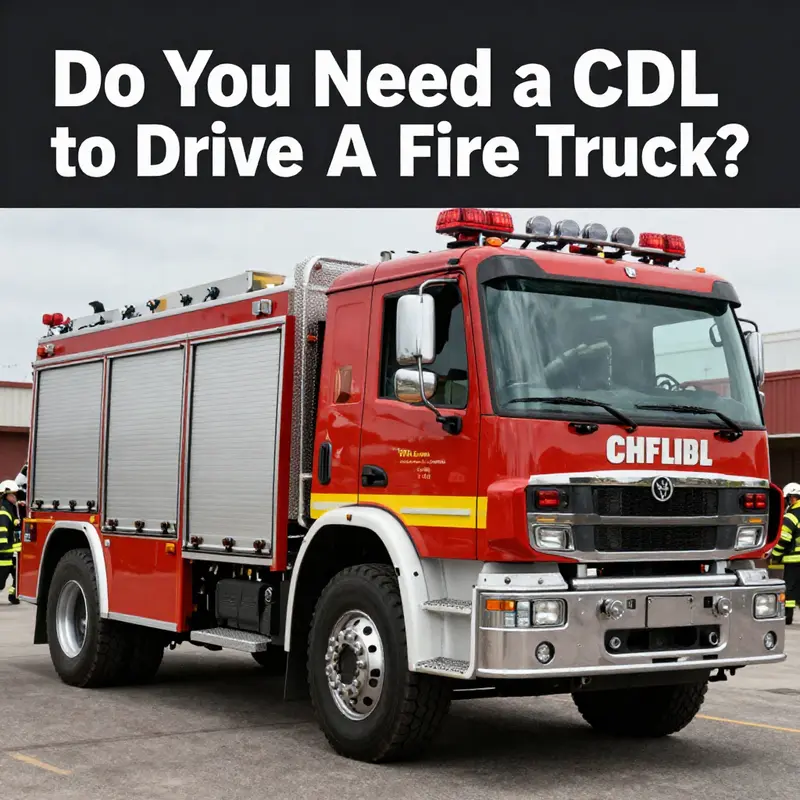
When communities call on their firefighters, the last thing they want is a malfunction of judgment or a delay sparked by regulatory confusion. The question of whether a commercial driver’s license (CDL) is needed to drive a fire truck is less about a simple yes or no and more about the size, weight, and intended use of the vehicle. The governing logic is clean in theory yet complex in practice: federal rules set a weight threshold, and fire departments tune their fleets and training around that threshold while balancing safety, response time, and legal compliance. In the United States, the pivotal number is GVWR—the gross vehicle weight rating. If a vehicle weighs 26,001 pounds or more when loaded, federal regulations generally require a CDL to operate it on public roads. That rule is not a laboratory abstraction; it directly shapes what goes into a department’s fleet, who operates it, and how drivers are trained. The practical consequence is that most of the larger, purpose-built fire apparatus on municipal streets carry a weight that brings them into the CDL realm from a regulatory standpoint. Pumps, water tanks, ladders, and the heavy chassis that support this gear all contribute to exceedance of the threshold. And because many modern fire engines are designed to deliver rapid response across a range of emergencies, their weight is not a bystander to readiness—it is an active determinant of licensing, insurance, and driver training requirements. The topic, then, becomes not a single policy but a fabric woven from federal law, state variants, department philosophy, and the operational reality of what fire units must carry to perform their missions safely. The weight-centric approach to CDL necessity helps ensure that drivers controlling these large, dynamic, and potentially dangerous machines are prepared to manage them in traffic, in inclement weather, and in the high-stakes environment of an emergency incident. It is a framework that respects speed and agility on the street while foregrounding safety and accountability in the cab. Yet this framework also invites nuance: not every fire vehicle crosses the GVWR line, and even when it does, exemptions and endorsements can modulate the licensing path. A thoughtful reading of the rules reveals a spectrum rather than a binary choice, one that depends on vehicle class, equipment configuration, and the specific duties assigned to the operator. Some emergency vehicles are treated as non-commercial or as emergency exemptions, designed to prioritize rapid response for trained personnel. These exemptions, which vary by jurisdiction, acknowledge that the public safety imperative can justify special access to larger, faster, and more capable firefighting equipment. In practice, many departments operate vehicles in that grey zone—vehicles that function as firefighting tools and life-saving platforms, yet are not always gated behind the same licensing barriers as ordinary commercial trucks. Still, the federal baseline remains a reliable compass: when the GVWR climbs past 26,001 pounds, CDL licensing often becomes the default expectation for operators, especially when those operators may be crossing into situations that require greater control, precision, or long-haul transport of heavy equipment. It is here that the conversation naturally intersects with more specialized apparatus. Aerial ladders, for instance, and high-capacity pumping systems introduce additional layers of complexity. An aerial ladder truck is not merely a heavier truck; it is a sophisticated platform that must maintain stability, achieve precise positioning, and operate a range of hydraulic systems under dynamic loads. In many cases, such apparatuses are categorized as heavier, more complex units, and some states treat them as requiring broader CDL endorsements, such as HazMat or tanker endorsements, depending on their configuration and operational duties. The logic is not simply about carrying more water or taller ladders, but about ensuring the operator has demonstrated the particular knowledge and skills to manage the vehicle’s specialized systems safely. The licensing calculus thus expands with the complexity of the vehicle. A small urban pumper or a utility-type apparatus might stay under the threshold and escape the CDL umbrella in a strict federal sense. However, many departments standardize CDL requirements across the fleet to maintain uniform training, oversight, and interoperability. In these cases, even vehicles that technically might fall below the GVWR line are treated as commercial assets for the sake of consistency and preparedness. The overarching rationale is straightforward: a department wants every driver who might operate a given type of apparatus to be familiar with the vehicle’s size, weight distribution, braking characteristics, and the special handling demands that come with the job. The decision matrix becomes a blend of legal compliance and strategic readiness. State laws can push in a different direction from federal rules, creating a mosaic of requirements that departments must navigate. A city might adhere to FMCSA guidelines as the baseline, but a neighboring state could impose stricter rules for certain classes of emergency vehicles or for the handling of hazardous materials. The result is a regulatory landscape that rewards careful interpretation and proactive planning. For those who are evaluating their options or planning fleet upgrades, the first step is a clear inventory: what GVWR does each vehicle carry when fully equipped, and which components contribute the most to that weight? How does the department intend to use the vehicle—interstate transport, long road deployments, or strictly municipal response? What about ground and aerial operations in elevated or constrained environments? Then, map those findings onto the licensing framework. If a unit sits at or above 26,001 pounds when loaded, employers and drivers should prepare for CDL considerations, including appropriate endorsements if the vehicle’s duties necessitate hazardous materials handling or tanker operations. It is essential to keep in mind that even when a vehicle’s GVWR places it within the CDL category, exemptions can still apply to emergency response contexts, which may allow certain operations under different regulatory interpretations. The practical upshot is that CDL policy for fire apparatus is not a fixed decree but a living policy that negotiates safety, efficiency, and legal compliance in real time. This is especially true in departments that emphasize cross-assignments: a driver might be trained to operate multiple types of apparatus, from a compact rescue vehicle to a heavy pumper or an aerial platform. In those environments, a CDL ensures the driver has a consistent, verifiable skill set that translates across the fleet. It also simplifies insurance, regulatory audits, and incident investigations by maintaining a standard credential across vehicle classes. The decision to require or waive a CDL often rests on a combination of risk assessment, training infrastructure, and a department’s long-term fleet strategy. Some agencies view the CDL as a foundational element of professional readiness, arguing that it provides a structured path for operators to learn about vehicle dynamics, weight distribution, braking performance, and the interplay of high-pressure water systems with steering and traction. Others may lean toward exemptions that prioritize agility and speed, especially for jurisdictions where response times are critical and the vehicles operate primarily within the jurisdiction’s borders. Either way, the core thread remains: weight, configuration, and mission shape licensing needs. To illustrate how this knowledge manifests in real-world planning, consider the practical implications for fleet design and driver development. When agencies embark on purchasing decisions, weight becomes a central criterion. A decision to invest in a heavy-duty platform, such as a high-capacity water engine or an aerial apparatus, is a decision that reverberates through training programs, maintenance schedules, and licensing requirements. It may necessitate recruiting and credentialing drivers who already hold a CDL, or it may trigger a department-wide training initiative to prepare non-CDL personnel to operate vehicles within the CDL framework. Either path requires resources—time, budget, and an organized oversight mechanism—to ensure that drivers are not merely legally eligible but proficient in the nuanced demands of the apparatus. The safety imperative cannot be overstated. Heavy vehicles behave differently in traffic than lighter ones, particularly when fully loaded with water, pumps, or environmental equipment. Braking distances lengthen, turning radii widen, and stability becomes a function of chassis design and driver input. Training to handle such dynamics is essential, and licensing frameworks serve as the scaffolding for that training. When a department builds its training program, the question is not only, “Can a CDL be issued for this vehicle?” but also, “What level of mastery should the operator demonstrate to earn the appropriate endorsement or credential?” The answer shapes the cadence and content of hands-on practice, classroom instruction, and evaluation. It affects what drills are required, how simulators are used, and how the fleet’s risk profile is managed during high-stress incidents. For departments that pursue a standardized approach across their fleets, the CDL becomes a unifying credential that supports cross-department collaboration, mutual aid operations, and shared escalation procedures. In practice, this means cross-training programs that bridge the gap between smaller, lighter vehicles and heavier, more complex platforms, ensuring that a driver who can safely navigate a compact rescue rig can transition to a larger apparatus without being overwhelmed by unfamiliar handling characteristics. The result is a more integrated, versatile workforce that can respond to a wider array of emergencies with confidence. Of course, the ultimate source of truth for any department lies in the local and federal regulatory texts, and in the interpretation that those texts receive from the state DMV and the FMCSA. The conversation is not about attracting or deterring personnel; it is about ensuring that every operator entering the cab holds a credential commensurate with the vehicle’s weight, its performance envelope, and the risk profile of the missions it will undertake. For readers seeking to understand where their own departments stand, a pragmatic approach is to begin with a precise weight audit. List every vehicle, including fully loaded configurations with water, foam, and equipment, and compute the GVWR. Identify which units cross the federal threshold and whether any dense or specialized configurations push beyond it. Then align those findings with the department’s training matrix and licensing policy, acknowledging that some units may sit near the line and could attract nuanced endorsements instead of broad exemptions. It is also useful to compare state variations, as some jurisdictions apply stricter rules for certain classes of emergency vehicles or for inter-state transport. In this light, the weight threshold serves as a launch point for strategic decisions rather than as a mere box to tick on a regulatory checklist. It prompts departments to invest in the kind of proactive governance that safeguards both responders and the public they serve. For those who are exploring fleet options or careers in firefighting, the discussion also suggests a practical path: consult the authorities who issue licenses, study how your state interprets “emergency vehicle” exemptions, and consider the value of obtaining a CDL even when not strictly required by state law. Such preparation pays dividends in consistency, safety, and mobility across the fleet, especially when personnel may rotate between apparatus of varying size and complexity. In this sense, the CDL becomes less a hurdle and more a professional standard—a shared credential that signals to the public, to colleagues, and to insurance providers that the operator has been trained to handle the realities of large, heavy, and potentially dangerous firefighting equipment. For a broader view of how these categories translate into actual fleet choices and classifications, many departments look to the larger ecosystem of fire apparatus options. There is a notable continuum from small, nimble, utility-focused responders to heavier, more capable platforms designed for urban or rural response, high-rise operations, and complex rescue scenarios. Within this continuum, the decision to pursue CDL readiness is not simply a matter of legality; it is part of a comprehensive strategy to optimize response time, maximize safety margins, and ensure that trained professionals are prepared to deploy the most effective toolkit for the incident at hand. In the end, the guiding principle remains clear: weight and configuration dictate licensing needs, but safety and readiness determine how those licensing requirements are implemented on the street. For readers who want a tangible reference as they plan or audit their fleets, consider exploring the broader category of heavy-duty fire trucks to understand the scale and capabilities involved. The category itself highlights why a higher GVWR often accompanies greater complexity, demanding more sophisticated training and, in many cases, formal CDL endorsements, especially when the vehicle’s duties extend beyond simple municipal response or include interagency operations. This is not a rigid verdict but a practical framework that supports informed decisions about fleet composition, driver development, and regulatory compliance. If your aim is to balance rapid response with safe, accountable driving, the weight threshold is a design constraint as much as a licensing benchmark. It anchors the conversation in a shared standard while allowing departments to shape their own policies around exemptions, endorsements, and training pathways that reflect local terrain, traffic patterns, and incident profiles. In that sense, the most important takeaway is not the number alone but the disciplined process by which a department determines how that number translates into licensure, qualification, and ongoing proficiency. To ground these considerations in accessible resources, agencies should verify their approach with official guidance and align their training plans with the expectations of the licensing authorities. For reference and additional context on fleet options and the role of heavier platforms, departments often consult the broader categorization of equipment that supports firefighting operations, including large, capable units designed to meet the demands of contemporary incidents. And as a practical note for anyone evaluating this topic, remember that the licensing pathway is closely tied to the vehicle’s loading and operating profile. A unit’s GVWR, its intended use, and the operator’s demonstrated competencies collectively determine whether a CDL is required, whether endorsements are necessary, or whether exemptions apply under the emergency-vehicle provisions of state law. This integrated approach helps departments maintain readiness without compromising safety or compliance. For readers seeking further context on fleet choices and the role of heavier platforms, see the category that highlights heavy-duty fire trucks and related apparatus, which offers a practical lens on how weight, equipment, and purpose shape licensing expectations. heavy-duty fire trucks. For authoritative licensing guidance, refer to the federal framework and state implementations through the FMCSA website. External resource: https://www.fmcsa.dot.gov/
3D models, airport fire truck, game development, simulation, aviation safety
3D models, airport fire truck, game development, simulation, aviation safety
brush fire trucks, wildland firefighting, fire safety equipment, off-road fire trucks, firefighting technology, business safety, emergency response vehicles
Navigating the CDL requirements for driving a fire truck entails understanding various factors, including vehicle size and local regulations. While many fire trucks may not necessitate a CDL due to exemptions, having one can enhance safety and operational efficiency. Business owners in the emergency services sector must stay informed about the regulations applicable within their jurisdictions and ensure their drivers are equipped with the necessary credentials for compliance and safety. A comprehensive approach to licensing and training can ultimately contribute to better emergency responses and community safety.

