
















The length of a fire truck plays a pivotal role in its performance and suitability for various tasks. Understanding this measurement is essential for business owners involved in firefighting logistics, procurement, or management. This article delves into how fire truck lengths can provide insights into equipment capacity, agility within urban environments, and effectiveness in emergency scenarios. Each chapter further unpacks specific types of fire trucks, ranges of dimensions, and the resulting operational implications tailored for business performance.
Measuring Length, Guiding Duty: A Cohesive Look at How Long a Fire Truck Really Is
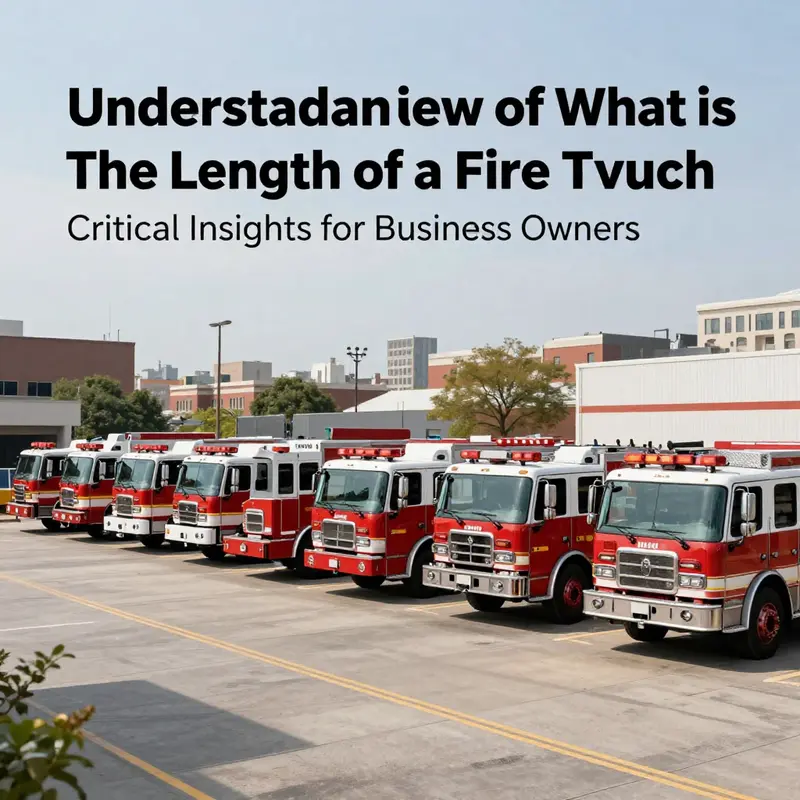
The length of a fire truck is not a single fixed measurement but a reflection of purpose, design, and the environments in which it operates. To understand what determines a fire truck’s length, one must move beyond the ruler and into the logic of the job: water on demand, access to tall spaces, rescue capabilities, and the constraints of urban and rural streets. Across departments and nations, the spectrum runs from compact, off-road engines built to crawl through brush to towering aerial platforms that dominate skylines. The result is a family of vehicles that share a core mission while diverging in length to accommodate the tools and tasks they carry. There is no universal standard length, because every model is a tailored response to a specific set of firefighting and rescue needs, pressures, and priorities.
When we speak in general terms, a fire truck’s length is often anchored in its primary role. Pumper or engine trucks, which bring water to the scene and carry hoses and pumps for direct firefighting, tend to be among the shorter mainstream apparatus. They usually measure in the range of about 20 to 30 feet, or roughly 6 to 9 meters. This length keeps them nimble enough to navigate city streets, weave through traffic, and fit into parking spaces or firehouses designed for smaller fleets. Yet within that band there is a broad spread. Some 6-meter configurations exist for lighter, more compact pumpers, while others push toward the upper end of 9 meters as tanks grow and auxiliary equipment accumulates. It is a practical balance: enough water and equipment to take the first action, but not so long that handling or deployment becomes awkward.
Ladder trucks, which carry heavy aerial devices or platforms, illustrate length as a deliberate trade-off between reach and maneuverability. The extendable ladders and associated stabilizing systems require longer chassis to accommodate the stowed ladder, the platform, and the gear needed for ventilation, rescue, and firefighting at height. As a rule, ladder or aerial trucks fall in a longer category, typically ranging from about 30 to 40 feet in length, or 9 to 12 meters. The difference between a shorter, compact stowable aerial and a full-length platform can be substantial when you consider the footprint required to deploy the ladder, stabilize the rig, and support the weight of water and other equipment at altitude. In high-rise districts or facilities with tight access routes, that extra length is a necessary investment, enabling firefighters to reach upper floors, access roof lines, and operate in spaces where ground ladders would be impractical or insufficient.
Rescue trucks, designed for complex extrication, vehicle rescues, and confined-space work, tend to be similar in size to pumper trucks. They often hover in the 25 to 30 foot range, or about 7.6 to 9 meters, but the exact length can shift depending on the specific rescue gear they house. The intent is to balance an ability to maneuver in urban congestion with a payload of cutting tools, stabilization systems, and recovery equipment. In this sense, rescue trucks reveal another facet of length: not only how much water you can carry or how far you can reach, but how much specialized gear you need to access, secure, and extract victims in dangerous environments.
Wildland fire engines provide a different perspective on length, prioritizing off-road capability and lighter weight. These engines are typically more compact, designed to traverse rough terrain, brush, and forested areas. Their lengths usually fall within approximately 18 to 25 feet, or about 5.5 to 7.6 meters. The emphasis here is not sheer reach or heavy water loads but reliability on uneven surfaces, reduced ground pressure, and simpler hydraulic systems. A shorter chassis can improve traction, turning radius, and the ability to navigate narrow paths, which is essential for protecting homes on the edge of wildland zones. It is a pragmatic reminder that longer is not always better; sometimes it can hinder the very mobility required to stop a fast-moving, landscape-spanning incident.
Specialized industrial or ARFF (Aircraft Rescue and Firefighting) trucks often pull the longest duty cycles and carry the most robust packages of equipment. Airports and large industrial sites demand vehicles that can handle hazardous materials, high volumes of foam, and rapid responder timelines. In these contexts, the yardstick for length moves beyond the merely practical and toward the strategic. ARFF and related heavy-duty configurations can exceed 35 feet, or about 10.7 meters, with some models sprawling even longer when equipped with large water and foam tanks or additional containment features. In such settings, length becomes a lever for safety margins, rapid deployment of large-scale extinguishing agents, and the ability to reach distant taxiways, docks, or industrial complexes where straight-line travel does not suffice.
The overarching pattern is clear: while many fire engines cluster within a more modest range—roughly the 8 to 10 meter corridor described in various general-overview sources—the inclusion of specialized equipment or mission-specific design pushes the total length upward. The presence of a high-spray arm, an extended platform, or a particularly large tank can push an otherwise standard chassis into longer territory. In fact, some high-spray or aerial units exceed 11 meters in length, emphasizing a direct correlation between the length of the vehicle and the scope of operations it is built to perform. This is not a mere curiosity; it is an operational necessity. A longer apparatus can house a longer ladder, larger water and foam reserves, more complex rescue tools, or stabilization gear that protects both responders and civilians during a tense emergency.
It is worth noting how the length figure is often negotiated with other design constraints. A longer vehicle inherently requires more turning space, a longer braking distance, and sometimes special driving training to negotiate tight urban corners and narrow streets. It also imposes considerations for garage space, parking, and the logistics of dispatch. In fleets within dense cities, where streets are narrow and building layouts demand rapid access through random frontages, shorter pumper configurations may win out. In contrast, a city with tall buildings and critical access points may justify the extra length of an aerial or platform truck to guarantee reliable reach and the ability to sustain operations at height for longer periods.
From a procurement perspective, the length of a fire truck is not a standalone data point but part of a broader specification package that includes tank capacity, pump size, hillside or off-road capability, powertrain, water-atomizing systems, and the particular configuration of compartments and wheeled stability. For instance, a 29-foot pumper is not merely a water carrier; it is a compact, versatile platform designed to surge the first attack while remaining agile enough to reposition quickly. A 34-foot aerial might be chosen not just for the height it can reach but for the space it needs to carry a full complement of rescue tools, ventilation equipment, and a robust hydraulic system that can power a long ladder while maintaining safe, smooth operation.
All of this helps explain why manufacturers present a range of model sizes and why, in practice, fire departments often specify a fleet mix rather than a single representative length. The decision rests on a combination of incident type, geography, population density, and the experience of crews who must operate in daily life with precision under pressure. The length of a vehicle is a proxy for its capacity to respond quickly, perform a set of tasks efficiently, and maintain safe margins for both operators and bystanders. In a sense, length encodes a department’s tactical philosophy: how much water is needed upfront, how far the ladder must reach to create ventilation or rescue openings, and how many tools the crew will rely on shortly after arrival.
If you follow the thread of these dimensions through a city’s fire station, you can almost hear the practical calculus at work. Consider a typical urban district that handles a mixture of residential, commercial, and industrial calls. A balanced fleet might include several compact pumpers for rapid response and maneuverability, one or two mid-length aerials to service high-rise neighborhoods, and a longer rescue or ARFF-style apparatus where the risk profile warrants a larger on-scene toolset. Each vehicle is chosen with a particular length in mind, tuned to the street geometry, the garage footprint, and the anticipated demand curve. In other words, the length of a fire truck is a deliberate design choice aligned with mission resilience, not a random attribute.
For readers curious about exact dimensional specifications in the real world, manufacturers publish model-by-model data that can be consulted for precise chassis lengths, wheelbase measurements, and overall length. Such specifications reveal how more than just the visible silhouette dictates how a truck behaves in traffic and at the scene. If you are exploring the spectrum of vehicle sizes in a catalog or online, you will notice the same pattern: general-purpose engines cluster in a tighter band around the 8 to 10 meter mark, while specialized units push beyond that envelope when required by the job. The practical implication is that a department seeking to optimize response times and on-site effectiveness must consider not only the volume of water or the height of access but also how the vehicle’s length affects every maneuver from the moment it leaves the station to the moment it completes a sequence of rescue or extinguishment tasks.
In this light, the length of a fire truck becomes a narrative about capability and constraint, a physical manifestation of how teams balance reach with maneuverability, capacity with space, and speed with safety. The numbers—whether expressed as meters or feet—are more than figures; they are a concise summary of the job’s expected tempo and the urban scale on which it unfolds. A longer ladder is not simply a longer ladder; it is a deliberate answer to the challenge of accessing higher floors, chasing wind-driven flames across a facade, and creating openings that allow firefighters to perform life-saving operations without compromising their own safety. A shorter pumper is not merely a stretch of metal; it is a compact tool designed to arrive quickly, assemble a first-line attack, and navigate crowded avenues where space is at a premium.
If this framing resonates, you may want to explore how these lengths translate into practical choices when browsing our catalog of firefighting apparatus. The catalog presents an array of configurations and sizes, organized to help communities assess their needs against the realities of their streets. For instance, you can compare how a mid-range pumper’s length aligns with its water-carrying capacity and pump performance, or how a longer aerial’s reach balances with its storage compartments and weight. Such comparisons illuminate the trade-offs that shape every decision, from the type of chassis to the number of panels in a side compartment, all of which contribute to the final exterior length. To browse related categories and see how length plays into broader fleet planning, you can explore our fire fighting trucks catalog here: fire-fighting-truck catalog.
The discussion of length, however, should not end with a single number or a single vehicle. It invites a broader reflection on the contingent nature of firefighting equipment: the same street can demand different answers at different times, and the optimal length of one truck may be suboptimal for another. Practical realities—garage clearance, street width, overhead clearances, and bridge heights—combine with mission-driven requirements to yield a dynamic, context-sensitive range of lengths across the fleet. This is why agencies often specify a mixed assortment of apparatus rather than rely on one all-purpose solution. The goal is a fleet that can respond to a diverse spectrum of incidents—water supply, high-angle rescue, ventilation, hazardous materials, or aircraft rescue—without being hamstrung by a single dimension. In short, the length of a fire truck is a carefully negotiated compromise that reflects how fire protection adapts to place, scale, and risk.
External dimension figures are widely available in manufacturer specifications and industry resources that detail exact lengths for particular configurations. These sources underscore the principle that there is no one-size-fits-all answer; instead, there are ranges calibrated to the intended duty, chassis, and equipment package. If you seek a deeper dive into model-specific measurements, you may consult substantial catalogs and product pages that present the precise numbers behind each configuration. For a broader look at dimensions and model options in the context of how they support varied firefighting tasks, an external reference useful for comparison is available here: https://www.alibaba.com/product-detail/China-Fire-Fighting-Truck-10ton-15000L_1600461971298.html?spm=a2700.19128389.0.0.4f5c7e1bJpZTgO. This resource provides dimension data that helps frame the range discussed above within real-world, market-available vehicles.
In sum, the length of a fire truck is a lived, practical parameter tethered to mission requirements. It is the outward sign of an internal calculation about how much water, how much reach, and how much tool load a particular operation will demand. The spectrum—from roughly 18 feet for compact wildland engines to over 40 feet for large ARFF or aerial platforms—frames a spectrum of capabilities that respond to the spatial realities of communities and the evolving nature of emergencies. The specific length of any given unit is a reflection of its role, its equipment, and the tactical logic that governs its deployment. And while the numbers vary, the underlying principle remains constant: the length of a fire truck is a deliberate design choice aimed at maximizing effectiveness while preserving safety and agility on the ground. This is the bridge between the workshop and the street, where length becomes a tool in the service of life-safety outcomes for communities.
Sizing the Fleet: How Fire Truck Length Shapes Reach, Access, and Tactics
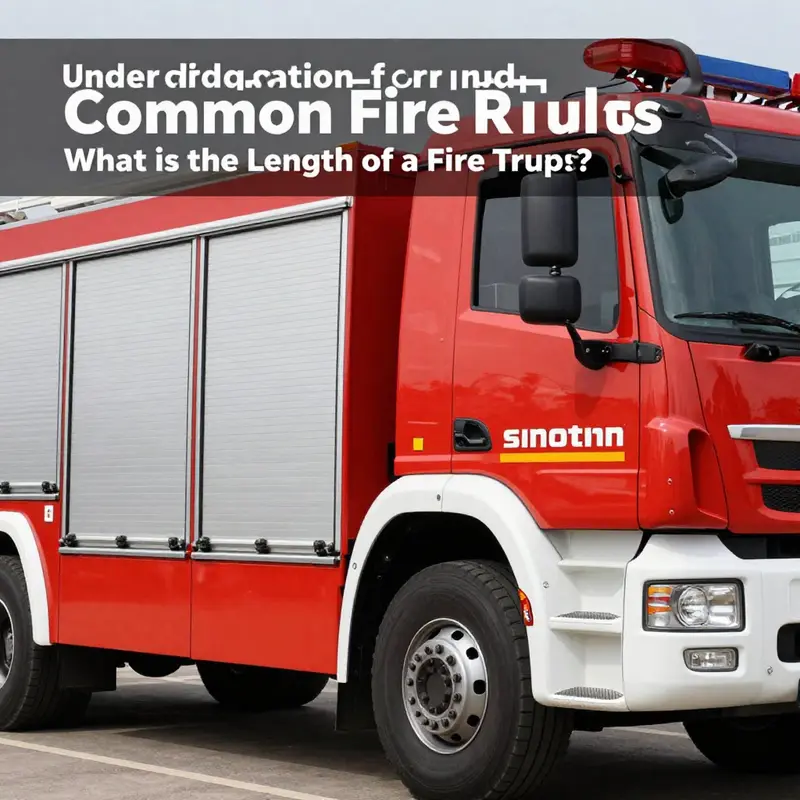
Length, in the context of fire apparatus, is less a fixed numeral than a reflection of purpose. Across the spectrum of firefighting and rescue work, length communicates capacity, reach, and the kind of terrain a vehicle is designed to conquer. There is no single standard length because the job itself is not uniform. A pumper designed to lay down water at a street-fire needs a different footprint from a high-rise ladder rig or from a rugged wildland engine. Readers often assume length is a straightforward measure, but in practice it is a carefully chosen attribute that shapes how a truck is parked, how it moves through traffic, how much equipment it can carry, and how quickly it can arrive at a scene with the tools that matter most for the mission at hand.
When we translate the research into practical terms, the length of most everyday fire engines falls in a band that starts around the mid-6-meter mark and stretches toward the mid-9-meter range. In feet, that is roughly 20 to 30 feet. These engines, which carry the core water supply, hoses, and pumps for direct firefighting, are designed for urban structure fires where maneuverability and pump capacity must coexist. The length is not chosen in isolation; it is balanced against wheelbase, weight distribution, and the need to navigate narrow streets, tight turns, and parking spaces that are common in city blocks. In the engine category, you typically see overall lengths in the ballpark of 6 to 9 meters, with the precise figure reflecting tank size, pump capacity, and rear equipment compartments. These engines epitomize a pragmatic compromise: enough length to carry water and pumps, yet compact enough to work within the constraints of dense urban geometry.
The discussion naturally expands as we turn to ladder trucks, where the purpose shifts from simply delivering water to gaining elevated access, ventilation, and rescue capability. Ladder trucks introduce longer chassis by necessity because the extendable ladder or platform adds substantial physical reach. The practical range for these units tends to be more generous, averaging from about 9 to 14 meters in length, or roughly 30 to 45 feet. The mathematics of length here is about more than the ladder itself; it includes the pivot points, the rear stabilizers, the base of the aerial ladder, and the platform or bucket. Even within this category, the longest configurations are engineered to accommodate heavy-duty booms, larger operator areas, and enhanced secondary equipment. Aerial apparatus can push beyond the typical ladder length to meet specialized needs in high-rise firefighting and complex ventilation operations. In conversations about length, the aerial class is the ceiling. For readers who want to visualize the breadth of ladders and platforms, a closer look at the broader category of aerial configurations helps connect the numbers to the real-world tasks they enable. See the aerial-ladder-fire-truck category for an overview of how these longer chassis and booms translate into building access and rescue capability.
Wildland fire engines, built for off-road capability and brush-fire suppression, present a different set of demands. Their length is generally shorter, designed for rugged terrain where maneuverability trumps extended water needs. These compact units often measure between 18 and 24 feet, or about 5.5 to 7.3 meters. The shorter length translates into a lighter, more agile footprint that can traverse uneven trails, tight switchbacks, and unpaved surfaces where a longer apparatus would struggle. The emphasis here is not extra gallons of water or a towering aerial but the ability to position the pump and hoses quickly while keeping the vehicle mobile across varied terrain. The length range reflects the core trade-off in wildland applications: speed and nimbleness over sheer storage capacity.
Rescue trucks, which specialize in extrication and technical rescue, inhabit a space between effectiveness and space. These vehicles must carry a wide array of tools, stabilization devices, cutting and spreading equipment, and other gear that supports complex operations. Their length typically sits in the 20–30-foot range, or about 6 to 9 meters. The design priority in this class is workspace and organization aboard the vehicle rather than maximum raw length. Yet even within this narrower band, the precise length is tuned to the mix of rescue tools and the crew habits that define a department’s response style. The goal is to ensure responders have immediate access to gear without excessive maneuvers or disassembly of equipment after arrival.
Larger and more specialized units, such as industrial fire trucks and airport crash tenders, push beyond the mid-range lengths to meet exacting performance goals. These heavy-duty and specialized platforms can exceed 40 feet in length, or more than 12 meters, especially when equipped with high-volume pumps, large water and foam tanks, and sophisticated firefighting tools. In these configurations, length becomes a strategic asset, expanding the reach of water, foam, and complex payloads, while also requiring careful routing, maneuvering, and turning clearance at incident sites. The overarching message remains consistent: longer does not merely mean bigger; it signals a broader mission footprint that departments need to anticipate in urban design, incident command, and fleet management.
Across all these categories, length must be considered alongside a host of other factors. The primary influence is capacity and the specific equipment carried. A longer apparatus provides more space for tanks, pumps, tool storage, and crew comfort during extended operations. It also imposes constraints: longer vehicles require wider streets, larger turning radii, and more careful planning for deployment in tight urban cores. The relationship between length and operational effectiveness is not a simple one-to-one equation; it is the product of a department’s typical call profile, terrain, and the particular mix of duties for which the fleet is designed. In other words, length is a proxy for the mission profile. If the job calls for high water flow in congested neighborhoods, a longer, more capable pump may be justified. If the city planning envelope is dense with narrow lanes, a shorter, more portable engine could be more effective.
Another dimension to consider is the measurement itself. When manufacturers list length, they refer to the overall length from bumper to bumper, inclusive of any protruding structures, including the front bumper, rear bumper, and any externally mounted equipment or bumper extensions. This overall length provides a consistent frame of reference for fleet planning, garage space, deployment drills, and apparatus maintenance. Some departments also track wheelbase and overall height separately, to inform garage clearances and aerial operation envelopes. The nuance here matters. A unit may be 8.6 meters long overall but have a longer wheelbase that affects steering and turning, or an extended bumper configuration that influences maneuverability during rapid repositioning at a multi-vehicle incident. These subtleties become practical in the day-to-day logistics of emergency response.
From a bounded-data perspective, the length figures in the research summary you see quoted reflect typical ranges rather than universal constants. A common engine or pumper is often described as 6 to 9 meters in length, while ladder configurations stretch to roughly 9 to 13.7 meters or more, depending on the reach and platform. Wildland engines sit shorter, between 5.5 and 7.3 meters, and rescue trucks land in a similar corridor to engines but with different internal layouts that optimize workspace for tools and crew. When discussing larger, specialized units such as industrial or airport fire apparatus, the numbers tilt upward, with lengths that can exceed 12 meters and approach 14 meters or beyond in some setups. These ranges are not mere curiosities; they underpin the planning of fire stations, maintenance bays, traffic management around incident scenes, and the training needed to operate each class effectively.
The table of rough numbers has one more practical resonance: it helps explain why departments invest in training and in auxiliary equipment that can compensate for length when needed. A longer ladder or platform demands careful placement during setup. It may require deploying stabilizers and outriggers with greater attention to surface conditions. It can affect line-of-sight during a lane closure, complicate the approach to a target building, and influence the sequence of actions an incident commander plans. Conversely, shorter engines, while easier to fashion into tight urban corridors, must compensate with longer hose lays, greater pump capacity, or faster crew workflows to deliver the same effectiveness in high-rise or remote areas. In short, the length of a fire apparatus is not simply a metric of size; it is a core element of tactical design that threads through response times, scene safety, and the likelihood of a successful outcome.
To ground these ideas in a sense of real-world application, consider the way various length ranges map onto typical incident types. An 8.88-meter engine, a length that mirrors many standard pumpers, offers a balance that supports urban firefighting with a robust water supply and a versatile complement of hoses and tools. A ladder truck around 11 to 13 meters long can extend reach far above street level, enabling ventilation and rescue operations that are otherwise inaccessible. In so many scenes, this difference in length becomes a decisive factor in whether crews can reach a window, stabilize a collapsing structure, or establish a safe staging area. And while a longer unit can deliver more capability, it also requires more space to maneuver. In dense downtowns, the choice may tilt toward shorter, more nimble apparatus that can thread the needle between parked vehicles or through a narrow alley. The complexity of urban design collides with the physics of a longer chassis, making length a fundamental design and deployment consideration.
The discussion would be incomplete without acknowledging the variability that comes from manufacturer design choices and regulatory guidance. While the lengths mentioned above reflect common categories, individual models and configurations vary. The overall length may be affected by tank size, pump equipment, water capacity, foam systems, and the presence of additional payloads such as air cascade units or specialty rescue tools. Departments often calibrate their fleets by referencing national standards and updates from recognized authorities. These standards help ensure that the basic expectations for safety, interoperability, and performance are met, while still allowing manufacturers to tailor the apparatus to local needs. For readers who want to explore these standards in more depth, standards updates and fire-truck specifications are available through the NFPA documentation. The interplay between standards and practice is what keeps a fleet both capable and adaptable across evolving firefighting challenges.
To connect theory with imagery and to offer a practical pointer, consider how a department might balance its fleet between engines, ladders, and support units. When length is the central design constraint, a department may opt for a modular approach: shorter engines that can ferry crews quickly through traffic, combined with extremely capable ladder or platform trucks for high-rise operations, and a mix of rescue and wildland units to cover regional needs. The result is a cohesive force that can spring into multiple tactical profiles without overcommitting space in the station or on the street. If you want a concrete sense of how these configurations appear in the marketplace, explore the broader product categories tied to aerial and specialized configurations in the catalog provided by industry suppliers. For a closer look at aerial configurations, see the aerial-ladder-fire-truck.
In the end, the length of a fire truck is a living part of a much larger system. It encodes the intended operation, the terrain it is meant to conquer, the speed at which it can be deployed, and the risk-reward calculus that dictates approach angles, access points, and staging needs. The numbers matter not as abstract facts but as practical levers that departments pull to tailor a fleet to their mission, geography, and community expectations. As communities evolve—urban cores densifying, infrastructure aging, and risk profiles shifting—the shapes of the apparatus in their fleets will continue to adapt. Length will keep speaking to capacity, reach, and the tactical imagination of firefighters and officers who rely on their machines to extend the reach of their hands and their courage into dangerous environments.
External reference: for a broader framework on standards and updates regarding fire trucks and apparatus, see NFPA’s latest materials at https://www.nfpa.org/Code-Updates/2024-Fire-Service-Code-Update/Standards-for-Fire-Trucks-and-Apparatus.
Measured in Action: How Fire Truck Length Varies by Configuration and Purpose
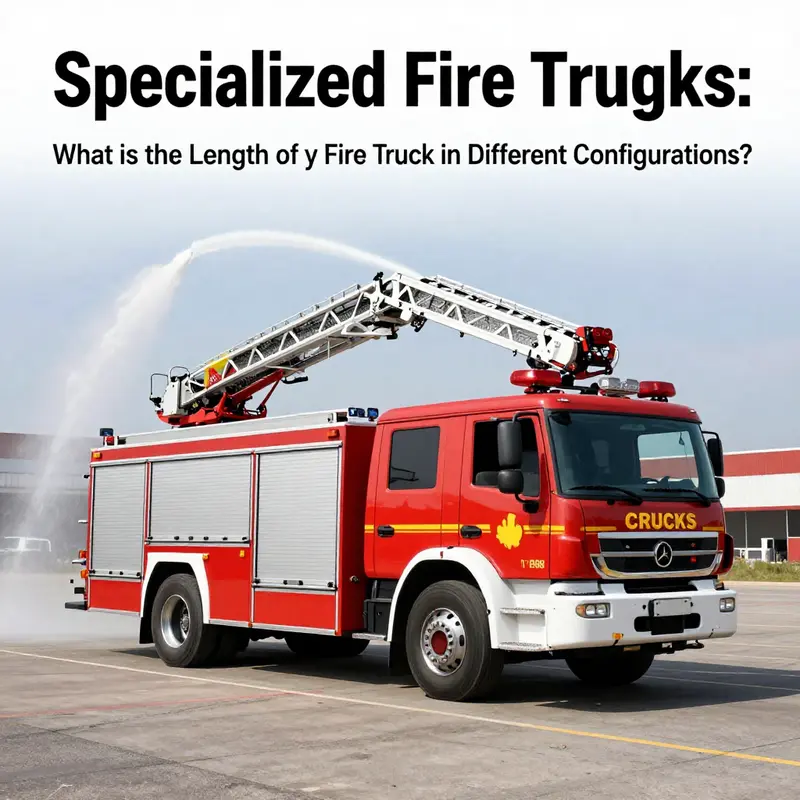
Length is a practical dimension that implies capability, not simply a number on a spec sheet. In fire service practice, there is no universal length for a fire apparatus because differently tasked vehicles must balance space for equipment, water, personnel, and stability with the need to maneuver through streets, alleyways, and rural lanes. The result is a family of lengths that reflect purpose as much as intent. When you watch a fleet in action, the diversity becomes evident: a pumper’s compact, sturdy frame quickly yields to the elongated form of an aerial platform, and even within the same mission, a wildland engine’s lighter, shorter silhouette translates to off-road agility rather than open-road speed. This chapter follows that logic, tracing how configuration and function drive length in a way that clarifies why a fire truck is not a single-size tool but a carefully tailored instrument designed for specific firefighting and rescue tasks.
Think of the pumper, or engine, as the urban workhorse. In most municipal environments, these engines are designed to be long enough to carry a robust water supply, a full complement of hoses, and essential hand tools, yet short enough to navigate tight city blocks and back into home stations. The practical range for these vehicles sits roughly between 25 and 30 feet, or about 7.6 to 9.1 meters. This span reflects a balance: enough chassis length to house a substantial pump and an ample water tank, but not so long that steering becomes unwieldy on narrow streets or parked along curbs with limited turning radii. In real-world terms, a 7.6 to 9.1-meter pumper allows crews to stage close to a fire scene, deploy multiple lines quickly, and maneuver through traffic with a reasonable margin for error when negotiating intersections, hydrants, and parked vehicles. The design also supports a practical off-loading of equipment: a generous compartment layout without creating an overly long profile that would hinder entry through doorways or complicate garage logistics.
Beyond the city limits, the same basic concept of a compact, versatile platform appears in other engine configurations tailored for different environments. Aerial ladder trucks, for example, must accommodate a long ladder, a stable base, and the support equipment needed to operate at height. Their length naturally extends beyond that of a pumper. In typical configurations, aerials range from about 30 to 40 feet, or roughly 9.1 to 12.2 meters. The exact measurement depends on the ladder’s reach and the vehicle’s chassis design. A longer ladder demands a longer base to maintain stability when the platform is extended, which in turn increases overall length. Yet even within that longer envelope, agencies prioritize proportional balance. Aerial units need to be able to access upper floors in urban cores, deploy stabilization gear, and carry personnel and rescue tools, all while still arriving at the scene with adequate maneuverability to position at the right angle for a safe deployment.
In contrast to urban specialties, wildland engines are tuned for rough terrain and limited road access. Their compactness is a deliberate strength. When a fire scene sits within a forest or along a meandering dirt road, a shorter wheelbase combined with rugged suspension can be the deciding factor between reaching hotspot sites or being forced to retreat. Wildland engines typically fall in the 20 to 28 feet range, about 6.1 to 8.5 meters. This scale supports off-road travel, easier climbing over uneven surfaces, and the ability to negotiate tight switchbacks where a longer apparatus would struggle. The shorter length does not diminish capability; rather, it channels the design toward mobility and reliability in challenging environments where a larger vehicle would be less nimble.
Technical rescue units, too, illustrate how length is linked to function. These trucks often feature a long wheelbase to achieve stability when carrying heavy stabilizers, extrication equipment, and heavy rescue tools. Their length commonly sits around 25 to 35 feet, or 7.6 to 10.7 meters. The extended length supports a stable platform for delicate operation and precise tool placement during vehicle extrications, rope rescues, and structural stabilization tasks. It also accommodates larger tool arrays and specialized equipment racks, ensuring responders can access gear efficiently without impeding maneuverability at incident sites.
Water tenders—the vehicles designed to shuttle large volumes of water to hydrant-less or remote locations—represent the other extreme in length, since their role centers on carrying massive tanks rather than being nimble, as such capacity requires a long, well-structured hull. These units often span from 35 to 45 feet, or about 10.7 to 13.7 meters, and sometimes even longer for the largest deployments. The long length here is not a luxury; it is a logistical necessity that multiplies the vehicle’s practical water carrying capacity. A longer chassis can house bigger tanks, heavier pump packages, and the infrastructure to manage the supply chain from source to scene. In many operations, length translates directly into the volume of water that can be delivered to the hose lines before the vehicle must return for a refill, which in turn influences the speed at which a long back country fire can be contained.
Between these extremes lie specialty configurations that push the envelope of length for very specific functions. For example, some high-spray arms and water towers designed for elevated access can extend beyond the standard ranges, crossing into lengths greater than 11 meters. And in the most ambitious aerial apparatus or platform trucks, the need to reach higher floors in tall structures often results in vehicle lengths that exceed the typical aerial ladder profile. In practice, length reflects the added hardware carried aloft or integrated into the chassis, from extended booms to the stabilization systems that keep the platform steady during operations at height. All told, the landscape of lengths is not a single line but a spectrum, with each point on the spectrum tailored to a particular mission.
What emerges from examining these configurations is less a single standard and more a principle: the length of a fire truck rises and falls with the mission it is built to perform. A pumper with ample water and hose storage needs enough space to house pumps, tanks, and compartments for hand tools, yet it must stay within a size that allows rapid, reliable access to urban streets. An aerial unit grows longer because it carries a ladder and the associated stabilization apparatus, and it must still fit through the city’s transit corridors without compromising safety or response time. Wildland engines shrink the profile to navigate forests and mountains with efficiency, while rescue and water-tender configurations stretch to accommodate specialized equipment or large-tank capacity. Each class of vehicle occupies a distinct niche, and the length is an honest gauge of the task it is assigned to perform.
This relationship between length and function is reinforced by the broader standards framework that governs fire apparatus design. Industry guidelines exist to ensure reliability, safety, and interoperability across different agencies and jurisdictions. The exact numerical ranges above are supported by practice and documented examples, yet they are not rigid limits. They reflect design tradeoffs that prioritize performance in the field. Where length becomes critical to incident management is not merely hardware but the implications for access, staging, and line deployment. A longer vehicle may offer more water or better reach, but it can also require wider streets, longer maneuvering distances, and more complex parking or stationing arrangements. Conversely, a shorter vehicle can squeeze into tighter corners, slide around obstacles with less risk of collision, and react quickly; it may sacrifice some capacity or reach, which is where careful pre-planning and rapid-response strategies come into play. In other words, length in the fire service is a living parameter that evolves with the demands of the built environment and the evolving nature of emergencies.
For readers who want to see how a specific configuration translates into a practical example, consider the aerial-fire-truck category as a reference point. These vehicles illustrate how a primary mission metric—the ladder reach and platform versatility—drives a longer chassis while still embedding essential handling and safety features. If you are exploring how length translates into on-scene performance, that category provides a coherent illustration of the compromise between reach, stability, and reach-to-ground performance. As a practical matter, departments often run through live simulations and staging drills to determine whether their chosen length meets their city’s street geometry, fire flow requirements, and the expected density of hydrants. They also weigh maintenance costs, as a longer chassis with more complex booms and anchors may entail higher upkeep and inspection standards. The aim is to match the apparatus profile with the urban fabric in which it must operate, while ensuring crews can position the vehicle for rapid deployment and safe operation.
The most important takeaway is not the exact meterage of a given vehicle in isolation, but how length shapes the human element of firefighting. Crew placement, ladder access, hose management, and equipment storage all respond to the physical footprint of the machine. A vehicle’s length informs how it can be parked at the fire station, how it negotiates a residential street during peak traffic, and how many hoses can be laid out simultaneously without tangling. It also impacts the approach to maintenance and inspection: longer vehicles can present more hinges and booms to monitor for wear, more lines to organize, and more opportunities for mechanical interference with the working components. In this sense, length becomes a practical language spoken by firefighters and fleet managers, signaling capability as well as constraint, signaling readiness while acknowledging the real-world limits of the road, the station, and the scene.
For readers seeking a deeper dive into the catalog of configurations, the broader market today presents a spectrum that spans compact wildland engines to expansive water tenders, with numerous hybrid and rescue-focused designs in between. The core insight remains consistent: equipment density and purpose shape the silhouette as much as the chassis and wheels. The voice of the vehicle is written in its length, a visible record of its intended battlefield. Agencies weigh the benefits of longer apparatuses against the costs of limited access and longer travel times, while communities assess how street width, parking, and building density will intersect with their emergency-response needs. The result is a dynamic, evolving landscape in which length serves not as a gatekeeper of capability but as a guiding metric for aligning apparatus with mission context.
To bring this all together, consider that the length of a fire truck is both a design decision and a field reality. It is about ensuring that responders are equipped to perform critical tasks—whether saving lives at a high-rise fire, delivering a steady column of water into a long line, stabilizing a vehicle during an extraction, or delivering water to a remote site where hydrants do not exist. The length is a practical artifact of those choices, a number that carries implications for parking strategy, station layout, road safety, and incident response. And within the wider ecosystem of fire services, a thoughtful approach to length supports better performance, safer operations, and more reliable outcomes when every second counts and every inch of maneuverability matters.
As you continue through this chapter, you may wish to explore how a particular configuration aligns with local geography, traffic patterns, and aerial rescue needs. For readers curious about the market’s practical examples, see the aerial-fire-truck category for a sense of how ladder reach and platform stability drive length in real-world products. This concrete window into the catalog complements the broader principles outlined here and helps connect the abstract discussion of dimension with the materials and equipment that frontline crews rely upon. In the end, length is not merely about measurement; it is about capability, resilience, and the ability to bring critical help to those in danger as quickly and safely as possible. For formal standards and performance benchmarks that govern these designs, refer to the NFPA guidelines, which provide the authoritative framework used by manufacturers and fire departments alike: https://www.nfpa.org/.
Lengths That Fight Fires: How Fire Truck Size Shapes Reach, Response, and Rescue

Fire truck length is not just measurement. It influences how quickly crews can position, what spaces they can access, and what tools they can deploy. There is no universal length; fleets balance compact maneuverability with onboard capacity to fit local needs. Shorter engines excel in dense urban cores, while longer platforms extend reach and storage for high rise and long response scenarios. The optimal length is a tradeoff shaped by street geometry, anticipated incident types, and the available station real estate.
Maneuverability is at the top of practical concerns. Longer trucks require more turning room and careful placement at incidents. Shorter vehicles can slip into tighter pockets, supporting rapid initial action. Yet length must align with mission, because extended reach, larger water tanks, and more rescue gear often demand a bigger footprint.
Stability and safety also depend on length. High payload on a long chassis affects center of gravity and handling. Manufacturers mitigate this with lower centers of gravity, reinforced frames, and ballast while departments weigh safety against capability.
The bottom line is pragmatic: there is value in a mix of lengths within a fleet. Short, nimble engines accelerate first attacks; longer aerials and platforms provide elevation, volume, and extended rescue potential when needed. A well designed fleet optimizes speed, reach, capacity, and safety by distributing capabilities along a spectrum of lengths.
brush fire trucks, wildland firefighting, fire safety equipment, off-road fire trucks, firefighting technology, business safety, emergency response vehicles
소방차의 길이를 이해하는 것은 소방 작전에서 전략적 의사 결정을 내리는 데 중요합니다. 8미터에서 10미터 사이의 표준 모델부터 11미터를 초과하는 특수 유닛까지, 길이가 기동성, 용량 및 전반적인 성능에 미치는 영향은 간과할 수 없습니다. 이 지식을 갖춘 사업주들은 소방차 조달에 대해 정보에 기반한 선택을 할 수 있으며, 팀이 효과적인 긴급 대응을 위해 적절히 장비를 갖추도록 보장할 수 있습니다.

