
















The design of fire trucks varies significantly to meet the unique demands of firefighting and rescue operations. While the image of a fire truck often conjures visions of towering ladders, the reality is much more nuanced. Not all fire trucks come equipped with ladders. This article delves into the various types of fire trucks, their specific functions, and the community’s role in shaping their design. Through four detailed chapters, we will explore the intricate world of fire apparatus, examining why ladders are standard on some trucks but absent on others, and how this impacts operational efficiency and safety.
Not Every Scene Calls for a Ladder: The Diverse World of Fire Trucks and Their Roles

Ask most people to picture a fire engine, and a tall, extending ladder unfurling from a gleaming red apparatus often comes to mind. Yet the image is only part of the picture. Do all fire trucks have ladders? The short answer is no. The longer truth is that fire services deploy a family of specialized apparatus, each tailored to specific risks, geographies, and mission profiles. The ladder is one resource among many, and its presence on a given vehicle reflects deliberate choices about how best to protect people and property in a particular community. In this chapter, we explore why ladders appear on some trucks and not on others, and how that assortment of tools forms a coherent system designed to handle fires, rescues, spills, and a wide range of hazards with efficiency and safety in mind. This broader view helps explain why a modern fleet often looks like a carefully crafted mosaic rather than a uniform line of identical engines.
Aerial ladder trucks stand out as the most recognizable members of the fleet. They pair an extendable ladder or hydraulic platform with specialized rescue and lighting equipment, giving firefighters access to upper floors, rooftops, and elevated rescue positions. The ladder is a central feature because it directly expands reach and enhances safety in vertical environments. Within the aerial family there are variations such as tractor-drawn aerials, which are specialized trailers towed by a standard pumper truck. These configurations can extend the practical reach of a department in tight urban canyons while preserving flexibility in street deployment. If you want to see how these machines are categorized, the aerial ladder fire truck category provides a sense of their range and the questions agencies weigh when choosing models. This is part of a larger truth: ladders are essential in some scenarios, but not a universal solution for all scenes.
Pumper trucks form the backbone of most fire scenes. They arrive quickly and carry a powerful pump, hoses, water tanks, and firefighting apparatus. Their primary job is to push water onto a blaze so it can be controlled and extinguished. In many departments, pumpers are the first unit on the scene because of their speed and volume capabilities. The absence of a built-in ladder means crews rely on other tools to gain access or to reach elevated areas when needed. These trucks emphasize mobility, surge capacity, and the ability to sustain operations while crews work to establish a water supply for the fire attack. For residents who live in high-rise cities, the image of a pumper rushing to a fire may feel incomplete, yet it is exactly this combination of speed and water delivery that makes pumpers indispensable in dense neighborhoods where a ladder truck cannot instantly reach every unit.
Water tenders, also called tankers in some regions, play a different but equally crucial role. They bring large quantities of water to scenes where hydrants are sparse or unavailable. They support pumpers during longer operations and help prevent the need to shuttle water over long distances. Because the mission centers on supply rather than access, ladders are not a focal point on these units. The space they offer is often devoted to tanks, pumps, and hoses, which makes sense in rural or remote landscapes where water may have to travel far to reach a fire. By ensuring a steady flow of water, tenders extend the reach of firefighting efforts and can buy precious minutes while other apparatus establish a reliable water supply.
Rescue trucks have their own lane in the fire service. They are designed to extract people from vehicles or from structural challenges such as collapsed spaces. The equipment carried emphasizes stabilization, lifting, cutting, and patient care. Hydraulic cutters, spreaders, and jacks sit alongside medical gear to support rapid extrication and triage. Ladders may be present in some layouts, but they are not the defining feature of these units. Instead, the focus is on freeing trapped occupants quickly while maintaining a high standard of safety for both the trapped person and the rescuers. In many communities, rescue trucks are the first responders to vehicle crashes, industrial incidents, and delicate space entries where speed and precision matter more than vertical reach.
Hazardous materials units devote most of their space and tooling to protection and decontamination. They bring specialized PPE, detection devices, containment tools, and incident command support. In HazMat responses, the priority is to isolate and control the hazard, assess risk, and prevent spread. Ladders would complicate their core mission by consuming space and adding complexity when access and evacuation of personnel are the pressing concerns. A HazMat unit illustrates how diverse fire response can be beyond fighting flames. In this type of incident, the ability to move quickly and safely through a contaminated environment often takes precedence over the need to access flames from height.
Specialized units broaden the picture further still. Foam tenders optimize firefighting foam solutions for complex fuel fires, while remote-controlled robotics and drones extend situational awareness. Some units exist to support industrial settings, airport operations, or large-scale events. In such fleets, ladders may appear only as an occasional capability or not at all, depending on the operational concept. The takeaway is not that ladders are unnecessary, but that each unit is designed to excel at a distinct mission, with ladders deployed where they most effectively reduce risk. This distributed approach allows a department to tailor its response to the specific risk profile of its community, whether it is a city with high-rise challenges, a rural county with long water shuttling needs, or an area hosting large industrial facilities where specialized equipment matters more than vertical access.
To understand why ladders show up in some fleets and not others, consider the core functions they serve. A ladder can provide access to upper floors, ventilation points for smoke, egress for occupants, and a pivot point for rescue attempts. An aerial platform combines ladder reach with a stable working surface and often integrates lighting, water delivery, and rescue gear. The combination can change the calculus of a scene, shortening response time and increasing the chance of safe outcomes in vertical structures. Yet ladders also introduce weight, height, and maintenance demands that must be balanced against other equipment on the same apparatus. This is the balancing act at the heart of every fleet decision: how to maximize lifesaving capability while preserving reliability, speed, and cost efficiency.
Urban cores with many high-rise buildings often rely on aerial ladder trucks as a critical element of the response strategy. In dense cities, a ladder can translate into earlier access for firefighters to upper floors, more direct ventilation, and safer egress for civilians during a crisis. In contrast, many rural areas and smaller towns face different realities. Building stock may be lower, water supply more challenging, and streets less forgiving to oversized equipment. In those settings, a pumper or a tanker can perform the essential tasks more quickly, and ladders may be carried on separate units or reserve for specific calls. The result is a fleet that reflects local geometry, risk, and infrastructure, not a universal standard.
The choice between deploying a ladder-equipped unit or a ladderless one is not random. It follows risk assessment, community needs, and financial realities. Fire departments study incident history and building types, map response times, and forecast demand under various worst-case scenarios. They weigh the value of a ladder against the costs of purchase, maintenance, staffing, and training. Aerial ladders demand regular inspection, hydraulic maintenance, and operator certification. They are powerful tools, but they also add complexity to a fleet that already balances many competing priorities. In practice, this means that some communities will prioritize a robust ladder fleet, while others emphasize rapid water delivery, rescue capability, or hazardous materials response. The right mix reflects a deliberate plan rather than a default assumption.
The standards that guide these choices come from national and regional bodies. They set expectations for how apparatus should be configured, how ladders are integrated into operations, and what safety features must accompany high-reaching devices. The external pressures of urban growth, aging infrastructure, and evolving hazards push departments to adapt, while the fundamentals of stability, reach, and redundancy remain. In practice, this means that some communities will prioritize a robust ladder fleet, while others emphasize rapid water delivery, rescue capability, or hazardous materials response. The right mix reflects a deliberate plan rather than a default assumption. Training is a central piece of this puzzle. Firefighters must learn to work with ladders when the mission calls for it, including climbing, securing, and positioning platforms, and coordinating water streams from height. But training also covers the other tools on the apparatus. A crew that is proficient with hoses, pumps, stabilizers, and cutting tools can respond to a wider range of incidents even without immediate ladder access. The goal is to ensure that every member knows when and how to employ ladders and when it is better to rely on alternative routes. This readiness matters for both safety and speed in chaotic fire scenes.
Maintenance and lifecycle costs reinforce the decision. Ladders require regular lubrication, inspection, and testing to ensure safe operation. They add mechanical complexity to the vehicle, and the fail point must be considered in budgeting and preventive maintenance plans. When an agency weighs whether to include ladders on every engine or to assign them to a separate aerial platform, maintenance becomes a decisive factor. Communities that manage long-term capital planning may choose a mix of platforms that preserves ladder capability where it provides the greatest return on investment. Even within a single department, the fleet can reflect a layered approach. Some crews know they will not encounter high-rise conditions every shift; others are dedicated to special operations that demand precise vehicle configurations. The hardware on the truck tells a story about the local risk landscape. It is not inaccurate to say ladders are essential in certain contexts, but they are not an automatic fixture on every unit. The broader picture shows a balanced system where multiple tools operate in concert to achieve rapid, effective, and safe outcomes.
When readers ask whether all fire trucks have ladders, the answer is a reminder of the broader mission of firefighting. The job is to preserve life and property, and every tool on the engine has a purpose. Ladders enable certain operations that save lives in vertical environments, but other tools enable different kinds of saves in other environments. The most effective fleets do not rely on a single feature; they deploy the right tool at the right moment. The result is a resilient response system capable of adapting to fires, rescues, spills, and more. As a final thread, consider how this topic fits into the larger arc of the article. Do all fire trucks have ladders? Not in the literal sense. Do all fire trucks carry tools to meet the community’s needs? Absolutely. The story of the modern fire service is a story of adaptation: fleets shaped by risk, geography, and budgets, built to keep people safe across a spectrum of emergencies. The ladder remains important, but only as part of a broader toolkit that includes water delivery, rescue gear, protective equipment, and much more. This integrated perspective helps readers appreciate why some engines come with ladders while others do not, and why both strategies play essential roles in protecting lives.
External resource: https://www.fireengineering.com/fire-truck-aerial-ladder-composition-standards-and-best-practices/
Beyond the Reach: Why Not Every Fire Truck Carries a Ladder and What It Reveals About Firefighting Fleets
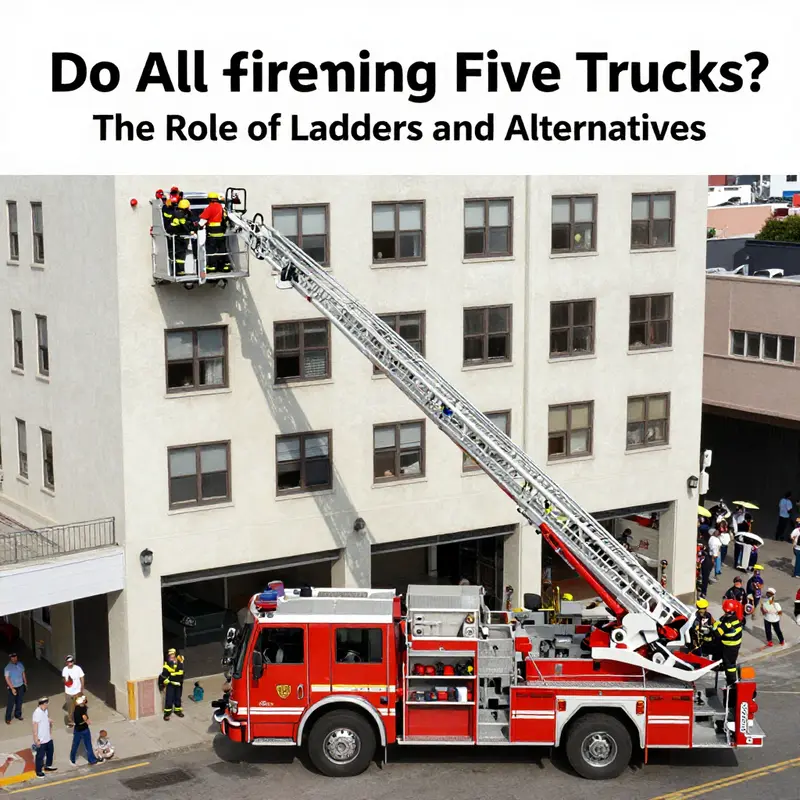
From the street, a fire truck often looks like a single, multi-purpose tool designed to save lives and property. Yet the image implied by the phrase “do all fire trucks have ladders” overlooks a crucial truth about modern firefighting: fleets are purpose-built systems, tailored to the realities of geography, building stock, and resource availability. In urban cores with towering high-rises, ladders reach upward into smoke-filled stairwells to pull people to safety and to vent heat and smoke from the inside out. In rural neighborhoods where hydrants are sparse, the emphasis shifts toward delivering and coordinating water supplies rather than climbing to upper floors. And between these poles—between the high-rise city and the water-poor countryside—lie a spectrum of apparatus that perform specialized tasks. The ladder, iconic as it is, is only one instrument in a broader toolkit designed to address a diverse set of emergencies. To understand why not every vehicle carries a ladder, it helps to move beyond first impressions and into the practical logic that guides firefighter fleets around the world. The story of ladders in fire service fleets is really a story about mission profiles, equipment trade-offs, and the complex choreography of saving lives when the clock is ticking and every decision has consequences for safety, speed, and outcomes.
Most readers are familiar with pumper trucks, the workhorses of the fire service. They are built to deliver water and pumping capacity to the scene, carrying large water tanks, hoses, and high-pressure pumps. Their role is to create and maintain a sustained water supply, which is the lifeblood of many fire responses, especially in areas where water is plentiful and infrastructure supports rapid attack lines. The design priority here is reliability, volume, and reach of hose lines, not altitude. Because these trucks are optimized to shuttle water efficiently, space and weight are allocated to pumps, tanks, and hose storage rather than an aerial ladder. In a dense urban neighborhood, this makes perfect sense, for firefighters on the ground can station themselves at accessible entrances or on street-level stairwells and then deploy ladders or portable ground ladders carried in the unit or carried by crew members. In rural or suburban settings, where hydrants may be sparse, pumpers often partner with water tenders or tanker trucks to shuttle water over longer distances. These vehicles, too, rarely include big ladders, because their primary mission is not vertical access but water delivery.
Then there are tanker trucks, engineered to serve remote or hydrant-poor landscapes by transporting vast quantities of water to the scene. Their job is to bridge gaps in supply, not to scale buildings. They typically lack ladders because their compartment space is dedicated to water storage and compatible equipment for water transfer, draft applications, and on-board pumps. In many rural districts, the arrival of a tanker triggers a series of coordinated actions with nearby pumpers, mutual aid units, and sometimes airborne resources if the incident demands rapid suppression or water reallocation. The absence of a ladder on these vehicles is not a flaw but a reflection of the mission calculus necessary to maintain a rapid and reliable water supply chain under varying conditions.
Rescue trucks represent another essential family within the fire-service fleet. Their specialty lies in vehicle extrication, confined-space rescue, and the rapid provisioning of tools that release trapped victims or stabilize dangerous scenarios. Hydraulic cutters and spreaders, rescue jacks and airbags, medical kits, lighting systems, and heavy-duty stabilization gear populate these rigs. The core competency of a rescue unit is access through obstructions and the ability to manipulate structural or vehicle compartments without further compromising occupant safety. Ladders, while sometimes present on rescue platforms, are not the primary feature for most of these vehicles. Instead, the suite of tools centers on disentangling victims from wreckage or tight spaces, which often requires precision, torque, and controlled debris management rather than vertical ascent.
HazMat and special-operations units add another layer of specialization. These trucks carry protective ensembles, decontamination gear, detection instruments, and specialty tools tailored to chemical, biological, radiological, or explosive hazards. Their purpose is to manage risks and exposures, isolate the scene, and manipulate the environment to reduce danger. In this context, ladders do not contribute directly to the incident action plan. The weight and space that a ladder would require are instead allocated to protective equipment, air monitoring devices, and containment systems that safeguard firefighters and the public. Across these variants, the throughline is clear: each vehicle answers a different question about what the incident most needs in the moment.
Yet the ladder remains a vital capability in specific contexts, and when it is needed, it is transformative. Aerial apparatus—often termed ladder trucks or aerial ladders—represent the branch of the fleet designed for vertical access and elevated fire streams. The ladder’s reach is less about height alone and more about the ability to place water, supplies, or rescue operations in spaces that ground crews cannot safely occupy. The ladder can extend to upper floors of tall buildings, and the accompanying platform or bucket can carry a firefighter in a controlled position to perform high-altitude ventilation, rescue, or search operations. The ladder’s versatility is evident in its dual function: a conduit for delivery of water from above and a doorway to rescue operations that might be impossible from the ground. Beyond its primary function, an aerial system can help firefighters stabilize a structure during operations, breach roofs for ventilation, or position crews where access is otherwise blocked. The integration of stabilization outriggers, leveling mechanisms, and precise hydraulics allows the platform to operate in variable wind conditions and uneven terrain, further expanding its utility in complex environments.
For communities with many high-rise structures, the investment in ladder-equipped aerials is often a straightforward calculation. The ability to reach floors above the ground and to deliver water from an elevated position can shorten deployment times, reduce the number of stairs navigated by fallen or trapped occupants, and provide a safer vantage point for both rescue and suppression operations. The ladders themselves come in different lengths and configurations. Some systems feature extendable straight ladders with a separate man lift or platform, while others incorporate a rotating platform that offers maneuverability around corner lines of sight. These configurations reflect a nuanced understanding of building geometry, expected fire behavior, and the likely occupant locations. In this way, the ladder becomes not merely a tool but a strategic asset in high-stakes scenarios. To researchers and practitioners, it is clear that implementing ladder-equipped aerials requires careful assessment of building stock, coverage patterns, and response times, as well as ongoing maintenance and training to keep crews proficient in aerial operations.
This nuanced picture—the coexistence of ladder and ladderless fleets—points to a broader organizational logic. Fire departments do not operate in isolation; they exist within communities that demand a balanced, diverse set of capabilities. Not every incident calls for height or elevated water delivery, and not every community has the same building make-up or topography. In many places, response plans are designed around a mix of units that cooperate to achieve the quickest, safest outcomes. Mutual aid agreements expand the reach of ladder-equipped units when necessary, ensuring that a city’s capacity to reach higher floors can extend into neighboring towns or regions during major events. This interdependence underscores a key truth: the ladder’s presence in the fleet is not a universal hallmark of preparedness, but a targeted response to anticipated needs.
The decision to include ladders in a fleet is also a matter of resource allocation. Ladder trucks are expensive to purchase and operate. They demand specialized training, regular maintenance of the mechanism, and space for the long, heavy equipment that occupies the chassis. Additionally, ladders add weight to the vehicle, affecting mobility, braking, and fuel efficiency. For some departments, the cost-benefit analysis favors maintaining an agile cadre of ladderless apparatus that can reach most scenes rapidly with ground ladders and portable roof hooks, while relying on aerial units stationed strategically or on mutual-aid networks for scenarios that demand height. Others invest in a robust ladder infrastructure—keeping a core set of aerials ready for immediate deployment and complemented by a broader fleet that emphasizes water conveyance, rescue, or hazardous-material response. The result is a three-dimensional balance: speed, reach, and versatility, distributed across the roster to meet the community’s unique risk profile.
This balance becomes even more evident when we consider urban versus rural settings. In dense cities with narrow streets and mixed-use towers, the advantage of an aerial ladder is tangible. Narrow lanes and blocked egress routes can obscure a straight approach from the ground, increasing the necessity for elevated access and protection against toxic smoke by way of a high-positioned water stream. In contrast, rural districts often rely on longer hose lines and tanker operations to sustain firefighting efforts in the absence of hydrants. In such contexts, a ladder may still be part of the station’s repertoire, but its use might be limited to particular structures or incidents where vertical access truly makes a difference. The reality on the ground—where crews must evaluate the scene, the building configuration, the wind, the terrain, and the occupants—determines whether a ladder is deployed or if a different tactic proves more effective. The decision is not a statement about a department’s capability; it is an acknowledgment of environmental constraints and operational realities.
All of this leads to an important takeaway about how fire departments communicate and train around these tools. The most effective fleets are built on a shared language of mission-specific equipment. Operators, officers, and maintenance crews work in concert to ensure that each vehicle is ready to perform its distinct role. Training emphasizes not just how to deploy a ladder, but when to rely on ground ladders, how to coordinate with pumpers and tenders, and how to integrate with other units during a coordinated response. The aim is to ensure that whether a ladder is present or absent, the incident action plan remains clear and executable for every member of the team. In this context, ladders are one piece of a larger strategy rather than the sole determinant of a department’s capability. The fleet becomes a tapestry of specialized tools—each thread chosen to cover a spectrum of potential emergencies—so that the whole is greater than the sum of its parts.
For readers who want a tangible sense of how ladder-equipped platforms fit into this mosaic, the category of aerial-ladder fire trucks offers a concrete illustration of the ladder’s capacity within a modern engine company. These vehicles embody the integration of height access with the rest of the firefighting toolkit, showing how ladders work in concert with pumps, water delivery systems, and rescue tools to form a cohesive response mechanism. If you are curious about how these platforms are configured and what they bring to high-rise operations, you can explore examples in literature and catalogs that detail their layouts and capabilities. For a look at ladder-equipped options, see the category of luchtladder brandwagens.
The broader point, then, is not to glorify ladders as the defining feature of fire trucks but to recognize that ladderless and ladder-equipped vehicles each fulfill essential roles within a community’s emergency response framework. The modern fire department is less a single machine than a coordinated fleet where different vehicles bring different tools to the table at the right moment. The ladder’s prominence in the public imagination lies in its dramatic presence and dramatic potential for rescuing people from heights. Yet the quiet workhorse nature of pumper rigs, the water-transport logic of tankers, and the specialized focus of rescue and HazMat units are equally crucial. The challenge for any community is to design a response landscape that minimizes response times while maximizing safety and effectiveness across all kinds of incidents. That is the art of fleet management in firefighting—a practice that blends engineering, logistics, training, and a careful reading of local risk profiles to produce a capable, resilient, and adaptable force.
In closing, the idea that all fire trucks carry ladders is a simplification that obscures the real complexity of how fire departments are organized and how they respond to danger. Ladders are indispensable for certain high-rise and rescue scenarios, yet they are not universally necessary for every incident. The diversity of apparatus in a well-functioning fire service reflects a thoughtful compromise among height, water, access, protection, and speed. Each vehicle type is designed to excel in particular circumstances, and together they form a system capable of meeting a wide range of emergencies. The ladder is a symbol of reach and rescue, yes, but it is also a reminder that firefighting is a discipline of layered solutions, careful planning, and adaptive response. The safest communities are those that understand this layered complexity and support it with equipment, training, and governance that keep every part of the fleet ready for duty.
External standards and guidelines shaping these choices can be explored through established safety organizations that standardize apparatus design and capabilities. See the NFPA guidelines for broader context and formal standards guiding how ladders and other apparatus are integrated into fire-service fleets: https://www.nfpa.org.
Do All Fire Trucks Have Ladders? Navigating the Fleet That Reaches Beyond the Reach
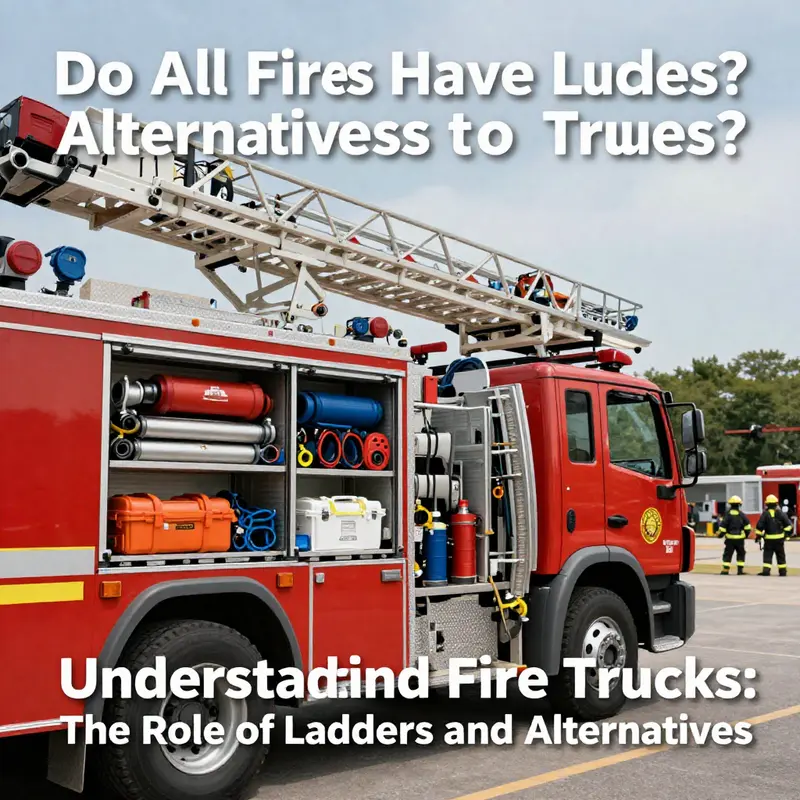
When people picture a fire truck, a towering, gleaming ladder often steals the show. It’s a dramatic image—a firefighter climbing toward a smoke-filled window, a platform lifted high above a street, a rescue crew venting a roof to let heat escape. Yet the reality of firefighting equipment is more nuanced. Do all fire trucks have ladders? No. The modern fire service operates a diverse fleet, each vehicle tailored to a distinct mission, a mosaic of tools designed to meet the needs of different communities, terrains, and emergencies. The ladder, powerful as it is, is only one tool among many. Understanding why not every truck carries a ladder—and why some carry several different ladder systems—offers a window into how fire departments balance speed, reach, safety, and budget in the real world.
To begin with, the most common type of fire apparatus, the pumper, embodies the core function of firefighting on many scenes. A pumper’s primary job is to deliver water. It houses a powerful pump, a network of hoses, and the equipment needed to deploy water rapidly into a blaze. The salt-and-pepper reality of a pumper is efficiency and accessibility: everything that a crew needs to attack a fire is at hand, neatly organized to be deployed with speed. A ladder simply isn’t essential to that core mission. In the fragile calculus of a fast-moving incident, the ability to maneuver water to the fire and control lines can take priority over elevation. For many departments, this is precisely how a first-arriving unit benefits the community: rapid suppression to prevent the blaze from establishing itself, followed by additional units that bring more specialized capabilities if needed. In this cadence, ladders may arrive later, or they may be omitted entirely in favor of tools that target the immediate hazards at hand.
Then there are tanker trucks, or water tenders, found most often in rural or sprawling municipal environments where hydrants are scarce or unavailable. A tanker’s purpose is to ferry large quantities of water to the scene so that engines on site can sustain firefighting operations. They function as a mobile reservoir, keeping pressure and volume available as crews work to control and extinguish the fire. A ladder would not serve the tanker’s primary objective, which is to deliver and manage water supply rather than reach upper floors. In a rural firefighting strategy, hoses and pumping capacity are the lifeblood of the operation, while elevated access becomes a secondary concern addressed by other apparatus when needed.
Rescue trucks illustrate another crucial axis of the fleet. These vehicles are specialized for technical rescue operations—vehicle extrications, confined-space entries, structural collapses, and other scenarios where access and manipulation of the environment are critical. They carry a different set of tools: hydraulic cutters and spreaders, ropes and rescue equipment, medical supplies, lighting, and stabilizing gear. The focus here is not elevation but manipulation of the space, stabilization of victims, and eventual extraction. Ladders do not sit at the heart of a rescue truck’s toolkit because the incident’s most demanding needs are structural access and patient care under constrained conditions. In some instances, a rescue vehicle may coordinate with other units that bring a ladder, but the rescue truck’s own mission does not hinge on climbing capability.
For operations that require height or extended reach, many departments deploy tractor-drawn aerials (TDAs). A TDA is a trailer attached to a standard fire engine, carrying a long, extendable ladder that can tower over streets and reach tall facades. The advantage of a trailerized aerial is reach and flexibility in urban environments with narrow avenues or tight corners. However, the TDA is not a stand-alone solution on every call. It requires two vehicles—one to tow the trailer and another to drive and position the engine that powers it. This configuration can be a logistical consideration in busy districts or remote areas where space, staffing, or road access complicates operations. The TDA’s ladder may extend high above a building’s silhouette, enabling rescue and ventilation where ground ladders or shorter aerial trusts would fall short. Yet the very complexity that gives TDAs such reach also makes them a more specialized asset, deployed when the geometry of a scene demands it.
Beyond these categories lies a spectrum of specialized units, each designed to handle a particular class of emergency. HazMat teams, for example, prioritize protective gear, detection equipment, decontamination capabilities, and containment tools to address chemical spills and hazardous environments. Their equipment aligns with their mission: safeguard responders and the public from hazardous substances, rather than scale a building with a ladder. Similarly, industrial fire units tailored for large facilities or aircraft-specific responses carry a mix of suppression systems, foam technologies, and rapid response capabilities that fit those unique settings. Light and heavy rescue appliances, command and support vehicles, and aircraft rescue vehicles populate other ends of the spectrum. In each case, the absence or presence of a ladder becomes a reflection of the operational priorities that a department has identified for its jurisdiction.
The central insight from this landscape is simple: ladders are a selective tool, not a universal one. The choice to equip a fire truck with a ladder hinges on the intended mission and the environment in which the department operates. A thriving urban center with high-rise structures, or a city grappling with complex ventilation and access challenges, will naturally include aerial apparatus in its fleet. A rural district with miles of roads and scattered hydrants may rely more on pumpers and water tenders, reserving ladder reach for specific calls or mutual-aid responses. The design philosophy behind each vehicle is a balancing act: how to deliver the right capability quickly, where to place the emphasis on water delivery, extrication, rescue, or hazardous materials, and how to size the fleet so that it can respond effectively without compromising safety or overwhelming crews with tools they may not need on every shift.
This nuanced approach is also reflected in the standards and guidelines that govern fire apparatus design. The National Fire Protection Association (NFPA) provides a framework that standardizes various aspects of fire apparatus, from dimensions and load limits to equipment configurations and safety features. These guidelines are not a single mandate but a flexible set of expectations that help departments select vehicles that fit their risk profiles while maintaining interoperability within mutual-aid arrangements. The NFPA’s focus on standardization does not force a universal ladder policy; rather, it helps ensure that when ladders are deployed, they are integrated with overall safety and performance considerations. In practice, this means that the presence of a ladder on a given unit is a strategic choice supported by safety standards and operational realities. For those who want to explore the standards in more depth, the NFPA’s official portal is a reliable resource: https://www.nfpa.org.
Within this framework, the notion of alternatives to ladder-equipped trucks becomes clearer. A department might operate a fleet in which most responses begin with a pumper and a support ladder or an aerial with specific reach characteristics. In other contexts, a two-vehicle approach with a tractor and trailer can provide superior height and reach where street geometry demands it. Some communities may even rely on carefully planned mutual-aid agreements that bring ladder-equipped units from neighboring districts when the incident calls for elevated access. The key is not the absence or presence of a ladder on a single vehicle, but the coordination of the entire fleet to match the community’s exposure risk, building stock, rescue needs, and terrain.
The discussion of ladder versus ladder-less fire trucks also touches on the practical realities of day-to-day operations. Time and space at the scene matter. A ladder unit requires space to position and operate, and its deployment can take precious minutes in congested urban environments or on roads cluttered with stalled vehicles or other hazards. A pumper, by contrast, is designed to be deployed quickly and to move small—yet vital—pieces of equipment from the engine to the fire. The crew’s decision to bring a ladder, or to wait for a taller reach from a TDAs or aerial apparatus, hinges on a rapid assessment of building height, occupancy, and access routes. In some cases, a ladder may not be the decisive factor in saving lives; the ability to control water flow, create a safe egress path, and remove occupants with specialized rescue tools can be equally, or more, consequential.
This is not to diminish the dramatic and lifesaving potential of ladders on the right call. When a high-rise blaze pits firefighters against a building’s vertical reach, or when upper-floor rescue becomes necessary, an aerial apparatus can extend a line of defense, support ventilation strategies, and enable crews to operate remotely from a safe stance. The ladder’s reach, angle, and stability become critical enablers in those moments. Yet even in these scenarios, the ladder’s presence is part of a broader orchestration. Ground ladders, roof access, ventilation crews, and water supply teams often coordinate in concert with aerial units to maximize effectiveness and safety.
In practical terms, the chapter of a department’s operational story is written by its fleet mix. A city with a dense downtown core and many mid-rise buildings will emphasize ladder-equipped units and vertical access strategies. A rural valley with few hydrants and long, winding roads will lean toward pumpers, tankers, and rescue tools, while keeping the option open for ladder deployment through mutual aid. The question to ask when evaluating a fire department’s capabilities is not simply whether ladders exist, but how the entire set of tools—ladders, pumps, rescue gear, foam systems, protective equipment, and communications—are integrated to deliver safety and effective firefighting under the jurisdiction’s specific conditions.
For readers curious about the practical variety within the fleet, it’s helpful to visualize a typical mix and its reasoning. In a mid-sized city, a ladder truck may stand alongside multiple pumpers and a handful of rescue and HazMat units. The ladder unit serves as the lead platform for high-rise rescue and vertical ventilation and can be dispatched to building fires where the geometry demands height. In smaller towns, a single engine company with a well-planned response to emergencies, plus mutual aid for the occasional tall structure, may perform most tasks without a dedicated ladder unit until a larger incident arises. In coastal or industrial regions, specialized units with foam capabilities or aircraft rescue tools may share space with ladder-equipped aerials, with each unit assigned to its own response profile. Across these configurations, the underlying principle remains constant: fire apparatus are designed to be situational tools, deployed in a way that aligns with the scene, the risks, and the operational tempo of the responders on the ground.
To ground these ideas in practical intuition, consider how a department might convey its approach to the community it serves. A well-planned fleet is a narrative of risk, response time, and interoperability. It tells residents that on day one of a fire, the engines will be ready to apply water and support the safety of occupants; on day two, trussed with rescue gear, a team may work to extricate individuals from a vehicle or a collapsed space; and on day three, a high reach may be brought in if a building’s upper floors require ventilation or rapid egress. The ladder is a symbol of reach and vertical capability, but its existence is not a proxy for readiness. Readiness is the sum of training, mutual aid, equipment maintenance, and the interface between different units in the hall and on the street. When communities understand that, they begin to appreciate why ladders are present in some configurations and absent in others, and why the NFPA standards exist to keep that diverse mix operating safely and effectively.
For readers who want to explore further, one can dive into how these categories are reflected in the broader market and training landscape. A practical way to preview the kind of equipment that across the status spectrum a fire department might curate is to explore the categories available in the industry’s product families. A good starting point to understand how ladder-based capability sits alongside other specialized tools is to explore the aerial ladder category in the trade ecosystem, which provides a sense of how these big, height-oriented machines integrate with other apparatus on a response. The link below leads to a category page that gathers the kinds of ladder-equipped solutions used in urban and suburban deployments: Aerial Ladder Fire Truck Category.
In sum, the question Do all fire trucks have ladders? invites a thoughtful, systems-level answer. The fire service embraces a family of vehicles, each chosen for the specific challenges the community faces. Ladders are an indispensable tool in many situations, especially when height, ventilation, or aerial rescue is paramount. They are not universally necessary on every truck because the real world demands a balanced, flexible fleet that can deliver water, remove people from danger, carry specialized equipment, and adapt to the landscape it serves. The NFPA’s guidelines help ensure safety and compatibility across that spectrum, but the actual mix of laddered versus ladder-less units is a call each department makes based on geography, building typology, response patterns, and resource reality. And if you want to explore the ladder-focused side of the fleet in more detail, the category linked above provides a window into how ladder systems are designed, deployed, and integrated with other critical tools on the fire ground. For those seeking formal standards and guidelines themselves, the NFPA’s resources offer official context and standards to guide both procurement and training. https://www.nfpa.org
Do All Fire Trucks Have Ladders? How Community Needs Shape Fire Truck Design and the Real Roles of Ladders
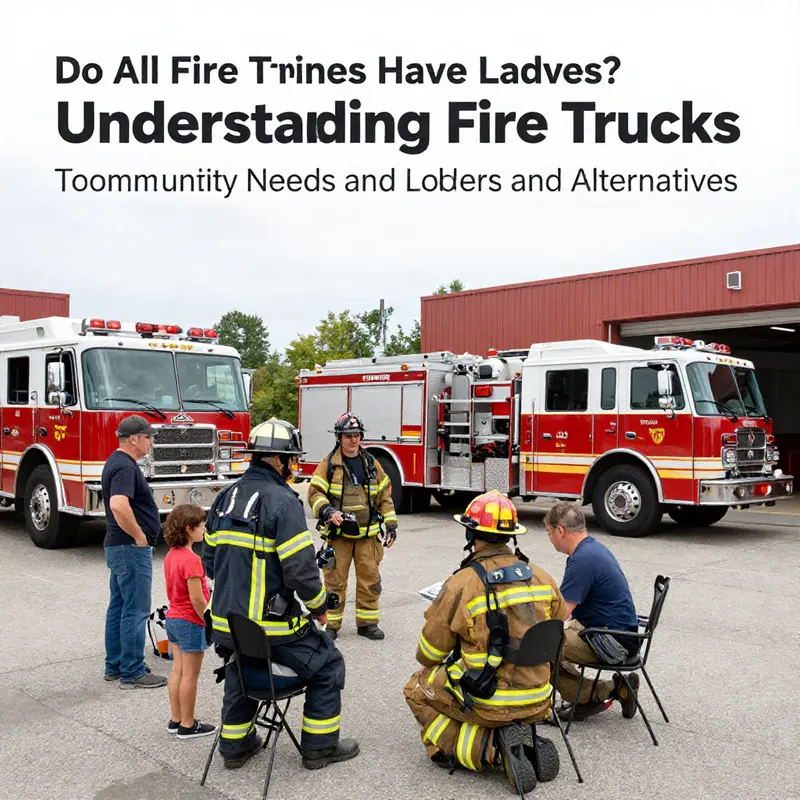
Images of towering ladders arcing into dark windows often appear as the first, almost cinematic reference when people picture a firetruck in action. Yet the full story of a fire department’s fleet is far more nuanced. Do all fire trucks have ladders? The straightforward answer is no. Ladders are essential tools, to be sure, but they are one tool among many, selected to meet a community’s particular risk profile and the department’s strategic priorities. In an era of urban density, rural isolation, industrial hazards, and ever-changing threats, the modern fire service treats ladders as contextually valuable rather than universally mandatory. The result is a fleet that resembles a well-channed toolbox more than a single, one-size-fits-all apparatus. The city with a skyline of high-rise buildings will require different capabilities than a rural municipality spread across miles of countryside. The design decisions behind that difference are not hidden in secrecy but are guided by a practical logic that balances immediate rescue needs with the realities of water supply, access, hazardous materials, and the ability to coordinate a complex response over time. In that sense, the ladder is never simply a detachable feature; it is a symbol of where a department expects to fight fire, how people will be saved, and what risks are accepted as part of the service. Within this broader framework, it becomes clear that ladders are not a universal mandate but rather a specialized tool deployed where it adds value, alongside a broader family of vehicles and equipment that together deliver a capable, adaptable response to a spectrum of emergencies.
Consider the core categories that populate most modern fire departments’ fleets. At the heart of many communities sits the Pumper Truck, the workhorse that carries the pumping equipment and hoses needed to apply water to a blaze. If the city relies on hydrants to feed a rapid attack, the pumper’s job is to deliver water quickly, control the flow, and sustain operations through rainfall or street topology that may complicate access. In this role, ladders are not a primary asset; the emphasis is on mobility, pump capacity, and the ability to reach the scene with the right streams of water and the correct pressure. Then there are Tanker Trucks that shuttle large volumes of water to locations where hydrants are sparse or nonexistent. In those rural or remote environments, the challenge is not height but distance and supply reliability. The ladder, while useful in certain rescue scenarios, rarely informs the tanker’s core mission. A different class of vehicle steps into the spotlight in both urban and rural settings when rescuers anticipate needing to reach upper floors or rooftops: the Rescue Truck. These units are stocked with tools for vehicle extrications, structural stabilization, and confined-space access. Hydraulic cutters and spreaders, struts, and airbags live here, not long extendable ladders. The same holds true for Hazardous Materials (HazMat) Units, whose strength lies in protective equipment, decontamination capabilities, and scene control in chemical, biological, or radiological incidents. Their inventory is designed to contain and mitigate danger, not to climb to upper levels. And there are Specialized Units—from foam tenders that duel with flammable liquids to wildland engines marching through brush and forests—that adapt to particular environments or industrial contexts. In short, a department’s toolbox is curated to meet the most likely calls it will face, and ladders occupy a place in that toolbox where they prove indispensable. In other places, they may be present but not central to the vehicle’s day-to-day function.
All of this adds up to a broader reality: ladders are crucial for certain scenarios but not strictly necessary for every mission. Their usefulness depends on the target of rescue, the building configuration, and the availability of other access methods. In high-rise environments, an aerial ladder truck with a long, extendable ladder becomes a lifeline. It allows firefighters to reach upper floors without relying on stairwells that may be compromised by heat, smoke, or obstruction. It enables elevated water application, which can be a decisive factor when ground access is blocked or water pressure is insufficient for a canyon-like stairwell ascent. It also provides a platform for search and rescue operations, ventilation through roof openings, and safer egress for people stranded in upper rooms. Yet not every call involves a high-rise scenario. A car crash in a suburban cul-de-sac, a kitchen fire in a one-story home, or a warehouse incident with blocked interior access can be effectively managed with ground-based tactics, sufficient manpower, and the coordinated use of portable ladders carried on the apparatus itself. The portable ladders—often stored on the sides of engines or carried on crews’ backs—extend the same fundamental capability in a more flexible, modular way. They let crews reach windows, eaves, or second-floor entries when a fixed aerial ladder isn’t available or isn’t the best fit for the scene. The balance between stable, fixed ladders mounted on larger aerial units and portable ladders carried on every engine reflects a deliberate design philosophy: equip for the anticipated mix of calls, not for the most dramatic single scenario.
If you walk through any fire station, you will see a fleet assembled to cover a spectrum of mission profiles. It is not as if one vehicle type has suddenly replaced another; rather, each vehicle occupies a precise niche. The aerial ladder truck, with its long, extendable ladder and a suite of complementary equipment, remains iconic for urban environments with many tall buildings and complex egress routes. But elsewhere, a department might emphasize rapid water deployment, robust rescue tools, or quick mobility on rough terrain. The decision to deploy a ladder-centric platform or a more water- or tools-focused vehicle is driven by risk assessments, historical incident data, and the community’s expectations for service. The result is a heterogeneous fleet that looks less like a uniform army and more like a well-considered ensemble where each instrument has its own tempo and purpose. In practice, ladders do not vanish from the fire service; they simply move from central, all-purpose status to a more targeted, context-driven role within the wider apparatus ecosystem. This nuanced reality helps explain why some trucks carry ladders and others do not, even within the same department.
To understand how departments decide which vehicles to order, design, and deploy, it helps to consider the broader standards and guidelines that shape these choices. The National Fire Protection Association (NFPA) provides a framework that standardizes many aspects of fire apparatus design and capabilities. While individual departments translate these guidelines into local fleets, the NFPA’s work ensures a baseline of safety and interoperability across jurisdictions. The existence of such standards helps explain why two neighboring towns might equip their engines differently if one faces a higher risk of high-rise fires while the other confronts longer rural response times or a larger number of vehicle crashes. The standards do not prescribe a single perfect configuration; they define ranges, categories, and performance envelopes that allow for specialization while maintaining a shared foundation for safety, training, and maintenance. In this sense, ladders become a matter of design logic aligned with mission probability and community risk, rather than a universal widget that must accompany every truck.
For those who want a deeper dive into how ladders fit within the broader spectrum of apparatus, there is a useful way to visualize the concept. A department may maintain a category of vehicles dedicated to aerial access because the calls that most often require height are concentrated in a specific part of the service area. In other communities, the aerial capacity sits within a multi-purpose truck that also handles other duties, or it is relegated to a dedicated ladder unit that shares a station with other vehicles. The point is not to privilege one approach over another, but to ensure that the combination of ladders, portable ladders, and other access tools matches the expected needs of residents and the realities of the terrain. This collaborative approach between engineering, training, and operations is what allows a department to assemble a fleet that can respond effectively to the most likely incidents while remaining flexible enough to adapt when new threats emerge. If you want to explore the ladder-equipped option in more detail and see how departments categorize and equip ladders among aerial platforms, you can visit the aerial ladder fire truck category for a closer look: aerial ladder fire truck.
All of this speaks to a simple, practical truth: ladders are a specialized tool that contributes to a broader, adaptive response system. Their value is measured not by their presence on every vehicle, but by how well a department can position ladders within a comprehensive set of capabilities to protect life and property. When a ladder is needed, it is often indispensable; when it is not, the department relies on alternatives—portable ladders, ground-based access, and a well-coordinated attack that uses water, ventilation, and rescue operations in carefully choreographed sequence. The type of truck that arrives first at a blaze is dictated by the nature of the emergency and the available tools, not by a single feature. In many circumstances, a well-timed mix of methods can mean the difference between an orderly rescue and a complicated, prolonged intrusion into a dangerous environment. In others, the absence of a ladder on a particular vehicle will be compensated by the presence of ground ladders, a swift water application, or a coordinated multi-unit entry team that can stabilize the scene from a different angle.
As communities continue to evolve—whether by expanding urban cores, redeveloping industrial zones, or restoring and maintaining rural roads—their fire departments will adjust the mix of vehicles to maintain readiness. The ladder remains a key piece of the puzzle, but it is not the sole determinant of a department’s effectiveness. What matters is the ability to anticipate a spectrum of incidents, to fund the equipment that aligns with real-world risk, and to train firefighters to use each tool with discipline and precision. In this sense, the question “Do all fire trucks have ladders?” becomes less a binary answer and more a reflection of how a community’s needs shape its safety architecture. The fleet is a living system that grows, retires, and retools as risks change, and ladders appear where their absence would leave a crucial gap in life safety.
For readers who want to connect this discussion to the larger ecosystem of standards and safety resources, the NFPA remains a reliable touchstone. It helps ensure that whether a department leans toward ladder-centric aerial platforms or prioritizes rapid water delivery and rescue capability, the underlying commitment to training, maintenance, and interagency coordination stays constant. The result is a fire service that can adapt to a city’s tall buildings, a rural county’s vast landscapes, and every complex scenario in between, without losing sight of the fundamental goal: to save lives when seconds count.
External resource for reference: https://www.nfpa.org
brush fire trucks, wildland firefighting, fire safety equipment, off-road fire trucks, firefighting technology, business safety, emergency response vehicles
Understanding the intricacies of fire truck design and function helps business owners appreciate the diversity of firefighting equipment. Not all fire trucks come equipped with ladders, as their capabilities are tailored to meet specific community needs and challenges. Recognizing the importance of each type of fire truck ensures that businesses can better align with local safety protocols and support their fire departments effectively.

