
















In the realm of emergency response, fire trucks must guarantee the highest standards of safety and performance. As business owners in the firefighting sector, understanding the importance of air brakes in fire apparatus is essential. Fire trucks frequently face unique challenges due to their size and weight, making the choice of braking systems critical. This article delves into why many fire trucks are equipped with air brakes, their technical specifications, safety regulations, comparative performance against hydraulic brakes, and the operational advantages they offer for heavy fire apparatus. Each chapter aims to provide a comprehensive view of the air brake system, highlighting its significance in enhancing the efficiency and safety of fire trucks.
Why Fire Trucks Use Air Brakes: Stopping Power Tailored to Heavy Emergency Vehicles
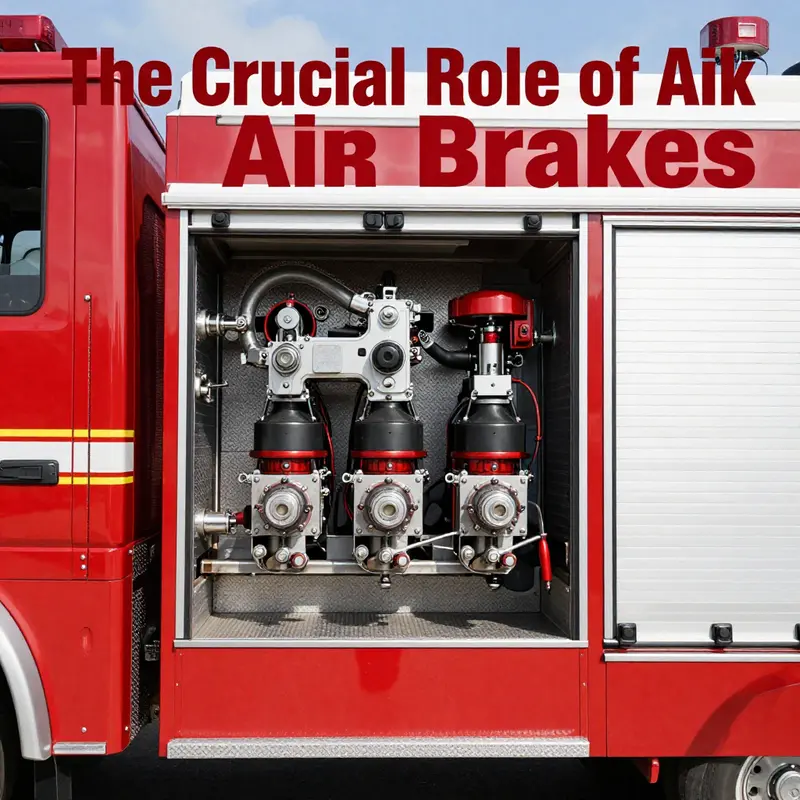
Fire trucks often carry far more weight than standard road vehicles. When fully equipped they hold water, foam, heavy tools, and several crew members. That extra mass changes every aspect of vehicle control. Braking becomes not just a convenience, but a mission-critical safety system. Air brakes are a common response to that need. They bring the force, reliability, and redundancy required for safe, repeatable stops under emergency conditions.
How air brakes meet firefighting demands
Air brakes use compressed air to move mechanical parts that apply braking force. An engine-driven compressor fills reservoirs with high-pressure air. When the driver commands a stop, a valve releases that air into brake chambers. These chambers convert air pressure into mechanical motion. That motion engages shoes or pads against drums or discs. The result is a large, controllable braking force, suited to heavy loads.
The design fits the operational profile of fire apparatus. First, many fire trucks must perform repeated, aggressive stops. A ladder truck carrying a full complement of gear and water will accelerate quickly and then need to stop in traffic or on a slope. Hydraulic systems can lose effectiveness under repeated heavy use. Air brakes resist that fade because reservoirs provide a steady supply of compressed air. The system tolerates longer or more intense braking without rapid loss of performance.
Second, air brakes scale well. As vehicle mass grows, the braking system must produce proportionally more force. With air drives, adding larger chambers and reservoirs increases capacity. That modularity helps manufacturers design platforms ranging from small units to very heavy rigs. For very large models, a dedicated compressed-air system also supports auxiliary needs. Pneumatic tools, air-driven pumps, and foam systems may all share the compressor and reservoirs. That centralization improves efficiency and reduces weight compared to separate hydraulic accessories.
Third, air brakes add layers of safety through redundancy. Most heavy apparatus use dual-circuit or split systems. If one circuit loses pressure, the other still operates. Spring-applied parking brakes use mechanical energy held in springs, with air pressure required to release them. If air pressure drops, those springs automatically stop the vehicle. This fail-safe arrangement matters on steep streets and congested scenes where an unexpected loss of braking could be disastrous.
The mechanics behind air brakes also favor control. Drivers can modulate pressure to vary braking effort finely. This modulation lets a skilled operator balance deceleration with stability when maneuvering near people or structures. Air brakes often pair with anti-lock systems and electronic controls that further improve stopping behavior. When a rapid stop is necessary, air systems can deliver the force quickly and repeatedly without significant loss.
Yet air brakes are not without trade-offs. They add system complexity. Compressors, dryers, reservoirs, valves, and plenty of plumbing require regular inspection and maintenance. Moisture in the system can freeze in cold weather or cause internal corrosion. That is why air dryers, proper drain routines, and scheduled servicing are part of standard vehicle care. Additionally, air brakes need time to build pressure after a long rest or after a full-service event. Crews must be aware and check gauges before critical operations.
The need for training is another consideration. Air brake systems respond differently than hydraulic brakes. The pedal feel, response time, and modulation characteristics vary. Fire departments train drivers on air-braked apparatus so they understand stopping distances, pressure build-up times, and how the parking spring brakes engage. Good training reduces surprises and improves safety during complex maneuvers.
Operational scenarios illustrate the value of air brakes clearly. Consider a heavy pumper descending a hill after an incident. The driver may apply brakes repeatedly to control descent. Air brakes resist heat-induced fade because their operation does not rely on hydraulic fluid under pressure. The system dissipates heat through drums or discs and keeps delivering force as compressors refill reservoirs between stops. That steady performance preserves control and avoids longer stopping distances.
Another scenario involves rapid response in heavy traffic. A fire truck may accelerate to keep pace with traffic flow while clearing a path. When the route suddenly closes, the vehicle needs high braking torque instantly. Air systems provide that immediate force, and the system’s large capacity supplies multiple high-effort stops without overheating. The same capacity supports additional pneumatic equipment used on scene, such as rescue cutters or stabilization tools, which can draw from the shared air supply.
Designers also exploit air brakes when integrating heavy subsystems. Aerial ladders and hydraulic cranes impose dynamic loads on the chassis when extended or moving. The braking system must cope with these varying load conditions. Robust air brakes provide predictable deceleration regardless of ladder position or water tank level. That stability matters when positioning an aerial device or retreating from a collapsed structure.
Maintenance regimes reflect these operational demands. Daily and weekly inspections include pressure checks, reservoir drains, and compressor performance tests. Technicians verify the function of valves and parking springs. They also check for leaks and ensure dryers operate effectively. Regular brake shoe or pad inspections follow a mileage-based or condition-based schedule. Because air brakes are serviceable and modular, repair teams can replace components without overhauling the entire system, reducing downtime.
Regulatory frameworks shape how air brakes are specified and used. Standards for commercial vehicle braking apply to many fire apparatus. These rules govern stopping distances, redundancy requirements, and inspection intervals. Compliance helps ensure consistent safety across fleets. Departments often work with vehicle builders to meet both operational needs and regulatory limits.
Not all fire trucks use air brakes. Light urban units may use advanced hydraulic or electro-hydraulic systems. These lighter systems offer simplicity and lower initial cost. They also weigh less, which can be beneficial for smaller apparatus. But as vehicle size and mission complexity grow, the advantages of compressed-air systems become decisive.
Choosing air brakes is therefore a design decision rooted in practicality. It balances stopping power, redundancy, and the ability to support pneumatic tools. It also aligns with how fire crews operate: fast, heavy, and repeatedly. The air system’s capacity to deliver consistent braking under stress reduces risk. It also provides an integrated platform for other compressed-air functions, improving overall efficiency.
For departments considering specifications, the key questions focus on fleet roles and risk. If the apparatus will carry large water loads, aerial devices, or heavy rescue gear, air brakes are usually the safer choice. If the vehicle remains small and operates in low-speed environments, other systems may suffice. Either way, the decision should factor in maintenance capability, driver training resources, and local regulatory requirements.
Air brakes are a common answer to the fundamental engineering problem of stopping mass reliably. They deliver force, allow fine control, and include safety redundancy. For heavy fire trucks, those qualities matter every time the vehicle responds to an emergency. The compressed-air system is, in many ways, a backbone of safe apparatus operation, supporting both braking and auxiliary systems essential to modern firefighting. Learn more about heavy-duty firefighting platforms and their equipment in the context of vehicle design at this heavy-duty fire truck resource.
For technical guidance and regulatory details on commercial vehicle braking systems, refer to materials from the National Highway Traffic Safety Administration: https://www.nhtsa.gov
Stopping Power on the Front Lines: The Technical Anatomy of Air Brake Systems in Fire Trucks
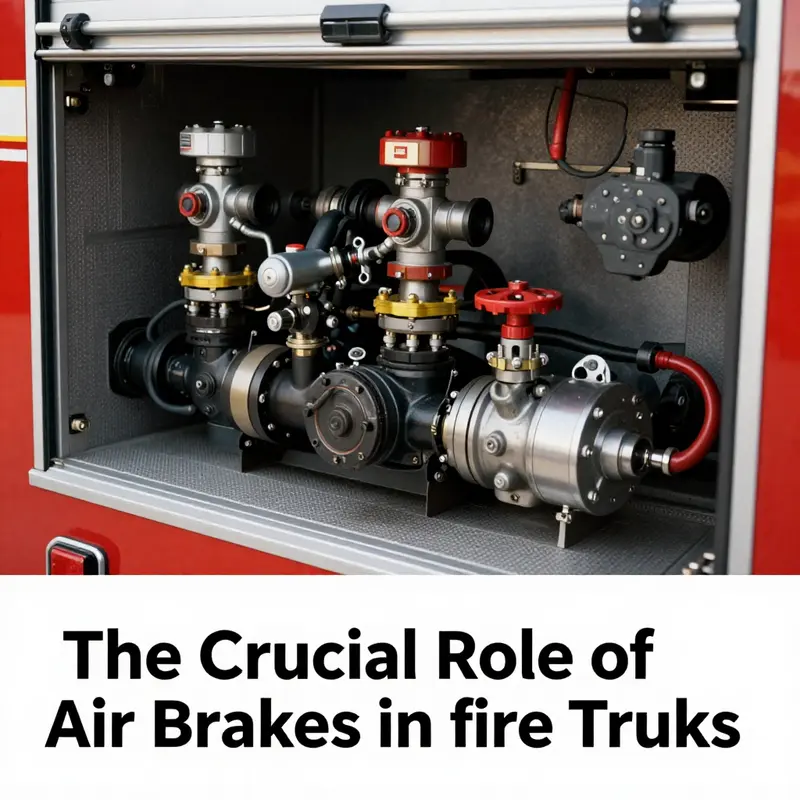
When red lights slice through smoke and sirens cut the night, every second counts and every brake stroke matters. Fire apparatus operate under conditions that test braking systems to their limits: long descents with heavy loads, sudden stops in flooded streets, and repeated applications as crews maneuver through chaotic scenes. In this high-stakes environment, air brake systems provide a reliability and power profile that hydraulic systems alone cannot match for large, heavy vehicles. The choice to equip fire trucks with air brakes is not a fashion statement of technology; it is a practical response to the demands of emergency response. Air brakes harness the power of compressed air to apply the brakes, a principle that scales well as vehicle weight grows and as stopping power must be maintained under heat, moisture, and variable road conditions. The physics behind why air brakes are favored for big fire apparatus is straightforward enough: air is compressible, can be stored, and can be delivered quickly to multiple brake actuators with predictable performance. This is crucial when a pumper, aerial ladder, or rescue vehicle must decelerate from highway speeds or hold steady on a steep grade while a crew loads or unloads equipment. The reliability of a well-designed air brake system comes from its architecture, a dual-circuit design that adds a layer of redundancy and a fail-safe that protects against runaway vehicles even when parts of the system are compromised. In practice, the dual-circuit arrangement means the braking system is divided into two independent air circuits. If one circuit experiences a leak or a component failure, the other circuit can still deliver stopping power. This separation is not merely a safeguard; it is a fundamental capability that keeps large fire apparatus controllable during critical operations. It also aligns with the realities of emergency service use, where a vehicle may need to brake heavily multiple times in rapid succession or at the end of a long siren-assisted approach. The result is predictable braking behavior, which is essential for driver confidence and crew safety as they coordinate with ground personnel, water supply lines, and ladder operations. The air brake system’s heartbeat begins with the engine-driven air compressor, a device that continually fills high-pressure reservoirs, or air tanks, with compressed air. The stored air becomes the reservoir of braking energy that the driver commands through the brake valve. A governor monitors the system pressure, ensuring the supply remains within a safe operating envelope and that warning signals illuminate if pressure dips toward unsafe levels. The minimum operating condition in the primary reservoir is typically around 100 psi, and that threshold is more than a number; it is the line that separates controllable braking from a marginal safety margin. When the operator applies the brakes, a modulating control valve directs air to the brake chambers, which are heavy-duty air cylinders that push on slack adjusters and then onto the wheel brakes. The beauty of the system is its modularity: multiple brake chambers can be fed from each circuit, delivering synchronized, balanced braking across axles. The typical aim is to convert the stored pneumatic energy into a reliable, even braking force across the entire vehicle, regardless of the load. This is where the system’s fail-safe design comes into its own. As pressure drops—whether due to a leak, a ruptured hose, or a rapid sequence of brake applications—the design uses spring brakes on certain functions to guarantee a controlled stop. In many configurations, the parking brake function is achieved with a spring-loaded mechanism that remains engaged until air pressure is restored. If the air supply fails entirely, the spring brakes can lock the wheels, preventing dangerous runaway conditions. It is an important safety margin that aligns with the high-stakes demands of street operations, where a vehicle may need to be halted quickly while crew members are in close proximity to traffic or hazards. The core components of an air brake system are interdependent in a way that reinforces reliability. An air compressor delivers the air, and the air storage tanks store it until needed. The governor regulates pressure and interacts with the automatic air-supply feature, which can alert operators when tank pressure falls below safe thresholds. The brake valve, which the operator interacts with through the brake pedal or parking brake lever, modulates the amount of air sent to each brake chamber. The brake chambers themselves, which are effectively air-driven pistons, convert the pneumatic force into mechanical force at the wheel. The expected performance during braking is a function of the brake chamber size, the line pressure, and the mechanical linkage that translates chamber movement into wheel deceleration. The slack adjusters and pushrods ensure a consistent bite at the wheel by maintaining proper clearance between the brake shoes and the drum or rotor. In concert, the braking system remains aligned with modern safety expectations through anti-lock braking system integration. ABS prevents wheel lock-up during hard or on-slick braking, enabling steering control and reducing stopping distances on slippery surfaces. The trend toward integrating ABS into air brake systems mirrors broader road-vehicle safety developments and is especially valuable for emergency vehicles that must retain directional control when braking aggressively in rain, snow, or ice. The adoption of automatic air-supply features adds another layer of operational reliability. These features monitor pressure in the tanks and coordinate with the engine and electrical systems to ensure there is always adequate air in reserve for the next stop or for parking. Dashboard indicators, audible alarms, and warning lamps alert the operator when pressure drops below safe levels, affording a moment to adjust speed, select a safer approach, or call for backup. The engineering logic behind the air brake system is complemented by protective standards that guide design, production, and field testing. The National Fire Protection Association’s NFPA 1901 standard provides a comprehensive framework for automotive fire apparatus, including explicit requirements for air brake systems, testing procedures, and performance benchmarks under various load conditions. While the exact specifications can vary with vehicle type and duty cycle, the overarching principle remains consistent: air brakes on large fire apparatus must be robust, fail-safe, and responsive under the most demanding emergency scenarios. For practitioners and engineers, this is not a matter of theoretical advantage but of proven reliability that translates into safer operations on the front lines. It also has practical implications for fleet maintenance and training. Daily inspections are essential; checks on air pressure, the absence of leaks, and the proper function of warning indicators are standard practice. A driver who understands how the governor interacts with the brake valve will anticipate when an efficiency loss is signaling a need for maintenance. Regular testing focuses on the dual-circuit integrity, the ability of each circuit to stop the vehicle independently in a controlled manner, and the ABS system’s performance on wet or uneven surfaces. The maintenance philosophy extends beyond replacing worn components. It emphasizes calibration, corrosion prevention in the air lines, and the prevention of moisture buildup in the tanks, which can lead to ice or rust contaminants that undermine performance. In this sense, air brakes are not merely a system to stop a large vehicle; they are a carefully managed, continuously monitored safety architecture that must operate flawlessly across a lifetime of emergency missions. The experience of learning to drive and operate a fire apparatus often reveals how the air brake system shapes the way crews plan and execute their routes. When a call requires rapid deceleration after a high-speed run, the driver can rely on the dual circuits to provide a predictable braking profile, with the ABS working to maintain steering control. The system’s resilience is particularly valuable on routes that feature grade changes, where gravity adds braking requirements and where heat buildup can otherwise undermine hydraulic systems more quickly. In these cases, heavier apparatus—those designed to carry large water tanks, heavy tools, and multiple personnel—are especially reliant on the dependable, high-volume braking provided by air brakes. The balance between performance and safety also informs wider operational decisions: how to pace a response, how to coordinate with traffic management if a lane must be blocked, and how to manage the risk of brake fade during an extended operation. The standardization efforts behind NFPA 1901 support manufacturers, departments, and technicians by providing consistent criteria for testing, durability, and performance. This shared framework makes it easier to compare equipment, train operators, and maintain fleet readiness across jurisdictions. It is not merely a set of rules but a practical, lived protocol for ensuring that every fire truck can stop when it must, with confidence that the braking system will not compromise leadership, crew safety, or the mission’s outcome. For readers who want to explore the broader landscape of equipment configurations that rely on air braking, a catalog of heavy-duty and specialized fire trucks illustrates the variety of platforms to which these principles apply. See the heavy-duty fire trucks category for examples of how air braking integrates with chassis design, payload capacity, and response capabilities. heavy-duty fire trucks. This link offers a sense of scale and function without getting into brand-level specifics, keeping the focus on how architecture, safety, and standards shape the braking experience across the fleet. The practical takeaway is that air brake systems are a cornerstone of modern fire apparatus performance, marrying physics, safety, and reliability into a package that supports the rapid, coordinated responses that define contemporary firefighting. In the chapters that follow, we will connect these technical foundations to real-world outcomes, examining how braking performance interacts with steering stability, braking dynamics during ladder operations, and the training required to keep crews confident and prepared under pressure. External reference: NFPA 1901 standard. For authoritative, standards-based detail, consult https://www.nfpa.org/Code-Development/All-Codes-and-Standards/NFPA-1901
Why Air Brakes Dominate: A Practical Comparison with Hydraulic Systems for Fire Trucks
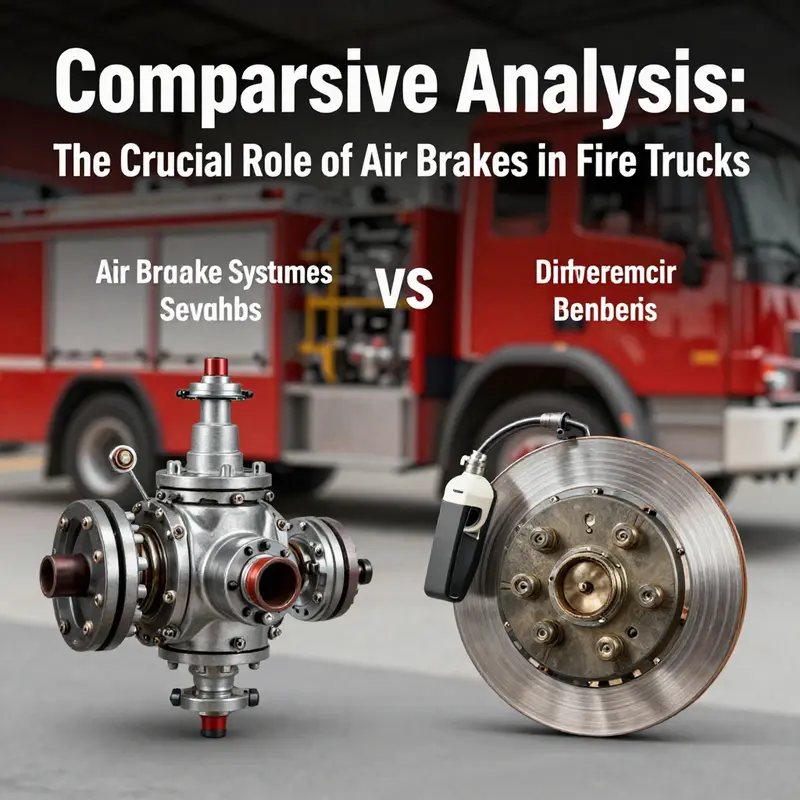
Fire apparatus operate under extremes: heavy loads, rapid response speeds, steep grades, and repeated stops. Choosing the correct braking system for a fire truck is not a theoretical exercise. It directly affects crew safety, apparatus reliability, and operational effectiveness. When departments specify braking for pumpers, aerials, and rescue rigs, they balance stopping power, redundancy, heat tolerance, driver control, and maintenance realities. That balance is why larger fire trucks overwhelmingly rely on air brake systems rather than hydraulic systems.
Air brakes use compressed air as the work medium. A driven compressor supplies pressurized air to reservoirs. The driver’s brake valve meters that air pressure to brake chambers at each wheel. When pressure acts on a diaphragm or piston inside a chamber, it pushes a pushrod that applies the brake shoes or pads. The system is modular: tanks, protection valves, and reservoirs isolate faults. The result is high braking force delivered repeatably.
A core practical advantage is fail-safe behavior. Air brake systems are typically spring-applied, air-released for parking brakes. If air pressure is lost, spring force automatically applies the parking brake, bringing the vehicle to rest. For service braking, dual-circuit layouts and protection valves keep some braking capability when a leak occurs. This redundancy is crucial for a fire truck carrying personnel, tools, and water, where a single-line failure cannot be tolerated.
Air brakes also handle heat and heavy use better. During long descents or repeated emergency stops, hydraulic fluids can heat and fade. Air brakes dissipate heat differently and do not rely on a liquid medium that can boil or lose pressure with temperature. Large air reservoirs give a buffer of stored energy, allowing several brake applications without immediate compressor intervention. For apparatus with heavy axle loads and large-diameter tires, that stored energy and the mechanical leverage of large brake chambers translate into decisive stopping force.
That stopping power pairs well with big tires and chassis designed for fire service. High-capacity tires, such as those in the heavy commercial size range, work with full air systems to maintain traction and stability under braking. The integrated system — chassis, tires, and air brakes — stabilizes the vehicle when it’s fully loaded and when crews must stop suddenly at an incident scene.
The pneumatic architecture also simplifies certain safety functions. Most heavy fire trucks include spring brakes that serve as reliable parking brakes. When the engine stalls or a line is compromised, springs take over. This mechanical fallback is a predictable, low-maintenance safeguard.
Air brake systems are not without drawbacks. They require a driven compressor, which imposes a small continuous load on the engine. Moisture in compressed air can cause corrosion or freezing in cold climates, so dryers and drains are required. Regular inspection of airlines, fittings, and reservoirs is essential. Technicians must be trained to service valves, governor settings, and anti-compounding features. But those maintenance needs are predictable and manageable for fleet shops, and they are outweighed by the robustness delivered during emergency operations.
Hydraulic systems, by contrast, use incompressible fluid. A pedal moves a master cylinder piston, which pressurizes brake fluid and transmits force to calipers or wheel cylinders. Hydraulic brakes work extremely well for light vehicles. They provide quick, precise modulation, and the systems are compact and less complex than a full air system.
However, hydraulics have limiting failure modes for heavy apparatus. A hydraulic line leak or loss of fluid results in immediate and often total brake failure. Split circuits can mitigate this risk marginally, but the physical nature of fluid loss remains a single-point vulnerability. For a vehicle tasked with carrying firefighters and hazardous cargo, that vulnerability is unacceptable.
Hydraulics also struggle with heat and sustained heavy braking. Brake fluid can absorb heat and, if pushed beyond design limits, may vaporize or degrade, reducing braking performance. For a heavily laden fire truck descending a long grade or making multiple high-intensity stops, hydraulic fade risks are real.
Because of these constraints, hydraulic brakes are typically found only on smaller fire vehicles. Light rescue units, brush trucks, and some utility apparatus may use hydraulic systems where weight and duty cycle are modest. For heavy pumpers, aerial platforms, and airport rescue units, pneumatics remain the standard.
Beyond basic functionality, modern electronic systems factor into the choice. Antilock braking systems (ABS), traction control, and electronic stability aids integrate more readily with air brake architectures designed for heavy vehicles. Electronic control units manage pneumatic valves and modulation with precise timing, combining the raw force of air brakes with modern control algorithms. This synergy improves stopping distances and vehicle stability under extreme maneuvers.
Retrofit and interoperability considerations matter too. Replacing a hydraulic system with air brakes on a chassis not designed for pneumatics is costly and technically complex. Fleet managers therefore choose the correct baseline at procurement. When ordering new apparatus, specifying air brakes for any vehicle above a certain gross vehicle weight rating is routine. That specification aligns chassis, axles, suspension, and tires with the braking system for a cohesive design.
Driver training and human factors are part of the calculus. Air brakes feel and respond differently than hydraulic systems. Drivers learn to account for the slight delay in air system buildup, to monitor reservoir pressure, and to perform pre-trip checks of compressor operation and tank pressure. In return, drivers gain confidence in predictable, redundant braking under load. Effective driver training reduces human-error incidents and ensures that crews apply braking techniques appropriate to fire apparatus dynamics.
From a regulatory and standards perspective, heavy apparatus braking design is guided by consensus codes. Those standards specify braking performance, redundancy, and safety features required for emergency vehicles. Engineers reference these standards when designing braking layouts, selecting component sizes, and configuring fail-safe systems.
Maintenance and inspection regimes differ between the two systems. Air systems demand attention to compressors, belts, air dryers, and spring brake health. Technicians must drain moisture traps and verify governor settings regularly. Hydraulic systems require fluid change intervals, leak checks, and bleeds to remove air. Both systems demand scheduled attention, but air brake maintenance focuses on preventing pressure loss and contamination rather than preventing catastrophic fluid depletion.
Practical field experience also shapes preferences. Fire departments operating in mountainous terrain, with long highway responses, or with large aerial platforms favor air brakes for their heat tolerance and redundancy. Departments with mostly urban, light-duty vehicles may accept hydraulic systems where weight and cost are primary concerns. The operating environment and mission profile therefore drive the decision as much as raw performance numbers.
In short, air brakes provide advantages that align with the core demands of heavy fire apparatus. They deliver stronger stopping power, built-in fail-safes, and resilience to heat and repeated use. Hydraulic systems retain strengths in response and modulation and remain suitable for lighter units. For heavy pumpers, ladder trucks, and specialty rescue vehicles, the benefits of air brakes justify their cost and maintenance profile.
For departments evaluating chassis and braking options, reviewing heavy equipment categories clarifies which platforms commonly use air systems. See heavy-duty fire truck models for examples of chassis typically equipped with full pneumatic braking systems: https://cimcfiretruck.com/product-category/heavy-duty-fire-truck/.
For technical requirements and performance criteria, consult the NFPA standard that addresses fire apparatus construction and braking. The document outlines specifications for braking performance and safety design: https://www.nfpa.org/codes-and-standards/all-codes-and-standards/nfpa-1917-standard-for-fire-apparatus-2023-edition
Regulatory Framework and Practical Safety for Fire Trucks Equipped with Air Brakes
Regulatory Framework and Practical Safety for Fire Trucks Equipped with Air Brakes
Fire apparatus that use air brakes operate under a strict lattice of rules. These rules come from federal regulators, industry standards bodies, and international agreements. They shape design, manufacture, inspection, operation, and maintenance. For departments and technicians, understanding these requirements is central to safe, reliable response. This chapter explains how those standards intersect with everyday decisions and why compliance matters for both performance and legal accountability.
At the center of the United States regulatory system is a set of Federal Motor Vehicle Safety Standards. Among them, FMVSS No. 121: Air Brake Systems sets performance benchmarks for vehicles with compressed-air braking. It specifies stopping distances, brake application time, and system integrity under normal and failure conditions. Complementary standards, such as FMVSS No. 122 and FMVSS No. 105, address general brake system requirements and lighting or electrical equipment. Together, these rules ensure that a heavy fire pumper or aerial ladder has predictable stopping behavior and adequate warnings for other road users.
Beyond FMVSS, the Department of Transportation enforces limits on weight and dimensions. Those limits matter because braking performance depends on effective weight distribution and allowable gross vehicle weight. Aerial apparatus and water tankers, when fully loaded, present different braking demands than smaller units. For this reason, manufacturers and fleets must balance pump operator needs, water capacity, and braking safety during design and build stages.
Industry standards add another layer of detail. The National Fire Protection Association has developed apparatus-specific standards, most notably NFPA 1917: Standard for Automotive Fire Apparatus. NFPA 1917 outlines minimum design, performance, and maintenance expectations for new vehicles. It requires acceptance testing at delivery and prescribes preventive maintenance schedules thereafter. These requirements extend to air brake components: compressors, reservoirs, valves, slack adjusters, and warning systems. NFPA’s guidance helps departments translate broad federal rules into operational checklists and maintenance intervals.
On the international front, many countries adopt United Nations Economic Commission for Europe (UNECE) regulations. UNECE Regulation No. 13H, for example, governs braking for commercial vehicles, including air brake systems. It addresses brake efficiency, vehicle stability during braking, and automatic slack adjuster functionality. For fire services that purchase imported chassis or operate across borders, aligning with UNECE standards simplifies certification and ensures consistent performance.
Inspection and preventive maintenance are where regulation meets daily practice. Air-brake systems require scheduled attention. Technicians check for leaks, verify reservoir pressure, and test compressor function. Hoses, fittings, and valve assemblies get inspected for wear and corrosion. Draining moisture from tanks prevents internal corrosion and valve sticking. Brake linings and drums receive measurement and adjustment to keep stopping distances within certified limits. These activities are not optional. They are mandated in both federal rules and NFPA guidance.
Equally important is the acceptance testing performed when an apparatus is delivered. Acceptance tests validate that the installed braking system meets contract specifications and regulatory performance. Typical acceptance items include system leak-down tests, brake application timing, service and parking brake checks, and verification of warning devices. A rigorous acceptance process protects departments from latent defects and ensures the apparatus meets its certified capabilities.
Operator training and licensing are also part of the safety architecture. In many jurisdictions, operators of heavy vehicles must hold a commercial driver license with an air brake endorsement. That endorsement requires knowledge of system components, pre-trip inspections, and emergency procedures for brake failures. Regular refresher training keeps crews familiar with system quirks, such as how added water weight or an elevated center of gravity from aerial equipment affects stopping distances and stability.
Modern safety systems further shape compliance. Anti-lock braking systems (ABS) and electronic stability aids are now common on heavy apparatus. These technologies improve control during emergency braking but also introduce additional maintenance demands. ABS sensors and control modules require inspection and periodic testing to ensure they remain functional and properly integrated with the air brake controls.
Retrofits and repairs must also meet regulatory standards. When a braking component is replaced, the replacement must conform to original performance specifications. Aftermarket or remanufactured parts can be appropriate, provided they are certified to meet applicable standards. Improper repairs or ill-suited components can degrade performance and expose departments to liability. Good procurement practices and supplier verification help prevent these issues.
Certain operational realities increase the stakes for strict compliance. Aerial ladder trucks carry heavy, high-mounted equipment. Their high center of gravity amplifies the risk of rollover during abrupt braking or evasive maneuvers. Water tankers shift large masses while moving. A moving load that sloshes can change weight distribution instantaneously. For these vehicle types, brake system reliability and rapid detection of failures are critical. Departments often adopt stricter maintenance intervals and additional operational protocols for these vehicles. For example, a water tanker or an aerial appliance may receive more frequent brake inspections than a small fire unit.
Recordkeeping is another regulatory expectation that often goes overlooked. Maintenance logs, acceptance test records, and operator inspection reports form an auditable trail that demonstrates compliance. These records are essential during audits or after an incident. They show that the vehicle was operated and maintained according to required practices. Many departments use digital fleet-management systems to standardize entries and ensure records remain complete and accessible.
The consequences of non-compliance are tangible. Brake failure while responding to an emergency can cause injury, property damage, and loss of life. Legal liability follows such events if investigations reveal neglected maintenance or ignored standards. Insurance claims may be denied, and criminal or civil charges can arise. Beyond legal exposure, non-compliance erodes public trust in emergency services. Adherence to standards is not merely bureaucratic. It protects firefighters and the communities they serve.
Practical strategies help departments meet regulatory obligations without overburdening personnel. First, align procurement specifications with both FMVSS and NFPA standards to ensure new apparatus arrives ready for service. Second, implement a tiered maintenance plan that prioritizes high-risk vehicles, such as zware brandweerwagen, for more frequent inspections. Third, train operators to perform consistent pre-trip checks and to report anomalies immediately. Fourth, invest in quality parts and qualified technicians to keep repairs compliant and reliable.
Finally, collaboration with manufacturers, regulatory bodies, and peer departments strengthens compliance. Manufacturers can provide technical bulletins and service guidance for air brake systems. Regulators periodically update standards, so staying informed is essential. Peer networks enable departments to share best practices and lessons learned from brake-related incidents.
Meeting regulatory standards for air-braked fire trucks requires a systems view. Design, acceptance testing, maintenance, training, and recordkeeping must align. These elements reduce risk, preserve apparatus performance, and protect lives. Where federal rules and industry standards intersect, the result should be clear, actionable practices that fit a department’s operational reality. For authoritative information on the federal vehicle safety standards referenced here, consult the official NHTSA resource at https://www.nhtsa.gov/vehicle-safety/federal-motor-vehicle-safety-standards-fmvss.
Braking Under Fire: The Essential Role of Air Brakes in Heavy Fire Apparatus
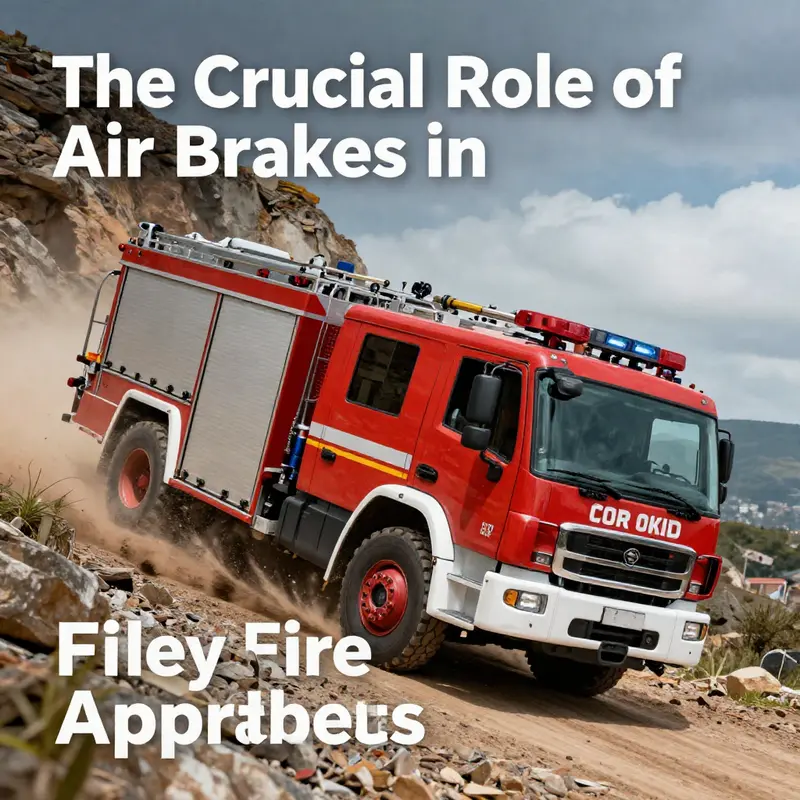
In the heat of an incident, when a call hinges on every second and every mile per hour, the brakes become more than a mechanism for stopping. They are a lifeline that translates intent into control, momentum into safety, and urgency into reliability. For many fire departments and the heavy fleets they rely on, the braking system is not merely a subsystem to be serviced; it is a strategic performance feature that shapes how quickly a vehicle can respond, how safely it can descend a grade with a full load of water and equipment, and how predictably it behaves when the unexpected occurs. The question do fire trucks have air brakes is not a simple yes-or-no. It is a window into the engineering philosophy that underpins the largest, most demanding emergency-response machines on the road. And the answer, for large and heavy apparatus, is a clear and well-supported affirmative: air brakes are a cornerstone of how these vehicles achieve braking power, heat management, redundancy, and reliability in the most demanding conditions.
To grasp why air brakes are favored for heavy fire apparatus, it helps to picture the system as an orchestra conducted by compressed air rather than hydraulic fluid. In a typical heavy-duty setup, a compressor continuously refills reservoirs that store pressurized air. Those reservoirs feed brake chambers at each wheel through a network of valves, lines, and dryers that remove moisture before it can cause corrosion or freezing. When the driver presses the brake pedal, a valve modulates the flow of air to the brake chambers. Inside each chamber, the air pressure pushes a diaphragm that, in turn, pushes a pushrod against the brake shoes or pads. The result is a robust conversion of pressure into friction against the rotor or drum. This is not merely a matter of greater raw force; it is a system designed to deliver that force consistently, even as the vehicle’s weight and momentum shift with water tanks, ladders, hoses, and crew on board.
One of the defining advantages of air brakes for heavy fire apparatus is their superior stopping power. The sheer mass of a fully loaded pumper or aerial platform can exceed several tens of thousands of pounds. Applying braking force efficiently at such momentous weights requires pressure-capable actuation and a brake system that can translate that mass into deceleration without resorting to extreme heat in a single brake component. Air brakes accomplish this by distributing braking force across multiple wheels and circuits. This distribution matters when a vehicle must stop quickly from a high speed, or when it must come to a controlled halt on a long, grade-laden descent. Hydraulic systems can struggle with heat buildup under sustained braking, which leads to brake fade. In contrast, air brakes are designed to vent heat more effectively and to keep friction materials within their optimal operating range longer, especially when the scenario demands repeated stopping or prolonged descents.
The field reality of emergency response is not a single-stop operation. It may involve long climbs into districts with steep topography, rapid acceleration to reach a scene, and immediate re-engagement for multiple back-to-back runs. In this context, the air brake system’s resilience is not a luxury but a necessity. The redundancy built into well-engineered air brake architectures—dual air reservoirs, multiple circuits, and, in many configurations, auxiliary braking devices—means that a single circuit failure does not instantly compromise braking. If one path loses pressure, another maintains partial braking capability, which translates to safer, more predictable deceleration. For crews, this translates into a quieter confidence: the vehicle will respond when the throttle is lifted, and it will do so in a controlled way that supports safe maneuvering through traffic and around obstacles.
The nature of heavy fire apparatus requires that brake performance hold steady under load. The weight on the road is not a fixed number; it grows with water, foam concentrates, hoses, and number of personnel carried to a scene. In a purely hydraulic scheme, the friction forces and the heat concentration can shift as the load changes, potentially altering stopping distances. With air brakes, the stopping power remains more consistent across a range of vehicle weights and equipment configurations. This consistency is key for planning a safe arrival. It enables drivers to anticipate how much space they need to slow, how quickly they can execute a turn, and how the vehicle will behave on various pavement conditions, including slick surfaces and wet roads that often accompany emergency scenes. In practice, that reliability translates to shorter, more predictable stopping distances at critical speeds—an outcome that can reduce the risk to firefighters and civilians alike in the vicinity of a crash or collapse.
Another compelling benefit concerns brake fade, the dreaded degradation of friction material effectiveness due to heat. A heavy fire apparatus can encounter sustained or repeated braking events, such as descending a long grade with a full load. Hydraulic braking systems can heat up quickly, changing the properties of the brake linings and increasing stopping distances. Air brake systems, by distributing braking duties and by keeping operating temperatures within manageable ranges, slow the onset of fade. The air brake design inherently accommodates the thermal demands of emergency missions more gracefully than many hydraulic alternatives. This does not mean air brakes are immune to heat, but it does mean they are better prepared to sustain performance across the multi-stop, multi-mile realities of a fire engine’s shift.
Safety and reliability in the field also hinge on the way a system handles faults and adverse conditions. Air brake architectures traditionally incorporate several layers of safety redundancy. Dual circuits mean that if one circuit fails or leaks, a secondary circuit can still deliver braking force. In many designs, parking brakes rely on spring brakes that engage automatically if air pressure drops to a critical level, adding a last line of defense against uncontrolled rollaways during idle periods or when engine power is unavailable at an incident scene. These features work together to keep a vehicle from becoming a hazard during a high-stress operation. What is more, the presence of multiple reservoirs and a robust air-dryer system reduces moisture-related problems in humid climates or during long, hot deployments, where moisture in the lines can otherwise cause corrosion or freezing in cold conditions. The result is a braking system that remains dependable across a wide range of environmental and operational challenges.
The practical validation of these advantages comes not only from design intent but also from rigorous testing and standards that govern how heavy fire apparatus interact with their braking systems. In the broader automotive and commercial vehicle community, research conducted in the SAE Technical Paper Series has directly evaluated both acceleration and braking performance for modern fire apparatus. A study from the late 2000s and published in 2010 examined how service braking and auxiliary braking devices perform under test conditions that simulate real-world use, including high-speed deceleration and controlled braking at specific target speeds. One of the key takeaways from this research is the confirmation that properly maintained air brake systems provide safe and predictable stopping distances at critical speeds. These findings align with the experiences of fleets that rely on air brakes to deliver consistent performance when lives are on the line. For readers seeking a more technical account, the SAE paper offers detailed measurements and test methodologies that underscore why air brakes are well suited to heavy, mission-critical vehicles.
Of course, the value of air brakes is not only in design and testing but also in how they are maintained and inspected over time. The National Fire Protection Association’s standards for the inspection, maintenance, refurbishment, testing, and retirement of in-service emergency vehicles provide a comprehensive framework for assessing braking systems as part of a holistic safety program. Regular checks of reservoir pressure, valve operation, and circuit integrity help ensure that pressure is available when needed, that no leaks threaten braking force, and that the system remains free of moisture and contaminants that could compromise performance. These standards emphasize not just peak braking power but the reliability of the entire system under routine and extreme conditions alike. The idea is to treat the brake system as a critical safety component that must be preserved through disciplined maintenance, with the same seriousness that crews apply to pump operations or ladder placement during a call.
For operators and fleet managers, this means more than understanding the science of braking. It means appreciating how the air brake system interacts with vehicle dynamics, driver training, and incident tactics. When a vehicle rounds a bend at speed in a congested street, the driver relies on the sense that braking will be consistent, the line will stay taut, and the deceleration will come with control rather than surprise. The ability to sequence deceleration with wheel-control, engine braking, and, where appropriate, auxiliary braking devices adds to the precision that responders need at the moment they arrive on scene. The practical implication is clear: when fleets select and maintain heavy apparatus designed around air braking, they are equipping their teams with a more controllable, safer platform for the most demanding missions. And while technology evolves and newer braking concepts emerge, the core advantage remains the same—a dependable, power-efficient, and safer way to slow a heavy vehicle in any terrain the fire service may encounter.
From a decision-making perspective, this goes beyond the single vehicle and touches the ethos of fleet readiness. The choice to rely on air brakes reflects a broader commitment to safety culture, where redundancy, fault tolerance, and disciplined maintenance are valued as highly as the nozzle pressure and water flow management that define firefighting effectiveness. It also shapes procurement strategies, maintenance schedules, and training curricula. In terms of acquisition decisions, agencies that prioritize high-torque braking performance, reduced fade risk, and resilient operation will gravitate toward heavy, air-brake-equipped architectures. In daily operations, crews experience a braking system that responds with consistent bite, predictable feel, and a margin of safety that supports complex maneuvers on crowded urban streets, rural roadways, or highway environments. In the end, the air brake is not just a feature; it is a fundamental enabler of rapid, reliable, and safe emergency response on the front lines.
For readers who want to explore related vehicle families and configurations that play into this discussion, consider how the braking system integrates with broader vehicle capabilities in the heavy-duty repertoire. The same principles that guide air-brake performance influence how the vehicle behaves when loaded down with equipment and when tasked with rapid response in the worst weather or the most demanding terrain. The evidence from testing, maintenance guidelines, and field experience converges on a single conclusion: for heavy fire apparatus, air brakes are not merely compatible with the mission—they are essential to fulfilling it.
As the pages of standards and technical literature attest, the path to safe, effective, and repeatable braking for emergency fleets lies in robust air-brake design, meticulous maintenance, and informed operation. The engine of this approach is a direct line from the compressor to the brake chamber, through the reservoir and the valving that governs every application. When these elements function in concert, a heavy apparatus can deliver dependable performance under load, maintain control on challenging grades, and stand up to the heat and wear that can accompany long days of service. This is why, in the context of heavy emergency apparatus, air brakes are the quiet backbone of safety and efficiency—an unsung but vital attribute of vehicles that must perform when every decision matters.
For those seeking more practical, field-oriented information on selecting and supporting fleets that include heavy-duty fire trucks, you can explore resources focused on the maintenance and procurement of these platforms, which discuss how brake systems are integrated with other core components. In the broader technical conversation, one finds there is a consistent thread: brake performance in heavy apparatus is inseparable from overall vehicle design, maintenance discipline, and the safety standards that govern every mission. This is how air brakes earn their place as a defining feature of heavy fire apparatus—by delivering power, reliability, and safety where it matters most.
External reference for deeper technical context: For a more technical treatment of braking performance testing in modern fire apparatus, see the SAE Technical Paper Series 2010-01-0187 at https://www.sae.org/publications/technical-papers/content/2010-01-0187/.
Internal link note: Readers interested in the broader category of heavy-duty fire trucks can explore related equipment and configurations in the dedicated category for heavy-duty fire trucks, which provides context on the kinds of architectures that benefit most from robust air-brake systems: heavy-duty fire trucks.
brush fire trucks, wildland firefighting, fire safety equipment, off-road fire trucks, firefighting technology, business safety, emergency response vehicles
The integration of air brakes in fire trucks is not merely a technical choice, but a critical aspect that enhances the safety and performance of emergency response vehicles. By understanding the role and technical specifications of air brakes, business owners can make informed decisions regarding their fire apparatus. Furthermore, recognizing the operational benefits and complying with safety regulations can optimize fire truck performance. As the demand for advanced firefighting solutions rises, knowledge of these braking systems becomes increasingly significant for the integrity of fire services.

