
















Fire trucks are synonymous with emergency response, but their safety features can often be overlooked. One crucial element of fire truck safety is seat belts, which not only ensure the protection of firefighters but also enhance operational efficiency. As business owners, understanding the significance of seat belts in fire trucks can reinforce commitment to safety standards and operational readiness. This article explores the necessity of seat belts, the design features that incorporate them, their impact on firefighter safety, regulatory standards guiding their use, and the importance of training for effective utilization. Each chapter will contribute to a comprehensive understanding of how seat belts serve as a fundamental component in protecting firefighters while they perform their vital roles.
Securing the Ride: Why Seat Belts Are Essential in Every Fire Truck
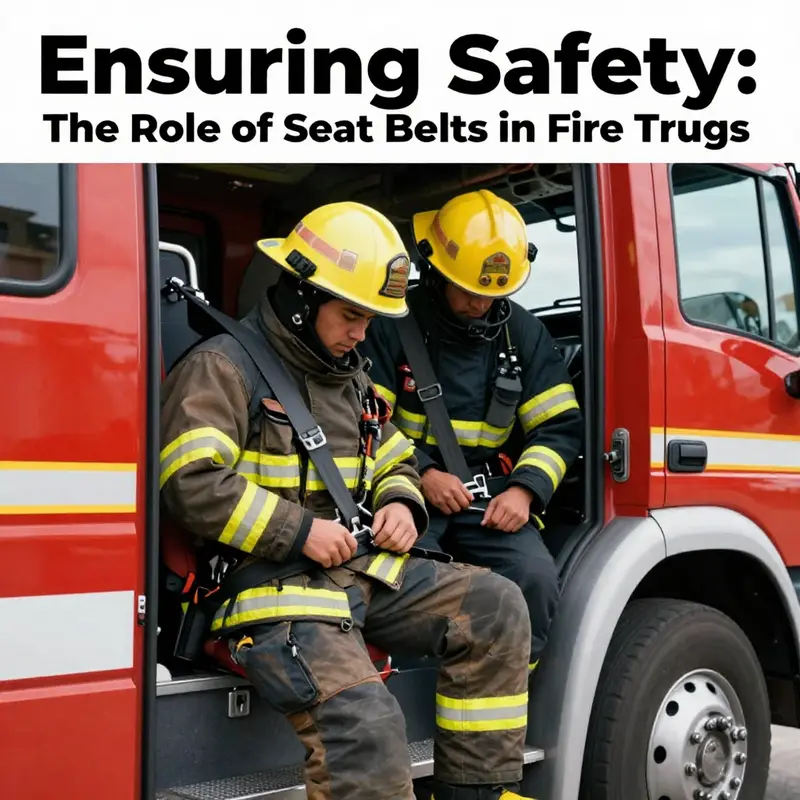
Securing the Ride: Why Seat Belts Are Essential in Every Fire Truck
Firefighters accept risk as part of the job, but the risk of injury during transit is preventable. Seat belts in fire apparatus are not optional accessories. They are lifesaving systems that reduce the force of impact, limit secondary collisions inside the cab, and keep crew members positioned to act immediately upon arrival. Evidence from crash research and post-incident investigations shows clear reductions in mortality and severe injury when belts are used. For firefighters, who often ride at higher speeds, through intersections, and under stressful conditions, belts provide a predictable layer of protection every trip.
The design of a modern fire truck cab balances several priorities at once. Seats must secure a range of body sizes. They must accommodate bulky gear, particularly self-contained breathing apparatus (SCBA). They must allow quick egress and rapid deployment. Contemporary seat systems address these requirements by integrating SCBA brackets, using reinforced mounting points, and positioning belt anchors where restraints function without impeding gear access. These design choices are intentional. They reflect a shift from makeshift solutions to engineered systems that treat the occupant and the equipment as a single, integrated load to be restrained in a crash.
Despite clear engineering and research evidence, inconsistent use remains a real problem. Studies and incident reviews repeatedly cite failure to buckle as a contributing factor in fatalities during emergency responses. The reasons vary. Some firefighters believe belts slow them down. Others worry they cannot don SCBA quickly if belted. In certain stations, culture and habit outweigh policy. Addressing these human elements is as critical as improving hardware. A well-designed belt system alone cannot protect a rider who chooses not to use it. Effective change requires training, leadership, and policies that make seat-belt use a standard practice, not a negotiable one.
Standards and regulations have evolved to reflect these realities. National and industry standards now require appropriate seatbelt systems on newly manufactured apparatus. They also push manufacturers to consider firefighter anthropometry — the study of human body measurements — so seats and restraints fit diverse crews. This research has driven changes in belt length, anchor placement, and buckle accessibility. The goal is simple: make belts comfortable, usable with gear, and quick to release when exiting the vehicle. When belts are tailored to the end user, compliance improves and safety outcomes follow.
Integrating SCBA with seating is a significant engineering challenge. SCBA cylinders and harnesses add bulk and shift a rider’s center of mass. Restraint systems must account for this extra mass without compromising the wearer’s ability to exit swiftly. Some designs place SCBA brackets behind the seat or integrate them into the seatback. Others use retention systems that allow the harness to remain donned while belted. These solutions reduce the instinctive trade-off between wearing protective gear and using a seat belt. When firefighters can remain ready without sacrificing restraint, the false choice disappears.
Training plays a dual role. It corrects misconceptions about belting and it builds muscle memory. Routine drills that include properly seating, buckling, and donning gear while belted help normalize the behavior. Leadership reinforcement matters too. Clear, enforced policies that tie belt use to operational readiness and accountability change the social norms within a crew. Positive reinforcement, incident debriefs that highlight the difference belts made, and practical rewards for consistent compliance all help cement the practice.
Crashworthiness of fire apparatus is another part of the picture. Seat belts are most effective when the vehicle and seat structure absorb and redirect crash energy. Seats built to hold up in extreme loads reduce the chance of occupant submarining or belt failure. Manufacturers focus on robust seat anchorage, energy-absorbing materials, and high-quality components that withstand years of hard use. Upgrades to older apparatus, such as retrofitting three-point restraints or reworking seat mounts, can enhance safety for departments with limited budgets.
Policy and enforcement close the loop between equipment and behavior. Departments that adopt clear, consistently enforced policies see higher belt use. Policies should be specific. They must define when belting is required, outline duties for drivers and officers, and describe consequences for noncompliance. Importantly, policies should be coupled with opportunities for feedback from crews. Firefighters who feel heard about practical barriers to compliance are more likely to support workable solutions. When policy, equipment, and training align, the risk of transit injuries falls.
Data collection and post-crash analysis provide the evidence base to guide improvements. Accident reconstructions, injury reports, and near-miss reporting illuminate common failure points. Often, these reviews reveal simple fixes: adjust a belt anchor, change a seat angle, or slightly alter bracket placement. Departments that systematically learn from incidents create a culture of continual improvement. That culture values belt use as part of operational excellence, not merely as regulatory tick-boxing.
Finally, fit and comfort matter. Firefighters perform demanding tasks immediately after transport. Seats and belts that cause discomfort erode compliance. Manufacturers and specifiers who prioritize ergonomics and anthropometry create systems that workers accept. Comfort does not mean softness alone. It means belts that adjust easily, buckles within reach, and seat cushions that support a range of postures. When firefighters trust their seating system to be both protective and comfortable, they are far more likely to use it routinely.
A practical sidebar: if your department evaluates apparatus procurement or retrofits, include line personnel in the evaluation. Hands-on trials reveal issues that drawings and specs cannot. Test seats with full gear, simulate rapid egress, and measure belt routing under real conditions. These trials often identify small but critical adjustments. A little time in evaluation saves lives and money later.
The bottom line is straightforward. Seat belts on fire trucks are a critical safety measure that reduces injury and saves lives. Their effectiveness depends on proper design, integration with gear, consistent use, and ongoing attention to fit and crashworthiness. When departments combine thoughtful engineering with strong policy and persistent training, they remove the false choice between protection and performance. That combination keeps firefighters safer while preserving their ability to respond quickly and effectively.
For more detailed, peer-reviewed information about seat and seatbelt accommodation in fire apparatus, see the National Institutes of Health review: https://www.ncbi.nlm.nih.gov/pmc/articles/PMC10587962/
For a look at available apparatus types and to explore common vehicle configurations when planning upgrades, see the fire-fighting truck product category.
Buckle Up in the Battle Wagon: Seat Belts, Safety, and the Design of Fire Trucks
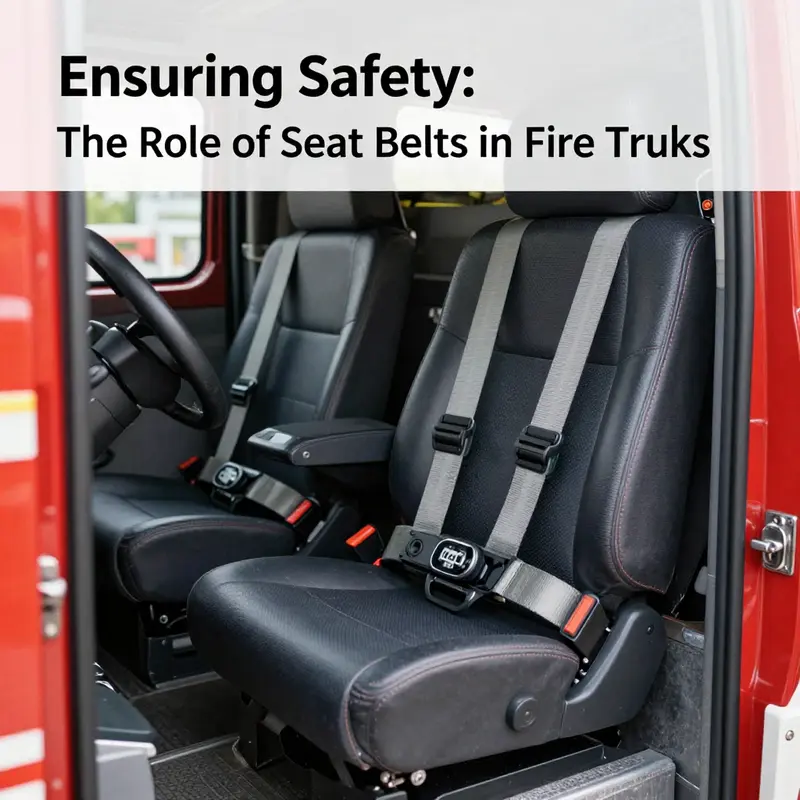
The question of whether fire trucks have seat belts is not merely about a feature on a vehicle; it is a fundamental matter of firefighter safety in high-stakes, sometimes chaotic environments. Across the fire service, comprehensive data from investigations and safety agencies shows that seat belts are standard on modern fire apparatus and that their proper use dramatically lowers the risk of injury in crashes, abrupt stops, or sudden maneuvers typical of emergency responses. Early and ongoing research established that wearing restraints reduces the likelihood of blunt chest trauma, head impacts, and ejection from the cab during collision or rollover events. In the years since, safety engineers and manufacturers have worked to refine how restraint systems integrate with the cabin layout, the equipment carried, and the need for rapid, unaided movement when the call comes in. This work rests on a core premise: safety and speed are not opposing goals but complementary outcomes of thoughtful design and disciplined use.
The very design of fire truck seats and their belts is shaped by a disciplined thread of anthropometric study. Firefighting teams represent a broad spectrum of body sizes and shapes, and the seating system must accommodate that diversity without compromising restraint performance. A key insight from national research is that developing a robust anthropometric information base on U.S. firefighters is essential for guiding seat and belt design. Such data help ensure that belts anchor securely for front-seat rescuers and for those perched in the back or on auxiliary seats, while still allowing meaningful movement to reach gear, turn valves, or operate controls. In practice, that translates into adjustable seat cushions, contouring to support long hours on concrete or asphalt, and belt anchors placed so the restraints remain effective when operators lean, twist, or stand to reach equipment. When designers speak of fit, they speak of more than comfort; they speak of preserving the ability to function under stress, with the belt doing its job without becoming a barrier to task performance.
Inside the crew cab, the arrangement of seats often reflects a balance between safety and operational readiness. Integrated features—such as SCBA brackets—have become a hallmark of contemporary apparatus design. These brackets are not an afterthought; they are strategically positioned so firefighters can maintain rapid access to their breathing apparatus while still being securely restrained. The concept of keeping breathing gear within easy reach, even when buckled, is a telling example of how restraint systems are harmonized with critical equipment. Incidents where responders need to don or doff SCBA quickly in the course of a mission underscore the necessity for a seating system that does not trap or impede movement during an emergency. In a well-designed cabin, the belt and the seat are not a hindrance to breathing apparatus; they are a coordinated system that supports both security and readiness.
Ergonomic considerations run through every facet of the seat, from the shape of the backrest to the depth of the cushion and the height at which the belt anchors are fixed. Prolonged operations, whether laying lines, pumping, or performing search-and-rescue tasks, can place substantial demands on the lower back, hips, and legs. Ergonomic seats help mitigate fatigue by distributing load more evenly and by providing support that remains comfortable after hours of operation. This is not solely a matter of comfort; it is a safety imperative because fatigue can dull reaction time and reduce the precision needed to manage hose lines, control panels, or telematics systems while also maintaining a firm, secure seat during sudden maneuvering. The belts themselves are designed to restrain without pinching, without overtly restricting the range of motion necessary to reach equipment, operate controls, or brace for impact. The aim is a restraint that holds a firefighter steady during acceleration, deceleration, or cornering while still allowing quick, unhindered access to a weapon of opportunity—the equipment that can save lives.
Moreover, the seats in many command- and incident-related configurations reflect a broader philosophy: safety must extend beyond the primary crew to any personnel who may ride in the cab during unusual operations or transfers of command. Integrated restraints often factor in additional devices—like radios, helmets, or helmets-mounted gear—that could shift weight or affect posture in a crash. The seatbelt system, then, is designed to anchor to sturdy points in the chassis, reducing the risk of puncture or failure of attachment during dynamic maneuvers. The overall approach culminates in a seating ecosystem that emphasizes restraint strength, quick-release capability, and minimal interference with access to vital controls and communication gear.
From a human-factors perspective, the emergency vehicle cabin is a dynamic workspace. The anthropometric data guiding seat and belt design support a spectrum of adjustment options—fore-and-aft seating, seat height, back angle, and lumbar support—that enable responders of varying statures to find a stable position. When a response calls for tight turns, emergency braking, or rapid changes in speed, the belt anchors maintain a protective hold while the occupant can shift posture to operate hydraulic levers, switch panels, or move between seating and standing positions during brief pauses in transit. Designers also consider the sequence of operations an individual might perform immediately after arrival: how does one transition from a buckled stance in transit to a rapid motion toward a stairwell or a ladder compartment? The seatbelt system is part of a larger choreography, ensuring safety without breaking tempo.
The integration of belt design with equipment storage also reflects a broader safety culture in fire apparatus. For example, SCBA brackets are not simply shelves; they are part of a system that requires the firefighter to reach and don breathing gear without fighting against a constraining belt. The person buckled into the seat is still able to unzip a pouch, draw a regulator, and secure the mask with a minimal, predictable sequence of actions. This level of integration helps ensure that rapid response is not compromised by the need to unfasten or adjust restraints to perform essential tasks. The result is a vehicle environment where belt use is treated as a baseline safety measure, not as an optional precaution, and where every ergonomic feature is evaluated for its impact on a firefighter’s ability to perform under pressure.
Beyond the cabin, the cautions and norms around seat belt use influence training and policy within departments. Training programs emphasize consistent belt use during transit, even in scenarios perceived as routine or uneventful. The logic is straightforward: the majority of injuries in apparatus operations occur during movement, abrupt stops, or collisions; the belt can be the first line of defense in those moments. Yet belt use cannot be universal if belts interfere with essential duties. Consequently, the design philosophy seeks to minimize friction between restraint and operation. That balance—between securing the crew and preserving agility—remains a central challenge for engineers and safety officers alike.
To understand the practicalities of selection and fit, consider how departments choose seating and restraint configurations in the field. The catalog of equipment and seating options on display in a department’s planning cycle reflects an insistence on safety without sacrificing readiness. When teams discuss outfitting a new apparatus, they often review a catalog of seating arrangements to identify the configuration that best accommodates their typical mission profile, crew size, and response patterns. In this context, the internal landscape of the department’s procurement choices becomes a lever for safety: a well-chosen seating and belt system can reduce the probability of injury in a crash, help ensure crew members stay restrained during rapid accelerations, and still keep them agile enough to defend against and manage a fire. For readers curious about current options and product families, the broader fire-fighting truck product category offers a window into the available configurations and safety-focused features that departments weigh during planning and budgeting.
The science underpinning these design decisions does not stand isolated from real-world outcomes. The debate surrounding seat belts on fire apparatus is not merely about compliance with regulations; it is about measurable improvements in safety metrics and the ability of firefighters to perform their duties under pressure. As anthropometric research progresses, it informs more precise standards for seat geometry, belt anchor placement, and the tolerances that ensure belt systems function when worn by a wide range of body types. The ongoing dialogue among researchers, manufacturers, and practitioners keeps safety top of mind while respecting the operational pressures that define a responder’s day. The ultimate goal remains clear: a vehicle that keeps crews secure in transit and ready to move without delay once the call goes out.
For readers seeking a deeper technical dive into the anthropometric and ergonomic considerations that frame fire-apparatus seating, the NIH-affiliated literature provides authoritative context. These studies illuminate how designers translate population-wide measurements into seat dimensions, belt geometry, and restraint anchorage that sustain safety across diverse body sizes and postures. They also illustrate how integrated equipment storage, such as SCBA brackets, influences belt placement and seating posture—ensuring that safety features support, rather than hinder, the operator’s immediate task priorities in critical moments. Such research strengthens the case for seat belts as a standard, non-negotiable feature on fire apparatus and reinforces the idea that thoughtful design can harmonize protection with performance.
Ultimately, the question of whether fire trucks have seat belts is answered by looking at the entire ecosystem of safety, design, and practice. The belts are part of an integrated system that begins with data about who sits in the cab and where, then moves through ergonomic seating, gear storage, and the vehicle’s dynamic response in transit. The result is a safety culture that recognizes restraint as a core component of operational readiness. It is a reminder that every buckle, every anchor, and every adjustment gathered from anthropometric insight contributes to keeping firefighters protected as they move toward danger to save lives. For those who want to explore how these principles translate into real-world equipment and configurations, the broader landscape of fire apparatus options offers a practical lens on how design choices play out in the field.
External resources provide a more granular view of the anthropometric underpinnings of restraint design. For a comprehensive look at the contemporary science behind how seatbelts are accommodated in fire apparatus, see the NIH-backed discussion of seat and seatbelt accommodation in fire apparatus, particularly the anthropometric aspects: https://www.ncbi.nlm.nih.gov/pmc/articles/PMC10589472/
Belted for the Call: How Seat Belts Transform Firefighter Safety in Fire Trucks
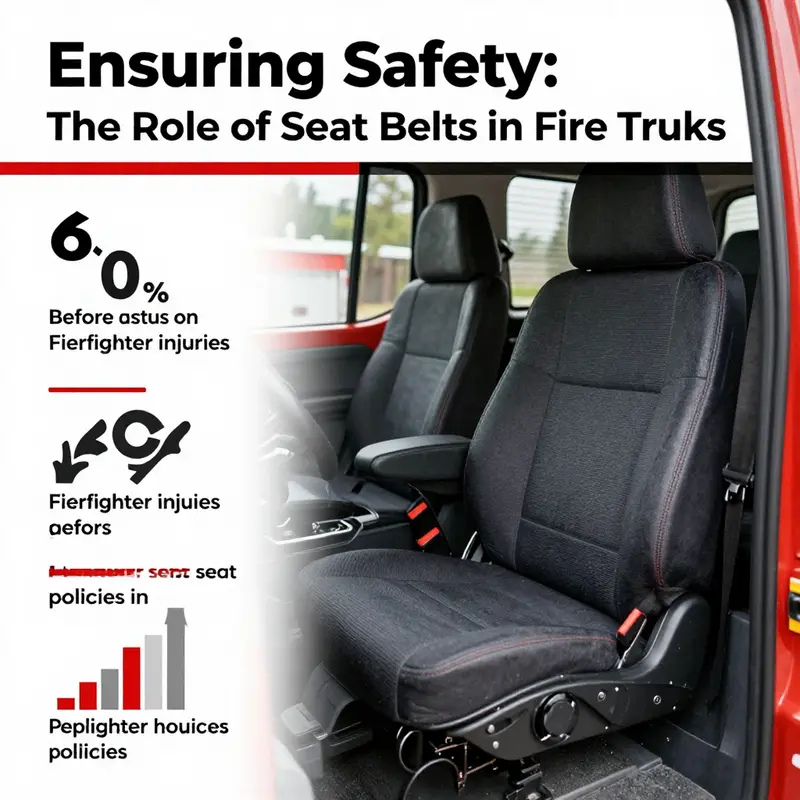
Firefighters accept danger as part of the job, but transit to and from incidents should not add risk. Seat belts in fire trucks materially reduce injuries and deaths when collisions occur. Research from occupational safety authorities demonstrates that consistent use of restraint systems, combined with considered seating design, cuts the chance of fatal or severe injury in apparatus crashes. Beyond the simple presence of belts, the way seats are arranged, how equipment is stowed, and the culture inside departments together determine whether those belts are used when they matter most.
At the center of this safety equation is a basic fact: a properly worn seat belt keeps a firefighter secured during sudden deceleration. In collisions, unbelted occupants can be thrown into hard surfaces, ejected from the vehicle, or struck by loose equipment. Studies cited by the National Institute for Occupational Safety and Health show markedly lower rates of catastrophic injury when restraints are used. These outcomes are consistent across apparatus types, whether in heavy-duty engines, aerial trucks, or rapid-response units. However, the simple availability of belts does not guarantee their use. Practical barriers and organizational norms often discourage compliance, rendering the theoretical safety of belts moot in many real-world situations.
Physical seat design is a primary practical barrier. Fire trucks carry heavy, bulky gear—SCBA packs, helmets, tools—that must remain accessible. Early apparatus layouts placed gear where it impeded seat belt use or forced firefighters to remove equipment before buckling in. Modern design addresses this by integrating SCBA brackets into seats and by configuring anchors for three-point restraints that accommodate protective clothing. Ergonomics and anthropometrics matter: seats must fit a wide range of body shapes and sizes, allowing sufficient hip and shoulder room to fasten belts without discomfort. When seats are cramped or anchor points fall in awkward positions, belting becomes a chore. Conversely, well-designed seating that considers the typical posture and reach of firefighters increases the likelihood of regular use.
Equipment stowage and accessibility also influence behavior. If donning or stowing SCBA requires unbuckling or contorting into the aisle, firefighters will often deprioritize the belt during routine responses. Designers now try to strike a balance between operational readiness and restraint convenience. For example, seats with integrated SCBA holders let occupants arrive at a call fully equipped while remaining belted. Properly placed anchors and retractors make buckling quick and intuitive. These technical fixes remove friction from a moment that should be automatic.
Yet technical fixes alone cannot solve the problem. Organizational culture plays an equal role. Departments with strong safety leadership, consistent training, and clear enforcement see higher compliance. Leaders set expectations. When chief officers ride belted and actively coach compliance, that behavior cascades downward. Training must reinforce why belts matter, not just how to use them. Scenario-based drills that include transit safety, hazard recognition, and examples of crashes build an emotional and practical understanding of risk. Discipline policies, when fair and consistent, keep compliance from becoming optional. Without this cultural backbone, even the best seats and belts can go unused.
Human factors like perceived time pressure and norms about toughness influence choices too. Firefighters often believe that leaving belts undone saves seconds during a call. In reality, the time lost to buckling is negligible next to the time spent extricating an injured colleague from a wreck. Peer norms are powerful: if senior personnel routinely ride unbelted, younger members will mimic them. Changing these norms requires visible commitment from the top and regular reinforcement through training and debriefs.
Data-driven approaches help shape both design and culture. Departments that collect and analyze incident and near-miss data can identify patterns where restraints were absent or where seating contributed to injury. That evidence supports targeted retrofits, procurement of better-configured apparatus, or focused training. Anthropometric studies inform seat dimensions and anchor placement, ensuring that new builds accommodate the full range of firefighter sizes and body types. Retrofitting older apparatus with modern seats and three-point restraints is an effective interim step for fleets that cannot replace vehicles immediately.
Policy and standards also matter. National and industry guidelines recommend specific restraint types and seating arrangements for fire apparatus. When departments adopt these standards, they create clearer expectations for manufacturers and maintainers. Procurement specifications that require integrated SCBA seating and easy-to-use restraint systems raise the baseline for safety across fleets. This approach also signals to crews that leadership values transit safety as much as on-scene performance.
Practical interventions that combine engineering and culture yield the best results. Examples include mandatory pre-departure checks that include verbal confirmation of belting, installations of audible or visual reminders in cabs, and regular inspections of seat belts and anchors. Training that pairs technical instruction with compelling crash examples reinforces behavior. Peer-led initiatives, such as ride-alongs where members observe and discuss belting behavior, make safety a shared responsibility instead of a rule enforced from above.
Different apparatus types pose distinct challenges. Aerial and ladder trucks have larger crew compartments and more complex gear arrangements, but they also offer more opportunity for integrated storage and secure belting. Light rescue units and rapid-response vehicles might prioritize speed and maneuverability, making quick-access belting solutions valuable. Manufacturers of fire-fighting truck equipment now offer a range of seating options tailored to these needs, helping departments match vehicle function with restraint usability.
Ultimately, the impact of seat belt usage in fire trucks is not an abstract statistic. It represents lives saved, injuries averted, and families kept whole. The technical aspects—integrated SCBA seats, proper anchor placement, and ergonomic design—are necessary. Equally necessary is a culture that treats belting as non-negotiable. When departments pair purposeful design with leadership-driven safety norms, compliance rises and crash outcomes improve. Addressing both dimensions turns seat belts from an optional convenience into a reliable layer of protection for firefighters on every call.
For departments seeking to prioritize transit safety, reviewing apparatus seating options is a good first step. Many manufacturers and suppliers offer configurations that meet ergonomic and operational needs; for an overview of common options see resources on fire-fighting truck products. For the technical and anthropometric research that underpins modern seating standards, consult the peer-reviewed analysis of seat and seatbelt accommodation in fire apparatus at the National Institutes of Health: https://www.ncbi.nlm.nih.gov/pmc/articles/PMC3487896/
Under Lock and Load: The Regulatory Backbone of Seat Belts on Fire Trucks
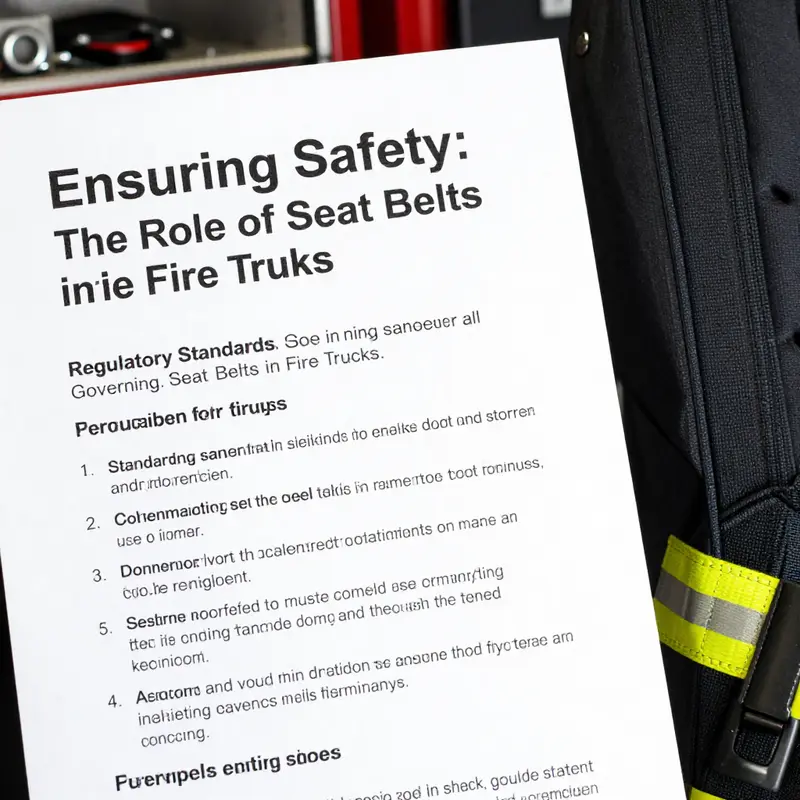
Seat belts on fire apparatus are a core safety feature, reinforced by NFPA standards. NFPA 1901 requires appropriate seat belt systems on every seat, with strength, durability, and secure anchorage. NFPA 1906 complements 1901 by addressing operating safety and seat installations across vehicle types, including equipment integration like SCBA brackets. Together these standards define how belts are designed, tested, inspected, and maintained, ensuring restraint holds under emergency driving, sudden stops, and crashes. The design emphasizes secure anchorage, ergonomic seating, and gear accessibility so crews can don belts, reach controls, and egress safely. Manufacturing, maintenance, and training programs reflect these requirements, making restraint performance a predictable part of firefighting readiness. In practice, compliance translates into inspection routines, proper replacement, and an emphasis on safety culture within the department. For readers seeking deeper science, peer-reviewed sources summarize biomechanics and vehicle dynamics that support current restraint standards.
Buckled In, Ready to Respond: The Integrated Safety Design and Training Behind Fire Apparatus Seat Belts
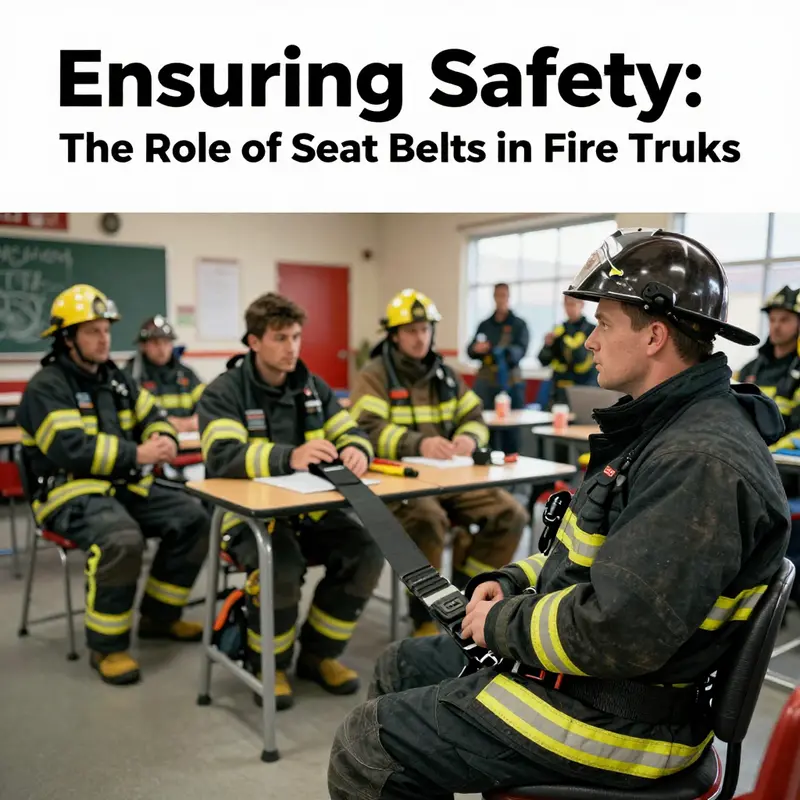
In the heartbeat of every emergency response, the movement of a fire apparatus becomes a test of safety, agility, and discipline. Among the design choices that influence outcomes, the simple act of buckling a seat belt is perhaps the most fundamental yet least discussed. Do fire trucks have seat belts? Yes. And their proper use is a clear, measurable anchor in the chain of survival for firefighters who ride in, and drive, these machines. When a fire truck roars to a scene, the ride may be smooth one moment and chaotic the next; a sudden stop, a collision, or a rollover can turn a routine advance into a life‑threatening encounter. The belt is not mere restraint; it is a lifeline that helps keep a firefighter in position, protects internal organs, reduces the risk of ejection, and preserves the ability to respond after a moment of impact. In contemporary apparatus design, belts are inseparably tied to seats, seating geometry, and the handoffs between safety and readiness that define an efficient emergency response.
Historically, seat belts on emergency vehicles did not always keep pace with the pace of change in the field. Early studies and field reports highlighted how high-speed movement, frequent door openings, and the need for rapid egress could tempt crews to underuse restraints. By the late 1990s and into the early 2000s, researchers and safety officials began to articulate a clearer picture: when restraints were used consistently, injuries during crashes and hard braking fell markedly. This empirical recognition, supported by reviews and investigations led by agencies such as NIOSH, shaped a directive that safety on fire apparatus could not be an afterthought. The literature from that era, including studies cited by Campbell and colleagues and later NIOSH syntheses, consistently found that restrained riders fared better in crashes and during sudden decelerations than those who were unbelted or improperly restrained. These findings began to reverberate through policy, standards development, and engineering practice, nudging manufacturers toward safer, more ergonomic solutions.
What makes modern fire trucks safer in transit is not only the belt itself but how it sits within a designed ecosystem of seats, belts, and storage that supports both safety and mobility. Many newer seats are engineered with integrated self-contained breathing apparatus (SCBA) brackets, a feature that reflects the dual demands of protection and rapid response. The SCBA itself is essential equipment for firefighters; its improvised or delayed deployment during a vehicle event could compound risk. When SCBA is bracketed securely, it stays out of the way during movement while remaining accessible for fast donning once the vehicle stops. Yet even with this integrated approach, belt configuration matters. A belt that is too short or a seat that forces awkward posture can make proper restraint feel uncomfortable, or worse, ineffective. The design challenge, then, is to harmonize belt length, anchor points, and seat geometry so that every firefighter—from the lean to the well-built, from the youngest to the most senior—can strap in with ease and security.
Empirical data on compliance underscores that these ergonomic factors translate into real-world behavior. An unpublished data study cited by NIOSH in 2012 reported striking gender differences in reported belt-use problems: about 38% of female firefighters and 48% of male firefighters described problems with seatbelt use. While not a formal peer‑reviewed study in that instance, these figures resonated with field experiences and safety audits. What they reveal is not a demand for more rules, but a demand for better fit, better access, and better comfort. In the absence of intuitive and reliable restraint systems, even the best training cannot achieve universal compliance. And accessibility matters across the workforce. The same body of research points to seat and belt configurations that inadequately accommodate a broad range of anthropometrics. Short webbing, misaligned buckle tongues, and seating spaces that constrain movement all contribute to a barrier to use that is more physical than cultural.
Recognizing these barriers, designers and researchers have pursued ergonomic and anthropometric insights that can translate into safer, more inclusive fire apparatus. The aim is to increase belt accessibility without compromising speed or protection. A core strategy has been to revise seating spaces and belt mounting to accommodate diverse body sizes and postures. Ergonomic studies examine hip breadth, leg length, torso height, and shoulder width to propose modifications to seat contours, belt routing, and anchor placements. The practical objective is straightforward: ensure that a belt can be fastened uniformly by most riders, reach across the lap and chest without riding up, and stay comfortably snug even during vigorous acceleration or abrupt braking. This work feeds directly into the ongoing updates of national fire apparatus standards, which strive to codify safer, more inclusive vehicle design. In this sense, seatbelts become part of a system rather than a standalone device, with the seat and its geometry acting as a companion to the belt in securing the occupant.
The broader design conversation also includes how a firefighter operates within the moving frame of the vehicle. A belt should not hamper entry and exit; indeed, good design seeks to strike a balance: secure enough to restrain in a crash, yet unobtrusive enough to permit rapid egress when the incident demands it. The integration of seats with SCBA brackets and the consideration of seatbelt paths illustrate this balance. In practice, training programs are essential companions to design improvements. A comprehensive training focus does more than remind crews to buckle up. It teaches them to recognize equipment‑related barriers to compliance, such as belt length limitations or seating that disrupts alignment. It also cultivates a culture in which safety is a shared responsibility—the squad, the captain, the training officer, and the manufacturer alike—each playing a role in identifying and mitigating problems before they translate into injury.
Across departments, the belt is tested against a spectrum of body sizes and gear loads. Designers and safety officers increasingly rely on anthropometric data and dynamic testing to validate belt reach and restraint integrity across scenarios, from normal highway travel to rough, debris‑strewn environments. This testing feeds into the broader procurement and retrofit processes that keep safety standards current as crews, equipment, and incident types evolve. The relationship between seat design and belt function is thus not theoretical; it translates into everyday expectations on a fire ground, where every responder must be ready to move with confidence, even under stress.
Technology and standards also shape how belt systems evolve. NFPA standards for automotive fire apparatus emphasize occupant protection as a composite outcome: seat construction, belt anchorage, retractor reliability, and seat stability during dynamic maneuvers all contribute to a safer ride. While the specifics of each department’s fleet may differ, the overarching objective remains consistent: to minimize injury risk without compromising the speed and flexibility required to reach an incident and begin interventions promptly. In practice, this means that the belt is not merely a strap but a component of an integrated safety architecture—one that must cooperate with seating geometry, SCBA storage, and access to controls.
To connect policy and practice to the practical, day‑to‑day realities faced by firefighters, consider the availability of parts and components that support safe restraint. The modern ecosystem of safety equipment includes a catalog of parts designed to fit a range of seating configurations and belt designs. In many departments, the accessibility of reliable, high‑quality components depends on having a responsive supply chain for seat belts, retractors, and anchor hardware. For readers browsing practical resources on this topic, a useful entry point is the Fire Truck Parts category, which collects essential components for maintaining a safe transit environment in fire apparatus. Visit the dedicated section to explore how parts availability can influence the ease with which departments upgrade seating and restraint systems. Fire Truck Parts.
All of these strands—design, training, and maintenance—converge in the daily discipline of buckling up. The fire service’s commitment to safety has matured from a dismissible ritual to a measurable standard, reflected in design practices, data collection, and ongoing education. The take‑home message is straightforward: seat belts on fire trucks do more than restrain bodies; they enable disciplined, quick, and safe responses amidst uncertainty. When crews are properly belted, they can maintain a stable posture that supports rapid SCBA access, precise handling of control columns, and efficient communication with team members. The belt becomes part of a broader safety architecture that recognizes the vehicle’s momentum, the crew’s needs, and the environment’s hazards.
As the discussion moves toward the next chapter of this article, the attention shifts from the belt to how these design choices interact with broader safety cultures, procurement strategies, and standard-setting processes. The narrative remains anchored in the simple but profound truth: a seat belt is only as effective as the seat it sits in and the training that accompanies its use. Investments in seats, belts, and perishable parts must be paired with ongoing education and a culture that promotes reporting of equipment‑related issues. In that integrated view, the question “do fire trucks have seat belts?” becomes a gateway to understanding how safety is engineered, taught, and sustained across departments, manufacturers, and communities.
External resource: https://www.ncbi.nlm.nih.gov/pmc/articles/PMC3487896/
brush fire trucks, wildland firefighting, fire safety equipment, off-road fire trucks, firefighting technology, business safety, emergency response vehicles
The inclusion of seat belts in fire trucks is not just a regulatory requirement, but a cornerstone of firefighter safety and operational effectiveness. As business owners responsible for equipping firefighters, recognizing the significance of these safety features can greatly impact their well-being during emergency responses. Investing in modern fire truck designs that prioritize seat belt use, coupled with ongoing training and adherence to regulatory standards, will lead to a safer environment for all. Embracing this commitment to safety is essential for enhancing both firefighter performance and public trust.

