
















Fire trucks serve as essential tools in firefighting operations, representing a blend of engineering expertise and specialized technology. Understanding the complex process behind their production is crucial for business owners involved in emergency services or related industries. This article will explore the sequential stages of fire truck manufacturing, beginning with the crucial selection of truck chassis, followed by the installation of fire pumps and water delivery systems, advancing to tank construction and fire suppression technologies, and concluding with safety features and quality assurance testing. Each chapter aims to provide insights into the mechanics and technologies that ensure a fire truck’s effectiveness in life-saving missions.
Chassis at the Core: Building the Backbone of a Fire Truck
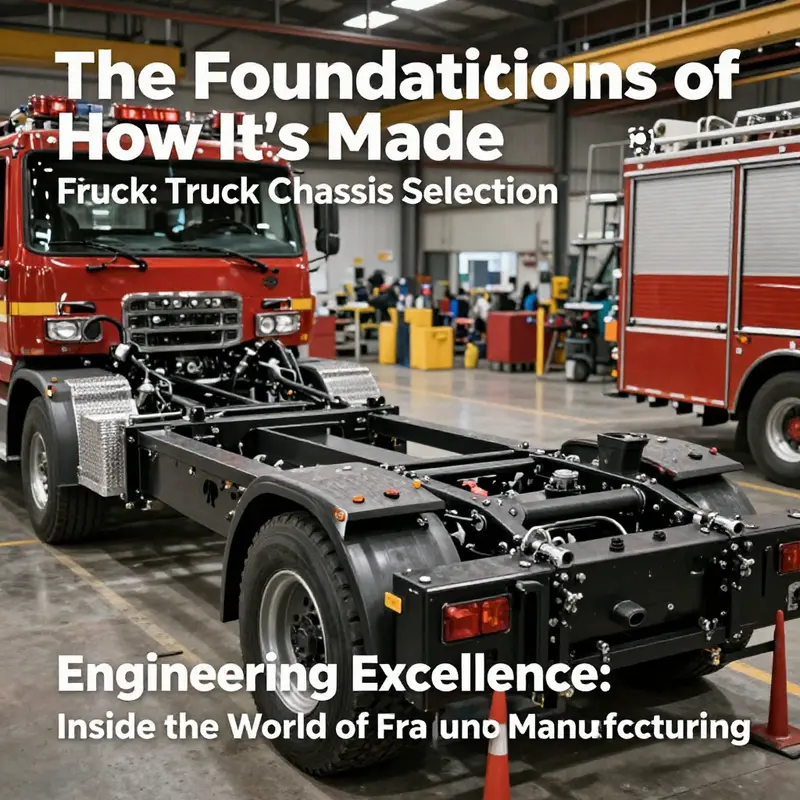
The foundation of a fire truck is not a flashy ladder or a gleaming water cannon; it is the chassis—the rigid, disciplined spine that supports every other system, holds the machine together under stress, and carries the weight of life-saving equipment into danger. The chassis is more than a frame; it is a carefully engineered platform that determines how quickly a crew can reach a scene, how safely the apparatus can maneuver through tight urban corridors, and how reliably it can sustain high-demand operations across hours of continuous use. Because the chassis must endure mission-critical loads while preserving balance and control, manufacturers treat its selection as a strategic, non negotiable step in the fire apparatus building process. This stage is guided not only by raw strength, but by a holistic view of performance, safety, maintenance, and compliance with respected standards that shape how emergency vehicles are imagined, built, and tested.
At the core of chassis selection is the recognition that a fire truck is a hybrid of mobility, strength, and precision. The vehicle must carry heavy water tanks, pumps, ladders, rescue tools, and protective equipment, all while maintaining a stable center of gravity and predictable braking. The drive configuration matters, with 4×2 and 6×4 layouts offering different advantages. A 4×2 setup tends to deliver better fuel efficiency and simpler weight distribution, which can be ideal for urban departments with smoother roads and shorter response routes. A 6×4 arrangement, by contrast, affords higher traction and payload capacity, proving beneficial in rural or rugged environments where roads are less predictable and access to water supplies or hydrants may require more robust off-road performance. The chassis decision thus becomes a balancing act between maneuverability, payload, and terrain-specific demands. It is a selection process that foregrounds real-world operational profiles over abstract specifications, ensuring the completed vehicle can perform where it matters most.
Beyond drive geometry, the chassis must support a long list of structural and electronic needs. Modern fire apparatus sit on frames engineered to tolerate fatigue, corrosion, and the cumulative stresses of rapid acceleration and sudden braking. The cab and body integration requires seamless steel or aluminum framing, with considerations for repairability and long-term maintenance. A robust chassis often employs a welded, corrosion-resistant backbone, designed to withstand years of exposure to moisture, road salt, and the harsh environments typical of firefighting. Crucially, the chassis must provide attachment points and mounting surfaces for the heavy components that come later in assembly—the water tank, high-pressure pump, foam or dry chemical systems, and ultimately the ladders and rescue tools. The design philosophy is to create a resilient core that does not demand compromises in the later stages of construction when the vehicle is most active.
Sourcing and evaluating chassis suppliers is a careful, multi-criteria process. Manufacturers weigh capability, geographic location, and production scale against the department’s needs and geographic realities. A dependable supplier network reduces lead times and enables more accurate forecasting for customization. In practice, this means engaging with established, globally oriented chassis makers who can provide standardized frames with room for customization while maintaining consistent quality control. The aim is to secure a platform that can integrate with a wide range of bodies and firefighting systems, while also accommodating ongoing maintenance and future upgrades. A strong supplier relationship supports not only initial build quality but also serviceability after delivery, which is essential for public safety fleets that operate around the clock.
Another layer of consideration involves advanced chassis systems. Modern fleets increasingly rely on electronics that monitor engine health, transmission status, fuel efficiency, and brake performance. Digital diagnostics, telematics, and integrated stability controls can be embedded from the outset, ensuring that the vehicle remains responsive under demanding conditions. These enhancements help crews avoid surprises during critical missions and enable maintenance teams to plan interventions with precision. Such systems must be compatible with the contiguous architecture of the fire apparatus, so engineers design the chassis with interfaces that allow smooth data exchange between driving dynamics, powertrain management, and the firefighting equipment that will be installed atop the frame. When the chassis can talk to the rest of the vehicle, it reduces risk and elevates reliability, because potential issues are detected before they become emergencies on the street.
The operational profile of a department deeply shapes the chassis specification. Urban departments often require compact, highly maneuverable frames with excellent braking performance and tight turning radii. Narrow streets, tight corners, and pedestrian-heavy environments demand precise handling and predictable response. Rural departments, or those serving challenging terrains, may prioritize higher ground clearance, stronger torque, and the ability to carry larger water payloads. For wildland or mixed-use fleets, the chassis must support all-terrain capability without compromising on stabilization and control. This is not about chasing a single “best” chassis; it is about aligning the backbone with the mission landscape. The goal is to provide a platform that accommodates the body, pumps, tanks, and five-alarm readiness without forcing operators to trade safety for speed or rescue for reach.
Chassis evaluation goes beyond mechanical specs. The selection process weighs the producer’s capacity for customization, the proximity to maintenance infrastructure, and the responsiveness of after-sales support. Since fire trucks must endure high use, a robust service network is essential. Departments prefer manufacturers that can offer regional technical support, spare parts availability, and clear turnaround times for maintenance or repair work. The evaluation framework also includes consideration of regulatory alignment. Fire apparatus are subject to rigorous standards that govern design, performance, and safety. Aligning with these standards from the outset helps ensure a smoother path through the later stages of build, testing, and commissioning. The NFPA’s influence, while American in origin, provides a widely recognized benchmark for overall design philosophy, reliability, and operational safety that resonates with international teams preparing apparatus for cross-border operations or meeting diverse regulatory expectations. The chassis, as the bedrock, must be able to accept these standards as a natural part of its integration with other subsystems and the final vehicle architecture.
To ensure that the chassis remains compatible with a broad spectrum of firefighting bodies, engineers emphasize modularity and standardization in mounting points and interface connections. This approach minimizes re-engineering when different bodies are paired with the same chassis platform. It also supports easier upgrades as technology evolves or as department needs change—whether a different water tank size, a larger pump, or a new foam system is introduced. The modular strategy reduces lifecycle costs and extends the useful life of the vehicle, which is a critical consideration for public fleets that must deliver value over many years of service. In practice, this means that the chassis is designed with a thoughtful tolerance for a wide range of future equipment sets, allowing for straightforward integration without compromising structural integrity or safety.
A key part of this planning happens during supplier evaluation and early design collaboration. Engineering teams work with chassis manufacturers to map out the anticipated load paths. They consider how the weight will shift as water is filled, as the pump operates at high pressure, and as a ladder or other heavy equipment is deployed. By modeling these scenarios, designers ensure the frame can handle the dynamic stresses without overstressing joints or straining suspension components. The outcome is a chassis that maintains stability under load, preserves ride quality for the crew, and supports precise steering and braking even when the vehicle is fully loaded. This kind of foresight matters in high-stakes environments where every fraction of a second counts and maintaining control can be a matter of life and safety.
In the wider context of standards and regulation, the chassis forms part of the system that must comply with comprehensive guidelines governing design and construction. While each region may modify or emphasize certain requirements, the core idea remains consistent: the backbone must be safe, durable, and capable of delivering consistent performance in emergency conditions. The NFPA 1901 standard, which sets forth the expectations for automotive fire apparatus, shapes how designers approach alignment between the chassis, the body, and the onboard firefighting systems. Compliance is not an afterthought but a guiding thread that runs through procurement, engineering, testing, and final acceptance. This alignment reduces risk, streamlines certification, and helps ensure that the finished vehicle can be deployed quickly and with confidence across diverse deployment scenarios.
The dialogue between chassis selection and subsequent systems—water tanks, pumps, foams, ladders—is a continuous one. Decisions made at the chassis stage reverberate through the rest of the build, affecting not only performance but also maintenance, safety margins, and operator experience. The weight distribution established by the chassis influences how the tank and pump are mounted, how the apparatus is balanced when ladders are extended, and how the vehicle behaves on the road during emergency responses. A well-chosen chassis supports a balanced integration where the front axle carries the critical steering and braking loads, while the rear axle accommodates the heavier payload and the dynamic forces generated by pumps and water flow. In this way, the chassis acts as the anchor around which the fleet’s firefighting capability is designed, tested, and deployed.
The journey from chassis to fire apparatus is a careful, disciplined progression. It begins with a clear understanding of mission requirements, spans a pragmatic assessment of available platforms, and culminates in a design that harmonizes strength with agility, and reliability with maintainability. The chassis is not merely a frame; it is a coordinate system that coordinates all later components, ensuring they work together under stress, load, and time pressure. When a department dispatches its new fleet to a building blaze, the confidence that every inch of the machine is engineered to survive the heat, vibration, and complexity of the mission comes not from a single component but from the integrity of the chassis and its capacity to underpin the entire firefighting architecture. For anyone tracing the path from concept to frontline service, recognizing the centrality of the chassis is to recognize the blueprint for reliability in emergency response.
External reference: standards and best practices governing design and construction of automotive fire apparatus can be found in NFPA 1901. For a detailed, up-to-date framework, see https://www.nfpa.org/Code-and-Standards/Digital-Products-and-Services/All-Online-Products/NFPA%201901.
Pumping Power on Wheels: The Integrated Installation of Fire Pumps and Water Delivery Systems
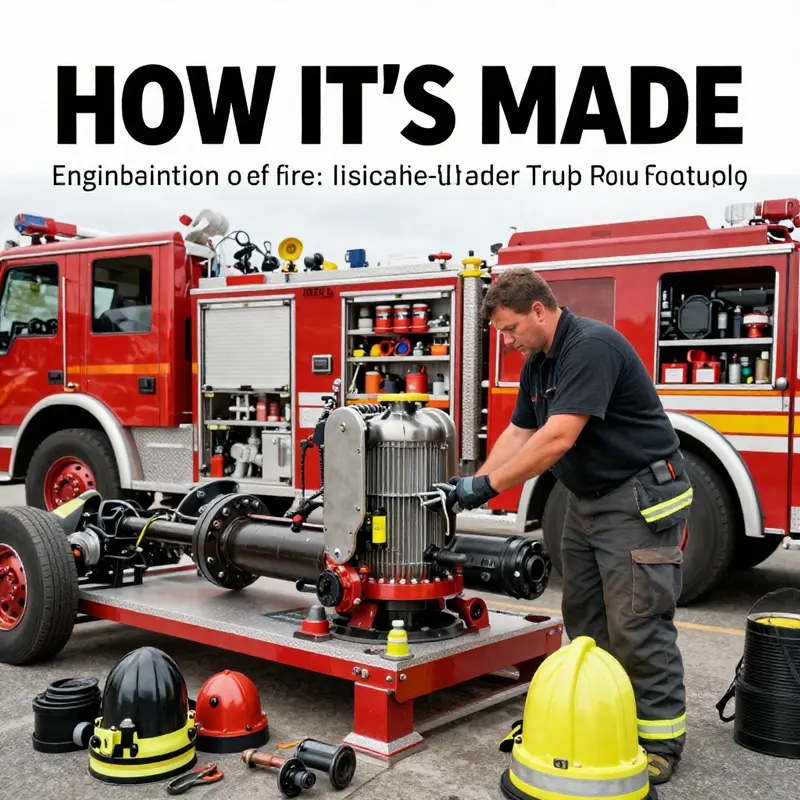
When a heavy-duty chassis is selected for a fire truck, it marks the start of a journey from a generic vehicle into a purpose-built tool for emergency response. The shift from mobility alone to mobility with mission begins in the pump compartment and the water delivery network. Here, engineers translate raw mechanical energy into hydraulic power, and they design a compact, rugged pathway for thousands of liters of water to move at high pressure through hoses and onto the fire scene. The pump is not merely a powerful component; it is the heartbeat of the vehicle’s firefighting capability. Its housing must withstand heat, dust, and vibration, so the surrounding bay is engineered to be fire-resistant, thermally insulated, and mechanically isolated from the rest of the chassis. Vibration dampers cushion the pump from road shock, while access panels allow technicians to service seals, impellers, and valves without compromising safety. The pump itself is generally a centrifugal design chosen for predictability, continuous duty, and a smooth, controllable discharge. The surrounding plumbing—pipes, manifolds, and fittings—must balance tight packaging with the ability to deliver large volumes of water rapidly, a balance that defines the vehicle’s capability on the ground and its reliability in the heat of battle.
Powering this hydraulic core is the next key decision: how to drive the pump without starving the rest of the truck. The solution is a power take-off, or PTO, that couples the pump to the drivetrain. With the PTO, the pump can run off engine torque while the chassis continues to deliver traction, lighting, and other essential systems. The drive train must handle high transient loads and sustain operation under harsh conditions, so the PTO is integrated with a robust geartrain and a precise alignment to the pump’s impeller. Correct alignment minimizes vibration and wear, while isolation mounts and protective shields keep the unit quiet enough for crew operations and shield it from heat generated by the exhaust and the engine bay. Once engaged, the pump quickly reaches the necessary rotational speed, generating the hydraulic pressure that drives water through the intake and out through the discharge lines. The beauty of a PTO-driven pump is its independence: even if the main engine is working at high demand for power to other systems, the pump can still deliver steady flow. For longer incidents, a dedicated cooling circuit helps manage heat in the pump and its drive, preserving performance and avoiding degradation of materials that face thousands of hours of start-stop cycles.
The water delivery network is the visible face of the pump’s work. Water can come from onboard tanks or be drafted from external sources such as hydrants or natural bodies of water. The intake begins with a strainer basket that catches debris and a suction hose that mates securely to the pump. In many builds, an automatic priming system accelerates the process of creating suction. A volute pump or small vacuum priming device evacuates air from the suction line so water can begin flowing confidently, even when drafting from a still or muddy source. Once primed, water travels through the pump and exits via the discharge side into a manifold or through individual outlets. The discharge arrangement is deliberately flexible: it typically includes multiple outlet sizes—2.5-inch and 3-inch connections, with occasional four-inch options—to accommodate a wide range of hoses, nozzles, and aerial apparatus. This multimodal approach lets a single pump serve several crews or lines at once, maximizing efficiency and giving firefighters options as the situation evolves. The operator’s control panel becomes a central command post, displaying pressure, flow, and pump status while offering quick access to valve positions and hose configurations. The layout is tested to ensure it minimizes losses along long hoses and maintains stable pressure across multiple lines, a necessity when the incident demands rapid, high-volume water application.
To expand the system’s versatility, many modern fire trucks incorporate additional agents beyond plain water. Foam concentrates or dry chemical extinguishing agents can be integrated to broaden the attack against certain fire types. The water delivery network must accommodate precise mixing or direct dispersion of these additives. This requires metering valves, dedicated piping routes, and control logic that can be activated from the same dashboard used to manage water flow. The goal is to maintain the integrity of the core water circuit while offering a reliable means to deliver an optimized mixture to the nozzle. Because additives can interact with metals or cause coating degradation, materials selection becomes critical. Corrosion resistance rises to the top of the list for tanks and piping, while impellers, seals, and fittings receive coatings and materials chosen for resistance to cavitation and abrasion. Even seemingly small components such as gaskets, O-rings, and fasteners are specified for high-temperature tolerance and chemical compatibility to withstand the assault of harsh firefighting environments.
Beyond the core hardware, the electrical and hydraulic interfaces provide essential control and coordination. The pump, intake, and outlets feed into a centralized control system that monitors pressure, rpm, temperature, and fault conditions. In newer installations, digital monitoring and remote diagnostics give specialists a window into performance trends, enabling predictive maintenance and preemptive adjustments before a failure can disrupt operations on an active mission. Remote control interfaces, where present, allow firefighters to adjust pump speed or switch discharge configurations from the cab, reducing exposure to heat and smoke. The hydraulic system is sized for peak demand but designed to avoid excessive heat buildup and chatter, ensuring that the operator experiences stable, predictable performance in high-stress situations. The careful layout of pipes and valves minimizes turbulence, preserving laminar flow where possible and making the entire system more forgiving under harsh conditions. Taken together, these elements—mechanical integrity, intelligent electronics, and thoughtful ergonomics—convert a simple water pump into a responsive, mission-ready tool at a moment’s notice.
Quality control and safety testing mark the final act in the installation sequence. Before a truck leaves the line, the pump and water network undergo rigorous validation. Pressure tests verify that every connection, valve, and joint can withstand the required loads across the anticipated range of flow rates. Leak checks confirm there are no hidden drips that could erode performance at high temperature or under vibration. The test program often includes simulated drafting scenarios to confirm reliable priming and sustained flow when water is drawn from external sources. Engineers look for cavitation in the pump—where vapor bubbles form and collapse under high speeds—and take steps to minimize it through design choices such as impeller shape, clearances, and intake routing. They scrutinize seals and gaskets, confirm fastener torque after thermal cycling, and ensure that vibration levels stay within safe limits for both the crew and the vehicle structure. This comprehensive testing is not mere formality; it secures the long-term reliability of a system that must perform when it matters most and endure thousands of starts and stops, hours of operation, and exposure to heat, road dust, and moisture.
The installation of a fire pump and its water delivery network is a synthesis of engineering disciplines. It binds hydraulic science with mechanical design, electrical control with human factors, and maintenance planning with field performance. The result is a compact, highly capable module integrated into the fire truck that can deliver thousands of liters per minute at elevated pressures, even when the water source is uncertain or terrain challenges demand flexibility. This integrated system is more than a collection of parts; it is the operational core that makes the vehicle an agile platform for firefighting tactics. The design philosophy emphasizes reliability, serviceability, and adaptability to evolving mission profiles, from urban conflagrations to rural or wildland incidents. As a practical matter, the pump compartment and water network are the products of broad expertise and relentless testing, aimed at ensuring the operator can deliver decisive action with speed, precision, and safety.
Zewnętrzny zasób: National Geographic – How Fire Trucks Work
Built to Battle Flames: Inside Tank Construction and Fire-Suppressing Systems of the Modern Fire Truck
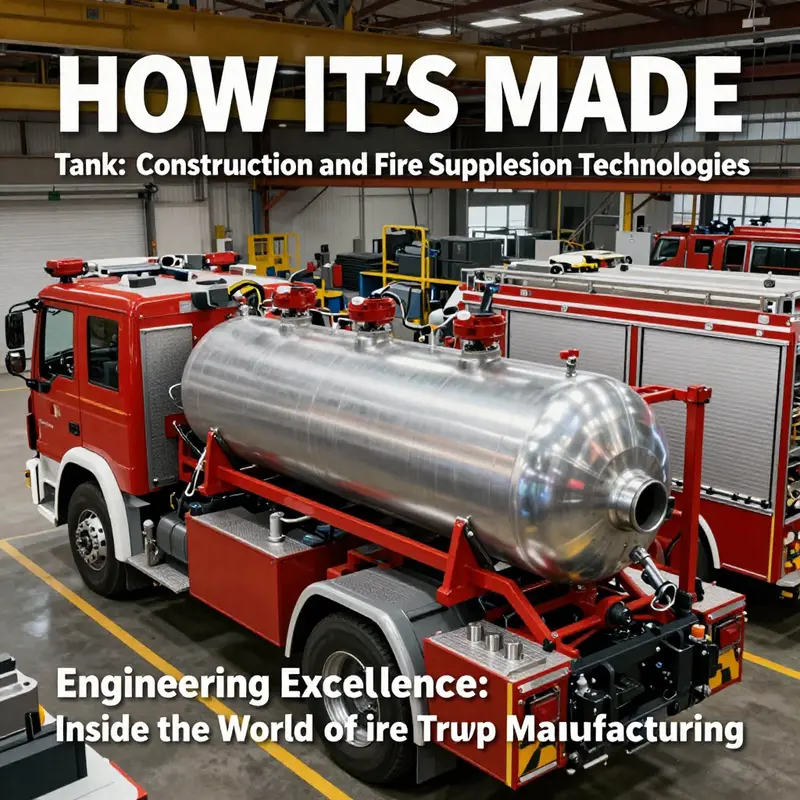
The water and foam tanks at the heart of a fire truck are more than vessels for fluid. They are engineered enclosures that must endure the rigors of dynamic motion, extreme temperatures, and chemical exposure while delivering life-saving capability at the push of a handle. In the modern design, the tank is conceived as a high-strength, corrosion-resistant chamber whose shape, mounting, and internal features are as carefully considered as the engine or the pump. The choice of materials—often stainless steel or advanced aluminum alloys—reflects a balance between durability, weight, and long-term resistance to the harsh environments these vehicles operate in. Stainless steel delivers excellent resilience to repeated pressurization and contact with firefighting agents, while aluminum alloys keep weight manageable, improving acceleration, braking, and handling. Each material carries a set of tradeoffs, and design teams weigh them against the intended duty cycle, climate, and the expected mix of water and foam concentrates. The tanks themselves are constructed with a focus on longevity; seams are welded with precision to minimize the risk of leaks under high vibration and rapid changes in orientation. Internal baffles are a common feature, arranged to disrupt the free movement of liquid during transit. This sloshing, if unchecked, can destabilize the vehicle and hamper steering or braking in an emergency. Baffles create a layered, stratified flow that preserves stability even when the truck is negotiating sharp corners on a city street or traversing uneven ground on the way to a scene. The design philosophy here is simple yet demanding: keep the fluid contained, minimize stress on the chassis, and ensure a predictable, controllable discharge once the pump is engaged. Petty concerns about kit clutter disappear in a firefighting scenario; the tanks must integrate gracefully with the pump and hose systems, the aerial ladder, and the onboard foam infrastructure. The manufacturing process embraces rigorous standards from the outset. Tank fabrication follows recognized engineering practices and is tested to meet international codes such as ASME and ISO. These standards demand robust, verifiable methods for forming, welding, and finishing, with explicit criteria for leak-tight integrity and structural endurance. The welding process itself is a carefully choreographed sequence. Techniques such as TIG and MIG welding are selected based on the material, thickness, and desired seam quality. Each weld bead is inspected, sometimes with non-destructive testing methods, to confirm there are no hidden flaws that could compromise a critical joint in service. The aim is to eliminate weak points where fatigue could accumulate under the repeated pressurization cycles that occur during a fire call. Once the welds pass inspection, the interior surfaces of the tanks are treated to coatings or linings that resist corrosion and facilitate cleaning. The coating system is chosen to withstand exposure to water, detergents, foam concentrates, and, occasionally, firefighting chemicals that might linger in a scene. The result is a container that not only holds liquid but also resists the slow, creeping impact of chemical attacks and moisture intrusion that would otherwise shorten its service life. Testing completes the picture. Hydrostatic testing subjects the tank to pressures well above its intended operating range to verify that the walls remain intact and the joints do not leak. This step, coupled with pressure decay tests and acoustic emission checks, provides a confidence that the tank will perform under the most demanding conditions. The emphasis on quality control is not merely about preventing leaks; it is about ensuring predictable performance under stress, so firefighters can rely on the truck when seconds count. The tank design does more than hold water. It houses the foam system, a sophisticated subsystem that enhances the truck’s ability to combat a broader range of fires. Foam concentrates are stored in dedicated compartments within or adjacent to the tank, kept separate from water to prevent any accidental reaction during transport. When a call requires the suppression of Class B fires involving flammable liquids, the proportioning system steps into action. This system blends foam concentrate with water in precise ratios that vary by foam type and application, creating a stabilizing blanket that cools the fuel and blankets it against re-ignition. The proportioning mechanism is tightly integrated with the pump and plumbing network, ensuring a steady, controllable mix even as flow demand changes at the scene. Foam concentration performance rests on accurate control and robust delivery hardware. The pumps chosen for these tasks are high-pressure beasts by design, capable of delivering thousands of gallons per minute. They draw water from onboard tanks or from external sources such as hydrants, and they push it through a network of hoses and nozzles at the nozzle, where firefighters direct the stream where needed. The engines powering these pumps are strong diesel units, engineered to deliver peak torque and reliable endurance over long shifts. In many modern configurations, the propulsion and pump drive train are designed to maximize reliability while keeping under-hood temperatures in check. The horsepower profiles for these systems typically fall in a broad range that can extend from the mid-200s to just over 400 horsepower, depending on the truck’s size and intended duties. This power translates into rapid discharge capabilities, ensuring a sustained, high-volume stream that can reach upper floors, navigate tight streets, or reach remote locations where water supply is limited. The capacity of the onboard water tanks follows a similarly practical logic. Common sizes for municipal and industrial attack involve volumes in the five- to ten-thousand-liter range, or roughly five to ten cubic meters. The choice of tank size is not merely about how much water a truck can carry; it directly affects the vehicle’s stability, its range between fill sites, and the ability to maintain continuous stream for the duration of a rescue operation. Designers account for these dynamics by shaping the tank, choosing appropriate mounting points, and selecting a coating that minimizes weight creep while preserving exterior integrity against road salt, environmental moisture, and accidental impacts. In addition to water storage, many fleets incorporate foam and dry chemical systems that extend the range of tactics available to firefighters. Foam not only lowers the surface tension of water but also provides an insulating layer that slows heat transfer to fuels, creating a window in which other actions can be taken. Dry chemical extinguishing agents, when present, offer rapid knockdown of certain electrical or electronic fires, though they require careful handling and specialized nozzles. All these suppression technologies must be carefully compartmentalized to prevent cross-contamination and to ensure that the right agent reaches the right fire scene in the right proportion. The same attention to detail allocated to the tank and foam system is extended to the rest of the vehicle. Aerial apparatus or hydraulic platforms associated with some trucks add another layer of complexity. When present, the platform is mounted with care to maintain center-of-gravity balance and to preserve stability during extended operations. The control systems for the ladder or platform are integrated with the vehicle’s hydraulic architecture, enabling firefighters to deploy at a moment’s notice while the ground crew maintains control of vehicle handling. The overall structure benefits from a rigorous quality culture. Before any unit ships, it undergoes a battery of safety and performance tests that explore how the vehicle behaves under load, during dynamic maneuvers, and in crash-simulation scenarios. Regional regulatory requirements influence the certification path, with some markets requiring compliance with specific product safety, emissions, and export controls. The emphasis on regulatory readiness is not purely bureaucratic; it ensures that the truck can be deployed safely in a broad range of environments—from crowded urban corridors to industrial landscapes with harsher operating conditions. Across the industry, manufacturers emphasize customization. The core tank and suppression architecture are then paired with a modular approach to fittings, mounting brackets, lighting, and access panels. This modularity enables fire departments to tailor the truck to local needs, such as specialized foam formulas, additional pump capacity, or integrated communications equipment. The result is a vehicle whose heart beats with the confidence that comes from rigorous engineering, precise manufacturing, and exhaustive testing. While the exact components and configurations vary, the underlying logic remains constant: build a tank that endures, pair it with a reliable pump and a disciplined foam system, and envelop it in a chassis that offers robust performance, predictable handling, and a safe, durable platform for those who respond to the most demanding emergencies. As the chapter closes on tank construction and fire suppression technologies, a broader picture emerges. The fire truck is not a single function but an integrated system where hydraulics, fluid dynamics, materials science, and safety engineering converge. Each element—from the material selection in the tank to the foam concentrate and the high-pressure delivery system—contributes to a singular goal: to give firefighters the tools they need to save lives and protect property when every second counts. For readers seeking a deeper dive into the practical engineering and manufacturing decisions that shape these machines, a comprehensive external resource offers a closer look at how fire trucks are built and how their many subsystems work together in real-world scenarios: https://www.engineering.com/featured/how-fire-trucks-are-built
Forging Reliability on the Front Line: Safety Systems and the Rigor of Fire Truck Testing
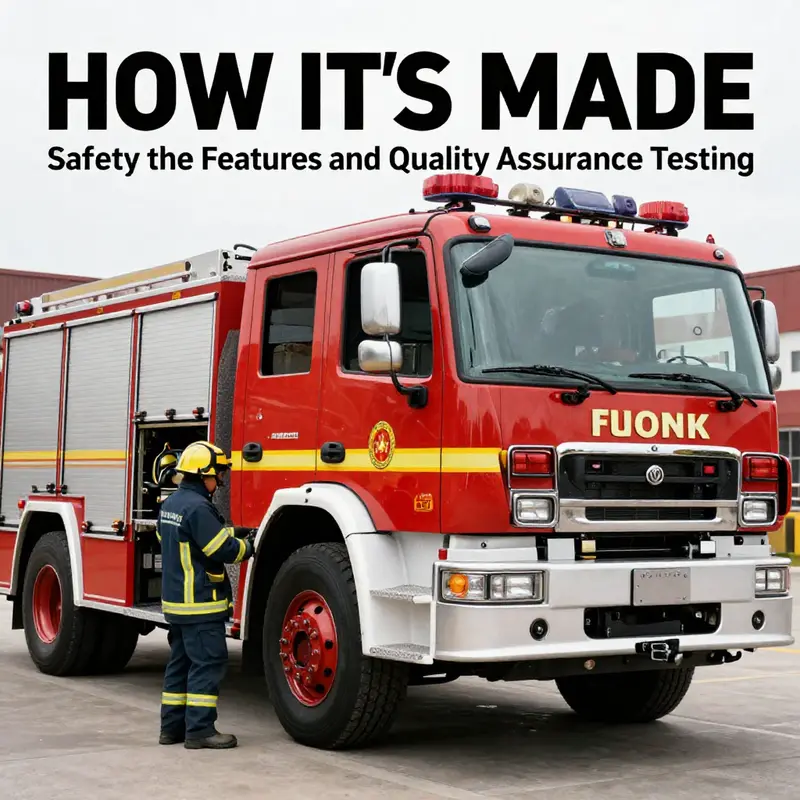
A fire truck is more than a vehicle; it is a purpose-built instrument of life preservation. Its purpose is straightforward yet exacting: respond the moment an alarm sounds, arrive with enough power to control flames, and protect both crew and civilians in the most dangerous situations. Behind that mission lies a carefully assembled chain of design choices and manufacturing disciplines that fuse toughness with vigilance. From the frame to the water pump, from the lighting rigs that carve through night to the high-stakes testing that certifies performance, every detail is calibrated to survive the worst conditions the streets can deliver. This chapter follows the arc of making a fire truck through the lens of safety features and quality assurance, showing how reliability is engineered into every layer and proven under pressure before a single bell is rung in service.
The process begins with a foundation that must endure the harsh realities of emergency response. A heavy-duty truck chassis is selected not merely for its raw strength but for its compatibility with a life-support system on wheels. Modern fire apparatus builders typically work with robust, commercially available chassis that offer configurations such as four-by-two or six-by-four drive systems. The choice of drive layout is more than a matter of traction; it dictates how weight is distributed when the tank is full, how the vehicle handles when parked on a curb or on uneven ground, and how the crew can maneuver in narrow urban environments. A chassis chosen for a fire truck is treated as a platform for safety and capability, a base that must not bend under pressure but rather transmit power and control to every connected system with predictable precision.
Once the chassis is settled, the next major installation centers on the heart of the purification and delivery system: the fire pump. The pump is not just a piece of equipment; it is the critical link between onboard water storage and the hoses that deliver life-saving streams of water or foam to the scene. The pump must operate at high pressures and at peak flow, drawing water from the onboard tanks or from external sources like hydrants while maintaining constant, clean flow through complex piping and control valves. The pump’s performance is tightly coupled with the engine and transmission, because a sudden surge or drop in pressure can ripple through the entire operation. This system is subjected to rigorous testing during assembly to ensure it continues to perform under the heat, vibration, and duty cycles typical of long shifts, rapid starts, and frequent cycling between high and low pressures.
Water storage is the next major thread in the fabric of a fire truck’s capability. Large-capacity tanks, commonly ranging from five to ten thousand liters, are mounted securely to the chassis. The tanks are typically fabricated from corrosion-resistant materials such as stainless steel or aluminum, selected for durability, weight management, and ease of cleaning—a non-trivial concern when the apparatus is involved in challenging environments or multiple shift rotations. The water system is not an isolated reservoir; it is an integrated network that includes foam or dry chemical backup options when Class B or Class C fires require more than water alone. These agents are stored in dedicated compartments and delivered through pressurized lines that mix with water or discharge directly into the discharge stream. The ability to switch seamlessly between water and suppression agents, and to manage their delivery with precision, is a core safety feature and a strategic advantage on the fire ground.
Beyond the core pumping and tank systems, the ladder or aerial platform is a defining element for certain types of apparatus. An aerial ladder or platform, often extending tens of meters, is a hydraulically operated mechanism designed to reach upper floors with control and safety. The ladder must extend smoothly, lock securely, and hold a stable position even under dynamic loads from wind, vehicle motion, or operator movements at height. It is equipped with safety rails, clear control panels, and sometimes integrated lighting and communication systems to facilitate work in darkness or smoke. The ladder’s reliability is a direct function of the engineering that precedes it: materials chosen for structural integrity, joints designed to handle repeated extension cycles, and hydraulic circuits that resist leakage and maintain predictable performance under heavy use.
Safety, in the final analysis, is about a system’s ability to protect people—the firefighters inside, the public around, and the victims awaiting rescue. Modern fire trucks incorporate a suite of safety features that work in concert to reduce risk and increase effectiveness. High-intensity scene lighting illuminates dark streets, burning buildings, and obstructed access routes so that crews can see hazards clearly and occupants can be located with greater speed. Thermal imaging cameras cut through smoke by detecting heat signatures, enabling firefighters to locate people and hot spots even when visibility is poor. Personnel monitoring systems track the location and status of crew members inside hazardous zones, providing real-time command oversight and enabling rapid intervention if someone is in distress or out of contact with the team. Structural design elements—fire-resistant materials in critical areas, reinforced cab enclosures, and robust braking and stability systems—form the backbone of survivability for all occupants of the vehicle.
Lighting and visibility are not cosmetic add-ons; they are strategic tools that alter the risk calculus of an operation. Scene lighting is engineered to minimize shadows, reduce glare, and provide uniform coverage around the vehicle. When combined with the foam or water streams, the lighting system helps the operator predict spray patterns and control nozzle pressure with greater accuracy. The thermal imaging system is a classic force multiplier, letting operators see through smoke, locate trapped occupants, and guide rescue routes without relying on guesswork. These devices are integrated with the vehicle’s onboard diagnostics and communications networks, so a change in power, a drop in battery voltage, or a malfunction is flagged before it can compromise a critical procedure.
Equally important are the personnel monitoring systems that track the whereabouts and status of firefighters inside hazardous areas. By integrating wearable sensors with onboard cameras and centralized command dashboards, teams can be alerted immediately if a firefighter exceeds a safe operational threshold, such as a drop in air supply or a loss of contact. This level of situational awareness is transformative for incident command, enabling decisive decision-making and rapid allocation of resources to the most dangerous sectors of a scene. The cab itself is designed to protect its occupants, with reinforced structures to resist mechanical shock, fire-resistant materials for seat and interior surfaces, and advanced braking systems that combine electronic stability control with anti-lock braking to maintain control during abrupt maneuvers or wet road conditions.
The pursuit of safety does not end with the cabin or the pump. The entire vehicle layout is crafted to minimize ergonomic strain and maximize reliability under stress. Non-slip flooring, clearly labeled control zones, protected routing for hydraulic lines, and accessible maintenance points all contribute to a safer, more maintainable apparatus. The design philosophy favors modularity in a way that does not sacrifice safety; compartments are designed so that essential tools and agents can be accessed rapidly without opening compartments that could compromise stability or expose crew members to hazards. In essence, the vehicle is built to be both a robust platform and a responsive safety system, where every component is tested and every interface designed for clarity and reliability under the most demanding conditions.
Quality assurance and safety testing sit at the center of this manufacturing narrative. Before any vehicle is deemed ready for the street, it must pass through a gauntlet of tests that simulate the rigors of real-world use. Hydraulic system integrity checks are a cornerstone of this process because the lifeline between water, foam, and nozzle depends on leak-free, stable pressure delivery across a broad operating envelope. Telescopic ladders and articulating platforms undergo dedicated hydraulic testing to verify smooth extension, precise control, and secure locking in every orientation. Vehicle stability and maneuverability tests assess how the heavy, tank-laden chassis behaves when steering inputs are applied at different speeds, on varied terrains, or when abrupt weight shifts occur during pumping or platform movement. Real-world scenario simulations push the truck through sequences that resemble emergency braking with loaded tanks, continuous pump operation over extended periods, and repeated cycles of equipment deployment to reveal any hidden weaknesses.
The testing regime is anchored in a framework of international standards and certifications that give operators confidence in the truck’s readiness. While the specifics can vary by region, common benchmarks include mechanical integrity, electrical and hydraulic safety, fire protection, and environmental resilience. Trusted standards bodies and certification programs validate that the vehicle meets or exceeds defined performance criteria, ensuring compatibility with widely used firefighting practices. This standardization underpins global market readiness and cross-border procurement, allowing fire departments in diverse climates and jurisdictions to rely on a common assurance of quality. The role of verification is clear: it is not enough to assemble a powerful pump and a hefty chassis; the assembled system must demonstrate predictable behavior under endurance, heat, vibration, and time, with every critical path proven under simulated and controlled field conditions.
An essential dimension of the chapter’s narrative is the careful balance between customization and standardization. Fire departments often require a degree of customization to address local topography, water sources, and response strategies, which means manufacturers must be flexible in adapting pumping capacity, tank size, spray patterns, and hose configurations. Yet the backbone—safety features, QA testing, and the adherence to universal safety and performance standards—remains immutable. The manufacturing philosophy emphasizes early integration of safety features so that the final assembly does not become a patchwork of add-ons but a coherent system whose parts reinforce one another. Digital twins, computer simulations, and precision manufacturing techniques enable engineers to model how an intensified load on the ladder interacts with the chassis through bumps and turns, or how a high-pressure water stream affects the stability of a moving platform. Such tools help catch design gaps long before any physical prototype is built, shortening development cycles while elevating reliability.
The production line itself is a careful choreography. After the chassis and pump assembly, the water tanks, foam systems, and dry chemical channels are mounted with exacting alignment to minimize vibrations and reduce long-term wear. Electrical harnesses are routed to minimize heat sources and to prevent chafing, and control panels are positioned for intuitive operation by firefighters in full turnout gear. Each subsystem undergoes a dedicated set of checks, but the true test lies in the integrated, end-to-end evaluation where the entire vehicle operates in concert. The pump runs while the ladder extends, while lighting reconfigures the operator’s field of view and the onboard monitoring displays flash warnings if any subsystem shows signs of fatigue. It is in this integrated testing that the vehicle earns its confidence; it must deliver high performance without sacrificing control, safety, or crew well-being.
As the vehicle exits the workshop, it carries with it a certification narrative as well as a functional one. Regional compliance programs and global standards together form the umbrella under which every unit is evaluated. Even though some markets may emphasize specific regulatory schemas, the overarching expectation is consistency: a fire truck should behave predictably, be navigable under demanding conditions, and preserve the integrity of its safety and suppression systems through years of use. Providers of these machines continually refine their processes, balancing the need for customization with the discipline of standardization. The result is a fleet of apparatuses that can be deployed with confidence, knowing that the vehicle not only carries fire suppression capability but also embodies a robust safety ecosystem and a proven track record of reliability.
For readers who want to explore the formal standards guiding these designs, the official bodies publish comprehensive guidelines that address everything from hydraulic system requirements to structural safety criteria. These standards underpin the daily work of engineers, technicians, and operators who rely on these machines to perform at the very edge of human capability. In the end, it is this combination of thoughtful design, rigorous testing, and unwavering compliance that makes a modern fire truck not merely a vehicle but a dependable partner on the front line of emergency response. The road to readiness is paved with safety features that protect people, with quality assurance steps that prove reliability, and with a shared commitment to upholding standards that transcend borders and ensure every mission begins with confidence.
External reference for further standards and testing protocols: ASME Fire Apparatus Standards.
brush fire trucks, wildland firefighting, fire safety equipment, off-road fire trucks, firefighting technology, business safety, emergency response vehicles
The manufacturing of fire trucks is a sophisticated process that incorporates a variety of engineering principles and safety standards to produce effective emergency response vehicles. From the careful selection of the chassis to the installation of advanced firefighting systems, each stage is pivotal in ensuring reliability and performance. Understanding these intricacies not only highlights the commitment to safety and efficiency but also underscores the vital role that these vehicles play in protecting lives and property. As business owners in the relevant sectors, this knowledge can inform more strategic decisions regarding equipment procurement and operational readiness.

