
















Retired fire trucks, often seen as nostalgic reminders of public service, can present unique opportunities and challenges for business owners. However, before considering the use of a retired fire truck, understanding the myriad factors involved is essential. From safety concerns to legal requirements and operational challenges, this article dives into what business owners should know. The subsequent chapters will illuminate safety issues associated with driving these vehicles, detail the legal frameworks governing their operation, and explore the operational complexities that come with handling such specialized machinery. Finally, we’ll discuss alternative uses for retired fire trucks that go beyond driving, providing insights into how they can fit into your business strategy effectively.
Beyond the Siren: The Real Road Reality of Driving a Retired Fire Truck
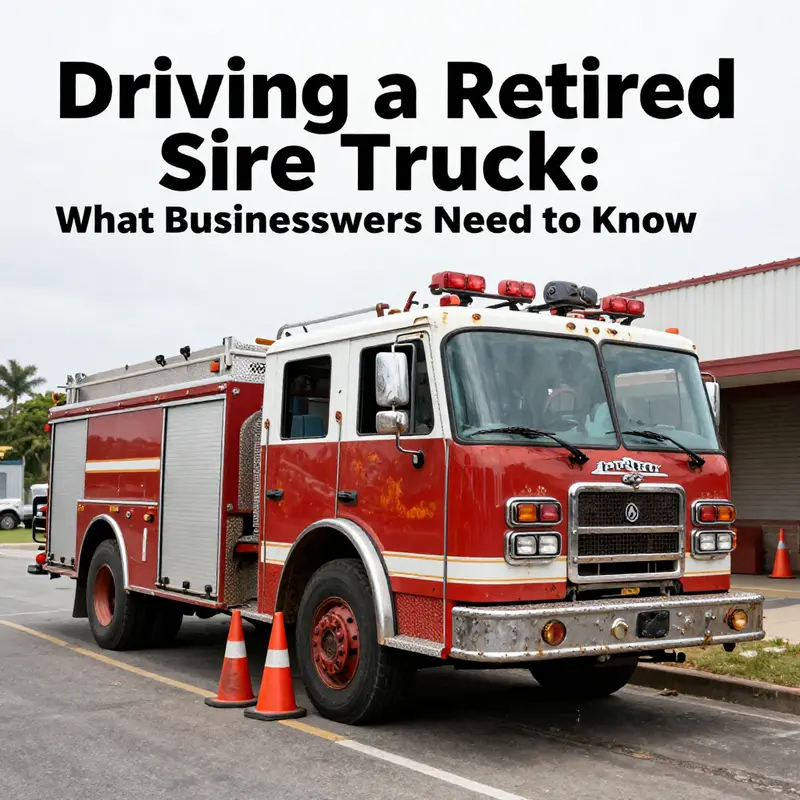
The allure of a gleaming chariot from the era of white helmets and loud demands is easy to imagine. A retired fire truck, with its red paint dulled by time and its bustle of hoses and ladders replaced by a quiet cabin, can look like a dramatic centerpiece at a parade, a museum, or a private collection. Yet the question, can I drive a retired fire truck, opens a doorway to a web of safety, legal, and operational questions that cannot be answered with nostalgia alone. The answer, for anyone who intends to place such a vehicle on a public street, is complicated and emphatic: you must proceed with caution, almost as if you were handling a vehicle that has never rolled onto a roadway. It is not simply a matter of sitting behind a steering wheel and turning the key. It demands a sober assessment of condition, a clear understanding of rules, and an appreciation for the specialized handling that such a machine requires. The chapter that follows threads these threads together. It moves from the hard realities of mechanical aging to the broader landscape of licensing, inspection, and safe-use contexts, and it does so in a way that respects the expertise of professional responders while acknowledging the curiosity of enthusiasts who want to learn from history without inviting danger.
A retired fire truck is not a factory-new vehicle, nor is it a typical used vehicle. In many cases, it has spent years out of service. The word decommissioned is more than a label; it signals a substantial change in purpose and often in the vehicle’s interior. Important systems that would normally be in near-constant operation—brakes, steering, hydraulic lines, electrical circuits, and the pump apparatus that once sent water rushing toward a blaze—may have been disassembled, removed, or allowed to deteriorate. The exterior can look sound enough, but corrosion, worn rubber components, and aging electrical insulation can hide behind panels and under frames. The tires, especially if the truck has sat idle or in less than ideal climates, may have dry rot or flat-spots that make a dynamic, high-load situation risky. Even the suspension system, designed to absorb jolts and keep a heavy vehicle stable on uneven terrain, can suffer from long-term neglect. The result is a vehicle whose outward appearance does not reliably reveal the interior health of its critical subsystems. Any attempt to drive such a machine on public roads invites a cascade of failures that would be unacceptable in the heat of an emergency parade or in a routine city street.
Design specifications add another layer of complexity. A fire engine is engineered to deliver speed and power under demanding conditions. It is a heavy, high-torque machine with a long wheelbase, substantial mass, and a high center of gravity. The operators for whom these vehicles are designed must balance agility with stability; abrupt maneuvers, sudden lane changes, or tight turns can become dangerous propositions for someone who is not trained to manage the vehicle’s physics. Even if a retired fire truck has been made roadworthy through modifications, those changes must be verified by professionals who understand the original design intent and the alterations that were necessary to bring the vehicle to a street-legal state. Without careful, certified calibration, a retired fire truck can behave unpredictably, with a risk of loss of control, tip-overs on curves, or collisions in situations as common as city intersections or busy roundabouts. The risk is not theoretical; it springs from the combination of a large, rigid body and imperfectly maintained systems that were never intended for everyday driving in modern traffic.
Legal concerns form a gate that many enthusiasts encounter early in their planning. The realm of road use for decommissioned or non-operational firefighting apparatus is tightly regulated in most regions. In practice, this means that simply deciding to “drive it home” from a yard is not a legal plan. In many jurisdictions, a retired fire truck cannot be operated on public roads unless it has undergone a rigorous inspection, appropriate modifications, and an appropriate registration process. The exact licensing terrain varies, but common themes emerge: you will need a driver’s license that covers large or specialized vehicles, and you will likely require additional certifications that reflect the truck’s technical characteristics, payload, and intended use. The idea that a standard driver’s license suffices is a dangerous misconception that can lead to fines, license suspension, or more serious penalties if operated outside the scope of the law. The administrative path—inspection, modification, testing, and certification—exists to protect not only the operator but every person who shares the road. A retired fire truck that has not been through these steps is, at best, illegal to operate on public streets and, at worst, a hazard that exposes the operator to criminal charges.
The practical reality of using such a vehicle extends beyond the letter of the law. Even for enthusiasts who intend to use a retired fire truck only at exhibitions, parades, or private demonstrations, there is a host of constraints and considerations. Driving a large, heavy vehicle through urban environments demands a level of spatial awareness that goes beyond ordinary driving. The vehicle’s mass, its multiple blind spots, and its limited maneuverability require a well-planned operational protocol, dedicated personnel, and a clear set of safety procedures. In routine traffic, the truck’s size can endanger pedestrians, cyclists, and other drivers, particularly in congested settings or in areas with narrow streets and sharp corners. Its braking distance, which is influenced by weight and braking system condition, can be significantly longer than that of typical passenger vehicles. The risk is compounded if the vehicle’s water pumps, hoses, or ancillary equipment are still in place but in inoperable condition. Even the act of turning on emergency lights or sirens, which might be tempting for visual impact at events, calls for strict adherence to local regulations that govern the use of such signals. The public perception of a parade vehicle can turn into confusion or alarm if signals are misused or misunderstood in real traffic.
From an environmental and operational standpoint, the presence of a retired fire truck on the road introduces a spectrum of hazards that go beyond mechanical failure. The vehicle’s environmental footprint can be outsized compared with typical cars, trucks, and vans. Fuel efficiency is usually poor for these purpose-built machines, and emissions systems—whether original or modified—may not meet current standards. A vehicle designed for rapid response is oil-stained with history; its maintenance history often reveals patches rather than a coherent, up-to-date service record. These factors interact with the vehicle’s size in ways that complicate safe operation. The road becomes a shared space with a heavy, unwieldy traveler that has limited visibility in all directions, especially for the driver who cannot easily see around the vehicle’s bulk. Pedestrians and other motorists may underestimate the time needed for the truck to clear intersections, pass through crosswalks, or stop in emergency-style fashion. The danger is not simply to others; it is to the operator as well. A single miscalculation in speed, braking, or steering can have disproportionate consequences because of the truck’s mass and the vulnerability of surrounding traffic in bustling environments.
For those who want to pursue legitimate, safe paths with such vehicles, there are clear avenues. If the goal is to own or display a retired fire truck, the most prudent route begins with a candid assessment of the vehicle’s condition and a thorough discussion with authorities or certified professionals. Some operators opt for purpose-built, road-ready examples that have been remodeled to meet current safety and regulatory standards. In these cases, the process involves not only mechanical overhauls but also a complete re-evaluation of the vehicle’s compliance with local statutes, weight limits, and insurance requirements. For those curious about alternatives that preserve the historical and educational value without risking public safety, exploring options like dedicated training or exhibition vehicles is wise. There are vehicles designed specifically for exhibitions that retain the look and feel of firefighting heritage while incorporating modern safety features and compliant control systems. Such options offer a meaningful way to engage with the history and importance of firefighting without exposing the public to undue risk. If you are drawn to the engineering and operational drama of these machines, consider examining the broader ecosystem of specialized, purpose-built options that are designed to be road-friendly while still delivering the authentic experience of a fire service vehicle. For example, the Industrial Fire Truck category provides a window into vehicles engineered for serious duty without sacrificing modern safety and regulatory compliance. This path can satisfy curiosity about how these machines work while keeping you firmly on the right side of the law and the road. Industrial fire trucks. To keep safety at the forefront and to gain a pragmatic sense of what a retired fire truck represents in today’s landscape, it is essential to consult authoritative resources and to acknowledge the boundary between preservation, display, and road use.
If your interest rests in understanding the broader framework for safe operation, the National Fire Protection Association (NFPA) provides a rigorous base of guidance that developers, restorers, and operators rely on when assessing risk and establishing compliance. The NFPA 2023 Fire Truck Safety Report is a foundational reference that highlights risk assessment, maintenance standards, and the kinds of checks that help prevent incidents related to older, high-performance vehicles. This resource underscores the importance of professional oversight, documentation, and ongoing maintenance as the backbone of any responsible approach to dealing with a retired firefighting apparatus. In short, the path from curiosity to responsible practice runs through careful evaluation, appropriate licensing, and a commitment to safety that reflects the vehicle’s original purpose and the public’s trust. For anyone serious about engaging with these machines, treating them as a heritage asset that deserves careful stewardship—not as a motorized toy for casual road use—will keep the journey educational, meaningful, and safe. The lessons here are not erasures of romance but reminders that history must be managed with prudence and respect for the rules that keep streets safe for everyone.
In sum, the question of whether you can drive a retired fire truck touches a spectrum of realities that extend far beyond personal interest. It intersects with the integrity of mechanical systems, the demands of modern road regulation, the realities of urban driving, and the overarching responsibility to public safety. The right approach is to treat the vehicle as a serious project that must pass through professional channels, with appropriate inspections, modifications, and licensing, and to consider alternative pathways that preserve the spirit and spectacle of firefighting history while keeping roadways secure. By following this path, enthusiasts can honor the profession’s sacrifices and achievements without compromising safety, legality, or common sense. And for those drawn to the tactile world of firefighting technology, there remains a wealth of legitimate avenues—restoration projects, educational demonstrations, and specialized, compliant vehicles—that offer a compelling and responsible way to explore the artistry and engineering of these iconic machines. The road to understanding is not a straight line from nostalgia to ownership; it is a measured descent into the practicalities that safeguard lives while still enabling a respectful encounter with history. The journey, in other words, is as important as the destination, and it begins with honest appraisal, professional guidance, and a clear commitment to safety for all who share the road.
External resource: For authoritative guidelines, refer to the NFPA 2023 Fire Truck Safety Report. https://www.nfpa.org/News-and-Resources/Newsroom/2023/September/2023-Fire-Truck-Safety-Report
Beyond the Siren: Navigating Law, Safety, and the Real Road of a Retired Fire Truck
A retired fire truck carries more than a nostalgic glow and a chorus of memories from long nights at the station. It also carries complexity—legal layers, safety standards, and a set of practical realities that can surprise even the most well-meaning enthusiast. The question, can I drive a retired fire truck, opens a doorway into a floor of rules that rarely align with the romance of ownership. The vehicle you once saw roaring toward an emergency is now a private asset, and with that status comes obligations that demand respect for public safety, for other drivers on the road, and for the communities that fund and rely on legitimate, well-regulated transportation. The core tension is simple to state and surprisingly hard to navigate: a machine built for a specific, urgent purpose is not automatically ready for everyday road use once the siren goes silent. Decommissioning typically strips away much of the life-support that kept a fire truck functional on dispatch, including firefighting equipment and, in many cases, the specialized electrical and hydraulic systems that operate pumps and alarms under pressure. Even if a retired truck looks complete enough to pass a casual glance, it may no longer meet current roadworthy standards, emissions requirements, or crash-safety expectations. To step into the driver’s seat of such a vehicle is to step into a framework where legality and safety must align with the vehicle’s intended use. The journey from curiosity to authorized operation begins with clear-eyed expectations about what the vehicle is, what it can legally do, and what it requires to meet modern rules. At the heart of this journey lies a triad: registration and title, roadworthiness, and licensing. These elements do not exist as a single, universal checklist. They reflect a mosaic of state and local regulations, the vehicle’s condition, and its intended use. In some places, a retired fire truck can be kept and displayed without facing road taxes or licensing as long as it remains off public streets. In others, even short, ceremonial drives demand everything from inspections to specialized permits. This is not a matter of personal preference but a matter of public safety, insurance requirements, and accountability to the communities that rely on predictable, lawful roads. If you are drawn to the idea of ownership, the first pivot is a conversation with the local Department of Motor Vehicles or its equivalent. Title and registration processes for non-standard vehicles can require proof of ownership, photographs, and documentation that classifies the vehicle as something other than a typical private automobile. Some jurisdictions offer historic or non-operational classifications that help reduce recurring taxes or fees, but those classifications do not automatically authorize street use. The key phrase is road use. A designation that enables display does not, by itself, grant permission to roll onto a public thoroughfare. When a retired fire truck is intended to share the public lane for any purpose beyond static display—whether for a parade, a charity event, or a private road demonstration—the vehicle must meet current safety standards and be properly insured. Roadworthiness becomes a central criterion. Regulators expect that heavy vehicles be equipped with functioning brakes, lights, tires, and emissions control that comply with current standards. For a vehicle designed decades ago, achieving this can require modernizing certain components or securing exemptions that are carefully documented and inspected. An official inspection is commonly the gatekeeper for road use. Even if a vehicle passes a display inspection while static, that same vehicle may fail on a road test if critical safety elements are not up to modern codes. The scope of what is required can be surprising. The pumps, piping, gauges, and other hydraulic systems that defined a fire truck’s operational life must be evaluated for reliability and safety. The controls that might have been intuitive in a firehouse context could be unfamiliar to a general driver and require hands-on training to operate safely. In practice, that training extends beyond the basic driving portion of a license. It may involve understanding weight distribution, emergency signaling, and the specific handling characteristics of a vehicle built to carry heavy loads and to respond under stressful conditions. This is why licensing discussions often reference the vehicle’s size and weight, and why a person may need a Commercial Driver’s License (CDL) or a licensing category suited to large vehicles. In the United States, for example, the driver must hold a license appropriate for the vehicle’s size and weight. A standard passenger license rarely suffices for a large fire truck, and the process to obtain a CDL includes age requirements, testing, and medical fitness criteria. Some regions may allow limited or special-use authorizations for certain historic or non-operational vehicles, but these do not routinely permit unrestricted road use. The “use” of the vehicle becomes a critical hinge. If the retired fire truck serves as a static museum piece, or is transported only to private events with permission, the rules tend toward display and licensing that do not require the vehicle to be street-ready. Yet if there is ever a desire to move the truck under its own power on public roads, even for a short distance, the entire regulatory spectrum tightens. Traffic laws apply, and the vehicle must meet those laws in practice, not merely in intention. State and local laws further complicate the equation. Some jurisdictions maintain programs for historic, civic, or memorial vehicles, offering some relaxed or reinterpreted rules. Others cling to stricter interpretations that treat a retired fire truck like any other heavy vehicle, with the attendant permit and inspection prerequisites that come with it. The complexity is not meant to deter but to deter the unsafe and the impulsive. For a prospective owner, a prudent path begins with dialogue with the DMV and, ideally, with a licensed mechanic or safety inspector who understands both heavy vehicles and the special demands of fire apparatus. The path is not a single-file line; it is a sequence of confirmations: ownership and title; classification; regulatory compliance; safety inspections; insurance arrangements; and, crucially, a clear, documented plan for the vehicle’s intended use. In many cases, the permit to drive may hinge on the vehicle’s use in a controlled context—organized events, parades, or private property where public road access is limited and well supervised. When public road use is contemplated, temporary or annual permits might be available, but they almost always come with conditions: a defined route, a schedule, a requirement for a certified driver, and often a police escort or traffic control measures during the event. The practical reality is that the thrill of owning a retired firefighting machine must be matched by a commitment to ongoing compliance. That includes regular maintenance, documentation of inspections, and ongoing safety training. It also means understanding that the vehicle’s original design prioritized rapid acceleration, heavy braking, and robust hydraulics for water pumping. Those features, while essential on the fire ground, translate on the open road into different safety considerations—long stopping distances, exhaust emissions, and a driver’s need to anticipate how the vehicle will interact with modern traffic. In evaluating whether to pursue ownership or to operate a retired fire truck, many enthusiasts find value in framing the vehicle as a unique asset—one that could serve as a community showpiece, educational tool, or ceremonial vehicle—rather than as a daily driver. The emotional appeal is powerful, but it must be balanced with the sober realities of legality and safety. For those who want a sense of what the equipment looked like and how it functioned, exploring related vehicle categories can be informative. For example, the broad spectrum of industrial fire trucks, which includes vehicles designed for industrial sites and specialized operations, provides some context about the kinds of systems and components that might appear in a retired unit. If you want a sense of the equipment lineage and the kinds of configurations that once existed, you can explore the Nesse alinhamento reside o potencial para desbloquear capital, estabilizar cronogramas e fomentar a confiança entre trabalhadores, comunidades e investidores. category to see how these machines were built to meet particular demands. This exploration can sharpen a practical understanding of what would need to be updated or preserved to meet modern standards. It’s also worth noting that, beyond regulations, there is a broader ecosystem of support for these machines. Restorers, insurers, and safety professionals often collaborate to ensure that any vehicle brought into public life does so responsibly. Insurance, for instance, is not a trivial afterthought. The risk profile of a large, heavy vehicle with unusual controls demands specialized coverage, protective measures for passengers and bystanders, and clear stipulations about use, maintenance, and display. Ownership thus becomes a careful negotiation—between aspiration and accountability, between memory and modern road safety, between an emblem of public service and the practicalities of today’s regulatory environment. If the desire to drive a retired fire truck is strong, a patient, methodical approach yields the best odds of a lawful and safe outcome. Start with a realistic assessment of intended use, then map the steps needed to align with local laws. Engage a qualified inspector early, rather than waiting until a test drive to learn what must be changed. Gather documentation that demonstrates ownership, maintenance history, and compliance with safety standards. Seek counsel from a licensed professional who understands both heavy-vehicle operations and the nuances of historic vehicle classifications. And be prepared for costs that extend beyond purchase—the costs of upgrades, registrations, permits, insurance, and ongoing maintenance can exceed the initial price tag by a wide margin. The allure remains potent. A retired fire truck can be a powerful symbol of community service and resilience, a moving reminder of the men and women who kept neighborhoods safe. Yet it is only through disciplined attention to legal requirements, safety obligations, and practical road-readiness that such a symbol can be experienced responsibly on public streets. The journey from dream to lawful operation is rarely glamorous in the moment, but it is the only path that honors both the machine and the community it once helped protect. External resource: https://www.transportation.gov
Beyond the Siren: The Realistic Path to Driving a Retired Fire Truck
The idea of steering a retired fire truck can feel like stepping into a moving piece of history. The chrome glare, the broad stance, the faded decals that once glowed with authority—these are powerful images. But history, no matter how romantic, does not substitute for the practical, often unforgiving realities of modern road use. A retired fire apparatus is not simply an old car repurposed for a weekend drive. It is a machine whose life has been spent under conditions that stress every rivet, every hose connection, every control knob. The moment you consider putting it on the public road, you enter a landscape where law, safety, and logistics converge in ways that can catch the unprepared off guard. The aspiration to experience the vehicle’s heft and heritage must be weighed against the obligations that come with responsible ownership and operation. In many respects, the conversation about whether you can legally drive a retired fire truck begins long before you turn the key. It starts with recognizing that these machines were built for a particular purpose, with systems and design choices that rarely align with today’s highway standards or modern consumer expectations. The roadworthiness equation is not about nostalgia; it is about meeting current safety thresholds, environmental rules, and the practical demands of operating a vehicle of unusual size and complexity.
Retired apparatus escape active service, yet they do not exit the legal landscape. The chassis and cab may still be roadable under certain conditions, but those conditions are defined by a web of licensing, inspection, and compliance requirements that vary by jurisdiction. It is common to encounter a threshold where the operator must demonstrate a level of licensing and training that approaches or even exceeds that required for large commercial vehicles. Many of the systems that made the truck an indispensable firefighting tool—water pumps, high-pressure hoses, and complex air and hydraulic networks—are not just optional features; they are the very elements that demand careful handling, routine inspection, and professional maintenance. The practical implication is clear: driving a retired fire truck is not a casual endeavor. It is a specialized activity with its own set of credentials, safety protocols, and ongoing maintenance obligations. The roadworthy status of the vehicle depends not on its age alone but on whether it can satisfy the standards that regulate heavy vehicles on public streets.
One of the most immediate barriers to public-road operation is licensing. The category and level of authorization required to operate a large, specialty vehicle can surpass what a typical private driver holds. While some jurisdictions may offer exemptions or tailored permits for historic or display vehicles, those allowances are not universal. In practice, many retired fire trucks would require a formal certification path that encompasses driver training specific to large, complex vehicles. The training must address the vehicle’s unique physics: its weight distribution, braking energy, and the sometimes awkward steering geometry that comes with long wheelbases and oversized bodies. Add to that the need to manage a vehicle whose safety-critical systems differ radically from a standard automobile, and the licensing hurdle becomes a clear deterrent for casual drivers who may be drawn to the truck by its sentiment rather than its safety profile. The upshot is that the path to legal operation is not a single form or permit; it is a structured journey, often involving highway authority approval, periodic inspections, and proof of proficiency with heavy equipment. This is not about resisting the romance of the idea, but about safeguarding both the operator and the public.
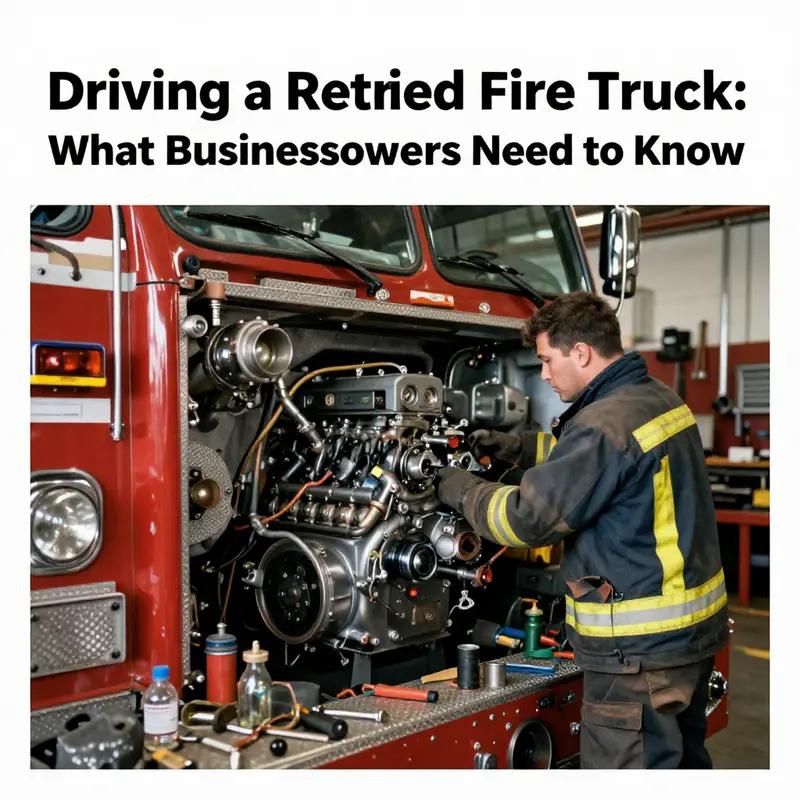
From a safety perspective, the vehicle itself presents a layered set of concerns. Even retired apparatus can surprise with stubborn quirks that the casual observer might miss. A truck that spent years pumping water, under load and with loud hydraulic systems, may show wear in ways that aren’t obvious at first glance. The water tanks, even if emptied, can retain weight and shape stresses that influence handling. The pumps, once integral to mission success, may require a full overhaul to meet contemporary safety and emission expectations. The braking system, often designed for a mass that included thousands of liters of water, can present longer stopping distances than a standard vehicle. The suspension and tires—deliberately robust to handle weight and rugged terrain—also determine road manners, ride quality, and predictability in emergency vehicle simulations. For a potential operator, these are not minor details. They become central to the decision about whether the vehicle should be driven on public roads, even for controlled events or private displays.
Another layer of complexity concerns environmental and regulatory compliance. Older models were built in a different regulatory climate, where emissions, noise, and hazardous materials handling standards were less stringent or differently specified. There is a real possibility that a retired truck could fail to meet present-day emissions or noise thresholds without substantial retrofit. Even if the truck is legally eligible to be driven in some contexts, it may be limited to non-public-road uses or require major modifications that alter its original character and performance. The decision to retrofit invites a difficult cost-benefit calculus. Retrofitting can be technically feasible, yet financially burdensome. The components that would need updating range from exhaust and propulsion controls to braking and electrical systems. These changes can be extensive and may erode the historical value that attracts enthusiasts in the first place. In short, legality and practicality are not always perfectly aligned. A vehicle that looks quintessentially “fire truck” may not be eligible to ply mainstream streets without changes that some owners find either unacceptable or impractical.
Beyond the legal and safety questions, there are logistical realities that shape how a retired fire truck can be used once it leaves active service. The storage challenge alone is substantial. Large apparatus demand substantial space, secure housing, and proper climate control to prevent corrosion and deterioration. The heavy weight of the chassis and tank, even when empty, requires careful handling during loading, unloading, and transport. Transportation itself becomes a logistical puzzle: hiring appropriate heavy-vehicle carriers, arranging permits for oversized loads, and coordinating routes that accommodate bridge clearances and turning radii. When the vehicle is repurposed for a non-emergency role—such as a static display, a training aid, or even a mobile classroom—the modifications must address more than aesthetics. A static display must be safe for visitors who may climb or lean on panels. A training aid has to replicate essential features and controls in a controlled, safe manner. A mobile classroom must ensure passenger safety and ergonomic access to equipment for demonstrations. Each of these uses has its own set of safety standards, which may require removing or securing dangerous equipment, capping lines, and installing protective barriers. The line between preserving history and creating a compliant, safe operating asset is narrow and often requires professional expertise.
The financial dimensions of keeping a retired apparatus in play are rarely as simple as the sticker price or the insurance premium. Decommissioning itself can be expensive, especially when hazardous materials are involved. Asbestos insulation, whether in old insulation, gaskets, or certain components, demands specialized removal procedures carried out by licensed professionals. Lead-based paint, common on older vehicles, requires careful handling and disposal to prevent environmental contamination. Residual firefighting chemicals must be managed in accordance with environmental regulations, which can entail careful cleaning, neutralization, and proper disposal at certified facilities. These processes not only incur direct costs but also create scheduling and logistics burdens that can stretch for weeks or months. Add to this the potential retrofitting expenses needed for modern regulatory compliance, and the financial picture shifts from a curiosity to a serious project with long-term commitments. In some cases, departments or private owners explore alternate routes—selling to museums or private collectors, leveraging donation programs, or creating negotiated displays that avoid road use altogether. The choices reflect a balance between preserving history, honoring public service, and maintaining a sensible stewardship of resources.
For enthusiasts who still dream of rolling a retired rig along a suburban street or a closed course, there are paths that honor safety and legality. Some owners participate in controlled public events, where the vehicle is stationary or moved only under strict supervision and with the appropriate permits. Others pursue models and configurations designed specifically for display and education, ensuring that the vehicle remains a symbol of service without becoming a safety risk on busy roadways. In every case, the prudent starting point is a candid assessment of what the vehicle can legally do today, what maintenance would be required to meet current safety standards, and what the financial and logistical envelope looks like over the years ahead. The aspiration to reconnect with a storied machine remains powerful, but it should be tempered with a sober appraisal of the requirements that govern its operation outside of active firefighting.
For readers who want to explore options that align with both history and responsibility, a fruitful step is to examine nearby fleets, museums, or fire service restoration networks that specialize in preserving apparatus without compromising safety or legality. If you’re curious about the kinds of retired rigs that still circulate in authorized contexts, this category offers a sense of the scale, variations, and configurations of large, heavy-duty vehicles that once served in earnest. À medida que o mercado evolui, compradores que entendem a interação entre preço, condição e tempo de atividade continuarão a encontrar oportunidades que atendem não apenas às metas orçamentárias iniciais, mas também às necessidades operacionais contínuas. provides a window into how diverse these machines can be, illustrating the breadth of sizes and design philosophies that characterize post-service life for firefighting equipment. The key takeaway is that the story of a retired fire truck is not a simple one. It is a layered narrative about safety, legality, and the responsibilities that come with owning and operating a vehicle that bears public service heritage. The decision to drive such a vehicle on public roads is not a personal whim but a decision shaped by training, licensing, compliance, and an honest assessment of risk. Those who tread this path do so with the understanding that their actions carry implications for themselves, other road users, and the legacy of the firefighting profession.
For those seeking a more formal framework around retirement, disposal, and safe reuse, the broader regulatory context is captured in professional standards and guidelines maintained by national safety organizations. These resources emphasize that retirement is not merely a stopgap but a transition that requires careful planning, documentation, and adherence to safety and environmental obligations. They remind readers that the responsible handling of decommissioned apparatus protects workers, communities, and the historical record of public service. In the end, the question is less about the ability to drive a retired fire truck and more about the willingness to navigate a comprehensive process that honors safety, legality, and the lasting significance of these remarkable machines. The vehicle may stand as a monument to service, but its journey back onto the road must be guided by professional judgment, thorough preparation, and a respect for the rules that keep streets safe for everyone.
External references and further reading can provide a structured lens through which to view retirement and disposal, including up-to-date requirements for licensing, testing, and vehicle modification. For official retirement guidelines and best practices, see the National Fire Protection Association’s resources on safe retirement and disposal of fire department vehicles: NFPA Guidelines.
Beyond the Driver’s Seat: Why Retired Fire Trucks Stay Grounded and How They Continue to Serve Communities
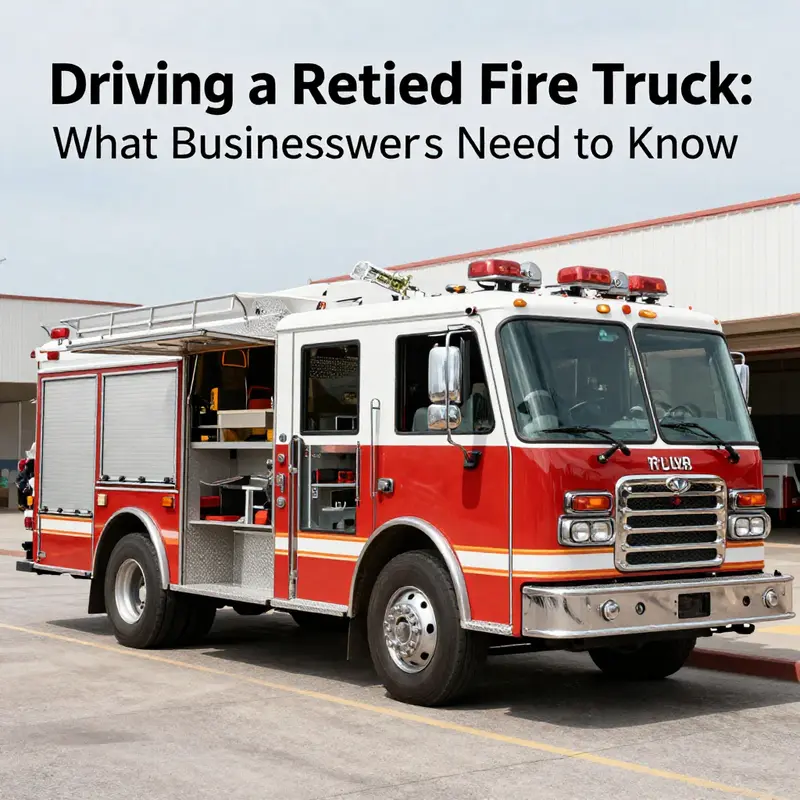
When the sirens fall silent and a truck ceases to haul water or deploy a ladder, the impulse to keep it rolling on public roads can be powerful. Yet the reality is more complex. Retired fire trucks are decommissioned for good reason: they have been stripped of essential firefighting equipment, often fail to meet current roadworthy standards, and embody systems that were never designed to operate safely within the traffic patterns of today. The chestnut of the matter is not simply whether a veteran apparatus can be coaxed back onto the highway. It is whether the vehicle, in its current state, would be legal to drive, safe to operate, and sustainable to insure. For many jurisdictions, the answer is a firm no. The road network has evolved since these trucks first hit the streets, and the regulatory framework that governs large, specialized vehicles has tightened in ways that emphasize public safety, operator training, and vehicle integrity far beyond what a museum piece or a private collector might anticipate. In practical terms, this means that a retired fire truck is rarely a candidate for routine road duty, even if a person possesses a surprisingly convincing zeal for firefighting history along with a substantial garage and a strong warranty on a spare tire.
There is a logic to this rigidity. Fire apparatus, by design, perform under extreme conditions with high risk, large loads, and sophisticated hydraulic systems. Pumps, hoses, water tanks, and pressure controls live in close proximity to pressurized lines and electrical networks. The very act of converting a stationary vehicle into a roadworthy machine would demand a comprehensive re-engineering that touches nearly every system: propulsion, braking, steering, electrical, and safety controls would all need to be recertified. The licensing that accompanies these tasks is not merely about a driver’s license; it encompasses specialized certification for operating heavy vehicles. In many regions, the legal requirement is more stringent than a standard commercial license, reflecting the vehicle’s size, weight, and the unique hazards its original role presented. A driver may need an advanced class, often denoted by designations like B2 or higher, and a medical and skills evaluation that validates the ability to manage a vehicle of this complexity under normal traffic and in emergency-like conditions. The combination of licensing prerequisites, insurance considerations, and registration intricacies often makes the prospect of driving a retired fire truck impractical, if not legally prohibited.
Even when a determined owner has pursued the licensing path and completed the training, the chassis of a retired unit remains a critical stumbling block. The truck’s structure may have rusted culverts in the frame, and the weight distribution, previously tailored for a firefighting mission with water on board, would no longer align with modern highway dynamics. Braking systems, once calibrated for rapid acceleration or sudden deployment of emergency actions, must be compatible with today’s brake standards and road regulations. The steering, suspension, and tire requirements for a vehicle originally built to thunder across streets and fire grounds must meet contemporary performance benchmarks. In short, the vehicle may be mechanically capable of movement, but its overall roadworthiness against current codes is the real hurdle. The safety calculus is not purely about keeping the engine running; it is about ensuring that every component works in harmony with other traffic participants. Public safety agencies, insurers, and licensing bodies prioritize this harmony, recognizing that the failure of any one subsystem could have catastrophic consequences in ordinary traffic, let alone during an emergency response scenario that never actually happens when the truck is retired.
Given these realities, many departments and owners choose a different trajectory for their decommissioned apparatus. Rather than labor to restore a street-ready vehicle that may still fall short of present-day standards, they repurpose the truck in ways that preserve its legacy while aligning with safety, legality, and community value. The shell, the cab, and the chassis—still robust, still capable of withstanding years of use—offer a platform for a range of second lives. These are not mere curiosities; they are practical adaptations that demonstrate how a community can honor its past while embracing responsible stewardship. The repurposing routes are diverse, but they share a core theme: turning a symbol of emergency into a symbol of learning, memory, and service, without compromising traffic safety or public trust.
A prominent path is transformation into a mobile classroom or training center. Inside a decommissioned apparatus, desks, projectors, and safety gear can be arranged to create a compact space that travels to schools, community centers, or rural fire districts. The advantages are tangible. Students encounter a tangible, immersive environment that reinforces safety lessons and disaster preparedness far more effectively than a slide deck or a poster board. For emergency responders, it becomes a hands-on training hub, where equipment that once lived on the frontline is used to teach the next generation of firefighters and first responders. The truck’s presence alone communicates commitment to ongoing education, living tradition, and the value of community resilience. The physical scale of the vehicle makes it a compelling anchor for outreach, inviting conversations about mutual aid, fire prevention, and the importance of preparedness in everyday life.
Another meaningful form of second life is serving as a static display or memorial. A retired unit can be preserved at a fire station, a park, or a museum, with plaques detailing its service history, notable missions, and the people who operated it. In an age where memory can fade, a well-maintained display unit becomes a focal point for veterans, families, and the public to reflect on courage, teamwork, and sacrifice. These memorials anchor local history and offer a tactile connection to the past. They remind younger generations that the equipment on display once answered the call and that real lives were saved through teamwork and training. The visual impact of a vintage fire truck—the red hue, the chrome fittings, the ladder along a cleanly fixed frame—offers an entry point for conversations about the evolution of firefighting technology and the human stories behind the statistics of annual fires and rescues.
A third route is practical storage or shelter use. The generous cab space and the multiple compartments can be repurposed into tool sheds, supply depots, or temporary shelters during disaster relief when more traditional structures are unavailable. In rural areas or during field operations, the vehicle can house essential emergency supplies, communication gear, or medical kits. Though the truck is no longer chasing blazes, its interior remains a stable and secure environment for equipment that must be protected from the elements and accessible when needed. This kind of reuse leverages the original design’s durability and capacity, turning a symbol of rapid response into a dependable piece of community infrastructure when circumstances demand resilience without risk to traffic safety.
There is also room for more creative, community-facing uses. Some organizations convert retired fire trucks into unique commercial spaces—coffee shops, art studios, or pop-up venues—that draw attention to local heritage and spark conversation about public safety with a dash of whimsy. These conversions must be carefully designed to respect safety standards and zoning rules, yet they demonstrate how a vehicle born to respond to emergencies can become a catalyst for civic engagement and cultural life. The very presence of such a vehicle can invite people to learn more about fire service history, while the story behind its preservation invites appreciation for how communities adapt and reimagine their assets.
Finally, parts salvage remains a practical, value-driven pathway for retired trucks. Components like pumps, hoses, ladders, and metal frames can be disassembled and reused in active fleets or repurposed for DIY projects and educational demonstrations. Salvage is not merely about extracting value; it is a form of stewardship that reduces waste and supports sustainability within the fire service. The cycle of reuse echoes the broader ethos that life cycles are continuous, and that even a machine once built for urgent action can contribute to ongoing safety and learning long after its sirens have faded. For those with a hands-on inclination, the process of identifying what remains functional, safe, and compatible with current standards becomes a practical exercise in applied engineering, logistics, and care for equipment that has served a community at its most intense moments.
In all these paths, the core idea remains consistent: a retired fire truck is not simply a relic to be polished and displayed; it is a usable, meaningful asset that can continue to educate, inspire, and assist in ways that honor its service. It is possible, of course, to pursue an exception or a special-use permit in certain locales, but the overwhelming emphasis across jurisdictions is on safety, accountability, and reliability. If someone with a deep-rooted interest wants to explore driving a large, decommissioned vehicle, the most honest answer is to first respect the legal and safety boundaries and then to explore the many non-driving avenues that preserve the vehicle’s legacy while expanding its usefulness to the community. In doing so, communities keep faith with their history and ensure that the story of these machines remains one of service, resilience, and shared learning rather than a risky experiment on public roadways.
For readers curious about how components and equipment from retired units can continue to serve beyond the park or the museum, consider the practical potential of salvaged parts. A simple surge of curiosity can lead to useful insights about maintenance and restoration—without ever compromising safety and legality. And for those who want to see how these stories unfold in real life, many communities publish accounts of their retired vehicles’ second lives, demonstrating that a fire truck’s most impactful chapter does not end at retirement; it simply transitions to a different kind of mission—education, commemoration, shelter, and inspiration. To learn more about the practical, ongoing uses of retired fire trucks, you may explore related resources on fire-truck parts and salvage opportunities, which often serve as a bridge between history and hands-on learning. peças de caminhão de bombeiro.
External resource on second lives for retired trucks: https://www.firehouse.com/articles/124795-retired-fire-trucks-get-a-second-life-as-classrooms-museums-and-more
community safety
The opportunity to drive a retired fire truck comes with significant responsibilities and considerations. As explored, safety concerns, legal requirements, and operational challenges are pivotal factors that business owners must navigate. By understanding these elements, owners can make informed decisions on whether driving such vehicles is feasible or if alternative uses could provide better organizational value. As the landscape of business operations continues to evolve, finding innovative ways to incorporate retired fire trucks may just prove beneficial without the complications of road usage.

