
















Fire trucks are crucial for effective emergency responses. Understanding their speed capabilities is vital for business owners, ensuring they align their operations with fire safety standards. This article delves into various factors, including regulations, vehicle design, operational roles, and real-world conditions that govern fire truck speeds. Each chapter will provide insights into how these elements come together to shape the speed at which fire trucks operate, ultimately affecting public safety and efficiency in emergency situations.
Speed on the Line: Balancing Urgency, Handling, and Regulation in Fire Truck Response
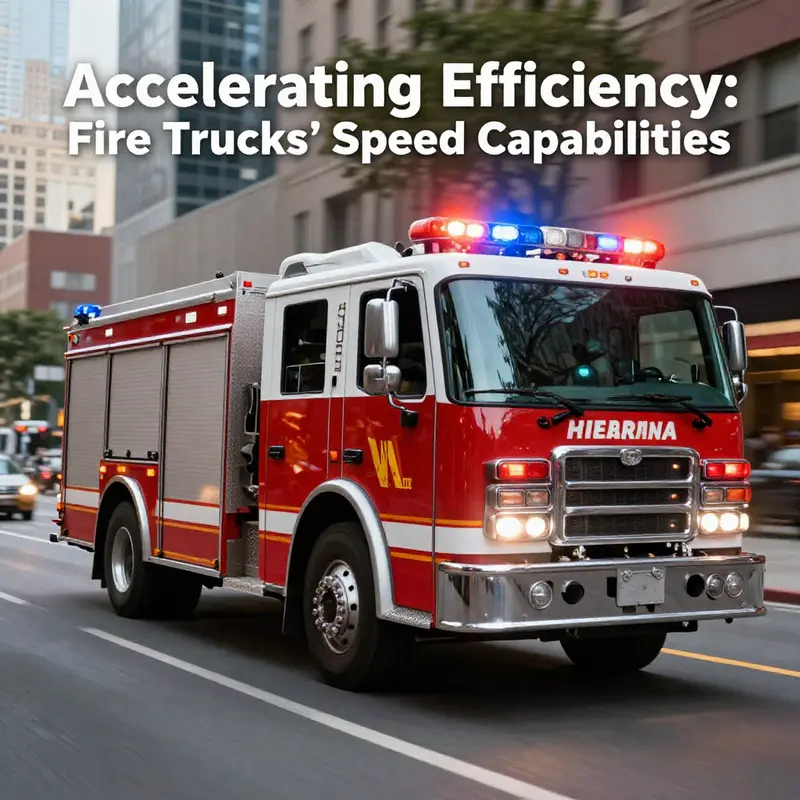
Speed is a tool in the fire service, but it is not a blunt instrument. It sits at the intersection of urgency and safety, capability and constraint, where the clock always favors rapid access to a scene, yet every mile per hour must be earned through careful judgment, engineering, and disciplined operation. Fire apparatus are designed to move quickly when called, yet their primary mandate remains steadfast: reach the incident with the equipment needed to save lives and protect property. In that balance, speed is less about raw acceleration and more about how well a truck translates its mechanical potential into timely, controlled arrival under a complex tapestry of conditions. The numbers tell a story, but that story only makes sense when connected to road reality, weight, and the regulatory framework that governs every emergency run. This chapter traces that story through vehicle configurations, weight driven limits that temper speed, and the practical rules that keep response time aligned with safety for both the public and the responders.
Speed by Design: How Vehicle Architecture Shapes Fire Truck Velocity and Safe Emergency Response
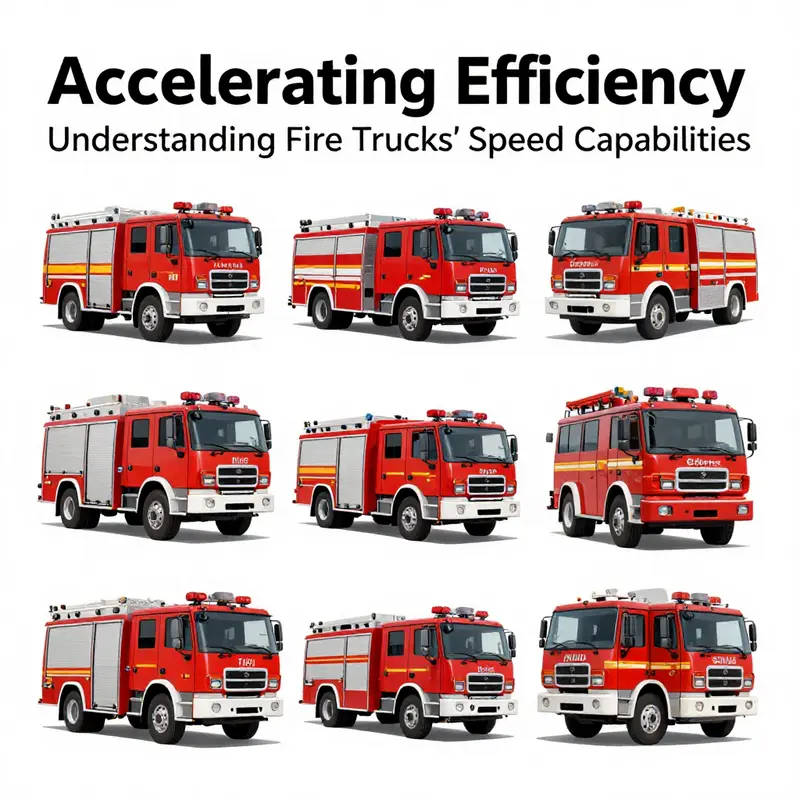
Choosing whether a fire truck can speed is not just a matter of horsepower; it is a design problem solved through weight balance, chassis layout, engine tuning, and aerodynamics. Speed is vital for rapid response, but it must be earned through engineering choices that maximize acceleration and stable handling while preserving maneuverability and occupant safety. This chapter explains how design translates into on‑road speed and how that speed is bounded by real‑world constraints that protect people inside and around the vehicle when the siren blares and time is critical.
Weight is highly visible in speed. Fire trucks carry water tanks, pumps, hoses, gear, and ladders. The gross vehicle weight (GVW) climbs from base chassis to the finished emergency vehicle. Heavier vehicles experience more inertia, which slows acceleration and raises the energy needed to reach top speed. Weight distribution matters: a well‑balanced payload improves throttle response and braking predictability, which can enable faster, safer incident pursuit. Lighter configurations may reach higher top speeds but must still carry essential equipment. Designers balance weight distribution to preserve speed without compromising capability.
Chassis configuration also matters. The chassis shape, wheelbase, axles, suspension, and steering geometry influence stability and handling. In urban traffic, a low center of gravity and strong lateral stability help with faster, safer cornering and maneuvering around obstacles. Multi‑axle designs increase road contact and control under heavy loads, though they add weight. In constrained urban geography, maintaining control during rapid lane changes or evasive maneuvers is often more important than a few extra km/h of top speed.
Engine power and driveline dynamics complete the core equation. A powerful engine improves acceleration, but power must be matched to axle ratios, torque, and transmission behavior to avoid surges or traction loss. The goal is strong initial response and sustainable velocity with minimal gear hunting while staying controllable when fully loaded. A well‑tuned driveline can shave seconds off travel time without sacrificing safety.
Aerodynamics, though often overlooked, contribute to speed and efficiency. Modest refinements reduce drag, improve fuel economy, and enhance high‑speed stability. Clean underbody shaping, smooth grill and cab airflow, and careful edge treatment all help reduce drag without compromising water delivery or equipment operation. The aerodynamic envelope must harmonize with the vehicle’s primary mission: rapid, reliable arrival with crew ready to operate on scene.
Safety remains inseparable from speed. NFPA guidance emphasizes that speed is a means to an endpoint: rapid, safe arrival. Real‑world constraints—road conditions, traffic, driver visibility, and occupant protection—limit how fast a fire truck can responsibly travel. Even when top speed is technically attainable, limits on acceleration or cruising speed may be chosen to preserve stability and precise control during turns and stops. Realistic speed envelopes combine speed, maneuverability, and safety into a disciplined performance profile.
Operational reality shows that road surfaces, weather, potholes, and traffic unpredictability require forgiving handling. In urban responses, speeds around 60–80 km/h are common for fully equipped, urban firefighting configurations to maintain control under heavy load. In rural or highway contexts, higher speeds may be possible where conditions allow safe travel. The objective is not to chase a number on a speedometer but to tailor a speed profile to incident type, terrain, and conditions, preserving safety and effectiveness.
Ultimately, speed in fire‑truck design comes from deliberate engineering that balances weight, chassis, power, and aerodynamics with safety and regulatory constraints. The NFPA guidance anchors the design philosophy: speed enables timely arrival only when it is integrated with maneuverability, visibility, and occupant protection. The result is a family of vehicles capable of rapid, controlled response rather than reckless acceleration.
For readers seeking further context, NFPA resources offer standards and guidelines that inform these decisions. See https://www.nfpa.org/ for more information.
Speed with Purpose: Why Fire Trucks Move Fast—or Not—Depending on the Job
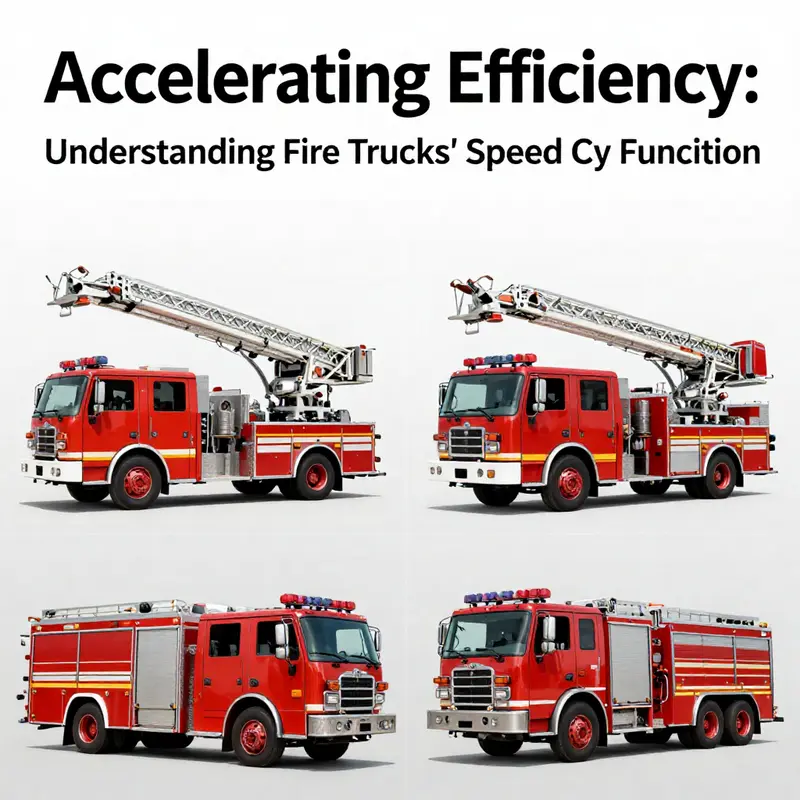
When a fire alarm sounds, speed is not merely a race to the scene. It is a carefully calibrated attribute, inseparable from the mission each vehicle is built to fulfill. Fire trucks arrive in a spectrum of shapes and weights, each optimized for a particular emergency scenario. The question “can fire trucks speed?” thus becomes a question of purpose: how quickly a given unit can reach danger, stabilize a scene, and begin the work that follows. This chapter follows that logic, tracing how speed is woven into design, weight, and operational doctrine, so that response times are minimized without compromising control, crew safety, or the critical task of water delivery, rescue, or high-risk access. In the end, speed is not a single number but a property that shifts with function, environment, and the weight the vehicle carries.
Engine (pumper) trucks embody the core of structural firefighting. They must sprint toward a blaze with urgency, yet they carry heavy payloads: large water tanks, hose lines, and high-capacity pumps that transform momentum into a sustained attack once on scene. The speed they can sustain reflects this dual demand: enough vigor to cut through traffic and reach the zone rapidly, but enough stability to control the mass behind and on board. On highways, pumper tops tend to hover in a moderate band—roughly in the realm of 88 to 113 kilometers per hour (about 55 to 70 miles per hour). That range prioritizes safe handling under load while still delivering a timely arrival. The key is not to chase maximum velocity at the expense of delivery reliability; once the apparatus is en route, the real work begins only when it is safely positioned and flowing water to the incident.
Weight exerts a quiet but powerful brake on speed. The gross vehicle weight of emergency units interacts with speed limits and maneuverability in meaningful ways. Heavier configurations require more careful handling, longer stopping distances, and steadier steering inputs, especially when the road is not perfectly smooth or when water tanks are full and hoses are stowed in tight compartments. In some theoretical speed models, lighter GVW ranges permit higher permitted speeds, while very heavy, fully loaded units lean toward safer, steadier transit with lower extreme speeds. This relationship underscores the practical reality: even among fire trucks designed for rapid response, the top speed is only one piece of the response puzzle. The vehicle must contribute to an effective incident sequence, from the moment it accelerates to the moment water and personnel are deployed.
Ladder or aerial trucks tell a parallel tale, but with a different calculus. Their long, extendable ladders and elevated platforms add impressive capabilities for high-rise rescues, ventilation, and access to elevated windows. That extra apparatus brings weight and a higher center of gravity, factors that complicate speed. In city traffic, the need for precision and stability often leads to a lower practical top speed than a similar-weight pumper. Typical highway speeds for aerial trucks fall in the 72 to 105 kilometers per hour range (about 45 to 65 miles per hour). But the urban reality of tight streets, frequent turns, and the risk of platform sway means they spend more of their journey negotiating the geometry of a city than conquering top-end velocity. The aerial system is a tool of reach, not a drag race mechanism. The performance envelope thus privileges controlled acceleration, predictable handling, and the immediate ability to deploy the ladder once on scene.
Rescue trucks present another facet of speed’s story. These are purpose-built for technical extrications, cramped environments, and rapid access through obstructed or damaged zones. Their agility matters as much as their rate of travel. Weight considerations, specialized cutters, spreaders, winches, and cabin layouts all influence how fast they can realistically move without compromising the delicate balance of traction and maneuverability. In practice, rescue units commonly reach up to about 97 kilometers per hour (roughly 60 miles per hour) on open roads, but their actual operating tempo on a typical urban ring or disaster corridor is shaped by the need to thread through debris, negotiate narrow streets, and coordinate with other responding units. Speed, in this sense, is a low, consistent rumble rather than a high, unbridled sprint.
The wildland fire engine category shifts emphasis again, away from pavement toward terrain. Off-road capability becomes the defining constraint as these engines push through forests, brush, and natural obstacles. On paved roads they may achieve roughly 64 to 80 kilometers per hour (40 to 50 miles per hour), but the real strength lies in their ability to traverse unpaved tracts and uneven ground, where longer travel times on hard surfaces are traded for access to remote fires. Suspension tuning, four-wheel drive, and rugged tires empower forward progress where larger urban apparatus might stall. In wildland contexts, speed is measured not just by a dial but by the distance that can be closed between the unit and a new point of attack in rough terrain where every minute counts.
Among the ranks of fire response, industrial and airport crash tenders (ARFF) stand out for their performance demands. These units must reach aircraft in distress or hazardous-material situations with extraordinary speed, braking power, and acceleration, because every minute matters on a runway and in a terminal environment. International standards for ARFF emphasize rapid reach; some models are engineered to surpass 120 kilometers per hour (about 75 miles per hour) and deliver robust deceleration as a counterbalance to the need for quick access. The design philosophy here leans toward maximum responsiveness: rapid acceleration, robust braking systems, and propulsion that can consistently deliver on the promise to reach a runway or a crash site in minutes. The consequence is a fleet that reads speed as a tactical variable, not simply a kinetic variable.
The broader principle that links these diverse profiles is weight. GVW and ballast—composed of water, hoses, equipment, and crew—act like invisible governors on the speedometer. In some specifications, a lighter GVW permits higher minimum or maximum speed, whereas heavier configurations impose a lower ceiling in practice unless the route and incident conditions demand otherwise. Aerial ladder configurations often have two thresholds: GVW up to a mid-range limit can sustain near-urban speeds with more authority, but when the ladder carriage becomes too heavy, the vehicle’s velocity naturally tapers to protect load integrity and platform control. For aerial units especially, the weight distribution and center of gravity are as important to speed as the horsepower in the engine. The operating doctrine that emerges is that speed must be matched to purpose: fire departments calibrate each vehicle’s speed profile to the scene’s likely geometry, the weight of the load, and the predicted path to effective intervention.
That doctrine is reinforced in field practice by real-world constraints beyond the vehicle itself. Road conditions, weather, traffic density, and the prevailing safety regulations all shape how fast a unit can travel en route to an incident. A slippery surface, a curve with limited sightlines, or congested corridors can temper velocity even for a high-performance ARFF or a nimble rescue unit. The crew, too, plays a central role; pacing, lane discipline, and coordination with other responders influence the speed at which a response unfolds. Water-tankers, for example, typically operate at urban speeds that preserve handling quality and controllability when fully loaded, often landing in a practical corridor of sixty to eighty kilometers per hour depending on traffic and terrain. In all cases, the goal remains the same: deliver timely, reliable access to the incident site while maintaining the ability to execute the work safely once there.
To ground these considerations in a broader field context, the Fire Department Operations Data Report 2024 from the National Fire Protection Association serves as a reference point for how fleets perform across jurisdictions. The report emphasizes that while speed is a key component of rapid response, it is the integration of speed with stability, maneuverability, and water delivery that determines overall effectiveness. The data underscore that departments must balance speed with the risk of instability or delayed operations once on scene. In other words, the fastest unit is not necessarily the most effective if it cannot safely and quickly commence suppression or rescue operations after arrival. The decision to field a particular vehicle type or to deploy a specific configuration often rests on a careful assessment of incident patterns, typical geography, and the procedural expectations of the department’s community. In this way, speed becomes a strategic asset—one that must be tuned to local needs and reinforced by training, maintenance, and clear operating protocols.
For those exploring equipment options and fleet optimization, the conversation about speed also touches the practical question of how to select a balance between reach and maneuverability. Platforms that emphasize extended reach, such as aerial configurations, remind us that speed is intimately tied to how quickly a unit can stabilize a scene and begin work, not only how fast it travels to the scene. Acknowledging this helps fire departments design response architectures that optimize travel time, on-scene operation, and crew safety. When speed is framed as a function of purpose, departments can align their purchasing decisions, training regimens, and urban placement strategies with the actual demands of their service areas. To readers who want to explore the equipment landscape in more depth, a practical lens into aerial-ladder categories can be useful, as these configurations illustrate the trade-offs between speed, reach, and stability. caminhão de bombeiros com escada aérea.
The broader takeaway is that fire truck speed is not a monolithic quantity but a spectrum shaped by function, load, and environment. Engine pumper units prize rapid, reliable delivery of water and hose lines once on the scene; aerial and rescue units emphasize controlled speed that preserves access and precision; wildland engines prioritize off-road capability and durable mobility over highway sprinting; ARFF vehicles push the limits to achieve rapid aircraft reach. The weight of the apparatus, the conditions of the road, and the cadence of the incident all interact to produce a performance profile that is specific to the mission. In practice, departments answer the question of how fast to go not with a single speed limit but with a responsive system that matches vehicle capabilities to the demands of each call. This approach ensures that speed becomes an enabler of safety and effectiveness rather than a standalone metric.
As responders continue to refine their fleets, the interplay of speed, stability, and purpose will remain central to public safety outcomes. The numbers tell one part of the story, but the real measure is how quickly and safely a team can transition from arrival to action, from movement to intervention. In that sense, speed is a discipline as much as a capability—a discipline that turns horsepower into help, and acceleration into rescue. For anyone charting the path from garage to frontline, the chapter of speed remains a living, operational dialogue between design, weight, environment, and the relentless tempo of emergencies. The next chapter will build on these foundations, exploring how technology, training, and policy interact to further harmonize speed with safety across diverse incident types.
External resource: For broader context and national trend data, see the NFPA Fire Department Operations Data Report 2024 at https://www.nfpa.org/News-and-Research/Fire-statistics-and-reports/Incident-Reports/Fire-Department-Operations-Data-Report-2024.
When Heavy Wheels Govern the Siren: How Gross Vehicle Weight Shapes Fire Truck Speeds
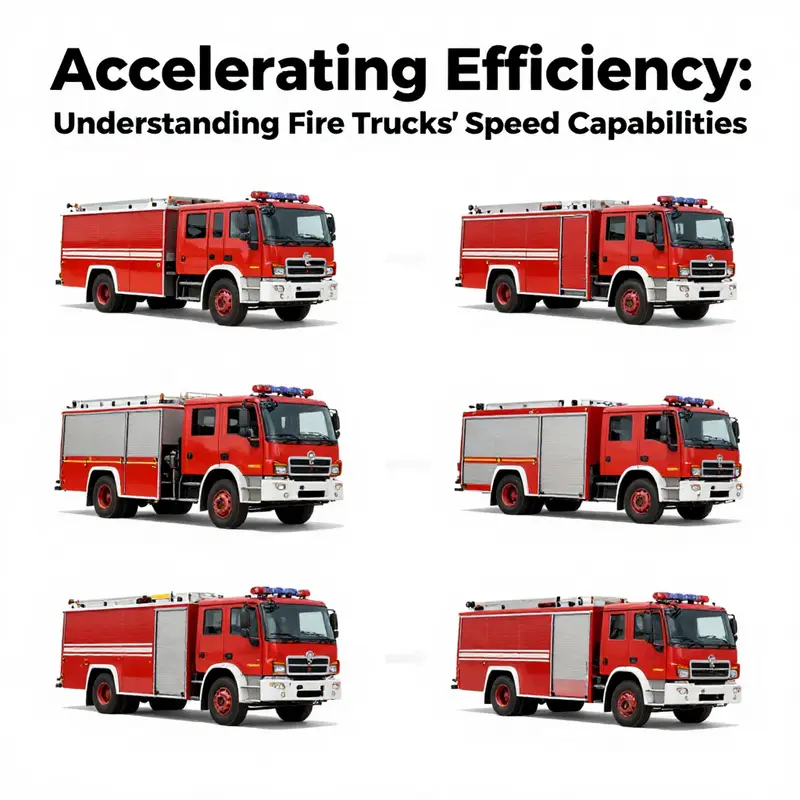
The question of how fast a fire truck can move is not a simple yes-or-no calculation. It sits at the crossroads of engineering, safety, and operational practice. The heavier the load that a vehicle carries, the more its speed must be tempered to preserve control, reduce stopping distance, and keep crews and bystanders safe. Gross vehicle weight, or GVW, is not merely a measure of mass; it is a summary of the dynamic demands placed on a vehicle. Fire trucks, built to respond rapidly to emergencies, nonetheless carry substantial weight—water, equipment, personnel, and specialized gear. In this context, weight becomes a governing factor in what speed is appropriate, permissible by regulations, and sustainable during real-world operations. The overall picture is not simply a matter of max speed; it is a careful balance between the urgency of response and the immutable physics that weight imposes on braking, cornering, and stability.
To understand how GVW shapes speed, it helps to look at the typical weight bands used to categorize fire apparatus. In many regions, a spectrum exists where lighter work-ready units navigate more easily at higher speeds, while heavier platforms require more measured performance. A common framework divides fire trucks into weight ranges roughly as follows: small to medium units with a GVW in the range of a few hundred to a few thousand kilograms can, under favorable conditions, sustain higher speeds. Heavier models, with GVWs in the mid to upper thousands, face tighter speed constraints because stopping distances grow, maneuverability diminishes, and the risk of rollover increases on turns and at the limits of grip. For aerial ladder configurations and other specialized designs, the balance tilts even more toward safety, given the elevated center of gravity and the added sway that high loads can introduce when the chassis is pitched, rolled, or jolted by road irregularities.
The critical relationship between GVW and speed is reflected in explicit, though sometimes nuanced, thresholds. In general terms, heavier fire apparatus are assigned lower maximum speeds to accommodate the increased stopping distance and reduced ability to execute precise, high-speed maneuvers. The GVW bands often cited in regulatory and manufacturing discussions illustrate this logic. For instance, vehicles with a GVW between about 500 and 3,500 kilograms typically have room to operate near higher speeds, say around 90 to 100 kilometers per hour or more, depending on the application and the road environment. Moving into the 3,500 to 12,000 kilogram range consistently prompts a downward adjustment, with operating speed more commonly constrained to the 80 to 90 kilometer per hour region, again influenced by road conditions and the particular function of the unit. When GVW exceeds 12,000 kilograms, speed tends to be distinctly restrained, aligning with safer handling and more conservative acceleration, particularly in urban or mixed-use corridors. Aerial ladder configurations, which grapple with a higher center of gravity and more dynamic load distribution, often carry unique rules: some jurisdictions specify a maximum around 80 to 100 kilometers per hour for these heavy, tall, and unstable platforms, while more stringent caps may apply in crowded environments or when the ladder is deployed.
These general patterns echo a simple but powerful truth: weight is a ballast for speed. Heavier trucks require more stopping distance, more careful throttle control, and more deliberate steering inputs to maintain stability through turns and on uneven pavement. In practical terms, this means that even within categories defined by GVW, speed choices are shaped by the vehicle’s balance of mass, braking capability, suspension design, tire grip, and powertrain. A vehicle that looks identical on a schematic might behave differently on the street if its payload, water load, or equipment complement shifts—an assertion that underscores why departments often treat a given maximum speed as a safety ceiling rather than a constant to push against.
Beyond the physics, regulatory and operational considerations further tune the top speed of heavy emergency vehicles. A notable regional trend, for example, centers on speed limiter regulations that apply to heavy-duty trucks. In late January 2026, a province in China introduced rules requiring speed limiters on trucks with total weight above 8 tons or a minimum load capacity above 5 tons. While these rules target commercial vehicles, they typify a broader safety philosophy: heavier vehicles merit tighter control of speed to reduce risk during rapid response. Although the specific Guangdong regulation does not call fire trucks out by name, the principle is transferable: heavier platforms are more prone to unsafe outcomes if pushed to the limit, and automatic systems can help enforce safer behavior across operations. In fire service practice, many departments complement regulatory limits with internal policies that cap speeds further, prioritizing stability, traction, and crew safety when responding through urban streets, mixed traffic, or adverse weather.
A key tool in enforcing these safety thresholds is the electronic speed limiter. Common on heavy-duty vehicles, speed limiters automatically cap a truck’s top speed, an essential safeguard when the vehicle is pitching under acceleration, negotiating a tight bend, or hauling a heavy water payload through a slick intersection. The limiter acts as a practical floor and ceiling: it prevents the vehicle from reaching unsafe speeds, while still allowing rapid response when acceleration is needed to merge with traffic or clear a hazardous situation. It is not merely about compliance; it is about protecting the quality of control that crews rely on when seconds count. In the fire service, limiters work hand in hand with operator training, vehicle handling protocols, and maintenance regimes to ensure that the balance between speed and safety is maintained across the life of the apparatus.
To paint the operational picture more vividly, consider how a department may deploy different classes of heavy machinery in a cityscape. A quickly installed attack unit—one designed for rapid deployment at the edge of a fire scene—must balance the urgency of rapid arrival with the need to reach high cornering stability and precise steering when confronted with tight urban geometry. A pump supply unit, responsible for delivering water to a scene, might emphasize stability and braking control more than outright acceleration, given the heavy water tanks and pump equipment on board. An aerial ladder unit, with its elevated and extended payload, must be especially cautious: its highest vulnerability lies in roll and sway, making slower, more controlled speeds a logical safeguard. Across these variations, the GVW acts as a central determinant of safe operational behavior, shaping how departments set their own speed caps and how drivers calibrate throttle, brake, and steering inputs during a response.
For readers looking to connect theory with practice, consider the wealth of equipment categories that illustrate the weight-performance trade-off in real-world fleets. Heavier-duty fire trucks, designed to carry substantial loads and tolerate demanding assignments, embody the principle that increased GVW necessitates prudent speed management. The precise limits a department applies will reflect the intersection of vehicle design, local road networks, weather patterns, and the urgency of the mission. A heavy unit may legally reach high speeds on a smooth highway, but it would be unusual to do so in an urban core where pedestrians, cyclists, and dense traffic demand acute attention and micro-adjustments by the driver. In this broader dialogue, weight becomes a guiding constraint rather than a mere specification, shaping both the vehicle’s capabilities and the operator’s judgment.
For those exploring equipment options tied to weight and performance, a practical entry point is the catalog of heavy-duty fire trucks, which emphasizes how weight categories align with mission profiles. Such a category typically presents a spectrum of configurations that share a common emphasis on robustness, reliability, and controlled performance under load. If you are evaluating options in this weight class, you can browse the Heavy-Duty Fire Truck category to gauge how manufacturers translate GVW into design choices that influence handling, braking, and stability while maintaining the ability to respond quickly when every second counts. Heavy-Duty Fire Truck
In synthesizing these threads—the physics of weight, the regulatory climate, and the operational discipline of fire services—the takeaway is clear: there is no universal speed limit tied solely to GVW for fire trucks. Weight directly affects safe operating speed, but the final figure is the product of a broader equation. Manufacturer specifications, internal safety protocols, road conditions, traffic, and weather all contribute to a practical maximum that emphasizes safe control over aggressive propulsion. The aim is not to chase speed, but to ensure that when the siren calls, the vehicle can reach the scene with the necessary readiness and composure to carry out a life-saving mission without compromising safety.
For readers seeking further regulatory context outside the local sphere, the Guangdong Province speed limiter regulation update offers a contemporary example of how heavier vehicles are increasingly constrained by automatic safety controls. It highlights a broader shift toward standardized, technology-assisted safety practices that align with emergency response realities. See the official update for more detail and the regulatory framing of weight-based speed control: https://www.gdctb.org.cn/notice/20260126-speed-limiter-regulation.html
Real-World Velocity: How Road, Weather, and Weight Shape Fire Truck Speed
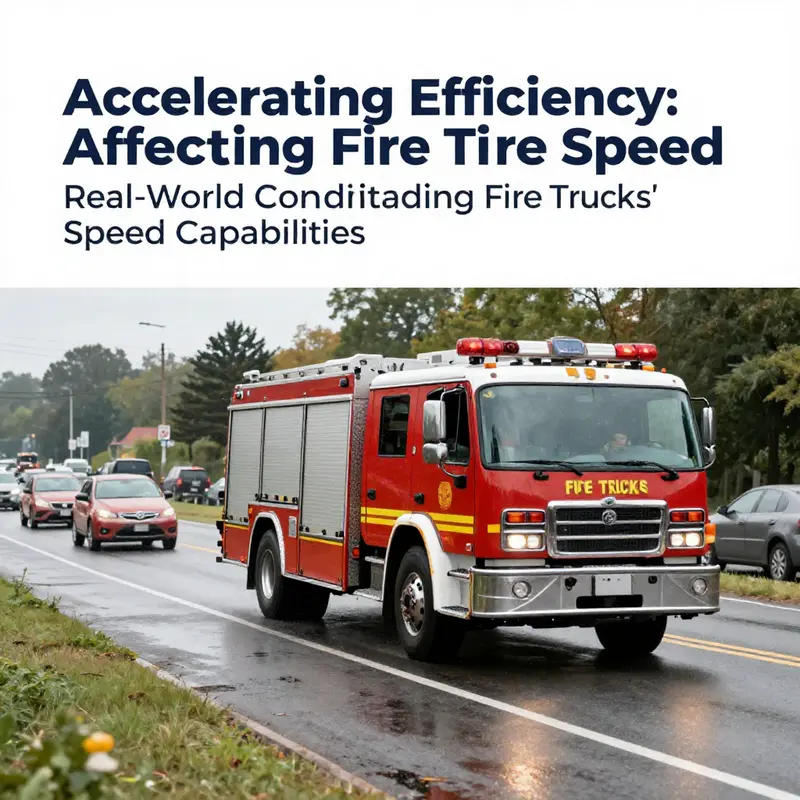
Fire trucks are built to move quickly, but real-world speed is shaped by the road, weather, and load. The surface type matters: smooth pavement allows faster acceleration and braking, while gravel or damaged pavement increases stopping distance and reduces control. Road status also matters: detours, lane closures, or debris force drivers to slow and choose alternate routes, even with good information. Environmental hazards such as smoke from wildfires degrade visibility and reaction time, skewing risk versus speed. Cold and heat affect grip and equipment performance, while strong crosswinds push heavy vehicles toward the lane edge. The weight of the apparatus increases inertia; heavier GVWs demand more time to accelerate and longer braking distances. In practice, speed is a trade-off: the aim is to arrive quickly with stability and safety to perform at the scene. Command, routing, and dispatch systems increasingly use real-time data to optimize routes and adjust speed on the fly.
community safety
Understanding the speed capabilities of fire trucks is essential for business owners, especially those involved in emergency response planning. The interplay of regulations, vehicle design, operational roles, and real-world conditions can significantly influence how fire trucks operate. Recognizing these factors not only ensures compliance with safety standards but also enhances the efficiency of emergency responses, making a critical difference in life-saving situations.

