
















Fire trucks are not just vehicles; they represent a critical component of emergency response systems worldwide. Understanding how these complex machines are made reveals the intricacies involved in their design and production. From the initial chassis selection to extensive customization tailored for specific functions, and stringent compliance with safety standards, each step is vital to ensuring that these vehicles can perform under pressure. The following chapters will discuss the fundamental aspects of chassis selection, the customization processes that define their capabilities, and the rigorous safety compliance and testing they undergo, ultimately shedding light on how fire trucks are engineered to save lives.
Chassis as the Backbone: The Quiet Architect of Fire Truck Making
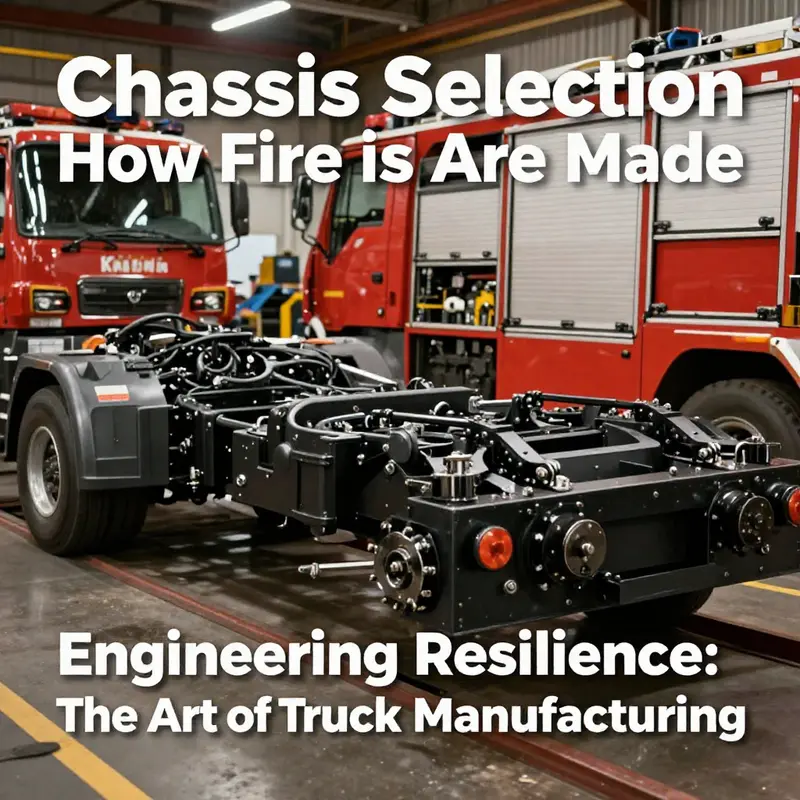
The making of a fire truck begins long before the pump, the tank, or the ladder are considered. It begins with the chassis, the rigid frame that carries every other system and discipline that firefighting demands. In the shop floor hum of fabrication, the chassis is the quiet architect—the first decision that sets the tone for performance, durability, and safety. Engineers and planners start with a simple, stubborn question: what do we truly need this vehicle to do, where will it operate, and how will each component survive its daily test of fire and time? From this question grows a design language that aligns road performance with off-road resilience, high-speed response with stubborn reliability, and a weighty payload with precise handling at the tips of city streets or the edge of a remote canyon. The chassis is not the glamorous centerpiece of a fire apparatus, but it is the backbone; it bears the load, governs the dynamics, and shapes every subsequent choice in the build.
In urban environments, where seconds determine outcomes and streets constrain movement, the chassis must translate speed into controlled motion. A typical urban-focused configuration centers on a balanced medium or heavy-duty platform that can deliver robust torque while preserving maneuverability. The drive configuration becomes a defining feature. A 6×4 arrangement is common because it marries an extra axle for traction with enough power to move a full load of water, foams, tools, and protective equipment through congested streets. The wheelbase—often in a precise band between roughly 3800 and 4500 millimeters—strikes a compromise between stable high-speed travel and tight cornering. Turning radius matters as much as horsepower; a radius no larger than about nine meters helps machines thread through narrow avenues, while keeping the vehicle stable when braking hard on a downhill. Wading depth, though seemingly exotic for city firefighting, is another practical parameter. In flood-prone zones or river crossings near docks, the ability to push into shallow water without stalling becomes part of the chassis specification. These are not incidental numbers; they emerge from a careful analysis of response patterns, station proximities, and the unpredictable geometry of urban firefighting itself. The chassis, in this sense, is the first geometry of response.
Beyond urban life, the demands of rugged terrain reshape the chassis philosophy in a second, equally important way. Firefighting in remote, mountainous, or off-road settings calls for a different arithmetic. Here, high ground clearance, substantial weight-carrying capacity, and formidable traction become non-negotiable. A multi-axle approach—often four or five axles—distributes weight more evenly, improves off-road capability, and enhances stability on uneven ground. The trade-offs are clear: more axles bring higher maintenance implications and greater tire wear, yet they unlock the ability to transport heavier loads of water and equipment across uneven terrain, while preserving the ability to reach a scene without getting stuck. In such environments, the chassis must tolerate sustained, harsh operation under load. It must endure long idling periods, under heavy stress, without overheating or losing performance. Cooling systems, integrated with the engine and transmission, become as much a part of the chassis conversation as the frame itself. The ability to sustain operation for hours in harsh climates is a direct lineage from the chassis design to the pump and water delivery system that will ride atop it.
Firefighters also encounter specialized tasks that demand a reinforced, mission-oriented chassis. Industrial zones, chemical plants, or hazardous environments require vehicles not just capable of carrying gear, but resilient against the corrosive and abrasive realities of those settings. This means chassis construction that accommodates reinforced bodies, corrosion-resistant coatings, protective rails, and integrated safety features that contain or minimize the risk of damage in extreme conditions. For these missions, the chassis becomes a platform designed to absorb shocks, resist flex, and maintain alignment of all mechanical subsystems after repeated exposure to demanding operations. It is not merely a matter of strength but of stability under duress—control of vibration, predictable response at the wheels, and a frame that stays true through many cycles of use and maintenance.
Another axis of chassis thinking is the distinction between standard commercial platforms and dedicated firefighting chassis. Standard platforms are familiar and versatile, adapted from commercial lineups with firefighting interfaces added on top. They are attractive for certain cost, availability, and supply-chain reasons. Yet the most reliable and safe option remains the dedicated chassis: a platform engineered from the ground up to meet stringent safety and performance standards. A dedicated firefighting chassis maintains a design philosophy that centers on a few core commitments. It begins with engine choice—diesel power is often preferred for its torque delivery and durability under sustained high-load operation. The cooling system is designed to manage long idling or continuous operation at high temperature without compromising engine life. A carefully integrated Power Take-Off, or PTO, system is essential to drive the pump and keep it running for extended periods without overheating. Safety features—anti-misoperation safeguards, robust locking mechanisms, and redundant monitoring—are woven into the chassis so that critical equipment remains secure through every phase of an emergency.
The chassis decision also lays the groundwork for the hydraulic and mechanical systems that will integrate with the vehicle later. The pump, typically mounted to the frame or a reinforced subframe, needs a stable, rigid base. The water and foam tanks, the pressure lines, and the valve clusters all rely on precise alignment and adequate structural support. In a dedicated chassis build, the frame geometry, cross members, and mounting points are optimized for a long service life under heavy load, with attention paid to vibration control and fatigue resistance. The outcome is a platform that can withstand the rigors of continuous operation, resist deformation from repetitive use, and maintain the exact tolerances required for safe, efficient fire suppression. In the shop, the chassis is a canvas on which engineers can map loads and redistributions with confidence. The frame, axles, and suspension are designed not only to carry weight but to steer and stop with accuracy when the truck is fully loaded, and when the driver must negotiate city traffic or rough terrain at speed.
Across the globe, a spectrum of manufacturers supplies these critical backbone components. Global brands offer a wide range of chassis configurations and axle counts, with options that span two to five axles and a variety of drive layouts. Domestic producers in different regions are expanding their offerings, emphasizing durability, modularity, and compatibility with a full spectrum of firefighting bodies and equipment. The underlying theme is standardization of core capabilities—engine torque, cooling efficiency, PTO reliability, and chassis-to-body interface integrity—while preserving the flexibility to tailor a build for the exact mission profile. In practice, this means the chassis supplier works in tight collaboration with body manufacturers, pump suppliers, and equipment integrators. The goal is not a generic vehicle but a purpose-built apparatus that can be deployed the moment it leaves the factory, with weight distribution tuned for stability on a ladder or a platform, and with the pump primed for the first surge of water when the crew arrives on scene.
Choosing a chassis also involves strategic considerations about future upgrades and maintenance ecosystems. Some departments prioritize a modular approach, where the base chassis can be upgraded with newer pump units or different tank configurations without replacing the entire vehicle. Others emphasize long-term support networks, ensuring that spare parts, maintenance training, and warranty services remain available across the vehicle’s life span. The decision is rarely framed as a single moment in a production line; it is a long-term investment in readiness and resilience. In this sense, the chassis becomes a decision about sustainability as much as about performance. A well-chosen chassis reduces lifecycle costs, simplifies maintenance, and extends the usable life of the entire apparatus.
For those who want to glimpse the breadth of what is possible without stepping onto the shop floor, a catalog of chassis configurations provides a useful map. It sketches out how a vehicle can be tuned for different roles: urban rapid-response units that require swift acceleration and tight turning circles; rugged-response units built for rescue and water delivery in difficult terrain; and specialized industrial vehicles designed to park safely in hazardous environments while delivering protective features for crew safety. Each path begins with the same question and ends with a different pressure point that shapes the architecture of the vehicle. The chassis determines how the body can be mounted, how the pump will be driven, where the water tank will sit, and how the ladder or aerial platform will be deployed. It is the frame that must endure countless operations, from the first spray at a fire to the final check after a maintenance cycle. In the end, the chassis is the quiet architect of safety, a stable platform that enables every other system to perform exactly as needed when minutes count.
As the industry evolves, new demands push the chassis to expand its capabilities without sacrificing reliability. The emergence of complex drive-by-wire systems, smarter cooling strategies, and more sophisticated safety interlocks all find their way into chassis design. Meanwhile, the imperative to reduce maintenance costs and extend service life keeps engineers focused on robust materials, precise welds, and rigorous quality controls. The result is a chassis that can endure the dual pressures of intense duty and unpredictable environments. The vehicle is not merely a sum of its parts; it is an integrated system where the frame sets the pace and the rest of the apparatus follows. The path from chassis selection to the finished fire truck is long and carefully choreographed. Each choice, from axle count to cooling routing, quietly guides the onset of hydraulics, water management, and high-velocity response. The synergy is most evident when a department receives a new apparatus and immediately notices how it handles, how it climbs, and how it protects its crew. The chassis, in that moment, reveals its true value: a dependable platform that turns plan into action, load into capability, and potential into operational readiness.
For readers curious to explore more practical examples of chassis options and their implications, a deeper dive into the broader market can illuminate how different regions balance cost, availability, and performance. The landscape is diverse, and buyers often weigh a spectrum of considerations—from axle geometry and engine torque to service networks and manufacturing lead times. In the end, the chassis is the fixed frame around which every firefighting miracle is built; without it, the most sophisticated water towers or flame-retardant foams would have nowhere to stand. The chapter that follows builds upon this foundation by turning attention to the next essential layer: the body and water delivery system, where the chassis’s measured performance meets the demands of high-pressure pumping, rapid deployment, and reliable survival in high-stakes emergencies. Within that dialogue, readers gain a fuller sense of how each component interlocks with the other to create a vehicle that is as capable in a congested city as it is rugged enough to survive a long patrol through rough terrain. To see the chassis in context is to appreciate why this quiet backbone is such a critical driver of all subsequent design decisions.
From Needs to Now: Crafting Custom Fire Trucks for Real-World Battle Conditions
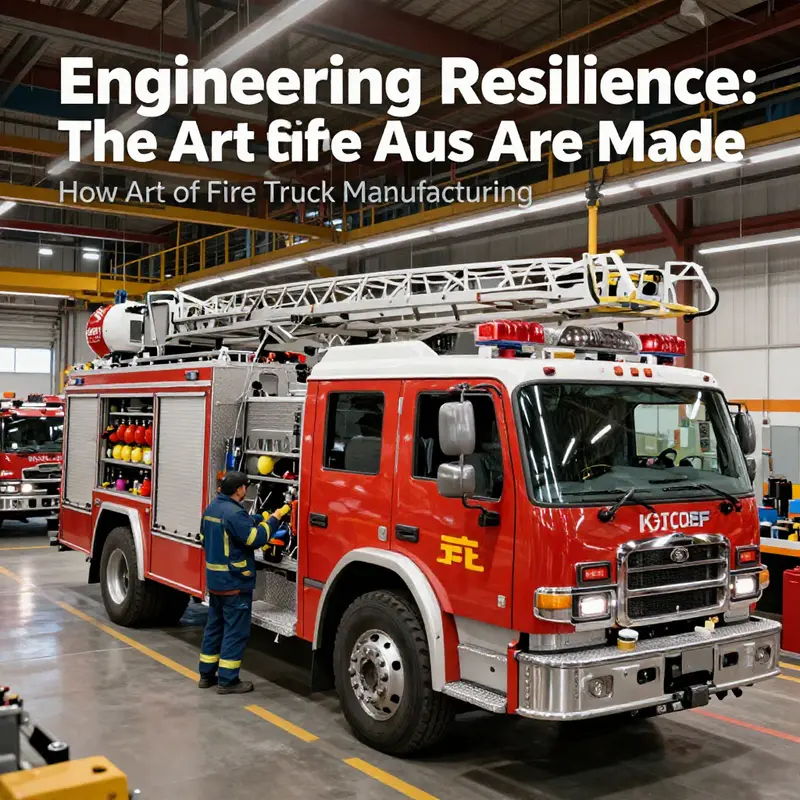
Every fire truck that slides into service begins life not as a finished spectacle of metal and hoses, but as a carefully tailored response to the specific risks a community faces. Customization is the bridge between a general-purpose, heavy-duty chassis and a purpose-built tool designed to save lives in particular urban, rural, or industrial landscapes. The journey from demand to deployment is less a straight line and more a choreography of engineering decisions, logistical constraints, and safety imperatives. It starts with a rigorous, conversation-heavy phase in which the end user—often a fire department or emergency services organization—articulates how the truck must behave under pressure. This is not about choosing a color or a single gadget; it is about translating on-the-ground realities into tangible specifications. The stakes are high because the vehicle’s performance directly affects water reach, rescue capability, crew safety, and response times when seconds count. In dense urban centers, where streets pinch to a few meters and parking is at a premium, a truck might need a compact footprint and a restrained stabilizer system to avoid infrastructure clashes. In snow-prone regions, the same class of vehicle would lean toward enhanced traction, heating systems, and snow-clearance capabilities that keep doors open and operation continuous as the weather turns hostile. These variations illustrate a central truth about fire-truck customization: one size never fits all. Each order is effectively a bespoke program, even if the underlying platform is a shared, heavy-duty chassis adapted to serve a new mission.
The needs assessment and design planning phase unfolds as a dialogue that maps mission-critical functions onto practical hardware and layout decisions. The design team translates requirements into a comprehensive blueprint that covers vehicle geometry, pump location, hose storage, and the placement of safety features. It is in this stage that the truck’s heart begins to beat in a way that will harmonize with the department’s operating tempo. For example, the water and foam system must align with anticipated flow rates, the foam-blanketing or extinguishing strategy, and the geometry of hose drench and discharge. The pump, often described in workshop terms as the heart of the vehicle, is positioned and wired to deliver the right balance of pressure and volume across a range of conditions. Meanwhile, the tank, whether constructed from corrosion-resistant steel or a fiberglass composite, must achieve a careful compromise between capacity and weight, ensuring that the mass distribution keeps the vehicle stable when ladders deploy, water towers unfold, or tools are used at the curb. The blueprint also resolves ancillary systems that define the crew’s effectiveness: hydraulic rescue tools for forced entry, high-reach ladders or platforms for vertical access, roof ventilation equipment, and the integration of high-illumination lighting for night operations. The design phase is more than technical mapping; it is a synthesis of safety protocols, ergonomic work flow, and operational reliability.
When the plan is settled, the project enters the manufacturing and fabrication phase, a process that distinguishes fire-truck production from ordinary vehicle assembly. Each truck is treated as a unique product, even when it shares a common platform with other configurations. The fabrication sequence blends precision fabrication with the art of customization: laser-cut sheet metal, robotic bending, and meticulous welds shape the chassis enclosure, pump housings, and hose bays. Compared with mass-produced commercial vehicles, this stage operates with a heightened level of flexibility. The supplier network is arranged to deliver a tailored set of parts—chassis upgrades, tank systems, pump assemblies, and modular tool carriers—so that the finished vehicle reflects the exact design chosen in the planning room. This flexibility is essential because a department’s operational profile may call for specialized equipment carriers, reinforced mounting points, or added protection around critical systems. The pace of production can be slower than mainstream automotive manufacturing, and the cadence reflects the complexity of the job. The aim is not speed alone but accuracy; even a modest delay in fabrication can be necessary to ensure tight tolerances, corrosion resistance, and robust integration across electrical, hydraulic, and pneumatic systems. The overall process, from the moment the order is confirmed to the moment the truck rolls out for testing, stretches over many months, sometimes longer than a year, to guarantee that every component aligns with the blueprint and the department’s expectations.
A key facet of this phase is the integration of the vehicle as a coherent system rather than a collection of disparate parts. The tank and pump are mounted in a carefully engineered sequence that preserves weight distribution and maintains access to control interfaces for the crew. The hose storage arrangement is designed for quick deployment, minimizing the friction between locating a required length and stretching it into position. The electrical architecture is planned to withstand harsh operating conditions, with redundancy for critical circuits and protection against water ingress and vibration. The crew’s safety and comfort are also squarely in view during fabrication: non-slip surfaces, secure handholds, climate control for extreme temperatures, and an ergonomic cockpit layout that reduces fatigue during long, demanding shifts. Manufacturing firms that produce these vehicles emphasize a disciplined approach to quality control, using guided assembly processes that ensure each system not only works in isolation but also harmonizes with the whole. The result is a vehicle whose performance is predictable under a spectrum of realistic scenarios, from a narrow alleyway blaze to a high-rise rescue attempt that requires a synchronized, multi-point operation.
This bespoke production ethos naturally extends to the inspection and finishing touches that distinguish a ready-for-service unit from a prototype. The finishing stage includes the installation of onboard tools and rescue equipment, the mounting of lighting arrays, thermal imaging cameras where appropriate, and specialized ventilation gear. Each configuration is tested for fit and function with the actual equipment it will carry, ensuring that a particular tool doesn’t interfere with the operation of a neighboring system and that access to the tools remains intuitive for the crew. In the background of this careful assembly, the supply chain orchestrates the arrival of specialized items in the proper sequence and timing, so nothing is waiting idly on the workshop floor. It is here that project-management discipline becomes as crucial as welding and wiring: the team must track dependencies, confirm compatibility, and confirm that the integration points between pump, tank, ladder, and electronics meet the department’s defined standards for safety and performance.
The understanding that each truck is essentially a unique product informs a broader view of the industry. Because customization is so central, many manufacturers run on a low-volume, high-mando approach: a limited number of units per order, but a wide variety of possible configurations. This results in an inventory strategy that supports rapid adaptation without sacrificing the integrity of any single build. For the end user, this iterative partnership translates into a vehicle that is not simply purchased but co-created. The department’s leaders participate in final inspection checks, witnessing functional tests that simulate real emergencies, listening to the pitch and cadence of a pump under pressure, or observing the ladder’s reach and stabilization as it extends. The goal is not merely to prove that the truck starts, but that it performs reliably under stress and remains a dependable partner after years of demanding service.
In practice, the path from design to deployment embodies a philosophy of collaboration and meticulous craftsmanship. It is a discipline of translating field experience into engineering decisions and then translating those decisions back into a vehicle that behaves exactly as intended when the sirens blare. The narrative of customization also highlights the diversity of configurations available within a single framework. A department can prioritize compact maneuverability for dense urban environments, or prioritize payload and range for rural districts facing long response times. Aerial capabilities can be scaled up or down, with ladders or platforms sized to reach the targets most frequently encountered in a community. The choices surrounding materials, such as tank construction and the choice between steel or composite components, reflect priorities for durability, weight, and maintenance across the vehicle’s service life. Each of these decisions has a ripple effect on performance metrics like acceleration, braking, fuel economy, and the ease with which crews can perform complex rescue maneuvers.
The chapter’s arc reaches toward a final point that encapsulates the essence of customization: the fire truck is not merely a machine but an organized system designed to respond with precision under pressure. It is a product of shared knowledge between fire services and engineers who listen, interpret, and translate human needs into mechanical actions. The end result is a vehicle that stands as a testament to the art of adapting a formidable platform to the unpredictable realities of fire and rescue work. For readers who want to glimpse how specialized configurations broaden the scope of what a fire department can do, consider exploring the broader family of configurations that include aerial-ladder fire trucks. caminhão de bombeiros com escada aérea.
The broader narrative of customization is also underpinned by a continually evolving set of manufacturing technologies. Modern fabrication relies on precision processes, from laser cutting to automated bending, that enable the rapid production of thousands of distinct structural components while retaining strict tolerances. This technological backbone makes it possible for a single order to yield a highly customized vehicle with a relatively long tail of service, repair, and upgrade work that preserves the truck’s effectiveness for decades. When a department signs off on a build, it is not simply acquiring a vehicle; it gains a partner in a long-term safety and readiness program. The commitment includes post-sale support, maintenance planning, and warranties designed to cover the vehicle’s essential life-cycle milestones. In this sense, customization becomes a holistic approach to emergency readiness, one that ties together design intent, engineering precision, and ongoing stewardship as communities rely on these machines to respond when danger is closest at hand.
For readers seeking a closer look at the technologies that enable these precise, bespoke builds, industry-focused material on manufacturing solutions that support specialized fire-fighting equipment can provide valuable context. External resources highlight how laser-fueled fabrication and adaptable bending workflows empower manufacturers to handle extremely variable build requirements with confidence and speed. This deeper technical backdrop helps explain why the customization journey, though lengthy, yields a vehicle whose performance is consistently trusted in the field. External resource: https://www.bystronic.com/en/industries/fire-fighting
Rigorous Safety in Fire Truck Manufacturing: Standards, Testing, and Compliance
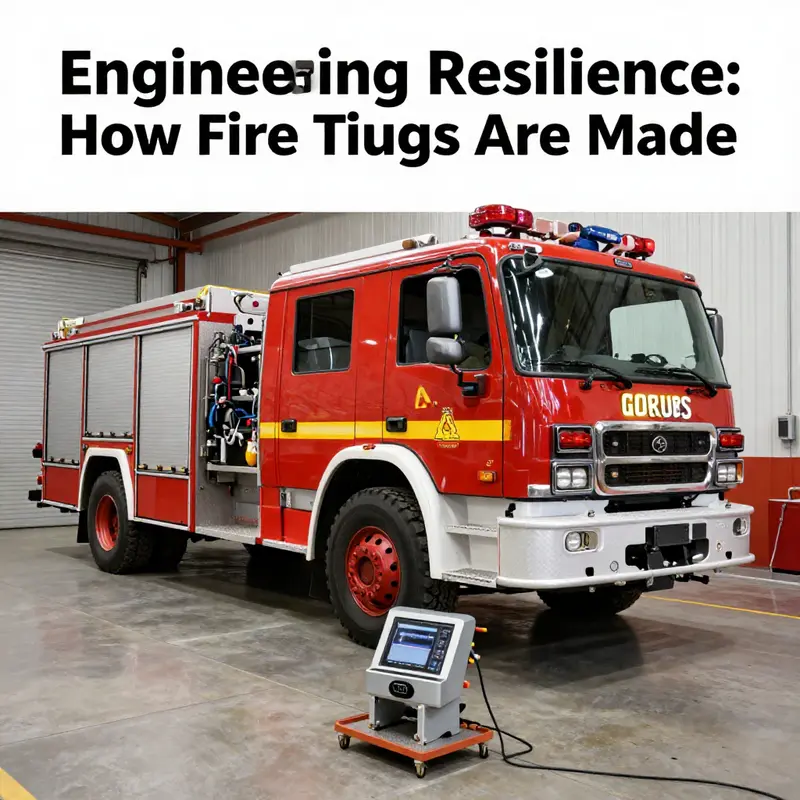
Safety in fire truck manufacturing is built on a disciplined framework of standards, testing, and traceable documentation. The chassis and structure are selected for strength and rigidity, and every component—from pumps to ladders—is designed to operate within validated limits under demanding emergency conditions. Standards from ASME and ISO establish the rules for pressure containment, material performance, and structural integrity, while third party verifications provide independent confidence in welds, materials, and overall build quality. Testing programs simulate dynamic driving, high load scenarios, and functional operation of pumps, hydraulics, electrical systems, and safety features, with results feeding quality management and maintenance planning. Documentation records every weld, inspection, and measurement to ensure traceability across the vehicle life cycle and to support international sales and service networks. The goal is not merely to meet a specification but to deliver a dependable tool that firefighters can rely on when seconds count, with clear lines of responsibility, after-sales support, and ongoing compliance with evolving safety requirements. In this way, safety becomes the language of production, binding design, manufacturing, and field service into a cohesive system that protects crews and communities.
community safety
The manufacturing of fire trucks is a complex, multi-step process that requires precision, customization, and strict adherence to safety standards. From selecting the right chassis to ensuring every feature is tailored for emergency response, each stage adds to the vehicle’s overall effectiveness. Understanding this intricate process not only highlights the engineering excellence behind fire trucks but also underscores their unwavering importance in public safety. Every fire truck delivered to a fire department is a testament to the meticulous craftsmanship and dedication of those who manufacture these life-saving machines.

