
















For business owners in the emergency services sector, understanding the timeline for constructing a fire truck is crucial. This timeline can vary significantly based on design complexity, manufacturer capabilities, and customization needs. The process typically spans 6 to 12 months, encompassing several phases: from design and engineering to manufacturing, thorough testing, and final delivery. This article guides you through each chapter, detailing how each phase impacts the overall build time and offering insights into customization and quality assurance. By understanding these aspects, business owners can make informed procurement decisions and better align their operational needs with the capabilities of fire apparatus manufacturers.
What It Takes, Month by Month: Decoding the Timeline to Build a Fire Truck
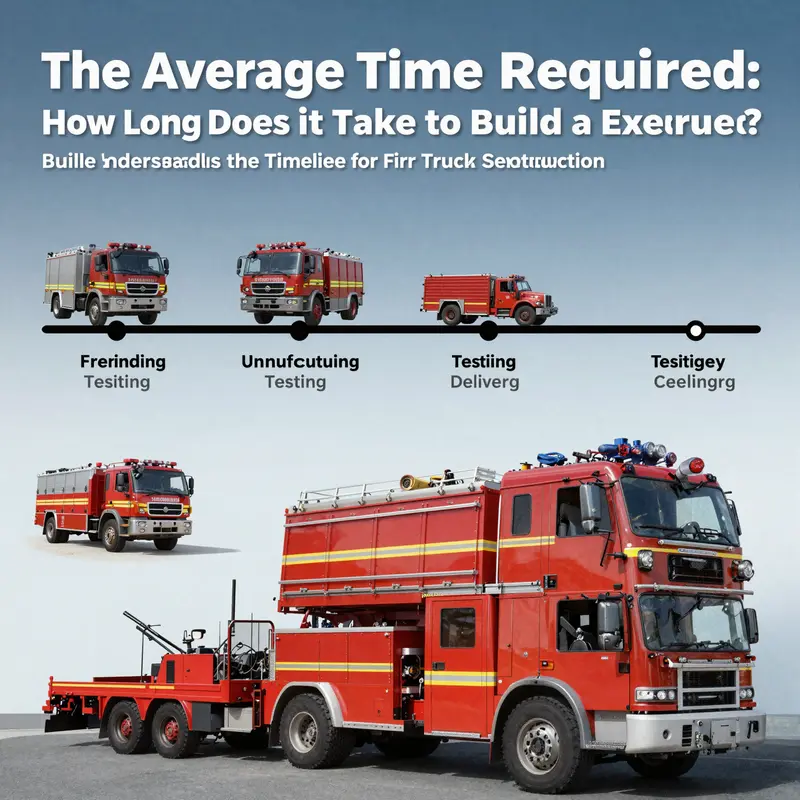
A fire truck is not merely a collection of parts arranged on a chassis; it is a complex instrument tuned to a department’s rhythm of response. The journey from a formal order to the first test drive is a carefully staged process, one that unfolds over months and hinges on design choices, production capacity, and the spectra of customization. The timeline most agencies encounter falls within a broad corridor, typically six to twelve months, but the path is rarely a straight line. It is a path defined by decisions, constraints, and the practical realities of modern manufacturing. In the end, the months spent moving from blueprint to breakthrough become the difference between readiness and delay, especially when a department faces evolving needs or tight operational deadlines. To grasp the cadence, it helps to walk through the lifecycle of a typical custom fire apparatus, noting where the clock starts, what complications tend to slow things down, and where opportunities for acceleration commonly arise.
The clock begins the moment a department and a builder sign a contract, though the real work starts with Design and Engineering. This phase, spanning roughly one to three months, is a period of translation. The department’s specifications are translated into a machine language that a chassis can understand, a fire pump can accept, and an interior can endure the daily demands of firefighting and rescue operations. Designers select the base chassis most suitable for the intended duties, then tailor the hydraulic and electrical systems to accommodate pumps, water tanks, hoses, foam systems, and the array of ladders and rescue tools that give a crew its edge in the field. It is a phase dominated by decisions about capabilities: the ladder length and reach for an aerial rig, the pump capacity and draft testing strategies for a pumper, the seating arrangement, and the ergonomic layout of the compartments. Throughout this period, NFPA standards loom in the background, shaping both the safety criteria and the functional benchmarks that the final apparatus must meet. The goal is to arrive at a design that respects the department’s budget and operational philosophy while ensuring reliability under pressure, not merely at the drawing table but in the real world of fire scenes and training grounds.
Once the design is settled, the work moves into Chassis Preparation and Fabrication, which is often the most demanding leg of the journey. Here the vehicle is transformed from a showroom-on-wheels into a platform capable of carrying heavy loads, delivering water under pressure, and withstanding the jolt of rugged streets and high-stress responses. The structural reinforcements are installed, the body is mounted with precision, and the plumbing and electrical systems are laid out with a craftsman’s attention to how a truck breathes and moves as it carries out its mission. This phase typically lasts two to four months, a span that can feel lengthy because it involves integrating multiple subsystems that must cohere perfectly. If the apparatus includes an aerial ladder, the complexity deepens: the ladder configuration itself, the stabilization mechanisms, the hydraulics, and the safety interlocks all demand rigorous alignment with the vehicle’s chassis. The installation cycle also contends with the realities of supply chains, as the availability of critical components—pumps, valves, and specialty metals—can influence the pace. When a shop is juggling several projects or running a high-demand backlog, this phase can stretch toward the longer end of its window.
The next segment, Interior Fit-Out and Equipment Installation, advances the truck from a frame with systems into a workspace tailored for crews. In this stage, specialized tools find their places: rescue equipment, thermal imaging devices, communications gear, lighting, seating, and storage designed around access and rapid deployment. The layout is not cosmetic; it matters for safety, efficiency, and crew endurance. The interior must accommodate quick access to essential gear, offer secure compartments for life-saving tools, and provide an environment that remains comfortable through long shifts. The length of this period—typically one to two months—depends on how customized the department’s requests are and how many different vendors must be synchronized. The more unique the interior, the more careful the integration work becomes, as technicians ensure that every control, switch, and display aligns with the department’s standard operating procedures and training plans.
No journey toward delivery is complete without a thorough period of Testing, Inspection, and Acceptance. This final flight, lasting about one to two months, is when the apparatus earns its certification and its commission to serve. Testing includes rigorous pump performance checks, pressure testing, and the validation of plumbing integrity. Electrical and lighting systems undergo a battery of functional tests, both on the shop floor and in simulated operational scenarios. The vehicle must pass not only the manufacturer’s internal checks but also the local fire department’s acceptance criteria. In many cases, a series of inspections ensures that safety interlocks, braking performance, and weight distribution are within strict tolerances. It is a phase built on documentation as much as on hands-on verification: the red line of compliance, the blue ink of test results, and the green signal of an approved readiness to deploy. When successful, this stage concludes with a formal handoff, operator training, and the provision of maintenance manuals and warranty information, turning a finished product into a trusted partner for a department’s daily work.
The outline above describes a standard arc, yet real-world times can bend in response to demand, customization, and supply chain dynamics. Some departments request highly specialized apparatus—industrial ARFF (Aircraft Rescue and Firefighting) vehicles or wildland engines—where the component set is not only larger but more bespoke. In those cases, the build time can extend beyond twelve months as engineers and technicians negotiate with suppliers for unusual parts, or when the yard is contending with a particularly crowded production schedule. Conversely, there are pathways toward shorter lead times. Several manufacturers offer pre-built models or modular designs that can compress the journey to four to six months by leveraging off-the-shelf configurations and rapid-install options. These options are appealing when a department faces a tight deadline or when the mission profile fits a more standardized footprint while still delivering on essential capabilities.
Beyond the individual project, the broader ecosystem of procurement shapes outcomes. Industry discussions consistently emphasize the importance of early planning and realistic procurement timelines. Departments that align their purchase schedule with the anticipated production window, maintain open channels with builders, and prepare complete specifications tend to minimize delays caused by design freezes, equipment substitutions, or late changes. The NFPA framework, while not prescribing fixed lead times, serves as a compass that guides departments toward predictable outcomes. It encourages careful consideration of the system interfaces, performance obligations, and the documentation necessary to ensure safety and interoperability across fleets. In practice, this means coordinating training plans, maintenance schedules, and testing milestones so that readiness does not lag behind the arrival date of a new truck.
For agencies weighing the clock against the calendar, the balance often comes down to how much customization they truly need versus how much of the apparatus can be drawn from a reliable, modular baseline. When speed matters as much as capability, modular builds and pre-configured options offer a pragmatic compromise: a vehicle that arrives sooner yet remains aligned with the department’s core mission. When lasting capability and future-proofing are paramount, the longer road of a fully custom build can be justified by the assurance that every compartment, every pump, and every control interface has been tailored to the department’s operational heartbeat. In the end, the timeline is not simply a line on a project schedule; it is a reflection of a community’s readiness to respond, the discipline of a shop floor, and the shared trust that a fleet built today will carry responders through the emergencies of tomorrow.
For readers seeking a deeper, data-driven snapshot of current timelines across the industry, recent analyses synthesize real-world inputs from major builders and field observations. These sources illuminate how lead times shift with demand, how the pace of customization interacts with the availability of specialized components, and how the market continues to balance speed with safety and reliability. To explore the latest industry perspective, see the detailed coverage in Fire Apparatus Magazine’s recent examination of build times: https://www.fireapparatusmagazine.com/build-time-fire-truck/. This external resource offers an in-depth look at practical timelines, expert commentary, and the evolving factors shaping how long it takes to bring a fire truck from plan to pavement.
ARFF trucks, Used firefighting equipment, Airport firefighting, Equipment auctions, Pumper trucks, Fire apparatus market, Logistics and compliance, Asset acquisition, Industrial equipment

ARFF trucks, Used firefighting equipment, Airport firefighting, Equipment auctions, Pumper trucks, Fire apparatus market, Logistics and compliance, Asset acquisition, Industrial equipment
From Chassis to Readiness: The Real Timeline of Building a Fire Truck
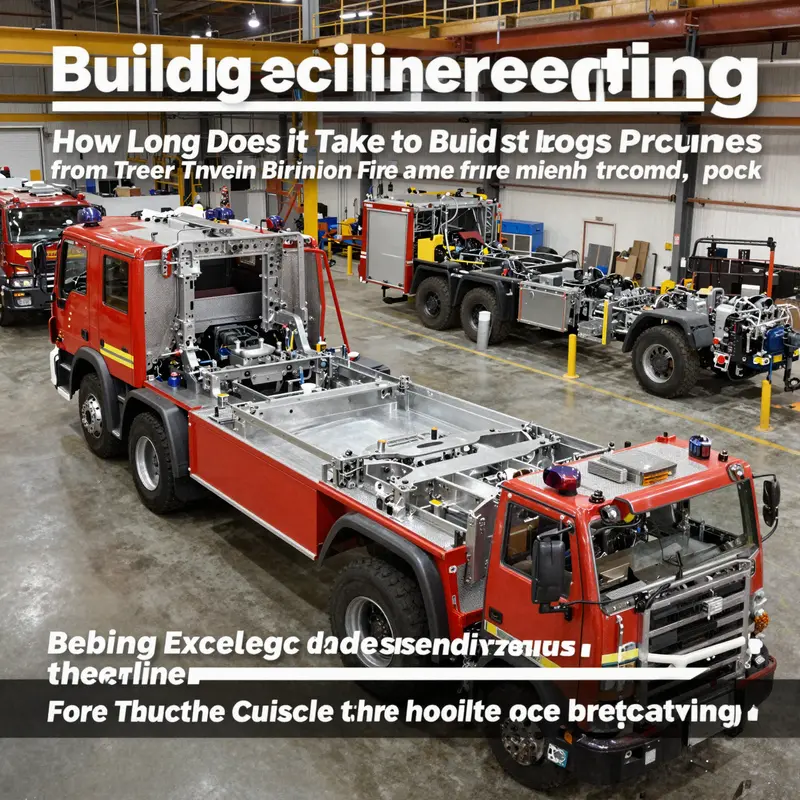
A fire truck is more than a vehicle; it is a purpose-built system designed to respond precisely when every second counts. The journey from a blank order to a fully ready fire apparatus is a carefully choreographed sequence that blends engineering rigor, meticulous fabrication, and exhaustive testing. It is a timetable written in steel and hydraulics, where the pace is dictated not just by the size of the machine but by the clarity of the department’s needs and the constraints of compliance and safety. When you pry the curtain back on the process, the timeline proves to be both longer and shorter than a single, uniform number. It hinges on how much customization is required, who is building it, and how crowded the production line is in a given year. General guidance suggests a broad range: months rather than weeks for fully tailored, mission-specific units, and weeks for standard configurations with minimal modifications. Yet the reality on the shop floor resists a one-size-fits-all forecast.
The first hinge of the timeline is design and engineering. This phase is where a department’s tactical realities—pump capacity, water handling, ladder reach, interior ergonomics, and even payload distribution—are translated into a workable blueprint. For a highly customized unit, this design and engineering work can span one to three months. Engineers must balance performance, reliability, and maintenance needs, ensuring that the chassis, pump system, and ladder configuration can operate in concert under demanding field conditions. Even within a single department, two fire houses may request markedly different configurations to support distinct response profiles. Each alteration to the layout reverberates through the entire build plan, affecting materials sourcing, fabrication sequences, and testing protocols. For standard models that align with common configurations and have fewer unique requests, the design phase can compress noticeably. In those cases, a minimal customization approach often lands somewhere in the range of six to twelve weeks, enough to establish the essential features while avoiding bespoke extrapolations that lengthen the schedule. The practical takeaway is that the design phase is the most variable portion of the timeline; it is where the path from concept to construct begins to tilt toward either a brisk flow or an extended climb.
Following design, the work moves into chassis procurement and body fabrication. This is frequently the longest stretch in the build, especially for complex apparatus that require specialized mounting systems, heavy pump packages, large water tanks, and elaborate ladder assemblies. For a fully customized unit, this stage often occupies three to six months, with the possibility of longer delays if the design introduces novel components or if supply chain pressures constrain critical parts. In contrast, a more straightforward build with standard components can see chassis procurement completed in about two to four weeks, and body fabrication progressing through a focused six to twelve weeks. Even at the shorter end, the integration of pumps, hoses, ladders, and compartments into a rugged, road-ready frame demands precision and testing in parallel with manufacturing. Every bracket, fastener, and seal is chosen not only for immediate fit but for long-term reliability in harsh fire-rescue environments. The difference between a standard platform and a bespoke fleet machine becomes most evident in this phase, where the complexity of the configuration directly maps onto the duration of fabrication work and the number of custom interfaces that must be accommodated.
Electrical and hydraulic integration marks the next critical interval. Wiring looms, control systems, and hydraulic circuits must talk to each other with reliability. This coordination work, while often resilient in well-planned productions, adds another one to two weeks to the schedule. It is not merely about making things light up; it is about ensuring that every switch, gauge, valve, and monitor performs exactly as designed under load and in emergency conditions. The integration phase also doubles as a testing ground, catching wiring conflicts or interference between systems before a formal test regimen begins. The cadence here emphasizes accuracy over speed: a misstep in electrical or hydraulic logic can cascade into delays in certification and field readiness.
Testing and certification form the crucible where theory becomes practice. Final inspections and performance tests, including pump performance checks and electrical system verifications, are essential to prove that the machine can fulfill the department’s operational promises. Compliance with standards such as NFPA 1901 shapes the testing agenda, detailing the criteria by which an apparatus must be judged to be safe, reliable, and capable of the intended mission. In general terms, this testing window can take one to two weeks, depending on the thoroughness required by the department and the specifics of the configuration. The test phase is not merely a box to check; it is a structured, data-driven process that validates every critical function, from pump pressure stability to electrical fault protection. Any anomalies discovered here can ripple back into earlier phases, prompting design adjustments, additional fabrication, or rework on subsystems. The careful pacing of testing guards against misfires in the field, where the consequences of failure are measured in seconds rather than dollars.
The final stretch covers delivery, operator training, and documentation. Arrival at the fire station marks the transition from fabrication shop to on-street readiness. A typical delivery window includes a handover of the vehicle, a training session for the crew and maintenance personnel, and the transfer of documentation that governs maintenance schedules, warranty terms, and service procedures. This phase, often around a month, is where the department’s personnel learn to read the gauges, operate the pumps, and navigate the specialized controls that differentiate a modern fire apparatus from a standard heavy vehicle. A well-orchestrated delivery also entails commissioning the vehicle on-site and initial familiarization with the onboard systems in a real-world environment.
Taken together, the long view of a fire apparatus build is a study in variation. For fully customized, mission-specific fleets, the clock can stretch beyond a year from order to delivery, especially when unusual components are required or production capacity is constrained. For standard configurations with minimal customization, the timeline tightens considerably. In those cases, the process can be compressed to roughly six to twelve weeks, a pace aligned with typical commercial heavy-vehicle production when design requirements align with well-established configurations. The tension between these trajectories is not merely about speed. It is about ensuring that the resulting machine is dependable under the most demanding conditions, that it conforms to safety and performance standards, and that it arrives ready to meet the department’s operational commitments without the need for costly, time-consuming add-ons after delivery.
To navigate this landscape, departments rely on robust planning and a candid dialogue with manufacturers. The National Fire Protection Association’s standards, particularly the NFPA 1901 standard for automotive fire apparatus, frame the expectations for design, construction, testing, and quality assurance. While NFPA codes do not stipulate a single universal build time, they emphasize the importance of an orderly procurement timeline that aligns with readiness goals and compliance milestones. In practice, that means departments should begin conversations with apparatus builders early in the budgeting cycle, outline preferred configurations, and incorporate lead times for design, fabrication, and comprehensive testing into their capital-planning calendars. The result is a calendar that reflects both the department’s risk profile and the realities of modern manufacturing. For departments with urgent or unique needs, it is not uncommon to experience longer lead times, especially when specialized features—such as advanced aerial platforms or rugged wilderness mission equipment—are on the table. Conversely, in regions with streamlined supply chains and mature production ecosystems, standard configurations may materialize with surprisingly brisk cadence, though always within the bounds of safety and regulatory compliance.
The overarching message is practical and grounded: plan early, communicate specifications clearly, and acknowledge that a fire apparatus is a system built to endure. The clock starts when the order is placed, but the actual duration is shaped by the synchronization—or lack thereof—between design ambition, fabrication discipline, and the discipline of testing. In other words, the timeline is not a single number but a spectrum of possibilities, with the starting point anchored in the department’s mission, and the ending point defined by readiness and reliability on day one of a shift. For stakeholders weighing whether to pursue a rapid, minimal-risk purchase or a deeply customized fleet with tailored capabilities, the answer lies in balancing the cost of delay against the value of precision. In either case, the roadmap remains anchored by standards, influenced by manufacturer capabilities, and guided by a shared commitment to protecting lives and property.
External reference: For additional perspective on the standards guiding these builds, consult NFPA 1901, the Standard for Automotive Fire Apparatus, last updated in 2024. https://www.nfpa.org/codes-and-standards/all-codes-and-standards/list-of-nfpa-codes-and-standards/detail?code=1901
Quality Assurance on the Build Line: Understanding the Lengthy Timeline of Fire Truck Construction
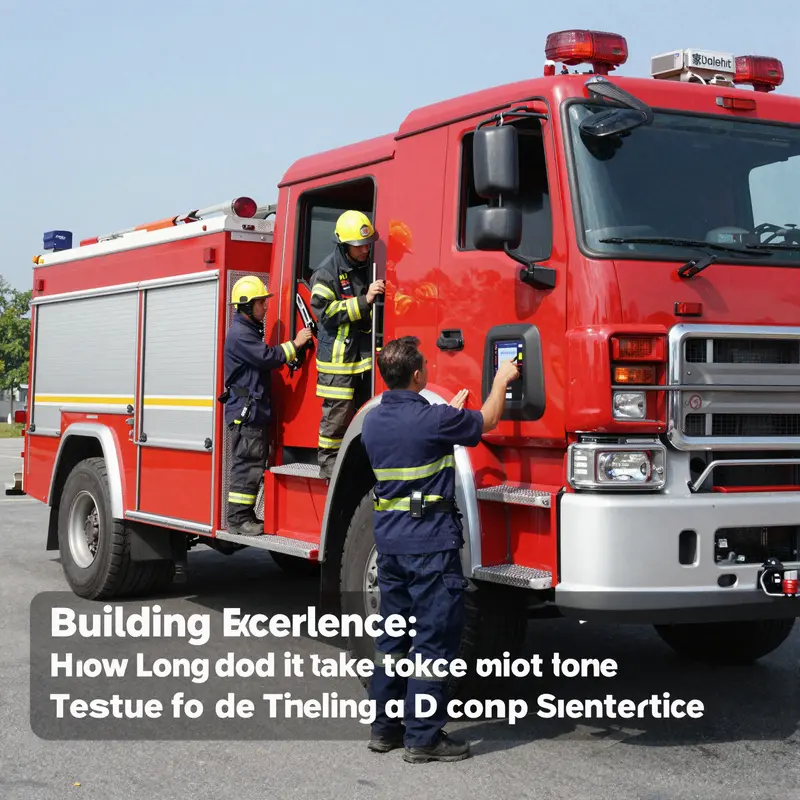
A fire truck is more than a vehicle; it is a purpose-built system designed to perform under extreme conditions. The timeline from order to delivery is rarely a straight line. It bends around the complexity of required capabilities, the breadth of customization, and the realities of factory throughput and supply chains. In every build, engineers, fabricators, and field representatives translate needs into a reliable, mission-ready platform. The path toward readiness is a sequence of decisions tested against performance, safety, and the demands firefighters will face on scene. That arc—from concept to first test to final handoff—requires discipline, documentation, and coordination across teams.
Design and engineering anchor the schedule and typically consume three to six months. This stage is where departments articulate pump capacity, water storage, extinguishing tactics, ladder reach, compartment arrangement, and interior ergonomics. Engineers produce precise blueprints, run simulations, and verify that every component can be integrated with the electrical, hydraulic, and braking systems. They balance weight distribution and maneuverability, ensuring compliance with vehicle dynamics standards. The design must also anticipate maintenance realities, driver training needs, and the operational tempo the department expects. Changes at this point ripple through every downstream subsystem, so accuracy here saves both time and cost later in the build.
Chassis procurement and body fabrication follow, and this phase often reveals the widest variation in pace. The base chassis is selected from a leading heavy-duty producer, and the builder mounts the custom body, installs the pump, and configures the water system. Three to nine months is common, depending on the unit’s complexity. More elaborate configurations with multiple compartments, integrated digital dashboards, and specialized safety features push the schedule further. The integration of a custom pump package, pressure management systems, and precisely routed wiring requires meticulous coordination. Any misalignment between bodywork and chassis can trigger rework, which cascades into delays that ripple through fabrication, testing, and delivery timelines.
Testing and compliance form the crucible of the project. As the apparatus nears completion, it must endure a battery of tests that mirror real deployment conditions. Hydraulic tests confirm pump performance and flow rates under various pressures; test rigs simulate changing water supply conditions encountered in the field. Structural checks verify frames, ladders, and subassemblies under dynamic loads. Brake, steering, and electrical systems undergo rigorous evaluation to ensure reliability during high-stress operations. Third-party inspectors frequently oversee these evaluations to document adherence to safety standards and regulatory readiness. This validation window typically adds one to three months to the schedule, reflecting the need to reproduce conditions, collect data, and address any discrepancies before certification.
Final inspections and delivery bring the journey toward completion. After passing tests, the truck undergoes a final round of inspections, certification, and documentation. Training programs accompany handover, detailing pump operation, ladder deployment, emergency signaling, and routine maintenance procedures. The department receives manuals, warranty information, and as-built drawings reflecting any last-minute alterations. Delivery involves logistical planning, on-site checks, and, in many cases, a final road test to verify performance on local roads and under typical payloads. The handoff hinges on clear communication between builders and end users, ensuring the crew can rely on the apparatus from day one in the field.
Viewed across the entire workflow, assembly is only one milestone in a longer journey. The physical fabrication may occur in less time than the overall timetable because the quality assurance and compliance loop spans every phase. The total lead time for highly customized or specialized units commonly lands in the 12 to 24-month range. Even configurations that appear straightforward demand thorough documentation, testing, and certification to demonstrate safety margins and reliability under extreme conditions. Budgeting without recognizing this extended horizon risks misaligned expectations and late deployments when they matter most.
Strategic planning can influence the pace without sacrificing safety. Departments can compress the clock by prioritizing essential capabilities and embracing a measured level of standardization that preserves mission goals. Early design sign-off, modular component kits, and parallel workstreams help reduce idle time between stages. Yet the core requirement to validate performance through controlled tests, confirm system integration, and coordinate training remains non-negotiable. External factors such as supply chain fluctuations and the scheduling of crew training can still yield delays, even with meticulous project management. The right approach blends discipline with flexibility so programs can adapt to changing needs without sacrificing safety or readiness.
The practical takeaway for procurement leaders is to embed the build timeline into the planning process with equal urgency as budget discussions and risk assessments. A thoughtful plan includes defined milestones, buffers for testing, and staged deliveries that keep departments ready to field operations while preserving safety. Standards frameworks are not bureaucratic hurdles; they provide a reliable yardstick for performance, durability, and crew protection. Accepting the cadence of design, build, test, certify, deliver, and train as a foundational rhythm helps align training cycles, maintenance planning, and deployment strategies with a credible path to a fully equipped, mission-ready apparatus.
As you move toward decisive planning, weigh customization against standardization as a central strategic choice. In some communities, a high degree of standardization accelerates delivery and simplifies maintenance; in others, unique local hazards demand bespoke configurations that extend the horizon. Regardless, the sequence remains consistent: design, build, test, certify, deliver, train. Understanding this rhythm helps align expectations with factory capabilities and department readiness. The ultimate objective is to balance urgency with rigor so that the first response to an fire incident is supported by a vehicle trusted to perform under pressure.
For standards and detailed requirements that guide every step from design to dispatch, professionals consult the NFPA framework governing automotive fire apparatus. The practical implications of those standards emerge in each phase of construction and validation. For standards guidance, you can consult NFPA 1917 – Standard for Automotive Fire Apparatus: https://www.nfpa.org/codes-and-standards/all-nfpa-codes-and-standards/available-codes-and-standards/nfpa-1917.
Market Currents and Timekeepers: How Economic Conditions Shape Fire Truck Build Timelines
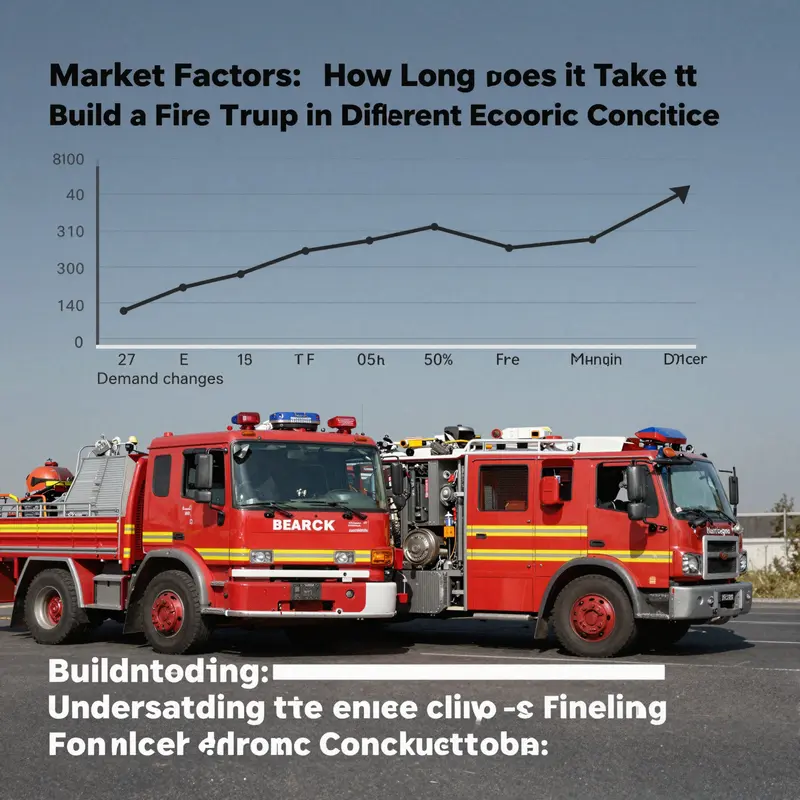
Every fire department that places an order for a new apparatus discovers a timeline that is rarely a straight line from drawing board to parade day. The clock starts not only with design decisions but with a web of market forces that can speed up or slow down the entire process. In quiet times, the journey from order to delivery often lands in a practical window of six to twelve months. But the same path can bend under the weight of demand, supply chain volatility, and the uneven drumbeat of labor and material markets. To understand why times stretch or shrink, it helps to begin with the standard sequence that underpins most builds: design and engineering, chassis and body fabrication, testing and inspection, then delivery and training. This progression, though predictable in its stages, is highly responsive to the economic environment surrounding the order.
At the heart of every timeline is design and engineering. Departments specify how the chassis will be tailored, how the pump system will be configured for their water supply and relay operations, where the ladder will live, and how the interior will accommodate crew comfort, equipment placement, and ergonomic workflows. Even in a straightforward configuration, engineers must reconcile departmental needs with the realities of available technology, manufacturing capabilities, and regulatory requirements. In buoyant markets, the demand for skilled engineering labor can stretch the first stage into the upper end of the three-month target or beyond. In slower cycles, skilled designers may have more bandwidth, allowing the initial phase to close more quickly, yet the overall schedule still hinges on downstream fabrication capacity. The engineering phase is the quiet predictor of what lies ahead, because errors or late changes here cascade into all later steps, compounding delays.
Following design is the substantial period of chassis and body fabrication. This phase typically represents the backbone of the build, lasting several months as metal is cut, welded, and assembled into a frame that must withstand both routine use and extreme emergency scenarios. The pump and water tank go into the frame, hoses, ladders, and a spectrum of specialized equipment are mounted, and the electrical and hydraulic systems are integrated. In an orderly market, this phase proceeds methodically, with production lines calculating takt times and scheduling crews to minimize idle periods. But markets rarely stay orderly. When demand surges across regions, fabrication lines can tighten as suppliers struggle to deliver components, or as manufacturers stretch their capacity to meet rising orders. In such times, even a well-planned sequence can slide toward the longer end of the six-month to nine-month range, especially for more complex apparatus like aerial ladders or vehicles with high customization. Conversely, during downturns when new orders slow, plants may reallocate capacity to fulfill existing commitments and accelerate fabrication. The result can be a palpable shift toward the shorter end of the window, but only if the factory can sustain efficient throughput while managing inventory and lead times for critical parts.
A third act in the build is the testing and inspection phase. This phase is essential for safety and performance, and it is where the virtues of good design meet the realities of field duty. Pump tests, electrical system verification, and adherence to standards such as NFPA 1917 for automotive fire apparatus require meticulous procedures, measurement, and documentation. In markets with robust supplier ecosystems, the testing plan can unfold on a predictable cadence, and the time spent in verification aligns with the expected six-to-twelve-month horizon. When market conditions become volatile, however, challenges emerge. Delays in obtaining testing equipment, calibration services, or spare parts can compress or extend the testing window. If a department requests additional features or if post-installation tuning reveals latent interference between systems, this phase can extend by several weeks or even months. Such disruptions are not merely administrative; they directly affect readiness, which is a critical consideration for departments coordinating training and transition planning with their new apparatus.
Delivery and training, though often perceived as a closing act, are in reality the culmination of a long chain of interdependencies. Final delivery happens after satisfying all regulatory checks, completing documentation, and ensuring that the crew can operate the vehicle safely and effectively. Operator training accompanies handover, and a well-executed handover sequence can reduce in-service learning curves, enabling crews to adapt quickly to new capabilities. In a steady market, this final leg may take about a month, giving departments time to coordinate deployment, pre-fire drills, and shift integration. When the market heats up and production lines are saturated, even this last mile can elongate as distributors—responsible for logistics, training, and spare parts—juggle multiple orders and travel constraints. In bearish periods, the push to complete orders can compress the delivery window as vendors prioritize existing commitments and inventory management takes precedence over new customization. The interplay of these stages—design, fabrication, testing, and delivery—demonstrates that the overall build time is not a single constant but a moving target, shaped by the economic pulse behind every order.
The broader market context then becomes the second driver of schedule beyond the technical and regulatory requirements. Even within the baseline six-to-twelve-month frame, there is a spectrum of possible outcomes conditioned by the prevailing market dynamic. In periods of economic expansion and strong demand, manufacturers report bottlenecks born from limited access to specialized components such as high-end pumps, precision chassis configurations, and advanced electronics. These bottlenecks can extend the overall lead time to twelve to eighteen months or more, especially for highly customized or multi-vehicle orders that demand coordinated fabrication across several sub-systems. It is not simply a matter of material scarcity; it is a complex choreography where supplier schedules, shipping lanes, and even weather patterns influence when a department can accept delivery. The consequence for planning is a more cautious procurement posture, with departments initiating early discussions with builders, requesting phased milestones, and building in contingency buffers for training and deployment into service.
On the other side of the cycle, economic downturns or markets with lower demand can produce the opposite effect. When production lines have greater capacity and backlogs are less pronounced, lead times can shrink. In such months, a department might see a timeframe closer to six to nine months, with a smoother flow of materials and fewer interruptions in commissioning. This compression, however, comes with its own cautions. Builders may tighten up due to potential revenue volatility, and cost pressures could still translate into changes in equipment specifications or late-stage design tweaks if a department seeks extra customization. The path toward a faster delivery is rarely a pure gain in speed; it often reflects a prioritization of existing orders and better predictability in the factory floor. In a stable or low-demand market, manufacturers can also lean on standardized configurations, streamlined testing, and repeatable installation routines to shave time while preserving safety, reliability, and compliance.
The pandemic era and its aftershocks left a durable impression on lead times. Global supply chain disturbances—ranging from semiconductor shortages to shipping delays and volatile raw material prices—echoed through every tier of the manufacturing network. The effects were not limited to shortages of a few items; they reshaped inventory strategies, boosted protective lead times, and compelled departments to place orders with longer planning horizons. Recovery phases varied by region, but the underlying message was consistent: lead times are not just a function of the number of parts required, but of the confidence and stability in the entire ecosystem that brings a vehicle to life. In markets where the behavior of suppliers has returned to a steadier rhythm, some of the volatility has eased, yet the memory of disrupted schedules continues to influence procurement planning and risk assessment. Departments and their procurement partners are now more likely to build explicit risk buffers into timelines, and to require updated, real-time lead-time estimates as a routine part of the order process.
Beyond macroeconomics, the mix of equipment requirements also matters. A department ordering a standard pumper with a straightforward chassis and basic interior layout will experience shorter, more predictable timelines than one requesting a highly customized aerial unit, a specialty ARFF-type configuration, or a wildland-engined system designed for extreme terrain. Each layer of customization injects additional dependencies on specialized components, testing configurations, and field training. In practical terms, this means that the same six-to-twelve-month baseline can morph into a longer journey when the department chooses a vehicle with unusual performance envelopes, unique mounting arrangements, or bespoke safety systems. The lesson for procurement planners is not to fear complexity but to anticipate it with a staged communication plan that aligns milestones with factory progress, regulatory checks, and end-user readiness.
The NFPA’s stance on procurement timing reinforces the point. While the standards do not quantify exact build times, they emphasize that careful planning and well-structured procurement timelines are critical to ensure readiness and compliance. For departments, this means engaging early with builders, requesting transparent lead-time estimates, and building in allowances for testing, certification, and training. The interplay between regulatory compliance and market dynamics creates a practical discipline: turn the clock into a project management tool, not a hostage scenario. When a department integrates market intelligence with technical specifications, it improves its odds of receiving an apparatus that not only meets the immediate needs of responding to emergencies but also remains reliable under changing economic conditions. In this sense, the time to build becomes a reflection of organizational foresight as much as manufacturing capability.
For readers navigating this landscape, the underlying message is clear. Lead times are a function of both the technical demands of the vehicle and the market that supplies it. Departments that prepare early, maintain clear lines of communication with manufacturers, and stay informed about broader economic indicators stand a better chance of aligning delivery with readiness windows. The most effective procurements treat lead times as a variable to be managed, not a fixed deadline to chase. They recognize that a well-timed order—with realistic expectations about customization, testing, and training—becomes not merely a purchase but a strategic investment in public safety. In other words, the seasonality of the market becomes part of the department’s risk management plan, and the timeline becomes a controllable element of emergency preparedness rather than a hurdle to overcome.
External reference for broader context: https://www.nfpa.org/News-and-Research/Research-and-Statistics/Fire-Apparatus-Manufacturing-Trends-Report-2025
community safety
Understanding the timeline for building a fire truck is pivotal for business owners, as it empowers decision-making and aligns expectations with realistic procurement schedules. Each chapter highlights a specific aspect of the construction process—from the initial average timeline to the impact of customization and market fluctuations. By acknowledging these variables, stakeholders can better navigate the complexities involved in acquiring vital emergency response equipment, ensuring their departments are well-prepared for the challenges ahead.

