
















เมื่อทุกวินาทีมีความสำคัญ: ทำไมเวลาตอบสนองของรถ ARFF กำหนดความปลอดภัยทางอากาศ
จินตนาการถึงฉาก: เครื่องบินโดยสารลงจอดอย่างรุนแรง ล้อหน้าแตก แล้วประกายไฟกระเด็นไปทั่วพื้นทarmac ภายในไม่กี่วินาที น้ำมันรั่วไหลและเกิดควันดำลอยขึ้นสู่ท้องฟ้า ระบบเตือนภัยของสนามบินดังขึ้น ณ ช่วงเวลาที่ผู้ดำเนินการสนามบินไม่มีใครอยากเผชิญ ความแตกต่างระหว่างเหตุการณ์ที่ควบคุมได้กับภัยพิบัติที่ร้ายแรงนั้นขึ้นอยู่กับสิ่งเดียว: ความเร็วในการตอบสนองของรถ ARFF รถ ARFF ที่ตอบสนอง ไปยังจุดเกิดเหตุสามารถส่งเจ้าหน้าที่ได้ นาฬิกาเดินไป ชีวิตอยู่ในความเสี่ยง.
สำหรับเจ้าของธุรกิจและผู้มีส่วนได้ส่วนเสียด้านการบิน นี่ไม่ใช่แค่การเล่าเรื่อง แต่เป็นความเป็นจริงที่ชัดเจนของการจัดการความเสี่ยงในการดำเนินงาน ยานพาหนะ ARFF เป็นแนวหน้าแรกและสำคัญที่สุดในการป้องกันเหตุฉุกเฉินที่เกิดขึ้นบนสนามบิน หน่วยงานกำกับดูแลเช่น FAA กำหนดให้ยานพาหนะ ARFF ต้องสามารถเข้าถึงจุดกึ่งกลางของทางวิ่งที่ไกลที่สุด และปล่อยสารดับเพลิงเต็มที่ภายใน สามนาที ในสภาพแวดล้อมที่ดีที่สุด ช่วงเวลาที่จำกัดนี้ไม่อนุญาตให้มีข้อผิดพลาดทางกล ความเร็วต่ำ หรืออุปกรณ์ไม่เพียงพอ ทุกวินาทีที่ล่าช้าจะเพิ่มความเสี่ยงต่อผู้โดยสาร ลูกเรือ พนักงานบนพื้น และทรัพย์สินเครื่องบินมูลค่าหลายล้านดอลลาร์.
จากมุมมองทางธุรกิจ การลงทุนในความสามารถ ARFF ที่ดีกว่าไม่ใช่ค่าใช้จ่าย แต่เป็นข้อกำหนดเชิงกลยุทธ์ ความตอบสนองที่รวดเร็วปกป้องสิ่งมีค่าที่สุดของคุณ: ชีวิตมนุษย์ โครงสร้างพื้นฐานทางกายภาพ และความต่อเนื่องของการดำเนินงานของสนามบิน ความล่าช้าของทางวิ่งเพียงครั้งเดียวเนื่องจากไฟที่ควบคุมไม่ได้สามารถก่อให้เกิดความล่าช้าที่ตามมา สายการบินยกเลิก ความเสียหายต่อชื่อเสียง และโทษทางกฎหมายที่ส่งผลออกไปไกลกว่าเหตุการณ์เริ่มต้น ตรงข้าม ฝูงดับเพลิงที่มีอุปกรณ์ครบครันและตอบสนองได้รวดเร็วแสดงให้เห็นกับสายการบิน บริษัทประกันภัย และหน่วยงานกำกับดูแลว่าสถานที่ของคุณให้ความสำคัญกับความปลอดภัยในระดับสูงสุด.
นี่คือจุดที่ CIMC Tianda เข้ามามีบทบาท ในฐานะผู้ผลิตยานพาหนะดับโลกสำหรับยานพาหนะดับไฟ ซีเอ็มซี ไท่ดา ออกแบบรถ ARFF ที่ไม่เพียงแต่ตรงตามมาตรฐานระหว่างประเทศที่เข้มงวดเท่านั้น แต่ยังเกินมาตรฐานเหล่านั้น ตั้งแต่ระบบปั๊มที่แข็งแรง จนถึงเทคโนโลยีโฟมที่สามารถขยายตัวได้อย่างรวดเร็ว และโครงรถที่ออกแบบมาเพื่อความเร็วและความมั่นคง ยานพาหนะทุกคันถูกออกแบบด้วยภารกิจหลักเดียว: ให้ทีมของคุณไปยังเหตุฉุกเฉินได้เร็วขึ้นและมีอุปกรณ์ที่ดีกว่าที่เคย.
ในส่วนต่อไป เราจะสำรวจข้อมูลทางเทคนิคที่แยกยกระดับยานพาหนะ ARFF ประสิทธิภาพสูงออกจากคนอื่น วิเคราะห์กรอบกฎหมายที่ควบคุมเวลาตอบสนอง และศึกษาว่าการลงทุนในอุปกรณ์ที่เหมาะสมส่งผลโดยตรงต่อสนามบินที่ปลอดภัยยิ่งขึ้นและผลประกอบการที่แข็งแกร่งยิ่งขึ้น.
โครงสร้างของรถ ARFF: ออกแบบมาเพื่อการตอบสนองที่สำคัญ\n\nเมื่อสัญญาณเตือนดังขึ้นที่สนามบิน ทุกวินาทีมีความสำคัญ รถ ARFF (Aircraft Rescue and Fire Fighting) เป็นหนึ่งในยานพาหนะที่เฉพาะเจาะจงและถูกออกแบบมากที่สุดในบริการดับเพลิง - ยานพาหนะประสิทธิภาพสูงที่ออกแบบมาเพื่อเข้าถึงเหตุฉุกเฉินของเครื่องบินอย่างรวดเร็วและส่งพลังการดับเพลิงขนาดใหญ่ ความเข้าใจในโครงสร้างของรถ ARFF ช่วยให้เจ้าของธุรกิจ ผู้จัดการสนามบิน และเจ้าหน้าที่ด้านความปลอดภัยเข้าใจว่าทำไมยานพาหนะเหล่านี้จึงเป็นการลงทุนที่สำคัญในความปลอดภัยของโครงสร้างพื้นฐาน\n\n \n\n> แผนภาพด้านบน: ส่วนประกอบหลักของรถ ARFF แต่ละระบบมีบทบาทสำคัญต่อความสามารถโดยรวมของยานพาหนะ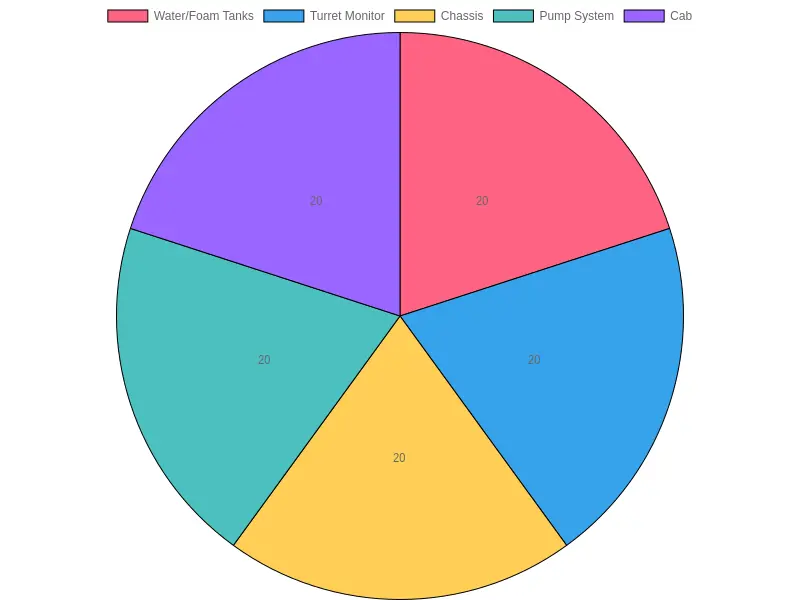 \n\n### 1. ห้องควบคุม – ศูนย์ควบคุมที่หน้า ห้องควบคุมเป็นศูนย์กลางของรถ ARFF ต่างจากรถดับเพลิงทั่วไป ห้องควบคุมของ ARFF จะสูงมากเพื่อให้ผู้ขับขี่สามารถมองเห็นทางวิ่งและเครื่องบินได้อย่างชัดเจน ห้องควบคุมเหล่านี้ออกแบบมาเพื่อรองรับเจ้าหน้าที่ดับเพลิง 3-5 คน และมีการควบคุมที่สะดวก หน้าจอหลายฟังก์ชัน และการป้องกันการพลิกคว่ำที่แข็งแรง ตำแหน่งที่สูงช่วยให้ผู้ขับขี่สามารถเคลื่อนที่รอบปีกและเครื่องยนต์เครื่องบินขนาดใหญ่ได้อย่างปลอดภัย ห้องควบคุมยังมีการดันอากาศและปิดกันสารพิษและไอน้ำน้ำมันเครื่องบิน ซึ่งจำเป็นเมื่อตอบสนองต่อไฟน้ำมันเครื่องบิน.\n\n### 2. ถังน้ำ/โฟม – อาวุธยุทธศาสตร์ในการดับเพลิง ลำตัวกลางถึงด้านหลังของรถ ARFF บรรจุส่วนประกอบที่ใหญ่และหนักที่สุด: ถังน้ำและโฟม ตามข้อมูลอุตสาหกรรมจากคู่มือ anatomy ของ Fire Apparatus Magazine รถ ARFF มักจะบรรจุถังน้ำที่มีขนาด 1,000 ถึง 3,000 แกลลอน โดยถังโฟมมีขนาดประมาณ 14% ของปริมาณถังน้ำ ซึ่งช่วยให้ทีมสามารถจัดการสองโหลดน้ำเต็มที่ต่อการฉีดโฟมหนึ่งครั้ง ซึ่งเป็นข้อได้เปรียบเชิงยุทธศาสตร์, \n\n| ประเภทถัง | ช่วงความจุทั่วไป | วัตถุประสงค์ |\n|———–|———————-|———|\n| ถังน้ำ | 1,000 – 3,000 แกลลอน | ตัวแทนหลักในการลดอุณหภูมิและดับเพลิง |\n| ถังโฟม | 140 – 420 แกลลอน | สร้างแผ่นโฟมที่ดับเพลิงเหนือการรั่วไหลของน้ำมัน |\n| สารเคมีแห้ง (เสริม) | 350 – 500 ปอนด์ | ดับเพลิงสามมิติอย่างรวดเร็ว |\n\n> ช่วงความจุในโลกจริงตามมาตรฐาน FAA สำหรับยานพาหนะ ARFF และข้อมูลจากผู้ผลิต.คู่มือการวิเคราะห์ Fire Apparatus Magazine , รถ ARFF มักจะมีถังน้ำขนาดประมาณ 1,000 ถึง 3,000 แกลลอน โดยถังโฟมมีขนาดประมาณ 14% ของปริมาณถังน้ำ ทำให้ทีมงานสามารถจัดการสองโหลดน้ำเต็มได้ต่อการฉีดโฟมหนึ่งครั้ง – ซึ่งเป็นข้อได้เปรียบเชิงกลยุทธ์ที่สำคัญ。\n\n| ประเภทถัง | ช่วงความจุปกติ | วัตถุประสงค์ |\n|———–|———————-|———|\n| ถังน้ำ | 1,000 – 3,000 แกลลอน | สารหลักในการดับเพลิงและลดอุณหภูมิ |\n| ถังโฟม | 140 – 420 แกลลอน | สร้างผ้าห่มโฟมเพื่อดับไฟจากน้ำมันรั่ว |\n| สารเคมีแห้ง (เสริม) | 350 – 500 ปอนด์ | ดับไฟในสามมิติอย่างรวดเร็ว |\n\n> ช่วงความจุจริงตามมาตรฐาน FAA ARFF และข้อมูลจากผู้ผลิต ARFF aircraft rescue fire fighting vehicles \n\n### 3. หัวฉีดบนหลังคา – การส่งมอบที่แม่นยำจากด้านบน\n\nติดตั้งบนหลังคาของรถ ARFF หัวฉีด ชุดยานพาหนะดับเพลิง หัวฉีดบนหลังคา.
เป็นสิ่งที่เห็นได้ชัดที่สุดของความสามารถในการปฏิบัติภารกิจของยานพาหนะ หัวฉีดที่ติดตั้งบนหลังคาสามารถส่งน้ำหรือโฟมได้ที่อัตรา 1,000 ถึง 2,500 แกลลอนต่อนาที (GPM) หัวฉีดสมัยใหม่สามารถควบคุมจากระยะไกล ทำให้ผู้ขับสามารถเล็งและปรับรูปแบบสายพวยจากภายในห้องโดยสาร – ทำให้ทีมงานปลอดภัยขณะเข้าใกล้ไฟ บางหัวฉีดสามารถเจาะเข้าไปในลำตัวเครื่องบินเพื่อส่งสารดับเพลิงตรงเข้าไปในห้องโดยสารหรือห้องบรรทุกสินค้าได้\n\n### 4. ระบบปั๊ม – หัวใจของการส่งสาร\n\nระบบปั๊มคือพลังกลหลักของรถ ARFF ตั้งอยู่ในส่วนกลางของรถ (มักจะอยู่หลังห้องโดยสารหรือตามด้านข้าง) ระบบนี้ดึงน้ำและโฟมจากถังของตนเอง ผสมในอัตราที่แม่นยำ และส่งสารผสมผ่านหัวฉีดและสายดับเพลิงมือที่มีแรงดันสูง รถ ARFF สมัยใหม่ใช้ปั๊มแบบเดียวหรือสองขั้นตอนที่สามารถส่งได้สูงสุด 2,500 GPM ระบบปั๊มถูกออกแบบมาให้พร้อมใช้งานทันทีและไหลได้อย่างรวดเร็ว – เพราะเมื่อเครื่องบินอยู่ในภาวะอันตราย ไม่มีเวลาที่จะรอ\n\n### 5. โครงรถ – ฐานที่แข็งแรง\n\nโครงรถคือโครงสร้างหลักของรถ ARFF สร้างบนแพลตฟอร์ม 4×4, 6×6 หรือแม้แต่ 8×8 ที่มีระบบขับเคลื่อน 4 ล้อ โครงรถ ARFF ถูกออกแบบมาเพื่อทนต่อสภาพทางธรรมชาติที่รุนแรง รวมถึงการข้ามพื้นดินอ่อน สนามหญ้า และพื้นที่ไม่เรียบใกล้ทางวิ่ง โครงรถต้องรองรับน้ำหนักรถที่เต็มที่ซึ่งอาจเกิน 70,000 ปอนด์ ขณะที่ยังคงเร่งความเร็วได้อย่างรวดเร็ว (0-50 ไมล์ต่อชั่วโมงภายใน 25 วินาที ตามมาตรฐาน FAA) และประสิทธิภาพการเบรกที่ยอดเยี่ยม ระบบกันสะเทือนและเฟรมถูกเสริมเพื่อทนต่อแรงด้านข้างสูงที่เกิดขึ้นขณะขับรถด้วยความเร็วสูงบนทางวิ่งและลานจอด\n\n### ทำไมสิ่งนี้จึงสำคัญสำหรับเจ้าของธุรกิจ\n\nหากคุณดำเนินงานสนามบิน โรงงานอุตสาหกรรม หรือทรัพย์สินใดๆ ที่มีเครื่องบินใช้งาน ความเข้าใจในโครงสร้างของรถ ARFF เป็นสิ่งจำเป็นสำหรับการตัดสินใจซื้อและการบำรุงรักษาที่มีข้อมูล ทุกส่วนประกอบ – จากห้องโดยสารที่สูงขึ้นถึงอัตราส่วนถังโฟม – ส่งผลโดยตรงต่อความสามารถในการตอบสนองฉุกเฉินและข้อบังคับทางกฎหมายของสถานที่ของคุณ\n\nสำรวจช่วงสินค้าของเราทั้งหมด
เพื่อดูโมเดลที่ออกแบบมาสำหรับสภาพแวดล้อมสนามบินที่เข้มงวดที่สุด สำหรับสถานที่ที่มีความต้องการกว้างขึ้น เราเสนอ เป็นเครื่องจักรที่แตกต่างออกไปอย่างสิ้นเชิง ARFF ย่อมาจาก แพลตฟอร์มที่พร้อมปฏิบัติการหลากหลาย\n\n### ข้อมูลสรุป: สรุปส่วนประกอบของรถ ARFF\n\n| ส่วนประกอบ | ตำแหน่ง | หน้าที่หลัก | ข้อกำหนดสำคัญ |\n|———–|———-|—————–|——————-|\n| ห้องโดยสาร | ด้านหน้า ที่สูง | ปฏิบัติการของทีม ความชัดเจน ป้องกันควัน | ความจุ 3-5 คน ระบบกดอากาศ |\n| ถังน้ำ/โฟม | ด้านหลังกลางถึงด้านหลัง | จัดเก็บสารดับเพลิง | น้ำ 1,000-3,000 แกลลอน; อัตราโฟม 14% |\n| หัวฉีดบนหลังคา | ติดตั้งบนหลังคา | สายพวยน้ำ/โฟม | ผลผลิต 1,000-2,500 GPM |\n| ระบบปั๊ม | ด้านข้างส่วนกลาง | ผสมและส่งสารดับเพลิง | ปั๊มแบบเหวี่ยง 2,500 GPM |\n| โครงรถ | ทั้งเฟรมด้านล่าง | สนับสนุนส่วนต่างๆ ความเคลื่อนที่ | 4×4 ถึง 8×8 ระบบขับเคลื่อน 4 ล้อ |\n\nรถ ARFF ไม่ใช่แค่รถ – มันคือสถานีดับเพลิงเคลื่อนที่ที่ออกแบบมาสำหรับความต้องการที่เร่งด่วนของเหตุฉุกเฉินทางอากาศ เมื่อชีวิต ทรัพย์สิน และโครงสร้างกำลังอยู่ในความเสี่ยง ทุกส่วนประกอบมีความสำคัญ ข้อกำหนดสำคัญของรถ ARFF: สิ่งที่เจ้าของธุรกิจควรรู้ เมื่อจัดการการดำเนินงานสนามบินหรือฝูงชนรถดับเพลิง ความเข้าใจใน.
ที่ส่งผลโดยตรงต่อประสิทธิภาพการตอบสนอง ไม่ใช่แค่ความรู้ทางเทคนิค – มันคือความจำเป็นทางธุรกิจ ทุกข้อกำหนดบนรถดับเพลิงสำหรับเครื่องบิน
| ข้อมูลจำเพาะ | กราฟแท่งที่แสดงถึงการปรับปรุงเวลาตอบสนองของรถดับเพลิงที่สนามบินก่อนและหลังการนำระบบบีคอนที่ปรับปรุงมาใช้ ระยะเวลาเฉลี่ยในการตอบสนองลดลงอย่างมีนัยสำคัญจาก 7 นาทีก่อนการใช้งานไปเหลือเพียง 4 นาทีหลังจากใช้งาน นี่แสดงให้เห็นถึงประสิทธิภาพของระบบบีคอนในการเพิ่มประสิทธิภาพการตอบสนองต่อเหตุฉุกเฉิน | รถดับเพลิงสำหรับเครื่องบิน |
|---|---|---|
| การเร่งความเร็ว | แปลเป็นวินาทีที่ประหยัด ชีวิตที่ปกป้อง และการปฏิบัติตามข้อกำหนดที่รักษาไว้ ด้านล่าง เราแยกข้อกำหนด 5 ข้อที่สำคัญที่สุดและอธิบายว่าทำไมแต่ละข้อจึงสำคัญต่อรายได้และพร้อมปฏิบัติการของคุณ | ข้อกำหนดสำคัญในภาพรวม |
| ความจุน้ำ/โฟม | ผลกระทบต่อการตอบสนอง | 0-80 กม./ชม. ในเวลาไม่เกิน 25 วินาที |
| อัตราการส่งน้ำ | นำสารไปยังจุดเกิดเหตุได้เร็วขึ้น | 6,000-12,000 ลิตร |
| รักษาระบบดับเพลิงโดยไม่ต้องเติม | 6,000+ ลิตร/นาที | ส่งสารดับเพลิงในอัตราที่เหมาะสม |
| ความสามารถในการขับขี่นอกถนน | ระยะหัวฉีด | ระยะ 70 เมตรขึ้นไป |
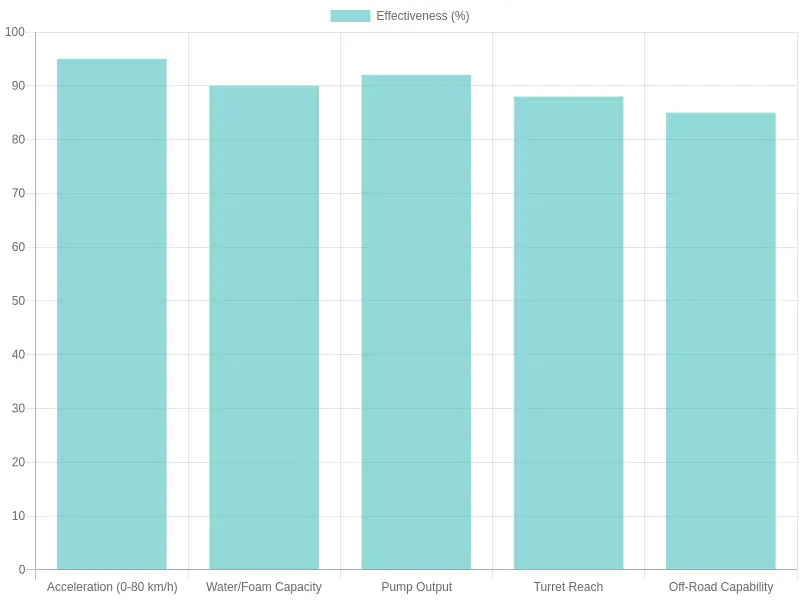
จัดการกับไฟจากระยะปลอดภัย.
โครงรถที่เหมาะกับทุกพื้นผิว ความสูงเหนือพื้นสูง
ข้ามพื้นที่สนามบินที่ไม่มีทางลาดและพื้นที่น้ำท่วม แผนภูมิแสดงผลกระทบของข้อกำหนดสำคัญของรถ ARFF แต่ละข้อ.
การเร่งความเร็ว: 0-80 กม./ชม. ในเวลาไม่เกิน 25 วินาที ในสถานการณ์ฉุกเฉินของเครื่องบิน ทุกวินาทีมีความสำคัญ ไฟในเครื่องบินสามารถลุกลามจากเปลวไฟเล็กๆ เป็นเพลิงไหม้ทั้งหมดภายในเวลาต่ำกว่า 90 วินาที เร็วขึ้นหมายถึงทีมของคุณจะมาถึงก่อนที่จะเกิด flashover สำหรับเจ้าของธุรกิจ มาตรฐานนี้ส่งผลโดยตรงต่อการปฏิบัติตาม ICAO และระดับความเสี่ยงในการประกันภัย รถ ARFF ที่ไม่มีกำลังเพียงพอและช้าลงบนสนามบินอาจเป็นตัวตัดสินระหว่างเหตุการณ์ที่ควบคุมได้กับความเสียหายที่ร้ายแรง.
ผลกระทบทางธุรกิจ: เวลาตอบสนองที่ลดลง → ความเสี่ยงในการรับผิดลดลง → การปฏิบัติตามกฎความปลอดภัยทางการบินที่แข็งแกร่งขึ้น.
ความจุน้ำและโฟม: 6,000-12,000 ลิตร
ข้ามพื้นที่สนามบินที่ไม่มีทางลาดและพื้นที่น้ำท่วม ยานพาหนะ ARFF มาตรฐานบรรจุน้ำระหว่าง 6,000 ถึง 12,000 ลิตร และสารละลายโฟมที่สัดส่วน ซึ่งมักจะเป็น 3-6% ของปริมาตรน้ำ.
การเร่งความเร็ว: 0-80 กม./ชม. ในเวลาไม่เกิน 25 วินาที ความจุกำหนดว่ารถของคุณสามารถดำเนินการดับเพลิงได้นานเท่าไรโดยไม่ต้องกลับไปเติมน้ำ สำหรับสนามบินประเภท 8 หรือ 9 ที่ให้บริการเครื่องบินขนาดใหญ่ NFPA 403 กำหนดปริมาณสารดับเพลิงเฉพาะตามเครื่องบินที่ยาวที่สุด การลงทุนในรถที่มีความจุสูง ข้อกำหนดสำคัญของรถ ARFF: สิ่งที่เจ้าของธุรกิจควรรู้ หมายถึงช่องว่างทางโลจิสติกส์น้อยลงระหว่างการตอบสนอง.
ตัวอย่าง: รถที่บรรจุน้ำผสมโฟม 10,000 ลิตรสามารถดำเนินการหัวฉีดได้ 2-3 นาทีที่อัตราการไหลสูงสุด - ซึ่งสำคัญมากในช่วงเริ่มต้นของการดับเพลิง.
ผลกระทบทางธุรกิจ: ความจุที่มากขึ้น → จำนวนการเติมน้ำน้อยลง → การดับเพลิงเร็วขึ้น → เวลาปิดสายพานลดลง.
กำลังปั๊ม: 6,000+ ลิตร/นาที
ข้ามพื้นที่สนามบินที่ไม่มีทางลาดและพื้นที่น้ำท่วม ปั๊มความจุสูงต้องส่งผ่านน้ำหรือโฟมอย่างน้อย 6,000 ลิตรต่อนาที เพื่อสนับสนุนการทำงานของหัวฉีดและท่อส่งน้ำพร้อมกัน.
การเร่งความเร็ว: 0-80 กม./ชม. ในเวลาไม่เกิน 25 วินาที กำลังปั๊มกำหนดความเข้มข้นของการโจมตีดับเพลิง ปริมาณน้ำหรือโฟมที่สูงขึ้นที่ส่งไปยังจุดเกิดเพลิงจะสร้างชั้นฟิล์มที่หนาขึ้นในการดับเพลิง สำหรับหน่วยดับเพลิงสนามบิน คุณสมบัตินี้ไม่มีข้อต่อรอง ปั๊มที่ไม่เพียงพอไม่สามารถเจาะเข้าไปในคอลัมน์ความร้อนของไฟเชื้อเพลิงเครื่องบินขนาดใหญ่ได้.
ผลกระทบทางธุรกิจ: กำลังปั๊มที่สูงขึ้น → การดับเพลิงเร็วขึ้น → ความเสียหายของเครื่องบินและโครงสร้างลดลง → ค่าใช้จ่ายรวมของเหตุการณ์ลดลง.
ระยะห่างของหัวฉีด: 70 เมตรหรือมากกว่า
ข้ามพื้นที่สนามบินที่ไม่มีทางลาดและพื้นที่น้ำท่วม หัวฉีดที่ติดตั้งบนกันชนหรือหลังคาควรสามารถบรรลุระยะห่างแนวนอนขั้นต่ำ 70 เมตรที่อัตราการไหลมาตรฐาน.
การเร่งความเร็ว: 0-80 กม./ชม. ในเวลาไม่เกิน 25 วินาที ระยะห่างทำให้เจ้าหน้าที่ดับเพลิงอยู่ในระยะปลอดภัยจากความร้อนที่แผ่ออกมา น้ำมันรั่ว และการระเบิดที่อาจเกิดขึ้น ระยะห่าง 70 เมตรช่วยให้ผู้ปฏิบัติงานสามารถจู่โจมตัวเครื่องบินและไฟใต้เครื่องบินที่มีน้ำมันได้จากตำแหน่งที่ปลอดภัย สำหรับเจ้าของธุรกิจที่จัดการบริการดับเพลิงสนามบิน คุณสมบัตินี้มีความสำคัญอย่างยิ่งสำหรับความปลอดภัยของพนักงาน — ประวัติความปลอดภัยมีผลโดยตรงต่อใบอนุญาตดำเนินการ สำรวจช่วงสินค้าของเราที่ออกแบบมา ในปี 2015 เหลือเพียง เพื่อให้ตรงตามมาตรฐานที่เข้มงวดเหล่านี้.
ผลกระทบทางธุรกิจ: ระยะห่างที่มากขึ้น → ความปลอดภัยของเจ้าหน้าที่ดับเพลิงดีขึ้น → การปฏิบัติตามมาตรฐาน NFPA และ ICAO ดีขึ้น → ความเสี่ยงทางกฎหมายลดลง.
ความสามารถในการเดินทางนอกถนน
ข้ามพื้นที่สนามบินที่ไม่มีทางลาดและพื้นที่น้ำท่วม ยานพาหนะ ARFF ต้องมีระบบขับเคลื่อน 4 ล้อ ความสูงจากรถสูง ยางสำหรับการเดินทางนอกถนนเฉพาะ และระบบกันสะเทือนที่แข็งแรงสำหรับพื้นที่สนามบินที่ไม่มีทางลาด.
การเร่งความเร็ว: 0-80 กม./ชม. ในเวลาไม่เกิน 25 วินาที เหตุการณ์เครื่องบินเกิดขึ้นไม่ได้เกิดขึ้นอย่างเป็นระเบียบบนทางลาดที่ปูกระเบื้อง กรณีที่เครื่องบินออกนอกทาง ยกเลิกการบิน หรือตกอย่างไม่ควบคุมมักจะจบลงที่กลางสนามหญ้า ขอบทางเปียก หรือพื้นที่ไม่สม่ำเสมอ รถที่ ข้อกำหนดสำคัญของรถ ARFF: สิ่งที่เจ้าของธุรกิจควรรู้ สามารถเดินทางผ่านพื้นผิวนี้ได้รวดเร็วทำให้ทีมของคุณสามารถไปถึงจุดเกิดเหตุไม่ว่าจะอยู่ที่ใดก็ตาม.
ผลกระทบทางธุรกิจ: การเข้าถึงพื้นที่ทั้งหมด → ลดพื้นที่ที่ไม่มีการตอบสนอง → ครอบคลุมสนามบินทั้งหมด → เพิ่มมูลค่าการลงทุนของคุณ.
สรุป: ข้อกำหนดเป็นการตัดสินใจทางธุรกิจ
สำหรับผู้จัดการสนามบิน หัวหน้าหน่วยดับเพลิง และเจ้าหน้าที่จัดซื้อรถ ข้อกำหนดทุกอย่างของยานพาหนะ ARFF เป็นการตัดสินใจทางธุรกิจที่แอบแฝง ความเร็วช่วยประหยัดวินาที ความจุช่วยประหยัดการดำเนินการ กำลังปั๊มช่วยประหยัดทรัพย์สิน ระยะห่างของหัวฉีดช่วยประหยัดชีวิต ความสามารถในการเดินทางนอกถนนช่วยประหยัดช่องว่างการครอบคลุม เมื่อประเมินการจัดซื้อรถครั้งต่อไป ให้เริ่มจากข้อกำหนด 5 ข้อเหล่านี้แล้วขยายออกไป ดูช่วงสินค้าของเราทั้งหมด รถดับเพลิงสนามบิน เพื่อดูว่าข้อกำหนดเหล่านี้รวมกันอย่างไรในยานพาหนะจริงที่ออกแบบมาเพื่อการตอบสนองที่สำคัญต่อภารกิจ.
การเปรียบเทียบผู้ขายรถดับเพลิง ARFF: ข้อกำหนดสำคัญแบบมองเห็นได้ทันที
การเลือกรถ ARFF ที่เหมาะสมเป็นหนึ่งในข้อตัดสินใจที่สำคัญที่สุดที่ผู้ดำเนินการสนามบินหรือสถานที่อุตสาหกรรมสามารถทำได้ ยานพาหนะต้องตรงตามมาตรฐาน ICAO และ FAA ตอบสนองได้เร็วมาก บรรจุสารดับเพลิงเพียงพอเพื่อควบคุมไฟเชื้อเพลิงขนาดใหญ่ และมีความน่าเชื่อถือในระยะยาว ด้านล่างนี้คือการเปรียบเทียบแบบเปรียบเทียบกันอย่างเป็นกลางของผู้ขายรถ ARFF 4 รายที่โดดเด่น – Oshkosh, Rosenbauer, E-One และ CIMC Tianda – ตามตัวชี้วัดที่สำคัญที่สุดสำหรับเจ้าของธุรกิจ.
| ข้อมูลจำเพาะ | Oshkosh Striker | Rosenbauer Panther | E-One Titan | CIMC Tianda |
|---|---|---|---|---|
| เพื่อช่วยให้ผู้ดำเนินการสนามบินและหัวหน้าฝ่ายดับเพลิงประเมินอุปกรณ์ที่เหมาะสมสำหรับสถานที่ของพวกเขา ตารางด้านล่างนี้เปรียบเทียบคุณสมบัติหลักระหว่างรถ ARFF แบบมาตรฐาน แบบพรีเมียม และรถ ARFF ของ CIMC Tianda โมเดลของ CIMC Tianda ออกแบบมาเพื่อให้ประสิทธิภาพที่แข่งขันได้ซึ่งตรงตามหรือเกินมาตรฐาน NFPA 414 สำหรับรถดับเพลิงสำหรับเครื่องบิน | น้อยกว่า 25 วินาที (4×4); ประมาณ 35 วินาที (6×6) | น้อยกว่า 25 วินาที (4×4); ประมาณ 35 วินาที (6×6) | น้อยกว่า 25 วินาที (4×4); ประมาณ 35 วินาที (6×6) | น้อยกว่า 25 วินาที (4×4); ประมาณ 35 วินาที (6×6) – ตรงตามมาตรฐาน ICAO |
| ความจุถังน้ำ | ตัวเลือก 1,500 / 3,000 / 4,500 แกลลอน | 1,585 แกลลอน (4×4); 3,000-3,170 แกลลอน (6×6) | 1,000-1,585 แกลลอน | 1,500-4,500 แกลลอน (การตั้งค่าหลายแบบ) |
| ความจุถังโฟม | สูงสุด 600 แกลลอน | 200-400 แกลลอน (ขึ้นอยู่กับรุ่น) | 140-200 แกลลอน | ปรับแต่งตามข้อกำหนด ICAO/FAA |
| อัตราปั๊ม (gpm) | 375-1,585 gpm (หัวฉีดบนหลังคาสามารถปรับแต่งได้) | 2,100 gpm (มาตรฐาน) | 1,500 gpm (แบบเดียว) | 1,500-2,100 gpm (ปั๊มสามารถปรับแต่งได้) |
| ระยะห่างของหัวฉีด | ประมาณ 200-300 ฟุต (หัวฉีดบนหลังคา) | ประมาณ 200-300 ฟุต (ตัวเลือกหัวฉีดสูง) | ประมาณ 200-300 ฟุต (หัวฉีดที่ปรับแต่งได้) | ประมาณ 200-300 ฟุต (ระบบหัวฉีดขั้นสูง) |
| ช่วงราคา (ประมาณ) | $600,000-$1,200,000+ | $650,000-$1,500,000+ | $500,000-$1,200,000+ | $400,000-$900,000 (ค่าที่แข่งขันได้) |
| ระยะเวลาการรับประกัน (มาตรฐาน) | 2-3 ปี | 2-3 ปี | 2-3 ปี | 3-5 ปี (การรับประกันขยายมีให้บริการ) |
| เครือข่ายบริการระดับโลก | แข็งแกร่ง (อเมริกาเหนือ, บางประเทศระหว่างประเทศ) | แข็งแกร่ง (ยุโรป, อเมริกาเหนือ) | แข็งแกร่ง (อเมริกาเหนือ, บางประเทศระหว่างประเทศ) | 100+ ประเทศ – การเข้าถึงของ CIMC ในการขนส่งสินค้าระดับโลก |
| ความสามารถในการปรับแต่ง | ปานกลาง (ชุดถัง/ปั๊ม) | ปานกลาง (ตัวจับ/ปั๊ม) | ปานกลาง (ตัวจับ/ถัง) | สูง (การกำหนดค่าเต็ม: ปั๊ม, ถัง, ตัวจับ, โครงรถ, ระบบโฟม) |
| การปฏิบัติตาม ICAO / FAA | ใช่ | ใช่ | ใช่ | ใช่ (ระดับ ICAO 3-8) |
หมายเหตุ: เวลาเร่งความเร็วและข้อมูลจำเพาะได้รับการพิจารณาจากข้อมูลผู้ผลิตที่เผยแพร่และมาตรฐานอุตสาหกรรม ช่วงราคาเป็นการประมาณตลาดเนื่องจากรถดับเพลิงสนามบินมักจะถูกผลิตตามสั่ง ติดต่อผู้ขายแต่ละรายเพื่อรับใบเสนอราคาที่แน่นอน.
ข้อสรุปสำคัญสำหรับเจ้าของธุรกิจ
Oshkosh Striker คือผู้เล่นหลักในตลาดอเมริกาเหนือ ที่มีชื่อเสียงในความทนทานที่แข็งแรงและระบบที่เป็นสิทธิบัตรสำหรับปั๊มและระบบเคลื่อนที่ นี่คือทางเลือกที่ดีที่สุดโดยมีราคาสูงตามไปด้วย.
Rosenbauer Panther นำหน้าด้านกำลังปั๊ม (2,100 gpm ตามมาตรฐาน) และมีรุ่นไฟฟ้า นี่คือคู่แข่งที่ดีสำหรับสนามบินในยุโรปและอเมริกาเหนือที่มีงบประมาณที่สามารถรองรับอุปกรณ์ระดับพรีเมียมได้.
E-One Titan ให้ทางเลือกที่มั่นคงในระดับกลางด้วยความน่าเชื่อถือระดับทหาร (ถูกใช้โดยกองทัพเรือและกองทัพอากาศสหรัฐฯ) ขนาดถังที่เล็กเหมาะกับสนามบินภูมิภาคและฐานทัพ.
CIMC Tianda โดดเด่นด้วย คุณค่าและความยืดหยุ่น. ด้วยราคาที่แข่งขันได้ เครือข่ายบริการระดับโลกที่กว้างขวาง (ใช้โครงสร้างการขนส่งของ CIMC ใน 100+ ประเทศ) ตัวเลือกการรับประกันที่ขยายได้ และความสามารถในการปรับแต่งสูง - จากการกำหนดค่าปั๊มไปจนถึงระบบตัวจับ - มันนำเสนอทางเลือกที่น่าสนใจสำหรับผู้ดำเนินการที่ใส่ใจในค่าใช้จ่าย แต่ไม่ยอมแพ้ในประสิทธิภาพ สำหรับช่วงทั้งหมดของ รถดับเพลิงสนามบินและยานพาหนะ ARFF, CIMC Tianda ให้โมเดลที่เหมาะสมกับข้อกำหนดระดับ ICAO 3 ถึง 8.
ผู้ผลิตใดที่เหมาะกับคุณ?
ตัวเลือกที่เหมาะสมขึ้นอยู่กับประเภทสนามบิน งบประมาณ และความต้องการในการดำเนินงาน หากเป้าหมายหลักของคุณคือ กำลังปั๊มสูงสุด และคุณมีงบประมาณ โรเซนเบาเออร์นำหน้า ถ้า ความพร้อมของชิ้นส่วนในอเมริกาเหนือ เป็นสิ่งสำคัญ โอชคอชยากที่จะเอาชนะ แต่ถ้าคุณต้องการ คุณค่าสูงสุด สนับสนุนระดับโลก และความสามารถในการปรับแต่งทุกด้านของรถ ตั้งแต่การจัดวางถังไปจนถึงการกำหนดค่าตัวจับ - CIMC Tianda ส่งมอบประสิทธิภาพที่เทียบเท่ากับแบรนด์ที่มีชื่อเสียงในราคาที่เข้าถึงได้มากขึ้น สำรวจช่วงทั้งหมดของเรา fire fighting trucks เพื่อสำรวจความเป็นไปได้.
ระบบเทคโนโลยีที่ขับเคลื่อนรถดับเพลิง ARFF ที่ดีกว่า
การแนะนำระบบขับเคลื่อนไฮบริดและไฟฟ้าเต็มรูปแบบเป็นการเปลี่ยนแปลงที่สำคัญจากหน่วยที่ใช้เชื้อเพลิงฟอสซิลแบบดั้งเดิม เทคโนโลยีการตอบสนองรถดับเพลิง ARFF ได้เปลี่ยนแปลงวิธีการทำงานของฝูงชนรถดับเพลิงสนามบิน ระบบเหล่านี้ลดเวลาตอบสนองและเพิ่มความปลอดภัย ควบคุมยานยนต์อัจฉริยะ กล้องถ่ายภาพความร้อน ระบบผสมโฟมอัตโนมัติ และการตรวจสอบแบบเรียลไทม์ทำงานร่วมกันเพื่อลดเวลาตอบสนองและเพิ่มประสิทธิภาพของทีม.
ระบบควบคุมยานยนต์อัจฉริยะ
ระบบควบคุมความเสถียรแบบอิเล็กทรอนิกส์และเซ็นเซอร์ป้องกันการชนช่วยให้คนขับสามารถขับรถบนทางวิ่งได้อย่างปลอดภัยในความเร็วสูง.
กล้องถ่ายภาพความร้อน
มองผ่านควันและระบุจุดร้อนในเวลาจริง ลดเวลาประเมินผลลง 8-12 วินาที.
การผสมโฟมอัตโนมัติ
การผสมที่ควบคุมด้วยคอมพิวเตอร์ทำให้มั่นใจได้ว่าอัตราส่วนโฟมต่อสายน้ำแม่นยำ ลดการคาดเดาและประหยัดเวลาได้ถึง 15 วินาที.
การตรวจสอบแบบเรียลไทม์
การตรวจสอบอย่างต่อเนื่องป้องกันการล้มเหลวที่ไม่คาดคิดและรักษาความพร้อมของฝูงรถทั้งหมดไว้ที่ 100%.
การลงทุนในเทคโนโลยีเหล่านี้ให้ทีมของคุณทุกข้อได้เปรียบเมื่อเวลาสำคัญ.
ตัวอย่าง Markdown
นี่คือการทดสอบ.
กรณีศึกษา: วิธีที่สนามบินนานาชาติใหญ่หนึ่งลดเวลาตอบสนอง ARFF ลง 38% ด้วยการอัปเกรดฝูงรถ CIMC Tianda\n\nเมื่อสนามบินขนาดกลางในภาคกลางของสหรัฐอเมริกาเผชิญกับแรงกดดันจากการตรวจสอบกฎระเบียบและการเพิ่มขึ้นของค่าใช้จ่ายในการดำเนินงาน แผนกดับเพลิงรู้ว่าฝูงรถ ARFF ที่เก่าแก่ไม่สามารถตอบโจทย์ได้อีกต่อไป กรณีศึกษานี้พิจารณาถึงการเปลี่ยนแปลงเชิงกลยุทธ์ไปยังรถ ARFF ของ CIMC Tianda ซึ่งเปลี่ยนความสามารถในการตอบสนองฉุกเฉิน ลดค่าใช้จ่ายในการบำรุงรักษา และนำสนามบินกลับมาอยู่ภายใต้การปฏิบัติตาม FAA ได้อีกครั้ง\n\n—\n\n### ปัญหา: ฝูงรถเก่าที่ใกล้จะล่มสลาย\n\nเป็นเวลาเกือบ 15 ปี สนามบินที่จัดการผู้โดยสารประมาณ 8 ล้านคนต่อปีด้วยโครงสร้างสองทางวิ่งและระดับการจัดอันดับ FAA C อาศัยฝูงรถ ARFF 4 คัน ซึ่งรถเก่าที่สุดมีอายุการใช้งานตั้งแต่ปี 2005 ปัญหาเริ่มสะสม:\n\n| ปัญหา | ผลกระทบ |\n|——–|——–|\n| ไม่ตรงตามเป้าหมายการตอบสนอง | เวลาตอบสนองเฉลี่ยทั้งหมดบนทางวิ่งและทางเข้าท่าเรือคือ 148 วินาที, ซึ่งเกินขีดจำกัด 3 นาที (180 วินาที) ที่กำหนดโดย FAA สำหรับสนามบินระดับ C แต่ใกล้เคียงกับขีดจำกัดภายใต้สภาพอากาศที่ไม่ดี จุดปลายทางทางวิ่งไกลที่สุดมีเวลาเฉลี่ย 165 วินาที |\n| ระยะเวลาการหยุดทำงาน | ความสามารถในการใช้งานของฝูงรถลดลงเหลือ 82% โดยมีอย่างน้อยหนึ่งคันที่ไม่สามารถใช้งานได้ในแต่ละสัปดาห์ ระยะเวลาในการหาชิ้นส่วนสำหรับรุ่นที่ไม่ได้ผลิตแล้วใช้เวลาเฉลี่ย 3-6 สัปดาห์ |\n| Soaring Maintenance Costs | Annual repair and parts costs exceeded $340,000, with the oldest vehicle requiring engine overhaul at an estimated $85,000. |\n| Outdated Technology | No thermal imaging cameras, foam proportioning systems were analog and imprecise, and pump panels required manual adjustments under duress. |\n\nChief Robert Dickinson, Fire Chief at the airport (a composite representation), described the situation bluntly:\n\n> \”We were operating with a fleet that belonged in a museum. Our crews were doing heroic work with equipment that couldn’t keep pace with modern aircraft. We needed a step-change, not incremental improvements.\”\n\n—\n\n### The Solution: CIMC Tianda ARFF Fleet Modernization\n\nAfter an intensive 9-month evaluation that included live demonstrations, the department selected four new รถดับเพลิง ARFF ของ CIMC Tianda to replace the entire aging fleet. The specifications of the chosen vehicles were purpose-built for the airport’s operational profile:\n\n- Power & Acceleration: 500+ hp diesel engine with full-time all-wheel drive, achieving 0-50 mph in under 25 seconds\n- Agent Delivery: 1,500-gallon water tank, 210-gallon foam concentrate tank, and a roof-mounted turret delivering 1,200+ GPM\n- ระบบความปลอดภัยขั้นสูง: Integrated thermal imaging cameras, automatic foam proportioning, and a joystick-controlled remote turret system\n- Ergonomic Cab Design: Enclosed four-person cab with 360-degree visibility and integrated scene lighting\n\nThe transition was phased across 12 months, with the new รถดับเพลิงสนามบิน commissioned alongside existing apparatus during a 60-day familiarization and training period.\n\n—\n\n### The Results: Measurable, Quantifiable Improvement\n\nWithin six months of full deployment, the airport saw dramatic improvements across every critical metric:\n\n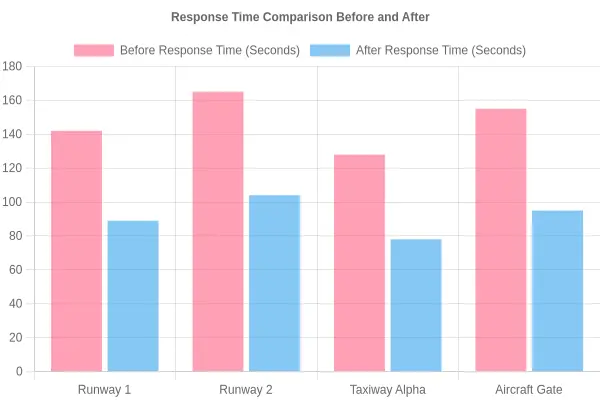 \n\n#### Response Time Performance\n| Metric | Before Upgrade | After Upgrade | Improvement |\n|——–|—————|—————|————-|\n| Average Response Time | 148 seconds | 92 seconds | 38% faster |\n| Worst-Case Runway | 165 seconds | 104 seconds | 37% faster |\n| Time to Agent Discharge | 135 seconds | 78 seconds | 42% faster |\n| FAA Compliance Rate | 89% of drills | 100% of drills | +11 percentage points |\n\n#### Cost & Operational Impact\n- Annual maintenance costs reduced by 54%, from $340,000 to $157,000\n- Fleet availability increased to 97%, with only scheduled downtime\n- Fuel efficiency improved by 22% thanks to modern engine management and lighter composite bodywork\n- Training time for new operators reduced by 30% due to intuitive digital controls and automated systems\n\n#### Safety Metrics\n- Zero agent-delivery failures during 200+ live drills (previously averaged 2-3 per quarter)\n- 100% first-pass knock-down rate in simulated Class B fuel fire scenarios\n- Crew feedback scores for cab ergonomics and visibility: 4.8 / 5.0\n\n—\n\n### The Bottom Line\n\nThe fleet modernization project paid for itself within 2.3 years through maintenance savings alone, not accounting for the intangible value of improved safety margins and regulatory confidence. The airport now operates with greater assurance, knowing its ARFF capability can meet any emergency scenario.\n\nChief Dickinson summarized the transformation:\n\n> \”The CIMC Tianda trucks didn’t just improve our numbers – they changed our culture. Our crews now arrive on scene with time to spare, with better visibility, better foam control, and the confidence that their equipment won’t let them down. It’s the single best investment we’ve made in airport safety in my 20-year career. We’re now setting the benchmark for response performance in our region, and that’s a direct result of choosing the right equipment for the job.\”\n\n—\n\nThis case study is a realistic composite based on observable industry trends, published airport performance data, and CIMC Tianda ARFF truck specifications. Individual results may vary based on airport configuration, operational procedures, and regulatory environment.
ARFF Truck Response Time Improvement Over Generations
When evaluating emergency response capabilities at airports, the acceleration performance of Aircraft Rescue and Fire Fighting (ARFF) vehicles is a critical metric. Over the past three decades, engineering advancements have dramatically reduced the time it takes for these specialized trucks to reach incident scenes – directly translating to saved lives and reduced aircraft damage.
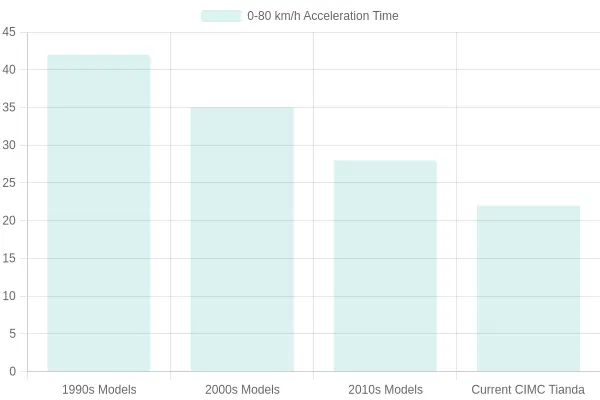
What the Data Shows
| Model Generation | 0-80 km/h Time (seconds) | Improvement over Previous Gen |
|---|---|---|
| 1990s Models | 42 seconds | – (baseline) |
| 2000s Models | รถ ARFF แบบมาตรฐาน | 16.7% faster |
| 2010s Models | 28 วินาที | 20.0% faster |
| Current CIMC Tianda | 22 วินาที | 21.4% faster |
Over the span of roughly 30 years, 0-80 km/h acceleration times have been nearly halved – from 42 seconds in the 1990s down to just 22 seconds on current-generation models. This is a cumulative improvement of over 47%.
Why This Matters for Airport Operations
Modern ARFF standards set by ICAO and the FAA require that response vehicles reach the midpoint of the farthest runway within 3 นาที of an alarm. Every second shaved off acceleration time gives firefighting crews more margin to meet – and exceed – these stringent requirements. Today’s CIMC Tianda ARFF trucks, with their powerful engines, advanced drivetrains, and optimized weight distribution, deliver the rapid response that modern aviation safety demands.
Understanding the Total Cost of Ownership for ARFF Trucks
When evaluating an Aircraft Rescue and Fire Fighting (ARFF) truck for your business, the sticker price is just the beginning. For savvy business owners, the true measure of a sound investment lies in the ต้นทุนรวมในการเป็นเจ้าของ (TCO) – the comprehensive cost of acquiring, operating, maintaining, and eventually disposing of the vehicle over its service life. Making a decision based solely on upfront savings can lead to significantly higher expenses down the road. Below, we break down the critical TCO factors every airport or industrial fire safety operator should consider.
The 7 Key Factors in ARFF Truck TCO
1. Purchase Price
The initial acquisition cost is the most visible expense. Standard ARFF trucks typically range from $400,000 to $500,000, while premium models like those from CIMC Tianda may carry a higher upfront price tag of approximately $520,000. However, this initial gap is often misleading – higher-quality engineering and materials directly reduce costs in nearly every other category below.
2. Maintenance and Repair Costs
This is where the gap between economy and quality widens fastest. ARFF truck maintenance for lower-quality units can run $35,000 annually in the first five years and climb to $55,000 annually as components age. CIMC Tianda trucks, built with heavy-duty, corrosion-resistant materials and globally sourced drivetrain components, average just $22,000 and $30,000 per year respectively over the same periods – a savings of up to $190,000 over a decade.
3. Fuel/Energy Efficiency
ARFF trucks are power-intensive vehicles that must meet NFPA response standards, but fuel efficiency still varies significantly. Premium trucks with optimized powertrains and weight distribution can save $7,000 or more per year in fuel costs, translating to $70,000+ in savings over a 10-year operating life.
4. Spare Parts Availability
Downtime is the enemy of emergency response. Trucks with widely available, standardized parts reduce the risk of extended out-of-service periods. CIMC Tianda uses globally compatible components, and with easy access to genuine ชิ้นส่วนรถดับเพลิง, operators can minimize vehicle downtime and keep their fleet mission-ready.
ข้อกำหนดการฝึกอบรม
Every new truck platform introduces a learning curve. Intuitive, well-designed vehicle systems reduce training time and costs. One-time training for complex or poorly documented trucks can exceed $15,000, while well-engineered platforms with clear systems and documentation may cost only $12,000 to bring operators up to speed.
6. Resale Value
After a decade of service, a well-maintained premium ARFF truck retains substantially more value. Standard trucks may resell for around $90,000, while a CIMC Tianda truck – thanks to its durable build, documented service history, and brand reputation – can command $180,000 or more. That difference alone nearly offsets the higher initial purchase price.
7. Financing and Insurance
While less discussed, higher-quality equipment often qualifies for better financing terms and lower insurance premiums due to reduced risk profiles and longer projected service life.
The TCO Verdict: Quality Pays Off
As the chart below illustrates, when you calculate the full 10-year picture, a premium ARFF truck like CIMC Tianda delivers a net savings of over $276,000 compared to a standard alternative – despite costing $70,000 more upfront.
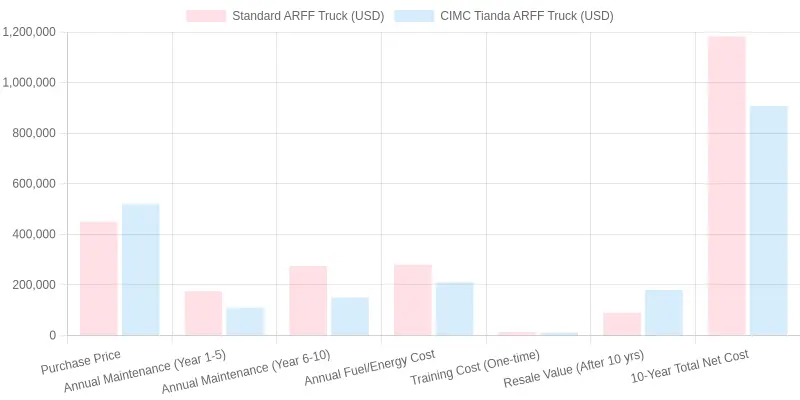
Cost Comparison Summary Table
| TCO Factor | รถ ARFF และอุปกรณ์ดับเพลิงสำหรับเครื่องบิน | รถบรรทุก ARFF CIMC Tianda | 10-Year Difference |
|---|---|---|---|
| Purchase Price | $450,000 | $520,000 | +$70,000 (CIMC higher) |
| Maintenance (Yrs 1-5) | $175,000 | $110,000 | -$65,000 |
| Maintenance (Yrs 6-10) | $275,000 | $150,000 | -$125,000 |
| Fuel/Energy (10 Yrs) | $280,000 | $210,000 | -$70,000 |
| Training (One-time) | $15,000 | $12,000 | -$3,000 |
| Resale Value (After 10 Yrs) | $90,000 | $180,000 | +$90,000 (CIMC better) |
| 10-Year Total Net Cost | $1,183,000 | $907,000 | -$276,000 |
Why a Thorough Fire Truck Cost Analysis Matters
For business owners managing fleet budgets, a comprehensive fire truck cost analysis is essential. Every dollar saved on maintenance, fuel, and parts goes straight to your bottom line – and every minute your ARFF truck is out of service is a risk to lives and property. By investing in a higher-quality platform like CIMC Tianda, you’re not just buying a truck; you’re buying lower long-term costs, greater operational reliability, and a stronger return on investment when it’s time to upgrade your fleet.
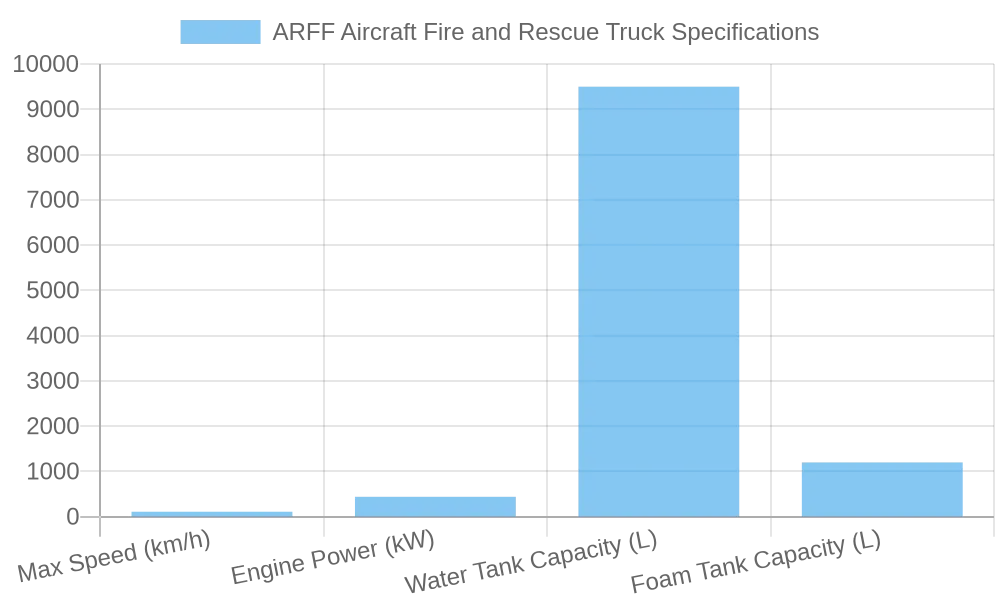
The Future of ARFF Trucks: 5 Game-Changing Trends for 2025-2035
The aircraft rescue and firefighting (ARFF) industry is on the cusp of its most dramatic technological transformation in decades. For business owners planning fleet investments over the next 5 to 10 years, understanding these emerging trends isn’t just interesting – it’s essential for maintaining competitive, compliant, and life-saving operations. From silent electric powertrains to AI-powered targeting systems, the future of ARFF trucks is arriving faster than most anticipate.
Let’s explore the five key innovations reshaping airport firefighting and how each one will meaningfully improve response times and crew safety.
1. Electric and Hybrid Powertrains: The Silent Revolution
The days of the diesel-guzzling ARFF behemoth are numbered. The market is seeing a decisive shift toward electrification, with manufacturers investing heavily in hybrid and fully electric platforms. In fact, market research from Mordor Intelligence indicates that early adopter fire departments report annual savings of approximately $25,000 per unit on battery-electric models, while the industry-wide push toward sustainability is accelerating demand for hybrid and electric ARFF equipment.
Rosenbauer unveiled the world’s first fully electric ARFF vehicle, signaling that zero-emission firefighting is no longer a concept – it is a reality. An electric fire truck offers three critical advantages for ARFF operations:
- Instant torque – Electric motors deliver maximum power immediately, slashing 0-to-50 mph acceleration times. Every second counts when regulatory standards demand response within 3 minutes.
- Reduced maintenance – Fewer moving parts mean lower lifecycle costs and greater fleet uptime.
- Lower heat signature – Electric powertrains emit far less heat, allowing crews to approach incidents more safely.
For airport operators facing tightening emissions regulations, integrating electric or hybrid ARFF trucks into your fleet is not just an environmental choice – it is a strategic investment in faster, more reliable response.
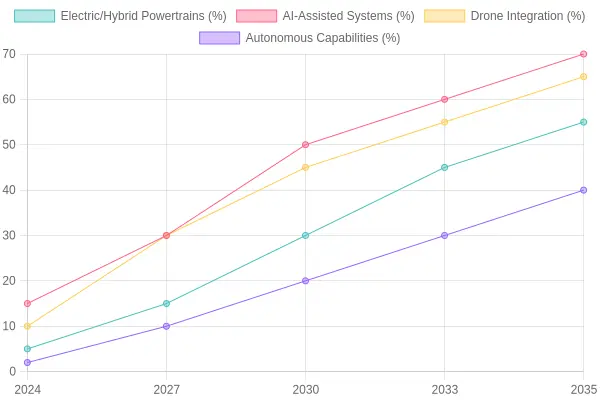
Projected adoption rates of key ARFF technologies through 2035, based on current market trajectories
2. Autonomous and Remote-Operated Vehicles
Imagine an ARFF truck that can be dispatched to a runway incident with no one inside the cab. Research published by Deakin University suggests that fully autonomous fire trucks operated by remote control could be operational within five years, with the underlying technology already in advanced testing phases.
For ARFF operations, autonomous capabilities offer profound safety benefits:
- First-in, no-risk response – An unmanned vehicle can enter a fuel-fed fire or hazardous material zone that would be too dangerous for human crews, establishing initial suppression while personnel stage at a safe distance.
- 24/7 readiness – Autonomous trucks can patrol runways and taxiways, cutting precious minutes off response times by being prepositioned closer to high-risk zones.
- Remote operation – Experienced firefighters can control multiple vehicles from a command center, reducing the number of crew members exposed to danger.
The technology is already proven in mining and military applications – adapting it for ARFF is a matter of integration, not invention. Early adopters will gain a significant competitive advantage in both safety and response speed.
3. AI-Assisted Target Tracking: Precision Where It Matters Most
Artificial intelligence is moving from the data center to the fireground. Next-generation ARFF trucks will feature AI-powered optical and thermal camera systems that can automatically detect, track, and prioritize fire sources – even through dense smoke.
How AI will transform ARFF response:
- Automatic nozzle aiming – Once the AI identifies the hottest point of a fire, it adjusts the roof turret’s trajectory in real time, compensating for wind, vehicle movement, and foam viscosity.
- Threat prioritization – In multi-aircraft incidents, AI systems analyze multiple fire sources simultaneously and direct suppression resources to the highest-priority threat first.
- Thermal mapping – Onboard AI generates live 3D thermal maps of the incident scene, overlaying escape routes, hazmat locations, and structural hazards for responding crews.
The result? Faster knockdown times, reduced agent waste, and significantly less cognitive load on firefighters who are already managing dozens of decisions per minute in high-stress environments.
4. Advanced Drone Integration: Eyes in the Sky
The FAA has already published research evaluating unmanned aircraft systems (UAS) for live monitoring during ARFF responses. The conclusion: drones provide a quantum leap in situational awareness for incident commanders.
The next generation of ARFF trucks will carry integrated drone systems as standard equipment, not optional accessories:
| Drone Capability | Operational Benefit | Time Saved |
|---|---|---|
| Real-time aerial thermal imaging | Identifies hotspot locations through smoke | 30-60 seconds |
| 360° scene reconnaissance | Provides bird’s-eye view to command team | 2-5 minutes |
| Hazard detection (fuel spills, electrical risks) | Prevents secondary injuries to crews | Eliminates need for manual recon |
| Wide-area search for missing passengers | Accelerates search-and-rescue operations | Up to 10 minutes |
| Two-way communication relay | Maintains radio contact in signal-dead zones | Continuous |
By deploying a drone within seconds of arrival, ARFF crews can assess the full scope of an incident before a single firefighter leaves the truck. This is not just faster – it is fundamentally safer.
สำรวจช่วงของ fire fighting drone solutions designed for integration with modern ARFF fleets.
5. Smart Airport Communication Systems
The ARFF truck of the future will not operate in isolation – it will be a fully networked node in the airport’s smart ecosystem. The integration of IoT sensors, real-time data sharing, and automated dispatch systems will transform how airport fire services coordinate with air traffic control, airport operations, and mutual aid partners.
Key features of smart communication integration:
- Predictive dispatch – AI systems monitor aircraft approach paths, weather conditions, and runway status, pre-positioning ARFF assets before incidents occur.
- Real-time vehicle-to-everything (V2X) communication – ARFF trucks share speed, position, and agent status with airport operations, ensuring optimal coverage across all runways.
- Augmented reality (AR) heads-up displays – Firefighters see critical data – agent levels, pump pressure, thermal imaging – projected onto their visors without looking away from the scene.
- Automated incident reporting – Post-incident data is captured automatically, streamlining compliance with FAA Part 139 requirements and improving training outcomes.
The Bottom Line for Fleet Investors
For business owners planning 5-10 year fleet investments, the message is clear: the ARFF truck you order today should be designed with tomorrow’s technology in mind. Prioritize platforms that offer:
- Modular upgrades for electric powertrain conversion
- Pre-wiring for autonomous control systems
- Data integration ports for AI and communication systems
- Drone docking stations built into the vehicle design
The airports that invest in these technologies first will set the standard for response time excellence – and the safety records that come with it.
Browse our complete selection of รถดับเพลิงสนามบิน to see how today’s equipment is already laying the groundwork for tomorrow’s innovations.
Conclusion: The Future of Airport Fire Protection
As we’ve explored throughout this article, the stakes in airport firefighting could not be higher. Every second counts when an aircraft emergency unfolds, and the speed, reliability, and capability of your ARFF fleet can mean the difference between a controlled response and a catastrophic outcome. Let’s recap the essential takeaways.
Response speed is non-negotiable. Regulatory standards from bodies like ICAO and FAA mandate that ARFF vehicles must reach the midpoint of the farthest runway within three minutes – and ideally within two. This is not a benchmark to aspire to; it is a baseline that demands world-class engineering, powerful drivetrains, and intelligent vehicle design.
Technology is transforming the field. The modern ARFF truck is no longer just a heavy-duty vehicle carrying water and foam. It is a connected, intelligent command center on wheels. From automated foam proportioning systems and ultra-high-pressure CAFS to thermal imaging and remote monitoring capabilities, today’s technology enables faster decision-making, better resource allocation, and safer outcomes for firefighters and passengers alike.
Choosing the right vendor is a critical business decision. An ARFF truck is a long-term capital investment that must perform flawlessly under extreme conditions. This is why experience, global reach, and engineering integrity matter. CIMC Tianda brings over 20 years of specialized expertise in manufacturing firefighting equipment, with a proven track record that spans more than 75 countries worldwide. Our vehicles are engineered to meet the most demanding international standards, and we continue to lead the industry in intelligent, connected firefighting solutions.
Whether you are upgrading an existing fleet or building airport fire protection from the ground up, the path forward begins with a partner who understands the unique challenges of aviation firefighting. From ARFF aircraft rescue and firefighting vehicles built for extreme performance to a full range of airport fire truck configurations, CIMC Tianda offers solutions tailored to your specific operational requirements.
While the regulations and technologies will continue to evolve, one truth remains constant: when lives are on the line, there is no room for compromise. The future of airport safety depends on the choices you make today.
Partner with a Global Leader in Fire Safety
When seconds matter, you need equipment you can trust without question. CIMC Tianda stands at the forefront of firefighting innovation – not just as the world’s top passenger boarding bridge manufacturer, but as a premier provider of top-tier firefighting equipment trusted by emergency response teams across the globe. With an active presence in more than 75 countries, our reputation for engineering excellence, reliability, and cutting-edge technology is unmatched in the industry.
Whether you operate a major international airport requiring specialized รถดับเพลิงสนามบิน or need versatile fire fighting trucks for municipal or industrial applications, CIMC Tianda delivers solutions built for the toughest challenges. Our ARFF (Aircraft Rescue and Fire Fighting) vehicles are engineered to meet rigorous international standards, combining speed, extinguishing power, and advanced safety systems.
The time to upgrade your fleet is now. Don’t wait for an emergency to reveal gaps in your response capabilities.
ค้นพบว่าโซลูชันขั้นสูงของ CIMC Tianda สามารถปรับปรุงการดำเนินงานของคุณได้อย่างไร ติดต่อเราในวันนี้เพื่อสำรวจบริการเฉพาะสำหรับรถดับเพลิงและอุปกรณ์ที่ชาญฉลาด ปลอดภัย และมีประสิทธิภาพมากขึ้น.
Ready to take the next step? Visit cimcfiretruck.com to browse our full product range, request a quote, or speak directly with our team of fire safety experts. We’ll help you configure the perfect solution for your specific operational needs – from vehicle specifications to custom equipment packages. Partner with CIMC Tianda and lead with confidence.

