
















The presence of fire trucks on overpasses might raise eyebrows, especially among business owners who rely on safety measures to protect their investments. Understanding why fire trucks are strategically placed on these structures is crucial in recognizing the critical role they play in emergency planning and public safety. Fire trucks are not simply parked on every overpass. Instead, their positioning reflects a strategic response to the unique challenges posed by high bridges and overpasses. This article will delve into three key chapters. The first chapter will explore the strategic considerations behind fire truck placements. The second will discuss how these placements optimize emergency response. Finally, the third chapter will address public safety regulations governing these practices, highlighting their significance in urban planning and emergency preparedness.
Overpass Guardians: The Calculated Rationale Behind Pre-Positioned Fire Apparatus on Bridge Corridors
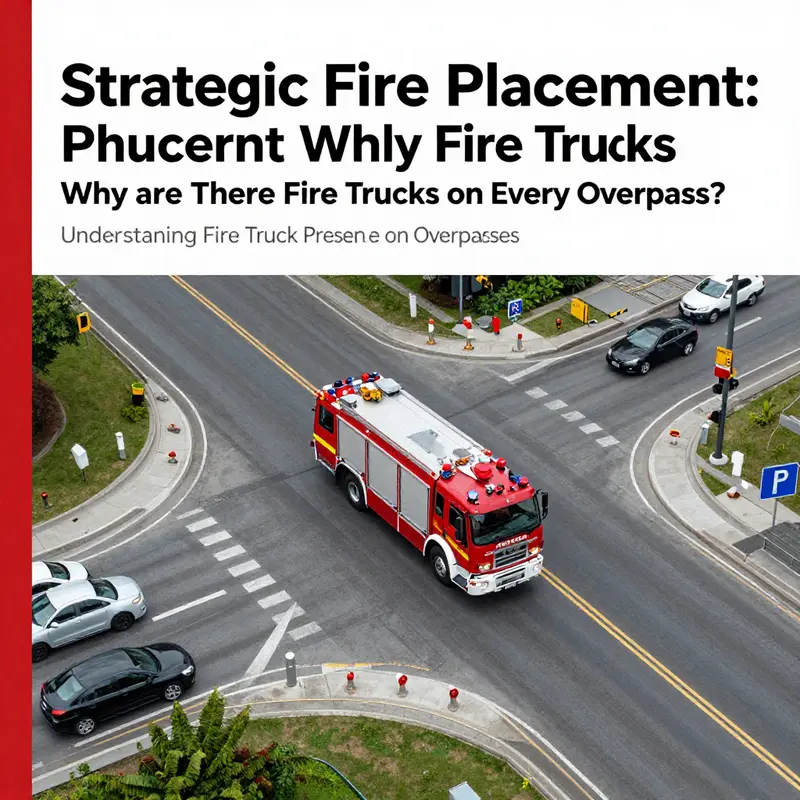
From the elevated lanes where traffic hums and the city’s layers unfold below, the sight of a fire engine parked on an overpass often feels like a deliberate act, a sentinel chosen by planners rather than a routine fixture of the landscape. It is not that every bridge or every overpass wears this armor of readiness, but where and why these pre-positioned vehicles appear reveals a coordinated approach to emergency response that blends speed, access, and a deep understanding of the unique challenges posed by modern infrastructure. The logic is not sensational; it rests on measurable realities about time, geometry, and risk, all of which interact to shape how a city breathes when danger arrives at the curbside of a bridge or a culvert that spans a busy artery or a fault line of traffic. The larger arc of this chapter, and of the article as a whole, is to understand that the image of a fire truck on an overpass is less an extraordinary act and more a manifestation of careful foresight. It embodies a discipline of placement that seeks to shrink the distance between a strike team and the people, vehicles, and structures that depend on their arrival in minutes rather than in hours.
To begin with, time is the most persuasive currency in any emergency. A vehicle fire, a multivehicle collision, a hazardous-material release, or a structural snag in the web of a bridge can cascade into consequences that quickly outpace improvisation. Bridges, by their very nature, heighten the stakes. They are elongated, sometimes narrow passages with limited access points. Their spans are designed with traffic flow in mind, not necessarily with the rapid deployment of specialized firefighting tactics. In the moments after a call goes out, responders must translate a two-dimensional map—where the incident is located—into a three-dimensional problem: where can we stage, how do we reach the flame or the leak, and where will we shelter our equipment while we work? An overpass sits at an ideal intersection of these concerns. It is elevated, so engines and crews can observe downstream conditions with fewer obstructions. It can offer a natural staging area where hoses can be unfurled, command posts can take shape, and access for additional units and support staff can be established without clogging the main arteries below. And crucially, it can be positioned near water sources or hydrants that, while sometimes ubiquitous on city streets, become strategically vital when a long, complex bridge takes the place of a simple urban block.
Public safety benefits flow from these geometries in multiple streams. A pre-positioned fire apparatus acts as a rapid response trigger, a signal that a city is ready to mobilize at the exact moment danger emerges. When an incident unfolds on or near a bridge, the first minutes matter most. A truck already on the scene materializes as a force multiplier, enabling crews to deploy quickly while other units navigate the surrounding traffic, detours, and potential road closures. The equation is straightforward but powerful: reduce the time between alert and action, and you reduce potential injuries and losses. The presence of a fire truck on an overpass is a proactive measure that acknowledges the physical constraints of infrastructure while simultaneously exploiting its advantages. Elevation provides vantage points for assessment, wind patterns, and the spread of smoke, all of which are critical when determining the safest and most efficient approach to an evolving incident.
The practical realities of access define a large portion of this strategic calculus. Large or complex bridges can present access challenges that confound quick entry with heavy equipment. A truck must be positioned where it can hook into a water supply if needed, where it can deploy ladders or aerial devices without impediment, and where it can communicate with other responding units without losing line of sight or radio clarity. This often means locating near bridges that have convenient hydrant networks or water supply considerations, or in places where the geometry of the roadways supports a two-front approach: one line for suppression, another for traffic control and patient care. Overpasses situated along major corridors frequently have the benefit of predictable traffic flows and robust infrastructure, which supports a more deliberate, safer deployment of resources. In some cases, these sites also function as part of a broader disaster-response network, where the overpass becomes a node in a larger plan for evacuation, triage, or mass-casualty management.
Beyond the mechanical aspects of distance and time, the decision to place fire apparatus on an overpass reflects a layered approach to risk management. Bridges sit at the intersection of multiple risk vectors: structural integrity, vehicle speed, weather conditions, and the possibility of cascading incidents that involve more than a single fault line in the system. A pre-positioned unit programs a form of risk governance into the everyday life of a city. It communicates to the public that the emergency services are embedded in the urban fabric, attentive to the way people actually move through space and how infrastructure can either accelerate or impede response. In the field, this translates into a disciplined choreography. A truck on an overpass does not merely respond to a call; it helps shape the response by providing a ready-made vantage point, a staging anchor, and a signaling presence that can coordinate traffic, guide bystanders, and support concurrent operations, such as securing a water supply, establishing a hazard-zone perimeter, or facilitating extrication when vehicles are pinned by collision.
The tactical utility of elevated positioning also extends to communications. Concrete and steel constructions are notorious for creating dead zones in radio networks. A hillside vantage on an overpass can act as a temporary relay point, improving coverage for incident command and ensuring that crews can request additional resources or provide real-time updates without losing contact. In a city with dense megastructures, the ability to maintain robust communications without interruption is not a luxury but a necessity. The overpass, in this sense, becomes more than a physical platform; it is a communications asset that supports the entire command structure during an incident. This capability often aligns with broader safety plans that anticipate a range of contingencies, from a sudden wind-driven collapse to a multi-vehicle pileup that strains the capacity of nearby fire stations.
A further layer to consider is the role of overpass placement in traffic management and public order during emergencies. The sudden appearance of a fire engine on an elevated roadway can act as a signal to drivers to slow, yield, and create a corridor for emergency vehicles to pass. In dense urban settings, where lanes may be tight and the flow of traffic is relentless, pre-positioned units provide an organized alternative to ad hoc traffic control. They form the backbone of a system that seeks to minimize chaos, protect bystanders, and preserve the integrity of the incident scene. In practice, this means crews trained in incident management work with local authorities to coordinate closures, reroute buses and ambulances, and maintain safe distances between the disaster zone and the public. The end result is not merely faster extinguishment or extraction, but a more orderly, predictable, and safer scene—one that reduces the potential for secondary injuries and clarifies the response for everyone involved.
This coordinated approach also has a cultural dimension. Communities often come to recognize certain overpasses as key strategic points in their urban lifeworld. The reasoning behind pre-positioned units can be explained in ways that resonate with local residents, who may sense the city’s preparedness and resilience when they see apparatus stationed along familiar routes. In some places, these arrangements intersect with community events that celebrate public service and honor local heroes. For instance, larger public safety occasions can involve ceremonial processions or designated routes that include overpasses as visible anchors of safety and respect. While such events are not the primary function of pre-positioned fire apparatus, they illustrate how the same infrastructure that carries daily traffic also serves as a stage for collective memory and civic identity. In this broader context, the overpass becomes a symbol of readiness rather than a mere point on a map.
An often underappreciated benefit of strategic overpass placement lies in its contribution to infrastructure protection. When accidents occur on bridges, the risk to the structure itself, as well as to critical load-bearing elements, can be significant. A timely response can prevent fires from compromising the bridge deck, reduce the chance of fuel or chemical spills reaching the watercourses below, and preserve the integrity of transit corridors that communities depend on for daily life and emergency evacuations. Firefighters, engineers, and planners increasingly share data that highlight how rapid interventions can reduce long-term damage to bridges and culverts. In this sense, the presence of a fire truck on an overpass is part of a broader infrastructure-safety strategy—a discrete yet vital line of defense that complements structural monitoring, maintenance, and rapid assessment following any incident. The synergy among these disciplines underscores a pragmatic commitment: maintain readiness at strategic chokepoints, and you protect the reliability of the entire transportation network.
Crucially, the practice is not about blanket coverage but about strategic allocation. Not every overpass will host a vehicle, and not every incident benefits from a pre-positioned unit in the same way. The decision rests on factors such as traffic volume, the complexity of the bridge design, the availability of nearby water sources, historical incident patterns, proximity to clinical facilities for mass-casualty management, and the potential for simultaneous events that would tax nearby fire stations. In practice, a well-designed plan considers the entire spectrum of risk and places resources where they can do the most good while avoiding unnecessary redundancy. The goal is to create a resilient urban safety net that remains adaptable as conditions change—an intelligent arrangement that recognizes the limits of real-time improvisation and the proven value of preplanning.
This approach to placement is also a reminder of how emergency services adapt to a modern, interconnected landscape. A city’s bridges are not static; they are dynamic nodes where traffic flows, weather patterns shift, and the population density ebbs and grows with the hour. Pre-staging on an overpass is an admission that the geometry of danger is sometimes a function of time and topology. It also signals a commitment to continuous learning. Fire departments study traffic patterns, bridge access points, and incident histories to refine where and when to position vehicles. They monitor changes in infrastructure, such as lane reconfigurations or new construction that could alter response times. Even the color and visibility of vehicles—though not the focus of this chapter—play into a broader system of recognition that helps drivers and pedestrians respond appropriately in emergencies. The rationale is practical, but the implications extend beyond the mechanics of response: it is about building trust with the public and ensuring that the system remains legible under stress.
In the broader narrative of public safety and urban resilience, overpass pre-positioning stands as a compact emblem of foresight. It embodies a philosophy that values speed without sacrificing safety, visibility without inviting panic, and preparation without paralysis. It is a lived example of how modern cities translate risk analytics into street-level action. The overpass becomes a rehearsal space for calm, coordinated, and effective action, where every decision about where to park, which equipment to deploy, and how to communicate is guided by a clear understanding of how incident dynamics unfold, what resources will be required next, and how to minimize harm to the public and the infrastructure that supports them.
For readers curious about the deeper roots that inform these practices, the historical thread of fire service strategy offers additional context. The evolution from reactive responses to proactive positioning tracks with broader shifts in safety science. It reflects an ongoing commitment to reducing response times, improving access in challenging environments, and aligning operational routines with the realities of complex urban networks. While the imagery of a fire truck perched above traffic can seem dramatic, it is grounded in a sober calculus: put the right tools in the right place at the right time, and communities stand a better chance of surviving and recovering from emergencies that involve bridges and overpasses. This is not about spectacle; it is about disciplined urban defense—an arrangement of space, people, and procedures that makes a city safer under pressure.
As the discussion closes on this thread, it is worth reiterating that the practice is part of a broader ecosystem of emergency preparedness. The placement of apparatus on key overpasses interacts with hydrant design, incident command processes, traffic-safety engineering, and public communication strategies. It intersects with the training that firefighters receive for high-stakes extrication, rapid hazard assessment, and the management of large-scale events. The result is a holistic approach to safety that treats the bridge corridor not merely as a passageway but as a living component of the emergency response system. In this sense, overpasses function as critical staging grounds—physical spaces where time is saved, coordination is enhanced, and the safety of strangers becomes the shared objective of a community that values preparedness as a public trust.
For readers seeking a catalog of related resources that speaks directly to the equipment and readiness philosophy behind such deployments, the concept of a centralized inventory of specialized assets offers a useful frame. The Emergency Rescue Vehicle category provides examples of how departments curate their kits for rapid deployment in high-stakes environments. Such resources embody the practical translation of the principles described here: a bridge-centered strategy that leverages proximity, access, and trained personnel to safeguard life and property when seconds matter. By reinforcing the idea that readiness sits at the intersection of geography and logistics, these materials illuminate why a city might maintain a visible, prepared presence on a bridge or overpass rather than dispersing resources across every lane or street corner. In this way, the discussion returns to its core message: strategic placement is a deliberate, measurable, and prudent expression of public safety.
External reference: For broader historical context on how fire apparatus color and visibility have evolved as part of the safety ecosystem, see https://www.firefightingtoday.com/why-are-fire-trucks-red-the-history-and-reasons-explained/.
Above the Traffic: The Deliberate Art of Staging Fire Trucks on Overpasses
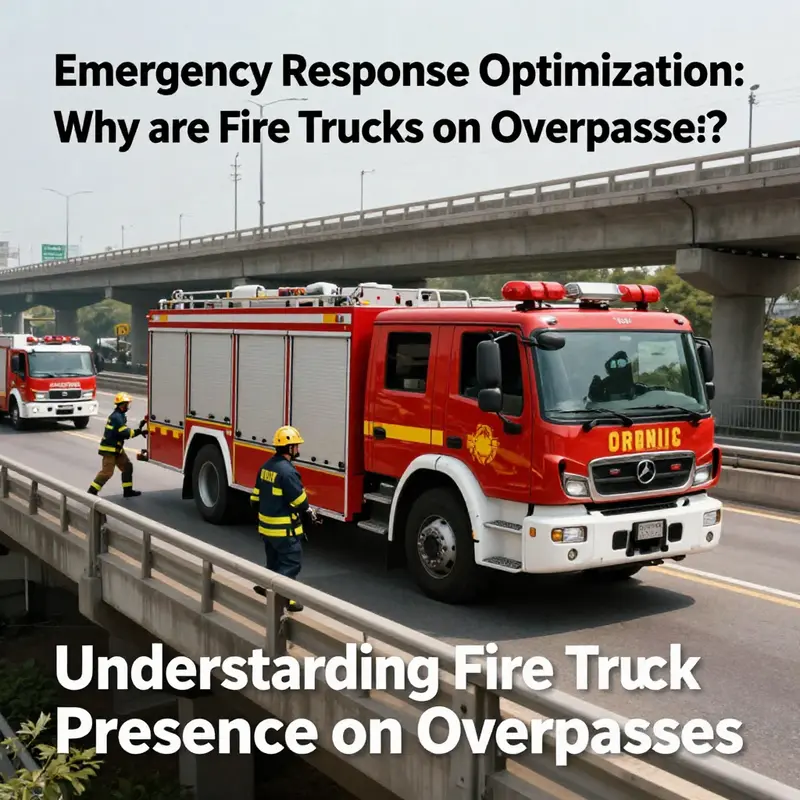
On the surface, the sight of a fire truck perched on an overpass seems almost theatrical, a lone engine commanding a bird’s‑eye view above a river of headlights. Yet the practice is far from a stunt. It is a carefully reasoned tactic born from the realities of modern road networks, the physics of emergencies, and the stubborn math of response times. Fire departments do not equip every overpass with a truck, but they do repeatedly weigh the elevated vantage, the restricted access, and the surge of complexity that accompanies incidents on bridges and in urban canyons. What looks like a surprising placement is, in fact, a deliberate decision to maximize visibility, speed, and command, while shaping traffic and protecting lives.
The first thing to understand is the physical problem that overpasses pose for any incident on a busy roadway. High bridges, multi‑span structures, and elevated roadways slice through urban grids in ways that confound rapid assessment. A collision on the lower deck may unfold under the shadow of a concrete arch, blocked by embankments, barriers, or a climb out of a choke point. In such settings, distance is not just mileage; it is a barrier of access, a cascade of turning radii, and a maze of lanes that can hide hazards behind trucks and cabs. Elevation, in this context, becomes both a vantage and a vulnerability. From above, the incident commander can see the full backdrop—the extent of debris, the spread of smoke, the number of vehicles, and the potential for secondary crashes that often ripple across lanes or spill onto shoulders. That perspective is not a luxury but a necessity when every second counts for triage, life safety, and preserving the structural integrity of the bridge itself.
From a practical standpoint, placing a fire unit on an overpass is about shortening the distance between staging and action. It sounds simple, yet it changes the calculus of response in three concrete ways. First, it reduces the travel distance for crews and equipment to reach the heart of the incident. Instead of moving downward along a congested ramp, responders can deploy across a level plane that keeps pedestrians, commuters, and other responders moving in a more predictable rhythm. This is not an invitation to bypass the underdeck scene; rather, it is a means of creating a more efficient corridor for the heavy tools that must be brought to bear. Second, the elevated position can provide a rapid line of approach for hydraulic rescue tools, lighting, power distribution, and communication gear. When a rescue involves vehicles trapped under a span or near the lip of a bridge, the overpass vantage becomes a dynamic staging area from which crews can deploy without immediately congesting the lower lanes. And third, the higher platform allows for a level of situational awareness that is hard to replicate from ground level. From that perch, incident commanders gain line of sight to multiple segments of the roadway, enabling better assessment of risk, more accurate needs assessment, and more precise resource allocation.
Beyond speed and sight, the channeling of information is a core reason for the overpass stance. Modern emergencies resemble orchestras, with dispatchers, command staff, and field personnel playing distinct roles that must synchronize in real time. An elevated ICP, or Incident Command Post, can function with less interference from the road’s hum and the weathered acoustics of concrete walls. The overpass serves as a natural command node, where radio signals reach without being overwhelmed by engine noise, sirens, or the clamoring of nearby traffic. From this elevated vantage, the incident commander can issue signals to responders and can coordinate with police, highway maintenance, and EMS units with a clarity that sometimes eludes a ground-based post. This is not abstract theory; it is a practical arrangement designed to maintain discipline amid chaos. The clarity of command becomes a form of risk reduction, translating into quicker decisions about containment, fuel and fuel‑hazard management, and the sequencing of rescue operations.
The strategic value of overpass positioning also extends to traffic management and evacuation. When a bridge or overpass is a critical artery in a city’s transportation network, directing traffic away from the hazard zone becomes as important as putting water on the fire. Fire trucks stationed on an overhead span can act as physical buffers, creating a controlled perimeter that guides vehicles away from incident lanes while keeping entrance points open for additional units. They can illuminate alternate routes, dispatch responders to chokes points, and coordinate with law enforcement to implement a staged evacuation. In this role, the apparatus becomes not only a firefighting asset but a traffic management tool, shaping the flow of people and vehicles in real time. That interplay is essential when incidents threaten to cascade into broader transportation failures, where every second saved in moving vehicles through a safe corridor means fewer secondary calls and less exposure for bystanders and responders.
A crucial dimension of overpass deployments is their rescue readiness. When accidents involve vehicles trapped beneath a span, the geometry of the scene complicates extraction. An overpass can provide a staging zone from which hydraulic rescue tools, stabilization equipment, and lighting are deployed with minimal interference from the primary crash zone. Elevation enables faster reach to the most damaged areas of a vehicle without requiring crews to awkwardly maneuver in tight, lower-deck spaces. It also facilitates better coordination with specialized teams tasked with handling hazardous materials or heavy rescue scenarios. In such cases, the overpass is not an idle platform but a launchpad for rapid, methodical care—an extension of the responders’ reach that reduces the time a trapped victim remains in danger. The practical outcome is a multi‑layered approach: the upper deck supports rapid access and containment, the lower lanes deliver direct treatment and extraction, and the command post above coordinates both to prevent backflow of risk and to sustain a continuous, disciplined response.
The idea of overpass staging also invites a broader discussion about planning and design. In regions with dense bridge networks and challenging topography, agencies map critical routes and assess which bridges, when compromised, would paralyze a wider area. Some bridges become “high‑risk corridors” that warrant pre‑positioning, hydrants, or dedicated access points. In others, the elevation offered by an overpass is used to minimize exposure to hazards such as steep embankments, restricted entry, or the fraught dynamics of a complicated interchange. The logic is iterative and data‑driven: engineers, firefighters, and traffic engineers analyze historical incident data, simulate scenarios, and test how an elevated deployment would perform under wind, rain, or heavy smoke. The aim is not to create a permanent fixture of fire trucks on every overpass but to embed a resilient framework that can pivot quickly when the situation demands it. In practice, this means that only a subset of bridges and overpasses become nodes of rapid response, chosen for their strategic location, access points, and potential to shorten response times across a wider geographic area.
Incorporating an elevated platform into the tactical mix naturally leads to a discussion about equipment and capability. The tactical value of the overpass is enhanced when paired with the right combination of vehicles and tools. A unit on the rise benefits from aerial reach, from sturdy stabilization gear, and from lighting capable of turning a dusk scene into a controllable work zone. The choice of equipment is not arbitrary; it is guided by the geometry of the scene, the likely hazards, and the tempo of the incident. Aerial platforms and ladder trucks, in particular, align well with the elevated vantage, enabling operators to penetrate smoke, illuminate the scene, and access higher sections of the structure when needed. For many departments, this alignment is evident in the deployment philosophy that places overhead-mounted resources in positions where they can illuminate and access the upper deck while ground crews handle the immediate underdeck tasks. In this context, an aerial-fire-truck becomes a natural partner to the on‑bridge strategy, offering reach and offering a controlled angle of attack that ground appliances alone cannot provide. See the dedicated category for aerial platforms to understand the breadth of such capabilities: aerial-fire-truck.
This integrated approach—elevated command, rapid access, traffic management, and targeted rescue operations—also carries implications for coordination with other services. Fire departments do not operate in a vacuum, and bridges demand synchronized action with law enforcement, public works, EMS, and sometimes specialized hazmat teams. The elevated staging area acts as a central node where interagency communications can converge without the usual acoustic and visual clutter of a ground scene. The goal is to preserve a coherent picture of the incident, maintain safety for responders and the public, and ensure a unified effort to stabilize, extinguish, and mitigate consequences. When done well, the overpass becomes a crucible in which high‑stakes decision‑making is translated into precise actions across multiple units, lanes, and timelines. When not done well, the same configuration can sow confusion and bottlenecks. The balance lies in training, drills, and pre‑incident planning that anticipate the dynamics of elevation, traffic, and crowd management.
To be sure, the practice is not universal. Fire chiefs and urban planners weigh the costs and benefits before adopting elevated staging as a standard. The presence of a truck on an overpass is not a default condition but a calculated response tailored to the bridge’s role in the network, the surrounding population density, and the likelihood of particular hazards. In many cities, the strategy involves targeted placement near bridges with heavy traffic, multiple access points, or historical incident patterns that suggest a higher risk of multi‑vehicle collisions or hazardous spills. Hydrant access on or near bridges, dedicated call boxes, and clear signage further support the concept by reducing friction at the critical moments of an incident. The overarching aim is to shave precious seconds from every phase of the response—from discovery and dispatch to containment and rescue—without inviting unnecessary redundancy or creating safety concerns for the public.
Curiosity about this topic often leads people to ask what conditions would justify the overhead staging. The answer lies in the interplay between risk, reach, and response time. In a city with vast corridors and a dense mix of commercial and residential traffic, a bridge can act as a choke point where a single accident could cascade into events affecting hundreds of thousands of people. In such cases, elevating the staging point makes strategic sense: it grants visibility, creates a controlled staging zone, and enables a rapid, coordinated sequence of operations. The decision is anchored not in spectacle but in measurable improvements in life safety, property protection, and the orderly management of a scene with multiple moving parts. Here the elevated position is not a terminus but a platform from which a broader, more deliberate response could be orchestrated, with the ultimate aim of reducing harm and preserving the integrity of the transportation network.
Looking ahead, the field continues to evolve as data analytics, sensor networks, and simulation tools sharpen decision making. Agencies experiment with scenario planning that tests the impact of aerial vantage in different weather conditions, traffic volumes, and structural configurations. The idea of an overpass as a temporary command post and strategic launchpad for rescue operations remains compelling because it aligns with a core principle of modern emergency response: speed and coordination matter more than any single unit alone. The nuance is that speed comes not just from wheels turning quickly but from a carefully choreographed deployment that preserves access, maintains situational awareness, and minimizes the exposure of civilians and responders alike. As cities grow and their bridge networks expand, the relevance of these elevated staging concepts will only increase, underscoring the need for thoughtful design, ongoing training, and cross‑agency collaboration. In this light, a fire truck on an overpass is less a sign of novelty and more a signal of mature, proactive safety planning, a visible reminder that public safety often hinges on choosing the right vantage point at the right moment.
For those who want to explore the logic of elevated response strategies further, a broader discussion of overpass emergency response strategies provides additional context and case studies on how these decisions are supported by standards and best practices. External resources offer guidance on how jurisdictions adapt to evolving infrastructure, climate pressures, and urban growth while maintaining a focus on protection of life and property. See the referenced external resource for a comprehensive overview of the strategic framework that informs decisions about staging and response on elevated roadways: https://www.nfpa.org/News-and-Research/Publications/Code-Update/2023/Overpass-emergency-response-strategy.
In sum, a fire truck on an overpass is not just a dramatic image but a deliberate design choice rooted in visibility, access, command, and traffic management. The elevated platform offers a tactical advantage that, when integrated with the right equipment, training, and interagency coordination, can shorten response times, improve scene understanding, and increase safety for the public and responders. It is, in short, an embodiment of emergency response optimization—an approach that recognizes that the geometry of a city’s roadways can be as decisive as the flames themselves in determining outcomes on a worst‑case day.
Over the Edge: The Strategic Role of Fire Trucks on Bridges in Protecting Lives and Infrastructure
From street corners to hillside corridors, the choreography of emergency response has always been about locating the fastest route to danger and ensuring access when the environment itself seems to narrow those routes. Bridges and overpasses form a particular class of challenge in this choreography. They are not simply elevated segments of a road but pivotal nodes where time, access, and risk intersect in ways that intensify both threats and opportunities for mitigation. The image of a fire engine perched on a span may seem like a striking anomaly to the casual observer, yet it reflects a deliberate design choice rooted in risk analysis, historical experience, and the physics of emergency events. Fire departments do not position apparatus on every bridge by default; rather, they reserve such pre-positioning for locations where the combination of high consequence, limited access, and rapid escalation creates a need for immediate, visible readiness. This is a story of strategic placement, not spectacle, a story about how cities translate complex topography into safer responses when seconds matter and every decision can tilt the balance between a small incident and a catastrophe.
The reasoning begins with the recognition that bridges and overpasses often concentrate risk in several distinct ways. First, they magnify the consequences of traffic incidents. A collision on a bridge can block both lanes, trap occupants in a narrow space, or compromise escape routes in ways that are more dangerous than similar events on flat ground. Second, bridges frequently host environments that challenge access for fire crews once an alarm is raised. Narrow approaches, sharp curves, and the need to deploy water supplies uphill or across barriers create logistical hurdles that standard street layouts do not impose. In mountainous or highly urbanized regions with dense bridge networks, the geometry of the road itself becomes a factor in how fast a crew can reach a scene, how efficiently they can operate their equipment, and how effectively they can evacuate or protect bystanders once a fire or hazardous material incident begins. This is why pre-positioning on or near certain overpasses becomes not a luxury but an essential element of preparedness.
Historical incident data and risk assessments underpin where these pre-positionings occur. When a bridge connects congested corridors or spans long distances over complex terrain, the likelihood that a significant event will unfold there increases. High traffic volumes, the presence of commercial vehicles that carry flammable or volatile goods, and the potential for steep gradients that complicate an ignition’s spread all contribute to a higher baseline risk. The decision to station fire apparatus near such locations reflects a precautionary calculus: if a vehicle fire, a hazardous materials release, or a structural compromise occurs on or around a bridge, the time saved by proximity can dramatically reduce the scale of harm. In practical terms, a unit pre-positioned at a key overpass can reach the incident faster, establish water supply, begin a systematic assessment, and coordinate with other responders before the scene becomes more chaotic or inaccessible. In some cases, the same location doubles as a firefighting hub that supports adjacent stretches of the bridge network, creating a critical link in a broader strategic framework rather than a single, isolated response point.
This approach also operates as a deterrent and a form of visible risk management. When drivers encounter a pre-positioned unit at a familiar choke point, they experience a tangible reminder of the presence of safety systems designed to protect them. This can influence behavior—encouraging safer driving practices, reducing illegal passing in tight lanes, and prompting truckers to respect speed limits and appropriate shutoff requirements near exits that lead onto or off a bridge. These behavioral effects emerge from the perception of readiness and capability, a non-technical but real contributor to road safety. The effect is not about policing but about reducing the likelihood that an incident will occur or, at minimum, reducing the speed at which it worsens should one occur.
In addition to the deterrent effect, technological enhancements have transformed how these positions function in practice. Modern fire apparatus are not just mobile pumps and ladders; they are platforms for a range of tools designed to compensate for the access limitations inherent to bridges. Thermal imaging cameras, for example, help crews detect hidden fires behind walls, in walls voids, or within debris where flames may not yet be visible. This capability is crucial on a span where traditional lines of sight are obstructed and where rapid identification of hotspots can prevent a small fire from erupting into a larger structural or vehicular catastrophe. In these high-risk environments, personnel monitoring systems and other safety technologies support crews as they operate in constrained spaces, increasing situational awareness and reducing the risk of injury during complex manipulations near traffic or elevated platforms.
Yet, the efficiency of such placements does not come without constraints. The geometry of overpasses and bridges often imposes practical limits on maneuverability. Large turning radii are a common challenge when approaching a bridge from certain angles, and narrow approaches can slow down the switch from driving to deploying equipment. This is why siting decisions are not made in isolation but are the product of collaborative planning with highway authorities, structural engineers, and local fire chiefs who study access routes, water sources, and the potential for mutual aid. Hydrant availability on or adjacent to bridges is a key component of this planning. Where hydrants are located on the approach or shoulder of a bridge, a pre-positioned unit can exploit a ready water supply to begin suppression in the critical early moments of an incident. In other cases, special water tenders or remote water supply systems might be integrated into the broader bridge strategy to ensure a continuous source of water when a bridge spans longer distances or presents multiple potential points of attack.
All of this sits within a framework of standards and best practices that guide emergency vehicle placement and performance. The National Fire Protection Association (NFPA) provides widely recognized guidelines that inform how departments think about positioning, respond to incidents, and allocate resources across a city’s infrastructure. While the NFPA does not prescribe a one-size-fits-all blueprint for every overpass, it offers a set of principles that emphasize risk assessment, rapid access, adequate water supply, and safety for firefighters operating in challenging environments. Agencies draw on these standards to tailor their strategies to local topography, traffic patterns, climate, and the particular vulnerabilities of their bridge networks. In practice, that means translating general guidance into concrete placement decisions—choosing which overpasses merit pre-positioning, how many units to assign, what equipment to keep in standby mode, and how to coordinate with other public safety partners during a large-scale incident.
The integration of modern technology with time-tested practices reveals why such locations are treated as strategic choke points rather than as simple staging areas. Aerial platforms, for example, increasingly support bridge operations in incidents where flames or smoke threaten upper levels or where a rapid ascent is required to reach the far side of a span. For the firefighters who operate on or near a bridge, the combination of elevated vantage points and portable or fixed water supplies can significantly alter the tempo of a response. In some cases, the presence of a pre-positioned unit acts as a bridge between the initial, loud alarm and the more complex, resource-intensive response that may unfold as engineers or hazmat teams arrive. The goal is not to anticipate every possible scenario but to create a resilient first response posture that can adapt as the incident evolves while keeping the bridge itself from becoming a casualty of the event.
The practical implications extend to the broader network of emergency planning and interagency coordination. Bridges do not exist in a vacuum; they connect communities, hospitals, schools, industrial zones, and emergency evacuation routes. In the event of a disaster that disrupts one bridge, knowing there is a pre-positioned unit nearby can allow responders to maintain continuity of care for injured individuals and to reroute traffic with a minimum additional delay. This capacity to preserve functional mobility across the network is a hallmark of modern urban resilience. It requires ongoing evaluation—through after-action reviews, traffic simulations, and hazard analyses—to ensure that the decisions about where to station a unit remain aligned with evolving threats, such as new patterns of freight movement or changes in roadway design that affect accessibility.
To appreciate the full scope of why these overpass positions exist, consider the balance between speed and safety. A fire truck arriving at a bridge scene must not only reach the incident quickly but also operate within a narrow, often chaotic environment. The initial seconds determine whether suppression, rescue, or containment can begin before the situation escalates. The trade-off between rapid arrival and safe operation is managed through careful stationing strategies, driver training focused on bridge navigation, and adherence to standardized procedures that govern how crews deploy equipment on a confined roadway. It is a delicate balance, but one that, when executed well, improves outcomes for occupants, minimizes property damage, and protects critical infrastructure from the cascading failures that can follow a major incident.
For readers who want to explore the standards and practical applications that underpin these strategies, the NFPA offers comprehensive guidance on emergency vehicle placement and performance. While the specifics of a given location will always reflect local needs and constraints, the underlying logic remains consistent: teams must anticipate the most demanding aspects of a bridge incident and align their resources to meet those demands with speed, precision, and safety. The precise configuration of a brigade’s response on a span—whether it relies on a dedicated fire hydrant, a rapid access corridor, or a pre-connected water supply—embodies a careful synthesis of engineering, operations, and public safety policy.
As a concrete reminder of how theory translates into practice, one can imagine a bridge network where a particular overpass has historically borne a higher share of accidents due to dense traffic, steep ramps, or the passage of hazardous materials carriers. In such a case, a unit might be positioned on the approach or adjacent to the structure itself. The objective is not to create a fortress of firetrucks but to ensure that when danger arises on or near the bridge, trained personnel arrive with the right mix of tools, knowledge, and coordination-ready mindsets. The fire apparatus stationed there is not simply equipment; it is a deliberate, spatially aware allocation of life-saving potential—an acknowledgment that proximity, more than any other single factor, shapes the tempo and effectiveness of a response. And when a bridge is well-protected in this way, the safety of the broader community rises in tandem with it, because the same logic that guards a single span also strengthens the resilience of the surrounding neighborhoods and the people who rely on those bridges every day.
For readers seeking practical avenues to explore related equipment options or to understand how agencies translate these concepts into concrete capabilities, a useful starting point is considering the broader category of industrial-grade fire response assets. These assets, while not limited to bridge operations, illustrate how specialized platforms and apparatus can extend a department’s reach in constrained environments. If you are curious about the kinds of equipment that can complement a bridge-focused readiness plan, you might explore the category of industrial fire trucks, which highlights tools and configurations designed for challenging industrial settings. industrial fire trucks.
Ultimately, the argument for placing fire trucks on overpasses and bridges rests on the simple, powerful premise that safe communities demand fast, capable responses at the very points where risk converges. Bridges channel movement, but they can also become channels of resilience when emergency services are positioned with foresight and purpose. The combination of risk-informed siting, advanced technology, water supply planning, and coordinated standards creates a response architecture in which elevated locations become assets rather than liabilities. In this architecture, the overpass is not merely a boundary between neighborhoods; it is a frontline in the ongoing effort to protect lives, preserve infrastructure, and keep the region moving in the face of danger.
As cities continue to grow and as transportation networks become more dynamic, the logic of bridge-side readiness will only gain clarity. The lessons are simple in principle but demanding in execution: know where your highest risk points lie, align your equipment to meet those risks, and ensure that every response is supported by a framework of safety, training, and interoperable cooperation. In the end, the presence of a fire truck on an overpass is less about visibility and more about meaning—the meaning of readiness, of informed risk management, and of a public safety system that treats critical infrastructure as deserving of priority attention when time is of the essence. For those who study urban safety, this is the essence of how theory becomes practice on the edges where land, water, and velocity meet.
External resource for standards and further reading: https://www.nfpa.org/.
community safety
In summary, the strategic positioning of fire trucks on overpasses is a vital component of modern emergency preparedness. It ensures that emergency responders can swiftly address incidents that could endanger lives and property. For business owners, recognizing the complexities of these arrangements underscores the broader commitment to safety and effective emergency response in urban environments. By understanding these dynamics, businesses can better appreciate the measures in place to protect not just their operations, but the community at large.

