














The 2023 wildfire season brought heightened attention to the collaborative efforts between states in battling natural disasters. Specifically, the notion that California may have refused assistance from Oregon regarding fire trucks has sparked discussions among business owners and community members alike. As the stakes are high during wildfire emergencies, understanding how these mutual aid agreements work is essential. This article delves into California’s acceptance of Oregon’s fire trucks, exploring the frameworks of mutual aid agreements, the impacts of climate change on firefighting collaboration, and the mechanisms in place for state coordination. Additionally, we will address public perception and media reporting surrounding the narratives of inter-state firefighting efforts, providing valuable insights for business owners on the significance of these partnerships.
Across State Lines in the Fire Season: How California Welcomed Oregon Fire Engines During Mutual Aid
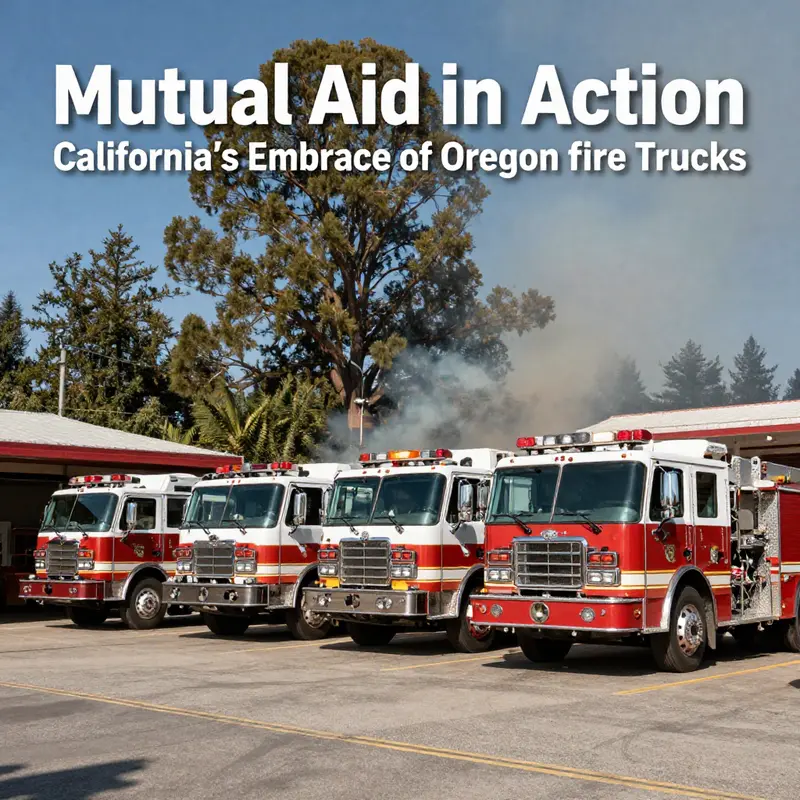
When wildfires blaze across a landscape that respects no town boundaries, the real work begins not in isolation but in the swift, coordinated action of neighboring agencies. The question that lingers in the public imagination—whether California refused Oregon fire trucks—misses the deeper truth of how mutual aid operates in the American West. The record from the 2023 wildfire season shows a consistent pattern: California did not reject help from Oregon. Instead, it leaned into established mutual aid systems, welcoming engines, crews, and equipment through a network engineered precisely for crises of this scale. This is not a tale of good intentions alone but of a practical architecture that allows jurisdictions to pool resources when demand outstrips local capacity. In a season defined by climate-driven extremes, where fires can surge in minutes and overwhelm even well-prepared departments, cooperation across state lines becomes less a courtesy and more a necessity. Californians learned this firsthand as August and September brought fires that stretched incident management teams, dispatch centers, and firefighting fleets to their limits. The outcome of these exchanges reveals a core truth about contemporary wildfire response: mutual aid is a fundamental force multiplier, not a political gesture, and its effectiveness rests on clear rules, tested procedures, and a shared commitment to protecting communities, ecosystems, and the brave men and women who stand between flames and homes.
At the heart of this system lies a latticework of mutual aid agreements, the Emergency Management Assistance Compact (EMAC), and the National Interagency Fire Center (NIFC). EMAC provides the procedural backbone—how a requesting state taps into resources from others, how terms of deployment are set, and how liability and reimbursement are handled. NIFC operates the regional balance wheel, coordinating assets across state lines, sorting needs by incident type, and ensuring that when California’s own engines are tied up in a demanding incident, Oregon engines can slip into the response stream without delay. The cooperation is not a rumor or a rumor’s cousin; it is codified, drilled, and exercised long before a blaze appears on the horizon. The cadence of mutual aid in wildfire politics often mirrors the cadence of the season itself: it peaks during peak fire risk and recedes when the immediate crisis abates, only to rise again with the next round of weather shifts. The practical effect is that when a California incident commander identifies a gap—whether in pump capacity, water supply options, or personnel strength—an Oregon team can be requested and integrated with a speed that saves minutes and, by extension, homes.
The August fires that drew Oregon engines into California’s response are a case in point. California Fire authorities routinely describe such exchanges as part of a broader, national framework designed to ensure the right resource is wherever it is needed, no matter the jurisdiction. The actual deployment process begins with a needs assessment at the incident level: what is burning, how quickly is it spreading, what tactical options remain, and where can additional apparatus and crews most effectively operate? The incident management philosophy emphasizes risk management, safety, and coordination, so incoming units are not merely added to a grid of firefighters but woven into existing command structures. Oregon engines arriving on the line do so under the supervision of California Incident Management Teams, aligning with local incident objectives, radio frequencies, and safety protocols. This approach preserves unity of effort and minimizes confusion in the heat of a prolonged response. The leadership on the ground ensures that new units share radio channels, adhere to local tactics, and respect the familiarity and experience of nearby crews who have trained side by side for years. The result is a seamless blend of resources from different states acting as a single, cohesive force against a rapidly evolving threat.
Operationally, the mutual aid mechanism is designed with realism in mind. Fire engines and other heavy equipment brought by Oregon crews contribute tangible advantages: pump capacity that extends water supply, longer duty cycles for sustained attack operations, and the ability to punch lines into embers that would otherwise smolder and reignite. But the value is not only about adding horsepower to a fire line. It is about the choreography of the incident: how equipment moves from staging areas to the front, how crews rotate to prevent exhaustion, and how communications stay clear across different agencies and jurisdictions. Within this framework, the Oregon units become part of a larger cadence, not stand-alone appendages. They report into a common incident command structure, and their actions are synchronized with California’s strategies for hazard mitigation, structure protection, and incident containment. The integration process also respects the diverse capabilities of different fleets. Some Oregon engines may bring specialized tools or unique water supply configurations that complement California’s own inventory. The mutual respect for operational diversity is as important as the mutual aid itself; it allows responders to exploit the strengths of each resource while avoiding redundancy and gaps in coverage.
Beyond the mechanics of deployment lies a deeper logic of regional resilience. The western United States faces wildfire seasons that no state can weather alone. Climate change has intensified fire behavior, contracted the time windows for containment, and increased the likelihood that fires will cross into neighboring jurisdictions. In that context, mutual aid is not a contingency; it is a strategic imperative. The cooperative model rests on predictability—regular drills, predictable funding mechanisms, and clear lines of authority. When Oregon engines are called to California’s fire lines, the relationship is not about who is responsible for a given engine, but about who takes responsibility for protecting lives and property in a moment of crisis. This sense of shared obligation—accompanied by formal channels for request, supply, and deployment—helps ensure that every response is timely and credible. It also reinforces a broader culture of collaboration within the firefighting community, a culture that recognizes that fire does not respect borders and that the most effective defense is a united front. As climate-driven risk persists, so too will the habit of inter-state cooperation, refined through years of joint training, simulated exercises, and real-world deployments that test and prove the system’s legitimacy.
From a public perspective, the myth that California refused Oregon fire trucks during the 2023 season fades against the evidence of coordinated action and mutual reaffirmation of shared purpose. When officials speak about mutual aid, they often highlight two themes: speed and safety. Speed comes from pre-negotiated arrangements, standardized equipment classifications, and the ability to cross terrain with interoperable communications. Safety comes from maintaining consistent incident management practices, ensuring that every arriving unit is briefed, integrated, and supervised by a capable command team. The result is a firefighting effort that is greater than the sum of its parts, where officers and crews learn to interpret each other’s signals, work within a common risk assessment framework, and make rapid decisions that reduce the likelihood of a flare-up erupting into a devastating escalation.
For readers interested in the practical dimension of this cooperation, it is worth noting how the equipment mix travels from one state to another. Across the mutual aid landscape, several categories of apparatus frequently appear in joint responses: conventional fire engines equipped for structural protection and roadside containment, attack or water-tower platforms adapted for elevated attack lines, and heavier units designed to sustain long-duration operations in remote brush or grassland. Each piece of gear operates within a network that prioritizes rapid deployment, safe operation, and compatibility with local tactics. This compatibility is not accidental; it is the product of interagency training and shared standards that reduce friction when resources are borrowed. The result is a firefighting system that remains robust even when faced with the most demanding wind-driven days and the hottest months of the year.
To connect readers with the practical side of resource acquisition and deployment, consider exploring the broader category of firefighting equipment that supports mutual aid. For those curious about the kinds of equipment that might be dispatched in such exchanges, the following resource offers a clear portal into the equipment landscape: пожежні автомобілі. This internal link provides a gateway to understanding how communities assemble, maintain, and deploy the tools essential for effective cross-border responses, without implying any endorsement of specific commercial offerings. It highlights the general principles at work in mutual aid: standardization, interoperability, and the readiness to mobilize a diverse toolkit when the fire line is drawn tight and dangerous.
Ultimately, the California-Oregon cooperation during the 2023 wildfire season reflects the broader ethos of Western wildfire response: when the heat rises, the borders recede, and the shared duty to protect life, property, and land takes center stage. The mutual aid framework—anchored by EMAC, activated through NIFC channels, and executed under unified incident management—demonstrates a mature system built on preparation, clear lines of authority, and a long-standing commitment to cooperative resilience. It is a testament to the region’s ability to translate policy into practice under the most challenging circumstances. The story is not about controversy or controversy-free rhetoric; it is about a functional, proven approach to emergency management that keeps pace with the escalating demands of climate-influenced wildfires. As communities across state lines face future fire seasons, this model offers both reassurance and a roadmap: prepare together, deploy together, and protect together.
External resource: https://www.nifc.gov
Across State Lines, Ready to Fight: How Mutual Aid Forged California–Oregon Firefighting in an Era of Escalating Wildfires
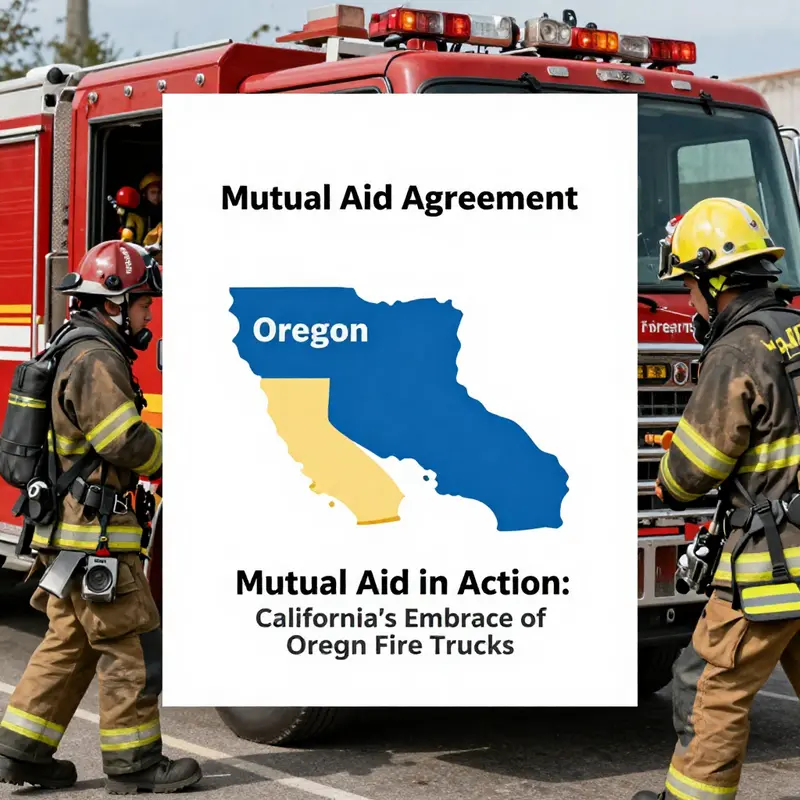
When wildfires flare across the dry western landscape, the distance between a neighboring state’s line and a responder’s hose often shrinks to a single decision: to activate mutual aid. In those moments, the question people ask—did California refuse Oregon’s fire trucks?—falls away into a simpler truth: the line between jurisdiction and shared duty is deliberately porous. California did not reject Oregon’s assistance; instead, it activated a well-worn system of mutual aid that has become the backbone of regional wildfire response. Across the West, when the flames outrun local resources, CAL FIRE and its counterparts in Oregon deploy under a network coordinated by the National Interagency Fire Center and reinforced by state-level mutual aid agreements. The practical effect is a rapid, organized surge of personnel, engines, aircraft, and supplies that can cross political boundaries with the same ease a single engine can turn a corner on a mountain road. The story is less about a single decision and more about an institutional habit, a culture of collaboration built into how the region fights fire as climate pressures intensify the heat and the flames themselves.
In the broader context of western wildfire management, mutual aid agreements are not novelty but necessity. They are formal, often codified understandings that authorize neighboring jurisdictions to request and receive assistance when a county, a city, or a state’s fire resources are overwhelmed. They create a predictable pathway for sharing a spectrum of capabilities: from basic fire engines to specialized equipment, from trained wildland firefighters to units able to operate in complex urban-wildland interfaces. The California Department of Forestry and Fire Protection (CAL FIRE) and the Oregon Department of Forestry (ODF) have long maintained a working relationship that rests on common procedures, shared terminology, and interoperable communications. This interoperability is not accidental. It is the fruit of a concerted effort to standardize training, command structures, and incident management practices so that a crew from one state can align with an incident command system already in motion elsewhere. In practice, a request flows through established channels, arrives at a command center that orchestrates the response, and then results in a coordinated tasking that can include fire engines, hand crews, and aerial assets moving in tandem. In August 2023, when California confronted large fires that demanded more resources, Oregon’s engines and personnel arrived under these mutual aid agreements, illustrating how such arrangements function as a seamless force multiplier when the fire season stretches beyond what any single jurisdiction can handle.
The benefits of this cross-border cooperation extend beyond the immediate suppression actions. Resource sharing is perhaps the clearest advantage. Fire engines from one state can be paired with crews trained under similar standards, enabling rapid, efficient operations on the ground. The system also covers air resources, which have become pivotal in modern wildfire management. Air tankers and other aerial assets can be allocated to support ground forces, a capability that often makes the difference between containment and spread. Equally important is the financial relief that mutual aid arrangements provide. Large-scale fires are expensive, and shared responsibility helps distribute costs across jurisdictions, easing the strain on any single budget while ensuring that critical equipment remains available where it is most needed. The operational efficiency comes from standardized protocols that reduce the friction that typically accompanies inter-jurisdictional cooperation. When responders arrive, they do so with the same radio frequencies, the same safety standards, and the same command languages that the local team already uses, minimizing the risk of miscommunication when the stakes are highest.
These practical dynamics were not created overnight. They evolved out of repeated real-world experiences, including the significant fire seasons of 2020, which underscored the value of mutual aid across state lines. In that year, California and Oregon both faced fires that tested the limits of their firefighting fleets. The mutual aid framework allowed crews to move back and forth between the two states as needs shifted, enabling rapid reallocation of scarce resources. The ability to bring in additional crews, vehicles, and equipment quickly is crucial when every hour of additional suppression translates into fewer acres burned and fewer structures lost. The climate-driven severity of recent wildfire seasons only heightens the importance of these agreements, because the contemporary fire environment is less predictable and more intense, demanding a flexible, scalable response that can be dialed up as needed. The mutual-aid model, then, is not merely a patchwork of goodwill; it is a structured system designed to absorb shocks, align disparate agencies, and present a unified front against a common threat.
Still, the public conversation around mutual aid can drift into misunderstanding. The simple, reassuring truth is that none of the cross-border action hinges on a single decision by a lone agency. It rests on a framework of commitments—shared objectives, pre-established legal authorities, and interoperable training—that preconfigure how agencies respond when a wildfire looms or expands beyond the capacity of a single jurisdiction. In this sense, the California–Oregon relationship is emblematic of a broader regional resilience. It demonstrates how state-level partnerships, supported by national coordination mechanisms, produce a response capability that is both greater than the sum of its parts and more predictable under pressure. On the ground, responders speak the same language, scout the same risk factors, and deploy under the same safety protocols, which makes the process of mutual aid appear almost invisible—precisely because it works as intended when the smoke thickens and the sirens rise.
This capacity for seamless integration also touches the equipment at the heart of firefighting. The network extends far beyond people to the fleets of apparatus, whether it is rugged, high-end, heavy-duty fire trucks designed to punch through heavy fuels on steep terrain, or more specialized vehicles tailored to urban-wildland interface needs. The availability of such equipment across state lines is a tangible demonstration of how mutual aid translates into real suppression power, not merely a theoretical concept. Readers curious about the varieties of apparatus that participate in these cross-border operations can explore the broader catalog of heavy-duty firefighting equipment to gain a sense of the range of mobility and capacity that can be mobilized during a major incident. важкий-пожежний-автомобіль The catalog serves as a reminder that mutual aid is as much about what arrives on the ground as it is about the planning and communication that precedes it.
In considering the mechanics behind the scenes, it is important to acknowledge the role of overarching coordinators such as the National Interagency Fire Center. NIFC provides a national template for interagency cooperation, coordinating multiple federal, state, and local agencies to ensure that requests for help are answered with appropriate assets. The NIFC system helps to standardize reporting, ordering, and staging, so that when a fire grows and demand spikes, the response can scale with minimal delay. The California–Oregon collaboration does not exist in isolation; it is part of a national ecosystem that makes it possible to escalate a regional response to meet the scale of modern fires. The result is a more resilient public safety framework, one that recognizes that fires do not respect state lines and that community protection benefits from a unified, cross-jurisdictional effort.
An important, often underappreciated facet of mutual aid is the human element. When crews cross into a neighboring state, they bring with them not only technical know-how but a shared professional culture. Training standards, safety practices, and incident-command methodologies are harmonized so that a team from Oregon can integrate smoothly into a California incident, and vice versa. This unity of practice reduces the cognitive load on incident commanders during fast-moving events, enabling them to allocate resources with confidence and to maintain situational awareness even as conditions shift. In an era defined by climate-driven volatility, the ability to draw upon a common operating picture across jurisdictions is not a luxury; it is a survival skill, ensuring that the response remains coherent at every tier of operation—from the initial attack to containment and recovery.
As the narrative of mutual aid continues to unfold, it remains clear that the question surrounding Oregon’s fire trucks is not whether California would accept assistance, but how efficiently those resources are mobilized when the next big fire season arrives. The cross-border exchanges are not a one-off response to a single event but a sustained commitment to regional preparedness. They reflect a broader commitment to protecting communities, homes, and landscapes from increasingly severe wildfire threats. The mutual-aid framework is, at its core, a shared promise: that when one state’s capacity is stretched thin, neighbors stand ready to lend what they can, within a system designed to respect safety, speed, and interoperability.
For readers seeking a gateway to the official, procedures-based side of this topic, the California Department of Forestry and Fire Protection site offers detailed information about how mutual aid operates in practice, including rules, guidelines, and examples of interagency cooperation that shape how California responds to fires in coordination with its neighbors. And for the broader historical and operational context, the external resource provides deeper insights into how interagency planning translates into real-world suppression efforts during some of the most challenging fire seasons in recent memory: https://www.fire.ca.gov/
Mutual Aid Under Pressure: Climate Change, California–Oregon Fire Response, and the Reality Beyond Refusal
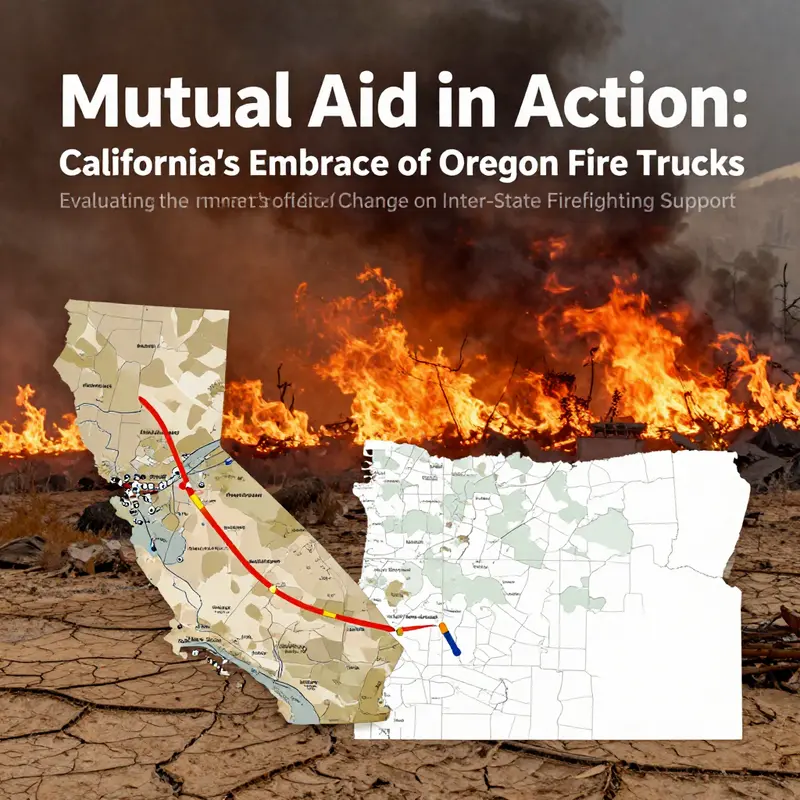
When the smoke clears after a season of large fires, the question of inter-state aid often centers on one moment of misunderstanding or misreporting: did California refuse Oregon’s fire trucks? The answer, grounded in official dispatch records and mutual aid practice, is that California did not reject Oregon’s assistance. Instead, it activated and coordinated with established mutual aid agreements that routinely move engines, crews, aircraft, and equipment across state lines to respond to emergencies. This reality sits at the intersection of policy, logistics, and climate-driven risk, where the resilience of the firefighting apparatus depends on the ability to stretch and reassemble resources quickly as conditions evolve. The broader implication is not simply about a single incident or a single state’s decision; it is about how a system designed for rapid augmentation functions when climate change accelerates the tempo and ferocity of wildfires. The mutual aid framework, guided by bodies like the National Interagency Fire Center, is built to flex under pressure, to share the burden when one state is overwhelmed, and to reconstitute readiness when the next round of fires returns with altered wind patterns and longer horizons.
Climate change has shifted the baseline for wildfire risk in the western United States. Drier seasons, hotter days, and shifting weather systems translate into longer, more intense campaigns across multiple jurisdictions. In practical terms, these shifts mean that crews are deployed earlier and held longer, and that the same fleets of engines, hand crews, and water tenders must be rotated among overlapping emergencies. The mutual aid networks that support this choreography are not a peripheral add-on; they are a central mechanism that preserves the capability of every responding agency to protect lives and property even as local resources are stretched thin. When California faced significant wildfire activity in August 2023, Oregon stepped in with fire engines and trained personnel under these mutual aid agreements. CAL FIRE confirmed the cooperation, underscoring that inter-state support is a routine, indispensable component of wildfire response rather than an exception or a gesture upon occasion. The practical truth is that the states share a common vulnerability and a common toolkit for resilience, anchored in a culture of collaboration that predates climate headlines and will outlast the next disaster narrative.
The inter-state system operates through a blend of formal compacts and informal accords that are organized and activated through the National Interagency Fire Center and regional networks. These arrangements provide the legal and logistical scaffolding for deploying equipment across borders as quickly as possible. In a climate-watered risk landscape, speed is a decisive advantage. A dispatch that arrives in hours rather than days can save lives, protect critical infrastructure, and prevent fires from climbing into areas with limited access roads or compromised power and communications networks. The speed of modern mutual aid depends not only on a commitment to share resources but also on the readiness of the equipment and crews to respond when demands surge in multiple locations. The system has to anticipate the possibility that several fires may demand the same kinds of assets simultaneously, which requires pre-arranged cross-state rotations, reallocation policies, and a shared sense of operational priority. This is not a matter of generosity; it is a calibrated approach to risk management that keeps all communities safer, even as climate volatility increases the likelihood of overlapping incidents.
From a field perspective, the reality of deploying across state lines is complex. Transportation logistics remain a core challenge: large fire engines, water tenders, and specialized apparatus require careful routing, secure staging areas, and compatible fueling and maintenance ecosystems. When infrastructure is damaged by a surge of weather events—floods, storms, or heat-driven stress on roads—the path from a dispatch center to a wildfire becomes a mutable obstacle course. Communication, too, is a critical pillar; in large-scale disasters, radio networks must survive interference and overload, while digital coordination platforms must remain reliable across jurisdictions with different procurement and maintenance cultures. These vulnerabilities are not theoretical. They translate into decisions about crew rotations, shift lengths, and equipment lifecycles that can affect on-the-ground effectiveness over days and weeks. Climate-driven stress multiplies the time pressure on managers who must balance immediate fire suppression with longer-term readiness for the next event.
Amid these pressures, innovative responses are emerging. The chapter’s broader context notes several pathways by which inter-state firefighting can become more agile in the face of climate change. First, advanced satellite technologies and high-bandwidth communication systems are enabling real-time sharing of situational awareness and resource availability. This translates to better forecasting of where mutual aid is most needed and how to optimize the deployment of limited personnel and apparatus. Second, the adoption of modular and more mobile firefighting vehicles helps crews reach rugged terrain and remote communities where access is constrained by road conditions or hazard zones. These vehicles can be configured for rapid deployment, reducing the time required to transition from a staging area to a fire front. Third, collaborative planning platforms, built on shared data and pre-disaster simulations, give agency leaders a clearer view of future needs. They can forecast demand, test different rotation schemes, and pre-negotiate cross-border arrangements that minimize delays when a crisis hits. Taken together, these innovations illustrate a system that is adapting to climate-driven uncertainty, not replacing the mutual aid ethos but strengthening it through better data, more flexible equipment, and a more integrated planning cycle.
Within this evolving ecosystem, the case of Oregon’s aid to California becomes a meaningful proof point. It demonstrates that mutual assistance remains the default, not a last resort, and that the coordination is designed to withstand the stress of severe conditions. California’s acceptance of Oregon assets did more than fill a short-term gap; it reinforced a social contract among states that the most effective response to wildfires depends on reciprocity and shared risk. The reciprocity is driven not merely by goodwill but by institutional memory—by decades of joint training, synchronized dispatch protocols, and a recognition that the landscape of risk is too broad for any single jurisdiction to own. Climate-driven intensification makes that reality more salient, but it does not invalidate it. If anything, the trend lines point toward deeper, more systematic cooperation, with mutual aid becoming a backbone of resilience rather than a one-off aid gesture.
This chapter also interrogates the broader narrative around resource scarcity. When multiple states are contending with simultaneous emergencies, the system faces chronic stress. Crews rotate through assignments to prevent fatigue, and agencies coordinate with federal partners to maintain a steady pipeline of personnel and equipment. The result is a fragile but resilient balance, one that depends on transparent communication and the consistent honoring of mutual obligations. This is not an argument for complacency. It is a call to recognize that the climate era has altered the arithmetic of firefighting, making inter-state collaboration all the more essential, and elevating the value of pre-disaster planning, cross-border training, and shared logistics. The economic and human costs of delayed or disjointed responses would be far greater than the investments required to sustain a robust mutual aid framework.
For readers seeking a tangible sense of how equipment categories fit into this picture, consider the practicalities of what can move across borders in a typical mutual aid scenario. The availability of standardized apparatus, compatible maintenance cycles, and cross-state fuel and supply chains matters as greatly as the willingness to share. The field has learned that coordination extends beyond the moment of dispatch; it encompasses the entire lifecycle of response—from pre-season readiness checks and joint drills to post-incident hot-wash reviews and equipment repurposing for the next event. In this light, the Oregon–California exchange is best understood not as a single act of deployment but as part of a broader, climate-informed architecture of resilience that honors the mutual aid covenant while expanding its capacity to respond under pressure. Readers who want to explore specific equipment categories in more depth can engage with a practical overview of fire-fighting gear and vehicles through the fire-fighting-truck category. пожежна машина
This architectural view of inter-state firefighting reframes the question from whether one state refused another’s help to how the system, under climate pressure, remains capable of rapid adaptation and reliable delivery. The mutual aid model, grounded in shared standards, interoperable communications, and mutual trust, is being reinforced by technological and organizational innovations that aim to reduce response times and to extend the reach of crews. The real test of this approach lies in the field, where real-time decisions must balance suppression effectiveness with crew welfare and equipment readiness. In that sense, climate change acts not only as a stressor but as a catalyst for smarter deployment strategies, better resource forecasting, and stronger cross-border coordination.
Finally, this chapter closes with a nod to the wider discourse on how climate-driven risk translates into practice beyond the borders of California and Oregon. The literature on firefighting and flood response innovation highlights that societies are learning to lean on each other more deliberately as the weather becomes less predictable. The Asia Pacific Fire Magazine report on climate-driven innovation underscores a trend toward smarter, more integrated operations that can be scaled across regions facing similar challenges. While the American West offers a concrete, documented example of successful mutual aid in action, the broader lessons are globally relevant: resilience in the face of climate change rests on collaboration as much as on equipment, on data-sharing as much as on daring, and on a willingness to respond across boundaries when the fire season grows longer and more perilous.
External resource for further perspective: Climate Change Drives Firefighting & Flood Response Innovation. https://www.asiapacificfire.com/climate-change-drives-firefighting-flood-response-innovation/
Across Fire Lines: California and Oregon’s Mutual Aid in Wildfire Response
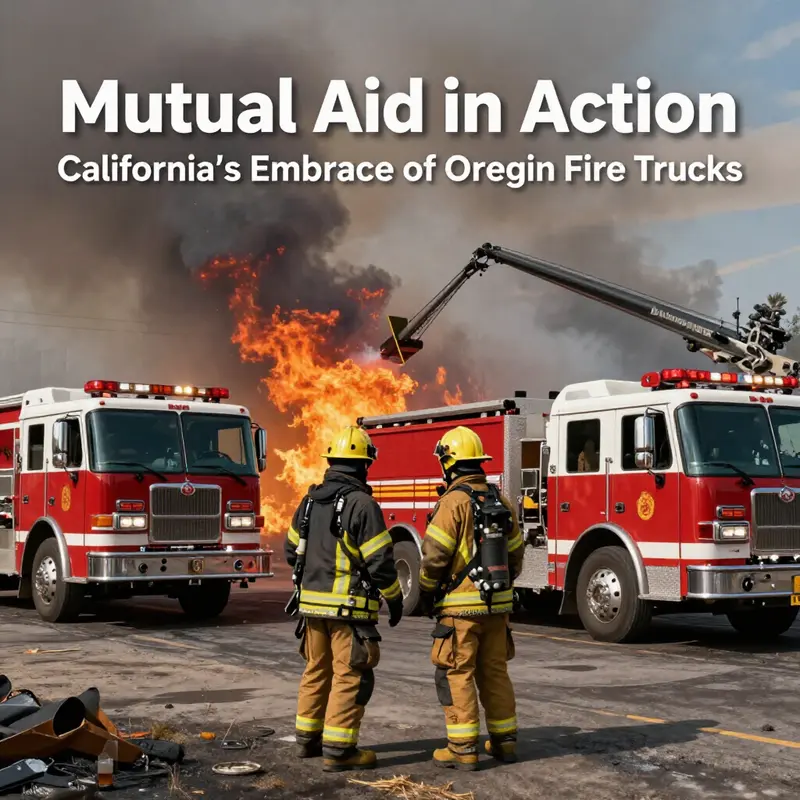
In the public mind, the question of whether California refused Oregon fire trucks can linger like smoke on a hillside. Yet the reality of how California and Oregon handle large wildfires reveals a steady, practical chorus of cooperation that rises above rumor. When fires erupt with speed and ferocity, agencies pull levers that are designed to be pulled together. Mutual aid is not a courtesy extended during calm weather; it is a system built on formal agreements, cross-border trust, and a shared understanding that a fire does not respect state borders. What unfolds on the ground during the most intense fire seasons is a disciplined orchestration of personnel, equipment, and information that travels along long-established channels well before any siren is sounded. The result is a collaborative front that grows stronger when the flames grow hotter, a dynamic that both sides view as essential to regional resilience.
At the heart of this collaboration lies a triad of interlocking mechanisms that guide every decision in the field. First, the Emergency Management Assistance Compact, or EMAC, functions as the interstate blueprint for mobilizing resources across state lines. When a major fire event demands more engines, crews, or aircraft than a single state can sustain, EMAC provides a legal and procedural framework that speeds deployment while clarifying funding, reimbursement, and jurisdiction. Second, the National Interagency Fire Center, or NIFC, serves as a national hub that coordinates requests, forecasts, and the strategic allocation of scarce assets. In practice, NIFC and EMAC work in tandem, translating regional needs into cross-border action within hours rather than days. Third, regional coordinating centers such as the Pacific Northwest Interagency Coordination Center, or PNICC, function as the local nerve center for the exchange of real-time situational awareness. The PNICC blends weather outlooks, fire behavior models, and resource inventories to guide where a hasty deployment can most effectively slow a blaze or stabilise a volatile perimeter.
The relationship between California and Oregon is anchored by these mechanisms, but the human, institutional, and informational ties run deeper than any single protocol. Both states participate in joint training exercises that simulate the slick logistics of a real wildfire front. These exercises—carefully choreographed drills that involve crews, dispatch, and incident command teams—build the muscle memory that makes rapid cross-border support possible during a crisis. Executed repeatedly, they convert mutual aid from a theoretical obligation into an instinctive response. Through these drills, agencies learn to speak the same operational language, share standardized procedures, and trust the interoperability of their equipment and personnel. The result is not only faster response times but smoother handoffs when resources cross a state line and enter unfamiliar terrain with different rules, radios, or weather conditions.
The Pacific weather pattern that fans wildfires across the West underscores why cross-border cooperation is not optional but essential. When the wind shifts from the hillsides of Northern California toward the forests of southern Oregon, or when a fire’s spread meets a plateau or ridge that defies local containment efforts, the region’s risk profile becomes a single, shared challenge. The PNICC keeps watch over a broad geography by combining satellite data, ground reports, and predictive models that anticipate where the next flare might occur. This shared predictive capacity is more than a forecasting tool; it informs the real-time decisions about which agencies should stage where, how many crews are needed, and when an additional apparatus may be required to sustain operations through a difficult night. The convergence of technology and collaboration here is a quiet, relentless force multiplier that reduces the boundary between two neighboring states and makes their joint response more coherent.
A tangible illustration of this cooperative texture occurred during the 2023 wildfire season, when conditions in California stretched firefighting resources to their limits. Oregon stepped in with fire engines, crews, and air support under the mutual aid framework, and California reciprocated when Oregon faced its own severe fire events. The LNU Lightning Complex fires in California and concurrent or subsequent Oregon fires demonstrated how interagency coordination translates into real-world outcomes: fires that might have overwhelmed one state’s capacity were met with a broader, more agile response. These are not isolated anecdotes but patterns embedded in the operational tempo of both states. They reflect a shared creed that preparation and partnership—more than heroics alone—determine whether a community can protect homes, save landscapes, and safeguard emergency personnel as they work through exhausting shifts when the smoke thickens.
The equipment and personnel that cross state lines are governed by common standards and interoperable practices. The mutual aid framework does not simply move people; it moves people who are trained to integrate with local incident command structures, communicate on compatible radio frequencies, and operate under unified incident action plans. This is where the culture of cooperation becomes visible: a readiness to adjust tactics, share intelligence, and align with the priorities of the firefront wherever it is burning. The shared platforms for data and the joint training regimens make it possible for a California incident commander to see Oregon resources as an extension of California’s own firefighting capability, and vice versa. In practical terms, this reduces duplication of effort, accelerates relief for overwhelmed counties, and keeps resource allocation from becoming a race to the last truck on the lot.
Mutual aid also hinges on a common, evidence-based approach to the deployment of specialized assets. Firefighting fleets range from traditional engine companies to aerial platforms, water tenders, and rapid-response units designed for extreme weather and rugged terrain. The careful coordination of these assets across state lines involves clear authorization, priority setting, and a consensus on when a certain type of resource is necessary. The compatibility of equipment and crews is not incidental; it is the product of ongoing intergovernmental agreements and continuous learning from past incidents. In years when climate-driven fire seasons extend longer and intensify, the value of this cross-border readiness becomes even more apparent. Resource sharing is not a sign of weakness but a strategic acknowledgement that emergencies do not stop at jurisdictional borders and that the most effective response depends on a unified regional front.
Embedded within this framework, a simple act often has outsized effects: an information bridge. Real-time sharing of weather updates, fire behavior predictions, and resource availability can shift the trajectory of an incident. In practice, this means agencies can anticipate where a surge of support might be needed and pre-position equipment to reduce wait times. It also means that when a unit is dispatched from Oregon to a California fire, dispatchers and incident managers are already thinking about the next steps, such as redeploying crews to another hotspot, coordinating with air support, or rotating teams to prevent fatigue. The efficiency gained from such information sharing translates into measurable gains in containment, safety, and continuity of operations for communities that face the brunt of a wildfire season.
All of this is underpinned by a shared commitment to continuous improvement. Each fire season becomes a field test for the coordination framework, highlighting where information gaps, communication bottlenecks, or logistical hiccups might arise. After-action reviews and interagency debriefs are standard practice, not optional recaps. They feed into revised mutual aid protocols, updated data-sharing agreements, and refinements to joint training curricula. Through these iterative processes, California and Oregon strengthen not only their immediate response but their longer-term regional resilience. The aim is simple and ambitious: ensure that a neighbor’s help arrives not as a last resort, but as a seamless extension of one state’s own firefighting capacity, synchronized with the weather, terrain, and momentum of the fire itself.
In discussing whether California refused Oregon’s resources, it is crucial to anchor the conversation in the actual architecture of cooperation. There is no credible evidence to support a claim of refusal in the mutual aid framework. On the contrary, the record shows residents and officials alike emphasizing the significance of cross-border assistance. The mutual aid network is designed to preempt delays, to standardize responses, and to honor the shared duty to protect life, property, and the land we all call home. The narratives of every major fire season reinforce this point: California and Oregon stand as a combined front, their agencies bound by agreements, their personnel united by purpose, and their data streams aligned to illuminate the best path through peril.
For readers who want to see how this cooperation translates into practical capability, consider the broader ecosystem of equipment categories that communities rely on during emergencies. In the standard, shared framework, the range of assets—from engines to aerial platforms to support trucks—are selected and deployed to fit the specific fire scenario. To get a sense of the equipment families involved in such mutual aid, you can explore the broader catalog of firefighting equipment options and the role they play in cross-border responses, including the practical realities of interagency integration across jurisdictions. This backdrop helps explain why the mutual aid system is not only about moving trucks but about moving capabilities that can be quickly integrated into local incident command structures. For those interested in viewing related equipment categories, a practical overview can be found in the fire fighting trucks collection on industry catalog sites, which illustrate the kinds of mobilizable resources that agencies discuss when coordinating across state lines.
The chapter of California and Oregon’s cooperation closes on a note of operational confidence rather than contention. The mutual aid framework is not a story of necessity alone; it is a story of readiness, trust, and reciprocal obligation. It is built on the belief that when a wildfire roars toward a hillside community, the strength of the response lies in the speed and cohesion with which neighboring agencies can join forces. This is why, even in the most challenging months, both states keep the lines open, the data flowing, and the tactical procedures harmonized. The result is a regional resilience that is greater than the sum of its parts and a testament to the power of constructive interstate cooperation in the face of climate-driven fire danger.
Internal link to explore equipment categories further: пожежні автомобілі.
External resource for further reading on interagency cooperation: https://www.oregon.gov/odf/pages/wildfire-response-and-interagency-cooperation.aspx
Bridges Over the Blaze: Perception, Media Framing, and Cross-State Fire Service Cooperation Between California and Oregon
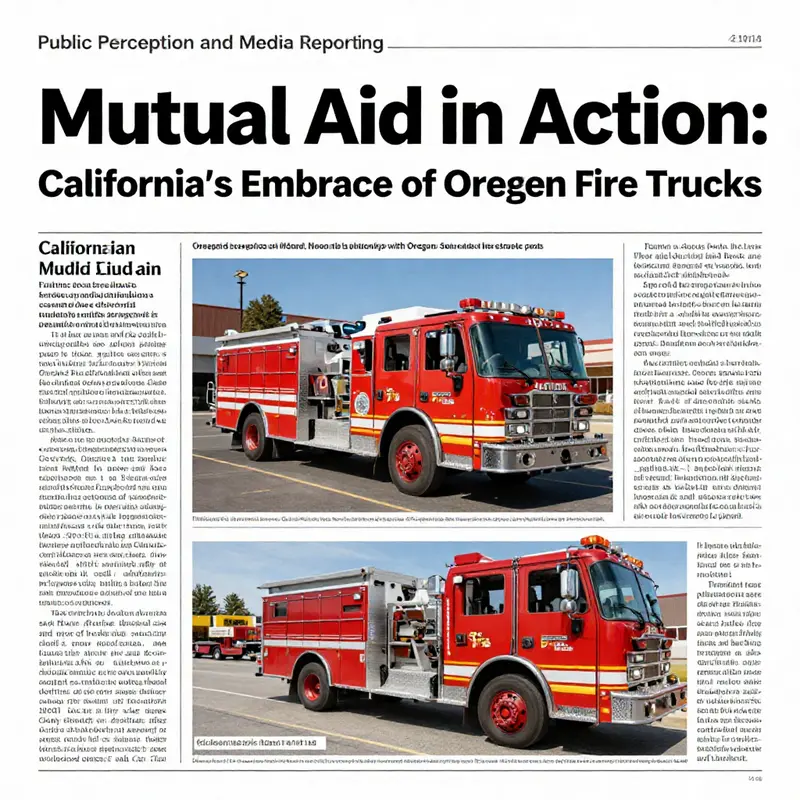
When the smoke drifts from a sprawling blaze and the ash settles into road shoulders and riverbeds, the real story behind California and Oregon’s fire services is less a tension-filled drama of refusals and rejections than a long-standing routine of mutual aid built on trust and shared urgency. The question did California refuse Oregon fire trucks? a decade from now may feel like a throwaway line in a heated online debate, yet it hints at a larger public fascination with fault lines—between jurisdictions, budgets, and the visible and invisible gears of emergency response. What emerges from the record is a narrative of cooperation, coordinated through national and regional networks, and reinforced by a culture that treats cross-border wildfire as a single, sprawling hazard rather than a state-by-state grievance. In that light, the chapter’s central claim is not a denial of isolated incidents but a confirmation of a broad pattern: mutual aid is the default mode when fires exceed local capacity, and media portrayals of inter-state friction tend to obscure the steadier, quieter work of collaboration that actually saves lives and property when the next ember crosses a line of defense.
Public perception often latches onto dramatic moments—requests, approvals, or refusals—without tracing the steady state of interagency coordination that makes mutual aid possible. California and Oregon operate within a framework of mutual assistance that stretches beyond friendly letters and polite conferences. The National Interagency Fire Center (NIFC) in Boise, Idaho, and regional mutual-aid systems create the machinery that triggers cross-border help almost automatically when conditions crack open a fire season. In practice, requests for additional engines, crews, and equipment flow through established channels: state fire agencies, county sheriffs, tribal authorities, and federal land-management units all participate in a shared incident command structure. The aim is to accelerate response, align tactics, and standardize communications so that whether a unit is drawn from a neighbor state or a federal forest, it speaks the same operational language. When California saw fires flare in August or September, Oregon’s engines and crews arrived under these mutual-aid umbrellas, and the collaboration did not hinge on a political moment or a sensational news cycle; it hinged on a professional norm of readiness and a legal framework designed to pool resources during emergencies.
The most robust way to understand this norm is to imagine the operational heartbeat of a large-scale fire response. California’s CAL FIRE and Oregon’s Department of Forestry work from a shared playbook that includes pre-arranged cost-sharing, equipment provisioning, and personnel deployments across state lines. In the field, this means engines rolling up with crews that train together, using the same radio frequencies, incident command terminology, and safety protocols. It also means that the visual impact of mutual aid—lines of orange-fire engines, aerial ladders unfurling over a ridge, and crews forming a defensible line with a sense of unity—can’t easily be described as a sign of strain between states. Rather, it is the sign of a mature system functioning under pressure. Cross-state cooperation is often invisible to the general public until a specific incident creates a visible convoy or a dramatic save; yet those moments are the cumulative product of years of policy, shared training, and mutual confidence built in the long, dry months between summer peaks.
This operational reality sits at the core of how media and scholars describe the California–Oregon firefighting relationship. The press has frequently reported on the climate-driven increase in wildfire severity, the aging of power infrastructure, and the geographic realities of fires that do not respect political lines. In those narratives, cross-border assistance appears as a practical solution rather than a point of contention. For example, coverage that highlights the role of interagency coordination emphasizes the systemic nature of the response rather than a bilateral quarrel over resources. When major outlets report on how fires in one state trigger support from another, they are documenting a process that relies on mutual trust and formal agreements rather than a narrative of miscommunication or rejection. Even when wrenching questions arise about resource allocation or prioritization, the underlying framework remains a united front against a common threat.
The public conversation is not purely about the mechanics of response; it is also shaped by shifting media focus on the causes and consequences of fires. In recent years, much of the public discourse has centered on climate change, aging electrical infrastructure, and land-management practices. The so-called “relationship” between California and Oregon—whether it is smooth, tense, or somewhere in between—becomes an interpretive lens through which audiences understand those larger issues. A string of high-profile investigations and court actions related to wildfire-causing infrastructure has reinforced a broader narrative: resilience depends as much on preventative measures and accountability as it does on emergency response. For instance, coverage in major outlets has connected settlements with utilities to the costs of wildfire suppression and land restoration, highlighting how climate-related risk intersects with public policy and corporate responsibility. In this context, the cross-state cooperation that helps firefighters reach the seat of a blaze faster appears not as a political signal but as a practical imperative.
What emerges from the interplay of practice and reporting is a persuasive counter-narrative to the rumor of a sharp, bilateral rupture over fire trucks. The evidence from field operations, interagency agreements, and the public statements of state officials consistently points toward a culture of mutual support. The mutual-aid system is designed to be responsive, not adversarial, and the actual events during the 2023 wildfire season illustrate this point plainly. When large fires in California stretched local resources, Oregon provided engines and firefighters under prearranged arrangements. The California response to these requests was not merely affirmative; it was collaborative, with incident commanders integrating Oregon resources into incident action plans and sharing the burden of suppression costs and logistical challenges. This pattern aligns with the broader mission of the NIFC and regional networks: to reduce response times, optimize resource use, and ensure the safety of firefighters operating on challenging terrain under extreme weather conditions.
Equipment plays a critical role in the effectiveness of mutual aid, and the presence of partner agencies can be felt in the variety of daily, real-world tasks that define a successful response. In the field, the arrival of additional engines, aerials, and support apparatus can alter a fire’s trajectory, converting a potential catastrophe into a managed incident. The practical realities of cross-border cooperation are visible in the line of trucks and crews moving through staging areas, coordinating with local resources, and sharing critical data about fuel loads, wind shifts, and fire behavior. Such equipment is often described in industry terms as heavy-duty fire trucks and related platforms, and it is precisely this kind of gear that underpins a broader culture of readiness across state lines. The presence of these fleets—not merely the people who ride inside them—begins to illustrate how mutual aid translates into tangible outcomes when a blaze tests the limits of capacity. For readers who want a tangible sense of what that equipment represents in practice, a look at the broader supply chain and equipment categories can be instructive. великовантажні пожежні автомобілі demonstrates the kind of robust, high-capacity platforms that responders rely on when fires march across landscapes that function as a single theater of operations.
In this light, the public perception captured by mainstream reporting tends to reflect an overarching confidence in cross-state collaboration rather than a narrative of friction. Still, the discussion is not naïve. The public discourse and journalistic coverage have repeatedly drawn attention to other fault lines—funding gaps, the aging grid, and the growing complexity of climate-driven risk—that influence how agencies plan for and manage mutual aid. The ongoing dialogue around these issues often highlights the shared burden of wildfire risk and the need for sustained investment in prevention, preparedness, and ecological restoration. The settlement involving a major utility company, which has been covered extensively in outlets such as The New York Times, underscores how public attention can pivot toward infrastructure accountability and climate resilience rather than into questions about bilateral relationships. It is a reminder that the wildfire problem is broader than any one pair of states, even as California and Oregon continue to demonstrate a robust capacity to work together when danger intensifies.
The narrative arc, then, moves beyond the binary of refused versus granted aid. It centers on the enduring infrastructure of cooperation: the formal mutual-aid agreements, the standardized command structure, the shared training regimes, and the common vocabulary that keeps teams aligned under pressure. It also recognizes that public perception is shaped by what journalists and officials choose to emphasize. When coverage foregrounds inter-state friction, it risks masking the everyday, often unglamorous work of coordination that makes a difference on the ground. When coverage foregrounds mutual aid, it helps readers understand that a blaze is a shared responsibility, spanning borders as easily as it crosses a hillside or a river valley. In this sense, the California–Oregon fire-service relationship functions as a model of interagency collaboration that persists even as climate risk intensifies and the landscape of fire response continues to evolve.
External resource: https://www.nytimes.com/2026/02/21/us/california-oregon-wildfires-pacific-power-settlement.html
brush fire trucks, wildland firefighting, fire safety equipment, off-road fire trucks, firefighting technology, business safety, emergency response vehicles
In recent times, the narrative surrounding California’s acceptance of fire trucks from Oregon has been shaped by both cooperation and urgency. As evidence shows, California actively welcomed Oregon’s assistance during the 2023 wildfire season, highlighting the effectiveness of mutual aid agreements designed to bolster firefighting capabilities. Understanding how these collaborations function amidst a backdrop of increasing climate challenges is critical for business owners who rely on stable environments. These partnerships not only strengthen emergency response efforts but also foster resilience and security within communities. As we move forward into an era of heightened environmental scrutiny, the importance of inter-state cooperation cannot be overstated, offering valuable lessons for businesses and communities alike.

