
















The efficiency and effectiveness of fire trucks are vital to emergency response, making it essential to understand their design and capabilities. One common misconception revolves around the question of whether fire trucks are equipped with two steering wheels. This article addresses this inquiry head-on and explores the underlying mechanics of fire truck steering systems, including special configurations that may enhance maneuverability. Furthermore, we examine real-life instances where unique steering features come into play, ultimately emphasizing the importance of steering in maintaining safety and operational efficacy in emergency situations. Each section aims to provide clarity on these matters that are crucial for business owners involved in emergency services or fire truck procurement.
Why Some Fire Trucks Seem to Have Two Steering Wheels — The Design Choices Behind Greater Maneuverability

Do fire trucks have two steering wheels? The short answer is: usually not. Most fire apparatus have a single steering wheel in the front cab, operated by the driver. Yet the idea that a fire truck might have two steering wheels is not pure myth. Several well-documented designs place steering controls in two locations, or give a large apparatus the ability to steer both front and rear axles. Understanding why this happens means looking past a literal question about duplicate steering wheels. It means examining how departments manage size, weight, and access needs while keeping crews safe and effective.
Fire departments order vehicles for very specific tasks. Engines, ladder trucks, rescue units, and specialized rigs each balance capacity, reach, and maneuverability. For most needs, a single, conventional steering system is ideal. It keeps the cab simple and aligns with standard driver licensing and training. But when a vehicle grows larger, or when its mission requires navigating tight streets, steep grades, or complex scenes, designers add systems that look like a second steering wheel. Those systems serve a clear purpose: they let firefighters thread a heavy, long, or articulated vehicle into spaces that a single front-steered axle cannot reach.
One classic example is the tiller truck. A tiller is an aerial ladder truck with a tractor-style front section and a steerable rear trailer. The driver sits in the front cab and controls the front axle. A second crew member, the tiller operator, sits on an aft platform and steers the rear trailer using a dedicated wheel or control station. To an onlooker, that looks like one truck with two steering wheels. The tiller design gives an extremely tight turning radius for very long apparatus. It is especially common in cities where streets are narrow and hydrants or buildings lie close together. The tiller’s second steering station is not redundant. It is complementary. The front driver and the tiller operator must coordinate, and the result is much greater maneuverability than a single, long chassis could achieve.
Other modern solutions deliver the same capability without a visible extra wheel. Many large fire trucks use rear-axle steering systems that are mechanically or electronically linked to the primary steering wheel. Hydraulic actuators or electronic control units pivot rear wheels in concert with the front wheels. The driver remains in the front cab, but the truck behaves as if it has two steering stations. When the vehicle needs to make a sharp turn, the rear axles steer in the opposite or same direction, reducing turning radius and improving stability. This technology appears on heavy rescue rigs, aerial ladders, and specialized support vehicles that must combine large pumps, long ladders, or heavy water tanks with agile handling.
A recent municipal example shows how these ideas translate into real apparatus choices. A new truck unveiled by a department in Tennessee attracted attention because it could be operated from two positions, effectively giving it dual steering control. The configuration is meant to help crews in tight or complex environments, enabling safer and more efficient positioning during emergency responses. That story sparked curiosity and, in some cases, confusion about whether every fire truck needs two drivers or two steering wheels. It does not. But it does illustrate why some departments embrace dual-control concepts for specific apparatus.
Why choose duplicated or auxiliary steering controls? There are several practical reasons. First, maneuverability matters where streets are narrow and obstacles are many. Fire trucks must get close to a building, a hydrant, or a scene fast. A vehicle that cannot move into position risks delayed operations or unsafe placements. Second, weight distribution and vehicle length create handling challenges at low speed. Rear steering or a tiller reduces the physical space required to swivel a long chassis. Third, safety and visibility improve when a second operator can directly observe the rear of a vehicle while steering it into position. That direct observation reduces blind spots and prevents collisions with objects or pedestrians.
Operational efficiency is another driver. When an apparatus can be positioned precisely on the first pass, crews spend less time shunting, reversing, or repositioning. Every second saved on scene can matter. For certain missions—high-rise fires, urban rescues, or industrial incidents—precise placement of vehicles is essential for ladder reach, hose deployment, or pumping stability. An auxiliary steering control can be a modest investment that yields big time savings and safer operations.
Design and technology choices shape how that capability is delivered. A tiller truck requires a specially built trailer and a dedicated tiller operator. It is mechanically simple in some respects, yet it demands training and crew coordination. Rear-axle steering systems require hydraulic or electronic subsystems integrated into the chassis. Those systems often include sensors, fail-safes, and maintenance requirements. Some manufacturers offer selectable modes, letting the driver switch among normal, tight-turn, or steering-disabled states. Electronic controls can also adjust rear-wheel angle based on vehicle speed to improve highway stability while preserving low-speed agility.
Those benefits come with trade-offs. More moving parts means more maintenance. Hydraulic pumps, actuators, and electronic controllers add cost and complexity. Additional control stations require extra wiring and possibly structural reinforcement. Tiller operators need training and practice to work smoothly with front drivers. Reverse steering systems need reliable failsafes. Departments must weigh purchase and lifecycle costs against the operational benefits. Many departments do so because the ability to operate in constrained or hazardous environments enhances safety and effectiveness.
Regulatory and licensing considerations also matter. In many regions, specialized licensing or endorsements apply to heavy apparatus. A second steering station does not change licensing rules for the primary driver. However, departments must ensure that anyone who operates auxiliary steering has appropriate training and authorization. Written procedures and standard operating guidelines clarify who may control a vehicle and when. These policies help prevent confusion during the fast pace of an emergency call.
Some innovations move beyond traditional wheels and pedals. Remote controls, joystick systems, and even small control consoles mounted at the rear or on the side of a vehicle can provide steer-by-wire capability. In these systems, the operator manipulates a joystick or small wheel, and control signals command actuators at the axles. Steering-by-wire can enable compact control stations and flexible mounting points. Designers can place controls where visibility is best, without the need to build a full second cab. Those systems require robust redundancy to ensure fail-safe operation, but they can offer great ergonomic and functional advantages.
It helps to separate a few common misconceptions. First, seeing a second wheel does not always mean anyone can drive from that position on public roads. Secondary stations often function only at low speed and within local scenes. Second, not all large trucks have rear steering. Many rely on rigid axles and long turning radii. Only those built for maneuver or with aftermarket retrofits will include rear-axle steering. Third, the presence of a tiller does not imply a replacement for a front driver. The two roles work in tandem; neither substitutes for the other.
For departments considering dual-control or rear-steer vehicles, the selection process begins with a needs analysis. How tight are your streets? What is the typical scene profile? Do you need a long ladder or large pump? How many trained operators will you have available? Answers to these questions guide whether to order a tiller, a chassis with steerable rear axles, or a standard front-steered apparatus. Manufacturers offer modular options, and vendors often advise on trade-offs between cost, maintenance, and operational impact.
Maintenance and lifecycle support must be part of the decision. Rear-steer mechanisms need scheduled inspection. Hydraulic hoses, actuators, electric actuators, and control modules require both routine checks and prompt repair when faults appear. Departments should budget for parts and technician time. Training for mechanics and operators avoids unexpected downtime. Many fleets extend warranties or buy maintenance plans to mitigate these costs.
Ultimately, the existence of a second steering station on some fire trucks reflects pragmatic problem solving. When the mission demands access, visibility, and precise placement, engineers and departments adopt controls that provide them. That choice does not make two steering wheels the norm. It does show that apparatus design is adaptable. Whether by a physical tiller operator or a modern steer-by-wire system, manufacturers apply different solutions to the same problem: how to move a large, heavy, lifesaving vehicle into the exact spot it needs, safely and quickly.
If you are curious about the particular municipal example that reignited the conversation about dual steering, an original news report provides additional details about the vehicle and its capabilities. For more information on specialized apparatus types and configurations, see this collection of special fire truck models. The local news article about the truck with dual steering controls is available here: https://www.wate.com/news/local/knoxville-fire-department-unveils-new-truck-with-2-steering-wheels/article_7a4d9c08-1e3b-11ef-bc36-5f5b3a7e9f5c.html
Turning the Corner: Fire Trucks and Steering Systems

Fire apparatus generally use a single front steering wheel, with occasional rear-wheel or multi-axis steering aids to improve maneuverability in tight spaces. These features are not a second driver’s station but supplementary controls that expand the turning radius and stabilize handling at low speeds. The primary interface remains the front wheel; the rest of the system involves hydraulics, sensors, and control algorithms that coordinate front and rear steering to reduce turnaround time while preserving safety. Public messaging sometimes misinterprets rear steering as a second steering wheel, but in practice there is one driving position and an augmentation layer that assists the operator.
Turning Corners and Clearing Confusion: How Fire-Truck Steering really works and why two wheels aren’t the norm
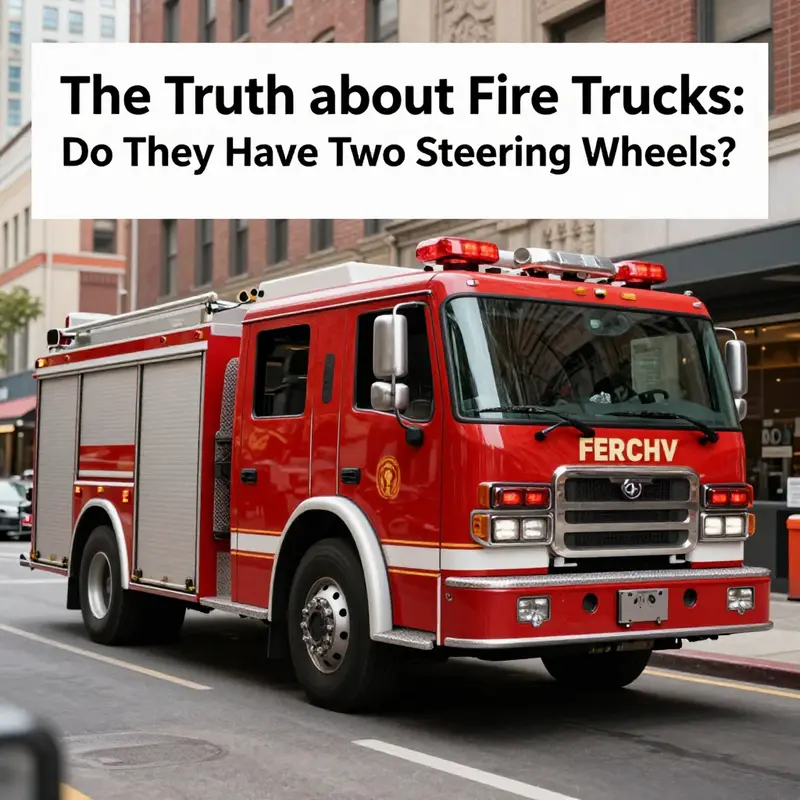
When people ask whether fire trucks have two steering wheels, the question often sounds simple, but it sits atop a tangle of history, engineering, and real-world practice. The image of a second wheel conjures a mental picture of a vehicle that can be steered from two points, a notion that feels intuitive when you watch a big rig navigate a crowded downtown street. Yet in the vast majority of firefighting fleets, the driver controls a single steering wheel in the front of the cab, with all the associated pedals, levers, and screens that support complex maneuvers. The myth is fueled not just by pop culture, but by genuine innovations that push what is possible in a vehicle that must move with speed, precision, and safety through densely built environments. Understanding why the double-wheel stereotype persists—and why it rarely appears in fire apparatus—requires looking at how steering works in these specialized vehicles, what kinds of determinants really matter in the field, and how departments choose configurations that optimize safety and effectiveness in the places they serve.
From a practical standpoint, the standard fire engine or ladder truck is designed around a single driver’s seat and a single steering wheel. This arrangement keeps control familiar and predictable, simplifies training, and gives a driver a direct line of sight to the front wheels and the road ahead. It also reduces the potential for miscommunication between two drivers or two steering inputs when time is critical. The single-wheel setup is not a universal rule carved into stone; it’s a widely adopted norm shaped by what is reliable, easy to operate, and compatible with the way these vehicles are driven in most urban and rural settings. The broader category of emergency vehicles often shares this principle with other large, fast, and highly maneuverable machines: the emphasis is on precise control, immediate feedback through the steering column, and an intuitive feel that allows the operator to translate intent into movement without a moment’s hesitation.
However, the landscape of steering design is not monolithic. In the years since fire departments began adopting ever-lly sophisticated chassis and propulsion layouts, engineers have explored configurations intended to improve maneuverability, stability, and reach in constrained spaces. These explorations do not create a second driving wheel on the front seat; rather, they introduce alternative steering inputs and multi-part steering geometries that can give the vehicle greater reach or better tracking in particular contexts. The most prominent of these innovations fall into three broad categories: rear-wheel steering, tiller-style control for articulated fleets, and region-driven drive configurations such as right-hand drive layouts. Each approach tackles a distinct set of operational challenges, and each remains a carefully chosen option rather than a universal feature.
Rear-wheel steering represents a deliberate shift in how the vehicle pivots on the street. In this arrangement, the rear axle is steered in coordination with the front axle, typically under computer or electro-hydraulic control, so that at low speeds the rear wheels turn in the opposite direction to the front wheels. The effect is a dramatically tighter turning radius, a property that can transform the way a department handles a fire scene in a dense downtown core or a narrow residential cul-de-sac. In practice, rear steering allows a heavy vehicle to “drive like a car” in the sense that it can negotiate tight corners with less need to back up or perform lengthy three-point maneuvers. The operational payoff is clear: faster scene arrival, more precise positioning at the curb, and the ability to align hoses, ladders, and equipment in very constrained spaces where every inch counts. Yet rear-wheel steering adds layers of complexity. It requires sophisticated controls, more complex training, and a heightened emphasis on speed management and stability during high-speed transit or in high-wriction surface conditions. It is a tool designed for a specific problem—the challenge of maneuvering a long, heavy vehicle in tight urban environments—and it is deployed selectively where those conditions are common.
Tiller-type configurations offer a different response to the same problem of space and reach, especially for fleets that routinely operate on long, articulated chassis. In a tiller vehicle, the front part of the vehicle—the tractor—carries the driver with a steering wheel, while the trailer section—often a long, heavy platform carrying water, pumps, and hoses—has its own steering input, usually controlled by a separate operator or by the primary driver from a distinct tiller station. The tiller operator can steer the trailer independently, allowing the whole unit to pivot in ways that a single-runner chassis cannot. This dual-control schema reduces the risk of structural snagging and makes it possible to thread a long, heavy apparatus through winding arteries, steep grades, and uneven terrain where a conventional truck would struggle. The trade-off is that tiller operations demand close coordination between two trained individuals and a precise, shared sense of timing. When executed well, however, tiller configurations expand the set of routes a department can take, enabling safer passage through complex layouts and rough landscapes that would otherwise impede response.
Regional driving norms introduce another dimension to steering design. In places where vehicles travel on the left side of the road, right-hand-drive configurations can improve visibility and situational awareness for the driver, especially when navigating curbside operations, intersections, and multi-unit responses in busy traffic. A right-hand-drive layout can make it easier for firefighters to position a vehicle so that the front wheels align with oncoming traffic lines, helping to maintain an unobstructed view of pedestrians, cyclists, or other responders who might be congregating around a scene. While this adjustment does not create a second steering wheel, it does reflect a broader principle: the geometry of the drive system, the seating position, and the driver’s line of sight all influence how effectively a vehicle can be moved and controlled in real time. In each case, the underlying goal is not to add a second wheel but to tailor the steering geometry to the geography of the response zone and the operational requirements of the crew.
Against this backdrop, discussions about two steering wheels inevitably surface. In most professional contexts, the answer is simple: there is typically one driver’s wheel in the cab, and that is enough to control the front wheels and steer the vehicle. Yet the real story is about engineered alternatives that modify how a heavy emergency vehicle redirects its momentum, balances its weight, and negotiates space with minimal delay. When a department weighs these options, it is not chasing novelty for novelty’s sake. It is weighing the likelihood of faster response, safer navigation, and smoother, more predictable handling in scenarios that routinely challenge the limits of city streets or wilderness roads.
To illustrate how these ideas translate into field practice, consider a few real-world configurations that have been observed in various departments, described here in neutral, descriptive terms. One configuration involves rear-wheel steering integrated into a conventional chassis, where the rear wheels turn in concert with the front wheels to shorten the vehicle’s footprint at intersections and in parking lanes. This design can markedly improve the ability to maneuver around tight blocks or through crowded urban corridors. In a high-rise fire scenario, for instance, the truck’s ability to reposition itself rapidly along a curb line, facing the correct direction, can drastically shorten the time required to deploy hoses and lay a perimeter. The practical impact is measured not just in seconds saved, but in reductions in traffic disruption, safer street crossings for responders, and a more precise alignment of the apparatus with the entry points of the structure.
A second approach centers on the tiller principle. By giving the rear section its own steering input, a department can operate a very long vehicle with a degree of modular control that makes it feel surprisingly nimble when executed by an experienced crew. The advantages appear most clearly on rugged or winding routes, where the trailer’s independent steering allows the operator to steer around obstacles, adjust the line of travel, and keep the vehicle from “walking” or skidding on loose surfaces. Training for tiller operation emphasizes the critical duet between the front-driver and the rear-operator: clear communication, synchronized movements, and an established rhythm of signals that prevent confusion at key moments, such as when the truck must pass another unit on a narrow road or divert into a side street to access a choke point. In practice, tiller configurations are not about duplicating control in two seats; they are about distributing control in a way that matches the physical layout of the vehicle and the terrain it often encounters.
The regional-drive principle completes the triad of alternatives by acknowledging that the geography of the operating environment matters as much as the physics of the vehicle. In countries with left-side traffic, RHD designs can improve the driver’s line of sight, but the core steering dynamics remain a single-driver system. The driver’s seat may be offset, and instrument clusters may be reorganized to favor the driver’s view of cross-traffic and the immediate curbside space. These adjustments are not about adding a second steering wheel. They are about optimizing visibility and control in context, one city block at a time.
Even with these innovations, the lingering question of two steering wheels often arises from misinterpretation or from media coverage that highlights a single, unusual feature and presents it as a general rule. A reported example in a particular city mentioned a highly customized configuration intended to ease maneuvering in tight areas. It is an important reminder that departments sometimes explore nonstandard configurations for specific needs, yet these cases do not imply a universal standard across all fire apparatus. In such discussions, it is essential to distinguish between a dual-input system that assists steering and a second full steering wheel that would enable a second person to drive. Most innovations described in contemporary practice revolve around the former: enhanced steering geometry, alternative control architectures, and complementary guidance systems that keep a single driver at the helm.
To connect these ideas to tangible resources for readers who want to explore further, a practical doorway exists within the catalog of specialized equipment and configurations. For departments curious about how different designs align with particular mission profiles, there is a dedicated category that highlights nonstandard layouts and the kinds of scenarios that justify them. This resource collection serves as a repository for design reasoning, field feedback, and the performance metrics that departments weigh when selecting a configuration for the long term. It helps translate the abstract geometry of steering into the real-world requirements of response times, crew safety, and reliable operation in the environments these vehicles must traverse. For readers seeking a concise, visually oriented overview, a straightforward way to learn more about these specialized options is to explore the dedicated section that curates these unique fire-truck configurations, which can be accessed here: Спеціальні пожежні автомобілі.
Ultimately, the phenomenon of two wheels on a fire truck is less a case of duplication and more a study in tailored mobility. Departments exist on a spectrum of needs and constraints, from density of urban cores and street widths to long, winding rural corridors and fi re-seasoned wildfire routes. The design decisions reflect this spectrum. They aim to maximize the speed and precision of the first response, maintain safety for both firefighters and bystanders, and ensure that every inch of the apparatus contributes to a smoother, more predictable path to the scene. The reality is that most fire apparatus rely on one primary steering wheel because it delivers a direct, immediate, and highly intuitive input signal to the front axle, which is the part of the vehicle directly responsible for guiding the tool of response toward the problem area. The innovations discussed here—rear steering, tiller controls, and region-adapted layouts—are not attempts to replace the driver or to duplicate steering. They are strategic augmentations that broaden the envelope of what is possible when seconds matter and space is at a premium.
For readers who want to see these concepts in action without wading through technical manuals or corporate brochures, a recent demonstration video captures how rear steering can enable a remarkably tight turn in a compact urban setting. The footage illustrates the core idea: the vehicle does not require a second driver or a second wheel to achieve a level of maneuverability that would have been impossible a generation ago. It is a reminder that innovation in emergency vehicle design is not about chasing novelty for its own sake, but about delivering practical gains in safety, speed, and efficiency where they matter most. External resource: https://www.tiktok.com/@rosenbauerusa/video/736892123456789
In short, the fire-truck world is a landscape of tested, purpose-built solutions rather than a one-size-fits-all model. The single steering wheel remains the baseline, and it will likely stay the baseline for the foreseeable future. The questions departments ask are not about whether a second wheel exists in theory, but whether a given configuration meets the realities of their streets, their incidents, and their crews. The answer is not uniform; it is adaptive. It is about choosing a steering approach that translates to quicker, safer responses, even when the vehicle must navigate the most challenging environments. And as the field continues to evolve, the conversation will continue to center on how best to balance driver input, vehicle dynamics, and the geometry of the job at hand, rather than on a simplistic image of dual wheels spinning in unison when a siren blares in the distance.
Steering and Safety: How Modern Systems Improve Fire Truck Maneuverability (And Why ‘Two Steering Wheels’ Is Misleading)
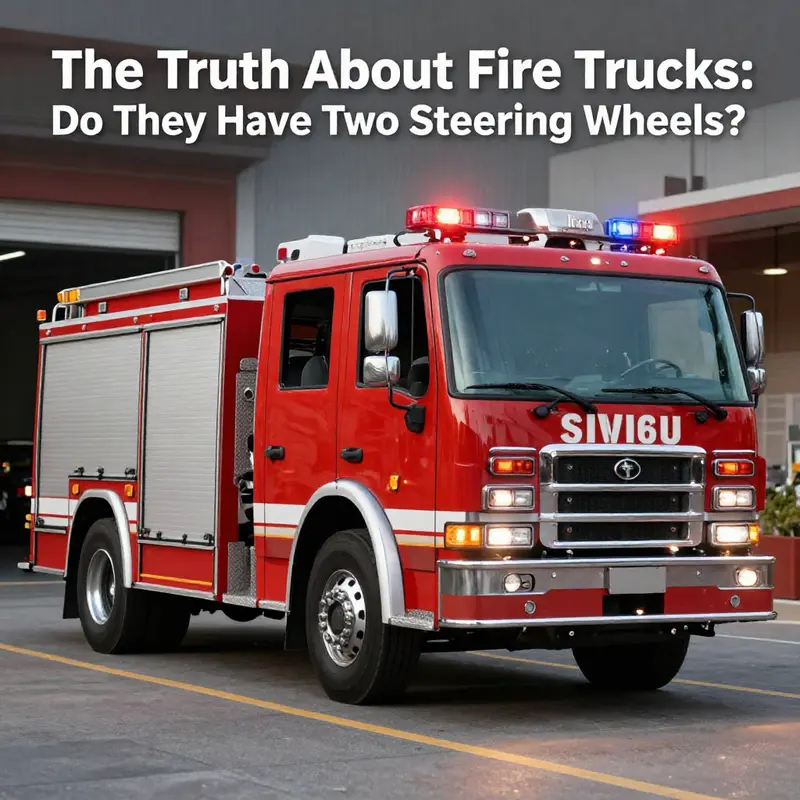
Steering shapes how a fire truck moves, positions, and protects crews during every call. The single steering wheel at the cab is the most familiar control. It governs the front axle and gives the driver the primary input for direction. Yet modern fire apparatus rely on a wider range of steering solutions to meet conflicting demands: reach the scene fast, fit through narrow streets, and stop safely while carrying heavy loads. That complexity is where questions about “two steering wheels” arise. The short answer is that two conventional driver wheels are rare. The longer answer shows why multiple steering concepts exist, how they improve safety and agility, and why calling them “two steering wheels” can mislead.
Many fire operations occur in dense urban settings. Tight corners, parked cars, and narrow alleys make turn radius a constant constraint. A large, fully equipped fire truck can be long and heavy. The front steering alone can limit how close the vehicle can approach a building or hydrant. Designers solve this through several approaches. One is to add rear-axle steering. Another is to build articulated or tandem-axle systems that actively manage wheel angles. A third solution returns to a legacy design: the tiller truck, which effectively places steering control at the back of the vehicle.
Rear-axle steering changes how much the rear wheels turn relative to the front. At low speeds, the rear wheels may steer in the opposite direction from the front. This reduces the turning circle dramatically. At higher speeds, the rear wheels may track with the front ones, improving stability. The hardware uses hydraulic actuators or electric motors, guided by an electronic control module. Sensors monitor vehicle speed and steering input. The system blends inputs to ensure predictable behavior. The result is a massive vehicle that can weave through tight streets like a much smaller one. That agility helps crews position the truck precisely, reducing the need for risky repositioning maneuvers on scene.
There are clear safety dividends. Tighter turning reduces the need to back into or out of constrained locations. Backing a large vehicle is one of the highest-risk moves. It increases collision risk and requires spotters. If a truck can make a forward approach into a tight spot, it lowers the chance of striking pedestrians, damage to property, or injury to crew members. Steering systems that reduce lateral overhang and shorten the effective wheelbase also improve clearance around obstacles. This matters when a few inches make the difference between getting a hose line or being forced to deploy less efficient tactics.
Rear-wheel steering also affects dynamics at speed. When the rear wheels assist in turning at higher speeds, they improve lane-change characteristics and reduce violent yaw tendencies. Sophisticated control logic changes the steering ratio depending on speed. At low speeds, more rear-wheel angle equals tighter turns. At highway speeds, smaller rear-wheel angles promote stability. This variable behavior demands robust testing and smart fail-safes. Manufacturers build redundancy into actuators, include manual override modes, and design limits so a fault does not produce abrupt or dangerous inputs.
People sometimes picture two steering wheels because of historical or specialized designs. The tiller truck is a classic example. A tiller apparatus carries a separate operator at the rear. That operator uses a steering wheel or tiller control to guide the trailer axles. In practice, the tiller operator and the front driver work together in tight maneuvers. The tiller allows extremely tight turning radii that would be impossible with only front steering on a long vehicle. Because the tiller seat has controls, observers may assume the vehicle has two full driver stations. That impression fuels the myth that many fire trucks have two steering wheels. In reality, tiller rigs are a specific apparatus type and require coordinated crews and specialized training. They are not the norm for most municipal fleets.
Beyond tiller designs, auxiliary steering controls can appear in other contexts. Some vehicles include secondary controls for operating a vehicle from an alternate position during tight maneuvers. These are not duplicate driver stations for everyday driving. Instead, they serve specific tasks, such as moving the vehicle short distances, conducting demonstrations, or providing control when access to the main cab is blocked. Misunderstandings about these features have produced stories that a truck had “two steering wheels,” when the reality was an auxiliary control or remote mode.
Advances in electronic steering create further options. Electronic rear-wheel steering, steer-by-wire systems, and integrated chassis control allow complex maneuvers with limited mechanical complexity. These systems rely on redundancy and diagnostics to meet safety expectations. A steer-by-wire architecture can adjust wheel angle more quickly and with finer resolution than purely mechanical linkages. That capability allows controlled drifting in low-traction demonstrations or precise placement near a building wall. However, these systems add software into the safety equation. They must pass rigorous validation and be supported by fail-safe mechanical backups. When manufacturers add such complexity, departments weigh benefits against lifecycle costs, maintenance demands, and repair logistics.
Training is as important as hardware. A truck with rear-axle steering behaves differently. Turning radii change, reverse handling shifts, and braking responses alter with weight distribution. Crews must learn how a specific vehicle maneuvers under load, at speed, and in emergency stops. That training reduces the risk of miscommunication between operators. On a tiller rig, the front driver and the rear operator must coordinate turn timing and rate precisely. Without drills and clear voice procedures, tight turns can become hazardous. Departments often include vehicle-specific modules in their driver training programs. Simulators and controlled course practice help crews build reflexive familiarity with unusual steering behaviors.
Steering also plays a role in equipment placement and firefighter safety on scene. A truck positioned correctly allows safe ladder placement, pump hookups, and hose deployment. If poor steering capability forces awkward parking, crews may need to deploy ladders from a less stable angle or stretch lines around obstacles. That slow, improvised work both delays suppression and increases exposure for firefighters. A highly maneuverable truck reduces these compromises. It lets teams focus on tactics rather than compensating for vehicle limitations.
Maintenance and inspection tie directly to safety. Steering systems must be checked daily for play, leaks, and wear. Hydraulic lines, tie rods, and mounting points take pounding during service. Electronic components require firmware management and diagnostics. Failure of a rear steering actuator is far more consequential than a minor accessory fault. Maintenance regimes should match the complexity of the steering package. That reality sometimes informs purchasing decisions. Fire departments balance the acute operational benefits of advanced steering against long-term sustainment budgets.
Regulatory environments and local ordinances also shape how steering is designed and used. Weight limits, axle configurations, and vehicle dimensions vary by jurisdiction. Some cities adopt narrower lane rules or have historical districts with severe constraints. These rules push departments to prefer maneuverable chassis. Conversely, rural districts prioritize water capacity and pump features. The result: steering choices reflect mission, geography, and regulation as much as raw technology. Fleet mix decisions therefore combine a department’s tactical needs with its road environment.
Safety features beyond steering help manage risk during maneuvers. Camera systems, proximity sensors, and automated braking reduce blind-spot incidents. When these systems integrate with steering, they help execute tight turns safely. For example, cameras can confirm clearance while the rear axles adapt in real time. Automated warning systems alert drivers to obstacles that could interfere with a planned arc. The combination of electronic assistance and mechanical steering refinement gives modern apparatus a higher baseline of maneuver safety.
Public perception often lags behind technology. Viral videos can exaggerate features or make unusual behavior look like routine capability. A high-profile clip showing a fire truck performing aggressive maneuvers might lead viewers to assume every truck can do the same. In fact, that footage often highlights a specially equipped vehicle or a demonstration by a trained operator. Departments and manufacturers are increasingly transparent about the limits and intended use of advanced steering systems. That clarity helps prevent unsafe imitation, such as attempting risky turns on standard apparatus without training.
There is a pragmatic takeaway for readers curious about two steering wheels. Most fire trucks have one steering wheel in the cab. Exceptions exist, but they are mission-driven and specialized. Tiller trucks have rear steering controls that look like a second wheel. Some modern vehicles use rear-axle steering or electronic systems to enhance turning. Auxiliary controls may appear for maintenance or short-distance moves. None of these options represent a universal, dual-driver configuration for routine operation. The presence of an extra control does not automatically mean a vehicle has redundant driving stations intended for normal two-person operation.
If you want to explore how different truck classes adapt steering to purpose, a useful place to start is a heavy duty fire truck overview. These resources summarize chassis choices and equipment packages for large apparatus. They help explain why a department might select a particular steering arrangement. For further reading on vehicle types and configurations, see heavy duty fire truck.
Real-world videos can illustrate these differences. A recent viral demonstration shows how a modern rear-steer system can create car-like agility in a large truck. That clip highlights both the impressive engineering and the controlled conditions required for such maneuvers. It is a good reminder that technology can transform how these vehicles move. Yet it also shows that understanding context is essential before concluding that any single truck represents the fleet as a whole. https://www.tiktok.com/@dallastxfire/video/1234567890
brush fire trucks, wildland firefighting, fire safety equipment, off-road fire trucks, firefighting technology, business safety, emergency response vehicles
In summary, fire trucks do not typically come equipped with two steering wheels; they feature a single steering mechanism that is designed for precision and control. Understanding the steering systems used in fire trucks can aid decision-making for business owners involved in emergency services. Moreover, recognizing specialized features and their influence on maneuverability can enhance operational effectiveness. The emphasis on safety during emergency operations cannot be overstated, and the steering system is a fundamental component in achieving that. A well-designed fire truck ensures that emergency responders can navigate efficiently, safely, and effectively. For those in the field, keeping abreast of such technical details is pivotal for enhancing service delivery.

