
















Navigating the complexities of driving a fire truck involves understanding specific licensing requirements. For many business owners in the fire service industry, knowing whether a Commercial Driver’s License (CDL) is required can significantly influence operational capabilities and legal compliance. This exploration delves into the reasons behind the CDL necessity, special cases involving certain fire trucks, confirmation methods for CDL requirements, relevant regulations, and essential training guidelines. Each chapter builds upon the previous to provide a comprehensive understanding of driving fire trucks legally and safely.
Beyond the Siren: Do You Really Need a CDL to Drive a Fire Truck?
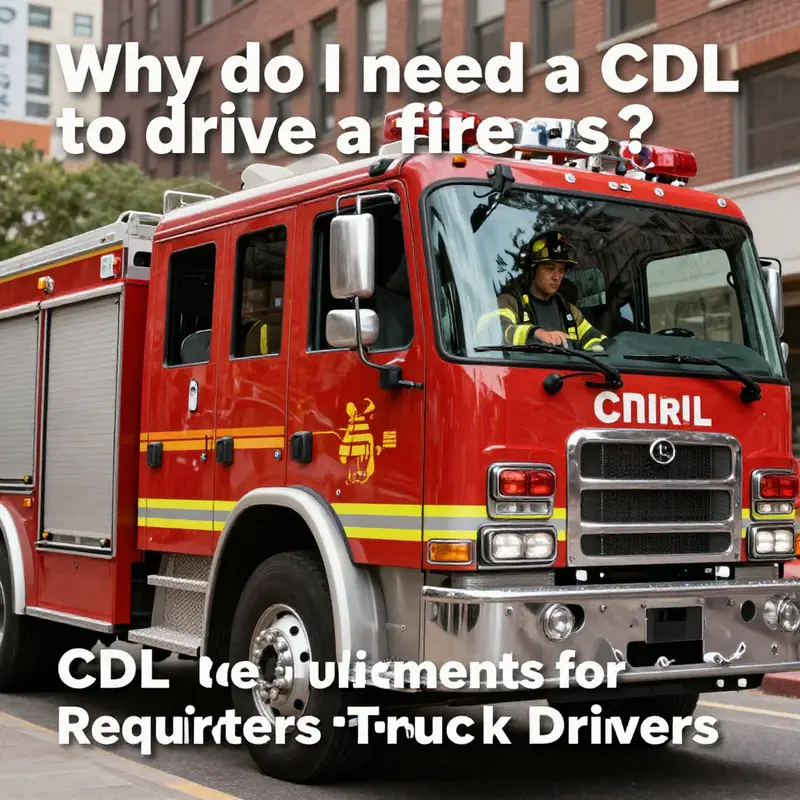
Chapter overview: rules around CDL for driving fire apparatus vary by emergency status, vehicle weight, and local rules. In the United States, a specific exemption can apply during emergency responses or legitimate training, which means a CDL is not always required for routine fire department driving. However, when not performing emergency duties, or when the vehicle exceeds typical weight thresholds, CDL requirements can apply. The GVWR threshold most commonly used is 26,001 pounds or more, and additional endorsements may be needed for aerial devices or hazardous materials. Because rules differ by state, the department or fleet manager should confirm the applicable policy, and firefighters should prepare accordingly.
Then, practical steps for newcomers include verifying the GVWR of the primary apparatus, discussing licensing with leadership, and pursuing CDL training if non emergency duties are part of the job. The path combines classroom study, behind the wheel practice, and simulated scenarios to build confidence and safety. Always check with the state DMV and the local fire department for the most current guidance since rules vary widely by jurisdiction.
Submit
Submit
Do I Really Need a CDL to Drive a Fire Truck? A Practical Guide Through Rules, Weights, and Readiness
If you’ve ever watched a fire crew respond to an emergency and wondered who is allowed to step behind the wheel of the apparatus, you’re not alone. The short answer is usually yes, a Commercial Driver’s License (CDL) is required to drive a fire truck. But the reasons behind that requirement are more nuanced than a single weight limit. The rules hinge on how the vehicle is classified, what it is designed to carry, and how it will be used in the field. Understanding these factors helps new firefighters, volunteers, and even seasoned department members navigate the licensing landscape with confidence, rather than treating the CDL as a box to check off after a long career already underway.
At the core of the CDL question is the concept of a commercial motor vehicle, or CMV, as defined by the federal Office of Transportation. If a fire truck qualifies as a CMV, a CDL is legally required. The two most common triggers are weight and passenger capacity. In practical terms, many fire engines and ladder trucks exceed 26,001 pounds when fully fueled and loaded, placing them in the CMV category. In addition, if the truck is designed to carry more than 15 passengers, including the driver, that design also pushes it into CDL territory. A unit built to transport hazmat materials can add another layer of endorsement, though in many fire-service operations, hazardous materials are not the primary mission of a standard response vehicle. These factors are not merely bureaucratic hurdles; they reflect the responsibilities that come with controlling a multi-ton vehicle in high-stakes environments where every decision can affect public safety.
Confusion sometimes arises because a department may deploy lighter, more specialized apparatus for certain tasks. Small rescues, quick-response vehicles, or some urban patrol or prevention units can be under the weight threshold that typically triggers a CDL. Still, many departments insist on a combination of technical driving skill and formal training to ensure drivers can operate heavy equipment under stress. The practical takeaway is that weight alone does not decide the license; the vehicle’s class, its intended use, and the regulatory framework in your state all matter. For many departments, the expectation remains clear: if the vehicle meets the CMV criteria, the operator should hold a CDL, and ideally an appropriate endorsement if hazardous materials or certain passenger configurations are involved.
The emphasis on professional training runs deeper than the license itself. Fire departments are responsible for public safety, and that obligation extends to every time a driver sits behind the wheel. A CDL program is not only about the ability to pass a written test or a road exam; it is about mastering the nuances of a heavy vehicle in emergency traffic, understanding braking dynamics that differ markedly from passenger cars, and learning to anticipate and manage risk around pedestrians, other drivers, and unpredictable emergency scenes. In practice, this means a driver must develop a blend of vehicle-handling finesse, incident awareness, and an understanding of the department’s policies on response and safety protocols.
In many communities, the decision to require a CDL also reflects how the department uses its fleet. A municipal fire department with a broad array of fire and rescue apparatus—the standard pumper, a heavy aerial platform, a water-tank unit, and specialized rescue trucks—will typically opt for CDL-qualified drivers across the fleet. That uniformity streamlines training, ensures consistency in responses, and aligns with insurance and liability considerations. A smaller department, or a volunteer crew with a lighter or less complex fleet, may encounter more nuance. Some units that stay under weight thresholds might not require a CDL, but department leadership may still require certain qualifications or certificates. In either case, the goal is clear: ensure drivers are prepared for the unique demands of operating heavy, high-risk machinery during critical moments.
For individuals evaluating a career path, the pathway toward a CDL may begin long before the first dispatch. Many departments expect aspiring drivers to complete the relevant knowledge and practical testing, often through accredited CDL programs or community college courses, and to accumulate supervised driving experience behind heavier vehicles. The testing landscape itself can be challenging. A growing body of instructors notes that more than 90 percent of CDL applicants stumble not because the drive itself is impossible, but because they underestimate the written knowledge portion or skip essential behind-the-wheel practice. This reality underscores the value of early planning and disciplined preparation. The emphasis should be on both theory and hands-on mastery—the two pillars that together build the competence required to operate a CMV in diverse and demanding environments.
If you are trying to decide whether you should pursue a CDL to drive a fire truck, start with a clear inventory of your department’s needs and your state’s rules. The weight of the vehicle, the number of passengers it is designed to carry, and whether it transports hazardous materials are the structural facts you must verify. Then consult the relevant authorities: your local fire department or emergency services agency for the department’s specific requirements, your state’s DMV for state-by-state rules, and the FMCSA for federal guidance. The FMCSA maintains a concise framework for CMV eligibility, and their guidelines are the compass for interpreting state practice. A reliable step-by-step approach is to determine whether your vehicle falls under the CMV definition, confirm the necessary license class and endorsements, and then align your training plan accordingly. For context and broader reading, you can explore the Commercial Fire Trucks category to understand the range of larger apparatus that typically appear on the road in many departments. The link for reference is Комерційні пожежні автомобілі.
The practical path to readiness also involves aligning your personal development with the department’s operational standards. In addition to the license, many departments require ongoing certifications in areas such as emergency vehicle operation, incident command, and protective technologies used during response. These credentials reinforce the driver’s ability to manage high-stress scenarios where quick decisions and precise vehicle control are essential. The chain from classroom knowledge to street readiness is intentionally rigorous because the consequences of a misjudgment at highway speeds, or in a crowded urban street, can be severe. The training culture surrounding fire apparatus driving places heavy emphasis on scenario-based learning, where drivers repeatedly practice braking with heavy loads, negotiating tight turns, and maintaining safe following distances while responding through traffic. This is not a mere formality; it is a critical integration of skill, judgment, and accountability.
For readers who are new to this topic, the road to CDL compliance is not a solitary journey. It involves collaboration with the department’s training officers, the motor vehicles authority, and, often, a cadre of veteran drivers who share their practical insights. The realities can vary by jurisdiction, and the steps may differ slightly from one state to another. Still, the thread that ties all these pieces together is clear: possessing a CDL and, when required, the appropriate endorsements, is aligned with the department’s mission to protect life and property. It is also aligned with the driver’s personal commitment to professional excellence and public safety. The process can be seen as a structured apprenticeship, where the license is both a credential and a pledge to uphold safety standards in every shift.
As you move from curiosity to preparation, consider what type of firefighting role you envision. If your ambition is to drive a heavy engine with extensive on-scene responsibilities, a CDL is a likely prerequisite. If your path involves lighter apparatus or support vehicles that stay under the heavy thresholds, you may still pursue formal driving qualifications, as many departments value a well-rounded skill set and a comprehensive safety mindset. Regardless of current role or department size, the underlying principle remains: verify the regulatory definitions and follow a disciplined preparation plan so you are not left uncertain on the day you apply or transfer to a different unit. The licensing question, when resolved, clears the path to focus on what matters most—protecting people, property, and communities when danger arises.
External resources provide additional clarity. For official guidance and the most current rules, consult the FMCSA website. This is where federal standards are laid out and interpreted in conjunction with state regulations. As rules evolve and equipment changes, staying informed helps you make decisions that are both legally compliant and practically sound. For readers who wish to continue exploring the broader regulatory landscape while also considering equipment options, the journey can be complemented by reviewing the general fleet options and training pathways available within the broader fire apparatus ecosystem. External resource: https://www.fmcsa.dot.gov/.
Heavy Wheels, High Responsibility: Demystifying CDL Requirements for Fire Truck Drivers
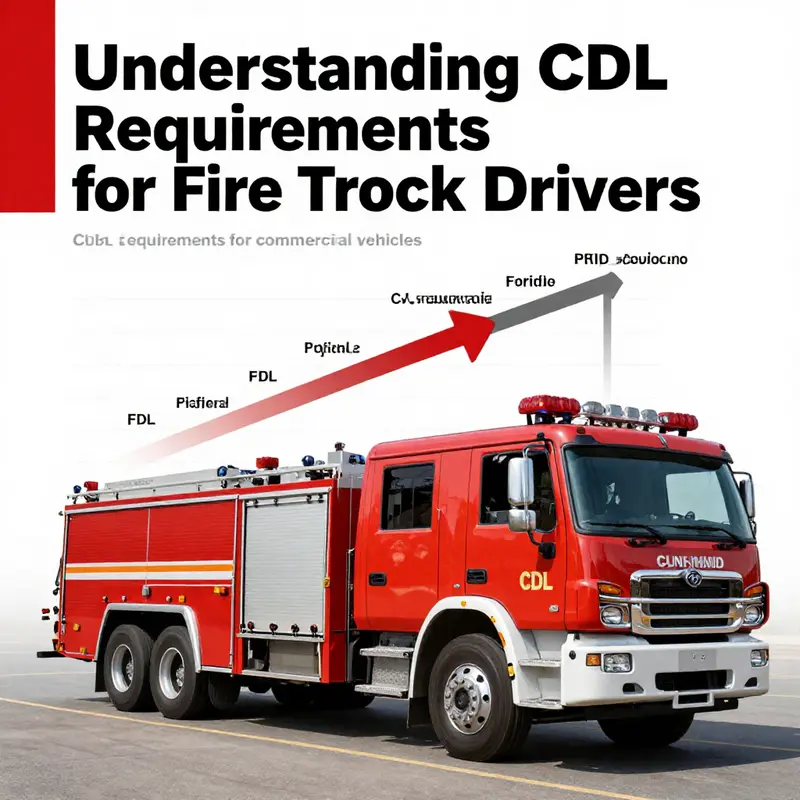
Driving a fire truck is a duty that blends safety, training, and accountability. The question of whether a CDL is required depends on weight, design, and use. In general, if a vehicle weighs 26,001 pounds or more or is designed to carry 16 or more passengers including the driver, and is used to transport people or property, the FMCSA typically requires a CDL. Fire apparatus often exceed these thresholds when loaded with water, equipment, and crew gear. A pumper or ladder truck can easily push past the limit once water tanks and gear are on board. Endorsements matter: the passenger endorsement (P) is relevant for crews riding inside the cab, while the tank endorsement (N) applies for substantial liquid payloads. Many departments require both endorsements along with the underlying CDL to cover routine and emergency operations.\n\nThere are important exemptions: emergency response vehicles operated by qualified personnel during emergencies may be exempt from strict CDL enforcement in those moments. However, during non-emergency driving or routine equipment transport, many jurisdictions still expect a valid CDL. State policies vary, so consult your department’s policy and the state DMV or equivalent agency. A common best practice is to work with the fleet manager to confirm the license class and endorsements needed and whether any exemptions apply.\n\nPreparation is essential. Written tests can be challenging, and hands-on practice with heavy vehicles is crucial. Early planning, focused study, and supervised driving experience build the muscle memory and situational judgment needed to respond safely and effectively. The goal is responsible, professional operation that protects the public and crew while staying compliant with the rules.\n\nFor those pursuing a fire-service career, understanding the regulatory landscape is part of professional development. Check official FMCSA regulations and your state’s guidance, and seek clear answers from your department to avoid surprises on the road. Official details can be found at the FMCSA CDL regulations site.
Gearing Up for the Road to the Fireline: A Practical CDL Readiness Guide for Driving a Fire Truck
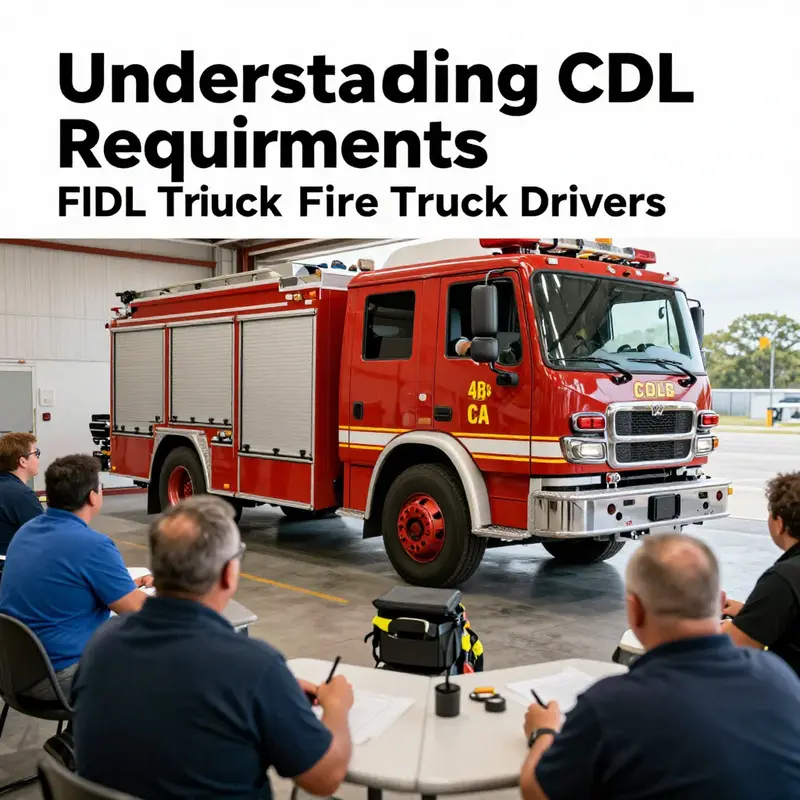
Driving a fire truck is more than piloting a large vehicle through city streets. It is a role that blends logistics, public safety, hands-on vehicle handling, and steady judgment under pressure. The decision to pursue a Commercial Driver’s License (CDL) for operating a fire apparatus is not simply a checkbox on a resume; it is a doorway into a professional discipline shaped by federal rules, state variations, and the specific demands of the fire service. In the most common picture, the hardware itself pushes you toward CDL eligibility: these machines are heavy, complex, and built to move people and equipment into situations where seconds count and mistakes can be costly. The path from candidate to certified operator charts a careful route through regulations, training, and the operational culture of a fire department, where the emphasis always lands on safety and mission readiness.
At the core of the CDL question are precise, codified weight standards that the Department of Transportation uses to classify vehicles and set licensing requirements. Commercial vehicle rules pivot on two complementary measurements: a vehicle’s empty weight and its gross vehicle weight rating, or GVWR. A threshold commonly cited in policy discussions is 26,000 pounds as the cutoff for certain CDL obligations. If a fire truck’s unloaded weight pushes beyond that mark, or its GVWR exceeds 10,000 pounds and the vehicle is used to transport passengers or freight, the driver typically falls under CDL requirements. In practical terms, many fire apparatus—especially pumpers, aerial ladders, and larger tankers—easily exceed these limits. The weight, combined with specialized equipment and the role of moving responders and sometimes hazardous materials, reliably places many fire departments on the side of CDL eligibility. For the department, having a CDL holder means a formal recognition of the operator’s credentialed capability to operate a heavy vehicle safely, under both routine and high-stakes conditions.
Weight and regulation, however, are not the whole story. The fire service often addresses a broader reality: the work does not always require the same exact vehicle configuration to trigger CDL status. There are smaller, lighter, or specialized fire units—police and fire patrol cars, compact water tanks, or rapid-intervention vehicles—that may fall under lighter weight categories. In those cases, a CDL may not be strictly mandated, yet departments still demand rigorous training, professional certification, and a strong safety discipline. This nuance matters because it reinforces a central tenet: every department defines its own minimums, consistent with state law but tailored to the apparatus they operate and the missions they undertake. Even when a fleet includes lighter equipment that sits under the formal CDL line, the expectation remains that operators be proficient, accountable, and prepared to perform critical tasks under pressure.
Given this variability, the simplest, most reliable step for anyone weighing the CDL path is to confirm the local regulatory landscape and the department’s policies. State transportation agencies publish guidelines that clarify when a CDL is required for specific vehicle configurations, but the actual practice in the field often reflects exceptions and departmental preferences. A practical rule of thumb is to consult both the state’s regulations and the fire department’s human resources or training division. They can confirm whether a Class A, Class B, or perhaps a different endorsement is needed for the particular vehicle you will drive—and whether any extra endorsements, such as those for pumping or hazardous materials handling, apply to your role. The process is not abstract; it translates into a concrete sequence of steps that begins with eligibility and moves through training, testing, and certification. For a broad view of the landscape, the Federal Motor Carrier Safety Administration (FMCSA) site provides the umbrella standards, while state agencies tailor those standards to local practice.
Eligibility for a CDL starts with the basics that apply to almost any heavy-vehicle operation. You must be at least 21 years old to drive commercially across state lines, though some states allow 18-year-olds to begin training with special permits. A valid driver’s license is essential, as is passing a medical examination to ensure you meet stringent health criteria for operating a heavy vehicle under demanding conditions. A clean driving record is required to demonstrate the responsible stewardship of public safety—an essential trait for anyone entrusted with a fire apparatus. These prerequisites are not mere formalities; they establish the baseline from which the more technical parts of CDL training build your competence and confidence behind the wheel. The medical standard, for example, includes vision and hearing checks, cardiovascular risk screening, and general fitness to manage the physical demands of controlling a large vehicle in dynamic settings.
Once eligibility is confirmed, the next decision is the appropriate license class. Class B generally covers single vehicles with GVWR over 26,000 pounds or a combination of vehicles with a gross combined weight rating of 10,000 pounds or more, when the operation does not involve articulated combinations. Class A is reserved for combinations of vehicles with a gross combination weight rating over 26,000 pounds, provided the towed vehicle also meets the weight thresholds. In the context of fire apparatus, many configurations align with Class B because the truck itself is a heavy, standalone unit. However, some configurations—such as tractor-drawn pumpers or large tankers that pull a significantly heavy trailer—push the operator into Class A territory. The exact classification depends on the specific vehicle layout, the towing setup, and the GVWR and weight distribution of the combination. Endorsements further refine the license: for example, many departments look for or require endorsements such as a P for pump operation or an S for tanker operations. The presence of these endorsements does not just signal capability; it legally authorizes the driver to perform a set of critical functions that are integral to fire-ground operations. Understanding which class and endorsements apply is essential, because it shapes the training path, the testing sequence, and the ongoing recertification cycle.
With the license class mapped, enrollment in a structured training program becomes the next milestone. CDL training blends classroom instruction with hands-on practice, ensuring that the operator gains both theoretical knowledge and practical, muscle-memory proficiency. The curriculum typically covers several core domains. Vehicle inspection procedures are foundational; you learn to conduct pre-trip checks, identify potential issues, and document the results with accuracy. Safe operation of large emergency vehicles follows, focusing on the unique dynamics of heavy trucks in emergency contexts: higher stopping distances, reduced maneuverability, and the necessity for precise coordination with other responders and bystanders. Defensive driving concepts are taught as a method to prevent incidents under pressure—anticipating hazards, maintaining safe following distances, and choosing strategies that reduce risk for crew, civilians, and equipment.
Operating under emergency conditions represents a specialized subset of CDL training. Trainees explore the balance between speed and safety, understanding how siren usage, intersection priorities, and route planning intersect with traffic laws and public safety obligations. The training also emphasizes decision-making under stress, situational awareness, and the responsibility that comes with commanding a vehicle that can significantly impact life and property. A modern program often includes a mix of simulator sessions and real-world driving experiences. Simulators let trainees experience narrow urban intersections, complex traffic patterns, and high-pressure decision points without the risk of a live drill; real-world training then translates those skills into actual vehicle control, braking, cornering, and backing through tight spaces. The objective is not just to pass a test, but to internalize the behaviors that keep firefighters and the public safe when time is scarce and conditions are changing rapidly.
Beyond the CDL curriculum, fire department–specific training adds another crucial layer. Once a driver has demonstrated proficiency in general heavy-vehicle operation, they usually undertake fire apparatus maintenance, which covers routine checks on pumps, hoses, and electronic systems. Pump operations demand an understanding of water flow dynamics, pressure management, and the coordination required to deploy a hose line quickly and effectively. Hose deployment itself is a practical discipline, where muscle memory and teamwork converge to produce swift, reliable results on scene. Communication protocols are equally critical: radios, incident command structures, and contingency plans require clear, concise, and timely information exchange under stress. This integrated training approach aligns with the National Fire Protection Association’s standards, which provide a framework for the knowledge and skills expected of fire apparatus operators. Meeting these standards is part of the credentialing landscape that underpins professional practice in most departments.
In addition to training, departments typically require a set of personal qualifications that ensure you are ready to meet the physical and moral demands of the job. A robust physical fitness program, sometimes accompanied by a structured test, assesses your capacity to perform climbing, lifting, and sustained activity. A background check is standard, reinforcing the public safety mission. The licensing and training journey culminates in testing administered by the state DMV, where you must pass both a knowledge test and a skills test that reflect the real-world tasks you will perform on the job. After successful completion, you receive the CDL with the appropriate endorsements, and you begin a cycle of continuing education and recertification to maintain proficiency and adapt to evolving safety regulations.
For readers who want to explore the broader landscape of heavy apparatus and the kinds of equipment that require a CDL-ready operator, a dedicated category of vehicles helps convey the scale and capability involved. You can explore the heavy-duty fire truck category to gain a sense of the range of vehicle configurations that drivers might encounter and to understand how training aligns with the equipment’s design and purpose. This resource provides a tangible connection between curriculum and field practice and helps bridge the gap between theoretical rules and real-life driving on emergency scenes.
In closing, the CDL path for driving a fire truck is not a single hurdle but a comprehensive journey that integrates federal guidelines, state specifics, departmental expectations, and frontline competence. The destination a licensed, capable operator who can navigate traffic with urgency while preserving safety for the crew and the public rests on a careful blend of eligibility, appropriate licensing class and endorsements, rigorous training, and ongoing recertification. The process might feel demanding, but it is designed to ensure that every member of the fire service who sits behind a wheel understands the responsibility that comes with commanding a heavy vehicle in moments of peril. For those who commit to this path, the result is not only a credential but a reinforced commitment to public safety, to teamwork, and to delivering help when it is needed most. For official guidance on CDL standards and process, see the FMCSA site: https://www.fmcsa.dot.gov
brush fire trucks, wildland firefighting, fire safety equipment, off-road fire trucks, firefighting technology, business safety, emergency response vehicles
Understanding the necessity of a CDL for driving fire trucks is vital for business owners in the firefighting sector. By evaluating the specific conditions under which a CDL is required and recognizing exceptions, you can ensure compliance while maximizing operational efficiency. With the right training and preparation, your team will be equipped not just to meet legal requirements but also to operate fire trucks safely and effectively. As regulations can vary, staying informed and ready to adapt is key to successful operations in the fire service industry.

