
















Real fire trucks serve as the backbone of emergency response systems, blending engineering, technology, and training to fight fires, rescue individuals, and mitigate disasters. As businesses face increasing risks from fire and emergencies, understanding the anatomy and specialized functions of these vehicles is essential. This article explores the various types and technologies behind real fire trucks, the training firefighters undergo, and the vital role these trucks play in ensuring safety. From the intricacies of their design to their operational mechanics, each chapter provides insights into why investing in robust fire response infrastructure is crucial for every community and business owner.
Submit
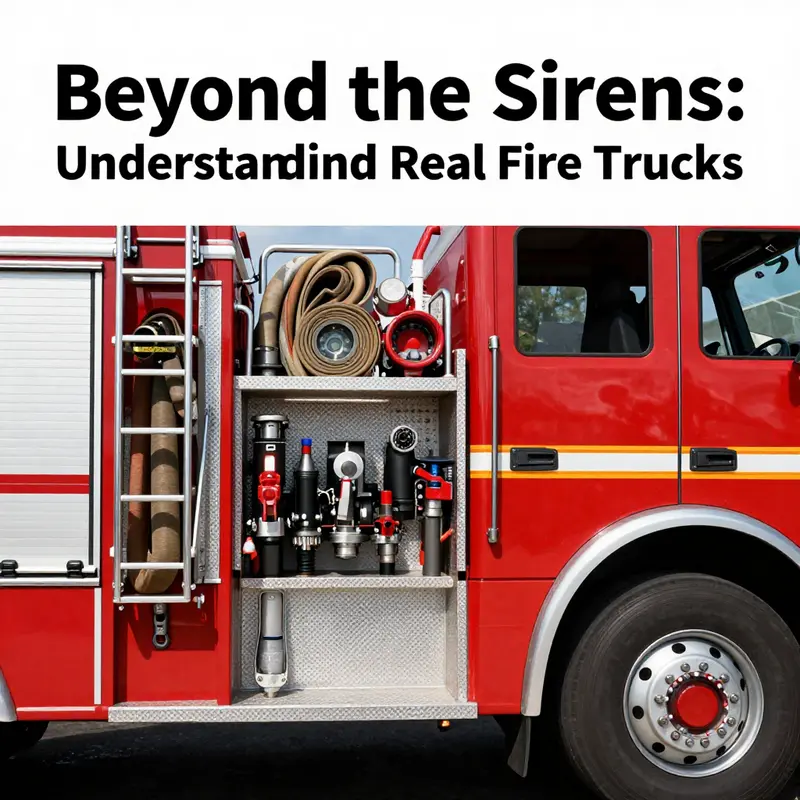
Submit
The Specialized Arsenal on Wheels: How Real Fire Trucks Meet Every Emergency
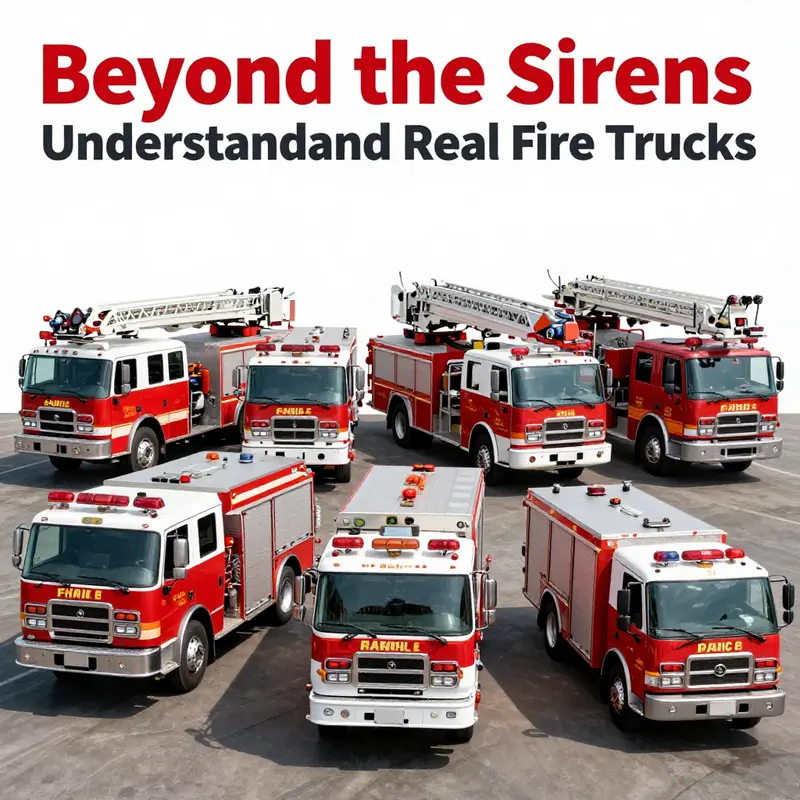
A real fire truck is more than a vivid siren and a bright red silhouette rolling toward danger. It is the visible face of a carefully engineered system, a mobile workshop where science, teamwork, and courage converge to protect lives and property. The fleet is a layered toolkit, built to adapt to a spectrum of emergencies that range from a stubborn blaze in a single-family home to a complex rescue in a high-rise, from brush fires in rugged terrain to industrial incidents where hazardous materials demand careful handling. To understand the heartbeat of a real fire truck is to see how each type exists for a different kind of pressure, how the city’s alarm system wakes up a coordinated response, and how crews move with practiced precision through crowded streets and unpredictable scenes. The trucks themselves—pumps, tanks, ladders, hoses, and hydraulic tools—are not mere hardware. They are the physical memory of every shift, the tangible evidence of training, discipline, and the shared language created by years of drills, emergencies, and costly lessons learned at the edges of fire and failure.
First in the narrative of a fleet is the engine, the pumper. It is the workhorse of rapid water delivery. When a call comes in, the engine becomes a rolling water plant, carrying a substantial tank and a powerful pump capable of pushing a jet of water through hundreds of feet of hose and into the heart of flames. Its role is to establish a dependable water supply and to begin the suppression process as quickly as possible, buying time for other tools to arrive and for occupants to be guided to safety. The engine’s design emphasizes readiness: a robust pump, a core crew ready to connect intakes and discharge hoses, and a compact footprint that lets it squeeze through tighter streets while maintaining the hydraulic discipline that keeps pressure stable under load. The sight of a foam-colored shoreline of hoses unfurling in a near-silent, disciplined line carries a quiet promise: the fire will not win this round if the pumping plan holds under pressure.
If the engine is the beating heart of water delivery, the ladder truck is the lungs and reach of the operation. Aerial platforms and extension ladders extend a firefighter’s reach well beyond the ground, opening up high shelves of air above a blaze. In a multi-story structure, the ladder becomes a lifeline—providing fresh air flow to a smoke-filled stairwell, enabling safe egress for trapped occupants, and granting access to upper-level windows from which crews can spray or ventilate. Tillers, the articulated cousins of fixed ladders, offer the nimble maneuvering needed in dense urban canyons where a straight shot is impossible. The ladder truck’s crew carries more than this: a toolbox of ventilation gear, forcible entry tools, and a ready supply of rope and rescue devices. The message is clear: height does not have to be the enemy if the right platform is at hand to extend a firefighter’s range and perspective. When the sirens ebb and the water begins to arc, the ladder becomes the visual compass for the scene—an anchor from which other teams calibrate their own tasks.
Then there are the rescue trucks, the specialized partners within the fleet that bring a different kind of authority to danger. A rescue unit carries a suite of hydraulic tools designed to pry, cut, lift, and separate. It’s the equipment that makes space where there was little, freeing trapped victims from crushed metal or collapsed structures. The crew moves with a calm precision born from countless hours of practice, knowing that in the earliest moments of a wreck or a cave-in, every second matters. The tools themselves are feats of engineering—robust cutters, spreaders, and rams—that translate power into controlled action. The emphasis here is safety through careful extraction, not brute force, and the crew’s communications—verbal and nonverbal—keep the scene from slipping into chaos. The rescue truck’s presence signals that a situation may demand more than suppression; it may demand patient, methodical, life-preserving work.
Beyond the urban core, the fleet remembers its wider responsibilities with wildland engines, designed for resilience off the paved roads. These compact, rugged vehicles carry a lighter load of water but compensate with mobility and stamina on rough terrain. They navigate into brush and timber with four-wheel drive courage, where access is limited and the environment can threaten the operation as much as the fire itself. In these moments, the rhythm changes: engines skid across tinder-rich ground, crews deploy hand lines and masticated tools, and the mission shifts toward keeping flames from jumping ahead of the crew and protecting wildland habitats as well as nearby communities. It’s a reminder that not all blazes burn on a corridor; some blaze with the stubbornness of a landscape that resists even the best water supply, and the wildland engine represents the department’s commitment to fighting fire wherever it may take root.
The fleet’s spectrum also includes the industrial and aircraft rescue fire fighting, ARFF, trucks. These are not generic city apparatus but specialized responses to facilities and airports where unique hazards require tailored capabilities. Industrial trucks are equipped to handle hazardous materials, heavy fuels, and the kinds of large-area incidents that demand sustained foam deployment and a different arrangement of foam concentrate, water, and equipment. ARFF units, meanwhile, are designed to confront aircraft emergencies with rapid acceleration, high water and foam capacities, and specialized foaming agents that can blanket a simulated jet fuel fire with a safety margin. At airports and industrial sites, the truck is a mobile hazard fabricator and a crisis response center, a rolling command post that can coordinate between responders, engineers, and facility operators. These are the outliers in a sense, but in reality they are indispensable when the environment itself carries elevated risk, reminding every operator that the fleet must anticipate specialized threats and be ready to adapt tactics accordingly.
To witness how these distinct tools cohere in practice, picture a call that begins with a light wind and a suspected kitchen fire, then evolves into a multi-story residential blaze with trapped occupants and a nearby vehicle crash. The first engine arrives, its crew laying a water supply and initiating a calm, disciplined attack. The ladder truck follows, its platform lifting a team to the upper floors to perform a search and rescue while also venting the building to reduce heat and smoke. A rescue unit checks the wreckage of the vehicle and clears a path for extrication, while safety officers coordinate the movement of personnel, ensuring that each action supports the others rather than competing for space in a crowded scene. A wildland engine might be dispatched to protect nearby brush and to guard against flames licking toward parks and homes, particularly if winds shift the fire’s direction. If hazardous materials or an unusual fuel source appear, an industrial truck or ARFF unit can pivot into action, bringing specialized equipment and protective measures to the fore. In this choreography, the crew’s training—driven by rigorous drills, protocols, and the experience of countless alarms—keeps the operation moving instead of stalling. Water pressure is regulated, hoses are deployed with exact angles, and radios carry steady, clear instructions. The scene refuses to become chaotic because the system is designed to compress many actions into a single, comprehensible plan.
The result is more than the sum of its parts. The city’s firefighting fleet works because each type knows its precise job and because the crew understands how to sequence roles so that delay never becomes a decision. The driver must negotiate traffic and positioning, while the officer and the crew communicate, anticipate, and adapt. The paint job, loud sirens, and rotating lights—though emblematic—are only the outward sign of a deeply integrated training ethic and a readiness to shift tactics as the scene evolves. In the end, what readers encounter in a real fire truck is not merely equipment, but a living system that embodies the values of preparedness, teamwork, and resilience. For those curious about the breadth of equipment that shapes this culture, a deeper dive into the dedicated category of fire fighting trucks can offer a practical map of what each vehicle carries and why.
If you want to explore a concrete starting point in this broader landscape, consider the dedicated collection of equipment and vehicles available in the fire-fighting-truck category. It is a concise way to connect the dots between the high-level roles described here and the actual configurations on the road, from compact urban responders to heavy-duty platforms. пожежна машина. And for readers seeking guidance on choosing the most effective combination of apparatus for a given mission, the industry resource on model selection offers a thoughtful framework that respects the nuances of each scenario, emphasizing reliability, interoperability, and safety. For a broader perspective on best practices and decision criteria, consult the Guide To Choosing The Best Fire Truck Model For Every Need available online, which provides a grounded reference to the trade-offs and considerations that shape real-world deployments. https://www.fireengineering.com/fire-truck-models-guide
The chapter thus closes with a single, undeniable thread: a real fire truck is a carefully tuned ecosystem. It is a fleet of specialized tools aligned to the unknown that each shift will carry, and it is a culture of training where courage grows from competence, and competence grows from repetition. In that sense, the truck’s value is not merely in what it can do, but in how reliably it can do it, night after night, call after call, in a city that depends on it to meet every emergency with steady hands and clear purpose.
Inside the Rig: The Lifelong Training Behind Real Fire-Truck Operation
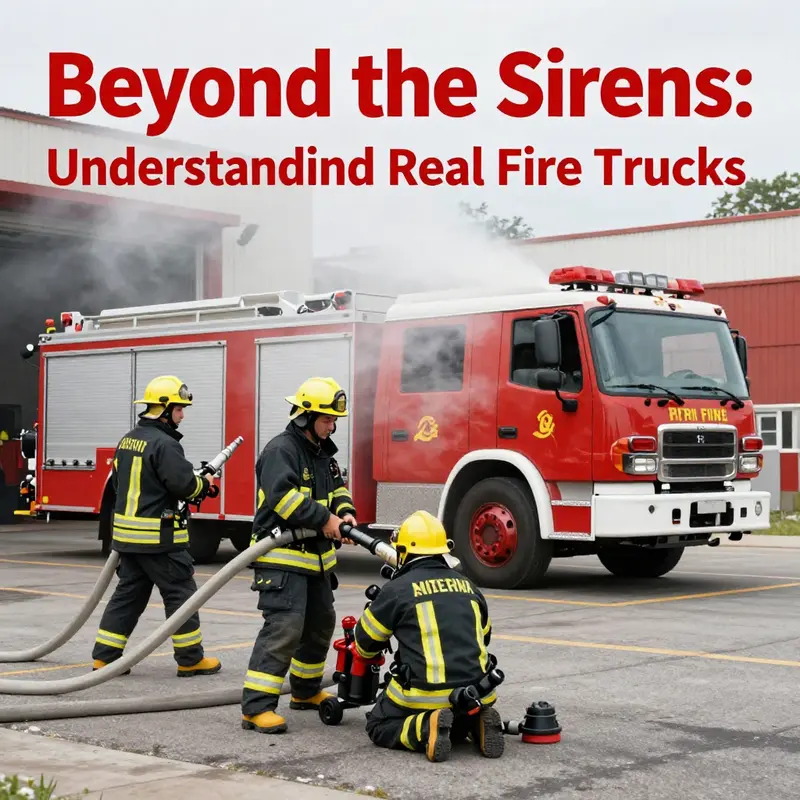
A real fire truck is more than a vehicle with red paint and flashing lights; it is a mobile classroom where every parameter of an emergency can tilt the balance between danger and safety. The people who operate these machines carry a living curriculum in their heads and hands—one that blends formal training, muscle memory, and disciplined judgment. The chapter that follows unspools this curriculum as an integrated, ongoing voyage, one that begins long before a siren sounds and continues long after the scene is cleared. It is not a single lesson but a continuous process in which perception, technique, teamwork, and resilience are trained into reflexes that can save lives when time and pressure compress space and risk.
At the core of operating a real fire truck lies formal training that covers the mechanics of the machine and the science of how it moves water and people through a scene. Recruits learn the layout of a pump panel, the sequence of operations for controlling water pressure, and the steps to safely deploy hoses and ladders. This learning takes place in classrooms, simulators, and expansive drill yards where trainees practice priming pumps, adjusting nozzle pressures, and verifying that all connections are secure. Yet the classroom is only the starting point. Hands-on practice with hydraulic systems, ladder assemblies, and emergency protocols solidifies knowledge into competent action. The experience is designed to translate theory into precise, repeatable motions under the stress of real incidents.
Spatial awareness stands as one of the most critical competencies. A driver’s eyes must track the vehicle’s length, width, and turning radius while negotiating tight urban streets, parked cars, and crowded intersections. Precision in positioning the rig affects every downstream operation: it reduces the risk of collateral damage to nearby buildings, preserves access for additional units, and safeguards bystanders. This skill set is not merely about driving; it is about moving a large, heavy apparatus through dynamic environments with a balance of assertiveness and caution. The mental map of each apparatus—where the pump is, how the water flows, where the ladder will extend—must be internalized so that a response becomes instinctive rather than deliberate.
Communication is the connective tissue that holds the team together when time is scarce and danger is high. Dispatch chatter, command directives, and crew callouts form a spoken choreography that coordinates every actuator, from the throttle to the nozzle. Trainees practice concise, standardized phrases that reduce ambiguity and speed up decision loops. A well-tuned communication discipline helps the driver, the officer, and the pump operator act as a single unit even when the scene is chaotic. The ability to listen under pressure is as important as the ability to speak clearly, and both are fortified through frequent drills that simulate the friction and noise of real emergencies.
Composure under pressure is perhaps the most defining trait of a skilled operator. Crew members train to maintain situational calm, manage fear, and make deliberate choices rather than impulsive moves. Stress inoculation exercises, scenario-based drills, and time-constrained problem solving teach responders to prioritize safety while preserving operational momentum. When seconds feel like hours inside a smoke-filled room, the trained operator relies on a practiced sequence, a calm breath, and a clear mental model of how water flows, how ladders extend, and how to protect teammates as plans unfold.
Proficiency with firefighting tools and equipment is the visible surface of the craft. Trainees learn to handle hoses, nozzles, adaptors, and fittings with confidence, understanding how friction loss, elevation pressure, and nozzle selection shape the outcome of a fire attack. Beyond technique, they learn maintenance habits—inspecting lines for wear, confirming coupling integrity, and recognizing when a component isn’t performing as designed. This practical knowledge is reinforced by standards that ensure interoperability across departments and scenes, helping crews function as a cohesive unit regardless of where they respond.
Hazardous materials handling and technical rescue capabilities broaden the scope of responsibility. Firefighters may encounter substances that threaten health or the environment, requiring safeguards, decontamination procedures, and an understanding of how to isolate a hazard without compromising their own safety. Technical rescue skills extend to vehicle extrication and confined-space work, where the stakes are high and the margin for error is small. Training in these areas emphasizes not only tool use but also risk assessment, scene containment, and the choreography of teammates moving in concert around a potentially unstable environment.
Specialized training for different truck types reflects the diversity of calls that modern fire services must manage. Aerial ladder trucks demand advanced knowledge of boom dynamics, wind conditions, and load distribution to extend platforms safely at height. Operators must gauge how the ladder behaves in three-dimensional space while coordinating with crew members on the platform. The result is a precise balance of physics, geometry, and human judgment. For those exploring this path, the practical study of aerial platforms becomes a study of how height, weight, and weather intersect with human safety. Learn more about aerial ladder trucks and the specialized training they require here: Footer Widget 1.
Other specialists train to operate wildland engines or other off-road capable units. In remote or rugged terrains, operators must manage uneven ground, limited water sources, and prolonged exposure to the elements. They learn to navigate variable terrain, conserve water, and work in environments where hydrants are scarce. These operators bring a different blend of driving technique, field improvisation, and situational awareness, underscoring how training adapts to the terrain and the nature of the incident rather than forcing a one-size-fits-all approach.
Beyond the technical and tactical, there is a cultural dimension to training that shapes how firefighters think about risk, teamwork, and community service. Foundational skills such as situational awareness and effective communication underpin not only operations but career development itself. Indeed’s conclusions about skill development emphasize that these competencies are reinforced through continuous on-the-job training and regular drills. The result is a profession that values steady improvement, reflective practice, and a willingness to learn from every call. This culture of learning helps new recruits translate raw talent into reliable performance while preserving the judgment to avoid unnecessary risk.
Standards and certification frameworks provide the guardrails that keep training aligned with public safety objectives. Agencies design curricula that integrate classroom theory, live-fire or simulated-fire training, hydraulic theory, and real-world drills. The objective is not simply to perform a sequence of tasks, but to cultivate the judgment to know when to adapt, when to pause, and when to push forward. Certification—often aligned with national or state standards—ensures a baseline level of proficiency across departments. The ongoing nature of certification reflects the reality that firefighting evolves, with new equipment, techniques, and safety protocols introduced through updates to standards and training materials. This dynamic ensures crews remain prepared to respond to a broad spectrum of emergencies with competence and confidence.
The arc of training then returns to the goal of the first responder on scene: to deliver rapid, coordinated action that protects life and property while maintaining the safety of the crew and bystanders. The chain of decisions—from the moment the call is received to the moment the scene is secured—depends on a finely tuned set of skills born from years of structured practice, supervised drills, and reflective experience. Each mission reinforces the idea that a real fire truck is only as capable as the people who drive it, the teams that operate it, and the ecosystem of training that sustains them. In this sense, the vehicle becomes a moving classroom, and every incident a test of how well that classroom translates into life-saving action.
External reference and further reading: For a comprehensive overview of firefighter qualifications and vehicle operator proficiency standards, consult NFPA resources. NFPA training standards.
The Engineered Pulse of Rescue: How a Real Fire Truck Transforms Technology into Life-Saving Action
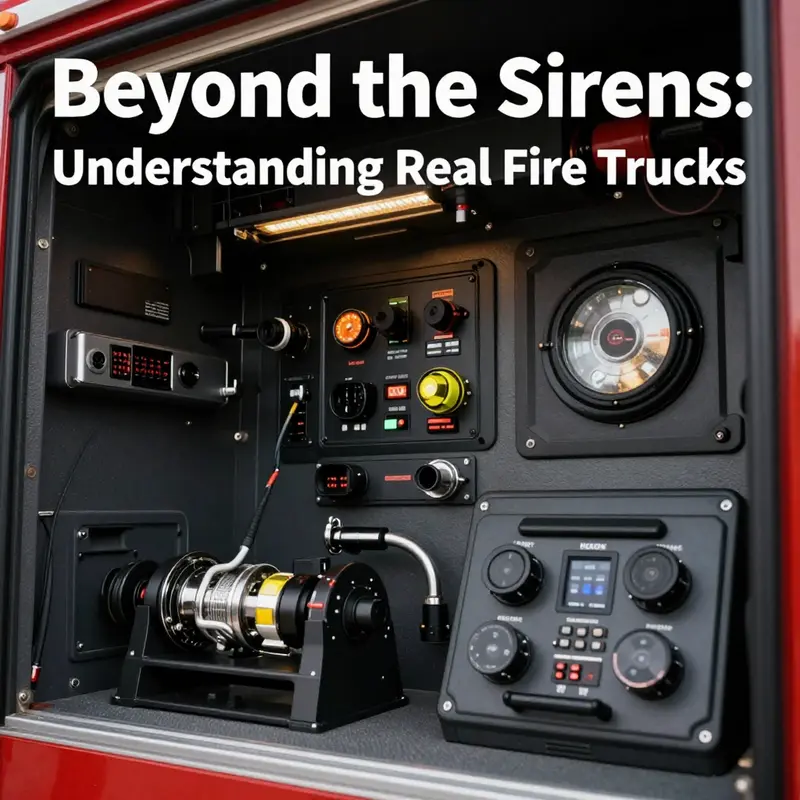
A real fire truck is more than a vehicle with water and hoses. It is a carefully engineered mobile toolkit where hydraulics, pumps, ladders, sensors, and communications converge to translate human skill into rapid, coordinated action. The chapter that follows threads these technologies into a single, continuous narrative, showing how every component—from the hydraulics that lift ladders to the smart, networked systems that guide teams through danger—works in harmony to enable firefighters to arrive prepared, stay safe, and rescue lives when seconds count. In the heart of this machine beats a philosophy: resilience under pressure, precision under chaos, and a design that keeps pace with both the flame and the evolving needs of the people it serves. The result is not only raw power but an integrated system where mechanical reliability, fluid dynamics, and intelligent coordination reinforce each other, turning a city street into a predictable stage for improvisation under extreme conditions. Within the fire equipment truck category, these components exemplify how today’s apparatus blends time-tested practice with advanced technology to meet the demands of modern emergencies.
Hydraulic systems anchor the entire operation, providing the force that moves heavy components and powers the tools that stand between a door jammed by heat and a life on the other side. Modern hydraulics enable lift, reach, and rescue functions that would be impractical or dangerous with manpower alone. The hydraulic power drives the extension of ladders, the rotation of platforms, and the operation of cutting tools, spreaders, and rams used to pry open obstructed exits. The advantages are twofold: swift, controlled movement reduces the time a trapped person spends in danger, and the predictable behavior of hydraulic systems adds a layer of safety to operations conducted in unstable environments. For the crew, this means a reliable backbone on which they can plan each step—from locating a victim to deploying a ladder to securing a safe egress path. The elegance of modern hydraulics lies not just in brute force but in the finesse of control, allowing precise positioning even when firefighters must navigate smoke, heat, and shifting debris.
Water delivery, the feature that defines any fire truck’s core mission, sits atop the hydraulic backbone. Pumps capable of delivering between 1,000 and over 2,000 gallons per minute form the heart of the operation, enabling rapid knockdown of flames and sustained attack during structural or wildland fires. These pumps must respond instantly to shifting conditions: a rising flame front, a changing wind direction, or a widening area of involvement all demand nuanced pump pressure management. The onboard water tanks that support this process range from 500 to more than 3,000 gallons, balancing capacity with weight, maneuverability, and the need for a quick refill from hydrants or portable water supply systems. The interplay between the pump’s output and the tank’s stored volume creates a dynamic tug-of-war: enough water on board to initiate and sustain a first offensive while maintaining enough mobility and speed to reposition, draft, or implement a rapid backup plan if a primary supply line becomes compromised. The onboard tanks also provide a buffer when responding to multiple incidents in quick succession, ensuring that firefighters have water ready as they set up new attack lines or switch between suppression and rescue tasks.
Pumper trucks, which form the backbone of many fire departments, rely on a robust blend of engine power and fluid control. They are designed to channel that power into a precise stream of water, with control systems that allow firefighters to modulate flow, pressure, and pattern in real time. This capability is essential when facing different fire loads, building configurations, and hazards. In practice, the pumper’s performance is not measured solely by raw output but by the courage and judgment of the crew as they tailor water delivery to the evolving scene. The most modern pump controls feature intuitive interfaces that present critical information—pump pressure, discharge pressures across multiple outlets, and the status of auxiliary lines—in an at-a-glance format. This clarity can reduce reaction times and equipment miscommunication, especially when several monitors, hoses, and teams are moving in concert. The result is a coordinated attack that adapts to the geometry of a fire scene while minimizing the risk to both occupants and responders.
Beyond the hydraulics and pumps, modern fire trucks are equipped with a suite of advanced safety and operational technologies that elevate performance and protection. These systems include stability controls, brake assist technologies, and sophisticated electronic interlocks that prevent hazardous combinations of actions—such as deploying stabilizers or extending heavy booms without full situational awareness. As the equipment grows more capable, so does the potential for complexity; thus, there is a strong emphasis on reliable integration and robust fault detection. The newest layers of safety architecture monitor sensor data from multiple points on the chassis, ladder devices, and payload tools, enabling a proactive response to anomalies before they become failures. In practice, this means a crew can focus more on the mission and less on troubleshooting the machine under duress. The interplay of safety engineering and functional capability creates a platform that remains dependable under heat, vibration, and the demanding physics of an emergency scene.
A key frontier in this technology landscape is the development of autonomous or remotely assisted rescue units that extend human capability without replacing it. An autonomous rescue robot, conceived by a leading manufacturer, embodies several defining attributes: it autonomously detects flames, makes intelligent decisions about where to intervene, and operates in environments where oxygen may be scarce and visibility severely limited. This unit can work for extended periods—over two hours—without direct human control, a feature that dramatically reduces exposure risk for firefighters. It can navigate obstacles more than 30 centimeters tall and climb gradients exceeding 40 degrees, enabling it to scout, locate hotspots, or perform controlled interventions in areas too dangerous for a person to enter. While such systems are not replacements for trained firefighters, they extend reach, provide critical situational data, and can execute high-risk tasks with unprecedented precision and endurance. The concept is becoming an integral part of how response teams plan and execute complex missions, marrying automated capability with strategic human oversight.
Communication technology ties the entire operation together. The evolution of command and control on and around a fire scene has moved well beyond radio chatter and line-of-sight coordination. Modern trucks now employ remote command centers and multimodal fusion communication that can traverse walls more than three meters thick and cover distances beyond a thousand meters in challenging environments. This capability enables sustained, reliable contact between the incident commander, the front-line crew, and the various robotic or unmanned support systems working at the perimeter. The practical benefit is substantial: better resource scheduling, more efficient task grouping, and the ability to synchronize multiple machines—manned and autonomous—so they can act as a cohesive unit rather than a relay of individual actions. When a team can see, hear, and assess the situation in near real time, the difference in outcome can be measured in minutes, lives saved, and safer operations under pressure. In a broader sense, communication technology reinforces a culture of preparedness: it makes the unknown at a fire scene less intimidating and allows responders to respond with a higher degree of orchestration and confidence.
All these technologies are not merely abstract features; they are embedded in a philosophy of training, standards, and continual improvement. Fire departments, manufacturers, and standards bodies emphasize reliable maintenance, rigorous testing, and scenario-based practice so that operators can translate the potential of these tools into effective, disciplined action at the incident site. The human element remains central: skilled drivers who can navigate tight urban corridors; captains who can read evolving fire behavior and deploy teams with precision; and crew members who maintain situational awareness and communicate with clarity amid thick smoke and sirens. The synergy between human judgment and machine capability underpins the whole system. The training pipelines that prepare crews for this reality are designed to exploit the strengths of technology while guarding against overreliance on gadgets. This balanced approach is what keeps the apparatus from becoming merely a collection of gadgets and instead makes it a trusted extension of a firefighter’s own judgment and courage.
Looking forward, the design and operation of a real fire truck will continue to evolve toward greater resilience, smarter integration, and more seamless human–machine collaboration. The underlying principle is straightforward: every component should be reliable, easier to operate under stress, and capable of interoperating with a broader network of tools and teams. When this principle holds, the result is a fire truck that does more than deliver water or extend a ladder; it becomes a protective platform where knowledge, muscle memory, and machine accuracy converge to save lives. The story of the modern fire truck is, in essence, a story of engineering aligned with humanity’s most urgent needs—where hydraulics, pumps, tanks, safety systems, autonomous assistive devices, and advanced communications work in concert to transform a high-stakes emergency into a managed response. In the end, it is this blend of force, finesse, and coordination that makes a real fire truck a truly formidable instrument of rescue.
For readers seeking a deeper look into related equipment and configurations, explore the fire equipment truck category for a range of apparatus designed to meet varied mission profiles. fire equipment truck category
External reference: Technology overview in modern firefighting apparatus.
Frontline Steel and Living Signals: The Real Fire Truck as a Centerpiece of Modern Emergency Response
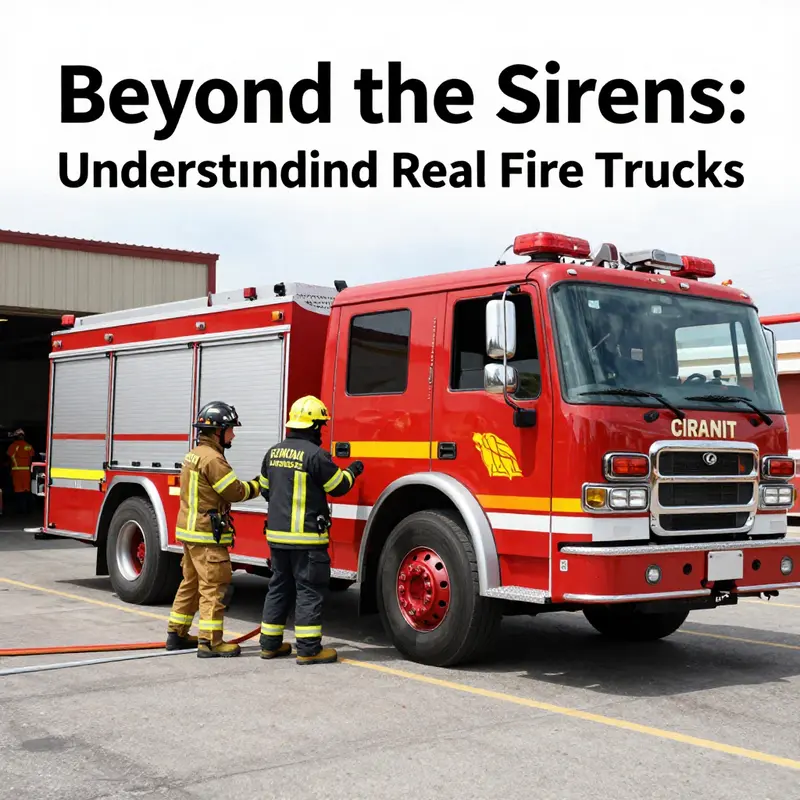
When people imagine an emergency, the image that often comes to mind is a flash of red, a roar of sirens, and a vehicle that seems both omnipotent and ordinary all at once. A real fire truck embodies that paradox. It is at once a rugged machine built to survive the most punishing conditions and a carefully organized workspace that can shift from a rolling laboratory to a making-sense hub in seconds. Its design is not a gimmick or a luxury; it is a functional answer to the unpredictable realities of fires, floods, wrecks, and medical crises. In the tight, congested fabric of a city, on a remote stretch of wilderness, or beside a coastal storm’s aftermath, the fire truck arrives with a purpose: to convert fear into action, confusion into order, and danger into a sequence of doable steps. The vehicle is a statement about readiness, a portable command post that carries not only equipment but also the discipline of its crews, the trust of the community, and the institutional memory of decades of training and experience. The significance of that single machine radiates outward, shaping how a city thinks about safety, infrastructure, and the responsibilities of public service.
The heart of a real fire truck lies in its specialized design and the array of equipment stowed within and behind its doors. Pumps with high output meet water tanks large enough to bridge the first critical minutes of an incident, while hoses coil for rapid deployment and reuse. There are ladders—extending and sometimes aerial—that access upper floors where people may be trapped or where hot roofs threaten to collapse. In many responses, a comprehensive toolbox accompanies the water delivery system: cutters and spreaders for vehicle extrication, axes for forcible entry, forcible tools that offer leverage when walls start to fail, and a suite of illumination, breathing, and stabilization gear. Yet the vehicle is not just about brute force. It is also about reach and reach’s companion, precision. Aerial platforms extend over tall facades, giving firefighters the angle they need to rescue victims and to illuminate a darkened scene. A wildland-focused design might swap a traditional water tank for portable fluids and five-sided protection that supports off-road travel and sudden changes in terrain. The result is a family of vehicles, each tailored to a specific landscape and type of incident, but all sharing a common DNA: reliability under pressure, modular adaptability, and a steady, predictable cadence when seconds count.
Behind the tangible hardware lies a core with even more gravity—technology that turns a marching fleet into a networked response system. Thermal imaging cameras cut through smoke to reveal heat signatures and the elusive shapes of occupants or hidden fire paths. Global Positioning and digital mapping enable precise routing through crowded urban cores or along narrow rural lanes where every meter matters. On-board communications systems knit together the driver, the officer in charge, and the rest of the crew, ensuring that commands, hazard notes, and status updates flow without delay. The modern real fire truck also carries a practical interface between mechanical reliability and electronic oversight: sensors monitor water pressure, pump performance, tank levels, and the health of critical systems, all feedable to a central display or a portable device used by incident command. This convergence of traditional, hands-on firefighting with smart, real-time data creates a vehicle that is both a tool and a moving map of the incident, a platform from which all actions can be coordinated and adjusted on the fly.
The value of this platform grows when we consider the range of conditions in which a real fire truck must operate. In dense urban neighborhoods, navigation and access are as crucial as the pump’s force. The driver must be adept at reading streets, managing traffic, and positioning the vehicle in a way that preserves safety for bystanders and responders alike. The chief firefighter or incident commander sets objectives that flow through the crew—“hold this perimeter,” “stretch that line,” “evacuate, rescue, or ventilate”—and every action becomes part of a synchronized rhythm. In rural or wilderness environments, the same vehicle may contend with uneven roads, mud, and longer distances to water sources. In those contexts, off-road capabilities, auxiliary water supplies, and flexible tooling become essential. The hardware grows with the mission: the same core frame can accommodate different pump configurations, tank sizes, and tool kits, turning the single machine into a family that can be sent to the exact challenge at hand, instead of shipping a one-size-fits-all solution into every scene. The adaptability of a real fire truck is thus a direct answer to the diversity of emergencies, from fast-moving wildfires to slow, hazardous-material incidents, to the quiet pressure of a medical call where every second may mean the difference between life and death.
This adaptability is reinforced by standards that govern how these vehicles are built and used. Modern fire trucks are subject to stringent safety and environmental guidelines, ensuring not only that they perform when needed but also that they minimize risks to crew and public. These standards cover the structural integrity of the chassis, the reliability of the electrical and hydraulic systems, the emissions profile of the engine, and the ergonomics of equipment placement. The emphasis on safety is not merely regulatory paperwork; it translates into real-world outcomes—fewer breakdowns at critical moments, clearer crew communication, and faster, more precise deployment of water and tools. The design philosophy that emerges is one of resilience. A well-built fire truck can operate in the heat of a building fire, the turbulence of a wind-driven ember front, or the weight of a collapsed structure, all while maintaining an organized, readable layout that keeps crew actions deliberate and coordinated.
Training is the quiet engine that keeps this machine relevant. A real fire truck requires more than mechanical maintenance; it requires the disciplined, constant readiness of the people who operate it. Drivers practice the art of getting through traffic and negotiating tight spaces, learning how to angle the vehicle so that hoses reach without becoming tangled or kinking under pressure. Firefighters rehearse hose layouts, pump operations, and water supply strategies, integrating these practices with incident command concepts and safety protocols. The human element is inseparable from the machine. A well-designed vehicle can fail spectacularly without the right teamwork; a perfectly trained crew can do remarkable things even with imperfect equipment. This is why the everyday work around a real fire truck is as much about culture as it is about chrome, hoses, or hydraulics. The culture—respect for risk, rigorous attention to procedure, clear lines of communication, and a readiness to adapt—ensures that the apparatus serves not just as a tool but as a trusted partner in every public-safety operation.
Simulations and training programs offer a window into the life of a real fire truck, giving newcomers a feel for the pace, decisions, and stakes involved. Yet simulacra cannot replace the weight of real-world experience. The pulsating rhythm of an actual emergency—the loudness, the heat, the pressure of coordinating with other units, the need to improvise while remaining safe—are elements that no screen or synthetic environment can fully reproduce. The value lies in how simulations prepare crews to recognize patterns, manage cognitive load, and apply procedures under stress. They are stepping stones toward mastery, not substitutes for it. The real fire truck, in its capacity to carry intricate systems and people who interpret, improvise, and execute, remains the most credible, most formidable instrument of public safety. In that sense, the vehicle is a public symbol of preparedness—a rolling reminder that the protection of life and property rests on a blend of engineering excellence and human resolve.
For readers curious to explore further, a practical, real-world orientation to fire-truck capabilities can be found in the broader category of fire-fighting vehicles. The content here links to a comprehensive collection that details various configurations and applications, providing a tangible sense of how a single chassis can be adapted to meet local needs and incident patterns. This connection helps readers understand that the “real” fire truck is not a single prototype but a family of vehicles designed to reflect the terrain, the risks, and the expectations of the communities they serve.
External reference: https://www.dongfengmotor.com/en/vehicles/fire-fighting-trucks/
brush fire trucks, wildland firefighting, fire safety equipment, off-road fire trucks, firefighting technology, business safety, emergency response vehicles
Real fire trucks are more than just vehicles; they are critical lifelines in emergency situations, equipped with technology and manpower crucial for effective firefighting and rescue operations. Business owners should understand that investing in fire safety measures, including ensuring access to these specialized vehicles, is a fundamental aspect of safeguarding their properties and communities. By appreciating the diverse functions, rigorous training, and advanced technology that underpin real fire trucks, businesses can better prepare for emergencies thereby enhancing safety protocols that ultimately protect lives and assets.

