














Driving a retired fire truck can be an exciting venture for business owners looking to diversify their operations or explore unique promotional avenues. However, legal considerations, safety regulations, and necessary modifications must be assessed before hitting the road. This article delves into the critical aspects of driving a retired fire truck, including legal responsibilities, modifications for road use, and safety measures to ensure a smooth ride. Furthermore, the educational uses of retired fire trucks and personal stories from enthusiasts will provide a comprehensive overview of what it takes to operate these iconic vehicles legally and responsibly.
Beyond the Siren: Navigating the Legal Terrain of Driving a Retired Fire Truck
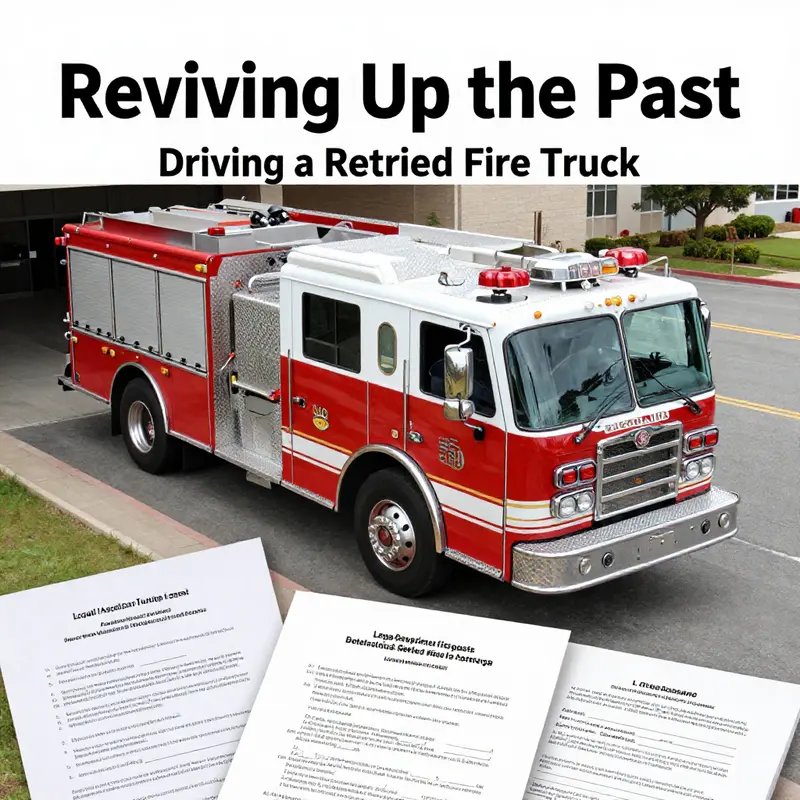
Driving a retired fire truck blends nostalgia with legal obligations. The allure of chrome, pump panels, and a siren that once cut through the night is tempered by the fact that on public roads these machines require current roadworthiness, proper licensing, and appropriate insurance. Before any road test, confirm registration for the vehicle’s intended use and verify that the driver’s license or commercial endorsement matches the vehicle’s weight and configuration.
Insurance for retired emergency vehicles is often specialized, with limits tied to permitted activities such as displays and parades rather than everyday driving. Where permitted, movement is typically restricted to planned routes and supervised demonstrations; casual cruising on a random Sunday is usually not allowed without permits. Practically, the safest approach is to treat the vehicle as a living exhibit: perform thorough maintenance, document inspections, and coordinate with authorities for any road moves. A real-world example is helpful: some collectors register such rigs as classic or representative display vehicles and use them only for sanctioned events, parades, or private demonstrations. The key lesson is that legality follows use: the more the vehicle serves a clearly defined purpose, the more straightforward compliance becomes. If you plan to own a retired fire truck, start by a candid assessment of its mechanical condition, engage specialized technicians for heavy-duty systems, and map out a compliance plan with your local DMV, fire department, and insurer. This careful approach preserves the vehicle’s legacy while protecting public safety and personal investment.
From Emergency Lights to Everyday Roads: Modifications and Legal Realities for Driving a Retired Fire Truck
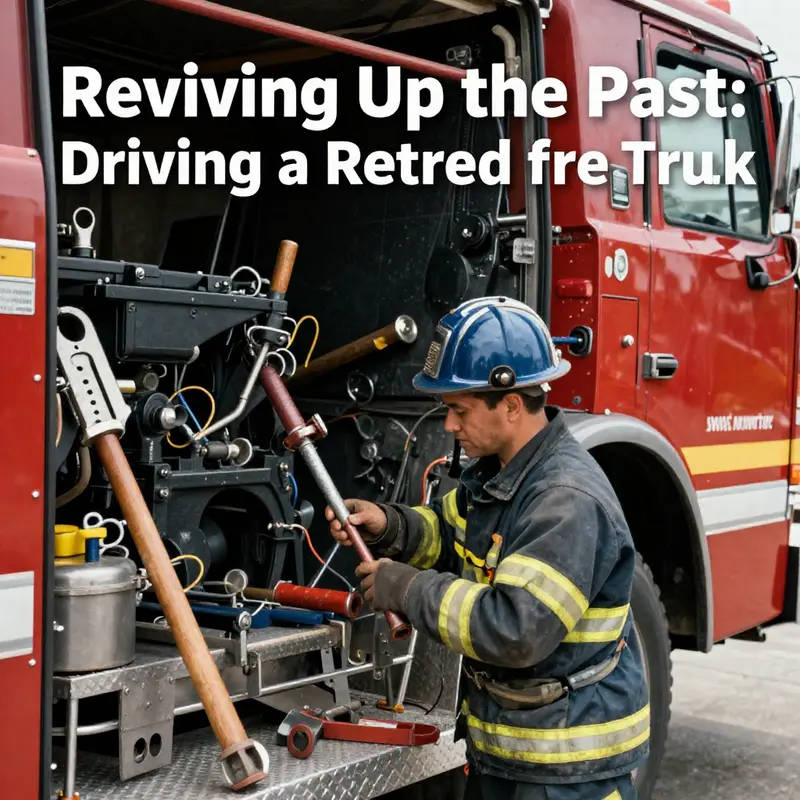
The allure of a retired fire truck sits at the intersection of nostalgia, engineering curiosity, and a practical question: can a vehicle built for life-saving response ever become a normal daily driver? The answer is nuanced. In many places, a retired fire appliance cannot function in its original emergency role. On public roads, its sirens and red glow would be illegal unless the vehicle has a very specific, limited authorization. Yet with careful, professional modifications and proper registration, a retired fire truck can transition into a legitimate non-emergency vehicle or a specialty private-use vehicle. The journey from a fire station legend to a street-legal personal steed is not about nostalgia alone; it’s about aligning a complex machine with modern safety standards, traffic laws, and responsible ownership. The path forward starts with a clear-eyed look at legality, safety, and the practical realities of the vehicle’s condition and provenance.
To begin, the legal framework is the backbone of any conversion. A retired fire truck is typically not eligible for automatic use on public roads in its original configuration. The critical question is whether the vehicle can be registered as a non-emergency vehicle, a status that often requires it to pass stringent safety and emissions inspections. The weight and dimensions of many fire trucks can surpass standard class thresholds, so the driver’s license category becomes an essential factor. In most jurisdictions, the driver must hold at least a Class B license or an equivalent rating, reflecting the vehicle’s weight and its altered configuration. Without proper registration and licensing, the humor of owning a firefighting giant fades quickly when a citation shows up instead of a friendly nod at the curb. The practical reality is that the vehicle’s present condition, including the integrity of the frame, brakes, steering, and tires, must prove it can operate safely in traffic.
The conversion begins with a blunt assessment of the vehicle’s emergency equipment. The lights, sirens, and distinctive markings were designed to perform under the urgent pressures of a real incident. On regular roads, they can mislead other drivers, create unsafe expectations, or even be illegal to use without explicit authorization. The most essential, non-negotiable step is the removal or deactivation of emergency lighting and audible alert systems. This is not a cosmetic choice; it’s a legal necessity. Some owners favor nonfunctional replicas for visual appeal, but even replicas must be clearly non-operational to avoid the risk of misuse. The goal is to return the vehicle to a standard that is indistinguishable from other large civilian trucks on the road, while preserving the truck’s unique character as a historical or vocational machine.
Beyond the dashboard glow and warning tones, the specialized firefighting equipment represents the second major hurdle. Pumps, water tanks, hoses, ladders, and hydraulic components contribute substantial weight and complexity. They alter center of gravity, load distribution, and braking performance. In practice, most of these components are removed entirely and replaced with equipment that makes the truck function as a regular commercial or private vehicle. In some cases, weight-neutral replicas may be installed to maintain the truck’s silhouette for display or educational purposes, but these must not compromise the chassis or occupant safety. The engineering decision hinges on a balance between preserving the vehicle’s heritage and achieving predictable, compliant performance on public roads. The result should be a chassis that remains robust yet predictable under everyday use, with a traditional driver experience rather than a firefighting one.
Interior configuration marks the third major phase of the transition. A firefighting apparatus is designed to transport equipment and personnel under urgent conditions. For civilian use, comfort, safety, and accessibility become paramount. Standard seating should replace any nonstandard cockpit layout. Dashboard instrumentation must be legible, conventional, and calibrated to match civilian vehicle specifications. Interior materials should provide adequate acoustic and thermal insulation, and restraints must meet modern occupant protection standards. This often means reconfiguring seating arrangements to accommodate passengers with appropriate seat belts and spacing, while ensuring that original gauges do not obstruct view or control access. The aim is to preserve the truck’s commanding presence while delivering a predictable, road-friendly driving experience that any large vehicle operator would recognize and respect.
Powertrain and drivetrain considerations are the fourth pillar of any successful conversion. The original diesel propulsion system that powered the fire apparatus might be reliable and torquey, but it may not meet contemporary emissions standards or fuel economy expectations. Some owners pursue upgrades that modernize performance and reduce environmental impact. Electric or hybrid conversions, where feasible, can offer quieter operation, lower emissions, and a longer-term maintenance profile that aligns with current regulatory trends. These conversions demand professional engineering, careful integration with the vehicle’s existing chassis, and certification that the modified powertrain complies with local laws. For many drivers, a pragmatic middle ground is a thorough refurbishment of the existing engine and drivetrain, paired with modern components like updated transmissions, improved cooling, and more efficient exhaust and emission control systems. Each option carries a different schedule of permits and inspections, and all require skilled mechanics who understand the unique challenges of large, multi-ton platforms.
The inspection and registration process ties the technical work together. Roadworthiness inspections assess brakes, tires, lighting, steering, suspension, exhaust, and overall structural integrity. A retired fire truck, once transformed, must still pass these checks to be deemed safe for public operation. The chassis must show no signs of critical fatigue, corrosion, or misalignment that would jeopardize safety. Brakes must be matched to the vehicle’s mass and power, with appropriate tire selection for weight and load distribution. Lighting must meet standard civilian specifications, and reflectors and signaling devices must function correctly. The inspection process is not merely a formality; it is a comprehensive audit that ensures the vehicle will behave predictably in everyday traffic conditions. Some jurisdictions require additional emissions testing or noise measurements, reflecting the growing emphasis on environmental and community impact. A successful inspection results in registration and insurance, which in turn grants legal access to public roads, but with the caveat that the vehicle remains subject to ongoing compliance, periodic re-inspection, and potential recalls or advisories that affect heavy, aged platforms.
The practical realities of operating a converted retired fire truck extend beyond paperwork. The sheer mass and size shape every driving decision. Braking distances are longer, steering is less nimble than a typical car, and acceleration responds to a different set of physics. The weight distribution and high center of gravity demand deliberate handling, especially in corners and on uneven pavement. These traits require a learning curve for most drivers, and many owners opt to practice in controlled environments or through professional training programs before venturing into regular traffic. Maintenance costs also tend to be higher, given the combination of an aging chassis and a modified layout. Sourcing parts becomes a task of finding compatible components that do not compromise safety or legality. This is where resources like dedicated parts categories can be invaluable. For instance, the community and maintenance ecosystem around large fire apparatus often includes access to parts that are compatible with older chassis or purpose-built adaptations. Among the various channels, one reliable option for procuring appropriate components and hardware is the fire-truck-parts category, where technicians and enthusiasts catalog and source essential pieces. Access to the right parts is not a luxury but a necessity to keep a heavy vehicle reliably roadworthy.
The broader use cases also deserve attention. Not every retired fire truck will end up in private daily driving duty. Some people repurpose these machines as stationary or semi-mobile venues, training rigs, or educational exhibits. Others convert them into specialized service platforms for events or community outreach. In these cases, the vehicle may operate under different regulatory expectations, sometimes focusing on non-emergency demonstrations rather than continuous road use. The field is full of inventive solutions, but the core principle remains: any meaningful transformation requires professional guidance, a clear plan for safety, and a respectful approach to the vehicle’s original purpose and capabilities. The balance between honoring the machine’s legacy and ensuring public safety is crucial, and it guides every decision from chassis modifications to licensing.
For readers who want to explore the practicalities further, a cautious, methodical approach is best. Start by documenting the vehicle’s current condition, including weight, dimensions, and any existing deterioration. Seek an assessment from a licensed mechanic with experience in heavy trucks and in vehicles modified for civilian use. Develop a modification plan that prioritizes removal of emergency systems, controlled reconfiguration of the interior, and a powertrain strategy aligned with regulatory requirements. Then engage with local authorities early in the process. Present your plan, your proposed inspections, and your intended use case. This transparency can streamline the path to a legitimate designation as a non-emergency vehicle and reduce the risk of later legal challenges or compliance issues.
The journey from a fire truck’s barracks to a public road is as much about stewardship as it is about engineering. It offers a chance to preserve history, satisfy curiosity, and celebrate the ingenuity of large-vehicle design, all while maintaining a commitment to safety and legality. A retired fire truck, when transformed with respect for modern standards, becomes a reminder that big machines can still serve a constructive, lawful role in everyday life. It is not a question of whether the vehicle can be driven on a public road, but whether the path to that road is walked with care, expertise, and honesty about what the machine was made to do and what it is capable of doing now. Whether displayed as a piece of history, used for training, or driven sparingly as a private vehicle, the key remains the same: comply, configure, and drive with caution.
In the end, the modifications needed to drive a retired fire truck are not only technical—they are legal, ethical, and practical. They require an awareness of the vehicle’s origins and a commitment to road safety. The process may be lengthy and costly, but it yields a legally compliant, safer, and more responsible way to enjoy a remarkable machine on today’s roads. For those who proceed with care, the retired fire truck can find a new chapter in its long life—one that honors its past while contributing to the present in a meaningful, lawful way. To see how others source appropriate components and parts during this transition, readers can consult dedicated resources that catalog essential elements for heavy-duty conversions and restorations, such as the fire-truck-parts category mentioned earlier.
External resource: https://www.autohome.com.cn/news/20260127/retired-fire-truck-conversion-guide.html
On the Road with a Retired Fire Truck: Safety, Legality, and the Art of Responsible Relic Driving
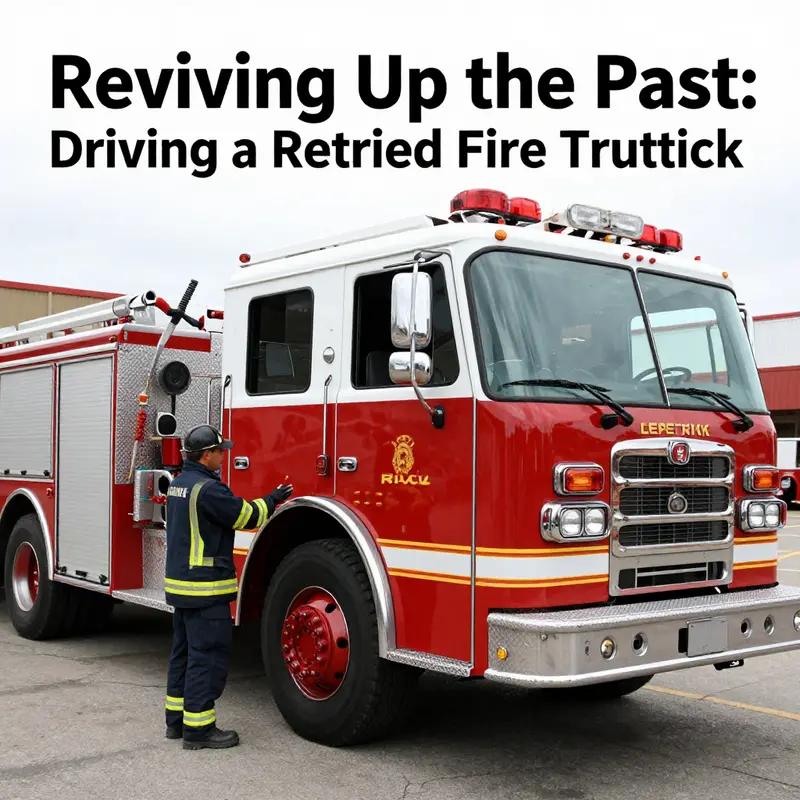
A retired fire truck is not a modern sports car, but it remains a machine built for durability, power, and the exacting demands of emergency response. The question of whether you can drive one on public roads is not a simple yes or no; it depends on where you are, the exact state of the vehicle, and how carefully you approach the task. In many places, a former firefighting apparatus is no longer eligible for emergency operations. Yet with careful registration, safety checks, and the right licensing, it can become a lawful, legitimate, and even educationally valuable vehicle for display, private transport, or training purposes. The core truth is that driving a retired fire truck demands the same respect for safety and regulation you would give to any large, purpose-built vehicle—plus an awareness of the unusual dynamics that come with a truck designed to carry heavy gear, large water tanks, and tall equipment booms. What follows is a practical, integrated view of how to approach such a project responsibly, keeping the vehicle’s history and capability in mind while applying modern safety standards.
The first and most important step is a rigorous assessment of structural integrity and mechanical condition. Fire apparatus endure punishing service and time can take its toll in ways that aren’t always obvious at first glance. A thorough inspection should begin with the chassis and frame, then move outward to the suspension, steering linkages, and braking system. Tires deserve particular scrutiny: tread depth, sidewall condition, and correct inflation must be confirmed, because an oversized weight distribution places unusual demands on tires that have already logged thousands of miles. Any sign of corrosion, fatigue, or misalignment should be addressed by qualified personnel before the vehicle is moved. In short, a retired fire truck should never be operated without a full mechanical assessment to verify it is roadworthy and safe for the specific route you intend to take.
Beyond the mechanical basics, the electrical and hydraulic networks deserve careful attention. A fire truck carries a complex web of wiring for pumps, lighting, communications, and control panels, plus hydraulic lines for pumps, ladders, and booms. Over time, insulation can degrade, connectors can corrode, and hoses can become brittle. Even when the truck is retired, electrical faults or hydraulic leaks can pose immediate hazards once the vehicle is in motion. Prior to any on-road maneuvering, have the systems that could deploy or energize safely isolated or deactivated in a controlled manner. If your truck retains an aerial device or a pump system, those components should be secured, locked, or removed from active duty status to prevent unintentional activation. This is not simply about avoiding mishaps; it is about ensuring a predictable vehicle response in a situation where a sudden impulse of power could become a serious risk.
The handling characteristics of a retired fire truck demand careful respect. These machines are notably heavier than standard passenger vehicles, often with a higher center of gravity and a substantial payload of gear. Their steering geometry, braking response, and weight distribution differ markedly from most everyday cars. Drivers should anticipate longer stopping distances, reduced acceleration, and more pronounced body roll during cornering. The vehicle’s mass can magnify the consequences of a sudden maneuver, especially on ramps, uneven surfaces, or wet pavement. Practicing slow, deliberate driving in a controlled environment helps build a mental map of how the truck behaves. Only after comfort with basic control—brakes, steering, accelerator response, and the feel of the chassis—should a driver consider extended road travel. The goal is not speed but stability and predictability, so every action reflects deliberate caution rather than fast progress.
Driver training and experience are central to safety here. Even if a driver has operated large trucks in a professional context, a retired fire truck can react differently due to modifications, weight changes, or simply aging components. It is wise to seek out instruction or at least supervised practice on a model that mirrors your vehicle’s exact weight and configuration. The best practicing ground is a controlled setting—an open lot, a quiet test area, or a low-traffic street—where you can rehearse stopping, turning, and lane changes with a spotter nearby. Training also includes understanding how to handle emergency equipment in a non-emergency setting. The principle remains simple: operate within your competence, checklists in hand, with supervision when needed. A well-informed driver reduces risk not only to themselves but to nearby pedestrians, other drivers, and the vehicle itself.
The context in which a retired fire truck moves matters as much as the vehicle itself. In most cases, on-road movement should be the exception rather than the rule. Transporting the vehicle to a museum, restoration facility, or display site is a common scenario, and the preferred method for such movements is by trailer or flatbed. When on-road travel is unavoidable, it should occur during periods of predictable traffic and with a clear plan for navigation. Signage, lighting, and a spotter or escort vehicle can help maintain safety margins during complicated intersections or busy corridors. This context reflects a broader principle: treat the vehicle as a museum-piece practicality rather than a daily driver. Its purpose is historical education, public display, or specialized training, not ordinary commuting.
Legal and regulatory compliance remains a decisive gatekeeper. A retired fire truck may still be subject to registration, annual inspections, and licensing prerequisites that reflect its size and non-standard features. Some jurisdictions require a specific class of license for heavy or non-standard vehicles, while others require special permits for oversized equipment. The driver should confirm local rules well in advance and ensure all documentation is current and accessible. In many places, the vehicle’s registration category must indicate it is a non-emergency, road-legal vehicle, and emissions requirements may apply as a matter of local environmental policy. The process often includes a combination of vehicle inspection, proof of insurance, and compliance with weight limits and width restrictions. Keeping a clean compliance record is not only a legal obligation; it is a practical safeguard that minimizes the risk of penalties or road-side complications.
Even as a vehicle of history, the retired fire truck warrants attention to emergency preparedness. While its primary role is not to confront an emergency, it represents a potential hazard on the road. A basic emergency kit should remain onboard, including first aid supplies, a fire extinguisher, reflective vests, and a charged mobile phone. The driver should be comfortable with stopping and securing the vehicle during mechanical issues, and a plan should exist for safely dealing with incidents ranging from a blown tire to a sudden electrical fault. This mindset—anticipation, preparation, and a calm response—embeds safety into every mile the vehicle travels.
The story of driving a retired fire truck is also a story of careful modification and responsible stewardship. When owners transform these vehicles for personal use or training, they do so with a commitment to safety, legality, and education. A notable, real-world thread in this conversation is the way individuals reimagine a retired apparatus for private life while honoring its service history. Such projects demonstrate that a well-maintained, legally compliant fire truck can find a second life that educates the public, supports training, and preserves a connection to the dramatic work of firefighting. Yet every modification must be measured against safety standards and regulatory requirements. It is not about turning the vehicle into a novelty; it is about respecting the engineering and the responsibilities that come with operating a large, specialized machine on public streets.
For readers who are curious about the broader marketplace and the kinds of vehicles that fall into this category, a practical starting point is exploring the commercial fire trucks category. It offers a sense of the range, configuration, and capacities that characterize these machines while underscoring how owners adapt them for non-emergency use. The underlying theme remains: safety and compliance guide every decision. When a vehicle is treated as a heritage asset rather than a daily tool, its road-worthiness, maintenance history, and legal status become the compass by which all choices are measured.
In the end, the question is not merely whether a retired fire truck can be driven on a public road. It is whether the driver and the vehicle together can create a safe, legal, and informative experience for bystanders and the community. The road demands discipline, and the vehicle demands respect—for its engineering, its history, and its potential to teach future generations about maintenance, safety, and the extraordinary work behind fire apparatus. By prioritizing thorough inspections, secure deactivation of non-operational systems, careful handling, trained driving, and strict adherence to legal requirements, a retired fire truck can join the road in a way that honors its past and serves a meaningful role in the present. For those who look at such machines with a sense of curiosity and responsibility, the path forward is clear: safety first, compliance always, and education as the ultimate payoff.
External reference for standards and safety guidelines can be found in the broader regulatory framework governing fire apparatus. For rigorous safety standards, consult the NFPA Fire Apparatus Standards, which provide comprehensive guidance for maintenance and operation. https://www.nfpa.org/Code-and-Standards/Detailed-Information-on-All-NFPA-Standards/Standard-for-Fire-Apparatus-(NFPA-1917))
From Firehouse to Classroom: The Educational Potential of Retired Fire Trucks in Training and Public Safety Awareness
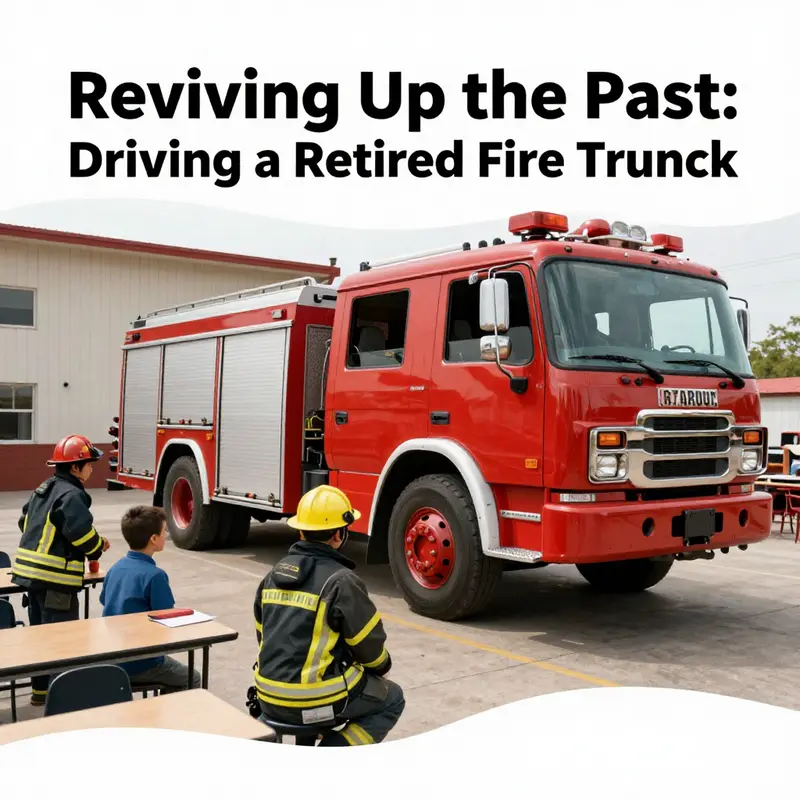
When we picture a retired fire truck, the scene often centers on nostalgia, a chrome emblem dulled by years of service, or the practical question of whether such a vehicle can still be driven. But behind the obvious utility lies a deeper, more deliberate purpose: retired fire apparatus can become a powerful educational tool. They offer a tangible bridge between theory and practice, a chance for students, volunteers, and community members to engage with the realities of emergency response without the risks or limitations that come with an active emergency fleet. The idea is not to revive a vehicle for ordinary daily driving, but to repurpose it—whether as a mobile classroom, a demonstration platform, or a maintenance and safety training aid. When approached with clear safety standards, legal compliance, and thoughtful pedagogy, retired fire trucks move from symbols of fire service history to dynamic instructors in the classroom and in the field.
The educational value begins with the sheer scale of firefighting equipment. A retired fire truck is a compact, self-contained workshop on wheels. Its pumps, hoses, valves, ladders, and compartments encapsulate decades of engineering, testing, and real-world problem solving. For a student of mechanical engineering, public safety, or even urban planning, the vehicle becomes a case study in systems thinking. How does a water pump convert engine power into a stream of water at the right pressure and volume? What are the critical tolerances for hose deployment, and how do design choices affect operator safety? For aspiring drivers and fleet managers, the vehicle becomes a living seminar on vehicle dynamics, weight distribution, braking performance, and the importance of maintenance schedules. The learning is not abstract; it is anchored in a real machine with a history and a purpose that extends beyond the badge.
In practice, educators and trainers harness retired trucks in ways that respect safety, legal considerations, and community expectations. The most straightforward approach is to use the vehicle as a static, non-operational display in schools, museums, or career fairs. Students can walk around with checklists, identifying components, learning terminology, and understanding the function of each system without risk. This kind of exposure is particularly valuable for younger audiences, who benefit from seeing a full-size engine and the physical layout of a firefighting rig rather than reading about it in a manual. Yet the educational potential truly expands when the retired truck participates in controlled, hands-on sessions—handled by qualified instructors in controlled environments. In such contexts, parts of the training can be simulated with safety-first protocols to illustrate the sequence of firefighting operations, the logic behind hose deployment, and the coordination required to work as a team under pressure.
A practical, widely supported use case for retired fire trucks lies in community outreach and safety education. When a local department or a training organization opens its doors, the presence of a retired vehicle can demystify emergency response for the public. In these settings, a driver can escort visitors through a carefully curated tour that highlights gear functions, visibility features, and the vital role of maintenance in keeping a fleet ready. Not only does this foster respect for public safety personnel, but it also reinforces personal safety behaviors among residents. Children and adults alike can gain confidence in recognizing firefighting tools, understanding how to respond in an emergency, and appreciating the teamwork that makes rescue operations possible. In some communities, retired rigs become focal points for annual safety days or career exploration events, drawing curious minds toward engineering, trade skills, and public service careers.
Of course, the line between education and functional use must be navigated with discernment. A retired fire truck may have been decommissioned from emergency service for a reason—age, wear, or regulatory constraints that preclude it from responding to alarms. That reality does not render the vehicle useless; rather, it reframes its role. For educational purposes, the vehicle should be appropriately registered as a non-emergency vehicle if it is to be operated on public roads. When used in demonstrations or on private property, operators must ensure the vehicle complies with local safety and emissions standards and that a qualified operator with the appropriate license is at the helm. In many jurisdictions, the exact licensing requirements hinge on vehicle weight and configuration, and the process may involve inspections to verify air quality controls, brake systems, lighting, and compliance with roadworthiness standards. The goal is not to convert a classroom into a simulated fire ground but to preserve the integrity of the vehicle’s history while presenting it in a safe, educational frame.
A key advantage of leveraging retired trucks for training and outreach is the authenticity they deliver. Trainees can observe, in person, how a fire engine’s compartments are organized, how hydrants are connected, and how crew members must coordinate to manage a scene. This authentic exposure can complement classroom theory and reduce the cognitive gap between textbook explanations and real-world practice. It also lights the way for future professionals who may become firefighters, mechanics, or fleet managers. The tactile experience of opening a hatch, tracing a hose line, or inspecting a pumping apparatus can reinforce concepts that might otherwise feel distant when learned on a simulator or video alone. Moreover, the symbolism of a retired truck—its endurance, its service record, and its ongoing mission to educate—resonates with communities and students who seek meaningful, civic-oriented pathways.
An illustrative backdrop to these ideas exists in regional programs that partner schools with local fire services to provide safe, supervised training experiences. While the cited materials focus on active vehicles in training and demonstrations, the underlying logic is transferable to retired equipment. In one region, a collaboration between schools and fire rescue units organized visits where students learned gear functions and even participated in hands-on demonstrations under professional guidance. In another context, town governments partnered with fire brigades to conduct theory and practical training on water deployment and spraying techniques, showcasing the operational principles that underlie every firefighting mission. These cases highlight not only skill development but also the cultivation of respect for the responsibilities firefighters carry.
Retired trucks can also serve as a conduit between generations, connecting veteran firefighters with younger learners. A well-choreographed program may invite retired personnel to share firsthand stories about challenges faced, decisions made under pressure, and the evolution of firefighting technology. This narrative dimension can deepen engagement far beyond technical knowledge. It also helps to anchor safety culture in a living history, reminding communities that the equipment on display represents real people who risk their lives to protect others. For families and students, such connections can humanize public service and spur interest in technical trades that support emergency response, such as vehicle maintenance, hydraulics, and electronics. If the aim is to cultivate a future workforce, these stories are as valuable as any hands-on exercise.
To maximize impact and minimize risk, institutions often curate a balanced itinerary. A typical program might begin with an indoor session outlining safety protocols, the vehicle’s history, and the basic theory behind pumps and hoses. The next phase can bring participants outdoors to observe or model controlled demonstrations, with equipment disabled or simulated as needed. In this way, the retired truck remains a powerful symbol and a practical teaching aid without compromising safety or regulatory compliance. Even simple demonstrations—such as explaining how water is stored in tanks, how pressure is regulated, and how valves control flow—can be made vivid through direct observation. For more advanced audiences, instructors can introduce maintenance concepts, emphasizing routine checks, parts replacement, and the difference between critical components and wear-prone elements. The emphasis stays on learning outcomes, not on operational capability, and that distinction is essential when older vehicles transition from active duty to education.
The potential for community impact grows when educational programs partner with local museums or fleet repositories that house retired equipment. Here, the vehicle becomes part of a broader narrative about public safety, mechanical engineering, and regional history. Visitors gain a sense of how firefighting strategies have evolved and how communities have shaped their own safety infrastructure. In addition to school-based programs, such partnerships can inspire community workshops, volunteer training days, and youth mentorship initiatives that connect aspiring drivers and technicians with seasoned practitioners. In all cases, the vehicle’s presence is purposeful: it is a gateway to understanding, not a mere artifact to be admired.
For those considering how to begin, the starting point is often simply appreciation for the vehicle’s educational value and an honest assessment of local regulations. A conversation with the local fire department, a city or county fleet manager, or a regional museum can reveal practical paths to collaboration. They can advise on whether a retired truck can participate in on-street demonstrations, how to secure insurance, what kind of permits are required, and which parts of the curriculum best align with safety standards and legal constraints. The conversation should also address the scope of demonstrations, ensuring that participants understand the limits of what can be shown and practiced with a retired vehicle. In some programs, the emphasis is on non-operational displays and controlled simulations; in others, there may be opportunities for supervised, limited driving scenarios on closed courses under the supervision of trained instructors. The key is to preserve the vehicle’s dignity and safety while enriching learners’ understanding of fire service operations.
As educators and public-safety advocates continue to explore this space, they increasingly recognize that retired fire trucks carry more than metal and paint. They carry lessons about teamwork, engineering, service, and community resilience. They remind us that education is not just about acquiring facts but about developing a sense of informed citizenship and readiness to respond to emergencies. The path from firehouse to classroom is not a shortcut; it is a careful, intentional move that honors the vehicle’s past while expanding its future in public education. If you are drawn to this approach, seek out local opportunities, study the relevant legal requirements, and consider how a retired truck can become a credible, safety-forward mentor for learners of all ages. The result can be as durable as the truck itself: a lasting contribution to safety culture and a living reminder that learning happens wherever curiosity meets responsibility.
Internal resource for exploring relevant vehicles and educational uses can be found in the fire-fighting trucks category of community fleets, which provides examples of how machinery is categorized and presented for educational purposes. For more on the broader safety standards governing vehicle operation and training in this field, readers may consult established safety guidelines from national organizations and industry resources, which offer foundational principles applicable to these programs. [fire fighting trucks] category
External resource: For broader safety standards and vehicle operation guidelines related to firefighting equipment and training, see the National Fire Protection Association resources: https://www.nfpa.org.
Between History and the Road: Personal Journeys Driving Retired Fire Trucks
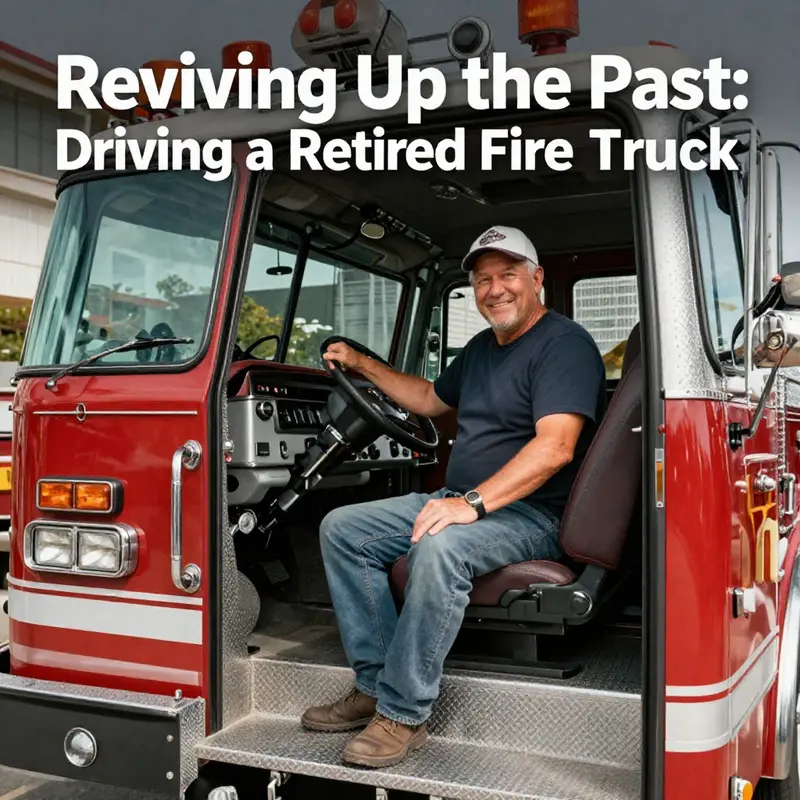
On the quiet edge of town, where the past brushes shoulders with the present, a retired fire truck can look almost magical. It stands in a garage with its doors closed against the wind, a vessel that once answered the most urgent calls and now awaits its next chapter. The allure of these machines rests not just in their size or color but in the stories they carry—the thousands of miles behind the wheel where courage met urgency, the crews who lived through long shifts, the drills that kept communities safe, and the moments when a truck moved through smoke and heat to help someone in trouble. For many people, this history invites a new kind of curiosity: what would it be like to drive such a vehicle after its service ends? The practical answer sits at a careful intersection of legality, safety, and respect for the vehicle’s legacy. You can drive a retired fire truck, but only within clear limits, and only when the vehicle has been prepared to meet the rules that govern non emergency use on public roads. In most places, an emergency-capable designation is no longer valid, and the vehicle must be reclassified as a non emergency or special purpose vehicle. This reclassification opens a door, but it does not swing it wide. Road permissions hinge on registration, compliance with safety and emissions standards, and an appropriate driver’s license. The vehicle must be roadworthy, a condition that begins with a thorough inspection and continues with ongoing maintenance adapted to its new life on public streets. The shift from rescue engine to everyday cruiser is not simply cosmetic. It involves adapting systems that were once tuned for rapid response to a regime that emphasizes reliability, stability, and predictable operation. For many owners, the process begins with a frank assessment of condition: brakes that must be modernized or rebuilt, tires that can support highway speeds rather than quick stabs on rough urban streets, and steering that needs extra effort to negotiate wide, heavy frames in traffic. The engine itself can be a surprising ally here, with torque that remains formidable even at modest RPMs, yet the whole machine demands a different mindset. The consequence is a vehicle that feels less like a sports sedan and more like a rolling piece of infrastructure, a sturdy reminder that mass and momentum require respect, foresight, and patience. The practical pathway to driving one safely and legally begins with regulations, but it is sustained by careful preparation. Road-legal status typically starts with confirming that the truck is registered as a non emergency vehicle or similar category that recognizes its updated use. Then comes the obligation to pass essential inspections, which may include safety standards for braking, lighting, signaling, and emissions. Each jurisdiction crafts its own checklist, and every checklist is a map to a responsible engagement with a vehicle that has served in life-or-death situations. The licensing aspect follows suit, with the driver needing a license appropriate for heavy vehicles, or a commercial license that matches the truck’s weight and configuration. These steps are not barriers meant to discourage ownership but safeguards that ensure both the driver and the public share the road with a vehicle whose history is honored rather than exploited. Those who have walked this path tend to approach it with a blend of reverence and practicality. They speak of the initial pull of the wheel and the first turn that makes the truck feel less like a museum piece and more like a working instrument, capable of delivering quiet journeys as well as dramatic reflections. They describe the challenge of translating old handling characteristics into modern road manners: the long wheelbase, the wide turning circle, the tendency to feel tethered to the surface of the road rather than float above it. The driver must relearn balance in a machine that carries more mass than a typical passenger vehicle and that asks for steady, anticipatory inputs rather than quick adjustments. In practice, this translates into slow, deliberate practice. A retired fire truck becomes a training ground in reverse: instead of teaching rookies how to react under pressure, it teaches the driver how to anticipate and manage the additional demands of a vehicle that was built to perform with purpose rather than speed. It also becomes a platform for education about safety equipment and the limits of a fire service’s original configuration. The pump panel, auxiliary gauges, and hoses that once formed the backbone of an emergency response now function as educational features that illustrate how professionals work as teams to manage complex problems on the road as well as at fires. The emotional resonance of driving such a vehicle cannot be easily quantified. For a former firefighter, the act carries weight in a personal ledger of experience—stories that may be told in the quiet of a garage, in the respectful touch of a steering wheel, or in the careful maintenance routine that preserves a machine’s dignity. There is a sense of continuity, too: a retired fire truck remains a tool that, when used responsibly, can contribute to public safety in non emergency contexts. Some owners repurpose the vehicle into a mobile training unit, offering a controlled environment in which new drivers can practice large-vehicle handling without the pressure of real emergencies. Others convert these trucks into creative spaces—a studio, a tiny home, or a café-on-wheels—yet even in those transformations the vehicle’s original function lingers in the design and safety features that keep it upright and reliable on the road. This ongoing utility matters. It embodies a philosophy of repurposing that respects the past while embracing a future where the vehicle can educate, inspire, and serve in civilian life. When someone asks whether a retired fire truck can be driven, the honest answer is yes, with conditions. The road, after all, is not a museum but a shared space where caution, preparation, and accountability define the experience more than nostalgia. To pursue this path requires a clear-eyed assessment of the vehicle’s condition, a commitment to meeting regulatory requirements, and a willingness to invest in upgrades that retain the integrity of the truck while aligning it with modern safety expectations. The result can be a compelling blend of history and practicality. A large, well-maintained fire truck in non emergency service becomes a rare but meaningful observer on the highway—a rolling reminder of the people who trained, responded, and saved lives. It also serves as a bridge for communities to connect with the machines that once served them, recognizing that these vehicles can continue to contribute to public life even when their original mission has ended. For those drawn to this path, a single practical tip often stands out: learn the rules that govern your locale and engage with the community of enthusiasts who understand the vehicle’s special status. That network can offer guidance on everything from permitted uses to preferred safety upgrades and maintenance practices. If you want a sense of what the movement looks like in real life, there are forums and gatherings where veterans and hobbyists share stories, swaps, and advice. For readers who crave more firsthand accounts, community spaces like Fire Trucks Forum are valuable resources that host diverse experiences from around the world.
To explore a practical side of the vehicle category and the equipment that often accompanies these large engines on the road, you can browse the heavy-duty fire truck section that covers models built to meet demanding standards and still adaptable for civilian use when properly reclassified. This nearby category offers a glimpse into the size and capability of these machines while highlighting the careful steps needed to keep them roadworthy and compliant as non emergency vehicles. xe tải chữa cháy hạng nặng.
Ultimately, the journey of driving a retired fire truck is about balancing respect for its public service legacy with the responsibilities of modern road use. It is a journey that invites curiosity without sacrificing safety, that treats the vehicle as both a relic and a resource. The road teaches humility as much as any drill yard ever could. The driver learns to anticipate the truck’s mass, its momentum, and its one-of-a-kind response to steering and braking. And the community benefits when a vehicle that once traveled to help others remains on the road, teaching and inspiring, rather than simply being parked and forgotten. The experience is not a mere curiosity; it is a continuous conversation between past mission and present responsibility, a reminder that even after service ends, a well-prepared retired fire truck can still serve in meaningful, road-legal ways. For those who carry the history forward with care, the engine’s thrum becomes a quiet heartbeat of memory and possibility.
External resource for further personal accounts can be found at Fire Trucks Forum: https://www.firetrucks.com/forums
brush fire trucks, wildland firefighting, fire safety equipment, off-road fire trucks, firefighting technology, business safety, emergency response vehicles
Driving a retired fire truck can be both a thrilling experience and an important educational endeavor. By understanding the legal requirements, necessary modifications, and safety procedures, business owners can successfully navigate the journey of owning and operating these iconic vehicles. Engaging with the community and sharing personal experiences can further enhance the value and appreciation of retired fire trucks.