
















Fire trucks play a crucial role in emergency response, and understanding their speed capabilities is essential for businesses in urban areas, those near high-speed roads, and those in challenging terrains. This article delves into the average speeds of fire trucks—how fast they can navigate urban environments, highways, and difficult off-road conditions. Moreover, we will discuss how safety considerations greatly influence their operational speed. Each chapter will provide valuable insights that can help business owners make informed decisions regarding safety, planning, and community interactions.
Urban Speeds Reimagined: How Fast Are Fire Trucks in City Streets?
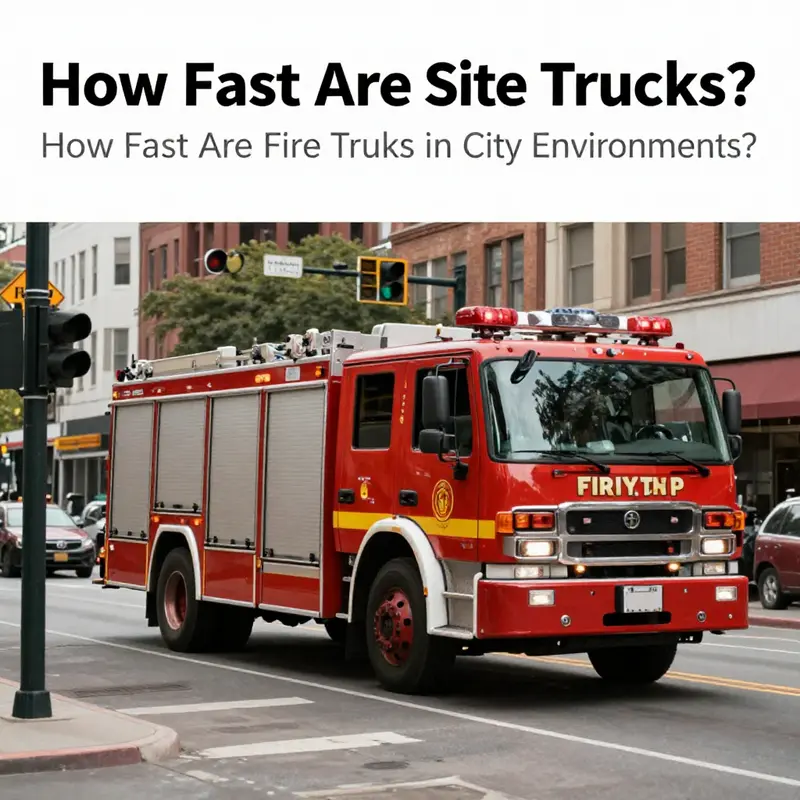
In city streets, speed is a careful compromise between urgency and the physics of a heavy vehicle navigating a maze of traffic. Fire trucks are not dragsters; they are purpose-built to deliver water, ladders, hoses, and crew to a scene, and every mile per hour must be weighed against stability, visibility, and safe maneuvering. Yet when every second matters, the question “how fast are fire trucks?” becomes a conversation about how urban life, infrastructure, and technology shape response times as much as the raw velocity of the machine.
In numerical terms, the urban pace of a fire truck typically lands in a range that’s comfortable rather than heroic. Observations from recent analyses place city speeds commonly between 20 and 40 miles per hour (about 32 to 64 kilometers per hour). This band is not a fixed ceiling or a universal floor; it is a reflection of the moment. When traffic is light and the incident is severe, a driver may press toward the higher end of that spectrum, especially with the lights and siren aiding the clearance of lanes. When the streets are crowded, or the incident involves pedestrians or vulnerable structures, the vehicle slows to the lower end or even below it as the crew makes precise turns, negotiates tight corners, and surveys hydrants, staircases, and balconies that could be part of the emergency landscape.
The same principle applies across different urban contexts. A small neighborhood street with parallel parked cars, a narrow turn, and a sightline blocked by a bus stop will restrict speed far more than a wide avenue at 2 a.m. on a clear night. The constraints are not just about space; they are about risk management. The operator must account for blind corners, schools in session, crosswalks with pedestrians, and cyclists sharing the road. Even with sirens and flashing lights, the driver must anticipate what other road users will do and cannot assume that they will move out of the way. That is why urban fire vehicles emphasize maneuverability and control as much as raw acceleration. The design of the chassis, the wheelbase, and the turning radius matters as much as the horsepower of the engine. In many cities, the fleet is composed of trucks that balance compactness with resilience, enabling them to work through backstreets, alleyways, and historic districts where larger units would stall or require rerouting.
In the era of smart dispatch and GIS-based routing, the seconds saved by going a longer distance in less congested corridors can be greater than those gained by a shorter route that sits in gridlock. The 2025 study conducted in Cirebon City, Indonesia, offers a compelling reminder that travel time is the decisive factor for emergency response. The fastest path was not always the one that followed the shortest distance; the route that circumvented heavy traffic delivered each truck to the scene faster. The researchers framed this insight within a broader technological context: Geographic Information Systems modeling considers congestion, road geometry, land use, and even the temporal variability of traffic to propose routes that reduce overall arrival time. It is a powerful counterpoint to a simplistic assumption that speed alone determines outcomes. In practice, a well-choreographed response blends speed, route intelligence, and disciplined driving.
For urban teams, the lessons are twofold. First, speed is constrained by the urban fabric itself. A dense grid with one-way corridors and choke points can force a fast truck to slow down repeatedly as it negotiates signals, yaw angles, and lane changes. Second, speed can be amplified by planning and technology. Modern emergency operations leverage preemption of traffic signals, dynamic routing, and real-time traffic data to minimize delays. These tools help preserve the momentum of an urgent arrival without sacrificing safety. The contrast between theoretical top speeds and on-the-ground performance becomes a study in systems thinking: engines roaring in the open lanes are only part of the equation; the other half is the network that carries the vehicle to the incident and the careful choreography that makes that journey safe.
To understand urban speeds more concretely, consider the configuration and design philosophies behind city-friendly fire apparatus. In many districts, vehicles are built with a smaller footprint and a tight turning radius. That is not a cosmetic preference; it is a functional imperative. Narrow streets, historic centers, and curbside parking patterns demand a vehicle that can swerve from one block to the next, reach a hydrant tucked behind a row of parked cars, and still have enough room to retract a ladder, deploy a hose, and step back safely if a sudden obstacle appears. This design choice trades some top-end speed for the capability to act where larger trucks simply cannot operate. It is a classic case of form following function in the service of speed—speed achieved not by raw power, but by purposeful positioning, rapid access, and the ability to maintain control during complex maneuvers.
Yet speed is never the sole objective. The critical measure in a real urban response is not the number on the speedometer but the total travel time from the dispatch to the moment crews take decisive action at the scene. Travel time captures the cumulative effect of readiness, route selection, traffic conditions, and the crew’s efficiency at the doorway of danger. The narrative of urban response thus becomes a story of optimizations, not just accelerations. Dispatch centers work with real-time feeds about road closures, crowd density, and weather-related impairments. On the street, drivers rely on training, situational awareness, and procedural standards that govern preemptive measures, lane control, and the sequencing of tasks once the truck arrives. Sirens and lights have a dual purpose: they alert the world to the urgency, and they provide a basis for coordination with other road users who might yield to the emergency vehicle. The balance is delicate. The goal is to clear the way with minimal risk, not to exceed legal or safety limits at any cost.
A growing thread in this conversation is the role of routing and pre-planned strategies. The Indonesian case study illustrates that routing decisions can have outsized effects on response times. When confronted with a congested corridor, a truck may be rerouted onto a longer, faster path, effectively reducing arrival time even though the engine spends more distance moving. The practical implication is that fire services in urban landscapes increasingly depend on robust mapping, synchronized dispatch, and adaptive plans that can respond to evolving conditions. In one sense, the city becomes a living network, and the fire truck is a mobile node whose velocity is intertwined with traffic signals, road geometry, and the behaviors of other drivers. The convergence of engineering, data science, and human judgment results in a performance metric that is closer to reliability than to raw speed. A vehicle that can haul its water and equipment through crowded streets, negotiate the inevitable bottlenecks, and arrive with its crew intact may prove more effective than a faster vehicle that begins to lose momentum the moment it enters a dense zone.
From a technical perspective, the acceleration profile of a fire truck on urban streets is tempered by weight, equipment, and road grade. A heavy apparatus, loaded with pumps, ladders, and tanks, faces slower acceleration than a standard passenger car, and that is a design constraint built into the safety calculus. The engine is tuned not simply for horsepower but for torque delivery across a broad range, so that crews can recover speed quickly after negotiating a turn or a stop, yet not compromise stability on a slick surface or during evasive maneuvers. Traction control, ABS, and advanced braking systems are essential components of a well-behaved urban response vehicle. The interaction between braking distance, tire choice, and surface condition is a humbling reminder that speed in the city is a controlled performance, not a solo sprint.
Ultimately, the urban tempo of fire trucks is about timing and sequencing as much as velocity. In dense urban cores, a split-second decision to adjust path, to bypass a congested intersection, or to wait for a pedestrian to finish crossing can mean the difference between being first on the scene and arriving after someone has already taken steps to mitigate the danger. The interplay of speed with human factors—driver training, dispatch accuracy, and on-scene leadership—renders each response a unique performance. In this context, the idea of a single, universal speed becomes less useful. Instead, readers should think of speed as a shapeshifting parameter that interacts with the route, the road, and the momentary conditions of the city. When a structure fire erupts in a high-rise district, speed is constrained by stairwells, elevator protocols, and the time required to stage equipment on a fire floor. When a vehicle accident occurs on a broad boulevard with multiple lanes, speed is shaped by lane discipline, the availability of shoulder space, and the need to protect responders as they work.
In jurisdictions around the world, legal and policy frameworks further sculpt the practical speed of emergency responses. Some regions authorize preemption of traffic signals and, in controlled circumstances, allow limited deviations from standard speed limits to preserve the integrity of the incident scene and the safety of responders and civilians alike. Other areas maintain stricter oversight and emphasize public safety and accountability, implying that even during emergencies, operators must balance urgency with rigorous risk assessments. These regulatory textures are not mere background noise; they are active constraints that influence dispatch protocols, driver training curricula, and the design of the fleets themselves. The result is a mosaic of practice where urban speed sometimes climbs toward the higher end of the 20–40 mph band, but more often centers around a carefully managed tempo that prioritizes predictable, controllable movement over velocity for velocity’s sake.
A parallel dimension to consider is the social and infrastructural fabric of the city. The speed of a fire response does not happen in a vacuum. It is shaped by how streets are engineered, how people move through them, and how communities interact with emergency services. Dense pedestrian zones, school zones during operating hours, and the presence of noise-sensitive neighborhoods alter the calculus of speed. As cities retrofit their cores to become more walkable and bike-friendly, fire services respond with adaptive strategies: compact fire apparatus that can thread through tight corridors, pre-planned staging areas, and cross-stystem coordination that allows water supply and equipment to be delivered efficiently without bottlenecks. In such environments, a fast vehicle may still reach the vicinity quickly, but the final leg to the fire building is where the truly decisive work happens. The crews must evaluate access routes, the condition of stairwells, and the feasibility of using building systems to gain a foothold before the clock can be said to truly run in favor of the responders.
The practical implication of all this is clarified when you consider a single, forward-facing metric: arrival time, not merely speed. The goal of modern urban firefighting rests on getting the right team to the right place at the right moment, with equipment ready to perform. Speed remains a crucial component, but it is bounded by safety, route reliability, and the dynamic realities of urban life. The city is the stage on which the fire truck must perform a choreography that blends power with prudence, haste with restraint, and urgency with accountability. The chapter’s core message remains consistent: while fire trucks can reach substantial speeds on open roads, their urban performance is defined by how intelligently speed is used within a network of constraints that includes traffic, road geometry, regulations, driver skill, and real-time information systems. In practice, a well-executed urban response is a composite achievement—speed made safer, routes made shorter in practice, and arrival times shaved not just by acceleration but by smarter planning and coordinated action.
For a deeper dive into how urban routing affects emergency response, see the external research study linked here: https://doi.org/10.33603/JGST.V5I1.4905.
And if you want a practical sense of the kinds of emergency vehicles that fleets consider when addressing a broad range of urban incidents, you can explore the Emergency Rescue Vehicle category at this publisher’s catalog: Emergency Rescue Vehicle category.
Speed on Open Highways: Fire Trucks, Urgency, and Safety
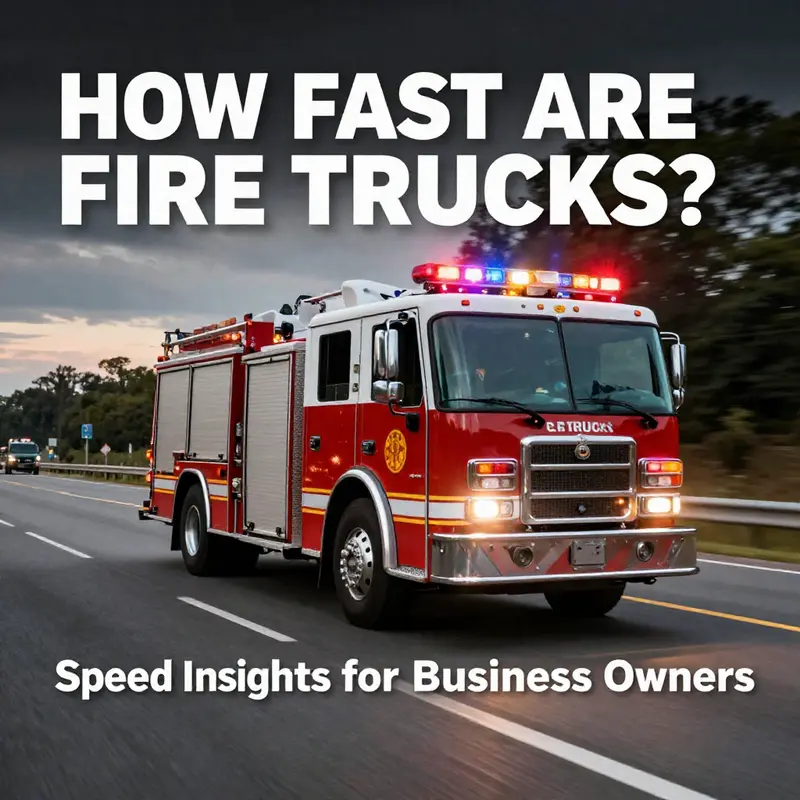
On open highways, fire trucks operate with a measured sense of urgency. They must reach the scene quickly enough to save lives and protect property, while preserving control and avoiding unnecessary risk. The result is a pace that looks brisk but is carefully calibrated against weight, road design, weather, and traffic. In practice this means speeds commonly centered in a moderate range rather than racing toward maximum velocity.
Across many departments, highway response speeds typically fall within a band that reflects vehicle mass, equipment load, and the need for stable handling. In general terms, open-road movement tends to stay below the limits of comfort for a typical driver in a large emergency vehicle, with numbers that vary by jurisdiction and by the specific rig. Factors such as tire grip, braking systems, and suspension tuning matter as much as raw horsepower.
The siren and lights help clear the way, but they also influence driving behavior in complex ways. Skilled operators use urgency as a communication tool rather than a license for reckless acceleration. They monitor wind, surface conditions, traffic patterns, and exit ramps, adjusting speed to maintain safe margins while still achieving timely arrival. The overarching goal is reliable response times that prioritize safety for responders and other road users.
Through Mud and Mountain Trails: The True Pace of Off-Road Fire Trucks in Challenging Terrain
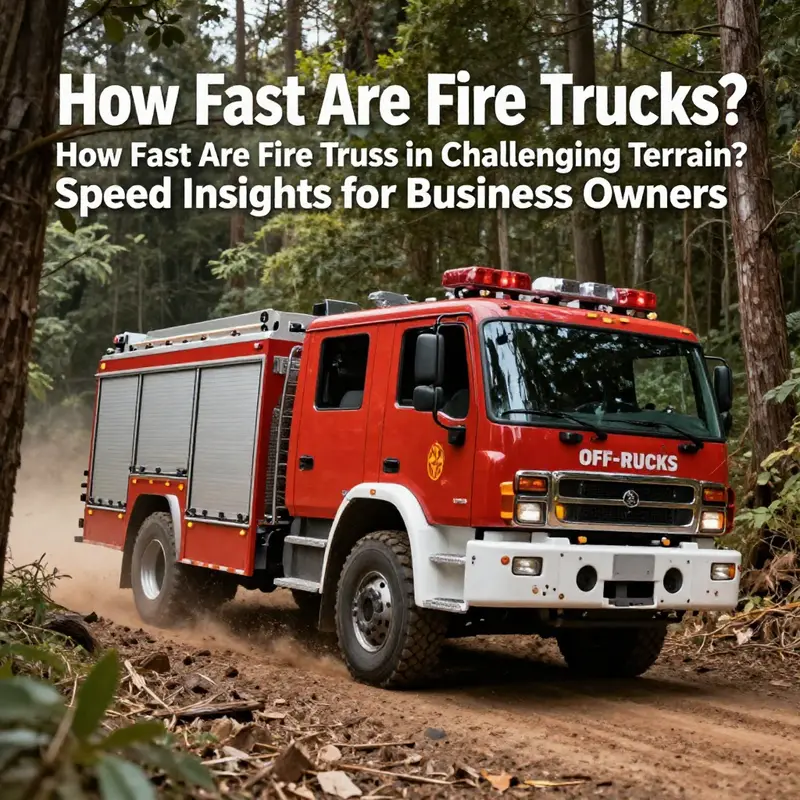
When a fire breaks out in a landscape that wears its challenges openly—dense forests, rocky hills, sandy washes, or remote rural corridors—the clock runs with a different tempo. Speed remains important, but it is not the sole measure of effectiveness. In off-road environments, the most critical attribute is mobility—how quickly a fire department can bring water, personnel, and equipment to a scene while preserving control, stability, and safety. The chapter that follows this broader arc of the article turns a lens onto off-road capabilities, where four-wheel drive, ground clearance, and deliberate, skillful navigation redefine what “fast” means in emergency response.
Off-road fire trucks are purpose-built to operate where standard apparatus cannot. They carry heavy loads of pumps, hoses, and ladders, and they must haul this equipment across uneven ground, through mud, over rocks, and up steep grades. Their 4×4 drive systems distribute torque to all wheels, helping the vehicle bite into slippery surfaces rather than slide away. Heavy-duty off-road suspensions absorb bumps that would jostle crew members and shake delicate equipment loose at higher speeds. Stronger frames, reinforced axles, and higher ground clearance keep the chassis from contacting the worst surfaces, while wide, robust tires maximize traction over a variety of substrates. In combination, these features allow a truck to traverse terrain that would stall a standard vehicle or, worse, put crews at risk.
Yet even with these capabilities, speed in off-road environments remains a trade-off. A top speed on paved roads—common for many conventional fire apparatus—often sits in the 60 to 80 km/h range when traffic and road conditions permit. In contrast, the same class of four-wheel-drive off-road fire trucks, when pressed to the kind of terrain they are designed to conquer, typically slow to a crawl, moving at 15 to 30 km/h, or only slightly faster on smoother, grippier surfaces. The conversion from highway velocity to forest trail tempo is not a concession to safety; it is a fundamental consequence of terrain, weight, and the need to maintain traction, control, and situational awareness. The heavy equipment they carry multiplies the risk of a misstep if speed climbs too high, especially on a surface that can shift from firm to treacherous in seconds.
This balancing act—between capability and velocity—permeates every decision made by a crew en route to a wildfire or a remote dwelling fire. The truck’s design emphasizes mobility and reliability over maximum speed. Movement across a muddy slope requires careful throttle modulation, precise steering, and frequent gear changes to keep the engine in its optimal torque band while avoiding wheel spin. In rocky terrain, wheel placement becomes a chess game against obstacles, with a driver selecting low gears to maximize torque and control rather than to chase speed. Even with a modern diesel engine that can deliver impressive torque across a wide rpm range, the mission priority remains: reach the scene with enough water pressure, enough hose to lay out a capable attack line, and enough crew to perform aggressive suppression while maintaining personal safety.
The role of engineering in these machines cannot be overstated. A 4×4 off-road fire truck is not just a vehicle with bigger tires; it is a carefully choreographed system in which the suspension, transmission, and steering work in concert with the vehicle’s weight and center of gravity. The suspension must absorb the jolt of irregular surfaces without transmitting it into the cab, where firefighters have to think clearly and work efficiently. The steering geometry must respond predictably when the front tires grip loose soil or slip on a wet rock, so that steering corrections do not topple the vehicle into a pivoting misalignment. Differential locks—activated when needed to equalize wheel torque on wheels with poor traction—are another critical feature, ensuring the truck maintains forward progress rather than spinning in place. Tires, too, are purpose-built for mixed surfaces; their tread patterns and sidewall strength are chosen to resist punctures and provide stable contact patches across mud, sand, gravel, and hard-packed forest trails.
From a mission planning perspective, the speed of off-road trucks is intertwined with the logistics surrounding wildland and rural fire service. In forested or sparsely developed zones, the absence of a robust road network means that every route must be pre-assessed for its ability to admit a heavy, slow-moving vehicle without compromising safety or the efficiency of water delivery. The pace is slowed not by reluctance but by the physics of terrain and the weight carried on the wheels. A crew must constantly weigh the urgency of arrival against the risk of a misstep that could lead to a rollover, a dropped hose, or a stalled engine. This is why off-road responses often include support vehicles, including lighter teams that can surge ahead to secure a water source, establish a stable anchor point, or scout the path for hazards. The interplay between different vehicle types within a single response is a practical embodiment of the principle that speed must be tempered with precise coordination and reliable access to the site.
The importance of terrain-aware speed becomes even more evident when considering how fires ignite and behave in rugged environments. In forests and rural landscapes, fires can advance along ridges and gullies with irregular speed, exploiting microtopography that channels wind and exhausts fuel in discrete patches. An off-road truck’s ability to advance even at modest pace allows firefighters to stay ahead of the leading edge of a blaze, to position attack lines with patience, and to maximize the effectiveness of water applications as the fire advances through difficult terrain. The difference between arriving with water and arriving without water can hinge on a handful of minutes spent negotiating a bend in a trail, a slick rock face, or a deep rut. In many cases, those minutes matter as much as any sprint down a straight, asphalt corridor.
The value of off-road capability is not measured solely by speed, but by how quickly and safely a crew can adapt to changing conditions. A driver must stay vigilant to terrain composition, weather, and the evolving geometry of the fire front. A single misjudgment—like attempting to crest a muddy grade in too high a gear, or choosing an improvised line that overtaxes the vehicle’s suspension—can turn a successful approach into a stalled or immobilized situation. That is why operator training emphasizes gradual risk assessment, controlled throttle modulation, and the discipline to slow down for a safer arrival. In the field, the margin between an effective, timely response and a compromised one is often a function of the crew’s ability to maintain balance between speed and control.
To illustrate the larger point, consider the generic case of a 4×4 off-road fire truck specifically designed for forest services and rural fire departments. These vehicles typically feature diesel powertrains that are robust and reliable, with the capability to deliver steady torque for climbing grades and negotiating uneven ground. They are engineered to meet broad emission standards, ensuring that the quest for performance does not come at the cost of environmental and community health. In practice, these trucks demonstrate that off-road speed is best understood as a byproduct of access and maneuverability. When the route is close to a fire line and surfaces are unpredictable, a slower pace with deliberate wheel placement and steady throttle is the most effective means to preserve momentum and maintain the integrity of the attack. Such considerations are integral to tactical decision-making on the fire ground, where the objective is to keep a secure and continuous flow of water to the nozzle, while protecting firefighters from instability and unforeseen hazards.
For readers seeking a more technical frame of reference, the literature on off-road fire trucks highlights how form follows function. The emphasis is on reliability, traction, and the ability to deliver on-scene performance despite a slower top speed. The design that prioritizes control over velocity remains a constant across departments that operate in challenging terrain. In this context, a driver’s skill, a vehicle’s mechanical readiness, and the coordination among responding units all converge to ensure that the arrival time at the fire scene, and the effectiveness of the operations once there, outperform what a purely highway-based speed metric could predict. Acknowledging this nuance helps readers move past a simple equation of speed with effectiveness and toward a more nuanced understanding of how off-road capabilities translate into real-world outcomes on the fire ground.
To connect this discussion to practical choices for fire departments and researchers alike, consider the availability of specialized fire trucks for rugged terrain. A department may maintain a fleet that includes dedicated off-road units, alongside conventional apparatus, each optimized for its intended environment. The specialized vehicles may be categorized within a broader “special-fire-truck” family, a suite that emphasizes terrain-adaptive innovations and complementary capabilities. For readers who want to explore options or understand how other departments think about rugged-terrain readiness, a visit to the Special Fire Trucks category can provide deeper context on equipment configuration, training, and operational practice that supports both rapid response and safe navigation in difficult terrain. Xe Cứu Hỏa Đặc Biệt
In sum, the pace of off-road fire trucks in challenging terrain is best understood as a composite of capability and discipline rather than a single top speed. The vehicles are designed to preserve momentum where it matters most—the ability to reach, access, and begin suppression on remote and harsh landscapes—while maintaining the safety of crews and equipment. Speed on good roads has its place, but on the forest trail, the true measure of preparedness lies in the vehicle’s capacity to move reliably through obstacles and maintain a stable, controlled approach to the fire scene. The interplay between mechanical design, operator judgment, and inter-machine coordination defines the real tempo of these responses, and in this context, “fast” is redefined as “ready and able to deliver suppression where it is needed, precisely when it is needed.”
External resource: The Fire Engineering analysis of off-road fire trucks and forest-rural firefighting emphasizes how terrain, vehicle design, and operational tactics converge to optimize access and safety in demanding environments. Readers can consult the article for a detailed discussion of performance benchmarks, terrain-specific challenges, and practical implications for training and deployment. https://www.fireengineering.com/fire-truck-technology/off-road-fire-trucks-forest-rural-fighting
Speed, Safety, and the Mission: How Fast Are Fire Trucks While Safeguarding the Public?
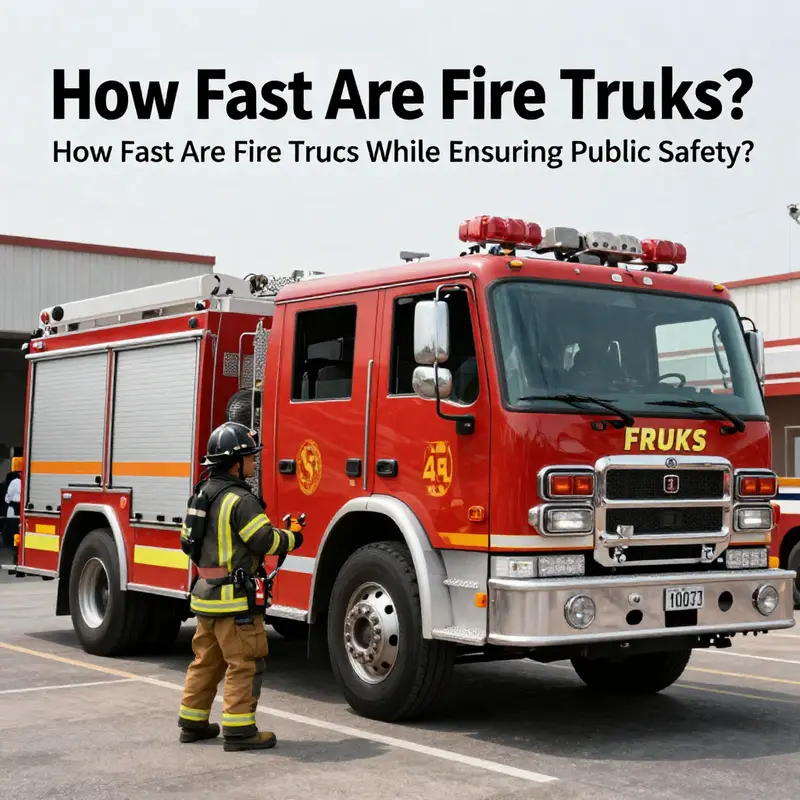
Speed is a headline often attached to fire response, but it is not an independent metric. The urgency of a blaze or medical emergency demands rapid travel, yet that urgency must coexist with the safety of the public, the crew, and anyone else sharing the road. In practice, fire trucks operate at the intersection of high mechanical capability and conservative operational discipline. Their engines may push a lot of power through heavy, purpose-built frames, but the driving task includes bearings, traction, braking, steering, and the delicate choreography of lights and sirens that helps other road users respond in real time. When you look behind the curtain of enforcement, regulations, and everyday practice, a clear picture emerges: speed is a tool, not a guarantee. The goal is to arrive quickly, reliably, and safely at the scene while maintaining control of a vehicle that weighs tens of thousands of pounds and carries ladders, pumps, hoses, and water—an arsenal that can dramatically affect handling and acceleration. This is the core tension that defines how fast fire trucks can and should travel in different contexts, and it anchors the broader question of how speed translates into real-world response times.
A central dimension of this discussion is the regulatory framework that governs speed by vehicle mass. In many jurisdictions, the minimum speed a fire apparatus must be capable of maintaining is tied to its total mass. For vehicles ranging from light duties to midweight apparatus, the threshold often cited is a baseline of 90 km/h for configurations over 3,500 kg but not exceeding 12,000 kg. For the heaviest fleets, those exceeding 12,000 kg, a minimum around 85 km/h is typical. These thresholds are designed to ensure that, even when fully loaded, the vehicle retains enough performance to meet the pace of dispatches while leaving ample margin for safe operation under emergency rules and road circumstances. It is important to note that these figures describe ability, not constant practice. They establish a required capability envelope that supports rapid response under controlled conditions, rather than a universal speed limit that all situations will honor in every moment.
In the day-to-day reality of responding to incidents, the actual speeds are heavily shaped by road and traffic conditions, the terrain, and the operational protocols that govern each response. Urban streets, with their tight turns, pedestrians, cyclist activity, signal timing, and predictable congestion, tend to be slower. In such environments, speeds commonly settle in a range that preserves maneuverability and safety, typically around 30 to 50 km/h. These numbers reflect the compounding effects of stop-and-go traffic and the need to thread through intersections, crosswalks, and residential zones where the density of bystanders increases the risk of an untimely incident. On highways or open corridors with lighter traffic and fewer intersections, the same apparatus may be able to push toward 60 to 80 km/h when the mission prioritizes speed over the instantaneous formation of a green light. The transformation from a mere vehicle to an emergency response platform is most evident here: the same chassis that can reach high speeds in a straight line must routinely anticipate other drivers and the potential for adverse conditions that demand quick deceleration and solid control. In forested or off-road settings, speed drops markedly due to rough terrain, steep grades, and the limited traction of heavy tires. In such contexts, progress is measured in tens of kilometers per hour rather than dozens, and the focus shifts toward stability, ground clearance, and the ability to navigate narrow paths or rough surfaces safely. These real-world constraints remind us that speed alone does not equate to effectiveness in emergency response.
Safety rules and best practices further shape what speed means in the field. There are well-established mechanisms to reduce risk while preserving the ability to respond. For instance, in busy urban jurisdictions, a common approach is to synchronize emergency response with exhaustive route planning and traffic control measures. This means preplanning routes to avoid choke points, coordinating with traffic management centers for signal preemption when possible, and implementing risk assessments that weigh the probability of encountering hazardous pedestrians, school zones, or construction zones along the path. The drive to reach the scene quickly often collides with the imperative to limit exposure to other road users. Sirens and flashing lights are not just showpieces; they are essential tools for signaling a clear priority to other drivers, but their effectiveness depends on predictable behavior from the responders and other road users alike. A misstep here can cancel a fast arrival with a single awkward maneuver, so the discipline is to proceed with haste but not recklessly, to anticipate the reactions of drivers who may not immediately yield, and to adjust speed and positioning accordingly.
The fleet’s composition also plays a decisive role in speed profiles. Different apparatus types carry different performance characteristics that align with their intended roles. Water tankers, which are typically heavy and laden with sizable water or foam reserves, tend to move at moderate speeds on city streets—often within the 60 to 80 km/h band when conditions permit. The weight and center of gravity of these vehicles reduce acceleration and complicate high-speed handling, so their role is often to establish a rapid water supply network at the scene rather than to outrun a threat on a long open road. In contrast, lighter, more agile units—such as all-terrain or off-road capable apparatus—can access difficult terrains that would stall standard trucks. These lighter, nimble systems may reach similar top-end speeds, around 80 km/h, but their primary advantage is maneuverability through rough terrain, narrow rural roads, and forested areas where conventional trucks struggle. In some operations, specialized platforms like light, compact units operate as a form of “light cavalry,” sweeping ahead to perform reconnaissance, hazard assessment, or rapid water deployment where a traditional truck would be impractical. The existence of such specialized units broadens the speed conversation beyond sheer velocity, illustrating that the fastest vehicle is not always the most effective for every segment of an incident.
Within this spectrum of capabilities, there is a recurring reminder that speed is not a substitute for strategy. Speed must be matched with route intelligence, situational awareness, and a rigorous assessment of risks. A crucial example of the safety-centric approach to speed is the balancing act performed by many large cities. In the city of Los Angeles, for instance, certain rules restrict fire apparatus to very careful movement when entering opposing traffic lanes or when crossing intersections. The policy is designed to minimize the risk of collisions and injuries during high-stakes maneuvers, even if the vehicle could conceivably travel faster under favorable conditions. This is a telling case study: the vehicle’s mechanical capability allows for a higher maximum, but the operational protocol caps the risk in critical moments. Such rules underscore the broader principle that public safety can, and should, temper the raw physics of a fire engine. The result is a response that is fast in intent but carefully controlled in practice.
Another layer of the discussion concerns how emergency responders translate speed into effective rescue and mitigation. The dispatch step, the time spent en route, and the early actions taken along the way can all alter the ultimate impact of speed. Modern response systems emphasize not only the clock on the dashboard but also the clock on the map—the moment a call is received, the fastest route that avoids known chokepoints, and the ability to pre-arrange water supply, scene safety, and hazard mitigation even before the apparatus arrives. In well-planned systems, the dispatch time, the selection of the most efficient route, and the priority given to traffic signal preemption together compress the total time from alarm to action. When these elements align, the apparent discrepancy between the vehicle’s top speed and the actual time to reach the scene narrows. The crew begins critical tasks sooner, a cascade of actions that can influence life-saving outcomes as much as the vehicle’s instantaneous velocity.
The discussion of speed and safety would be incomplete without acknowledging the limits that speed imposes on acceleration, braking, and handling. Heavy fire apparatus require longer braking distances, more careful steering adjustments, and deliberate throttle control to maintain stability during rapid deceleration or sudden lane changes. The heavy mass also magnifies the consequences of mishandling on crowded streets, where even a slight misjudgment can escalate into a serious incident involving civilians. For this reason, modern training emphasizes not only speed but also precision, anticipatory driving, and the disciplined use of road space. Drivers learn to anticipate others’ behavior, to plan for worst-case scenarios, and to execute maneuvers with controlled aggression rather than raw velocity. This approach translates to safer operations overall, even when the objective is to arrive at the scene faster than in non-emergency conditions. The safest fire trucks are the ones operated by crews who have internalized the principle that speed is a tool to support life-saving work, not a license to endanger others.
The dynamics of end-to-end response times also illuminate why the fastest possible travel is only one piece of the story. The total time to render assistance includes not just the transit but the scene setup, water load readiness, maneuvering at the site, ladder deployment, and the initial assessment of hazards. In many scenarios, a well-timed approach with moderate speed, but superior coordination and early actions, can outperform a ride with peak velocity but suboptimal routing or late scene management. In essence, the fastest arrival is rarely a function of raw speed alone; it is the outcome of a holistic system where vehicle capability, driver training, dispatch efficiency, and on-scene tactics converge. The open road and the urban grid test different facets of this system, yet the underlying objective remains the same: to minimize response time while preserving safety margins that prevent additional harm.
For readers who crave a sense of practical numbers without losing sight of the broader narrative, the takeaways are straightforward. In urban settings, expect the actual travel speed to be governed by traffic, signals, and pedestrians, with typical ranges around 30–50 km/h. On highways, where traffic is lighter and the path allows, speeds up to the lower end of 60–80 km/h become feasible during urgent responses when risk assessment supports higher velocity. In less developed or forested areas, individual crews may range below 20 km/h to ensure navigational safety in challenging terrain. Across all circumstances, the minimum speed thresholds set by mass-based regulations ensure that even heavily loaded apparatus retain a credible pace. Yet the most important insight is that top speed is only a part of the equation. The fastest responder is the one who uses speed in concert with planning, coordination, and decisive on-scene action. The balance between haste and caution is the heartbeat of emergency response, shaping not only how fast a truck travels but how effectively it saves lives while reducing danger to the public.
For a look at agile options that navigate difficult terrain quickly, see the light fire trucks. This category exemplifies how speed and maneuverability combine to extend reach in places where standard apparatus would struggle to proceed. The aim is not to replace larger units but to complement them, expanding the envelope of safe and swift responses across varied landscapes. Each mission, each route, and each crew decision adds a thread to the fabric of emergency response speed, a fabric that remains strong because it folds speed into safety rather than treating speed as the sole currency of readiness.
External resource: https://www.latimes.com/archives/la-xpm-2003-aug-19-me-37249-story.html
brush fire trucks, wildland firefighting, fire safety equipment, off-road fire trucks, firefighting technology, business safety, emergency response vehicles
In summary, fire trucks are engineered for efficiency but must balance speed with crucial safety measures. Understanding their operating speeds in urban, highway, and rugged terrains empowers businesses to better appreciate the complexities of emergency response. It also underscores the importance of supporting local fire services, ensuring a safer community. By recognizing the varied speed capabilities and challenges faced by fire trucks, business owners can contribute to initiatives that enhance safety in their environments.

