
















In the arena of firefighting, the reach of a fire truck ladder can mean the difference between life and death. Effective emergency response hinges not only on the swift arrival of firefighters but also on their ability to access heights safely and efficiently. This article delves into the extent of fire truck ladders, addressing their typical reach during fire emergencies, examining the capabilities of more advanced models, evaluating stability versus reach, and discussing the economic implications in urban settings. By the end of this exploration, business owners will have a comprehensive understanding of how fire truck ladders operate and their importance in safeguarding properties and lives.
Measured Heights: How Real Aerial Ladders Reach in Everyday Firefighting
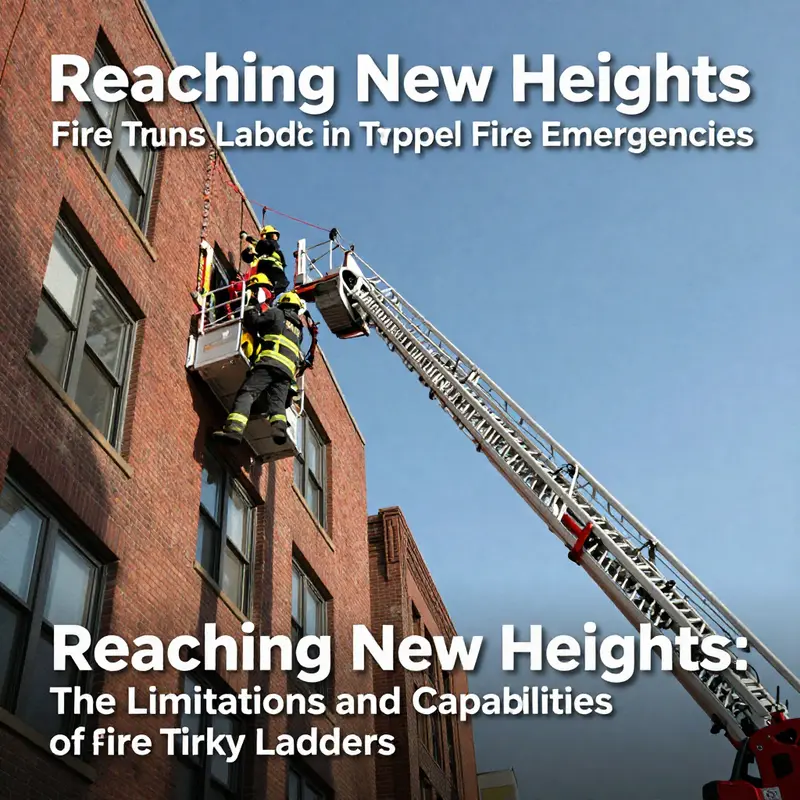
When a fire alarm bell sounds and smoke curls from a window, the ladder truck becomes more than a silhouette on the street. It is a calibrated instrument built to translate height into access, danger into potential escape, and chaos into a measured sequence of actions. The reach of a fire truck ladder—often called an aerial ladder or a platform ladder—depends on a mix of engineering, situational physics, and the tactical needs of a given incident. In the field, reach is not a single number carved in stone; it is a dynamic capability shaped by the apparatus, the building, the weather, and the crew operating it. What emerges from careful examination is a picture of practical limits and strategic versatility. In standard emergencies, firefighters routinely access upper-floor windows and rooftops by extending the ladder to a vertical height that fits the building’s profile. The numbers commonly cited in training and field reports place the typical vertical reach of a standard aerial ladder in the neighborhood of roughly 75 to 100 feet, or about 23 to 30 meters. That range aligns with the height of most commercial and residential structures encountered in many urban settings. It is enough to reach the mid- to upper-story corridors of many conventional buildings, including those where residents and occupants repeatedly need rapid egress or where firefighters must establish a vantage point to attack a fire from above. At these ranges, the crew must still maneuver toward the target façade. The ladder’s vertical reach is only part of the story; the horizontal extension matters just as much, if not more, when it comes to placing responders at the right window or opening. The horizontal reach typically spans roughly 40 to 60 feet, or about 12 to 18 meters, depending on how the ladder is extended and angled. This horizontal spread is the margin that allows a firefighter to position the platform or bucket against the wall, reach a specific window line, and create a stable workspace while maintaining a safe distance from the building’s face and any obstructing elements such as balconies, protruding architectural features, or heavy smoke conditions. A broader horizontal reach increases the likelihood of reaching the intended point of entry or rescue without forcing the crew to lean dangerously over a ledge. Yet reaching higher is not simply a matter of extending the ladder to its maximum length. The ladder’s angle, the degree of extension, and the configuration of the base are all crucial to how a given height translates into usable access. Fire departments rely on a combination of outriggers, ballast, and load management to keep the vehicle stable as the ladder climbs. Outriggers spread the vehicle’s weight over a wider footprint, reducing the risk of tipping when the ladder is extended at steep angles or under windy conditions. Wind is a consistent complicating factor at height; even modest gusts can cause vibrations or a perceptible sway, complicating the operator’s aim and the crew’s footing on a narrow or unstable platform. This is why training emphasizes not only the ladder’s mechanical limits but the environmental and operational constraints that could affect a rescue or extinguishment operation. In practical terms, the common, everyday emergency often unfolds within a range that suits a 10- to 12-story edifice. For municipal departments in large cities, the standard urban ladder trucks frequently provide near-maximum usable reach at about 100 feet (30 meters) to a comfortable working height. Such reach is well-muited to typical skylines where a majority of structures do not exceed a dozen stories. The ladder’s extension is designed with a balance in mind: enough vertical reach to access the upper floors, yet enough structural integrity to keep the platform stable as personnel work. Some specialized configurations—mid-mount, rear-mount, or platform ladders—offer similar vertical reach but differ in how they place the platform and how the operator can maneuver the system. Platform ladders, for instance, provide a steadier working surface at height, which can be particularly valuable when firefighters need to carry out complex operations, such as heavy extrication or rescue movements, while still maintaining a safe stance on the ladder. The important point is that reach is not a static, single-figure capability. A well-trained crew reads a structure and translates the available range into a plan that prioritizes rescue, access, and safety. In many ordinary high-rise scenarios, a ladder reaching around 75 to 100 feet enables firefighters to access windows on the upper floors, to ventilate roofs, or to drop a line for a life-safety rescue, all while keeping a sensible distance from the building’s façade and from smoke or flame impingement. It is worth noting that not all aerial devices offer identical reach. In metropolitan contexts, some mid-mount or rear-mount aerials may deliver slightly less vertical reach than their more robust counterparts, and exterior platforms—often described as “platform ladders”—typically present a similar vertical envelope but deliver a more stable workspace at height. The practical differences between these configurations often come down to the anticipated fire ground tasks. If the priority is rapid access with a lighter touch on the upper floors or if roof operations are paramount, a platform-type aerial may be favored for its steadier posture and easier operator control. If the mission requires maximal vertical alignment with a tight interior corridor or a beam of light across a dark interior, a more traditional ladder extension with precise angle control might be preferred for its nimbleness and reach dynamics. It is in this nuanced interplay of height, stability, and control that the commonly cited numbers—75 to 100 feet of vertical reach and 40 to 60 feet of horizontal outreach—carry practical meaning. They provide a baseline for incident command decisions and for the design and procurement of equipment tailored to the city’s typical building stock. Yet there are moments when typical numbers become insufficient for the task at hand. In the rare but consequential cases of ultra-tall structures, fire departments turn to higher-capacity aerial devices, complex duty cycles, and careful strategic planning that extends beyond the standard ladder envelope. The most advanced, exceptionally tall systems can extend to beyond 100 meters in some instances, a level of capability that corresponds to the needs of particularly tall skyscrapers. Across the world, such systems exist as high-end, specialized equipment and are designed for extreme scenarios. In some national programs, the reach of these high-capacity devices can approach or surpass the 100-meter mark, while others remain focused on more common urban applications. It is essential to ground these figures in the principle that height is not the sole variable. A ladder’s effective reach is shaped by the angle at which it is extended, the thickness and type of wall, windows or balconies, and the presence of external obstacles. The same ladder that can touch the 10th floor of a glass-walled high-rise may struggle to clear a brick facade or a narrow setback with heavy smoke and wind. For that reason, the fire service emphasizes not just how high the ladder can go, but how reliably it can be positioned, how stable it remains under load, and how easily the crew can operate at the end of a fully extended line. The standards bodies that guide these designs recognize the practical realities of the fire ground. In the United States, the National Fire Protection Association provides the authoritative benchmarks for ladder reach and performance. These standards influence how apparatus are rated, how training is conducted, and how departments evaluate their readiness for the full spectrum of incidents. The emphasis is not merely on raw numbers but on the safety margins, the testing protocols, and the-calibration with which operators must work to ensure that a given reach translates into a controlled and effective operation on the street. When considering a typical emergency, it is useful to visualize the ladder as a performer in a carefully choreographed routine. The base sits square and level, outriggers spread, and the ladder begins a measured ascent. As it climbs, the operator reads the building’s geometry: balconies, window sills, ledges, and the occupancy layout. The ladder’s maximum extension may be the compass needle, but the actual working zone—where firefighters can maneuver, secure lines, or perform rescue—constitutes the real measure of reach. This is where the disconnect between a mere distance and a mission-ready capability often becomes apparent. Firefighters are not simply stretching a metal arm toward a window; they are orchestrating a dynamic reach that must endure forces of wind, movement of personnel, and the unpredictable nature of a burning structure. The narrative of reach in typical emergencies is thus a narrative of practical geometry: the vertical height achieved, the angle maintained, and the platform’s steadiness at the far end. It is a story written in inches and degrees, but read by the crew as risk management and life-safety planning. For those curious about the equipment configurations that undergird these capabilities, the catalogs and product pages for aerial ladder setups provide the practical map of the options available. Within the catalog for aerial ladder fire-truck configurations, you will find a spectrum of layouts designed to meet urban and regional needs, from compact, nimble rigs for dense street grids to taller, higher-capacity vehicles designed to probe the upper reaches of the skyline. For readers who want a closer look at the layout and operational philosophy behind these apparatus, the aerial ladder fire-truck category offers a window into how manufacturers conceptualize reach, stability, and usability. It is not a sales brochure so much as a reflection of how engineers translate building geometry into a working tool that keeps crews safe while expanding their rescue and extinguishment options in the moment of crisis. In practice, the realities of reach for typical emergencies are shaped by both the geometry of the city and the physics of the apparatus. The number that enters a fire incident plan—whether it is 75 feet or 100 feet of vertical reach, or 40 feet of horizontal outreach—becomes a decision factor that can alter the tactics of entry, search, and rescue. It can determine whether firefighters can access a high window directly from the street or whether they must stage alternative means of egress or adopt rope-based rescue methods. It also informs building engineers and city planners about the capacity of emergency services to respond to a given vertical profile. The link between fire safety design and ladder reach is reciprocal. Buildings with larger, clearer exterior egress routes and accessible roof profiles can align more effectively with standard ladder capabilities, thereby reducing the need for specialized interventions. Conversely, urban skylines with clustered high-rise cores and complex facades may demand a broader palette of response options, including rope systems or other high-angle rescue tools, to supplement the limitations of traditional ladder reach. It is a reminder that the reach of a ladder is a critical piece of a broader emergency-response ecosystem, one that requires coordination between equipment, training, and the architectural reality of the environments in which firefighters operate. For those studying or designing better response models, the numbers serve as a baseline. They guide planning decisions, training curricula, and the ongoing evaluation of whether a city’s high-rise stock has outpaced the protective capacity offered by its aerial apparatus. Yet even as standards and specifications define what is possible, every incident reminds responders that reach is ultimately validated by execution—how cleanly a crew can deploy the ladder, how steadily they can work at height, and how effectively they can translate space into safety for occupants and responders alike. The next time you drive past a fire station and notice a ladder truck parked with its arm retracted, take a moment to imagine the dance of physics and policy that makes that machine a practical lifeline. It is a machine designed to turn height into help, a careful balance of reach, control, and trust in the hands of the operator. And while the typical emergency can be met with a reach in the 23-to-30-meter range, the field remains ready to push beyond those boundaries when the call demands it. For readers who want to explore more about ladder configurations and to see how these devices are categorized, you can browse the aerial ladder fire-truck category to get a sense of the range and the options that exist for different urban scales. More broadly, the literature and standards published by the NFPA provide the authoritative context for how reach is defined, tested, and applied in real-world firefighting. For authoritative standards and performance guidelines, refer to the NFPA at https://www.nfpa.org/.
Ascending to New Heights: How Far the World’s Most Advanced Fire Truck Ladders Reach
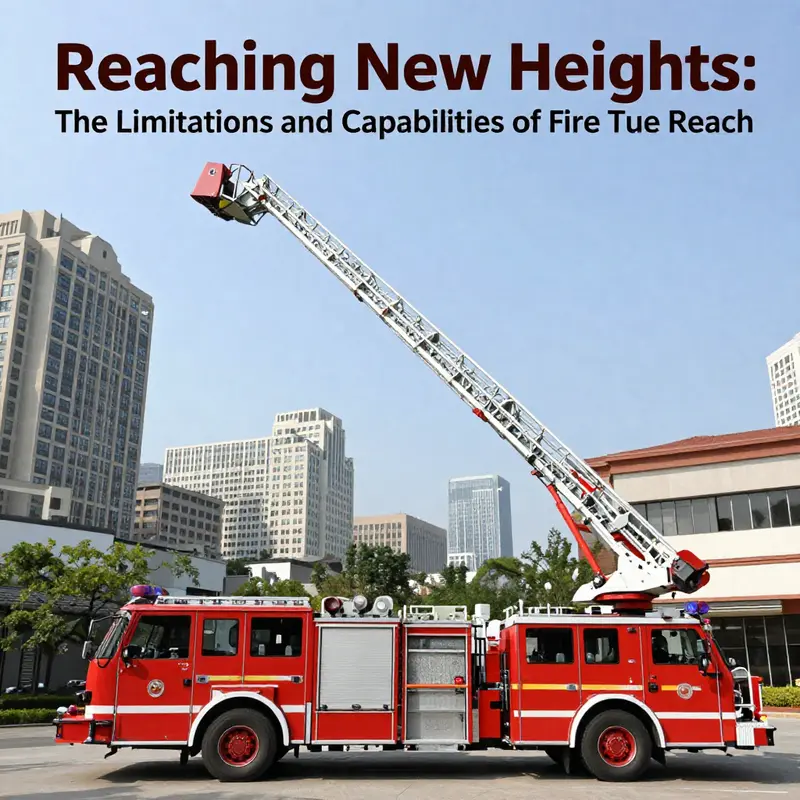
Ladders reach higher than a single number implies; they are multi-section booms designed for height, reach, and stability. In standard operations, aerial ladders provide a working height roughly between 15 and 60 meters (about 50 to 200 feet), which covers most midrise buildings and many urban façades. When needed, systems push beyond this range into the 100-meter class, with record configurations approaching 113 meters in height and a maximum horizontal reach around 28 meters. Heights are impressive, but they come with tradeoffs: as extension increases, the payload capacity typically decreases to preserve stability and control. The result is a usable envelope defined by vertical ascent, horizontal outreach, wind conditions, ground stability, and the building geometry you must work around. Engineering achieves this through a modular architecture: a main boom with multiple sections, articulated arms, and often a jib or secondary linkage that allows the platform to reach around corners and align with awkward openings. A typical high-reach deployment requires a substantial stabilizer setup and a dedicated stabilization footprint, often on the order of a 15 by 15 meter area, with ground pressures that demand compatible pavement and support. The practical takeaway is that reach is not a single figure but a balance: extreme height demands careful staging, wind awareness, and disciplined weight management. The most advanced ladders extend rescue possibilities for tall structures, but crews must plan for reduced load capacity and maneuverability at full extension to preserve safety. Finally, for readers exploring the landscape of options, most manufacturers describe aerial ladder families in catalogs that show how different boom configurations influence both height and handling. The numbers cited above illustrate the current edge of the technology: maximum heights around 113 meters and radii near 28 meters, reflecting a capability set that reshapes how cities prepare for skyscraper incidents while keeping a firm emphasis on safety and reliability.
null

null
Stretching the Skyline: The Economic Equation Behind Fire Truck Ladder Reach in City Lifelines
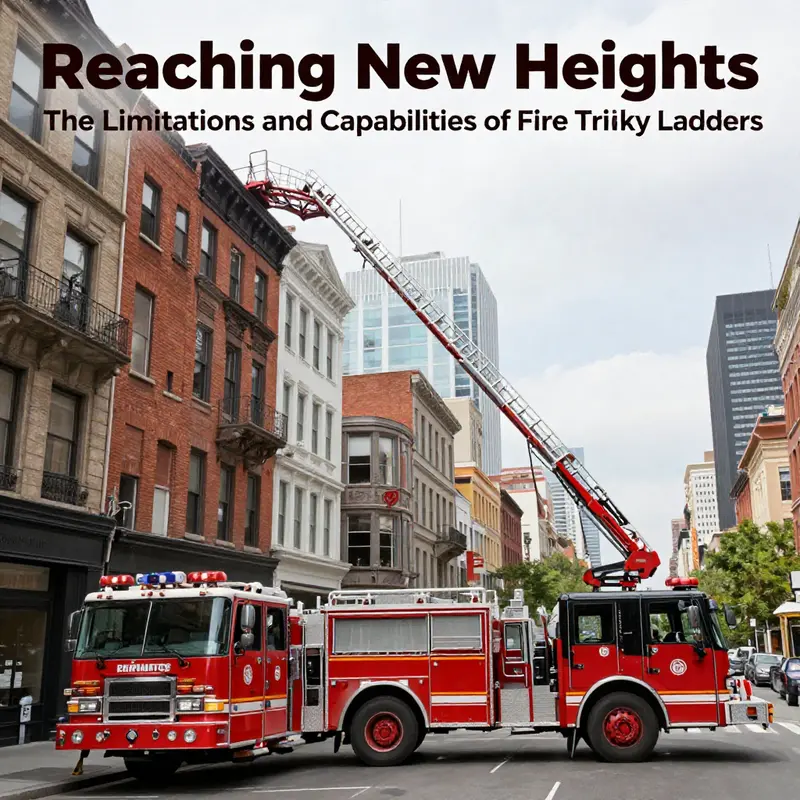
When urban landscapes press upward, every tool in the firefighting arsenal must answer not just to physics, but to the budgets and priorities of the communities they serve. The question of how far a fire truck ladder can reach sits at the intersection of engineering ambition and fiscal restraint. It is a topic that begins with the simple idea of distance—how high and how far the ladder or platform can extend—but it quickly expands into a broader reflection on risk, resilience, and the realities of city planning. In dense cities where mid-rise blocks already crowd the skyline and the tallest towers hum with power at the top, reach becomes more than a statistic. It becomes a metric of how swiftly responders can access people, how safely they can operate under challenging conditions, and how a department balances the temptations of ever longer reach with the discipline of sound economics and long-term maintenance commitments. The story of ladder reach therefore unfolds as a narrative about need, capability, and the careful accounting that makes one urban response system sustainable over decades.
At the core of any discussion about ladder reach is a clear distinction between vertical working height and horizontal extension. The ladder’s working height describes how far the platform can be raised vertically, while the maximum extension refers to the horizontal distance the platform can reach when the ladder is extended and angled. These two dimensions are constrained by structural limits, hydraulic power, motor duty cycles, and the safety margins designed into every system. The physics is not optional; stability becomes a gatekeeper at full extension. Outriggers must be deployed, weight distribution must be managed, and wind loads must be assessed continuously by operators who are trained to feel the ladder respond to the air as if it were a living part of the apparatus. In practical terms, this means the ladder cannot be treated as a simple telescoping stick. It is a carefully engineered, hydraulically powered crane of sorts that must maintain a delicate balance between reach and the vehicle’s footprint, and this balance is where cost and capability begin to converge.
The publicly shared benchmarks tell a story that is both dramatic and instructive. Most standard aerial ladder trucks offer a working height that sits somewhere between about 15 meters (roughly 50 feet) and 60 meters (about 200 feet). This range is deliberate. It covers the vast majority of residential and commercial fire scenarios in many cities, where fires often involve mid-rise structures and the priority is rapid rescue and effective interior access. Yet the horizon is not uniform. High-end models push beyond this range, with the most advanced extendable ladders capable of reaching into the three-figure territory—up to around 112 meters in the very latest configurations. And as a reminder of the extremes that urban firefighters must sometimes confront, some specialized high-reach systems have been designed to approach 101 meters, translating roughly to 33 stories of vertical reach. Those numbers belong to a rarified class of apparatus, deployed where city density and architectural scale demand extraordinary access. Still, even these record-like capabilities are not the norm; they exist within a spectrum where the practical operating envelope is shaped by both engineering limits and cost considerations.
If reach is a product of engineering, it is also a product of safety culture. The National Fire Protection Association (NFPA) sets standards that help ensure any ladder extension—no matter how long—meets a baseline for structural integrity and reliable performance. Real-world use, however, is never divorced from the economic calculus that governs a department’s fleet composition. The strongest ladder in the world is not valuable if a department cannot justify the ongoing costs of operation, maintenance, and training around it. A ladder that can extend to 100 feet or more is often among the most technologically complex and financially demanding apparatuses a fire department can purchase. The chassis, hydraulics, winches, and platform systems require meticulous maintenance, frequent inspections, and specialized operator training. Each of these factors adds layers to the total cost of ownership that extend far beyond the initial price tag.
This is where the economics become decisive. Fire departments do not just buy one long-ladder vehicle and call it a day. They must decide how to allocate limited capital across a diversified fleet. The choice often hinges on the city’s architectural profile and incident history. In cities with a high density of mid-rise buildings and good hydrant networks, a strategy that emphasizes multiple, smaller, more affordable aerials can yield a higher overall readiness without single-point failure risks that would accompany a lone, very long ladder. In contrast, a city with a significant share of high-rise structures or unique vertical challenges may justify a long-reach solution, recognizing that the payoff is measured not only in seconds saved during a rescue, but in the safer, more controlled operations that such reach enables at height. The calculus is not purely theoretical. It becomes a live ecology of trade-offs, where each incremental increase in reach must justify its cost through demonstrable gains in safety, mission capability, or the reduction of risks to civilians and firefighters alike.
This is where the economics become decisive. Fire departments do not just buy one long-ladder vehicle and call it a day. They must decide how to allocate limited capital across a diversified fleet. The choice often hinges on the city’s architectural profile and incident history. In cities with a high density of mid-rise buildings and good hydrant networks, a strategy that emphasizes multiple, smaller, more affordable aerials can yield a higher overall readiness without single-point failure risks that would accompany a lone, very long ladder. In contrast, a city with a significant share of high-rise structures or unique vertical challenges may justify a long-reach solution, recognizing that the payoff is measured not only in seconds saved during a rescue, but in the safer, more controlled operations that such reach enables at height. The calculus is not purely theoretical. It becomes a live ecology of trade-offs, where each incremental increase in reach must justify its cost through demonstrable gains in safety, mission capability, or the reduction of risks to civilians and firefighters alike.
The economic logic also extends to fleet management and maintenance economics. Aerial and platform apparatuses demand regular, sometimes intensive, maintenance regimes. Hydraulic systems can suffer from cavitation, seals can degrade, and the moving parts experience wear that is not typical for standard pumpers. The cost of downtime is real: a vehicle out of service for maintenance cannot respond to emergencies, and the opportunity cost compounds when a department must redirect resources to cover the gap. Operational costs also include specialized training for operators, who must understand the ladder’s limits intimately—the safe working envelope, the precise angles that maximize reach without compromising stability, and the contingencies for wind and uneven ground. These training costs are not minor, because the consequences of misjudgment at height can be catastrophic.
Budgetary strategies reflect these realities in a number of practical ways. Some departments optimize by purchasing a balanced mix of mid-range aerials and smaller, more versatile platforms. This approach aims to preserve height access while maintaining overall flexibility and redundancy. Others pursue a staged procurement plan that aligns with anticipated urban growth patterns, replacing or augmenting older units only as building profiles evolve. In all cases, the decision matrix weighs the expected frequency of high-rise incidents, hydrant accessibility, response time targets, and the ability to maintain readiness across the entire fleet. The result is an operational philosophy that treats ladder reach as a strategic asset rather than a purely aspirational capability. It is a philosophy that recognizes the city’s risk tolerance and fiscal constraints as co-authors of every extension and every retraction of the ladder.
One practical implication of this approach is the increasing emphasis on a diversified tool line that complements ladder reach with other means of access and rescue. In cities where high-rise occupancy is a constant, departments may invest in additional equipment such as aerial work platforms or specialized rescue apparatus that can operate in coordination with ladders without requiring the longest possible extension. This redundancy is not a luxury; it is a safety-first strategy that can preserve overall effectiveness when a single piece of equipment is temporarily unavailable due to maintenance, weather, or the need for calibration. The financial case for such diversification rests on the ability to optimize overall response effectiveness per dollar spent. It also rests on the insight that reach is one element of a broader system. A long ladder is powerful, but it does not operate in isolation. It works in concert with hydrant networks, water supply strategies, incident command, and the urban geography that shapes every firefighting operation.
In this light, the question of how far a ladder can reach becomes less a duel between inches and feet and more a negotiation among agencies and residents about value delivered under pressure. Departments must weigh the incremental value of additional reach against the cumulative cost of greater maintenance, more complex training, and the need to sustain a diverse fleet. The most compelling cases for longer reach often emerge when a city faces a combination of tall structures, limited ground access, and long travel distances from the nearest water source to the scene. In such contexts, the additional reach is not merely a convenience; it becomes a critical factor in safeguarding lives, providing rapid vertical access to floors that would otherwise be inaccessible, and allowing firefighters to stabilize hazards before they escalate into untenable conditions. Yet even in those scenarios, the decision remains grounded in economic discipline: quantify the risk reduction, weigh it against the capital and operating expenses, and implement a plan that delivers acceptable risk reduction over the asset’s life cycle.
For readers who want to explore the spectrum of ladder options and to understand how a department might align its reach with its urban profile, there is value in examining the broader category of aerial-ladder configurations. The category houses a range of designs, each with distinctive reach characteristics and operating envelopes. This exploration is not about chasing the longest possible ladder; it is about identifying the right match between height, reach, stability, and cost for a given city. To see how these options are framed in the market, you can browse the aerial ladder fire-truck category. There, the interplay of geometry, hydraulics, and practical constraints becomes tangible. It is also a useful reminder that ladders do not exist in a vacuum; they are part of an integrated system of apparatus, infrastructure, and human skill that together determine how effectively a city can respond when gravity meets flame.
Beyond the immediate enterprise of procurement lies a broader policy consideration: urban resilience. The economic calculus of ladder reach touches on how a city designs its core infrastructure to absorb and recover from fires. Height-focused strategies influence zoning and vertical development, which in turn affect fire safety codes, hydrant spacing, standpipe requirements, and even the layout of access routes for emergency responders. In cities that plan with forward-looking density, there is a recurring tension between enabling taller growth and maintaining affordable, sustainable public safety capabilities. The most successful models integrate capital planning with risk-based assessments, ensuring that the most resource-intensive equipment, such as long-reach aerials, is deployed where it yields the greatest incremental safety value without starving the rest of the emergency fleet of essential capabilities.
An important thread in this narrative is the recognition that reach is not the sole determinant of effectiveness. A longer ladder does not automatically translate into faster rescues if crews are constrained by wind, ground conditions, or the need for careful positioning to avoid collateral damage. Conversely, a well-calibrated mix of reach and redundancy can dramatically improve outcomes in a city where high-rise fires, elevator rescues, or confined-space access define a disproportionate share of incidents. Cost considerations thus invite a disciplined approach to evaluating outcomes. Departments often rely on risk assessments that weigh historical incident patterns, building stock, hydrant density, and evacuation potential. The goal is to optimize the balance between ladder reach and other critical capabilities so that resources are allocated where they deliver the greatest incremental safety value without starving the rest of the emergency fleet of essential capabilities.
In this light, the economics of ladder reach in urban settings are a study in calibrated ambition. Engineering pushes the envelope of how far ladders can extend, but budgeting and maintenance anchor that reach in the realm of the practical. The most effective urban fire services treat ladder reach as a strategic instrument—one tool among many that, when integrated with training, incident command, water supply strategy, and resilient infrastructure, makes a city safer. The decision to pursue longer reach is never made in isolation. It is a negotiated outcome of risk, cost, and community values, a decision that shapes the tempo of emergency response for generations. As cities evolve, the conversation about how far a ladder can reach will continue to adapt, guided by data, standards, and the enduring imperative to protect life and sustain public trust under the pressure of fire. For readers seeking to situate this discussion within the broader framework of fire apparatus standards and procurement best practices, the NFPA documents offer authoritative context and ongoing guidance. See the official standards and related resources at https://www.nfpa.org/.
brush fire trucks, wildland firefighting, fire safety equipment, off-road fire trucks, firefighting technology, business safety, emergency response vehicles
Understanding how far a fire truck ladder can reach is essential for business owners in urban settings. From ensuring that fire safety protocols are aligned with the building architecture to recognizing the importance of investing in advanced firefighting equipment, this knowledge can significantly influence operational decisions. Awareness of the capabilities and limitations of fire truck ladders not only enhances safety but also facilitates efficient emergency response strategies. By staying informed, business owners can better protect their assets, employees, and customers in the face of potential fire emergencies.

