
















有效的应急响应对城市安全至关重要,消防车与交通信号灯之间的协调在此系统中发挥着重要作用。虽然消防车不能直接控制交通信号灯,但智能交通信号系统(STLS)的进步使它们能够在紧急情况下进行通信并影响交通管理。本文探讨了这些系统如何运作的复杂性,以及允许消防车触发交通信号灯变化的科技创新,以及它们对城市响应时间更广泛的影响。每一章都剖析了这些技术的重要性,构建了对它们在提高公共安全中作用的综合理解。.
绿色通道和快速响应:智能交通信号灯如何塑造消防车紧急情况

当火警电话穿越城市时,街道网络成为任务的活合作伙伴。智能交通信号系统通过与接近的引擎协调,通过监听车辆和调度中心的信号,而不是直接给车辆一个直接覆盖。结果是更绿色的路径,缩短了旅行时间,同时保护了所有道路使用者的安全。在实践中,信号在受影响的交叉路口延长绿灯时间,减少红灯延误,或者在消防车接近时创建短暂的绿灯通道。.
这些系统依赖于来自车载设备、GPS路由和中央交通管理的实时数据。交叉路口的传感器监控车辆存在和交通流量,而治理层确定数据如何在机构之间共享。目标是可靠的、可扩展的协调,适用于所有司法管辖区,并保护网络安全和安全性。.
在几个城市的试验表明,到达时间有所改善,邻居的交通更加顺畅。这些好处包括燃料消耗降低、怠速减少和排放减少,以及为队伍提供更安全的速度配置文件。控制的概念从单一车辆转变为可以协调多个信号并保持问责制的智能网络。.
要实施这些系统,城市部署了具有冗余和备用安全措施的强大硬件和软件,标准化数据格式,并建立跨机构协议。车辆仍然是数据驱动的握手中的参与者,而不是信号的运营商。灯光根据规则对紧急情况做出响应,以控制时间,产生一个保持紧急任务在轨道上同时最大限度地减少对他人干扰的走廊。.
总的来说,智能交通信号灯通过将数据转化为协调的信号时间,使紧急响应更快、更安全。它们不是手动覆盖,而是一种尊重城市生活复杂性的编排,并加强了公共安全运营的弹性。.
警笛、信号和绿灯波:现代城市中消防车如何触发交通信号灯变化
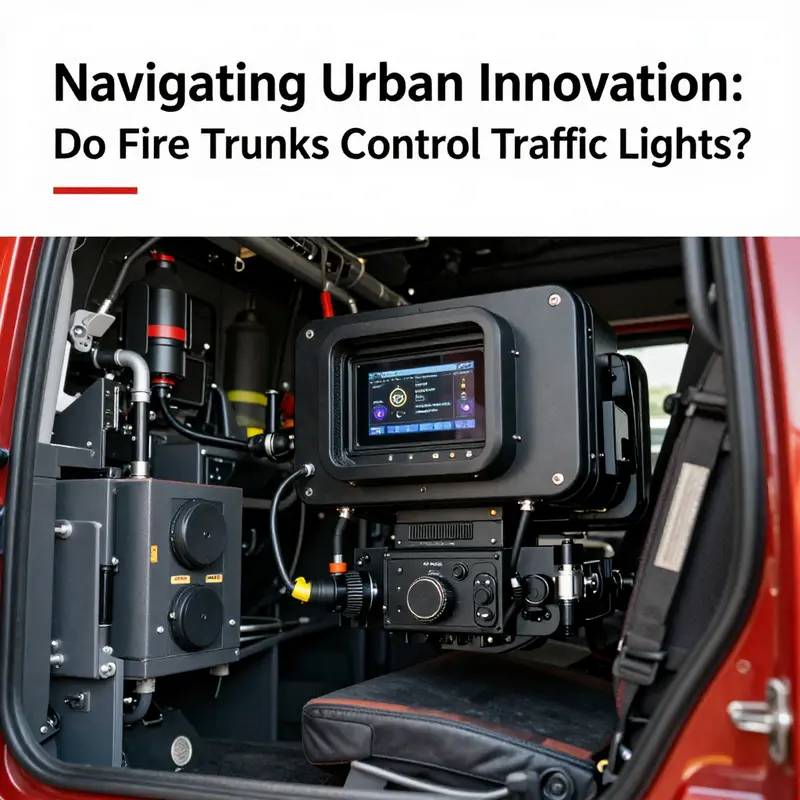
在各个城市,紧急车辆优先权依赖于移动响应者和信号网络之间的分层、自动化对话。消防车向附近的交叉路口传输包括位置、速度和路线的数字配置文件。控制器评估安全性:交叉交通是否清晰?如果是,他们将预emption周期以授予接近方向的绿灯窗口,并可能与相邻的信号协调以形成绿灯进展。如专用短程通信(DSRC)和蜂窝网络(包括5G)等技术以低延迟和高可靠性传输这些消息,有时传达速度和估计到达时间以改进时间计划。结果是绿灯波,让引擎以最小延迟通过走廊交叉路口,同时保护行人和其他道路使用者的安全。安全、可靠性和维护是必不可少的:认证和加密保护信号,冗余和备用逻辑在链路中断时保持操作安全,运营商保持监督。目标是不要覆盖交通法规,而是创建一个受控的、临时的优先权,以适应交通现实,一旦紧急车辆通过,就返回正常操作。在实践中,城市在扩展到走廊之前在这些系统上试点单个交叉路口,并建立治理框架以确保机构之间和供应商之间的互操作性。公共安全的好处包括更快的响应时间和减少车辆磨损,同时保持所有道路使用者的公平性和安全性。对于那些寻求更深入的技术深度,美国交通部提供了有关紧急车辆优先权和标准的详细信息:https://www.transportation.gov/technology/emergency-vehicle-preemption
信号、警笛和街道:重新审视城市结构中的紧急车辆交通信号灯控制
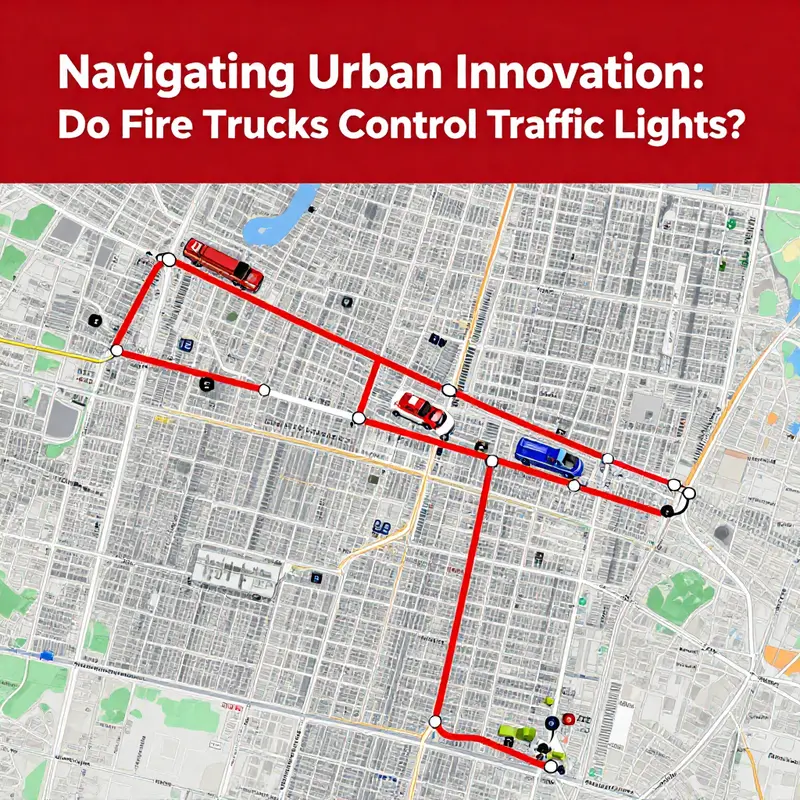
When a fire truck roars toward an intersection, the ordinary rhythm of city traffic shifts in a way that feels almost cinematic. The siren’s wail punctures the soundscape, the flashing lights paint the pavement with urgency, and the street itself seems to lean in to a tighter schedule. The question that often follows is simple, almost irresistible in its clarity: do fire trucks control traffic lights? The answer is layered and nuanced. They do not flip a switch, pull a lever, or press a pedal that directly commands a light to turn green. Yet they can trigger a web of automated responses within a city’s smart traffic ecosystem that makes the path ahead of them clearer, faster, and safer. In other words, they don’t control the signal in the old sense, but they can steer the signal system in ways that optimize a life-saving mission.
To understand how this works, one has to start with the architecture of modern urban traffic management. A city’s traffic signals, at their most advanced, operate not as isolated boxes but as nodes in a network. They talk to each other, share data, and respond to evolving conditions on the ground and in the air. At the heart of this network is a suite of technologies designed to interpret a moving emergency and translate it into signal behavior that favors our responders while preserving safety for everyone else on the road. The most talked-about of these technologies is priority signal pre-emption, where an approaching emergency vehicle can prompt a change in a signal’s phase. This can manifest as a direct green light for the vehicle’s path, a staged sequence that clears a corridor, or a more nuanced approach that reduces unnecessary stopping. The essence is not about the vehicle issuing a command from within its cab, but about the vehicle’s presence, trajectory, and predicted arrival time becoming a data point that the traffic system uses to adjust its choreography.
Several mechanisms enable this collaboration between fire trucks and traffic lights. In cities that have embraced cellular vehicle-to-everything (C-V2X) or similar wireless frameworks, the emergency vehicle broadcasts or shares identifiers and trajectory information with roadway devices and the traffic management center. The signals can then align to favor a green progression along a corridor that would otherwise require multiple lights to switch in sequence, creating what engineers call a green wave. In practice, this means fewer accelerations and decelerations, less idling, and an evacuation of delay that compounds quickly at dense urban intersections. The effect is not merely convenience; it translates into measurably faster response times, lower fuel consumption, and reduced emissions—outcomes that extend beyond the immediate needs of a fire crew to the broader city environment.
Theoretical discussions of signal pre-emption are mirrored in real-world experiments and simulations. A well-cited line of inquiry centers on the idea that emergency vehicles can trigger automated systems that adjust signals as they approach. A prototype and subsequent field tests have shown that when a system is properly tuned, the vehicle’s arrival time at an intersection can be shortened through a predictable sequence of signal changes. This approach, while technologically sophisticated, still asks for careful calibration. An overly aggressive green-wave policy risks compromising other road users or creating unsafe driver behaviors. That balance—accelerating an emergency path while maintaining safety for crossing pedestrians, other drivers, and cyclists—is the core challenge researchers and practitioners wrestle with when they design these systems.
If we look more closely at the technology stack, the logic behind emergency-light priority becomes clearer. The system must detect the vehicle’s approach with high reliability. It can rely on signals from the vehicle’s siren and flashing lights, GPS-based localization, or dedicated short-range communications. The choice of detection method affects latency, reliability, and coverage. A robust system can fuse multiple inputs to reduce false positives and maintain consistent behavior as traffic patterns shift throughout the day. Once detected, the traffic signal controller consults a set of policies that govern how the light should respond—whether to pre-empt a single intersection, create a rolling green corridor, or coordinate with adjacent signals to optimize downstream traffic flow. What looks like a single light changing is in fact part of a larger, cooperative sequence that unfolds across multiple nodes in a city’s transport matrix.
The mathematics of this orchestration is not merely an exercise in algorithmic elegance. It is grounded in the practical need to minimize door-to-life-saving interventions. The literatures that examine these systems emphasize that the gains come from reducing stops at red lights and smoothing the vehicle’s speed along its route. In many large urban environments, the combination of rapid signal pre-emption and intelligent routing can shave precious minutes, sometimes more. The impact grows when one considers the cumulative effect: fewer idling emissions, reduced congestion along alternate routes as drivers adapt to the changing signal choreography, and a more predictable response for dispatch centers that can nudge incoming units toward the most favorable corridors.
Within this landscape, the fire truck remains the initiator of urgency, not the sender of order. The vehicle’s crew relies on a suite of training, protocols, and radio communications that provide safety and situational awareness. The on-board crew still adheres to standard operating procedures that govern speed, lane discipline, and crossing behaviors. The traffic system, meanwhile, absorbs the vehicle’s potential impact and acts to optimize the intersection, balancing the urgency of the emergency with the safety of all road users. It is a partnership, not a command-and-control hierarchy. The result is a city that can respond more rapidly to life-threatening calls while preserving the broader integrity of its streets.
The research results driving this shift are compelling. Studies and reviews show that modern intelligent traffic-light systems, particularly those leveraging C-V2X and related VANET (vehicle-to-vehicle and vehicle-to-infrastructure) architectures, enable true priority signal pre-emption. These findings reinforce the practical claim that emergency vehicles can experience faster, smoother journeys through dense networks with fewer interruptions at intersections. The reporting also emphasizes that the benefit is not just a single-vehicle victory. By coordinating with a broad set of traffic participants and systems, the priority mechanism can improve network-wide efficiency, reducing queue lengths and smoothing travel times across multiple corridors. In essence, the system helps the city to anticipate and adapt to the unpredictable nature of an emergency, turning what could be a claustrophobic tangle of red lights into a navigable stream.
Simulation work adds a valuable layer of evidence. Platforms like OMNeT++, SUMO, and VEINS simulate the complex dance of moving vehicles, traffic signals, and wireless communication. These simulations, particularly when configured with 802.11p protocols, reveal that VANET-enabled traffic-light control can drastically reduce the average response time for emergency vehicles in large urban settings. But simulations also show the trade-offs. They quantify how changing a signal duration or the timing of a green phase can influence other traffic streams, fuel consumption, and even emissions. The most compelling outcomes come from policies that do not merely switch lights but reveal the expected red-light duration to approaching drivers. When drivers can see how long a red phase is likely to last, many behave more predictably. Some may slow down, others may reroute, and a portion may proceed with greater caution, all of which can simplify the dispatch path for the emergency unit and reduce the risk of secondary incidents.
This is where the discussion often enters the realm of policy and urban design. The deployment of such智慧 systems requires a careful framework that defines when and how a signal can be pre-empted, what backup measures exist if communication fails, and how pedestrians are protected during rapid signal transitions. It also demands thoughtful governance, ensuring that emergency responders retain priority access without eroding public trust in traffic safety. The ethical dimension is explicit: the goal is to save lives and minimize harm to all road users. In practice, that means robust testing, transparent performance metrics, and continual refinement of both hardware and software components.
在这个背景下,消防车仍然是生命救援任务规划的工具,而不是随心所欲改写交通物理学的设备。驾驶员仍然必须谨慎地穿越路口,遵守在紧急情况下不会消失的规则。交通控制系统,从其部分来看,协同行动,将紧急情况转化为一系列信号行为,为前方车辆清出道路,同时保持路上其他人的秩序。文献中出现的共识是明确的:当谨慎并细心实施时,自动化的、车辆感知的交通信号灯控制可以带来可衡量的紧急响应时间减少和改善的安全结果。该系统通过不是让每个路口都向最近的响应者让路,而是通过协调更广泛、更智能的流动来实现这一点,预测车队可能行驶的地方以及其他用户如何对变化的信号做出反应。.
从城市规划师或准备换班的消防员的视角来看,这幅画面既是技术性的,也是实用的。技术现实是一个集成了传感器、无线通信和自适应控制器的网络基础设施。实用现实是一种强调沟通、情境意识和关于信号系统在不同情况下如何表现的一致预期的培训文化。这关乎知道何时绿灯波会有帮助,何时可能会为行人或横穿街道的交通创造不安全条件。这关乎认识到系统的价值不在于一个绿灯的瞬间,而在于整个走廊的整个时间序列的可靠性,驾驶员反应的可预测性,以及在任何链路失败时优雅恢复的能力。.
更广泛的含义超出了响应时间。减少路口的闲置时间可以降低燃料消耗和排放,有助于创造更健康的城市环境。它还对交通管理策略产生了连锁反应,使更高效的路线算法能够适应实时条件。当城市发展一种响应性、数据驱动的紧急信号控制方法时,它为进一步的进步创造了平台。例如,交通管理人员可以将实时走廊性能数据与调度中心共享,从而允许对路线、部署和资源部署进行动态决策。在一个良好集成的系统中,街道成为一个几乎实时感知、沟通和调整的活体生物,以支持关键事件。.
为了说明实用性方面,考虑一下这些系统的以人为本的方面。消防员团队被训练快速解读场景动态:火灾的位置、路口附近的危险、火焰可能蔓延的范围以及到达建筑物的最佳路线。交通信号灯系统反过来通过其自身的传感器解读这些数据,预测车辆将在几块街区前出现,以及红灯阶段在关键转弯处可能持续多长时间。这种协作旨在减少响应者的认知负荷。他们专注于手头的任务——将固定设备、软管和人员运到现场——而城市的数字网络处理绿灯阶段的低级定时。这个勇敢、高效的协议的骑手是安全:信号行为的变化必须是可逆的、透明的和可验证的,以便行人和驾驶员了解为什么灯会变以及他们需要多长时间做出反应。.
从更广泛的角度来看,这种演变代表了城市对移动性和紧急服务交付方式的转变。消防车和交通信号灯之间的关系反映了更深层次的趋势:从孤立的、机械的系统到集成、数据驱动的网络,这些网络在机构和技术之间共享目标。城市不再是单独组件的集合,而是一个协作生态系统,其中公共安全、交通效率和环境管理汇聚在一起。这种转变背后的科学——高级模拟、车辆到基础设施通信和自适应信号控制——在将其转化为治理、预算和街道上的日常实践时结出了果实。结果是,城市不是屈服于紧急服务,而是能够以更快的速度、更高的精度和更高的问责制应对危机。.
对于想要看到这种转变的实质性标志的读者,可以考虑紧急救援车辆类别如何界定支持此类任务的各种设备和能力范围。在这个类别中,可以探索旨在与智能基础设施协同工作的车辆和支持系统类型。将移动响应者的硬件和治理街道信号的软件之间的协同作用纳入更大对话的一部分,关于城市系统如何在其设计中变得更加有弹性和人道。尽管这个类别本身是一个工具目录,但背后的原则始终如一:技术应该扩展人类能力,而不应该侵蚀地面上的安全或能力。在实践中,这意味着不断测试、验证和改进信号对紧急存在的反应以及驾驶员如何感知随着救援车队通过而不断变化的景观。.
这里概述的证据和逻辑对城市居民和政策制定者都有实际的启示。消防车并不是在驾驶室内直接发出命令来控制交通信号灯。然而,通过精心设计、数据驱动和以安全为中心的系统,它们从一种间接控制中受益,这种控制优化了前方走廊。交通信号网络使用到达信息来调整其阶段,为紧急车辆创造更安全、更快的通道,同时保持横穿街道的交通秩序。这不是复杂性的简化,而是对竞争优先事项的复杂平衡:生命安全、效率和所有共享街道的人的安全。.
随着城市继续投资于更智能的基础设施,未来承诺有更无缝的集成。路口布局的重新设计、更强大传感器的部署以及车辆到基础设施通信的扩展可能会扩大优先信号策略的范围。下一代紧急响应实际上可能更多地由整个网络的时间空间协调能力来定义,而不是单一警笛的力量。当做得正确时,这种演变保留了公共服务的基本目的:保护生命、保护财产,并以尊严和速度将社区推向安全。以警笛开始的城市流动性篇章,以更明智而不是仅仅更快的城市结束,这可能是一种最引人注目的进步。.
对于寻求直接进入实用方面的读者,您可以通过紧急救援车辆类别进一步了解这种协调如何在更广泛的紧急响应基础设施生态系统中进行分类和考虑。这个资源强调了支持快速、安全和协调通过城市景观的设备范围。. 紧急救援车辆类别
阐明关于紧急车辆智能交通信号控制的更广泛学术对话的外部资源为这些实用讨论提供了科学基础。证据表明,当实施时,对可靠性、安全和公平的关注,智能的、车辆感知的交通信号灯控制可以带来有意义的响应时间改进和交通运营改进。参见2025年发表在《交通运输研究C部分》上的研究,对这些问题进行了严格的审查,并有力地论证了它们在现代城市中的价值。. 应急车辆智能交通信号灯控制系统
最后的想法
智能交通信号灯系统与允许消防车影响交通信号的科技进步相结合,对于提高应急响应时间至关重要。虽然消防车不能直接控制交通信号灯,但它们与这些系统通信的能力增强了城市环境中的安全性和效率。随着技术的不断发展,应急车辆与交通管理之间的协调将在保障社区安全和提高第一响应者的有效性方面发挥越来越重要的作用。.

