
















Fire truck games provide a unique simulation of emergency responses that effectively engages players in various critical tasks usual in firefighting scenarios. For business owners looking to understand these simulation mechanics, mastering gameplay elements can translate into better operational strategies for real-life scenarios. This guide will explore the essential aspects of playing fire truck games, covering core gameplay elements, specific controls for different platforms, the objectives and challenges players face, and advanced features that enhance the gaming experience. By delving into these topics, you will gain insight into how these games can inform operational efficiency in emergency response management.
Racing the Clock and Aiming the Stream: The Core Mechanics Behind Playing the Fire Truck Game
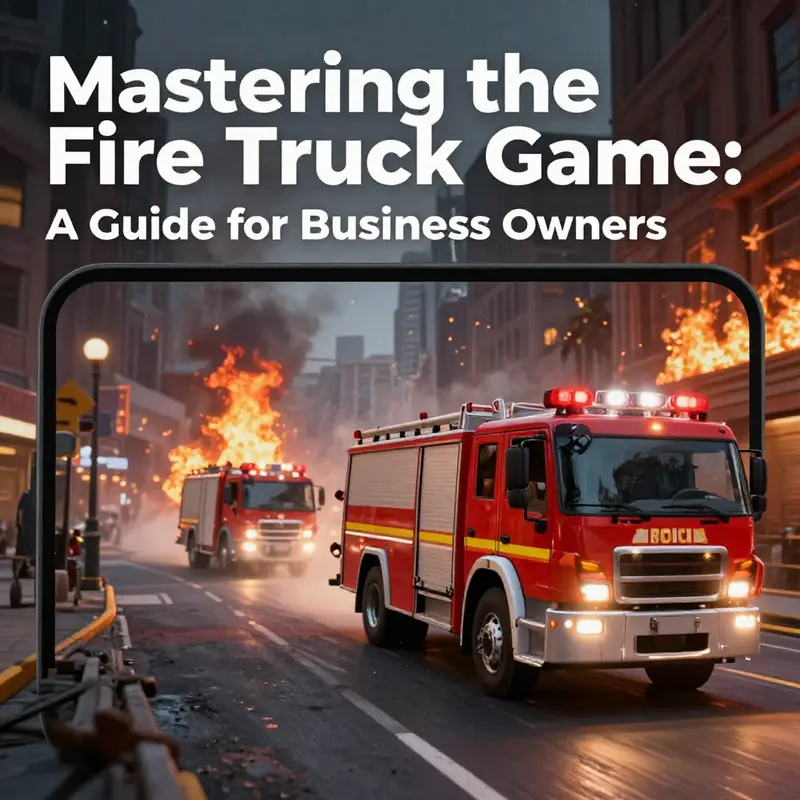
As you progress, the broader narrative of playing the fire truck game—driving, aiming, managing resources, and navigating—coalesces into a coherent skill set. The pursuit of speed must be tempered by the discipline of accuracy; the appetite for risk must be balanced by the prudence necessary to protect civilians, equipment, and the vehicle itself. The gameplay loop becomes a discipline of rehearsed responses: assess the scene, move with purpose, aim with precision, conserve with conscience, and adapt to changing conditions. When these elements align, players experience a sense of fluency that feels almost natural. The game stops being about a single success and becomes about a reliable, repeatable approach to emergencies. It is this fluency that invites players to explore increasingly complex missions, to test their limits, and to refine their mental models of how a fire response unfolds in a controlled, simulated environment. The chapter’s core argument remains simple: the essence of the fire truck game lies in the interplay of speed, control, target accuracy, resource discipline, and situational understanding. Mastery emerges when you can orchestrate these elements together, delivering swift responses without sacrificing safety or precision. The result is not merely a satisfied win; it is the satisfaction of having navigated a challenging scenario with calm, deliberate competence while staying attuned to the ever-present tempo of the city around you. For readers who crave a deeper exploration of equipment configurations and variations within the game world, the fire fighting trucks category offers a curated view into the breadth of designs and practical considerations that shape how these simulations present themselves. Airport fire trucks live at the crossroads of technology, policy, and public trust. Their engineering—vast payloads of water, foam, and powder; high-capacity turrets; and rugged, off-road capable frames—must be read not only as a feat of mechanical design but as a statement about a jurisdiction’s commitment to safety and resilience. The geopolitical dimension emerges most clearly in how international standards are translated into national procurement choices, training programs, and maintenance ecosystems. Aviation authorities codify performance floors—high flow rates, ample extinguishing agents, and the ability to reach any runway point within a few minutes. Those rules push designers toward modular, interoperable platforms that can endure diverse climates and terrains while maintaining compatibility with global firefighting doctrine. The immediate payoff is operational interoperability at major hubs and military airbases, where uniform response expectations enable coordinated action across borders and contingencies. This regulatory backbone ensures that speed and suppression capacity are not exotic luxuries but predictable, auditable requirements embedded in fleet planning and service life decisions.
External resource: https://www.nfpa.org/
Steering, Sirens, and Streams: Mastering the Specific Controls of Fire Truck Games
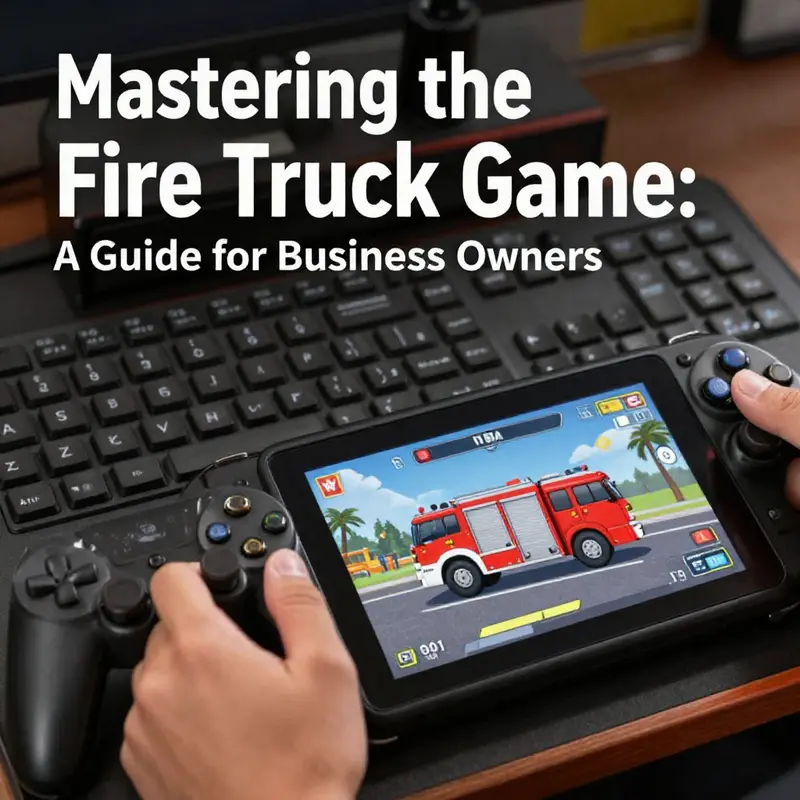
Learning to play a fire truck game starts with listening to the vehicle’s controls as if you were tuning a second engine. The language of these games is not just speed or accuracy; it is the way you translate pedal pressure, wheel turn, and aim into motion and effect. Across keyboard and touchscreen formats, the core ideas stay the same. You must move, steer, and modulate your pace while choosing when to activate pumps, hoses, or sirens. In many titles, the most immediate challenge is immediately evident: get the big truck moving in a straight line, then guide it through traffic and obstacles with precision. The feeling of control comes not from brute force but from knowing exactly which key or button translates to which physical action on the screen. The diversity of control schemes can be daunting at first, yet the differences are mostly about nuance. A single game might use the arrow keys for movement, another might assign movement to a compact digital joystick, and yet another might separate steering from acceleration into two distinct touch zones. Each approach demands a slightly different reflex, but the ultimate objective remains unchanging. reach the scene swiftly, but with enough caution to prevent a new hazard from appearing in your wake. One of the most important things to remember is that the stakes in fire truck games—time, safety, and success—are designed to feel real. The controls are crafted to reward quick thinking and steady hands in equal measure. The following notes pull together the most common control schemes and explain how to use them to your advantage, with attention paid to both PC keyboard and mobile touch versions, while keeping a steady eye on the broader arc of play. In practice, the keys you press and the gestures you make become an emotional map of the game world. When you understand that map, every mission begins to unfold with a logic you can anticipate rather than react to blindly. The starting point for any player is simple: identify the basic moves and the primary actions, then learn how they interact under fire, traffic, and time pressure. The most familiar framework divides into two layers: the movement layer and the action layer. The movement layer is where you learn to drive—accelerate, brake, and steer. The action layer involves tools that extend your house on the fire ground: water cannons, hoses, ladders, sirens, and accessories that can alter your effectiveness. The interplay between these layers creates the rhythm of play. When you master steering, you establish the rhythm of approach. In games that rely on keyboard inputs, that rhythm often begins with the arrow keys. The up and down arrows manage forward and reverse motion, while the left and right arrows govern steering. It is tempting to hammer the forward key and quickly whip the wheel, but the most satisfying progress comes from smooth, continuous input. A steady hand helps you thread through gaps in traffic and maneuver around obstacles without losing precious seconds. The spacebar often doubles as a brake and, in some versions, as an ignition or activation for the water tool. This double duty is a reminder that in many fire truck games, the same control piece can influence both motion and function depending on the context. When you reach the incident, the water hose or cannon takes center stage. Aiming the jet requires a different kind of precision from driving. Most titles translate aiming into a separate set of inputs: either a secondary set of keys or a responsive on-screen joystick that moves the nozzle independently of the truck’s direction. The effect is not just about direction; it is about pressure and reach. Some games demand a fine balance between hose angle, water pressure, and the angle of attack on the flames. In other words, the interaction is not simply point and shoot; it is point, adjust, and hold, with the tempo dictated by the approaching danger. The sense of control is enhanced when you can predict how adjustments in one control axis affect the outcome in another axis. For example, turning the steering wheel to line up the truck with a burning facade while at the same time tilting a nozzle to a higher arc requires a subtle dance of inputs. This dance is often aided by in-game cues: a reticle that glows brighter as you align with the target, a subtle vibration in the controller, or a screen glow that confirms you have a direct line of attack. The best practice is to practice. Repetition builds the mental model of how inputs translate into action under pressure. If a game includes a dedicated siren button, it is usually placed for rapid access to clear traffic and create space around your approach. The siren’s effect is not merely cosmetic; it changes how other vehicles respond and how you move through dense scenes. In most titles, activating the siren precedes an urgent push through a congested stretch. The sound design of the siren becomes a cue for the player to adjust speed and trajectory in anticipation of oncoming hazards. Some players treat the siren as a signal to prioritize a clean lane, while others use it to temporarily disrupt the flow of traffic for a safer, more efficient arrival at the fire ground. As players become more confident, they encounter more specialized controls that add depth and strategy. Hydraulics, ladders, and pumps appear as mid- or late-game tools that extend the trunk’s functionality beyond basic driving. A ladder or platform might require an additional pad or button to deploy. A pump meter might demand a precise timing window to achieve maximum extinguishing efficiency. In more advanced or simulator-oriented versions, you may find autopilot or auto-route features. These can guide the truck toward the nearest incident and automatically engage certain functions once you reach the destination. The presence of autopilot can be a double-edged sword: it reduces the cognitive load but can also dim the sense of personal mastery. The careful player learns to use autopilot sparingly, reserving the manual touch for the moments of critical decision—when accuracy, aim, and timing separate wins from losses. In mobile versions, the control philosophy shifts again toward touch responsiveness and spatial layout. A typical arrangement places movement on a left-side panel with small directional buttons, while the right side houses action controls. The directional cluster can be tapped to move forward or reverse, and a turn can be initiated by tapping the corresponding direction. A separate, more prominent action button handles water hose or other gear, enabling rapid activation when time is critical. In addition, mobile interfaces sometimes offer extra features such as a headlight toggle or windshield wiper control, often represented with easily recognizable icons near the bottom of the screen. These features may appear as tiny affordances, yet they contribute to a more immersive feel and deeper sense of control as you learn to balance visibility with reach in a smoky scene. The design of each control scheme affects how you approach a mission. Keyboard setups reward a compact, cross-body technique, where a single hand manages acceleration, braking, and steering with minimal finger travel. Touchscreen layouts reward accuracy and fast, deliberate taps, with the left side acting as a steering pad and the right side delivering high-impact actions like the water jet. Regardless of platform, the core skill remains: translating intention into motion with speed and precision. The best players learn to create a mental model of the level before they enter it. They anticipate where to brake, where to swing the nozzle, and where to position the truck so that the water stream reaches the flames without bouncing off obstacles or sending their vehicle into a perilous collision. A practical way to build this model is to practice in controlled segments. Start by getting comfortable with movement alone. Then add the water-cannon task in a low-stakes area, such as a mock room or a calm exterior scene. Gradually escalate to more crowded environments with moving hazards, requiring you to thread through gaps while maintaining a stable aim. As your confidence grows, push your limits with timed runs to simulate the pressure of a real emergency. The learning curve is not only about speed but also about spatial awareness and resource management. You must monitor your fuel or pump energy, if the game includes it, and plan your route to minimize wasted time. In some titles, the truck’s turning radius and brake balance can affect how quickly you can realign after a near-miss. A wider arc might be necessary to avoid a pedestrian crowd or a stalled car; a shorter, tighter turn might work better in a narrow alley. Each choice changes your path to the goal and often determines whether you reach the scene with the water ready to go or with a momentary delay that costs precious seconds. When you finally extinguish the flames, the scene often requires a precise parking maneuver or an endpoint task. The ability to reverse into a bay, align with a drop-off point, or reset the truck for the next level may hinge on subtle control details, such as how gradually you ease off the accelerator or how smoothly you release the brake. Mastery here completes the cycle: you arrive, you extinguish, you secure the vehicle, and you prepare for the next challenge. For players who want to deepen their command of the game beyond reflexes, there is a meta layer to consider. Understanding how different games implement control feedback—haptic signals, visual reticles, or audio cues—can guide you toward the most intuitive setups. Some players prefer customizing key bindings to map movements and actions in a way that mirrors their real-world driving experiences. Others optimize sensitivity settings to balance quick response with stability. The beauty of fire truck games lies in their diversity: one title may reward aggressive, high-speed driving with aggressive nozzle positioning, while another may stress careful, methodical operation under time pressure. In either case, the shared thread is clear: you become a better operator by practicing with intention, reading the feedback from the game, and refining your approach through deliberate repetition. If you’re curious about the broader world of firefighting equipment that informs these digital experiences, you can explore related offerings in the catalog of fire-fighting vehicles that span engines, aerial units, and support apparatus. For a practical reference to the kinds of equipment that inspire these games, consider exploring the range of real-world fire-fighting trucks and related gear at this source: Geography then becomes a map of risk and opportunity. In the Western Hemisphere, sanctions enforcement and maritime security concerns drive visible patterns of movement. The Caribbean and adjacent airfields illustrate how financial and political constraints ripple into operational footprints, shaping the cadence of training, exercises, and real-world missions. For broader global reach, planners outline a network of forward nodes in Europe and other allied regions, designed to cushion the cost of long-haul operations and to shorten response windows during contingencies. The idea of space-inspired logistics—orbital refueling concepts and depots—emerges as a conceptual extension of the same logic: diversify locations, diversify vulnerabilities, and maintain continuity of capability under pressure. As a concrete illustration, regional coverage of Caribbean deployments and sanctions enforcement has been discussed in defense analyses, highlighting how geopolitical levers translate into posture and cadence on the ground:. As you progress, you’ll find that the line between game and practice blurs, and the skills you build with these controls translate into a deeper appreciation for the craft of firefighting. For a broader context on how fire apparatus are designed and deployed in the real world, you can also consult general resources on the topic, such as accessible overviews on fire apparatus types and their roles in emergency response: https://en.wikipedia.org/wiki/Fire_engine. The journey from keys to flames is a small but telling mirror of the broader mission: act swiftly, aim true, and move with purpose, even when the clock is running against you. In the end, mastering the specific controls in fire truck games is less about memorizing a fixed sequence and more about building a responsive dialogue with your virtual rig. As you listen to the feedback—the click of a key, the glow of a reticle, the press of a button—you discover that skill emerges from fluency: not perfect form at first, but an emergent competence born of deliberate practice, patient adjustment, and an ever-deepening sense of what it takes to reach the scene and do the work with confidence.
Racing to the Scene: Mastering Objectives and Challenges in Fire Truck Games
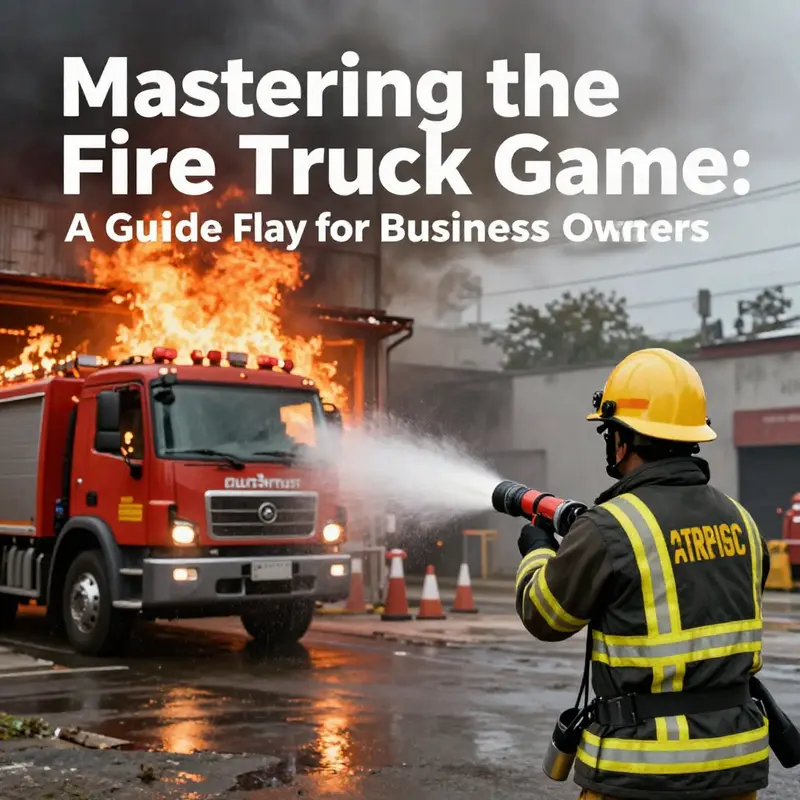
Fire truck games invite players into a tightly timed dance where speed is only part of the equation. Beyond the bright sirens and flashing lights, the experience hinges on a handful of robust objectives that recur across titles, from rapid response to precise suppression and careful rescue. The core idea remains simple: reach the incident quickly, but do so with control, then convert momentum into effective action once you arrive. This blend of immediacy and discipline creates a rhythm that repeats with each level, growing more intricate as fires become tougher, roads busier, and the clock tighter. The best players internalize this rhythm and let it guide every decision, turning a high speed drive into a careful, strategic operation rather than a reckless dash. In this chapter, the common threads are traced through a narrative arc that emphasizes how the objectives shape play and why the challenges grow as the game progresses. The result is a coherent picture of how skill develops from first pickup to expert run, a picture that applies whether you are maneuvering through crowded streets, facing high altitude or rooftop challenges, or juggling multiple tasks under time pressure. For those who want a tangible sense of the equipment landscape that often informs these games, consider exploring the fire fighting trucks category. caminhões de combate a incêndios. This link helps ground the digital challenge in the kinds of platforms and configurations that underpin many experiences, even as each title adds its own flavor to the core loop. On the broader side, for readers who want to understand real world context, there are safety resources that illuminate how professional practice translates into game design and practice. See the NFPA resources for real world safety context. NFPA Fire Safety.
Além do Básico: Precisão, Estratégia e Realismo no Jogo do Caminhão de Bombeiros
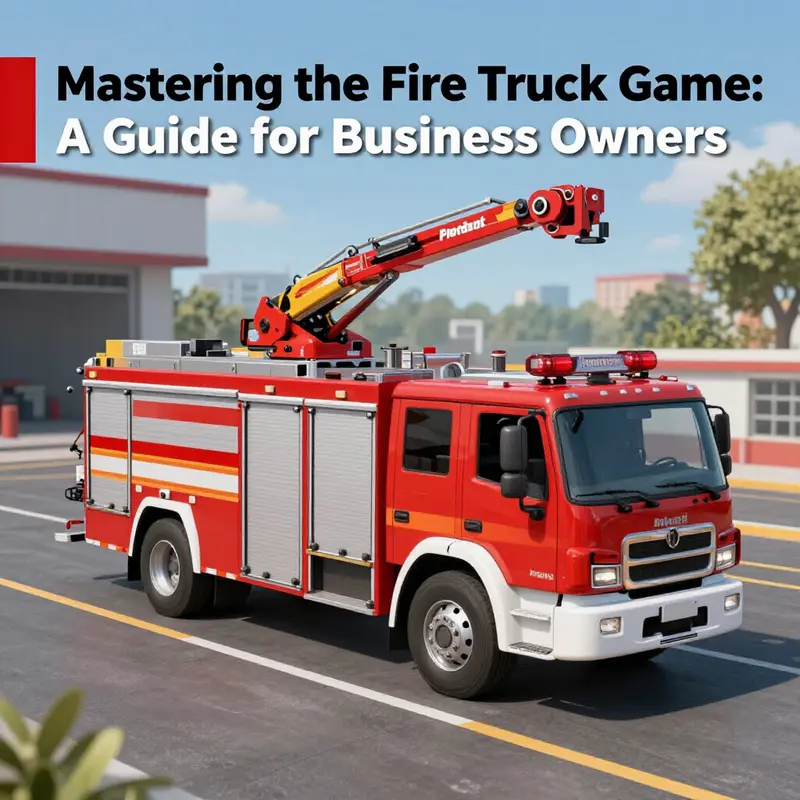
Quando você sai da superfície da ação simples de arcade e entra no sandbox mais profundo do Jogo do Caminhão de Bombeiros, você entra em um espaço onde cada movimento importa. O título descrito aqui não é meramente sobre velocidade ou busca por pontos; é um estudo em precisão, planejamento e realismo. O jogo celebra a tensão de uma resposta de emergência: o relógio está sempre correndo, o terreno pode ser implacável, e um movimento errado pode gerar atrasos que colocam pessoas em risco. Neste espaço, recursos avançados elevam a experiência de direção básica para uma prática estratégica e direcionada que espelha a tomada de decisão do mundo real, embora em um ambiente simulado e controlado. As camadas de complexidade se revelam não como uma lista de tarefas separadas, mas como uma única disciplina fluida onde controle, tempo e precisão se fundem em um conjunto de habilidades coerente.
No coração do jogo avançado está o controle preciso do veículo. É fácil pensar em dirigir como simplesmente virar à esquerda ou à direita, mas aqui o controle é também sobre equilíbrio e momentum. O caminhão se comporta como uma máquina viva cujo centro de gravidade muda a cada curva, aceleração ou carga que você carrega. A maestria vem de aprender a inclinar-se em uma curva sem tombar, como modular a velocidade em uma estrada sinuosa e como recentralizar o caminhão quando uma carga inclina o chassi. O jogo recompensa a sutileza em vez da força bruta: um leve ajuste na entrada esquerda ou direita pode evitar uma parada, uma roda raspada ou um cume perdido. É aqui que as teclas de seta esquerda e direita se tornam uma batuta de maestro, guiando o caminhão através de uma melodia de movimento que mantém o veículo estável em terrenos irregulares e pavimento escorregadio. O condutor deve ler a superfície, sentir a carga se deslocando atrás e se adaptar em tempo real. Esse reflexo adaptativo é o que separa motoristas confiantes daqueles que confiam apenas na aceleração bruta para superar obstáculos.
O gerenciamento de tempo e o planejamento de rota formam o segundo eixo do jogo avançado. O tempo da missão é menos um pano de fundo e mais uma restrição definidora que molda cada decisão. Os jogadores aprendem a ler o mapa como uma paisagem dinâmica, em vez de um diagrama estático. Padrões de tráfego, fluxo de pedestres e gargalos rodoviários tornam-se variáveis a serem otimizadas. A rota mais rápida no mapa nem sempre é a mais rápida na prática; um atalho por uma zona de alta congestão pode parecer tentador até você encontrar uma fila em um semáforo ou um veículo parado que bloqueia seu caminho. Jogadores experientes ensaiam um manual mental: identificar um corredor confiável com menos interrupções, antecipar pontos de estrangulamento e deixar margem para desvios quando encontrar perigos imprevistos. Alguns jogos introduzem recursos de piloto automático ou rota automática em níveis de dificuldade mais altos, mas mesmo esses sistemas são melhor usados como redes de segurança, em vez de atalhos. A arte está em saber quando confiar na automação e quando substituí-la por uma alternativa cuidadosamente escolhida.
O gerenciamento e a verificação de carga mantêm o senso de propósito fundamentado em um briefing de missão. O canto superior direito da tela geralmente exibe a quantidade necessária de carga que você deve entregar, atuando como um indicador de progresso em tempo real. Uma armadilha comum é sair do ponto de partida com a mistura de carga errada ou uma contagem incompleta. Quando os números não se equilibram no momento em que você chega ao destino, a missão pode falhar, mesmo que o incêndio tenha sido extinto ou a rota percorrida perfeitamente. Isso leva os jogadores a adotar um processo, não apenas um plano: verificar o inventário antes da partida, contabilizar cada item coletado e verificar novamente a contagem na chegada. No jogo avançado, isso se torna uma prática de fluxo de trabalho disciplinado. Você aprende a incorporar verificações que impedem que erros entrem na fase de execução, assim como os respondedores reais verificam equipamentos, rádios e recursos de extinção antes de sair do quartel. A verdadeira recompensa surge quando você vê a contagem de carga alinhada com o objetivo sob a pressão do relógio, confirmando uma operação bem executada.
A física realista é talvez o recurso mais transformador nesses jogos. Um motor de física faz mais do que simular uma colisão; ele dá vida à emoção da viagem. A interação entre velocidade, distribuição de peso, distância de frenagem e condição da estrada cria um mundo tátil onde as decisões parecem consequentes. Acelerar muito rápido em uma superfície escorregadia fará você derrapar; frear com muita força em uma longa descida arrisca derrapagem ou tombamento. Cargas mais pesadas alteram o raio de giro e exigem distâncias de parada maiores, demandando uma cadência mais suave de entradas e uma abordagem mais medida para manobrar em ruas estreitas. O sistema de física recompensa jogadores que ajustam sua técnica ao ambiente, em vez de tentar combatê-lo. A própria superfície da estrada se torna um personagem—asfalto molhado, geada, cascalho ou buracos influenciam a tração e o tempo de resposta. Ao aprender a jogar, você começa a intuir como o mesmo comando produz resultados diferentes dependendo do contexto, uma percepção que eleva a experiência de controle mecânico para prática matizada.
A alta pressão do cenário não é um humor incidental, mas uma escolha de design destinada a aguçar a cognição sob estresse. O relógio avança implacavelmente, e qualquer desvio do plano pode se propagar em conclusão mais lenta ou objetivos fracassados. Jogadores avançados cultivam um ritmo calmo e metódico, mesmo enquanto o ritmo dos eventos acelera ao seu redor. Eles desenvolvem o hábito de avaliação situacional rápida: qual é a pista ideal a tomar, qual é a maneira mais segura de contornar um obstáculo, quando aliviar o acelerador para preservar a estabilidade e como cronometrar a aproximação para que a mangueira ou o canhão de água possam ser implantados com o mínimo de reposicionamento. Essa disciplina espelha o mundo real, onde compostura e tomada de decisão constante geralmente determinam o sucesso em um ambiente de alto risco. O jogo transforma essas habilidades mentais em um campo de prática para resiliência, ensinando como equilibrar foco e flexibilidade à medida que as condições mudam de momento a momento.
Um fio importante que une esses recursos é a tradução de princípios do mundo real em um ritmo jogável e aprendível. O jogador avançado não segue meramente um conjunto de manobras mecânicas; eles internalizam um fluxo de trabalho que pode ser adaptado a diferentes layouts, cargas e cenários de incidentes. Eles praticam a projeção de resultados: se eu fizer esta curva a esta velocidade, qual é o alinhamento esperado pós-curva, e manterei espaço livre para o hidrante ou o equipamento de escada? Eles treinam seus sentidos—o que o veículo parece em inclinação, o que o painel comunica através de uma vibração no volante, o que a ausência de um sinal de trânsito implica sobre o tempo. Essa transferência de conhecimento é a arte de jogar o jogo como uma simulação, uma ponte entre as regras simplificadas de um quebra-cabeça inicial e a coreografia sofisticada de uma resposta de emergência da vida real.
Para enriquecer ainda mais o senso de realismo, os jogadores frequentemente exploram o ecossistema mais amplo que cerca o Jogo do Caminhão de Bombeiros. A prática de preparação cuidadosa, operação precisa e tomada de decisão estratégica tem paralelos com o manuseio de equipamentos pesados em frotas reais. Para jogadores que desejam conectar proficiência virtual à familiaridade do mundo real, há valor em explorar o espectro mais amplo de conceitos de equipamentos pesados e resposta a incêndios industriais. Por exemplo, muitos jogadores acham útil examinar categorias como Caminhões de Bombeiros Industriais, que ilustram a escala, considerações de design e papéis infraestruturais de veículos maiores e especializados. Essa exploração ajuda a fundamentar o jogo em um contexto tangível, preservando ao mesmo tempo a ética e as restrições distintas do jogo de simulação. Veja Industrial Fire Trucks para uma noção de como plataformas mais pesadas, considerações de equilíbrio e sistemas de fixação influenciam o desempenho em campo, conhecimento que pode informar uma abordagem mais intencional à prática virtual.
A interação desses elementos avançados também convida a uma reflexão mais ampla sobre como o jogo recompensa ações consistentes e ponderadas. Não basta chegar rapidamente a uma cena; o caminho até lá deve ser escolhido com previsão que considere peso, superfície, rota e restrições de carga. Os melhores desempenhos abordam cada missão como um problema holístico com partes interdependentes. Eles perguntam a si mesmos não apenas como apagar uma chama ou entregar carga, mas como configurar sua rota para que cada ação subsequente permaneça viável sob pressão de tempo. Na prática, isso significa integrar os três fios centrais—controle de precisão, planejamento de rota e verificação de carga—em um procedimento coeso. Significa construir uma lista de verificação mental que possa ser aplicada em segundos e sob estresse: ajustar o equilíbrio para aderência, confirmar contagens de carga, selecionar uma rota que minimize risco e atraso, depois executar com um ritmo que alinhe velocidade com estabilidade. Quando esses elementos se encaixam em concerto, a experiência transcende o mero jogo; torna-se um método praticado de pensar sobre resposta a emergências sob pressão.
Para leitores que buscam insights mais profundos sobre o panorama mais amplo de simulações de direção e como técnicas profissionais se traduzem na prática virtual, um horizonte útil se abre em comunidades e guias de simulação de direção relacionados. O ecossistema de guias da Comunidade Steam oferece tutoriais completos que dissecam técnicas profissionais de direção em títulos com física complexa e demandas de navegação. Embora os exemplos venham de um gênero diferente, as ideias centrais permanecem transferíveis: direção disciplinada, planejamento antecipatório e gestão de risco calibrada. Explorar esses recursos pode ampliar a perspectiva sobre como os princípios discutidos aqui se aplicam a uma variedade de experiências de simulação de alto risco. Link de recurso externo: https://steamcommunity.com/app/227300/guides/
No final, dominar os recursos avançados do Fire Truck Game é menos sobre memorizar uma sequência de movimentos e mais sobre cultivar uma mentalidade. É uma prática que combina manuseio de precisão com visão estratégica e disposição para tolerar o atrito de um ambiente exigente. Bons motoristas aprendem a antecipar, ajustar e executar, transformando o caos potencial em ação controlada e medida. O desafio permanece constante: manter a velocidade sem sacrificar a estabilidade, honrar as contagens de carga que você se compromete a transportar e manter o tempo da missão em um equilíbrio saudável com segurança e precisão. Quando você alinha esses elementos, o jogo revela sua recompensa mais rica—uma sensação de domínio sobre um mundo simulado onde cada decisão tem peso e cada corrida bem-sucedida constrói confiança para a próxima missão, mais complexa. E quando você combina esse domínio com uma consciência ponderada do campo mais amplo, você obtém insights não apenas sobre como jogar o jogo, mas sobre como as habilidades que você pratica no jogo podem ecoar em contextos práticos, informando abordagens mais seguras e deliberadas para tarefas do mundo real.
community safety
Entender como jogar jogos de caminhão de bombeiros vai além do entretenimento; pode fornecer insights inestimáveis para proprietários de empresas envolvidas em serviços de emergência. Ao focar nos elementos centrais da jogabilidade, controles específicos entre plataformas, objetivos e desafios que os jogadores enfrentam, e os recursos avançados disponíveis nesses jogos, as partes interessadas podem se preparar melhor para cenários da vida real. Engajar-se com essas simulações prepara indivíduos e equipes para responder de forma eficiente e eficaz em emergências. Abraçar os jogos como uma ferramenta de treinamento pode melhorar a prontidão, a eficiência operacional e os resultados potenciais em situações de crise.

