
















최상위 ARFF 트럭 제조사: 2025년 비즈니스 소유자를 위한 종합 가이드
다음과 같은 상황을 상상해 보세요: 이중 엔진 항공기의 빗물로 인해 미끄러진 활주로에서 벗어납니다. 연료가 타고, 짙은 검은 연기가 탈리크를 가득 채웁니다. 터미널 내부에서는 수백 명의 승객들이 경보음이 울릴 때 혼란스럽게 움직입니다. 외부에서는 시간이 흐르고 있으며, 국제 안전 기준에 따르면 90초 이내에 첫 번째 응답 차량이 현장에 도착해야 합니다. 거품 캐논이 준비되어 있고, 진압을 시작해야 합니다. 이는 연습이 아닙니다. 이 순간에는 재난과 통제된 구조 사이의 좁은 간격이 있습니다. 그 순간 모든 것이 하나의 기계에 달려 있습니다. 항공기 구조 및 화재 방지(ARFF) 트럭입니다.
공항 운영자, 항공 당국 및 화재 방지 사업 소유자에게 ARFF 트럭은 단순한 장비가 아니라 생명 구원 인프라의 핵심입니다. 이러한 특수 설계된 중형 차량은 빠르게 가속해야 하며, 대량의 물과 거품을 운반하고 필요 시 울타리를 뚫을 수 있어야 하며, 정밀하게 진화제를 전달해야 합니다. 실패가 허용되지 않는 고위험 환경에서 극심한 스트레스를 받으며 작동합니다. 지역 공항을 관리하거나 연간 수백만 명의 승객을 서비스하는 허브를 운영하는 경우, 선택한 ARFF 트럭 제조사가 공항의 긴급 대응 프로필에 직접적으로 영향을 미칩니다.
글로벌 ARFF 차량 시장은 빠르게 변화하고 있습니다. ARFF 트럭 제조사 - 오시코시 에어포트 제품, 로젠바우어, 이-원, 그리고 CIMC와 같은 신생업체를 포함하여 - 전기 드라이브트레인, 원격 터렛 조작 및 고급 열 이미징을 최신 모델에 통합하기 위해 경쟁하고 있습니다. FAA(139부 인증을 통해) 및 ICAO와 같은 규제 기관들은 응답 시간, 에이전트 용량 및 승무원 안전에 대한 기준을 계속해서 높이고 있습니다. 비즈니스 소유자에게 이 환경을 이해하는 것은 차량 사양뿐만 아니라 제조사의 신뢰성, 애프터세일즈 지원, 부품 가용성 및 장기적인 전체 소유 비용을 평가하는 것을 의미합니다.
세계적인 ARFF 트럭 제조사 중에서 적절한 파트너를 선택하는 것은 구매 결정 이상의 전략적 투자입니다. 이는 운영 안전, 규정 준수 및 투자 수익률에 대한 전략적 투자입니다. 이 가이드는 주요 제조사, 주력 모델, 주요 선택 기준 및 공항 화재 방지의 미래를 형성하는 트렌드를 안내할 것입니다. 당신이 팀을 업그레이드하거나 처음부터 건설하든, 다음에 제공되는 통찰력은 당신의 비즈니스와 보호하는 삶을 위한 정보 있고 자신 있는 선택을 도와줄 것입니다.
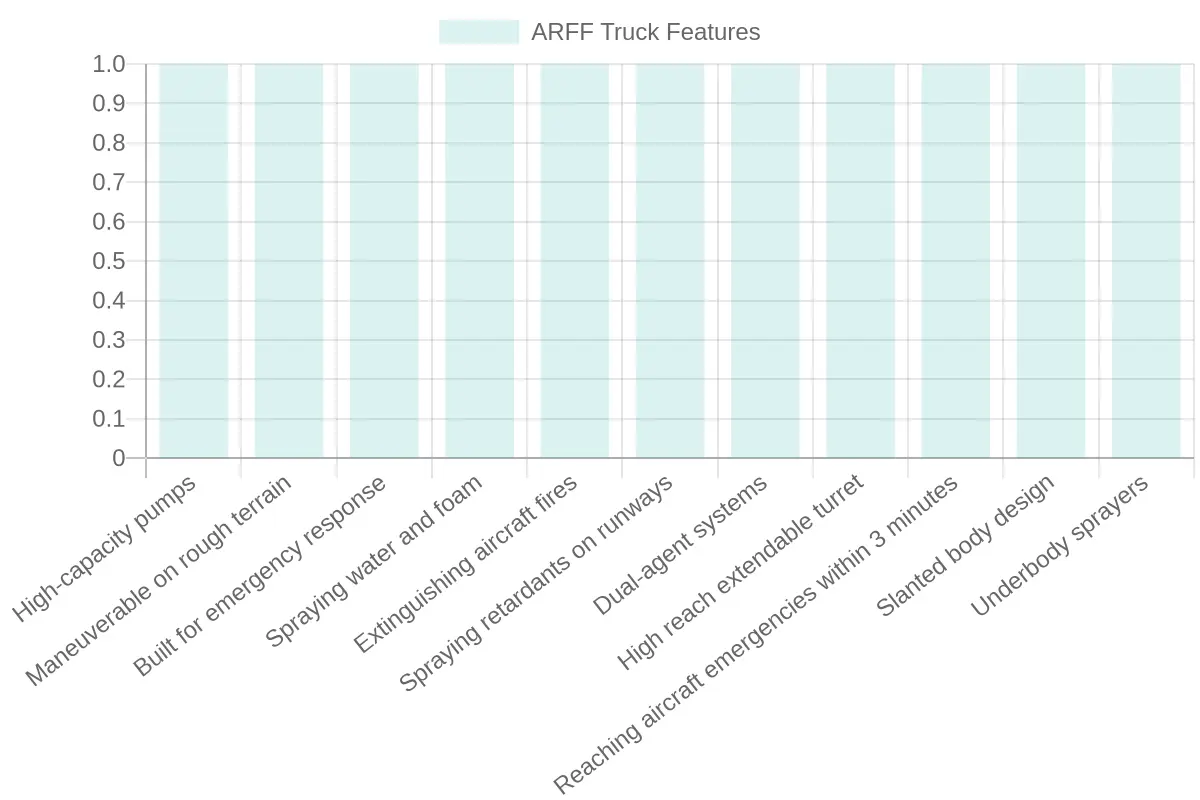
공항 활주로에서 고용량 물 분사 능력을 보여주는 고급 ARFF 트럭 - 긴급 대응을 위한 설계이며, 최대 화재 진압 능력을 갖추고 있습니다.
탈리크에서 초당이 중요한 순간, 어떤 것도 ARFF 차량만큼 활주로를 점령하지 않습니다. 위의 이미지는 현대 ARFF 공학의 강력함과 준비 상태를 포착하고 있습니다. 이 차량은 국제 공항 화재 보호의 엄격한 요구사항을 충족하도록 설계되었습니다. 고정식 확장 가능한 터렛(HRET)에서 이중 에이전트 거품 및 물 진화 시스템에 이르기까지, 오늘날의 ARFF 트럭은 항공기 구조 및 화재 방지 기술. 의 정점입니다. 이 기계들은 FAA 기준에 따라 공항 내 어느 지점에도 3분 이내에 도달할 수 있도록 설계되어 있으며, 분당 수천 리터의 진화제를 전달하여 인명, 항공기 및 인프라를 보호합니다. 팀 업그레이드를 평가하는 공항 운영자 및 안전 관리자에게, 현대 ARFF 차량의 능력을 이해하는 것은 규정 준수 및 운영 우수성을 보장하기 위한 첫 번째 단계입니다.
세계적인 ARFF 트럭을 만드는 요소는 무엇인가요?
항공기 구조 및 화재 방지(ARFF) 차량은 다른 어떤 소방 장비보다도 다릅니다. 이들은 엄격한 국제 표준을 충족해야 하며, 특히 NFPA 414가 가속도부터 에이전트 전달에 이르기까지 모든 것을 규제합니다. 항공기 운영을 관리하는 비즈니스 소유자에게 이 기계들의 기술적 배경을 이해하는 것은 안전 준수 및 운영 효율성에 필수적입니다.
이 차량들은 하나의 임무를 위해 특별히 설계되었습니다. 공항 내 어떤 위치에서도 3분 이내에 고장 난 항공기에 도달하는 것입니다. 이 단일 목표는 엔진, 펌프 시스템에 이르기까지 모든 디자인 결정을 이끌어냅니다.
5가지 중요한 ARFF 성능 지표
세계적인 ARFF 차량은 이 다섯 가지 영역에서 우수해야 합니다:
- 가속도 (80km/h 이하 25초 이내): NFPA 기준에 따르면 ARFF 트럭은 냉시작 후 활주로의 반대편에 3분 이내에 도달해야 합니다. 이는 높은 출력/중량 비율과 고급 변속 시스템을 요구합니다.
- : Made to endure harsh conditions, these trucks are built with high-quality materials that withstand extreme environments, ensuring longevity and reliability in critical situations.: 일반적인 ARFF 차량은 6,000~12,000리터의 물과 600~1,200리터의 거품 농축액을 운반합니다. 이는 대규모 항공기 화재 사건 동안 지속적인 에이전트 전달을 보장합니다.
- 펌프 출력 (4,500L/min 이상): 고유량 펌프는 차량이 이동 중일 때도 지붕 트루터와 범퍼에 장착된 노즐을 통해 물이나 거품을 극한의 양으로 공급할 수 있게 합니다.
- Off-Road Capability: ARFF 트럭은 레인웨이 인근의 잔디, 진흙, 자갈 및 불규칙한 지형을 통과해야 합니다. 레인웨이 주변의 어려운 환경에서 작동하기 위해 고무력 4×4 또는 6×6 전륜 구동 차대와 높은 지상 간격은 필수적입니다.
- 캐브 디자인 및 승무원 좌석: 캐브는 일반적으로 4~6명의 소방관을 수용할 수 있도록 설계되어야 하며, 신속한 출입 좌석, 완전한 PPE 보관 공간, 360도 시야가 필요합니다. 유연한 배치는 응답 속도에 직접적인 영향을 미칩니다.
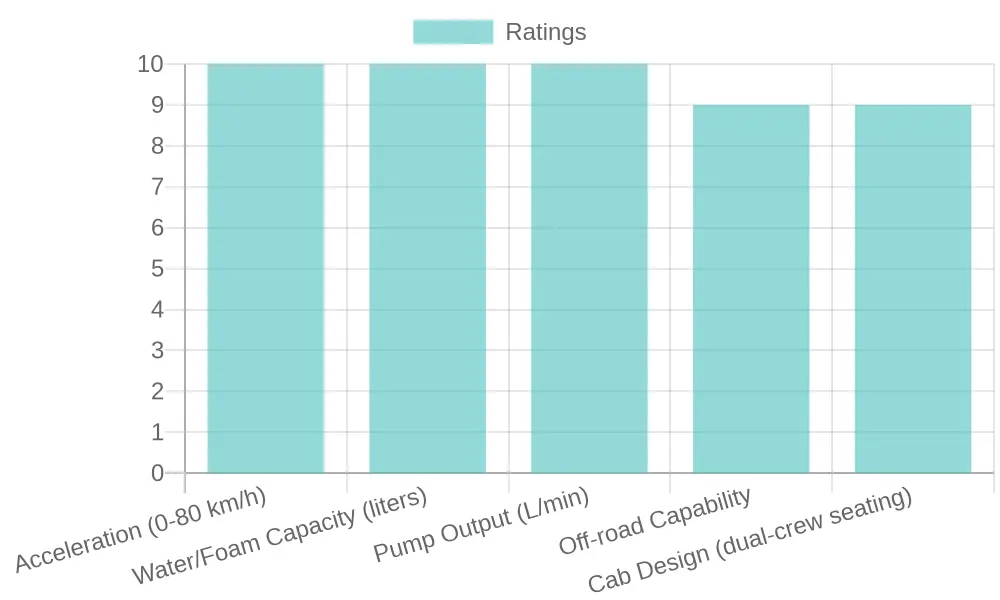
ARFF 차량의 성능 지표는 세계적인 기준에 따라 평가됩니다.
신뢰성이 초기 비용을 앞선다
When evaluating category., 구매 가격에 초점을 맞추고 싶을 수 있습니다. 하지만 공항 운영자에게서는 실제 긴급 상황에서 차량이 고장나는 것은 기계적 고장 이상의 문제입니다 - 책임 문제가 됩니다.
ARFF 트럭의 정지 시간은 항공편의 운행 중단이나 FAA/ICAO 규정 위반을 의미합니다. 단 하나의 응답 창문을 놓친 비용은 어떤 저렴한 차량의 절약보다 훨씬 커질 수 있습니다.
선도적인 소방 장비 제조업체 ARFF 트럭을 중복 시스템, 내식성 탱크, 군사 등급의 내구성을 갖춘 구성 요소로 제작합니다. 이러한 특징은 더 적은 수리와 더 긴 수명을 통해 장기적인 소유 비용을 줄입니다.
ARFF 차량 사양 이해
검토할 때 ARFF 차량 사양, 펌프-롤 기능 - 차량이 이동 중일 때 에이전트를 방출할 수 있는 능력 -에 주의 깊게 집중하십시오. 이 기능은 멈추는 것이 선택지가 되지 않는 빠르게 움직이는 항공기 화재 상황에서 매우 중요합니다.
또한 탱크 재질을 고려하십시오. 스테인리스 스틸 또는 폴리프로필렌 탱크는 일반 강철보다 거품 농축액에 대한 부식에 더 강하며, 차량의 사용 수명을 수년 동안 연장합니다.
The Bottom Line
세계적인 수준의 ARFF 트럭은 안전, 준수 및 운영 준비 상태에 대한 투자입니다. 낮은 초기 비용보다 입증된 공학을 우선시함으로써 공항, 직원 및 명성을 보호할 수 있습니다. NFPA 기준과 실제 공항 환경을 이해하는 신뢰할 수 있는 제조사와 협력함으로써 경보가 울릴 때 차량이 제공될 것을 확신할 수 있습니다.
글로벌 시장 리더: 심층 제조사 프로필
평가할 때 최고의 ARFF 트럭 브랜드 당신의 공항이나 항공 시설을 위한, 세 제조사가 항상 글로벌 대화에서 우세합니다: Oshkosh Airport Products, Rosenbauer 및 E-ONE. 각각은 독특한 공학 철학, 풍부한 역사, 그리고 가장 엄격한 비상 대응 기준을 충족하는 목적별 설계된 공항 구조 차량 을 가지고 있습니다. 아래에서는 현대 ARFF 환경을 정의하는 첫 번째 세 개의 산업 거인을 소개합니다.
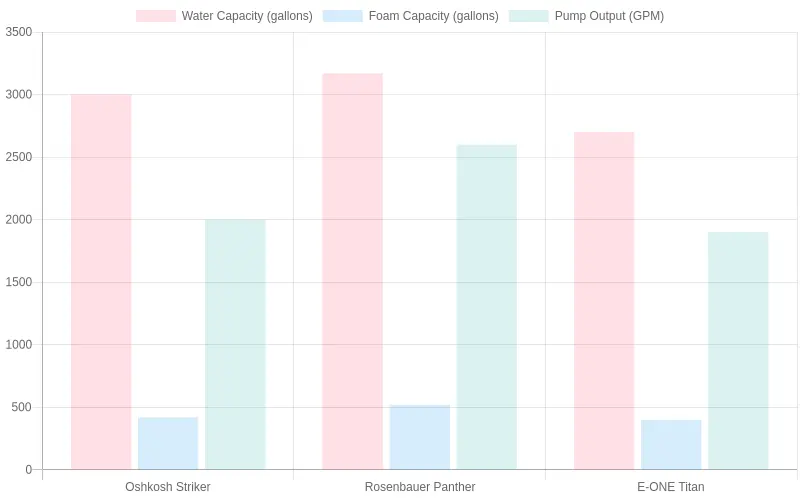
물 용량, 거품 용량 및 펌프 출력에 따른 ARFF 플래그십 모델 사양 비교.
Oshkosh Airport Products: 미국의 거인
회사 역사
Oshkosh Corporation은 위스콘신주 오슈코시에 본사를 두고 있으며, 1917년에 목재 산업용 중형 트럭을 생산하기 시작했습니다. 수십 년 동안 Oshkosh는 군사 차량에서 전문 소방 장비로 전환했으며, 결국 공항 소방 분야에서 주도적인 힘이 되었습니다. 현재 Oshkosh Airport Products는 북미에서 ARFF 트럭을 가장 많이 제조하는 제조사로, 가장 혹독한 환경과 가장 요구가 높은 운영 사이클을 견딜 수 있는 차량을 만든다는 명성을 가지고 있습니다.
플래그십 ARFF 모델: Striker
Drone-Assisted Rescue Operations Oshkosh Striker 는 회사의 플래그십 ARFF 차량이며, 시장에서 가장 잘 알려진 항공 구조 소방 차량일 수 있습니다. 4×4, 6×6 및 8×8 구성 옵션이 제공되며, Striker는 극한의 비활성 레인웨이 지형과 빠른 응답 시간을 위해 설계되었습니다. 최상위 스트라이커 8×8 는 최대 75 km/h (approximately 46 mph) 의 물을 실을 수 있습니다, 420 gallons 거품 농축액의, 그리고 펌프 출력을 제공합니다 2,000 GPM - 도착 후 몇 초 안에 대형 항공기 전체를 소화제로 덮을 수 있는 양입니다.
1. 주요 혁신
- 전술적 탈출 시스템 (TES): 차량이 화재에서 물러나면서도 에이전트를 계속 방출할 수 있도록 하는 특허받은 시스템으로, 상황이 악화되는 동안 조종사의 안전을 보장합니다.
- Snozzle® 고지대 확장식 타워: 안전한 거리에서 항공기의 외체를 관통할 수 있는 파열 노즐로, 화재 지역에 직접 에이전트를 공급합니다.
- Command Zone™ 전자 장치: 실시간 진단 및 자동 펌프 관리를 제공하는 고급 차량 제어 시스템으로, 중요한 순간에 운영자의 부담을 줄입니다.
시장 평판 및 인증
Oshkosh는 북미 ARFF 시장에서 주도적인 점유율을 가지고 있으며, Striker는 전 세계 700개 공항에 배치되어 있습니다. . Striker는 ARFF 차량에 대한 표준을 충족하거나 초과하며, 군사 공항 운영을 위한 인증을 받았습니다. 공항 운영자는 Oshkosh를 신뢰성, 부품 가용성 및 서비스 네트워크 커버리지 측면에서 최고 중 하나로 평가합니다.. Oshkosh가 가장 잘하는 곳: NFPA 414 북미에서의 비할 바 없는 서비스 인프라와 극한 기상 조건에서 입증된 내구성, 북극 활주로부터 사막 공항까지. 전체 범위의 미국 공군 및 관련 장비를 확인하려면 우리의 종합적인 선택지를 탐색해보세요. 최고의 ARFF 트럭 브랜드 Rosenbauer: 오스트리아에서의 혁신.
1866년 오스트리아 Leonding에서 설립된 Rosenbauer International AG는 작은 펌프 제조업체로 시작하여 세계 최대의 소방 장비 회사로 성장했습니다. 100개 이상의 국가에서 운영하고 있으며, 수십 년 동안 ARFF 혁신의 선두에 있었습니다. 이 회사의 유럽 엔지니어링 유산은 차량의 모든 세부 사항에서 드러나며, 공기역학적 캐브 디자인부터 소방원의 안전과 운영 효율성을 우선시하는 지능형 소방 시스템에 이르기까지 모든 것이 그 증거입니다. 최고의 ARFF 모델: Panther category. 는 회사의 최상위 ARFF 트럭이며, 글로벌 공항 소방 산업의 기준이 되고 있습니다. Panther는 광범위한 맞춤 설정이 가능한 모듈식 플랫폼에 기반하지만, 고용량 버전은.
3,170 갤런
회사 역사
의 물 탱크,.
520 갤런
Drone-Assisted Rescue Operations Many modern fire trucks are equipped with advanced monitoring systems that include surveillance cameras and sensors. These innovations allow for real-time assessment of fire conditions, enabling firefighters to make more informed decisions. By using drones or other aerial monitoring technologies, operations can be managed from a safer distance, thus enhancing personnel safety. 의 거품 농축액과 2,600 GPM 의 클래스 리더 펌프 출력을 갖추고 있습니다. 이 클래스에서 최고입니다. Panther는 4×4, 6×6 및 8×8 구동 시스템으로 제공되며, 8×8 변형은 하중이 있을 때 0에서 50mph까지 25초 미만으로 가속할 수 있습니다., HRET (고지대 확장식 타워): Rosenbauer의 조절 가능한 파열 타워 버전으로, 운영자가 항공기 표면을 관통하고 최대 60피트 떨어진 곳에서 거품 또는 물을 공급하여 화재로부터 차량을 안전한 거리에 유지할 수 있게 합니다. FireFog® 시스템: 미세한 물 방울을 생성하여 급격한 열 흡수를 가능하게 하는 특허받은 초고압 안개 시스템으로, 초기 공격에 필요한 물의 양을 크게 줄입니다.
1. 주요 혁신
- Panther 디지털 제어: 펌프 운영, 타워 조정 및 거품 비율 조절을 제어하는 완전히 통합된 터치스크린 인터페이스로, 단일 운영자가 전체 소방 시스템을 관리할 수 있습니다.
- Panther는 전 세계 500개 공항에서 사용되고 있으며, 런던 히드로, 프랑크푸르트, 싱가포르 창이와 같은 주요 허브를 포함합니다. Rosenbauer 차량은 표준 및.
- 규정에 따라 인증되었습니다. Panther는 또한 산업적 우수성에 대한 레드닷 디자인 상을 포함하여 여러 디자인 상을 수상했습니다.
시장 평판 및 인증
에 대해 논의할 때, Panther는 유럽 및 아시아 시장에서 표준으로 여겨집니다. Rosenbauer가 가장 잘하는 곳:, 세계적인 부품 및 서비스 네트워크와 뛰어난 기술 혁신으로, 100개 이상의 국가를 커버하는 네트워크를 통해 국제 공항에서 최신 소방 기술을 찾는 최고의 선택이 되었습니다. 우리의 NFPA 414, Key Performance Metrics ARFF 항공 구조 및 소방 EU 차량을 확인하여 이러한 혁신들이 어떻게 비교되는지 알아보세요. E-ONE: 성능을 위한 설계 E-ONE (Emergency One)은 1974년 플로리다 주 올카에서 설립되었으며, 초기에는 맞춤형 소방 장비 제조업체였으나, 현재 산업에서 가장 존경받는 이름 중 하나로 성장했습니다. 이 회사는 내식성 알루미늄 캐브 및 본체 구조 사용을 선도하여 명성을 얻었으며, 이 재질 선택은 이후 산업 표준이 되었습니다. E-ONE은 2016년 REV Group에 인수되었지만, 브랜드의 공학적 우수성과 고객 중심의 디자인에 대한 약속은 변함없습니다. 회사의 ARFF 부문은 지역 공항, 군사 기지 및 작은 상업 공항을 위해 특별히 설계된 트럭을 제조합니다. 공항 구조 차량, 최고의 ARFF 모델: Titan.
E-ONE Titan 100개 이상의 국가를 아우르는 글로벌 부품 및 서비스 네트워크와 비할 바 없는 기술 혁신으로 인해, 최신 소방 기술을 찾는 국제 공항에서 최고의 선택이 되었습니다. 우리의 제품 목록을 둘러보세요 ARFF 항공 구조 및 소방 차량을 통해 이러한 혁신들이 어떻게 비교되는지 확인해 보세요.
E-ONE: 성능을 위한 설계
회사 역사
E-ONE(응급 제1호), 1974년 플로리다주 오칼라에서 설립된 이 회사는 초기에는 맞춤형 소방 장비를 생산하는 작은 제조사였으나, 이후 산업에서 가장 존중받는 이름 중 하나로 성장했습니다. 이 회사는 내식성 알루미늄 캐비닛 및 본체 구조의 사용을 선도함으로써 명성을 얻었으며, 이 재질 선택은 이후 산업 표준이 되었습니다. E-ONE은 2016년 REV Group에 인수되었지만, 브랜드의 공학적 우수성과 고객 중심의 디자인에 대한 약속은 변함없습니다. 회사의 ARFF 부문은 지역 공항, 군사 기지 및 소규모 상업 공항에 특별히 맞춤 제작된 트럭을 생산합니다.
주력 ARFF 모델: Titan
Drone-Assisted Rescue Operations E-ONE Titan is the company’s flagship ARFF vehicle, designed to deliver exceptional performance in a compact, maneuverable package. The Titan carries 2,700 gallons 물과 400갤런 of foam concentrate, with a pump output of 1,900 GPM. While the Titan’s capacities are slightly lower than the Striker and Panther, E-ONE engineers emphasize that the vehicle’s lightweight aluminum construction and lower center of gravity allow for superior handling, faster acceleration, and reduced wear on the drivetrain – critical factors for airports with tight turning radii and weight-restricted infrastructure.
1. 주요 혁신
- All-Aluminum cab and body: E-ONE’s proprietary corrosion-resistant aluminum construction extends the vehicle’s service life by up to 40% compared to traditional steel bodies, reducing total cost of ownership.
- HushPak® Foam System: A precision foam proportioning system that automatically adjusts the foam-to-water ratio based on real-time flow conditions, ensuring optimal agent delivery without waste.
- Side-Impact Protection System: Reinforced cab structures and energy-absorbing crumple zones designed to protect the crew in the event of a collision with airport obstacles or debris.
시장 평판 및 인증
E-ONE holds a strong position in the North American market, particularly among regional airports, military bases, and industrial airfields. The Titan is NFPA 414 compliant and meets MIL-SPEC standards for U.S. Department of Defense installations. E-ONE’s reputation for building custom, mission-specific vehicles has made it a preferred partner for airports that require specialized configurations not available from mass-market manufacturers.
Where E-ONE excels most: Cost-effective customization and unmatched corrosion resistance, making it the ideal choice for airports in coastal or high-humidity environments where vehicle longevity is a top priority.
Manufacturer Profiles (Continued)\n\n### Magirus: German Engineering Excellence\n\nWhen discussing premium fire truck manufacturing, few names carry the weight and heritage of Magirus. Founded in 1864 in Ulm, Germany, by Conrad Dietrich Magirus, the company stands as one of the oldest and most respected fire apparatus manufacturers in the world. With over 160 years of continuous innovation, Magirus has become synonymous with German engineering excellence-a reputation built on precision manufacturing, rigorous quality control, and cutting-edge firefighting technology.\n\nToday, Magirus employs more than 1,500 people across five major production sites and operates in over 70 countries worldwide. The company serves a diverse clientele ranging from municipal fire departments to large industrial complexes, offering a comprehensive portfolio that includes fire engines, aerial ladder platforms, turntable ladders, and specialized rescue vehicles. What sets Magirus apart is its holistic approach to firefighting: the company integrates vehicles, equipment, digital technologies, and professional training into complete operational systems designed for modern firefighting missions.\n\nMagirus vehicles are particularly renowned for their robust chassis construction, advanced pump systems, and innovative aerial technology. The company’s DLK (Drehleiter mit Korb) series of turntable ladders are considered benchmarks in the industry, offering exceptional reach, stability, and safety features. For airport and industrial applications, Magirus delivers heavy-duty ARFF variants built to withstand the most demanding emergency scenarios, with high-capacity water tanks, powerful foam proportioning systems, and rapid acceleration capabilities.\n\n> \”Magirus integrates vehicles, equipment, digital technologies, and training to create operational systems designed for modern firefighting missions, enhancing safety and efficiency for crews globally.\” – Magirus Company Overview\n\nHowever, the premium engineering that defines Magirus also comes with a corresponding premium price tag, placing these vehicles out of reach for many budget-conscious operators-particularly in emerging markets and smaller airports.\n\n—\n\n### 🌟 Featured Spotlight: CIMC Tianda – The Rising Global Power in ARFF Solutions\n\nWhile European legacy brands like Magirus have dominated the fire truck industry for generations, a new force has emerged from Asia that is rapidly reshaping the global landscape. Water Tank Capacity (liters), the airport services division of China International Marine Containers (CIMC) Group, has quietly built one of the most comprehensive ARFF (Aircraft Rescue and Fire Fighting) manufacturing operations on the planet-and it deserves your full attention.\n\n#### 20+ Years of Dedicated Expertise\n\nCIMC Tianda brings over two decades of specialized experience in airport equipment and firefighting solutions. Since its establishment, the company has focused relentlessly on understanding the unique safety challenges of aviation environments. This deep domain expertise is reflected in every vehicle they produce-from compact ARFF units for regional airports to heavy-duty 6×6 and 8×8 configurations for major international hubs.\n\n#### Global Operations Across 75+ Countries\n\nWith an active presence in more than 75 countries, CIMC Tianda has established one of the widest global footprints in the airport firefighting sector. The company’s vehicles protect runways and terminals across Asia, Africa, the Middle East, Latin America, and increasingly, Europe and North America. This global reach is supported by a robust network of regional service centers, parts warehouses, and trained technicians ensuring that no customer is ever far from support.\n\n#### 30+ Subsidiaries Driving Innovation\n\nCIMC Tianda operates through more than 30 subsidiaries worldwide, creating a vertically integrated ecosystem that spans research & development, precision manufacturing, logistics, sales, and after-sales service. This extensive corporate structure allows CIMC Tianda to maintain strict quality control at every stage of production while leveraging economies of scale to deliver exceptional value.\n\n#### Advanced Intelligent Equipment Focus\n\nIn an era where digitalization is transforming emergency response, CIMC Tianda has invested heavily in intelligent equipment technologies. Their ARFF vehicles feature integrated thermal imaging cameras for low-visibility operations, advanced CAN-bus electronic control systems, real-time vehicle diagnostics, automated foam proportioning with precision monitoring, and telematics systems that enable fleet managers to track vehicle performance and maintenance needs remotely. This commitment to smart technology ensures that CIMC Tianda’s vehicles are not just fire trucks-they are intelligent emergency response platforms.\n\n#### World’s #1 in Passenger Boarding Bridges: A Testament to Quality\n\nOne of the strongest indicators of CIMC Tianda’s manufacturing excellence comes from a seemingly unrelated achievement: CIMC is the world’s #1 manufacturer of passenger boarding bridges (PBBs). These are the critical structures that connect airport terminals to aircraft, and they demand extreme precision, reliability, and safety compliance. CIMC’s dominance in this market-supplying major airports globally-demonstrates the group’s engineering capability, quality standards, and deep understanding of aviation safety requirements. The same rigorous engineering philosophy carries directly into their ARFF vehicle production line.\n\n#### Specific ARFF Vehicle Advantages\n\nCIMC Tianda’s ARFF trucks offer a compelling value proposition for airport operators:\n\n| Feature | CIMC Tianda Advantage |\n|———-|———————-|\n| Safety is paramount when it comes to aviation. CIMC Tianda’s ARFF trucks are equipped with specialized equipment such as foam delivery systems and crash tenders, ensuring rapid response to aircraft incidents. The well-designed ergonomic features promote the safety of rescue personnel, making it easier for them to operate equipment under pressure. | 30-50% lower acquisition cost compared to European equivalents without compromising on core performance specs |\n| Water & Foam Capacity | Tanks ranging from 6,000 to 14,000 liters, competitive with top-tier global brands |\n| Varies, typically around $850,000 | 0-80 km/h in under 25 seconds (meets ICAO standards for ARFF vehicles) |\n| 펌프 시스템 | High-flow centrifugal pumps with automated foam proportioning (CAFS compatible) |\n| Chassis Options | Custom 4×4, 6×6, and 8×8 configurations built for rugged airport terrain |\n| 루프 모니터 | Remote-controlled roof turrets with flow rates up to 6,000 L/min |\n| Cold Climate Package | Arctic-grade winterization options for extreme environments |\n| . As commercial air travel continues to increase, so does the urgency for rapid and effective firefighting capabilities. Here’s a closer look at how these advancements help meet critical fire safety needs: | Fully compliant with ICAO, NFPA, and local aviation authority standards |\n\n#### Reshaping the Market: The Rise of Cost-Effective Quality\n\nPerhaps the most significant trend in the ARFF industry today is the emergence of Chinese manufacturers like CIMC Tianda as credible, high-quality alternatives to traditional European and American brands. For decades, airport operators had limited options-pay a premium for established Western brands or compromise on quality with lower-tier alternatives. CIMC Tianda has shattered this binary choice by delivering vehicles that match international standards for performance and reliability while offering substantially more competitive pricing.\n\nThis market shift is particularly impactful for:\n- Regional and municipal airports operating on tight budgets\n- Emerging-market airports expanding their infrastructure rapidly\n- Private aviation facilities seeking cost-effective compliance solutions\n- Government fleets looking to maximize equipment procurement budgets\n\nThe company’s ability to combine advanced manufacturing techniques (inherited from CIMC Group’s global industrial leadership) with aggressive cost optimization-without cutting corners on critical safety systems-has made CIMC Tianda one of the fastest-growing names in the ARFF sector.\n\n> CIMC Tianda proves that world-class ARFF protection no longer requires world-class pricing.\n\nIf you’re evaluating ARFF vehicles for your airport or industrial facility, CIMC Tianda deserves serious consideration. Explore their full range of ARFF aircraft rescue fire fighting vehicles or browse the complete selection of category. designed to meet ICAO standards while delivering exceptional value.
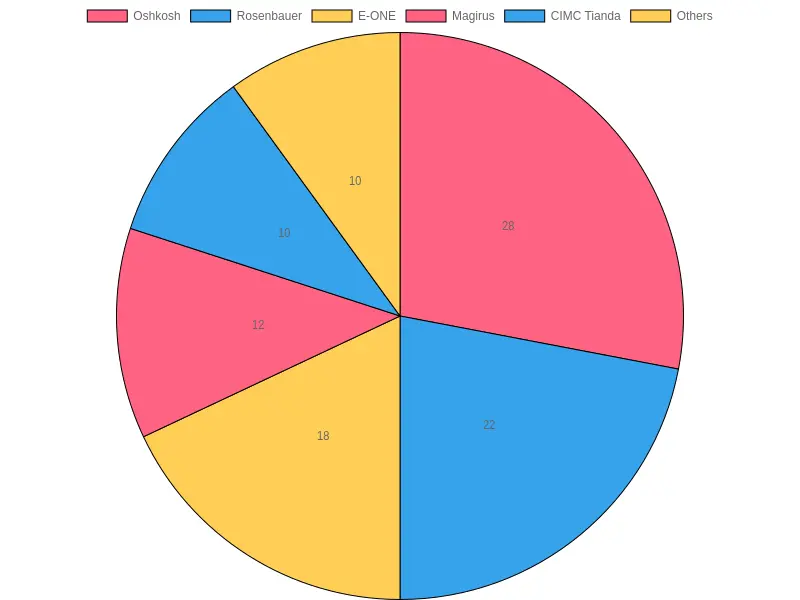
Estimated global market share of leading ARFF truck manufacturers (2024 data).
Key Factors to Consider When Choosing an ARFF Truck Manufacturer
Selecting the right manufacturer for your Aircraft Rescue and Fire Fighting (ARFF) vehicle is one of the most consequential capital procurement decisions an airport or facility operator can make. These specialized vehicles represent a significant financial investment and play a non-negotiable role in life safety and regulatory compliance. To guide business owners through this complex purchasing process, here are seven critical factors to evaluate when vetting ARFF truck manufacturers.
1. NFPA 414 Compliance
NFPA 414 compliance is the bedrock standard that all ARFF vehicles must meet. This standard dictates stringent performance requirements, including acceleration from 0 to 50 mph within 25 seconds, agent delivery rates, pump capacity, and temperature operating ranges from 32°F to 110°F. Manufacturers must demonstrate that their vehicles pass rigorous third-party testing per NFPA 414 to be considered viable for airport operations. For any business owner managing an airfield, verifying that a manufacturer’s vehicles are fully certified under this standard is not optional – it is a legal and safety prerequisite.
2. After-Sales Service & Parts Availability
After-sales service and parts availability can make or break the long-term viability of your ARFF fleet. When a critical component fails, downtime is not an inconvenience – it is a safety risk that can ground airport operations. Look for manufacturers with established service centers, 24/7 technical support hotlines, and robust parts supply chains that guarantee rapid fulfillment. A manufacturer that stocks commonly needed components – such as pumps, foam proportioning systems, and drivetrain parts – and offers training for your maintenance team will save you weeks of operational disruption down the line.
3. Customization Capabilities
Customization capabilities are essential because no two airports have identical operational profiles. A manufacturer should be able to tailor agent tank capacities (water, foam, and dry chemical), pump configurations, cab layouts, and chassis specifications to match your airport’s unique aircraft traffic patterns, runway lengths, and climate conditions. Whether you need a high-mobility vehicle for a remote regional airstrip or a high-capacity rig for a major international hub, the ability to customize ensures your vehicle meets specific response-time requirements without paying for unnecessary features.
4. Total Cost of Ownership (TCO)
Total cost of ownership (TCO) extends far beyond the initial purchase price and must account for fuel efficiency, maintenance intervals, parts replacement costs, and projected vehicle lifespan. A lower upfront bid may be deceptive if the vehicle requires frequent, expensive repairs or has poor fuel economy over its 15-20 year service life. Ask manufacturers for lifecycle cost data, including average annual maintenance expenses and expected overhaul schedules. Calculating TCO before signing a contract allows you to make a financially sound decision that aligns with your long-term capital planning.
5. Warranty & Support Network
Warranty and support network coverage directly protects your investment. Compare the duration and scope of warranties offered – including chassis, powertrain, pump, and bodywork coverage – as well as the geographic reach of the manufacturer’s service network. Some manufacturers offer extended warranties or guaranteed response-time agreements that provide peace of mind for high-risk airport environments. A warranty is only as good as the support network behind it, so verify that certified technicians are accessible within a reasonable distance of your facility.
6. Delivery Lead Times
Delivery lead times are a practical concern that affects fleet replacement schedules and regulatory compliance timelines. Custom-built ARFF trucks can require 12 to 24 months or more from order to delivery, depending on production backlog and complexity of specifications. Factor these timelines into your procurement cycle so that new vehicles arrive before existing ones reach end-of-service life. Ask manufacturers for current lead time estimates and whether they offer expedited options or pre-built chassis that can shorten the delivery window.
7. Integration with Existing Fleet
Integration with existing fleet considerations ensure operational consistency and reduce training costs. If your current ARFF trucks share a common chassis, pump system, or electronics platform, sticking with a manufacturer that offers compatible designs can streamline maintenance, parts inventory, and driver training. Conversely, if your existing fleet is aging or underperforming, a new manufacturer may offer a clean-slate opportunity to standardize around a more modern, reliable platform. Evaluate how well a manufacturer’s vehicles will integrate with your existing operational workflows, communication systems, and maintenance protocols.
Tying It All Together: Long-Term Operational Success
When you take all seven factors together – NFPA compliance, after-sales support, customization, TCO, warranty coverage, lead times, and fleet integration – a clear picture emerges: choosing an ARFF truck manufacturer is not a short-term purchase decision but a long-term partnership commitment. The right manufacturer helps your airport maintain regulatory compliance, minimize operational disruptions, control lifecycle costs, and, most importantly, protect lives and property. By conducting thorough due diligence on each of these factors, business owners can build a reliable ARFF fleet that serves their facility safely and efficiently for decades to come. For a comprehensive selection of airport-ready solutions, explore our range of specialized ARFF and airport fire trucks designed to meet rigorous operational demands.
This article serves as an ARFF truck procurement guide for decision-makers seeking to make informed capital investments in firefighting equipment.
When selecting aircraft rescue and firefighting (ARFF) vehicles, adherence to established industry standards is non-negotiable. Standards like NFPA 414 provide the rigorous performance, design, and testing benchmarks that ensure firefighting apparatus can perform effectively under the extreme conditions of an aviation emergency, directly impacting passenger and crew survivability.
Properly maintained and strategically deployed ARFF apparatus remain the single most critical factor in survivability during an aircraft emergency.
- National Fire Protection Association (NFPA 414 Standard for Aircraft Rescue and Firefighting Vehicles)
This authoritative standard underscores why procurement decisions must prioritize vehicles engineered to meet or exceed NFPA 414 specifications. When evaluating potential suppliers, business owners should seek certified ARFF aircraft rescue fire fighting apparatus from manufacturers with proven compliance records, and consider a full range of category. designed specifically for the unique operational demands of airfield emergency response.
Technological Innovations Shaping the Future of ARFF Trucks
The Aircraft Rescue and Fire Fighting (ARFF) industry is undergoing a profound technological transformation. As airports evolve into smarter, more sustainability-focused infrastructure hubs, the vehicles tasked with protecting them must keep pace. The future of firefighting vehicles hinges on four key innovations that promise to make airport firefighting safer, greener, and more effective than ever before. Leading manufacturers – including CIMC Tianda – are at the forefront of integrating these technologies into next-generation ARFF platforms.
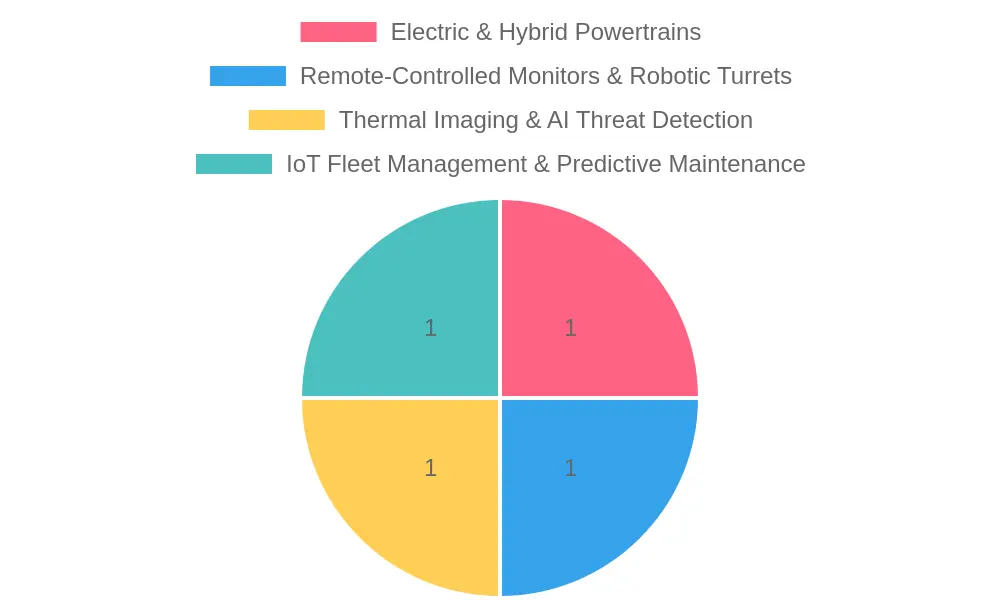
Electric and Hybrid Powertrains – Reducing emissions at airports is a growing priority as the aviation industry pursues net-zero goals. Traditional diesel-powered ARFF trucks, while powerful, produce significant carbon emissions and noise pollution. Electric and hybrid powertrains address this by delivering instant torque for rapid acceleration to crash sites while operating silently for approach maneuvers. Manufacturers are developing battery-electric drivelines with enough capacity to handle the demanding pump-and-roll operations required in ARFF scenarios. CIMC Tianda has invested heavily in electric vehicle platforms, leveraging expertise from its broader CIMC group – a global leader in specialized vehicle manufacturing – to develop hybrid ARFF trucks that can operate in zero-emission mode during airport tarmac patrols.
Remote-Controlled Monitors and Robotic Turrets – Safety for firefighters is paramount, especially when approaching aircraft fires involving hazardous materials or potential explosions. Remote-controlled monitor systems and robotic turrets allow operators to deliver precise streams of water, foam, or dry chemical from a safe distance – sometimes from inside a reinforced cab or even from a command vehicle positioned hundreds of feet away. These systems feature high-definition cameras, thermal sensors, and joystick or touchscreen controls for pinpoint accuracy. CIMC Tianda offers specialized fire-extinguishing robot solutions and has integrated remotely operated turret systems into its ARFF lineup, enabling crews to maintain a safe standoff distance during the most volatile firefighting scenarios.
Advanced Thermal Imaging and AI-Assisted Threat Detection – Modern ARFF trucks are becoming intelligent sensing platforms. Forward-looking infrared (FLIR) thermal imaging cameras, combined with AI-driven analytics, can penetrate dense smoke to identify hot spots, locate trapped individuals, and assess fire intensity in real time. Machine learning algorithms analyze camera feeds to detect the unique thermal signatures of jet fuel fires, electrical fires, and structural fires, then automatically recommend the appropriate extinguishing agent and nozzle configuration. This technology dramatically reduces decision-making time in high-pressure environments. CIMC Tianda’s intelligent equipment division has been developing AI-integrated firefighting systems that fuse thermal data with vehicle telemetry for enhanced situational awareness.
IoT-Enabled Fleet Management and Predictive Maintenance – Airport operations depend on ARFF vehicles being mission-ready at all times. The Internet of Things (IoT) is transforming fleet management by equipping ARFF trucks with sensors that monitor engine health, pump pressure, foam concentrate levels, tire wear, and battery status in real time. This data streams to cloud-based dashboards where predictive maintenance algorithms identify potential failures before they occur – scheduling repairs proactively rather than reactively. For airport operators, this means reduced downtime, lower maintenance costs, and assured compliance with NFPA standards. CIMC Tianda’s heritage in manufacturing intelligent equipment positions it uniquely to deliver ARFF trucks with factory-integrated IoT telemetry, helping fleet managers monitor vehicle readiness from a single platform.
As the demands on airport firefighting continue to grow, these four technological pillars – electrification, remote operation, AI-assisted detection, and connected fleet intelligence – are redefining what ARFF trucks can achieve. CIMC Tianda, with its deep roots in intelligent equipment manufacturing and a complete portfolio of aircraft rescue and fire fighting vehicles, is well-positioned to lead this charge, delivering the next generation of smarter, safer, and greener firefighting solutions to airports worldwide.
The driver-focused cab of a modern ARFF truck, featuring digital displays, ergonomic seating, and intuitive control layouts designed for rapid emergency response.
Modern ARFF trucks are defined as much by what’s inside the cab as what’s on the outside. Leading ARFF truck manufacturers have transformed the driver’s environment into a command center that balances advanced technology with intuitive operation. From the driver’s perspective, the console puts everything within arm’s reach – digital instrumentation panels replace analog gauges, backlit toggle switches control pump and foam systems, and integrated touchscreens deliver real-time vehicle diagnostics and navigation. The ergonomic seating arrangement reduces driver fatigue during long standby shifts and high-stress emergency responses, while the panoramic windshield design provides the exceptional visibility needed for maneuvering around aircraft and congested airport aprons.
Cost Analysis: Investment vs. Long-Term Value for Business Owners
어떤 것을 평가할 때, ARFF truck price, business owners are often confronted with a significant capital outlay that can range from $400,000 for a basic model 2034년까지 over $1.2 million for a fully equipped, heavy-duty airport rescue vehicle. Understanding where that money goes – and what you’re truly paying for – is essential to making a smart purchasing decision.
Breaking Down the Cost
An ARFF (Aircraft Rescue and Fire Fighting) truck is not a standard fire apparatus. It is a highly specialized piece of equipment engineered to meet rigorous NFPA and ICAO standards for airport emergency response. The cost is distributed across several major components:
- 차체 및 구동 시스템(35%) – The backbone of the vehicle. Heavy-duty chassis designed for off-runway terrain, often with all-wheel drive and powerful diesel engines capable of rapid acceleration to meet response time requirements. This is the largest single cost component.
- Pump & Foam System (25%) – The heart of the ARFF truck. High-capacity pumps, proportioning systems, and roof turrets that can deliver thousands of gallons of water and foam per minute. These systems must operate flawlessly under extreme pressure.
- Tank & Body (20%) – Tanks are typically constructed from stainless steel explore the benefits of airport fire apparatus 알루미늄. Stainless steel offers superior corrosion resistance and longevity, particularly important for vehicles storing water and foam concentrates, but comes at a premium over aluminum.
- Electronics & Controls (12%) – Modern ARFF trucks are equipped with advanced digital control systems, joystick-operated turrets, thermal imaging cameras, and onboard diagnostics that improve operator efficiency and safety.
- Customization & Accessories (8%) – Optional features such as specialized lighting packages, crew cab configurations, roof-penetrating nozzles, and additional storage compartments tailored to specific airport requirements.
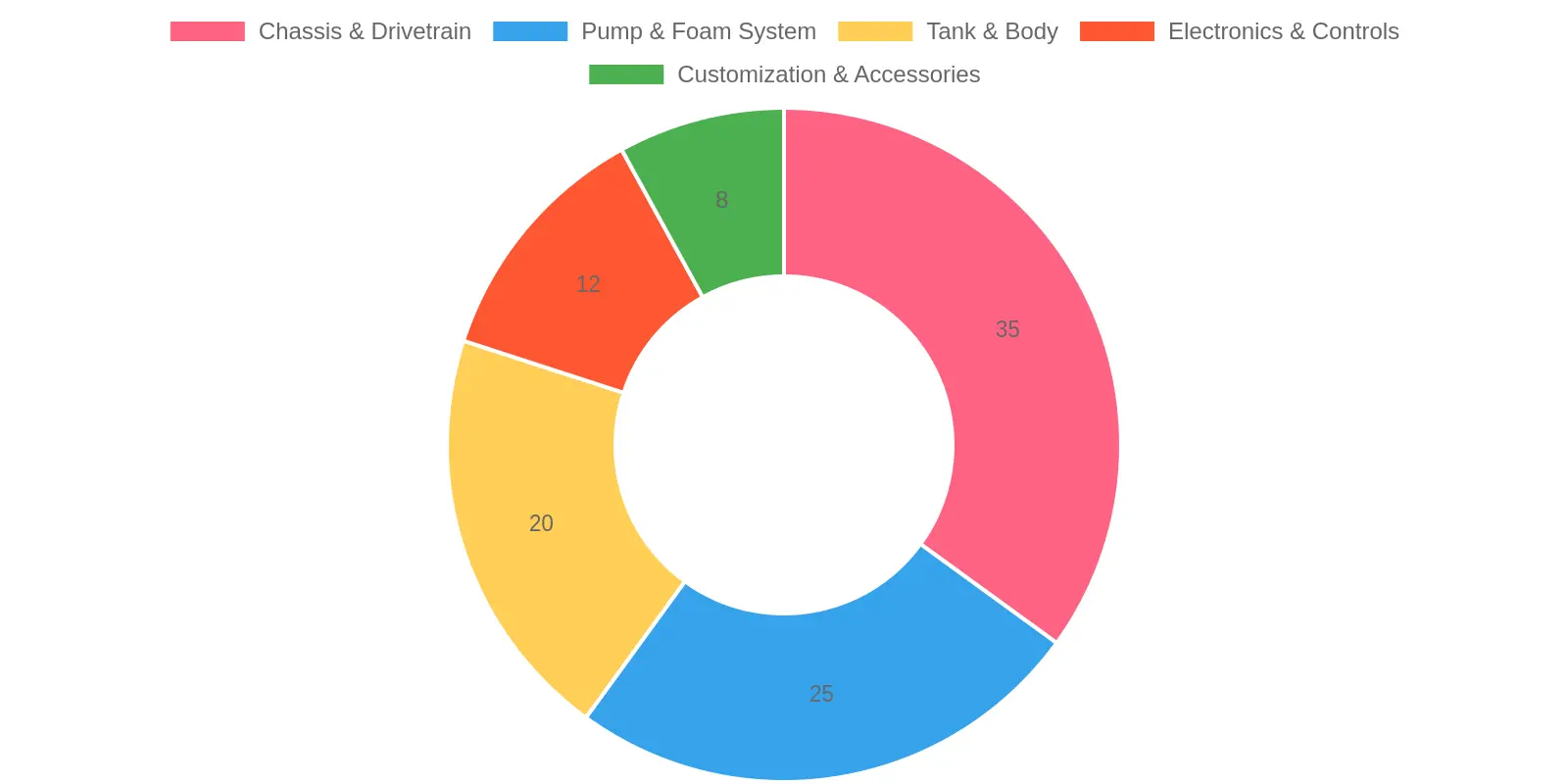
Figure 1: Typical cost breakdown for an ARFF truck, showing the proportional investment across major system components.
Why the Cheapest Option Isn’t Always the Best Value
It is tempting for budget-conscious business owners to gravitate toward lower-priced ARFF trucks, particularly when the upfront ARFF truck price appears attractive. However, the Total Cost of Ownership (TCO) tells a more complete story. A less expensive truck may use thinner aluminum tanks prone to corrosion, lower-grade pumps with shorter service intervals, or chassis that lack the durability for daily airport operations. Over a 15- to 20-year service life, the cost of repairs, downtime, and premature replacement can far exceed the initial savings. According to fleet management data, vehicles with lower upfront costs often incur 30-50% higher maintenance expenses over their lifetime compared to well-built, higher-quality apparatus.
Investing in a truck with stainless steel tanks, a robust foam system, and quality electronics from a reputable manufacturer – such as those found in our category. lineup – pays dividends in reliability, resale value, and operational readiness. When lives and property are on the line, a low purchase price is poor compensation for equipment failure.
비즈니스 소유자를 위한 핵심 요약
| 요인 | Budget Model | Premium Model |
|---|---|---|
| Starting Price | $400,000-$600,000 | $800,000-$1,200,000+ |
| Tank Material | Aluminum | Stainless Steel |
| Pump Lifespan | 8-10 years | 15-20 years |
| Maintenance Cost (Annual) | $25,000-$40,000 | $15,000-$25,000 |
| Resale Value (After 10 Years) | 25-30% of original | 40-50% of original |
For a closer look at the full range of configurations available, explore our selection of ARFF aircraft rescue fire fighting vehicles to find the right balance of price, performance, and long-term value for your operation.
The Life-Saving Business Case for Premium ARFF Equipment
For business owners evaluating airport safety investments, the numbers speak for themselves. Every second counts in an aircraft emergency, and the quality of your rescue and firefighting equipment directly determines whether those critical minutes translate into saved lives or catastrophic losses. Understanding the measurable impact of effective ARFF services is essential when making procurement decisions that carry both moral and financial weight.
According to the International Civil Aviation Organization (ICAO), effective Aircraft Rescue and Fire Fighting (ARFF) services can reduce the fatality rate in survivable aircraft accidents by up to 40%. Furthermore, the National Transportation Safety Board (NTSB) reported that rapid intervention within the first three minutes of an incident is the single most decisive factor in preventing fire-related casualties.
This statistic underscores a reality that no airport operator or aviation business owner can afford to ignore: investing in subpar firefighting equipment isn’t just a compliance gamble-it’s a life-or-death calculation with hard data to prove it. When you factor in the potential liability costs, operational downtime, and reputational damage that follow a poorly handled emergency, the return on investment for premium ARFF vehicles becomes unequivocally clear.
For airport operators and aviation facility managers, the path to achieving these life-saving outcomes begins with selecting the right equipment from proven manufacturers. Browsing our selection of ARFF 항공기 구조 화재 진화 트럭 and category. ensures you are equipping your team with vehicles designed to meet rigorous ICAO standards and deliver the rapid response that makes a 40% fatality reduction possible. In an industry where every second matters, compromising on equipment quality is a risk no responsible business can take.
How to Evaluate and Compare ARFF Truck Suppliers: A Step-by-Step Guide
Choosing the right ARFF truck supplier is one of the most critical decisions an airport operator can make. With stringent safety regulations, high-performance requirements, and long-term operational costs at stake, a structured evaluation process is essential. This guide provides a practical 5-step framework to help business owners make an informed choice. For a full overview of available options, explore our range of category. built to global standards.
Step 1 – Verify NFPA 414 & ICAO Compliance
The foundation of any ARFF vehicle evaluation starts with regulatory compliance. NFPA 414 sets the standard for aircraft rescue and firefighting vehicles, covering acceleration, agent delivery, and agent quantity requirements. Similarly, ICAO Annex 14 outlines the operational performance criteria that ARFF vehicles must meet for international airport certification. Always request documented proof of compliance, including third-party test reports, to ensure the supplier’s trucks meet these non-negotiable benchmarks.
Step 2 – Request Detailed Technical Specifications
Once compliance is confirmed, dive into the technical details. Request full specification sheets covering pump capacity, foam and water tank volumes, turret reach, acceleration (0-80 km/h in under 25 seconds for rapid intervention vehicles), and agent compatibility (e.g., AFFF, FFFP, or fluorine-free foams). A transparent supplier will provide these specs without hesitation, allowing you to compare vehicles side by side. Look for heavy-duty fire trucks that offer structural durability alongside high-performance firefighting capabilities.
Step 3 – Evaluate After-Sales Support & Parts Availability in Your Region
A fire truck is only as reliable as the support network behind it. Investigate whether the supplier has a local service center, certified technicians, and a stocked parts warehouse in your region. Ask about average response times for emergency repairs and routine maintenance. Suppliers with a distributed global footprint can dramatically reduce downtime by ensuring critical spare parts reach you within days, not weeks.
Step 4 – Request References and Case Studies from Similar Airports
Real-world performance data is invaluable. Ask the supplier for references from airports of similar size, climate, and operational profile. Case studies detailing agent consumption rates, vehicle uptime percentages, and incident response outcomes provide concrete evidence of a truck’s capabilities. Speaking directly with other airport fire chiefs can reveal insights about vehicle reliability, ergonomics, and supplier responsiveness that no brochure can convey.
Step 5 – Conduct a Total Cost of Ownership Analysis
Purchase price is only the beginning. A comprehensive TCO analysis should factor in fuel consumption, scheduled maintenance intervals, spare parts pricing, training requirements, and expected vehicle lifespan (typically 15-20 years for ARFF trucks). A lower upfront cost may be offset by higher long-term operational expenses. Use a standardized TCO template to compare suppliers on an apples-to-apples basis.
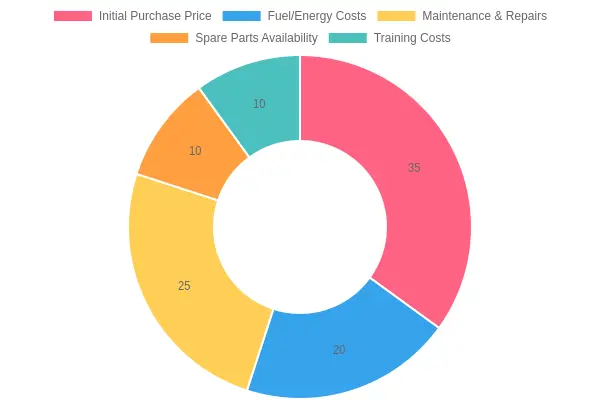
Chart: Total Cost of Ownership breakdown showing that initial purchase price accounts for 35%, maintenance and repairs 25%, fuel/energy 20%, spare parts 10%, and training 10%.
Summary Checklist
- Verify NFPA 414 & ICAO compliance documentation and test reports
- Request and compare detailed technical specifications side by side
- Evaluate after-sales support network and regional parts availability
- Request references and case studies from airports similar to yours
- Conduct a total cost of ownership analysis covering all lifecycle costs
Why Global Presence Matters for After-Sales Support
Suppliers with an established global footprint offer a distinct advantage when it comes to after-sales support. CIMC Tianda, for example, operates in over 75 countries, ensuring that spare parts, technical expertise, and service teams are never far from your facility. This extensive network translates into faster maintenance turnaround times, lower inventory carrying costs for airport operators, and peace of mind knowing that support is available wherever your operations take you. When conducting your ARFF supplier evaluation, prioritize partners who can demonstrate proven global logistics and local service capabilities.
Choosing Your Partner in Aviation Safety
As we’ve explored throughout this guide, the ARFF truck you select is far more than a vehicle-it is your airport’s first and most powerful line of defense. With aviation traffic rebounding globally and the ARFF vehicle market projected to climb from $1.2 billion in 2024 to $1.8 billion by 2033, the urgency for airports to invest in modern, high-performance firefighting equipment has never been greater. A single critical incident can define an airport’s reputation for decades, and the data underscores this: ICAO studies confirm that ARFF trucks achieve a 98.7% success rate in controlling aircraft fires within the first five minutes-a window that separates a controlled response from a catastrophe.
Choosing the right manufacturer means aligning proven engineering excellence with your airport’s unique operational realities. Whether you prioritize rapid acceleration, high-capacity foam systems, all-terrain maneuverability, or advanced cab technology, the leading manufacturers each bring distinct strengths to the runway. But the common thread among the best in the industry is an uncompromising commitment to quality, reliability, and continuous innovation. Skimping on your ARFF fleet isn’t a cost-saving measure-it’s a gamble no airport operator can afford to take. Your equipment must perform flawlessly under extreme duress, every single time.
This brings us to the most important decision you’ll make: selecting a partner who understands that your safety goals are their mission. At CIMC Tianda, we combine decades of manufacturing expertise with a deep appreciation for the regulatory and operational demands faced by airports worldwide. Our ARFF solutions are engineered not just to meet standards, but to exceed expectations-delivering faster response times, superior agent delivery, and greater operator confidence. Our dedicated ARFF aircraft rescue fire-fighting category showcases a range of vehicles designed for the highest stakes, while our 공항 소방차 컬렉션 offers specialized configurations tailored to airports of every size.
Discover how CIMC Tianda’s cutting-edge ARFF solutions can optimize your airport operations. Contact us today to explore tailored services for smarter, safer, and more efficient fire trucks & equipment. Whether you’re upgrading an existing fleet or building one from the ground up, our team is ready to work alongside you-assessing your infrastructure, understanding your risk profile, and delivering equipment that performs when it matters most. The path to safer skies begins with the right equipment, the right expertise, and the right partner by your side.
CIMC Tianda’s Global Reach – 75+ Countries Across Six Continents
CIMC Tianda has established a truly global footprint, with operations and service networks spanning more than 75 countries worldwide. This extensive international presence means that no matter where your airport or facility is located, reliable support and proven ARFF technology are never far away.
| 지역 | Coverage |
|---|---|
| 7. 북미 | USA, Canada, Mexico |
| 유럽 | Germany, France, UK, Italy, Spain, Netherlands, Poland, Scandinavia |
| 아시아 태평양 | China, Japan, Australia, South Korea, India, Southeast Asia |
| 중동 | UAE, Saudi Arabia, Qatar, Israel, Kuwait, Oman |
| 아프리카 | South Africa, Egypt, Nigeria, Kenya, Morocco |
| Latin America | Brazil, Argentina, Chile, Colombia, Peru |
This worldwide network is backed by regional service centers, local distributors, and a global supply chain that ensures rapid response times for parts, maintenance, and technical support. For airport operators and fire chiefs evaluating ARFF aircraft rescue fire fighting vehicles, CIMC Tianda’s global logistics infrastructure means you get the same high-quality manufacturing standards delivered to your location – whether you’re in North America, the Middle East, or anywhere in between.
Beyond just manufacturing, this global presence reflects decades of expertise in understanding regional fire safety regulations, climate conditions, and operational requirements. From arctic airports to desert facilities, CIMC Tianda vehicles are engineered and supported to perform in any environment. The same commitment to quality that goes into every heavy duty fire truck is backed by a service network that spans the globe – giving you confidence in both the equipment and the company behind it.

