
















In the realm of firefighting, the choice of equipment can significantly impact both efficiency and safety. Among the myriad options available, white fire trucks have emerged as a distinctive and practical choice for many fire departments. These vehicles are specifically crafted to meet the rigorous demands of emergency response, combining advanced technology with thoughtful design. The relevance of a white fire truck lies not only in its functional attributes but also in the psychological effects of color on visibility and safety during emergencies. Each chapter of this article delves into the design and functionality, the importance of visibility and safety, and the customization options available for white fire trucks, providing a comprehensive understanding of how they can enhance firefighting efforts and outcomes.
White on the Frontline: Design, Visibility, and Practical Mastery in the White Fire Truck
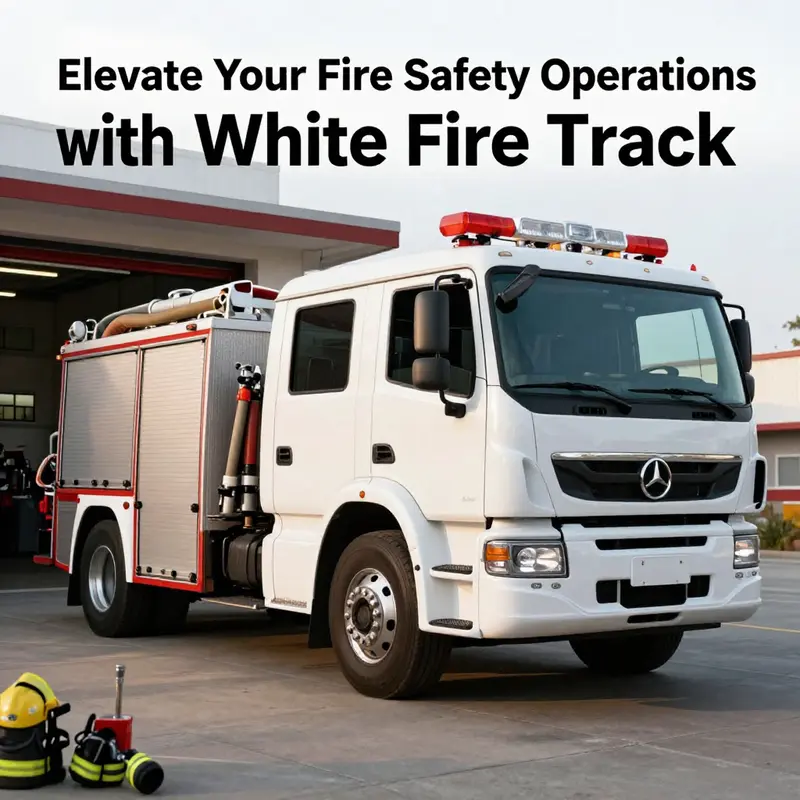
A white fire truck stands as a paradox at first glance: a vehicle built for the most chaotic, dangerous moments, yet it appears calm, almost clinical in its color. The white exterior is more than a matter of taste; it is a deliberate decision rooted in safety, efficiency, and rapid recognition. In the heat of an emergency, every second counts, and the choice of color for a fire apparatus plays a subtle but crucial role in how quickly people react and how clearly responders can operate. White offers exceptional contrast against smoke, urban clutter, and night-blackened horizons, which helps both drivers and pedestrians identify the vehicle quickly amid a cacophony of competing lights and sirens. The color choice is part of a broader philosophy: design for visibility first, then reliability, then capacity. When a team arrives at a scene where smoke swallows street signs and reflective gear, the white canvas acts like a flashing beacon that not only signals authority but also reduces confusion in the most stressful circumstances.
The design language of a white fire truck merges function with a discipline of visibility. The bodywork often pairs a stark white base with bold red or yellow markings that shout through the blur of motion and smoke. Reflective strips run along the sides and across the rear, extending the vehicle’s reach into the perception of passing motorists and pedestrians at all hours. Large illuminated logos and department insignias further sharpen recognition from a distance, while the white backdrop ensures the color contrast on those elements remains sharp even when the unit is partially obscured by grit or rain. This approach isn’t merely about aesthetics; it translates into safer responses because responders can locate the vehicle faster in crowded streets, and members of the public can orient themselves toward the source of help with greater certainty. The result is not a fashion statement but a practical advantage grounded in the realities of emergency travel, where every second dictates the difference between containment and escalation.
The chassis and its construction form the backbone of any fire apparatus, and in the white truck, the emphasis is squarely on durability and adaptability. The chassis is selected to meet the required payload and the terrain the vehicle will routinely face. In urban districts, a compact or mid-size arrangement may suffice, while industrial or rural environments demand more robust platforms. Drive type—whether a 4×2, 6×4, or a more specialized configuration—assesses how the truck will negotiate tight corners, uneven ground, or long stretches of highway while maintaining stability and control. White trucks often adopt a modular approach to the body, allowing crews to swap in and out compartments, ladders, and storage solutions without sacrificing the overall frame integrity. This modularity supports rapid reconfiguration as mission profiles shift—from rescue to water supply to hazardous materials response—without forcing fleets to purchase entirely new chassis each time. The design philosophy here is to maximize the use of a single, reliable platform across a range of duties, ensuring that in an urgent moment the truck behaves predictably and without surprise.
Inside the vehicle, form follows function with deliberate clarity. The water system remains the beating heart of the apparatus, and in white-equipped fleets it is sized to balance urban density with rural reach. The tanks vary widely—from compact capacities around eight hundred liters for small-scale operations to tens of thousands of liters for industrial or remote runs. The pump is designed not merely for raw power but for controllable, precise delivery, with pump curves that respond smoothly to operator input and a selection of discharge outlets that can be matched to the hose bundle in use. In many configurations, hoses extend from a few sizes, ranging from about 25 millimeters to 200 millimeters, to accommodate different nozzle pressures and flow rates. The hose infrastructure is often reinforced with double jackets that resist abrasion and wear, sustaining performance in the long days of training and the unforgiving strains of a real incident. The hoses, couplings, and cabinets for equipment storage are arranged so that a firefighter who climbs aboard can reach essential tools without interrupting the flow of operations—no search, no hesitation, just access.
The functional components that enable effective firefighting occupy prime real estate in the white truck and are organized with a singular aim: to bring a comprehensive toolkit to the scene with speed and reliability. Beyond the water delivery system, the vehicle carries ladders of various lengths, typically stored in dedicated bays with easy extraction handles. The ladders are designed to deploy with minimal effort and secure firmly once extended, guiding crews to safety and behind-the-line access for rescues. Hoses of different diameters and lengths feed into a hose bed or hose reels, depending on the model, with quick-connect fittings designed to minimize fumbling under pressure. For structural fires, the vehicle may include specialized tools such as forcible entry devices, cutting torches, rescue saws, and hydraulic spreaders, all positioned for rapid draw from cabinets that balance protection and accessibility. The design ethos is to place life-saving tools in immediate reach, preserving the flow of action when the environment is chaotic and time is a scarce resource.
Beyond the basics, white fire trucks increasingly incorporate advanced technology that augments human skill with digital precision. Onboard communications systems keep crews talking with each other and with incident command, ensuring situational awareness remains coherent across radios and tablets. Thermal imaging cameras provide a live temperature map of a scene, cutting through smoke and opacity to reveal hot spots and trapped victims. This capability transforms how a crew navigates a structure, guiding decisions about entry points, ventilation, and search patterns. Emergency lighting arrays illuminate the work zone, not just to reveal obstacles but to signal the location of the apparatus to nearby responders and civilians who may be moving erratically in the confusion of a crisis. The modern white truck, then, is not merely a transport vehicle but a mobile command and rescue instrument that blends resilience with real-time data, turning the cab into a nerve center for dynamic operations.
The discussion of design would be incomplete without acknowledging the way color and form influence mundane, everyday realities—the way a fleet of white vehicles changes driver behavior on crowded streets, or how a dealer’s service team evaluates wear and tear on a vehicle that endures harsh climates. Color is part of a system: white for visibility, red or yellow accents for quick recognition of specific functions, and reflective surfaces that catch the eye even when the engine is idling. The white base helps absorb heat while still presenting a clean, clinical appearance that signals readiness and control. In hot climates, the reflective properties of a white surface can modestly reduce heat absorption, potentially easing cabin temperatures and tempering wear on interior components that would otherwise contend with relentless sun. The aesthetic discipline thus becomes a practical performance strategy that extends the life of the truck while reinforcing safety standards.
In the broader ecosystem of emergency response, the white fire truck sits within a spectrum of configurations designed for distinct roles. Some units are optimized for water supply in remote areas, others for structural fire suppression in dense city blocks, and still others for aircraft rescue, hazmat response, or industrial firefighting. Each category requires a tailored payload, specialized cabinetry, and a suite of tools that reflect the anticipated challenges. Yet the common thread remains clear: the vehicle must deliver a reliable payload under intense conditions, and it must do so with an appearance that communicates authority and readiness. This is why even as fleets diversify their utility profiles, the white chassis persists as a recognizable core around which departments can build, customize, and deploy a unified force ready to face the unpredictable.
To illustrate how broad a canvas a white fire truck can be, consider the idea of modular capacity. A single vehicle can be configured to accommodate a mid-sized urban response team or expanded to handle a large-scale industrial incident. Cabinets line the interior and exterior, some dedicated to protective gear, others to hoses and adapters, and yet others to calibration devices, thermal imaging units, and portable rescue tools. This modular approach enables departments to respond to evolving hazards without sacrificing either speed or safety. It also supports maintenance routines because technicians can swap out worn components, upgrade equipment, or refresh storage layouts without rebuilding the vehicle from the ground up. The resulting fleet is a living system, continually tuned to reflect new best practices, safety standards, and community needs.
In keeping with the practical spirit of the topic, one practical note is the need to balance capability with weight and maneuverability. The design team must weigh the benefits of additional water capacity against the realities of road handling and fuel consumption. Larger, heavier trucks may require more robust axles and braking systems, as well as specialized tires and suspension that maintain stability in fast-moving traffic and during abrupt stops. The selection process is not linear; it is a negotiation among safety, reach, speed, and cost. At times, the most important feature is not the largest tank or the most powerful pump, but a well-calibrated configuration that ensures the truck can reach, deploy, and operate without delay. In this sense, the white vehicle becomes a study in disciplined optimization rather than a showcase of raw power.
The historical lineage of the white fire truck feeds into its future. The color’s acceptance across diverse regions—where visibility needs vary by geography, climate, and urban density—speaks to a universal priority: to be seen when it matters most. This is a thread that connects every element of the vehicle—from its robust chassis and precise pump performance to its storage systems and diagnostic capabilities. The result is a cohesive instrument that not only carries equipment but also conveys trust and command under pressure. As fleets evolve, the white fire truck remains a touchstone for how design can harmonize safety, practicality, and technical excellence into a single, dependable response mechanism.
For readers seeking a deeper look at the breadth of configurations available, the fire-fighting truck category showcases a wide range of apparatus that can be customized to meet local needs while preserving core principles of visibility and reliability. The category’s breadth reflects the reality that different communities demand different capabilities, yet all rely on a common standard of rapid recognition and robust performance. This convergence of form and function—white as the canvas, precision in the tools, and clarity in the mission—embodies the ethos of modern emergency response. In that sense, the white fire truck is less about color and more about a disciplined approach to life-saving work, where every line, every bend in the metal, and every stored tool exists to shorten the path between danger and safety.
External reference: https://www.alibaba.com/product-detail/Isuzu-Customized-Mini-Smart-800-Kg_1600593527837.html
Seeing Beyond the Flame: Visibility, Safety, and the White Fire Truck
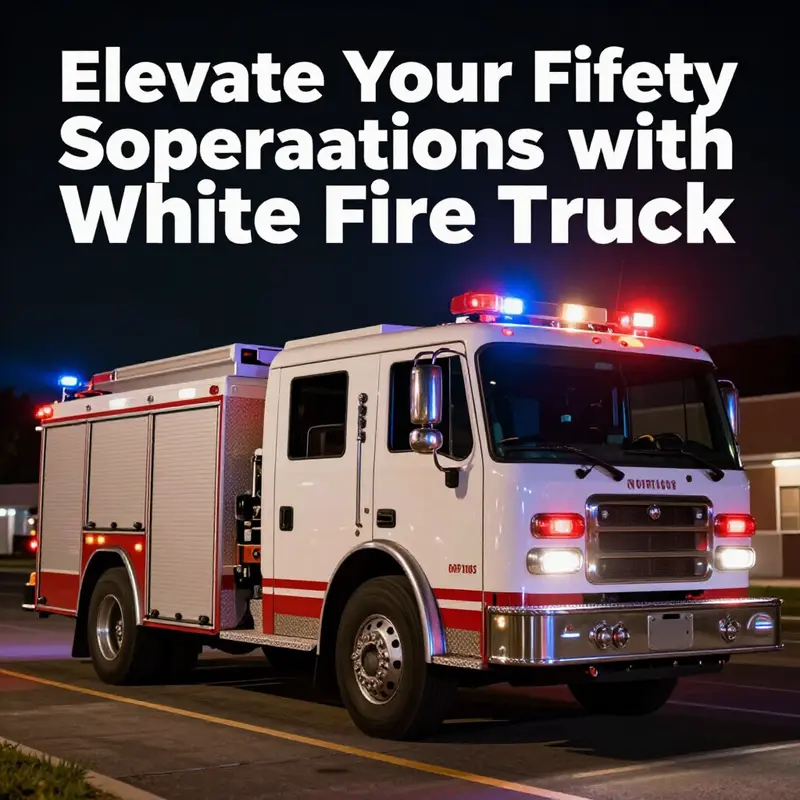
Visibility on emergency scenes is about more than color. A white fire truck stands out in smoke, glare, and clutter, and a complete visibility system makes that presence actionable. Lighting, markings, and disciplined movement combine to create a clear silhouette that drivers can read from a distance. This chapter explores how whiteness, light, and strategy work together to protect responders and the public. It covers lighting architecture, reflective decals, placement of signals on roof and sides, and the training that links perception to safe action. It also discusses maintenance, weather, and standards that guide how departments approach visibility as an integrated safety program. The goal is not fashion but reliable communication under pressure. The white paint acts as a canvas, yet the real power comes from the coordinated use of LEDs, strobes, beacons, and high visibility decals that persist when conditions change. The result is faster recognition, smoother traffic flow, and a safer incident environment.
Beyond the White Hull: Customizing the Modern White Fire Truck for Precision, Visibility, and Rescue
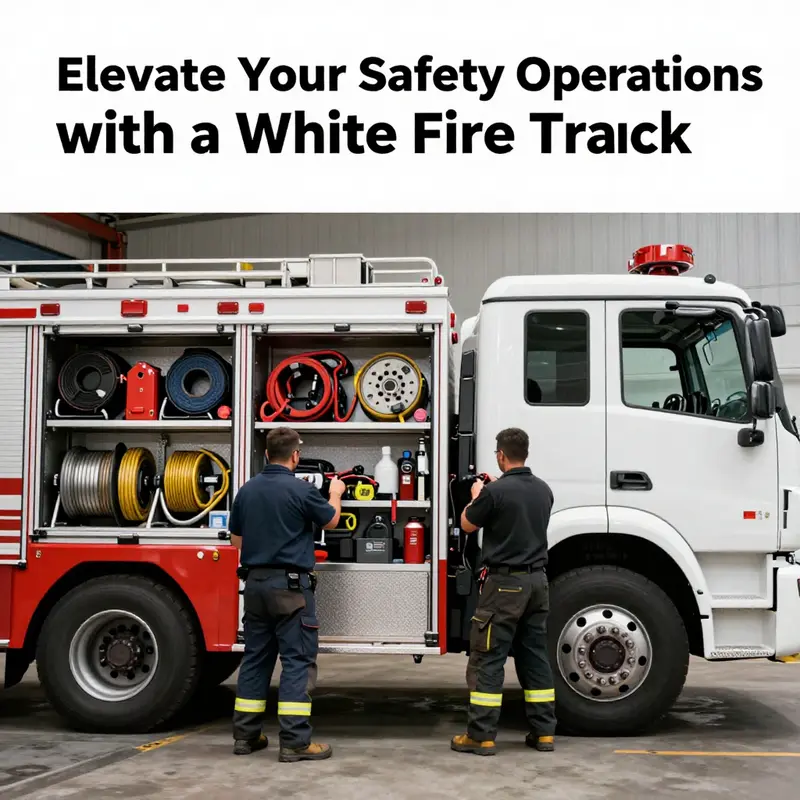
The white fire truck is more than a color and a chassis; it is a purpose-built platform whose customization translates essential mission goals into tangible capabilities. In the crucible of emergency response, where seconds matter and every tool has a voice, the choice to customize is a commitment to reliability, safety, and the unique demands of a department’s geography, population density, climate, and risk profile. A white base offers a clean canvas with high daytime contrast and a neutral backdrop that taxes neither glare nor heat excessively. Yet the real work happens in the choices that sit atop that canvas: the color schema that makes it legible amid urban clutter, the equipment and layout that ensure quick access, the cab and cabin technologies that guard crew health and focus, and the integration of smart technologies that harmonize human judgment with machine data. Customization, when done with an eye to standards and real-world use, turns a generic vehicle into a trusted partner on every call.
Color and visibility are foundational, but they are not merely cosmetic. A white body can be paired with an intentionally configured livery to maximize legibility under diverse lighting conditions. The base white is often complemented by strategic accents—bold lettering for department identity, station numbers, and vital safety logos—so that oncoming lanes, crosswalks, and street corners yield to rapid recognition. Some departments lean toward a two-tone design that uses white panels with red or yellow trim. The aim is not fashion but contrast: during daylight, at dusk, and in smoky environments, the eye should lock onto the vehicle with minimal effort. Reflection also enters the calculation. High-visibility tape and reflective chevrons on doors and the rear can be integrated without compromising the clean lines of the white exterior. In many districts, this approach balances tradition with modern safety science, offering the best of both worlds: a timeless white profile and a signal system that communicates urgency instantly to passing motorists and bystanders alike.
Within that color framework, the layout of equipment becomes a carefully choreographed sequence. The order of tools, hoses, and power systems matters as much as their presence. Customization allows departments to tailor the hose bed, compartments, and cabinet configurations to their common operations. A thoughtful design places the most frequently used items within a natural reach—no searching, no second guesswork—so when the siren screams, the crew can move with practiced precision. The choice of nozzle families and pump configurations is guided by the types of incidents a unit most often encounters, from congested urban blocks to sprawling industrial sites. The hoses themselves come in standardized diameters and lengths that keep deployment fluid across scenarios, while the storage philosophy shapes how quickly an apparatus can re-enter service after a mission. The balance between capability and weight is delicate; every added piece of equipment presses on the vehicle’s center of gravity, fuel performance, and ride quality. The right combination avoids tipping the scale toward over-configuration while preserving the ability to answer the call with both speed and resilience.
The selection of ladders and aerial devices, too, must suit local geography and incident patterns. A mid-mount ladder might be favored in one city for its reach and balance, while a rear-mount arrangement provides different access angles and storage advantages in another. Each choice has cascading effects on maintenance schedules, weight distribution, and even crew workflow. Customization must therefore account for the operational tempo: how often the truck will be tasked with rescues, how many firefighters typically ride on board, and what kinds of access challenges are most common on the department’s beats.
The interior and cab are where human factors are most acutely felt. A modern white fire truck can be upgraded with ergonomic seating, adjustable dashboards, and climate-control systems that maintain comfort during long shifts. The goal is not luxury but sustained cognitive clarity and physical ease. Climate control, in particular, is a quiet ally. In hot climates, robust cooling helps keep fatigue at bay; in colder environments, heating and defrosting support visibility and comfort. Inside the cab, communication systems are designed to minimize fatigue and maximize situational awareness. A well-integrated comms suite, with modern vox and data displays, keeps the crew connected to incident command, water supply, and neighboring departments without overwhelming the senses. Some configurations prioritize air quality as a health-preserving feature, integrating filtration to reduce the effects of smoke, diesel exhaust, and ambient particulates that can linger in confined spaces. In practice, this becomes a practical difference on back-to-back calls, protecting crew performance during long days that require mental sharpness and steady breathing.
Technology integration extends beyond comfort and health to decision support and situational awareness. A white fire truck can host real-time GPS tracking for fleet coordination, automated dispatch interfaces that confirm resource availability, and data links that pull weather, wind, and traffic intelligence into a single cockpit view. These systems help crews anticipate obstacles, select the most effective water supply routes, and time their approach to a fire scene with greater confidence. Fatigue-detection alerts, though they must be used judiciously, can serve as an early warning to prevent errors on long shifts. Voice-controlled interfaces powered by generic AI assistants can reduce physical distraction, allowing crew members to keep hands on tools and eyes on the road and the scene. The promise of such features is not to replace human judgment but to augment it; the truck becomes a distributed sensor and a mobile command post that keeps the team aligned with command while preserving personal agency and focus.
Beyond the cab, customization shines in the realm of specialty add-ons. Lighting packages can transform the vehicle into a moving beacon that commands space without overwhelming onlookers. LED strobes, rotating beacons, and steady work lights can be tuned in intensity and color to reduce glare for nearby drivers while maximizing visibility for the responders. Sirens and horn tones can be adapted to local ordinances and operator preferences, providing audible cues that are clear, distinctive, and informative across the city’s ambient noise. Some departments explore ambient lighting that responds to the vehicle’s status or to ambient music cues in public safety demonstrations, a feature that, while visually striking, is typically reserved for educational or ceremonial contexts rather than routine operations. The emphasis, again, is on reliability and predictability: the crew must be able to rely on the system to perform in moment-to-moment exchanges, not on novelty. Where speaker systems reinforce public-safety messaging at a scene, they are carefully calibrated to avoid confusion when firefighters issue critical commands.
In every customization choice, standards and guidelines shape the possibilities. The National Fire Protection Association (NFPA) provides the backbone for apparatus design and equipment requirements. Their standards ensure that the customization aligns with safety, interoperability, and performance criteria shared across jurisdictions. For professionals and enthusiasts seeking a structured baseline, the NFPA documents offer a repository of best practices that help translate department goals into enforceable specifications. This is not about stifling creativity but about anchoring innovation to proven, repeatable performance. The result is a white fire truck that looks purpose-built in the best sense: a vehicle whose color signals readiness, whose layout understands human limits, and whose technology is harmonized with the realities of street-level emergency response.
For those exploring the available configurations and example setups, many departments look to centralized catalogs or dealer showrooms that present a broad spectrum of compatible options. A practical way to visualize how a white base can become a tailored tool is to review a catalog of fire-fighting trucks that displays how different compartments, equipment racks, and power systems are arranged to meet common mission profiles. In this context, the online product category page for fire-fighting trucks can serve as a useful reference point, offering a sense of how manufacturers translate needs into form. See the fire-fighting-truck category for an overview of compatible configurations and layout options that many departments find helpful when planning a custom build. fire-fighting-truck category.
The process of customization, while technically rigorous, remains grounded in the fundamental questions a department must answer before any purchase: What responses are most frequent in our territory? How do we want the crew to move through the vehicle from doors to pumps to ladders? Which tools do we deploy first on a given incident, and how do we ensure they are readily accessible under stress? How will we protect crew health on long shifts, and how will the vehicle’s systems support that protection? How will we ensure compatibility with neighboring agencies and with the broader public-safety ecosystem? The answers to these questions guide decisions about structure, layout, and technology, producing a white fire truck that is not just a symbol of safety but a practical, evolving tool that adapts to changing risk landscapes.
As departments grow more data-informed and experience-driven, a philosophy of modular customization emerges. Instead of building a monolithic, all-purpose machine, agencies increasingly favor a core platform with modular add-ons that can be swapped, upgraded, or reconfigured as needs shift. This approach reduces downtime, enhances future-proofing, and keeps maintenance within manageable bounds. A modular strategy recognizes that some districts will require more robust water delivery capabilities, while others may prioritize rapid deployment of rescue tools or enhanced crew safety amenities. When viewed through this lens, customization becomes a continuous process: a vehicle that evolves with the community it serves, rather than a static artifact tethered to a single mission profile.
The human and organizational dimension of customization matters as much as the mechanical and electrical choices. Training, drills, and standard operating procedures must evolve in tandem with any physical reconfiguration. When a department adds new equipment, it must also revise checklists, maintenance schedules, and interchangeability standards so that crews can operate with confidence and consistency. The most successful white fire trucks are those that disappear into the routine of daily duty—reliable, familiar, and capable—so that when a crisis arrives, the vehicle blends into the narrative of competence rather than becoming a distraction. The result is a vehicle that feels like part of a team: a trusted partner that shares the surge of urgency at the call and the quiet discipline of returning to the station afterward.
In the end, customization is not about making the vehicle stand out for its own sake. It is about translating organizational identity, local hazards, and operational tempo into a vehicle that performs precisely when it is needed most. The white exterior signals order and readiness, but the real story lies in the interior economies of space, the cadence of tool access, the reliability of systems, and the way technology acts as a steward of human judgment. A well-customized white fire truck embodies the philosophy that color can command attention, but design commands safety, efficiency, and resilience on every emergency scene. The chapter that follows connects these threads back to the broader themes of the article, illustrating how the color and configuration of a white fire truck influence not only response times but the very culture of readiness that defines modern firefighting.
External resource: For authoritative standards that ground these design choices, see the National Fire Protection Association’s guidelines and standards on fire apparatus design and equipment. https://www.nfpa.org
Final thoughts
Investing in a white fire truck can significantly elevate your firefighting capabilities, marrying innovative design with enhanced functionality. The benefits of such vehicles extend beyond aesthetics, offering increased visibility and customizable options tailored to your unique operational needs. As safety continues to be a paramount concern in emergency response, choosing the right equipment becomes essential. A white fire truck represents a forward-thinking choice that not only meets the demands of modern firefighting but also enhances the overall efficiency and effectiveness of emergency operations. Now is the time to consider how upgrading to this dynamic vehicle can transform your fire services.

